
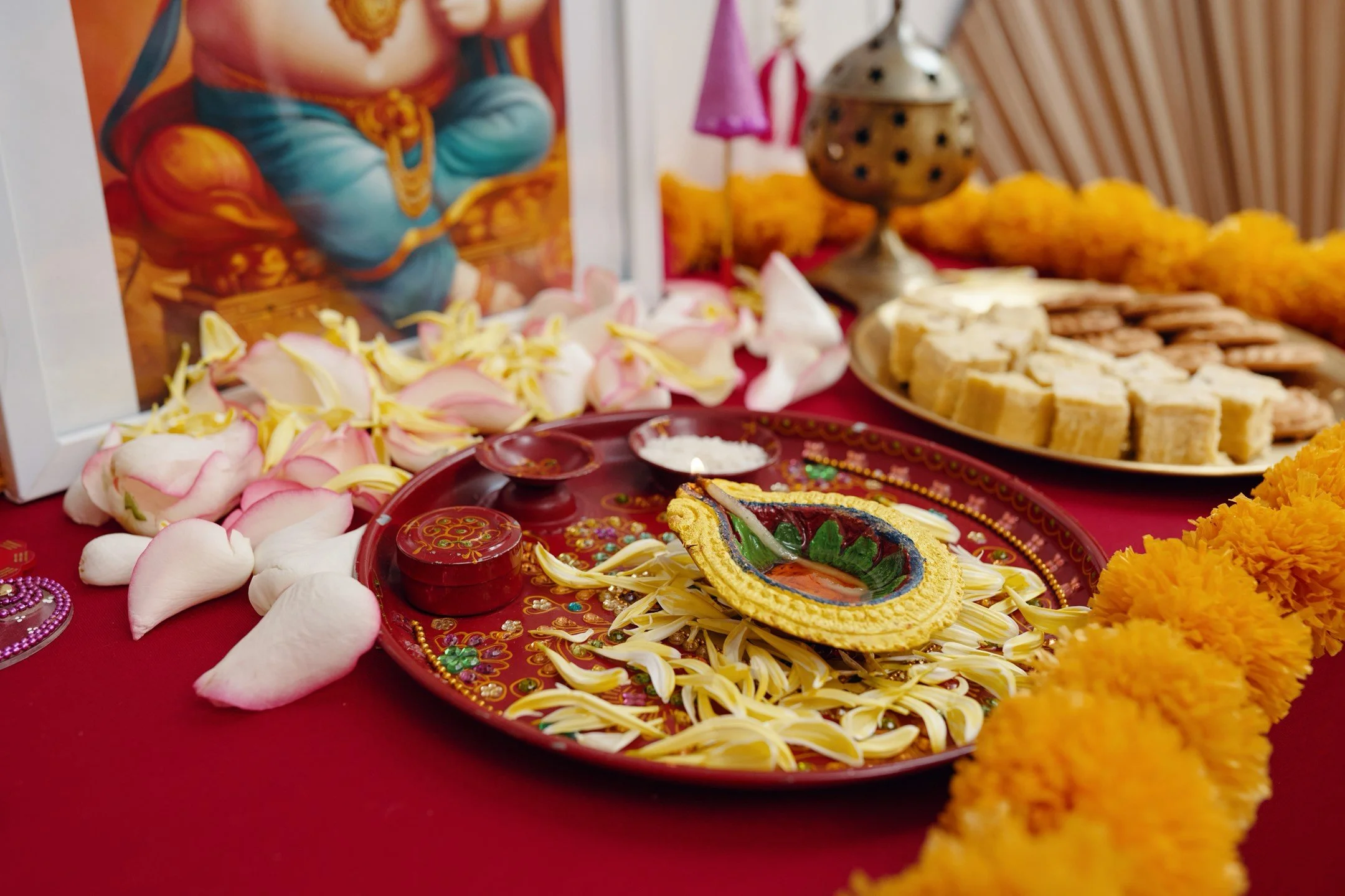
Tihar in Nepal: A Time for Family, Festivities, and Fulfilling Traditions
Embrace the warmth of family, tradition, and light during Tihar, Nepal’s festival of togetherness. From honoring animals to lighting diyas, it’s a celebration of love, prosperity, and the vibrant Nepali culture that brings communities closer.
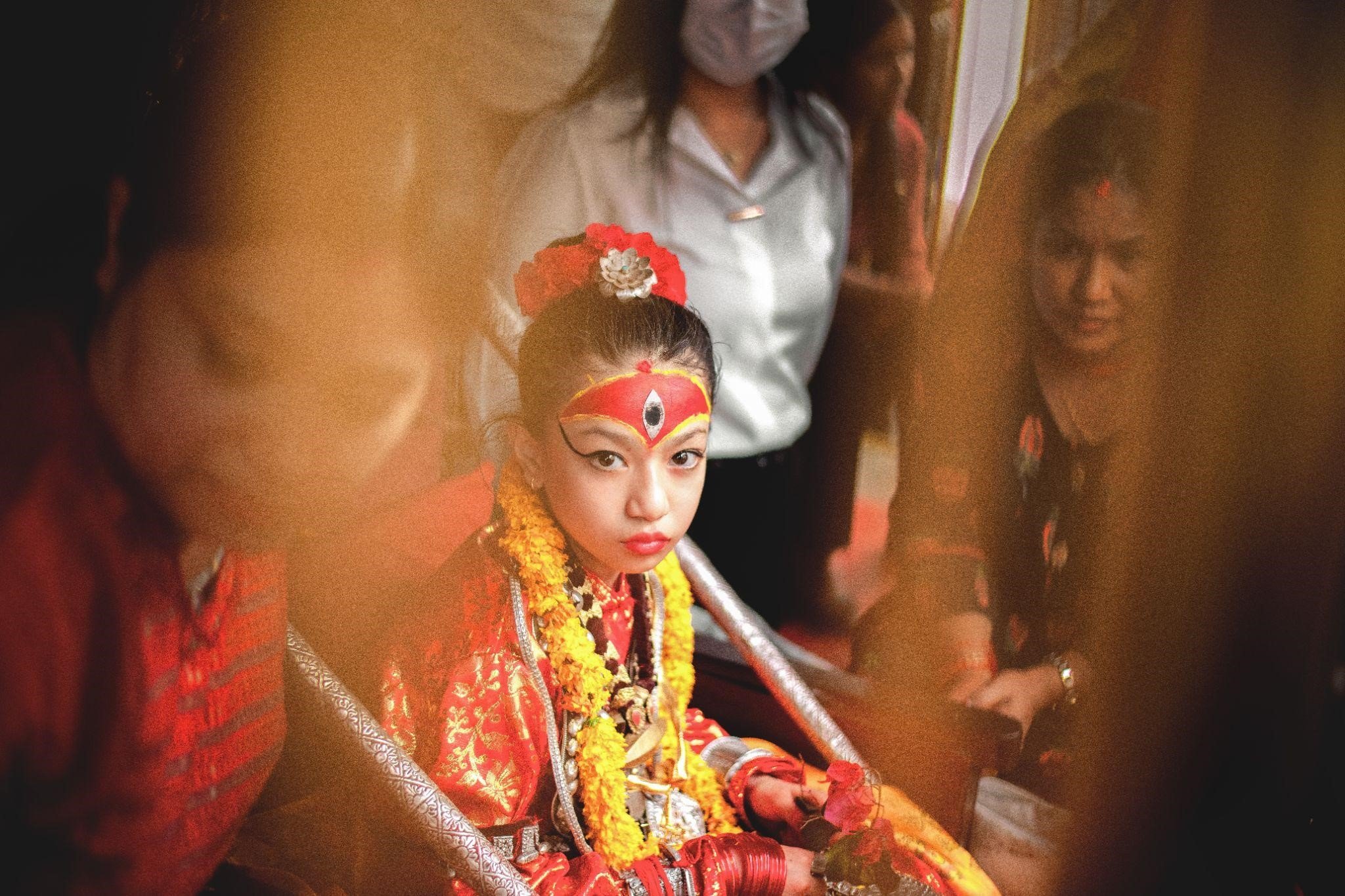
Tihar, also known as Deepawali, is one of Nepal’s most significant and widely celebrated festivals. It marks the triumph of light over darkness and goodness over evil, filling the air with joy, color, and a profound sense of community. Celebrated with reverence across the country, Tihar is more than just a festival of lights; it is an expression of gratitude, a time to honor relationships, and a reminder of the beauty in tradition.
As the days grow shorter and the crisp autumn air settles over Nepal, families begin to prepare for Tihar. The festival spans five days, each dedicated to different customs and deities. It is a celebration of life, family, and the enduring bonds between humans and nature.
The Rituals: A Unique Tribute to the Elements
The first day of Tihar is dedicated to Kaag Tihar, where crows, the messengers of death, are worshipped. In many households, food is placed outside for the crows, a gesture that reflects the Nepali belief in honoring all creatures, even those that are often seen as harbingers of misfortune.
The following day is for Kukur Tihar, when dogs are honored. Dogs, as companions and protectors, are celebrated with garlands of marigold and offered sweets. This day is particularly special for dog owners who see their pets as part of the family, and the streets echo with joyous barks and wagging tails as the dogs enjoy their day of recognition.
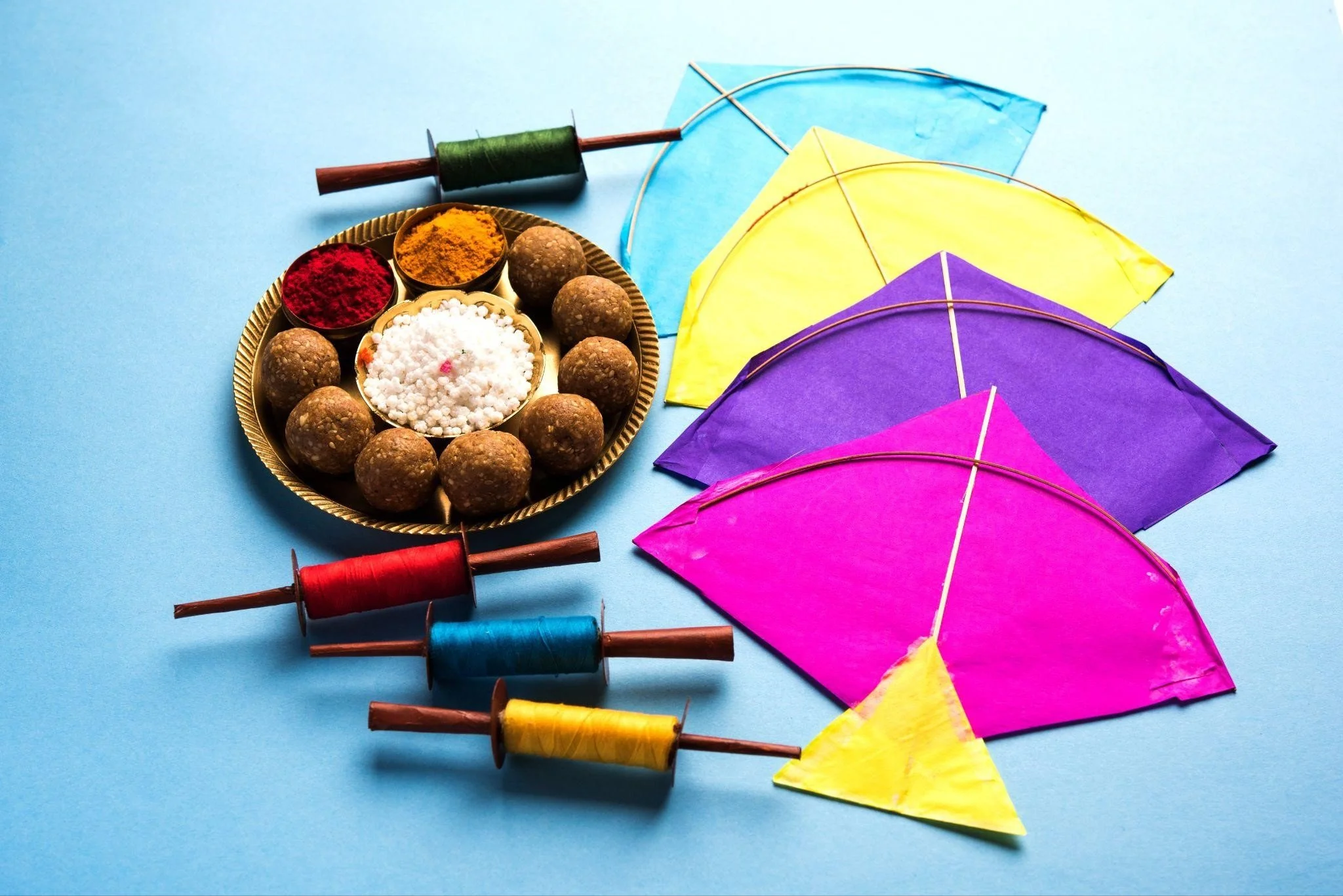
The third day is perhaps the most anticipated, Laxmi Puja, which honors Laxmi, the goddess of wealth and prosperity. Homes, temples, and even businesses are meticulously cleaned and decorated with diyas (small oil lamps), candles, and rangoli (intricate designs made from colored powder) to welcome Laxmi into their homes. The lights symbolize the removal of darkness and ignorance, allowing wisdom and wealth to enter.
The fourth day is known as Goru Tihar, a day dedicated to honoring the oxen and other farm animals. These animals, often seen as the backbone of rural life in Nepal, are adorned with tika and garlands. Farmers and villagers take this time to show gratitude for their hard work and dedication.
The final day of Tihar, Bhai Tika, celebrates the bond between brothers and sisters. Sisters apply tika (a mixture of yogurt, rice, and vermillion) to the foreheads of their brothers and pray for their long life and prosperity. Brothers, in return, give gifts to their sisters as a sign of their deep affection and respect. This day highlights the familial closeness that is central to Nepali culture, where respect for elders and love for younger family members is emphasized.
The Spirit of Family and Togetherness
What makes Tihar truly special is its emphasis on family and togetherness. In Nepal, family bonds are not just an obligation but a source of strength. During Tihar, families gather from near and far, often traveling long distances to reunite. The festival offers a rare chance for extended families to come together, celebrate, and strengthen their connections.
Homes are filled with the warmth of laughter, music, and the fragrant aroma of traditional sweets. From the delicate sel roti (a type of sweet rice doughnut) to the rich barfi (a milk-based sweet), the food is abundant and shared with neighbors and friends. During Tihar, people open their doors and hearts, offering hospitality to all who visit. The exchanging of sweets and gifts is a common practice, symbolizing goodwill and love.
As the evening falls, families light diyas around their homes, creating a mesmerizing glow that can be seen throughout the valley. The sight of thousands of twinkling lights is a symbol of hope, unity, and the triumph of light over darkness. It is a moment that captures the spirit of the festival—an invitation to reflect on life’s blessings and share them with others.
The Cultural Significance of Tihar
Tihar is not just a religious festival but a celebration of Nepal’s rich cultural heritage. Each day is steeped in tradition, from the intricate rituals to the colorful decorations that adorn every home. The festival is deeply connected to Nepali customs and the Hindu pantheon, with each day symbolizing a different aspect of life, nature, and spirituality.
Beyond the rituals, Tihar is a reflection of the Nepali people’s respect for the natural world. The honoring of animals such as crows, dogs, cows, and oxen is rooted in the deep reverence Nepali culture holds for all living creatures. The festival reminds people of the interconnectedness between humans, animals, and nature, and encourages a sense of responsibility towards all life.
Moreover, Tihar serves as an opportunity for renewal, both spiritually and socially. People take the time to cleanse their homes and hearts, ridding themselves of negativity and inviting peace, happiness, and prosperity into their lives. It is a time to reconcile differences, heal old wounds, and come together in celebration of shared values and traditions.
Tihar in Modern Nepal
In today’s fast-paced world, Tihar remains one of the most cherished festivals in Nepal, bringing people together from all walks of life. While the core traditions remain unchanged, modern adaptations have made the festival more inclusive and accessible. In urban areas, grand celebrations with music, firecrackers, and public events complement the more intimate family-centered rituals.
The use of technology has also played a role in how Tihar is celebrated. Social media platforms are filled with images of families lighting diyas, exchanging gifts, and sharing the joy of the festival with friends and relatives across the globe. Yet, despite these modern touches, the heart of Tihar remains rooted in its cultural and familial values.
Conclusion
Tihar is more than just a festival of lights it is a celebration of life, love, and the enduring strength of family bonds. From honoring animals and deities to coming together with loved ones, the festival embodies the essence of Nepali culture. As the lights shine brightly across the land, they remind us of the importance of kindness, unity, and gratitude; values that remain at the core of Tihar’s timeless traditions.
POPULAR ITINERARIES
SIMILAR POSTS

The Annapurna Circuit Trek: A Journey Through Nature’s Breathtaking Beauty
Embark on a journey through nature’s breathtaking beauty on the Annapurna Circuit Trek where diverse landscapes, rich culture, and awe-inspiring Himalayan views await.
When it comes to trekking in Nepal, few routes are as iconic as the Annapurna Circuit. This spectacular trek offers a rich combination of breathtaking natural landscapes, diverse cultural experiences, and unparalleled views of the majestic Himalayas. As one of the most popular and well-loved trekking routes in Nepal, the Annapurna Circuit takes you through lush forests, traditional villages, high mountain passes, and terraced fields, all while providing some of the most awe-inspiring vistas in the world.
Whether you’re a seasoned trekker or a beginner looking for your next adventure, the Annapurna Circuit promises an unforgettable journey.
Here’s why this trek should be on your bucket list.
1. A Journey Through Diverse Landscapes
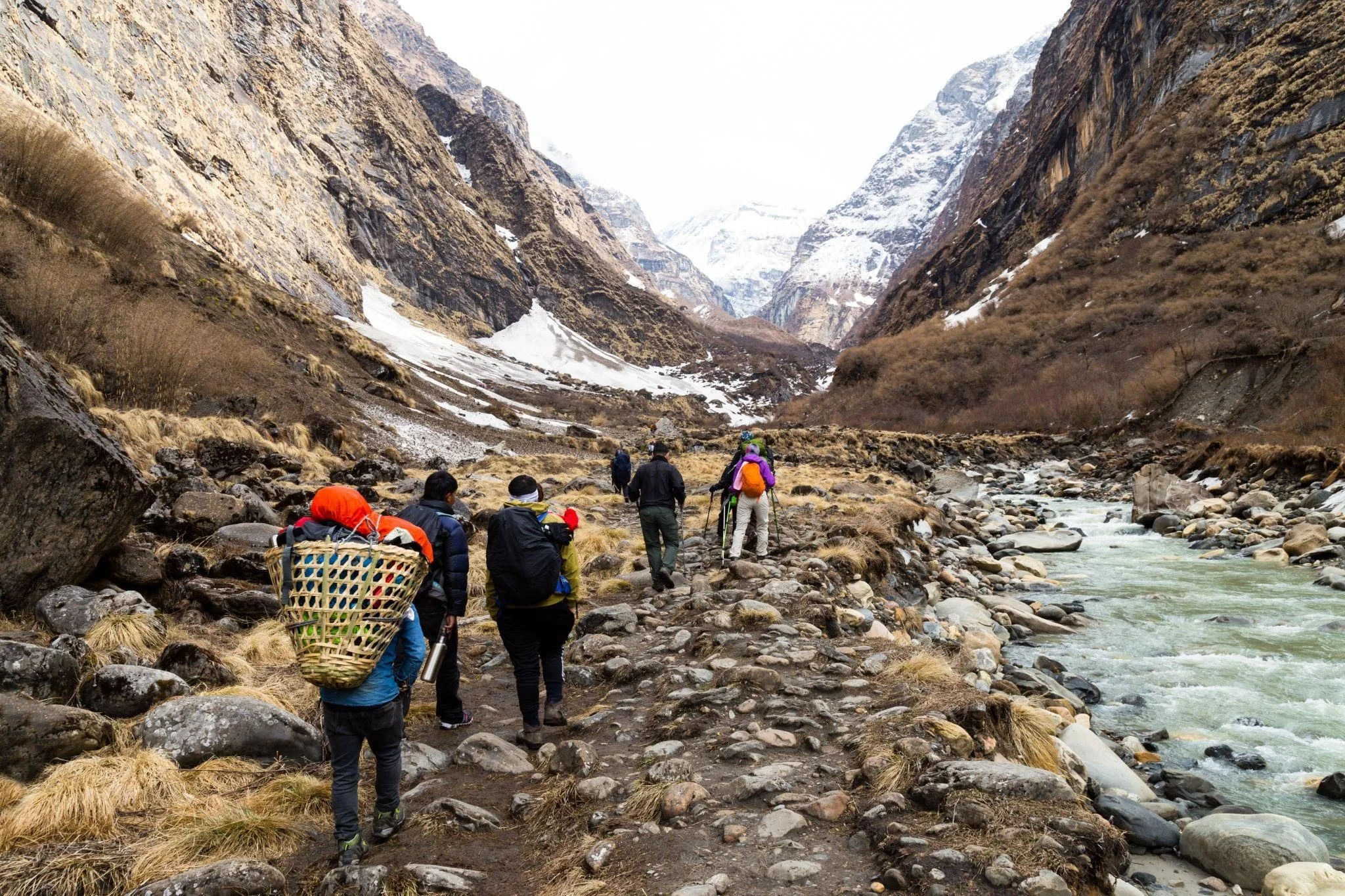
The Annapurna Circuit Trek spans a vast range of ecosystems, making it one of the most diverse treks in the world. Over the course of 10-21 days, trekkers will experience everything from subtropical jungles to alpine meadows, high mountain deserts, and towering snow-capped peaks.
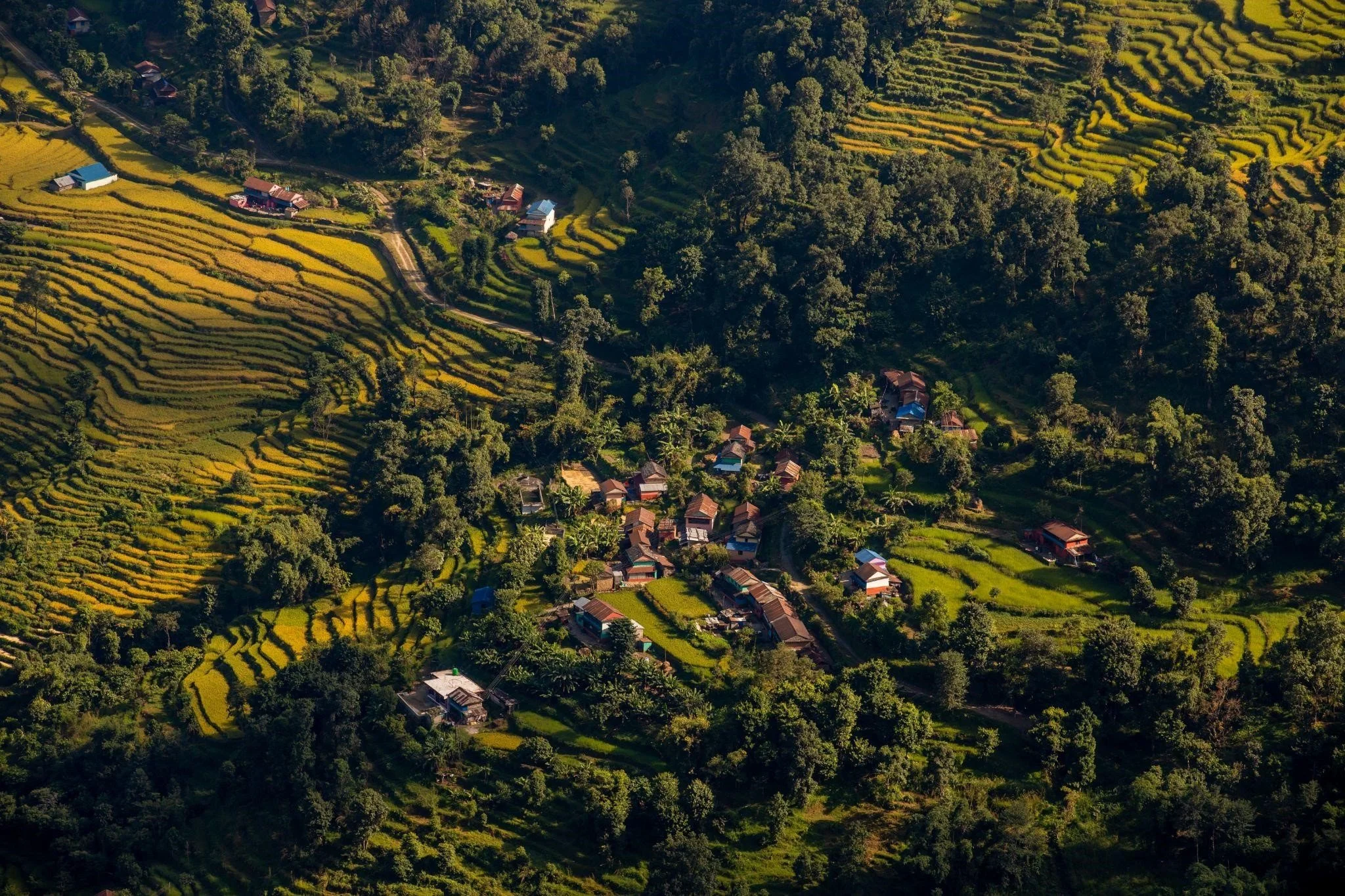
● Lower Regions: The trek begins in the lush subtropical forests of the lower Annapurna region. Here, you’ll walk through terraced fields, quaint villages, and dense rhododendron forests. The vibrant green landscape is dotted with traditional Nepali houses and offers views of smaller peaks and valleys.
● Mid-Altitude Regions: As you gain altitude, the environment begins to change. The forests thin out, and the terrain transforms into alpine meadows and open valleys. You’ll pass through charming villages like Ghorepani and Tadapani, where you can experience the culture and hospitality of the local people, primarily Gurungs, Magars, and Thakalis.
● High-Altitude Desert: Reaching the high-altitude desert beyond the village of Manang, trekkers will find themselves in an entirely different landscape. This region feels more like a Tibetan plateau, with barren hills, arid terrain, and wide-open skies. It’s here that trekkers begin to feel the true magnitude of the Annapurna massif.
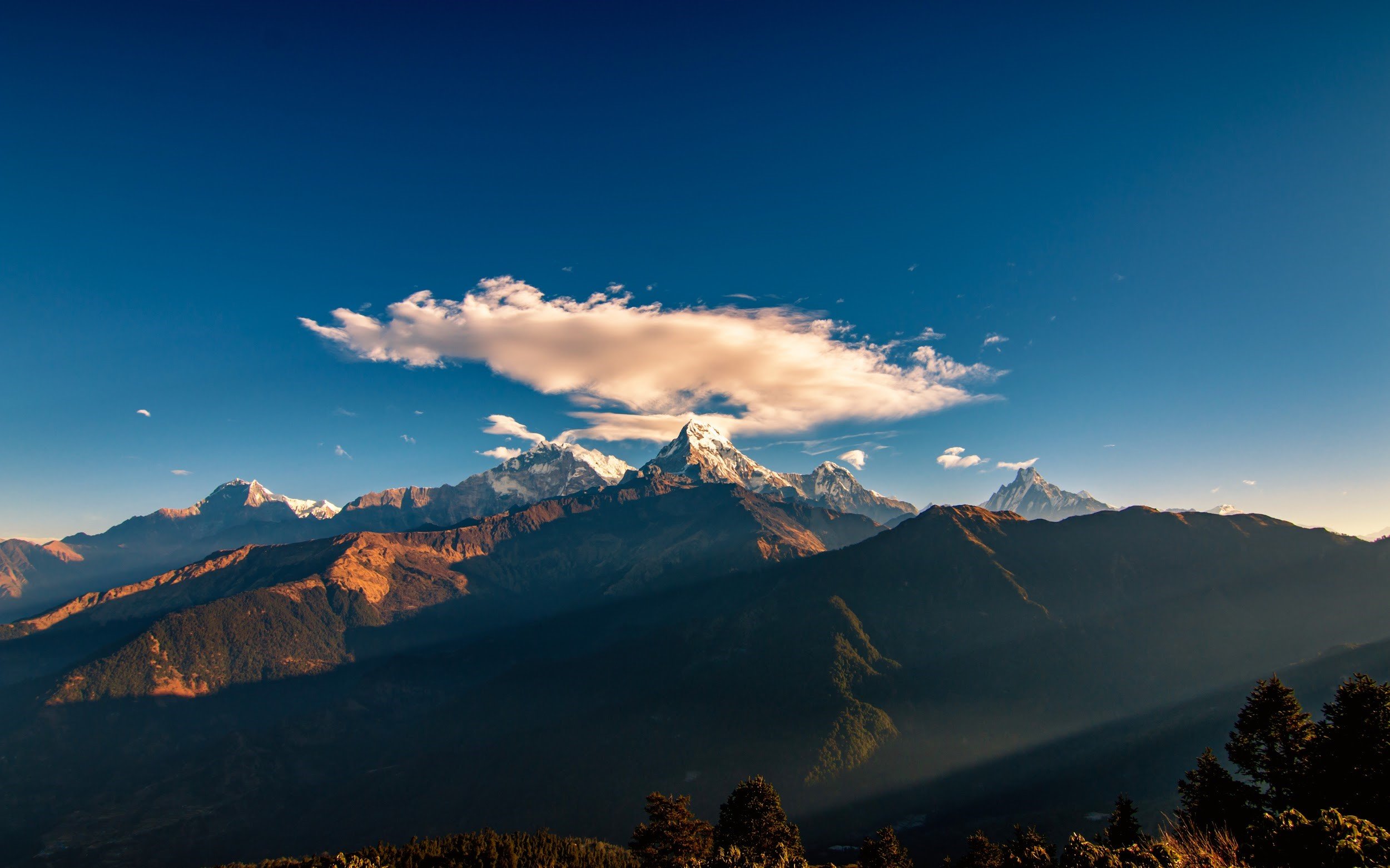
● Thorong La Pass: The pinnacle of the trek is crossing the Thorong La Pass, the highest point on the Annapurna Circuit at 5,416 meters (17,769 feet). The pass offers jaw-dropping views of the surrounding peaks, including Annapurna I, Dhaulagiri, and Machapuchare. The challenge of reaching the pass is well worth it for the spectacular scenery that awaits.
2. Rich Cultural Experience
The Annapurna Circuit is not just a trek through nature; it’s a journey through Nepal’s rich cultural tapestry. The route passes through several villages where trekkers can interact with locals and learn about their traditions, religions, and way of life.
● Gurung and Magar Communities: The lower sections of the Annapurna Circuit are inhabited by the Gurung and Magar people, two of Nepal’s most prominent ethnic groups. Their hospitality is legendary, and you’ll have the chance to experience their customs, traditional dress, and local festivals. Don’t miss out on the delicious home-cooked meals, which are often made from locally sourced ingredients.
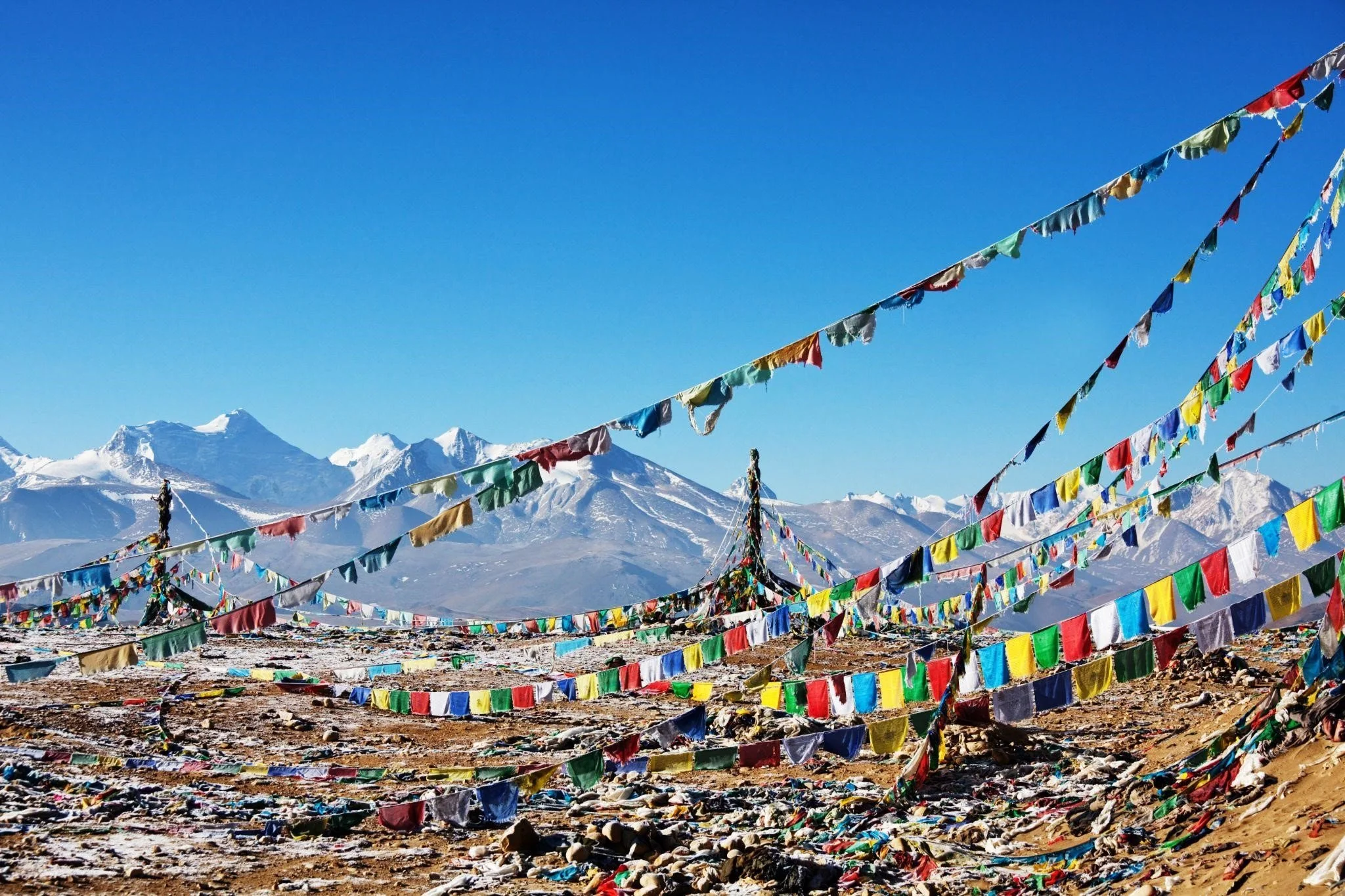
● Tibetan Influence: As the trek progresses, the influence of Tibetan Buddhism becomes more evident, particularly in the villages of Manang and Upper Mustang. In these areas, you’ll find monasteries, prayer flags, and stupas dotting the landscape. The Tibetan culture and Buddhist practices have left a lasting imprint on the region, and visitors are often welcomed with a warm “Tashi Delek” (a Tibetan greeting).
● The Annapurna Conservation Area: The Annapurna Circuit lies within the Annapurna Conservation Area (ACA), which is one of Nepal’s largest protected areas. The ACA is home to a wealth of wildlife, including the elusive snow leopard, red panda, and Himalayan tahr. The cultural preservation efforts here help maintain the integrity of the area’s natural and cultural heritage.
3. The Challenge of the Thorong La Pass
For many trekkers, the real challenge of the Annapurna Circuit is the climb to Thorong La Pass. At an elevation of 5,416 meters, crossing the pass requires physical stamina, mental fortitude, and proper acclimatization. However, the sense of achievement when reaching the top is incomparable.
To help with acclimatization and to avoid altitude sickness, most trekkers take a gradual approach, spending several days in places like Manang or Yak Kharka to allow their bodies to adjust to the increasing altitude. It’s also crucial to drink plenty of water, eat high-energy foods, and take regular rest breaks.
While the ascent is demanding, the panoramic views from the top of Thorong La are a reward in themselves. The surrounding peaks, including Annapurna I, Machapuchare, and Dhaulagiri, stretch across the horizon like a painting, leaving you in awe of the power and beauty of the Himalayas.
4. Best Time to Trek the Annapurna Circuit
The best time to trek the Annapurna Circuit is during the two main trekking seasons in Nepal: spring (March to May) and autumn (September to November).
● Spring: This season brings warmer temperatures and vibrant landscapes as rhododendron flowers bloom in abundance. The weather is generally stable, and the lower regions are lush and green.
● Autumn: Autumn is considered the peak season for trekking in Nepal, with clear skies and stable weather conditions. The visibility of the mountains is at its best during this time, and the temperatures are ideal for trekking.
While winter and summer treks are also possible, they come with their own challenges. Winter trekking is cold, especially at high altitudes, and snow can block the pass, while the summer monsoon season brings heavy rainfall that can make trails slippery and difficult.
5. Why You Should Trek the Annapurna Circuit
The Annapurna Circuit Trek is often called one of the best trekking routes in the world, and for good reason. The variety of landscapes, rich cultural heritage, and sense of accomplishment from crossing Thorong La Pass make this journey truly special. Whether you’re seeking spiritual experiences, physical challenges, or simply the beauty of nature, the Annapurna Circuit offers it all.
● Unforgettable Views: The trek’s panoramic vistas of the Annapurna and Dhaulagiri ranges are unmatched, especially at sunrise and sunset.
● Cultural Encounters: The opportunity to interact with local communities and experience their way of life adds an enriching dimension to the trek.
● Physical Challenge: The trek is a rewarding physical challenge, perfect for those looking to test their endurance in the high mountains.
A Trekking Paradise Awaits
If you’re an avid trekker or someone seeking an adventure of a lifetime, the Annapurna Circuit Trek should be on your list. With its diverse landscapes, vibrant cultures, and jaw-dropping views, it offers everything a trekking enthusiast could desire. So, pack your bags, lace up your boots, and set off on a journey through one of the most beautiful places on Earth.
POPULAR ITINERARIES
SIMILAR POSTS
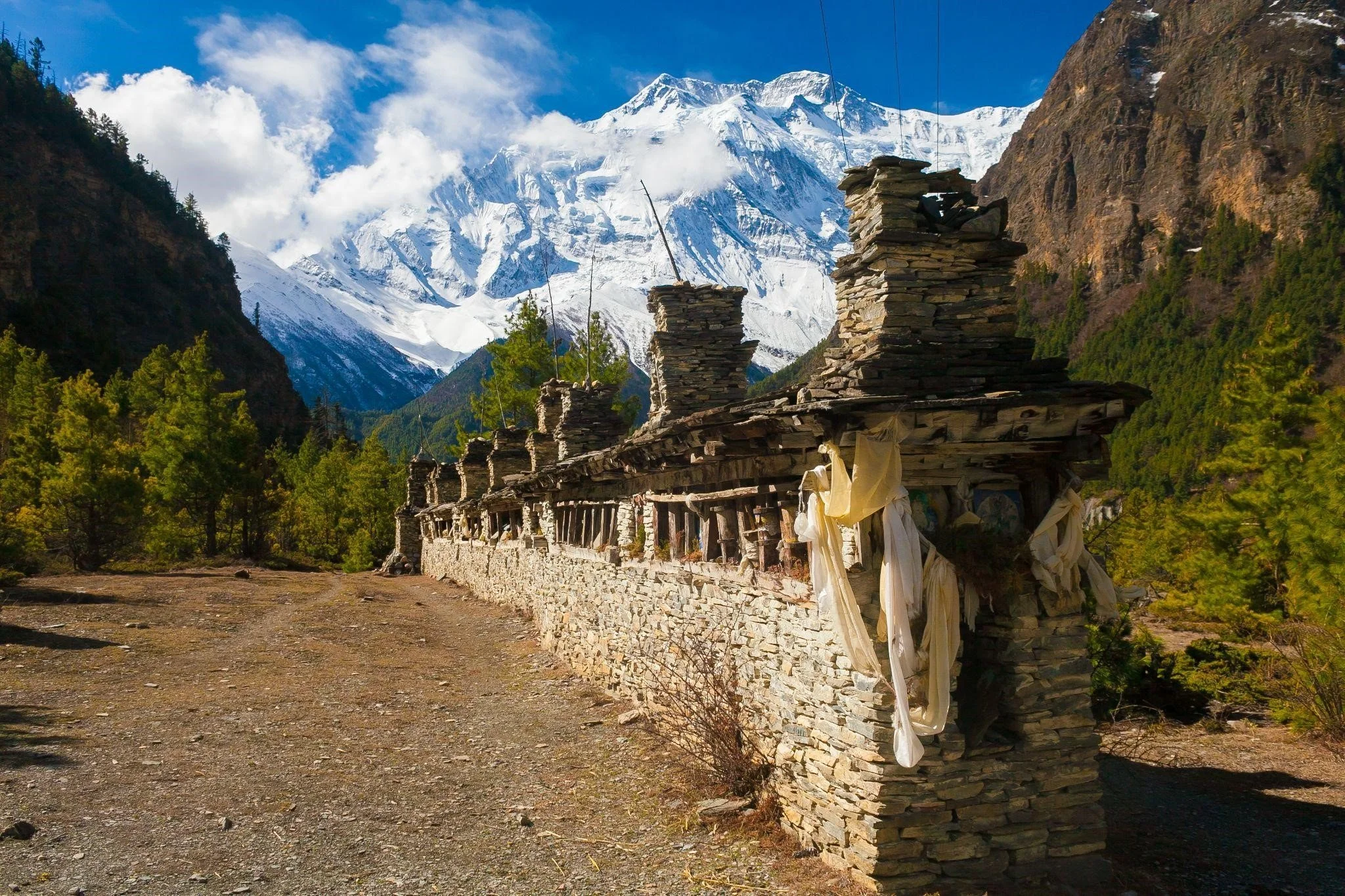
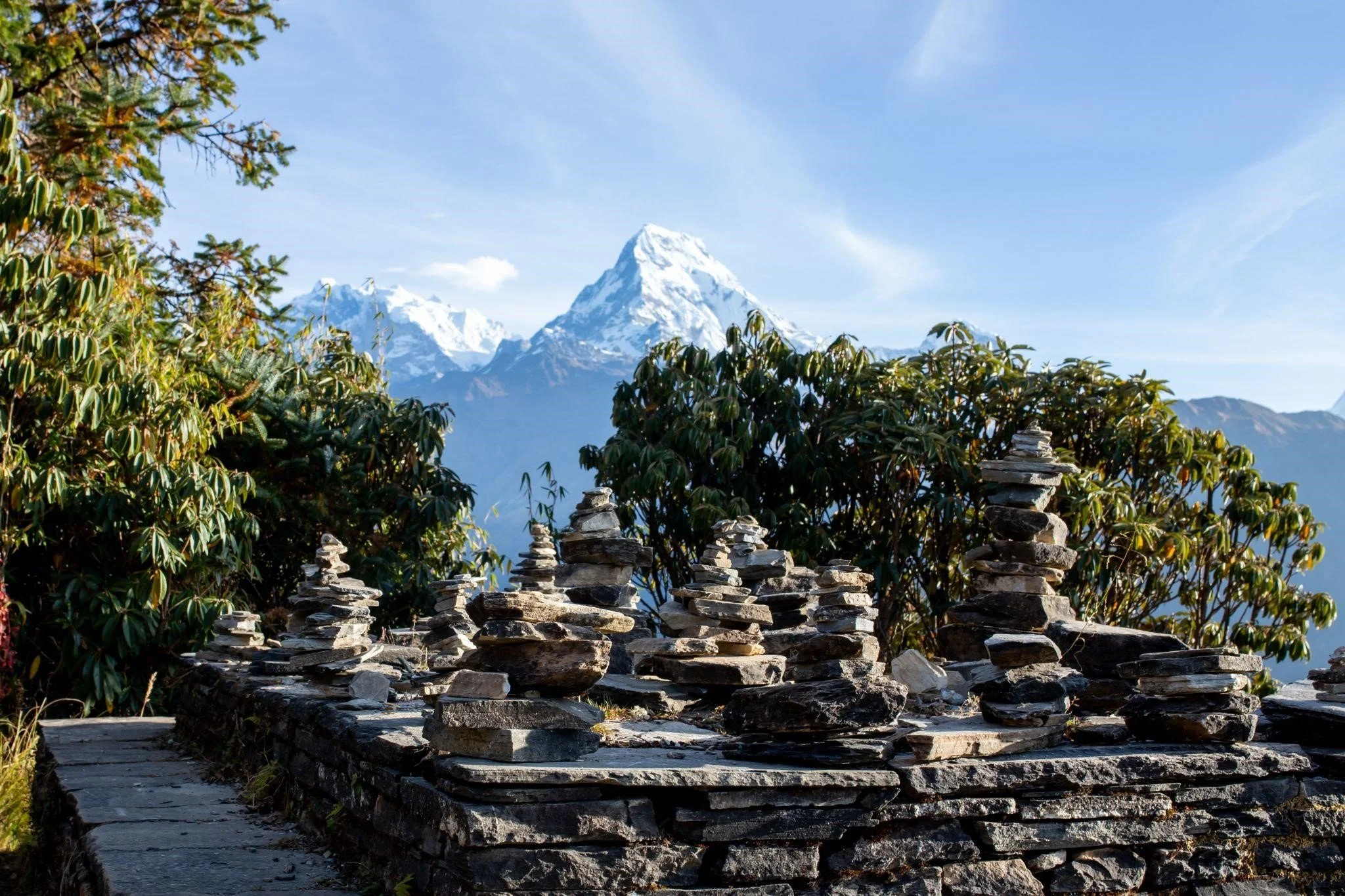
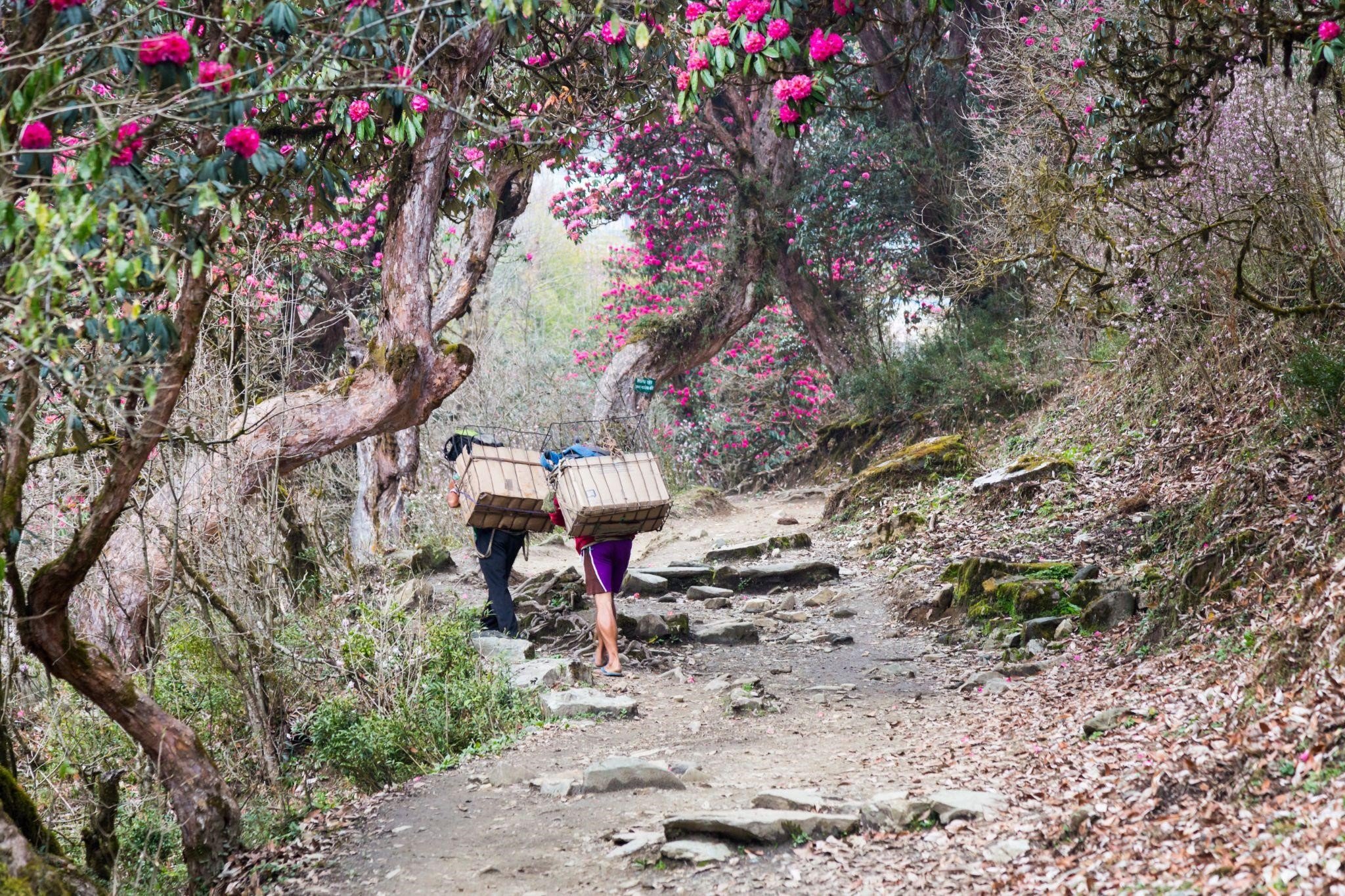
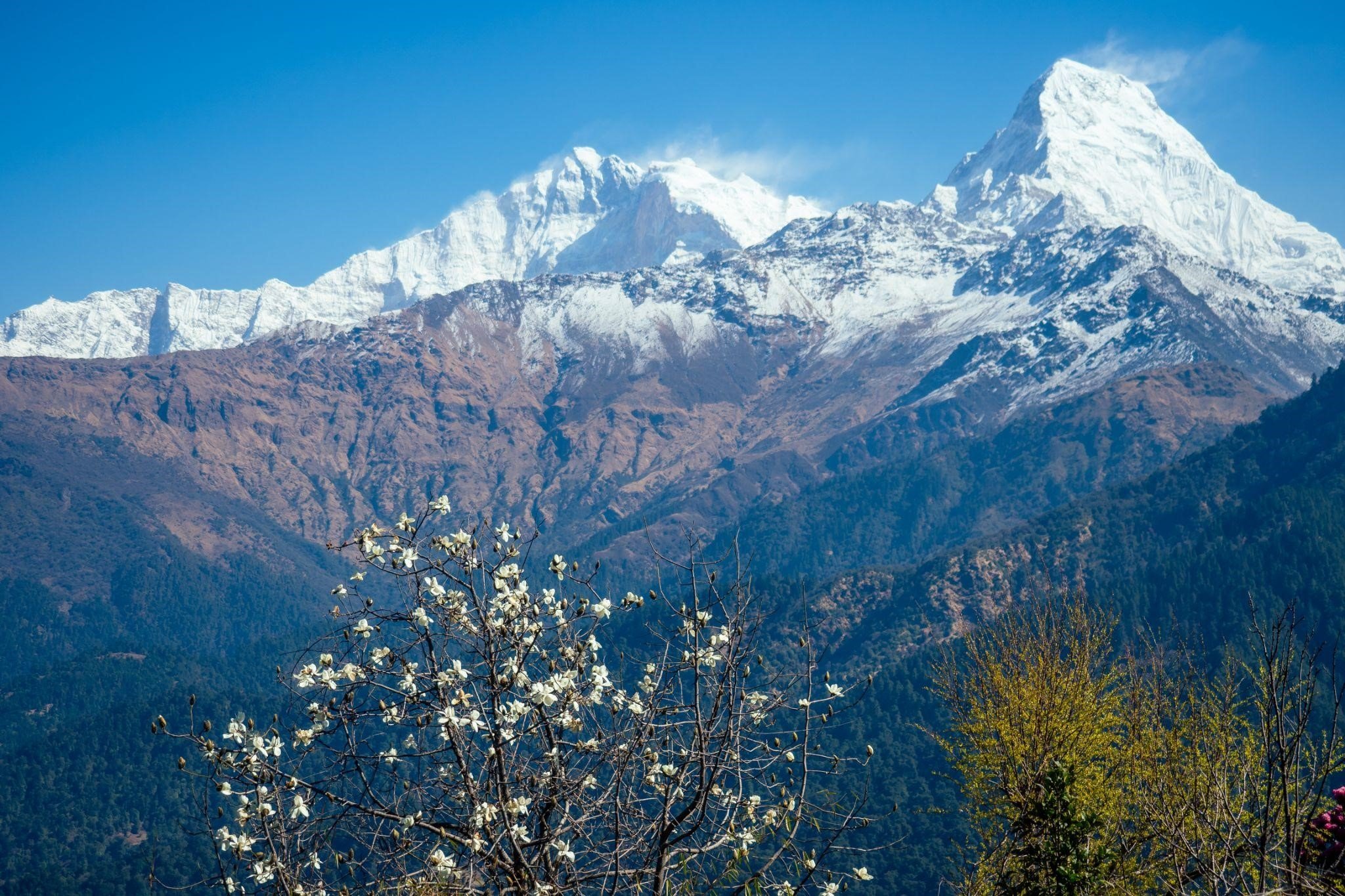
Beyond the Tourist Trails: Discovering Nepal’s Best-Kept Secrets
Beyond the well-trodden paths of Nepal lies a world of hidden wonders. From remote trekking trails to serene mountain lakes, discover the best-kept secrets of Nepal’s majestic landscapes and immerse yourself in the authentic, untouched beauty of the Himalayas. A journey into the heart of Nepal awaits!
Nepal is widely known for its majestic mountains, vibrant culture, and welcoming people. While iconic destinations like Kathmandu, Pokhara, and the Everest Base Camp draw millions of visitors each year, there’s much more to this incredible country than meets the eye. Beyond the well-trodden tourist paths lies a treasure trove of hidden gems, waiting to be explored. These lesser-known destinations offer a unique opportunity to experience Nepal in a more authentic, peaceful, and intimate way. In this article, we’ll take you off the beaten track to discover some of Nepal’s best-kept secrets.
1. Rara Lake: The Jewel of Northwestern Nepal
Located in the remote region of Mugu in northwestern Nepal, Rara Lake is the largest lake in the country. Surrounded by snow-capped peaks and lush forests, Rara Lake remains relatively untouched by mass tourism. Its pristine waters, reflecting the grandeur of the Himalayas, create a serene and breathtaking setting that is hard to match. Trekking to Rara Lake is an adventure in itself, with the journey offering spectacular views of alpine meadows and charming villages. For those looking to disconnect from the bustle of everyday life and immerse themselves in nature’s beauty, Rara Lake is a hidden paradise waiting to be discovered.
2. Tansen: A Peaceful Hill Town with Stunning Views
Nestled in the hills of Palpa District, Tansen is a small town often overlooked by tourists in favor of more popular destinations like Pokhara. Yet, Tansen is a place of immense charm, boasting old-world architecture, narrow cobbled streets, and sweeping views of the Himalayas. The town’s historical significance, particularly its role as the capital of the ancient Palpa Kingdom, is reflected in its temples, traditional houses, and vibrant local markets. The view from the Siddhartha Highway—stretching from Tansen to the Annapurna Range is nothing short of spectacular. Tansen is perfect for travelers seeking a peaceful retreat away from the tourist crowds, with the opportunity to experience authentic Nepali culture and hospitality.
3. Ilam: The Tea Garden Paradise
Known for its sprawling tea gardens, Ilam is a picturesque town located in eastern Nepal. The lush green landscapes, mist-covered hills, and vibrant floral gardens make it one of the most peaceful places to visit. The town is renowned for its high-quality tea, and a visit to the tea estates offers travelers the chance to learn about the tea-making process, from plucking the leaves to the final product. Ilam also offers stunning views of the Kangchenjunga and Everest mountain ranges. The area’s natural beauty, coupled with the quiet charm of its villages, makes Ilam an ideal destination for those seeking a blend of culture, nature, and tranquility.
4. Gosaikunda Lake: A Sacred Alpine Wonder
At an altitude of 4,380 meters, Gosaikunda Lake is one of the most sacred sites in Nepal, yet it remains largely under the radar for many tourists. Located in the Langtang National Park, the lake is considered holy by both Hindus and Buddhists, with pilgrims traveling from far and wide to bathe in its sacred waters. The trek to Gosaikunda Lake takes you through remote villages, dense forests, and alpine meadows, providing stunning views of the Langtang Range along the way. While it is a bit challenging to reach, the serenity and beauty of Gosaikunda make the journey worthwhile for those seeking spiritual solace and natural splendor.
5. Upper Mustang: A Mysterious and Remote Kingdom
Often referred to as the “Last Forbidden Kingdom,” Upper Mustang is a unique region in Nepal that offers a glimpse into the past. Isolated for centuries, this remote area was once a kingdom in itself, with its own culture, language, and traditions. Although the area has opened up to limited tourism in recent years, it is still far from the well-trodden paths. The region’s arid landscapes, ancient Tibetan monasteries, and mysterious caves create an almost otherworldly atmosphere. The highlight of Upper Mustang is the ancient Lo Manthang, a walled city that has preserved its unique architecture and culture for centuries. A trek through Upper Mustang is a journey through time, offering an intimate look at a culture that remains largely untouched by modernity.
6. Rishikesh: Nepal’s Spiritual Heartbeat
While Rishikesh is often associated with India, there is a Rishikesh in Nepal as well, located near the border with India. Unlike the popular yoga and adventure destination across the border, Nepal’s Rishikesh is quieter, more peaceful, and has a deeply spiritual vibe. It sits on the banks of the Karnali River, offering a tranquil atmosphere for meditation and reflection. The area is home to several ancient temples and ashrams, where visitors can engage in spiritual practices and connect with local spiritual leaders. Rishikesh is ideal for travelers looking to escape the distractions of modern life and embrace a journey of self-discovery and inner peace.
7. Taplejung: The Gateway to Kangchenjunga
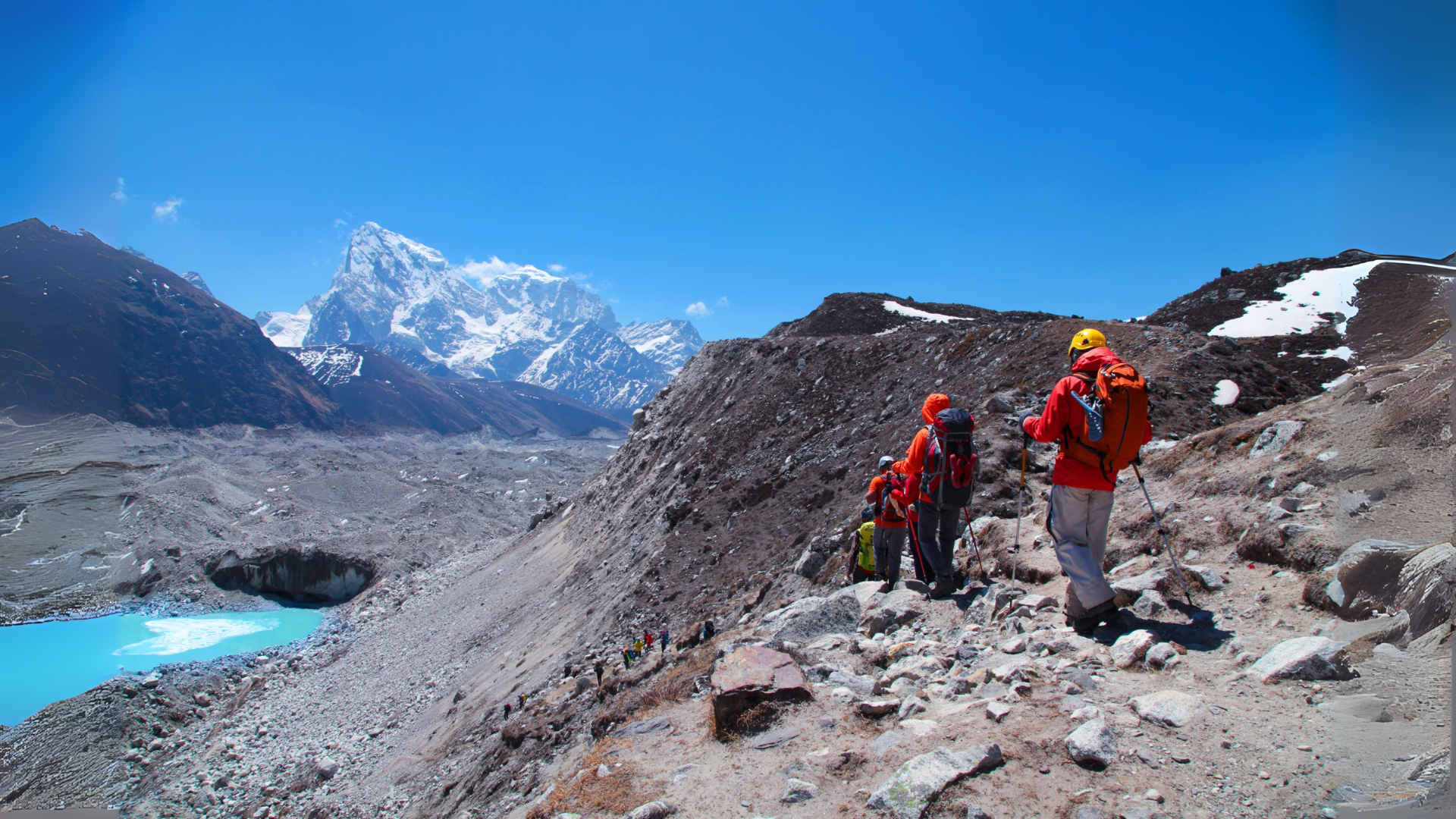
For those seeking a challenging trek with stunning mountain views and cultural immersion, Taplejung is a must-visit destination. Located in the far northeastern part of Nepal, Taplejung is the gateway to Kangchenjunga, the third-highest mountain in the world. The Kangchenjunga Base Camp Trek is a remote and adventurous journey that offers panoramic views of the Himalayan range, traditional Sherpa villages, and pristine natural beauty. The trek takes you through lush forests, alpine meadows, and remote settlements, providing an opportunity to experience the daily lives of people living in the shadow of one of the world’s tallest peaks.
8. Tsum Valley: Nepal’s Hidden Himalayan Gem
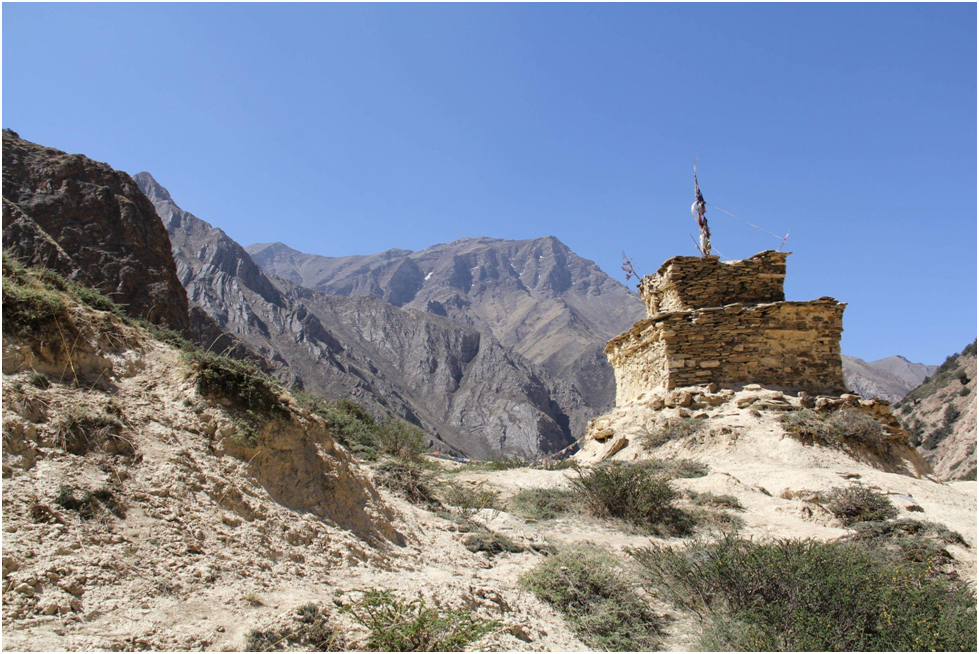
Located in the northern part of the Gorkha District, Tsum Valley is one of Nepal’s most isolated and undiscovered trekking destinations. The valley is rich in Buddhist culture, with monasteries, chortens, and ancient ruins scattered throughout. Trekking through Tsum Valley offers visitors the chance to experience a remote and untouched part of Nepal, where the people have preserved their ancient traditions and way of life. The valley is surrounded by majestic peaks, including Manaslu and Ganesh Himal, making it an ideal spot for those seeking a peaceful and authentic trekking experience.
9. Dhulikhel: A Tranquil Escape from Kathmandu
Just a short drive from Kathmandu, Dhulikhel is a serene hill town that offers stunning views of the Himalayas and a peaceful atmosphere away from the hustle and bustle of the capital. The town is known for its traditional Newar culture, historic temples, and friendly locals. Dhulikhel is also a great place for hiking, with several trails leading to nearby villages and viewpoints. It is the perfect escape for those looking to enjoy nature, culture, and tranquility without venturing too far from the capital.
10. Bandipur: A Traditional Village with Mountain Views
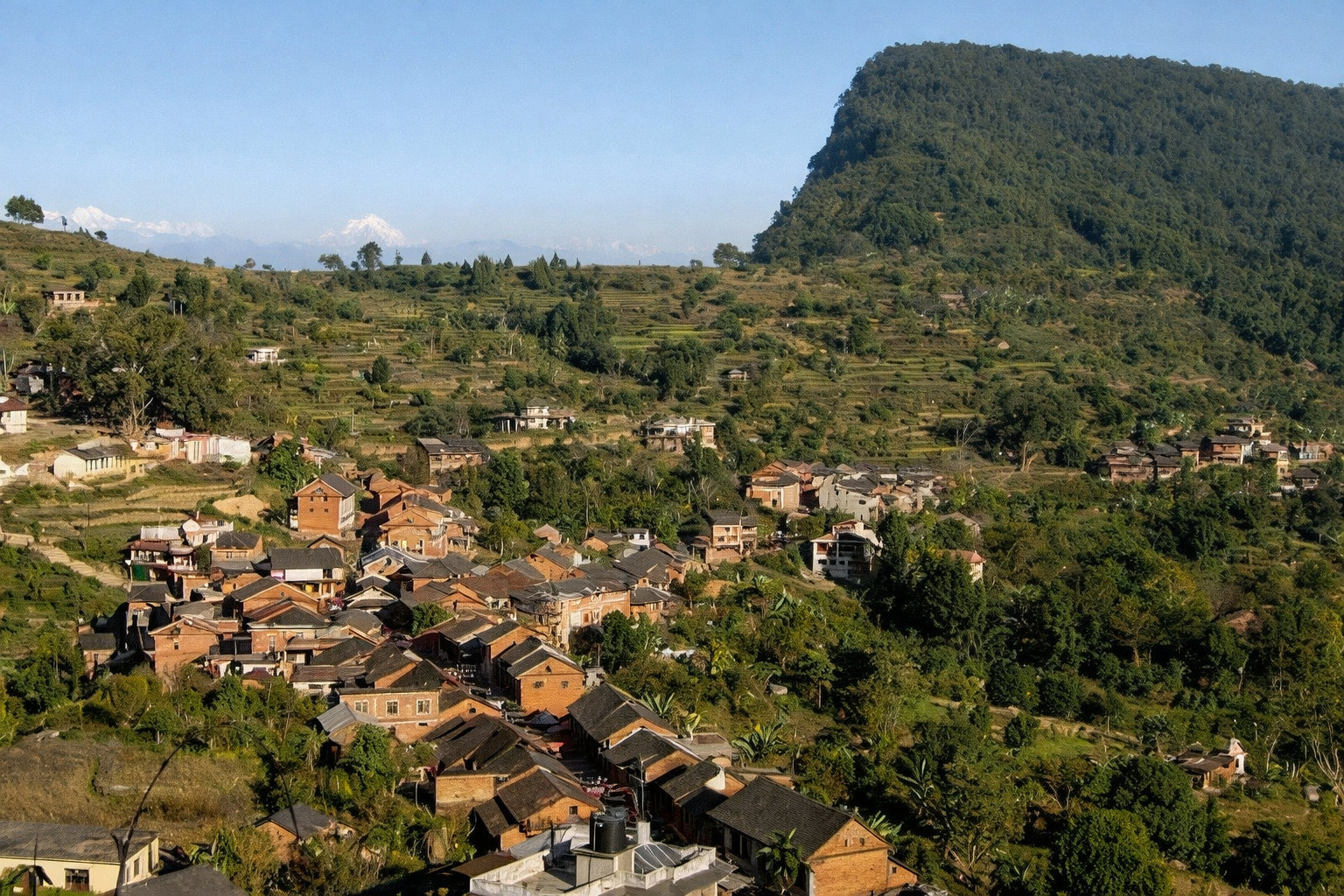
Bandipur, a charming hilltop town in the central region of Nepal, offers a glimpse into traditional Newar culture. The town is well-preserved, with cobblestone streets, beautiful temples, and stunning views of the Annapurna Range. Bandipur is also an excellent spot for hiking, with several trails that lead to nearby viewpoints and villages. The town’s peaceful ambiance, combined with its cultural richness, makes it an ideal destination for those seeking an authentic experience off the beaten path.
Conclusion: Discover the Road Less Traveled
Nepal is a land of discovery, where adventure, spirituality, and culture intertwine. While the major tourist destinations offer their own unique experiences, the hidden gems of Nepal provide a deeper connection to the country’s rich history, culture, and natural beauty. Whether you’re trekking to remote mountain lakes, exploring ancient villages, or seeking spiritual solace, these off-the-beaten-path destinations allow you to experience Nepal in a more intimate and authentic way.
So, if you’re planning your next trip to Nepal, consider venturing beyond the tourist trails and discovering the best-kept secrets that make this country truly magical.
POPULAR ITINERARIES
SIMILAR POSTS
Gaa Pyakha and the Spirit of Dashain in Patan
Dashain, the grandest festival of Nepal, is a time of celebration, devotion, and togetherness. Across the country, homes are adorned with flowers, kitchens fill with traditional delicacies, and families gather to honor age-old rituals. In the historic city of Patan, one tradition stands out as a vibrant symbol of devotion and cultural pride: Gaa Pyakha.
Dashain, the grandest festival of Nepal, is a time of celebration, devotion, and togetherness. Across the country, homes are adorned with flowers, kitchens fill with traditional delicacies, and families gather to honor age-old rituals. In the historic city of Patan, one tradition stands out as a vibrant symbol of devotion and cultural pride: Gaa Pyakha.
Gaa Pyakha: The Sacred Dance of the Asta Matrika
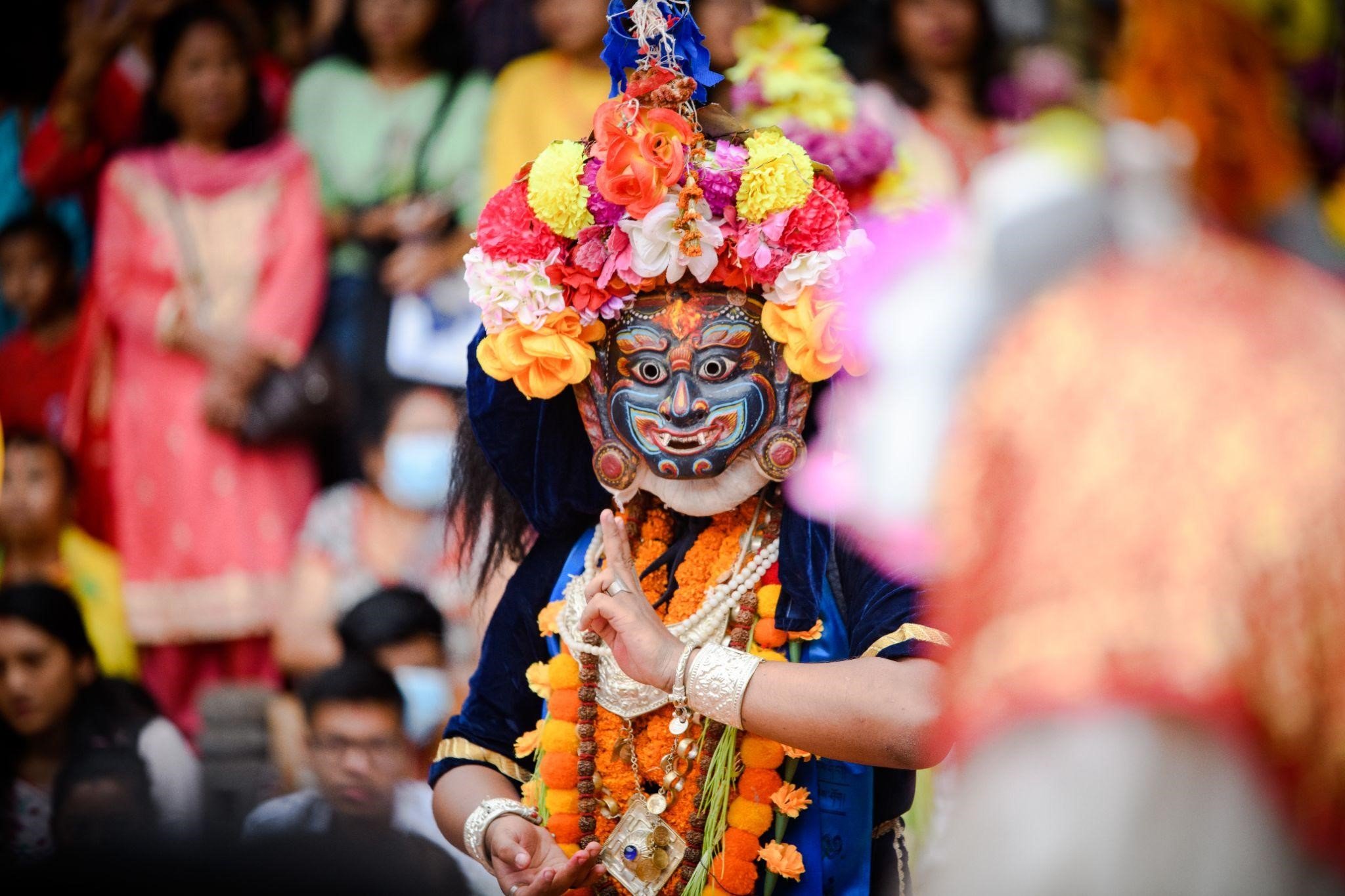
Gaa Pyakha, also known as the Asta Matrika Naach, is a revered ritual dance performed in the heart of Patan during Dashain. Rooted in centuries-old traditions, this dance honors the eight mother goddesses (Asta Matrika) and five Newar patron deities, culminating in a mesmerizing display of devotion and artistry.
Origins and Legends
The origins of Gaa Pyakha trace back to the Malla era, around 350 years ago, introduced by King Sree Niwas Malla (son of King Siddhi Narsingh Malla), who dreamt of the mother goddesses dancing in his royal court at Mulchowk. He then decreed the dance to be performed for the stability of peace, security & prosperity in the nation.
The Dance and Its Deities
Gaa Pyakha features thirteen deities:
● Asta Matrikas (Eight Mother Goddesses): Brahmani, Mahesvari, Kaumari, Vaishnavi, Barahi, Indrayani, Mahakali, Mahalaxmi
● Five Newar Patron Deities: Bhairav, Simhini, Byangini, Ganesh, Kumar
The dancers, mostly from the Shakya and Bajracharya communities, wear intricate masks and costumes representing these deities. The performance begins on Ghatasthapana (the first day of Dashain) and concludes on Ekadashi, spanning nine days of spiritual devotion and cultural expression.
Rituals and Preparation
Before performing, dancers undergo spiritual preparation:
Sacred Cleansing: Fasting and meditation to purify body and mind
Invocation: Seeking refuge at the Vajrasattva shrine in Buddha, Dharma, and Sangha
Blessings: Receiving guidance from spiritual teachers, The dance itself is a form of Charya Nritya, an ancient tantric ritual where performers embody the deities, channeling divine energy through movement and rhythm.
Cultural Significance
Gaa Pyakha is more than a dance, it is a living link between the community and the divine, offering blessings of prosperity, protection, and harmony. It also preserves the rich cultural heritage of the Newar community, making it a highlight of Dashain in Patan.
Experience Dashain in Patan
For visitors, witnessing Gaa Pyakha offers a unique window into Nepalese tradition. The streets come alive with colors, music, and devotion, creating an immersive festival experience. For those seeking comfort and convenience amidst the celebrations, places like Hotel Shanker provide a serene retreat while keeping you close to the heart of Patan’s cultural festivities.
This Dashain, let the rhythms and colors of Gaa Pyakha guide you through the spiritual and cultural essence of Nepal, making your celebrations unforgettable.
POPULAR ITINERARIES
SIMILAR POSTS

Guardians of the Temples: The Story and Significance of the Bajra in Nepal
The golden Bajra at Swayambhunath Stupa in Kathmandu, a timeless guardian symbolizing strength, enlightenment, and divine protection in Nepal’s sacred traditions.” This sacred object, with its rich mythology and spiritual significance, stands firm as a reminder of the intertwined Hindu and Buddhist beliefs that continue to shape Nepal’s cultural landscape. Whether at the entrance of a temple, adorning stupas, or held during ritual practices, the Bajra represents a powerful force that connects the earthly realm with the divine.
When walking through the courtyards of temples and stupas in Nepal, one object stands out: the Bajra, also known as Vajra. Shining in bronze, brass, or gilded gold, it is often placed at the entrance of sacred spaces, on altars, or in the hands of deities. To many visitors, it looks like an ornate ritual object. But for the people of Nepal, the Bajra carries layers of mythology, symbolism, and spiritual meaning that connect the earthly world to divine power.
What is the Bajra?
The Bajra (Sanskrit: Vajra) literally translates to “thunderbolt” or “diamond.” In Hindu and Buddhist traditions, it represents both the irresistible force of thunder and the indestructibility of a diamond.
• In Hindu mythology, the Bajra is the weapon of Indra, the king of gods and lord of rain and storms.
• In Buddhism, particularly Vajrayana (Tantric Buddhism), the Bajra symbolizes unyielding strength, enlightenment, and the ultimate truth. It is often paired with the Ghanta (bell), representing the harmony of wisdom and compassion.
Physically, a Bajra is crafted with a central sphere flanked by symmetrical prongs, some with two, others with four or more. The design itself embodies balance, unity, and cosmic order.
Mythological Origins
The mythology of the Bajra goes back thousands of years:
• The Hindu Legend: According to ancient texts, the Bajra was fashioned from the bones of sage Dadhichi, who sacrificed himself so that the gods could create a weapon powerful enough for Indra to defeat the demon Vritra. The Bajra thus came to symbolize sacrifice, protection, and the triumph of good over evil.
• The Buddhist Symbolism: In Vajrayana Buddhism, the Bajra represents the indestructible nature of truth and enlightenment. Just as lightning can split rocks, the Bajra cuts through ignorance and illusion.
This dual mythology gives the Bajra a unique role in Nepal, where Hinduism and Buddhism co-exist and intertwine in everyday life.
Where to Find the Bajra in Nepal
Travelers will encounter the Bajra in many forms across Nepal’s sacred architecture:
At Stupas: The grand stupas of Swayambhunath and Boudhanath feature massive Bajras placed at their bases, symbolizing the spiritual strength that guards the monument.
In Temples: Many Hindu temples, especially those dedicated to Indra or Shiva, display Bajras at the gates or near shrines.
In Rituals: Monks and priests use hand-held Bajras during pujas and tantric practices, pairing them with bells for meditative chants.
As Decorative Symbols: You’ll also spot smaller Bajras engraved into doorways, pillars, and even prayer wheels as a mark of divine presence.
Symbolism Beyond Myth
The Bajra is not just a relic of mythology, it speaks to deeper philosophies:
• Indestructibility: Like a diamond, truth and enlightenment are eternal.
• Power: Like a thunderbolt, spiritual energy can transform lives instantly.
• Protection: Placed at temple entrances, the Bajra acts as a guardian against negative forces.
• Balance: Its symmetrical design teaches harmony between opposites such as wisdom and compassion, strength and humility.
Why the Bajra Matters Today
For locals, the Bajra remains a living symbol. During festivals like Indra Jatra, it reminds devotees of protection and divine energy. For pilgrims at stupas, it is an invitation to meditate on truth and resilience. And for travelers, it is a glimpse into how myth and spirituality seamlessly merge in Nepal’s cultural landscape.
The Bajra is more than an ornament. It is a guardian, a teacher, and a storyteller. To see a Bajra in Nepal is to stand in the presence of centuries-old beliefs that continue to shape the way of life in the Kathmandu Valley and beyond.
Travel Tip: Next time you visit Swayambhunath or Boudhanath, pause before the massive Bajra at the entrance. Notice its weight, balance, and symbolism. It is not just metal, it is the embodiment of Nepal’s sacred guardianship.
The Bajra reminds us that while storms may shake the world, truth and enlightenment remain unbreakable. In Nepal’s temples and stupas, this symbol stands firm as a guardian of the spiritual path.
POPULAR ITINERARIES
SIMILAR POSTS
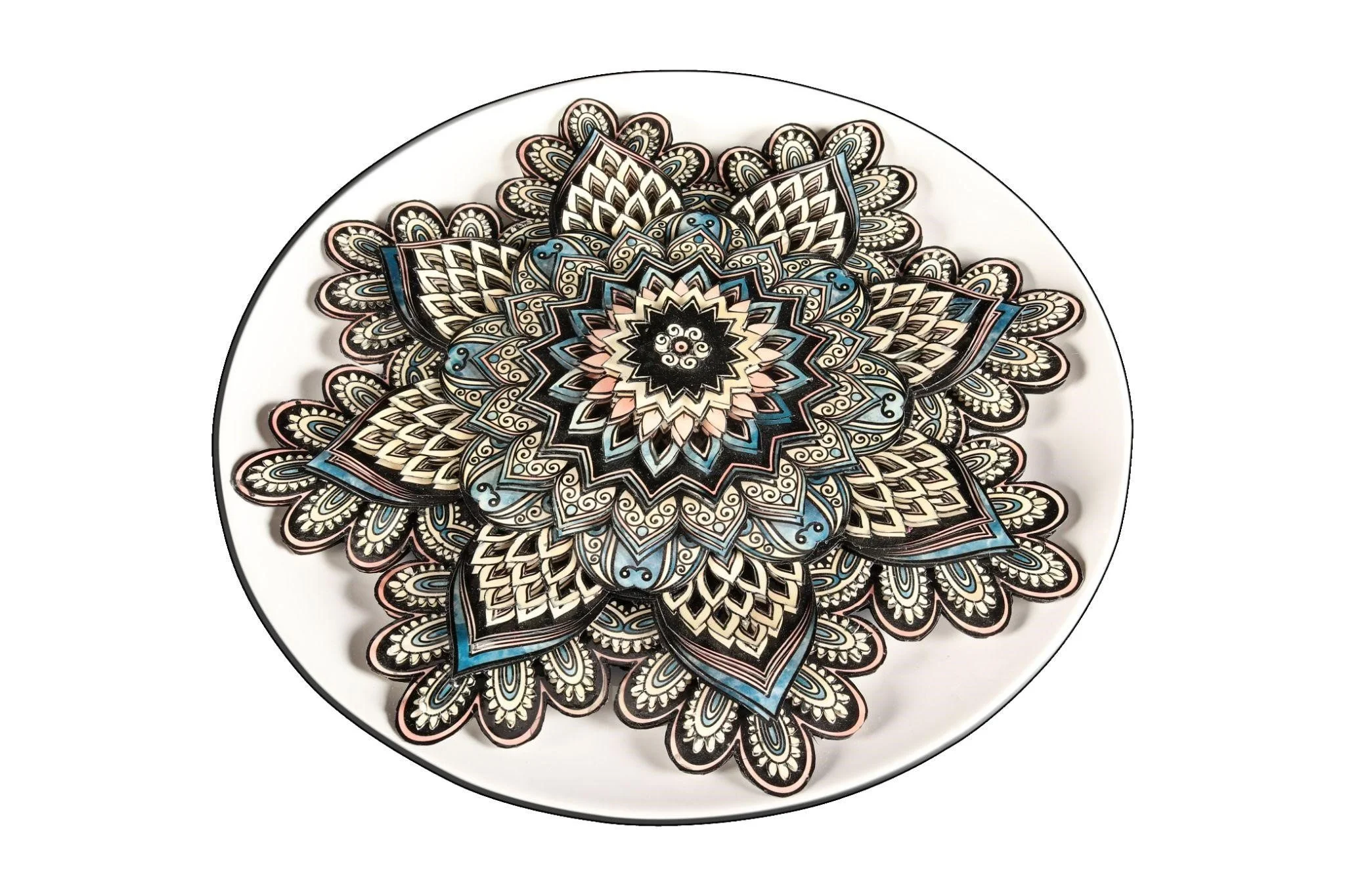
The Mandalas of Kathmandu: Symbolism Behind the Intricate Patterns in Art and Temples
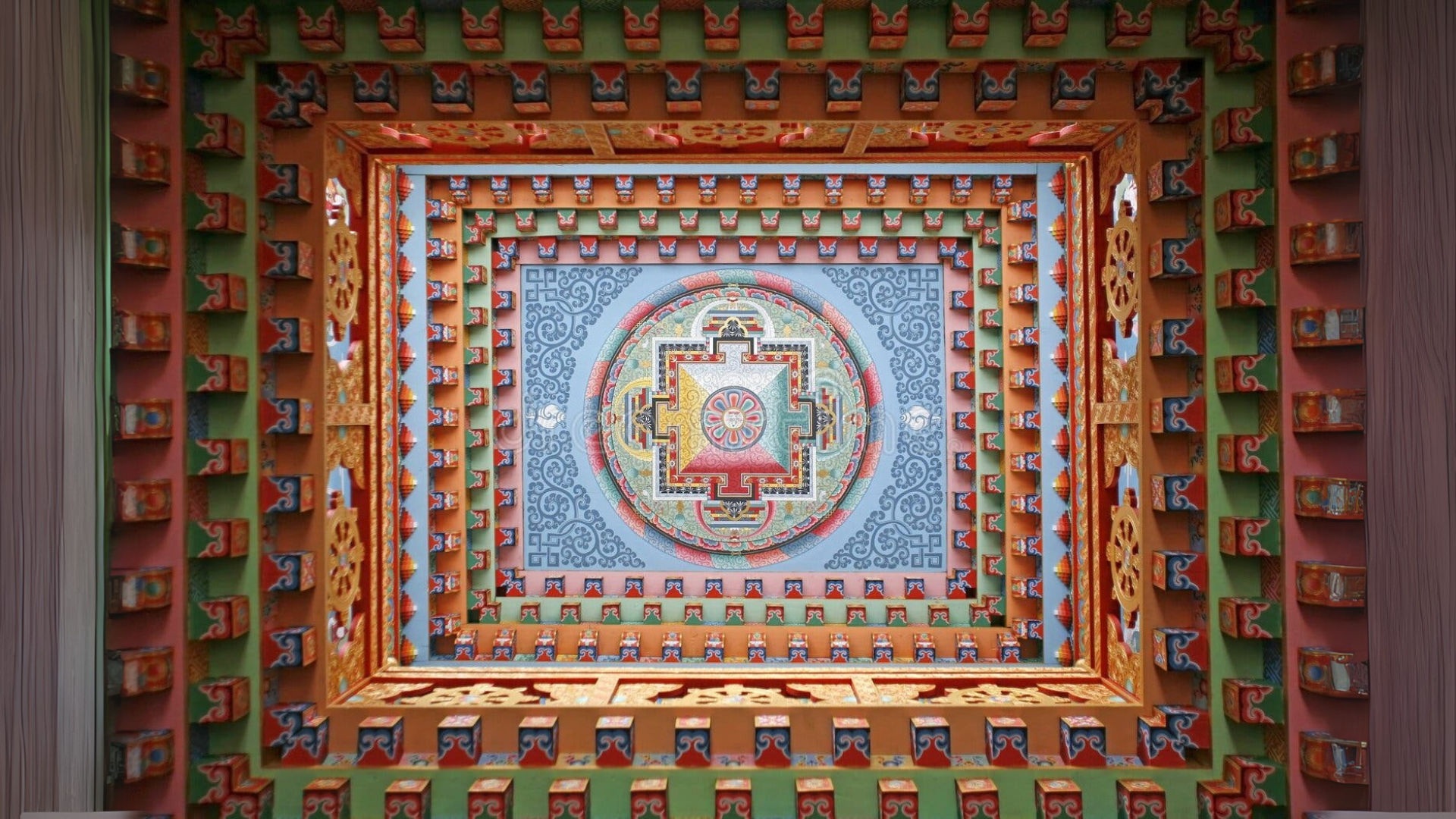
Kathmandu is a living canvas where spirituality and art meet at every corner. Among its countless expressions of faith and culture, mandalas stand as one of the most profound. These intricate circular patterns, seen in temples, monasteries, thangkas (sacred paintings), and even everyday rituals, carry deep symbolic meanings that go far beyond decoration. They are maps of the universe, pathways to meditation, and reflections of Nepal’s spiritual heart.
Kathmandu is a living canvas where spirituality and art meet at every corner. Among its countless expressions of faith and culture, mandalas stand as one of the most profound. These intricate circular patterns, seen in temples, monasteries, thangkas (sacred paintings), and even everyday rituals, carry deep symbolic meanings that go far beyond decoration. They are maps of the universe, pathways to meditation, and reflections of Nepal’s spiritual heart.
What is a Mandala?
The word mandala comes from Sanskrit, meaning “circle.” At its core, a mandala represents wholeness, balance, and the interconnectedness of all life. In both Hindu and Buddhist traditions, it is a symbolic diagram of the cosmos, showing how the physical and spiritual worlds align.
In Kathmandu, mandalas are not abstract concepts. They are painted, carved, and even walked upon during religious practices. Each line, color, and motif is carefully designed to guide the mind toward clarity and inner peace.
Mandalas in Temples and Monasteries
Walk through the courtyards of Kathmandu’s stupas and shrines, and you will see mandalas everywhere:
● On Stupas: The structure of stupas like Swayambhunath or Boudhanath themselves represent three-dimensional mandalas, symbolizing the universe and the path to enlightenment.
● On Doors and Windows: Carved wooden mandalas frame temple entrances, reminding devotees of spiritual protection as they enter sacred spaces.
● In Prayer Halls: Monks use intricate sand mandalas during rituals, painstakingly creating them grain by grain, only to sweep them away, symbolizing impermanence.
Colors and Patterns: What They Mean
Every mandala element carries symbolic meaning:
● Circles: Unity, eternity, and the cycle of life.
● Squares: The earthly world, stability, and grounding.
● Lotus Petals: Purity, spiritual awakening.
● Colors: Each shade has a purpose:
○ White: Peace and knowledge
○ Red: Power and passion
○ Blue: Protection and wisdom
○ Green: Growth and harmony
○ Yellow: Enlightenment
Together, they create a visual meditation, leading the eye and the mind towards the center, which often symbolizes enlightenment.
Mandalas in Everyday Spiritual Life
For the people of Kathmandu, mandalas are not just seen in temples, they are woven into daily rituals:
● During festivals like Tihar, colorful mandalas (rangolis) made of rice, flowers, and powders welcome gods and guests into homes.
● In meditation practice, locals and monks visualize mandalas to focus their thoughts and deepen mindfulness.
● Even in traditional Newar art, mandalas appear in paubha paintings and architectural details, connecting art to spiritual meaning.
A Symbol that Speaks Beyond Borders
What makes mandalas so captivating is their universality. Whether you are a pilgrim, an artist, or a traveler, these patterns invite you to pause, reflect, and reconnect. In Kathmandu, they remind us that spirituality is not just practiced, it is lived and seen in the very design of the city.
Final Thought
The mandalas of Kathmandu are more than patterns; they are sacred blueprints of life itself. To stand before one, whether on a temple wall or drawn in colored sand, is to glimpse the harmony between chaos and order, the earthly and the divine.
Kathmandu invites every visitor not only to see mandalas but to feel them: a spiritual map guiding us toward balance, beauty, and inner peace.
POPULAR ITINERARIES
SIMILAR POSTS
The Spiritual Journey Through Kathmandu: Discovering Its Sacred Landmarks
Kathmandu, Nepal’s bustling capital, is a city of deep spiritual roots, rich traditions, and vibrant culture. For centuries, pilgrims, travelers, and those on a spiritual quest have flocked to this sacred city to visit its temples, monasteries, and landmarks. Kathmandu’s spiritual journey is more than just about its history it’s about the connection between its people, their traditions, and a higher sense of divinity. Come with us as we explore some of Kathmandu’s most revered sacred sites and dive into the essence of what makes this city a spiritual sanctuary.
Kathmandu, Nepal’s bustling capital, is a city of deep spiritual roots, rich traditions, and vibrant culture. For centuries, pilgrims, travelers, and those on a spiritual quest have flocked to this sacred city to visit its temples, monasteries, and landmarks. Kathmandu’s spiritual journey is more than just about its history it’s about the connection between its people, their traditions, and a higher sense of divinity. Come with us as we explore some of Kathmandu’s most revered sacred sites and dive into the essence of what makes this city a spiritual sanctuary.
Swayambhunath: The Monkey Temple
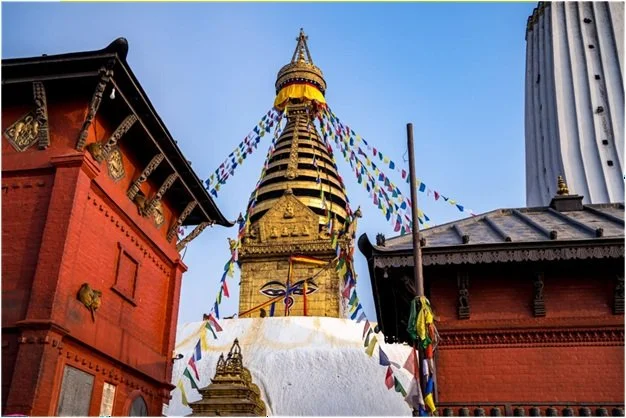
One of Kathmandu’s most famous and revered landmarks, Swayambhunath, also known as the Monkey Temple, offers a unique spiritual experience. Sitting atop a hill, this ancient stupa declared a UNESCO World Heritage site is dedicated to the Buddha. Its golden spire, with the all-seeing eyes of Buddha, radiates wisdom and compassion.
With roots in Tibetan Buddhism, this site is believed to be over 2,000 years old, and countless pilgrims visit to pray for enlightenment and inner peace. The surrounding monkeys, said to protect the temple, add a touch of magic to the place. From the hilltop, visitors are treated to breathtaking views of Kathmandu, making the visit both a spiritual and visual delight.
As local monk Khenpo Tenzin puts it, “Swayambhunath is the heart of Kathmandu, not only for its stunning beauty but because it represents the unity of all spiritual paths. It’s a place for reflection, meditation, and connection with the divine.”
Pashupatinath: A Sacred Cremation Site
Pashupatinath, one of the holiest Hindu temples in the world, is a must-see for anyone visiting Kathmandu. Set along the banks of the Bagmati River, this temple is dedicated to Lord Shiva, the god of destruction and renewal. While the intricate architecture of the temple is impressive, it’s the cremation ghats along the river that lend Pashupatinath its profound spiritual significance.
For Hindus, cremation at Pashupatinath is believed to free the soul from the cycle of rebirth. The ghats are places of both grief and reverence, where families honor their loved ones through sacred rituals. Visitors often witness the poignant Hindu funeral rites, which form a vital part of the city’s spiritual rhythm.
Lakshmi Devi, a local woman, shared her thoughts: “Pashupatinath isn’t just a temple; it’s where life and death are bound in a sacred dance. It reminds us that life is short, and we must seek peace while we have the chance.”
Boudhanath Stupa: A Tibetan Buddhist Center
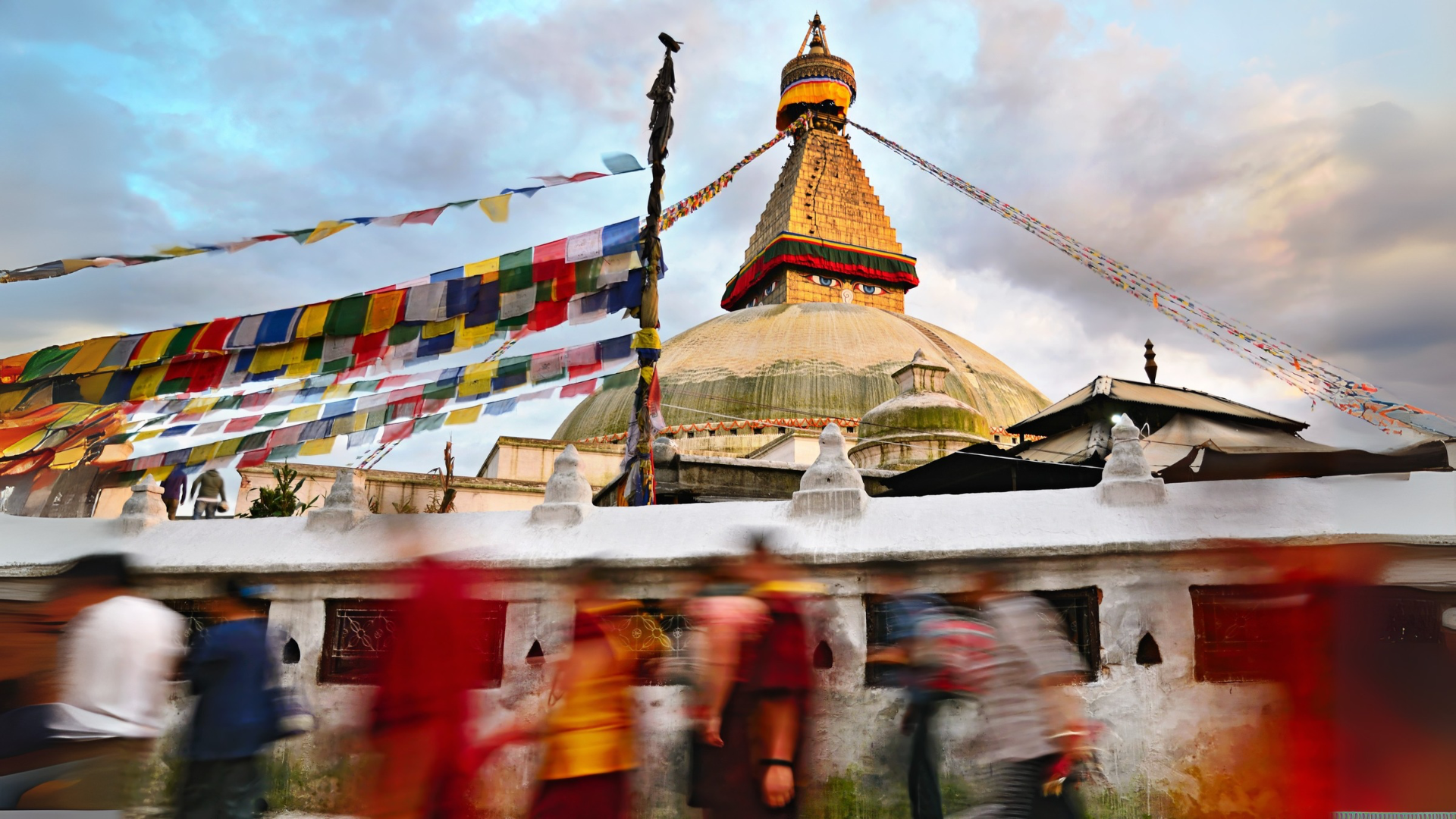
Boudhanath Stupa, one of the largest in Nepal, is a central pilgrimage spot for Tibetan Buddhists. Its massive mandala design is a representation of the universe, and the stupa’s all-seeing eyes watch over the entire world.
The area around Boudhanath is a hub of Tibetan culture and spirituality, with monasteries and refugee settlements scattered nearby. Pilgrims flock here to walk around the stupa, chant mantras, and meditate. The rhythmic turning of prayer wheels and the scent of incense fill the air, creating an atmosphere of peace and reverence.
Tenzin Phuntsok, a local Tibetan monk, reflects: “Boudhanath is the heart of our Tibetan community. It’s more than a place of worship it’s a sanctuary where we find peace, healing, and strength. Every turn around the stupa brings us closer to enlightenment.”
Kopan Monastery: A Place for Quiet Reflection
For those seeking quiet reflection and meditation, Kopan Monastery, on the outskirts of Kathmandu, provides a tranquil retreat. Known for its teachings in Tibetan Buddhism, Kopan attracts spiritual seekers from all over the world with its peaceful atmosphere and stunning views of the Himalayas.
Visitors come to learn about compassion, mindfulness, and the true nature of the mind, often under the guidance of Lama Zopa Rinpoche, the monastery’s spiritual leader. It’s a place where both locals and foreigners gather to deepen their practice of Tibetan Buddhism and engage in personal growth.
Dawa Sherpa, a former student of the monastery, shared, “Kopan taught me the true meaning of compassion. It’s not just a place to escape the world it’s where you learn to engage with it in a peaceful and meaningful way.”
Kathmandu’s Spiritual Heartbeat
Kathmandu’s spiritual landscape is a harmonious blend of Hindu and Buddhist traditions, coexisting throughout the city. From the lively streets around Pashupatinath to the quiet courtyards of Swayambhunath, spirituality pulses through every corner of the city. Locals view these sacred sites as not just places of worship, but as part of their collective identity and spiritual journey.
In Kathmandu, the sacred is woven into everyday life. Pilgrims, monks, and locals alike visit these sites to seek blessings, find peace, and connect with something larger than themselves. Whether you’re a traveler or a seeker, exploring the sacred landmarks of Kathmandu offers a rare opportunity to witness Nepal’s living traditions and experience the soul of the city.
POPULAR ITINERARIES
SIMILAR POSTS
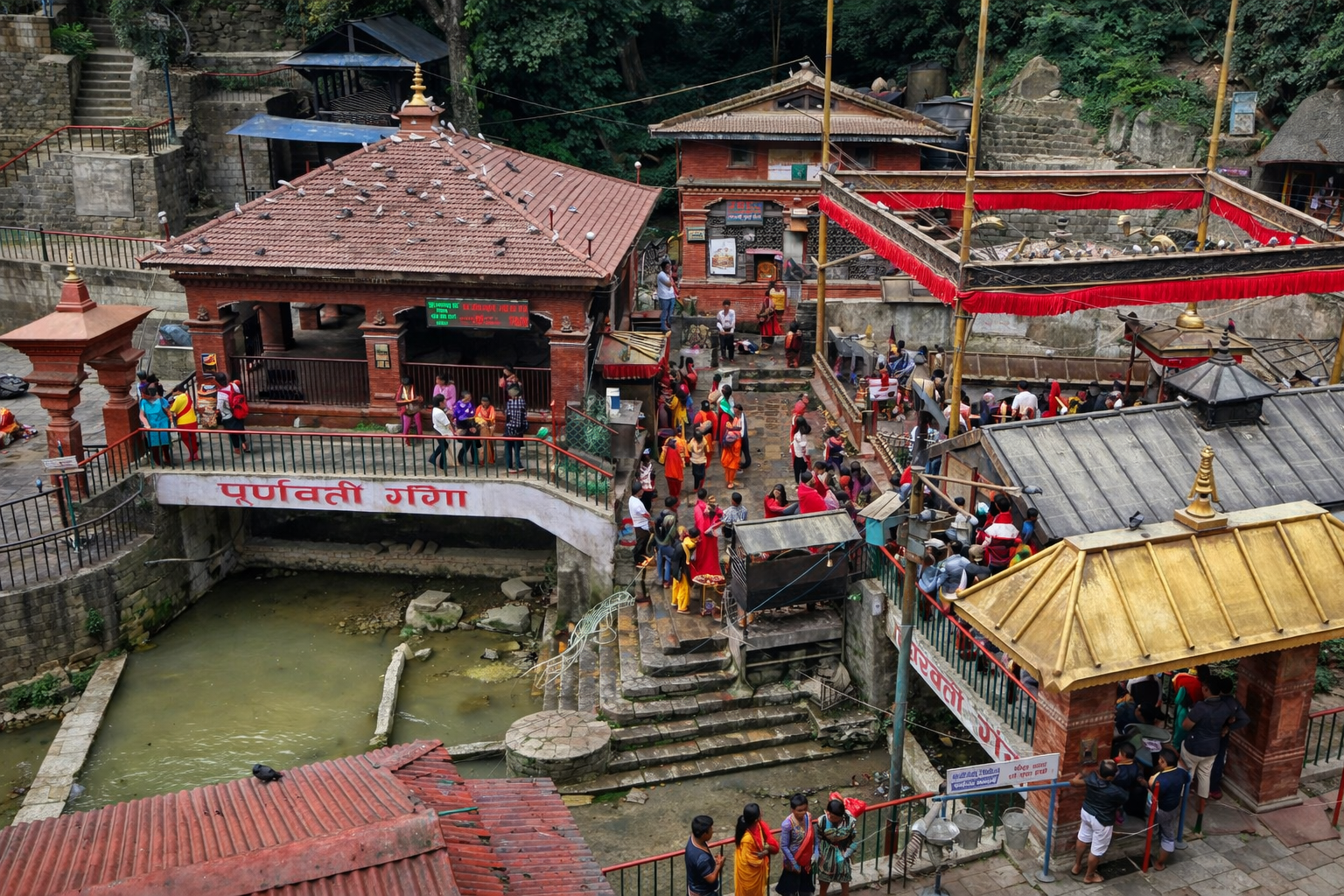
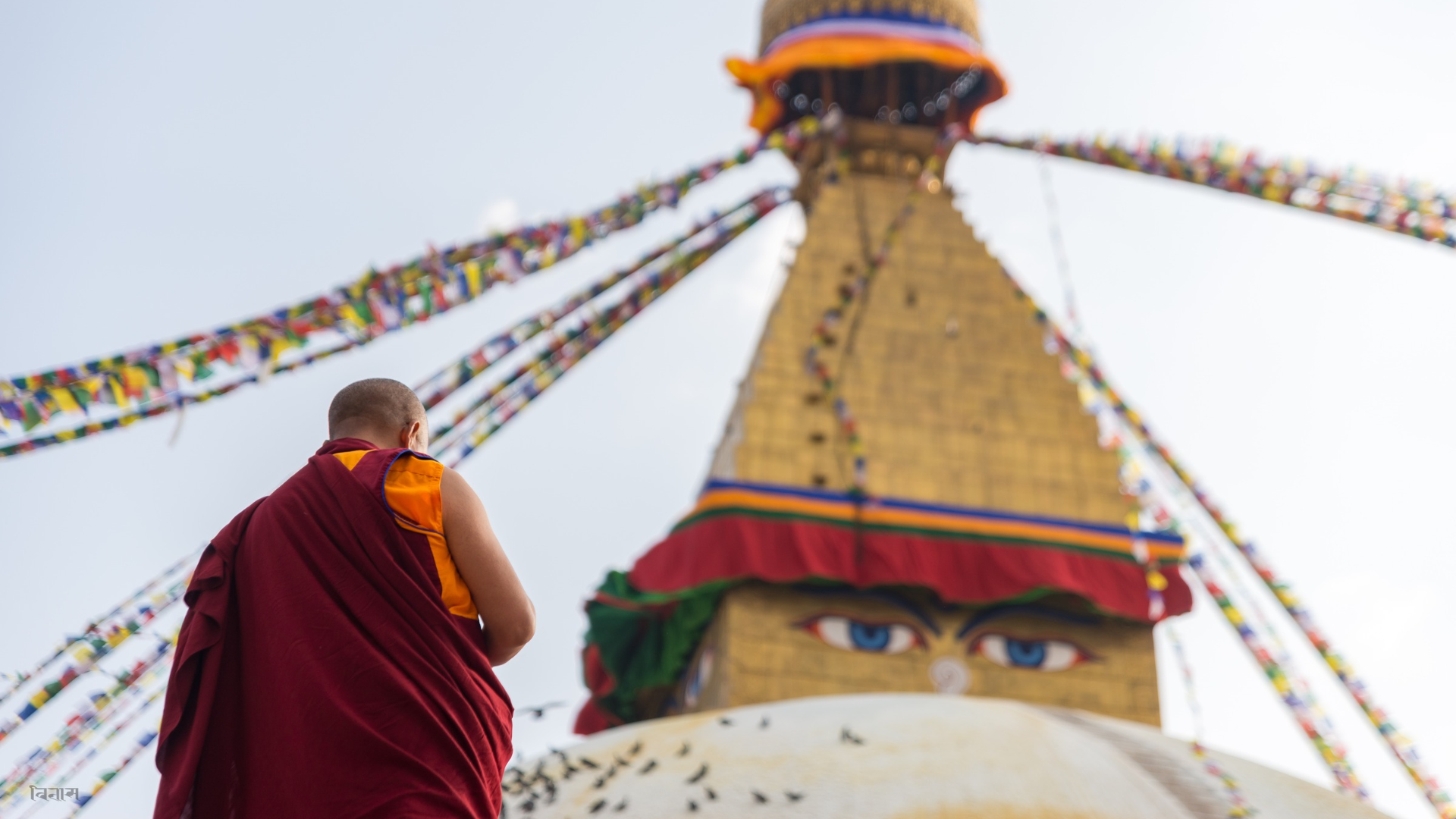
Nepalese Buddhism: Understanding the Philosophy and Practices of Tibetan Monks
Nepal, nestled between the grandeur of the Himalayas and the deep spirituality that runs through its veins, has long been a hub for Buddhist practices and philosophy. As one of the primary Buddhist destinations in the world, Nepal is home to a rich tradition of Tibetan Buddhism. The monasteries, particularly in the Kathmandu Valley and areas such as Pokhara, offer a unique opportunity for travelers to connect with the teachings of Tibetan monks, engage in meditation, and learn about a spiritual tradition that spans centuries.
Nepal, nestled between the grandeur of the Himalayas and the deep spirituality that runs through its veins, has long been a hub for Buddhist practices and philosophy. As one of the primary Buddhist destinations in the world, Nepal is home to a rich tradition of Tibetan Buddhism. The monasteries, particularly in the Kathmandu Valley and areas such as Pokhara, offer a unique opportunity for travelers to connect with the teachings of Tibetan monks, engage in meditation, and learn about a spiritual tradition that spans centuries.
What is Tibetan Buddhism?
Tibetan Buddhism is a school of Buddhism that originated in Tibet and incorporates elements of Mahayana Buddhism and Vajrayana Buddhism. It is deeply intertwined with the culture and spirituality of Tibet, as well as the Himalayan regions of Nepal and Bhutan. The philosophy behind Tibetan Buddhism revolves around the pursuit of enlightenment through the cultivation of wisdom, compassion, and meditation.
At the core of Tibetan Buddhist philosophy is the belief in the cycle of samsara, or the cycle of birth, death, and rebirth. The ultimate goal of Tibetan Buddhism is to transcend samsara and attain nirvana, a state of perfect peace and freedom from suffering. Tibetan Buddhists believe that through meditation, ethical living, and understanding the true nature of reality, one can break free from the cycle of suffering.
Central to the Tibetan Buddhist worldview is the concept of bodhicitta, which means the intention to achieve enlightenment for the benefit of all beings. Tibetan Buddhists strive to cultivate bodhicitta by practicing compassion, wisdom, and mindfulness in their daily lives.
Tibetan Buddhist Practices
Tibetan Buddhism is known for its rich and varied spiritual practices. Some of the key practices include:
Meditation (Dhyana)
Meditation is at the heart of Tibetan Buddhism. There are various types of meditation practices that monks and practitioners engage in, such as shamatha (calm-abiding meditation) and vipassana (insight meditation). These meditative techniques aim to cultivate mindfulness, awareness, and inner peace.
Mantras and Chanting
Chanting mantras sacred words or phrases repeated during meditation holds a central role in Tibetan Buddhism. Mantras are believed to invoke blessings, protection, and wisdom. One of the most famous mantras is the Om Mani Padme Hum, which symbolizes compassion and the wish to relieve suffering.
Rituals and Offerings
Tibetan monks conduct rituals that involve offerings, prayers, and the use of sacred objects like prayer flags, prayer wheels, and bells. These rituals are meant to create positive energy, purify negative karma, and invoke the blessings of the Buddhas and Bodhisattvas.
Vajrayana Buddhism
Tibetan Buddhism incorporates Vajrayana, the “diamond vehicle,” which emphasizes tantric practices. This includes visualization techniques, symbolic gestures (mudras), and the use of sacred texts and teachings to accelerate the path to enlightenment. These teachings are often passed on directly from a lama (spiritual teacher) to a disciple.Deity Worship
Tibetan Buddhism has a rich pantheon of deities, bodhisattvas, and spiritual figures. These figures are revered as manifestations of enlightened qualities. One of the most prominent figures in Tibetan Buddhism is Avalokiteshvara, the bodhisattva of compassion, often depicted with many arms to symbolize the willingness to assist all beings.
Connecting with Tibetan Monks in Nepal
For travelers interested in learning more about Tibetan Buddhism, Nepal offers an array of opportunities to connect with Tibetan monks and immerse themselves in Buddhist teachings. Nepal has a long-standing Tibetan Buddhist tradition, with many Tibetan monasteries scattered across the Kathmandu Valley, especially in areas like Boudhanath and Swayambhunath.
Here are some ways to connect with Tibetan monks and their teachings:
Stay at a Monastery
Many Tibetan monasteries in Nepal offer guest programs, allowing travelers to stay and engage with the monks. This experience typically includes participating in morning prayers, attending teachings, and observing the daily routines of the monks. Monasteries such as Kopan Monastery, located just outside Kathmandu, offer meditation retreats and Buddhist study programs for those seeking an immersive experience.Take a Meditation Course
Several monasteries in Nepal, like the Samye Monastery and Kopan Monastery, offer courses on meditation, mindfulness, and Buddhist philosophy. These retreats provide the perfect environment for travelers to deepen their meditation practice while learning from experienced Tibetan monks. Participants can expect to meditate in peaceful surroundings, receive teachings on Buddhist philosophy, and gain insights into the Tibetan way of life.Engage in the Local Community
Many Tibetan monks in Nepal are involved in the local community, offering guidance, teachings, and even social support to local residents and fellow travelers. Visitors can join in discussions, attend public teachings, or simply engage in meaningful conversations with the monks. This interaction provides valuable insight into the daily practices and mindset of the monks.Join in Rituals and Prayers
For those interested in Tibetan rituals and chanting, many monasteries in Nepal welcome visitors to observe or even participate in prayer ceremonies. Attending a ritual at a Tibetan monastery, especially during special occasions or festivals, offers a unique chance to witness the sacred rituals firsthand and experience the profound spiritual atmosphere.Volunteer and Serve
Some monasteries in Nepal invite travelers to volunteer their time in exchange for room and board. Volunteering in a Tibetan Buddhist monastery can be a meaningful way to learn more about the spiritual practices while contributing to the community. Whether helping with daily chores or assisting in teaching, these volunteer programs allow travelers to engage deeply with the monks’ way of life.
The Monastic Way of Life
Living as a Tibetan monk is a life of simplicity, discipline, and devotion. Monks live in communities dedicated to meditation, study, and service to others. A typical day for a Tibetan monk in Nepal includes early morning prayers, meditation sessions, communal meals, and study time. Monks dedicate their lives to understanding the nature of reality, cultivating compassion, and sharing their wisdom with others. Visitors often find that spending time with monks can be a humbling and enriching experience, as it offers a window into a life focused on spiritual practice and service.
Conclusion
Tibetan Buddhism in Nepal is a path to discovering not just a new way of thinking, but a new way of being. Whether you are a spiritual seeker, an adventurer, or someone simply looking to deepen your understanding of the world, connecting with Tibetan monks in Nepal offers an opportunity for profound growth and learning. With their teachings rooted in compassion, mindfulness, and the pursuit of enlightenment, Tibetan monks provide travelers with the tools to embark on their own journey toward spiritual fulfillment.
As you explore Nepal’s monasteries and interact with its monks, you will not only gain a deeper understanding of Tibetan Buddhism but also a greater sense of inner peace and connection to the world around you.
POPULAR ITINERARIES
SIMILAR POSTS
The Healing Traditions of Kathmandu: From Singing Bowls to Ayurvedic Spas
Kathmandu is not just a city of temples and heritage it is also a sanctuary for the mind, body, and soul. Nestled between the Himalayas and centuries of cultural wisdom, the valley has quietly nurtured healing traditions that go far beyond the conventional spa experience. Whether you’re seeking to realign your energy, detoxify your body, or simply slow down, Kathmandu offers a rich tapestry of wellness practices rooted in ancient Nepalese, Tibetan, and Ayurvedic traditions.
Kathmandu is not just a city of temples and heritage it is also a sanctuary for the mind, body, and soul. Nestled between the Himalayas and centuries of cultural wisdom, the valley has quietly nurtured healing traditions that go far beyond the conventional spa experience. Whether you’re seeking to realign your energy, detoxify your body, or simply slow down, Kathmandu offers a rich tapestry of wellness practices rooted in ancient Nepalese, Tibetan, and Ayurvedic traditions.
1. The Resonance of Singing Bowls
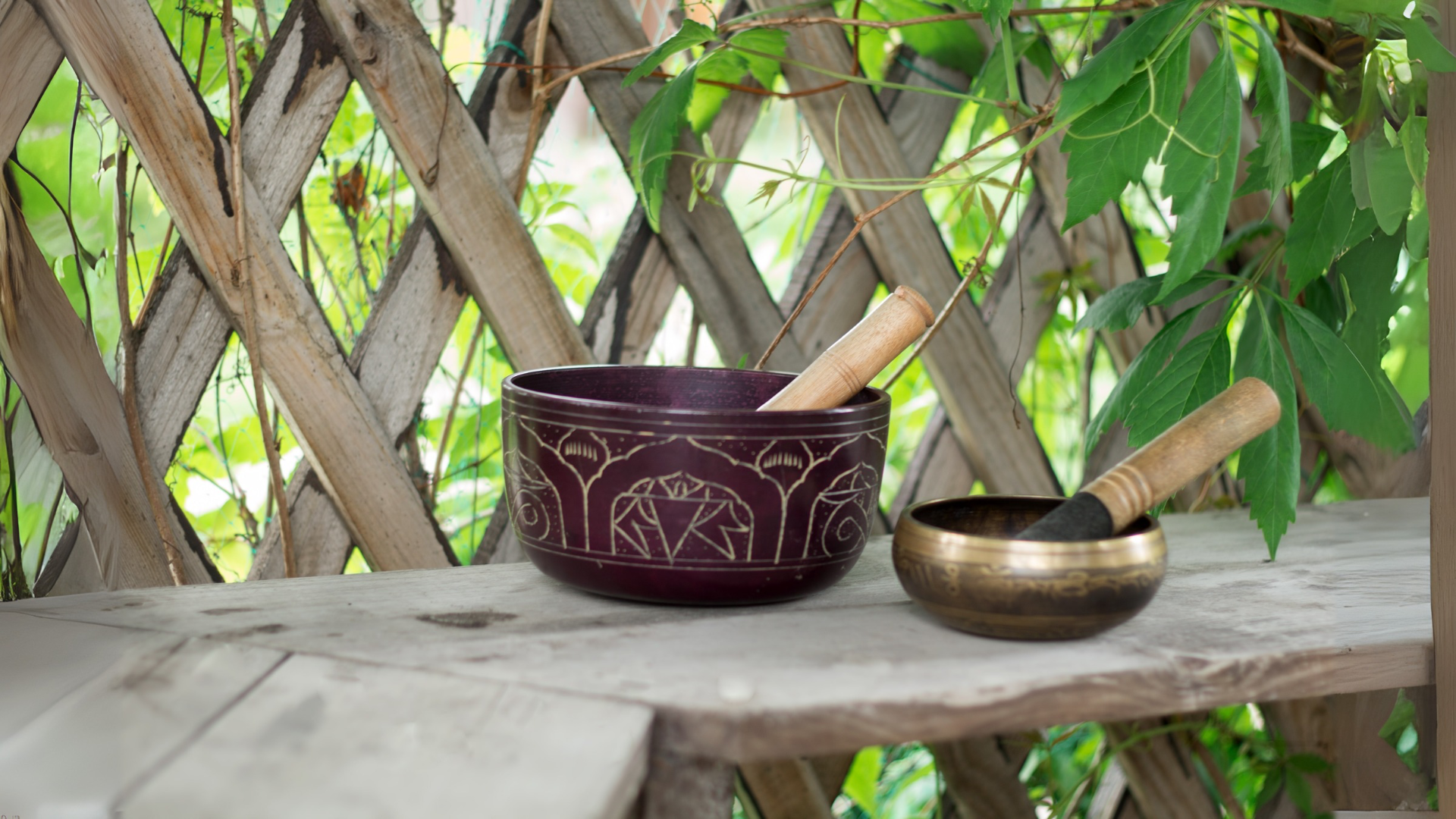
The hauntingly beautiful sound of Tibetan singing bowls is more than just music it’s medicine. This ancient practice uses handcrafted metal bowls to produce deep, resonant vibrations that can help release tension, improve focus, and promote emotional clarity. Sound healing sessions, often held in serene studios or even temple courtyards, are designed to rebalance your body’s natural energy flow. It’s a deeply meditative experience where sound becomes a bridge between the physical and spiritual realms.
2. Reiki Energy Healing
For those seeking subtle yet powerful transformation, Reiki a Japanese technique for stress reduction and energy balancing has found a natural home in Kathmandu. Many practitioners here blend Reiki with local spiritual practices, creating sessions that feel uniquely rooted in Nepal’s mindful way of life. Whether it’s a gentle hands-on treatment or a guided meditation, Reiki helps dissolve emotional blockages and invites a deep sense of inner calm.
3. Ayurvedic Therapies and Spas
Ayurveda, the 5,000-year-old science of life, is woven into Nepal’s cultural heritage. Kathmandu is home to specialist wellness centers and boutique spas offering authentic Ayurvedic treatments everything from Abhyanga (full-body oil massage) to Shirodhara (a soothing stream of warm oil poured over the forehead to calm the mind). These therapies not only nourish the body but also work on detoxifying and balancing the doshas Vata, Pitta, and Kapha.
4. Herbal Oils and Massages
In the heart of the valley, small family-run wellness centers prepare their own herbal oils, infused with locally sourced ingredients such as jatamansi, camphor, lemongrass, and mustard. Massages using these oils don’t just ease muscle tension they improve circulation, strengthen the immune system, and leave a lingering sense of warmth. Many visitors find that the healing is as much in the therapist’s skilled hands as in the oils themselves.
5. The Comfort of Herbal Teas
In Kathmandu, tea is more than a drink it’s a ritual of care. From soothing chamomile and mint to blends rich with turmeric, ginger, and tulsi, herbal teas are crafted not only for flavor but for their health benefits. You’ll find them in wellness cafés, yoga retreats, and even within hotel lounges perfect after a rejuvenating treatment or a day of exploring the city’s vibrant streets.
Why Kathmandu is a Wellness Destination
What sets Kathmandu apart as a wellness destination is its authenticity. Here, healing is not a passing trend it is a living tradition. These practices are seamlessly integrated into daily life, offering travelers an opportunity to experience wellness in its purest form, surrounded by Himalayan serenity and cultural depth.
For guests staying at Hotel Shanker, Kathmandu’s healing experiences are never far away whether it’s a short stroll to a sound healing studio, a curated spa session arranged through our concierge, or simply a moment of stillness in our heritage gardens with a cup of herbal tea in hand.
Wellness Travel Nepal is not about escape it’s about return. Return to balance, return to stillness, return to yourself. And Kathmandu, with its deep-rooted healing traditions, is the perfect place to begin that journey.
POPULAR ITINERARIES
SIMILAR POSTS
Rakshyabandhan in Nepal: Tradition, Meaning, and Celebrations
Every year during the bright full moon of Shrawan or Bhadra (August), Nepal celebrates Rakshyabandhan, a festival deeply rooted in tradition, spirituality, and familial bonds. Known as “Janai Purnima” in many communities, this auspicious day carries multiple layers of meaning—uniting brothers and sisters in a vow of love and protection while also marking spiritual purification rituals for devotees across the country.
Every year during the bright full moon of Shrawan or Bhadra (August), Nepal celebrates Rakshyabandhan, a festival deeply rooted in tradition, spirituality, and familial bonds. Known as “Janai Purnima” in many communities, this auspicious day carries multiple layers of meaning—uniting brothers and sisters in a vow of love and protection while also marking spiritual purification rituals for devotees across the country.
The Story Behind Rakshyabandhan
The origins of Rakshyabandhan are tied to Hindu mythology, where stories of protection, devotion, and sacred promises have been passed down for generations. One of the most popular legends speaks of Lord Krishna and Draupadi. When Krishna injured his finger during a battle, Draupadi tore a piece of her saree and tied it around his wound. Touched by her gesture, Krishna vowed to protect her in times of need. This selfless act is believed to have inspired the tradition of tying a “rakhi” or sacred thread as a bond of love and protection.
In Nepal, Rakshyabandhan also coincides with Janai Purnima, when men who follow Vedic rituals change their sacred thread (“Janai”) after a holy bath in rivers, signifying purification and renewal of vows to live a righteous life.
Why We Celebrate Rakshyabandhan
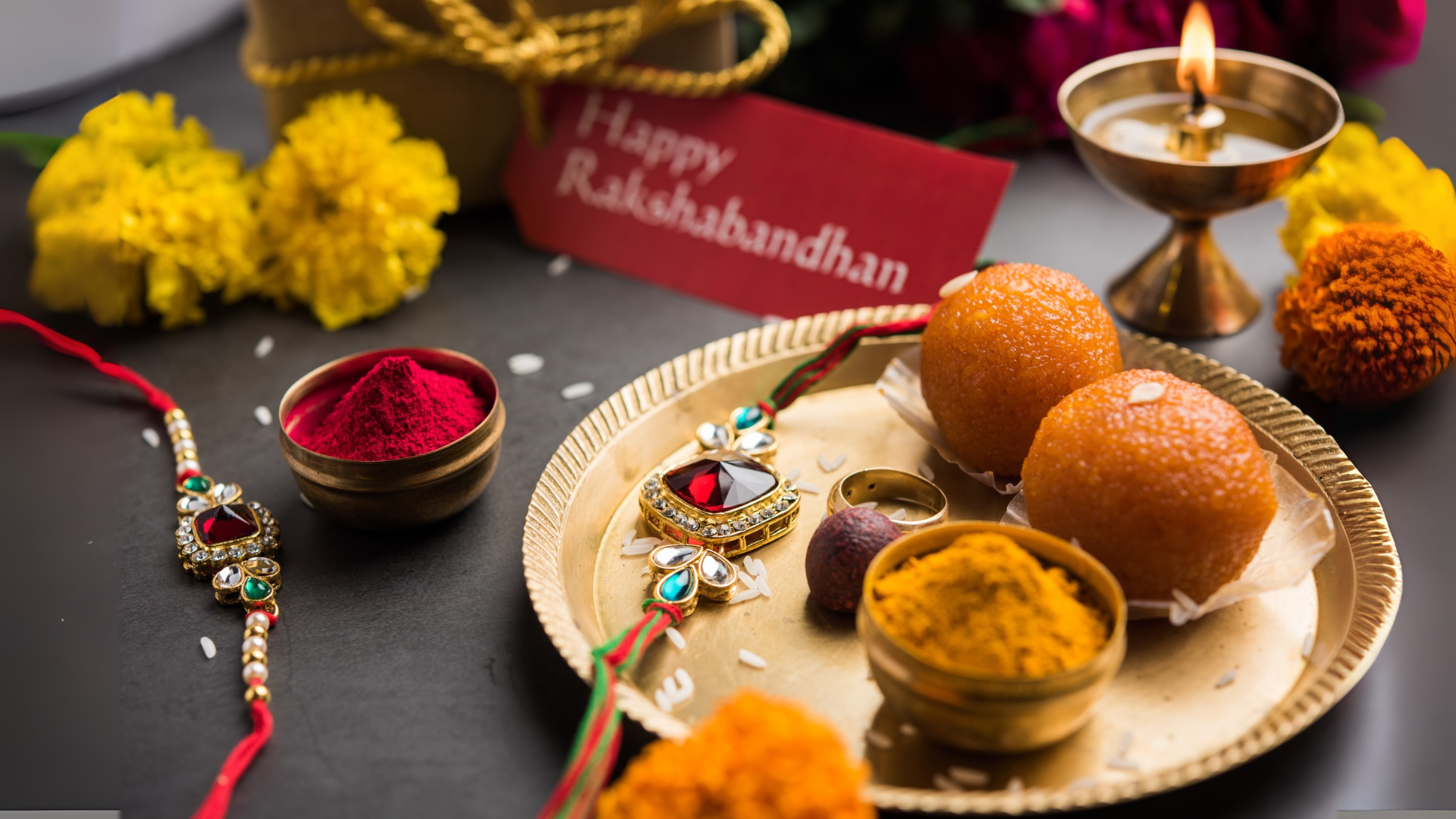
Rakshyabandhan is more than a ritual—it’s a celebration of trust, unity, and familial affection. Sisters tie a protective thread (rakhi or raksha dhago) around their brothers’ wrists, offering prayers for their well-being and happiness. In return, brothers pledge lifelong protection and shower their sisters with blessings and gifts.
In Nepal, this festival expands beyond blood relations. Families, friends, and even spiritual gurus share the sacred thread, symbolizing harmony and goodwill among all beings.
Rituals and Festive Celebrations in Nepal
Rakshyabandhan begins early in the morning with families visiting rivers or ponds for a holy dip. Priests chant mantras and tie protective threads on the wrists of devotees, symbolizing divine blessings and safety from negative energies.
Later in the day, households gather for the rakhi ceremony, where sisters prepare sweets, fruits, and ceremonial plates decorated with tika, flowers, and raksha dhago. The day is filled with laughter, shared meals, and heartfelt memories, reinforcing the importance of relationships in Nepali culture.
The Spirit of Togetherness at Hotel Shanker
At Hotel Shanker, we cherish Nepal’s rich cultural traditions that bring families closer. Rakshyabandhan is a reminder that bonds of love and protection are treasures to be celebrated. Whether you are visiting Kathmandu during this festive season or sharing the day with loved ones, our heritage ambiance provides the perfect setting for meaningful family gatherings.
As you celebrate Rakshyabandhan in Nepal, let the sacred thread be a reminder of the eternal ties that connect hearts, families, and traditions.
POPULAR ITINERARIES
SIMILAR POSTS
A City You Can’t Navigate by GPS
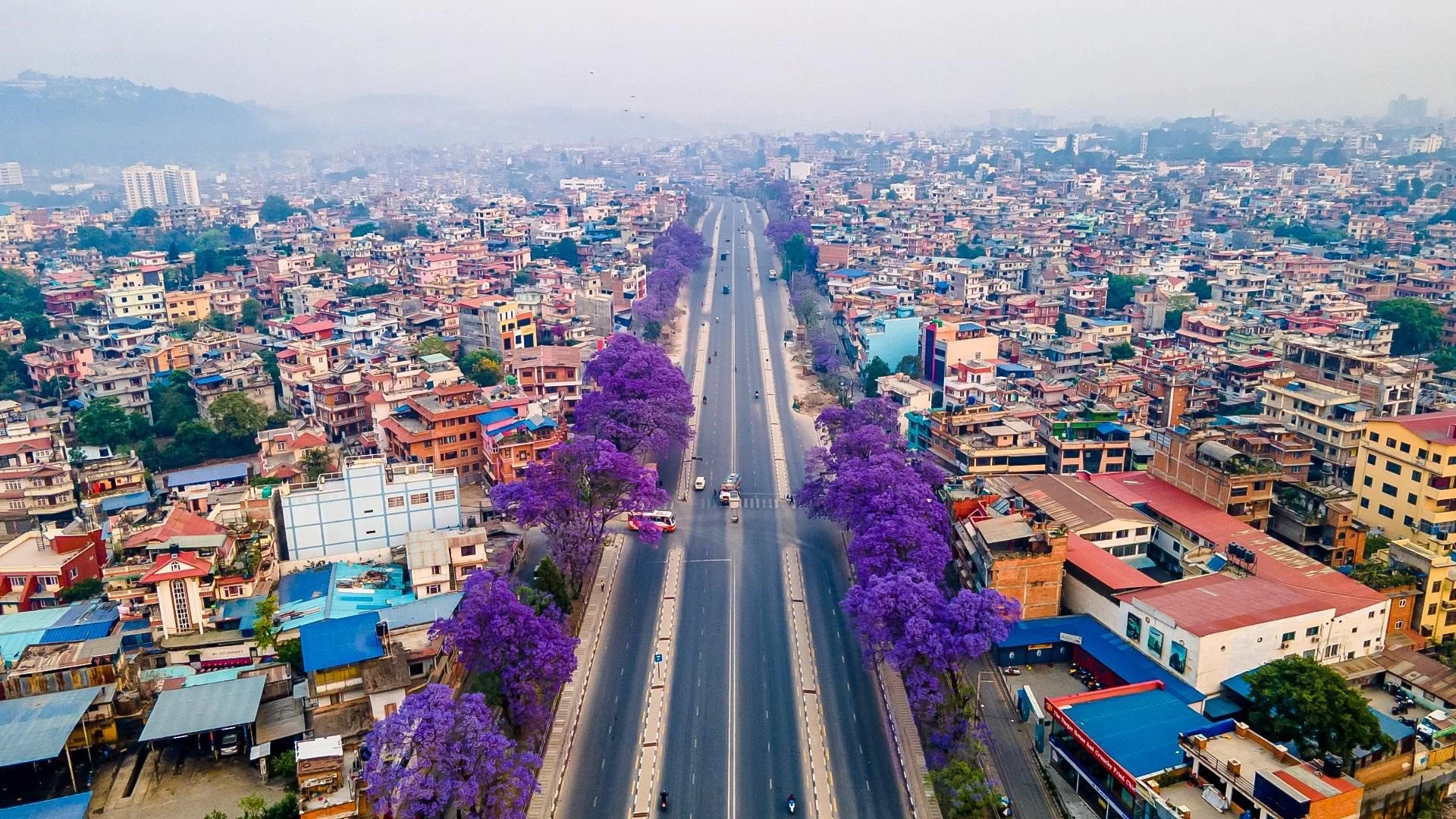
You open Google Maps in Kathmandu, and it looks promising enough winding lines, blinking dots, the polite confidence of a blue arrow showing you the way. You set off, trusting your digital guide, only to find yourself standing in front of a wall where a road should be. Or a temple courtyard. Or a dead-end crammed with motorbikes and an unexpected wedding procession.
Kathmandu: Where maps mislead, but people guide you home
You open Google Maps in Kathmandu, and it looks promising enough winding lines, blinking dots, the polite confidence of a blue arrow showing you the way. You set off, trusting your digital guide, only to find yourself standing in front of a wall where a road should be. Or a temple courtyard. Or a dead-end crammed with motorbikes and an unexpected wedding procession.
Welcome to Kathmandu. A city that doesn’t just confuse GPS it quietly resists it.
Where Roads Have Names… But Nobody Uses Them
Ask a local for directions, and you’ll rarely hear street names. Instead, it’ll go something like this:
“Go straight past the old peepal tree, turn left after the momo shop with the blue shutters, and when you see the temple with the golden roof, ask again.”
In Kathmandu, navigation isn’t about grids or coordinates. It’s a living language of landmarks, a shared understanding of where things are, based on memory, not maps. Sometimes the landmark is a shop that’s been closed for years, but everyone still refers to it. Sometimes it’s a tree, a gate, a statue with no plaque
.
And somehow… It works.
Google Maps Can’t Keep Up And That’s Kind of Perfect
Digital maps try their best. But Kathmandu’s streets aren’t obedient. Alleys narrow or disappear after festivals. New roads are carved during construction, only to vanish again. What looks like a road may be a private courtyard for afternoon tea.
Even locals laugh at Google’s suggestions. You follow the line, and it leads you into a monastery. Or a vegetable market. Or right through someone’s living room, if you’re not careful.
But that’s Kathmandu’s charm. The city wasn’t built to be browsed on a screen. It was built for walking, asking, discovering and sometimes, delightfully, for getting a little lost.
The Art of Asking for Directions
There’s an unspoken etiquette to it. You approach someone with a slight bow of your head, perhaps a soft “I’m looking for this place”.
They might frown, think for a second, gesture with a handwave that covers three directions at once, and say something that sounds impossibly vague. You follow, half-trusting, half-curious.
And more often than not, you find what you’re looking for or something better.
Because in Kathmandu, asking for directions isn’t just practical. It’s a conversation starter. A human GPS moment that turns strangers into guides, and an unfamiliar alley into part of your story.
When Getting Lost is the Whole Point
The best moments in Kathmandu don’t happen on the fastest route. They happen when you take the wrong turn and find a hidden courtyard where a family is stringing marigolds. Or a tiny tea shop where the owner still makes chiya over charcoal. Or a centuries-old stupa tucked between apartment blocks.
This is a city where getting lost is part of the design. Where wandering off-course feels less like a mistake and more like an invitation.
Final Thought: Let the City Show You the Way
Kathmandu doesn’t want you to follow a line on a map. It wants you to look up, ask around, and let curiosity lead the way.
So go ahead and open your GPS if you must. But when it inevitably leads you astray, smile. That’s when you know you’ve truly arrived.
Because some cities are better drawn in conversations than on screens. And Kathmandu is one of them.
POPULAR ITINERARIES
SIMILAR POSTS
Nepali Storytelling Traditions You’ve Probably Never Heard Of
Before stories were written down, they lived in voices sung, spoken, and carried across generations. In Nepal, storytelling has always been more than a pastime. It is a way of keeping memories alive, of teaching, celebrating, and belonging.
Beyond city museums and formal stages, the art of storytelling still thrives in quiet homes, village gatherings, and festivals. Here are some of the lesser-known traditions that continue to echo in the Nepali way of life.
Songs, voices, and stories woven into the everyday
Before stories were written down, they lived in voices sung, spoken, and carried across generations. In Nepal, storytelling has always been more than a pastime. It is a way of keeping memories alive, of teaching, celebrating, and belonging.
Beyond city museums and formal stages, the art of storytelling still thrives in quiet homes, village gatherings, and festivals. Here are some of the lesser-known traditions that continue to echo in the Nepali way of life.
Tamang Selo: Stories That Dance
The sound comes first a pulse of drumbeats, a lively strum of music. Tamang Selo is more than a folk song; it is a living story. Known as the signature music of the Tamang community, it blends humor, longing, social tales, and village lore, all woven into verses set to the beat of the damphu drum.
These songs aren’t just for entertainment. They capture the everyday love found and lost, journeys taken, hardships faced told in a way that invites people to dance, sing along, and remember.
In the hills around Kathmandu and beyond, gatherings where Tamang Selo is sung become living archives of community memory.
Rural Folktales Carried in Memory, Shared in Gathering
Across Nepal’s villages, storytelling often finds its voice by the hearth or in the soft hush of evening gatherings. These are the lok katha rural folktales that travel from elder to child, passed down through generations.
They speak of clever animals, mysterious spirits, brave villagers, or moral lessons wrapped in humor and wit. Never bound to paper, these stories shift slightly with every telling, shaped by the voice of the storyteller and the ears of the listener.
In many homes, especially during the monsoon or after harvest, these tales offer more than entertainment. They build bonds, spark imagination, and preserve local wisdom that might otherwise fade away.
Oral Histories in Festivals When the Whole Village Listens
In Nepal, some stories are told not with words alone, but through dance, song, and ritual woven into the fabric of festivals and communal gatherings.
● Ghatu: Among the Gurung and Magar communities, this traditional song-dance tells epic tales of love, war, and ancient kings. Performed by young girls, often in trance-like states, it’s a blend of song, movement, and communal memory.
● Kartik Naach: Held annually in Patan’s Durbar Square, this masked dance retells stories from Hindu mythology through music and stylized choreography, turning public spaces into storytelling stages.
● Balan: Common in parts of western Nepal, Balan blends devotional songs with recitations of mythological tales, performed during religious ceremonies and festivals. It’s part prayer, part storytelling, and all tradition.
These festivals aren’t just celebrations. They are living narratives ways communities pass on stories of their gods, heroes, and shared past.
Final Thought
Storytelling in Nepal doesn’t always come wrapped in books or performed on grand stages. Often, it is found in songs echoing from village homes, tales shared under starlit skies, or ancient rituals danced out in temple squares.
POPULAR ITINERARIES
SIMILAR POSTS