Guardians of the Temples: The Story and Significance of the Bajra in Nepal
The golden Bajra at Swayambhunath Stupa in Kathmandu, a timeless guardian symbolizing strength, enlightenment, and divine protection in Nepal’s sacred traditions.” This sacred object, with its rich mythology and spiritual significance, stands firm as a reminder of the intertwined Hindu and Buddhist beliefs that continue to shape Nepal’s cultural landscape. Whether at the entrance of a temple, adorning stupas, or held during ritual practices, the Bajra represents a powerful force that connects the earthly realm with the divine.
When walking through the courtyards of temples and stupas in Nepal, one object stands out: the Bajra, also known as Vajra. Shining in bronze, brass, or gilded gold, it is often placed at the entrance of sacred spaces, on altars, or in the hands of deities. To many visitors, it looks like an ornate ritual object. But for the people of Nepal, the Bajra carries layers of mythology, symbolism, and spiritual meaning that connect the earthly world to divine power.
What is the Bajra?
The Bajra (Sanskrit: Vajra) literally translates to “thunderbolt” or “diamond.” In Hindu and Buddhist traditions, it represents both the irresistible force of thunder and the indestructibility of a diamond.
• In Hindu mythology, the Bajra is the weapon of Indra, the king of gods and lord of rain and storms.
• In Buddhism, particularly Vajrayana (Tantric Buddhism), the Bajra symbolizes unyielding strength, enlightenment, and the ultimate truth. It is often paired with the Ghanta (bell), representing the harmony of wisdom and compassion.
Physically, a Bajra is crafted with a central sphere flanked by symmetrical prongs, some with two, others with four or more. The design itself embodies balance, unity, and cosmic order.
Mythological Origins
The mythology of the Bajra goes back thousands of years:
• The Hindu Legend: According to ancient texts, the Bajra was fashioned from the bones of sage Dadhichi, who sacrificed himself so that the gods could create a weapon powerful enough for Indra to defeat the demon Vritra. The Bajra thus came to symbolize sacrifice, protection, and the triumph of good over evil.
• The Buddhist Symbolism: In Vajrayana Buddhism, the Bajra represents the indestructible nature of truth and enlightenment. Just as lightning can split rocks, the Bajra cuts through ignorance and illusion.
This dual mythology gives the Bajra a unique role in Nepal, where Hinduism and Buddhism co-exist and intertwine in everyday life.
Where to Find the Bajra in Nepal
Travelers will encounter the Bajra in many forms across Nepal’s sacred architecture:
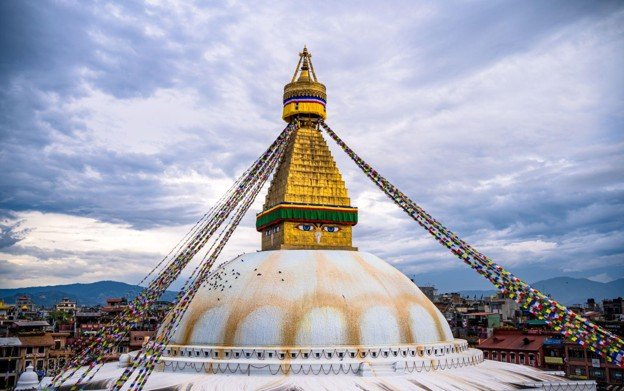
At Stupas: The grand stupas of Swayambhunath and Boudhanath feature massive Bajras placed at their bases, symbolizing the spiritual strength that guards the monument.
In Temples: Many Hindu temples, especially those dedicated to Indra or Shiva, display Bajras at the gates or near shrines.
In Rituals: Monks and priests use hand-held Bajras during pujas and tantric practices, pairing them with bells for meditative chants.
As Decorative Symbols: You’ll also spot smaller Bajras engraved into doorways, pillars, and even prayer wheels as a mark of divine presence.
Symbolism Beyond Myth
The Bajra is not just a relic of mythology, it speaks to deeper philosophies:
• Indestructibility: Like a diamond, truth and enlightenment are eternal.
• Power: Like a thunderbolt, spiritual energy can transform lives instantly.
• Protection: Placed at temple entrances, the Bajra acts as a guardian against negative forces.
• Balance: Its symmetrical design teaches harmony between opposites such as wisdom and compassion, strength and humility.
Why the Bajra Matters Today
For locals, the Bajra remains a living symbol. During festivals like Indra Jatra, it reminds devotees of protection and divine energy. For pilgrims at stupas, it is an invitation to meditate on truth and resilience. And for travelers, it is a glimpse into how myth and spirituality seamlessly merge in Nepal’s cultural landscape.
The Bajra is more than an ornament. It is a guardian, a teacher, and a storyteller. To see a Bajra in Nepal is to stand in the presence of centuries-old beliefs that continue to shape the way of life in the Kathmandu Valley and beyond.
Travel Tip: Next time you visit Swayambhunath or Boudhanath, pause before the massive Bajra at the entrance. Notice its weight, balance, and symbolism. It is not just metal, it is the embodiment of Nepal’s sacred guardianship.
The Bajra reminds us that while storms may shake the world, truth and enlightenment remain unbreakable. In Nepal’s temples and stupas, this symbol stands firm as a guardian of the spiritual path.
POPULAR ITINERARIES

SIMILAR POSTS
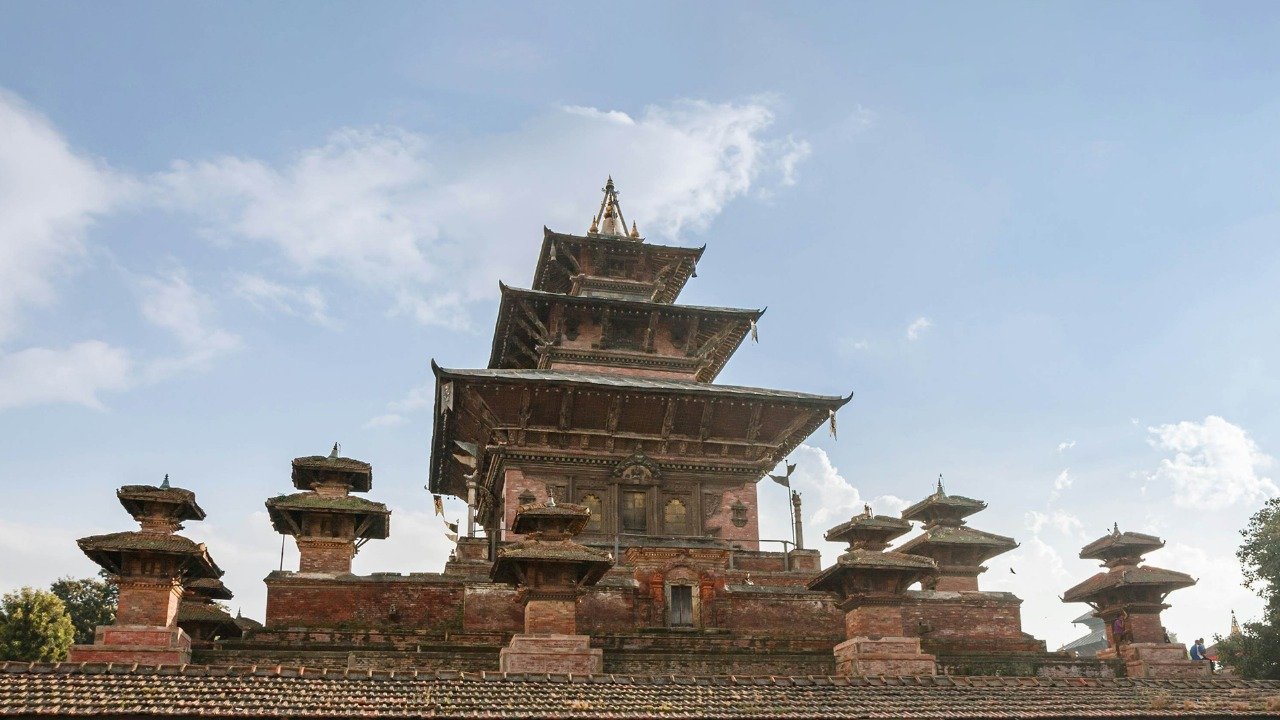
Taleju Temple: The Sacred Heart of Kathmandu’s Spiritual Legacy
Nestled within the historic Kathmandu Durbar Square, the Taleju Temple stands as a testament to Nepal’s rich tapestry of history, spirituality, and architectural brilliance. Dedicated to Taleju Bhawani, the royal goddess of the Malla dynasty, this 16th-century edifice is not just a place of worship but a symbol of the nation’s enduring cultural heritage.
Nestled within the historic Kathmandu Durbar Square, the Taleju Temple stands as a testament to Nepal’s rich tapestry of history, spirituality, and architectural brilliance. Dedicated to Taleju Bhawani, the royal goddess of the Malla dynasty, this 16th-century edifice is not just a place of worship but a symbol of the nation’s enduring cultural heritage.
A Glimpse into History
Commissioned in 1564 by King Mahendra Malla, the Taleju Temple was constructed to honor Taleju Bhawani, the tutelary deity believed to have guided and protected the Malla kings. Legend has it that the goddess appeared to the king in a dream, instructing him to build a temple in her honor. This divine encounter underscores the deep spiritual connection between the Malla rulers and their patron goddess.
Architectural Marvel
Standing at an impressive height of 35 meters, the Taleju Temple is a masterpiece of Newar architecture. Its unique design is said to resemble a yantra—a mystical diagram symbolizing the universe—reflecting the temple’s spiritual significance. The temple’s multi-tiered pagoda structure is adorned with intricate carvings, gilded roofs, and ornate windows, showcasing the exceptional craftsmanship of the era.
Surrounding the main temple are 12 miniature temples, each representing the months of the year, emphasizing the temple’s cosmic symbolism. The temple’s four main entrances are guarded by stone lions, adding to its majestic presence.
Spiritual Significance
Taleju Bhawani is revered as a manifestation of the fierce goddess Durga. Her worship was central to the Malla kings, who considered her their royal deity. The temple’s sanctum houses shrines dedicated to both Taleju Bhawani and Kumari Devi, the living goddess of Kathmandu. This association underscores the temple’s pivotal role in the spiritual life of the valley.
Access to the temple is highly restricted. It opens to the public only once a year during the Dashain festival, allowing devotees to pay homage to the goddess. This exclusivity adds to the temple’s mystique and sanctity.
Legends and Lore
The Taleju Temple is steeped in legends that enrich its spiritual aura. One such tale speaks of the goddess appearing in the form of a bee during the temple’s dedication ceremony, symbolizing her divine presence and blessing. Another legend narrates the story of King Jaya Prakash Malla, who played dice with the goddess in the temple’s sanctum, highlighting the intimate bond between the deity and her devotees.
Preservation and Legacy
Despite the ravages of time and natural calamities, including the 2015 earthquake, the Taleju Temple has retained its grandeur. Restoration efforts have been undertaken to preserve its structural integrity and artistic heritage. Today, the temple stands not only as a place of worship but also as a symbol of Nepal’s resilience and commitment to preserving its cultural landmarks.
Visiting the Taleju Temple
While the temple’s inner sanctum is accessible only during the Dashain festival, visitors can admire its architectural splendor from the outside year-round. Situated within the UNESCO World Heritage Site of Kathmandu Durbar Square, the temple is surrounded by other historical edifices, making it a focal point for those interested in Nepal’s rich history and culture.
Final Reflection
The Taleju Temple is more than just an architectural wonder; it is a living testament to Nepal’s spiritual depth, historical richness, and artistic excellence. For those seeking to understand the soul of Kathmandu, a visit to this sacred site offers a profound glimpse into the city’s enduring legacy.
POPULAR ITINERARIES
SIMILAR POSTS

Ghode Jatra: The Horse Festival That Brings Kathmandu to Life
Ghode Jatra is more than just a horse race; it is a symbol of Kathmandu’s resilience, history, and strength, where the country’s finest cavalry units, skilled riders, and powerful horses come together for a spectacle that has captivated audiences for centuries.
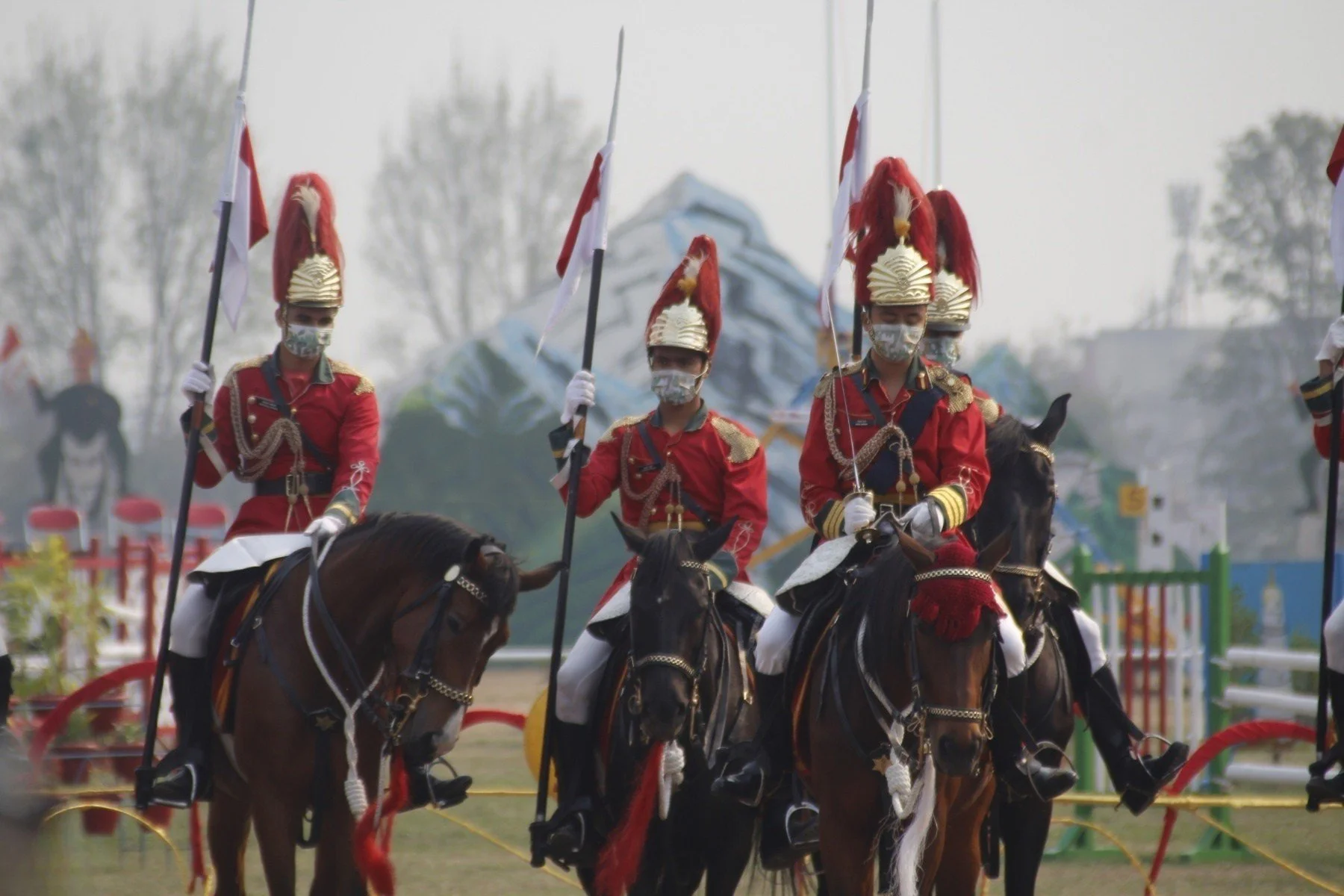
Every year, the heart of Kathmandu thunders with the sound of galloping hooves as the city comes together to celebrate Ghode Jatra, one of Nepal’s most exhilarating and unique festivals. Held at Tundikhel, the vast open ground in central Kathmandu, this event is a dynamic blend of equestrian skill, military tradition, and cultural pride, drawing thousands of spectators from across the country.
Ghode Jatra is more than just a horse race; it is a symbol of Kathmandu’s resilience, history, and strength, where the country’s finest cavalry units, skilled riders, and powerful horses come together for a spectacle that has captivated audiences for centuries.
The Legend Behind Ghode Jatra
Like many of Nepal’s great festivals, Ghode Jatra is rooted in myth and folklore. According to legend, a demon named Gurumapa once terrorized the people of Kathmandu. When the demon was finally defeated, his spirit was believed to remain beneath the grounds of Tundikhel, waiting for a chance to rise again. To prevent this from happening, the Nepalese Army began organizing a ritualistic horse race, believing that the thundering hooves would keep his spirit suppressed beneath the earth.
Over time, this ritual evolved into a grand military event, blending legend, tradition, and athletic prowess. What started as a spiritual precaution soon became one of Nepal’s most iconic displays of equestrian skill and military strength.
A Festival of Speed and Power
Ghode Jatra is a thrilling experience, where precision, speed, and tradition come together in a breathtaking display. The festival, usually held in March or April, is organized by the Nepalese Army, with participation from the highest-ranking officials, dignitaries, and a massive crowd of spectators.
The event showcases:
● Daring equestrian stunts, where skilled riders perform fearless acrobatics on horseback.
● High-speed horse races, testing the agility, strength, and discipline of both horse and rider.
● Traditional Newar rituals, performed by Kathmandu’s indigenous community as a way to honor and preserve their heritage.
● Grand military parades, demonstrating Nepal’s long-standing military history and dedication to national pride.
The festival is not just an event—it is a testament to Nepal’s deep-rooted traditions, military prowess, and cultural vibrancy.
The Atmosphere: A Festival Unlike Any Other
As the festival begins, Tundikhel transforms into a high-energy arena, where crowds cheer as majestic horses charge across the field at breathtaking speeds. The sight of Nepalese cavalry riders executing precise formations, thrilling jumps, and synchronized displays against the backdrop of Kathmandu’s bustling cityscape is a sight to behold.
But Ghode Jatra is more than just a demonstration of speed and skill—it is a day of celebration, gathering, and unity. Families, travelers, and locals come together to witness a spectacle that connects them to centuries of tradition. The energy is electric, the anticipation is high, and the entire event is a reminder of Nepal’s ability to blend its past with the present.
Witness Ghode Jatra in Luxury at Hotel Shanker
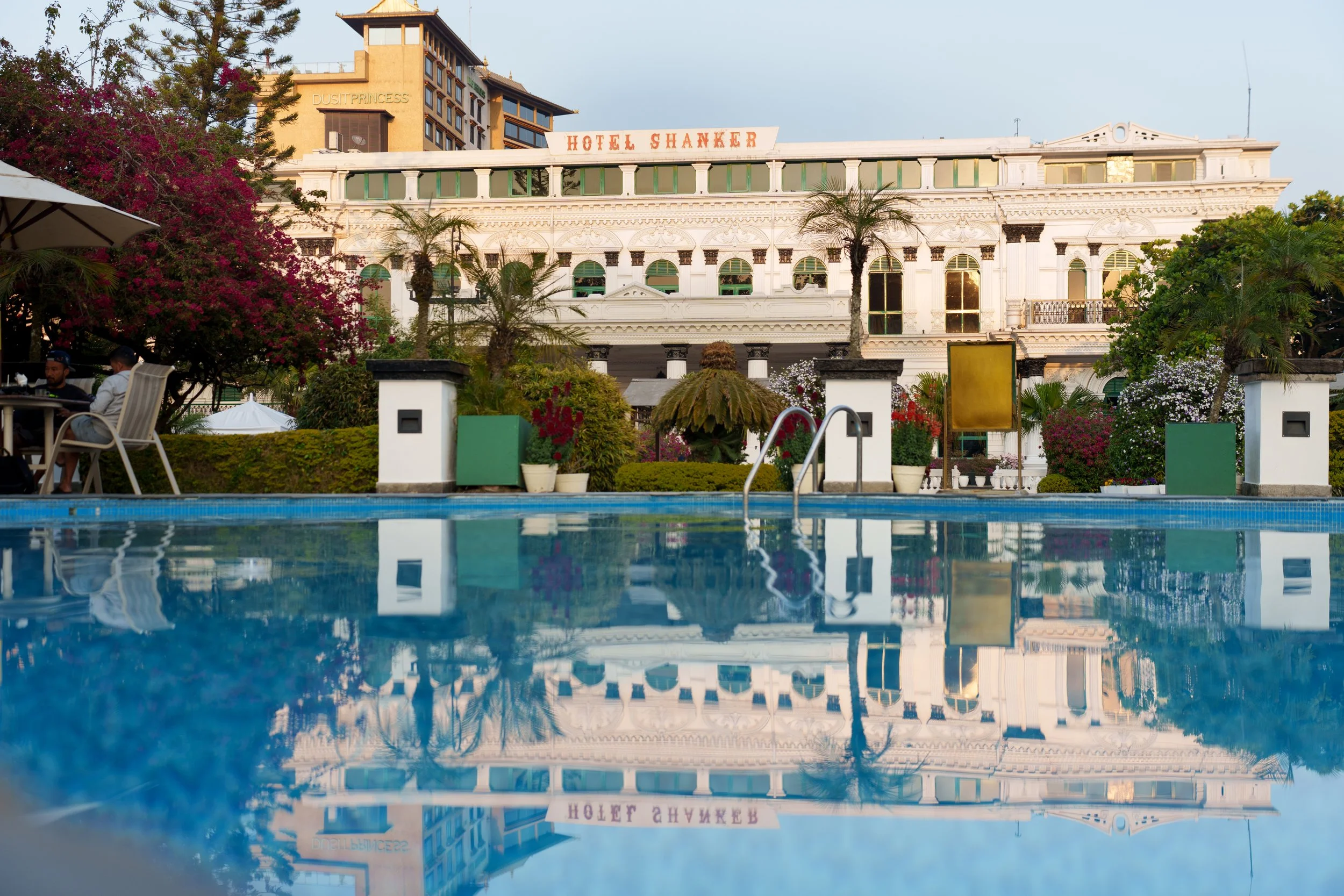
After an exhilarating day at Ghode Jatra, there is no better way to unwind and reflect on the festival’s magic than by retreating to the timeless luxury of Hotel Shanker. Situated just minutes from Tundikhel, Hotel Shanker offers the perfect blend of heritage, comfort, and elegance.
● Experience the charm of a historic palace-turned-hotel, where tradition meets modern luxury.
● Indulge in authentic Nepali and international cuisine, perfect for post-festival dining.
● Relax in serene gardens and beautifully restored interiors, offering a peaceful contrast to the day’s excitement.
Ghode Jatra is a festival that stays with you—just like the unforgettable experience of staying at Hotel Shanker.
Book your stay and make this festival a truly extraordinary experience.
POPULAR ITINERARIES
SIMILAR POSTS
Tales of Harati Ajima: The Guardian Goddess and Her Enduring Legends
In the mystical and culturally rich land of Nepal, where legends intertwine with everyday life, one deity holds a special place in the hearts of the people - Harati Ajima. She is the guardian goddess of Swayambhunath, a revered stupa that crowns the Kathmandu Valley. In this article, we will delve into the captivating tales of Harati Ajima, exploring her history, significance, and the enduring legends that have made her an integral part of Nepal's religious and cultural tapestry.
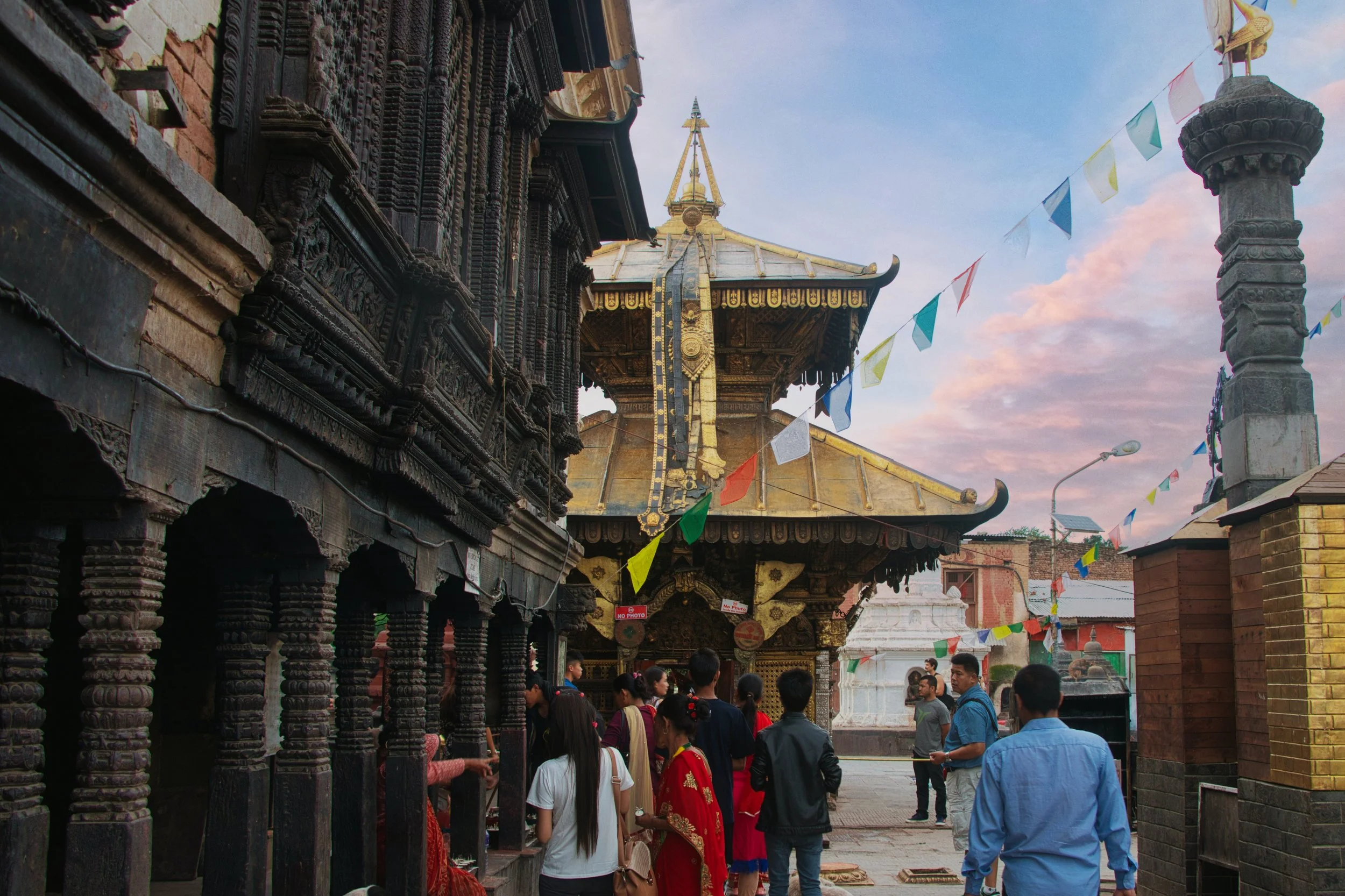
Harati Ajima, also known as Ajima or Hariti, is a prominent deity in Nepali and Tibetan Buddhism. Her name translates to "Mother of the Serpent," and she is often depicted as a fierce goddess with multiple arms, clutching a child and a serpent. She is a protector of children and a guardian of the Swayambhunath Stupa, one of Nepal's most sacred and iconic religious sites.
Devotees believe that Harati Ajima safeguards the stupa and its surroundings from malevolent spirits and negative influences. She is revered for her maternal and protective qualities, and her blessings are sought by those seeking fertility, the well-being of children, and protection from harm.
The Legend of Harati Ajima: From Demoness to Protector
The tale of Harati Ajima's transformation from a demoness to a benevolent goddess is a captivating one. According to legend, Harati was once a fearsome demoness who terrorized the Kathmandu Valley. She had a penchant for abducting and devouring the children of the local townsfolk, causing immense grief and sorrow.
The people of the valley were desperate, and they appealed to Lord Buddha for help. Moved by their suffering, Buddha devised a plan to tame Harati. He disguised himself as a Brahmin and approached Harati, presenting her with a vision of a wondrous palace filled with a vast array of beautiful children.
Harati, drawn by the illusion, expressed her desire to possess such a palace. Buddha then revealed the truth and explained the pain and anguish she had inflicted on others. Touched by his compassion and wisdom, Harati repented and vowed to protect children instead of harming them.
This transformation marked a turning point, and Harati Ajima became the guardian deity of children and a symbol of maternal love and protection.
Harati Jatra: Celebrating the Goddess
Each year, the people of Kathmandu celebrate Harati Jatra, a vibrant and joyous festival dedicated to Harati Ajima. This festival, which typically falls in August or September, is a grand spectacle that includes processions, music, dances, and vibrant rituals.
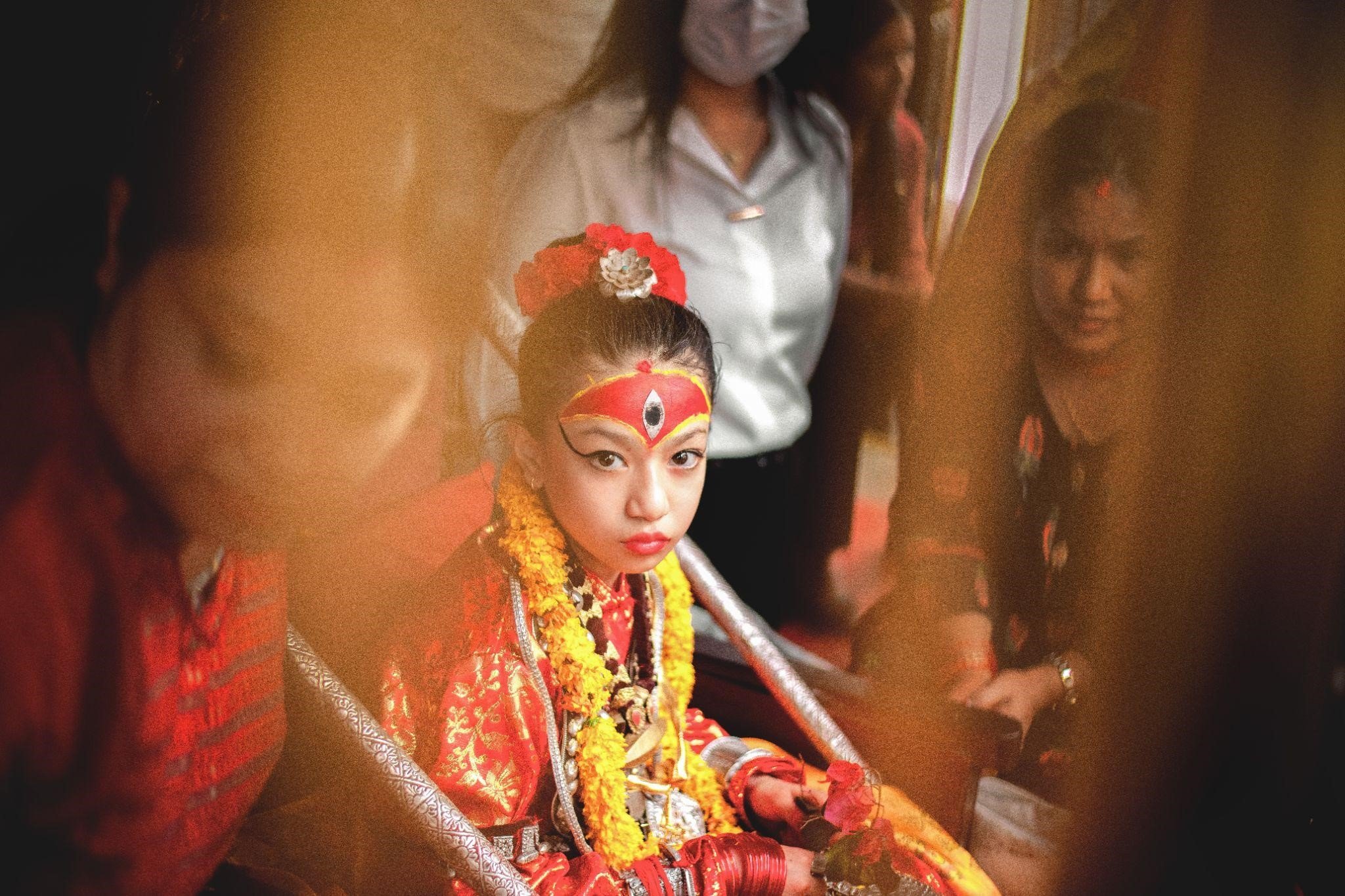
The highlight of Harati Jatra is the Kumari Jatra, a procession led by the living goddess Kumari, who is considered Harati Ajima's representative during the festival. The Kumari, adorned in resplendent traditional attire, leads a colorful procession through the streets of Kathmandu, accompanied by other deities, dancers, and musicians.
Devotees and visitors alike participate in the festivities, seeking Harati Ajima's blessings for the well-being and protection of children. The festival serves as a reminder of the goddess's benevolence and her role in the lives of the Nepali people.
Harati Ajima and Swayambhunath: A Sacred Bond
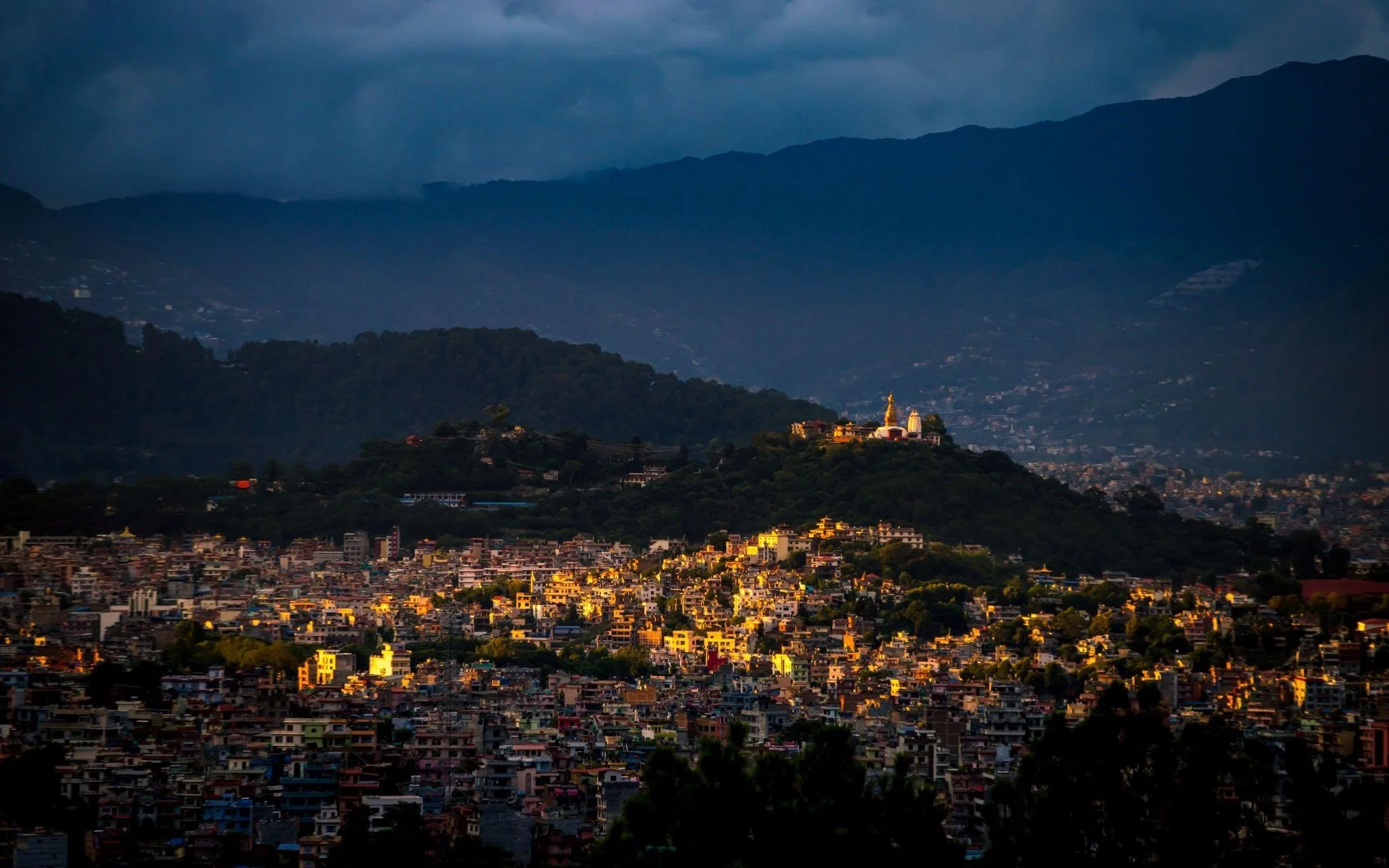
Swayambhunath Stupa, often referred to as the "Monkey Temple" due to the playful monkeys that inhabit the area, is a UNESCO World Heritage Site and one of the most iconic landmarks in Nepal. It is perched atop a hill overlooking the Kathmandu Valley, offering panoramic views of the city and the Himalayas.
Harati Ajima's connection to Swayambhunath is profound. She is believed to reside at the stupa, where she continues to watch over and protect the site. Pilgrims and visitors to Swayambhunath pay their respects to Harati Ajima by offering prayers, incense, and small clay figurines representing children. These offerings are made at her shrine, located near the base of the stupa.
The Living Legacy: Harati Ajima Today
Harati Ajima's legacy endures in Nepal's cultural and religious traditions. Her benevolence and protective qualities make her a beloved deity, particularly among mothers and those seeking the well-being of their children.
Devotees continue to seek her blessings and protection, not only at Swayambhunath but also at other temples and shrines dedicated to her across Nepal. Her presence is a reminder of the power of transformation, compassion, and the enduring legacy of myths and legends in shaping Nepal's spiritual landscape.
In the heart of Nepal, amid the breathtaking landscapes of the Kathmandu Valley, Harati Ajima stands as a symbol of transformation and maternal protection. Her story, from demoness to guardian goddess, is a testament to the power of compassion and redemption. Harati Ajima's role in the lives of Nepali people is a reminder of the enduring significance of mythology and legends in shaping cultural and religious traditions.
As devotees and visitors alike continue to seek her blessings and celebrate her during the vibrant Harati Jatra, Harati Ajima's legacy remains woven into the fabric of Nepal's rich and diverse cultural tapestry. She is not just a deity but a symbol of hope, love, and protection for all, ensuring that her tales continue to inspire generations to come.
POPULAR ITINERARIES
SIMILAR POSTS
Historic Gadi Baithak of Basantapur: A Timeless Treasure
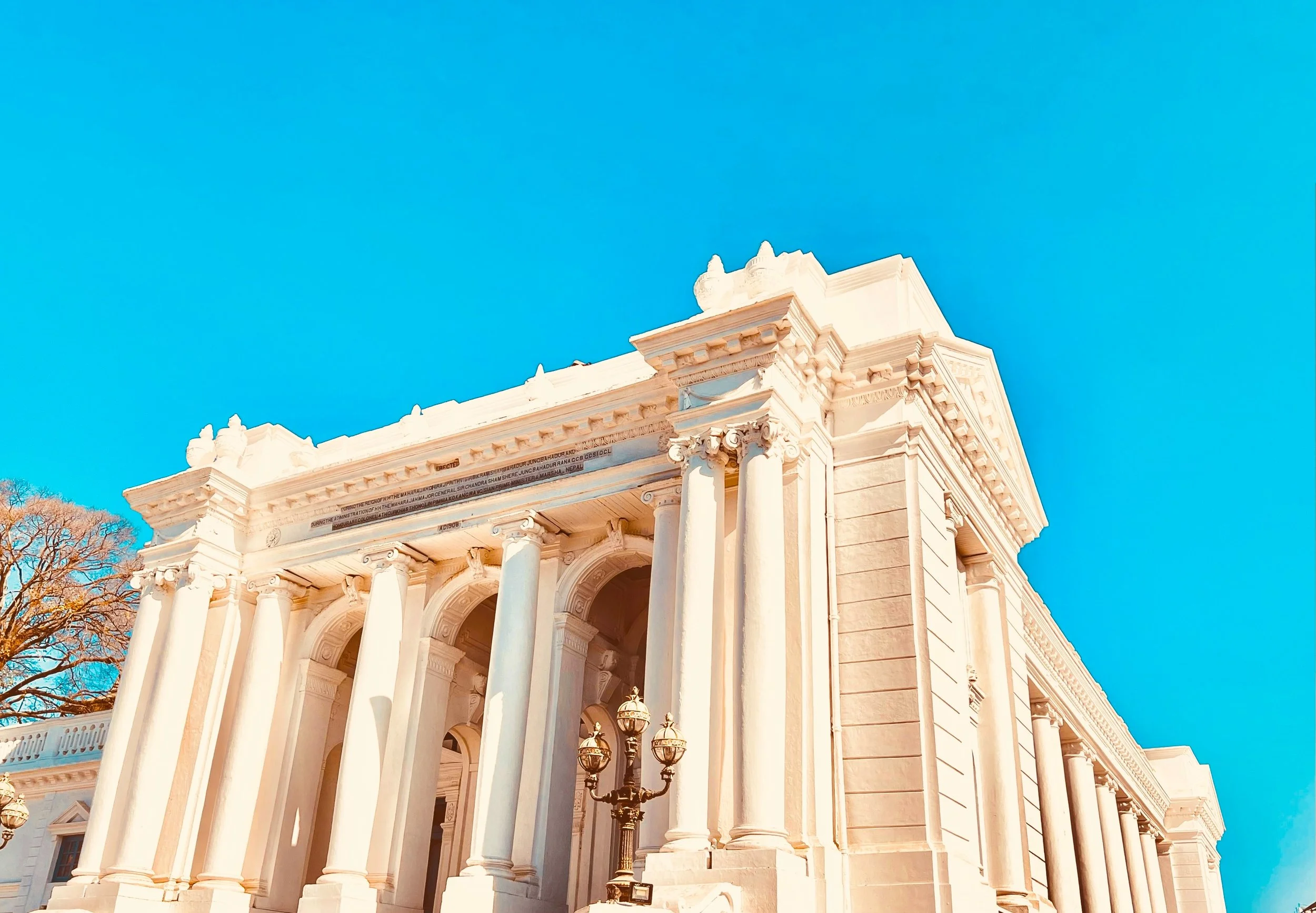
In the heart of Kathmandu's historic Basantapur Durbar Square stands a magnificent architectural gem that resonates with the grandeur of Nepal's royal past - the Gadi Baithak. This ornate palace, a testament to the craftsmanship of its time, showcases the rich history and cultural heritage of Nepal.
The Gadi Baithak, also known as the White Palace, is a captivating blend of architectural styles that reflect Nepal's diverse cultural influences. The palace, constructed during the early 20th century by Chandra Shumsher Jang Bahadur Rana in 1908, boasts a remarkable fusion of Newari, Mughal, and Tibetan architectural elements.
The most striking feature of the Gadi Baithak is its multi-tiered pagoda-style roof adorned with intricate wood carvings and golden embellishments. The façade of the palace is adorned with ornate windows and doorways, each showcasing the superb craftsmanship of the Newari artisans. The palace's fusion of aesthetics is a testament to Nepal's history as a crossroads of diverse cultures and artistic influences.
Historical Significance: A Royal Legacy
The Gadi Baithak has a storied history intertwined with the dynasties that ruled over Nepal. Originally constructed during the reign of Chandra Shumsher Jang Bahadur Rana in 1908, it served as a royal court where the king would hold audiences, make proclamations, and receive dignitaries and ambassadors. The palace also played a central role in hosting religious ceremonies and festivals.
One of the most significant events associated with the Gadi Baithak was the declaration of the abdication of King Gyanendra in 1950, marking the end of the Shah monarchy. This historic moment unfolded within the grand halls of the palace, making it a symbol of political change in Nepal.
Over the centuries, the Gadi Baithak has witnessed a transformation in its usage. From its origins as a royal court, it has evolved into a cultural center and an architectural treasure of Nepal. Today, it continues to serve as a venue for cultural events, exhibitions, and public gatherings.
The Gadi Baithak also houses a museum that showcases Nepal's royal history, traditional art, and artifacts from the Malla period. The museum provides visitors with insights into the rich cultural tapestry of Nepal and the artistic achievements of its people.
Basantapur Durbar Square: A Cultural and Historical Oasis
The Gadi Baithak is a pivotal component of the larger Basantapur Durbar Square, a UNESCO World Heritage Site that encompasses a rich collection of palaces, temples, and courtyards. The square itself is a vibrant cultural hub, a place where traditional festivals, rituals, and daily life converge.
Among the notable attractions within Basantapur Durbar Square is the Hanuman Dhoka Durbar, a palace complex that served as the royal residence for many centuries. Its intricately carved wooden balconies and courtyards offer a glimpse into the opulence of Nepal's past.
Additionally, the Kumari Ghar, or Kumari's Residence, is another highlight. It is the home of the Kumari, a living goddess, and visitors may catch a glimpse of her during scheduled appearances.
Preserving a Cultural Heritage
The Gadi Baithak, like many historic structures in Nepal, has faced challenges over the years due to earthquakes and the passage of time. However, concerted efforts have been made to preserve and restore this architectural treasure.
Various restoration projects, supported by both local and international organizations, have contributed to the ongoing maintenance and protection of the Gadi Baithak and other heritage sites in Basantapur Durbar Square. These efforts aim to ensure that these landmarks continue to stand as testaments to Nepal's rich cultural heritage and history.
The Gadi Baithak of Basantapur stands as a timeless testament to Nepal's rich history, architectural splendor, and cultural significance. Its fusion of diverse architectural styles and its role in Nepal's royal and political history make it a must-visit destination for travelers and history enthusiasts alike.
As visitors explore the grandeur of the Gadi Baithak within the historic Basantapur Durbar Square, they are transported to a bygone era, where the echoes of royal proclamations and the artistry of the Newari craftsmen continue to resonate. The preservation of such architectural treasures is not just a duty; it is a celebration of Nepal's cultural heritage and a bridge between the past and the present, ensuring that the legacy of the Gadi Baithak endures for generations to come.
POPULAR ITINERARIES
SIMILAR POSTS
Indra Jatra: Nepal's Spectacular Festival
In the heart of Kathmandu, where ancient traditions intertwine with modern life, a grand celebration unfolds, reverberating through the narrow alleyways and vibrant squares. This is Indra Jatra, one of Nepal's most significant and spectacular festivals, where gods, goddesses, and people come together to celebrate culture, heritage, and spirituality. In this feature article, we delve deep into the heart of Indra Jatra, exploring its history, rituals, and the vibrant tapestry of culture that defines this extraordinary celebration.
The Legacy of Indra Jatra: A Historical Prelude
Indra Jatra has deep historical roots that harken back to Nepal's medieval era. This annual festival takes its name from Lord Indra, the god of rain and the ruler of heaven in Hindu mythology. The festival finds its origins in the 10th century during the Malla Dynasty, which ruled the Kathmandu Valley. King Gunakamadeva initiated Indra Jatra as a way to honor Lord Indra for providing rain, essential for the agricultural prosperity of the region. Over time, the festival evolved to include both Hindu and Buddhist traditions.
The Tale of the Kumari Jatra
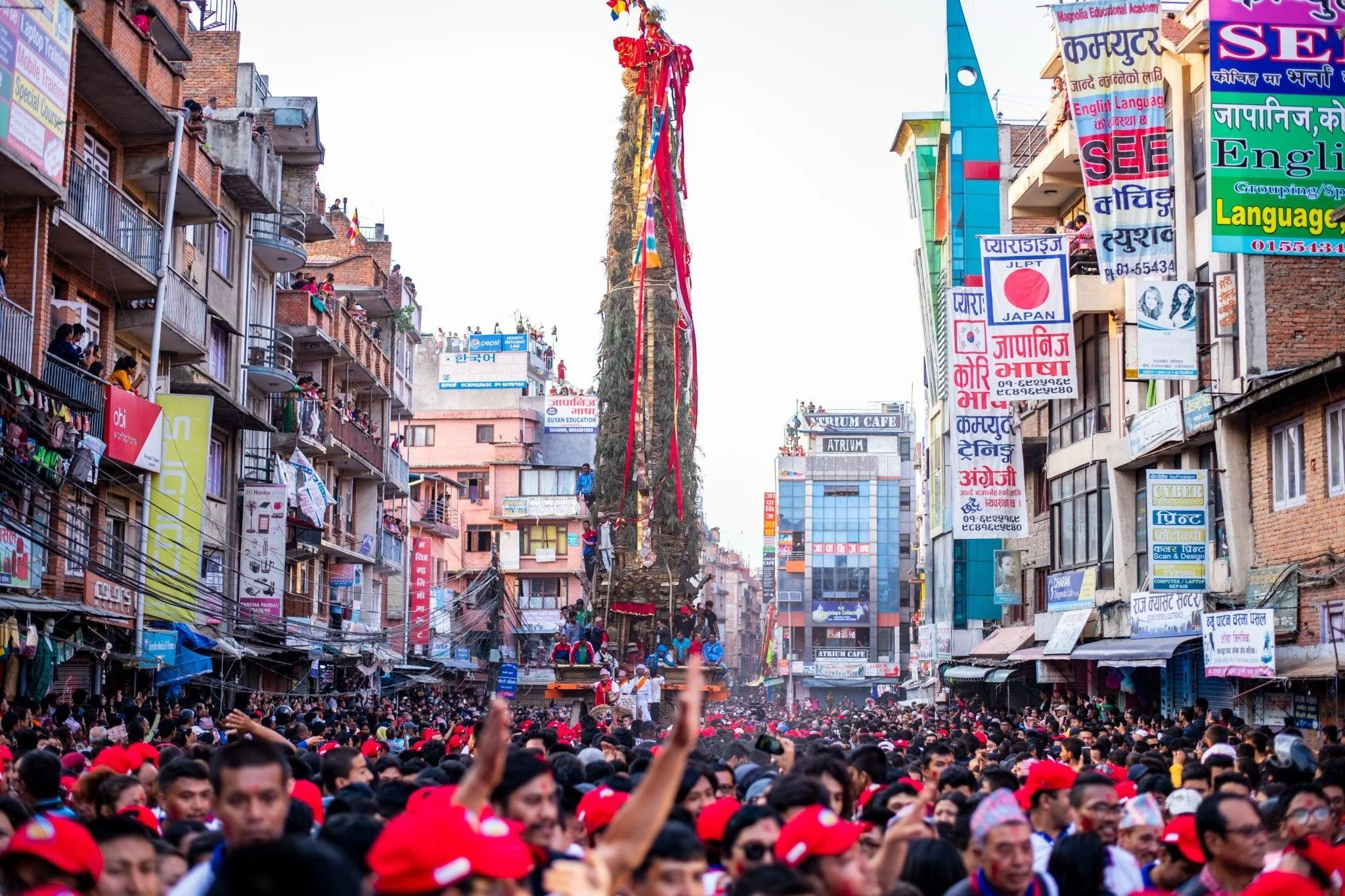
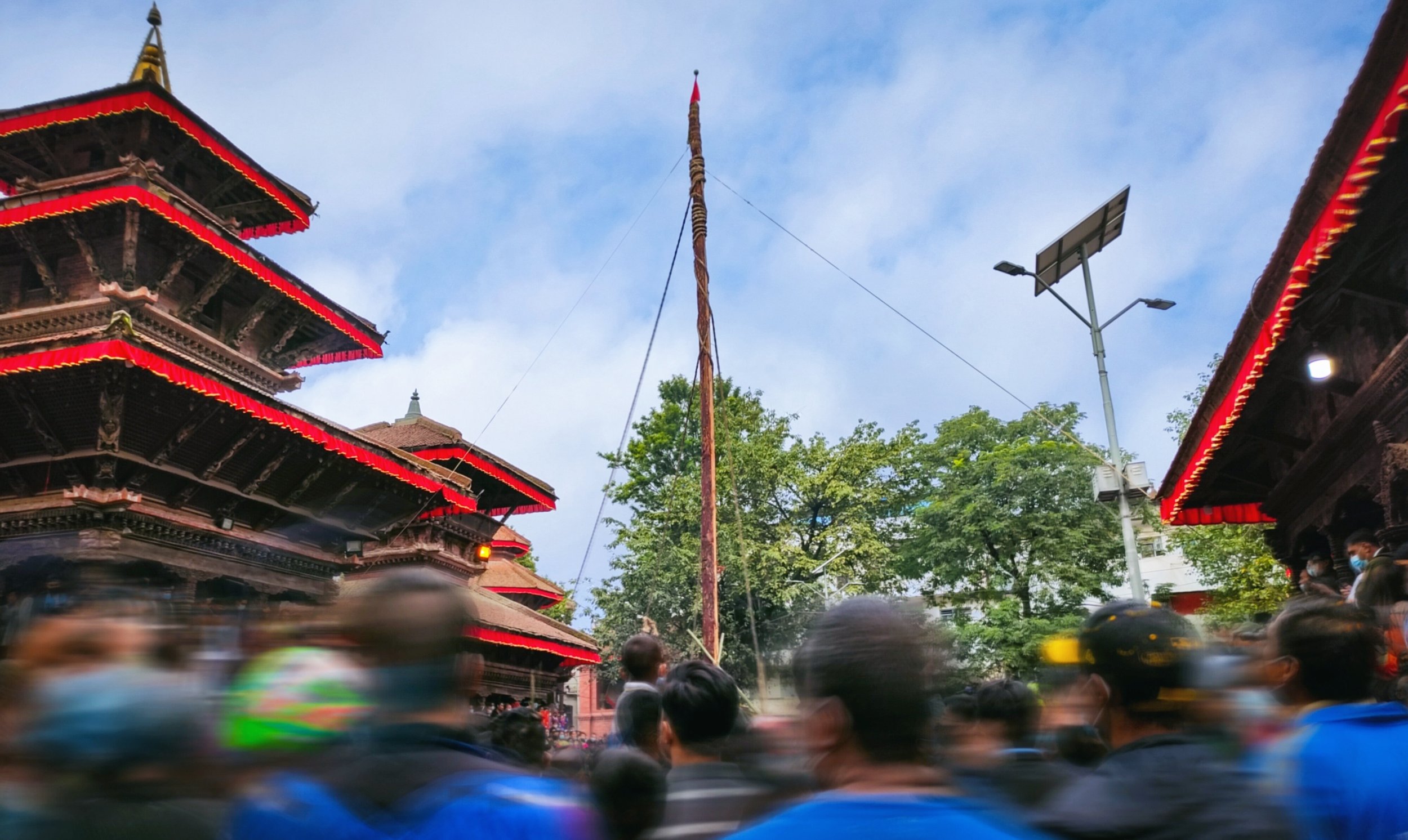
One of the most iconic elements of Indra Jatra is the Kumari Jatra, a procession that includes the Kumari, the living goddess of Kathmandu. The Kumari, a prepubescent girl chosen for her divine qualities, is a central figure in the festival. The Kumari Jatra serves as a symbolic way for the goddess to bless the city and its people. At the heart of Indra Jatra lies the "lingo," an intricately carved ceremonial pole that stands as the focal point of the festival. The raising of the lingo marks the official commencement of the festivities.
The Raising Ceremony
On the first day of Indra Jatra, the Kumari, clad in her resplendent attire, emerges from her residence, the Kumari Ghar. She is carried in a palanquin and accompanied by musicians, dancers, and devotees. Together, they make their way to Durbar Square, where the lingo awaits. The lingo represents a sword of Lord Indra, and its erection symbolizes the reestablishment of Indra's power. It is believed to bring protection and prosperity to the city. The ceremony itself is a mesmerizing spectacle, with skilled artisans and laborers using ropes and teamwork to hoist the heavy wooden pole into an upright position. One of the most captivating aspects of Indra Jatra is the vibrant display of traditional masked dances and cultural performances, which take place at Rani Pokhari, the historic artificial pond in the heart of Kathmandu.
Sawa Bhaku Dance
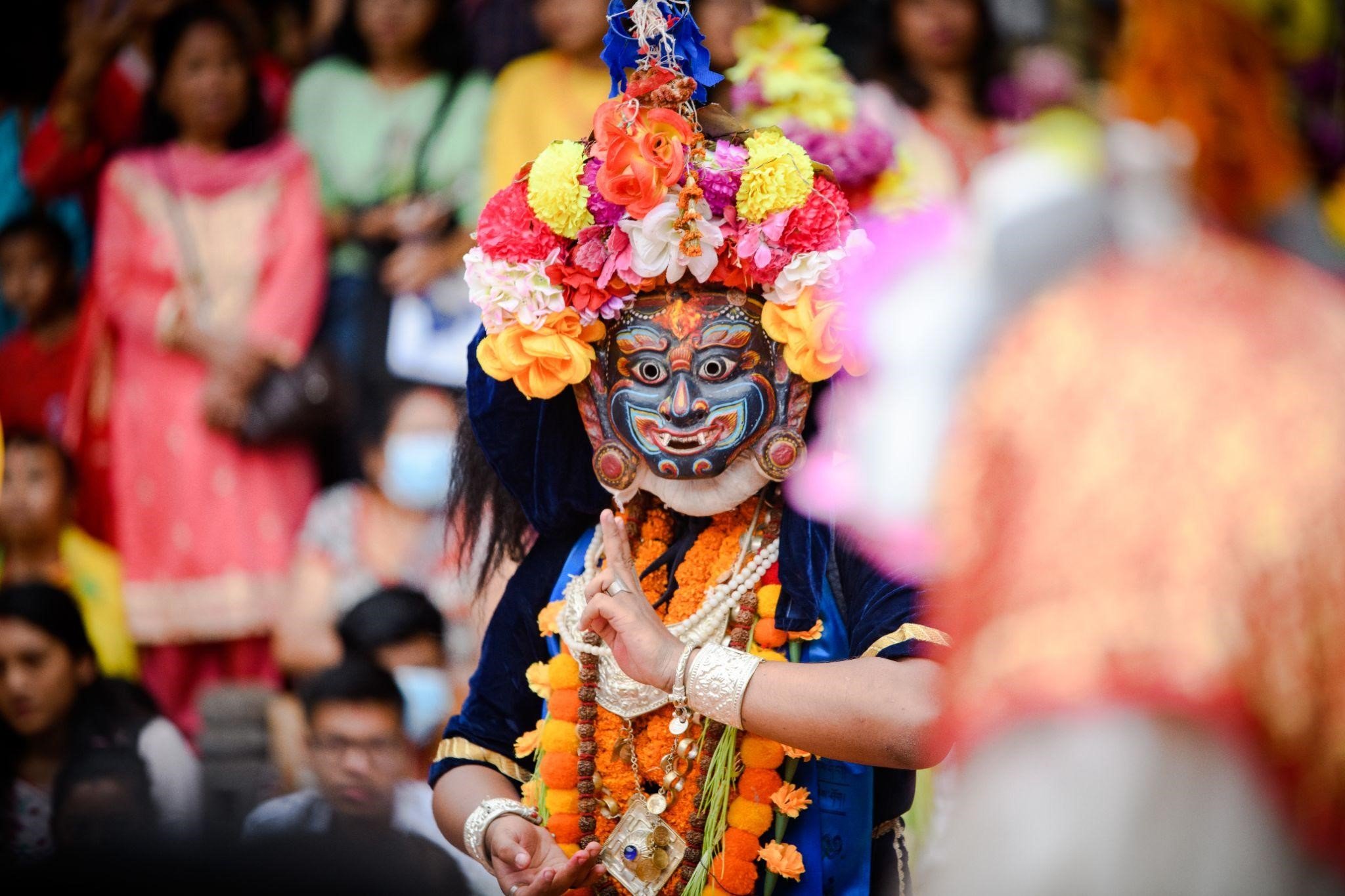
Another highlight is the Sawa Bhaku dance, where dancers don colorful and intricate costumes that represent different animals and deities. The dance is a rhythmic and synchronized performance that mesmerizes onlookers with its precision and energy. Indra Jatra is not just a celebration of culture; it's also a time for spiritual reflection and devotion. Devotees flock to the temples and shrines of Kathmandu to offer prayers and seek blessings.
Offerings to the Kumari
Devotees offer flowers, fruits, and traditional offerings to the Kumari, seeking her blessings for health, prosperity, and protection. The Kumari, in her divine role, watches over the city and its inhabitants during this sacred time. Many devotees visit the Kathmandu Durbar Square, home to a multitude of temples and shrines dedicated to various deities. The square is transformed into a bustling hub of religious activity, with incense wafting through the air and the sound of bells and drums filling the atmosphere.
One remarkable aspect of Indra Jatra is its inclusivity. While rooted in Hindu and Buddhist traditions, the festival is celebrated by people of all backgrounds and beliefs. It serves as a symbol of Nepal's cultural diversity and unity. Indra Jatra has garnered international attention, drawing tourists and cultural enthusiasts from around the world. It's not just a spectacle but also a gateway to understanding the rich cultural heritage of Nepal.
Indra Jatra is not merely a festival; it's a living testament to Nepal's rich history, spirituality, and cultural diversity. It's a time when the people of Kathmandu come together to celebrate their shared heritage, bridging the gap between the past and the present. As you wander through the vibrant streets of Kathmandu during Indra Jatra, you'll witness a breathtaking display of masked dances, hear the enchanting melodies of traditional music, and feel the devotion that permeates the air. The festival is a reminder that amidst the hustle and bustle of modern life, Nepal continues to honor its traditions and gods, embracing the spiritual and cultural essence that defines this Himalayan nation.
POPULAR ITINERARIES
SIMILAR POSTS
The Taleju Temple of Kathmandu: A Marvel of Art and Devotion
The Taleju Temple in Kathmandu, Nepal, is a captivating blend of Newar and pagoda-style architecture. With a rich history dating back to the 12th century, its intricate wooden carvings, gilded roofs, and religious significance attract pilgrims and art enthusiasts. Conservation efforts preserve this UNESCO World Heritage Site as a cultural treasure.
The Taleju Temple, nestled in the heart of Kathmandu, Nepal, stands as a testament to the city's rich cultural and architectural heritage. This sacred site holds immense historical and religious significance, drawing countless pilgrims and visitors from around the world. Let us explore the architectural style, historical background, construction type, and the enduring significance of this awe-inspiring temple.
Architectural Style:
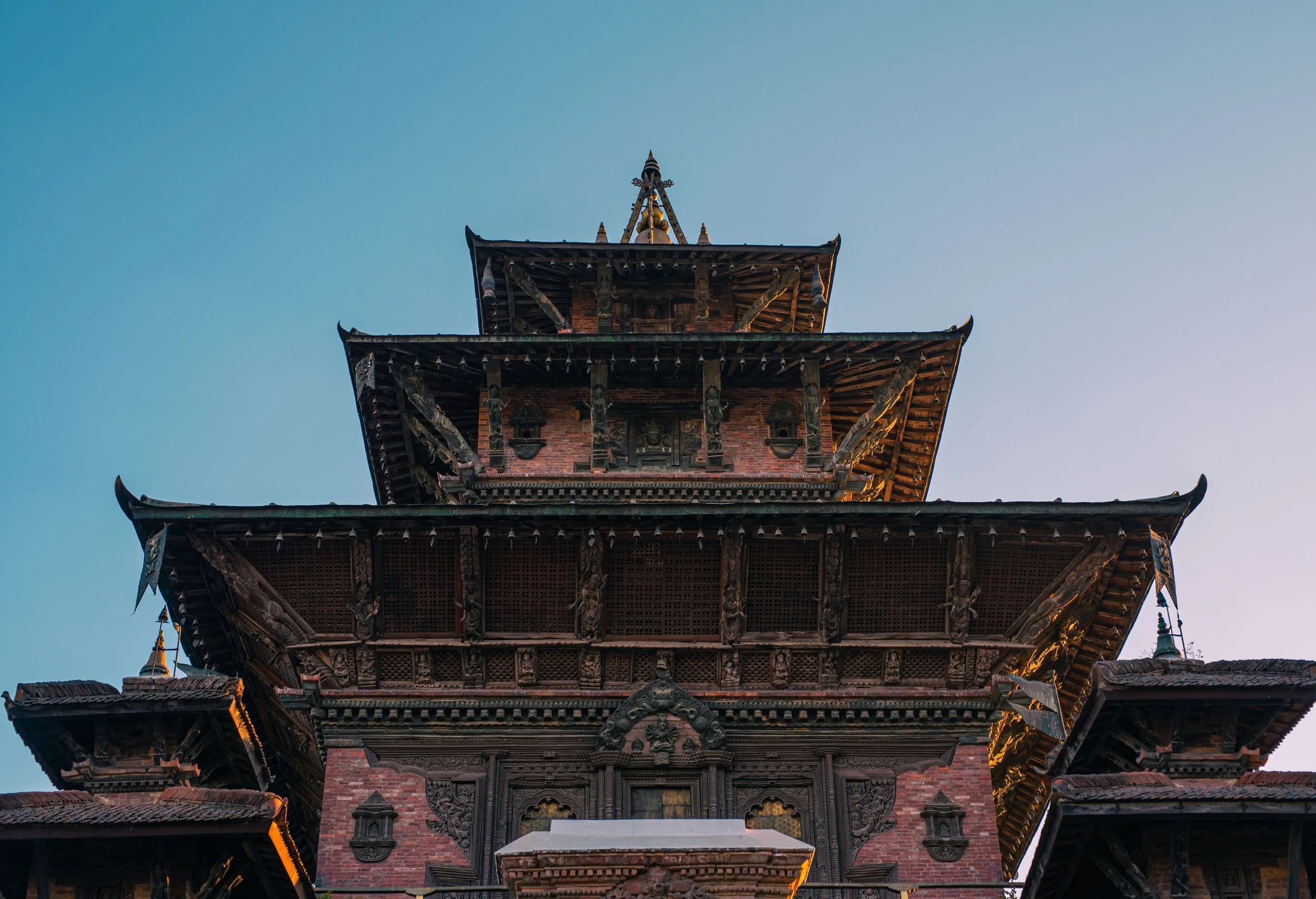
The Taleju Temple showcases a distinctive blend of indigenous Newar architecture and classic pagoda-style elements. Its multi-tiered structure, intricate wooden carvings, and golden spire exemplify the finest craftsmanship of the medieval Malla period. The temple's design reflects a harmonious fusion of Hindu and Buddhist styles, reflecting Nepal's syncretic cultural traditions.
The main entrance of the temple, adorned with a wooden torana (gateway), features detailed carvings depicting divine figures and mythological scenes. The torana is a hallmark of Newar architecture and represents the transition from the earthly to the spiritual realm.
History:
The history of the Taleju Temple is steeped in ancient legends and myths. According to local lore, the temple's origin can be traced back to the reign of King Gunakamadeva in the 12th century. However, historical records suggest that the temple underwent significant renovations and expansions under the rule of different Malla kings in the subsequent centuries.
One of the most crucial periods in the temple's history was during the reign of King Pratap Malla in the 17th century. He is credited with adding the resplendent gilded roofs and intricately carved woodwork that have come to define the temple's iconic appearance today.
Construction Type:
The construction of the Taleju Temple primarily utilized traditional building materials such as wood, brick, and stone. Its foundation is made of stone, and the main structure features intricately carved wooden beams and columns. The temple's roof is adorned with gilded copper, which not only enhances its aesthetic appeal but also protects the temple from adverse weather conditions.
The temple's wooden elements are a testament to the unparalleled craftsmanship of Newar artisans. The intricate wood carvings on the struts, pillars, and windows depict various deities, celestial beings, and floral motifs, showcasing the skill and creativity of the artisans of that era.
Significance:
The Taleju Temple holds immense religious significance for both Hindus and Buddhists. The temple is dedicated to the goddess Taleju Bhawani, an incarnation of Goddess Durga, revered as the patron deity of the Malla kings. Access to the temple was historically restricted to the royalty and selected devotees during special occasions. The temple served as a center for royal ceremonies and played a pivotal role in shaping the socio-religious fabric of Kathmandu.
Moreover, the Taleju Temple is an architectural gem and a UNESCO World Heritage Site. Its historical and artistic value has made it a focal point for preservation efforts by both national and international authorities. The temple's intricate wood carvings, skillful craftsmanship, and unique architecture draw art enthusiasts, scholars, and travelers alike.
Apart from its religious and artistic significance, the Taleju Temple also played a strategic role in the defense of the Kathmandu Valley. The temple's elevated position and commanding views made it an ideal vantage point for the kings to assess potential threats and invaders.
Continued Devotion:
Even in modern times, the Taleju Temple continues to be a site of religious devotion and cultural significance. Festivals and ceremonies are held within its premises throughout the year, attracting large gatherings of devotees and tourists.
One of the most prominent festivals celebrated at the temple is the "Indra Jatra" or "Yenya" festival. During this vibrant event, the living goddess Kumari, adorned in elaborate traditional attire, blesses the people from the temple's chariot. The festival also features masked dances, music, and processions, creating a colorful spectacle that captivates both locals and visitors.
Preservation Efforts:
As a cultural treasure, the Taleju Temple requires continuous preservation efforts to protect its delicate wood carvings and structural integrity. Various governmental and non-governmental organizations are actively involved in conservation initiatives to ensure that this architectural wonder stands tall for future generations to marvel at.
The Taleju Temple of Kathmandu stands as a living testament to Nepal's rich history, religious devotion, and architectural brilliance. Its unique blend of indigenous and pagoda-style architecture captivates the hearts of all who visit. As a symbol of Nepal's cultural heritage, the temple continues to inspire awe and reverence, ensuring that the legacy of this remarkable edifice endures for generations to come. With ongoing preservation efforts and the unwavering devotion of the people, the Taleju Temple remains a beacon of spirituality and a cherished jewel in the crown of Kathmandu.
POPULAR ITINERARIES
SIMILAR POSTS
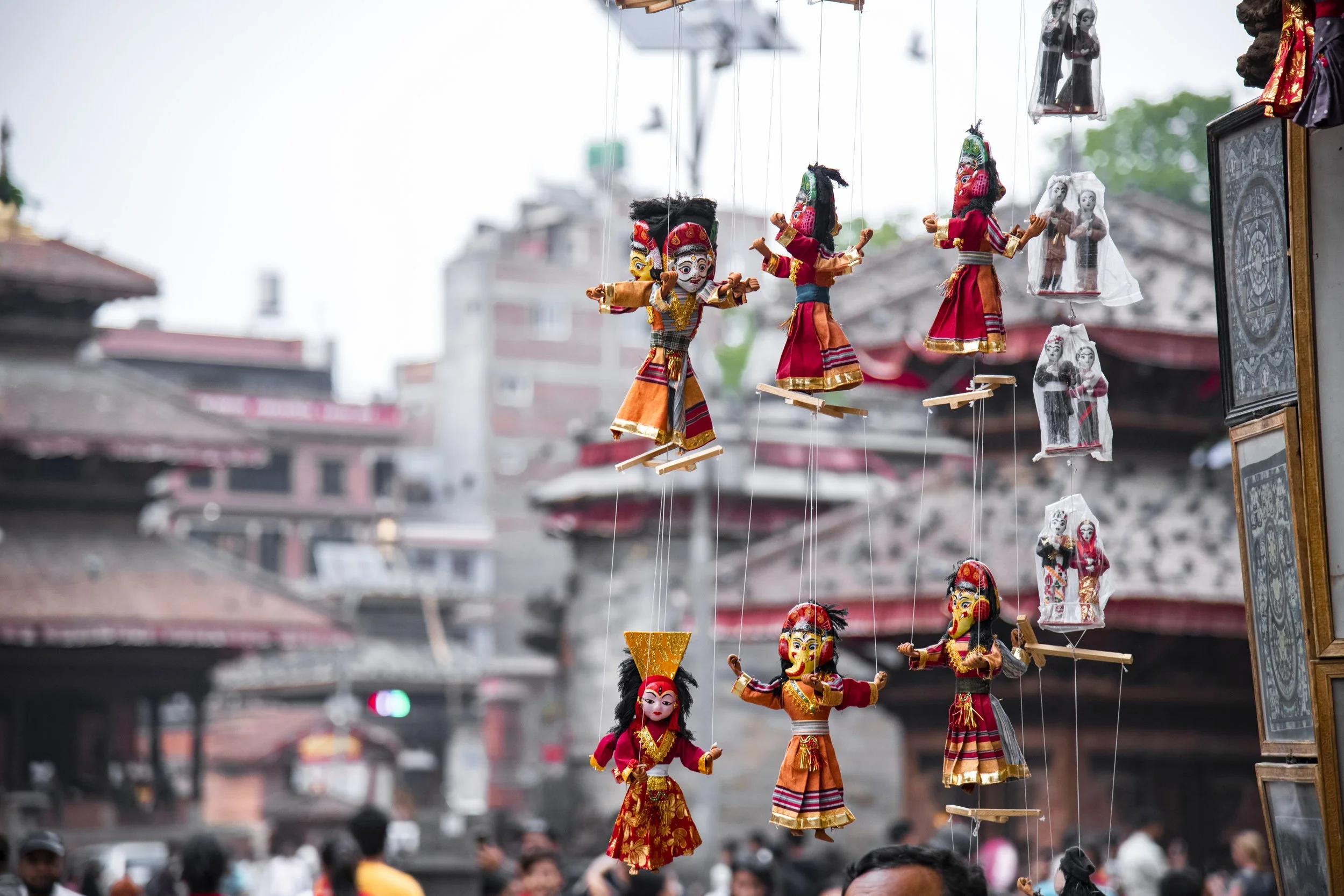
Basantapur Durbar Square: A Timeless Gem
Once you step foot in this timeless sanctuary, you are immediately enveloped by an atmosphere that resonates with the echoes of centuries past. The air is thick with the whispers of ancient tales and the weight of historical significance. Each intricate architectural marvel, meticulously crafted by skilled artisans of yesteryears, holds within it a saga waiting to be unraveled.
Basantapur Durbar Square not only offers a feast for the senses but also a stage for vibrant festivals and cultural celebrations that ignite the soul. Time your visit to witness the ethereal spectacle of Indra Jatra, where the streets come alive with elaborate processions, resounding music, and elaborate dances, all in honor of the revered deity Indra. Immerse yourself in the intoxicating energy of Maha Shivaratri, as devotees pay homage to Lord Shiva through mesmerizing rituals and fervent devotion. These immersive experiences allow you to witness the very essence of Nepali culture, where spirituality and tradition intertwine in a captivating dance.
Immerse Yourself in Architectural Marvels:
Prepare to be mesmerized by the architectural splendor that surrounds you in Basantapur Durbar Square. This captivating square boasts an array of ancient palaces, courtyards, temples, and intricate stone carvings that reflect the rich artistic heritage of Nepal. Marvel at the awe-inspiring intricacies of the 55-window Palace, an architectural masterpiece showcasing exquisite craftsmanship. Visit the Taleju Temple, a sacred shrine dedicated to the goddess Taleju Bhawani, and soak in the spiritual ambiance that permeates the air.
Discover Living History:
Beyond its architectural grandeur, Basantapur Durbar Square is a living testament to Nepal's history and cultural heritage. The square has witnessed the rise and fall of dynasties and the unfolding of significant events. Take a moment to reflect upon the stories and legends that have shaped the nation. Engage with the locals, as they graciously share their knowledge and insights, providing you with a deeper understanding of Nepal's vibrant past and present.
Indulge in Culinary Delights:
No visit to Basantapur Durbar Square is complete without savoring the diverse flavors of Nepali cuisine. Treat your taste buds to a gastronomic adventure as you explore the numerous food stalls and local eateries surrounding the square. Sample the iconic momo, a delectable dumpling filled with a variety of savory fillings, or indulge in traditional Newari dishes like the mouthwatering samay baji, a platter of rice, lentils, beaten rice, and a selection of savory accompaniments. Allow the tantalizing aromas and vibrant flavors to transport you to the heart of Nepali culture.
Capture the Essence through Photography:
Basantapur Durbar Square presents an abundance of photogenic scenes that will captivate any shutterbug. From the ornate details of the palaces and temples to the colorful rituals and bustling markets, there are endless opportunities to capture the essence of Nepali culture through your lens. Whether you're a professional photographer or an enthusiastic amateur, allow the vibrant surroundings to inspire your creativity and document your journey in stunning visuals.
Support Local Artisans and Craftspeople:
Take a moment to appreciate the exquisite craftsmanship of the local artisans and craftspeople. Basantapur Durbar Square is a treasure trove of traditional arts and crafts, including woodwork, metalwork, pottery, and intricate hand-woven textiles. Explore the narrow alleys surrounding the square to discover hidden workshops and galleries where these skilled artisans bring their creations to life. By purchasing authentic Nepali handicrafts, you not only take home a unique memento but also support the local economy and contribute to the preservation of these age-old traditions.
Attend Cultural Workshops and Performances:
Engage in cultural workshops and performances that are often organized in Basantapur Durbar Square. Learn traditional art forms like Thangka painting or pottery-making from skilled local artisans who are eager to share their knowledge. Attend cultural performances such as traditional dance or music shows that showcase the rich heritage of Nepal. These interactive experiences provide a hands-on understanding of the artistic traditions and offer a chance to engage with the local community.
Basantapur Durbar Square is a captivating destination that offers a kaleidoscope of experiences for travelers and cultural enthusiasts alike. From its architectural splendor to its living history, from its culinary delights to its vibrant festivals, the square provides a multidimensional exploration of Nepal's rich cultural tapestry. As you embark on this remarkable journey, open your heart and mind to the diverse perspectives that Basantapur Durbar Square presents, and let the magic of Nepal envelop you.
POPULAR ITINERARIES
SIMILAR POSTS

Bungamati: A Hidden Gem
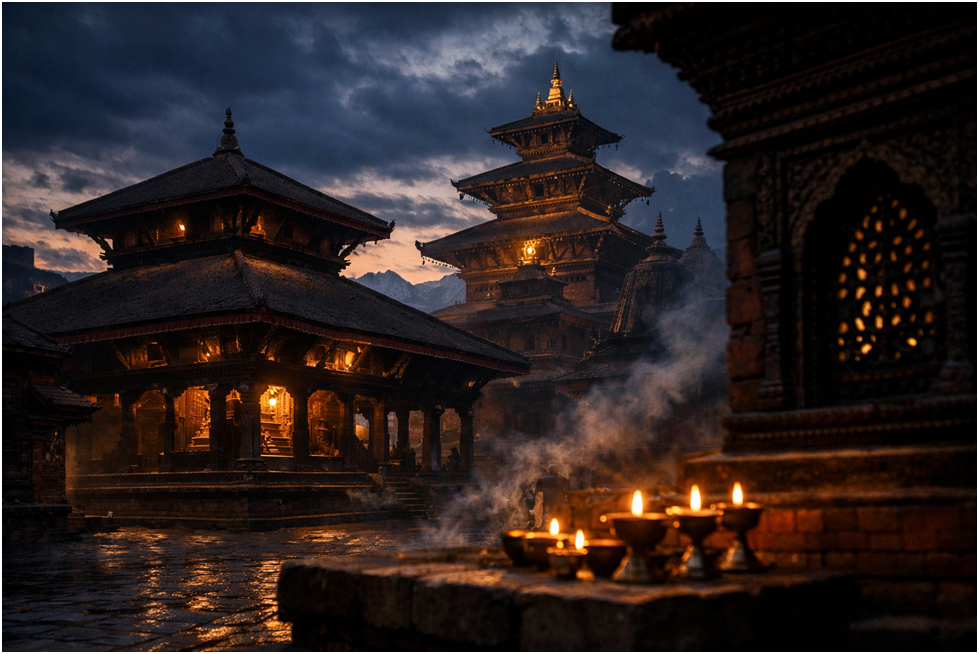
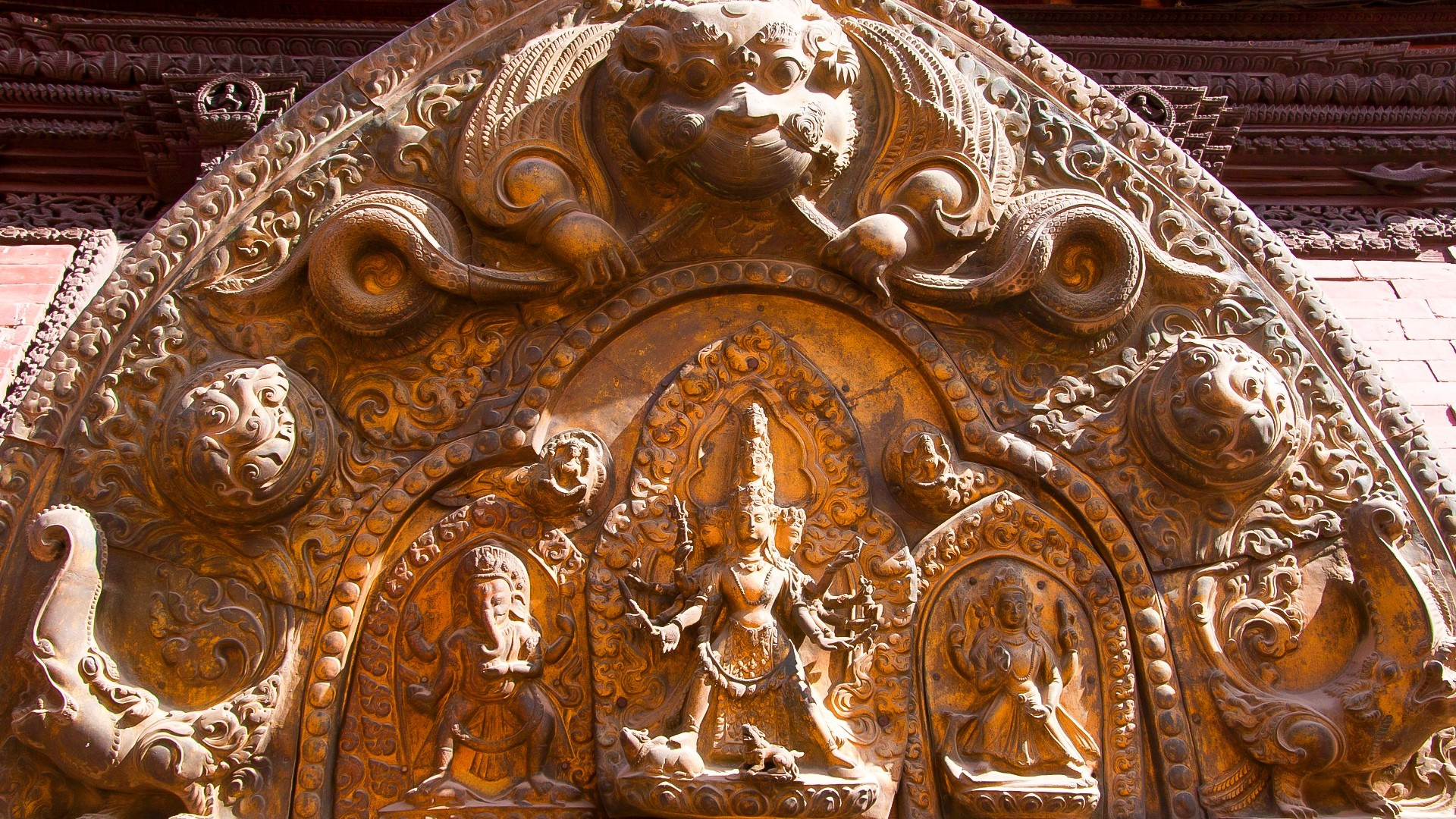
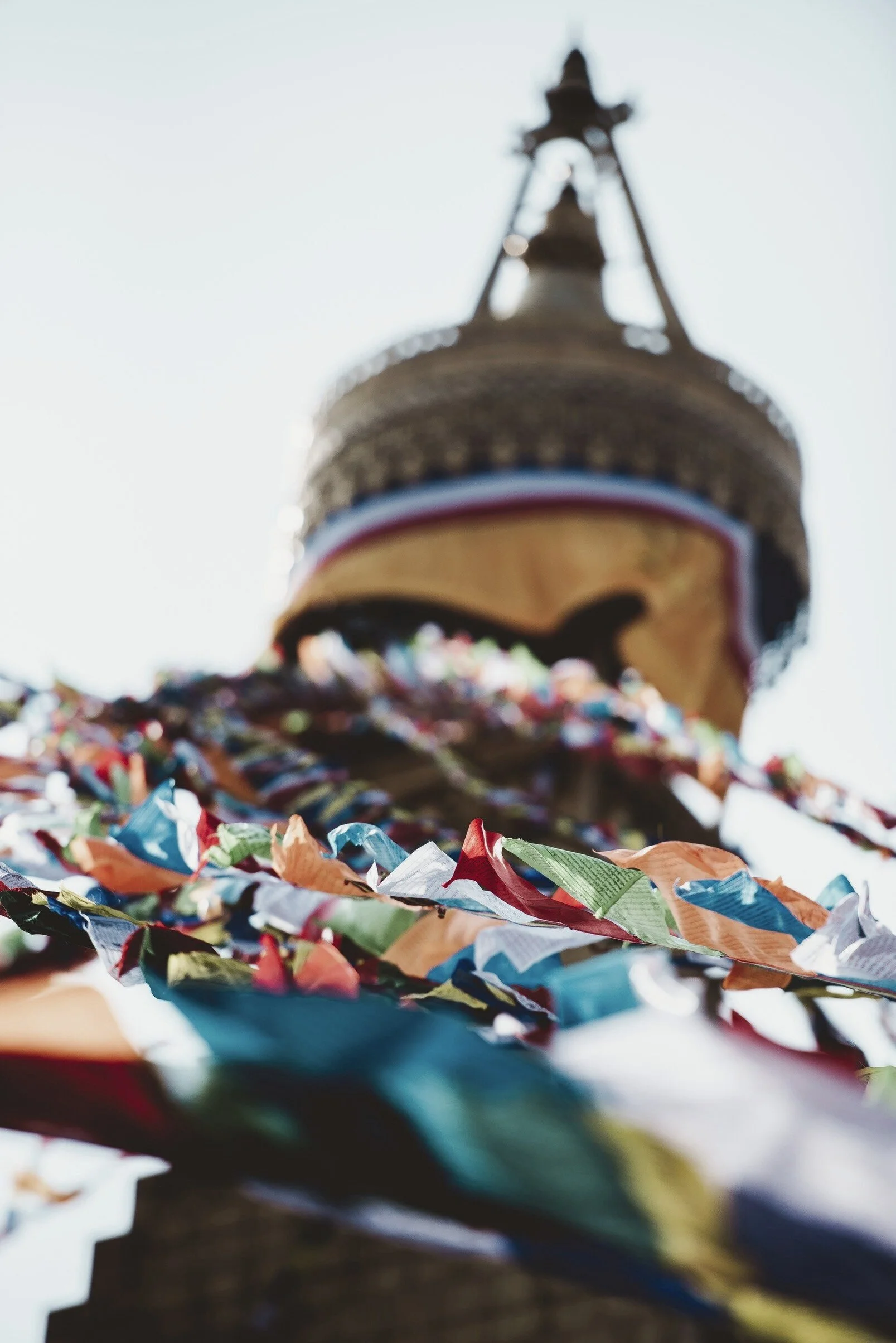
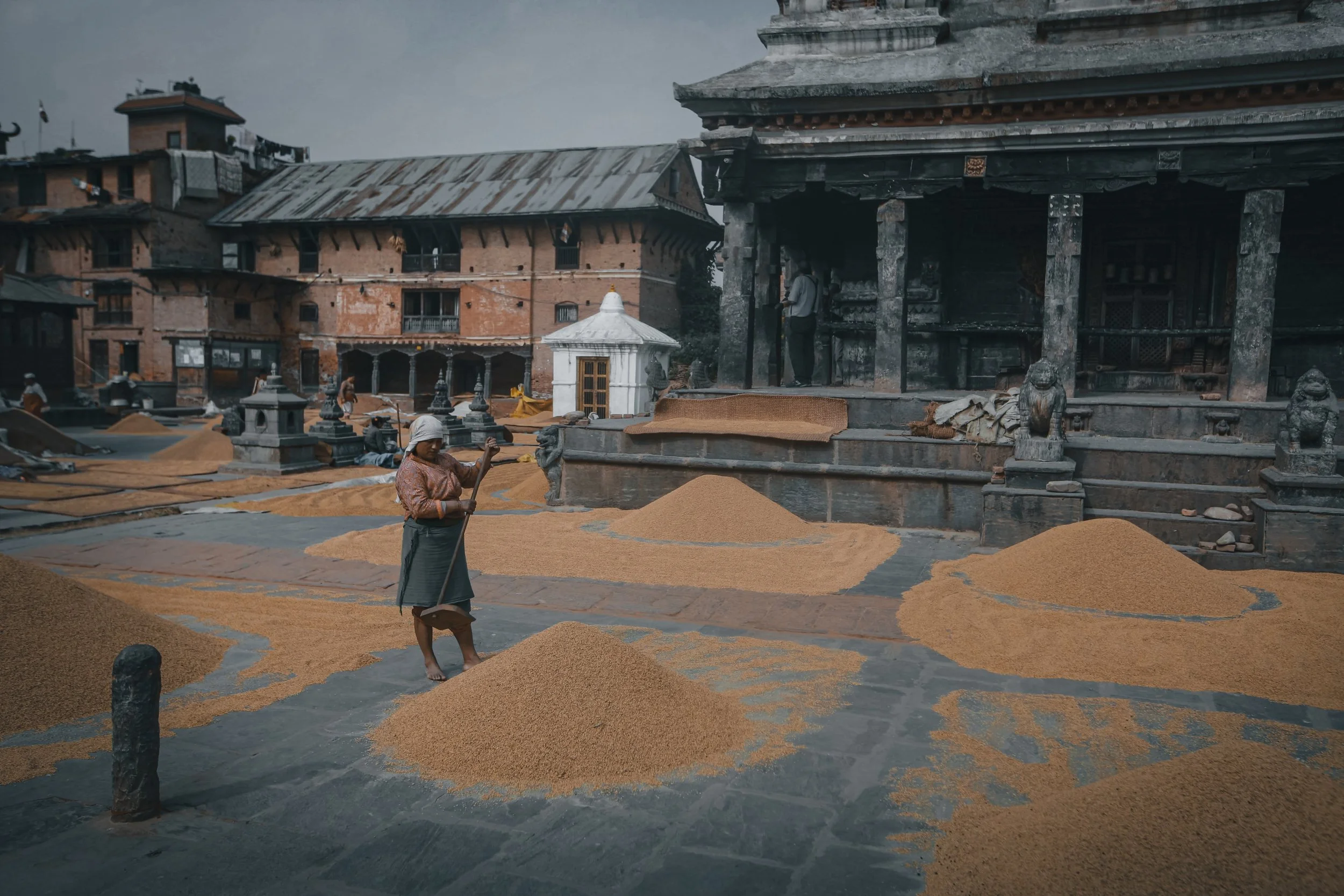
Bungamati offers a plethora of engaging activities for tourists to immerse themselves in. From exploring ancient temples and traditional Newari architecture to trying out local delicacies and shopping for unique handicrafts, there is something for everyone in this charming town.
Bungamati is a hidden gem nestled in the Lalitpur District of Nepal, just 10 kilometers south of the bustling city of Kathmandu. This charming village boasts a traditional Newari setting and style, with stunning architecture, art, and crafts that reflect its rich cultural heritage. Although it may be a short distance from the airport, Bungamati feels like a world away from the hustle and bustle of modern life, offering visitors a peaceful and authentic experience. If you're looking for a tranquil escape that immerses you in the local culture, Bungamati is the perfect destination.
The town’s history dates back to the Kirat Era. Through various historical accounts and evidences from neighbouring cities, it is evident that most villages in this valley were founded by the Kirat’s. The town during the Lichhavi era was called Bugayumigrama. Scholar’s state that ‘Bugayumi’ is a Kiratian dialect.
It is widely accepted that during the Malla period, the town was called Bungapattan, and it was an important center of commerce, culture, and religion. The Malla rulers developed Bungamati into a prosperous town with well-planned streets, temples, and public buildings. They also built the Rato Matsyendranath Temple, which is considered the most sacred site in the town.
The Rato Matsyendranath temple remained an important focus of religious life in Bungamati, and the deity became an object of veneration for both Hindus and Buddhists in the region. The deity was believed to be an incarnation of the god Vishnu, and was associated with the power to bring rain and ensure good harvests.
Here are some exciting activities you can engage in while in Bungamati, which are sure to make your visit to this charming town an unforgettable experience:
1. Explore the traditional Newari architecture: Bungamati is renowned for its traditional Newari architecture, which is best explored by wandering through the narrow alleyways and admiring the intricately carved wooden windows and doors. Visitors can also visit the traditional Newari houses, which provide a glimpse into the daily lives of the locals.
2. Visit the Rato Matsyendranath Temple: The Rato Matsyendranath Temple is a must-visit attraction in Bungamati. This ancient temple is dedicated to the Hindu deity Matsyendranath, who is worshipped as the patron saint of Kathmandu. The temple is especially famous for its annual festival, the Bunga Dyah Jatra, which takes place in April or May.
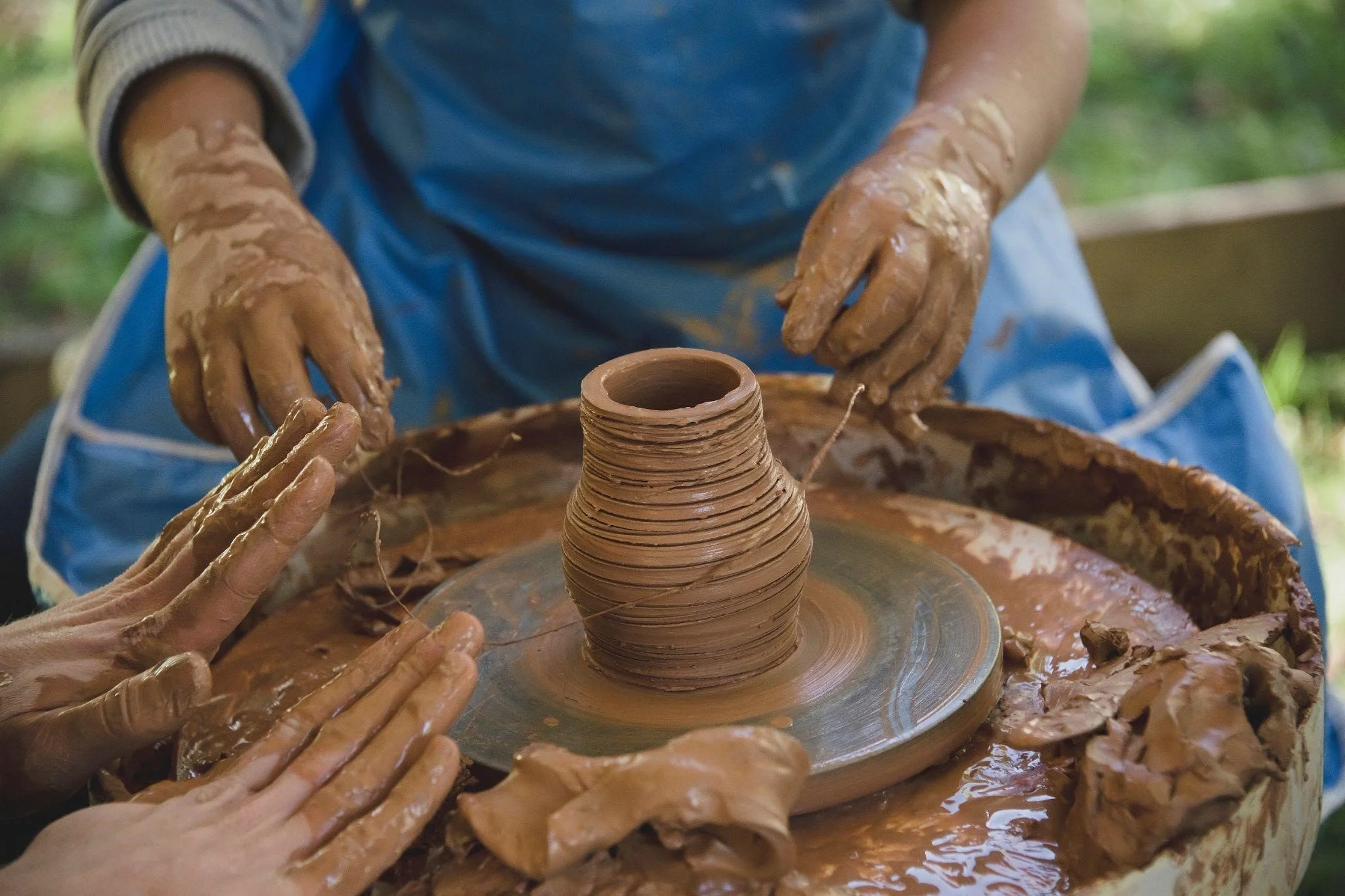
3. Take a pottery class: Bungamati is known for its traditional pottery, and visitors can learn to make their own pottery by taking a class with a local artisan. The classes are held in traditional Newari houses, and visitors can learn about the different techniques and styles of pottery-making that have been passed down through generations.
4. Hike to Khokana: Khokana is a nearby village that is known for its mustard oil production. Visitors can take a scenic hike through the fields and hills to reach the village, where they can learn about the traditional methods of mustard oil extraction and visit the local market.
5. Taste Newari cuisine: Bungamati is a great place to try traditional Newari cuisine, which is famous for its rich flavors and unique ingredients. Visitors can sample local dishes like bara, chatamari, and yomari, which are made with rice flour, lentils, and other local ingredients.
6. Attend a local festival: Bungamati is known for its vibrant local festivals, which are celebrated throughout the year. Visitors can attend festivals like the Bunga Dyah Jatra, the Rato Machhindranath Jatra, and the Khokana Festival, which are great opportunities to experience the local culture and traditions.
POPULAR ITINERARIES
SIMILAR POSTS
Encountering the Sacred: A Guide to Nepal's Must-Visit Shiva Temples
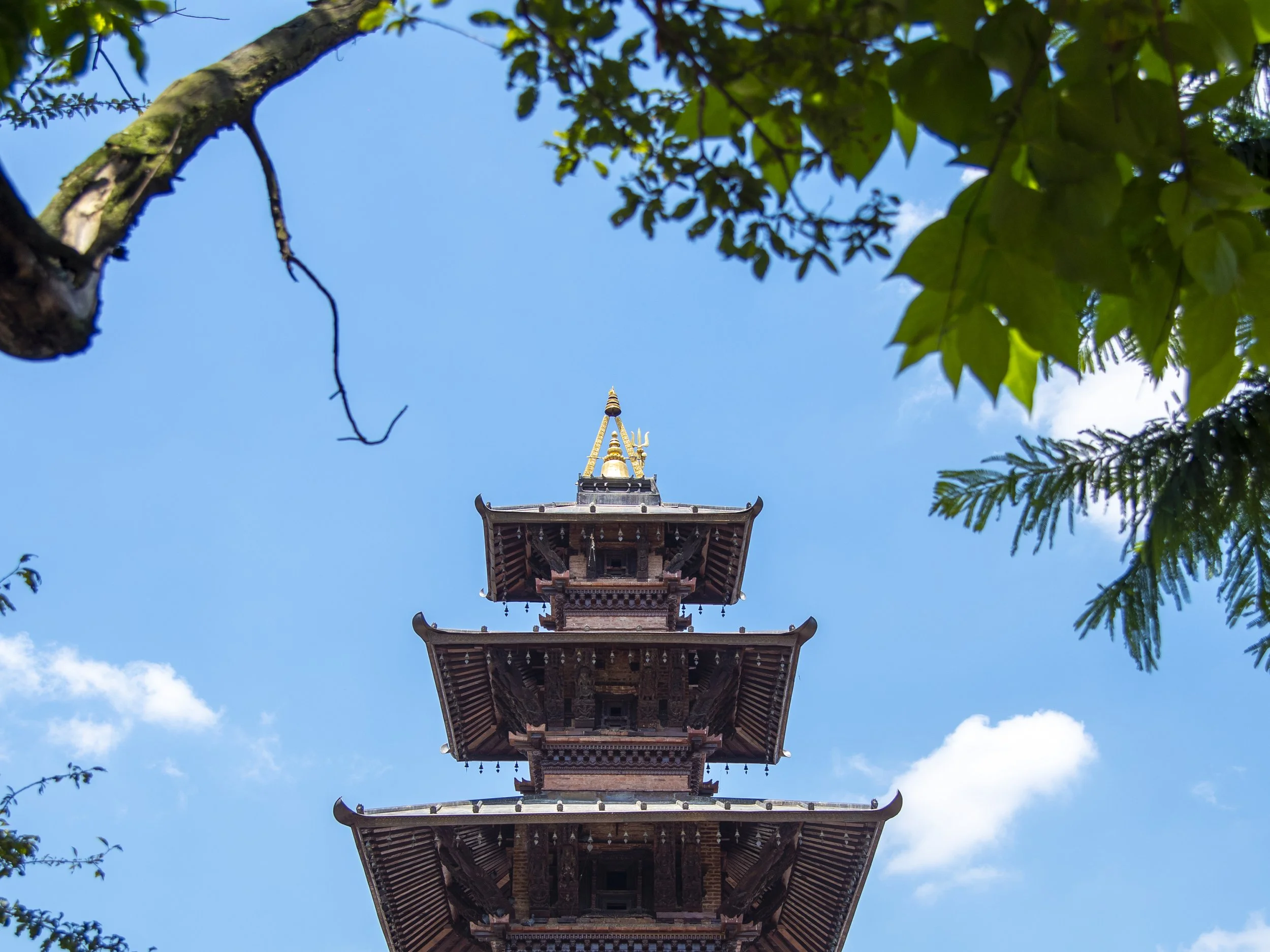
In this article, we will explore the five must-visit Shiva temples in Nepal. These temples, including Pashupatinath, Kumbeshwar, Gosaikunda, Baraha Chhetra, and Kirateshwar Mahadev, hold significant religious and mythological importance in the Hindu faith. Through a brief history and overview of each temple, we will delve into the spiritual significance of these sacred places.
Maha Shivaratri is a highly significant Hindu festival dedicated to Lord Shiva, the revered destroyer and transformer in the Hindu trinity. This deeply spiritual occasion is marked with great devotion and fervor as devotees engage in fasting and offer prayers to Lord Shiva throughout the night. In Nepal, Maha Shivaratri is celebrated with immense enthusiasm and is an occasion for pilgrimage to some of the most revered Shiva temples in the country. This article explores the five must-visit Shiva temples in Nepal, offering detailed information on their location, significance, and rich history.
l Pashupatinath Temple: Located on the banks of the Bagmati River in Kathmandu, the Pashupatinath Temple is one of the most sacred sites for Hindus. The temple dates back to the 5th century and is built in a pagoda style with a golden rooftop. It is believed to have been a center of worship since the earliest times of Hinduism in Nepal. The temple is dedicated to Lord Pashupatinath, an incarnation of Lord Shiva, and is one of the 12 Jyotirlingas of India. The temple complex includes more than 100 smaller temples and shrines, as well as a cremation site where Hindus perform the last rites for the deceased.
l Kumbeshwar Temple: Located in Patan, Lalitpur, the Kumbeshwar Temple is a Shiva temple that dates back to the 14th century. The temple is built in the traditional Newari style and is known for its intricate carvings and metalwork. It is believed to have been built by the Malla king Jayasthiti Malla and is one of the few temples in Nepal where the Shivaratri festival is celebrated for four days. The temple's main attraction is the golden water spout that pours water into the courtyard, which is said to have healing powers.
l Gosaikunda Temple: Situated at an altitude of 4,380 meters in the Langtang National Park, the Gosaikunda Temple is a high altitude lake and one of the most important pilgrimage sites for followers of the Hindu faith. The temple is named after the mythological story of Lord Shiva drinking the poison that turned his throat blue, and then going to the lake to cool down. The lake is surrounded by 108 smaller lakes and is believed to have been created by Lord Shiva. The lake is considered to be holy by both Hindus and Buddhists and is visited by thousands of devotees during the Maha Shivaratri festival.
l Baraha Chhetra Temple: Located in the Sunsari district of eastern Nepal, the Baraha Chhetra Temple is one of the most important Shiva temples in the region. The temple is believed to be the site where Lord Vishnu and Lord Shiva fought a battle to decide who was superior. Lord Vishnu transformed himself into a boar and Lord Shiva into a buffalo. The fight between the two resulted in the creation of a small pool of water, which is believed to have healing powers. The temple is visited by thousands of devotees every year, particularly during the Maha Shivaratri festival.
Kirateshwar Mahadev Temple: Located in the Jhapa district of southeastern Nepal, the Kirateshwar Mahadev Temple is an important pilgrimage site for devotees of Lord Shiva. It is believed to be the place where Lord Shiva appeared as a hunter and met the Pandavas during their exile. The temple is named after the Kiratas, a tribe that is believed to have lived in the area during ancient times. The temple is visited by thousands of devotees every year, particularly during the Maha Shivaratri festival. The temple also has a sacred pond known as the Raktakunda, which is believed to have healing powers.
POPULAR ITINERARIES
SIMILAR POSTS
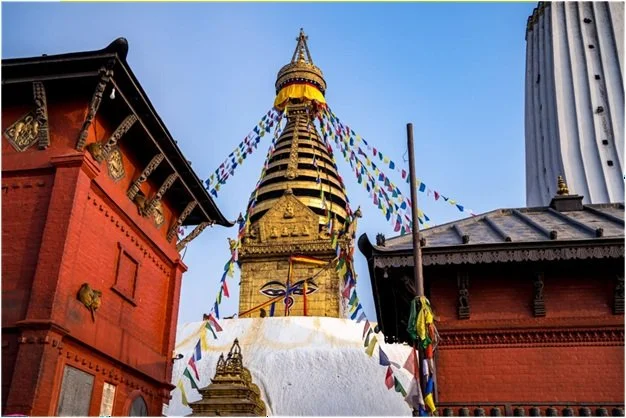
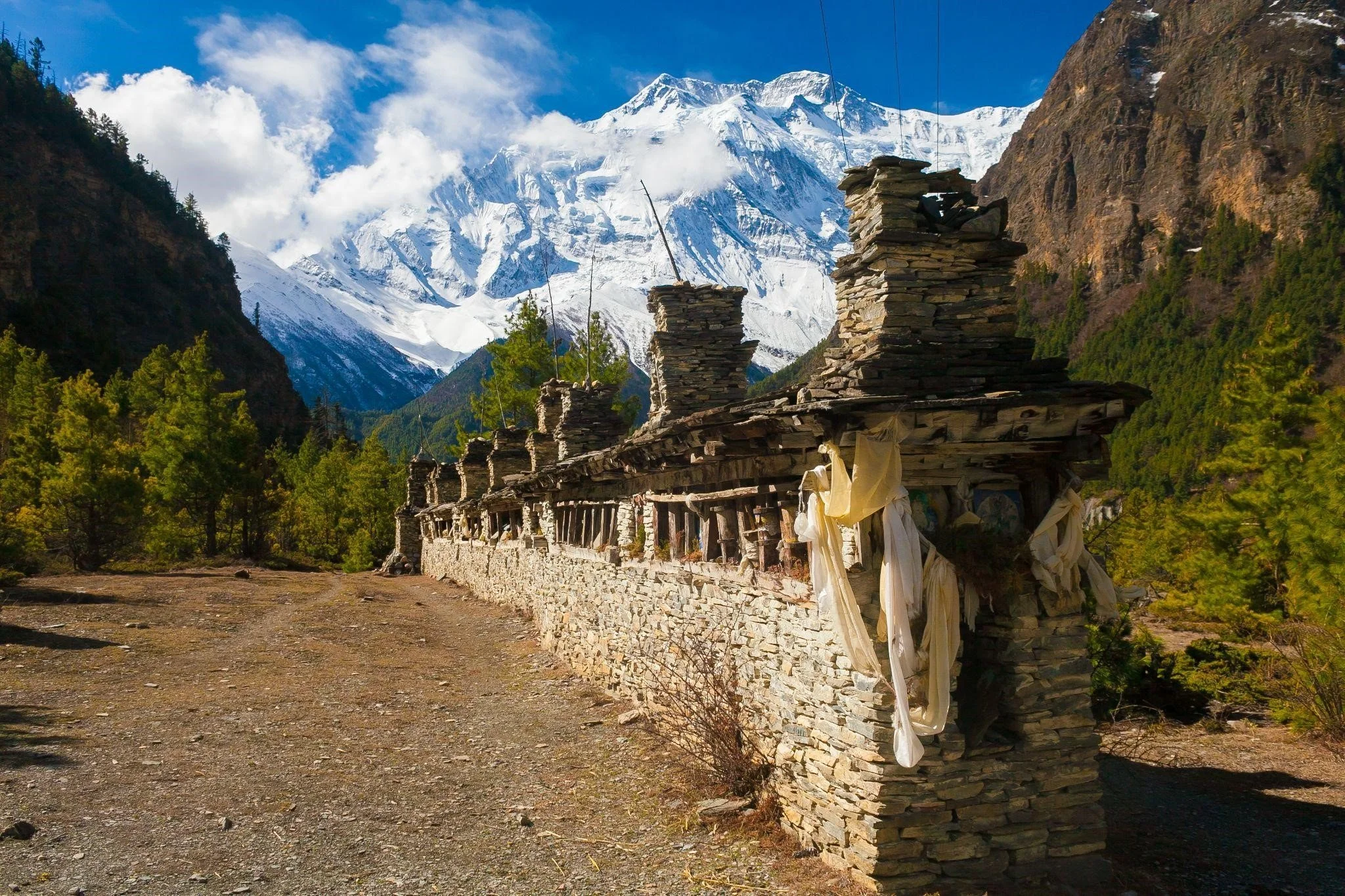
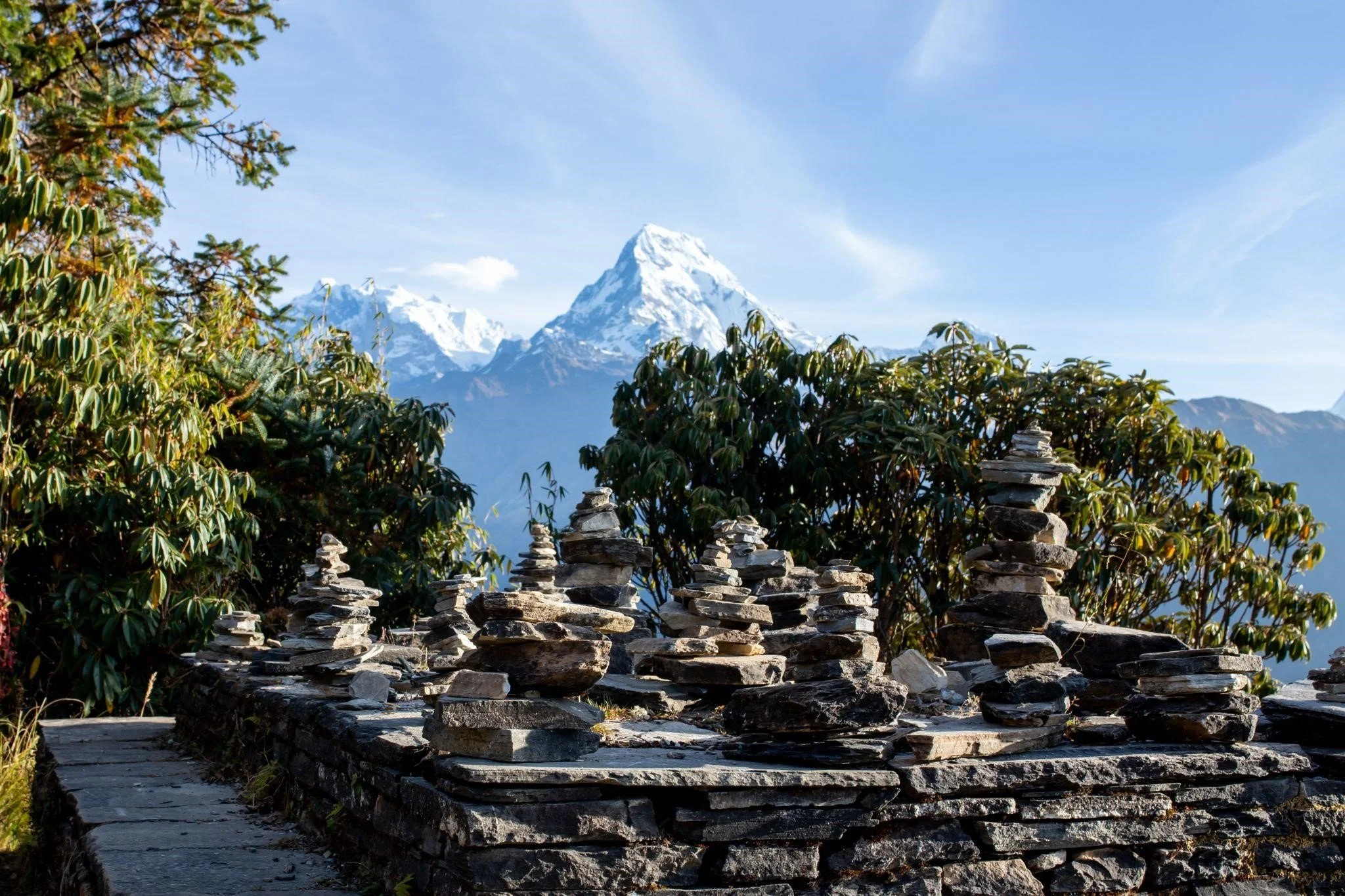

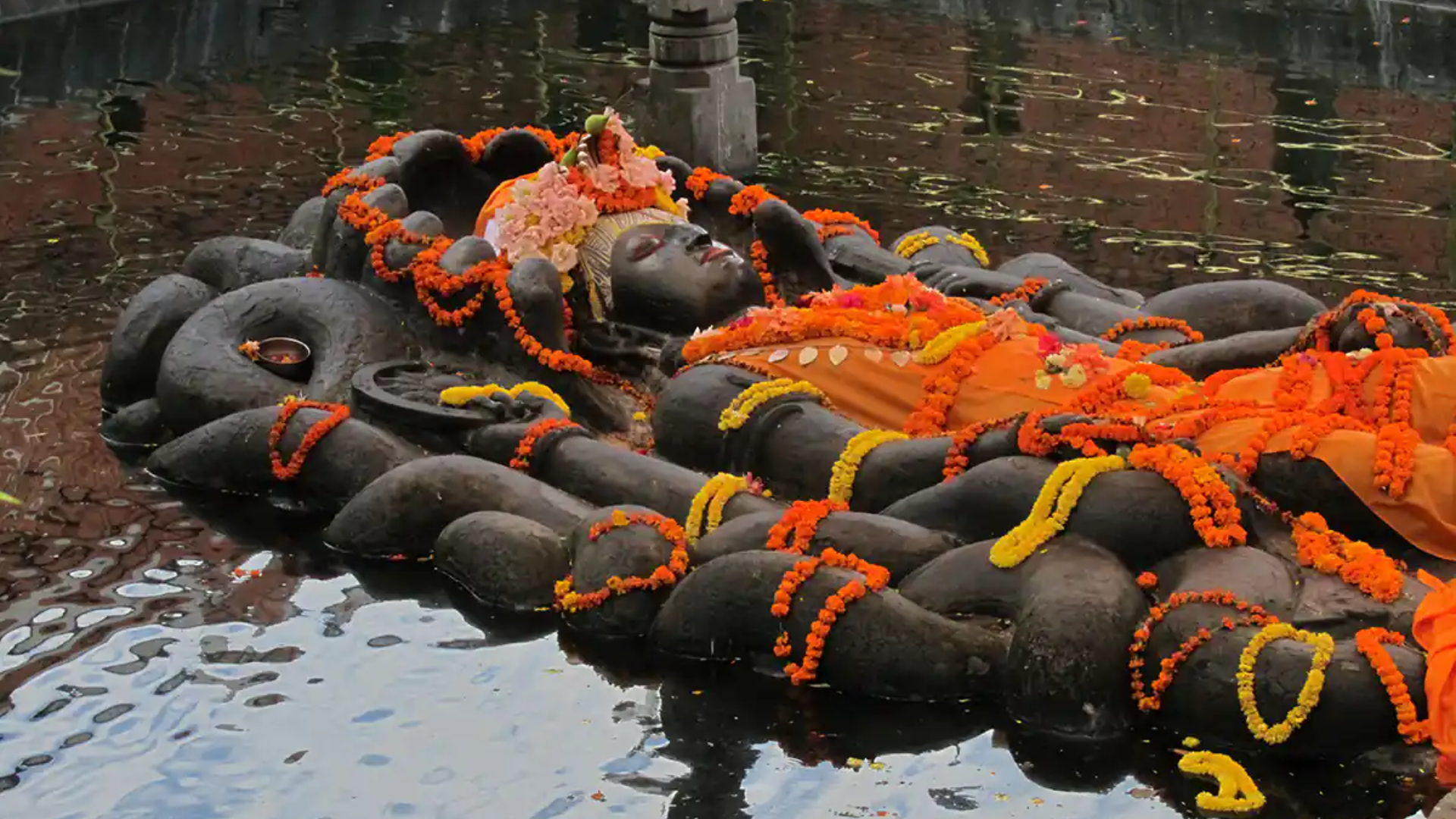
The Month of Swasthani
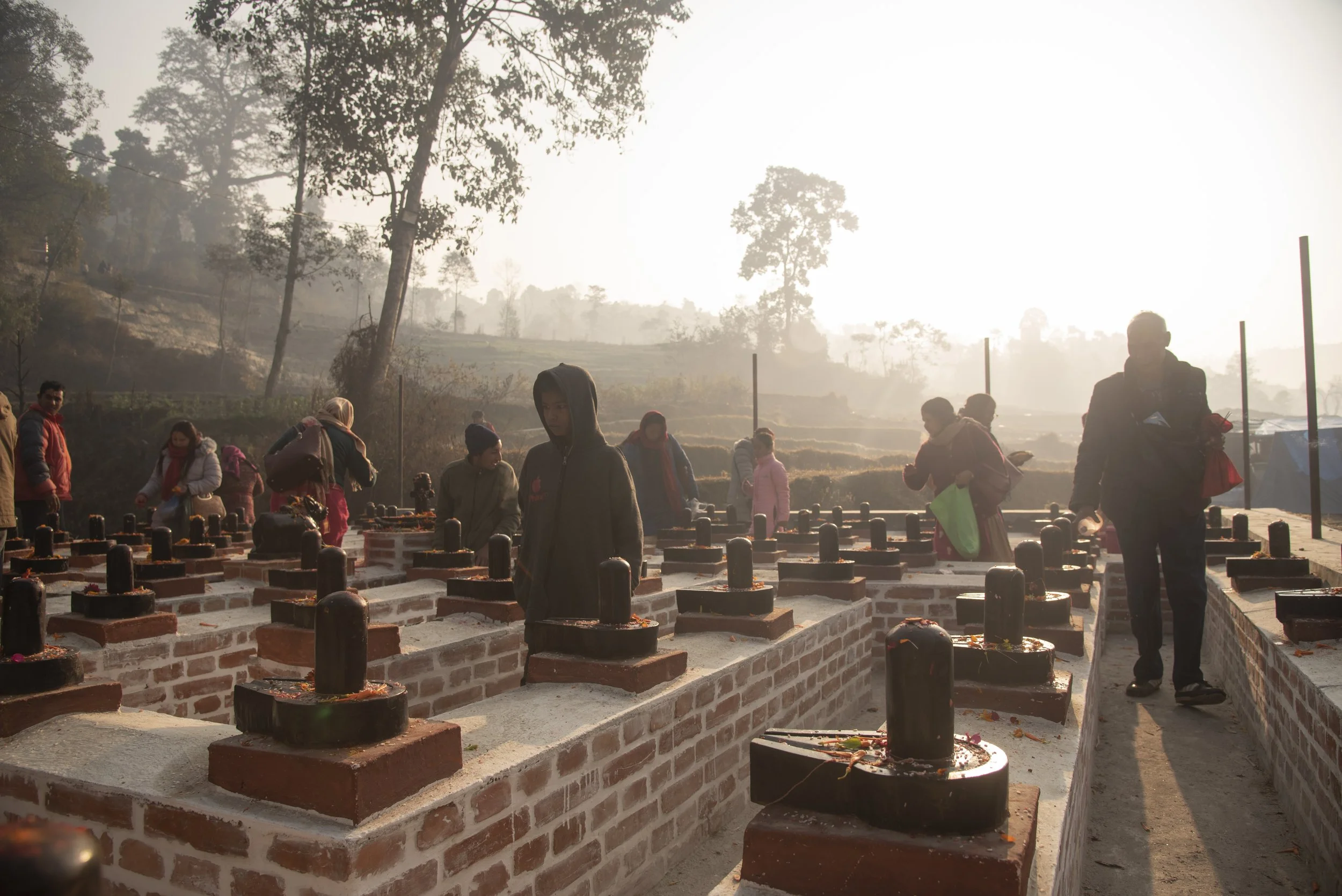
Swasthani Brata is a Hindu festival that is observed in Nepal, particularly in the Kathmandu valley. It is a month-long festival that takes place during the lunar month of Swasthani. Devotees observe a fast and perform various rituals and ceremonies to honor the goddess Swasthani, and the festival is also an important time for socializing and strengthening relationships with friends and family. It is marked by music, dance, and cultural activities.
The Life of Swasthani
According to Hindu mythology, Swastani was once a mortal princess who was married to the god Surya, the personification of the sun in Hinduism. She was known for her devotion to her husband and her kind and charitable nature, and after her death, she was elevated to the status of a goddess. During the festival of Swasthani Brata, devotees honor the goddess by performing various rituals and ceremonies, such as the reading of the Swasthani Purana and the offering of flowers, incense, and other gifts to the goddess.
The Social Importance of Festivals
The festival is also an important time for socializing and strengthening relationships with friends and family. Many people use the occasion to visit with loved ones, exchange gifts, and hold feasts and other social gatherings. In addition to its religious significance, the festival is also an important cultural event in Nepal, as it is a time for celebrating the music, dance, and other artistic traditions of the country. It is a time for people to come together and celebrate the diversity and richness of Nepali culture.
Swasthani Bratakatha: The Book of Swasthani
The Swasthani Bratakatha is a Hindu religious text that is traditionally read during the festival of Swasthani Brata, which takes place in Nepal. The text tells the story of the goddess Swasthani and her powers, and it is believed to have the power to grant wishes to those who read it with devotion. The Swasthani Bratakatha is a collection of stories and legends about the goddess Swasthani and the various miracles and blessings she has bestowed upon her devotees. It is considered an important religious text for Hindus in Nepal, and it is widely read and revered during the festival of Swasthani Brata.
The exact date of the composition of the Swasthani Bratakatha is not known, as it is an ancient text that has been passed down through the generations. However, it is generally believed to be a very old text, possibly dating back several centuries. Despite its age, the Swasthani Bratakatha remains an important religious text for Hindus in Nepal, and it is widely read and revered during the festival of Swasthani Brata. It is also a valuable source of information about the history and beliefs of Hinduism, and it is often studied by scholars and students of religion.
In today's world, the Swasthani Bratakatha continues to be an important part of the cultural and religious traditions of Nepal, and it is widely read and revered by Hindus in the country. It is seen as a source of inspiration and guidance for Hindus, and it is believed to have the power to grant wishes to those who read it with devotion. The text is also a valuable source of information about the history and beliefs of Hinduism, and it is often studied by scholars and students of religion.
During the month of Swasthani Brata, devotees observe a fast and perform various rituals and ceremonies to honor the goddess Swasthani. These may include reading the Swasthani Purana, offering flowers and other gifts, performing puja, visiting temples and shrines, and participating in cultural activities such as music and dance performances.
POPULAR ITINERARIES
SIMILAR POSTS
Exploring Palpa - Part I
Palpa, once an independent Magar Kingdom famous for its forges, became a hub in the south for Newars. The famous “Dhaka Topi” was born here amongst the various Dhaka patterns fabricated by the expert weavers of Palpa. It is a destination with facets and has widely contributed to the formation of the Nepali identity.
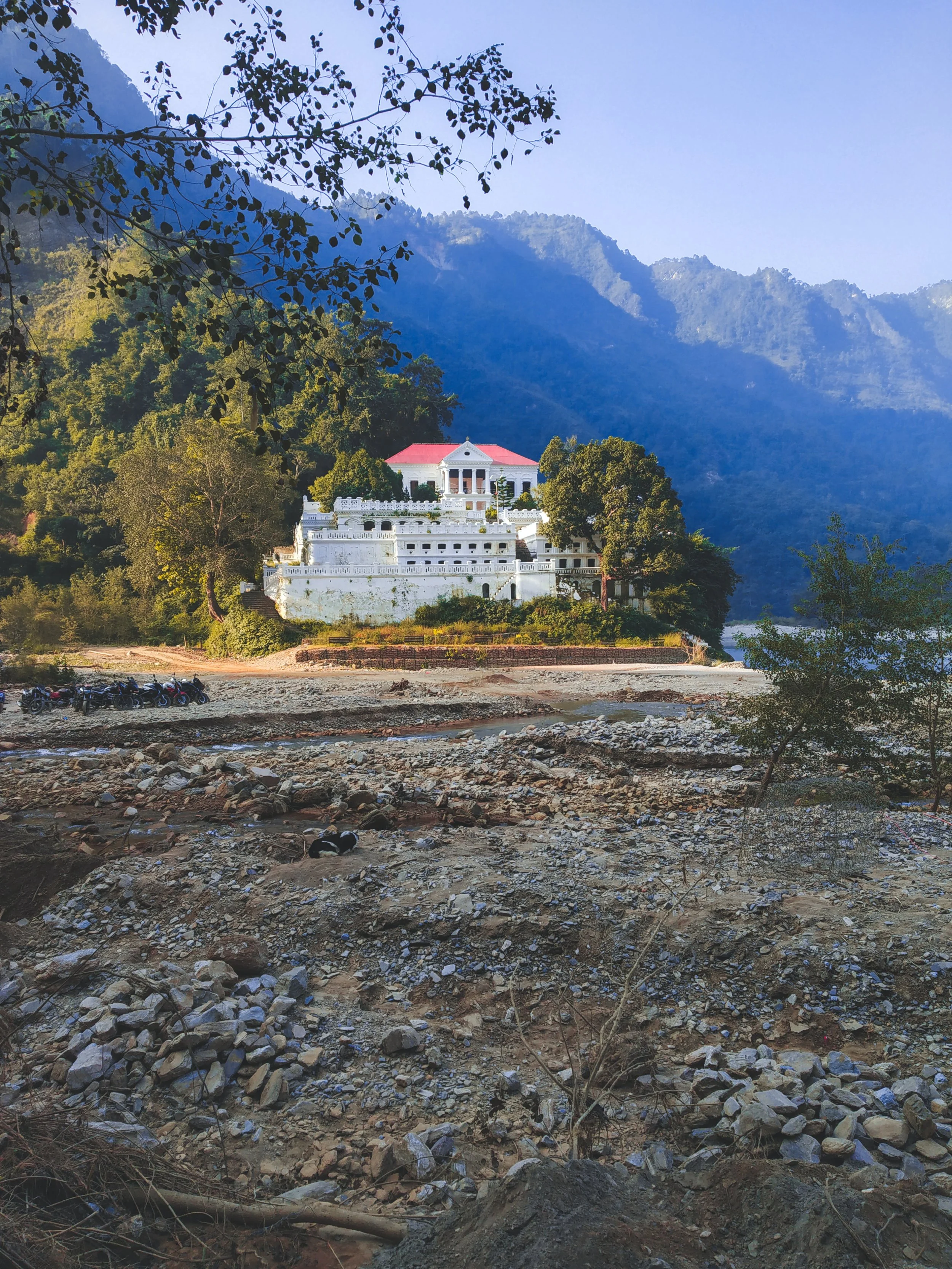
Palpa is a beautiful hill station in the Lumbini Province of Nepal. It is a great destination to add to your tour of the southern cities of Nepal. If you’re making a trip to Lumbini, stop by Palpa to witness the age of Newari architecture and culture, which migrated to this once-Magar village thousands of years ago.
About Palpa
Province: Lumbini
Distance from Kathmandu: 273.7 km
Accessibility:
By Road: 8 hours and 14 minutes
By Air: Land at Gautam Buddha International Airport in Bhairahawa and drive 2 hours and 24 minutes to reach Palpa region
Attractions: Argeli Palace, Rambha Devi Temple, Ranighat Palace (Ranimahal), Rishikesh Complex, Tansen Bazzar, Bhairabsthan Temple (Tansen Bhairab), Shrinagar Hill, Tansen Durbar
Travel Season: Throughout the year
The region of Palpa has much to offer in multiple genres of tourism. The potential of this region as a religious site along with sightseeing and cultural tourism is strong. The central attraction of this place is the hill station of Tansen. In 2008 AD, UNESCO added this area to its tentative list for World Heritage in the cultural category.
The whole of Palpa has a strong note of Magar culture, but there is Newar influence in multiple locales. The souvenir of this region has always been Palpali Dhaka. It is a unique cloth produced by the local Newars. One of the most famous landmarks is the “Golghar”, an octagonal pavilion in the middle of Sitalpati, the main market square. Srinagar hill is a popular viewpoint that offers a beautiful panorama of the high Himalayas. Peaks such as Dhaulagiri, Tukuche, Nilgiri, Annapurna, Himchuli and others are visible on a clear day.
The unique fusion of Palpa makes it a great destination. It offers something for all genre of travellers, which has always been its greatest strength. Exploring the core settlements of Tansen at times makes you feel like you are in Kathmandu due to the strong influence of Newar culture.