Rato Machindranath Jatra: Walking Through Kathmandu’s Living Tradition
A journey through Rato Machindranath Jatra reveals how deeply tradition and community are connected in Kathmandu Valley.
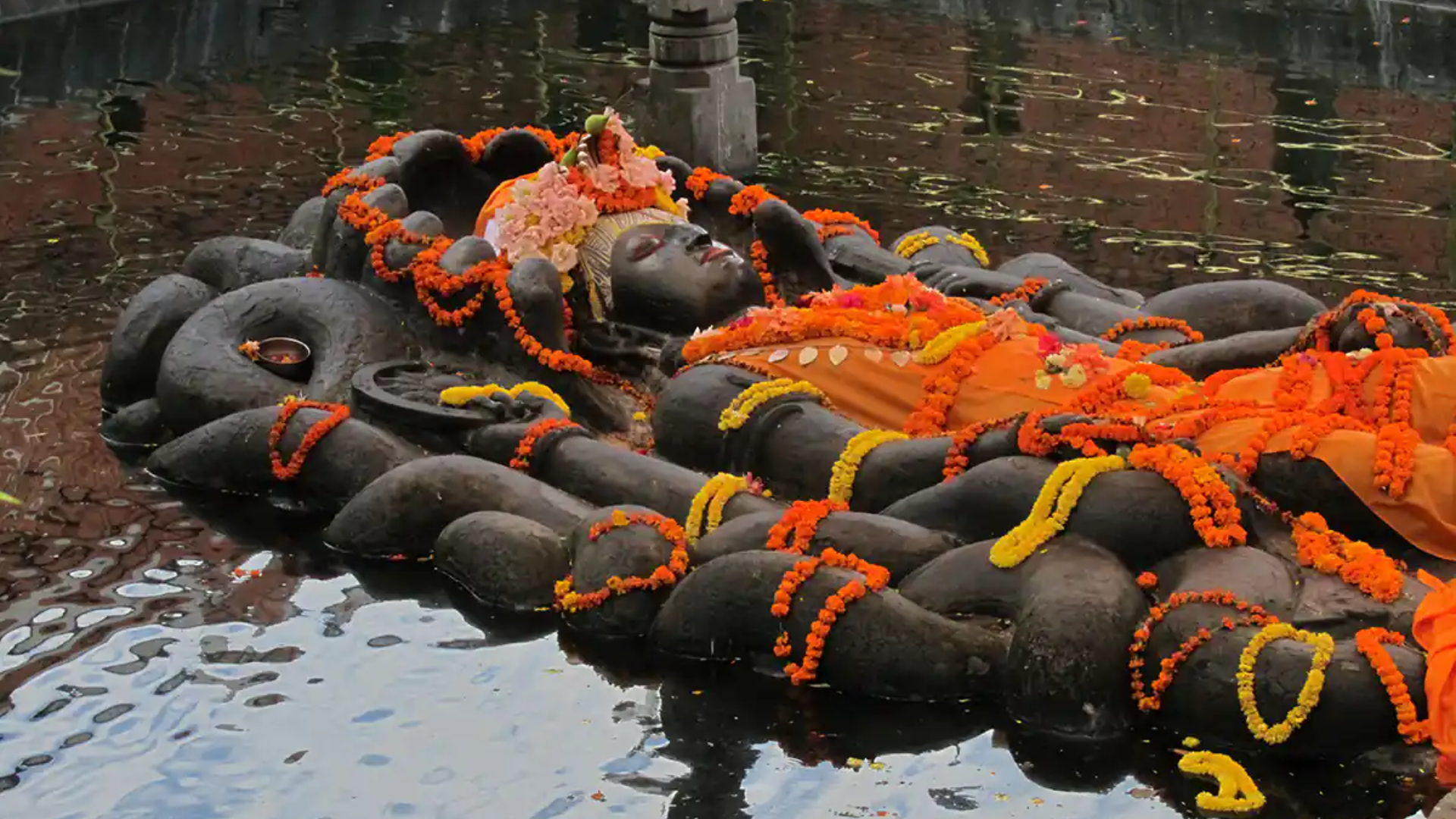
In the heart of Kathmandu Valley, Rato Machindranath Jatra is not just a festival; it feels like the city itself starts moving with a different rhythm.
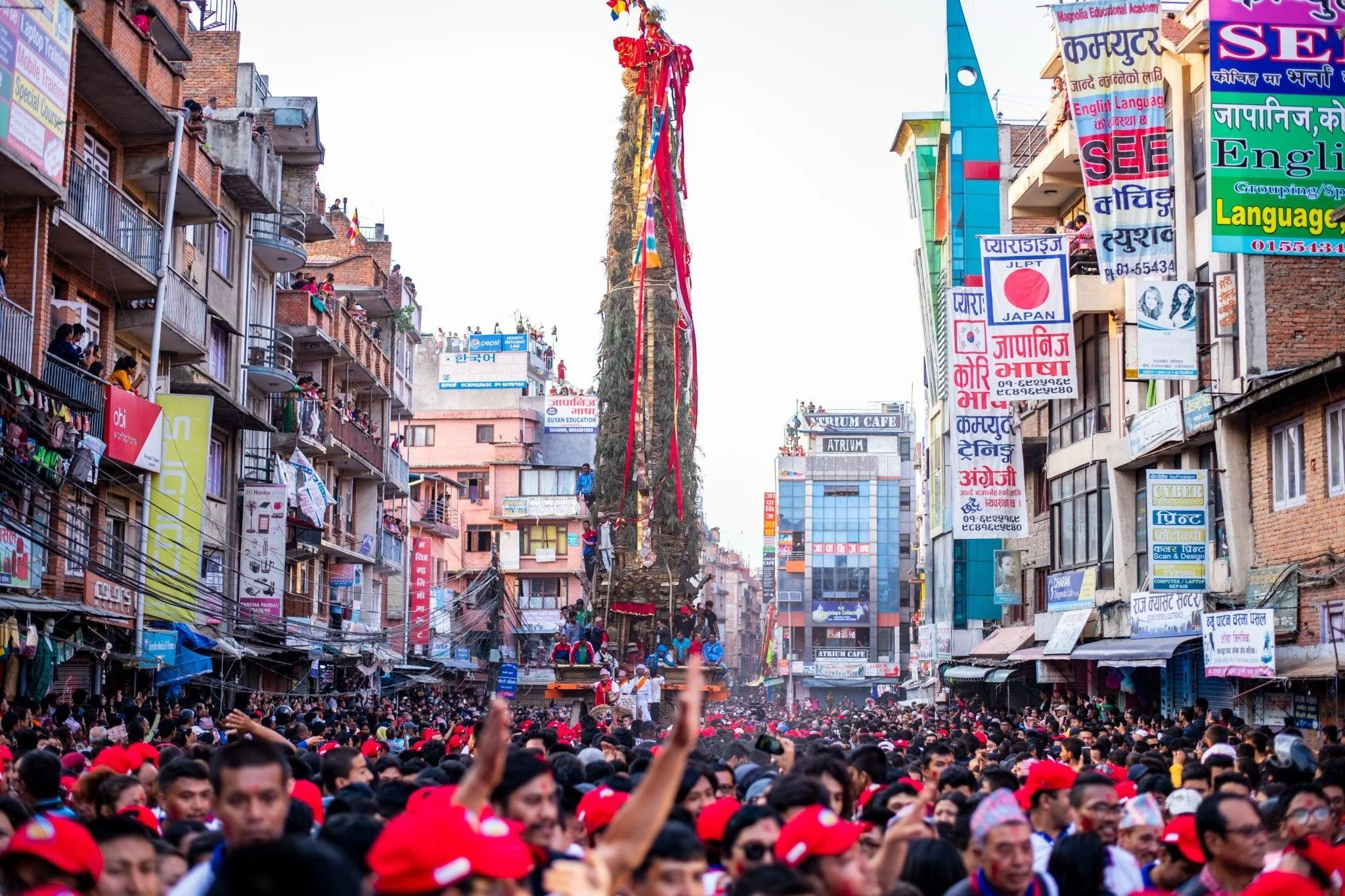
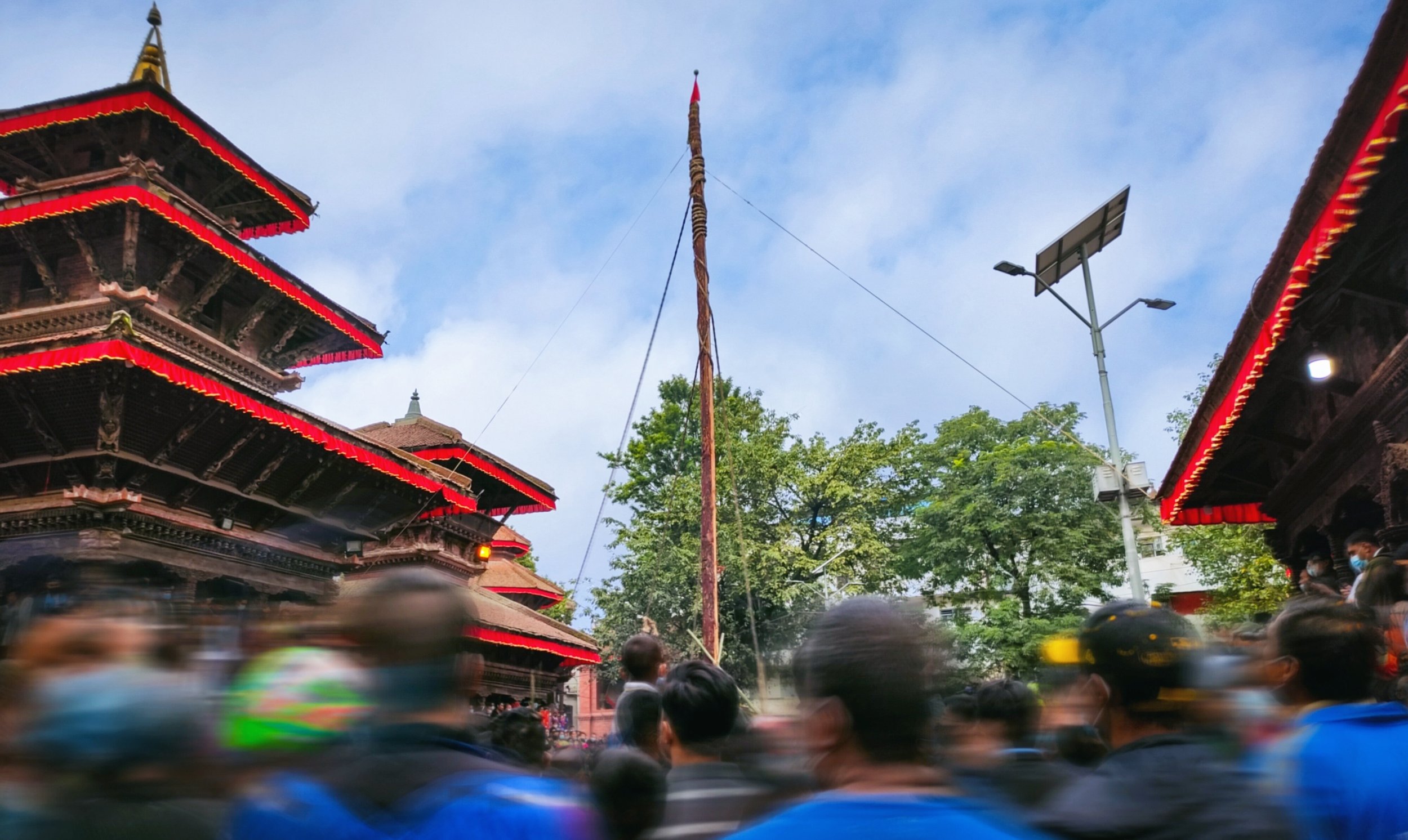
The journey of this jatra begins in the ancient streets of Patan, where the tall chariot of Rato Machindranath slowly comes to life. Built with wood, ropes, and deep devotion, the chariot is pulled by hundreds of people not just as a ritual, but as a shared act of faith, culture, and community. As it moves, it doesn’t feel like a procession alone; it feels like generations walking together through time.
What makes this festival special is not just its scale, but its emotion. You will see children running alongside the chariot, elders watching quietly from the windows, and locals guiding the heavy ropes with patience and strength. The streets become narrow corridors of celebration filled with music, chanting, and the sound of wheels slowly turning over ancient stone paths.
Rato Machindranath Jatra is deeply connected with hope for rain and good harvest, and that meaning is still alive in how people participate today. Every pull of the rope carries a prayer, every stop of the chariot carries a tradition, and every gathering feels like a reminder of belonging.
As the chariot travels from Pulchowk towards different parts of Lalitpur, the atmosphere keeps changing, sometimes loud and energetic, sometimes calm and reflective. Locals offer flowers, food, and respect along the route, making the entire journey feel like a living offering rather than just a celebration.
One of the most beautiful parts of this festival is how it slows down time. In a city that is usually fast-moving, the chariot forces everything to pause. Traffic stops, conversations gather on the roadside, and strangers become part of the same shared moment. It’s not something you watch from a distance; it’s something you feel around you.
When the chariot finally reaches its destination in Jawalakhel, there is a quiet sense of completion. But the energy doesn’t end there. The festival continues in memories, in photographs, and in stories passed down through families, each year slightly different, yet always familiar.
Rato Machindranath Jatra is more than a tradition. It is Kathmandu’s way of remembering itself through movement, devotion, and community. For travelers, it offers something rare: not just a cultural experience, but a moment where the city’s past and present walk together in the same direction.
POPULAR ITINERARIES
SIMILAR POSTS
Dakshinkali: The Sacred Threshold of Power and Devotion
At the edge of Kathmandu, Dakshinkali stands as a sacred threshold of power and transformation.
Dedicated to Goddess Kali, the fierce force of protection and renewal, this temple is where devotion meets courage, and where surrender becomes strength.
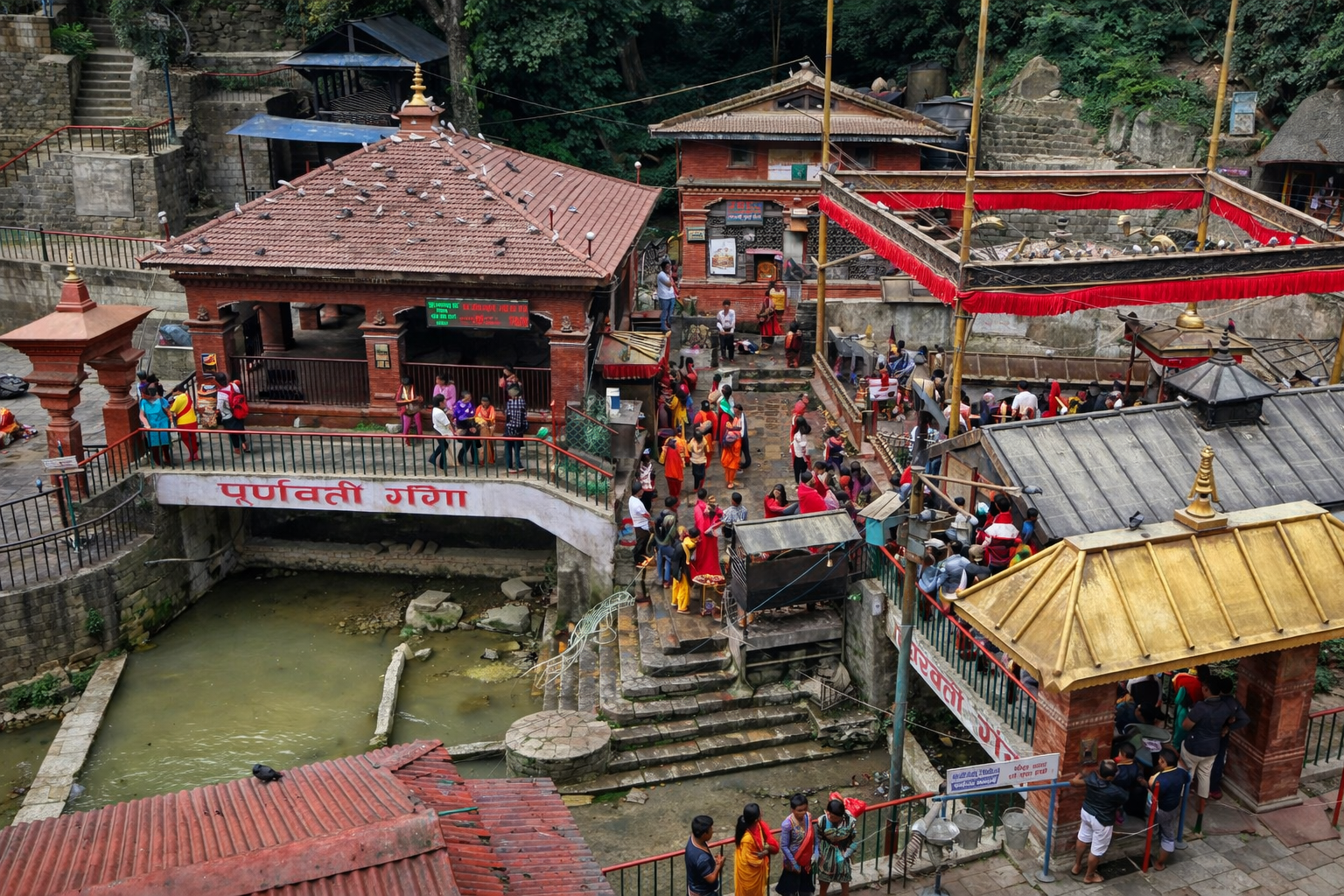
At the southern edge of Kathmandu Valley, where the city fades into forested hills, stands Dakshinkali, a temple dedicated to Kali, the fierce and transformative form of the Divine Feminine. This is not a quiet shrine. It is a place of intensity, power, and deep devotion.
To understand Dakshinkali, we must first understand Kali.
In Hindu mythology, Kali emerges during moments of cosmic crisis. In the Devi Mahatmya, when demons overpower the gods, the warrior goddess Durga releases Kali from her own forehead. Dark as the night sky, adorned with skulls, and unstoppable in battle, Kali destroys the forces of chaos. She is not evil. She is the force that restores balance when destruction becomes necessary.
Her symbolism runs deep. Her dark form represents the vastness of time and the unknown. The garland of skulls symbolizes creation and dissolution. Kali is time itself, the power that creates, transforms, and ultimately dissolves all things. Philosophically, she represents the destruction of ego and illusion. Transformation is rarely gentle, and Kali embodies that uncomfortable but necessary truth.
Dakshinkali Temple, believed to date back to the Malla period, was built after a king reportedly received a divine vision instructing him to establish the shrine in this southern gorge. The location is significant. Kali temples are often found at boundaries, between city and wilderness, order and chaos. Dakshinkali sits precisely at such a threshold.
One of the most discussed aspects of the temple is ritual animal sacrifice. Within Shakta tradition, sacrifice, known as bali, symbolizes surrender. It represents the offering of one’s inner impurities such as anger, pride, and greed. Especially during Dashain, devotees offer animals as an act of faith and gratitude, and the meat is consumed as blessed food.
At the same time, perspectives are evolving. Some devotees now choose symbolic offerings like coconuts or pumpkins instead. Cultural practices shift over time, and conversations around ethics continue within modern Nepali society.
On Tuesdays and Saturdays, the temple fills with worshippers. Bells ring, incense rises, prayers echo through the gorge. People come seeking protection, strength, and blessings before exams, business ventures, or major life events. Kali is approached not for comfort, but for courage.
Dakshinkali reminds us of a reality we often avoid. Destruction and renewal are inseparable. Life changes. Illusions fall. Strength is forged in intensity. At the edge of the valley, beneath the watchful gaze of the fierce goddess, devotion becomes an act of surrender and transformation.
POPULAR ITINERARIES
SIMILAR POSTS

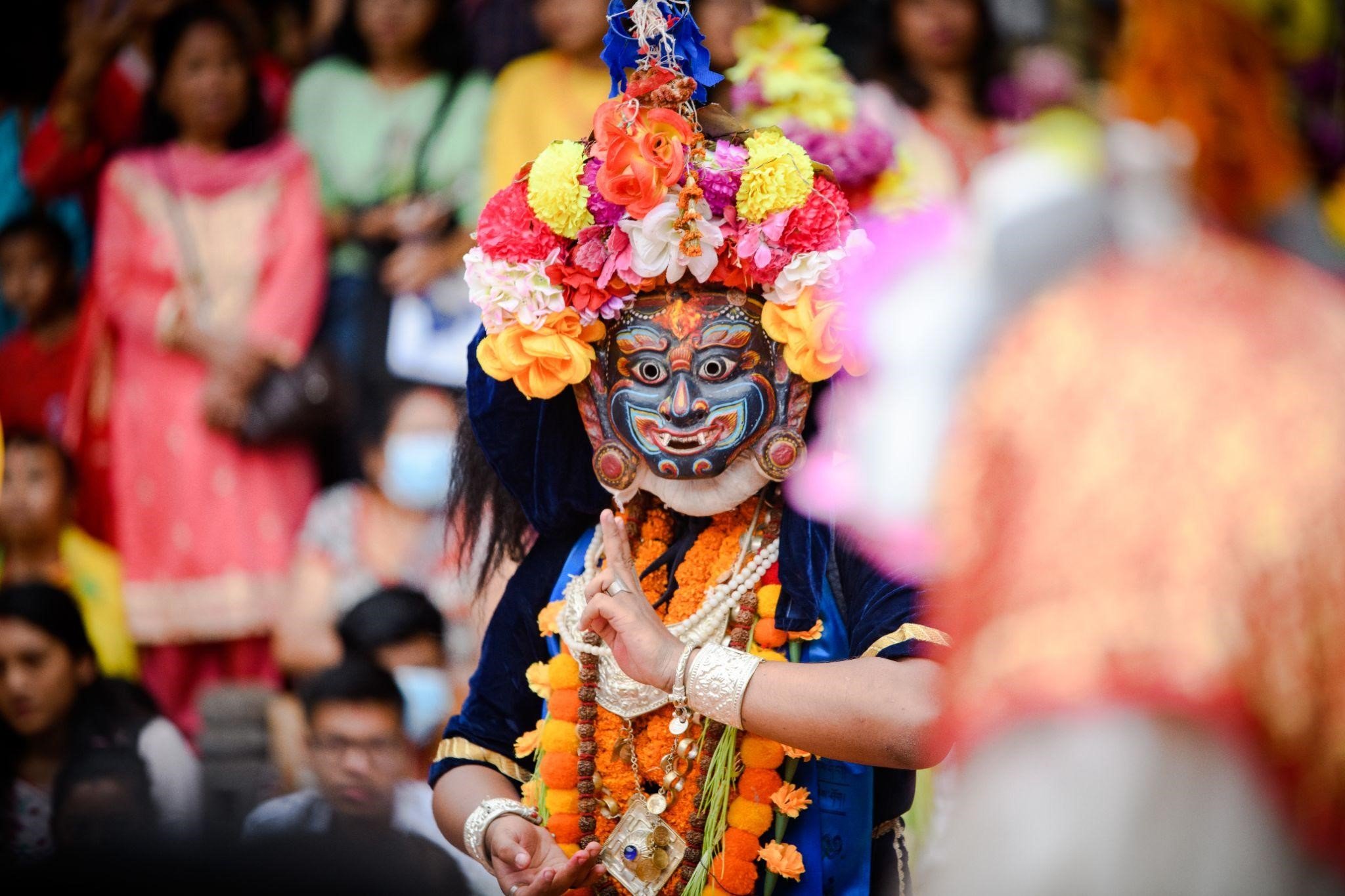
Gaa Pyakha and the Spirit of Dashain in Patan
Dashain, the grandest festival of Nepal, is a time of celebration, devotion, and togetherness. Across the country, homes are adorned with flowers, kitchens fill with traditional delicacies, and families gather to honor age-old rituals. In the historic city of Patan, one tradition stands out as a vibrant symbol of devotion and cultural pride: Gaa Pyakha.
Dashain, the grandest festival of Nepal, is a time of celebration, devotion, and togetherness. Across the country, homes are adorned with flowers, kitchens fill with traditional delicacies, and families gather to honor age-old rituals. In the historic city of Patan, one tradition stands out as a vibrant symbol of devotion and cultural pride: Gaa Pyakha.
Gaa Pyakha: The Sacred Dance of the Asta Matrika
Gaa Pyakha, also known as the Asta Matrika Naach, is a revered ritual dance performed in the heart of Patan during Dashain. Rooted in centuries-old traditions, this dance honors the eight mother goddesses (Asta Matrika) and five Newar patron deities, culminating in a mesmerizing display of devotion and artistry.
Origins and Legends
The origins of Gaa Pyakha trace back to the Malla era, around 350 years ago, introduced by King Sree Niwas Malla (son of King Siddhi Narsingh Malla), who dreamt of the mother goddesses dancing in his royal court at Mulchowk. He then decreed the dance to be performed for the stability of peace, security & prosperity in the nation.
The Dance and Its Deities
Gaa Pyakha features thirteen deities:
● Asta Matrikas (Eight Mother Goddesses): Brahmani, Mahesvari, Kaumari, Vaishnavi, Barahi, Indrayani, Mahakali, Mahalaxmi
● Five Newar Patron Deities: Bhairav, Simhini, Byangini, Ganesh, Kumar
The dancers, mostly from the Shakya and Bajracharya communities, wear intricate masks and costumes representing these deities. The performance begins on Ghatasthapana (the first day of Dashain) and concludes on Ekadashi, spanning nine days of spiritual devotion and cultural expression.
Rituals and Preparation
Before performing, dancers undergo spiritual preparation:
Sacred Cleansing: Fasting and meditation to purify body and mind
Invocation: Seeking refuge at the Vajrasattva shrine in Buddha, Dharma, and Sangha
Blessings: Receiving guidance from spiritual teachers, The dance itself is a form of Charya Nritya, an ancient tantric ritual where performers embody the deities, channeling divine energy through movement and rhythm.
Cultural Significance
Gaa Pyakha is more than a dance, it is a living link between the community and the divine, offering blessings of prosperity, protection, and harmony. It also preserves the rich cultural heritage of the Newar community, making it a highlight of Dashain in Patan.
Experience Dashain in Patan
For visitors, witnessing Gaa Pyakha offers a unique window into Nepalese tradition. The streets come alive with colors, music, and devotion, creating an immersive festival experience. For those seeking comfort and convenience amidst the celebrations, places like Hotel Shanker provide a serene retreat while keeping you close to the heart of Patan’s cultural festivities.
This Dashain, let the rhythms and colors of Gaa Pyakha guide you through the spiritual and cultural essence of Nepal, making your celebrations unforgettable.
POPULAR ITINERARIES
SIMILAR POSTS

Guardians of the Temples: The Story and Significance of the Bajra in Nepal
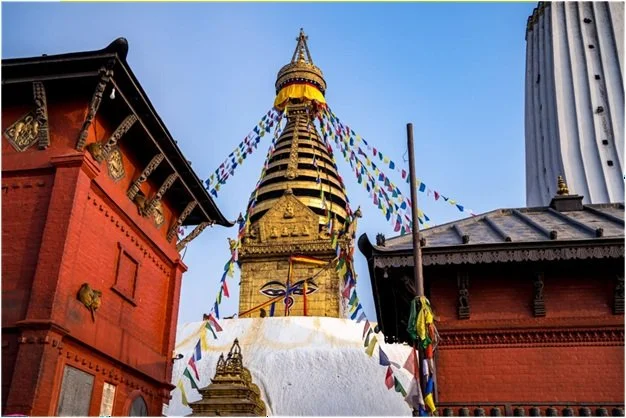
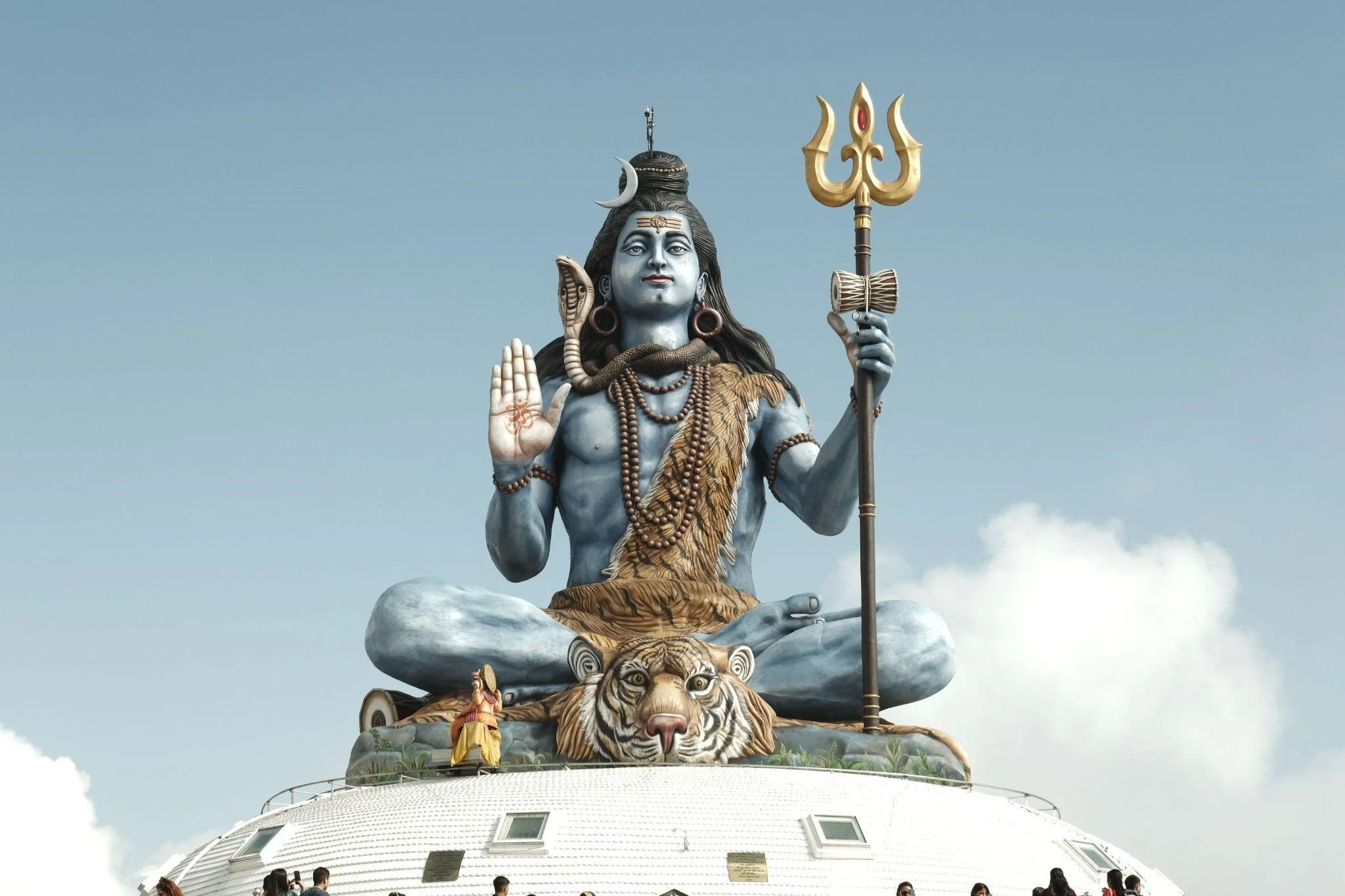
The golden Bajra at Swayambhunath Stupa in Kathmandu, a timeless guardian symbolizing strength, enlightenment, and divine protection in Nepal’s sacred traditions.” This sacred object, with its rich mythology and spiritual significance, stands firm as a reminder of the intertwined Hindu and Buddhist beliefs that continue to shape Nepal’s cultural landscape. Whether at the entrance of a temple, adorning stupas, or held during ritual practices, the Bajra represents a powerful force that connects the earthly realm with the divine.
When walking through the courtyards of temples and stupas in Nepal, one object stands out: the Bajra, also known as Vajra. Shining in bronze, brass, or gilded gold, it is often placed at the entrance of sacred spaces, on altars, or in the hands of deities. To many visitors, it looks like an ornate ritual object. But for the people of Nepal, the Bajra carries layers of mythology, symbolism, and spiritual meaning that connect the earthly world to divine power.
What is the Bajra?
The Bajra (Sanskrit: Vajra) literally translates to “thunderbolt” or “diamond.” In Hindu and Buddhist traditions, it represents both the irresistible force of thunder and the indestructibility of a diamond.
• In Hindu mythology, the Bajra is the weapon of Indra, the king of gods and lord of rain and storms.
• In Buddhism, particularly Vajrayana (Tantric Buddhism), the Bajra symbolizes unyielding strength, enlightenment, and the ultimate truth. It is often paired with the Ghanta (bell), representing the harmony of wisdom and compassion.
Physically, a Bajra is crafted with a central sphere flanked by symmetrical prongs, some with two, others with four or more. The design itself embodies balance, unity, and cosmic order.
Mythological Origins
The mythology of the Bajra goes back thousands of years:
• The Hindu Legend: According to ancient texts, the Bajra was fashioned from the bones of sage Dadhichi, who sacrificed himself so that the gods could create a weapon powerful enough for Indra to defeat the demon Vritra. The Bajra thus came to symbolize sacrifice, protection, and the triumph of good over evil.
• The Buddhist Symbolism: In Vajrayana Buddhism, the Bajra represents the indestructible nature of truth and enlightenment. Just as lightning can split rocks, the Bajra cuts through ignorance and illusion.
This dual mythology gives the Bajra a unique role in Nepal, where Hinduism and Buddhism co-exist and intertwine in everyday life.
Where to Find the Bajra in Nepal
Travelers will encounter the Bajra in many forms across Nepal’s sacred architecture:
At Stupas: The grand stupas of Swayambhunath and Boudhanath feature massive Bajras placed at their bases, symbolizing the spiritual strength that guards the monument.
In Temples: Many Hindu temples, especially those dedicated to Indra or Shiva, display Bajras at the gates or near shrines.
In Rituals: Monks and priests use hand-held Bajras during pujas and tantric practices, pairing them with bells for meditative chants.
As Decorative Symbols: You’ll also spot smaller Bajras engraved into doorways, pillars, and even prayer wheels as a mark of divine presence.
Symbolism Beyond Myth
The Bajra is not just a relic of mythology, it speaks to deeper philosophies:
• Indestructibility: Like a diamond, truth and enlightenment are eternal.
• Power: Like a thunderbolt, spiritual energy can transform lives instantly.
• Protection: Placed at temple entrances, the Bajra acts as a guardian against negative forces.
• Balance: Its symmetrical design teaches harmony between opposites such as wisdom and compassion, strength and humility.
Why the Bajra Matters Today
For locals, the Bajra remains a living symbol. During festivals like Indra Jatra, it reminds devotees of protection and divine energy. For pilgrims at stupas, it is an invitation to meditate on truth and resilience. And for travelers, it is a glimpse into how myth and spirituality seamlessly merge in Nepal’s cultural landscape.
The Bajra is more than an ornament. It is a guardian, a teacher, and a storyteller. To see a Bajra in Nepal is to stand in the presence of centuries-old beliefs that continue to shape the way of life in the Kathmandu Valley and beyond.
Travel Tip: Next time you visit Swayambhunath or Boudhanath, pause before the massive Bajra at the entrance. Notice its weight, balance, and symbolism. It is not just metal, it is the embodiment of Nepal’s sacred guardianship.
The Bajra reminds us that while storms may shake the world, truth and enlightenment remain unbreakable. In Nepal’s temples and stupas, this symbol stands firm as a guardian of the spiritual path.
POPULAR ITINERARIES
SIMILAR POSTS
The Mandalas of Kathmandu: Symbolism Behind the Intricate Patterns in Art and Temples
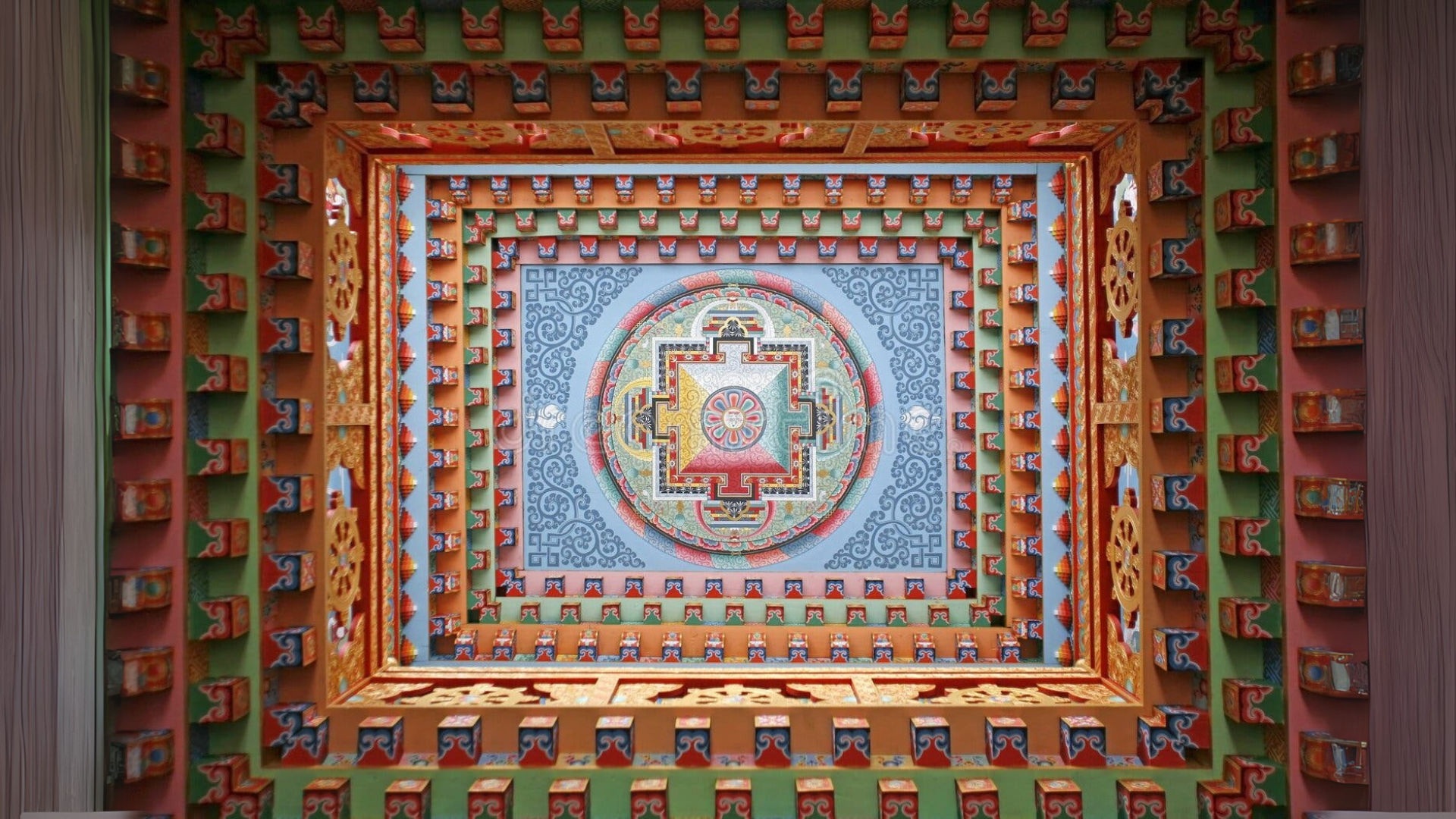
Kathmandu is a living canvas where spirituality and art meet at every corner. Among its countless expressions of faith and culture, mandalas stand as one of the most profound. These intricate circular patterns, seen in temples, monasteries, thangkas (sacred paintings), and even everyday rituals, carry deep symbolic meanings that go far beyond decoration. They are maps of the universe, pathways to meditation, and reflections of Nepal’s spiritual heart.
Kathmandu is a living canvas where spirituality and art meet at every corner. Among its countless expressions of faith and culture, mandalas stand as one of the most profound. These intricate circular patterns, seen in temples, monasteries, thangkas (sacred paintings), and even everyday rituals, carry deep symbolic meanings that go far beyond decoration. They are maps of the universe, pathways to meditation, and reflections of Nepal’s spiritual heart.
What is a Mandala?
The word mandala comes from Sanskrit, meaning “circle.” At its core, a mandala represents wholeness, balance, and the interconnectedness of all life. In both Hindu and Buddhist traditions, it is a symbolic diagram of the cosmos, showing how the physical and spiritual worlds align.
In Kathmandu, mandalas are not abstract concepts. They are painted, carved, and even walked upon during religious practices. Each line, color, and motif is carefully designed to guide the mind toward clarity and inner peace.
Mandalas in Temples and Monasteries
Walk through the courtyards of Kathmandu’s stupas and shrines, and you will see mandalas everywhere:
● On Stupas: The structure of stupas like Swayambhunath or Boudhanath themselves represent three-dimensional mandalas, symbolizing the universe and the path to enlightenment.
● On Doors and Windows: Carved wooden mandalas frame temple entrances, reminding devotees of spiritual protection as they enter sacred spaces.
● In Prayer Halls: Monks use intricate sand mandalas during rituals, painstakingly creating them grain by grain, only to sweep them away, symbolizing impermanence.
Colors and Patterns: What They Mean
Every mandala element carries symbolic meaning:
● Circles: Unity, eternity, and the cycle of life.
● Squares: The earthly world, stability, and grounding.
● Lotus Petals: Purity, spiritual awakening.
● Colors: Each shade has a purpose:
○ White: Peace and knowledge
○ Red: Power and passion
○ Blue: Protection and wisdom
○ Green: Growth and harmony
○ Yellow: Enlightenment
Together, they create a visual meditation, leading the eye and the mind towards the center, which often symbolizes enlightenment.
Mandalas in Everyday Spiritual Life
For the people of Kathmandu, mandalas are not just seen in temples, they are woven into daily rituals:
● During festivals like Tihar, colorful mandalas (rangolis) made of rice, flowers, and powders welcome gods and guests into homes.
● In meditation practice, locals and monks visualize mandalas to focus their thoughts and deepen mindfulness.
● Even in traditional Newar art, mandalas appear in paubha paintings and architectural details, connecting art to spiritual meaning.
A Symbol that Speaks Beyond Borders
What makes mandalas so captivating is their universality. Whether you are a pilgrim, an artist, or a traveler, these patterns invite you to pause, reflect, and reconnect. In Kathmandu, they remind us that spirituality is not just practiced, it is lived and seen in the very design of the city.
Final Thought
The mandalas of Kathmandu are more than patterns; they are sacred blueprints of life itself. To stand before one, whether on a temple wall or drawn in colored sand, is to glimpse the harmony between chaos and order, the earthly and the divine.
Kathmandu invites every visitor not only to see mandalas but to feel them: a spiritual map guiding us toward balance, beauty, and inner peace.
POPULAR ITINERARIES
SIMILAR POSTS

Nepali Storytelling Traditions You’ve Probably Never Heard Of
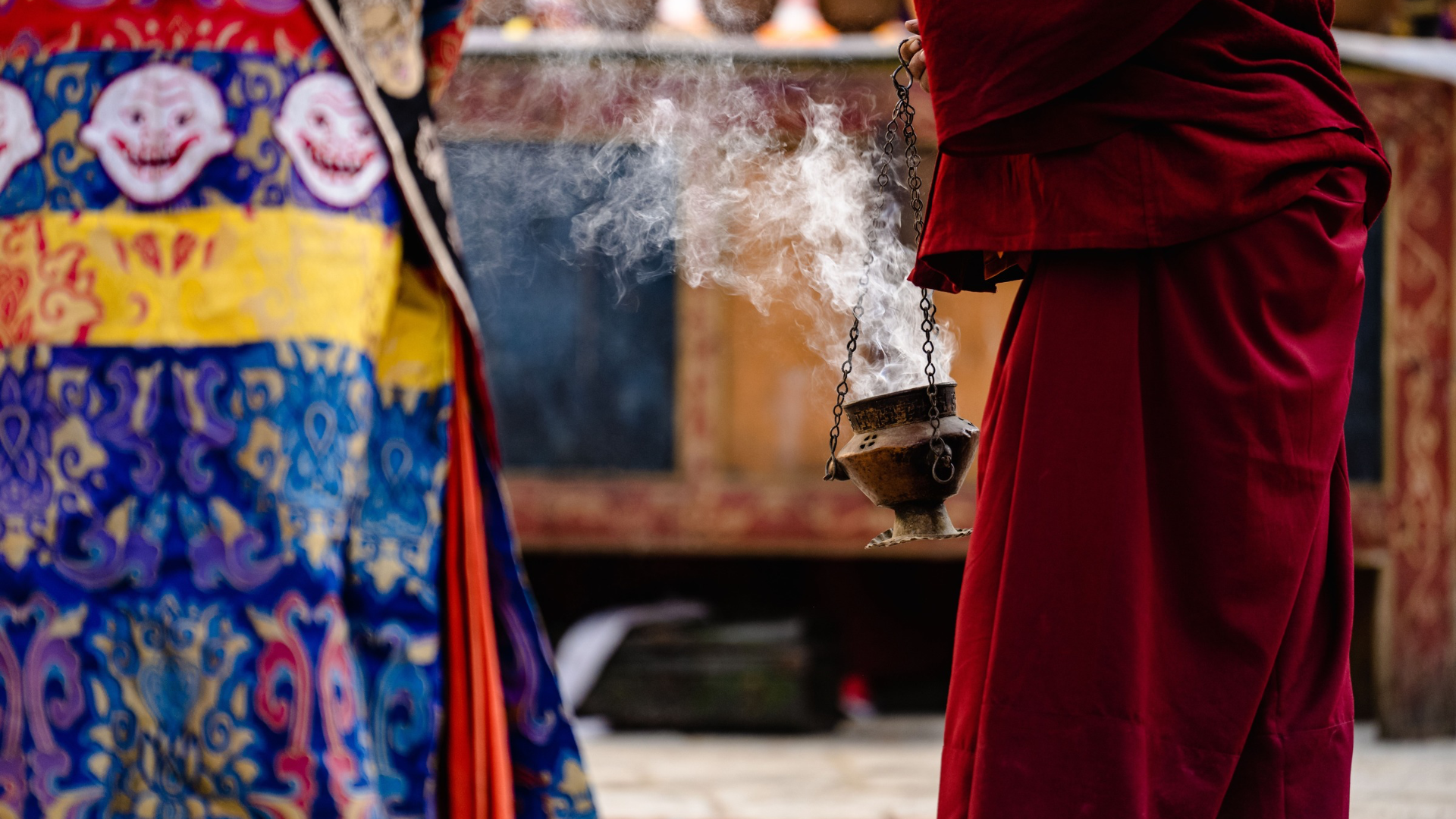
Before stories were written down, they lived in voices sung, spoken, and carried across generations. In Nepal, storytelling has always been more than a pastime. It is a way of keeping memories alive, of teaching, celebrating, and belonging.
Beyond city museums and formal stages, the art of storytelling still thrives in quiet homes, village gatherings, and festivals. Here are some of the lesser-known traditions that continue to echo in the Nepali way of life.
Songs, voices, and stories woven into the everyday
Before stories were written down, they lived in voices sung, spoken, and carried across generations. In Nepal, storytelling has always been more than a pastime. It is a way of keeping memories alive, of teaching, celebrating, and belonging.
Beyond city museums and formal stages, the art of storytelling still thrives in quiet homes, village gatherings, and festivals. Here are some of the lesser-known traditions that continue to echo in the Nepali way of life.
Tamang Selo: Stories That Dance
The sound comes first a pulse of drumbeats, a lively strum of music. Tamang Selo is more than a folk song; it is a living story. Known as the signature music of the Tamang community, it blends humor, longing, social tales, and village lore, all woven into verses set to the beat of the damphu drum.
These songs aren’t just for entertainment. They capture the everyday love found and lost, journeys taken, hardships faced told in a way that invites people to dance, sing along, and remember.
In the hills around Kathmandu and beyond, gatherings where Tamang Selo is sung become living archives of community memory.
Rural Folktales Carried in Memory, Shared in Gathering
Across Nepal’s villages, storytelling often finds its voice by the hearth or in the soft hush of evening gatherings. These are the lok katha rural folktales that travel from elder to child, passed down through generations.
They speak of clever animals, mysterious spirits, brave villagers, or moral lessons wrapped in humor and wit. Never bound to paper, these stories shift slightly with every telling, shaped by the voice of the storyteller and the ears of the listener.
In many homes, especially during the monsoon or after harvest, these tales offer more than entertainment. They build bonds, spark imagination, and preserve local wisdom that might otherwise fade away.
Oral Histories in Festivals When the Whole Village Listens
In Nepal, some stories are told not with words alone, but through dance, song, and ritual woven into the fabric of festivals and communal gatherings.
● Ghatu: Among the Gurung and Magar communities, this traditional song-dance tells epic tales of love, war, and ancient kings. Performed by young girls, often in trance-like states, it’s a blend of song, movement, and communal memory.
● Kartik Naach: Held annually in Patan’s Durbar Square, this masked dance retells stories from Hindu mythology through music and stylized choreography, turning public spaces into storytelling stages.
● Balan: Common in parts of western Nepal, Balan blends devotional songs with recitations of mythological tales, performed during religious ceremonies and festivals. It’s part prayer, part storytelling, and all tradition.
These festivals aren’t just celebrations. They are living narratives ways communities pass on stories of their gods, heroes, and shared past.
Final Thought
Storytelling in Nepal doesn’t always come wrapped in books or performed on grand stages. Often, it is found in songs echoing from village homes, tales shared under starlit skies, or ancient rituals danced out in temple squares.
POPULAR ITINERARIES
SIMILAR POSTS
Savoring Kathmandu: A Culinary Trail for First-Time Visitors
Kathmandu is not just a gateway to the Himalayas. It’s a city that feeds your senses. For first-time visitors, the flavors here offer a warm and welcoming glimpse into Nepal’s soul. From rooftop restaurants to quiet neighborhood stalls, every meal has something to say.
Kathmandu is not just a gateway to the Himalayas. It’s a city that feeds your senses. For first-time visitors, the flavors here offer a warm and welcoming glimpse into Nepal’s soul. From rooftop restaurants to quiet neighborhood stalls, every meal has something to say.
Start Your Day the Local Way
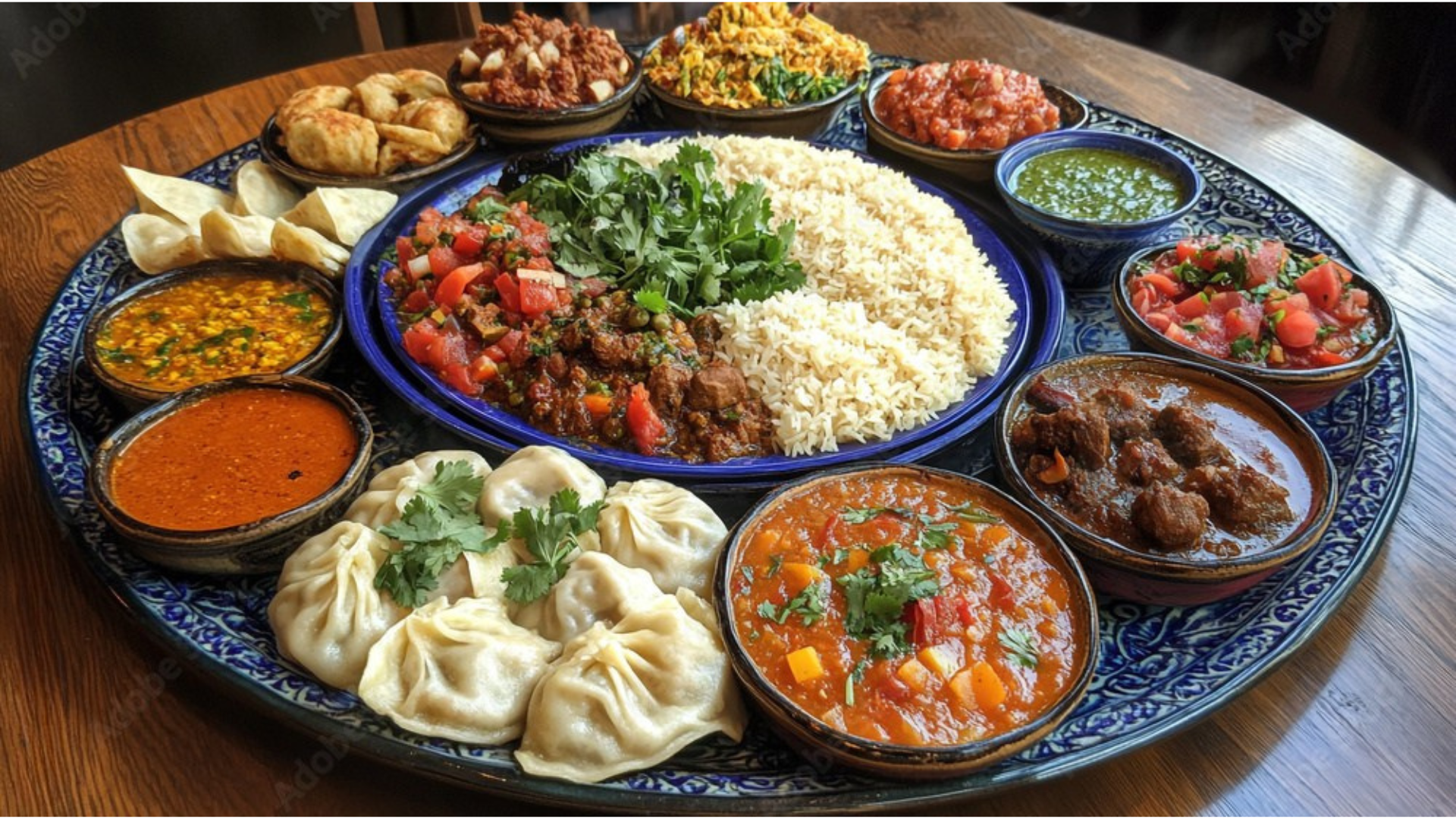
Begin your morning with sel roti and milk tea. This lightly sweet, crispy rice doughnut pairs beautifully with a hot cup of spiced tea. You might find it in a small stall tucked into an alley, where locals stop for a quick bite before their day begins.
Another simple favorite is chiura (flattened rice) served with buff sukuti (dried meat) or curried potatoes. It’s hearty, flavorful, and loved across generations.
Midday Meals with Meaning
Lunchtime in Kathmandu is often slow, generous, and shared. The traditional Nepali thali is a must-try. A round metal plate brings together steamed rice, lentils, vegetables, pickles, and a meat or vegetarian curry. Each part balances the other, creating a meal that’s filling and satisfying.
In heritage areas, especially around old squares, Newari dishes bring deeper regional flavor. Look for sets that include spicy chhoila, bara, and aloo tama. The ingredients are simple, but the cooking methods hold centuries of tradition.
Street Snacks and Afternoon Bites
As the sun dips lower, Kathmandu’s street snacks come to life. Try chatpate, a tangy mix of puffed rice, peanuts, and raw onions tossed in chili and lemon. It’s crunchy, spicy, and addictive.
And of course, momos. These steamed dumplings are everywhere. Whether filled with vegetables, buff, or paneer, they’re always served hot and with a fiery tomato-based achar.
Evening Dining and Rooftop Views
Dinner in Kathmandu is often a chance to relax and look out over the city. Rooftop restaurants offer peaceful views of temple spires, local rooftops, and the rhythm of the streets below.
Here, you might try grilled trout flavored with local herbs or a bowl of warm thukpa. The menu often mixes comfort with elegance, and many places are known as much for their setting as their food.
A Sweet Finish
No culinary trail in Kathmandu is complete without juju dhau. This creamy, thick yogurt comes from Bhaktapur and is a local treasure. Or end with a quiet cup of masala chiya, best enjoyed slowly.
For the Curious Palate
Kathmandu’s food journey isn’t just about trying something new. It’s about how meals are shared, how they’re prepared with care, and how taste is tied to tradition. For those arriving for the first time, it’s an easy way to connect—to the city, its people, and its quiet warmth.
Once you’ve eaten here, you’ll carry the taste long after you leave.
POPULAR ITINERARIES
SIMILAR POSTS
The Sacred Body of the Valley: Living Tantra in Kathmandu, Patan & Bhaktapur
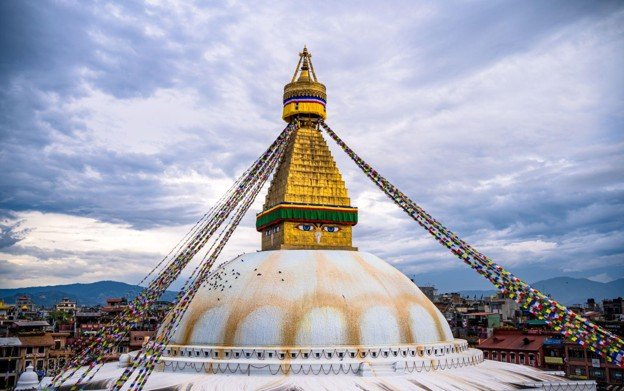
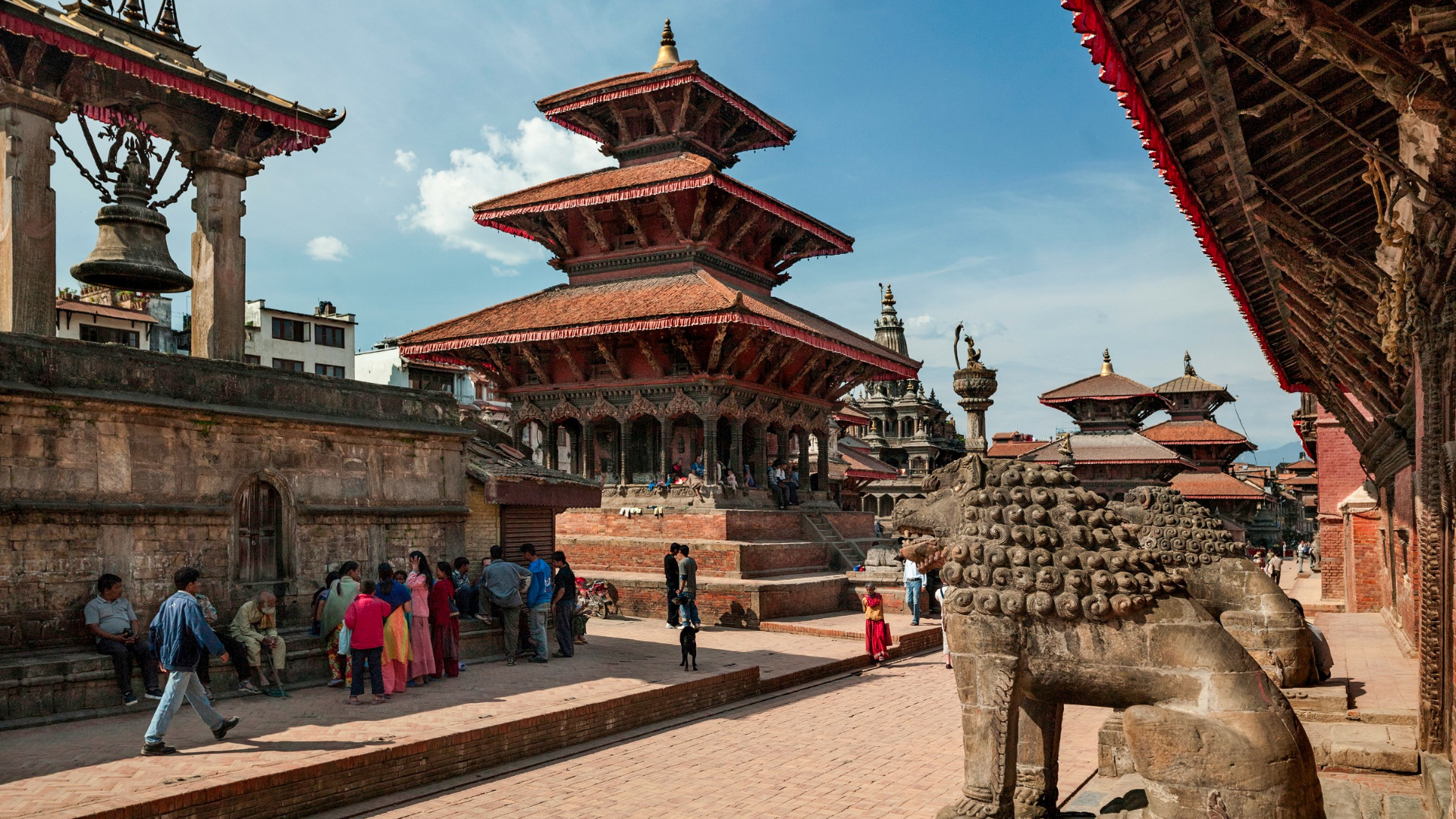
Step into the Durbar Squares of Patan, Bhaktapur, or Kathmandu, and you are no longer just in a historic city. You’re inside a living Tantric body. Where shrines rise not just at the center, but at every turn, every step, every breath. These cities were not built with symmetry alone, they were built with intention. And their intention is to awaken.
You don’t enter the sacred in Kathmandu you walk through it.
Step into the Durbar Squares of Patan, Bhaktapur, or Kathmandu, and you are no longer just in a historic city. You’re inside a living Tantric body. Where shrines rise not just at the center, but at every turn, every step, every breath. These cities were not built with symmetry alone, they were built with intention. And their intention is to awaken.
A City That Breathes in Symbols
Here, the spiritual doesn’t exist apart from the physical. It is the physical. Every strut carved with fire-bearing deities, every lion at the base of a stairway, every miniature shrine hidden behind a street-side arch they’re not just ornament. They are gateways, markers in a larger energy map.
In the tantric worldview, the body is a microcosm of the universe. The same is true for these cities.
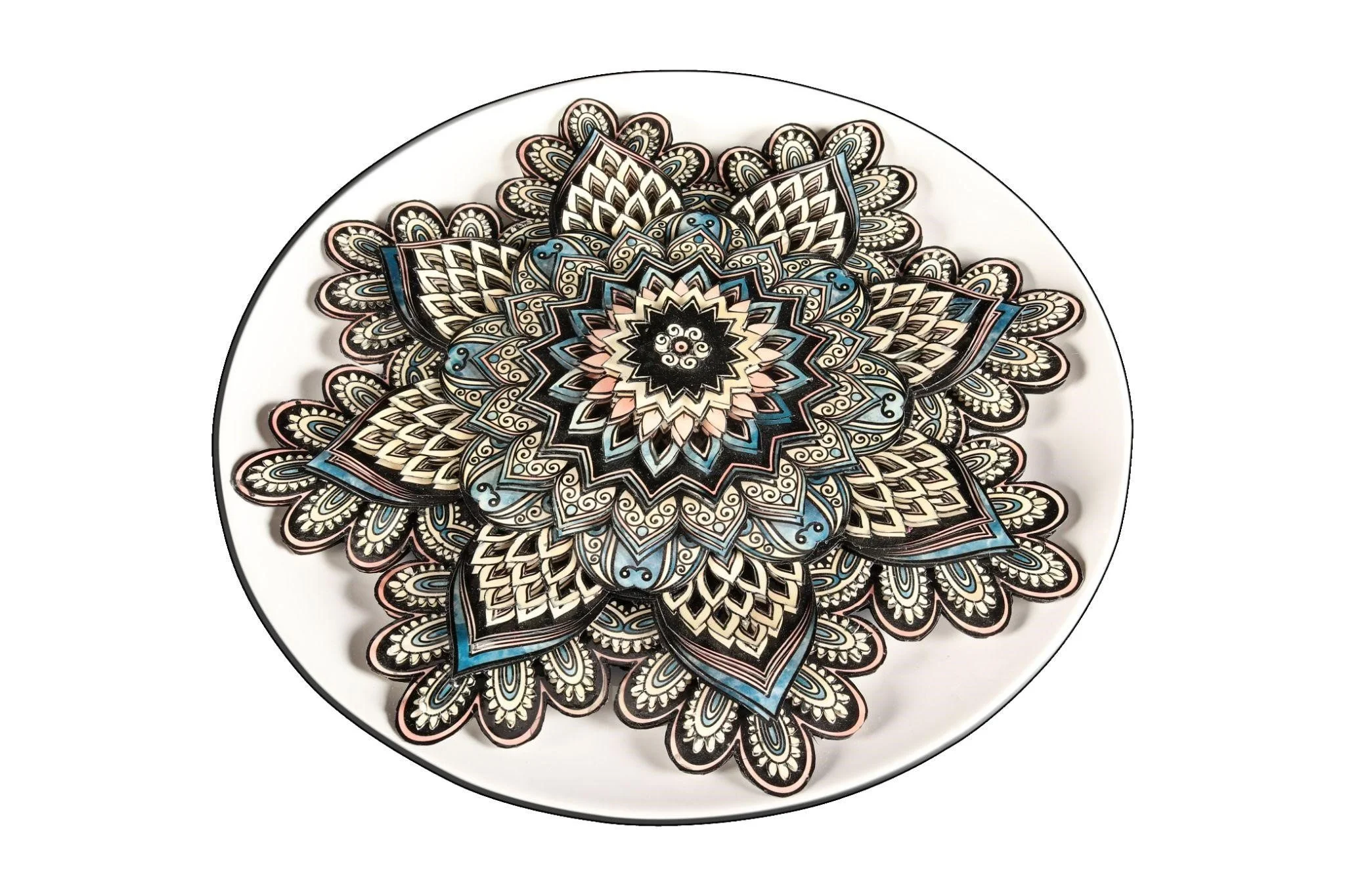
They function like mandalas: layered, directional, balanced. Each corner, each node, has meaning. And unlike monuments sealed off in reverence, these spaces are lived in, passed through, knelt before. Children play beside Bhairavs. Women place marigolds at stone altars on their way to buy lentils. The sacred breathes with the street.
Patan Durbar Square: The Heart That Feels Everything
Of the three, Patan hums the softest but its frequency is deep. Temples rise close together, like a cluster of thoughts around stillness. From the golden roof of Hiranya Varna Mahavihar to the tantric geometry of Krishna Mandir, the square draws you inward. You may not understand every symbol, but you’ll feel the weight of alignment the sense that something here is placed exactly where it needs to be.
Walk slow. Let your gaze rise and fall. You’re not observing; you’re participating.
Bhaktapur Durbar Square: The Spine of Fierceness and Devotion
In Bhaktapur, the energy shifts stronger, more pronounced. The statues of Ugrachandi and Ugrabhairav at the palace gate don’t invite you in gently. They announce the sacred. Here, the tantric body is not subtle. It demands engagement.
Every few meters, a shrine. Every turn, a temple. It’s easy to get lost and maybe you’re meant to. Bhaktapur doesn’t hand you answers. It tests your presence. The city speaks in festivals, in masked dances, in sudden encounters with divinity in the most unassuming corners.
Kathmandu Durbar Square: The Face and the Voice
Kathmandu’s square is louder. More human. It pulses. And at its heart sits Kaal Bhairav, black-stone protector and truth-teller. Stand before him long enough and the rest of the square fades.
Here, tantric energy is woven into the rhythm of life Indra Jatra, Kumari processions, the temple of the living goddess. The square doesn’t separate the spiritual from the social. It shows you what happens when they’re never apart to begin with.
Not a Monument. A Mandala.
These cities were not built to be admired. They were built to be used. Walked. Circled. Sat within. Their tantric power is not in what they say it’s in what they do to the body moving through them.
You leave not with photos, but with something rearranged.
Every Step a Ritual, Every Corner a Gate
The Durbar Squares of the Kathmandu Valley aren’t just beautiful they are active fields of spiritual architecture. Still powerful. Still inhabited. Still offering anyone who walks with attention the chance to feel more awake, more grounded, more real.
Not because you entered a temple.
But because the whole city is one.
POPULAR ITINERARIES
SIMILAR POSTS
Ghode Jatra: The Horse Festival That Brings Kathmandu to Life
Ghode Jatra is more than just a horse race; it is a symbol of Kathmandu’s resilience, history, and strength, where the country’s finest cavalry units, skilled riders, and powerful horses come together for a spectacle that has captivated audiences for centuries.
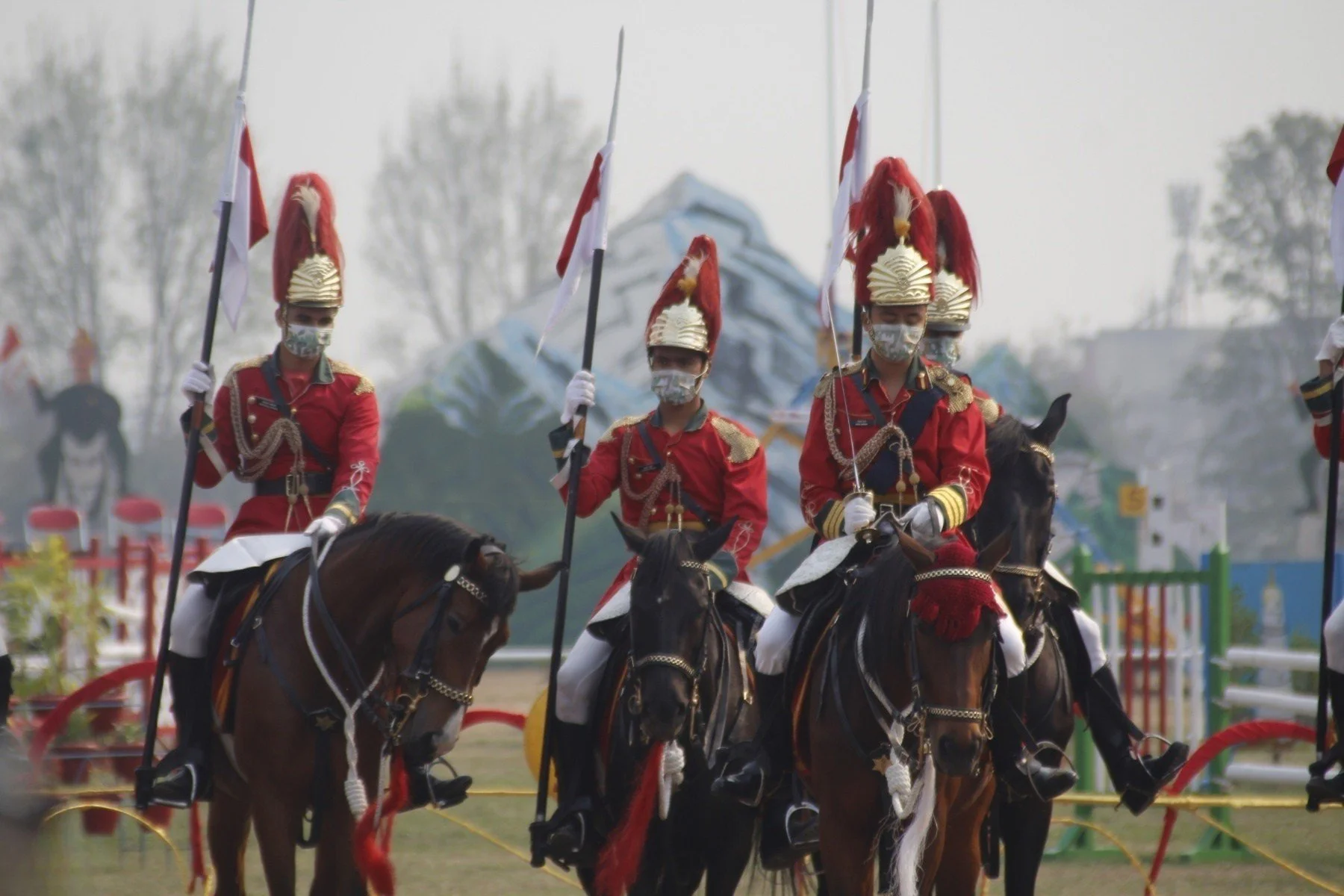
Every year, the heart of Kathmandu thunders with the sound of galloping hooves as the city comes together to celebrate Ghode Jatra, one of Nepal’s most exhilarating and unique festivals. Held at Tundikhel, the vast open ground in central Kathmandu, this event is a dynamic blend of equestrian skill, military tradition, and cultural pride, drawing thousands of spectators from across the country.
Ghode Jatra is more than just a horse race; it is a symbol of Kathmandu’s resilience, history, and strength, where the country’s finest cavalry units, skilled riders, and powerful horses come together for a spectacle that has captivated audiences for centuries.
The Legend Behind Ghode Jatra
Like many of Nepal’s great festivals, Ghode Jatra is rooted in myth and folklore. According to legend, a demon named Gurumapa once terrorized the people of Kathmandu. When the demon was finally defeated, his spirit was believed to remain beneath the grounds of Tundikhel, waiting for a chance to rise again. To prevent this from happening, the Nepalese Army began organizing a ritualistic horse race, believing that the thundering hooves would keep his spirit suppressed beneath the earth.
Over time, this ritual evolved into a grand military event, blending legend, tradition, and athletic prowess. What started as a spiritual precaution soon became one of Nepal’s most iconic displays of equestrian skill and military strength.
A Festival of Speed and Power
Ghode Jatra is a thrilling experience, where precision, speed, and tradition come together in a breathtaking display. The festival, usually held in March or April, is organized by the Nepalese Army, with participation from the highest-ranking officials, dignitaries, and a massive crowd of spectators.
The event showcases:
● Daring equestrian stunts, where skilled riders perform fearless acrobatics on horseback.
● High-speed horse races, testing the agility, strength, and discipline of both horse and rider.
● Traditional Newar rituals, performed by Kathmandu’s indigenous community as a way to honor and preserve their heritage.
● Grand military parades, demonstrating Nepal’s long-standing military history and dedication to national pride.
The festival is not just an event—it is a testament to Nepal’s deep-rooted traditions, military prowess, and cultural vibrancy.
The Atmosphere: A Festival Unlike Any Other
As the festival begins, Tundikhel transforms into a high-energy arena, where crowds cheer as majestic horses charge across the field at breathtaking speeds. The sight of Nepalese cavalry riders executing precise formations, thrilling jumps, and synchronized displays against the backdrop of Kathmandu’s bustling cityscape is a sight to behold.
But Ghode Jatra is more than just a demonstration of speed and skill—it is a day of celebration, gathering, and unity. Families, travelers, and locals come together to witness a spectacle that connects them to centuries of tradition. The energy is electric, the anticipation is high, and the entire event is a reminder of Nepal’s ability to blend its past with the present.
Witness Ghode Jatra in Luxury at Hotel Shanker
After an exhilarating day at Ghode Jatra, there is no better way to unwind and reflect on the festival’s magic than by retreating to the timeless luxury of Hotel Shanker. Situated just minutes from Tundikhel, Hotel Shanker offers the perfect blend of heritage, comfort, and elegance.
● Experience the charm of a historic palace-turned-hotel, where tradition meets modern luxury.
● Indulge in authentic Nepali and international cuisine, perfect for post-festival dining.
● Relax in serene gardens and beautifully restored interiors, offering a peaceful contrast to the day’s excitement.
Ghode Jatra is a festival that stays with you—just like the unforgettable experience of staying at Hotel Shanker.
Book your stay and make this festival a truly extraordinary experience.
POPULAR ITINERARIES
SIMILAR POSTS
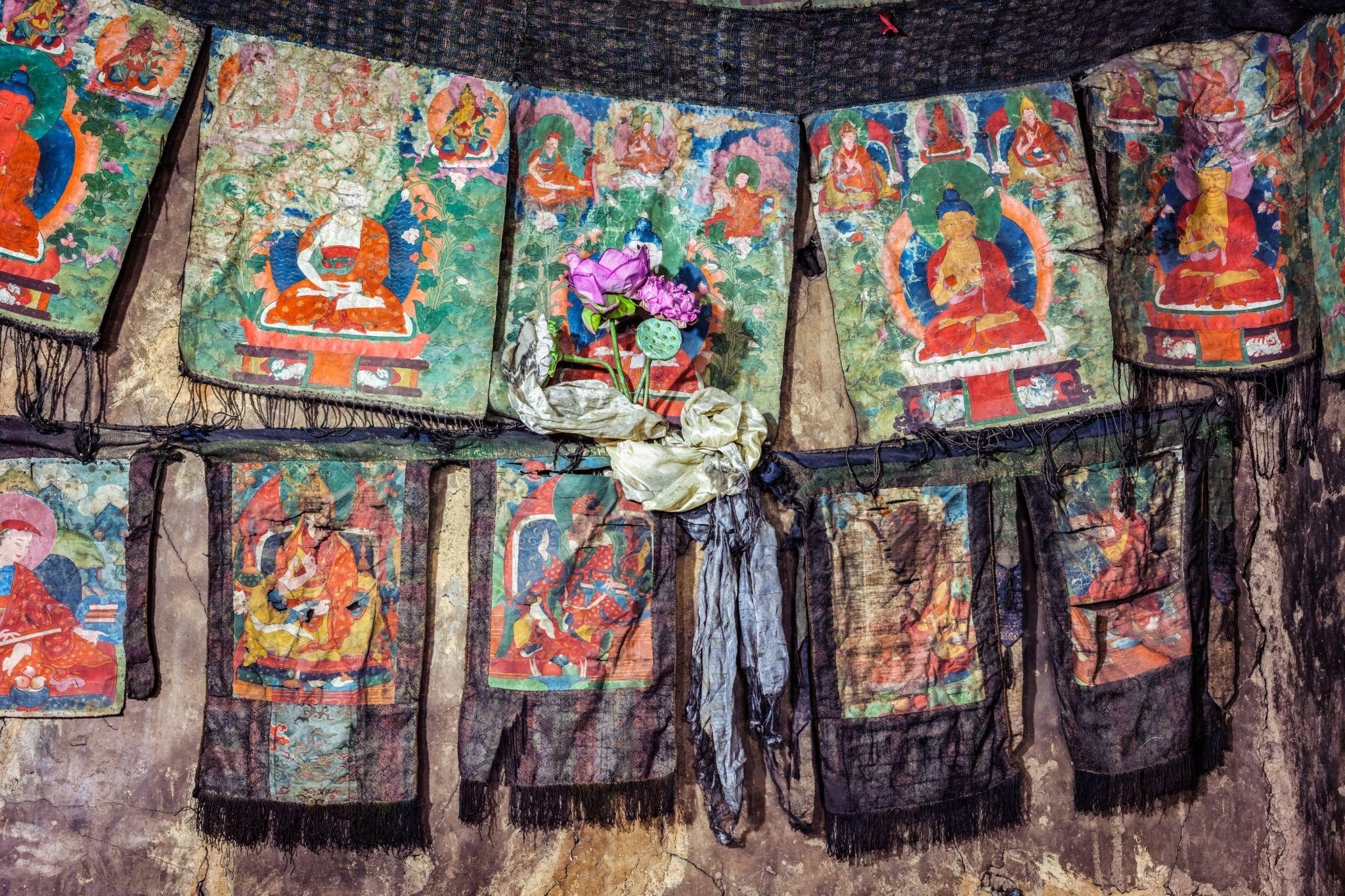
Nepal’s Artisans: A Journey Through Traditional Crafts
Nepal is a land of breathtaking mountains, vibrant festivals, and rich cultural heritage. But beyond its natural beauty and age-old traditions lies a fascinating story told through the hands of its artisans. From intricately woven fabrics to masterfully carved wooden sculptures, the crafts of Nepal embody the heart and soul of its people.
Nepal is a land of breathtaking mountains, vibrant festivals, and rich cultural heritage. But beyond its natural beauty and age-old traditions lies a fascinating story told through the hands of its artisans. From intricately woven fabrics to masterfully carved wooden sculptures, the crafts of Nepal embody the heart and soul of its people.
The Legacy of Craftsmanship
For centuries, Nepalese artisans have passed their skills from generation to generation, preserving techniques that date back to ancient times. These crafts are not just a livelihood but a celebration of Nepal’s artistic spirit. Each item, whether a thangka painting or a handmade piece of pottery, is infused with cultural significance and spiritual meaning.
Thangka Painting
A visit to Nepal is incomplete without encountering a thangka—a traditional Buddhist painting on cotton or silk. These intricate artworks, depicting deities, mandalas, or spiritual teachings, require incredible precision and devotion. The process can take weeks or even months, with artisans carefully following ancient guidelines to ensure their spiritual authenticity.
Woodcarving
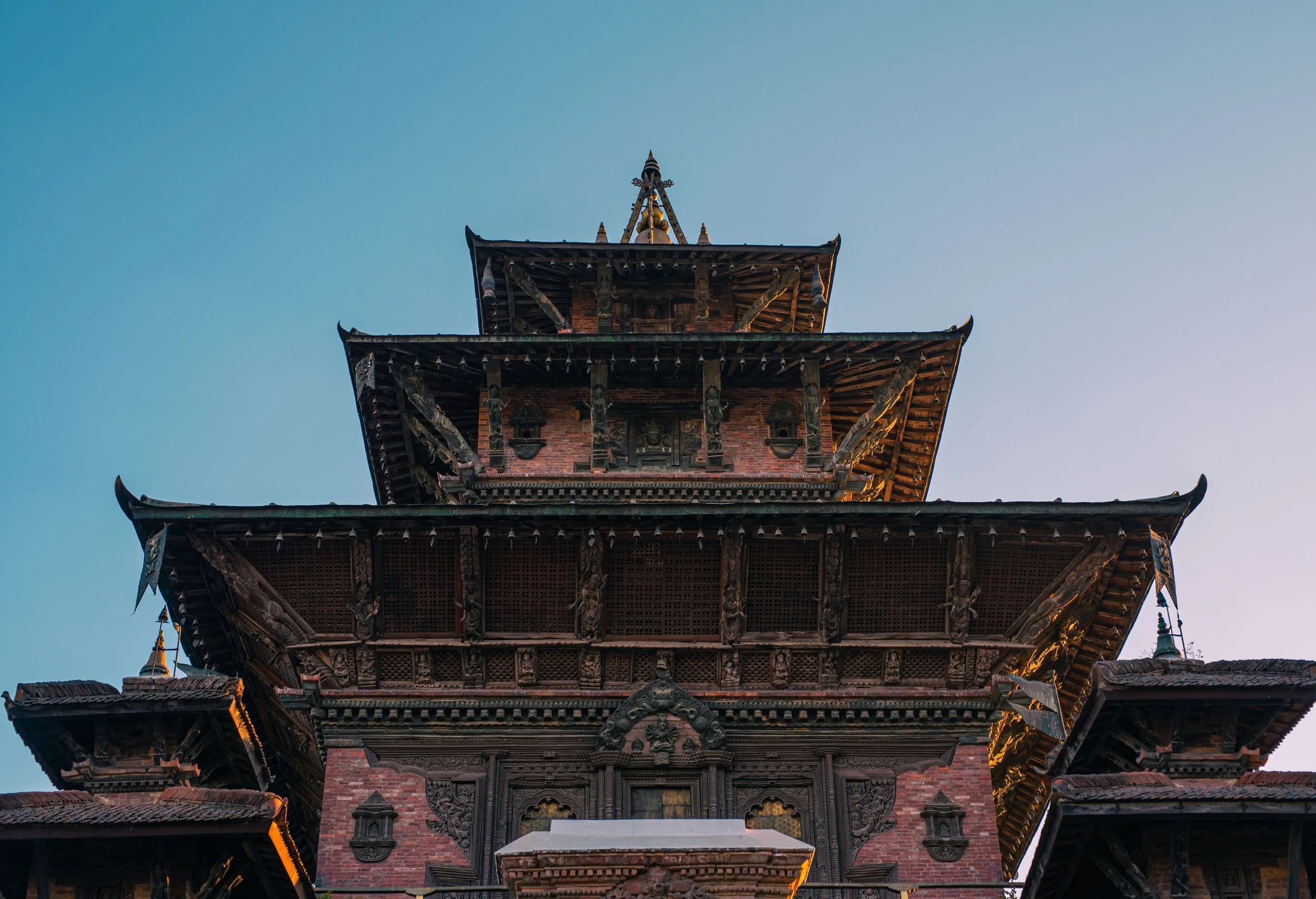
Kathmandu Valley’s temples and palaces stand as a testament to Nepal’s extraordinary woodcarving tradition. The ornate windows, doors, and beams found in historical landmarks such as the Patan Durbar Square and Bhaktapur exemplify this skill. Local artisans, armed with little more than chisels and immense patience, continue to craft intricate woodwork that echoes the architectural grandeur of Nepal’s past.
Pottery in Bhaktapur
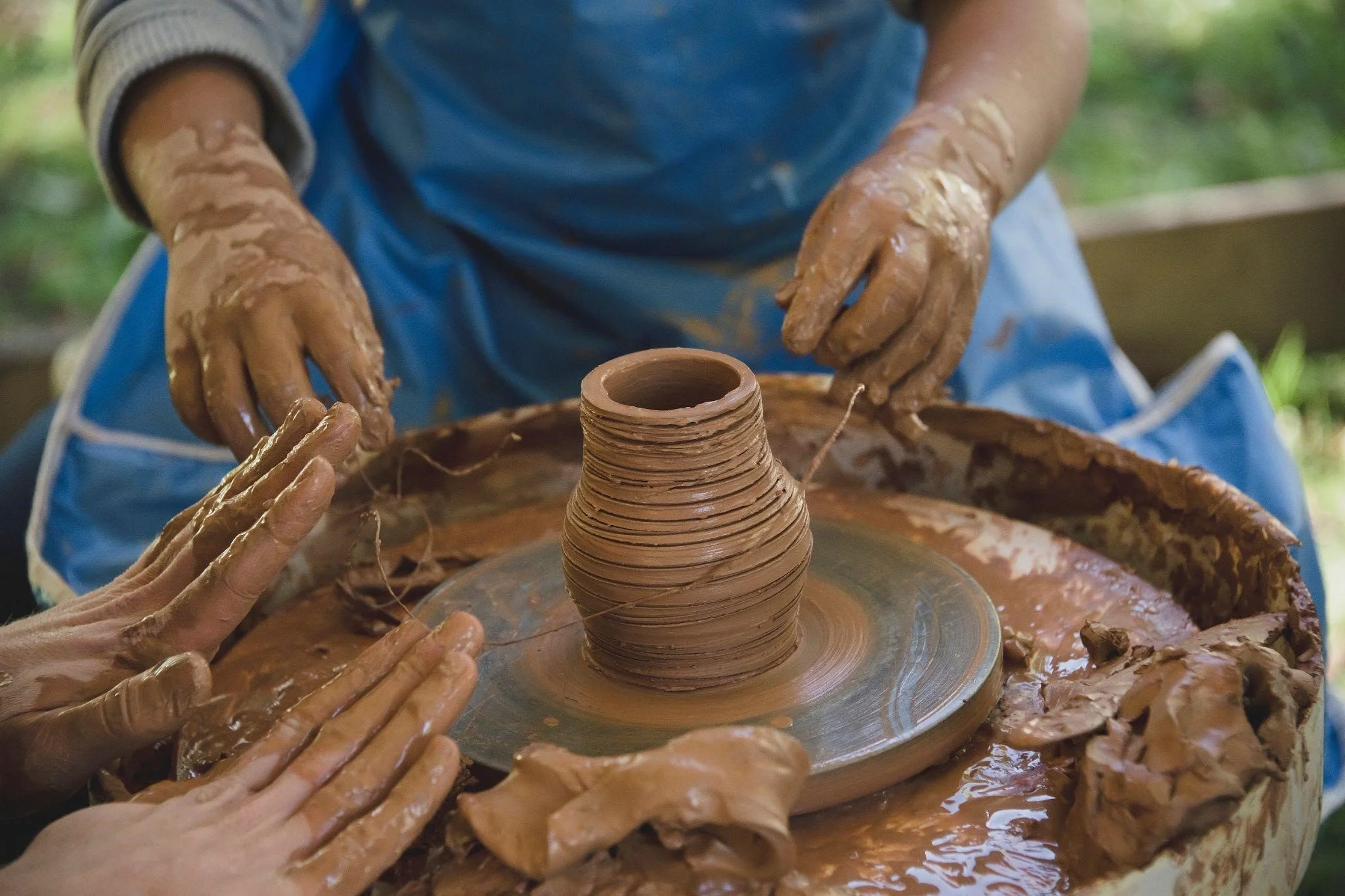
Stroll through Bhaktapur’s Potter’s Square, and you’ll find artisans shaping clay into delicate bowls, vases, and lamps. Pottery has been an integral part of Nepalese life for centuries, often used in rituals and daily life. Watching the potters at work is like witnessing history in motion—each spin of the wheel connecting the modern era to a timeless tradition.
Handwoven Textiles
Nepal’s weaving traditions are equally impressive. From the luxurious pashmina shawls to Dhaka fabric’s vibrant patterns, textiles play a vital role in Nepalese culture. Dhaka, for instance, is often used to make traditional attire like the daura suruwal and is woven on handlooms, a practice that demands remarkable skill and dedication.
Hotel Shanker: A Heritage Destination
Amidst Kathmandu’s bustling streets and ancient landmarks, Hotel Shanker serves as a bridge between Nepal’s cultural past and present. This iconic palace-turned-hotel is more than a place to stay—it’s a tribute to Nepal’s artistic heritage. The interiors of Hotel Shanker reflect the same craftsmanship seen in Nepal’s temples and royal courts, with hand-carved wooden elements, elegant décor, and an atmosphere steeped in history.
Guests at Hotel Shanker not only enjoy the luxury of modern comforts but also find themselves surrounded by echoes of Nepal’s artisan traditions. The hotel's architecture and design are a celebration of the skills that have defined Nepalese artistry for generations.
Discover Nepal’s Artistry
For travelers seeking a deeper connection to Nepal’s culture, exploring its artisan traditions is a must. Visit workshops, meet the artisans, and even take home a piece of Nepal’s craftsmanship as a memento. Whether it’s a meticulously painted thangka or a handwoven pashmina, these treasures carry the spirit of Nepal and its people.
As you immerse yourself in Nepal’s artistic heritage, let Hotel Shanker be your sanctuary. Here, you can experience not only the warmth of Nepalese hospitality but also a setting that pays homage to the country’s rich craft traditions.
Nepal’s artisans have long been the unsung heroes of its cultural story. Their work, shaped by devotion and tradition, invites us to appreciate the timeless beauty of handmade art. So, whether you’re wandering the markets of Kathmandu or relaxing in the regal ambiance of Hotel Shanker, take a moment to celebrate the creativity and craftsmanship that make Nepal truly unique.
POPULAR ITINERARIES
SIMILAR POSTS