

Exploring the Rich Heritage of Nepali Thangka Paintings
Thangka paintings are among Nepal's most treasured artistic traditions, representing a unique blend of craftsmanship, spirituality, and cultural heritage. These intricate paintings have been practiced for centuries and continue to hold deep significance within Himalayan Buddhist communities.
Traditionally painted on cotton or silk, Thangkas often depict Buddhist deities, mandalas, spiritual teachers, and sacred narratives. Every element within the artwork carries meaning, from the colors and patterns to the placement of symbols, each carefully designed to convey spiritual teachings and philosophical concepts.
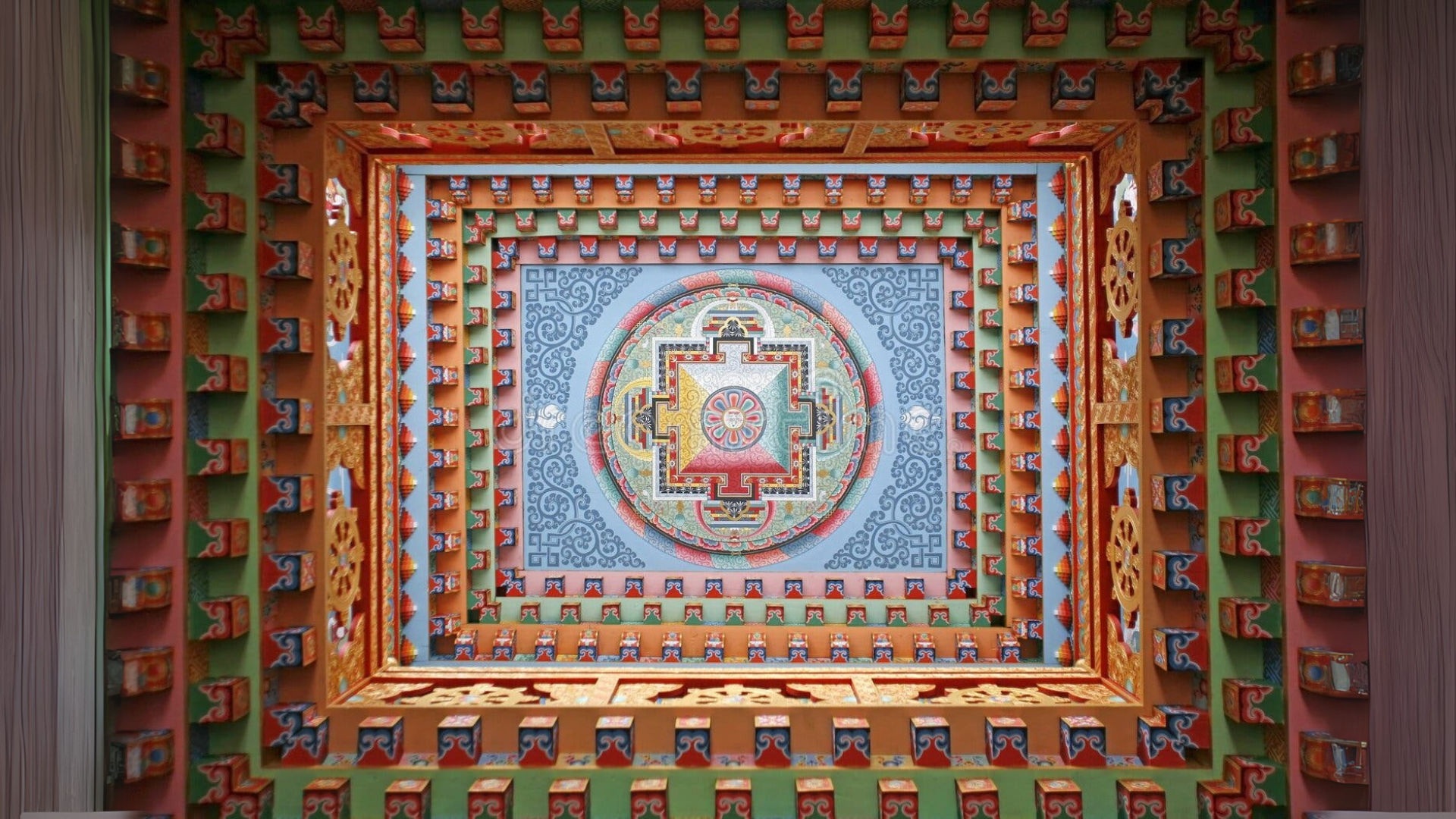
One of the most distinctive features of Thangka art is the mandala, a geometric representation of the universe. Mandalas symbolize harmony, balance, and the interconnected nature of life, serving as powerful visual tools for contemplation and meditation.
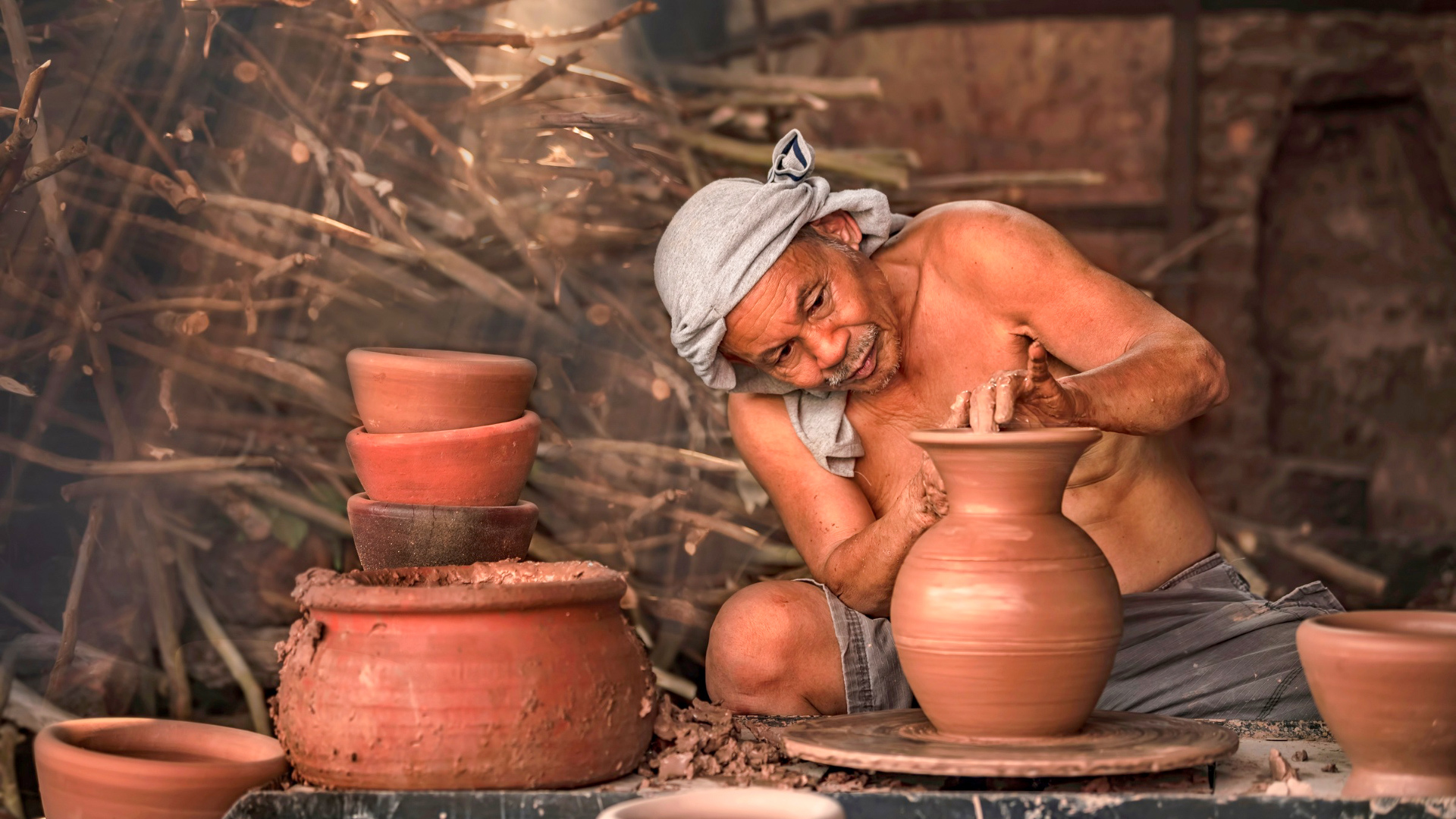
Creating a Thangka requires remarkable precision, patience, and dedication. Artists spend years learning traditional techniques that have been preserved through generations. Each painting follows established artistic principles, ensuring that both its visual beauty and symbolic meaning remain intact.
Throughout Nepal, Thangka paintings can be found in monasteries, temples, cultural institutions, and artisan workshops. Their presence reflects the enduring relationship between art and spirituality, offering insight into the beliefs and traditions that have shaped the region for centuries.
More than decorative works of art, Thangka paintings serve as cultural and spiritual expressions that preserve stories, values, and wisdom. They remain a living tradition, continuing to inspire appreciation for Nepal's rich artistic heritage and deep-rooted cultural identity.
POPULAR ITINERARIES
SIMILAR POSTS

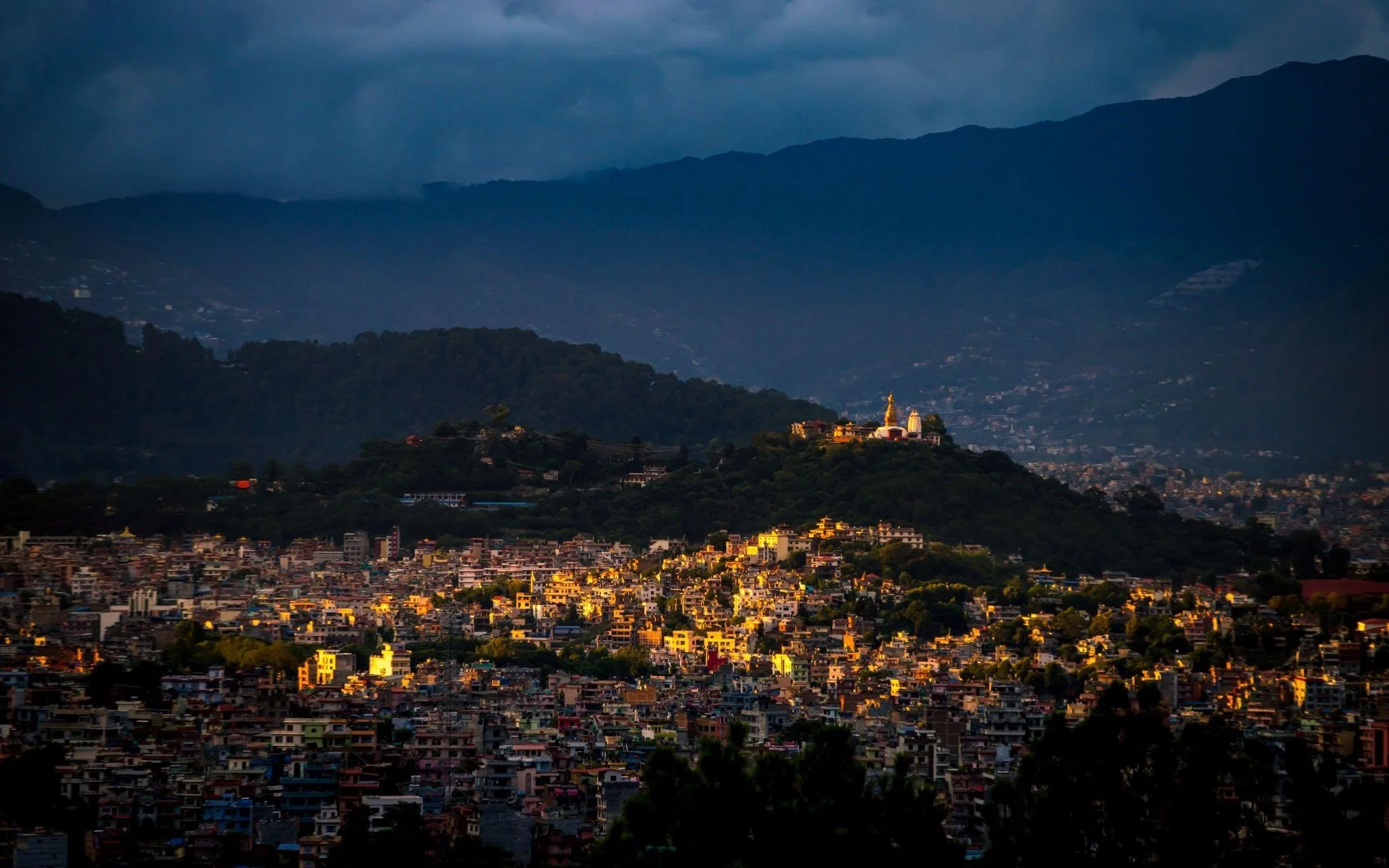
5 Cultural Experiences to Have During Your Stay in Kathmandu
A stay in Kathmandu is more than just a visit, it is an opportunity to experience a city where culture, tradition, and everyday life exist side by side. From sacred rituals to historic streets, every corner of the valley carries a story waiting to be discovered.
Here are five cultural experiences that offer a deeper connection to the spirit of Kathmandu.
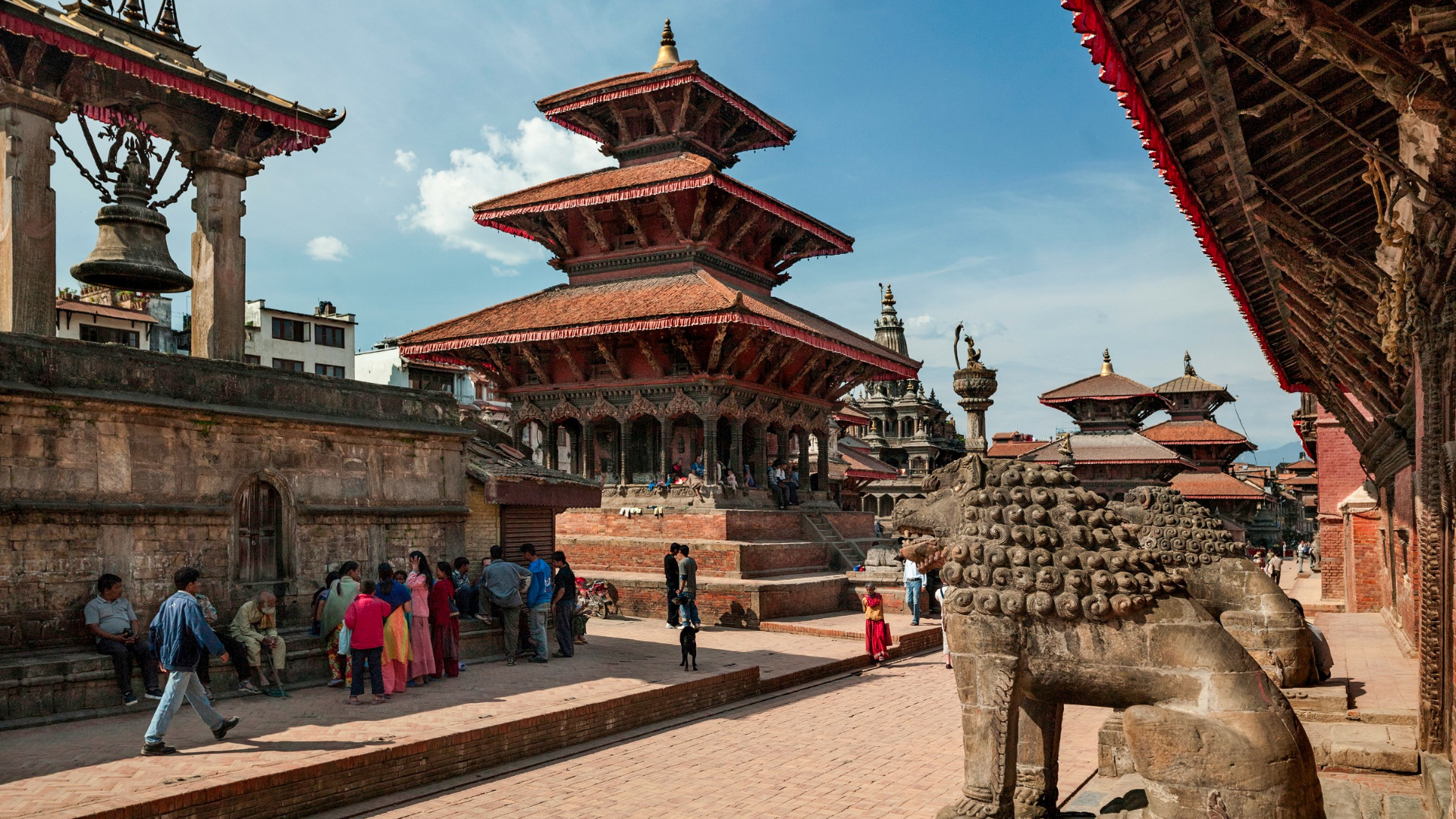
One of the most memorable experiences is exploring the heritage squares of Patan and Bhaktapur, where ancient temples, traditional architecture, and daily life come together in a living display of history and craftsmanship.
The evening aarti at Pashupatinath Temple offers a powerful spiritual experience, where chants, lamps, and rituals along the river create a deeply reflective and sacred atmosphere.
Walking through the bustling local markets of Asan and Indra Chowk gives a glimpse into the rhythm of everyday Kathmandu, filled with colors, sounds, and centuries-old trading traditions.
A traditional Newari dining experience is also a must, where every dish reflects the valley’s culture, festivals, and community-centered way of life through rich and authentic flavors.
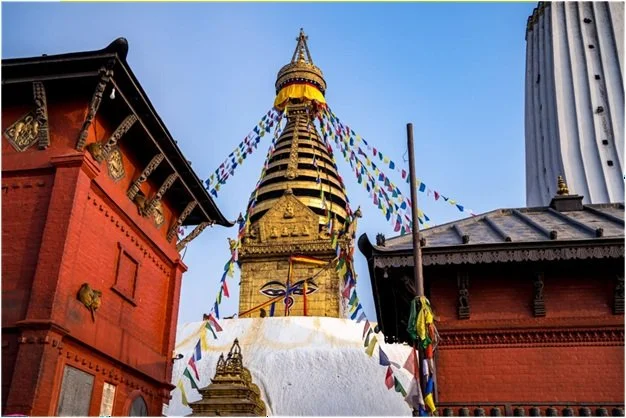
Finally, visiting Swayambhunath Stupa brings together spirituality and serenity, with prayer flags, soft chants, and panoramic views of the valley offering a peaceful cultural escape.
These experiences allow guests to feel the true essence of Kathmandu, where history is not only preserved but still lived every day.
POPULAR ITINERARIES
SIMILAR POSTS
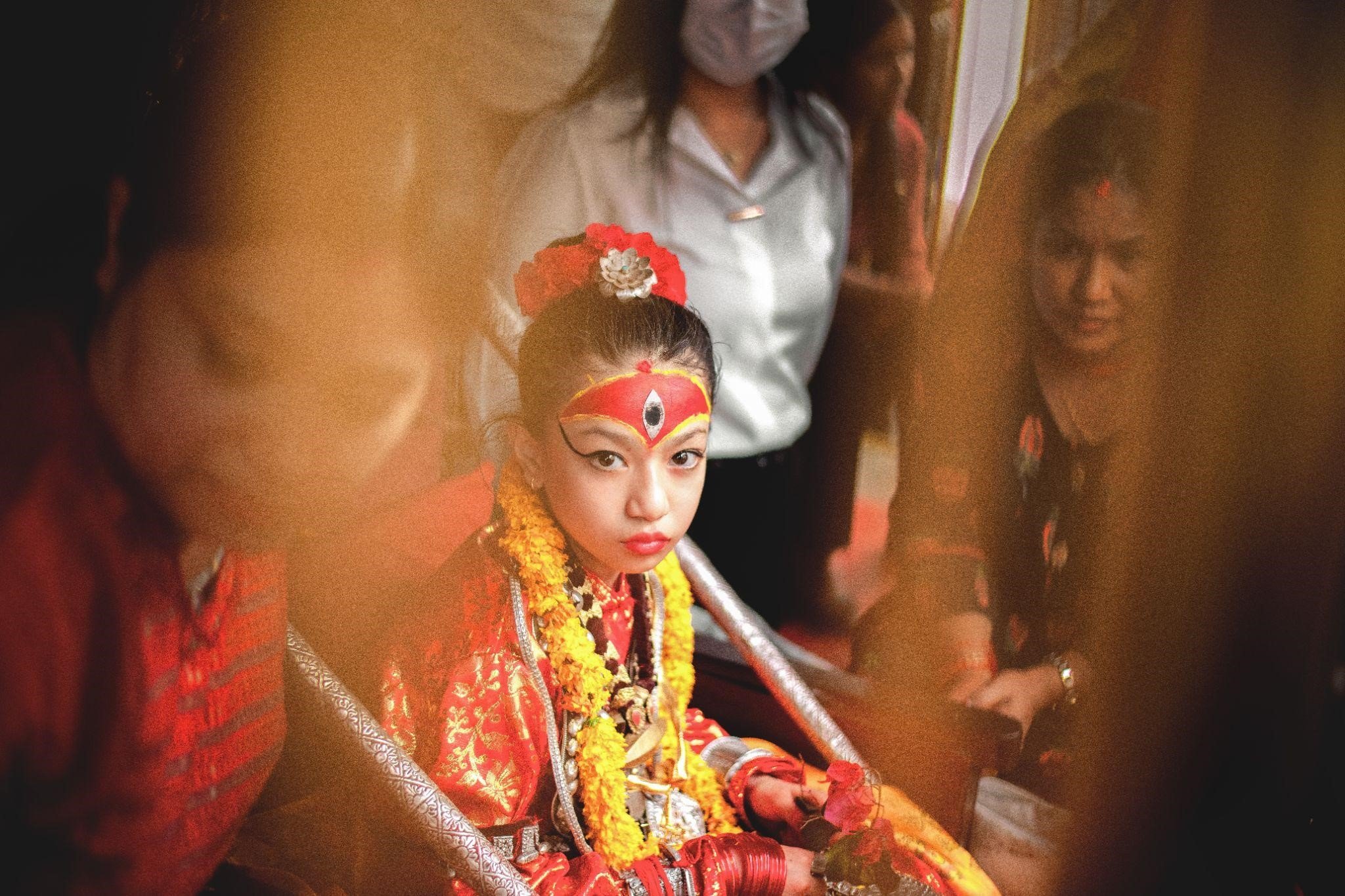
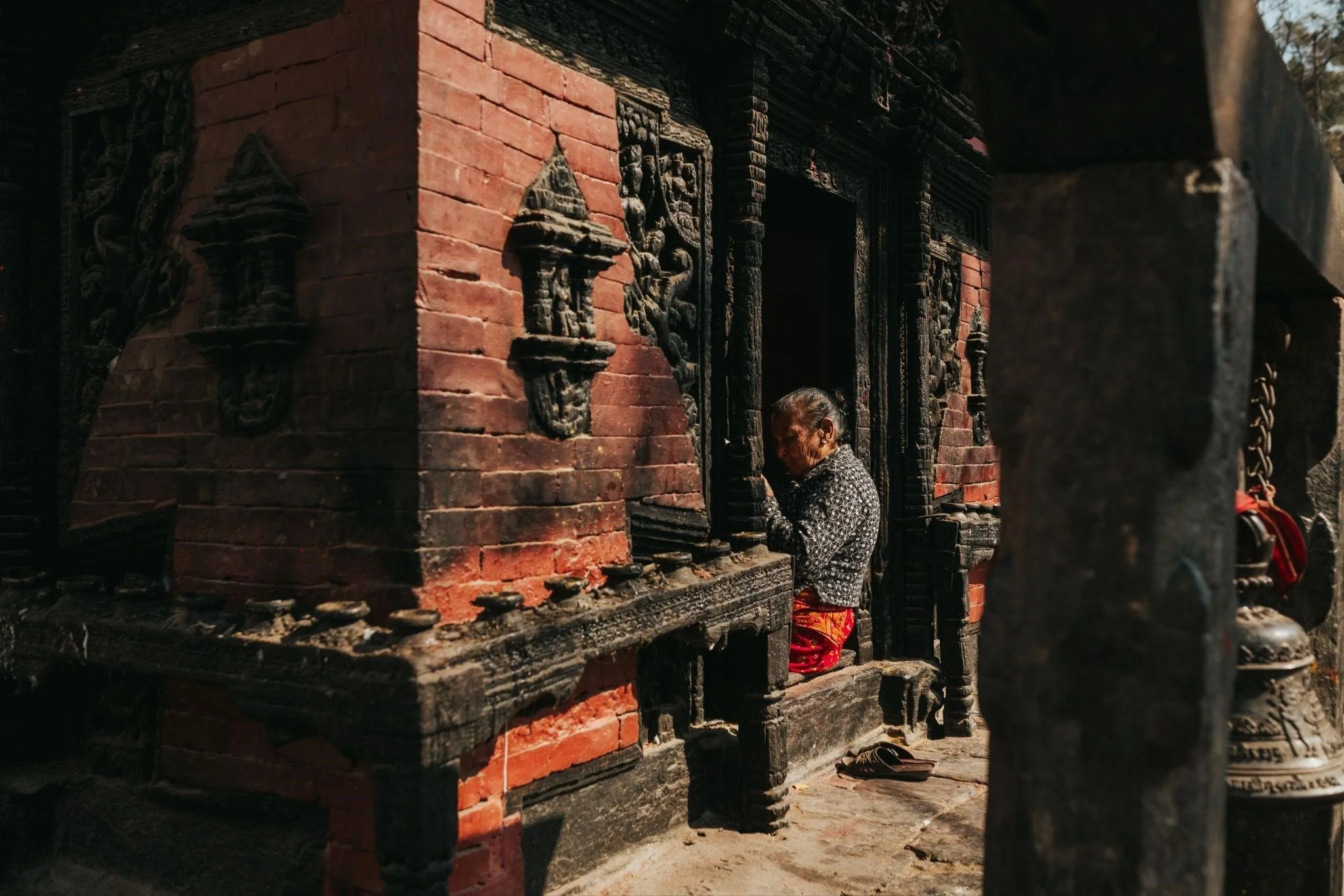
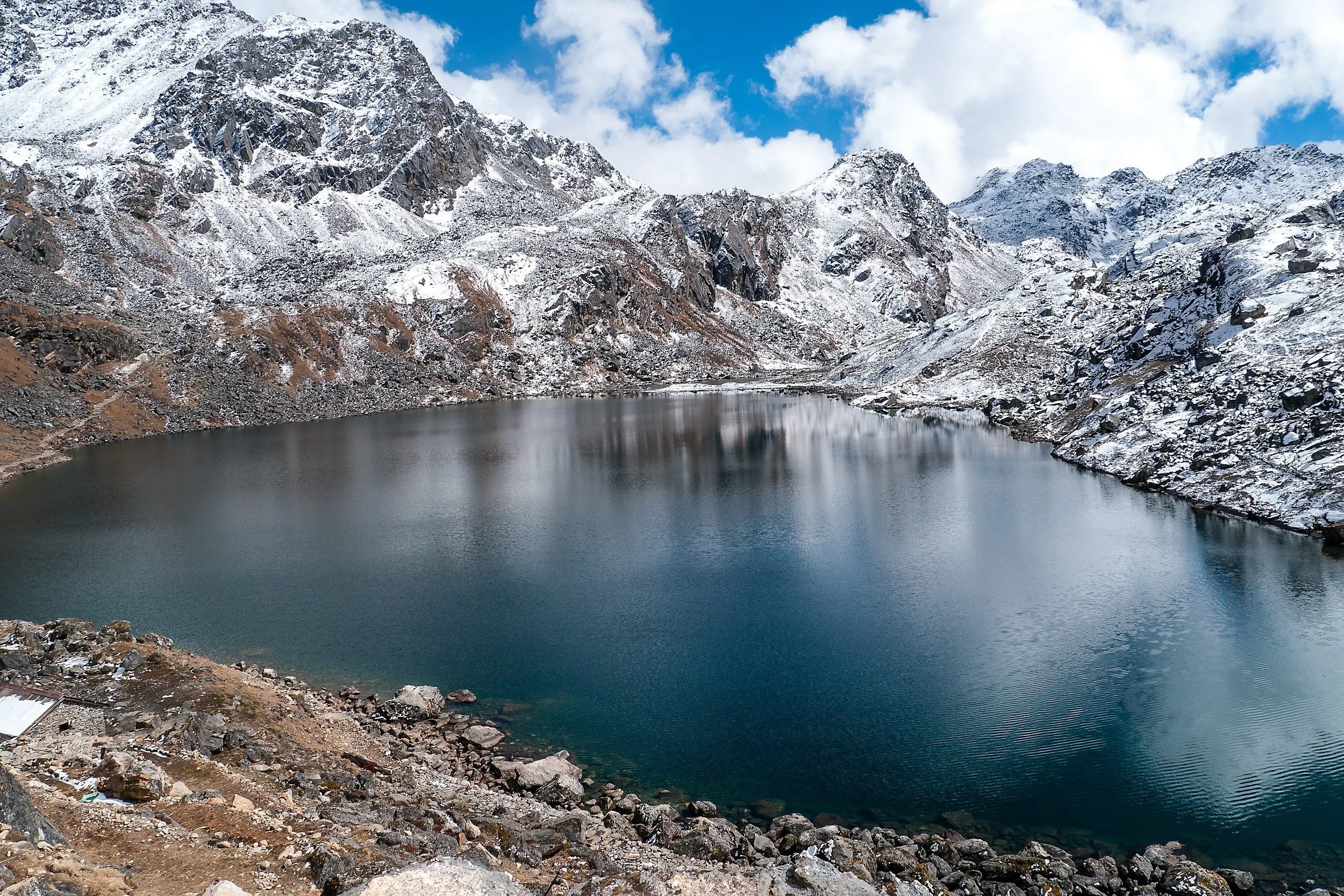
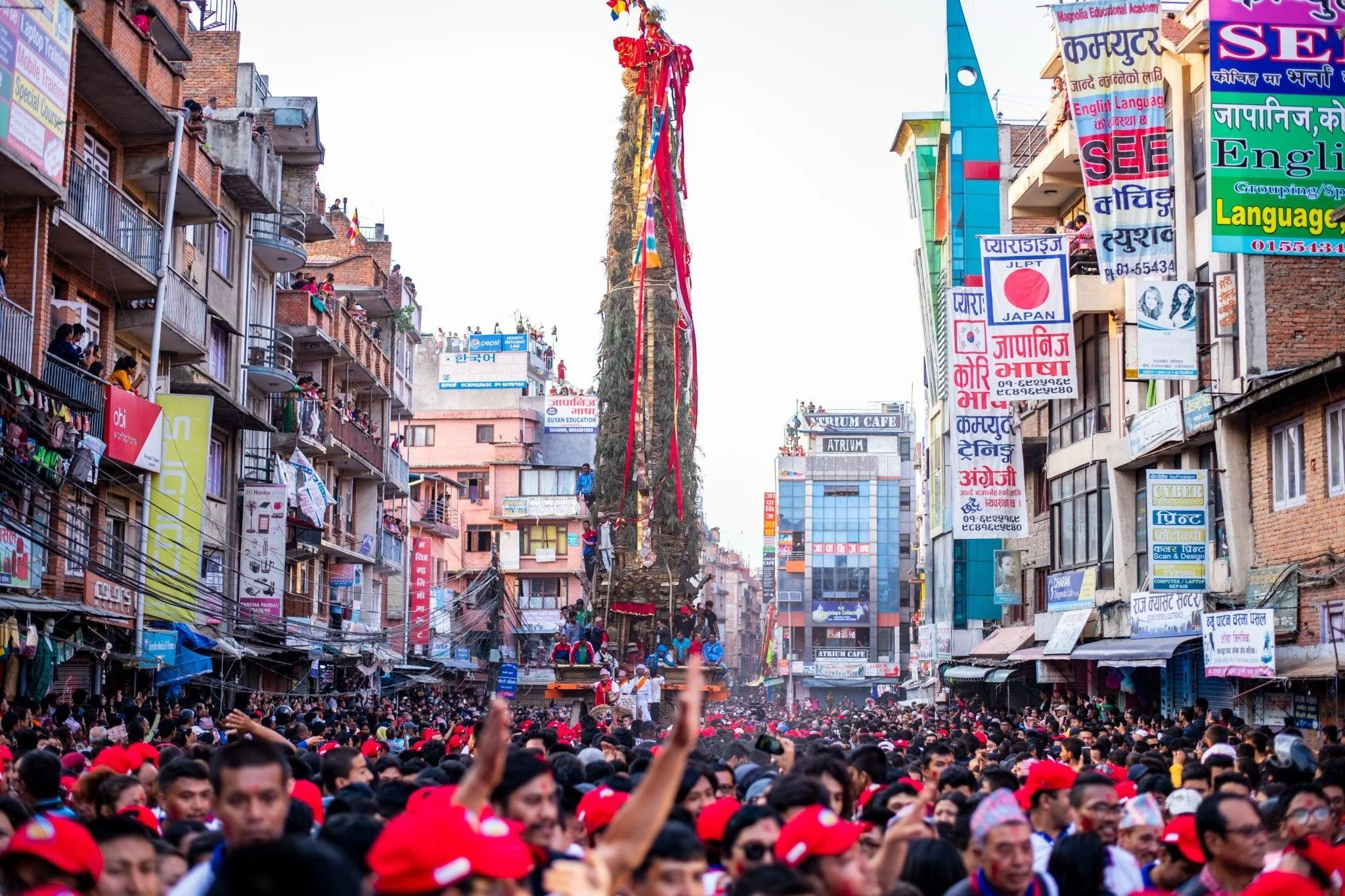
Rato Machindranath Jatra: Walking Through Kathmandu’s Living Tradition
A journey through Rato Machindranath Jatra reveals how deeply tradition and community are connected in Kathmandu Valley.
In the heart of Kathmandu Valley, Rato Machindranath Jatra is not just a festival; it feels like the city itself starts moving with a different rhythm.
The journey of this jatra begins in the ancient streets of Patan, where the tall chariot of Rato Machindranath slowly comes to life. Built with wood, ropes, and deep devotion, the chariot is pulled by hundreds of people not just as a ritual, but as a shared act of faith, culture, and community. As it moves, it doesn’t feel like a procession alone; it feels like generations walking together through time.
What makes this festival special is not just its scale, but its emotion. You will see children running alongside the chariot, elders watching quietly from the windows, and locals guiding the heavy ropes with patience and strength. The streets become narrow corridors of celebration filled with music, chanting, and the sound of wheels slowly turning over ancient stone paths.
Rato Machindranath Jatra is deeply connected with hope for rain and good harvest, and that meaning is still alive in how people participate today. Every pull of the rope carries a prayer, every stop of the chariot carries a tradition, and every gathering feels like a reminder of belonging.
As the chariot travels from Pulchowk towards different parts of Lalitpur, the atmosphere keeps changing, sometimes loud and energetic, sometimes calm and reflective. Locals offer flowers, food, and respect along the route, making the entire journey feel like a living offering rather than just a celebration.
One of the most beautiful parts of this festival is how it slows down time. In a city that is usually fast-moving, the chariot forces everything to pause. Traffic stops, conversations gather on the roadside, and strangers become part of the same shared moment. It’s not something you watch from a distance; it’s something you feel around you.
When the chariot finally reaches its destination in Jawalakhel, there is a quiet sense of completion. But the energy doesn’t end there. The festival continues in memories, in photographs, and in stories passed down through families, each year slightly different, yet always familiar.
Rato Machindranath Jatra is more than a tradition. It is Kathmandu’s way of remembering itself through movement, devotion, and community. For travelers, it offers something rare: not just a cultural experience, but a moment where the city’s past and present walk together in the same direction.
POPULAR ITINERARIES
SIMILAR POSTS
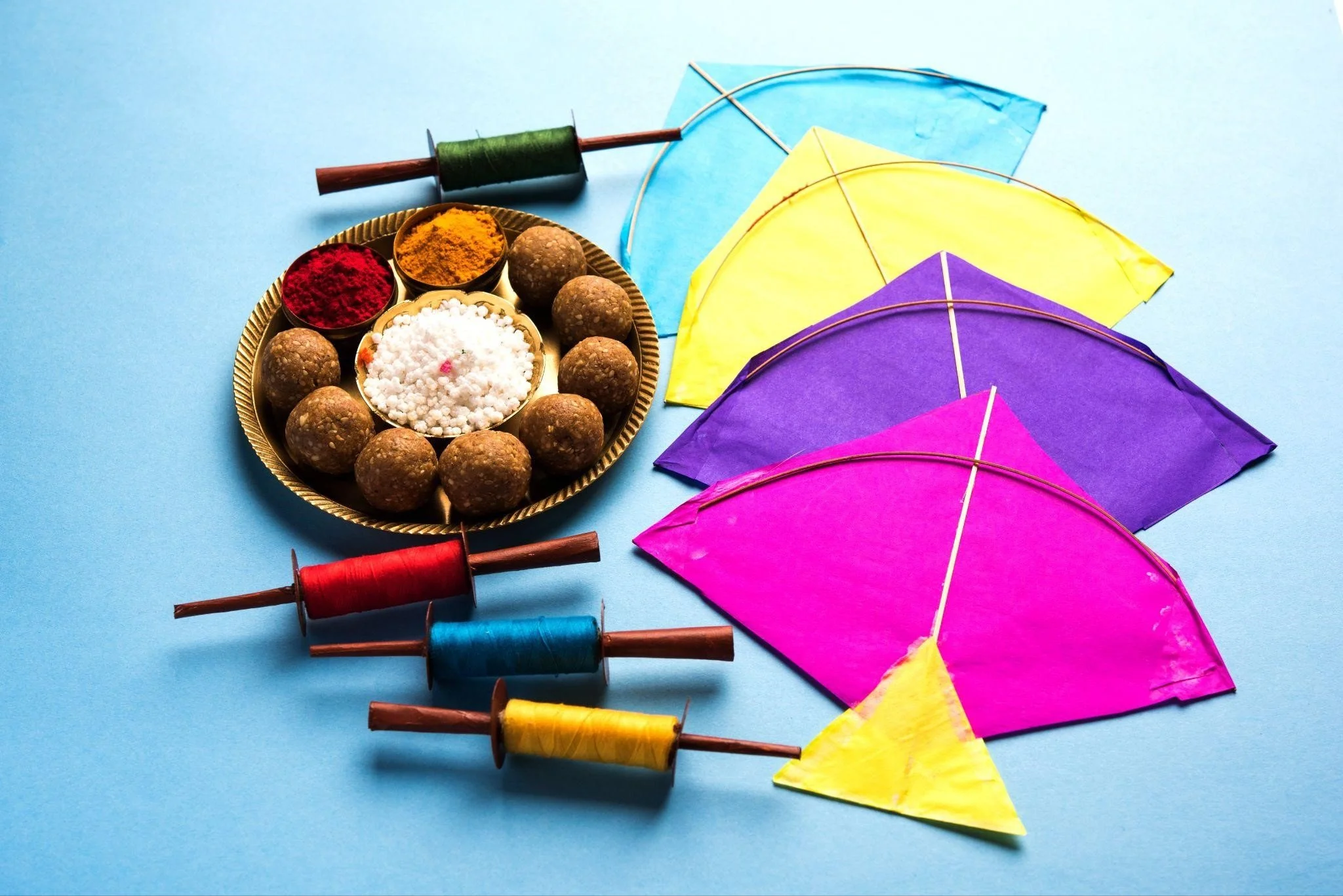
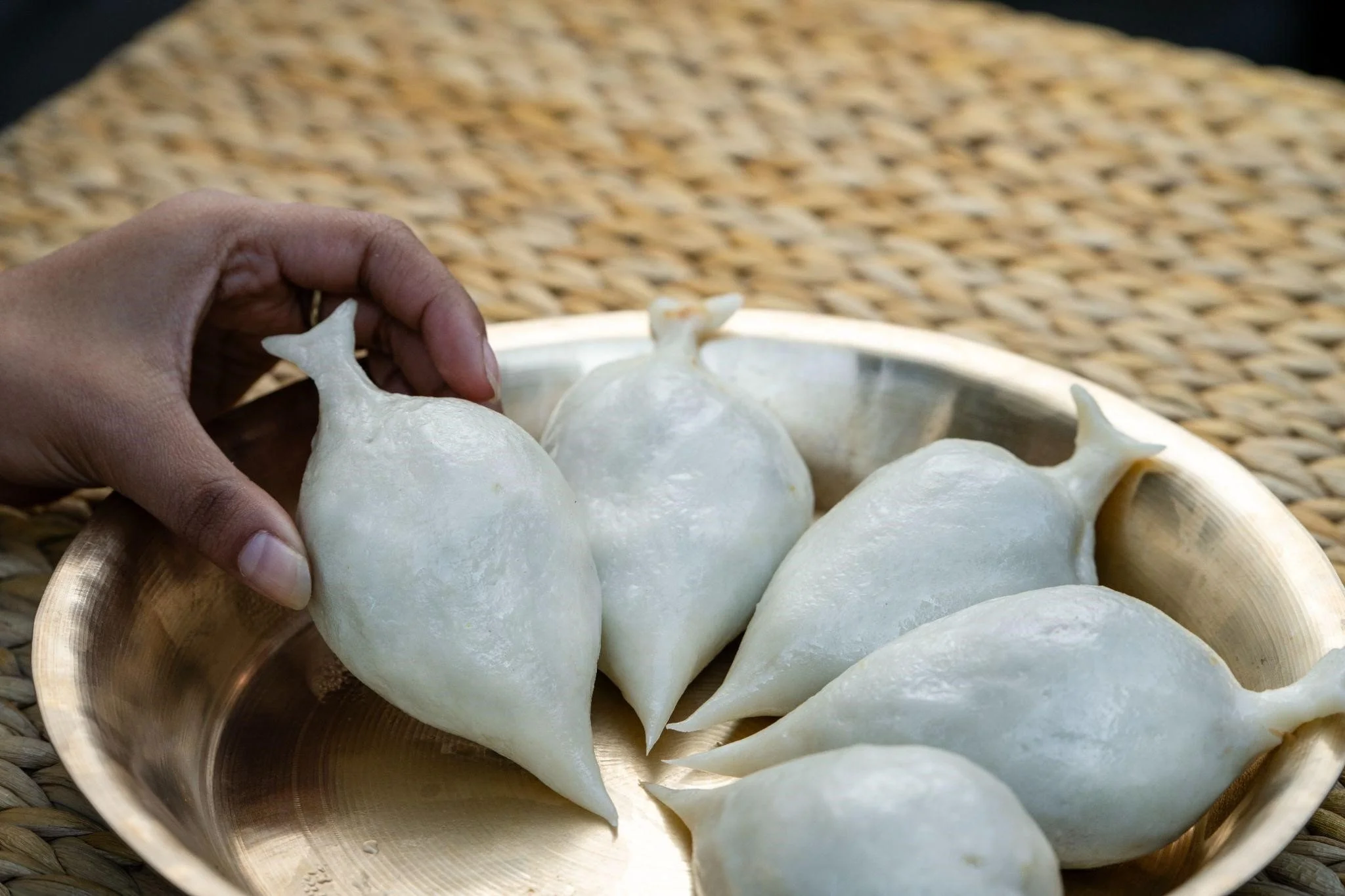
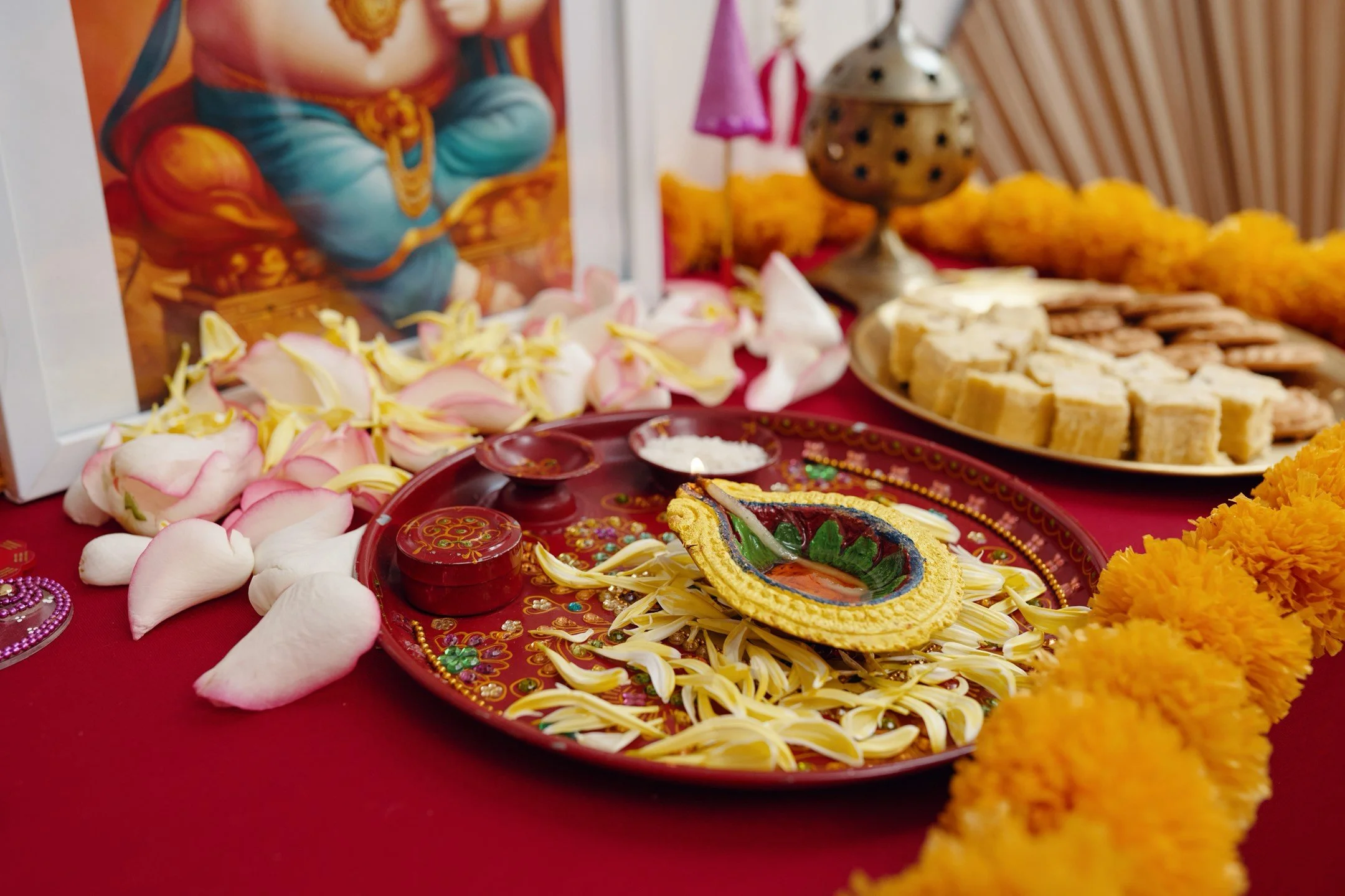
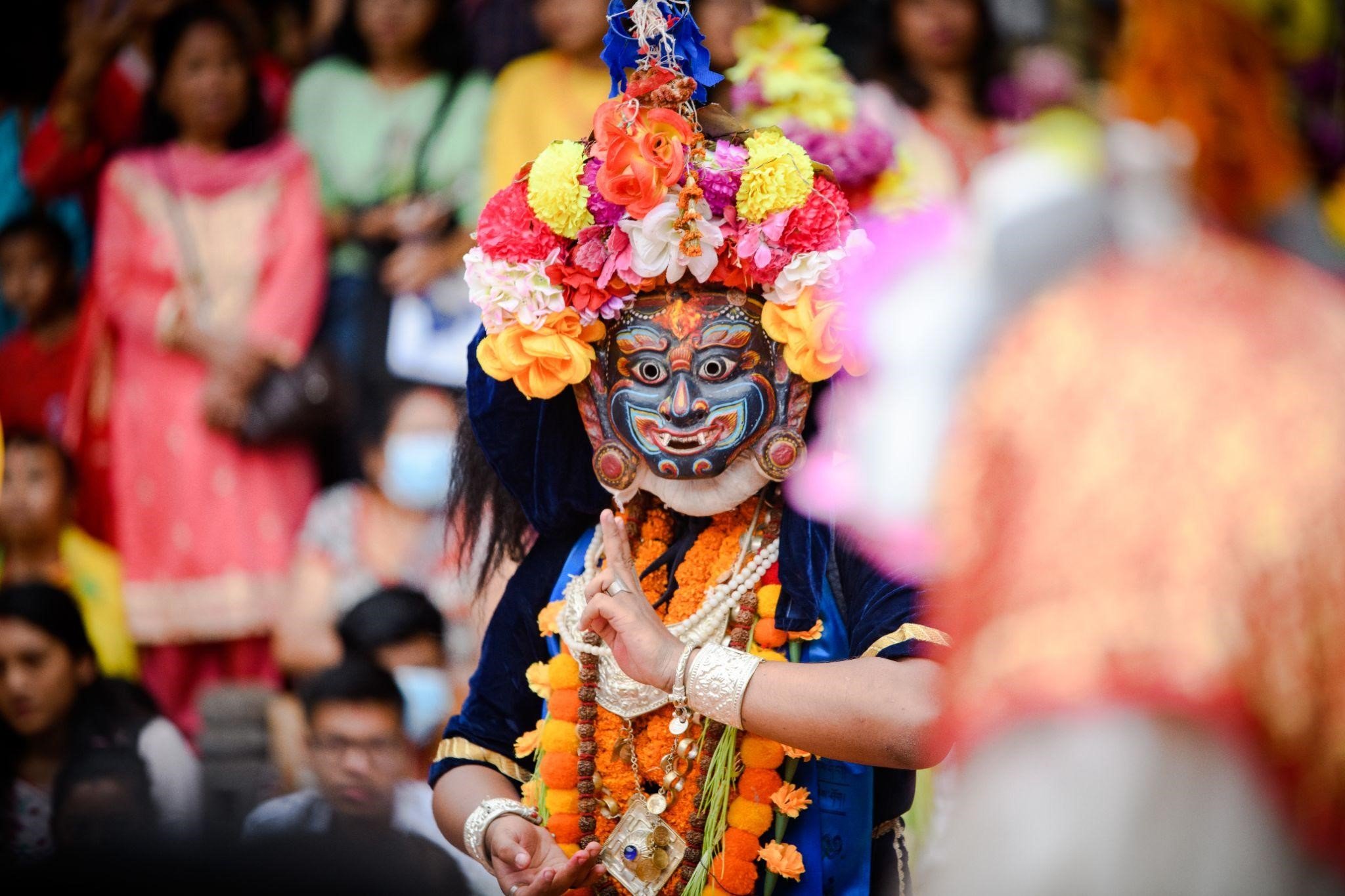
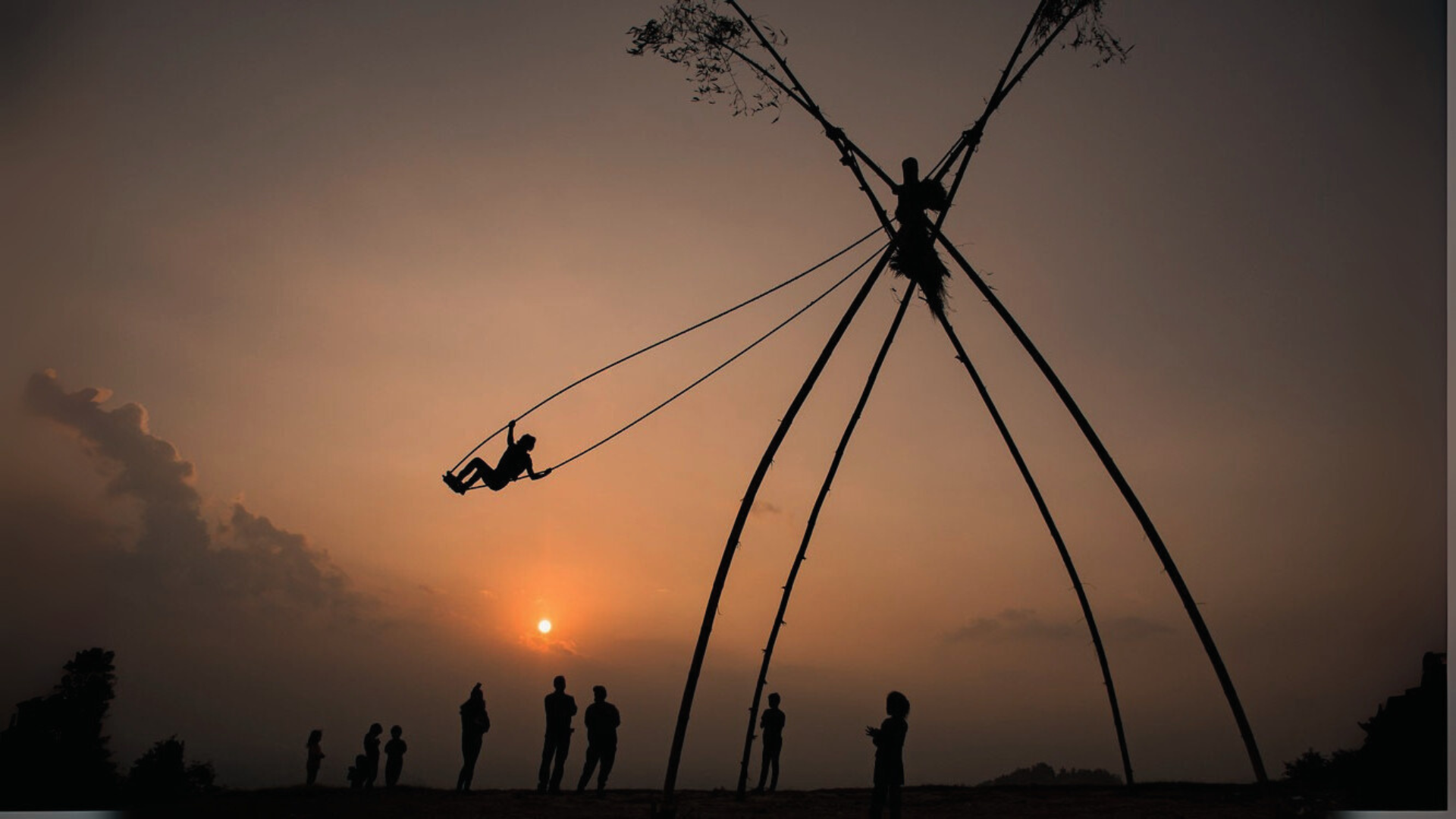
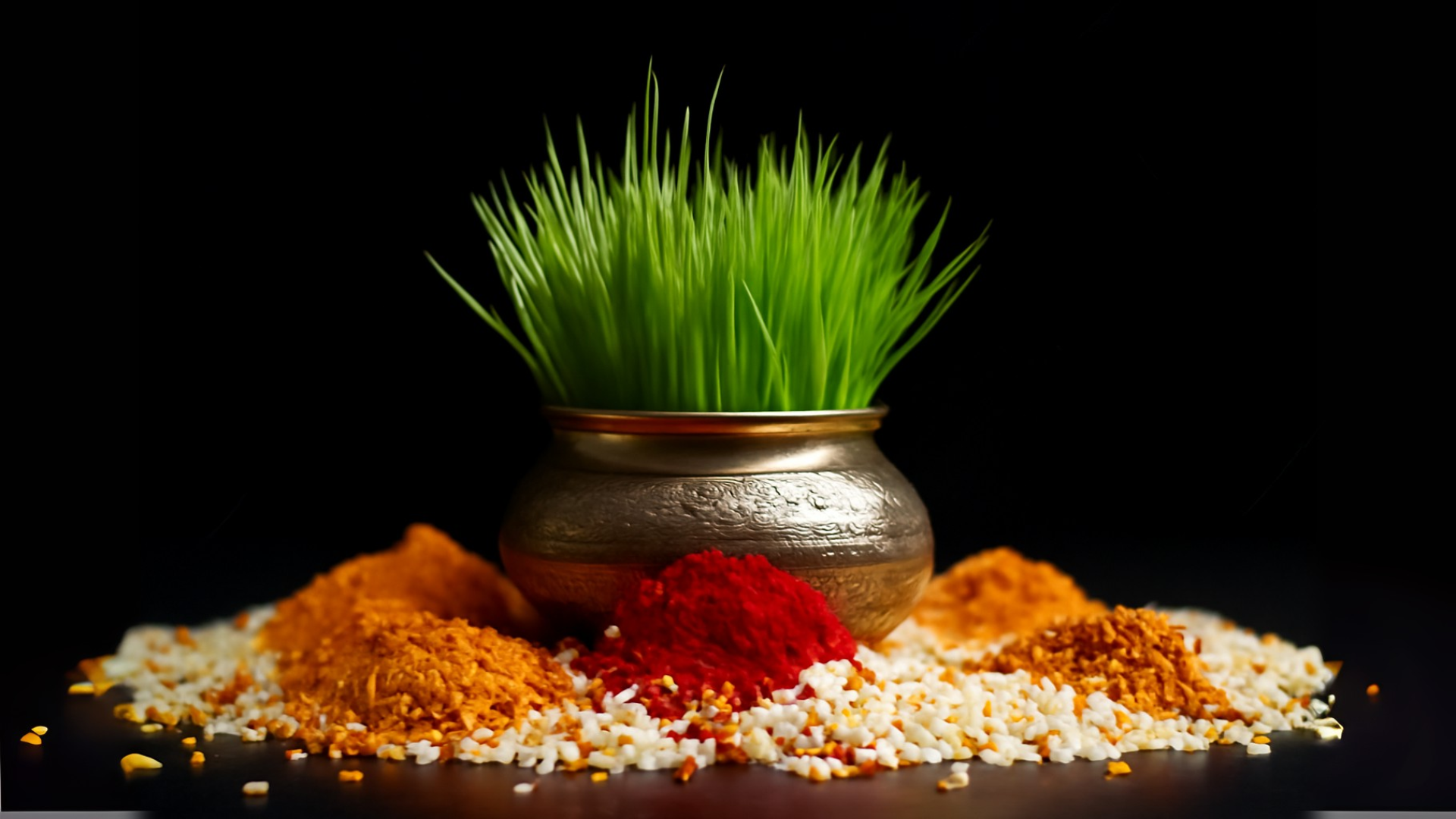
Manaslu: The Hidden Giant of the Himalayas
Step into the heart of the Himalayas on the Manaslu Trek, where snow-capped peaks, ancient villages, and prayer flags guide every step. A journey of endurance, culture, and breathtaking vistas awaits for those ready to explore Nepal’s hidden giant.
In the heart of Nepal’s highlands, the Manaslu region rises like a sentinel over the valleys below. At 8,163 meters, Mount Manaslu, the “Mountain of the Spirit,” casts its shadow over villages, rivers, and trails that have been walked for generations. This trek is more than a journey through the Himalayas; it is a passage through culture, endurance, and the quiet majesty of nature untouched.
The trail begins in Soti Khola, threading along riverbanks, terraced fields, and forested slopes. Villages appear like whispers from the past, their wooden houses and prayer flags telling stories of generations who have lived in harmony with the mountains. Each day brings new terrain: gentle rivers, dense forests, bamboo groves, and rocky ridges that reveal snow-clad peaks in the distance.
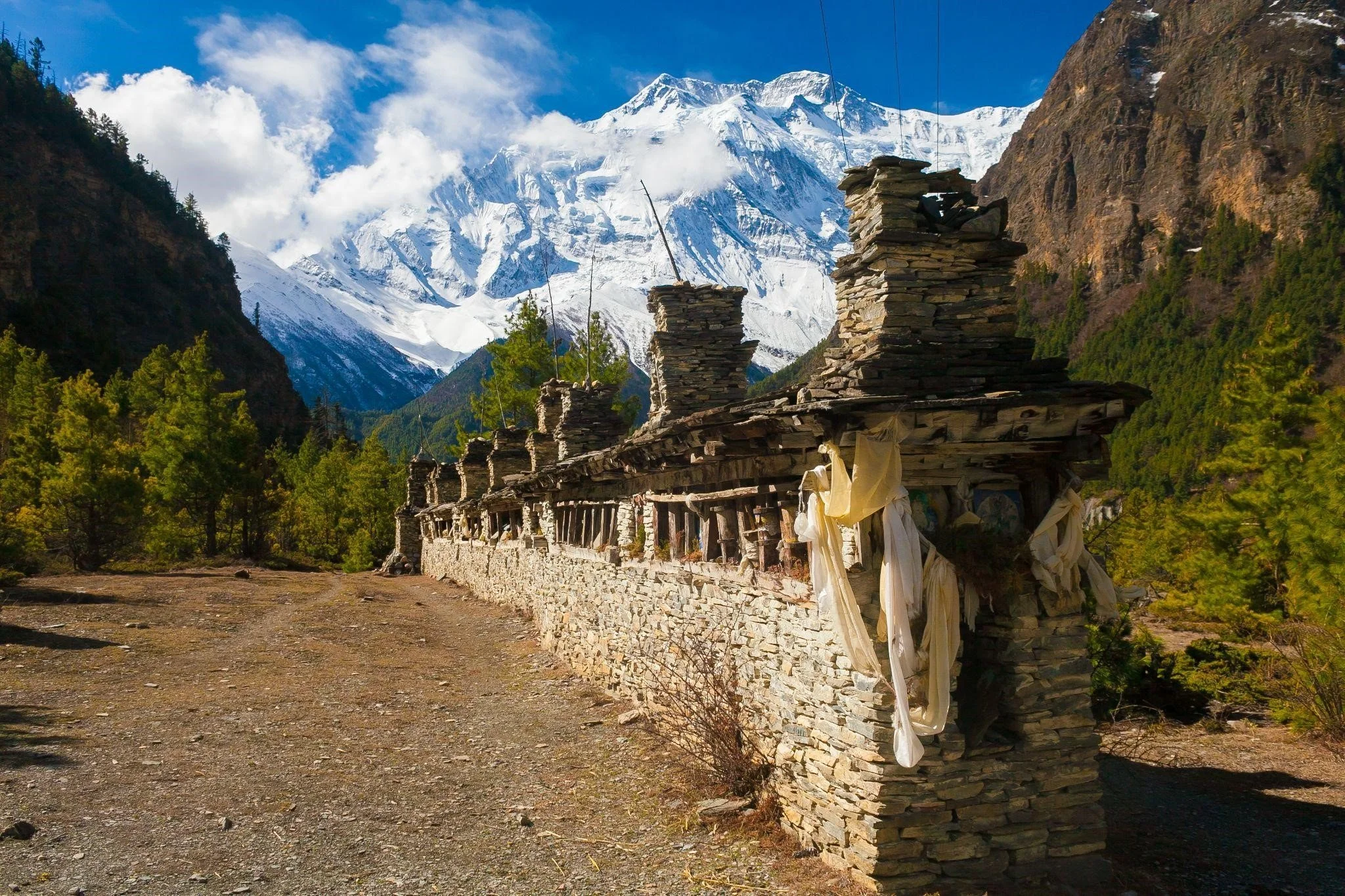
Manaslu is sacred to the local communities. The mountain itself is a living presence, and the trails are dotted with stupas, mani walls, and monasteries where monks chant prayers for safety, prosperity, and harmony. For trekkers, this is a journey of quiet reflection as much as physical challenge. The thin air, rugged paths, and the sheer scale of the Himalayas demand both respect and endurance.
As you ascend toward Larkya La Pass, the highest point of the trek at 5,160 meters, the world transforms. Valleys fall away beneath a carpet of clouds, glaciers shimmer, and the peaks of Manaslu, Himalchuli, and Ngadi Chuli rise like ancient sentinels. Every breath feels heavier, yet every glance rewards effort with vistas that linger in memory long after the trek ends.
The Manaslu trek is a journey into a region less traveled, where adventure, culture, and the grandeur of the Himalayas converge. Here, every step reminds you of the mountains’ silent power, the resilience of the people who call this land home, and the quiet joy of reaching heights both physical and spiritual.
POPULAR ITINERARIES
SIMILAR POSTS
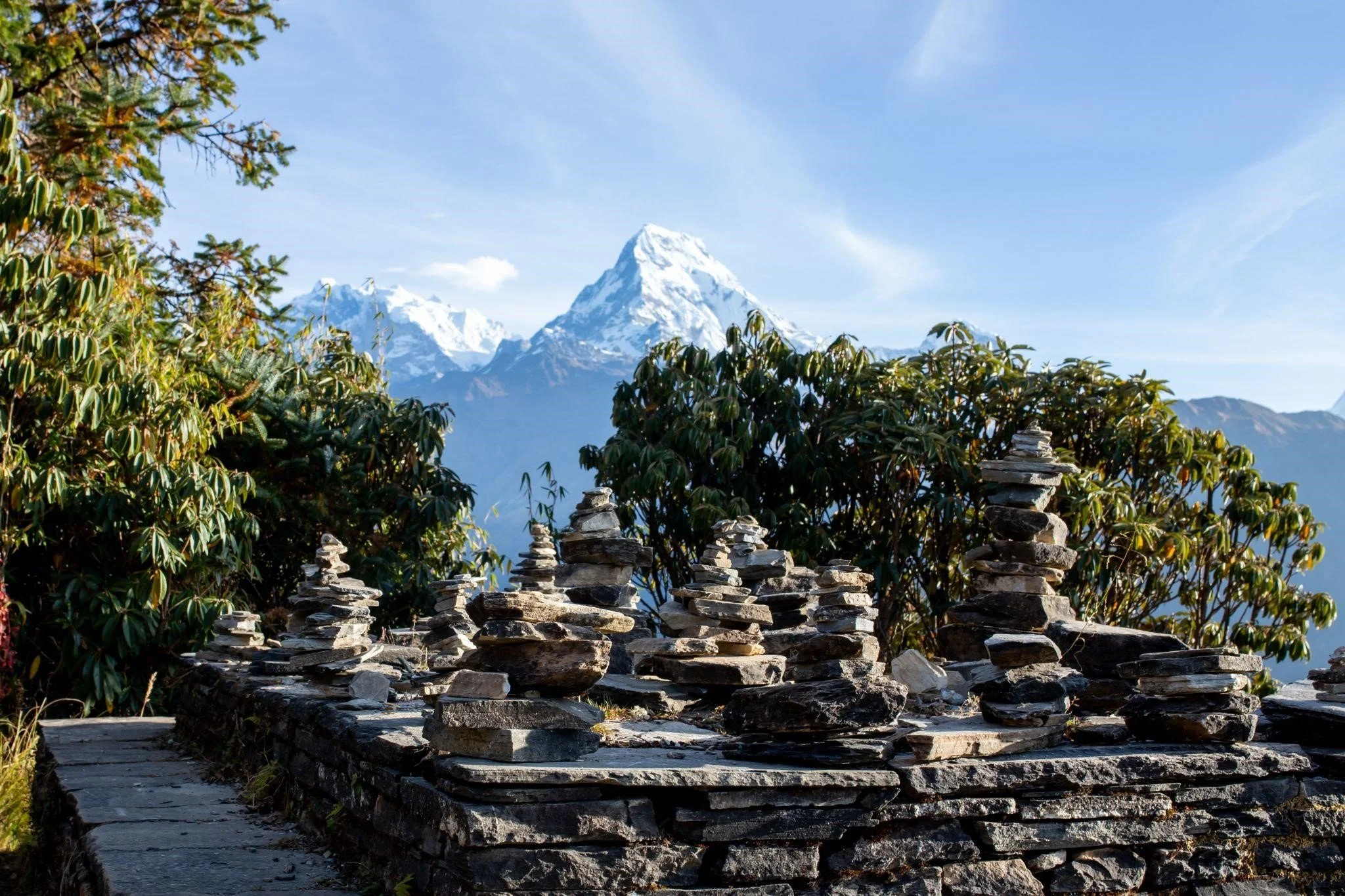
Where the Hills Whisper: A Journey to Poon Hill and Ghorepani
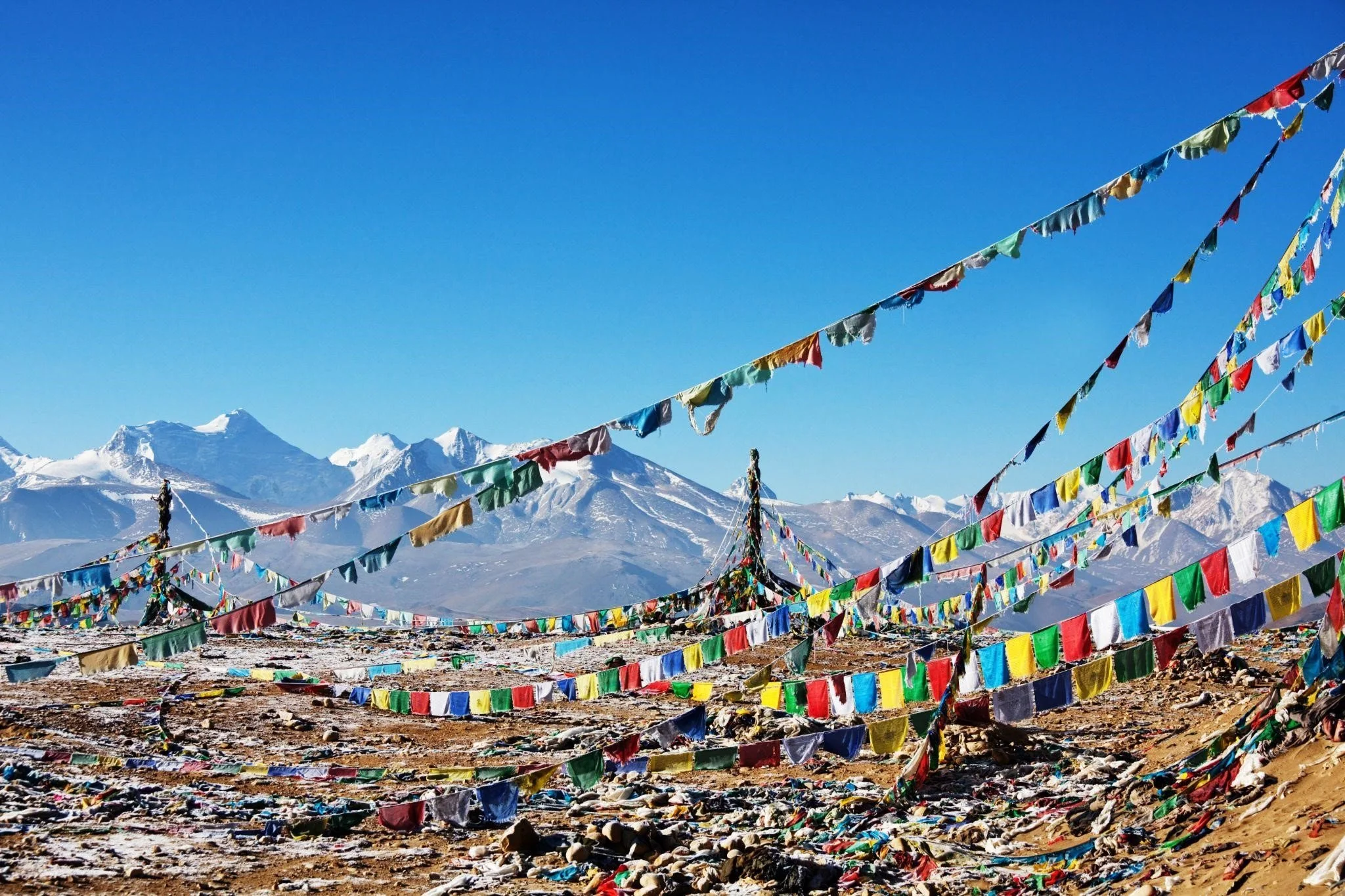
Rising above the hills at 3,210 meters, Poon Hill is where the mountains meet the sky. The trail from Ghorepani winds through rhododendron forests and quiet villages, revealing a journey that blends breathtaking views, local culture, and the kind of stillness only the Himalayas can offer.
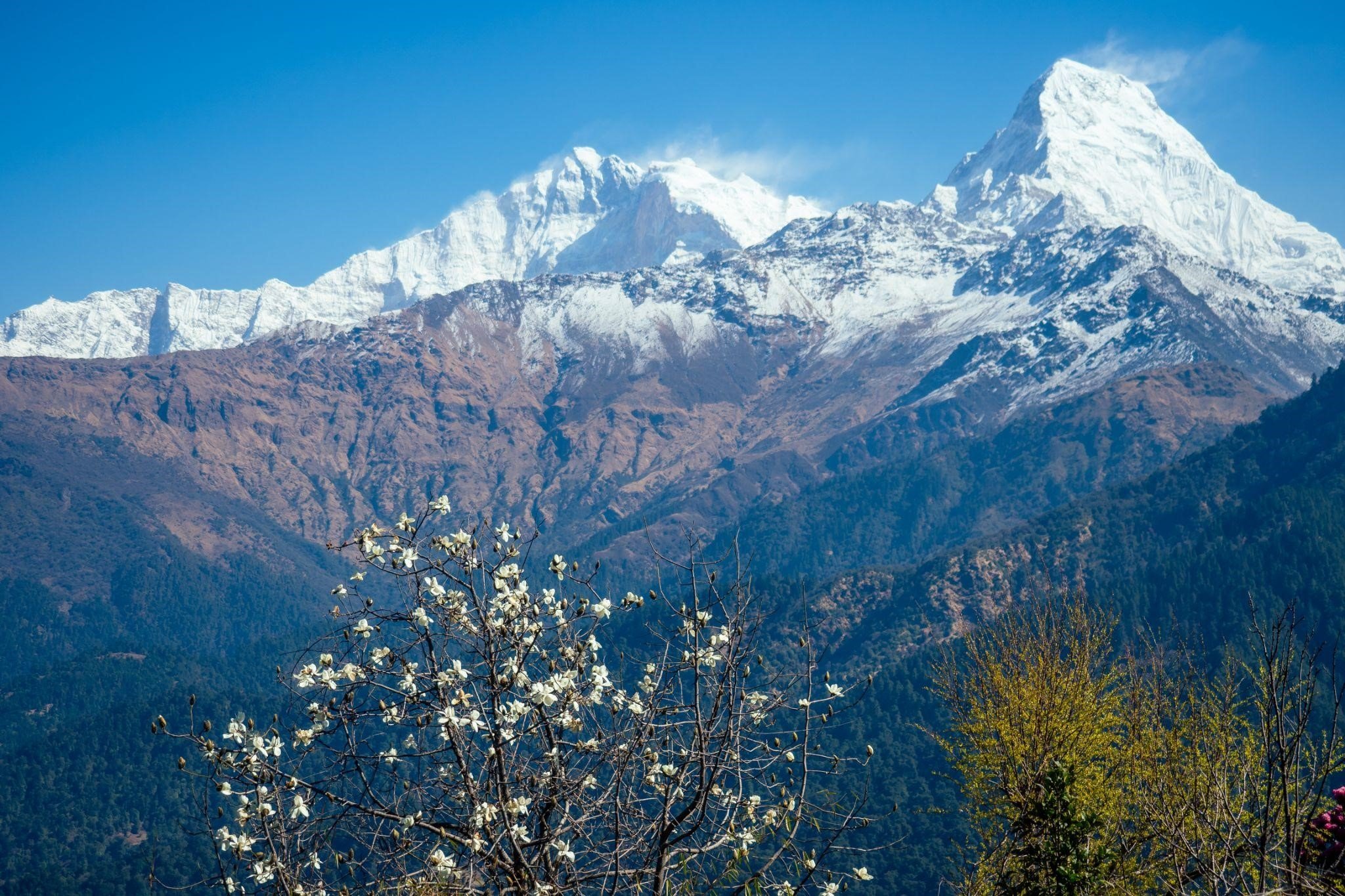
High up in Nepal’s Annapurna region, the Ghorepani Poon Hill trek feels like stepping into another world. The village of Ghorepani sits quietly among the hills, a welcoming stop for travelers making their way through forests of rhododendron and pine. And then there’s Poon Hill, a viewpoint that seems to float above the world at 3,210 meters, where the first rays of the sun light up Annapurna, Dhaulagiri, and Machapuchare in gold and pink.
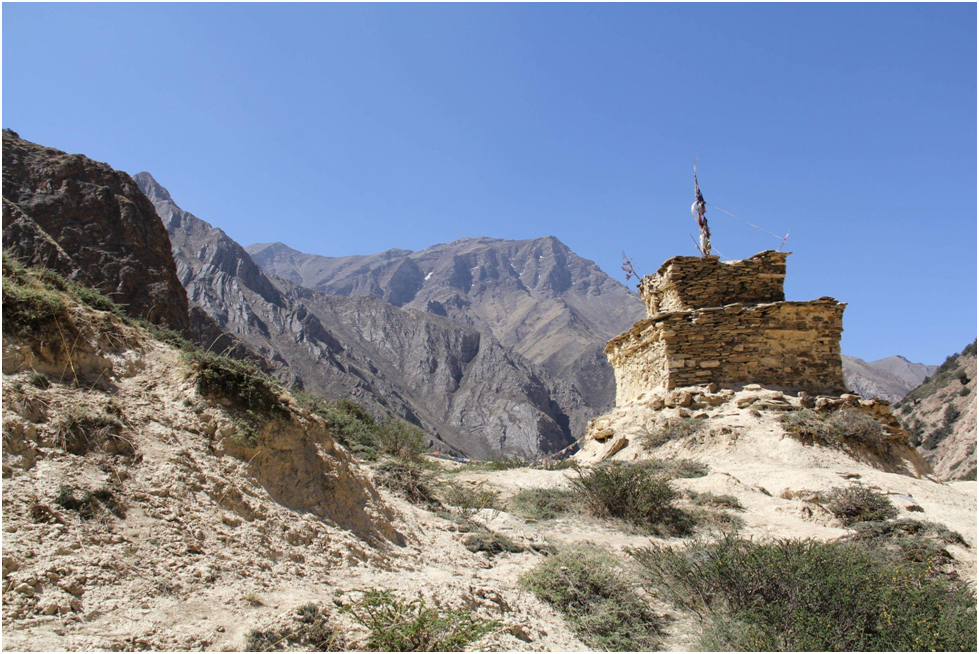
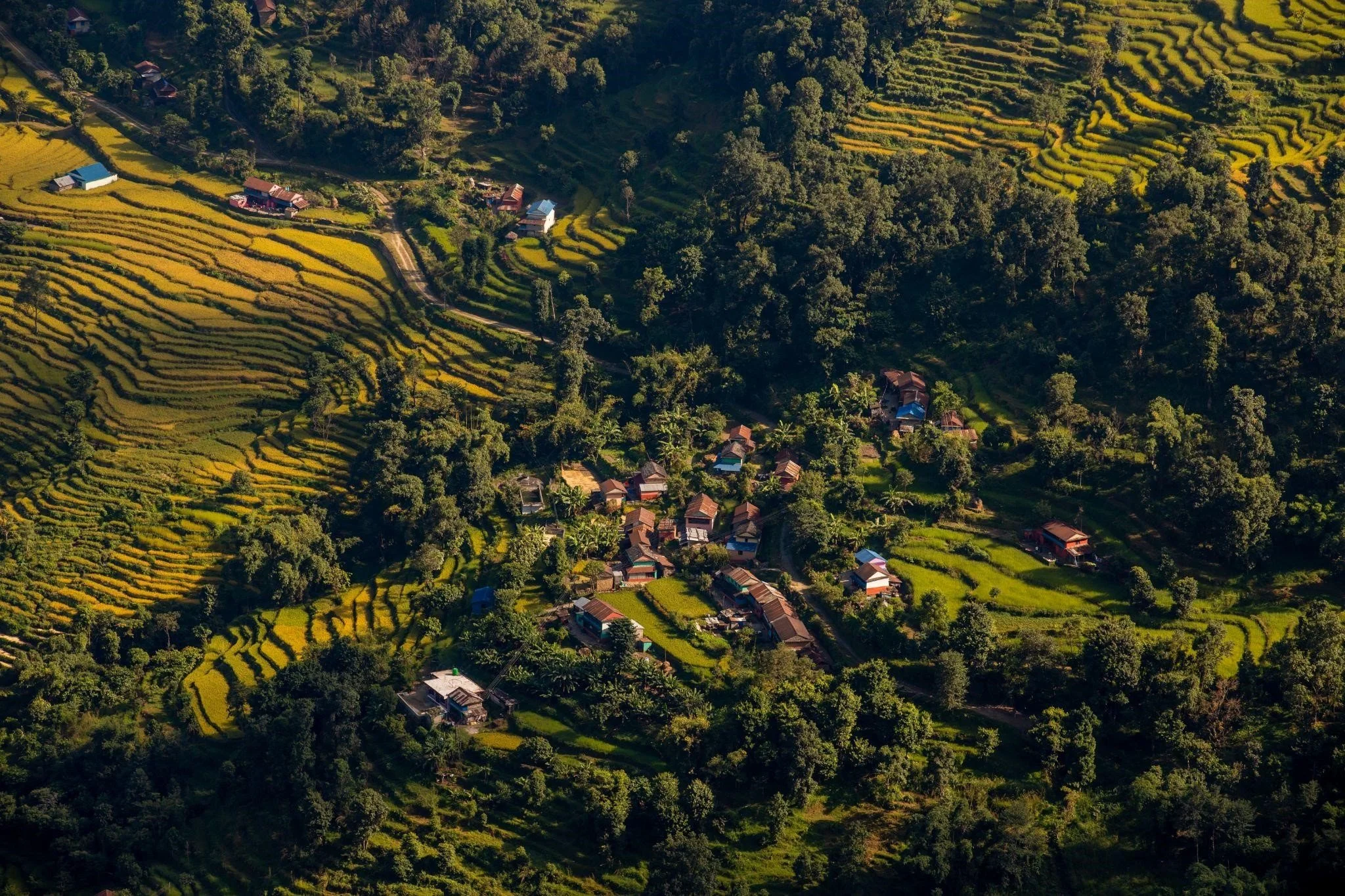
The journey begins at Nayapul, a few hours’ drive from Pokhara. From there, the trail winds through terraced fields and rivers, climbing slowly into the mountains. Every step is a conversation with the land. You pass small Gurung villages where children wave, women tend to their gardens, and locals carry on with daily life as they have for generations. It’s easy to forget the clock here; distance isn’t measured in hours or kilometers, but in moments of awe, breath, and quiet reflection.
The trek itself is gentle yet purposeful. You feel your lungs adjust to the thinner air, your muscles stretch and awaken, and your mind starts to slow down along with your steps. The rhododendrons bloom along the path in bursts of crimson and pink, creating a rhythm of color that guides you upward. Every tea house offers a warm welcome, a steaming cup of tea, and a glimpse into the lives of the people who call these hills home.
When you reach Poon Hill just before sunrise, the world unfolds in a spectacle that feels almost sacred. Mountains rise above mist-filled valleys, their peaks glowing in soft sunlight. For a moment, time itself seems to pause. Every climb, every breath, every tired step is forgotten in the quiet grandeur of the Himalayas.
The Ghorepani Poon Hill trek is more than a hike; it’s a chance to reconnect with nature, with culture, and with yourself. The rhythm of the trail, the smiles of villagers, and the wide-open mountain skies remind you how simple moments watching a sunrise, breathing crisp mountain air, can leave the deepest impressions.
By the time you descend, the trek is over in distance but not in memory. You carry with you the stillness of the hills, the warmth of the villages, and the golden light of Poon Hill, a story that lingers long after the journey ends.
POPULAR ITINERARIES
SIMILAR POSTS
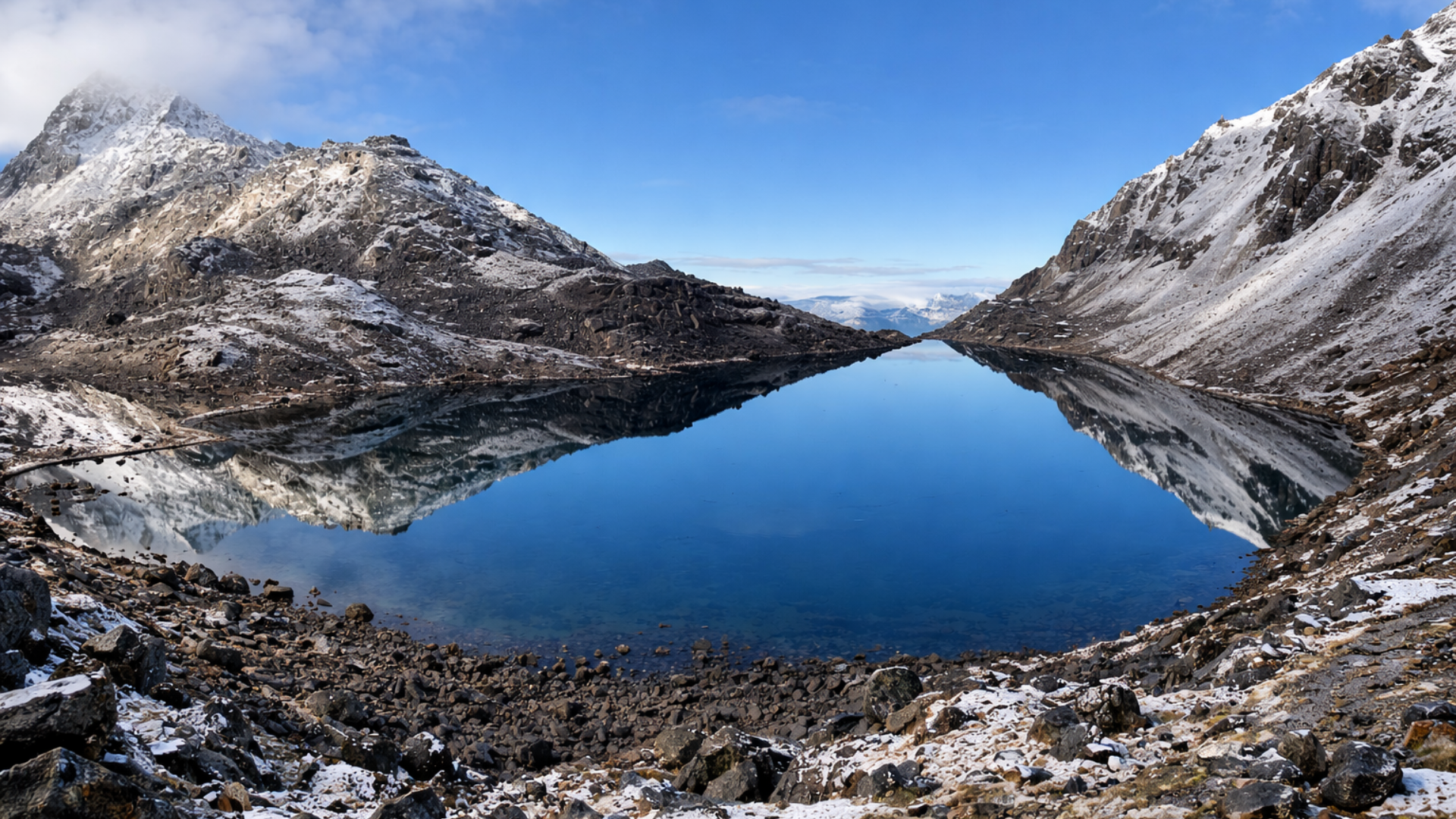
The Legend of Gosaikunda: Shiva’s Sacred Alpine Lake
At 4,380 meters above sea level, Gosaikunda is more than a Himalayan lake. Born from the legend of Shiva’s sacrifice thousands of years ago, it remains a sacred pilgrimage site and an unforgettable trekking destination, where myth, mountain, and endurance meet in the thin alpine air.
High in the Langtang National Park, in Nepal’s Rasuwa District, lies Gosaikunda, a sacred alpine lake resting at about 4,380 meters above sea level. It is located roughly 120 kilometers north of Kathmandu Valley. By road, it takes around 6 to 8 hours to reach Dhunche, the common starting point of the trek, followed by a two to three day climb on foot to the lake itself.
But distance here is not just measured in kilometers. It is measured in mythic time.
The story of Gosaikunda traces back thousands of years to ancient Hindu cosmology. The legend is rooted in the tale of the Samudra Manthan, the churning of the cosmic ocean, a story found in the Puranas, sacred texts composed roughly 2,000 to 3,000 years ago, though the oral traditions are even older. In mythological time, the event belongs to a primordial age, far before recorded history, when gods and cosmic forces shaped the structure of existence itself.
According to the legend, during the churning of the ocean by gods and demons in search of the nectar of immortality, a deadly poison called halahala emerged first. The poison threatened to destroy the universe. To save creation, Lord Shiva drank it. The toxin burned so fiercely that his throat turned blue, earning him the name Neelkantha, meaning the blue-throated one.
Overwhelmed by the poison’s heat, Shiva is believed to have struck the Himalayan mountains with his trident. From that divine strike, water burst forth, forming Gosaikunda. The icy alpine lake cooled his burning throat and restored balance.
Whether read as sacred history or symbolic allegory, the story carries depth. The poison represents chaos and suffering. Shiva’s act represents sacrifice and responsibility. Gosaikunda becomes a place of purification, born from endurance and cosmic duty.
Today, Gosaikunda stands not only as a pilgrimage site but also as one of Nepal’s most inspiring trekking destinations.
Every year during Janai Purnima, thousands of pilgrims hike to the lake to bathe in its freezing waters, believing it cleanses sins and brings spiritual merit. For trekkers, the journey is equally transformative. The trail winds through dense forests of rhododendron and pine, climbs past yak pastures and rocky ridges, and eventually opens into a stark, high-altitude landscape where the sky feels impossibly close.
As altitude increases, breathing slows. Each step demands intention. The body becomes aware of itself in a way city life rarely allows. Pilgrimage and trekking begin to feel like two expressions of the same impulse: the desire to ascend, to endure, to arrive somewhere meaningful.
When the lake finally appears, clear and still beneath towering peaks, it feels less like discovery and more like revelation. Surrounded by smaller ponds, traditionally said to number 108, Gosaikunda reflects the sky with mirror-like clarity.
Here, geology and mythology merge. A high Himalayan basin carved by natural forces becomes, in sacred imagination, the cooling water of a god. The story may be ancient, thousands of years old, but the experience remains immediate.
Roughly 120 kilometers from Kathmandu, yet worlds away in atmosphere, Gosaikunda continues to draw both believers and adventurers. In the thin air of the Himalayas, beneath shifting clouds and silent ridges, Shiva’s sacred lake still rests, waiting for those willing to make the climb.
POPULAR ITINERARIES
SIMILAR POSTS
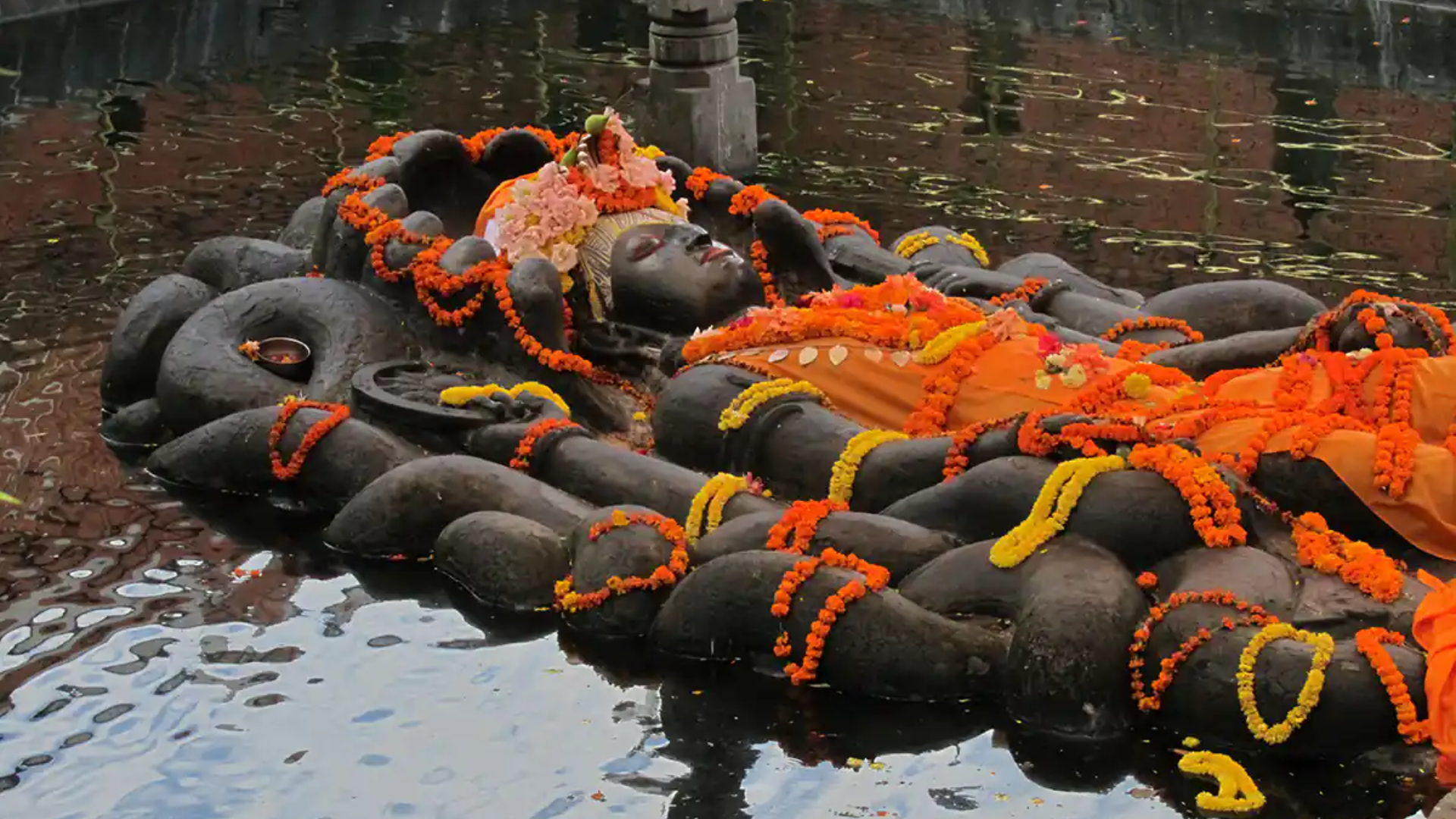
The Sleeping Vishnu of Budhanilkantha: Why No King Can Touch Him
At Budhanilkantha, Lord Vishnu rests in cosmic sleep upon the serpent of infinity, dreaming worlds into existence. For centuries, a prophecy warned Nepal’s kings to stay away, reminding even monarchs that divine power stands above earthly rule.
At the northern edge of Kathmandu Valley, beneath Shivapuri Hill, lies one of Nepal’s most quietly astonishing sacred sites. In a sunken stone pond rests a massive black stone figure of Lord Vishnu, reclining on the coils of the cosmic serpent Ananta. He appears asleep. He is not.
This is Budhanilkantha, often called the Sleeping Vishnu.
The statue is about five meters long, carved from a single block of basalt stone. Vishnu lies in yogic sleep, known as yoga nidra, floating upon the serpent whose many hoods rise protectively above him. In Hindu cosmology, this is not ordinary sleep. It is the pause between cycles of creation. When Vishnu dreams, universes emerge. When he awakens, worlds dissolve and begin again.
The image is dense with symbolism. Vishnu represents preservation and cosmic order. Ananta, the endless serpent, symbolizes infinity and time without beginning or end. The water surrounding the statue evokes the primordial ocean from which creation arises. This is theology rendered in stone.
Local tradition holds that the statue was discovered centuries ago by a farmer plowing his field. His plow struck something hard. When the soil was cleared, the divine form emerged. The land itself, the story suggests, revealed the god.
Now we arrive at the strange and persistent legend that shaped Nepal’s royal history.
For generations, it was believed that Nepal’s monarchs could not visit Budhanilkantha. The reason traces back to a prophecy. According to the myth, a Malla king once had a dream in which Vishnu warned that if a reigning king of Nepal were to look upon the deity at Budhanilkantha, death would soon follow.
Dreams in South Asian royal traditions were not treated as psychological trivia. They were messages, omens, instructions. Kings governed not only through politics but through alignment with divine will. Ignoring such a warning would have been reckless.
The belief solidified over time. Shah dynasty monarchs reportedly avoided the temple entirely. Even King Mahendra and King Birendra, in the modern era, are said to have respected the tradition. Whether from faith, caution, or cultural continuity, the taboo endured.
Was it superstition? A political safeguard? A myth retroactively strengthened by coincidence? We enter working-theory territory here. Human societies often encode cautionary principles into sacred stories. A prophecy can function as a stabilizer. It keeps power humble. It reminds rulers that sovereignty has limits.
There is also symbolic irony at play. In Nepal’s historical imagination, the king was regarded as an incarnation of Vishnu. How can one incarnation stand before another? The taboo may reflect theological tension. Two embodiments of divine authority cannot casually confront each other without unsettling cosmic hierarchy.
Whatever its origin, the belief endured for centuries. The statue remained accessible to ordinary devotees while remaining off-limits to the nation’s highest earthly authority. There is something quietly democratic in that.
Standing before the Sleeping Vishnu today, the atmosphere feels calm, almost meditative. Devotees circle the pond, offer flowers, ring bells softly. The god rests, serene, detached from human urgency.
Empires rise. Monarchies fall. Nepal’s royal era ended in 2008. The prophecy no longer binds a king. Yet the story remains, folded into collective memory.
Budhanilkantha endures as a reminder that power is always provisional. Even kings once stepped back from the edge of that sacred pool. And in the still water, beneath the coiled serpent of infinity, Vishnu continues to dream the world into being.
POPULAR ITINERARIES
SIMILAR POSTS
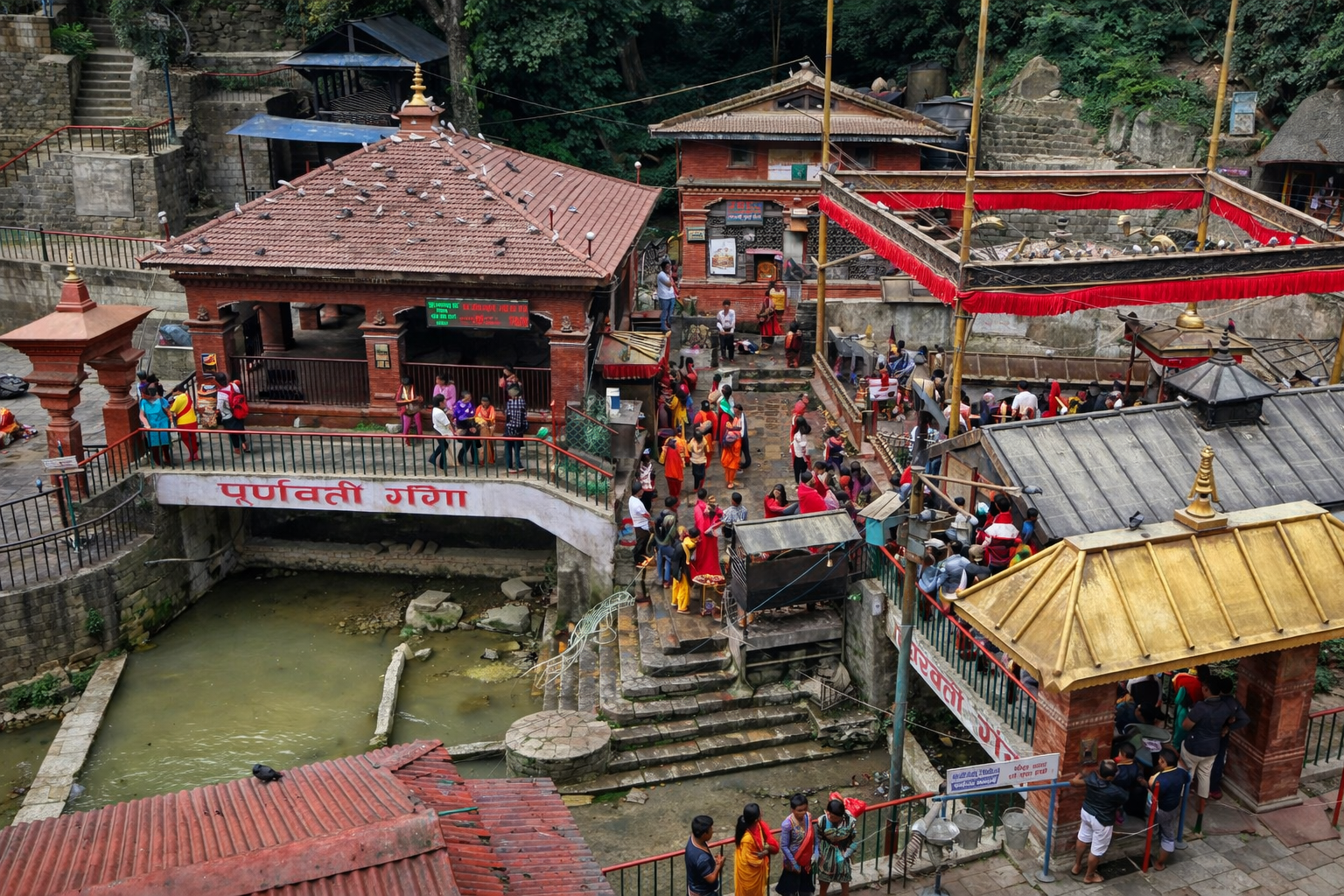
Dakshinkali: The Sacred Threshold of Power and Devotion
At the edge of Kathmandu, Dakshinkali stands as a sacred threshold of power and transformation.
Dedicated to Goddess Kali, the fierce force of protection and renewal, this temple is where devotion meets courage, and where surrender becomes strength.
At the southern edge of Kathmandu Valley, where the city fades into forested hills, stands Dakshinkali, a temple dedicated to Kali, the fierce and transformative form of the Divine Feminine. This is not a quiet shrine. It is a place of intensity, power, and deep devotion.
To understand Dakshinkali, we must first understand Kali.
In Hindu mythology, Kali emerges during moments of cosmic crisis. In the Devi Mahatmya, when demons overpower the gods, the warrior goddess Durga releases Kali from her own forehead. Dark as the night sky, adorned with skulls, and unstoppable in battle, Kali destroys the forces of chaos. She is not evil. She is the force that restores balance when destruction becomes necessary.
Her symbolism runs deep. Her dark form represents the vastness of time and the unknown. The garland of skulls symbolizes creation and dissolution. Kali is time itself, the power that creates, transforms, and ultimately dissolves all things. Philosophically, she represents the destruction of ego and illusion. Transformation is rarely gentle, and Kali embodies that uncomfortable but necessary truth.
Dakshinkali Temple, believed to date back to the Malla period, was built after a king reportedly received a divine vision instructing him to establish the shrine in this southern gorge. The location is significant. Kali temples are often found at boundaries, between city and wilderness, order and chaos. Dakshinkali sits precisely at such a threshold.
One of the most discussed aspects of the temple is ritual animal sacrifice. Within Shakta tradition, sacrifice, known as bali, symbolizes surrender. It represents the offering of one’s inner impurities such as anger, pride, and greed. Especially during Dashain, devotees offer animals as an act of faith and gratitude, and the meat is consumed as blessed food.
At the same time, perspectives are evolving. Some devotees now choose symbolic offerings like coconuts or pumpkins instead. Cultural practices shift over time, and conversations around ethics continue within modern Nepali society.
On Tuesdays and Saturdays, the temple fills with worshippers. Bells ring, incense rises, prayers echo through the gorge. People come seeking protection, strength, and blessings before exams, business ventures, or major life events. Kali is approached not for comfort, but for courage.
Dakshinkali reminds us of a reality we often avoid. Destruction and renewal are inseparable. Life changes. Illusions fall. Strength is forged in intensity. At the edge of the valley, beneath the watchful gaze of the fierce goddess, devotion becomes an act of surrender and transformation.
POPULAR ITINERARIES
SIMILAR POSTS
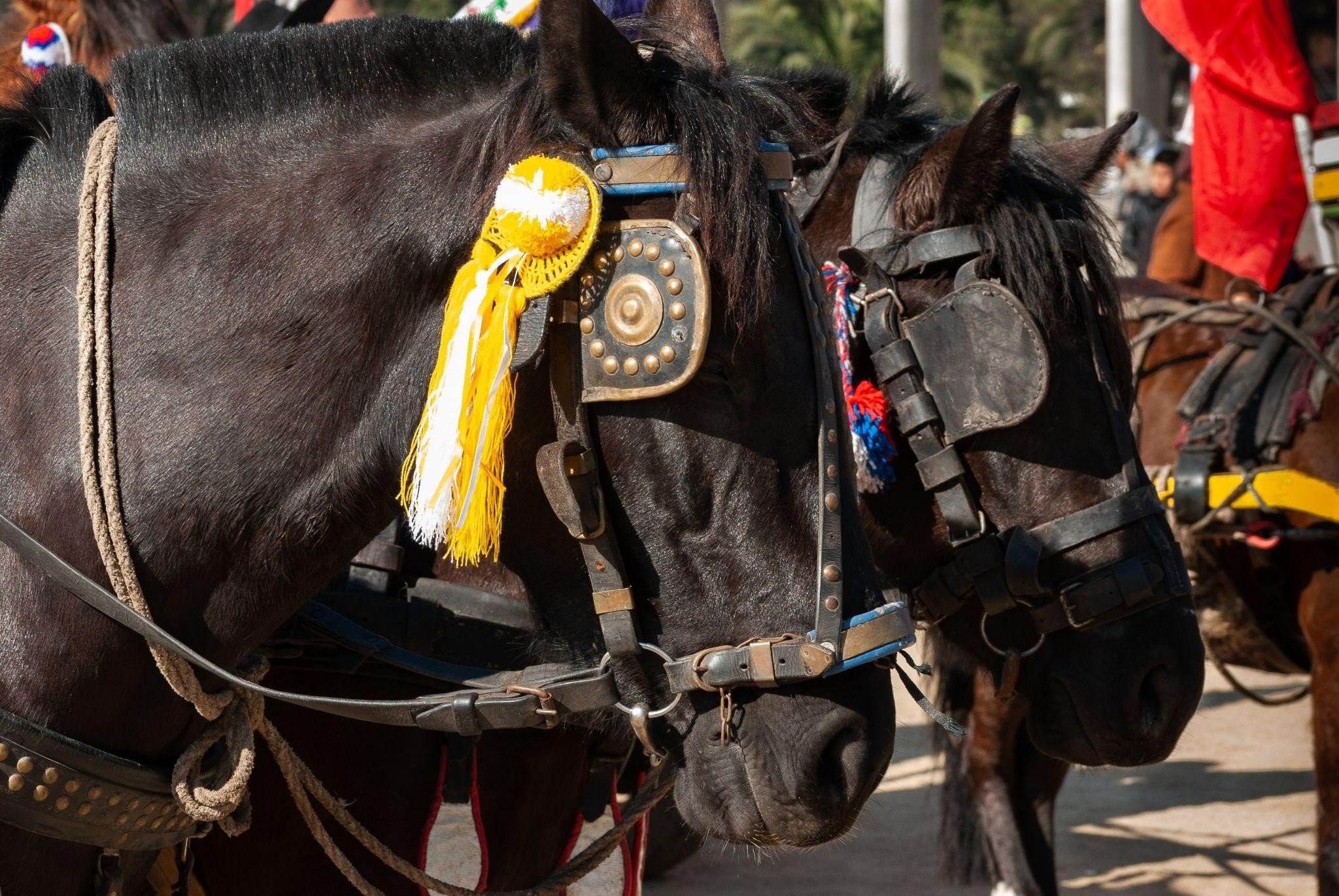
Parade Against Evil: The Ghode Jatra
When hooves thunder across Tundikhel, Kathmandu listens.
Ghode Jatra is more than a horse parade, it’s a centuries-old ritual to drive away evil, blending folklore, royal tradition, and raw spectacle. Drums beat, riders charge, and the city gathers to celebrate strength, protection, and heritage in motion.
In the heart of the capital, tradition doesn’t whisper. It gallops.
Every year in Kathmandu, a spectacle of color, tradition, and raw energy unfolds as locals gather for Ghode Jatra, one of Nepal’s most unique and thrilling festivals. Literally translating to “Horse Parade”, Ghode Jatra is celebrated in the capital’s historic Tundikhel grounds, where the thunder of hooves, the flash of ceremonial attire, and the beating of drums come together to drive away evil spirits and misfortune.
The Origins and Significance
Ghode Jatra traces its origins back centuries to a time when the valley was believed to be plagued by evil spirits and misfortune. According to legend, the locals discovered that the thunderous sound of horses galloping across Tundikhel could scare away these malevolent forces, and the festival began as a ritual to protect the city and its inhabitants. Over time, it became intertwined with royal traditions: the Malla kings organized horse parades and equestrian displays to demonstrate military strength and discipline, which gradually merged with the ritual of warding off evil. Today, Ghode Jatra continues to honor this blend of folklore, spirituality, and heritage, with horses at the heart of a vibrant parade that both celebrates and protects Kathmandu.
How the Festival Is Celebrated?
The heart of Ghode Jatra is the parade of horses, ridden by jockeys dressed in ceremonial attire, accompanied by the rhythmic beats of drums. The festival often includes horse races, trick riding, and displays of equestrian skill, showcasing the strength and discipline of both the animals and their riders. Tundikhel, the sprawling parade ground in Kathmandu, becomes a lively arena where locals and tourists alike gather to witness the event. The energy is contagious, as families, children, and visitors cheer and celebrate the spectacle. In addition to the horse parade, Ghode Jatra features processions, musical performances, and rituals performed by priests to bless the city and its people.
Why Ghode Jatra Matters Today?
Beyond its entertainment value, Ghode Jatra is a symbol of community, protection, and cultural pride. It is one of the few festivals in the world where horses take center stage, making it a unique experience for both locals and travelers. The combination of ritual, celebration, and spectacle makes Ghode Jatra a must-see event for anyone visiting Kathmandu in March or April, depending on the lunar calendar.
Experience the Thrill of Ghode Jatra
Attending Ghode Jatra is more than just watching a parade; it’s feeling the heartbeat of a centuries-old tradition. The thunder of hooves, the cheers of the crowd, and the vibrant display of horse and rider create an atmosphere that is both exhilarating and culturally enriching. For visitors to Nepal, Ghode Jatra offers a rare glimpse into the country’s living traditions, where ancient beliefs and modern celebration come together in a parade against evil, celebration of life, and a display of Nepalese heritage at its most dynamic.
POPULAR ITINERARIES
SIMILAR POSTS
Early Spring Treks: The Best Trails to Explore in Nepal This March
March in Nepal feels like nature pressing refresh.
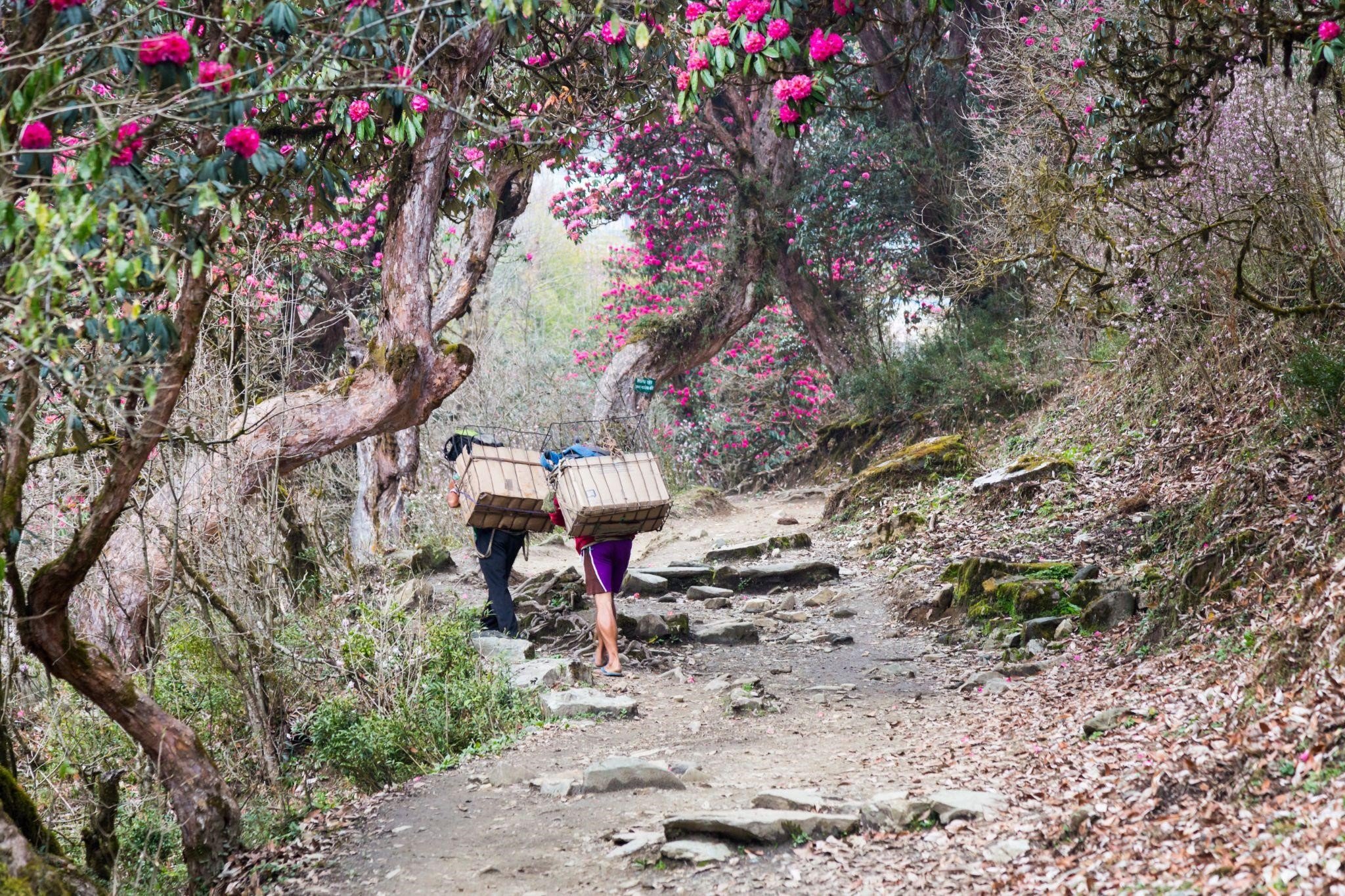
Rhododendrons bloom, skies clear, and quieter trails reveal their magic; from Tinjure-Milke-Jaljale’s colorful forests to the serene heights of Gosaikunda and Panchase.
Early spring is your window to explore Nepal’s underrated treks in full bloom, with beauty and solitude walking beside you.
March marks the beginning of spring in Nepal, a season when the Himalayas awaken, forests burst into color, and nature reveals its gentle, vibrant side. For trekkers, this is a perfect time to explore trails that are still off the beaten path, with fewer crowds and the added beauty of early flower blooms. Here are some underrated treks to experience Nepal in early spring.
1. Tinjure-Milke-Jaljale Trek
Dubbed the “Rhododendron Capital of Nepal,” the Tinjure-Milke-Jaljale trek is a paradise for nature lovers and photographers. March is when the forests come alive with vibrant red, pink, and white rhododendrons, making every step along the trail a colorful experience. This trek takes you through quiet villages, terraced farmlands, and dense oak and pine forests. From the high ridges, trekkers are rewarded with sweeping panoramic views of Kanchenjunga and surrounding Himalayan peaks. The combination of colorful blooms, serene landscapes, and authentic local villages makes this trek a perfect early-spring escape for those seeking solitude and natural beauty.
2. Langtang Gosaikunda Trek
The Langtang region is known, but its extension to Gosaikunda remains a hidden gem. The trail climbs gradually through lush forests, terraced fields, and traditional Tamang villages, offering a glimpse into the culture and lifestyle of the local people. March is ideal as the lower and mid-altitude forests begin showing early rhododendron and alpine flower blooms, contrasting beautifully with snow-capped peaks. Reaching the sacred Gosaikunda Lake, framed by towering mountains, is a spiritual and visual highlight. This trek offers both cultural immersion and breathtaking alpine scenery, with the added benefit of fewer tourists during the early spring season.
3. Khaptad National Park Trek
Khaptad National Park, located in far-western Nepal, is one of the country’s most peaceful and overlooked trekking regions. March is perfect for visiting as the park’s expansive meadows begin to show colorful wildflowers. The gentle trails wind through pine and oak forests, terraced farmland, and small traditional villages. Trekkers can also explore the meditative sites of Khaptad Baba, a revered spiritual figure, giving the trek a unique spiritual dimension. With panoramic views of the Far Western Himalayas and minimal crowds, Khaptad offers an immersive early-spring experience for those willing to venture off the beaten path.
4. Makalu Barun Trek (Lower Sections)
While the full Makalu Barun trek is challenging and remote, the lower sections are perfect for early-spring adventurers seeking solitude and floral beauty. March brings vibrant rhododendrons and magnolias along the trail, set against the dramatic backdrop of Makalu, the world’s fifth-highest peak. The lower trails pass through Sherpa villages, dense forests, and sparkling mountain streams, giving trekkers a taste of traditional Himalayan life. Clear skies in March ensure spectacular views, and the mix of snow-dusted peaks with blooming flora creates one of the most visually stunning trekking experiences in Nepal.
5. Panchase Trek
Nestled near Pokhara, the Panchase trek is a hidden gem for short early-spring adventures. The trek passes through lush green forests, terraced farmlands, and hilltop viewpoints that offer sweeping panoramas of the Annapurna and Dhaulagiri ranges. March is when the hillsides begin to bloom with wildflowers, creating a vibrant foreground for the majestic mountains beyond. Local Gurung and Magar communities along the trail welcome trekkers with warm hospitality, offering a cultural layer to the trekking experience. Panchase is ideal for those looking for a scenic, flower-filled trek that is accessible yet immersive, combining nature, culture, and peaceful solitude.
Is March Good for Underrated Treks?
Early Spring in Nepal is not just a season; it’s a celebration of nature’s renewal. For those seeking solitude, vibrant landscapes, and cultural encounters off the beaten path, March provides the perfect window to experience Nepal’s hidden gems in all their floral glory.
POPULAR ITINERARIES
SIMILAR POSTS
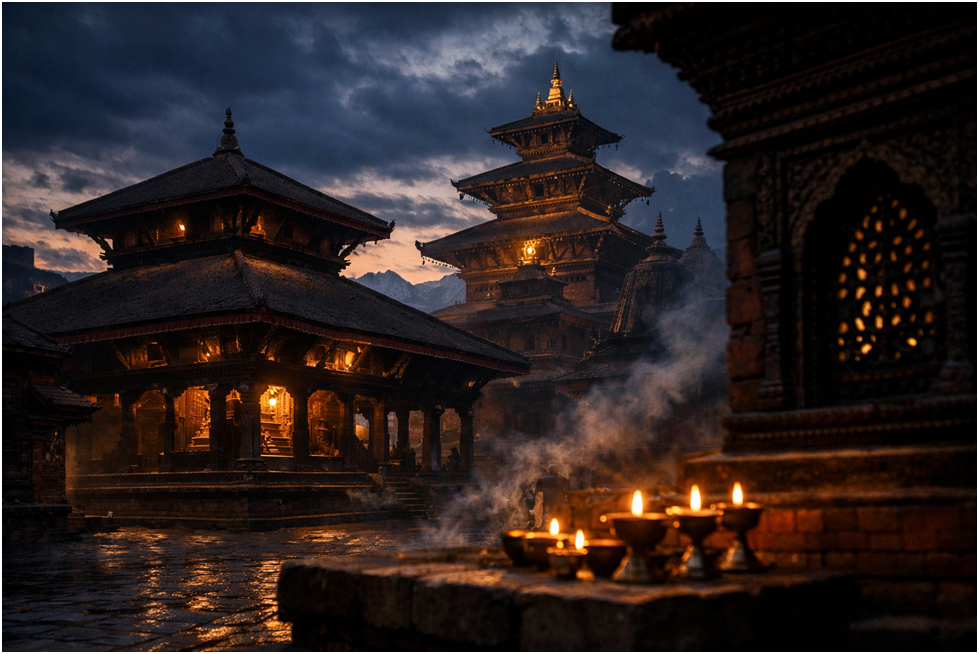
Kathmandu’s Oldest Stories: The Legends Behind the Valley’s Ancient Temples
Kathmandu is more than temples; it is a city of living legends.
From the mysterious Taleju Temple to the story of Kasthamandap and the Living Kumari, these ancient spaces carry myths that have shaped the Valley for centuries. Dates tell history, but stories give it meaning.
Discover the legends that still breathe through Kathmandu’s timeless temples.
Kathmandu is not only a city of temples, it is a city of stories.
Walk through Durbar Square, glance up at tiered pagoda roofs, or pause beneath intricately carved wooden windows, and you are standing inside centuries of belief. Historians can give you dates and dynasties. Architects can explain proportions and wood joinery. But what truly endures in the Valley are the legends because stories are magnetic. People remember myths long after they forget timelines.
Here are three of Kathmandu’s oldest and most powerful stories, the legends that still breathe through its ancient temples.
Taleju Temple: The Goddess Who Walked Among Kings
Taleju Temple rises above Hanuman Dhoka Durbar Square, majestic and guarded. Built in 1564 by King Mahendra Malla, it remains closed to the public for most of the year, opening only during Dashain.
Yet the temple’s true power lies not in its origin story.
According to legend, the goddess Taleju Bhawani once appeared nightly before King Trailokya Malla. She would visit him in secret and play dice in the palace. The king was warned never to reveal her presence. Divine favor depended on discretion.
But curiosity intervened. The queen followed the king one night and saw the goddess. Feeling betrayed, Taleju vanished. Before leaving, she declared she would return not as a vision, but in the form of a living goddess.
This legend transformed Taleju from a royal deity into a presence woven into Kathmandu’s spiritual life. Historically, the temple strengthened the divine authority of the Malla kings. Culturally, it anchored the city’s identity. Myth gave it intimacy, a story of trust, secrecy, and divine withdrawal.
When people look at Taleju Temple today, they do not only see architecture. They remember a goddess who once walked the palace halls.
Kasthamandap: The Pavilion of a Single Tree
The name “Kathmandu” itself is believed to come from Kasthamandap derived from the Sanskrit words Kastha (wood) and mandap (pavilion).
The original structure, said to have been built in the 12th century, carried a remarkable legend: it was constructed from the timber of a single tree. Whether literally true or symbolically told, the idea captures the imagination of an entire temple rising from one living trunk.
Kasthamandap stood in Basantapur as a civic and spiritual center for centuries. It represented unity, craftsmanship, and continuity. Some oral traditions claimed the wood carried protective energy over the city. Others believed the structure was spiritually blessed.
When the 2015 earthquake destroyed it, the loss felt heavier than the collapse of timber. For many, it symbolized a rupture in the city’s rhythm as if something ancient and protective had been shaken loose.
Reconstruction efforts have since sought to restore it using traditional techniques and materials. Yet the emotional impact of its fall revealed something deeper: Kasthamandap was never just a building. It was the origin. It was the city's name.
And that is why its story endures.
The Kumari: The Living Goddess of the Valley
The promise of Taleju’s return, according to tradition, lives on through the Kumari the Living Goddess of Kathmandu.
Chosen from the Shakya clan of the Newar community, a young prepubescent girl is selected to embody the goddess. The selection process follows strict traditional criteria, rooted in ritual, symbolism, and cultural continuity. Once chosen, she resides in the Kumari Ghar in Durbar Square, appearing at festivals and special ceremonies.
Historically, Nepal’s kings sought her blessing before important state decisions. Even today, her presence carries immense cultural and spiritual significance.
Myths surrounding the Kumari add layers of mystique. Stories speak of tests of fearlessness and divine signs. Whether embellished over time or faithfully preserved, these narratives elevate her from a child to a symbol of sacred embodiment.
Perhaps the most poignant aspect of the tradition is its impermanence. When the Kumari reaches puberty, the goddess is believed to leave her body, and she returns to ordinary life.
Few traditions capture the intersection of divinity and humanity so vividly. The Kumari reminds the Valley that the sacred is not distant; it can reside, briefly and mysteriously, among the living.
Why Myths Matter More Than Dates
Kathmandu’s temples are architectural masterpieces. Their tiered roofs, brickwork, and wood carvings speak of extraordinary craftsmanship. But what gives them emotional permanence are the stories.
Dates tell us when something was built. Myths tell us why it matters.
A goddess playing dice with a king. A temple carved from a single tree. A child worshipped as divine. These narratives transform physical spaces into living memory.
In a valley shaped by earthquakes, dynasties, and rapid modern change, stories become anchors. They preserve meaning when structures fall and regimes shift. They allow each generation to inherit not just monuments, but imagination.
Kathmandu’s oldest temples are not silent. They carry whispers of devotion, mystery, reverence, and resilience.
And as long as those stories are told, the Valley’s ancient spirit will remain very much alive.
POPULAR ITINERARIES
SIMILAR POSTS
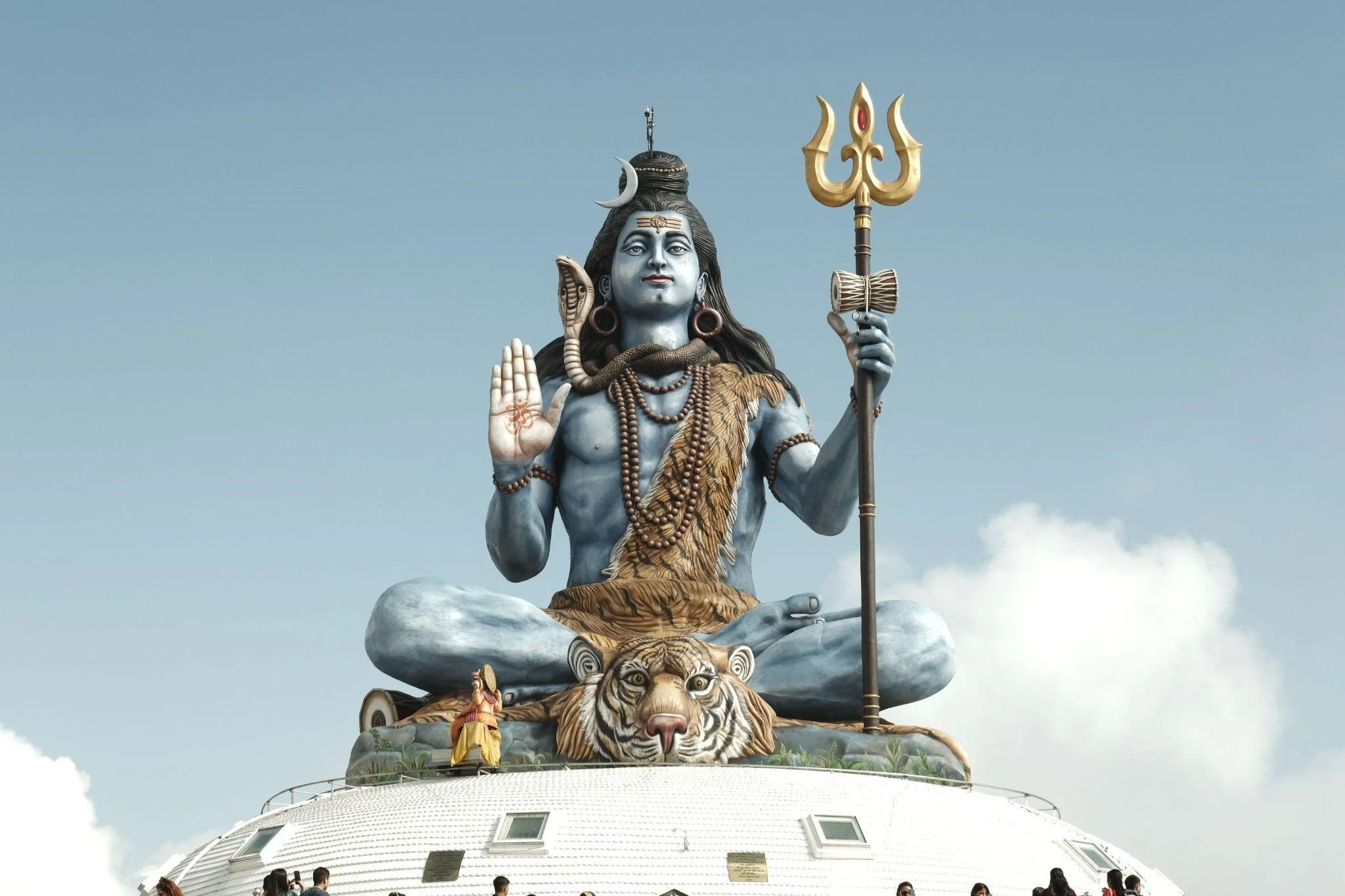
Maha Shivaratri: A Night of Devotion, Culture & Divine Energy in Nepal
When night deepens and silence grows sacred, Nepal turns inward.
Maha Shivaratri is not just observed, it is felt. A night of stillness and chant, of oil lamps flickering against ancient stone, of breath slowing into prayer.
As bells echo and mantras rise, devotion becomes collective and time seems to soften. This is a moment where faith, culture, and cosmic rhythm move as one—inviting reflection, surrender, and quiet awakening.
Maha Shivaratri, literally meaning "The Great Night of Shiva," is one of the most revered festivals in Nepal. Celebrated in honor of Lord Shiva, this auspicious night brings together devotees, spiritual seekers, and cultural enthusiasts in a vibrant blend of devotion, tradition, and divine energy. Falling on the 14th night of the dark fortnight in the month of Falgun, Maha Shivaratri is not just a religious observance but also a cultural spectacle that reflects the deep-rooted spiritual ethos of Nepal.
A Night of Devotion
Devotees across Nepal prepare for Maha Shivaratri with immense devotion and reverence. The day is marked by fasting, prayer, and meditative practices. Many devotees visit Shiva temples, such as the iconic Pashupatinath Temple in Kathmandu, where the evening rituals create a mesmerizing spiritual atmosphere. The sacred chants of "Om Namah Shivaya," the lighting of oil lamps, and the offering of bilva leaves, fruits, and milk to Shiva lingams are acts of devotion that have been performed for centuries. The night-long vigil, or "jagar," symbolizes the triumph of light over darkness and knowledge over ignorance.
Cultural Celebrations
Beyond spiritual rituals, Maha Shivaratri is also a celebration of Nepali culture. Temples come alive with music, traditional dances, and local fairs. Pilgrims from all over Nepal and even from neighboring countries gather to witness the festive energy, making it a truly communal experience. The festival is an opportunity to observe the diverse customs of Nepal’s Hindu communities, each with unique ways of honoring Lord Shiva, from the elaborate decorations of temples to local folk performances that narrate tales from Shiva’s mythology.
Divine Energy & Spiritual Significance
Maha Shivaratri is considered the night when cosmic energy is at its peak, offering devotees a chance to connect with the divine more intensely. According to legend, it is the night when Lord Shiva performed the cosmic dance, the Tandava, representing creation, preservation, and destruction. For spiritual seekers, meditating and chanting on this night is believed to cleanse the soul, promote spiritual growth, and bring peace and prosperity. The sense of divine energy in the air is palpable, making it a unique spiritual experience for both the devout and the curious traveler.
Experiencing Maha Shivaratri in Nepal
Visitors to Nepal during Maha Shivaratri can immerse themselves in both spirituality and culture. From witnessing the grand rituals at Pashupatinath to exploring smaller temples in towns like Bungamati and Khokana, each location offers a distinctive glimpse into Nepali devotion and heritage. Travelers can also experience the local cuisine and festive treats, enjoy cultural performances, and interact with communities deeply rooted in Hindu traditions.
Maha Shivaratri in Nepal is more than a religious festival, it is a celebration of devotion, cultural heritage, and the eternal energy of the divine. Whether you are a spiritual seeker, a culture enthusiast, or simply a curious traveler, the night of Maha Shivaratri promises an unforgettable experience, enveloped in the mystical aura of Lord Shiva’s presence.
POPULAR ITINERARIES
SIMILAR POSTS