
The Month of Swasthani
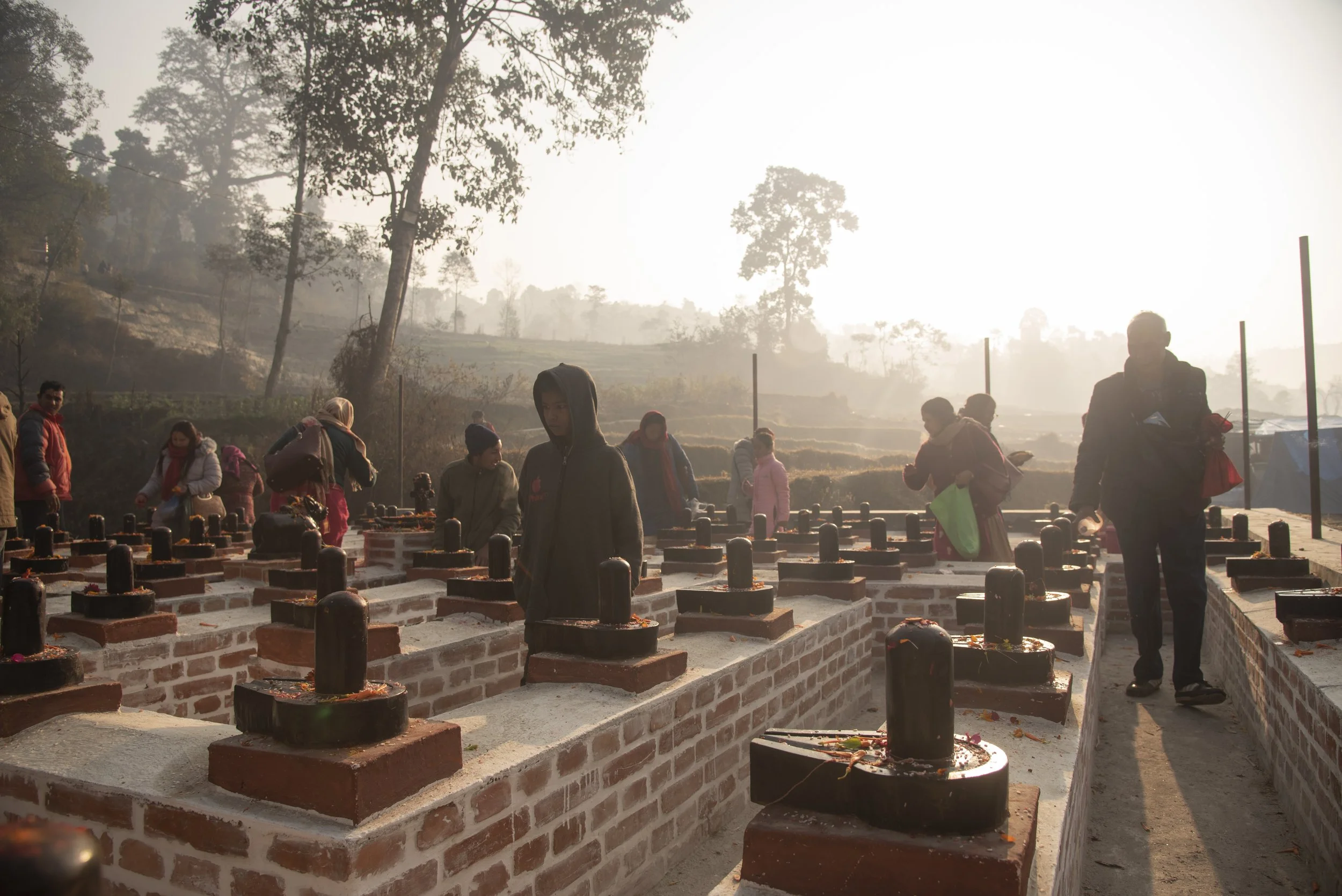
Swasthani Brata is a Hindu festival that is observed in Nepal, particularly in the Kathmandu valley. It is a month-long festival that takes place during the lunar month of Swasthani. Devotees observe a fast and perform various rituals and ceremonies to honor the goddess Swasthani, and the festival is also an important time for socializing and strengthening relationships with friends and family. It is marked by music, dance, and cultural activities.
The Life of Swasthani
According to Hindu mythology, Swastani was once a mortal princess who was married to the god Surya, the personification of the sun in Hinduism. She was known for her devotion to her husband and her kind and charitable nature, and after her death, she was elevated to the status of a goddess. During the festival of Swasthani Brata, devotees honor the goddess by performing various rituals and ceremonies, such as the reading of the Swasthani Purana and the offering of flowers, incense, and other gifts to the goddess.
The Social Importance of Festivals
The festival is also an important time for socializing and strengthening relationships with friends and family. Many people use the occasion to visit with loved ones, exchange gifts, and hold feasts and other social gatherings. In addition to its religious significance, the festival is also an important cultural event in Nepal, as it is a time for celebrating the music, dance, and other artistic traditions of the country. It is a time for people to come together and celebrate the diversity and richness of Nepali culture.
Swasthani Bratakatha: The Book of Swasthani
The Swasthani Bratakatha is a Hindu religious text that is traditionally read during the festival of Swasthani Brata, which takes place in Nepal. The text tells the story of the goddess Swasthani and her powers, and it is believed to have the power to grant wishes to those who read it with devotion. The Swasthani Bratakatha is a collection of stories and legends about the goddess Swasthani and the various miracles and blessings she has bestowed upon her devotees. It is considered an important religious text for Hindus in Nepal, and it is widely read and revered during the festival of Swasthani Brata.
The exact date of the composition of the Swasthani Bratakatha is not known, as it is an ancient text that has been passed down through the generations. However, it is generally believed to be a very old text, possibly dating back several centuries. Despite its age, the Swasthani Bratakatha remains an important religious text for Hindus in Nepal, and it is widely read and revered during the festival of Swasthani Brata. It is also a valuable source of information about the history and beliefs of Hinduism, and it is often studied by scholars and students of religion.
In today's world, the Swasthani Bratakatha continues to be an important part of the cultural and religious traditions of Nepal, and it is widely read and revered by Hindus in the country. It is seen as a source of inspiration and guidance for Hindus, and it is believed to have the power to grant wishes to those who read it with devotion. The text is also a valuable source of information about the history and beliefs of Hinduism, and it is often studied by scholars and students of religion.
During the month of Swasthani Brata, devotees observe a fast and perform various rituals and ceremonies to honor the goddess Swasthani. These may include reading the Swasthani Purana, offering flowers and other gifts, performing puja, visiting temples and shrines, and participating in cultural activities such as music and dance performances.
POPULAR ITINERARIES
SIMILAR POSTS
Buddhist Shrines to Visit in Nepal
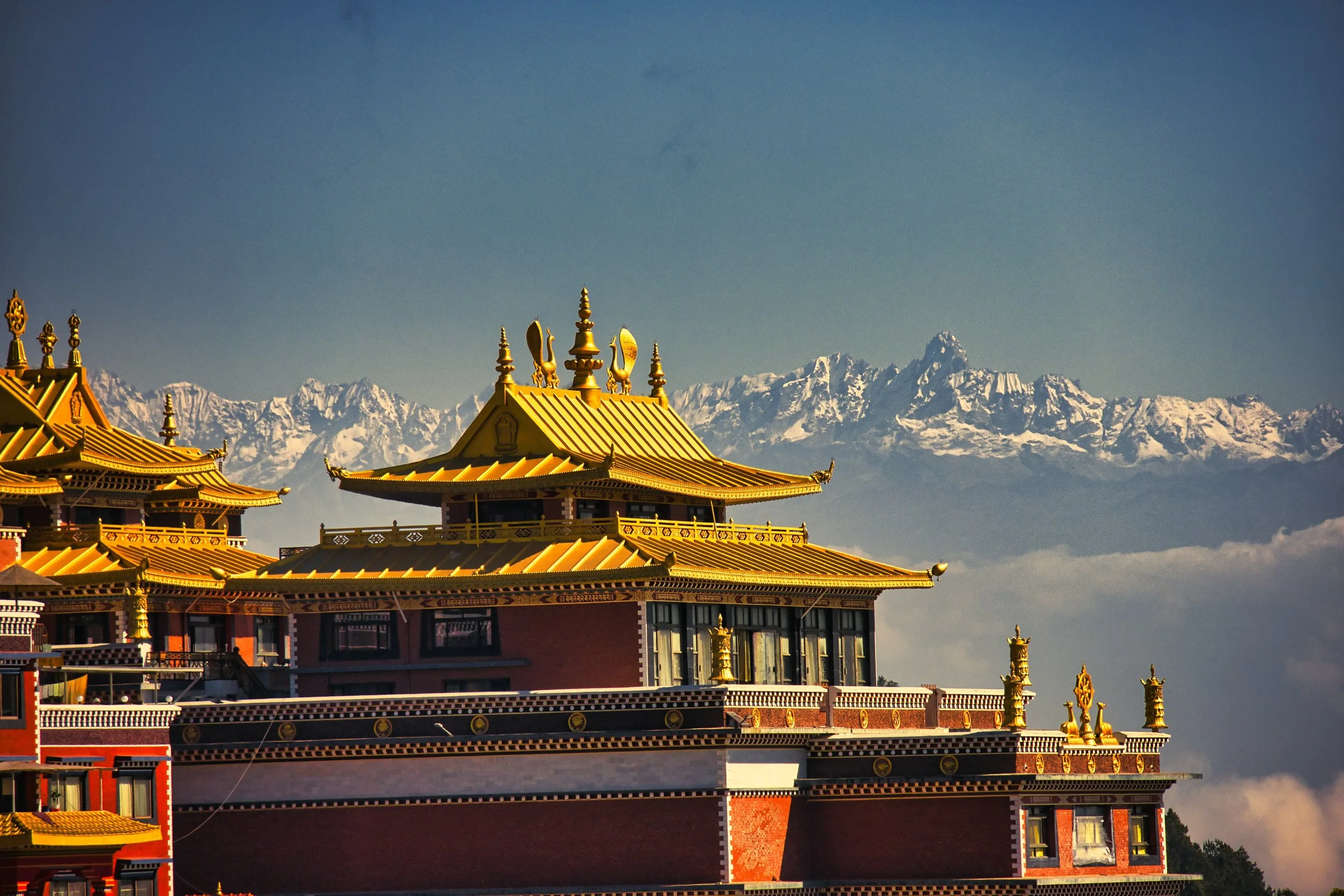
Nepal has always been the centre of the Buddhist dharma. The borders of the current nation constitute the birth place of ‘The Light of Asia’ - Siddhartha Gautam also known as the Buddha. Nepal is also home to numerous other Buddha’s of the past who have blessed this land with the seeds of the Buddhist way of life. In this blog, we explore numerous Buddhist shrines that hold great value in the Buddhist doctrine for travellers, enthusiasts and pilgrims.
Buddhist shrines, also known as stupas, are sacred places of worship for followers of Buddhism. A stupa is a type of Buddhist monument that typically consists of a dome-shaped structure built to house sacred relics, such as the ashes of a deceased person or other religious artifacts. Stupas are found throughout the Buddhist world, and they are often seen as symbols of the Buddha's enlightenment and the teachings of Buddhism.
The design of a stupa can vary depending on the region and the specific cultural and architectural traditions of the place where it is located. However, many stupas feature several key elements, such as a central dome, a spire or umbrella-like structure on top, and a base with four sides that may be adorned with reliefs or other decorative elements. Stupas may also have a circumambulation path around the base, which is used for ritual circumambulation or "pradakhshina."
Buddhist shrines come in many different styles, reflecting the architectural and cultural traditions of the region in which they are located. Some must visit Buddhist Shrines in Nepal are as follows:
Lumbini
Lumbini is a famous Buddhist shrine in Nepal which is the birthplace of the Buddha, Siddhartha Gautama. It is a World Heritage site and attracts around 1.5 million visitors annually. Lumbini includes the Mayadevi Temple, Ashoka Pillar, and several foreign-funded monasteries, such as the Royal Thai Buddhist Monastery, Myanmar Golden Monastery, Zhong Hua Chinese Buddhist Monastery, and Vietnam Phat Quoc Tu Temple, which showcase different nations' architectural styles, histories, and traditions.
Swayambhu
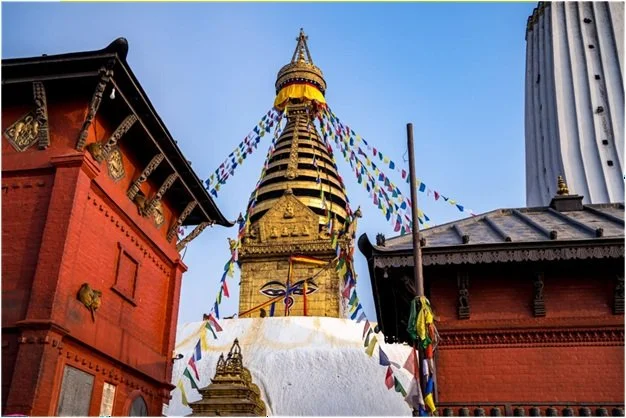
Swayambhu Stupa is a significant Buddhist shrine in Nepal that originated from a lotus flower in the Kathmandu valley, according to legend. It was built in 460 by King Manadeva and is located on a hill in western Kathmandu. The complex houses chaityas, statues, and shrines of Buddhist and Hindu deities and is a World Heritage site. The stupa is also known for its beautiful views of Kathmandu.
Boudha
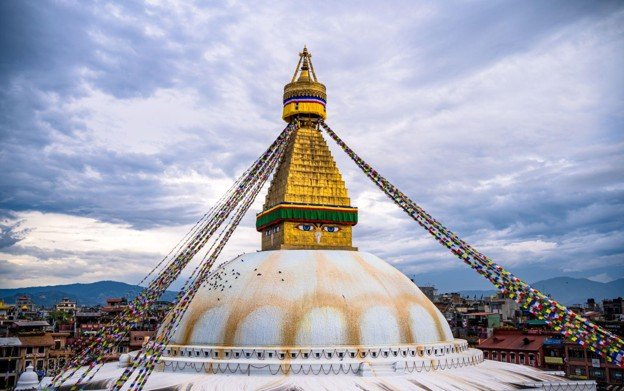
Bouddha is a popular Buddhist shrine located in Kathmandu and built in the 14th century by a Lichhavi king. It contains the relics of Kassapa Buddha, has a mandala-style construction, and is a World Heritage site. It has two wisdom eyes, a unity-symbolizing nose, and a 13-level spire representing the stages of achieving nirvana. The shrine also has prayer wheels that are said to purify karma and remove negative energy.
Ramagram
Ramgram is a significant Buddhist site located in Nawalparasi district. It is believed to contain one of the eight relics of the Buddha, which were divided after his death in Kushinagar, India. According to legend, Emperor Ashoka attempted to relocate the relics by dividing them into thousands of pieces and placing them in various stupas but was unable to open the one at Ramgram due to its protection by serpent kings. As a result, Ramgram is thought to be the only stupa still containing the relics of the Buddha and is a revered pilgrimage site for Buddhists.
Seto Gumba
Seto Gumba, also known as White Monastery or Druk Amitabha Mountain, is a famous Tibetan-style Buddhist monastery located on a hill in northwestern Kathmandu. It features murals, statues, and paintings and was closed for maintenance after the 2015 earthquake, but is now open to the public on Sundays. Seto Gumba, which stands at an altitude of 1,500 meters, offers beautiful views of the sunrise and sunset, and is a popular spot for photography and learning about Buddhism, meditation, and Tibetan architecture.
Namo Buddha
Namo Buddha is a holy Buddhist site located approximately 40 kilometers east of Kathmandu in Kavrepalanchok. It is home to the Thrangu Tashi Yangtse Tibetan Buddhist monastery, founded in the 20th century by the 9th Khenchen Thrangu Rinpoche. The site is also home to a stupa that is said to contain the remains of a prince who was an incarnation of the Buddha and later reincarnated as Siddhartha Gautama in Lumbini. The story of the prince dates back to the time of King Maharath and his three sons, one of whom offered himself as food to a hungry tigress and her cubs. Namo Buddha is a popular destination for pilgrimage and small hikes.
POPULAR ITINERARIES
SIMILAR POSTS
Khaptad National Park: A Gem of The West
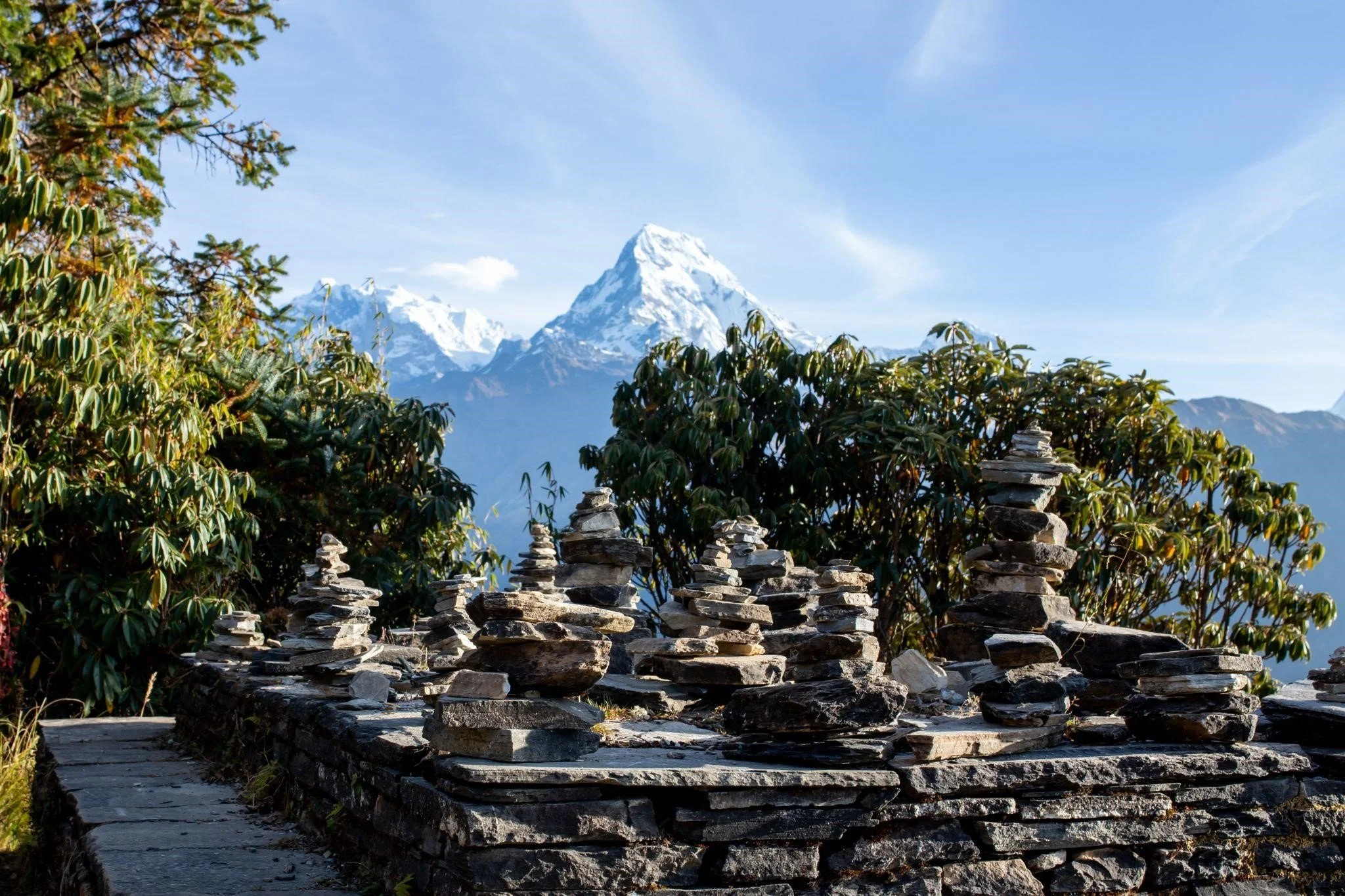
Khaptad National Park is a protected area located in the far-western region of Nepal. It was established in 1984 and covers an area of 225 square kilometers. The park is named after Khaptad Baba, a spiritual leader who lived in the area for many years.
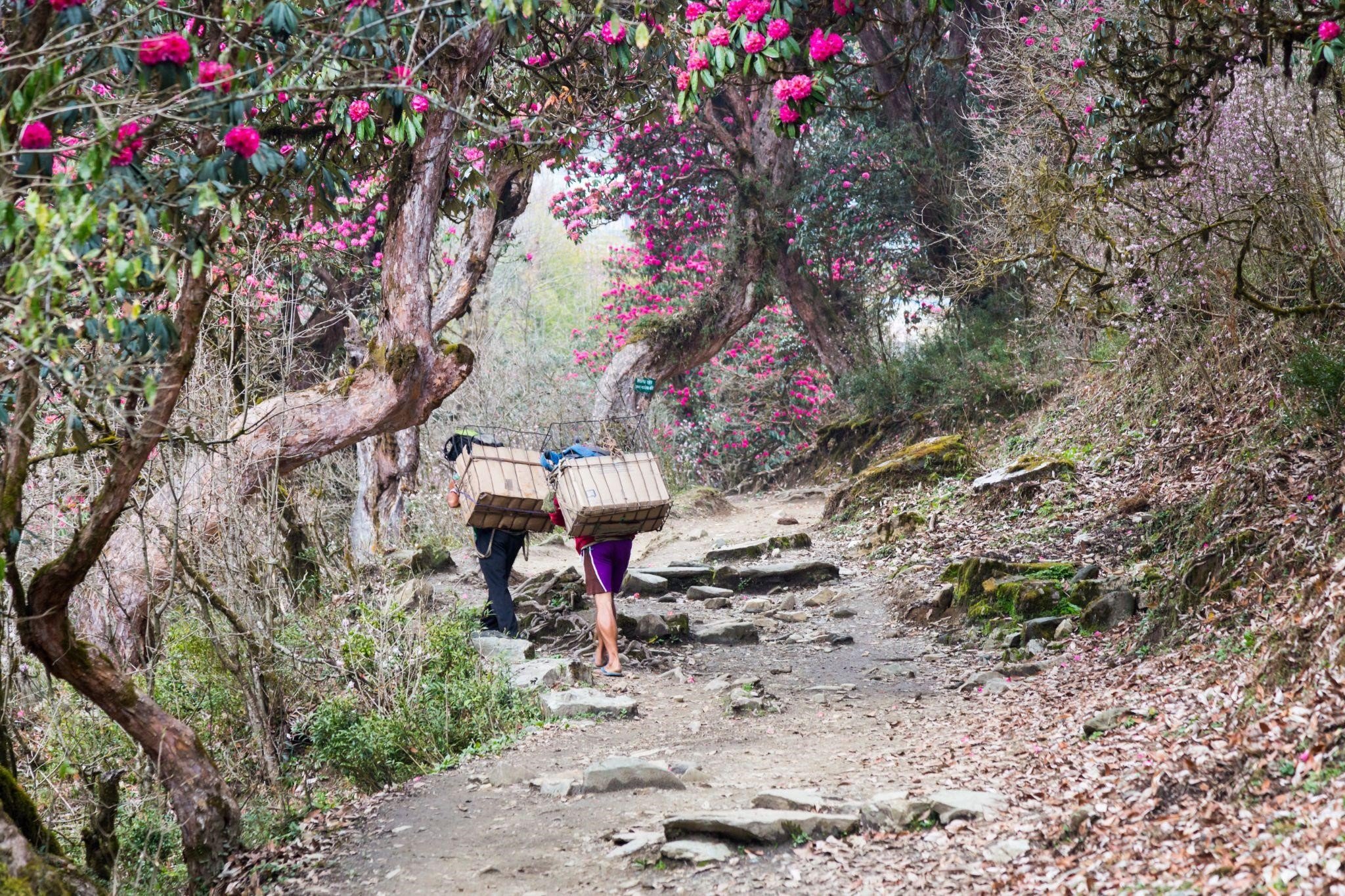
The park is home to a diverse range of flora and fauna, including rhododendron, oak, and pine forests, as well as a variety of wildlife such as leopards, musk deer, and Himalayan black bear. There are also more than 250 species of birds found in the park, including the endangered impeyan pheasant.
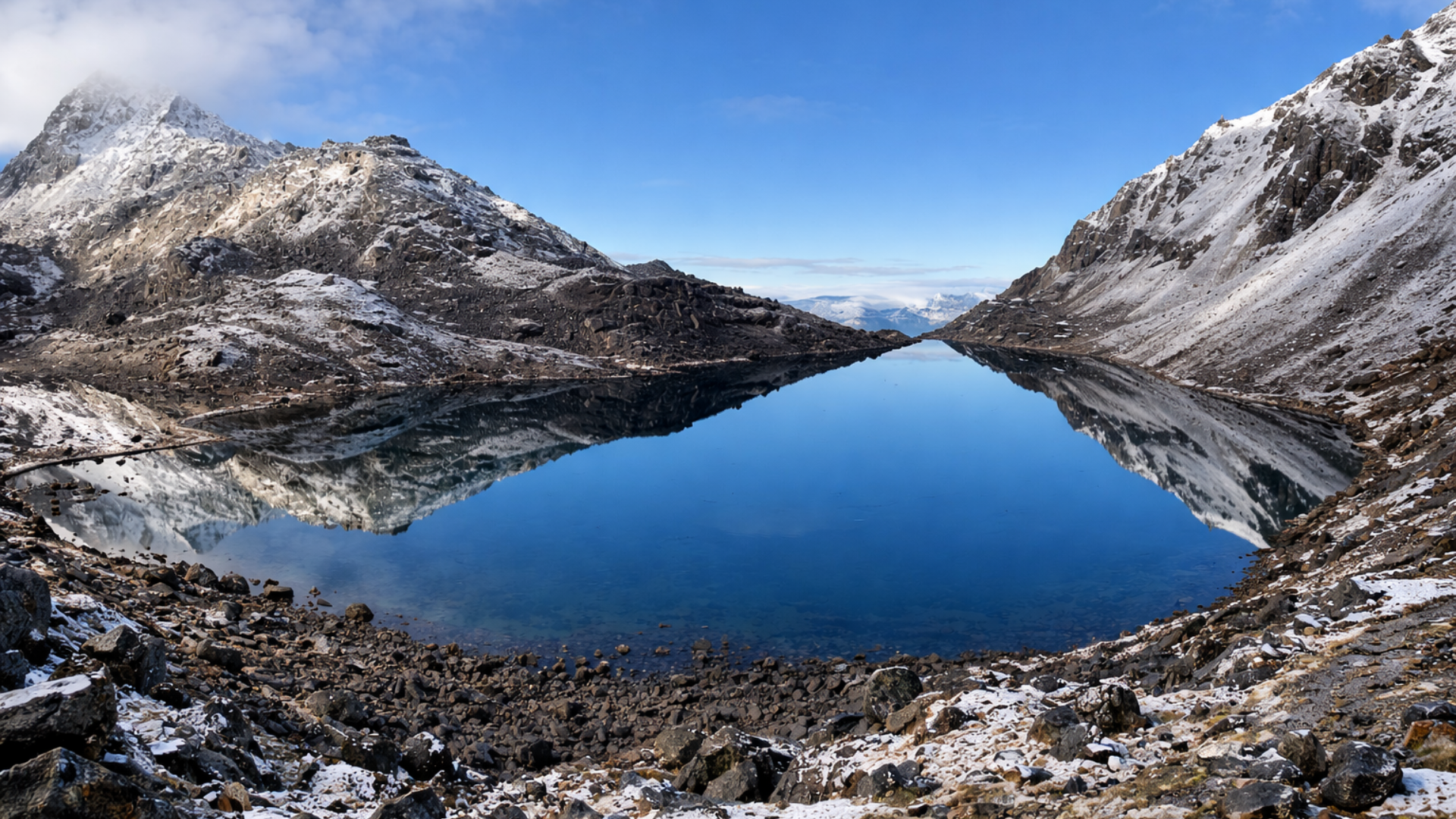
Tourists can enjoy a variety of activities in the park, including hiking, birdwatching, and picnicking. There are also several cultural and spiritual sites in the park, such as the Khaptad Baba Ashram and the Khaptad Daha (lake).
There are several ways to get to Khaptad National Park from Kathmandu:
By bus: There are regular bus services from Kathmandu to Silgadi, the nearest town to the park. From Silgadi, you can hire a jeep or a local bus to reach the park. The journey takes around 8-10 hours.
By flight: There are daily flights from Kathmandu to Nepalgunj, the nearest airport to the park. From Nepalgunj, you can hire a jeep or take a local bus to reach the park. The journey takes around 6-8 hours.
By private car: You can hire a private car or taxi from Kathmandu to reach the park. This is the most convenient and quickest way to get to the park, but it is also the most expensive. The journey takes around 6-7 hours.
It's worth noting that the park is located in a remote area, and the roads can be quite rough and bumpy, especially during the monsoon season. So, it's a good idea to allow for extra time for your journey and to be prepared for a bumpy ride.
Fauna:
Leopard
Musk deer
Himalayan black bear
Wild boar
Ghoral (goat-antelope)
Jackal
Red panda
Flora:
Rhododendron
Oak
Pine
Fir
Deodar
Spruce
Bamboo
In addition to these species, there are also over 250 species of birds found in the park, including the endangered impeyan pheasant. The park is also home to a variety of medicinal plants, including the Khaptad dandelion, which is found only in this region.
Here are a few things to consider when planning a trip to Khaptad National Park:
1. Travel documents: Make sure you have all the necessary travel documents, including a valid passport and visa (if required).
2.Accommodation: There are a few lodges and guesthouses available in the park, but it's a good idea to book in advance, especially during the peak tourist season. You can also bring a tent and camp in the park, but you will need to get a permit from the park office.
3. Transportation: As mentioned earlier, there are several ways to get to the park from Kathmandu. You can choose the mode of transportation that best suits your needs and budget.
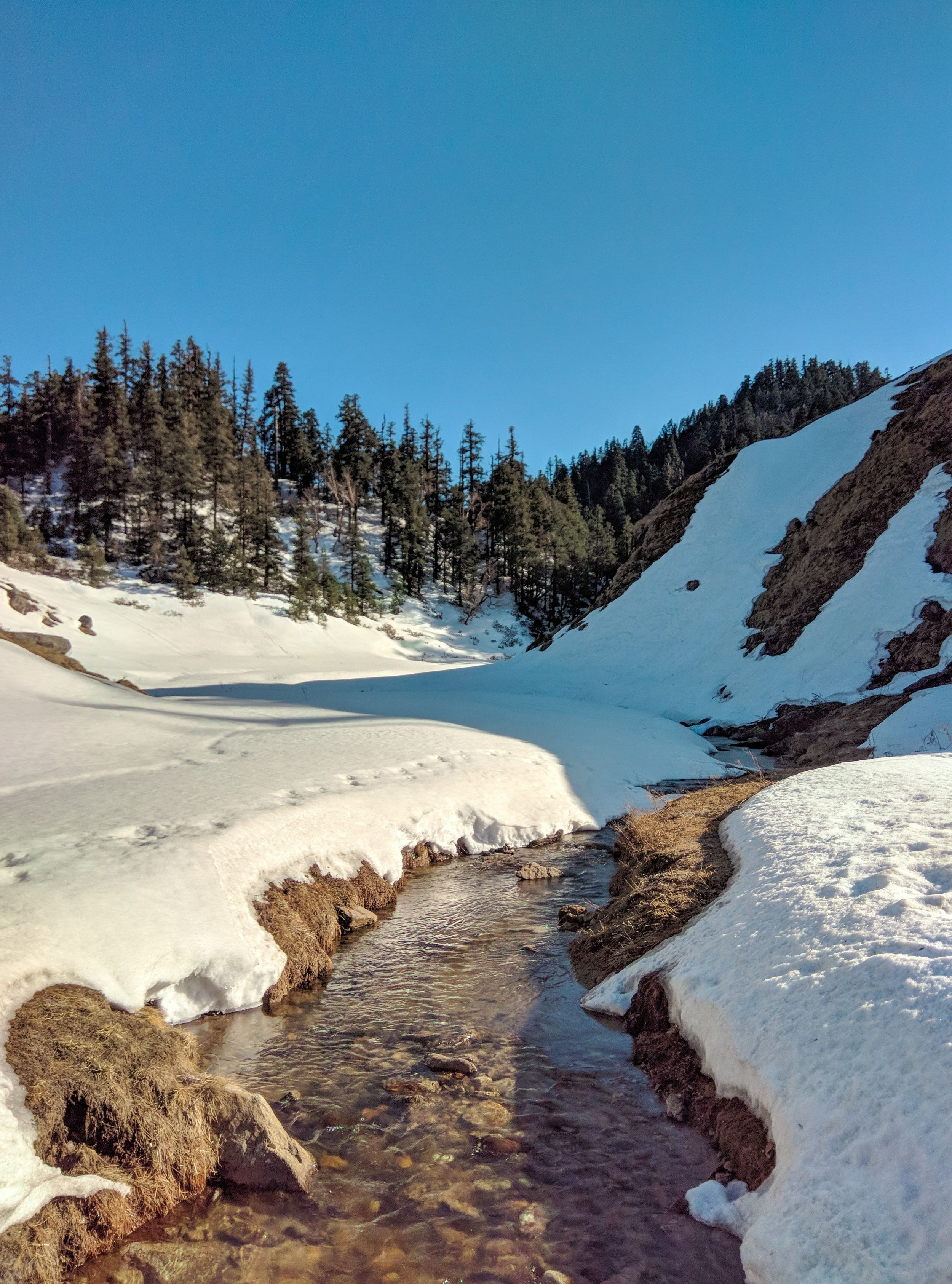
4. Weather: The weather in the park can be quite varied, with temperatures ranging from below freezing in the winter to over 30°C in the summer. Make sure to pack clothes and gear appropriate for the season you'll be visiting.
5. Health and safety: The park is located in a remote area, so it's important to be prepared for any emergencies. Make sure you have adequate medical insurance, and bring any necessary medications with you. It's also a good idea to inform someone of your itinerary and to stick to marked trails while hiking in the park.
6. Respect local culture: The park is home to several cultural and spiritual sites, so it's important to be respectful of local customs and traditions.
POPULAR ITINERARIES
SIMILAR POSTS
Exploring Annapurna
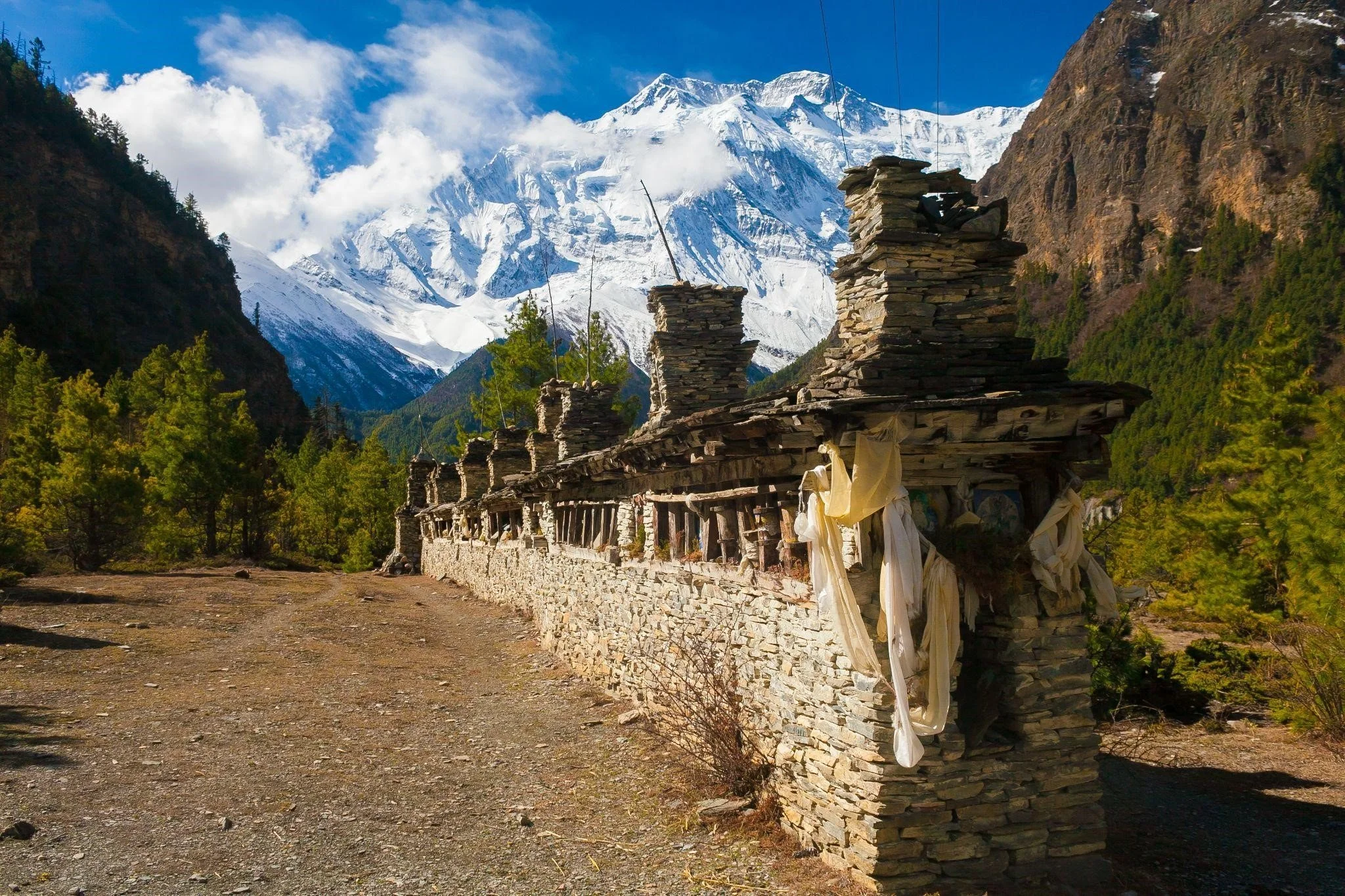
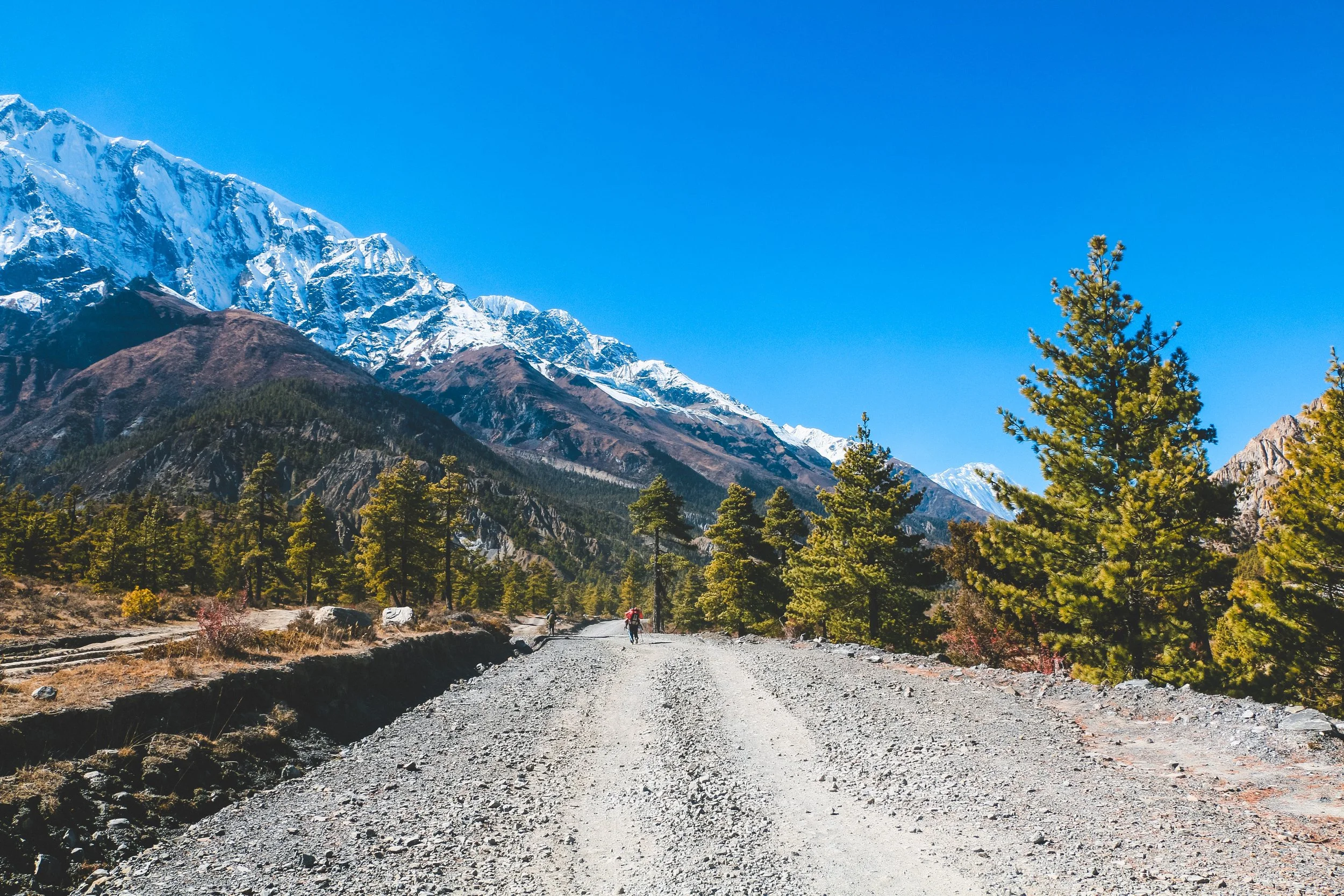
The Annapurna Circuit is a popular trekking route in Nepal, known for its beautiful landscapes and mountain views. Located in the Himalayas, the circuit takes trekkers through a variety of ethnic communities and offers a range of cultural experiences.
The Annapurna Circuit has a long history as a trekking route, and it has changed significantly over time. Today, the route takes trekkers through a variety of landscapes, including forests, high-altitude deserts, and snowy mountains. Along the way, trekkers can visit local villages and experience the unique cultures of the ethnic communities that live there. However, the Annapurna Circuit is not for the faint of heart – it is a physically demanding trek that requires a high level of fitness and preparation.
Despite the challenges, the Annapurna Circuit is a rewarding and unforgettable experience for trekkers. From its stunning landscapes to its rich cultural experiences, there is no shortage of reasons to add the Annapurna Circuit to your bucket list. Whether you are a seasoned trekker or a beginner looking to challenge yourself, the Annapurna Circuit has something to offer.
Some of the top destinations along the Annapurna Circuit include:
1. Thorong La Pass: Located at an altitude of 5,416 meters (17,769 feet), the Thorong La Pass is the highest point on the Annapurna Circuit. Trekkers can enjoy stunning views of the surrounding mountain peaks from the pass.
2. Manang: Manang is a picturesque village located in the Manang District of Nepal. It is a popular stopover point for trekkers on the Annapurna Circuit, and it is known for its charming traditional houses and friendly locals.
3. Jomsom: Jomsom is a town located in the Mustang District of Nepal. It is a major hub for trekkers on the Annapurna Circuit, and it is known for its apple orchards and beautiful mountain views.
4. Pokhara: Pokhara is a city located in the western region of Nepal. It is a popular starting point for the Annapurna Circuit trek, and it is known for its beautiful lakes, temples, and adventure sports.
5. Annapurna Base Camp: The Annapurna Base Camp is located at an altitude of 4,130 meters (13,550 feet) and offers stunning views of the Annapurna massif. Trekkers can visit the base camp as part of the Annapurna Circuit or as a standalone trek.
Before & during the trek one must be aware of the following:
1. Altitude: The Annapurna Circuit takes trekkers to high altitudes, with the highest point being the Thorong La Pass at an altitude of 5,416 meters (17,769 feet). Altitude sickness is a common concern for trekkers at these high altitudes, so it is important to acclimatize properly and be aware of the symptoms of altitude sickness.
2. Weather: The weather in the Annapurna region can be unpredictable, with temperatures ranging from hot and sunny to cold and snowy. Be prepared for all types of weather, and be sure to pack appropriate clothing and gear.
3. Physical demands: The Annapurna Circuit is a physically demanding trek, and it requires a good level of fitness. Be prepared for long days of walking and be sure to take breaks and rest when needed.
4. Safety: While the Annapurna Circuit is generally a safe trek, there are a few safety considerations to be aware of. Be sure to follow the guidance of your trekking company or guide, and be aware of any potential risks such as landslides or avalanches.
5. Cultural sensitivity: The Annapurna Circuit passes through a number of different ethnic communities, and it is important to be respectful of local customs and traditions. Follow the guidance of your guide and be mindful of your actions and words.
POPULAR ITINERARIES
SIMILAR POSTS
Nepal: A Land You Must Explore
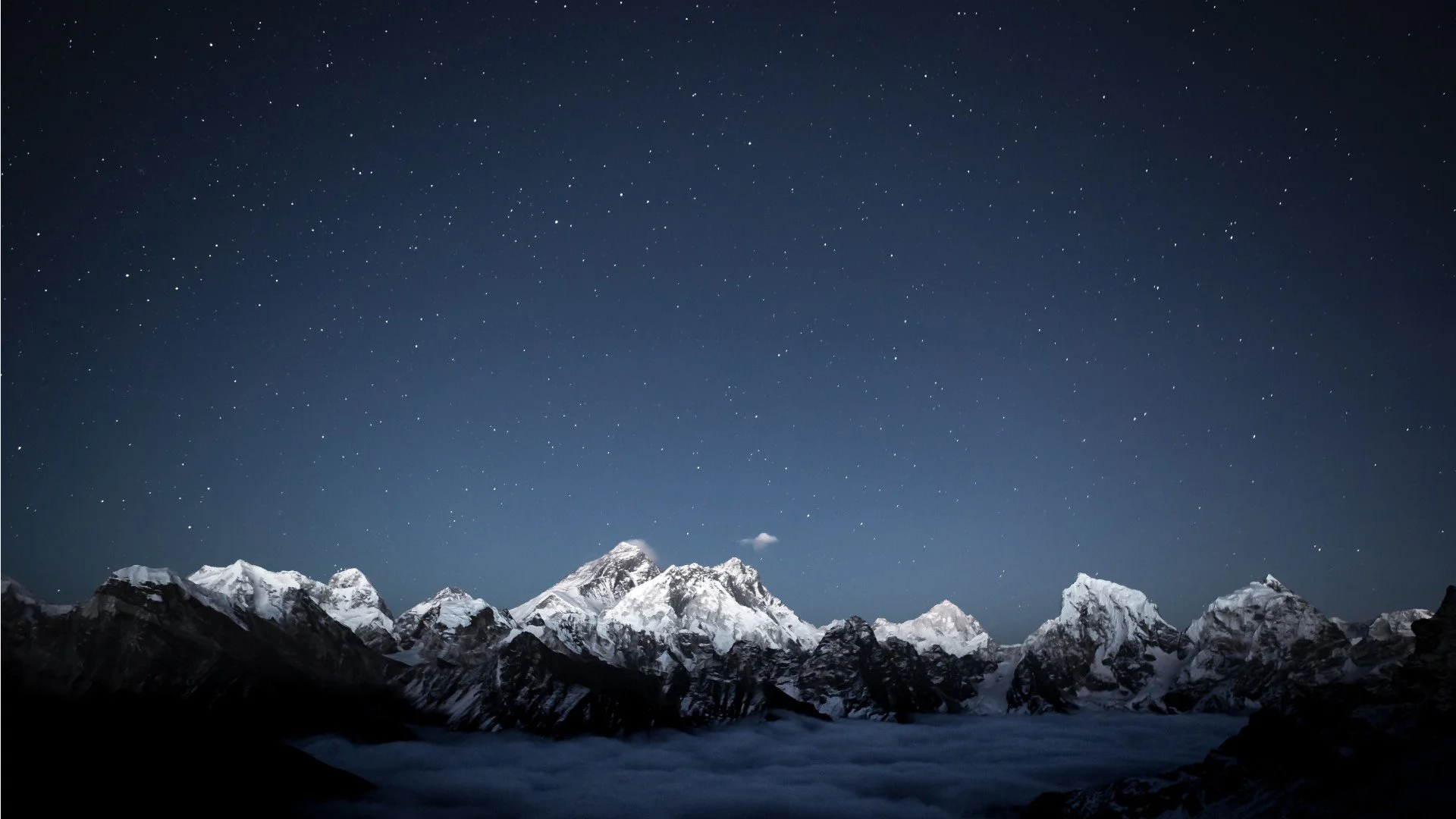
Nepal is a paradise for nature lovers, with its towering snow-capped mountains, lush forests, and fast-flowing rivers. Come discover the beauty of this unique country and experience its rich culture and wildlife.
Nepal is a small country located in South Asia, between India and China. It is well known for its breathtaking natural beauty, with towering snow-capped mountains, lush forests, and fast-flowing rivers. For nature lovers, Nepal is a true paradise, with a wide range of stunning natural attractions that are sure to take your breath away.
One of the most popular destinations in Nepal is the Annapurna Circuit, a popular trekking route that takes you through some of the most beautiful landscapes in the country. The trek starts in the city of Pokhara and takes you through the stunning Annapurna range, with its towering peaks and beautiful forests. During the winter months, the trek can be especially beautiful, with snow-covered peaks and frozen waterfalls. However, it is important to be prepared for the cold weather and potential hazards, such as avalanches. Be sure to bring warm clothes and proper gear, and consider hiring a guide to help you navigate the route safely.
Another popular destination in Nepal is the Chitwan National Park, located in the southern part of the country. This national park is home to a wide variety of wildlife, including rhinos, tigers, and a variety of birds. You can take a safari tour through the park to see these animals in their natural habitat, or take a boat ride along the Rapti River to see the park from a different perspective. In the winter, the park can be especially beautiful, with misty forests and frost-covered trees. However, be prepared for colder weather and potentially muddy roads, and consider hiring a jeep or other all-terrain vehicle for your safari tour.
If you're interested in religious sites, Nepal is also home to some of the most sacred temples in the world. The temple of Pashupatinath, located in the capital city of Kathmandu, is one of the most important Hindu temples in the world. It is a popular destination for pilgrims from all over the world, and is a must-see for anyone interested in religious sites. In the winter, the temple can be especially beautiful with steaming incense. However, be prepared for colder weather and dress appropriately to avoid offending local customs.
When visiting Nepal during the winter, there are a few additional tips and tricks to keep in mind. First, it is important to be prepared for the cold weather. Nepal can be very chilly, especially at higher elevations, so be sure to bring warm clothes and rain gear. It is also important to be respectful of local customs and traditions. Nepal is a predominantly Hindu country, and many of the temples and other religious sites have strict rules about dress and behavior. Be sure to research these rules before visiting any religious sites.
Overall, Nepal is a stunning country with a rich natural beauty and a fascinating culture. Whether you're interested in trekking, wildlife, or religious sites, there is something for everyone in Nepal. The winter season can be a particularly beautiful time to visit, but be sure to plan carefully and prepare for the cold weather. It is a must-visit destination for nature lovers and anyone interested in experiencing the beauty of South Asia.
POPULAR ITINERARIES
SIMILAR POSTS
Exploring Lalitpur
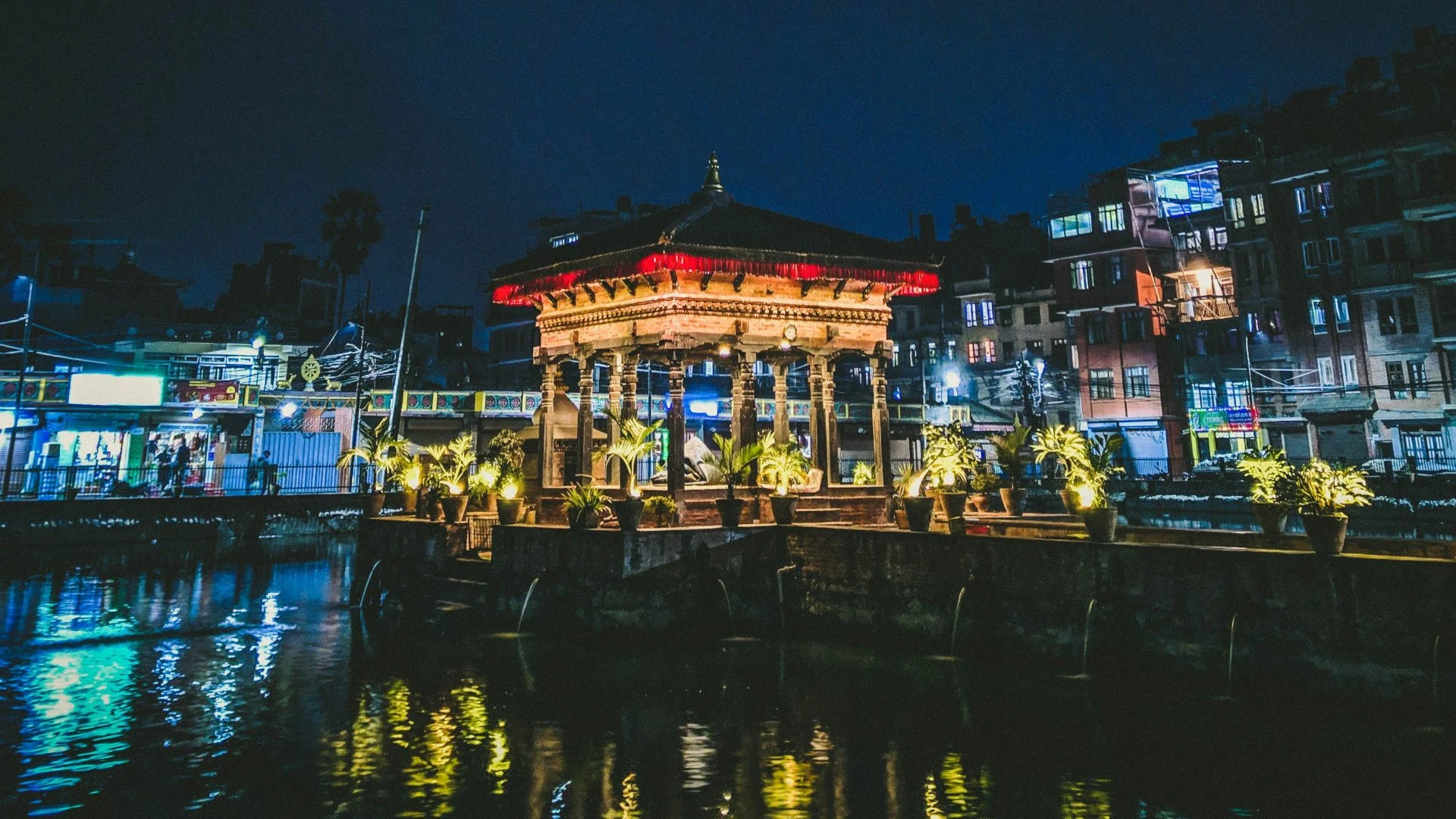
Historically known as Patan, the present city of Lalitpur is a stellar representation of cultural representation through the arts. Also known as Manigal, this city traces its roots to numerous states, such as Matirajya, Irshyarajya, and Dipavati were united in the Lichhavi Era to create this grandiose city.
Rarely do we discover places in the world that feature- living heritage. The cities of Lalitpur, Kathmandu, and Bhaktapur are great examples of living heritage. The iconic landmarks, temples, and monuments date back hundreds of years. The local population found a way to integrate these icons, temples, and monuments into their wheel of life and customs.
Tracing historical roots, the oldest settlement within the current boundaries is the kingdom of Dipavati. As per the chronicles, this city existed in the Satya Yuga. Dipavati means land where Dipankara Buddha had manifested himself. He is revered as a great enlightened mind born before Shakyamuni Buddha (Gautam Buddha).
The second oldest territory of this region is known as Matarajya. Matarajya was a flourishing kingdom that stretched southwards with its center around present-day Lagankhel. The greatest landmark of this kingdom– the Maitrajya Chaitya, stands tall to this day. Chronicles write of a great tale between two cities- Matirajya & Irshyarajya, the tale is as follows: "Once a certain man named Bhoja came to Visalnagara to become king. He heard of Vikramajit's greatness and wandered around boasting that he would do the same and that he was ready to sit on the lion's throne. At that moment, each of the thirty-two auspicious signs of the lion-throne turned into butterflies, told various stories of Vikramajit’s knowledge and dharma, and flew away. Despite this, King Bhoja insisted on seating himself on the lion throne. At that moment, the lion throne flew away on the path to heaven to reach its own place. Since, the king was hauthy, Navasagar-bhagvati fatefully became enraged in the middle of one night. She raised fire from the well in front of her and destroyed many people and animals throughout the night. The king and the people of Visalnagara were burnt and the city became desolate. Only small villages in Nepala survived. Among the people belonging to four castes, some went eastwards across the Manohara River and built their own houses. Some went southwards across the Vagmati River, formed together a small territory, named it Matarajya and lived there."
The above extract was taken from History of the Kings of Nepal, A Buddhist Chronicle which is an updated translation of the 19th-century Newar Chronicle compiled by Daniel Wright. Using historical markers and borrowed knowledge from other chronicles, Vishalnagara was the grand city created during the Lichhavi Era. The capital of this city is presumed to be Hadigaun. The current Bishalnagar got its name from this ancient city.
The third ancient settlement Irshyarajya was created by the survivors of the Vishalnagara fire who refused to live in Matarajya. “Some people, having seen those who built Matarajya and settled there said: “ We will not live in this place. The territory became known as Irsarajya since it was formed out of envy (irsa).”
A fourth historic settlement also exists but its origins are highly debated. The settlement of Imadva further east of Dipavati came into existence at the same time as Matarajya & Irsarajya. The origin of this settlement as per the Buddhist Chronicle is as follows, “In a similar way, some other Buddhists were in great confusion. They thought: This chaitya has been there since the time of Manjupattana City and it was not destroyed, even when Danasura blocked the water passage. Visalanagara has now been destroyed and no one has remained here any longer. It is neither possible to carry the caitya away, nor is it possible to make a living here. One night, the caitya ordered somebody in a dream: O devotee, a certain bird will come to rest on my parasol tomorrow morning. Then the bird takes off from the parasol and at the spot where it lands, you should stay. I, too, will come to stay there. The next morning, the Buddhists went to pay darsana to the caitya and found an eagle on its parasol, just as mentioned in the dream. They followed the eagle to the place where it landed. Some of them inhabited that place and established a chaitya by contemplating the chaitya image of Visalanagara. From that day on, the place has been known as Imadva. Since “eagle” (in Nevari) is ima and the spot was identified by it, the caitya was named Imadva Chaitya (“the chaitya at the Eagle-Mound”).
POPULAR ITINERARIES
SIMILAR POSTS
Exploring Palpa - Part I
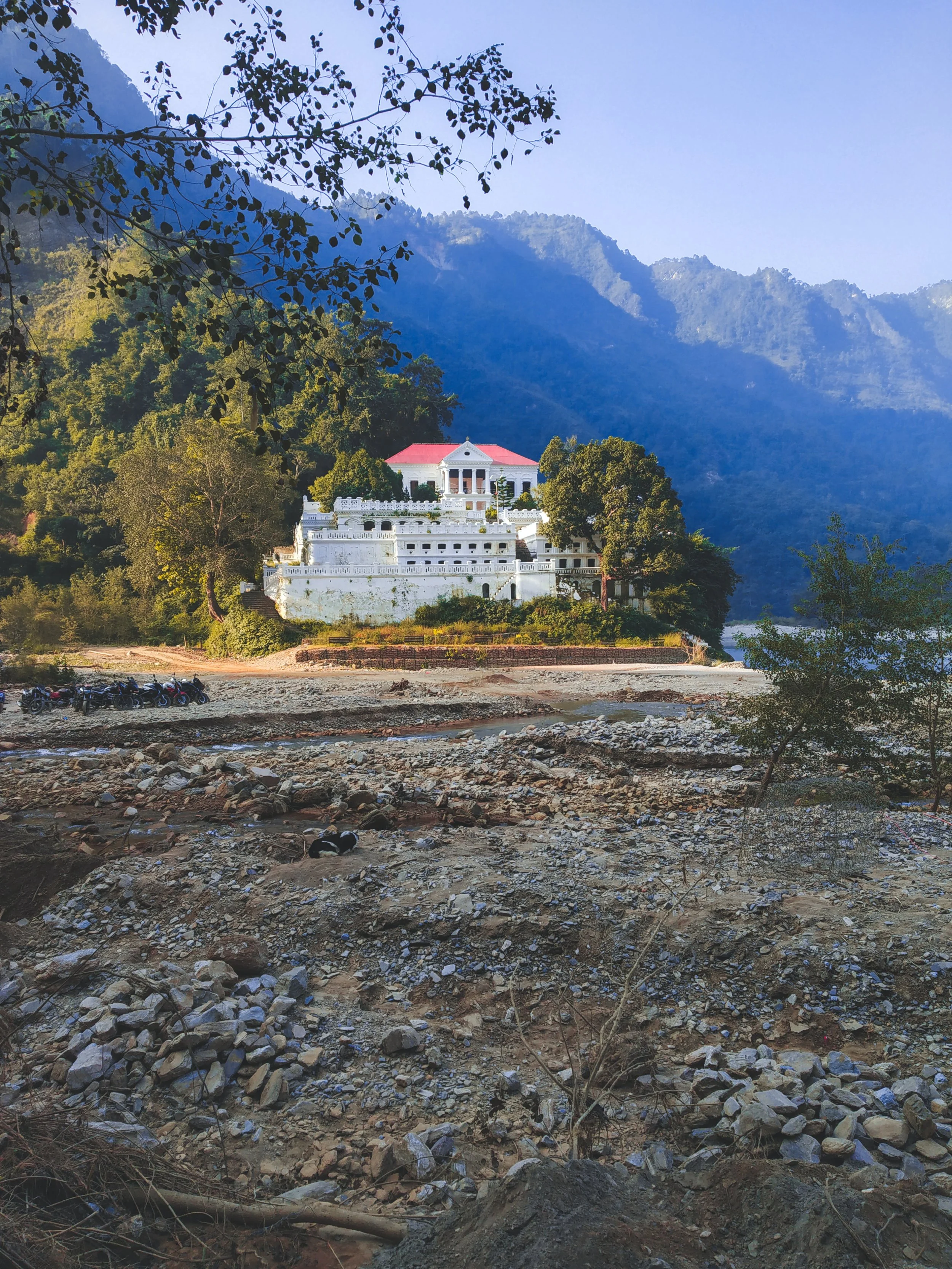
Palpa, once an independent Magar Kingdom famous for its forges, became a hub in the south for Newars. The famous “Dhaka Topi” was born here amongst the various Dhaka patterns fabricated by the expert weavers of Palpa. It is a destination with facets and has widely contributed to the formation of the Nepali identity.
Palpa is a beautiful hill station in the Lumbini Province of Nepal. It is a great destination to add to your tour of the southern cities of Nepal. If you’re making a trip to Lumbini, stop by Palpa to witness the age of Newari architecture and culture, which migrated to this once-Magar village thousands of years ago.
About Palpa
Province: Lumbini
Distance from Kathmandu: 273.7 km
Accessibility:
By Road: 8 hours and 14 minutes
By Air: Land at Gautam Buddha International Airport in Bhairahawa and drive 2 hours and 24 minutes to reach Palpa region
Attractions: Argeli Palace, Rambha Devi Temple, Ranighat Palace (Ranimahal), Rishikesh Complex, Tansen Bazzar, Bhairabsthan Temple (Tansen Bhairab), Shrinagar Hill, Tansen Durbar
Travel Season: Throughout the year
The region of Palpa has much to offer in multiple genres of tourism. The potential of this region as a religious site along with sightseeing and cultural tourism is strong. The central attraction of this place is the hill station of Tansen. In 2008 AD, UNESCO added this area to its tentative list for World Heritage in the cultural category.
The whole of Palpa has a strong note of Magar culture, but there is Newar influence in multiple locales. The souvenir of this region has always been Palpali Dhaka. It is a unique cloth produced by the local Newars. One of the most famous landmarks is the “Golghar”, an octagonal pavilion in the middle of Sitalpati, the main market square. Srinagar hill is a popular viewpoint that offers a beautiful panorama of the high Himalayas. Peaks such as Dhaulagiri, Tukuche, Nilgiri, Annapurna, Himchuli and others are visible on a clear day.
The unique fusion of Palpa makes it a great destination. It offers something for all genre of travellers, which has always been its greatest strength. Exploring the core settlements of Tansen at times makes you feel like you are in Kathmandu due to the strong influence of Newar culture.
POPULAR ITINERARIES
SIMILAR POSTS
Trekking Shey Phoksundo
The Himalayas of Nepal is a wonder to behold. This pristine region of Nepal features numerous lakes- a sight for sore eyes. Amongst such tantalizing lakes is Shey Phoksundo in the Dolpo Region of Nepal.
The Shey Phoksundo lake trek ranks amongst the top 5 treks in Nepal. A trekker during the 7 day trek discovers multiple isolated regions.
About Dolpa
Situated at the north of the mid-western part of Nepal, Dolpa is the largest district surrounded by the Dhaulagiri Mountain range at the south and east, Churen Himal range at the west, and the Tibetan Plateau at the north. Accessible through land and air, the journey can be taken by a flight to Jumla and then a trek to Dolpa or a bus ride to the nearest urban centre of Dolpa.
This region features a series of treks that help you explore the last of the virgin land of Nepal. These far-off adventures take you miles from the urban settlement where life seems to have stood still. The dense forestry is home to pristine flora and fauna, and the crown jewel is the beautiful lake of Shey Phoksundo. The rugged plain rocky landscape, religious shrines and ancient monasteries are something out of the world. The amalgam of which help create an experience of a lifetime.
The treks of this region fall into the category of difficult to extreme. A trekker needs to be in the best possible shape to conquer the seemingly endless stretch of land. A direct escape to Shey Poksundo doesn't require any camping. The longer route, however, features some areas where camping is required.
Shey Phoksundo: The Turquoise Gem
· Province: 6
· Distance From Kathmandu: 315 km
· Accessibility:
By air: Shey Phoksundo can be only accessed through Nepalgunj or which has to take a flight to Nepalgunj and from there to Juphal in Dolpa and 4 days trek to Ringmo
By road: 24-25 hour bus ride from Kathmandu- Radi Bazar and 4 days trek to Ringmo
Route by road & return by air: Kathmandu- Radi Bazzar- Tallo Bagar - Supani - Suligad - Kagani - Chhepka - Rachhi - Samjhana Hotel - Jharna Hotel - Ringmo (Shey Phoksundo Lake) - Chhepka - Kagani - Suligad - Juphal Airport - Nepalgunj - Kathmandu
· Attraction: Tshwo Gompa, Highest Waterfall in Nepal, Himalayan Panaroma
· Travel Season: Spring (March-May) and Autumn (Sep-Nov)
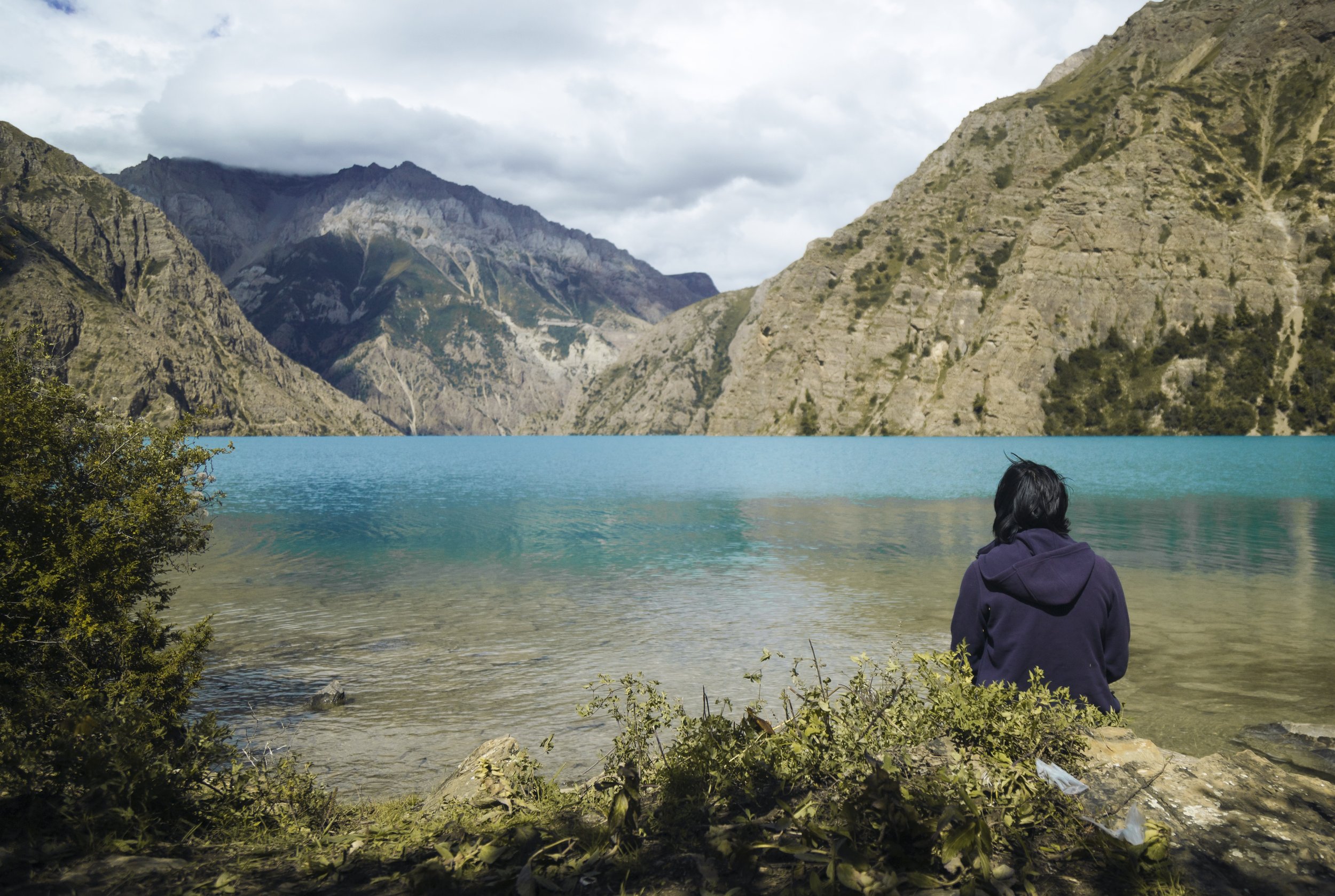
The turquoise water of this magnificent lake at golden hours is hard to describe. Sitting by it with the distant sound of a waterfall under an open blue sky is an experience straight out of heaven. The Phoksundo lake is within Shey Phoksundo National Park, the largest and only trans-Himalayan protected area of Nepal. On the southern end of the lake lies the village of Ringmo on top of a landslide dam created 30-40,000 years ago.
This body of water lies at an elevation of 3,660 m (12,010 ft). Surrounded by glaciers in its upper range, it is famous for its magnificent turquoise colour. Near the lake's outlet is the country's highest waterfall. The trek to this part of Nepal is strenuous, but the reward is an experience worth multiple lifetimes. The trip offers landscapes beyond words. Getting to experience the lifestyle of the ethnic community is a bonus.
The region is best visited between March to May (spring) and September to November (autumn). The closest airport is Juphal airport in Dolpa. The far-western region of Nepal is only accessible through the airport in Nepalgunj. The main trek ranges from 4-5 days to Ringmo. By road, the journey includes a 24-25 hour bus ride from Kathmandu to Radi Bazar.
In the next part of this article, we shall discover the lakes of Tsho Rolpa, Rupa, Gokyo and Tilicho.
POPULAR ITINERARIES
SIMILAR POSTS

The Dance of Nayata Bhulu Ajima - A Sacred Dance Part II
In ancient times, the ajima’s were regarded the ultimate protectors of the valley. They were strategicallly placed in cardinal points along with military infrastructre to ensure the cities protection from both physcial and supernatural forces. Amongst, the mother goddesses of Kathmandu is Nyata Bhulu Ajiima.
In the previous blog, we looked into various historical elements of Nayata Maru Ajima and the legends surrounding her origin. The iconic 12-year presentation was conducted this year by the Management Committee.
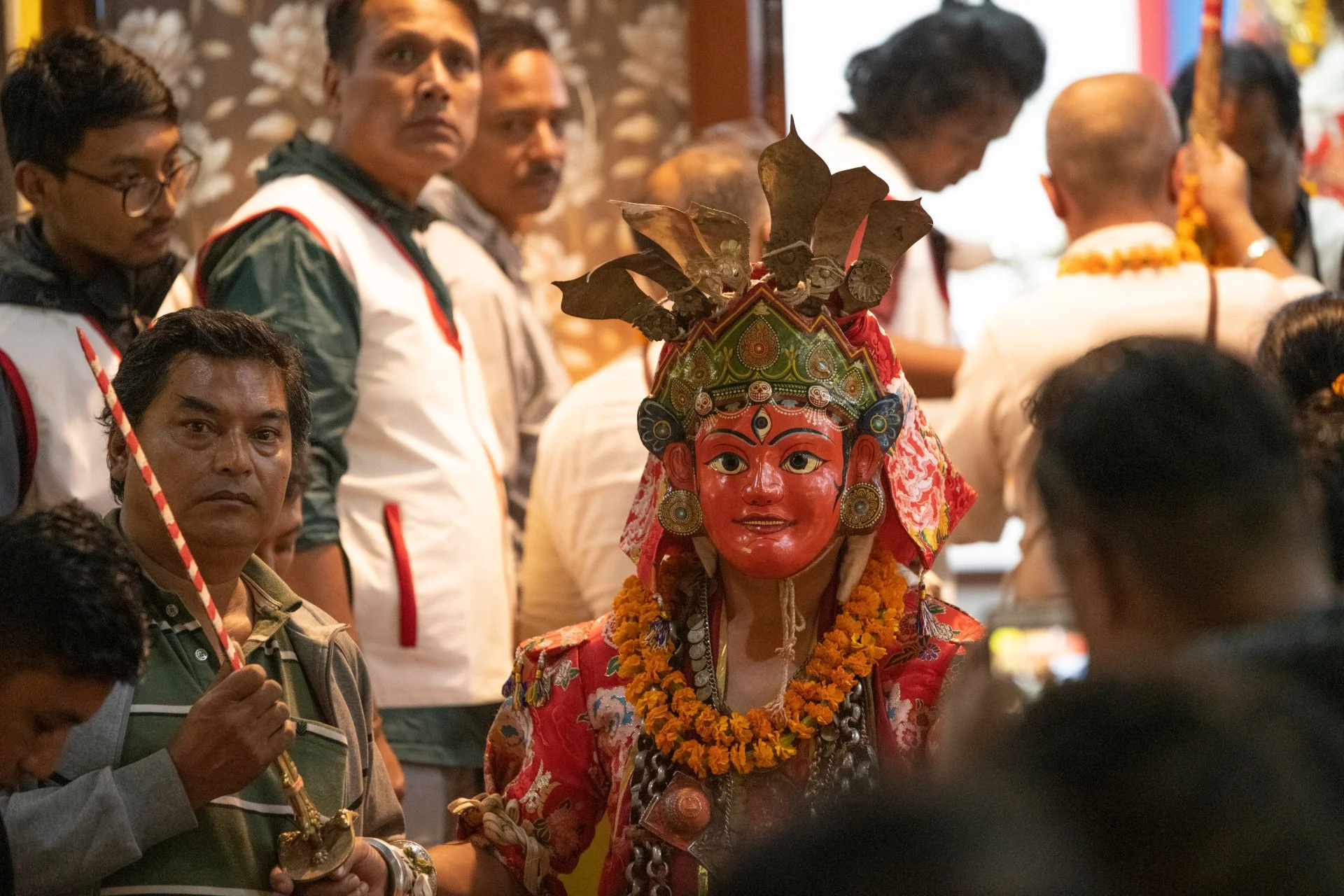
The dance and skit were presented in Trishul Chowk inside the Hanuman Dhoka Palace by the Nardevi Shweta Kali Conservation and Management Committee. Even though the dance is performed annually, the 12-year presentation is unique. It features godly characters who had only passive/dormant roles in the yearly rituals.
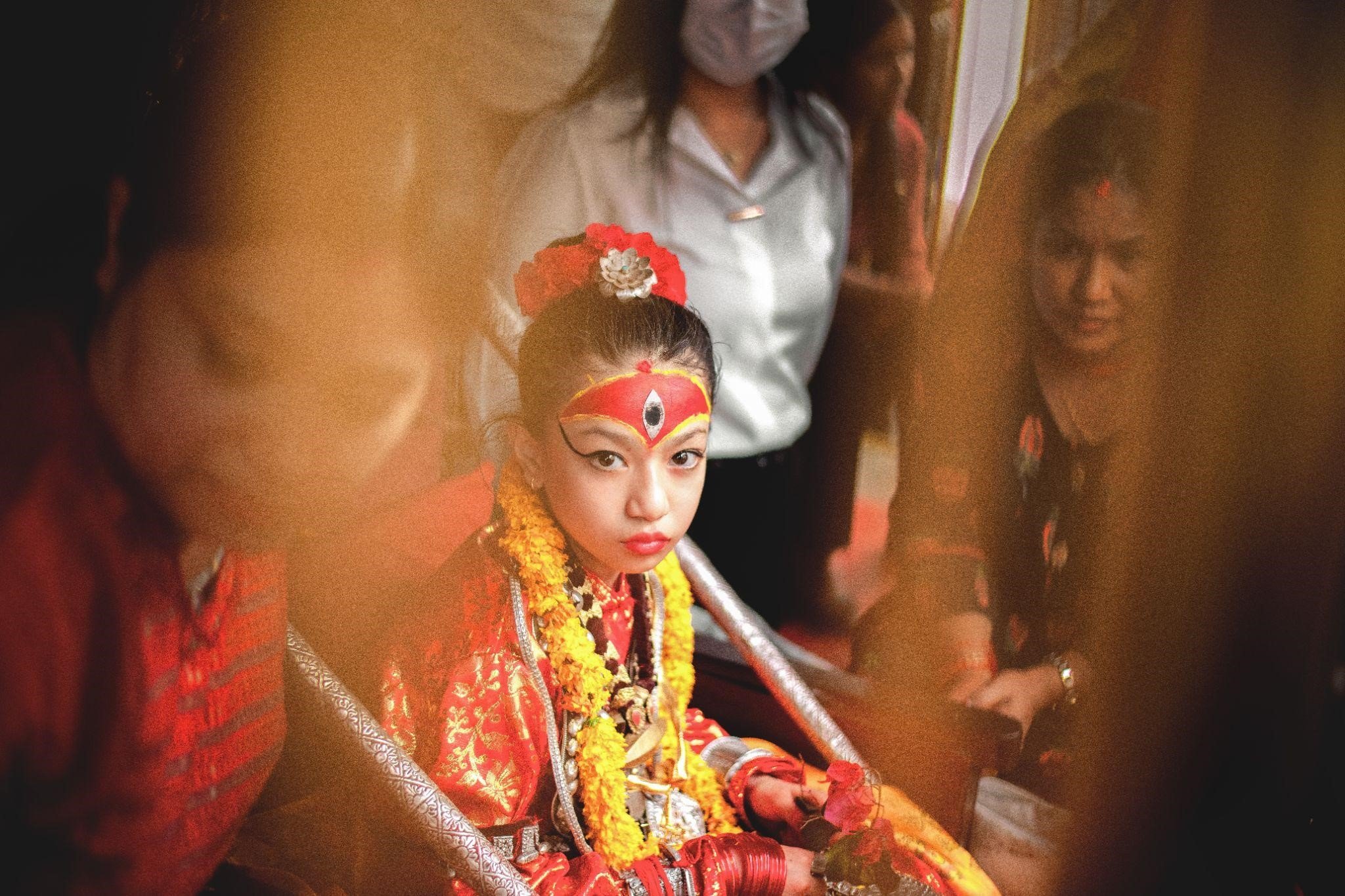
The most iconic of all is Su:tha Maju. Su:tha means morning, and Maju means mother in Nepal Bhasa. As per ritualistic traditions, the performances for the day only begin after she (Su:tha Maju) performs at the break of dawn. Locals state that even though Su:tha Maju, commonly referred to as Lokeshwor, is revered in the Buddhist community, the tradition binds all religions, faith and ideals found in this valley. Elders state how the manifestation of Su:tha Maju is an avatar of Nyata Maru Ajima.
The dance and skit last for four days in total. For two days, the artists perform at Trishul Chowk inside the main palace complex of Hanuman Dhoka. The remaining two days are at the open-air stage (Dabali) adjacent to the Gadhi Baithak, in front of Kumari Chhen (House).
Each character presents their opening, followed by the skit of Chandeshwari. The story summarized is as follows- Chandashur Daitya is a powerful demon. He is strong, mighty and fearless. The daitya (demon) falls in love with Chandi- the daughter of Nyata Bhulu Ajima. Ajima learns of this unholy union and tries their best to persuade her daughter. It seemed like nothing worked, but she created a powerful potion to intoxicate and hypnotize her daughter. In her influenced state, she turns on her lover- the daitya. She trades her sword with her mother and delivers a lethal blow killing the demon. After that day, Chandi was known as Chandeshwari- the slayer of Chandashur.
The 12-year celebration features special pujas at the mother goddess temples of Kathmandu valley. The mother goddesses featured in the dance and skit of Nayata Maru Ajima are found in its sister cities as well. These mother goddesses protect the kingdom from supernatural evil and create a tantric shield around the city. Most were established during the Lichhavi Era, and the custom of establishing an army camp or military facility near these goddesses continued till the Mala Era. An example of this can only be seen at Lumadi Ajima, today known as Bhadrakali.
POPULAR ITINERARIES
SIMILAR POSTS

The Dance of Nayata Bhulu Ajima - A Sacred Dance Part I
Mysticism is the greatest suite of Kathmandu. In the labrynth of allies and temples lie symbolism deeper than seen by the eye. One of such mystical elements of the city of Kathmandu is the celebration of Nyatabhhulu at its centre
Nayata Bhulu, a name that only a few ditizens of this valley know the meaning and location of once held high ranks in the sites of Kathmandu. Today, this area is known as Naradevi- one of many change of addresses that occurred after the occupation of Kathmandu Valley by Prithivi Narayan Shah. Nyata means centre, Bhulu means protector. As per Devmala Chronicles, the goddess of Nyata Bhulu was established by King Gunakamadev.
He is credited by numerous chronicles as the founder of the city of Kantipur. Chronicles states that he shaped the city in the outline of a sword- to be precise, the sword of Boddhisatva Manjushree. Historians have long emphasised the need for good research to better understand and preserve this unique culture of Kathmandu. “ As most meaning and symbolism of various temples and monuments in this valley are passed down orally, it is open to being highly twisted or misinterpreted. In the case of Nyatabhulu Ajima, we do not have any concrete inscription, script or cross-citations to create an authentic narrative. The Devmala Chronicle states that the area of Nayatabhulu is the ‘centre’ of the city. But other chronicles state how the city of Kantipur was founded with Kanteshwor Mahadev, today known as Aakash Bhairav, as its centre.” said Shreyashka Maharjan, a sociologist and cultural archivist.
The dance of Nayata Bhulu Ajima is a unique spectacle to behold. It is performed annually. But, once in 12 years- it is performed on a larger scale. This year was the year of the grand presentation. When performed annually, 12 deities are invoked, whereas in the 12-year show, 19 deities are invoked they are as follows:
1. Su:tha Maju (Lokeshwor/ Karunamaya)
2. Nyata Bhulu
3. Bhairav
4. Chandeshwari
5. Ganesh
6. Brahmayani
7. Rudrayani
8. Narayani
9. Kumari
10. Barahi
11. Indrayani
12. Mahalaxmi
13. Simhini
14. Byangini
15. Kumar
16. Chanashur Daitya (Demon)
17. Mahadev (Lord Shiva)
18. Dhwa (Tiger)
19. Khicha (Dog)
Legends state that the temple and goddess were established during the reign of Gunakamadeva, but the performance/ dance was initiated by King Amar Malla. Local experts mention that King Malla held Nayata Bhulu Ajima in high regard and credited her for his military victories against his neighbouring kingdoms. Thus, to honour her, he facilitated various rituals and sacred dances to be conducted annually to memorialise her for countless generations.
We shall explore various facets of dance in the next blog.
POPULAR ITINERARIES
SIMILAR POSTS
Chhath: A Grand Celebration of the Sun
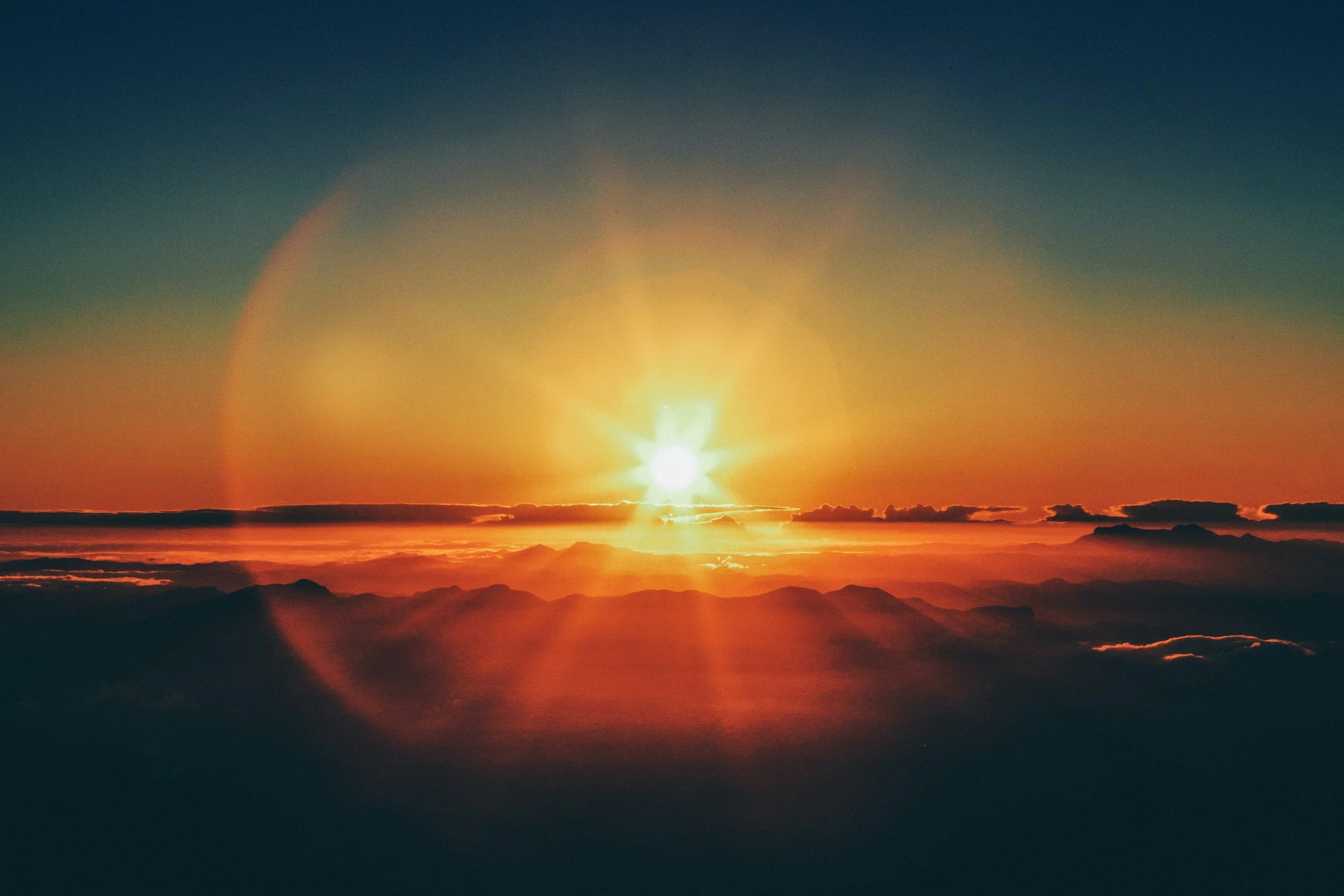
Chhath is a festival committed to worshiping the Sun god and his beloved wife Usha. The sole purpose of this special day is to thank god for supporting life on our planet and seek blessings from the holy Sun god.
Chhath is a festival committed to worshiping the Sun god and his beloved wife Usha. The sole purpose of this special day is to thank god for supporting life on our planet and seek blessings from the holy Sun god.
Sun is significant in healing several health conditions like progress, longevity, prosperity, positivity, and well-being. People follow a meticulous routine that lasts for four days. The ritual focuses on fasting, offering prayers to the rising and setting sun, meditation, and holy bathing all while standing in the water.
This prominent festival of the South has another importance of Chhath Puja. In an agricultural country like ours, we celebrate in the form of a post-harvest festival. People show gratitude for a good harvest in the coming year as the season ends.
A key part of history states that Chhath is one of the oldest rituals as jotted down in mythological scriptures. Even the Rigveda includes hymns with prayers of worship to Lord Surya. Similarly, Chhath has also made a mark on the pages of Mahabharata and Ramayana. Also, in the holy Ramayana, it is believed Lord Rama and Sita exercised this ceremony after their return from 14 years of exile.
Along with that, Chhath has a major scientific implication. For instance, your body gets detoxified as you take dips in the water. While paying homage to Sun, it increases the natural flow of solar bio-electricity resulting in improved functionality of the human body. Not just that, this unique puja also kills harmful bacteria and gives your body a new head start before the coming winter season.
Now, let’s break down the celebratory days of this auspicious festival:
Day 1
Nahay Khay: On the first day, devotees take a dip in the River Ganga, Kosi, and Karnali. They then take holy water home and assemble their offerings to the Sun god. It is considered the most important part of the four-day-long festivities.
Day 2
Lohanda or Kharna: The second day of the Sun festival means fasting for the whole day and ending the fast sometime after sunset. Devotees arrange offerings like bananas, rice, and kheer for the family after wholeheartedly praying to the Sun and the Moon. After taking the prasad, you have to start another fast for 36 hours, and that too without water.
Day 3
Sandhya Arghya (evening offerings): The third day of Chhath means to observe fast without consuming water for the entire day. People dedicate their time to preparing the needful offerings which are then kept in a bamboo tray. The prasad includes coconut, thekua, banana, and many other seasonal fruits. To cleanse their body, devotees flock around the banks of rivers or ponds. As part of the final rite, they offer araghya to the setting sun.
Day 4
Bihaniya Arghya: Honoring the last day of this grand occasion, devotees gather around the bank of the River or any water body to extend their prayers and prasad to the rising Sun. Finally, the devotees are at liberty to break their fast. However, they are only allowed to eat ginger and sugar or other local products. That brings the end of this highly cultural festival rejoiced by the Madesh community.
Overall, Chhath puja is considered to be an environment-friendly Hindu festival requiring no form of idol worshiping. Throughout history, Surya (Solar Deity) is regarded as a prominent natural force worshipped by humans. As it has its relationship with harvest, humans also acknowledge their connection and identity with nature.
This gender-neutral festival where both men and women can perform the function has the utmost spiritual, cultural, and social association.
POPULAR ITINERARIES
SIMILAR POSTS
Tihar: Victory of Light
Tihar is the second largest national festival of Nepal. It bares similarities to Dipwawali celebrated in our neighboring nation. The festival is celebrated for a total of 5-days. During which various animals, birds and gods are worshipped. Each day has its own symbolism and each community has its own tradition and ritual process of observing the festival.
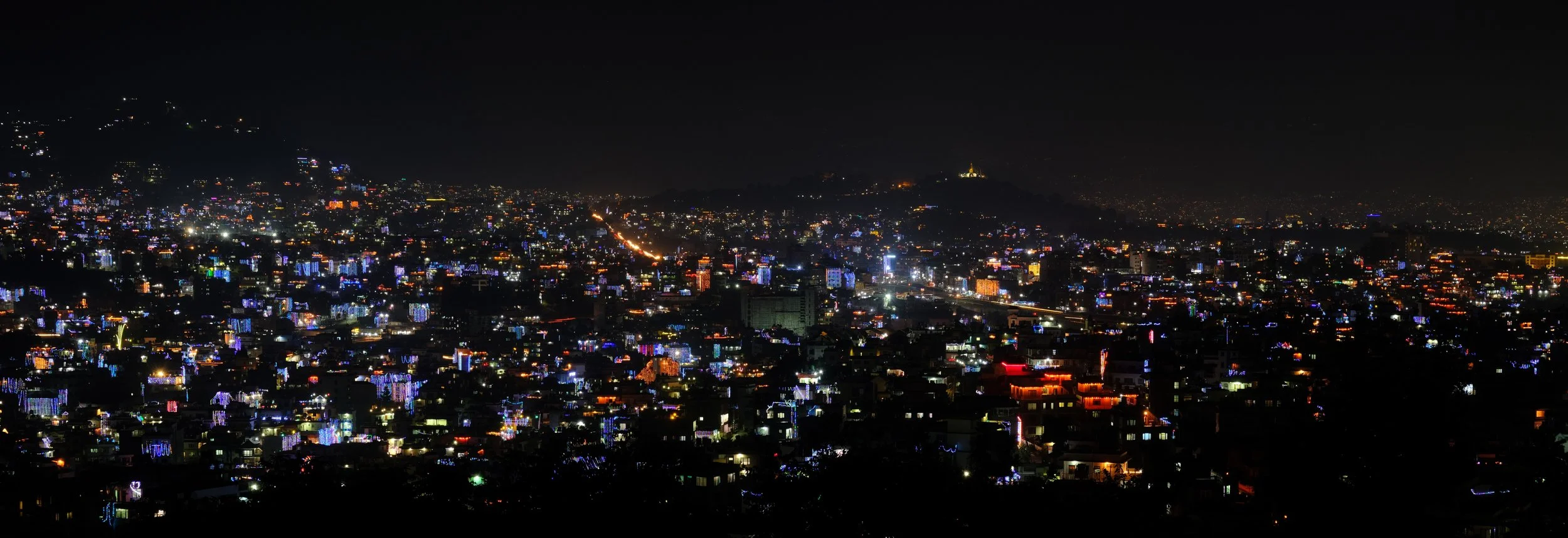
Tihar or ‘The Festival of Lights,’ is the second biggest festival after Dashain. It is a five-day-long celebration with houses emitting iridescent lights, artistic rangolis, and flowery decorations.
We also call these five days Yama Panchak where we do everything we can to keep Yama Raj happy. Keeping our good deeds in mind, he will judge our character after death and decide our path to heaven or hell accordingly.
In this remarkable observation, we honor animals to commemorate their unique bond with humans. Tihar means victory of good over evil and in that context people consider different creatures as divine gifts from Mother Nature who help stir our everyday community life.
Talking about various ways of celebration, on the first day of Tihar, people offer rice to crows aka the messenger of death. As crows are busy delivering important information to Yama Raj all year round, they rest on this auspicious day. We should strive to keep the crows satisfied in the hopes of avoiding bad news in the forthcoming year.
Likewise, the second day is dedicated to Kukur Puja honoring dogs for their loyalty to human beings. They are known to be our protectors and play a significant role in safeguarding our community. If you take a stroll around your area, you can see dogs beautified with flower garlands and a huge tika applied to their forehead. Also, after the ceremony is over, they get to feast on a scrumptious meal and they are left with a happy tummy.
Then on the third day comes Gai Tihar where we worship cows and Laxmi (the goddess of wealth). Being the most important holiday of Tihar, people get up early in the morning to clean the room thoroughly in order to appease the divine Goddess. Traditionally, she is known to visit every household to shower her blessing. After that, the cows get a cozy bath and we accessorize them with intricately designed garland. The priest even ties holy strings to their tails as part of the custom.
Goru Tihar, Govardhan Puja, and Mah puja are celebrated on the fourth day and three separate pujas are performed to celebrate this momentous day. As part of Goru Puja, we worship the Oxen. Followed by Govardhan Puja where we make a hill of Govardhan Parbat using the holy cow dung which is known to purify the surroundings. Having major importance in Hindu culture, it was used to polish mud floors of traditional houses.
A ceremony big in the Newar community, Mha Puja is also called self-puja where we intend to cleanse our body and soul. Each member of the family has a distinct mandap and a female member of the family offers shagun with her hands crossed. The shagun can be anything from fruits, eggs, fish, meat, pastries, and lentil. This also marks the starting of Newari New Year.
The fifth day or Bhai Tika celebration is best explained through a popular story about Yama the god of death, and his sister Yamuna. The two of them had been apart for a long time so the sister makes a request to her brother to pay a visit. She sent a message through a crow, dog, and cow until finally, she decided to meet her brother. Following a special ritual, she worships him with tika and flowers and puts five colored tika. Along with that, Yamuna made a circle with mustard oil, Dubo Grass (Cynodon Cactylon), and ended the ceremony with Makhmaali Mala (Globe Amaranth).
For five days, she kept her brother happy and on the last day in form of gratitude, Yama gives her presents thus marking the celebration of Bhai Tika. This is how we celebrate the festival of Light over Darkness.