
A Captivating Adventure through Nepali Lakes
Nepal, although being a small country, holds a surprising number of natural wonders all over in it. Nepal is not only the home for most of the highest peaks but also a sanctuary of lakes that give you heavenly experience through their beauty. Some of the most beautiful lakes to add in adventure bucket list to keep wander list spirit moving.
· Gokyo Lakes
· Gosaikunda Lake
· Tilicho Lake
· Rara Lake
· Phewa Tal
· Paanch Pokhari
In the world entirely built by the impeccable mother nature, Nepal, although being a small country, holds a surprising number of natural wonders all over it. There are astonishing places to see in every corner of it, with nature in its purest form holding wildly diverse geographical features. Nepal is not only the home for most of the highest peaks of the world but also a sanctuary of stunning lakes that are sure to give you a heavenly experience through their beauty. From the most elegant lakes hidden behind the tall mountains to the quite subtle ones lost somewhere along the road less travelled, Nepal has a total of more than five thousand lakes, among which almost two thousand are glacial lakes. Due to these gifted features of the country and the wide-ranged possibility of tourism development, the government of Nepal has authorized this year with “Visit Nepal 2020” to make it a year committed to the development of tourism industry and making it one of the ideal travel destinations.
Below are some of the most beautiful lakes for you to add to your adventure bucket list this year to keep that wanderlust spirit moving!
Gokyo Lakes
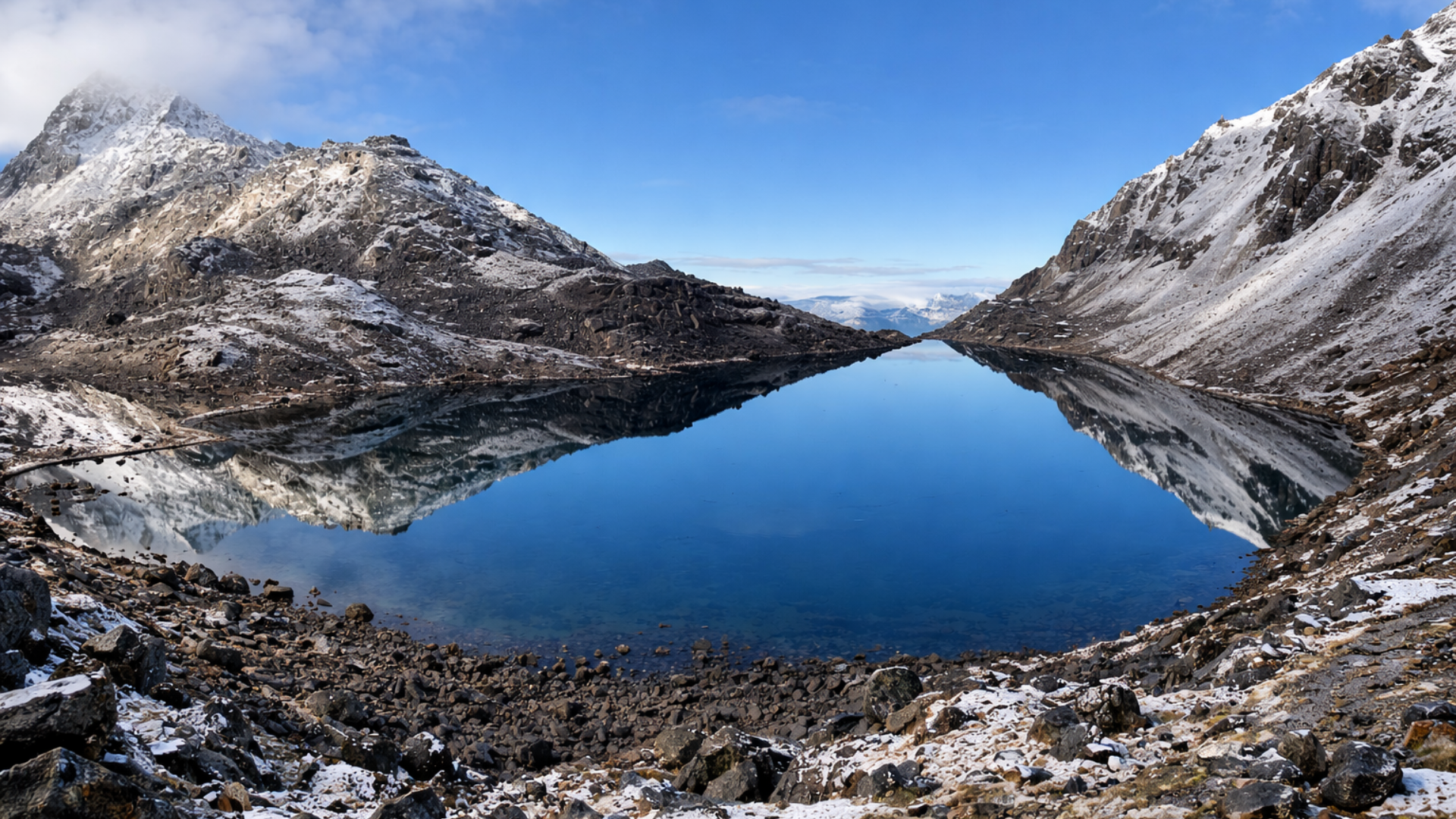
Situated in the altitude of 4,700 to 5000 meters above sea level in Sagarmatha National Park, Gokyo lakes consist of a total of 19 lakes, carrying the world’s purest freshwater in such high altitude. Lying somewhere between the range of the one and only mount Cho Oyu; Gokyo Cho, Thonak Cho , Gyazumpa Cho, Tanjung Cho, Ngozumpa Cho, and Longbanga Cho are the six main lakes of Gokyo lake system where Thonak Cho is the largest one and Gokyo Cho is also called Dudh Pokhari. It takes a two-day long hike from Namche Bazar to reach the Gokyo lakes through the Gokyo lakes trek. Since the place is one of the main pilgrimage sites for Hindus and Buddhists, and it comes with a breath-taking view of the huge mountains and their reflection on the clear blue water of the lakes, it is a famous site for tourism and has won the admiration of thousands of visitors.
Gosaikunda Lake
Another one of the biggest freshwater lakes, Gosaikunda lake is situated at an altitude of 4,380 meters above sea level in Langtang National parks. It is one of the most famous lakes of the country that is surrounded by the captivating breath of the magnificent mountains of Rasuwa district. It also holds a whole lot of religious values where people from Nepal and India come here to take a holy bath, especially during the occasion of Janai Purnima. Alongside, it is one of the major tourist sites, as well, that needs a hardcore four-day trek on Dhunche-Helamby trekking route and Langtang valley trek route to be reached.
Tilicho Lake
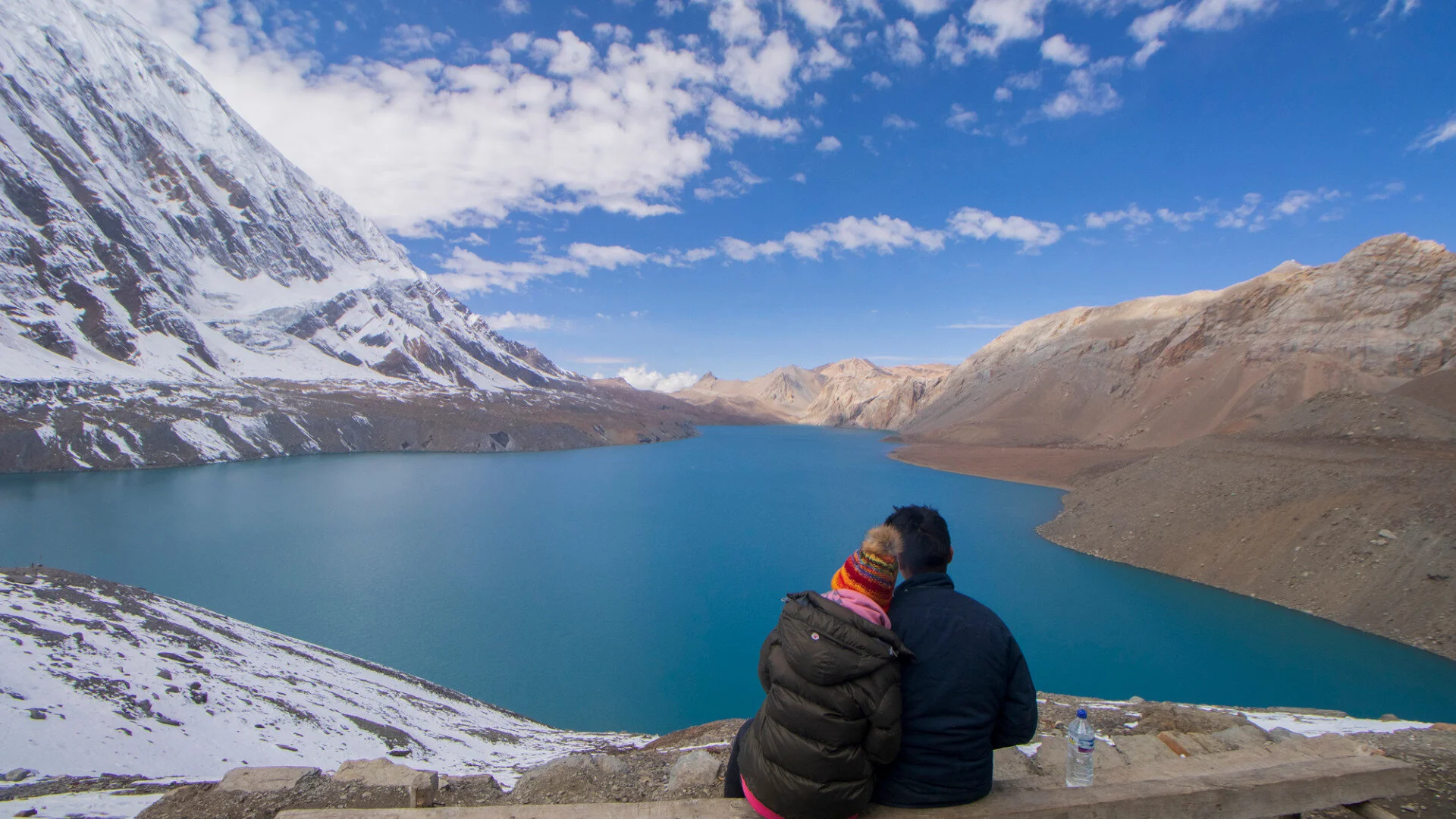
When talking of magical places to visit, Tilicho Lake definitely comes at the top of the list. Situated at an altitude of 4919 meters beside the famous Annapurna range of Himalaya, Tilicho lake is one of the most beautiful lakes of Nepal as it is heavily surrounded by some of the thick snowy mountains like Khangsar, Nilgiri, Tilicho and Muktinath peak. which takes almost three to four days of hiking through the Annapurna Circuit trek to reach. The hiking route goes through the watershed between Manang and Kali Gandaki Valleys, because of which it is the most preferred route for common visitors. However, there is another alternative route from the north for the risk-takers to reach the lake. So if you’re an adventure seeker, looking for a new spontaneous experience in your life, Tilicho lake is the place for you!
Rara Lake
The largest and deepest lake of Nepal at an altitude of 2990 meters above sea level, Rara lake perfectly fits in between the dense green hills of Mugu and Jumla districts. Despite the difficult and complicated path that leads to this lake, it is still immensely admired by the visitors because of its miraculous natural beauty through its strange ability to change into seven different colours in the light of the day. The journey has to start with a flight from Nepalgunj to Mugu, from where you can either go on a long adventurous trek of nineteen days or choose to fly on a helicopter for a couple of hours. Either way, the breathtaking view of the Rara is worth the while.
Phewa Tal
As cliche as it may have become, Phewa Lake still remains, hands-down, the most favoured lake in almost every traveller’s itinerary and in every Nepali’s to-visit bucket list. Situated at the south of Pokhara city, Phewa lake finds its immense life-like beauty with the clear reflection of Mount Annapurna, Machhapuchhre and Dhaulagiri over the forests during the day time and the reflection of a thousand different golden lights of the most beautiful city of the country during the night. Also, In the heart of the Lake, Tal Barahi temple is situated. If you’re a non-trek kind of person and prefer an effortless vacation, Phewa Tal is the lake for you.
Paanch Pokhari
The most underrated yet absolutely beautiful lakes have to be Paanch Pokhari, situated at an altitude of 4100 meters in Langtang National park. As the name suggests, five different sized lakes are situated together between the midst rocky Himalayas a couple of kilometres above Sindhupalchowk. Either during the monsoon weather, when the lakes are surrounded with wet green grasses and smokey mists or during the winter when the edgy features of the rocky mountains are reflected, this place serves one of the wildest and exquisite beauties that definitely deserves more recognition. With rich religious importance and tourists preferences, now the trek to Paanch Pokhari is newly opened, starting from a bus ride from the capital to Chautara, from where an eight days long trek is needed to reach the beautiful destination.
POPULAR ITINERARIES
SIMILAR POSTS

Unravelling Nepali History
When Nepal was opened in 1950s for the world to experience, arrival of historians and academics helped document the history and unravel treasures of a forgotten past. Among the many books that have helped conserve Nepali history, here we made list of a few books to get one started.
When travelling to a country such as Nepal, with layers of history and significance. One can get lost in the beauty of this tranquil escape but never know the true reason for its creation. The diversity in Nepal is so rich that in a small square such as of Patan, Kathmandu and Bhaktapur lie countless bricks of the bygone era layered one atop the other. Temples of the then forgotten world, stand tall with the new architecture and even among the temples, lie countless tiers of history.
The external beauty is enriched and uplifted with knowledge of their creation, are significance and its value. One can feel as if they have been transported to a bygone era, as his/her imagination contemplates the creation of these sites as they flip through pages of history carefully protected and transcribed into the pages of a book.
History is complicated, especially when it comes to Nepalese history which features so many diversities, micro kingdom, a lack of documentation and dark eras during when neither history was documented but was rather lost.
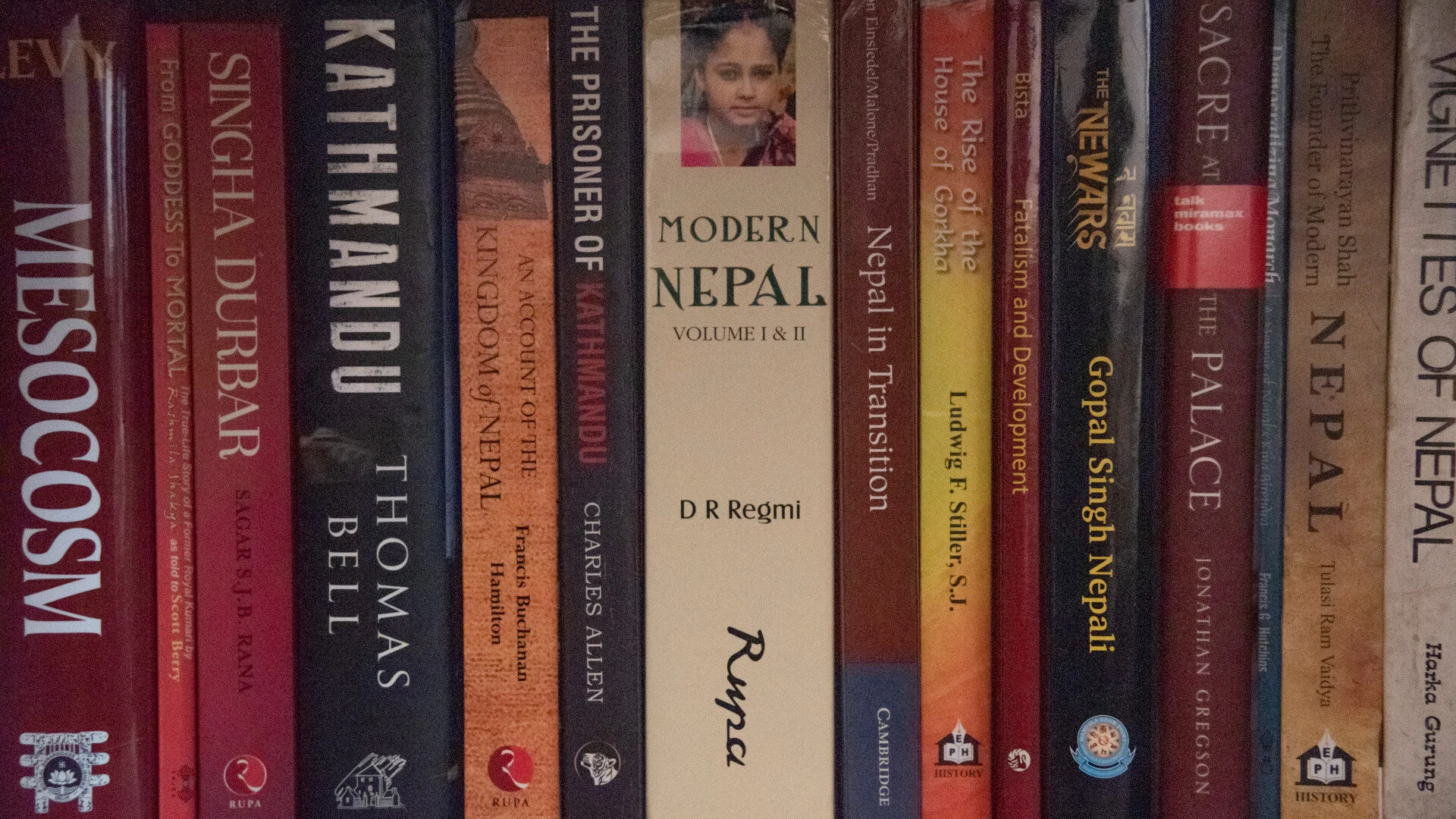
When Nepal was opened in the 1950s for the world to experience, it didn’t just boost the tourism industry but also the arrival of historians and academics helped document the history and unravel treasures of a forgotten past. Among the many books that have helped conserve Nepali history, listed below are a few books to get one started.
A History of Nepal by John Whelpton
While John Whelpton's history of Nepal focuses on the period since the overthrow of the Rana family autocracy in 1950-51, the early chapters are devoted to the origins of the kingdom and the evolving relations of its diverse peoples. Whelpton portrays a country of extraordinary contrasts, whose history has been buffeted constantly by its neighbours, China and India. Economic and political turmoil over the last fifty years came to a climax with the massacre of the royal family in 2001 when the country erupted into civil war. This book is the most comprehensive and accessible English-language one-volume history of Nepal. John Whelpton, who works as a teacher in Hong Kong, is a historian and linguist. He has worked and travelled extensively in Nepal, and has written numerous articles and books on the subject. These include Nationalism & Ethnicity in the Hindu Kingdom: The Politics and Culture of Contemporary Nepal (Routledge, 1997), and Kings, Soldiers and Priests: Nepalese Politics and the Rise of Jang Bahadur Rana, 1830-1857 (South Asia Books, 1992).
Kathmandu by Thomas Bell
One of the greatest cities of the Himalaya, Kathmandu, Nepal, is a unique blend of thousand-year-old cultural practices and accelerated urban development. In this book, Thomas Bell recounts his experiences from his many years in the city—exploring in the process the rich history of Kathmandu and its many instances of self-reinvention.
Closed to the outside world until 1951 and trapped in a medieval time warp, Kathmandu is, as Bell argues, a jewel of the art world, a carnival of sexual license, a hotbed of communist revolution, a paradigm of failed democracy, a case study in bungled western intervention, and an environmental catastrophe. The layered development of the city can be seen in the successive generations of its gods and goddesses; its comfort in the caste system and ethos of aristocracy and kingship; and the recent destabilizing effects of consumerist approaches and the push for egalitarianism and democracy. In important ways, Kathmandu’s rapid modernization can be seen as an extreme version of what is happening in other traditional societies. Bell also discusses the ramifications of the recent Nepal earthquake.
A comprehensive look at a top global destination, Kathmandu is an entertaining and accessible chronicle for anyone eager to learn more about this fascinating city.
History of The Kingdom of Nepal by Daniel Wright
History of Nepal by Daniel Wright and translated from the Parbatiya by Munshi Shew Shunker Singh and Pandit Shri Gunanand forms part of the indispensable canon of works about the Himalayan Kingdom of Nepal. Daniel Wright has his own distinctive style of wright about the people, culture, customs and history of Nepal. In his book, he talks about not only the history and geography of Nepal but also gives us an insight into the traditional instruments, songs and original manuscripts of this Picturesque country. It is an excellent book to gain the perspective of a foreign national regarding Nepalese culture and history. The book contains an interesting history of Nepal including that of Newaris and Kathmandu. It is also termed as the myth of Kathmandu.
Battles of the New Republic: A Contemporary History of Nepal by Prashant Jha
Battles of the New Republic: A Contemporary History of Nepal is a story of Nepal's transformation from war to peace, monarchy to a republic, a Hindu kingdom to a secular state, and a unitary to a potential federal state.
Part-reportage, part-history, part-analysis, part-memoir, and part-biography of the key characters, the book breaks new ground in political writing from the region. With access to the most powerful leaders in the country as well as diplomats, it gives an unprecedented glimpse into Kathmandu's high politics. But this is coupled with ground-level reportage on the lives of ordinary citizens of the hills and the plains, striving for a democratic, just and equitable society.
It tracks the hard grind of political negotiations at the heart of the instability in Nepal. It traces the rise of a popular rebellion, its integration into the mainstream, and its steady decline. It investigates Nepal's status as a partly-sovereign country and reveals India's overwhelming role. It examines the angst of having to prove one's loyalties to one's own country and exposes the Hindu hill upper-caste dominated power structures.
Battles of the New Republic is a story of the deepening of democracy, of the death of a dream, and of that fundamental political dilemma - who exercises power, to what end, and for whose benefit.
SIMILAR POSTS

An Experience of a Lifetime
Welcome to the land dubbed the abode of the Gods, where once in mystic lures the Gods once roamed with the people. Welcome to the land of cultural diversity, majestic Himalayas, where the magic of the ancient world still resonates in every corner. And, welcome to the homes of a kind and warm people who are always keen to share their world.
If you are a wanderer who has stumbled upon this small but majestic nation that I call home, I write this to you. I have a smile on my face and my hands are put together as I greet you “Namaste”. I thank you for choosing to travel to this very glorious nation, which has much to offer.
With Visit Nepal Year around the corner, this initiative is a momentous campaign to draw you travelers to this beautiful nation. Being born and having lived in Nepal for most of my life, exploring, encountering and experiencing the culture, cuisine, tradition and thrills of this nation, I can say this, “ Your hunger for something new shall be fulfilled, your search for adrenaline shall be quenched with a side of great hospitality, diverse cuisine, majestic landscape, and beautiful people.” The campaign of Visit Nepal Year has been anxiously awaited by the people of Nepal. As we await, to share with you all our love, culture, tradition and festivals. We await to welcome you to our homes, share our delightful cuisine, and make merry with you in our festivities.
Being a student of sociology, a fanatic of history, photography and having travelled to various parts of Nepal for my studies. I feel as if I can’t sum up the beauty of this nation in one article, as our diversity and ethnicity is home to treasures that one can explore for their entire life. During my studies, I have stumbled upon may great writers and artists, who choose to do their study in Nepal and the magic of the Himalayas, the love of the people make them choose Nepal as their new abode. It always bewildered me, meeting such individuals and I always asked, “Why?”
To which I was once told, “Nepal is a heaven, not just because of the lush landscape but because of the people. In the greatest of adversities, the people of Nepal choose to smile. They share with you their home, their food and all, and before you know it you are a part of the family.”
There is so much to explore in Nepal, some things that aren’t listed in that travel book you are holding. Everyone sees the temples, the monuments, the lakes but true intangible experiences are going to be an amalgam of sharing moments with the people. Thus, I strongly suggest learning a few words and phrases, as you are going to be replied with a beautiful smile.
To you my dear wanderers I welcome you to the land dubbed the abode of the Gods, where once in mystic lures the Gods once roamed with the people. I welcome you to the land of great cultural diversity, majestic Himalayas, where the magic of the ancient world still resonates in every corner.
I welcome you to Nepal. May your travelers be blessed, your search full filled, your diary and mind filled with memories of great adventures and experiences and your camera’s filled with moments that you shall fathom for the rest of your lives.
An op-ed of living in Nepal by Shreyashka Vikram Raj Maharjan
Popular Itineraries
Similar Posts
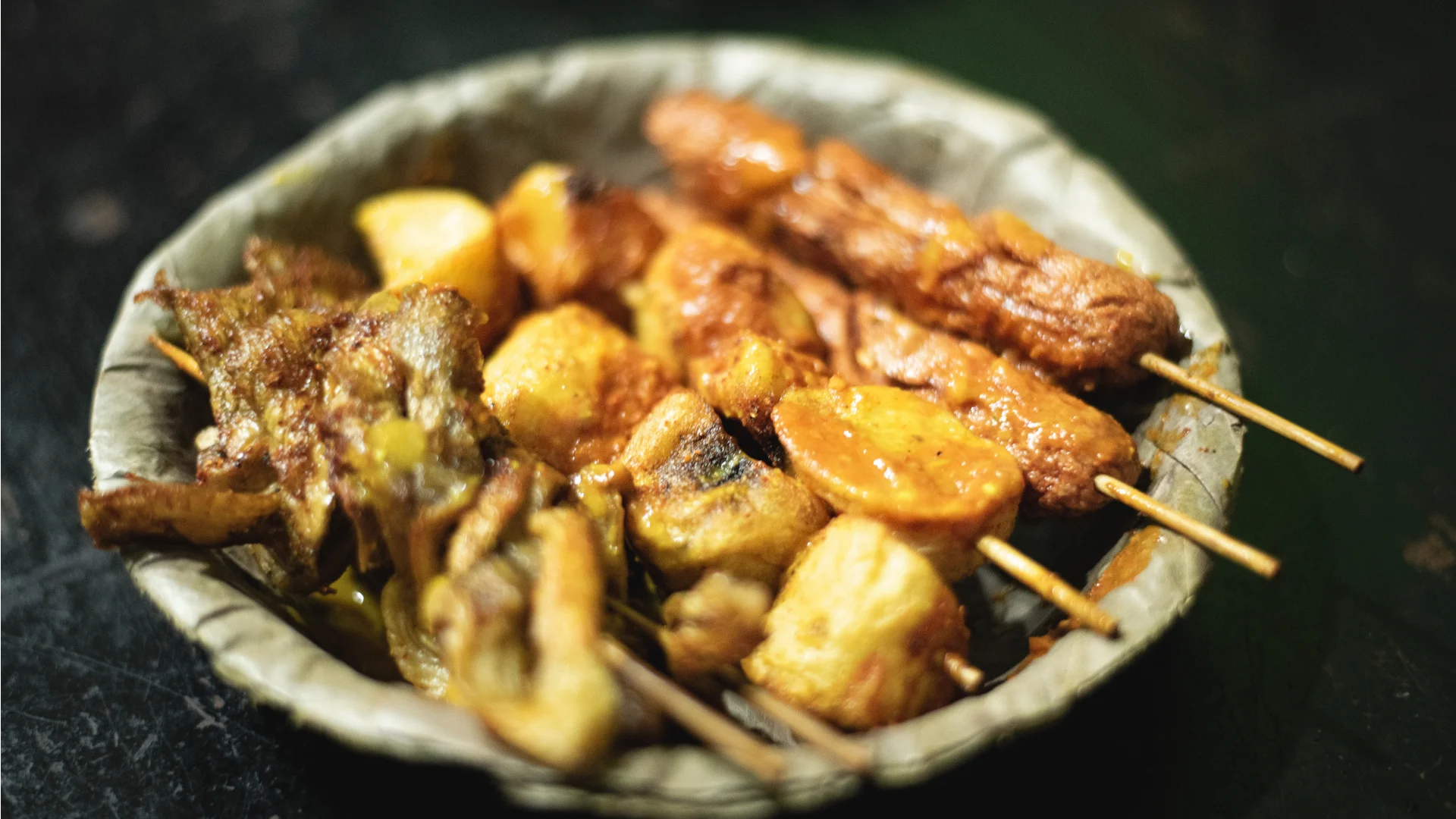
Must have stick foods in Kathmandu
Local food stalls popularity at the corners of almost every street in Kathmandu with mouthwatering dishes are growing among the people of all ages. We can see carts and moving stalls surrounded by people, especially during the evenings. Groups gathering surrounding stalls in joy while eating stick foods served in a traditional taste is an evening scene seen these days in the streets of Kathmandu.
Spicy Moist Aloo (Potatoes)
Masala Mushroom
Spicy Tofu
Sausage Stick
As college students living in the city area with limited amount pocket money, we usually look around for booming 'stick food house' enterprises for our foodie adventures. Our country is culturally rich in local cuisines and while walking across the streets of Baneshwor, Nakhipot, Jhamsikhel and Mangal bazar the culture is reflected on the spicy and delicious stick foods delicacies served with a traditional touch.
However, we aren't the only ones who enjoy these mouthwatering dishes. People of all ages, with family and friends come to enjoy the delicacies. Along with the dish, the blend of spicy Achaar motivates people to come regularly for stick foods like we do!
As college students, we are famished with hunger after long and dire lectures. The best option for us is to visit a stick food restaurant for the easy, convenient and fast food service. Also, sipping cold drinks makes the food even more appetizing!
We can see the popularity of stick foods in recent years and many carts and moving stalls are surrounded by people especially during the evenings. We don't even have to look far as the local stick food stalls are found at the corner of almost every street. It's always a joy when you stumble upon the flavorful and exciting food choices.
Similarly, in our hunger hunt adventures, we usually end up going to the N.P.P food service located near Damkal road between Pulchowk and Jawalakhel. My friend who is a fellow N.P.P enthusiast says, 'They serve great food at reasonable prices. The food is mouthwatering and very quick service. Another best thing about the place is the sauce. When the spicy and non-spicy Achaar (Sauce) are mixed with the food, it is absolutely yummy.'
Another acquaintance of mine however has a contradicting opinion, 'Though there is a downside to consuming stick foods as a little stomach ache is a possibility as it's a 'gastronomical delicacies'. But I don't mind the price I pay as long as I can eat tempting and delightful dishes.'
Other famous stick food houses of the valley are:
1. Little Kathmandu Stick Food, Mid Baneshwor
2. Bajra Chinese Stick Food & Burger House, New Road
3. Chinese Stick Food & Cafe, Naxal
And if you want to spice up your taste buds while truly embracing the local life of the valley, here are some of the must have stick foods:
Aloo
Spicy and moist Aloo (Potatoes) is one of the most enjoyed delicacies of our country. Aloo is loved by both the vegetarians and non-vegetarians. This stick food is found mainly in the streets of Kathmandu and Lalitpur. The most common and popular vegetable is an absolute favorite of both children and adults. Aloo never fails to be in the diet of any Nepali.
Mushroom
The blend of crispy and soft mushroom with flavorful masala is the best experience of having this dish at a stick food house.
Tofu
Tofu can be the most enjoyed delicacy for the vegetarians. This savory and crunchy dish with spices is loved and is a favorite of stick food lovers.
Sausages
Meat items like sausages on a stick have always been the preferable dish amongst the Nepalese crowd. It is the go-to snack for any occasion. The thought of fried and spicy sausages with 'masala' in itself is a mouth- watering experience.
Text By: Aasma Aryal & Photographed by Suraj Patrabansha
SIMILAR POSTS
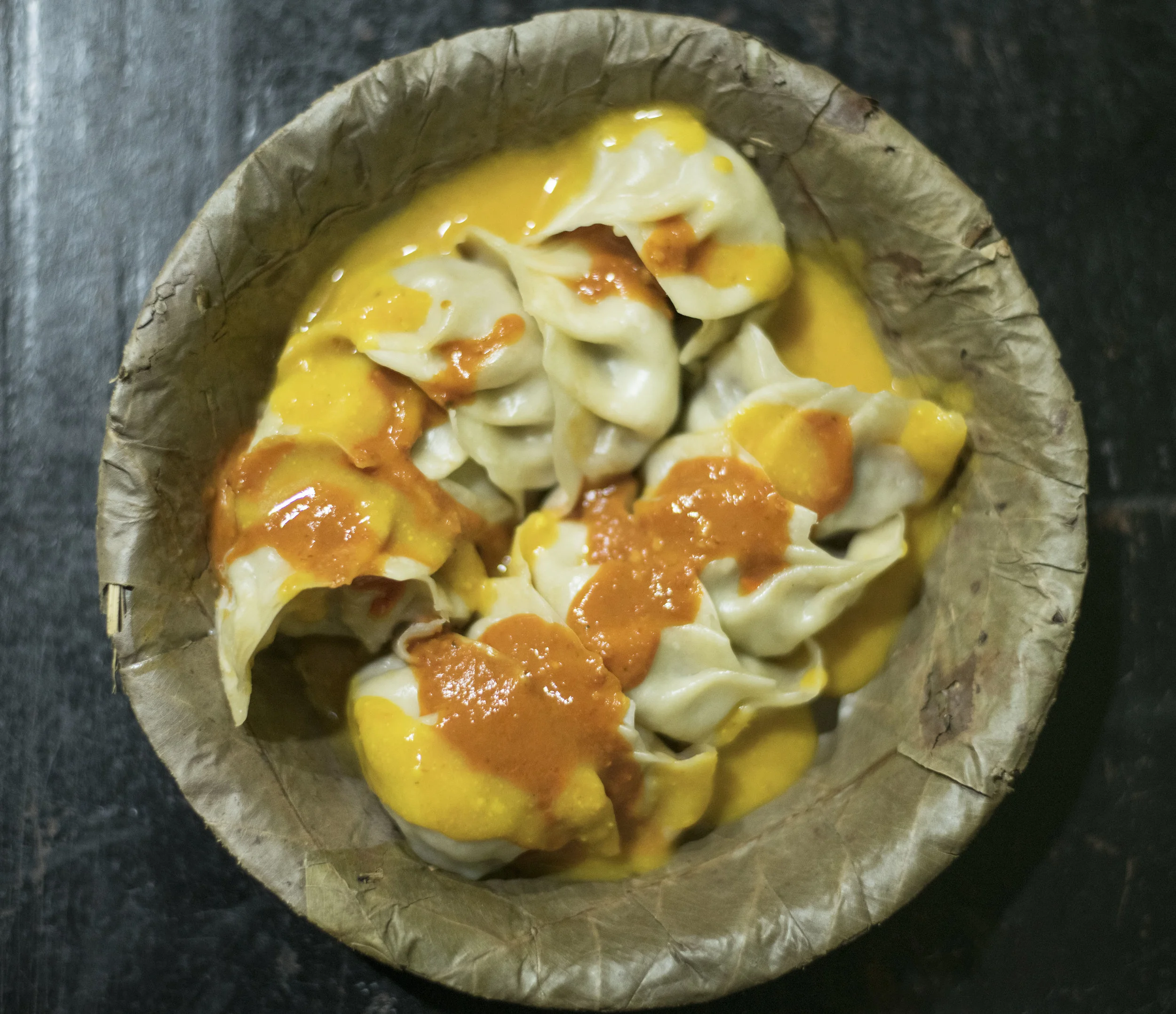
5 Must-Have Street Foods in Nepal
Apart from all the different eateries, the street-food scene in Nepal is equally exciting and astounding. The delicacies of the street food in Nepal is already a common delight for the people of the country. Mouthwatering food stalls in every corner of the street have been famous among the tourist and people of the country.
Mo:Mo
Pani Puri & Chatpate
Bara, Malpuwa & Aloo Chop
Samosa
Lassi
Trying new food at places and stations you hadn’t previously tried is an adventure in itself. It is exciting, interesting, satisfying and well its food! Nepal has a lot of eateries (khaja ghar, bhatti, restaurants) around every corner of almost every city. Each with their own style and taste even in ridiculously same dishes and that in itself is the charm that is held.
Apart from all the different eateries, the street-food scene in Nepal is equally exciting and astounding. If you’re ever traveling around the valley and away, make sure to try as many different stalls as you can. The delicacies of the street food in Nepal is already a common delight for the people of the country, but let’s see what street foods never fail to catch the eye.
Precious Mo:Mo
This isn’t a surprise, is it? Mo;mos are hands down the most popular eats in the country. You can find them anywhere and I mean ANYWHERE! This fast food can be found in many stalls set up around different locations and if you’re ever on a food hunt, I doubt you would miss this. The charm is in the achaar that compliments the mo:mos and adds a whole new dimension to the taste. Put simply, you couldn’t possibly pass on an opportunity to try this dish.
Pani Puri and Chatpate
Pani puris are already famous. Like the beloved mo:mo this treat needs no introduction. Maybe the most popular street food, pani puri and chatpate can be found in all the major places that you can think of and the best part is that the guys that sell them tend to move from one place to the next, almost like ice cream trucks in the Western world. The spice brings everyone towards it and it doesn’t really fail to bring fun moments.
Bara, Malpuwa and Aloo Chops
If you are moving around Patan or through any Newar community, bara and malpuwas are very popular. While bara is a savoury treat which is majorly eaten during festivals and celebrations, it has since become flexible as a street treat as well. Malpuwas go the sweet-savoury way and are wonderful treats to satisfy your sweet tooth. Aloo Chops are impressively popular fast food, amusingly as early morning treats to some. The thin potato patties rolled around in batter and deep-fried is a much-loved treat indeed.
Samosa
Samosas are already a popular treat in India and in Nepal. This popular treat can be found even in the most aloof courtyards you can think of. Like all the dishes in this list, samosas can taste different depending on the place that you have it in, so its a mystery what kind of new taste you might get to indulge in.
Lassi
The Narayan Chowk lassi grows in popularity every single day. If you are making your way through the capital on a humid day, chances are you are going to stop for a sweet, cold glass of lassi. A nice glass of lassi can be the perfect end to your food tour if you have been trying out new tastes in the valley.
SIMILAR POSTS
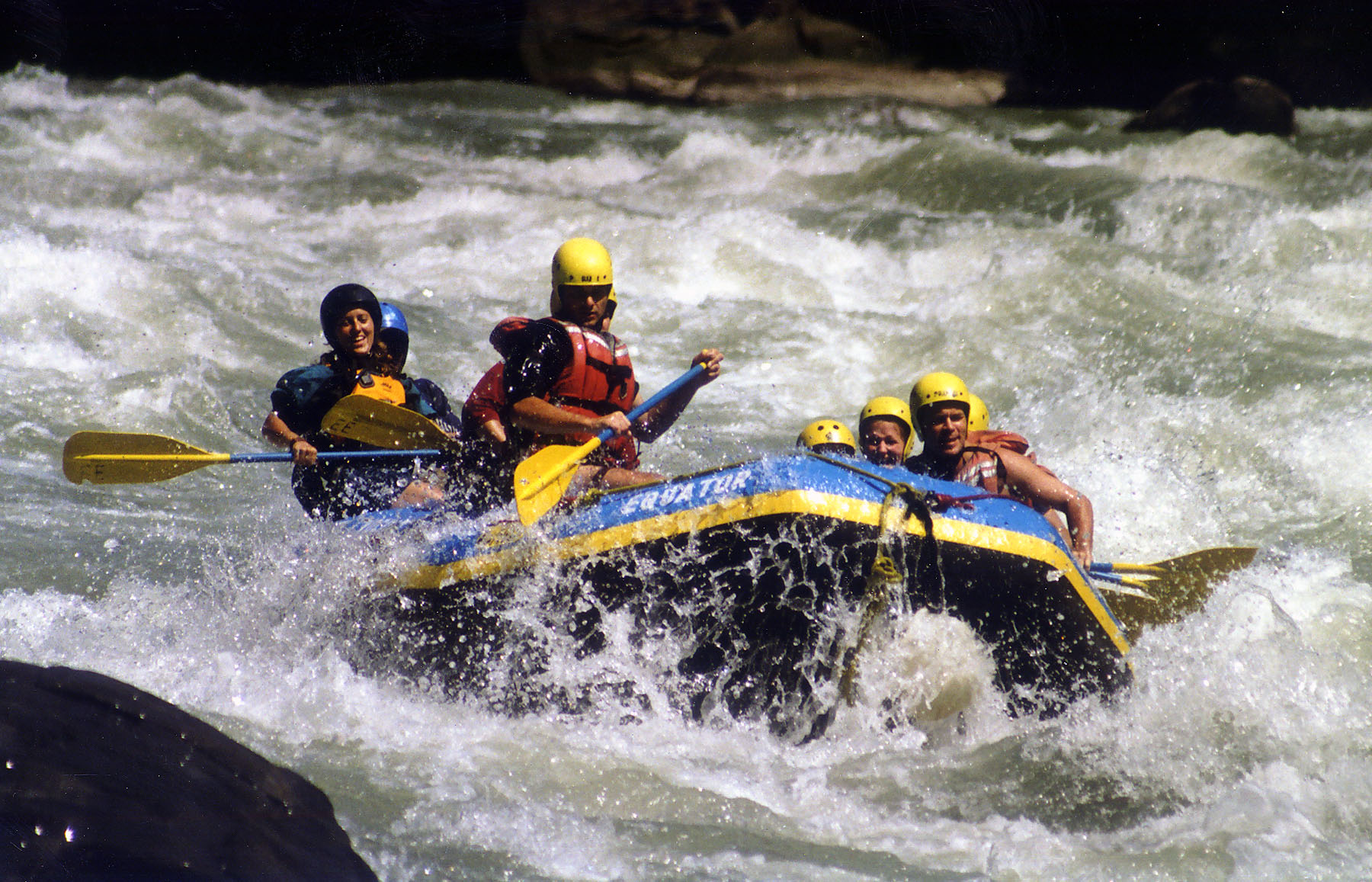
Seeking adrenaline in Nepal. Part 2
Nepal is a country where there are adventurous destinations and most beautiful cultural heritage full of temples, rivers, and magnificent mountains. Whether you want to see the beauty or you want to make an unforgettable moment by experiencing the breathtaking adventure activities of Nepal.
If you are looking for ways to conquer your fear or just want to do something crazy for your adrenaline kicks in, the high lands of our country can help you achieve this goal. It is an adventure playground for thrill seekers and adrenaline junkies. For all you risk takers and brave hearts, our country excels in adventure tourism and here's some of the adrenaline arousing activities in our country:
Crossing a suspension bridge
- For people who are scared of heights, walking in a suspension bridge can be a nightmare. The longest suspension bridge can be found in Kusma, which is a small town only a couple of hours outside of Pokhara. The walk through the bridge is scary and it becomes a never-ending journey as the bridge is 344 meters long and 135 meters high. The view of Kali Gandaki below can make your head spin and your heart can race uncontrollably.
- However, you can experience different kind of thrill on a suspension in the Himalayas. The Edmund Hillary suspension bridge, located in the Himalayas is 160 meters high. It may not be as long as the one in Kusma but as the porters pass you while crossing the bridge, the large hauls that they carry can make it very bouncy. Also, if mules and yak are walking beside you, get ready to experience mini heart attack!
River rafting down the Bhote Koshi River
- Bhote Koshi is the most popular whitewater rafting destination in Nepal. The upper section of this river features class V rapids and this has been the main attraction for skilled kayakers while its lower sections and their class III rapids are mostly preferred by the new-bies who are exploring their rafting skills. Along with this, Bhote Koshi also provides mind blowing views of the enchanting waterfalls, lush green jungles and ancient villages.
Canyoning
- Canyoning can be a bold adventure choice to experience the thrills of nature in the wild. Imagine the level of adrenaline rush you experience while descending down streams on a rope and jumping down to spotless pools from canyon walls. You can get a special package of canyoning along with hiking, trekking with other thrilling adventures. Canyoning sites are available at Marsyandi, Kakani, Sunkoshi, Kulekhani, Sundarijal, Bhotekoshi.
Waterfall Ice Climbing
- As Nepal has eight of the highest peaks of the world, it's no wonder many mountaineers have come here to explore and get a taste of their own adventures. What better way to arouse their adrenaline then by ice climbing?
- If you choose to literally push yourself to the limit by battling extreme altitudes, taking on the toughest icefall and jagged peaks, then this mind blowing experience is just the thing for you. While climbing this incredibly frozen water, you get to witness amazing landscapes which are completely different to experience. You can try ice climbing in places like Thame, Annapurna, Langtang valley.
Ultra light flying
- This adventure can be pretty similar to mountain flights but with extra chills! The microlight aircraft helps you fly through the clouds with the wind on your face and with a view of the unhindered mountain peaks. It's an experience of a lifetime with the feeling of freefalling in the mountains. If you cannot contain the excitement anymore, Pokhara airport is calling you!
Parahawking
- Parahawking can best be described as paragliding with falconry. You can actually fly with birds of prey! Parahawking combines the modern technique of paragliding capturing a bird's natural instinct. You get to explore the jungles through the eyes of this bird.
- During the flight, the passenger regularly place small chucks of meat on their hand for the bird to refuel. This is a unique adventure which deals with conservation and eco- tourism and gives the opportunity to interact with the birds of prey while experiencing the Himalaya from the sky. Paragliding and Parahawking can be experienced together in Pokhara.
Heli Skiing
- Nepal offers an excellent location for heli- skiing activities with amazing height of the Himalayas as the helicopter drops you off at the start of your run with the longest distance starting at 5,000 meters above sea level.
- Your adventure begins as you make your own tracks through the beautiful powdered snow while praising the forest scenery and mountains views on your way down. You can try heli skiing in the Makalu, Dhaulagiri, Kangchenjunga, Everest and the Dolpo regions.
Jungle safari
- The Himalayan region is famous for mountaineering but we cannot forget the plains. You can go on a Jungle safari and observe magnificent creatures in their natural habitat. Chitwan and Bardiya national park can be the perfect place to enjoy and relax in the tropical climate and greenery if you are a lover of wilderness.
Similar Posts
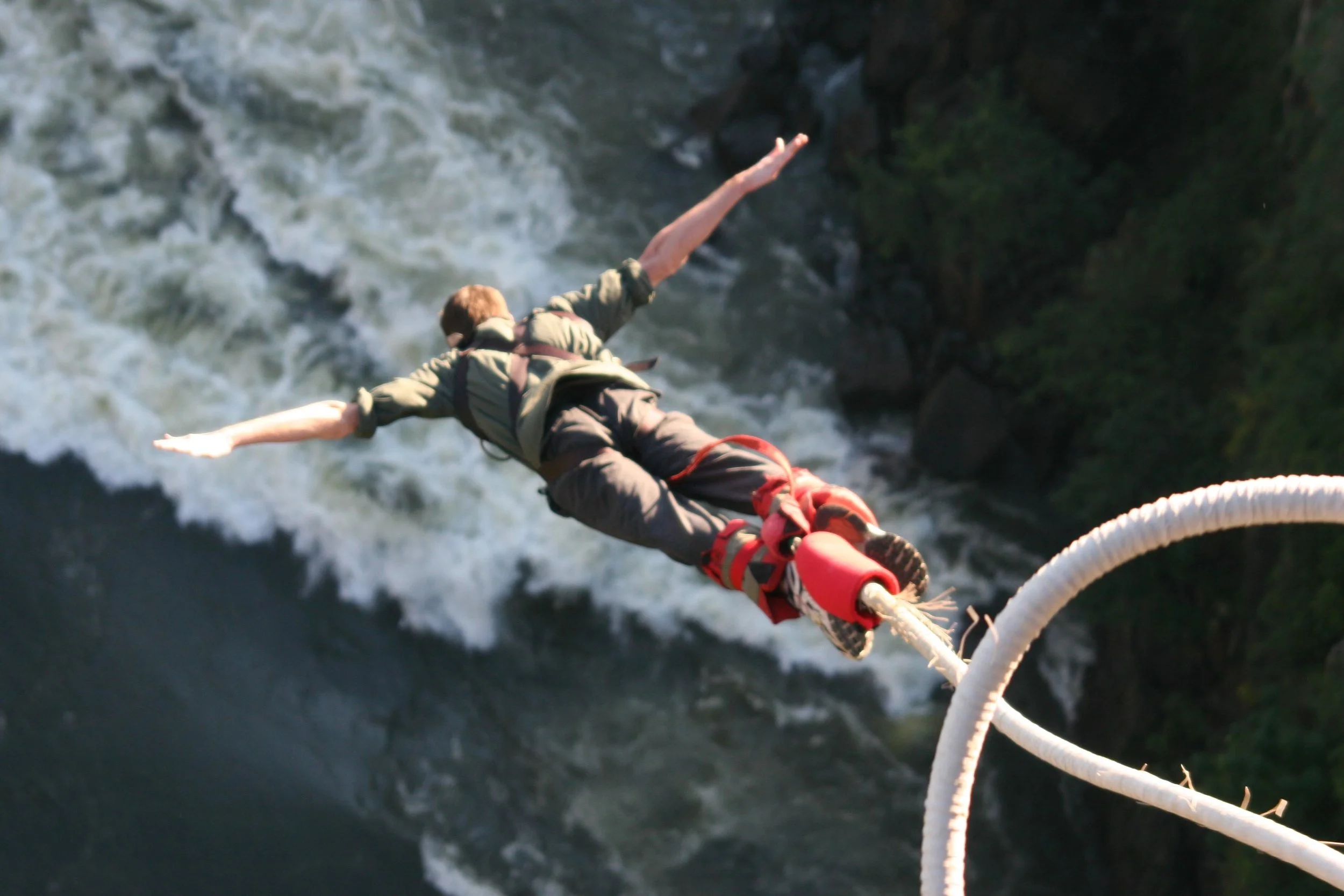
Seeking adrenaline in Nepal
Mountains have been a highlight for adventure seekers since the beginning of tourism in Nepal. Every year thousands of visitors come to Nepal to take a journey to the mountains. And, to conquer the fear or to do something crazy when the adrenaline kicks in, the high lands of our country excels in adventure tourism and some of the adrenaline arousing activities.
While going through our social media sites, we occasionally stumble upon that friend who takes the concept of adventure to the next level. Their profile is covered with images of skydiving missions, rough camping trips, rock climbing etc. Such daring adventures have a lot of risk but because we have a thirst to experience adrenaline rush, it drives us to seek more thrilling adventures, despite of being scared out of our wits.
The holy mountains have been a highlight for adventure seekers as long we can remember. A journey to Annapurna, Everest and other massifs can exceed anyone's expectation as the amount of beauty and serenity it holds is indescribable by words. As our country is gifted by the mountainous terrain and the river flowing system from the glaciers; many extreme adventure sports came into being.
If you are looking for ways to conquer your fear or just want to do something crazy for your adrenaline kicks in, the high lands of our country can help you achieve this goal. It is an adventure playground for thrill seekers and adrenaline junkies. For all you risk takers and brave hearts, our country excels in adventure tourism and here's some of the adrenaline arousing activities in our country:
You can fly like a bird through ZipLining
- If you are someone who wants to experience the feeling of euphoria, you can try the famous zipline of Nepal. As our country has the steepest, longest and the fastest zipline in the world, grab the opportunity of a thrill ride. The best part of the zip flyer is the take off. As soon as the door swings open you go flying down a hill which is so steep that you can't even see the ground you are headed to. Imagine jumping towards the unknown! If you are lucky, you can experience the breathtaking views of Annapurna on a clear day as the wind hits your face.
Go Bungee Jumping
- The Last Resort proudly claims to be the 9th highest bungee jump in the world. Your fall is from 160 meters and you feel the rush of adrenaline as soon as you freefall. The air and the falling into nothingness can make you feel free. It's absurd to risk your life like that, but when you just 'let go,' it is an insanely amazing feeling.
Go Paragliding
- There's something exciting about running of a mountain with only a piece of fabric and strings attached to you. In Pokhara, you can experience an unforgettable paraglide flight. Once you fly high over the valley in the presence of the mighty Annapurna, you feel like you have reached paradise.
Mountain biking
- Nepal has a lot of uphill division and if you are a fairly experienced rider, mountain biking can be an excellent choice of adventure for you. Annapurna Circuit is considered to be the one of the most popular trekking destinations in the world where you can experience both hiking and biking. You can bike from Muktinath through the Mustang region for a satisfying combination of jaw dropping scenery, cultural delights and get indulged in one of the deepest gorges of the planet.
Kayaking
- Kayaking in The Lower Seti River can be the best place to dive into to get the best experience of river rafting and kayaking. Even for the newbies, kayaking can be done smoothly as it does have any major obstacle. The kayaking expedition begins at the captivating Phewa Lake and ends close to Chitwan National Park. The Lower Seti River trail has been known to be completely safe for any sort of water sports.
Rock Climbing
- Rock climbing is another adventure that can attract all kinds of adrenaline junkies from the world. Nepal can be one of the best destinations for rock climbing as has a perfect combination of rock climbing experience with exceptional natural beauty.
Trekking to Everest Base Camp
- There can only be a handful of voyages that can give you the thrill that you get while trekking to Everest base camp. This embodiment has attracted adventure enthusiasts ever since the 1920s. For those who can never think about stepping the giant Mt. Everest, this adventure can be a more practical solution. While venturing through this region, you can experience countless museums, days which are charged by beautiful colors, old world monasteries and swing bridges (scary!). Even during the nighttime, you can light up bon fire and have conservations with other fellow travelers.
Take a flight to Luka airport
- Lukla is considered to be the 'most dangerous airport of the world' and hearing this fact in itself can give us chills. The entire process of flying into Lukla can arouse intense heart throbbing experience. The flight takes place only when the weather is clear and it has the capacity to hold only 12 to 14 seats.
- This adventure is pretty challenging as you fly straight into the mountain as you land in Lukla and you fly off a cliff during takeoff. Normal runways are 1,829 meters long but the runway of Lukla is merely 527 meters. This makes the flight extremely dangerous as it has a short length to cover. The runway is on a steep gradient to ensure that planes slow down in time while landing and gain enough speed for takeoff.
Similar Posts
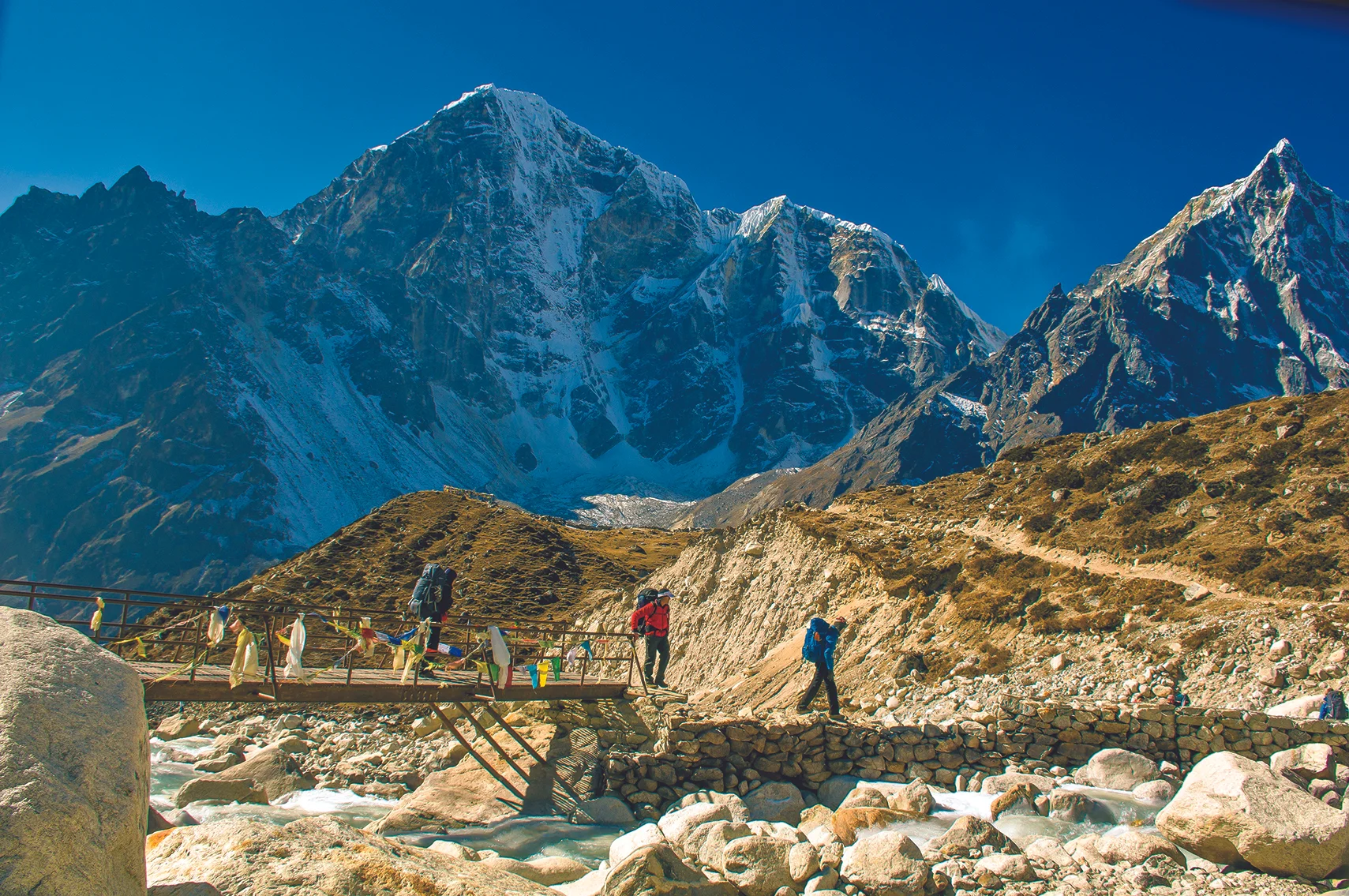
A Tranquil Escape: Trekking In Nepal
If you are planning to trek in Nepal but don't know where and when is the best to plan a trek in Nepal or wondering to visit Nepal to make an enjoyable and memorable trip with your loved ones. There are numerous popular trek destinations and various activities in Nepal for solo to a group of families and friends from all over the world.
There are numerous trekking routes to venture upon this high land and it is known as the 'Great Himalaya Trails.' It is an immense trail system that covers areas of Nepal from Humla and Darchula which lies in the west to Kanchenjunga in the east.
Trekking in Nepal is found to be completely different than that of mid 1960s. Only a few trekkers visited Nepal as a part of expedition group. But now, situation has completely changed and with the facility of accommodation with food and lodging facilities, trekkers from all around the world are encouraged to visit our country.
The three major trekking areas and the easily accessible ones are Langtang, Everest and the Annapurna regions. Amongst three, Annapurna and Langtang have an advantage as they can be reached through road connections. The Great Himalaya Trails has substantial amount of information on other hiking regions which can be easily accessible on domestic flights. Kanchenjunga, Dolpo, Makalu and Far West are some grounds covered by flights. However, this is just the starting of the journey and it takes several days of trekking to reach higher mountain areas from the local centers of population and administration.
Domestic flights usually occur early morning and two domestic flights are required to reach the starting destination of the trek. The popular trek areas in Everest, Manaslu, Annapurna and Kanchenjunga are able to provide lodge with better accommodation. Similarly, the west of Annapurna is the less visited trekking route and they may not have proper lodging facility; but they most definitely have camping style trek support.
Mustang trek has become of the most popular and common trekking destination among the visitors and travelers. It is famous for international as well as national tourists. Mustang Trekking is a superb trekking route in the Western Nepal as it takes tourists to the hinterlands of the western region of Nepal. Previously, Mustang Trekking was restricted for expedition and the land was alienated from the travelers. But now, it is be swarming with visitors and has become a major tourist hub.
Along with this, Manaslu Circuit Trek is another famous trekking route. It has successfully attracted the intended tourists and adventure seekers. Many come here for the purpose of hiking and trekking. They get full experience of the serene beauty of high lands. Nepal has captured the imagination of the entire world with its unsurpassed beauty.
The southern areas of Nepal are usually preferred to trek as they receive higher level of precipitation. We can find climate variations as some routes along the Great Himalaya Trails lie in the rain shadow. These dry lands on the north fall on the leeward side of mountains. The places that fall under it are Mustang to the north of Annapurna with Manaslu and Dolpo to the north of Dhaulagiri.
Post monsoon season can be a great time for trekking as the weather tends to be clearer. Winter can be good but the trekkers have a disadvantage as this season has shorter days. Spring season can also be affected by the seasonal rain and snow storms. Summer season does not last long and it is quickly followed by the monsoon season. Thus, no season is perfect for trekking purpose and the trekkers have to make though decision about which kind of season is most desirable for them.
- Here are few of the refreshment activities that you can try on the Himalayas:
- Yoga and meditation – As dramatic as it sounds to climb to the top for meditation; yoga is a stress reliever and you can relax peacefully in a calm environment.
- Indulge yourself with nature – Flora and fauna found in abundance in the mountains and you can carry your camera and explore this rich land. Who knows, you may even stumble upon a Yeti! You can immerse yourself in the lakes, rivers and lowest gorges.
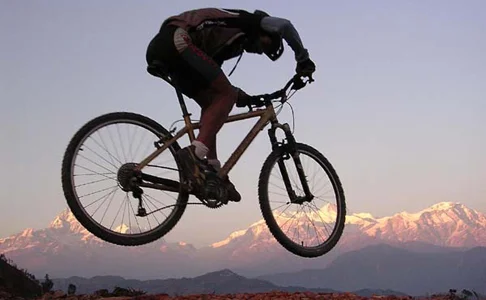
- Mountain biking - You may want to test your physical limit by taking a mountain bike up to the high lands. As the trail is diverse, you can bike on a clean bumpy road to bumpy rough trails. You will enjoy delightful greenery and elevated mountains in the backdrop.
- Everest Skydive?! – As crazy as it sounds, you can have the best spine chilling adventure with the combination of the highest peak of the world and mind blowing sport of skydiving. You can get view of the Everest region with stupendous mountain views and the Sherpa settlement below makes this experience a lifetime achievement.
- Take mountain flights – You can choose to fly close to the Himalayas to get an unbelievable scenic view of this tremendous chain of snow covered mountains.
- Shopping! – Who does not like doing good old shopping? Astounding handicrafts items of excellent craftsmanship are found in the Himalayas. You can get souvenirs for you and your loved ones. Items like thangkas, pashmina, carpets, jewelry, prayer wheels, stone carvings etc. has great cultural significance.
- Faith healing – You can explore the mysticism of the animalistic of Himalayan culture. The process involves honoring the earth and respecting the spirit which is believed to reside in all of us.
- Mingle with the locals – Nepalese are considered to be the friendliest of the lot and you can always socialize with them. You can feel their optimism, simple yet powerful spirit and get a taste of their genuine warmth. A simple gesture of 'Namaste' can lead to great friendships with unforgettable memories.
The trekkers can be enthusiastic about the idea of solo trek with their own schedule and convenience. But do you want to risk the unknown and get stranded in a situation with a major storm, temperature of at possibly 5,000 m and zero visibility? Thus if you want to avoid the risk, it is advisable to you travel with a group of trekkers for support and guidance.
Similar Posts
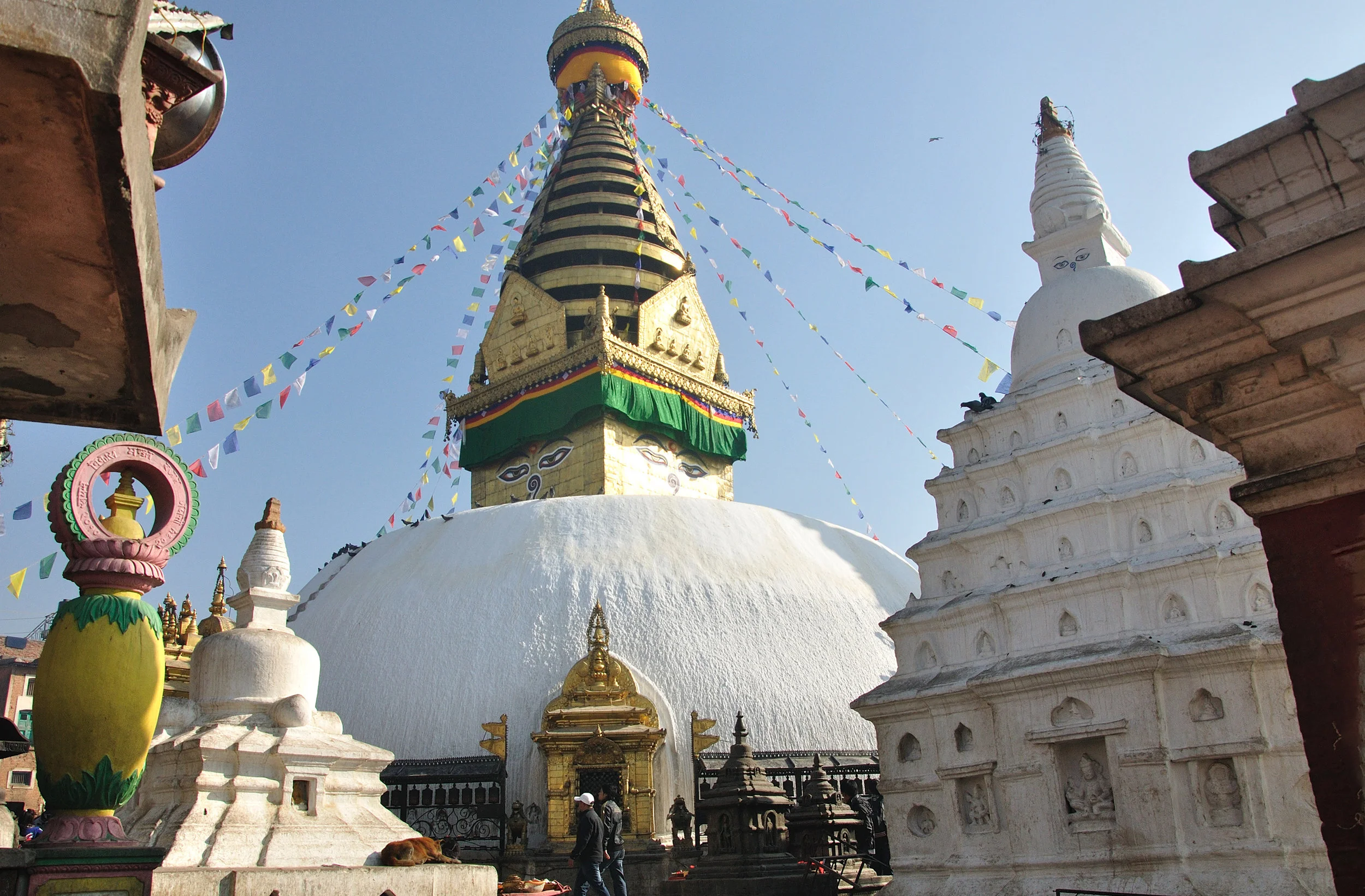
UNESCO World Heritage: Swayambhu Nath
"In Satya Yuga, Bipaswi Buddha came from a city known by the name of Bandhumati; and having taken up his abode on the mountain to the west of Nag Hrad(Kathmandu Valley) sowed a lotus-seed in the tank, on the day of the full moon in the month of Chait. The lotus seed that had been sown brought forth a lotus flower, in the middle of which Swayambhu (who had come from Aknisht Bhuban) appeared in the form of light, on the day of the full moon in Aswin." Wright 1877: 77-78
"In Satya Yuga, Bipaswi Buddha came from a city known by the name of Bandhumati; and having taken up his abode on the mountain to the west of Nag Hrad(Kathmandu Valley) sowed a lotus-seed in the tank, on the day of the full moon in the month of Chait. The lotus seed that had been sown brought forth a lotus flower, in the middle of which Swayambhu (who had come from Aknisht Bhuban) appeared in the form of light, on the day of the full moon in Aswin." Wright 1877: 77-78
Most of the historic chronicles have the lotus seed that brought light be marked as the beginning of the history of the Kathmandu Valley. The light of Swayambhu was inaccessible till the age of Treta Yuga, when Bodhistva Manjushri came from Mahachin(China) and drained the lake from the pass at Kotwal(The place where Bagmati passes out of the Valley) with other passes drawn at Chobar. With the valley drained, Bodhistva Manjuri made the valley inhabitable and the light of Swayambhu accessible to its worshippers.
The shrine of Swayambhu, the dome stupa with eyes of the enlightenment and the pinnacle was built only in the Kali Yuga. Before which it is believed that at the summit of Padma (Padma- Giri Hill; the mountain upon which Swayambhu stands) the place where the shrine is today was a great beam of light that penetrated heaven and even the depths of hell.
"The Kali Yuga, in which mankind would be utterly sinful, was approaching. He (Sant-sri) therefore covered the Swayambhu light with a stone, and built a chaitya and temple over it. He then built five rooms named Basupur, Agnipur, Bayupur, Nagpur and Santipur in the last which he lived, absorbed in devout meditation." Wright 1877:84
It is believed in local legends that even till this date Sant-sri, is in devout meditation in Santipur and shall emerge to protect the valley in times of grave danger. I remember the first time I climbed the steps to the top of Padma-Giri, as I took the last step with deep breaths. The shrine of Swayambhu was a sight to behold, view it form any perspective you wish.
Architecturally it is a phenomena, the dome base atop which a cubical structure painted with the eyes of Shakya-Muni (Lord Buddha) in all four direction shielded by the pentagonal Torana with symbolic engravings. Above the Toranas are thirteen tiers crowned by a Gajur, now imagine a time lapse of its creation? Symbolically the base dome represents the world; the eyes of Shakya-Muni represent the status of enlightenment free from all bonds of the world. The thirteen tiers of the pinnacle symbolize thirteen stages of spiritual realizations to the enlightenment.
Spiritually as a native Newar it is the center of all our devotion and from the perspective of a sociologist, a beautiful lineage of history which has become the epicenter of Newar culture.
Today, the shrine of Swayambhu is known as Swayambhu-Nath or The Monkey Temple and is a major tourist attraction of Kathmandu Valley. Riddled with numerous shrines of Bodhistva's, Lichavi chaitya and stupas, mists of incents and chants of prayer. The Padma-Giri is a hill of spiritual awakening, the light of Swayambhu ever since history began has been a beacon of enlightenment attracting its seekers to the valley, even till this date many take great journeys to find sanctum in its light.
During the 2015 earthquake, the principal stupa didn’t suffer major damage but the surrounded chaityas, shikharas and temples along with living residents of the priests suffered major damage. The most notable difference was not seeing the two Shikharas built by Late King Pratap Malla in 1668 AD. Flanking the principal stupa, Late King Pratap Malla had built the two Shikharas with Agam Devtas within them along with which he placed a Bajra( Thunderbolt) in the Dharmadhatu mandala in front of Akshobhya Buddha. Having them being fully restored with other shrines and chaityas repaired, the area of Swayambhu was one of the very first UNESCO sites to reach a full restoration state.
For it may withstand many quakes to come, shall the eyes of enlightenment forever bring peace to its beholders. For may it always be a sanctum for its seekers and the light of Swayambhu always shine.
Hashtags: #Swayambhu #KathmanduValley #NewarCulture #BuddhistHeritage #EnlightenmentJourney #UNESCOSites #NepalEarthquake2015
POPULAR ITINERARIES
SIMILAR POSTS
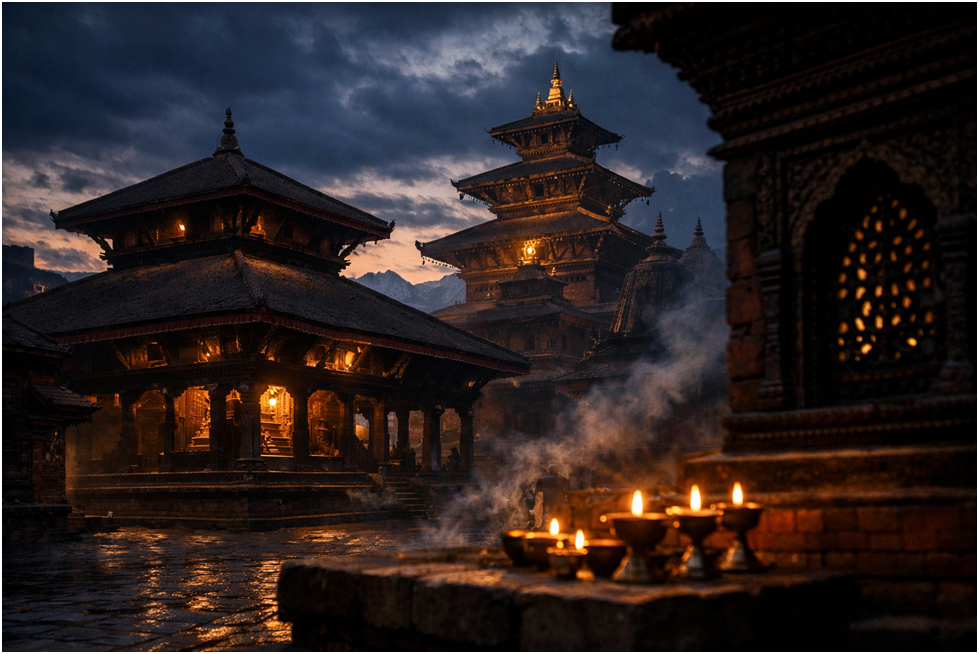

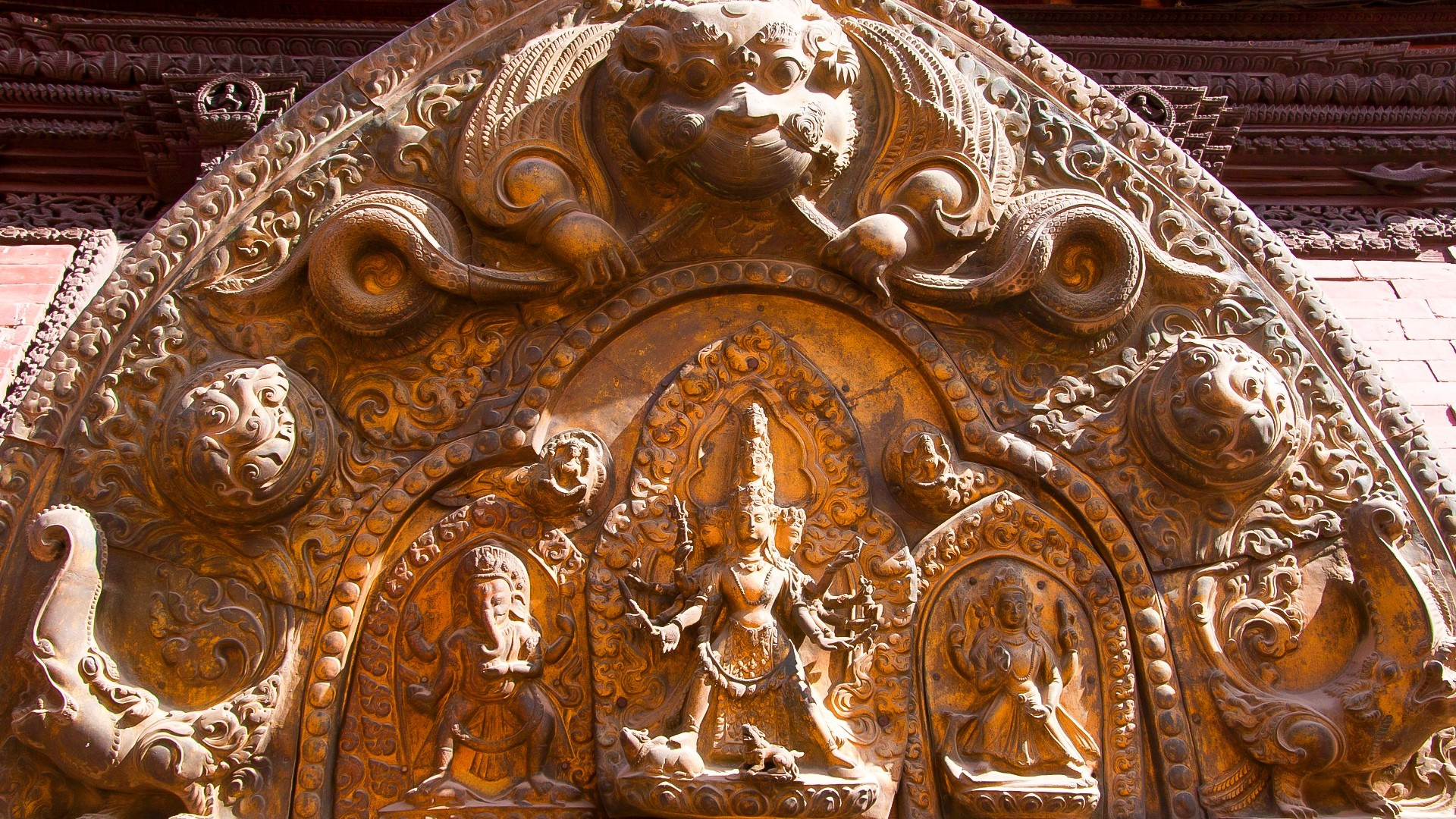

UNESCO Heritage Edition: Bhaktapur Durbar Square
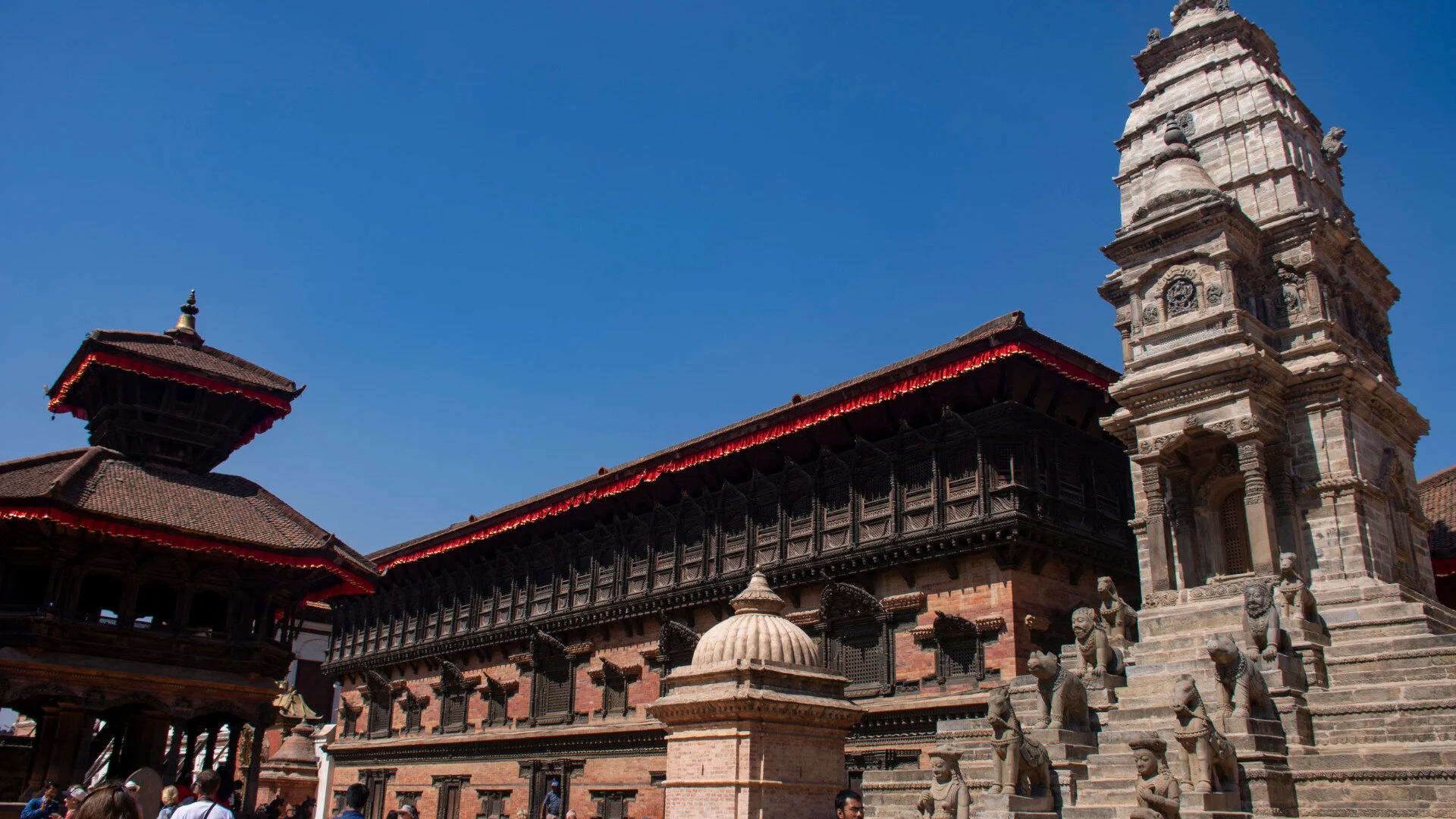
The youngest of the three sister Durbar’s of the valley. Bhaktapur Durbar Square is a marvel of wooden and stone architecture. It features a unique blend of ingenuity and fusion of the architecture of its older sisters. In comparison with its sister durbars the architectural layout is more organized with large squares and equal divisions around the city. The city diffuses from the centre(Taleju) outwards into the numerous vicinities of Bhaktapur.
“The city of Bhaktapur can be neatly divided into nine sectors corresponding to the Eight Mother Goddesses plus a ninth, central goddess, that are situated at Power-Places amount its perimeter.” CNAS Journal, Vol 32, No.2 (Pickett,2005:247)
Built by Ananda Malla the younger son of Abhaya Malla, Bhaktapur originally called Bhatgaon is a city protected by the Navadurga and is a symbol of prime Malla architecture.
Inception of the Kingdom of Bhaktapur
“This younger brother (Ananda Malla,) being very generous and wise, gave up the sovereingty over the two cities, and having invoked Annapurna Devi from Kasi founded a city of 12,000 houses which he named Bhaktapur(Bhatgaon) and included sixty small village in his territory.After this, the Raja having obtained the favour and directions of Chanfeswari, founded seven towns; viz. Banepur(Banepa) near Chandeswari Pitha, Panavati(Panauti), near the Pragaga TIrtha of Nepal, celebrated in the Shastras on the site where Panchala-des formely stood, Nala, near Nala Bhagavati, Dhaukhle near Narayana; Khapu near Dhaneswaril Chaukot near the residence of Chankora Rishi; Sanga near Nasika Pitha.”
Wright 1877: 163
Establishment of Bhaktapur Durbar Square
“ He established his court at Bhaktapur, where he built a Durbar; and having one night seen and received instructions from the Navadurga, he set up their images in proper places, to ensure the security and protection of the town both internally and externally.”
Wright 1877: 163
Bhaktapur Durbar Square Today
The Durbar square is as magnificent it was when it was incepted. The squares are always bustling with tourists admiring the architecture and heritage along with locals busy in their daily essentials. The gullies are filled with souvenir stores selling diverse range from Thanka art, metal statues and sculptures, merchandise and traditional and international cuisine.
The 2015 Earthquake and its impact on Bhaktapur Durbar Square
During the 2015 earthquake, the city of Bhaktapur faced severe damage in terms of monuments and houses. The traditional houses have stood in their original archtitcure for more than 40 year, but not anymore. The Vatsal Devi Temple was turned to rubble allong with many other temples. Many heritages such as the temple of Rameshwor, Batsala, Narayan, Siddi Lakshmi, Biswaroopa,Siddi Ganesh, Swetbhairav, Sij Mahadev, Degaina, Satall were damaged along with premises of Taleju Chowk and the 55 windowed palace. 4 out of 11 heritages have been restored and the others are in the process of restoration. The events of the earthquake of 2015 left allot of the inhabitants without a home and had to live in temporary shelters and MRE’s. But slowly but steadily till today, life moved on as the people of Bhaktapur persevered what was lost cannot be regained but lessons can be learnt and heritages can be rebuilt.
SIMILAR POSTS
Mardi Calling.
Trekking is never just about the climb or the view from a high point. It is far more than that - it is an experience, an opportunity to build relationships and forge memories you thought you could only dream of. You can have your definitions and this is mine.
Nepal was never on the forefront of my mind when I thought of travel, I imagined skyscrapers, oceans and deserts and all things you cannot see or experience in Nepal. But one trekking trip from my college changed it all. The sun shining over the mountains, the fresh morning air and the excitement within never gets old when I see the mountains.
This was the third trek of my life and I was as excited as it was my first time walking towards the mountains. The planning—pre-packing and pre-excitement, was pretty stressful but a lot of YouTube videos and discussions later we were ready. I was pretty nervous too because unlike the last time we were doing everything on our own. I was walking with four friends - Ganga, Parakram, Subit, and Ishwor.
If I had to rate the difficulty of the trip I would say it was a tiny bit difficult due to the rain but overall the trek was a moderate one. So we decided to take the trip in late April— from April 28th to May 3rd. For most parts, it was good because the month April lies smack in the peak season, but it rained which dampened our spirits a tiny bit.
Here is an overlook of the itinerary:
- Day 1: Bus Ride from Kathmandu to Dhampus
- Day 2: Trek from Dhampus to Forest Camp
- Day 3: Trek from Forest Camp to High Camp
- Day 4: Uphill from High to viewpoint and back. Downhill to Sidhing. Jeep to Pokhara.
- Day 5: Stay at Pokhara
- Day 6: Bus to Kathmandu
So the very first day was filled entirely with bus rides. We took the 7 am tourist bus to Pokhara. Got down at Pokhara Bus Park and hopped on a local bus to Dhampus. A comfortable night at the Hotel Paradise View & Restaurant ended our day.
The next day brought rain in the morning, so we started our trek at 9 am with excitement and hope that it wouldn’t rain. The woods were a blessing and a curse at the same time; while it kept us cool from the sun it also kept us from the mountain views. Three and a half hours later, we reached Deurali where we had our lunch. And guess what? We did run into rain and out came our raincoats. The rain left us with wet and with zeal to walk like never before. That’s when we came up with the motto of the trek “Raincoat power 24 hours”. We walked like crazy and reached Forest Camp at around 6:30 pm. We stayed in the Mardi Guest House & Restaurant for the night.
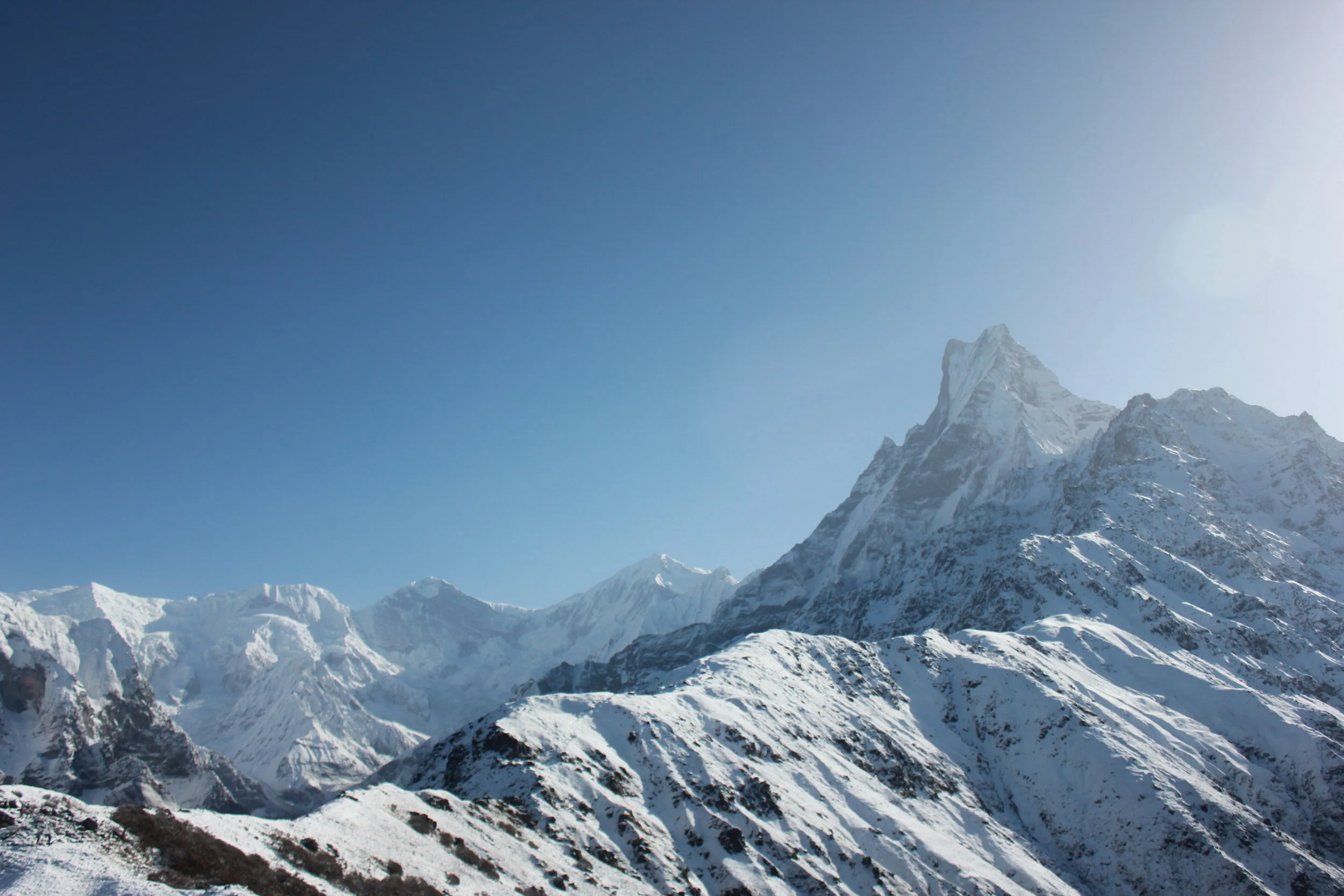
After a hefty brunch, we started our walk to High Camp. The day’s views were more woods, break at Low Camp, more rain followed by fog and cold as we reached Badal Danda aka Middle Camp. The sneak peak by Mount Machhapuchhre was what we needed to keep us moving to reach our destination—the High Camp.
“Besides the fog, the views and the path from Badal Danda were spectacular”, says Ishwor.
The despair until we reached High Camp was so real, mostly due to the fog but the view of the mountains was worth it. High Camp Guest House & Restaurant welcomed us well with gorgeous views and hot delicious food.
Cold as it could only be in the mountains, the 4 AM walk to the Viewpoint on the final day of the trek was the scariest and the most difficult thing for me. We gained about 600 to 700 meters in altitude in a few hours and it nearly had me give up, but that was mostly because the path was built with a cliff to the side. I finally managed to crawl my way up thanks to my friends. Having Mt. Machhapuchhre so close was unreal. The golden rays of the sun on the mountains were unreal and any picture I have from the trip doesn’t do the view justice.
“I felt like I could actually touch Mt. Machhapuchhre but I had expected to see more mountain ranges even if they were on the sidelines apart from Mt. Machhapuchhre and the Annapurna Range from the Viewpoint”, says Subit who is a seasonal trekker.
We spent a good 1.5 hours with the mountains, then the clouds took over our view so we got down. Getting down was a tiny bit less scary and I still was crawling all the way through. After breakfast, we started our way down. I would call us ambitious for making our way down to Sidhing the same day. Slipping, sliding and jumping through several hills we made it to Sidhing in 8 hours. From there we took around a 2 hour jeep ride to Pokhara and were we tired! We got to our room took a long hot shower and had a round of Thakali.
The following day we wandered around Pokhara relaxing and took the bus to Kathmandu the next day. It might have been the end of Mardi, but we still don’t stop talking about it until the next trek.
Heritage Weekly: Patan Durbar Square
Heritage Weekly: Patan Durbar Square
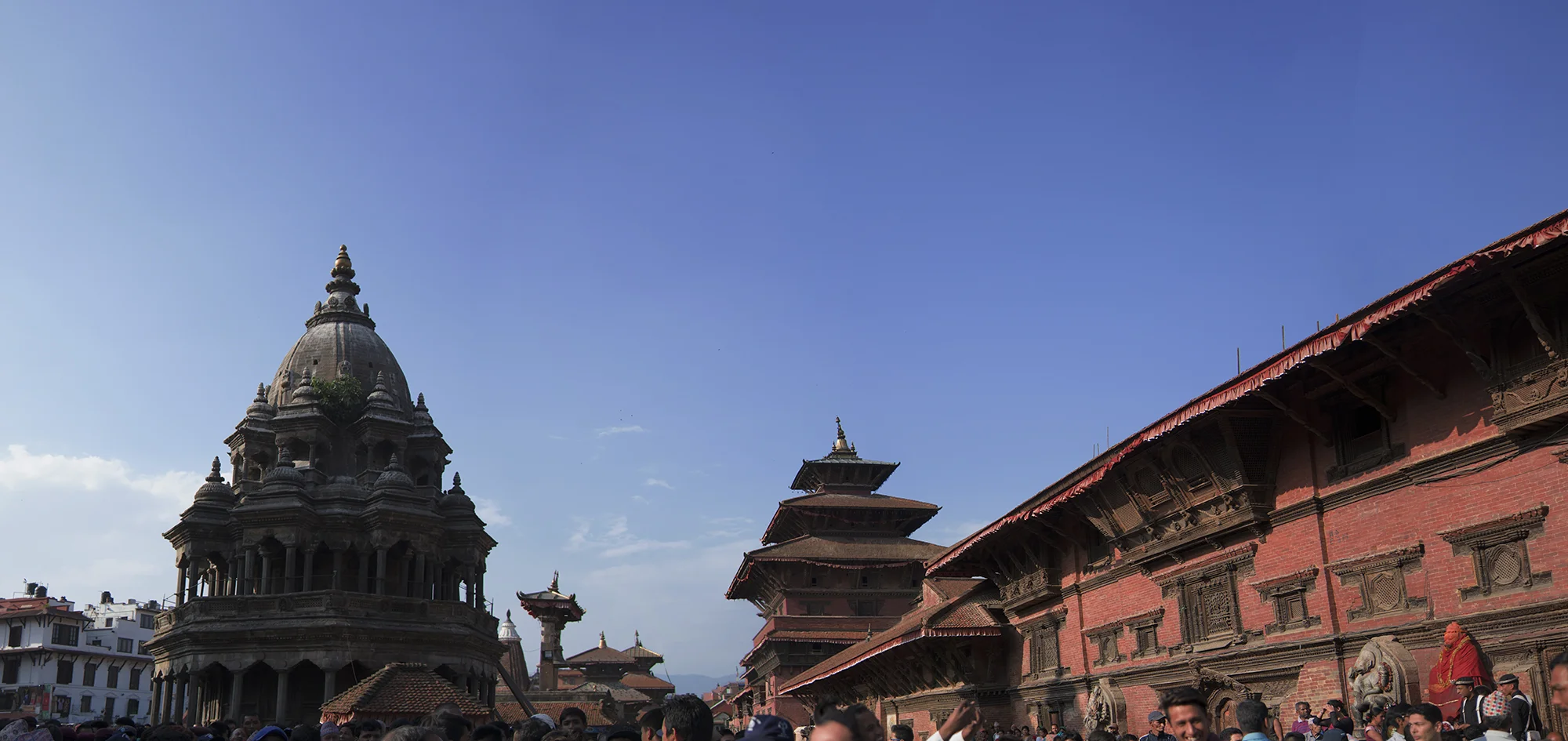
Patan, Yala, Lalitpatanna and Lalitpur,all these names are used to describe a magnificent city which was founded on Buddhist Principles during the era of the Licchavi Era. Today the Patan Durbar Square is known for its magnificent wooden architecture and the harmonious entanglement of Buddhism and Hinduism. Patan Durbar Square is the centre of the Sri Yantra Mandala of the city of Lalitpur. It was enlisted along with its sisters Kathmandu Durbar Square and Bhaktapur Durbar Square in the UNESCO World Heritage list under the criteria of culture in 1979 AD.
Origins Gellner 1996:126
Bir-deva son of Nand-Deva and 5th King of the Vikramaditya Dynasty( Lichhavi)
The king used to sit at the window of his palace, and he regularly saw a leprous grass cutter going to cut grass. One day he was astonished to see that very grass cutter going by with his leprosy all cured and looking very handsome. So he asked him how it was that he now looked so well, and the grass cutter, who was called Lalita replied: “Great King! Yesterday I went to the southern side of the Bagamati river into the Lalita wood in order to cut grass. I became hot and went to a place where there was a pind(pond), took off my clothes, stick my carrying pole into the ground, went to bathe. When I came out of the water my leprosy was all gone. The carrying pole was stick and I could not pull it out. I thought it must be siddha.” Being A devoted to Sarveswara, the king had it in mind to establish a city, some time later Sarveswara appeared to him in a dream. He said: “ Oh King! To make the city, cut down Lalita wood in accordance with the 24 element and in the shape of a Sri Yantra and make your minister Lalita the architect.
The Creation of Mangal Bazar
He built a chaitya (stupa) and a dhara (spout) and erected a Shivaling, a Ganesha, a Mahakala and a Mandap and built a Durbar for the Raja, all of these after the goddess as follows: Mani-Talava[I.e, Taleju in the royal palace], Man i-Chaitya, Mani-Dhara, Mani-Linga, Mani- Ganesha, Mani-Kumara, Mani-Mahakala, Mani-Mandapa and Mani-gal bhatta.
Wright 1972:136
The Square that we are familiar with today, is the result of diverse architecture founded in various era’s and and a harmonious entanglement of Buddhism, Vajrayana Buddhism, Vaishnavism, Shaktism and Hinduism.
From the first Kirat Settlement to Lichavi’s Mangal Bhatta Durbar, the glory of today’s Patan Durbar comes from the architecture and monuments built by all dynasties. The Malla’s have a special role as they have many additions. The Temples such as Bhimsensena, Hari Shankar, Taleju Temple, Degutale, Vishwananth Temple, Bhai Dega Temple, Chyasing Dewal and the crown jewel Krishna Mandir. The addition of palace squares such as Mulchowk and Sundari Chowk with the Agama Devata and the beautiful Tsuhiti. The endless amount of beautifully carved tudals (struts) and stone sculptures .