Christmas Celebrations
Enjoy a fantastic Christmas Eve for NPR 1999 (adults). Book your table now.
Enjoy a fantastic Christmas Eve at Hotel Shanker, Kathmandu, Nepal.
A traditional family friendly experience at the great value price of just NPR 1999 nett /per person (NPR 1499 nett for kids-below 10 years)
Children 11 years and above will be charged the adult rate.
Christmas Eve
Date: Wednesday, 24 December 2014
Time: 7 PM onwards
Price: NPR 1999 / 1499 for Adults and Children respectively. (incl. of taxes)
Book your stay now for a stay period that includes Christmas Eve through our website and this cost will be automatically included in your room rate at a discounted price. (No need to book your table)
This fantastic package includes:
- A traditional mulled wine reception (Christmas Eve)
- A festive feast
- Live entertainment from talented local artists
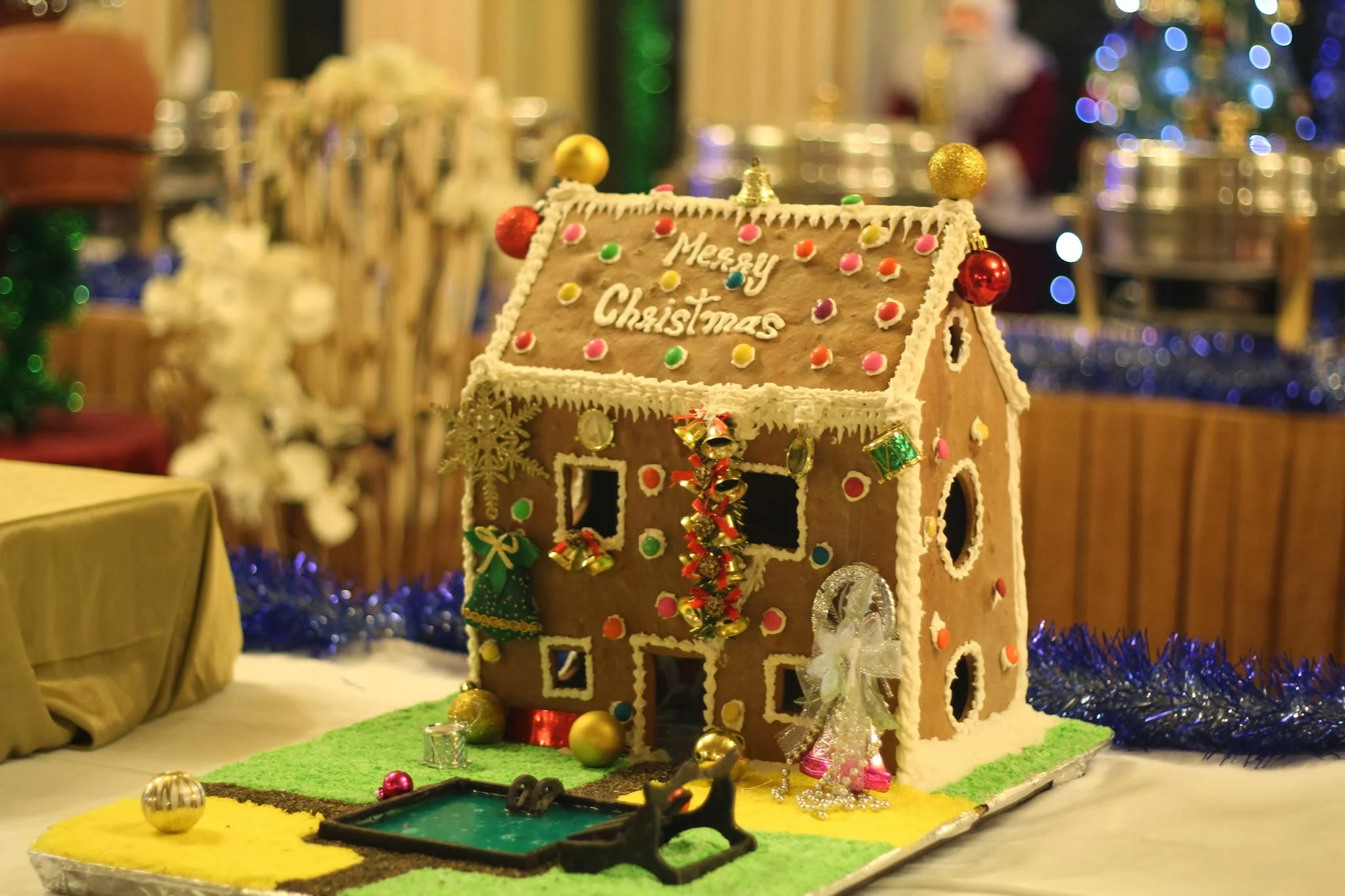
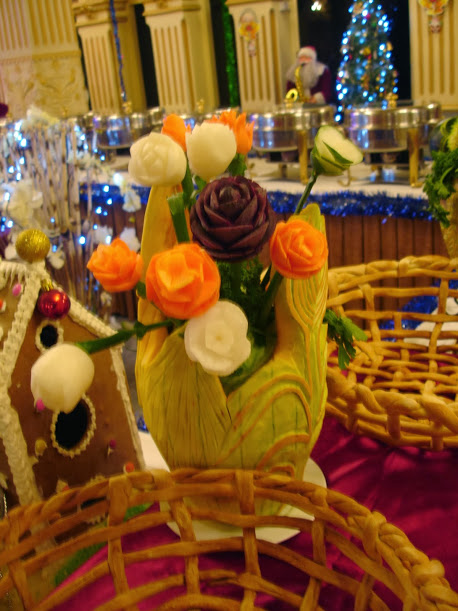
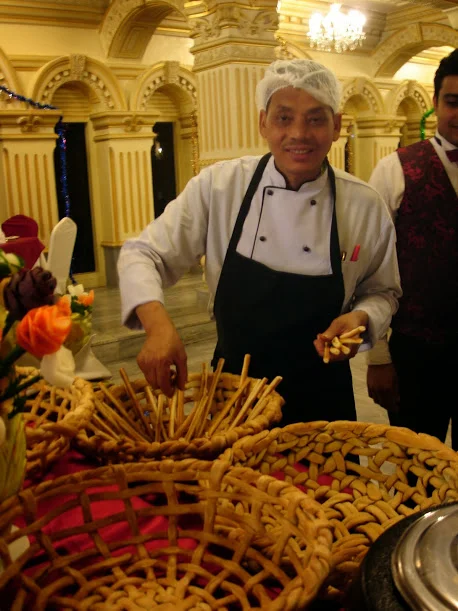
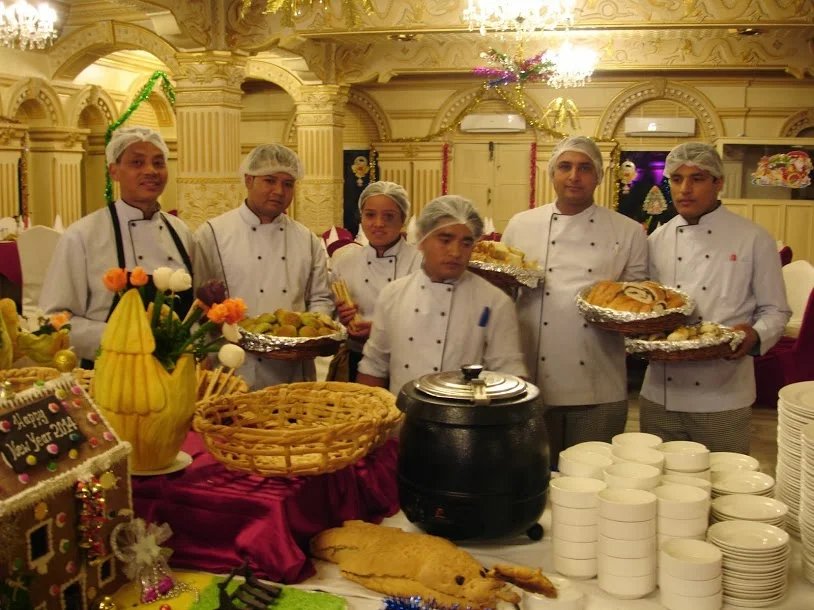
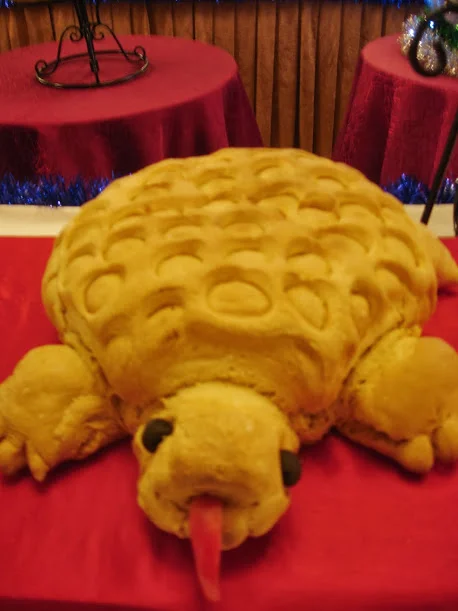
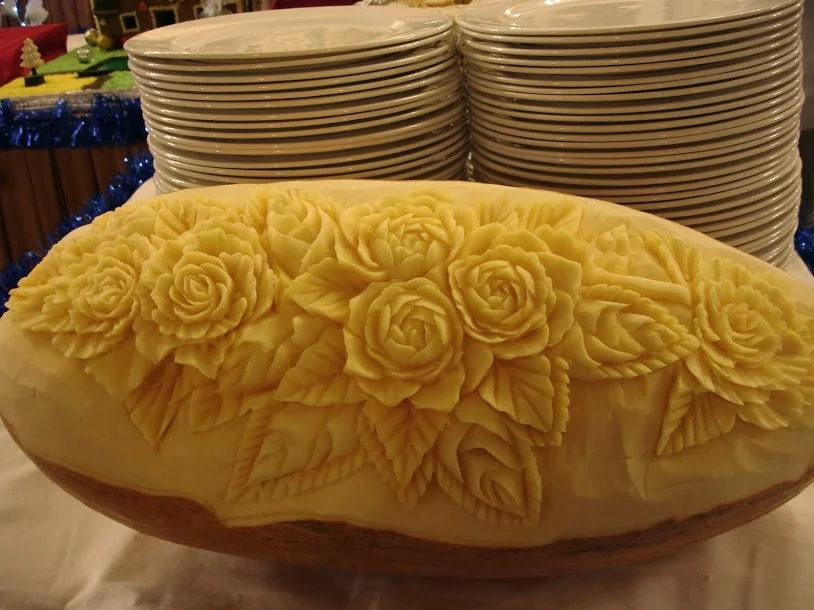
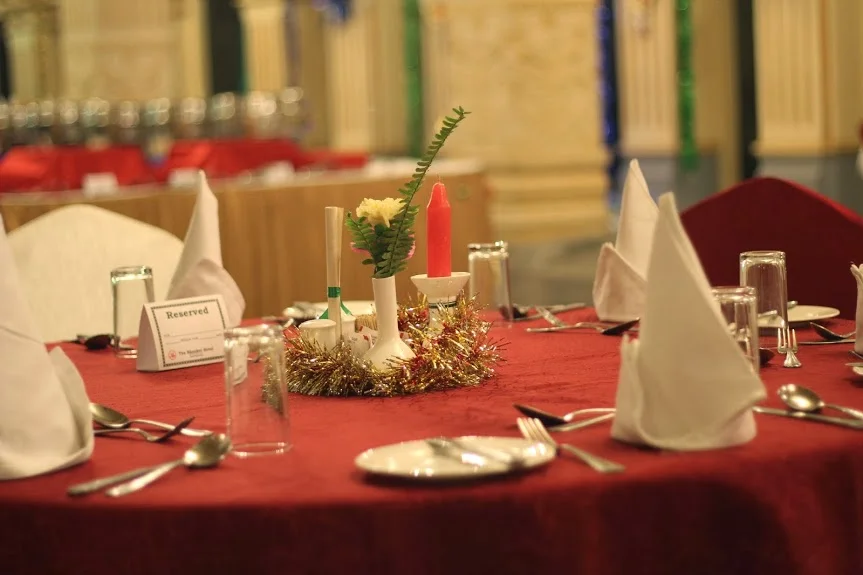
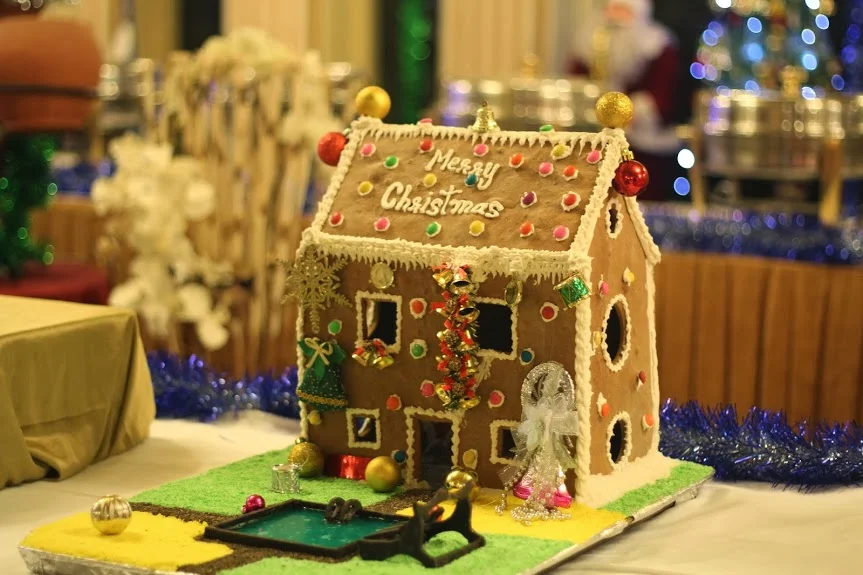
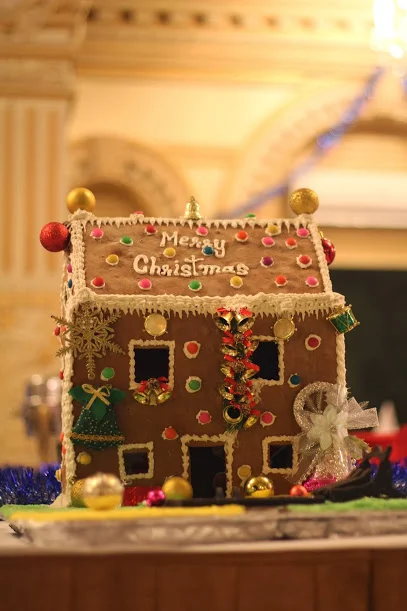
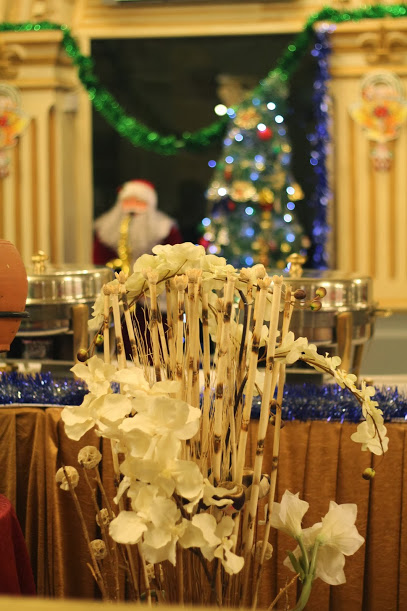
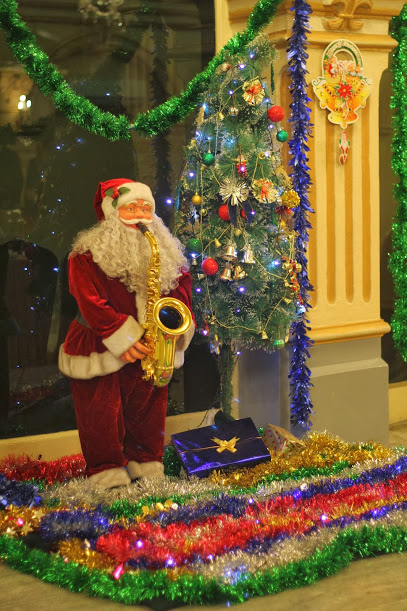
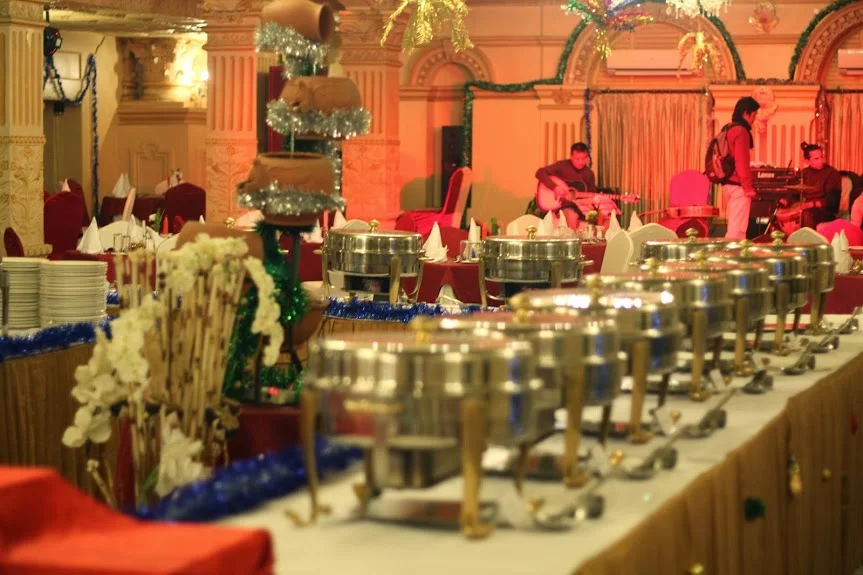
Photos from last year's celebrations:

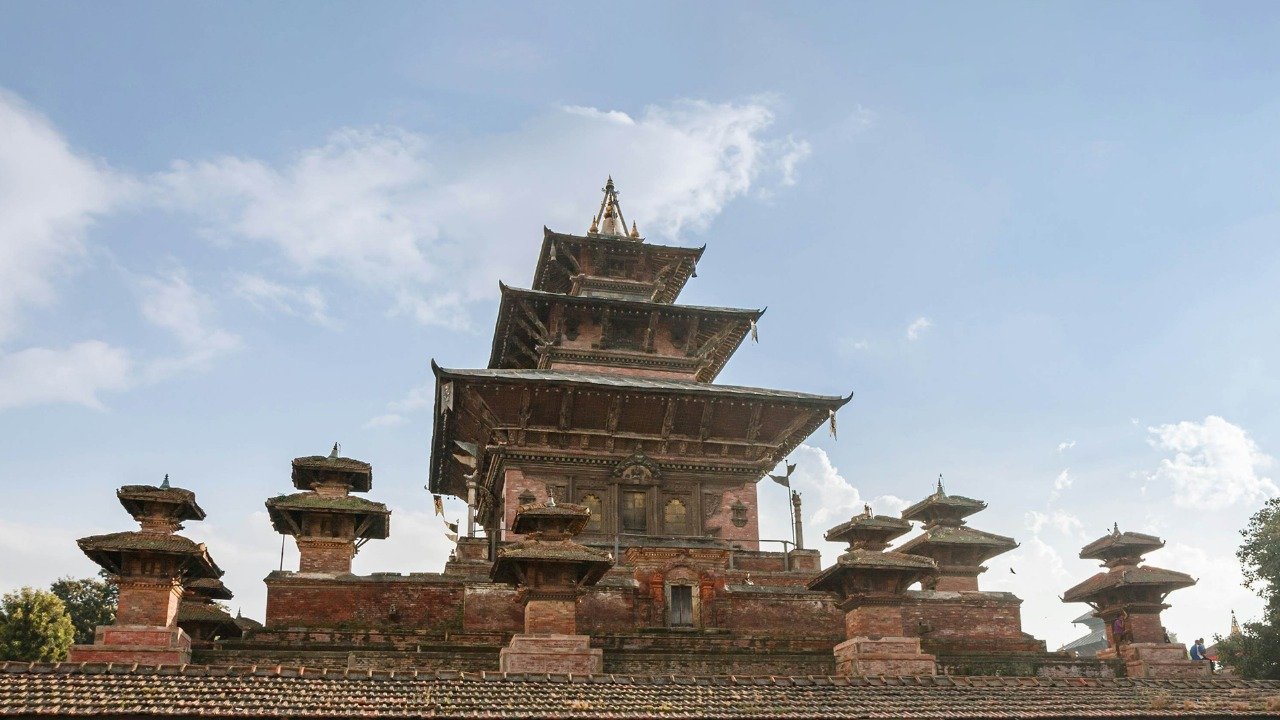
History and Culture of Kathmandu Durbar Square
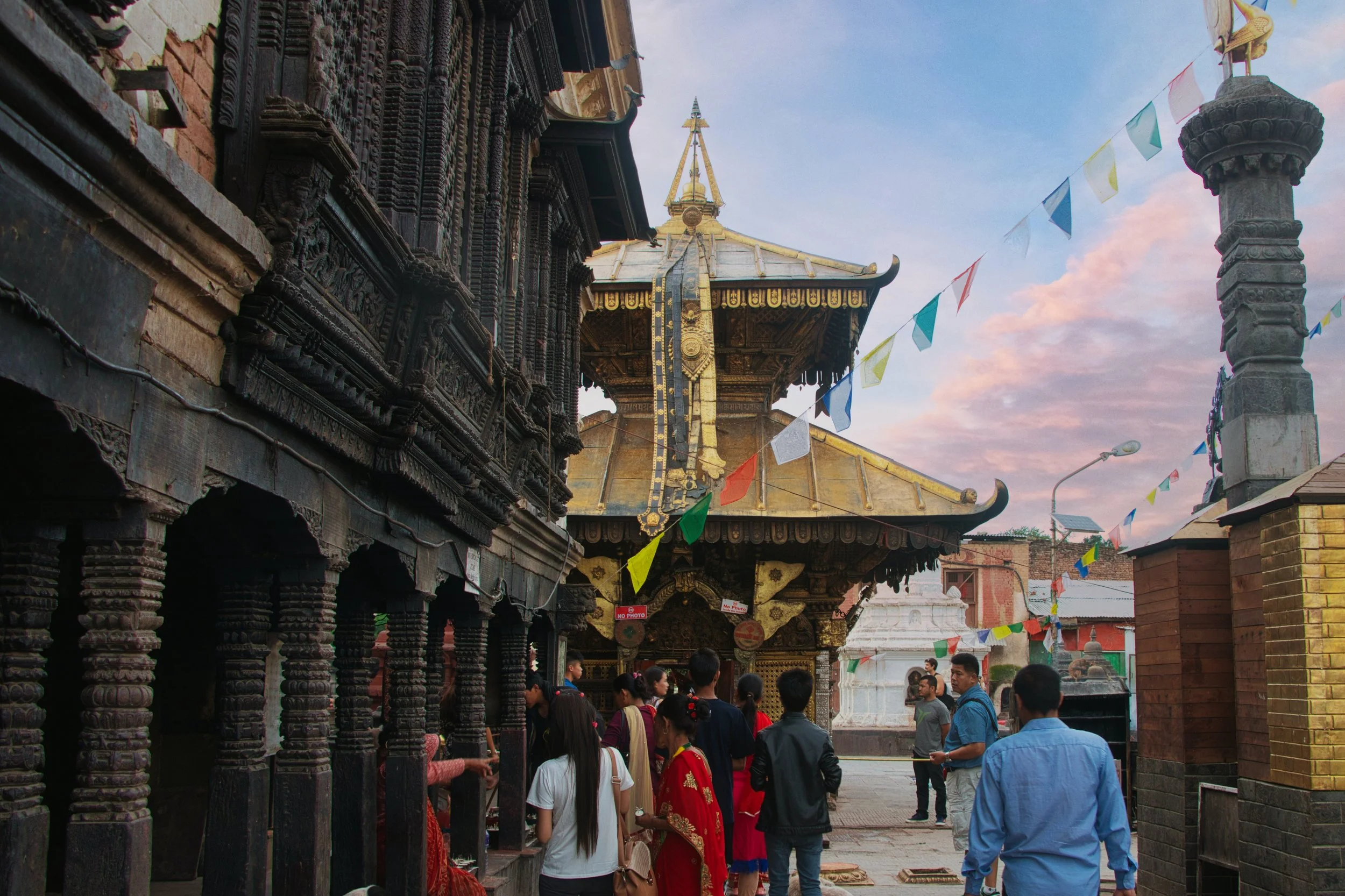
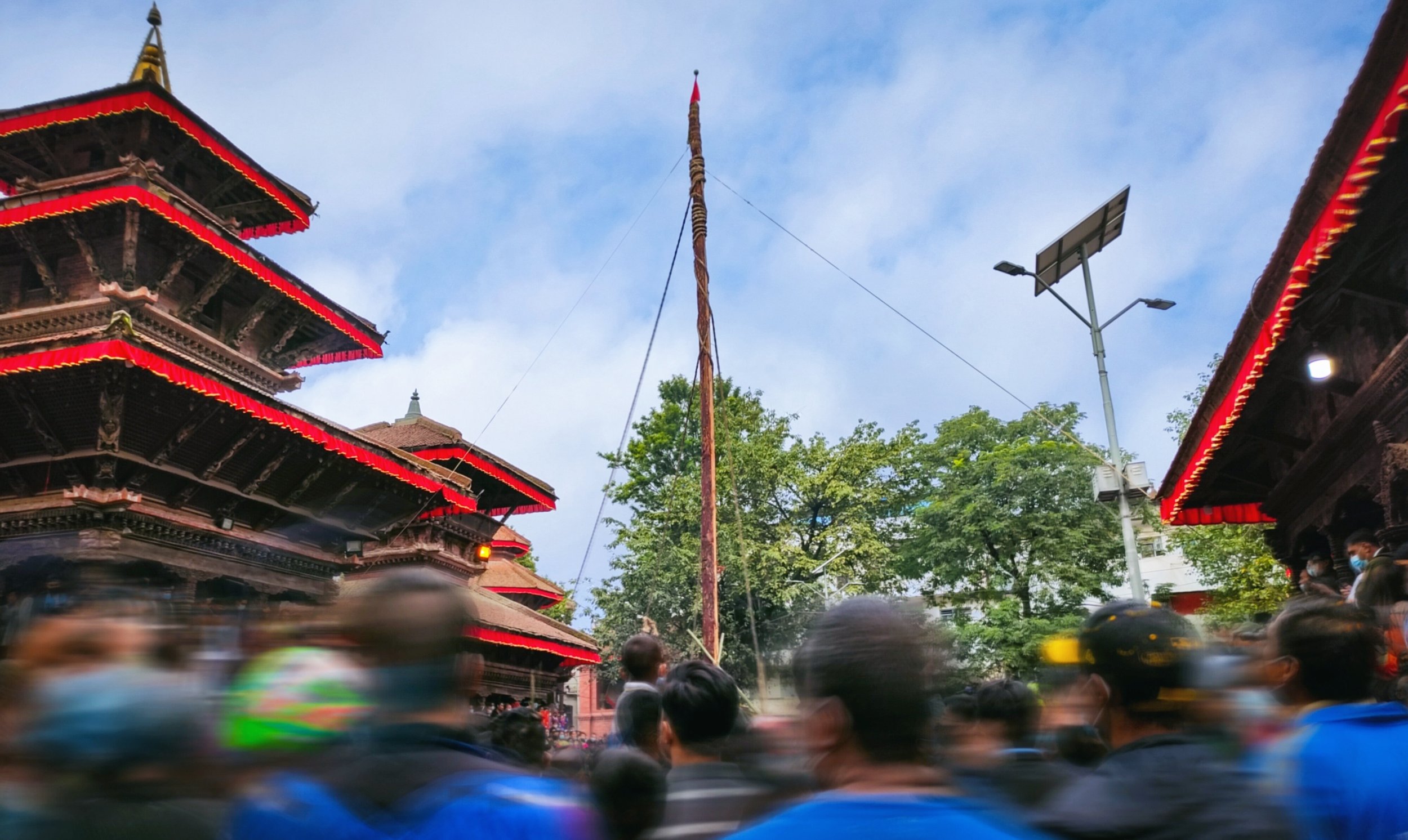
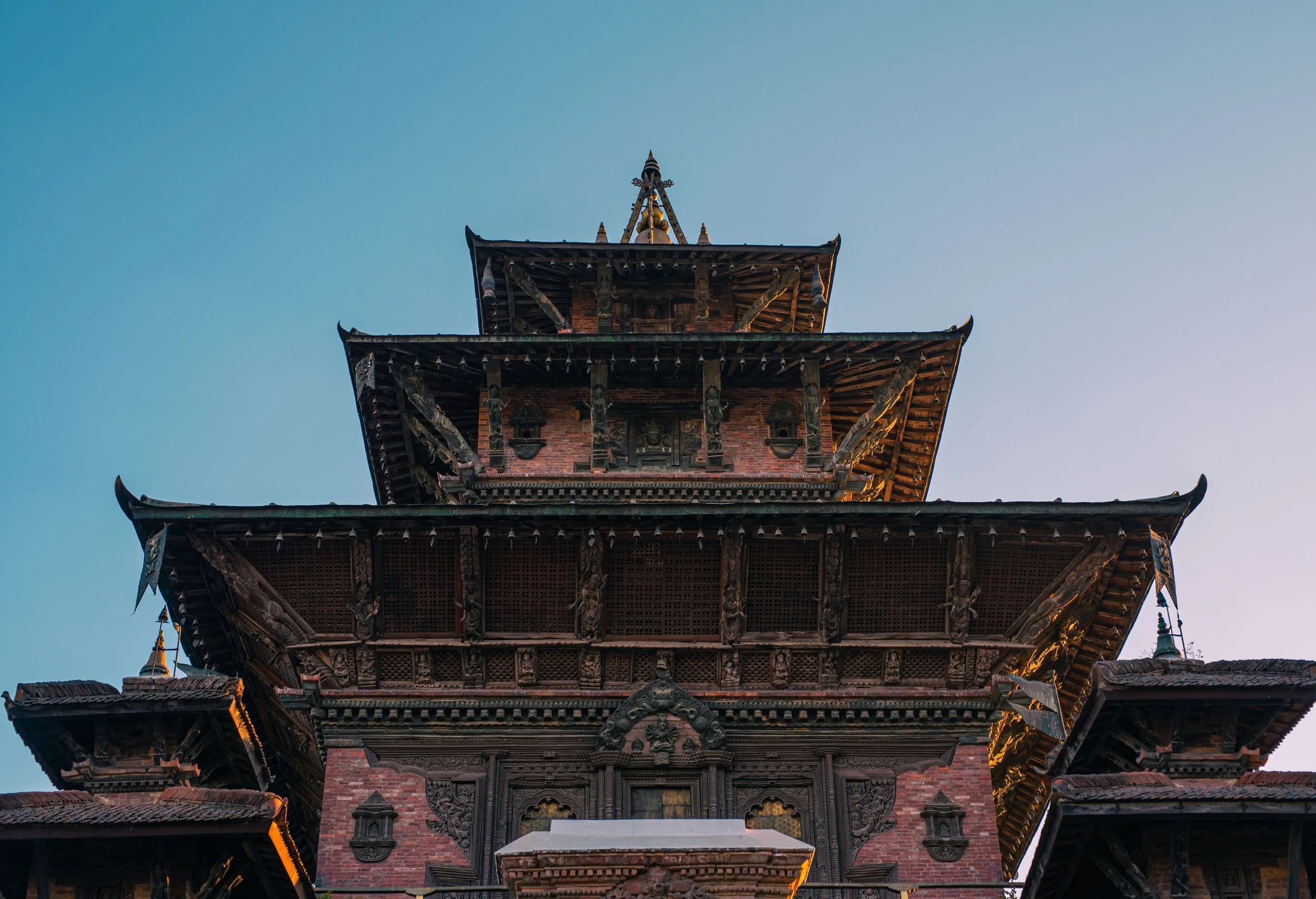
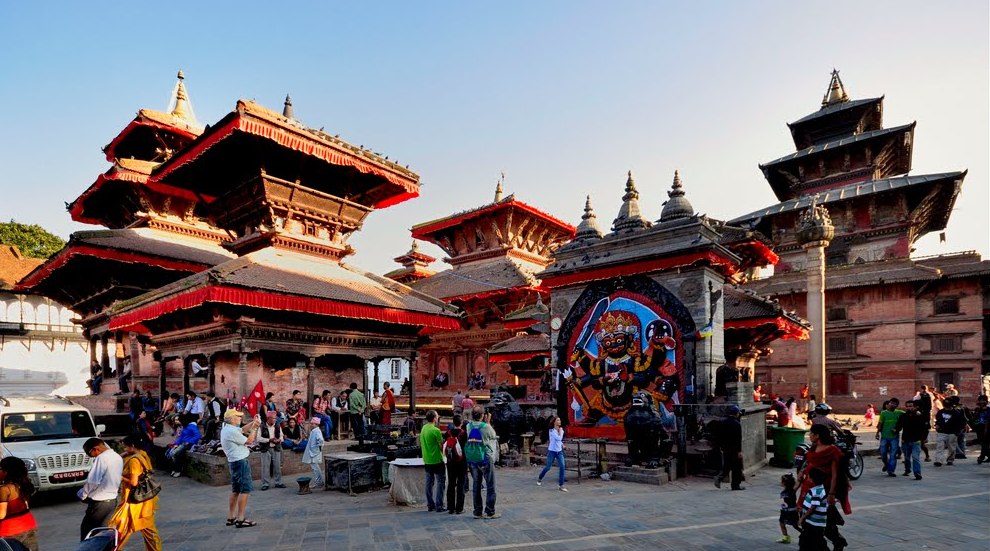
Kathmandu Durbar Square (a.k.a. Hanuman Dhoka) is one of Kathmandu Valley’s most important world heritage monuments, and it is where history and culture abound. Besides, it is as ‘living’ a ‘museum’ as one would find anywhere.
The eight-day-long Indra Jatra festival in honor of Indra, the ‘god of rain’, is held every year in August/September (September 23 this year). It heralds the coming of Nepal’s biggest festival, the ten-day-long Dashain, soon after, which is a time to get together with family and have lavish feasts throughout. Dashain becomes all the more enjoyable if the preceding harvest had been good, which is, of course, dependent upon bountiful rains. Indra Jatra festival is held to thank the ‘god of rain’ for just that, and to keep him in a good mood so he blesses the valley with as good rains the following year too. During this colorful festival, Kumari (the Living Goddess), Lord Ganesha, and Lord Bhairabh are paraded around the city on chariots.
As colorful as the festival is, what makes it even more interesting is that it is held in a world heritage monument, that is, Kathmandu Durbar Square (a.k.a. Hanuman Dhoka). The royal palace in this fantastic square was the seat of power of the Malla and Shah Kings of yore. King Pratap Malla (1641-74), one of the brightest firmaments of the Malla Period (12th-18th centuries), is credited with the construction of the Hanuman Dhoka Palace. You can see his statue atop a tall pillar facing the Taleju Temple in the square. Another renowned site in the square, the Kumari Ghar, the abode of the Living Goddess, was built in the 1750s by King Jaya Prakash Malla.
In 1768, King Prithvi Narayan Shah, ruler of the tiny kingdom of Gorkha, conquered the Kathmandu valley during his bid to unify the country. Thus began the rule of the Shah Kings (1768-2008) from the Hanuman Dhoka Palace. As was usually the case in those days, as far as royalty was concerned, Prithvi Narayan’s death in 1775 was followed by succession struggles highlighted by assassinations and intrigue. In 1846, a Chettri nobleman, Jung Bahadur, organized what is infamously known as the Kot Massacre, during which the elite of the Shah durbar were killed in their hundreds while assembled in a kot (courtyard) adjoining Kathmandu Durbar Square. This horrendous act brought the Ranas into power, with Jung Bahadur becoming, first, Prime Minister, and then Maharajah, a title that was given hereditary status. The Shah Kings remained mere figureheads for a century and more.
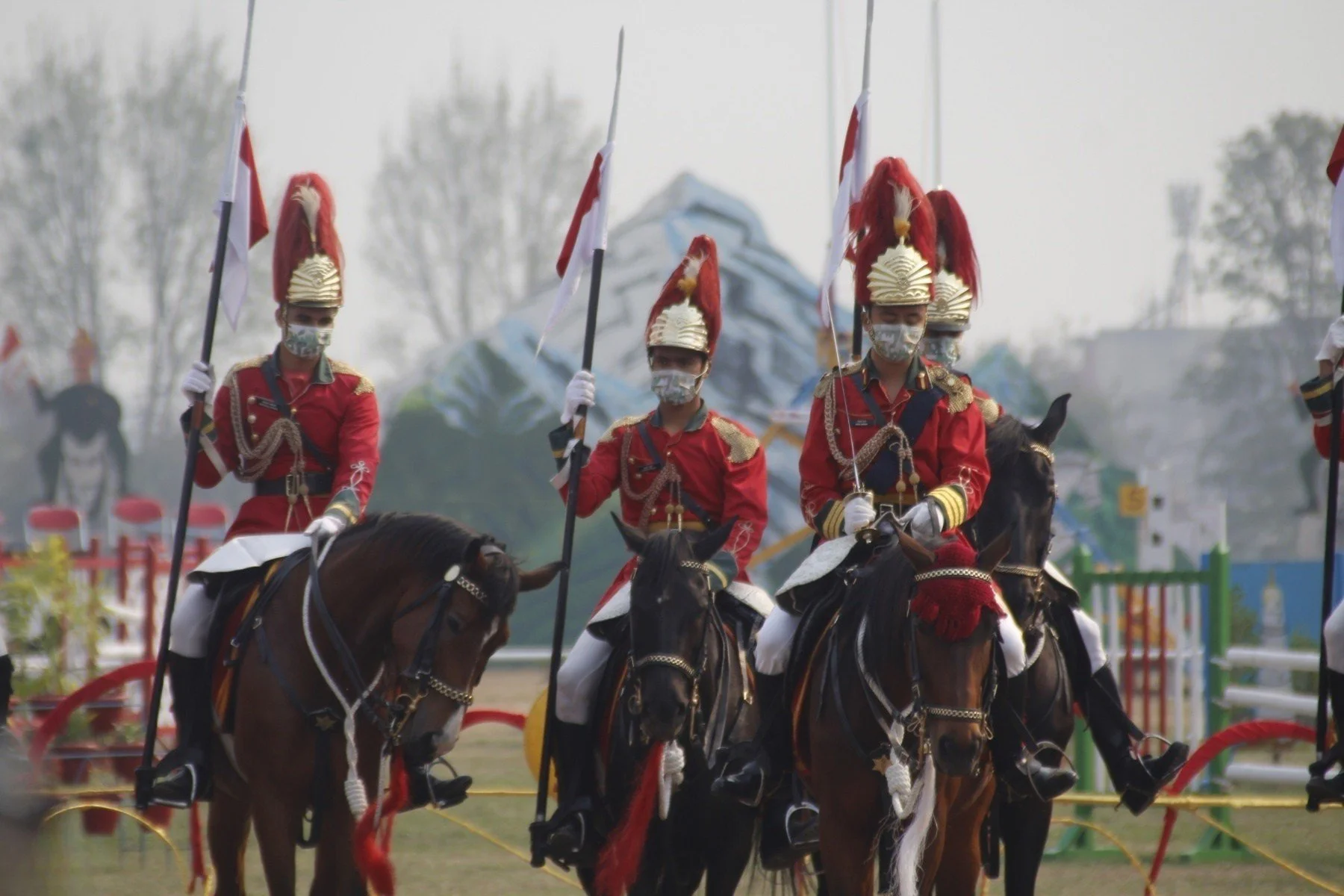
Indeed, a tour of the Kathmandu Durbar Square is a tour of the country’s history, and its culture, as well. The historic square is where, on the seventh day of Dashain, that is, Fulpati, jamara (barley sprouts having ritual significance) and other ritual items are brought in from Gorkha in a stately procession, carried in a covered palanquin by Brahmins, and escorted by musket-carrying soldiers dressed in uniforms of the bygone era. On the eighth day (Maha Asthami), Kathmandu Durbar Square is where numerous animals (goats, buffaloes, ducks, and pigeons) are sacrificed to Goddess Kali. On the ninth day (Maha Nawami), the Taleju Temple is opened for the public, which is the only time it is done so, while in the kot (courtyard) of Hanuman Dhoka, army men slaughter more sacrificial animals with khukuris in front of a high profile audience of officers in full dress regalia and other dignitaries. It is a spectacular event, with brass band, cannons sounding off big bangs, et al.
Kathmandu Durbar Square’s cultural significance is also obvious from the numerous ancient shrines and temples in and around its premises, including those dedicated to various gods of the Hindu pantheon like Ganesh, Shiva-Parvati, Bhagwati, Saraswoti, Krishna, etc., besides Taleju and Kumari Ghar. Close to the famous square is a temple from which Kathmandu’s name is said to be derived, that is, Kasthamandap Temple (mandap: pavilion, kastha: wood). The wood of a single tree is said to have been used to construct it.
Speaking of constructions and such, here’s some modern history to do with this world famous square—King Birendra Bir Bikram Shah was proclaimed King on Jan 31, 1972, after his father’s death, but the formal coronation ceremony was held only on February 24, 1975. During the three years in between, the first restoration works in the valley began, and it started with restoration of the Hanuman Dhoka Palace, where the main ceremonies of the coronation would be held. Funded by UNDP, an UNESCO consultant, Architect John Sanday, was put in charge of the project. Although the project went on five years, involving some 300 hundred workers (including 50 wood carvers), Sanday managed to complete quite a lot of work, especially restoration of the façade and the main courtyard, in time for the historic coronation, a lavish spectacle attended by royalty and dignitaries from all over the world.
In 2000, a comprehensive plan for restoration of the temples at Kathmandu Durbar Square was launched as the ‘Kathmandu Durbar Initiative’. Funded by the U.S. Ambassador's Fund for Cultural Preservation, it was conducted by Kathmandu Valley Preservation Trust (KVPT) under Architect Dr. Rohit Ranjitkar. Its major beneficiaries were the Kal Bhairav Shrine, Kageshwar Mahadev Temple, and Lakshmi Narayan Temple. No doubt, Kathmandu Durbar Square has benefitted immensely from such attention, but at the same time, it must be said that there is so much of ancient artifacts that remain as solid as they were hundreds of years ago, that even without any embellishment they are attractions that continue to captivate the senses.
Without doubt, Kathmandu Durbar Square lives up to its high status as a UNESCO designated world heritage monument, and the fantastic thing about it is that it continues to play such an important role in the lives of all dwellers of the enchanted valley of Kathmandu.
POPULAR ITINERARIES
SIMILAR POSTS

Hidden Gems of Patan
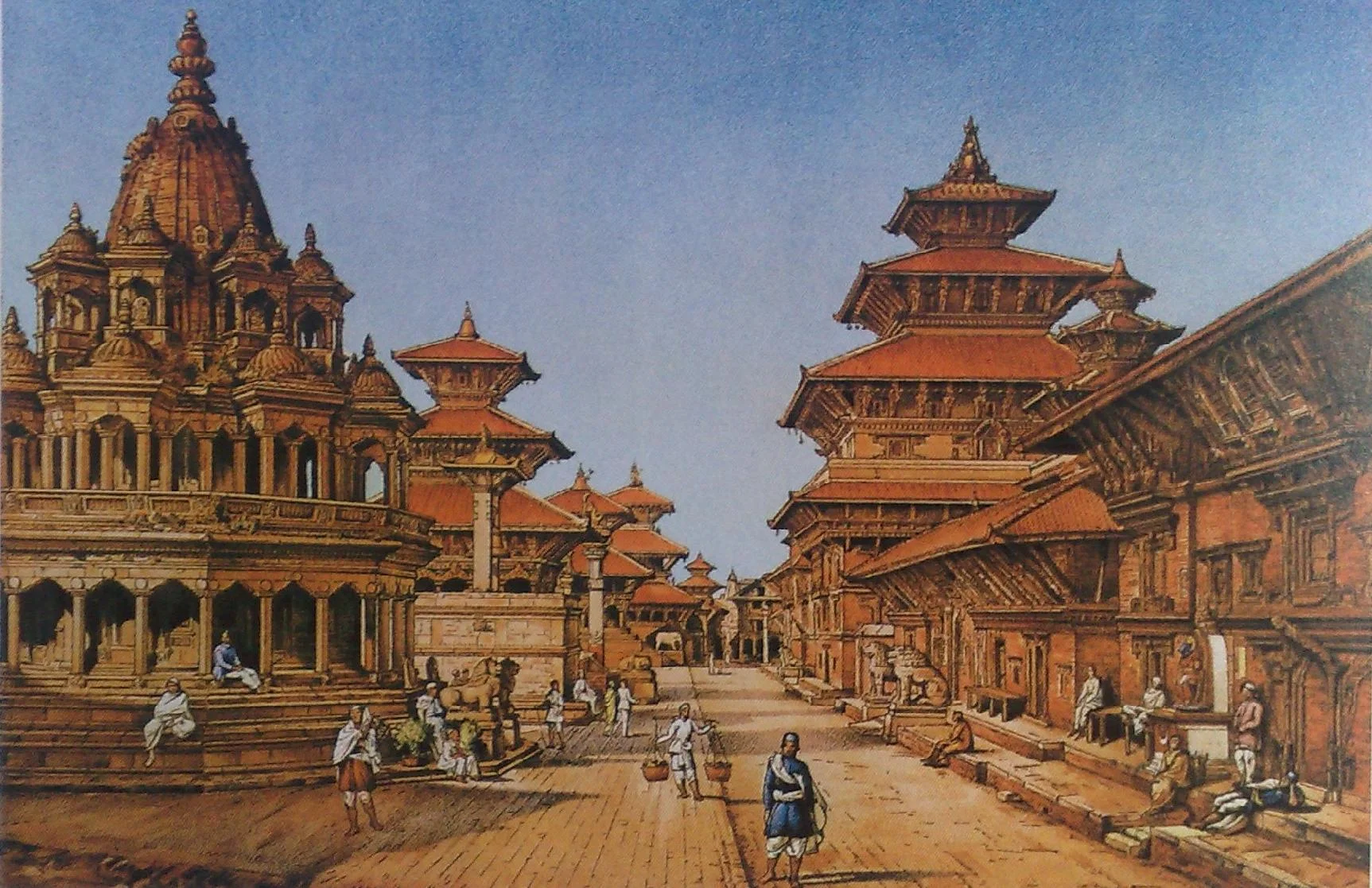
Patan (Lalitpur), the ‘City of the Arts’, is chock-a-block with treasures at every nook and cranny. There are also many fascinating but lesser known places that can pique your curiosity and sense of adventure.
You’ve heard about Patan’s world heritage monument, the Durbar Square, with its many fascinating monuments, including temples of many different architectural styles. You’ve also probably heard about the restorations completed in recent times, such as that of Tusha Hiti, as well as ongoing restorations at sites such as the Bhaideval Temple. Patan Museum inside the former royal palace is one of the more famous renovation projects, a successfully completed Nepal-Austrian joint venture with architect Gotz Hagmueller (also responsible for ‘Garden of Dreams’ in Keshar Mahal in Thamel) at the helm. However, most other restoration/renovation works around the locality are the efforts of an organization called Kathmandu Valley Preservation Trust (KVPT).
Kathmandu Valley Preservation Trust
Many renowned restorers/architects are part of this trust, which was also responsible for the making of the famous Baber Mahal Revisited, an extensive renovation of what was once just a cowshed that was part of a 250-room palace called Baber Mahal, one of nine neo-classical palaces built by Prime Minister Chandra S.J.B. Rana in 1901-1929. Baber Mahal Revisited is one of KPVT’s most visible accomplishments, but there are many more important works to their credit. Now, if you’re in Nepal, make it a point to visit their office, located in an old building in one corner of the Patan Durbar Square.
Besides its architectural offices, there’s also a library with a collection of some pretty interesting hard-to-find photographs, old drawings, and historical books. The top floor is a guest quarter with tasteful and comfortable ethnic interiors where you could spend a night or two. The small veranda has a sweeping view of the durbar square, and really, sitting there watching the activities below throughout the day, you’ll realize why we keep on talking about ‘living culture’ all the time.
Birth-to-death Shop
There’s a shop on the ground floor of the same building that’s referred to by locals as the ‘Birth-to-death Shop” (real name: Hem Narsingh ko Pasal). Ask, and the shopkeeper will show you a file full of lists pertaining to items needed for rituals ranging from birth to death for the Newar community, as well as for parbates (hill people), and Buddhists. The shop’s reputation is based on the precinct that it will have available, at all times, even the smallest item needed. The shop also sells the rare Matsyendranath flower that’s meant for offering at the sacred Matsyendranath Temple, and root-like herbs called sadewa and sadewi (male-female in English) that are said to have the power to make anyone besotted to you if you just touch them with it.
Dare if you want to, but know that the one besotted will be after you forever and more, and if the love is unrequited, you’ll be in serious trouble! Among the shop’s regular clients are shamans who come shopping for such things, as well as for bear’s hair, tiger’s whisker, etc. for their tantric practices. So, visit the ‘Birth-to-Death-Shop’ and browse around for some truly exotic souvenirs.
Jyotishis and shamans
Although there are plenty of excellent hospitals in Patan, jyotisis (astrologers) and shamans, too, have thriving practices, with many clients seeking out-of-the-world cures for various ailments. Here’s a typical scene at one: Time: evening. The jyotishi: a man in his 70s who sits on a sofa behind a table full of parchments, scrolls, and a brass plate containing raw rice. The client: a well-dressed middle-aged woman. The conversation: “My husband is an important government official. Things are not going well for him; a promotion is overdue.” She hands over her husband’s janma patra (document showing planetary positions at time of birth). The jyotishi studies it for some time, and does some calculations. “Your husband’s graha dasha (planetary configuration) is not favorable for the next six months. I will give you a mantra (Vedic incantation). Ask him to repeat it 100,000 times. He should also wear a coral Ganesh ring. Things will start getting better.”
You don’t need a janma patra; your birthday and year will also do if you want to have your fortune told and want a cure for some bad karma. Look around for signboards, you’ll find quite a few around the area known as Prayag Pokhari, as well as in Satdobato. You’ll also find jyotishis in well-known tantric shrines like the Baglamukhi and Bhairabhnath temples.
What bout shamans? Well, here’s what I observed at Buddhi Kumar ‘Gurujyu’’s place of work in Kutisawagal, a 15-minute-walk from Patan Durbar Square, A ‘Shiva tantric’, he sat under a canopy of colorful wooden snakes. Shelves held deity figures as well as plastic bags containing herbs and vials of so-called ‘Himalayan Oil’. A woman and a frail-looking boy of about five sat cross-legged facing him across a brass topped counter.
The woman said, “He keeps on crying all the time. Don’t know why.” She handed over a plastic bag of rice. Gurujyu poured the rice on a brass plate, picked up a few, and then let them fall on the plate. He repeated this procedure a couple of times, and then declared, “Runche bimari (crybaby syndrome)”. He offered some rice to one of the deities, and then flicked some on the child. Next, he blew forcefully on the boy’s face. The young mother murmured, “Doctor said...pneumonia…” The shaman again flicked some grains at the child, waved a black-feathered broom over his head, and blew forcefully twice more on his face. “He will be all right now,” he said. The woman thanked him, and bowing respectfully, went out with her son.
Next, a young woman entered and handed over 10 rupees. In return, Gurujyu handed over a small plastic bag with some herb inside. “They are ‘karne paat’ (a variety of leaf),” he said, adding, “They can only be collected at midnight in the jungle.” Apparently, it is a cure for alcoholics and the woman is a regular customer. One can assume that she must be administering the cure in a surreptitious manner to her husband. If you are interested in shamanism, do visit the Gurujyu. He’s a robust middle-aged man with an open and forthcoming manner. Among his clients are many women who come to look for a cure to prevent their husbands from deserting them. He also claims to communicate with spirits, especially for patients suffering from acute depression.
Fire temple
Another fascinating but less well-known site in Patan is a fire shrine called Agnishala Temple that’s located at the end of a lane opposite Kumaripatti (where Patan’s Living Goddess Kumari give audience during big festivals) in Kumaripati Road near Jawalakhel. As far as anybody knows, a fire has been kept burning at one or more of its five fire altars for the last 4000 years or so. According to the priests here, it may perhaps be the only fire temple in the world with five kundas (fire altars), most of the others making do with only one. These are called Vishnu Kunda, Brahma Kunda, Shiva Kunda, Surya Kunda, and Savya Kunda. The first is the largest and most important while the last is meant for end-of-life rites. Homs (fire rites) are conducted for those wanting to negate the impacts of bad graha dashas or to enhance their fortune by appeasing various gods/goddesses as well as the planets. Birthdays are special days, when visitors have a hom done to please their planetary ruler/s as determined by their birth charts.
Sacred pear tree
There’s something else about this unique temple that is worth knowing about. On its premises are some tall dense trees, the likes of which are not to be found anywhere else in the country. Called Barun Brikshyas (Barun: god of water; brikshya: tree), it is said that water will never dry out in wells around its locality. Scientifically named Crateava religiosa, they are also called ‘sacred garlic pear trees’. Myth has it that sages in ancient times ate one of these pears to stave off hunger for a whole month of meditation. You might be lucky to get one too!
Well, there you have it. These are but a few of the many hidden gems of Patan that are pretty fascinating; and you should not only make it a point to visit them, but also make the effort to discover more during your Nepal tour. Oh yes, you can rest assured that there’s plenty more!
Hiking in and around Kathmandu Valley
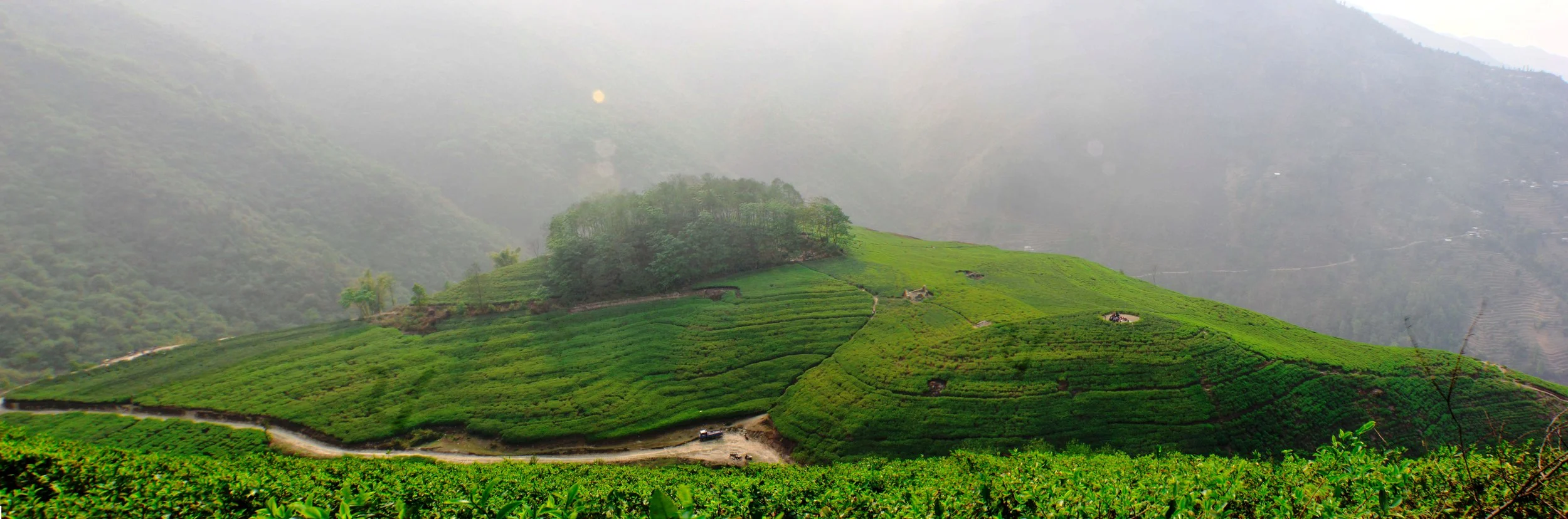
While Nepal is famous as a trekking destination, there are also some shorter hikes, especially around Kathmandu Valley, that are refreshing to the extreme.
Legend has it that the Kathmandu valley was once a gigantic lake called Nagadaha inhabited by innumerable snakes (nagas). How did it come to be a valley fit to be lived in by humans? Well, according to the most popular myth, there was once a revered Buddhist sage called Bodhisatva Manjushree who came upon the giant lake during one of his travels. He decided to make it inhabitable for humans, and with a single massive stroke of his so-called ‘Sword of Wisdom’ sliced out an enormous gorge in a place called Chobar in Kirtipur, that’s some six kilometers southwest of Kathmandu. Water immediately began to gush out of the huge lake, and in due time, it was drained completely.
This gorge is one of the places that you will come across when visiting Kirtipur during your hike in and around Kathmandu Valley. Beside its fabled history, there is something else that should be of interest. There’s a suspension bridge spanning the gorge that was made in Scotland (Aberdeen) in 1903 and carried into the valley, a part at a time, since there was no road to speak of then connecting with the outside world. A herculean feat, no less! You’ll also find numerous caves in the cliffs around the gorge. Nearby is the Taudaha Lake, a natural lake that’s a wetland site for quite a few bird species.
Kirtipur, a short distance away, is an ancient Newari town with a fascinating history. During the time when King Prithvi Narayan Shah (1723-1775) was on his mission to unify the many states of the country into a unified Nepal, he attacked Kirtipur twice, and was soundly repelled both times. The third time around, he managed to do so, but that was due to a huge stroke of good luck. The story goes that during the battle, a Kirtipur soldier had the king at his mercy, and was on the verge of chopping off the royal head. However, a rock stood in the way between the king’s head and the soldier’s khukuri, and so the king escaped certain death. Apparently, even today, people spit on that very same rock as they pass it by, and so they should, considering what happened after Kirtipur’s fall. The enraged king ordered the noses and lips of all local males to be cut off, and these cut off parts weighed 80 pounds at the end of the bloody frenzy! So, keep an eye out for this infamous rock during your hike.
About 15 km away from this historic town is a very famous temple of the valley, that is, Dakshinkali Temple. Dedicated to Goddess Kali, the rituals here are tantric in nature, with animal sacrifices conducted on Saturdays, as also during festivals like Dashain. Your hike to these places begins from the ring road and takes you across the sprawling grounds of Nepal’s premier university, Tribhuvan University, on a well-maintained road that gradually goes up. All in all, it’s a most pleasant hiking experience. Another hike you will like is the one that takes you to the villages of Bungamati and Khokana.
Bungamati is a Newari village in the traditional mold that dates back to the 16th century and is located about 10 km south of Kathmandu. Full of brick houses and flagstone-paved lanes, it is famous for two things: first, as the winter residence of Rato Matsyendranath, in whose honor a major month-long festival is held every year in Patan (Lalitpur), and second, as the village with the best woodcarvers in the valley, perhaps in the country. Speaking about the first, the sandalwood idol of Rato Matsyendranath is kept here in a temple for six months, and some weeks prior to the beginning of the festival, it is taken to Lagankhel (in Patan), where it is given a holy bath followed by certain rituals, such as repainting of its face.
After taking the one-hour drive from Kathmandu to Bungamati, you begin your explorations on foot, and start exploring the quaint village at your leisure. When doing so, you’ll observe quite a few woodcarvers busily carving objects such as wooden windows, doors, and so forth; veritable objects de’ art, you’ll agree on looking at the end results. Indeed, such are their skills that Bungamati’s woodcarvers are much sought after in many handicraft industries around the valley. From this village of Rato Matsyendranath and skilled woodcarvers, you next walk to another classical one that’s quite close by, walking through lovely scenery and in pretty good weather, especially in the October-December season.
The village you’ll be hiking to is called Khokana, and it, too, is inhabited by Newars. However, this village is famous for a completely different thing, and that is, the production of mustard oil. Well, what’s so great about mustard oil? You may well be asking. Right, but Khokana’s mustard oil is the kind that you might not get anywhere else but here, made as it is using methods that are as ancient as is the valley’s history. You’ll understand this when you come across oil-pressing mills around the village with their ancient-looking implements, and when you see how the oil is pressed. Khokana’s mustard oil is in high demand throughout the valley, and while walking around Kathmandu’s bazaars, if you see men with weathered faces shouldering heavy tin cans hanging on both sides from a bamboo staff, chances are good that they have come to sell mustard oil from Khokana.
Well, now you know why these hikes are highly recommended when visiting Nepal. You’ll get a pretty good experience of life as it has been for centuries. A far cry from what you are used to, surely. You’ll probably be amazed at how laidback the lifestyle is in areas around Kathmandu city, despite being in such close proximity with the capital’s hustle and bustle. What’s more, you can even spend a night or two, if so inclined, at a homestay in Bungamati, where living with a local family allows you to absorb more of this blessed lifestyle.
Nepal’s Masala Culture
Nepalis love spices (masala) and use them to the hilt when conjuring up their delicious cuisine. What’s more, Nepal is also a global leader in production of some spices!
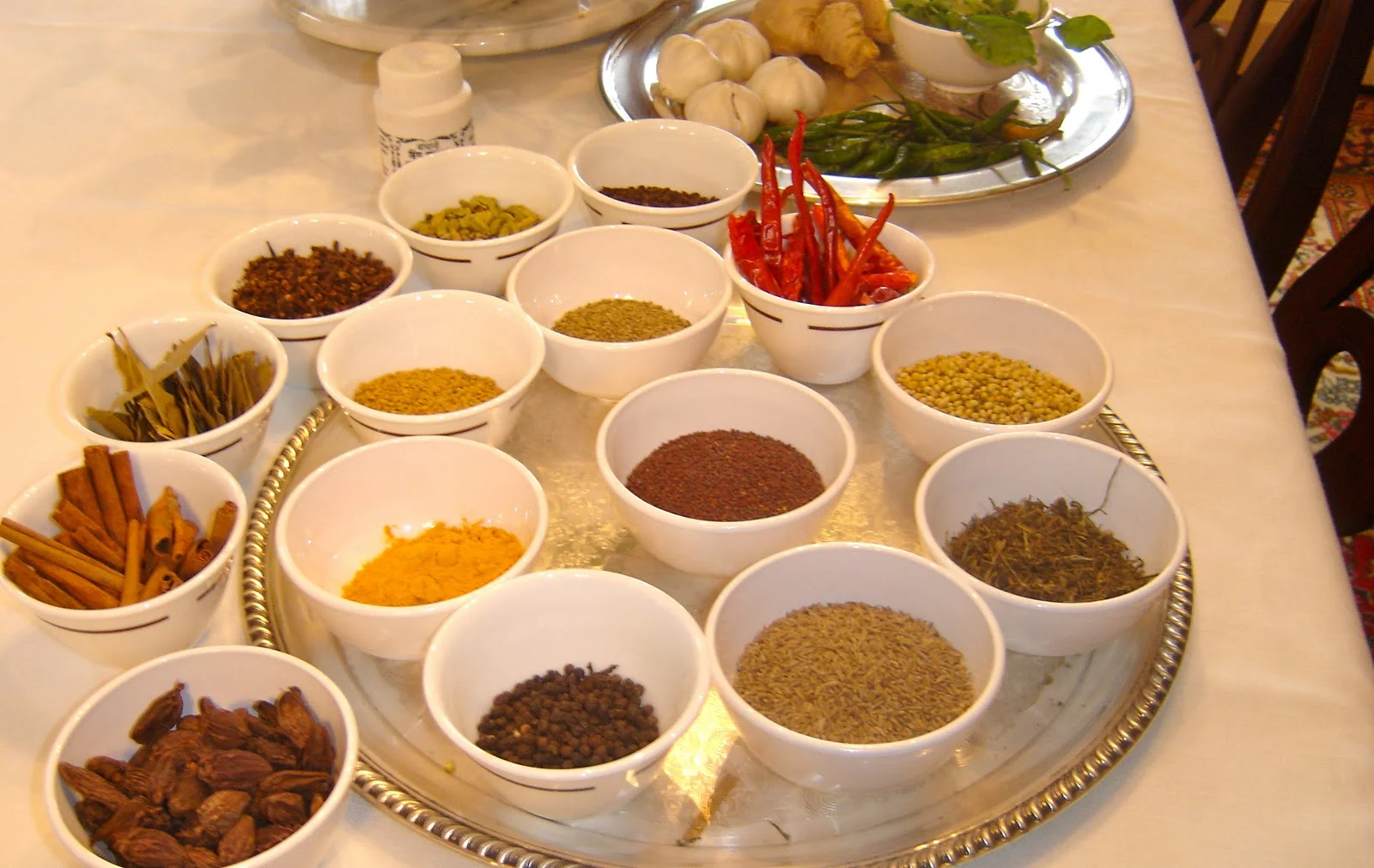
Spices (masala) are indispensable to the Nepali way of life, and that’s a good thing is what we say! Spices contain valuable oils with health-enhancing properties, and contain a fair amount of vitamins, minerals, and antioxidants. While no Nepali cuisine can be complete without a number of spices being used, demand spikes during festive occasions like Dashain and Tihar, as well as during the wedding season. One of the most commonly used is garam masala, especially in meat dishes, of which most Nepalis can be said to be connoisseurs. It’s a mixture of a dozen spices, viz. coriander (dhania), cumin seeds (jeera), turmeric (besar), methi (fenugreek), black pepper (marich), cinnamon (dal chini), bay leaf (tejpat), mace (saipatri), nutmeg (jaifal), clove (luang), large cardamom (alainchi), and green cardamom (sukmel).
These different spices are the ones that generally go to make up the usual range of spices used in Nepali cuisine. Of course, different dishes require different combinations. For example, the better informed use only dhaniya, besar, and garlic (lahsun) when making fish curry; the less adept use everything possible to make it spicy, which may be how they like it, but it does reduce the taste of the fish itself. This only goes to highlight the fact that spices are to be used sparingly because their function is to enhance flavor, not dominate it. And, while people all over the country use the same range of spices, different communities use them in different ways. The people of the high hills and mountainous regions, such as the Sherpas, also use wild spices such as koma and zimbu. Some other spices used all over, beside those mentioned above, are ajowan (jwano), fennel seeds (saunf), basil (tulsi), mint (pudina), and of course, the all-prevalent chili peppers (khursani).
Now, the last mentioned might not be so desirable for many tourists, but for those who like it hot and fiery, it gives a real zing to any dish. Anyway, you might like to know that you can minimize chili’s fiery effect by removing the seeds and white inner membrane, which actually contains most of the capsaicin. However, it’s in capsaicin where the health benefits of chili lie, such as inhibiting inflammation. Speaking about health and spices, here’s a brief review: Jeera helps digestion and prevents bloating. Dhaniya helps to reduce fever and reduce excessive menstrual flow, while freshly dried coriander helps in conjunctivitis. Hariyo dhaniya (green coriander) promotes digestion and is said to be a mild aphrodisiac. Besar has ant-inflammatory and antibacterial properties, besides containing antioxidants; its paste is a popular home remedy for sunburn.
Kalo marich boosts digestion and increases appetite. Jwano is good for building up resistance, and for curing indigestion, ear aches, and toe nail fungus infection. It also helps to bring phlegm out, besides being an antispasmodic. Lahsun has antibacterial and antifungal properties and helps to lowers blood pressure (crushed garlic is what is recommended; add it towards the end of cooking, more potent that way). Aduwa (ginger) reduces gas and alleviates travel sickness and hangovers; and it, too, is a mild aphrodisiac. Pudina soothes the digestive tract and tea made out of it will ease irritable bowel syndrome discomfort. Tulsi helps in relieving bowel inflammation and rheumatoid arthritis. Sukmel stimulates digestion and relieves flatulence, and its fragrance covers bad breath. Dalchini relieves pain and improves circulation, aside from providing relief for intestinal gas. Luang is an effective panacea for toothaches because of its anti inflammatory and pain relieving properties. Saunf helps to reduce coughing bouts.
So, you see, even this very brief mention of some of spices’ health benefits should make it clear that spicy food is not such a bad thing after all! Of course, like said before, there has to be a balance, since taste can be compromised if too much spice is used. While most people today go for the packaged stuff, there are plenty of places around Kathmandu Valley where you’ll get freshly ground spices, and really, in this day and age of massive food adulteration, that’s the best way to go. If you go to Ason Bazaar, that ancient market in the center of Kathmandu, you’ll find many spice shops, some of which have been there for ages. In fact, there’s one called Shanka Pasal, whose founder, Bhai Ratna Bajracharya, is said to have first started the spice trade here. At such shops, you’ll also get whole spices that you can have ground later on.
There’s another thing about the word ‘masala’—the Nepali word for spices. It can also refer to dry fruits, and this is something that is at its highest demand during Tihar. Also, there’s a mixture called ‘sutkeri masala’ that’s a popular supplement for nursing mothers. It’s a mixture of both spices and dry fruits, specifically, edible gum (gund), batisa (mixture of 32 herbs), jwano, methi , saunf , and dry fruits. It’s a potent mixture that contains all the essential nutrients. Similarly, infants are traditionally fed a mixture of cashew nuts, pistachio, almonds, nutmegs, and dates as a nutrition-packed supplement. Dry fruits make up an important part of any celebration in Nepal, and some like the coconut are considered to be an auspicious offering to the gods.
All in all, Nepal is a masala-loving country, that’s for sure, with their use being both traditional and obligatory in many instances. And, that’s not all; it’s also a matter of pride that the country can claim to be among the world’s leading producers of some spices. In 2010, Nepal was declared to be the global leader in producing large cardamom (alainchi), the quantity being a whopping 6,647 tons. The country also produces large quantities of ginger. Great going, right? So, here’s a big hurrah for Nepal and its masala culture!
The Historic Durbars of Kathmandu
The Rana Period (1846-1951) was witness to a great many historic events, not least being the building of durbars on a scale not seen before in Nepal.
A former Nepali diplomat is the proud owner of a house in Tinchule, near Bouddha of Kathmandu, that once belonged to Juddha Shumsher Jung Bahadur Rana, one of the more famous Rana prime ministers of the country. More than 150 years old, it was the prime minister’s summer house, and it is a property that anybody would cherish. However, it is only a small legacy compared to the great architectural legacies of the Ranas during the Rana Period (1846-1951), principally, the magnificent durbars that are strewn all over Kathmandu.
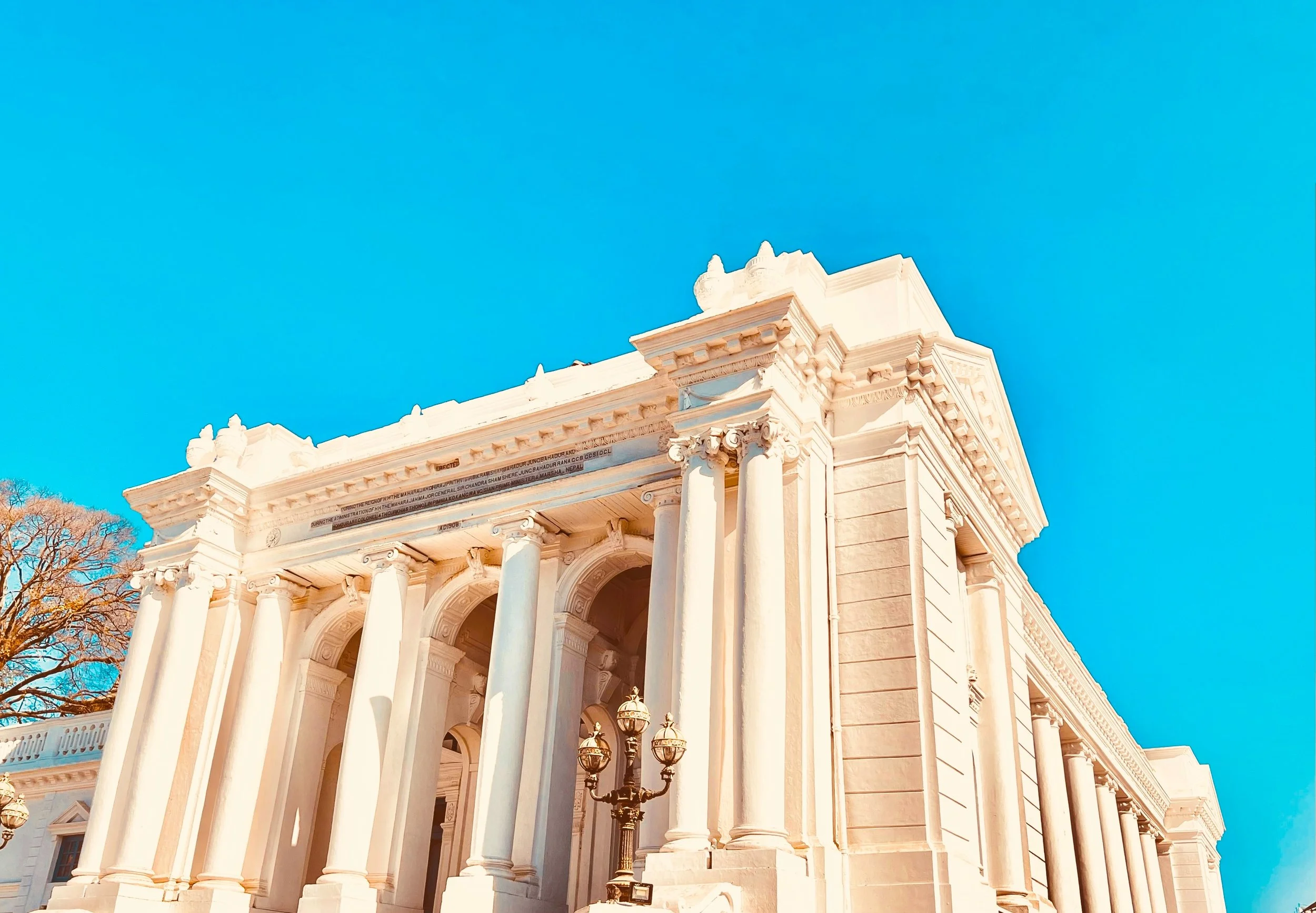
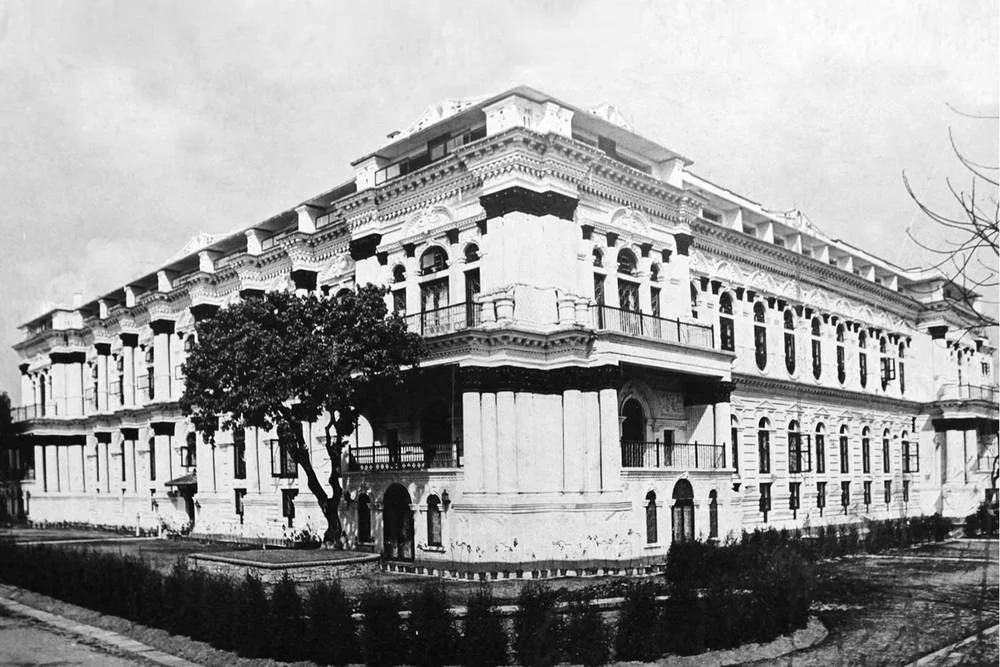
What sets them apart, aside from their huge sizes, is their completely different style of architecture from the hereto traditional styles of the Newars and the Shahs. The Ranas, indeed, introduced as radical a change as was possible in both scale and design from the existing architecture in Kathmandu. Built in neo-classical or Baroque style, these grand durbars were generally white-plastered and with arresting French windows. Grecian columns were everywhere, and they came in different sizes, the more imposing ones adorning the spacious porticos.
The Narayanhiti Durbar is, of course, what first comes to mind when talking about Rana Period architecture. Prime Minister Jung Bahadur Rana built it in 1847 as a gift for his brother Rana Uddip Singh. Originally, the style was totally neo-classical, but after it became the royal palace of the Shah Kings, renovations and remodelling followed in 1889, along with quite a bit of expansion. Later still, in 1969, King Mahendra Bir Bikram Shah constructed a more modern-style palace.
Today, the Shah Kings have become part of history, and the royal palace is now a museum, with one part taken over by the Foreign Ministry. For himself, Jung Bahadur built another grand durbar, the Thapathali Durbar, besides the Bagmati River in Thapathali. This one was primarily designed in the colonial style, and with the passage of time, much of it has been demolished. However, the main part remains to remind us of what was once Jung Bahadur’ grand durbar. Today, Nepal Rastra Bank’s Currency Management Department has its offices there.
The earliest durbar to be converted into a hotel was Bahadur Bhawan in Kantipath, near the former royal palace. Constructed in 1889, it was later refurbished into what is believed to be the first hotel in the country, and appropriately enough, it was named the Royal Hotel. For reasons unknown, the hotel closed down later, and today, the durbar is home to the Election Commission. Another durbar that went on to become a hotel was Lal Durbar near Durbar Marg, which was built by Prime Minister Bir Sumsher In 1890. Much later, extensive renovations were made to a part of this impressive durbar to convert it into the famous Hotel Yak & Yeti, a luxurious five-star property.
Bir Shumsher was also responsible for making the Seto Durbar on Durbar Marg in 1893, as well as the Phora Durbar in front of the royal palace in 1895. Unfortunatly, during the great earthquake of 1934, fire broke out, and most of Seto Durbar was destroyed, leaving only a small wing intact. Phora Durbar was famous for its lovely gardens and its many beautiful fountains. Today, it is a club for Americans in Nepal. Around the time Phora Durbar was built, another durbar was built nearby around a courtyard with beautiful gardens and water bodies. It was named Keshar Mahal, and today, besides the Ministry of Education and the Keshar Library, which are lodged there, the garden has been lovingly renovated into what is now called the ‘Garden of Dreams’. .
In 1903, the biggest durbar of them all was built by Chandra Shumsher. He called it Singha Durbar, and it was where he set up his residence. Arranged around seven quadrangles were more than a thousand rooms. So large was the durbar that it ranked high amongt the largest buildings in South Asia. Then, in 1973, a fire raged through the durbar, and except for the front wing, everything else was destroyed.
Today, Singha Durbar is the focal point of governance in the country, with the parliament and many ministeries inside its premises, which also houses the Nepal Television and Nepal Planning Commission establishments. Another historic durbar to sustain extensive damages during the great earthquale of 1934 was Sital Niwas in Maharajgunj. The construction of the original durbar was completed in 1923, and after the earthquake, much of it had to be rebuilt. Today, it houses the President of Nepal and is known as Rastrapati Bhawan.
And, finally, how can an article on durbars be complete without mentioning the 120-year-old Agni Bhawan in Lazimpat, which was built by General Jit Shumsher Rana, brother of Jung Bahadur Rana, in 1894? Furnished with the finest accessories imported from Europe, Agni Bhawan was one of the most elegant of all durbars in Kathmandu. In due time, it became the property of General Agni Shumsher Rana, son of Juddha Shumsher JB Rana, and grandfather of the late Queen Aishwarya, former Queen Komal, and the late Princess Prekshya, who were all born here. Historical to the extreme, it was taken over in 1964 by an enterprising hotelier, the late Mr. Ram Shanker Shrestha, who converted it into the country’s premier heritage hotel—Hotel Shanker—by keeping its unique identity intact even while ensuring most modern amenities to its guests.
Well, there’s a lot to be said for the Rana years, not everything was good, of course. However, one cannot deny that the durbars they built were truly fitting tributes to their high ambitions and love for the grandiose.
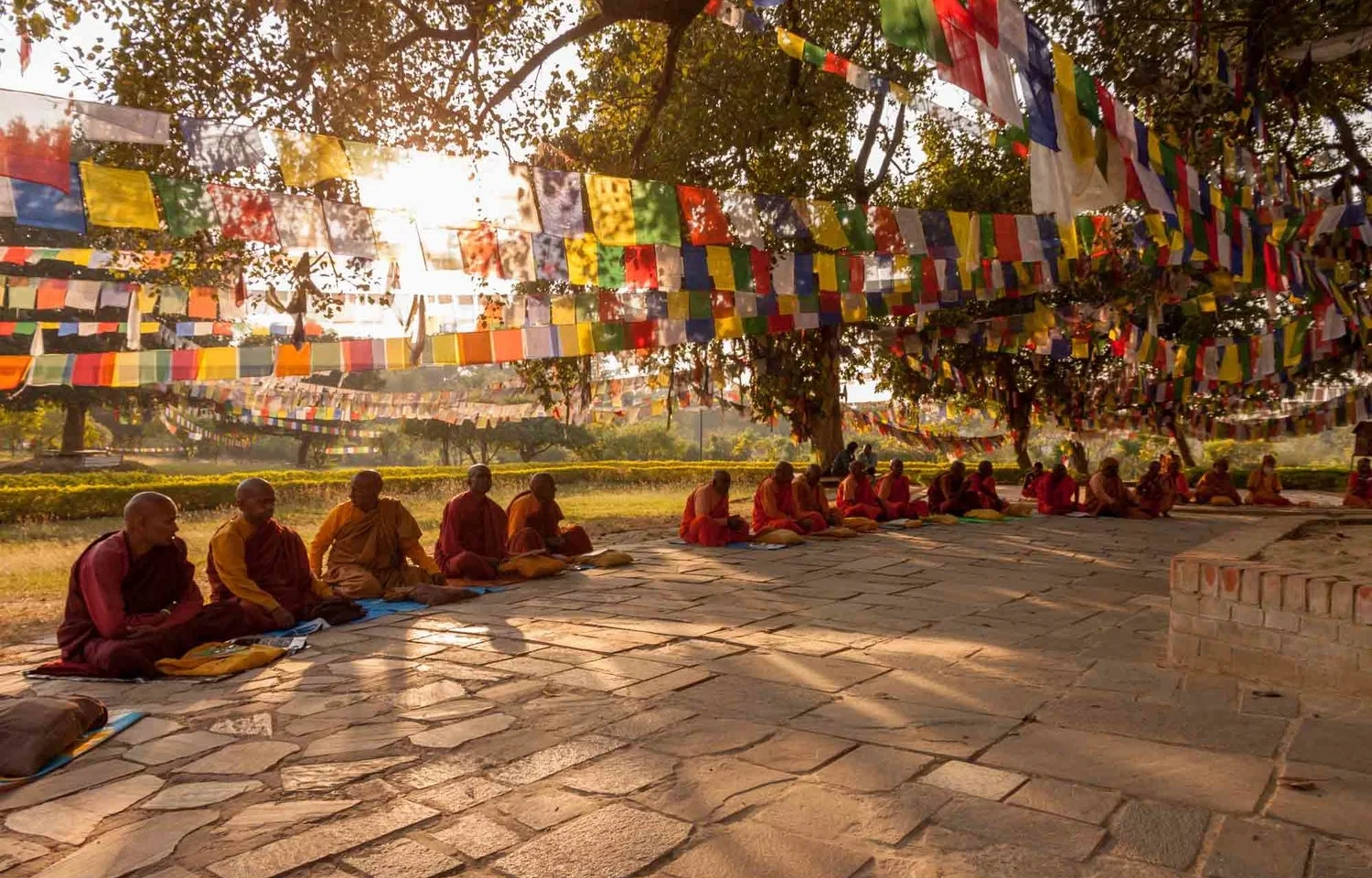
Buddhist Pilgrimage in Nepal
A Buddhist pilgrimage starts from Lumbini, the birthplace the Buddha. At the same time, one cannot miss visiting some other sacred Buddhist sites within the country, as well.
LUMBINI
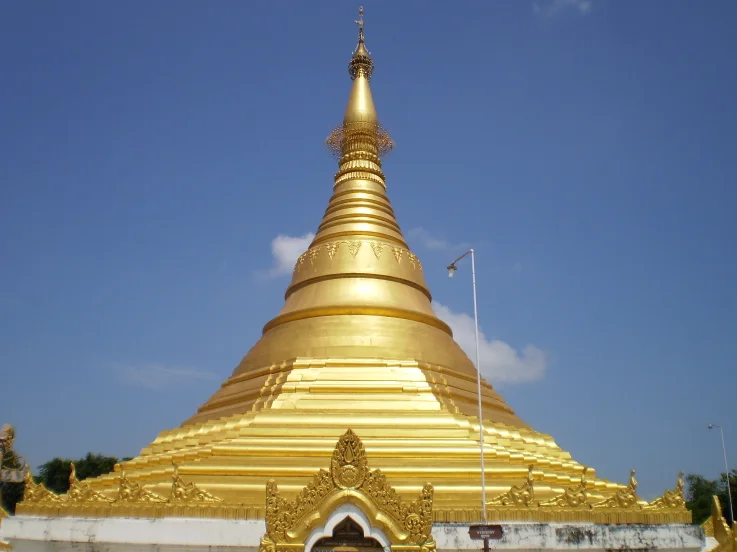
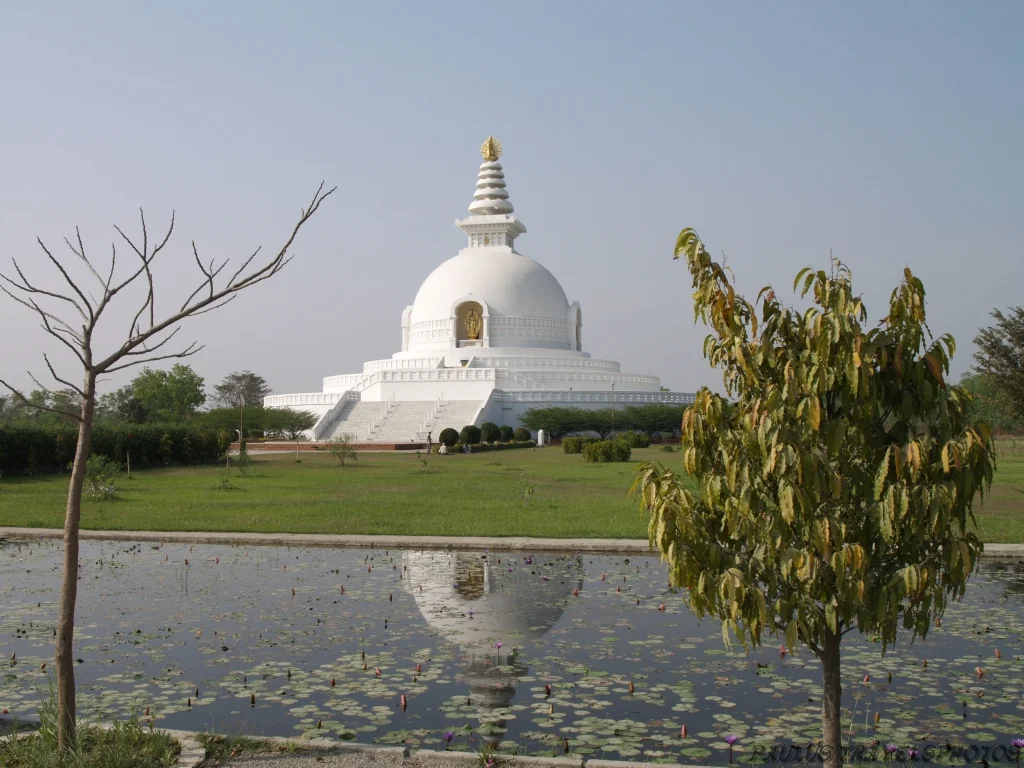
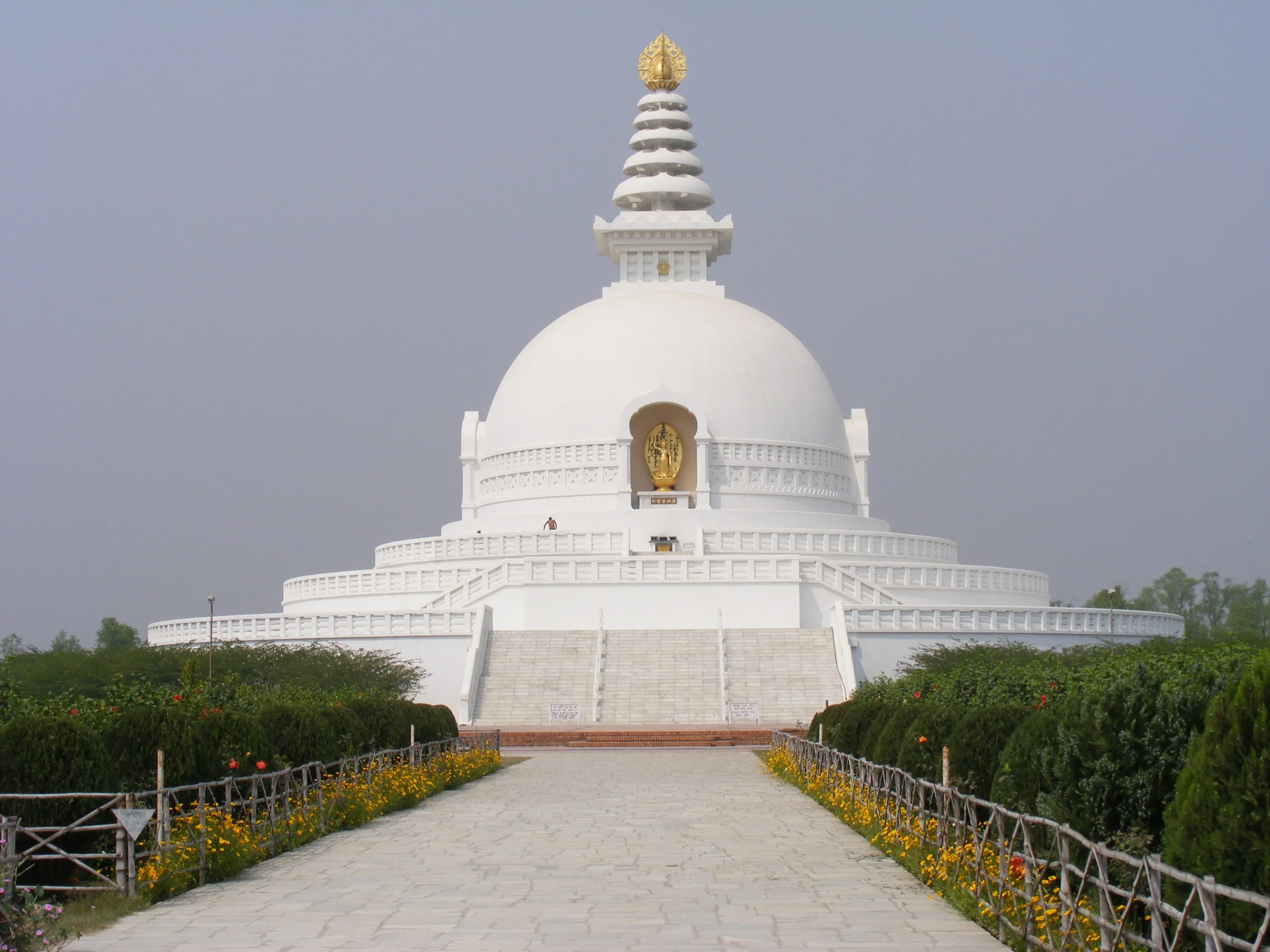
Lumbini is where it all began. Circa 563 B.C., in a place called Lumbini in mid-western Nepal, Queen Mayadevi of Kapilvastu gave birth to a child she named Siddhartha Gautam—a child who went on to be revered as Lord Gautam Buddha, the ‘Apostle of Peace’. After living in Lumbini for the first 29 years of his life, he began seeking the true meaning of life, and in doing so, attained enlightenment. His teachings gave directions to a new way of life for mankind, and eventually became one of the world’s great religions—Buddhism. His birthplace, Lumbini, is thus the most sacred site for Buddhist pilgrims from around the globe. To give it its due and make it worthy of an international pilgrimage site, in 1978, renowned Japanese architect Kenzo Tange was given the responsibility of making a master plan for what is known as the Lumbini Development Trust Area.
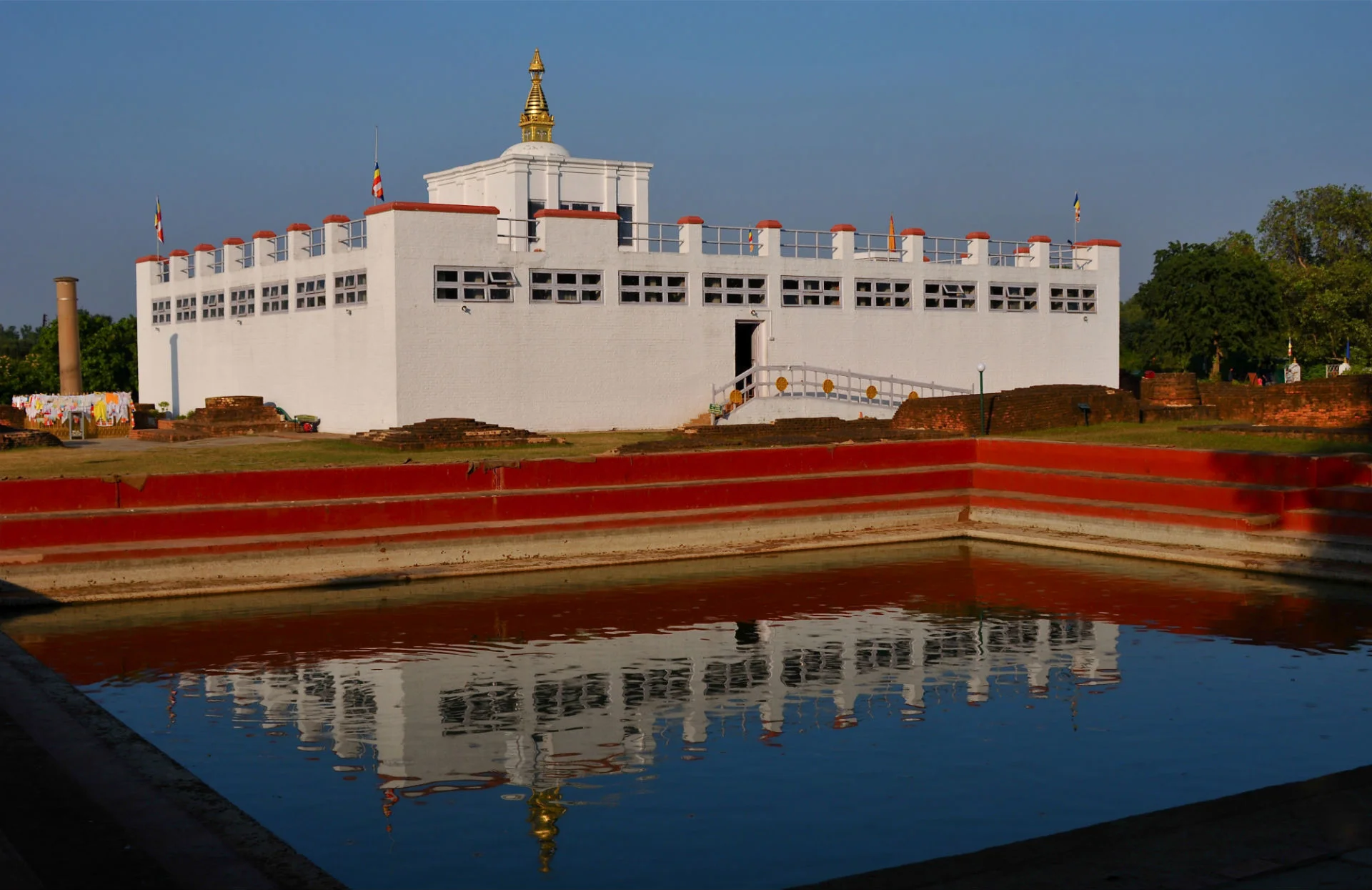
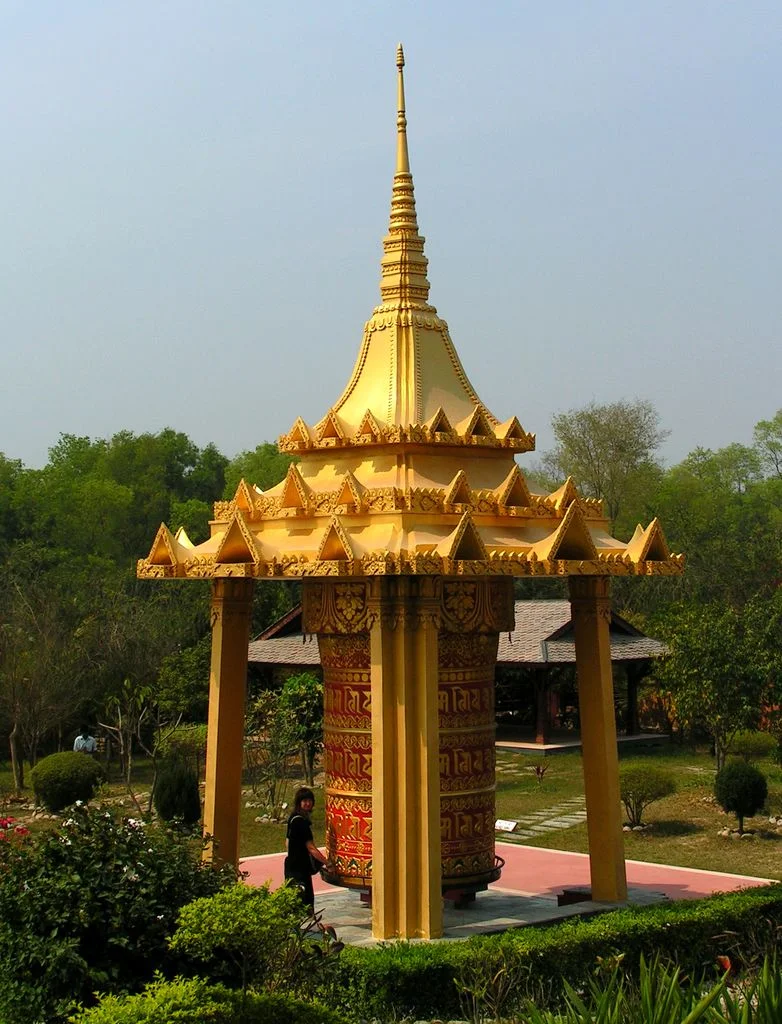
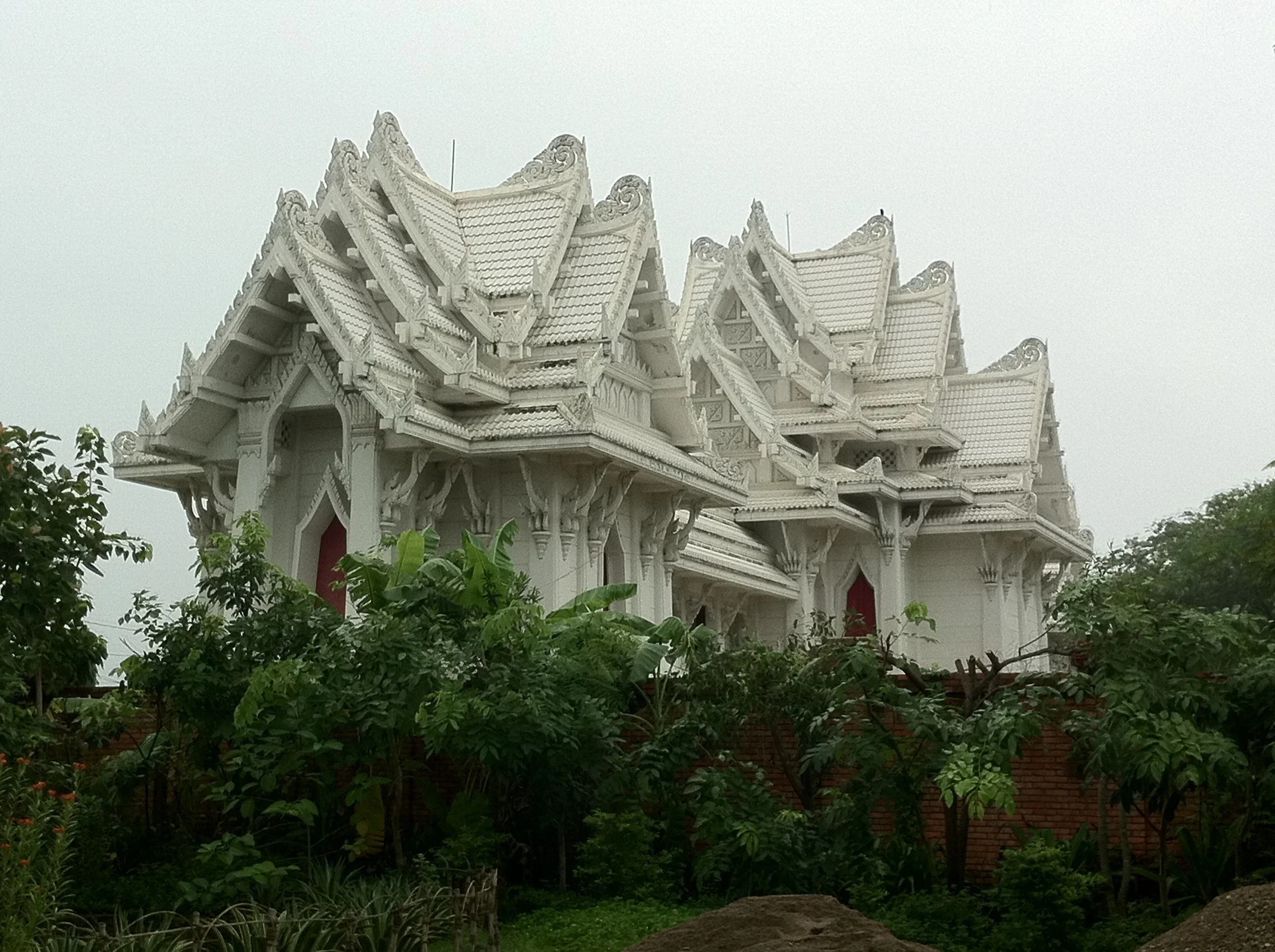
Accordingly, Lumbini was segregated as Sacred Garden Zone, Monastic Zone, and Educational and Culture Zone. The centerpiece of the garden is the Mayadevi Temple, with its stone image of the queen giving birth to Siddhartha, and near to it is the Puskarini Pond, where the divine infant was given his first bath. Nearby, too, is the famous Ashoka Pillar. Erected in 249 B.C.E. by Emperor Ashoka, it marks the Buddha’s birthplace. The Monastic Zone is divided into the East and West Zones. In the former are to be found monasteries built by followers of Theravat Buddhism, while in the latter are those built by followers of Mahayana Buddhism, as well as by those of Tibetan Buddhism. Inscribed as a World Heritage Site by UNESCO in 1997, Lumbini is a six-hour drive (about 265 km) from Kathmandu, and a 30-minute drive from Siddharthanagar (formerly called Bhairahawa), from where the Gautam Buddha Airport is three kilometers away.
Lumbini is, however, just the beginning of a Buddhist pilgrimage tour in Nepal. There are two other world heritage monuments, Boudhanath Stupa and Swyambhunath Stupa, both in Kathmandu, which are very important pilgrimage sites as well. Not only that, there are many other sacred Buddhist pilgrimage sites in Nepal that make the pilgrimage an extremely fulfilling one—sites such as Hiranyavarna Mahavihar, Kopan Monastery, Namobuddha, Seto Gumba, Dharmakirti Vihar, and so on.
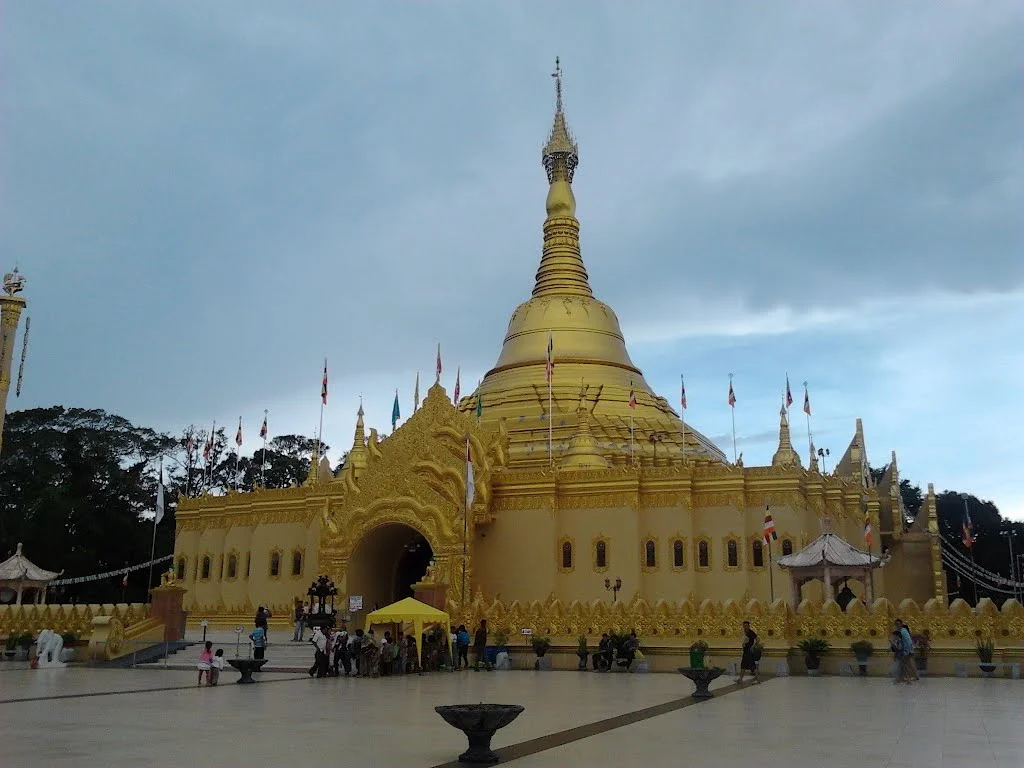
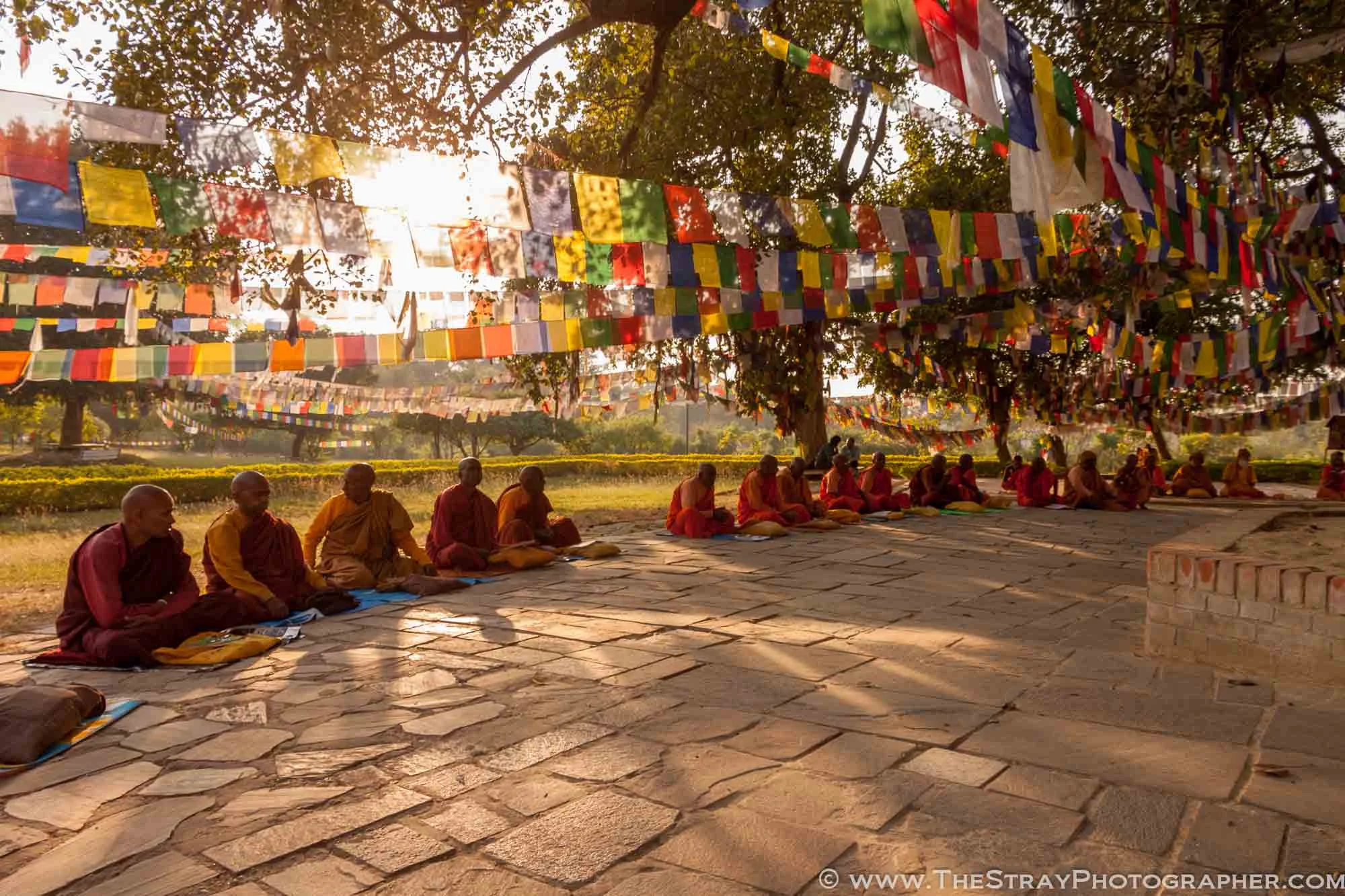
Photos of Lumbini (below)
BOUDHANATH STUPA
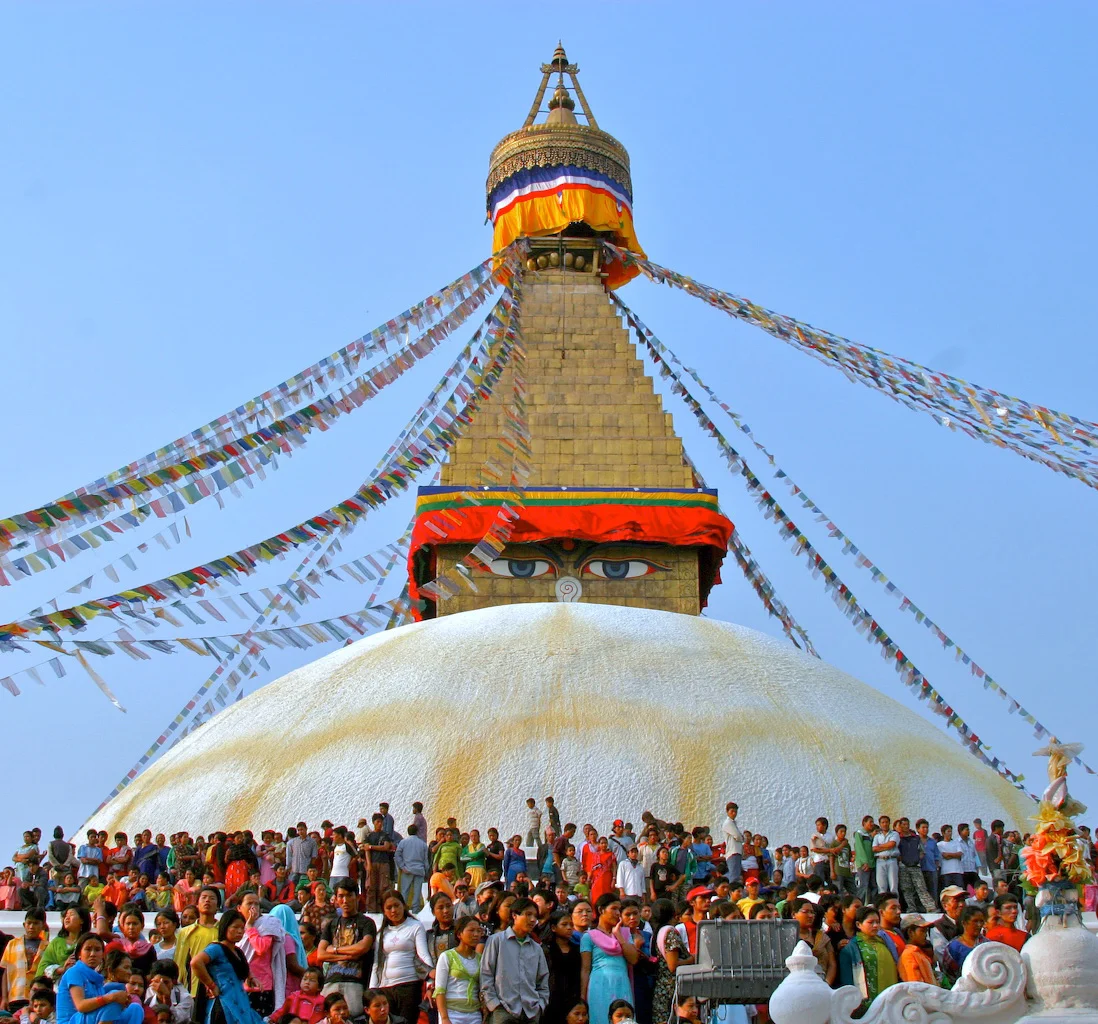
Boudhanath Stupa, the most holy Buddhist site in the country, is said to be one of the world’s largest stupas, measuring about 100 m in diameter and about 40 m in height. The massive dome, with Buddha’s eyes gazing in all directions, sits on a three-layered base, around which are 108 deity figures and hundreds of brass prayer wheels that are spun by devotees when circumambulating the shrine. Within the Boudhanath premises are a number of monasteries of Mahayana Buddhism, and the remains of the past Buddha Kashyapa are said to be enshrined within the stupa. This fascinating site is visited by Buddhists from far and near, and more so, by Buddhists from Tibet.
SWOYAMBHUNATH STUPA
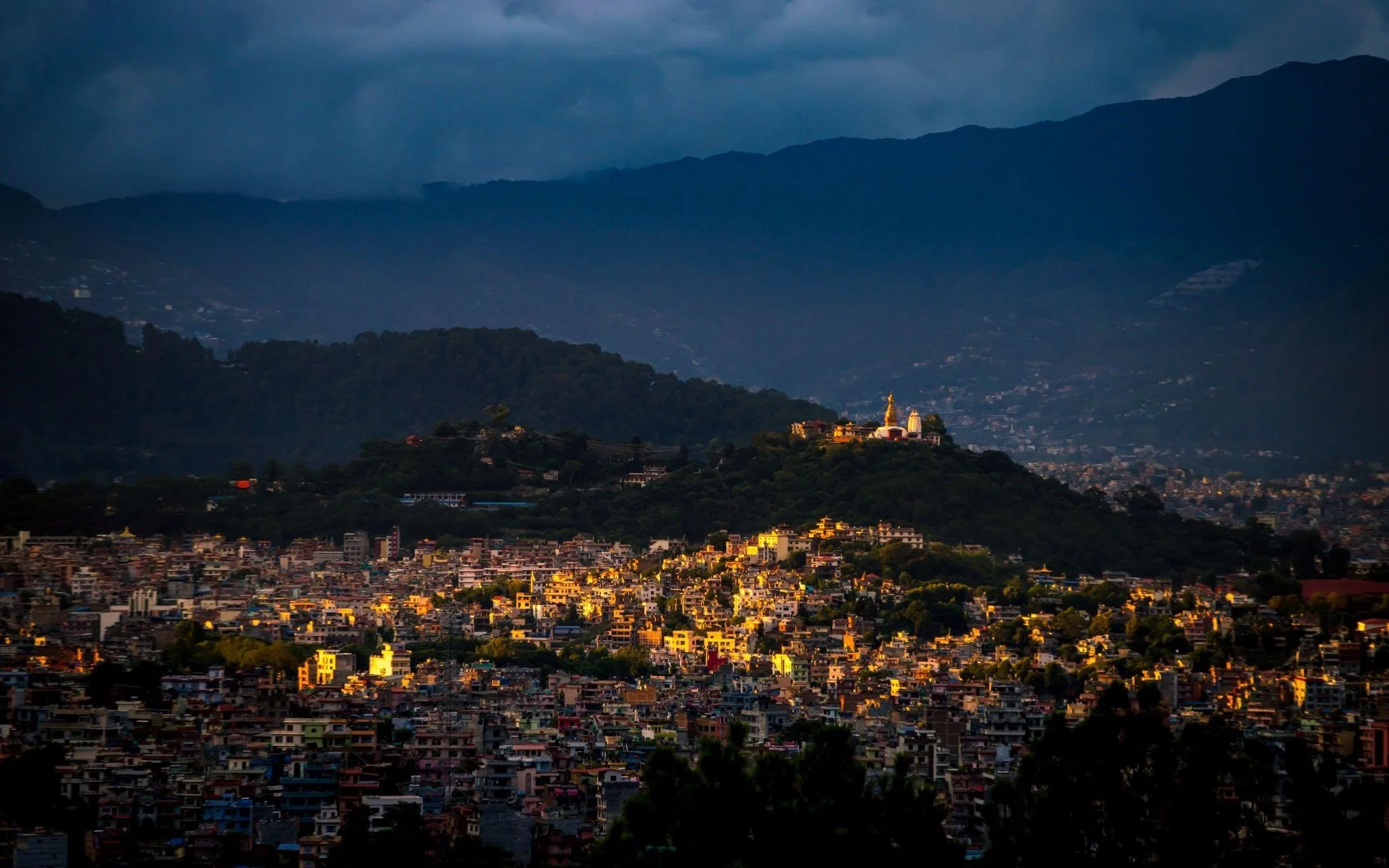
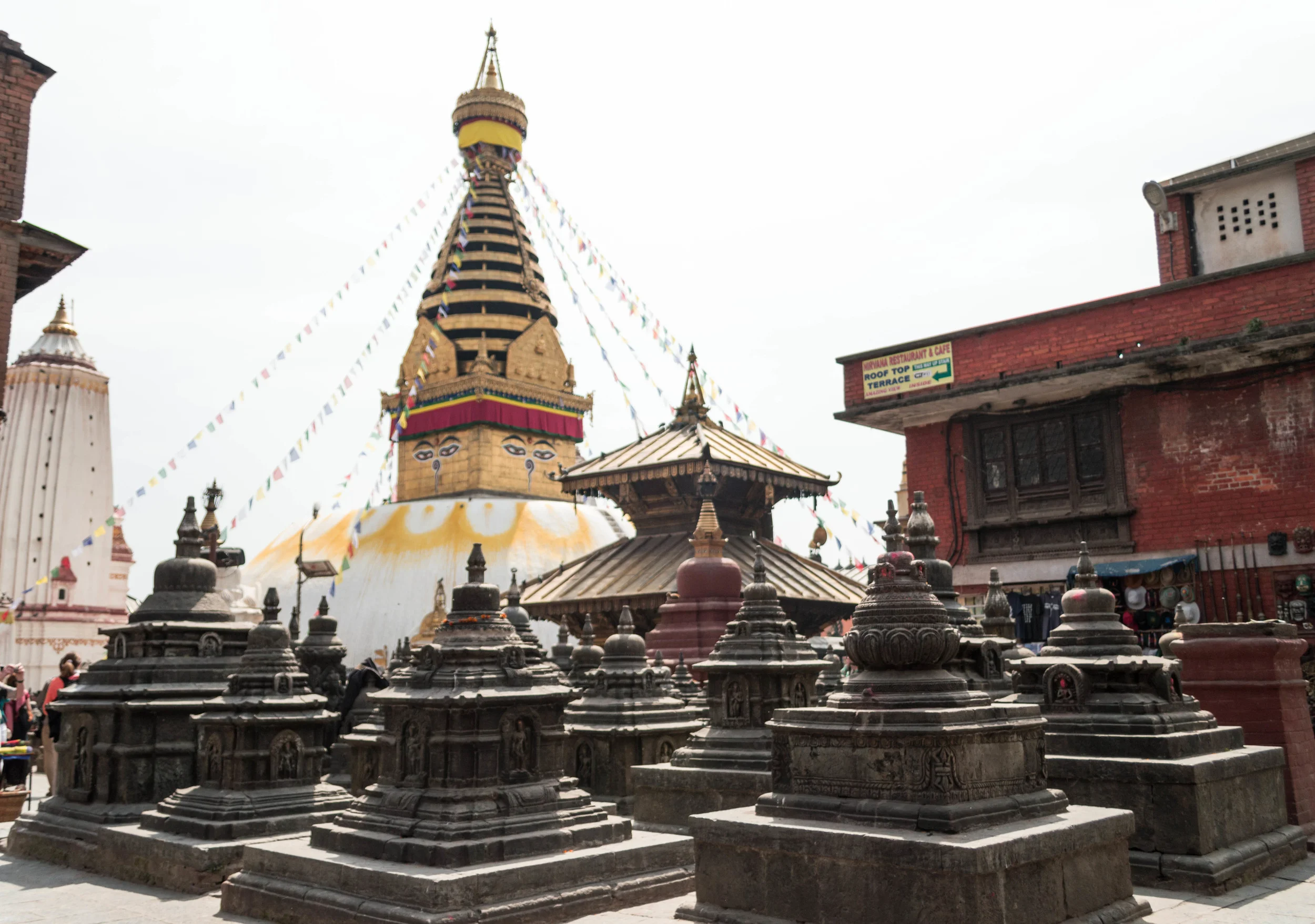
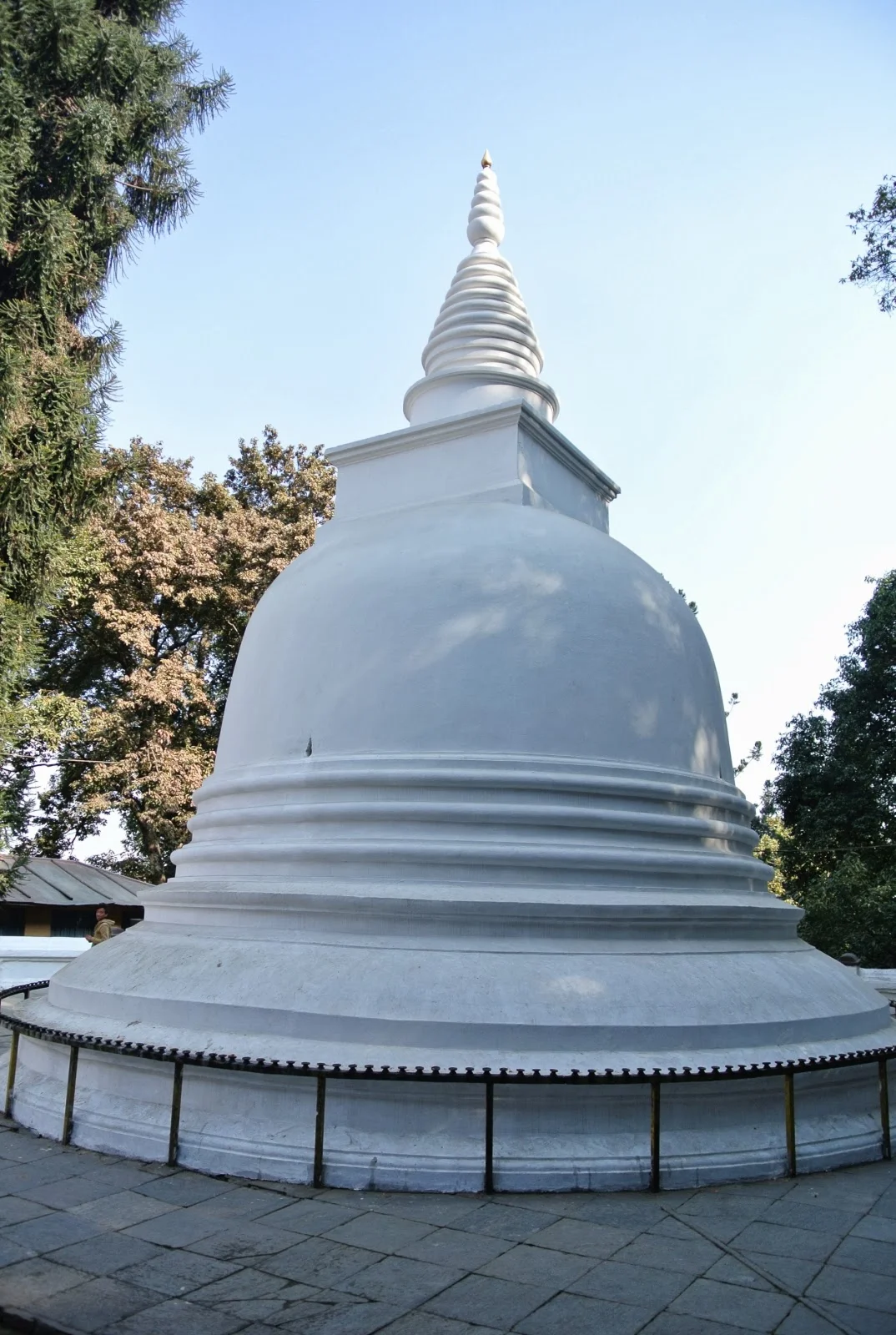
Swoyambhunath Stupa, located on top of a conical hill, has a lofty white dome, around which are the eyes of the Buddha (each pair having a third eye above them), and a glittering golden spire. One of the most ancient shrines in the valley, Swoyambhunath is believed to have been a revered Buddhist pilgrimage site since the 5th century. Losar (Tibetan New Year), Buddha Jayanti (Buddha’s birthday), and Gunla (a month-long Newari Buddhist festival) are some festivals that are celebrated with gusto here, when thousands of devotees reach the shrine either by climbing 365 steps up the hill, or by a winding road winding on the other side.
ANANDAKUTI VIHAR
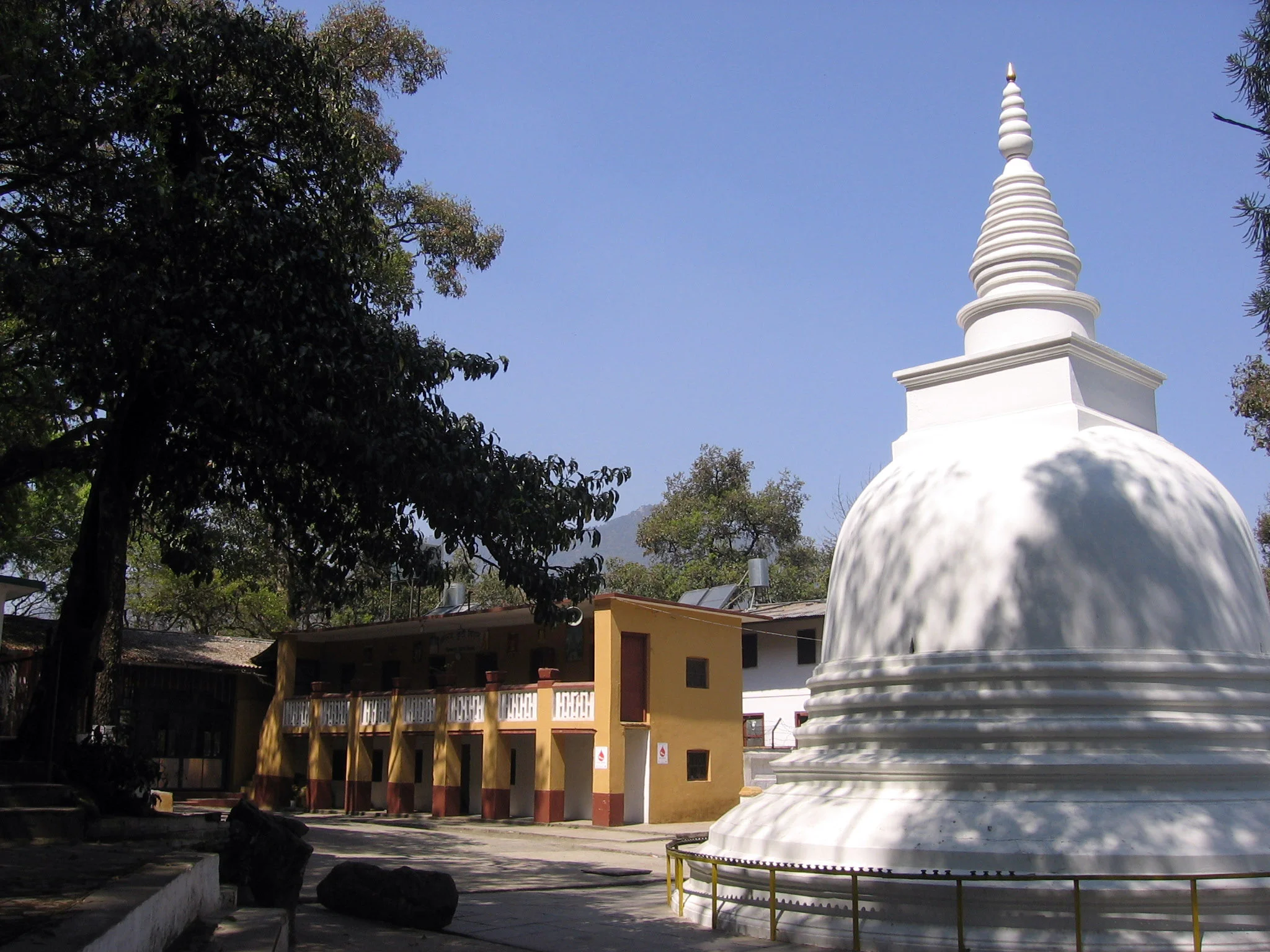
Anandakuti Vihar, which is on the way to Swayambhunath, was established in 1943 by monks from Sri Lanka who follow the school of Theravada Buddhism. In 1945, they made a precious gift to the Vihar—three of the Buddha’s teeth. These sacred relics are put on view for the public once every year on the day of Buddha Jayanti. The late Bikchhu Amritananda Mahasthavir established a school, Anandakuti Vidyapeeth, in January 1952 as a Buddhist boarding high school under the Vihar’s jurisdiction.
HIRANYAVARNA MAHAVIHAR
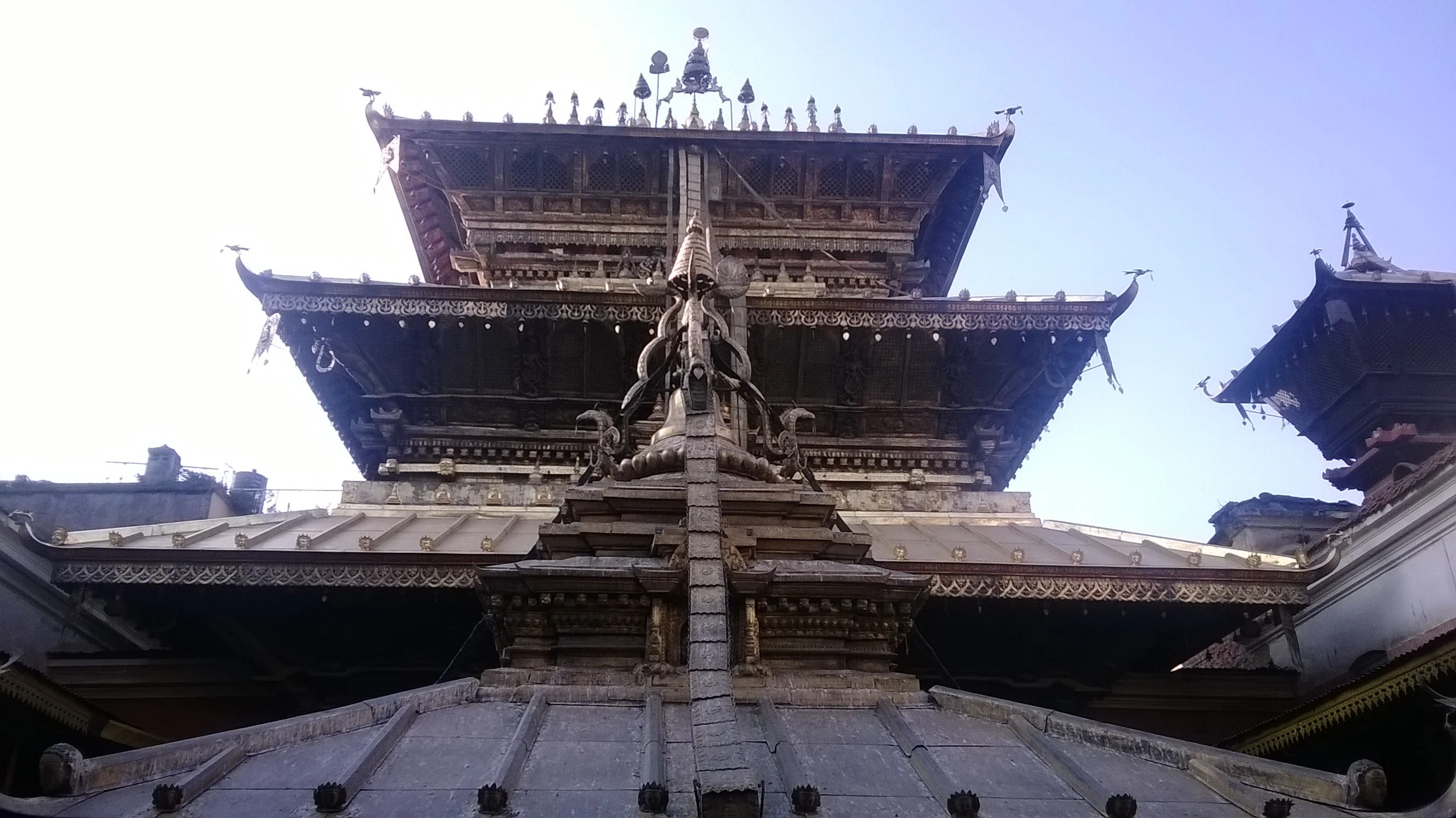
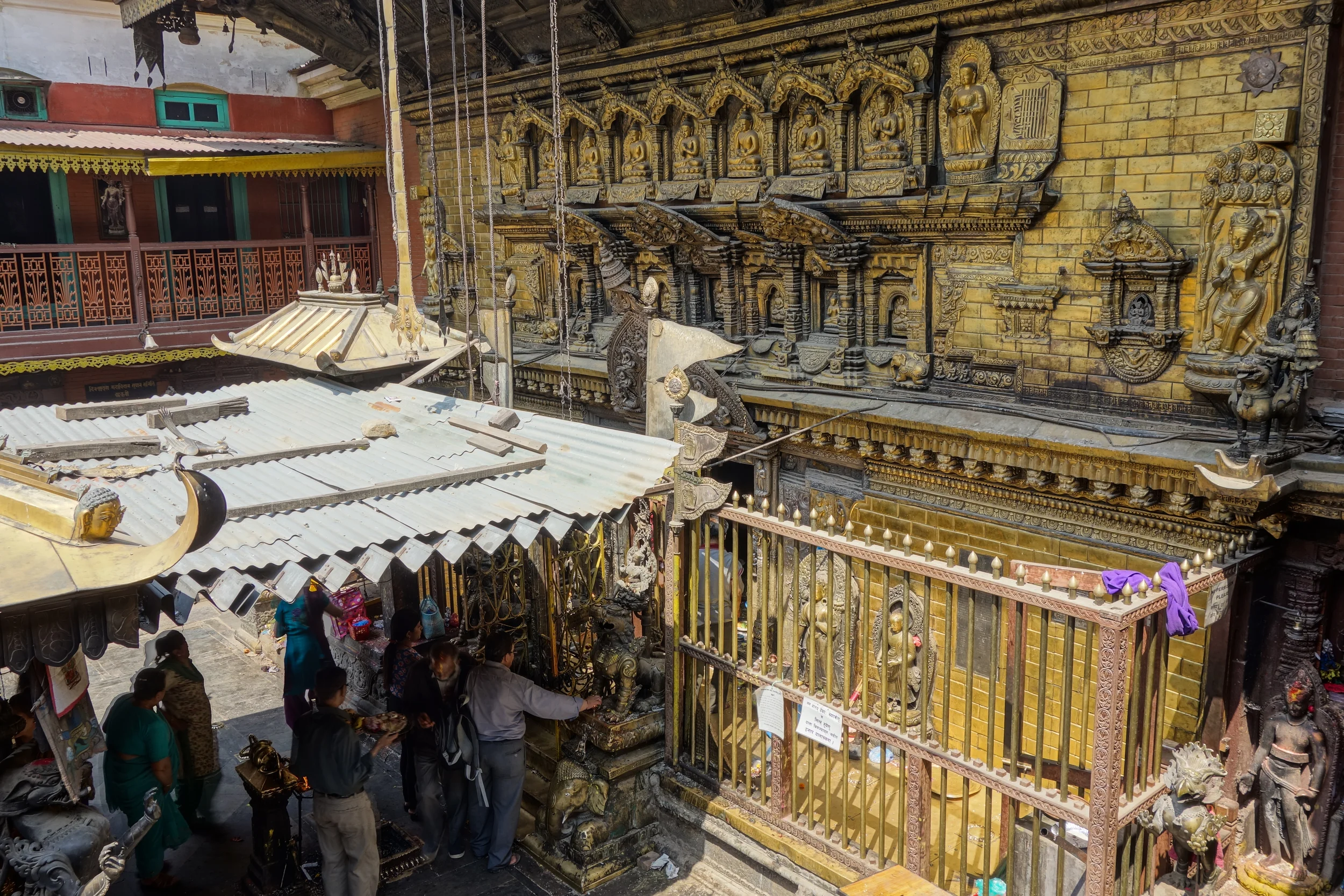
Hiranyavarna Mahavihar (a.k.a. the Golden Temple), situated in Kwabahal of Patan, is a three-roofed pagoda-style temple housing a large silver figure of Shakyamuni Buddha. Famed for its beautiful architecture, there’s a smaller temple in front that is as beautiful as the main one, with a gilt roof and copper patakas (metal banners descending from the top). It is said that visiting the Golden Temple does away with the need for visiting other temples, since one will find shrines of most of the major temples of the valley here, including a lovely silver replica of Swayambhunath. A Dharma Dhatu Mandala with a large vajra is set on a double lotus podium up front, while around the courtyard are various deity figures. There’s a gumba (prayer hall) within the precinct, where monks gather in front of a fascinating figure of Amoghapasa Lokeswor (eight-handed Buddha).
KOPAN MONASTERY
Kopan Monastery, located north of Boudhanath, is a major center for the study and practice of Mahayana Buddhism based on the Tibetan Gelug tradition of Lama Tsong Khapa. It was founded by Lama Thubten Yeshe and Lama Zopa Rinpoche, with the first community of 25 monks making it their home in 1972. Today, the community numbers about 360, which include monks and lamas, besides other workers. Initially, the monastery also housed nuns, but later, a nunnery, Khachoe Ghakyil Ling, was built for them nearby in 1994, and it has now more than 300 nuns living there.
SETO GUMBA (DRUK AMITABH MOUNTAIN MONASTERY)
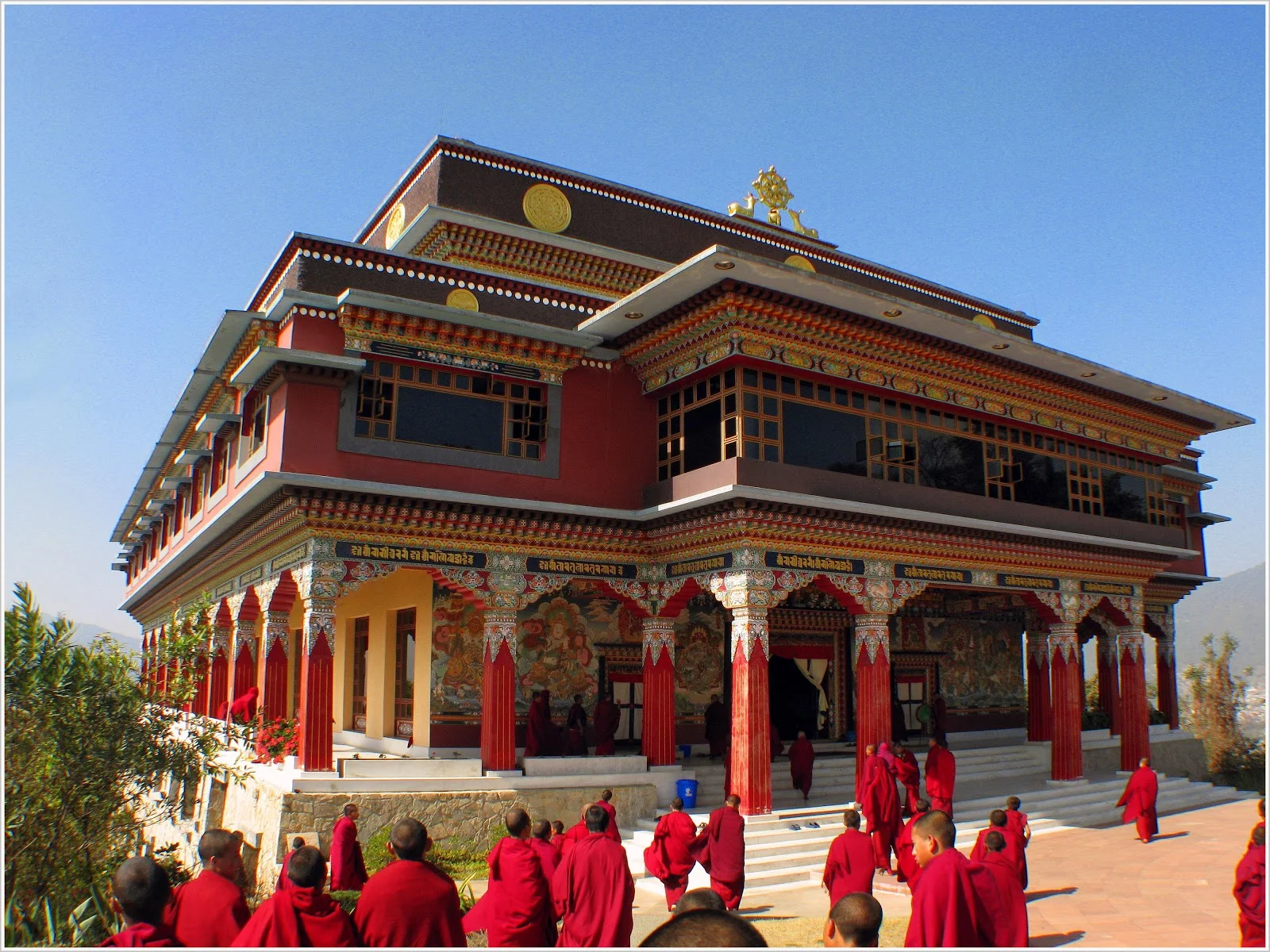
Seto Gumba (Druk Amitabh Mountain Monastery) was established in 1989 by His Holiness the Gyalwang Drukpa on a hill some three kilometers from Swoyambhunath Stupa. The Druk Gawa Khilwa Nunnery, with about 300 nuns, is housed here. The Tibetan style architecture is splendid, and there are many beautiful statues and paintings all over the place. With a lovely garden area, the whole atmosphere is refreshing, and quite a number of people take the two-hour hike to the site on weekends.
NAMOBUDDHA
Namobuddha is located 10 km from Panauti, an ancient Newar town that’s about 32 km from Kathmandu. The shrine here is dedicated to a prince’s supreme act of sacrifice. According to the legend, Prince Mahasatwo of Panauti once had gone to the jungle of Namobuddha for hunting. There he encountered a starving tigress and her cubs; they were so weak from hunger that they did not even move when he approached them. The prince was deeply moved, and there and then started to cut his own body parts to feed them. A festival is held every year in April/May to commemorate this extraordinary event.
DHARMAKIRTI VIHAR
Dharmakirti Vihar, in Naghal of Kathmandu was established in 1965 by followers of Theravada Buddhism to propagate its tenets. It has 20 lifetime ordained nuns (anagarikas) living there, who conduct Buddha Puja and Dharma Desana (preaching Dharma) five days a month. On special occasions, such as during Gunla (a month-long festival in July/August), pujas are held daily. It also runs the Dharmakriti Sikshya Sadan to impart moral education to preschoolers. Myanmar´s Aung San Suu Kyi was once a student at the Vihar for three months.
Well, these are some of the more fascinating Buddhist pilgrimage sites around Nepal, and one daresay, for Buddhist pilgrims from around the world, these are must-visit places when on a pilgrimage tour here.
‘Namaste’, a Most Gracious Greeting
‘Namaste’, the customary form of greeting in Nepal, is one of the most humble, respectful, and gracious forms of greeting found anywhere around the world.
The traditional Nepali greeting of putting palms together and saying “Namaste” has taken on a new dimension.
Ever since it was disclosed that one of the precautions against being infected with swine flu was to avoid shaking hands, I have made it a point to avoid shaking anybody’s hand. That’s also because it is being increasingly accepted that it’s best not to be too touchy-touchy if you want to avoid getting any sort of germs transferred. Nowadays, the big talk is about the importance of hand-washing, especially in this part of the world, where the hands are used for everything. So, the traditional Nepali greeting of putting both palms together and saying ‘Namaste’ has taken on a new dimension.
Namaste Meaning
Not that ‘Namaste’ was any less important, and any less significant, at any other point in time. It has always been one of the gentlest, and politest, forms of greeting anybody. It’s elegant, too. In fact, the meaning of the word itself says a lot about the culture here. ‘Namaste’ is a word derived from the ancient Sanskrit script, according to which it means, ‘I bow to the divine in you’. In a country where the culture dictates that guests are to be regarded as gods, it is apt that our greeting should be in sync with that dictum.
When you are traveling to Nepal, you’ll probably first experience this greeting when boarding your plane, when the pretty air hostess welcomes with a warm smile and a graceful ‘Namaste’. You’ll probably return the greeting similarly, and continue to repeat the process at different times during your stay here. You can’t help it, since it’s the kind of greeting that calls for an equally gracious response, and none is more gracious than a ‘Namaste’! Anyway, aside from that, it’s a fine way to start absorbing some of the ancient culture of Nepal. A ‘Namaste’, accompanied with a smile, will take you miles. At the least, it will endear you to the locals you come across, and make you more welcome anywhere you go. A proper ‘Namaste’ can unlock many doors, and open hearts, too. So, go ahead, practice a couple of ‘Namaste’s’ even before you embark on your journey to this Himalayan country.
A ‘Dhanyabad’ (thank you) accompanied by a ‘Namaste’ gesture is sure to be pretty well appreciated.
Leave the strong and hearty handshake behind, although nowadays, you’ll meet plenty of folks out here who’ll prefer to push their hand forward to receive one. A sign of the times, but all said and done, they’ll still be likely to give you a ‘Namaste’ before doing so. So deeply ingrained are Nepalis in the culture of their land. A ‘Namaste’ is not only used for greeting and welcoming, it’s also used for farewells, and for demonstrating your gratitude too. A ‘Dhanyabad’ (thank you) accompanied by a ‘Namaste’ gesture is sure to be pretty well appreciated. An all-in-one-greeting, that’s what a ‘Namaste’ is. Whatever the case may be—greeting, welcoming, goodbye, or demonstrating thanks—one cannot go wrong with a ‘Namaste’ since it is such a humble gesture that anybody will appreciate it heartily.
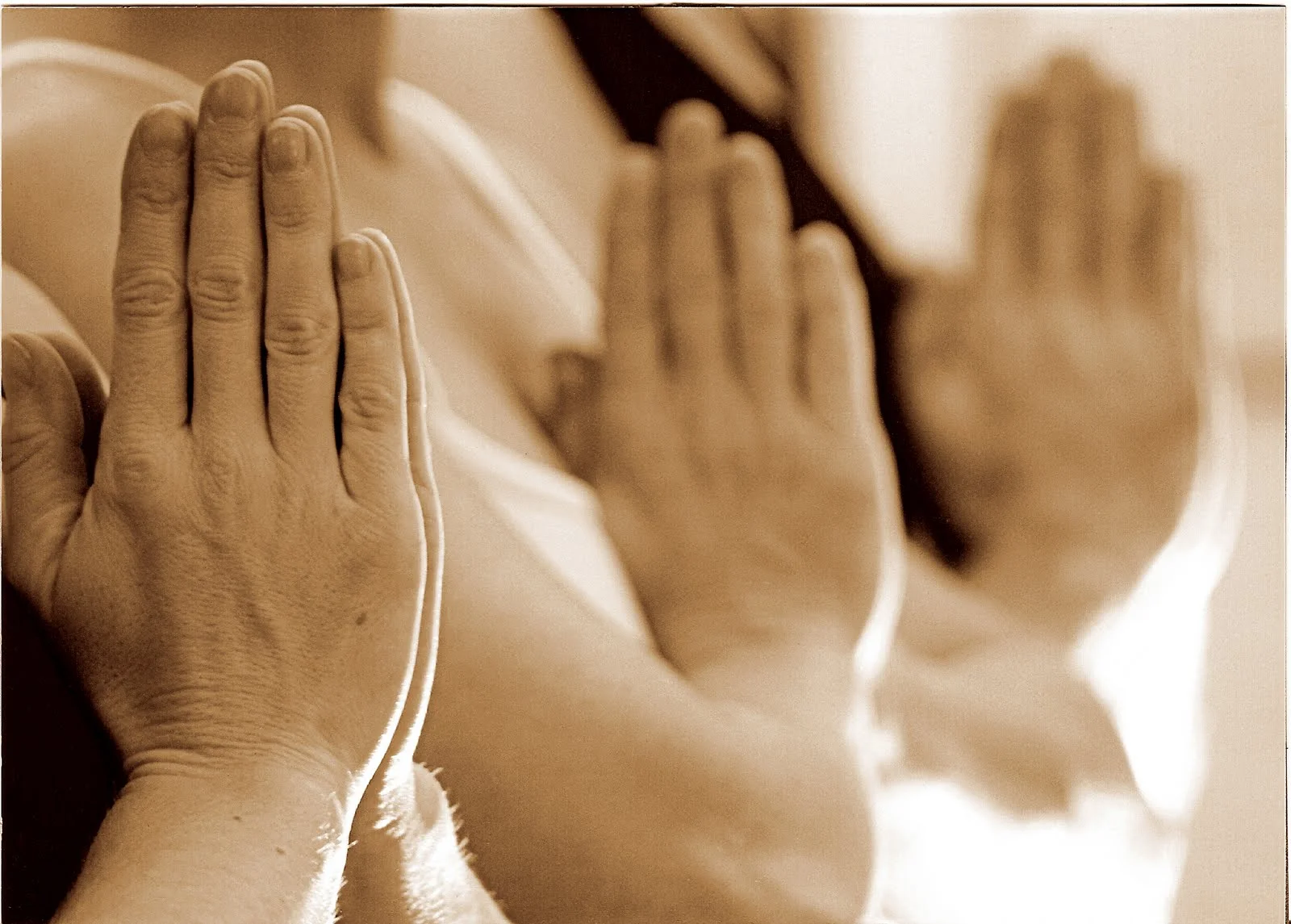
What’s the proper way of doing a ‘Namaste’, you may ask? Well, here’s what you do—first you bring your hands together, the palms pressed against each other; then you place them just below your chin; now, slightly bowing your head, you bring a gentle smile to your lips (and your eyes, too, for that matter), and say, ‘Namaste’ in a polite voice. Some people have their eyes downcast when doing so, while some look into your eyes; it doesn’t matter all that much what you do.
Your humility-signifying folded hands, the warm smile on your face, well, that’s more than enough to convey your warmth and respect for the one you are saying ‘Namaste’ to.
Yes, in the final analysis, that’s what a ‘Namaste’ signifies—respect. Respect for the god in others, respect for their inherent goodness. And, humility, that’s what the person saying ‘Namaste’ is displaying. Well, anybody would want to reciprocate such beautiful feelings, wouldn’t you say? How do you do that? By doing likewise, of course, which means giving an equally heartfelt ‘Namaste’ in return.
SIMILAR POSTS

The Diverse Tastes of Nepal
Welcome to Nepal, a country rich in nature, heritage, and adventure. Welcome to Nepal, a country also rich in exotic cuisine.
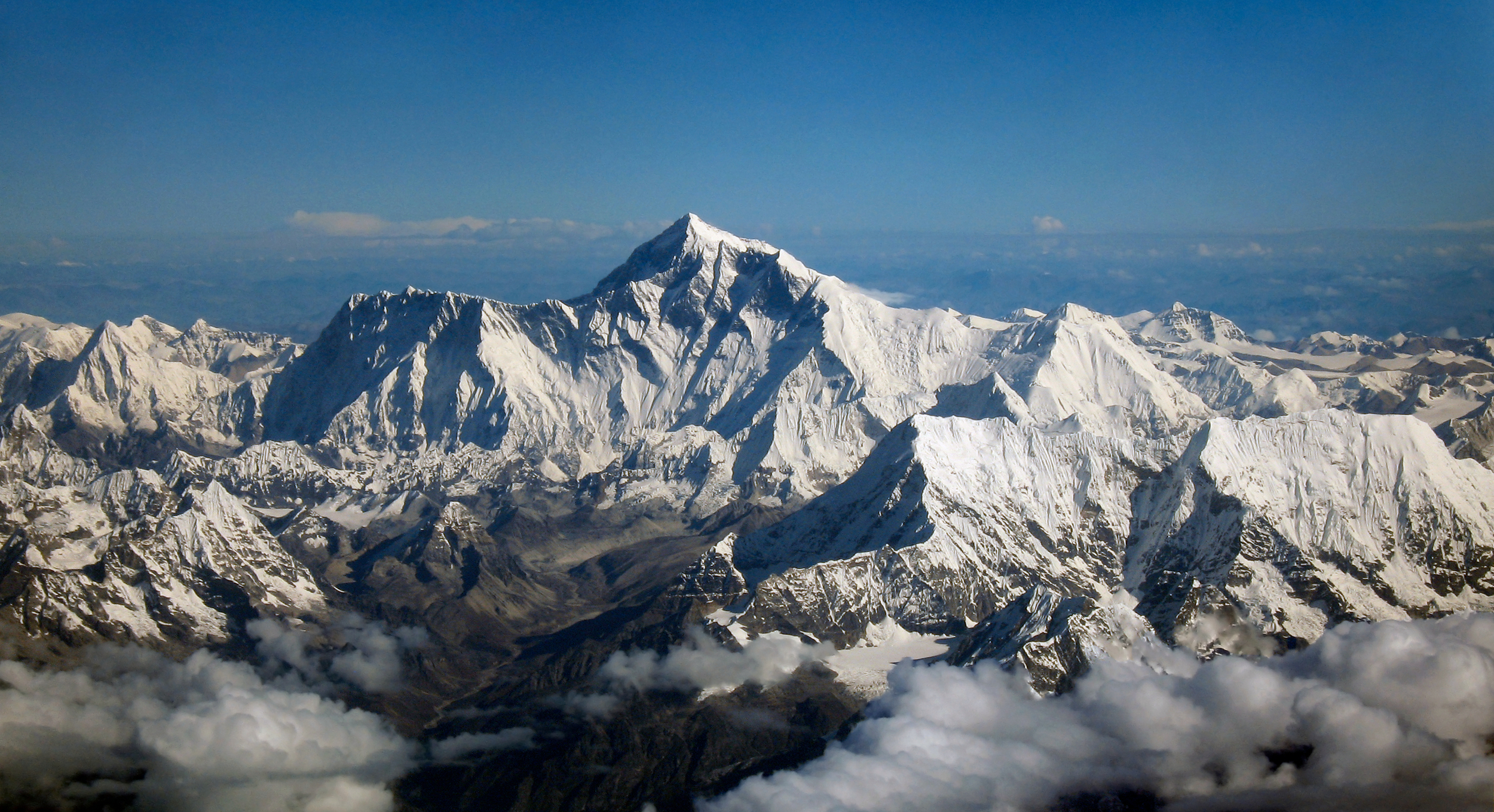
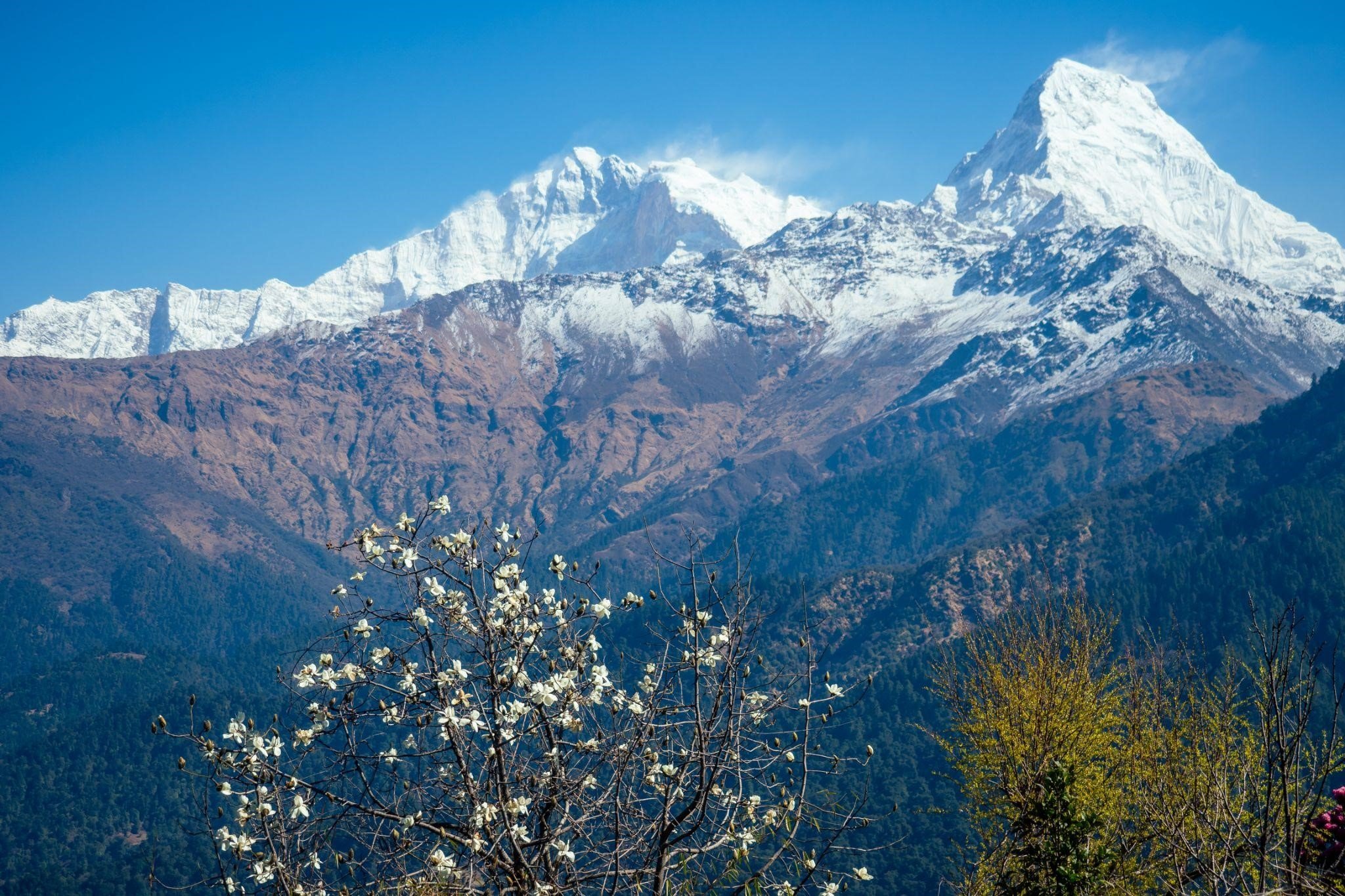
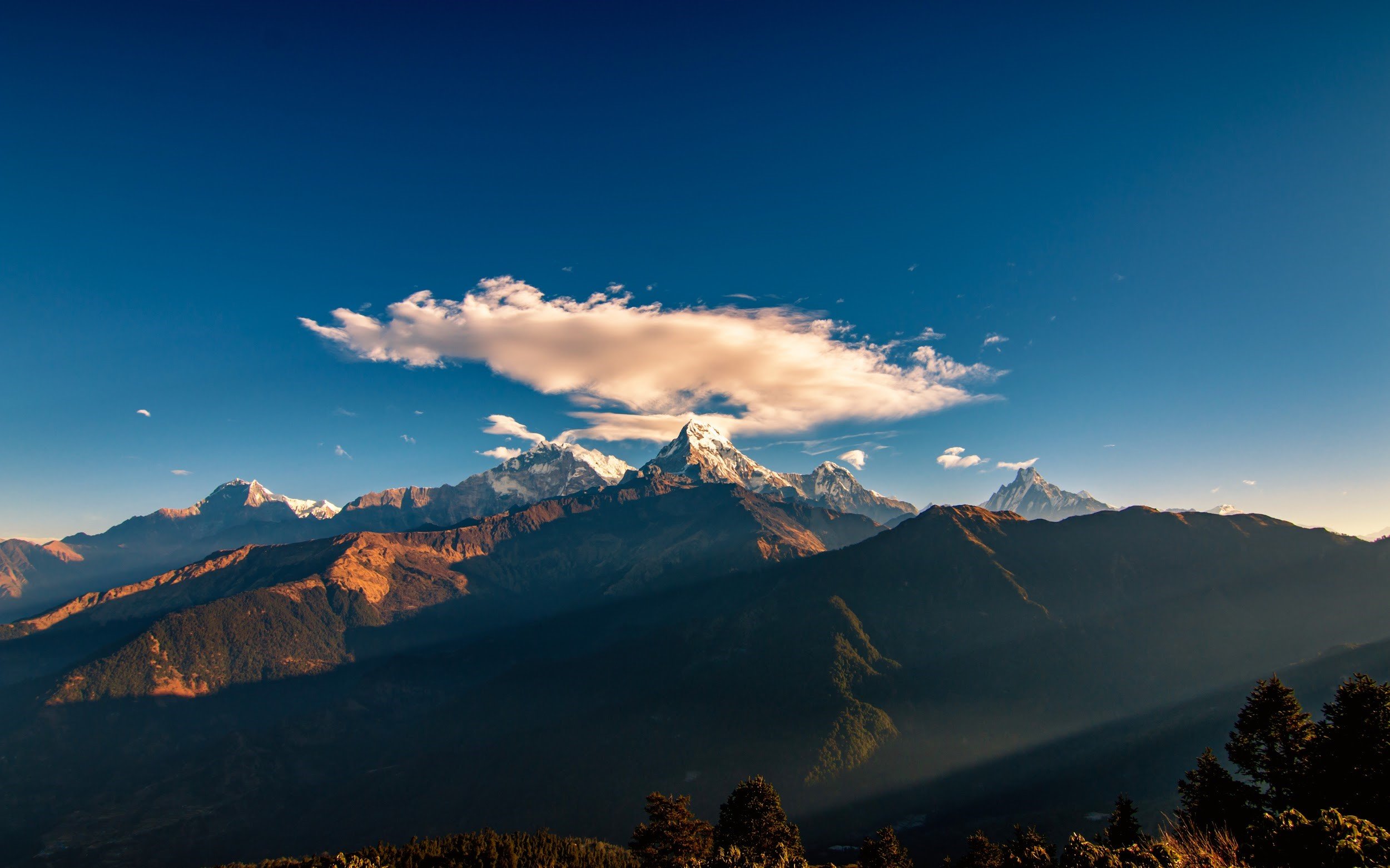
Nepal is well-known throughout the globe for many things, primarily, its natural beauty, its ancient heritage, and its mighty Himalayan peaks. The first is evident especially when on a trek; the second is to be found in every nook and corner of a city like Kathmandu, as well as in many heritage hotels in Nepal (such as Hotel Shanker), while the third is something that you’ll be delighted to see even as you fly into Kathmandu. These are but a few of Nepal’s many attractions, among which is also Nepali cuisine.
It is said that the prosperity of any particular region in any country can be judged by the quality of its cuisine, that is, the better off the region; the more evolved its cuisine. Well, that holds true for Nepal as well. And, thus, you’ll find greater variety of dishes in a place like the Kathmandu Valley, of which Newars are the original inhabitants. So, one hears a lot about Newar cuisine when talking about Nepal’s food culture. That is not to say that other regions do not have as good cuisine, it is just that Newar food has more variety.
At the same time, it must be said that Nepal, although a small country, has close to a hundred different ethnicities, and great ecological diversity ranging from the lowlands (Terai) at below 100 meters above sea level to the highest point on earth, that is, Mount Everest at 8,048 meters. So, it is natural that there should also be many different types of food culture in different parts of the country. At the same time, it should also be known that no matter which region you go to, the staple meal of most Nepalis is ‘daal, bhaat, tarkari’ (lentil soup, steamed rice, and vegetable curry), a phrase that becomes pretty familiar very soon with most tourists coming to Nepal.
If you want to have a sampling of this nutritious and wholesome meal, all you have to do is to ask whatever hotel in Nepal you’re staying in to serve it to you. Most restaurants will be glad to provide you with this, and, in fact, quite a few restaurants with a tourist clientele specialize in providing typical Nepali cuisine. At such places, what you get when ordering ‘daal, bhaat, tarkari’ is this: steaming white rice, thick yellow (or black) lentil soup, vegetable curry (of the vegetable in season), dark green spinach, a bowl of mutton (or chicken) curry with rich gravy (or deep fried), a vegetable salad of sorts (cucumber, radish, tomato, onion), and a pickle (tomato or radish and potato). You will also be asked if you want to have ghee (warm clarified butter) poured over your rice. Our suggestion is: ask for it, and consider it an off-day from your weight-conscious lifestyle, because the rice gets on a new and fragrant life with some ghee in it. Certainly increases your appetite! Anyway, leaving this fulsome meal aside, let’s get a glimpse into what else there is in Nepali cuisine. Let’s begin from the Terai.
Sattoo and Mahuwa of the Terai
People of the Terai have a taste for spicier and hotter food than elsewhere in the country, thus, you’ll find the curry to be a real tongue tingler, and naturally, the pickle will test your courage. They also prefer to have raw onions, the more the better, along with their meals. One reason is because raw onion is supposed to be good for combating prickly heat. You are also likely to be served a couple of chili peppers on the side. Besides the usual, that is, ‘daal, bhaat, and tarkari’, Terai dwellers like to have a mix made from soybean, maize, and gram called sattoo. It is pretty energizing due to its high protein content. Mostly, sattoo is mixed with water to make a thick paste; seasoned with salt, it tastes great. Sometimes, sattoo is also eaten dry, and often, sattoo mixed with water, salt, and lime juice makes for a cool and rejuvenating drink. However, speaking of drinks, per se, mahuwa raksi is the preferred choice. Derived from the juice of the mahuwa flower, it’s a pretty heady alcoholic drink. Another strong alcoholic drink is toddy, which is derived from the sap of palm trees.
Hilly Fare, Dheendo-Gundruk
Maize and wheat are the primary crops in the hills, and so the cuisine is also based on those staples, the main one being dheendo, a mix of maize and wheat; a sort of a porridge. It’s filling, all right, and nutritious as well, but bland. And so, it is accompanied by gundruk, a dish made from fermented leafy vegetables, which can either be in the form of a soup (gundruk ko jhol), or just pickled and spiced. Dehhendo-gundruk makes for a tasty and filling meal, and it becomes all the tastier when served with sinki, a pickle made from fermented root parts of carrots. Both gundruk and sinki, being fermented products, can be preserved for quite some time.
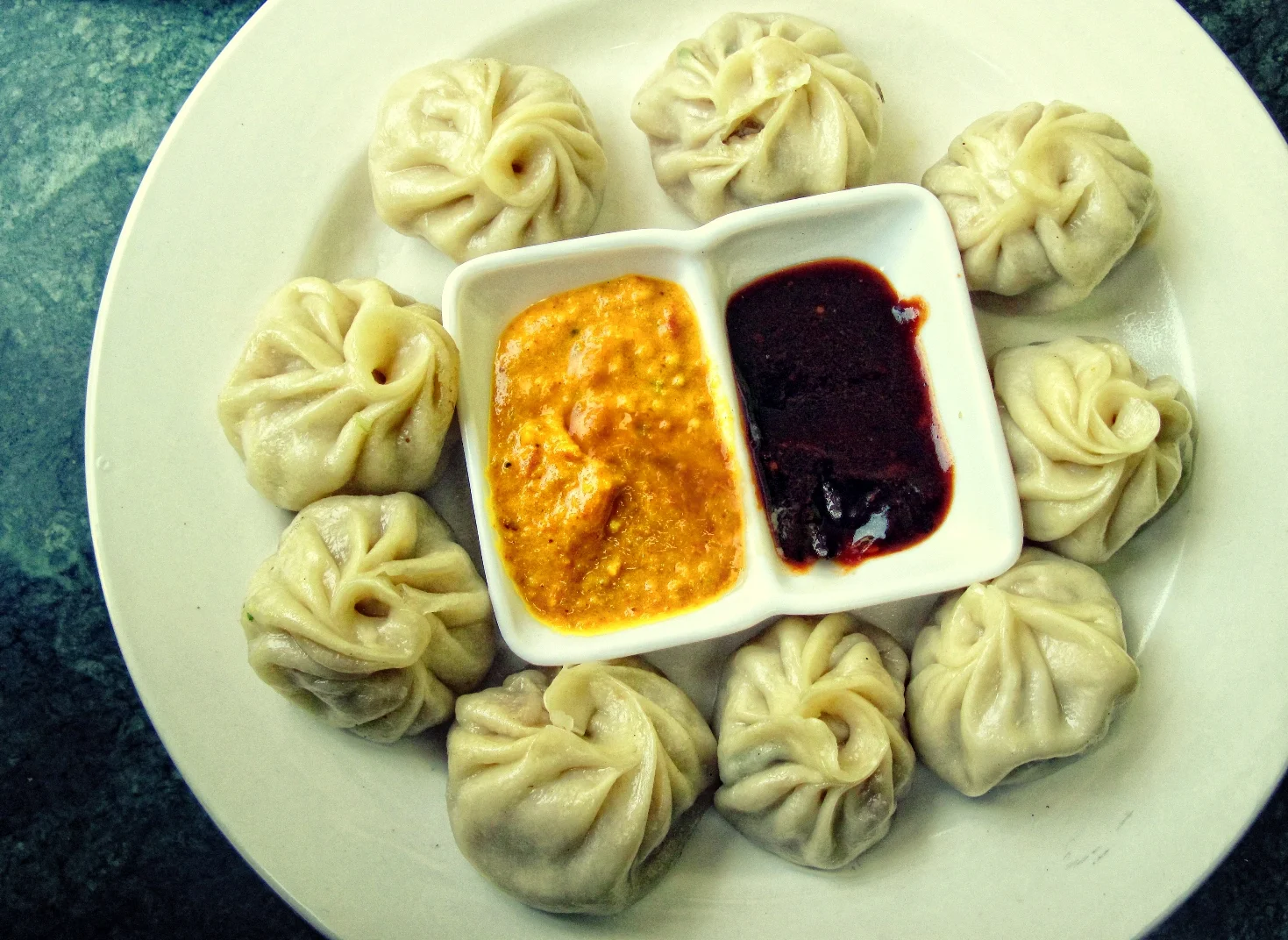
Higher up in the hills, noodle dishes such as chowmein and thukpa (soup with vegetable and meat), and Tibetan style momos (large-sized meat dumplings) are the preferred dishes. In the hills of eastern Nepal, you’ll get to taste a pungent-smelling dish called kinema made from fermented soybean. Other unique dishes are the breakfast food, khatte, which is made from brown rice, and poko, a dish made from the base derivative of the local liquor-making process. Naturally, poko has an alcoholic flavor; but it’s quite tasty, and what’s more, it gives you an immediate lift. Talking about drinks, tongba, a freshly fermented barley drink, is very popular, as are chaang (a fermented product of millet) and rakshi, a strong alcoholic drink. If you like tea, you might not get what you are used to up in the mountains; you are more likely to be offered Tibetan-style tea, which is thick and buttery. Pretty warming, too!
Kathmandu Valley’s Newar cuisine
The Newars of Kathmandu Valley take great pride in the variety of their cuisine. They excel in different culinary arts, from almost a score of delicacies from different parts of buffalo meat to a dozen and more varieties of bread. Buffalo meat (buff, in short) contributes to a diverse range of delicious dishes: haku choila (spicy grounded meat broiled on high heat), kachilaa (minced meat, raw and marinated), takhaa (soup of jellied meat), senla:mu (liver parts, steamed, then sautéed), swanpu:ka (filled lungs, fried), bhuttan (intestine/stomach parts, deep fried), mainh (tongue pieces, fried), cho:hi (blood, boiled with marrow and spice), mamachas (dumplings), etc. Most hotels in Nepal should have some of these in their restaurant menus; if not, do ask about nearby restaurants where you can get these exotic delicacies. Not to be left un-savored, certainly, during your Nepal tour!
And, yes, you’re right in assuming that the Newars re a meat-loving people; however, they don’t lag behind in the non-meat department, too. These include a kind of rice pancake called chatamari, a sort of doughnut called bara, made from pulses, and a cake-type snack called wo, also based on pulses. Some dishes are generally made only during festive occasions; these include the special stupa-shaped dumplings called yo mari, that are packed with brown cane sugar and sesame seeds; a special circular bread with a hole in the middle called sel roti; and a thick and delicious soup made from nine kinds of beans called kwantin. When talking about Newari food, one cannot miss out on mentioning juju dhau (king curd), which is a specialty of Bhaktapur, and delicious to a fault.
As far as drinks are concerned, Newars pride themselves on their liquor-making skills, too. Ai:la and thown are the traditional drinks of the Newar community. They are not only real belly-warmers, they are also auspicious offerings during many religious rituals. Ai:la is a fiery liquor, and a fitting accompaniment to the meat dishes mentioned above, since it is a surefire way to ensure good digestion of all that protein. Some hotels in Nepal will offer you ai:la as a welcoming drink, and the moment you gulp it down from the small clay vessel in which it will be served, you’ll have had the first taste of Nepal! A taste promising high-spirited adventure ahead!
Riding the Rapids: Whitewater Rafting in Nepal
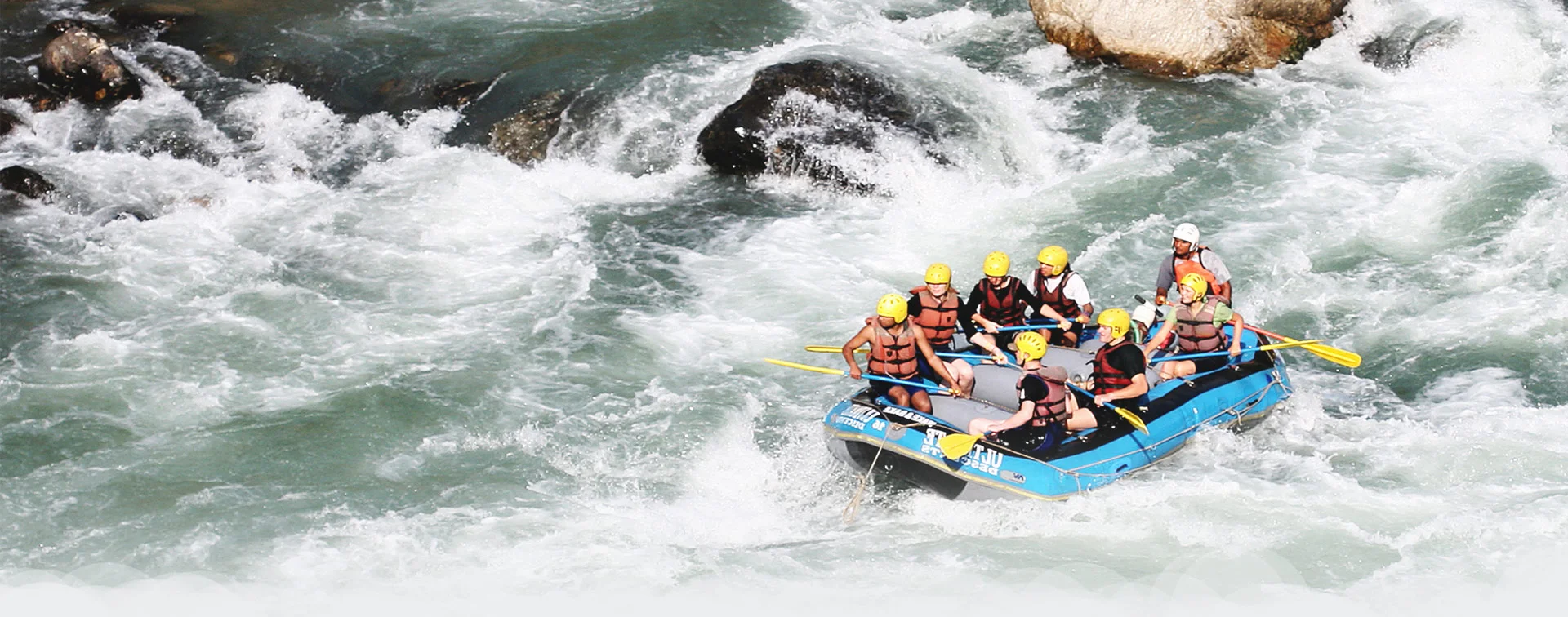
Whitewater rafting is one of the main attractions of Nepal’s many thrilling adventure activities; it’s enjoyable, exciting, and exhilarating.
In whichever hotel in Nepal you are staying at during your Nepal visit, don’t forget to ask about how to go whitewater rafting. This is to ensure that you don’t miss out on the experience of a lifetime in this country full of adventure and discovery. What’s more, the season has just begun! Yes, October to mid December is a great time to go whitewater rafting, as is the period from early March to May.
Nepal has a surplus of mighty rivers originating from the majestic Himalayas and flowing down to the lowlands (Terai). This makes for an ideal situation for going whitewater rafting. Stretches of placid waters combined with stretches of swirling rapids, and huge boulders strewn all along the way—all these point towards excitement aplenty. As you read this, the question could have popped up in your mind: “and what about spills?’ Well, that’s all part of the thrill of whitewater rafting. However, you can put your mind to rest about this, since the many whitewater rafting operators here have decades of experience behind them, and they will strictly adhere to all safety measures. There are 10 river systems in different parts of the country that are open for whitewater rafting. Rapids on these rivers are graded on a scale of 1 to 6, with the first being the most tranquil and the last being the most ferocious. Obviously, you would probably prefer somewhere in between. One thing to be realized is that it’s best not to go it alone; other rafts alongside will be useful in case help is needed.
Rafting down the Trishuli River is perhaps most popular with tourists. It has rapids of 3 and 4 grades. Most rafting operators take you on a three-hour drive down from Kathmandu to put-in points like Fishling and Charaudi. From these points, you can raft for up to 60 kilometers, or shorter distances if you are short of time, such as a three-hour trip to Kurintar. The Trishuli experience can either be a one-day, or two- to three-day affair. Some operators prefer another route, one in which you are driven down to a bustling town called Besi Sahar (8 h), and from there to Khudi, the start of your rafting adventure. You raft down for some 38 km until you reach a quaint Newari town called Bimal Nagar. It’s a trip that won’t worry you much, since the waters are quite tranquil most of the way. Another popular site for Nepal whitewater rafting is the Bhotekosi River (grade 4), which is located close to the Tibet-Nepal border; about a three-hour drive from the capital.
Also close to Kathmandu is the Sun Kosi River. You first take a three-hour drive down to Dolalghat, and then take off on your raft. You’ll come across rapids of grade 4 and 5 along the way, with some stretches perfectly calm, while other stretches are pretty wild. You’ll also be maneuvering your raft through quite a few rock strewn passages. The rafting is a lot of fun, and since it’s a long ride of about 120 km, you get to experience many highs and lows, not only of the rapid grades, but we daresay, the limits of your courage, too! Like in the case of other higher-graded rivers, the Sun Kosi, too, is recommended for fairly advanced rafters.
The Kali Gandaki River in far-western Nepal is another great site to go whitewater rafting in. It has rapids of grades 4 and 5, and flows through the famous Kali Gandaki gorge, said to be the deepest in the world. You’ll notice some cremation sites and burial mounds at the junctions, and this, too, should add more flavor to the journey! Another far-west river, the Karnali, is Nepal’s longest river, and it has rapids of grades 5 and 6, which makes whitewater rafting down its length a most exciting adventure. The Karnali River has its origins in the Mount Kailash region. Another river that offers exhilaration galore is the Marshyangdi River (grade 5), with its steeper rapids that continue for long periods, which mean it is also an excellent river for kayaking.
The Seti, which slopes down from the Macchhapuchre Himal in the Annapurna region, is a much gentler river with only grade 2 and three rapids. Rafting down its length is a moving experience, what with the fantastic scenery all around, including splendid views of the Manaslu and Annapurna ranges. What’s more, this river has quite warm waters, so you can do a bit of whitewater rafting in cooler months as well. On the other hand, rafting on the Tamur River, which originates in the Kangchenjunga range, is for more proficient rafters, since it has grade 5 and 6 rapids. The distance is also a long one, almost 120 kilometers, and you’ll get plenty of non-stop excitement since there are almost 100 rapids to be traversed through!
Many whitewater rafting expeditions are usually combined with a bit of safari in the jungles or with some short trekking in the mountains, depending on where the river is situated. Whatever the river you choose in Nepal to go whitewater rafting in, you can rest assured that you will have one heck of a roller coaster ride down the swirling waters of the mighty Himalayan rivers!
| Name of River | Duration | Grade | Start Point | End Point |
|---|---|---|---|---|
| Trishuli | 1 - 3 days | 3+ | Baireni Chauradi | Simaltar |
| Bhote Kosi | 2 days | 5+ | Bahrabise | Dam |
| Kaligandaki | 3 days | 4+ | Baglung | Mirmi |
| Seti | 2 days | 3+ | Damauli | Gaighat |
| Sunkosi | 10 days | 5 | Dolalghat | Chataira |
| Karnali | 10 days | 5 | Sauli | Bhen Bridge |
| Marshyangdi | 5 days | 5+ | Ngadi | Bimal Nagar |
Recommendations for my friend visiting Nepal
Nepal’s adventure activities are challenging and thrilling, what’s more, they are conducted with the utmost regard for your safety.
For a Singaporean friend, who spent three months in Kathmandu, one of Nepal’s adventure activities included moving around in darkness quite often, what with the constant load shedding. He claimed to have returned with improved night vision! Well, even though most hotels in Nepal have adequate backup electricity arrangements, it does give the eyes some exercise while walking on dark streets. It’s clear, anyway, that visitors are likely to find various aspects of their Nepal tour to be an adventure of sorts, one typical example being traveling by public transport. Now, that is also an adventure! Anyway leaving the mundane aside, let’s get down to the real nitty-gritty of Nepal’s adventure activities you get to experience on your Nepal tour.
Nepal Treks
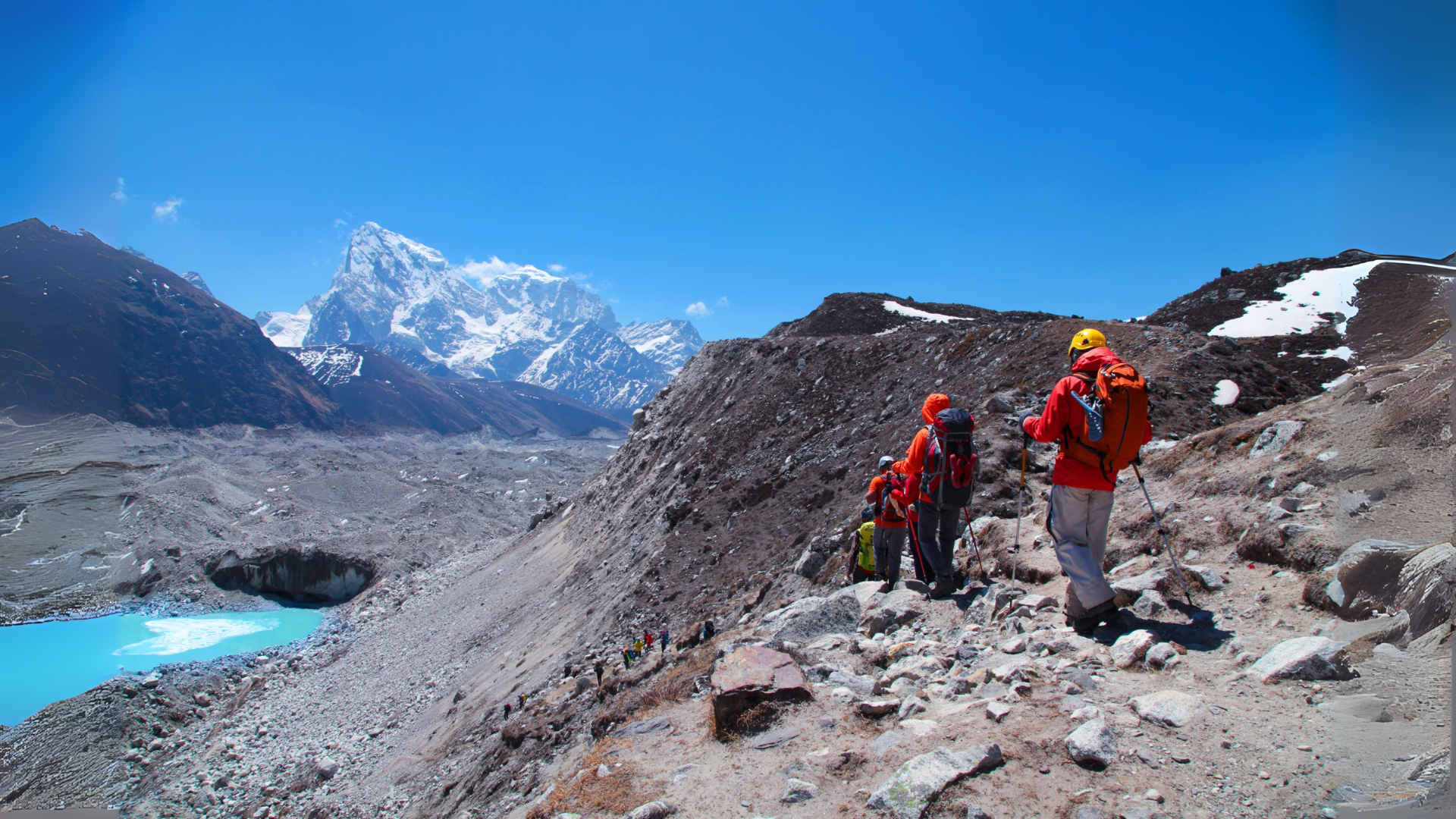
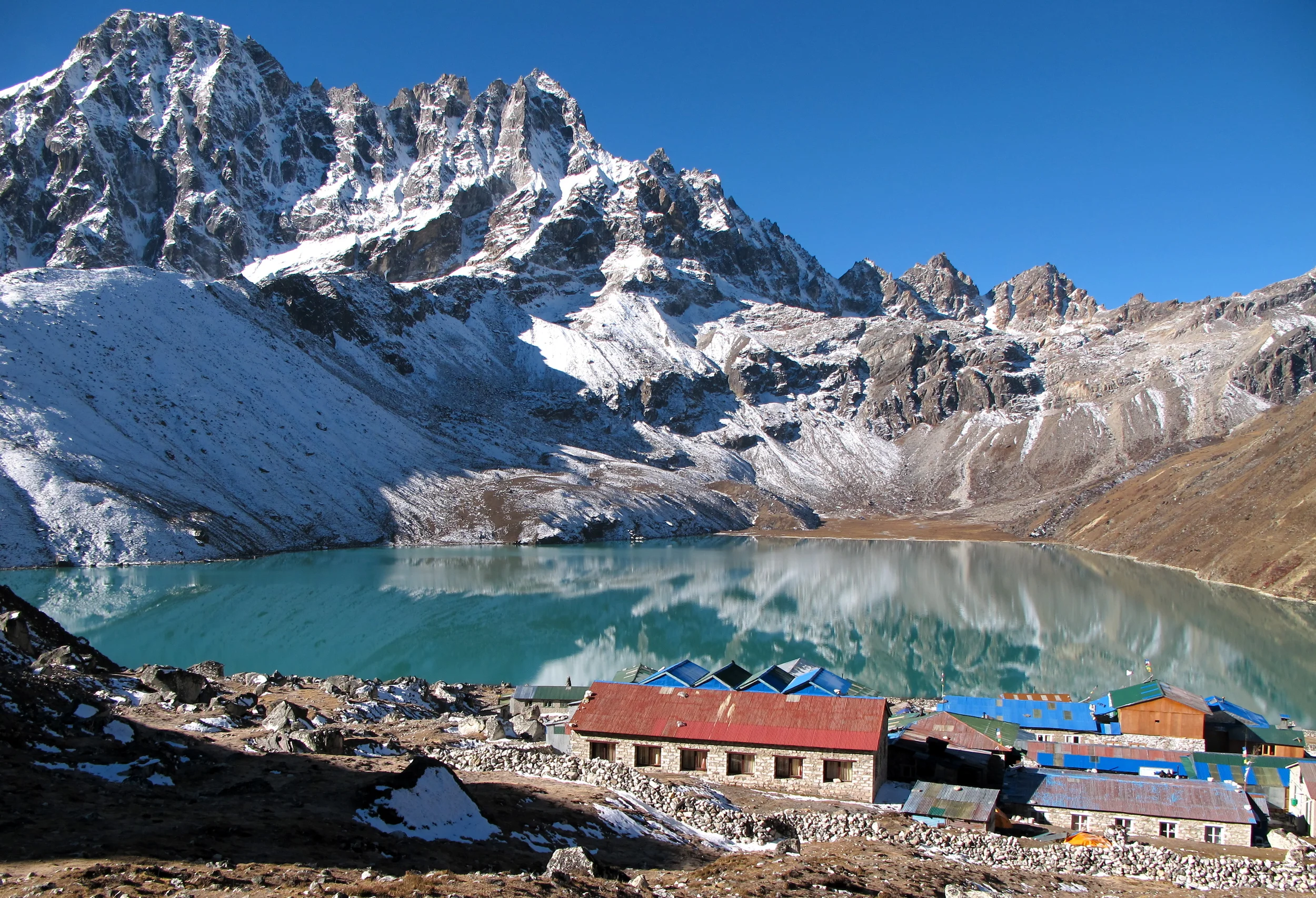
Trekking high on the mountains, close to the world’s highest peaks is certainly the most popular of Nepal’s adventure activities, with almost 40% of all visitors on a Nepal tour going on one trek or the other. Some of the most popular Nepal treks are as follows: 1. Everest Base Camp trek, which takes you through fascinating landscapes and quite a few Sherpa villages, before eventually reaching the base camp on the Khumbu Glacier, with Mount Everest towering above you. 2. Annapurna Circuit trek, which starts from Besisahar, goes along the Marsyangdi River, passing through Tamang and Gurung villages, and takes you to Muktinath, Jomsom, and Pokhara. 3. Mustang trek, which takes you to the once forbidden kingdom of Lo Manthang in Mustang district, where you will find yourself immersed in Tibetan culture and lifestyle. 4. Imjatse (Island Peak) trek, which goes through the valleys and glaciers of Khumbu, and gives you the chance to climb an authentic Himalayan peak, that is, Imjatse Peak (6,189 m). 5. Ghalegaun village trek, which goes through the villages of the famous honey hunters of Nepal.
Nepal Whitewater Rafting
What else awaits you besides trekking, as far as Nepal’s adventure activities are concerned? Well, whitewater rafting, for one. Nepal whitewater rafting is said to be one of the best in the world, what with its great mountain rivers flowing majestically down from the snow-clad peaks of the Himalayas to the lowlands of the Terai. Imagine yourself on an inflatable rubber raft riding down the swirling rapids of these great mountain rivers rushing between huge mountains on either side. It’s sure to be an experience you’ll never forget. You don’t have to worry about the risks either, since you’ll have highly experienced people looking out for your safety all the time. Just so you know, river are graded from one to six depending on their being more tranquil or more hazardous, which means you get to choose your ride. Grade 1 to Grade 3 rivers are supposed to be easy ones; good for first timers, and the best time to go rafting is between September and early December, as well as between March and early June. Some popular rivers for Nepal whitewater rafting are stretches of the Trishuli, Kali Gandaki, Marshyangdi, Karnali, Bhote Kosi, Seti , and Tamur.
Nepal Mountain Biking
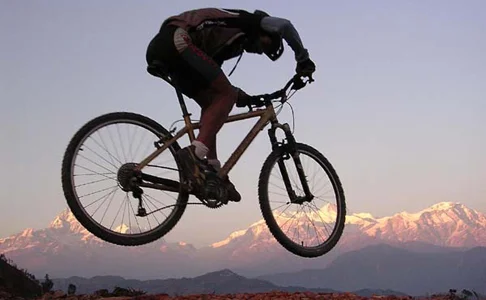
Challenging terrain is what’s important for mountain biking, and that’s what you get in plenty in Nepal. Many on a Nepal tour make it a point to go mountain biking, especially in and around the Kathmandu valley with its many interesting biking trails, and around Pokhara, as well. You’ll be pedaling on tracks that sometimes go uphill all the way and then downhill on the return, or sometime, you’ll be going up and then down at regular intervals, the lay of the land being what it is. The rides will take you through paddy fields, villages, riverbanks, temples, and so on and so forth. ‘Never a dull moment’ is what you’ll be thinking as you give your stamina a tryout. One route that many riders really like is the one to Nagarkot. Nepal travel agencies usually organize this mountain biking experience as a three-day affair, with you going first to Nagarkot, that beautiful hill station, where you spend a night. The next day, you ride downhill to Namo Buddha (famous pilgrimage site) and on to Dhulikhel (another popular hill station), where you again hunker down for the night. Both Nagarkot and Dhulikhel are known for their many beautiful resorts, aside from their fantastic views (including sunrise and sunsets), so you’ll appreciate your stay at both places. Next day, you pedal across to Panauti (an ancient Newari town), and then onwards to Sisneri, Patan, and Kathmandu. This is just one example of what you can expect when mountain biking around the valley; there are plenty more trails which you can chose to ride on at your pleasure. And, as mentioned before, biking around Pokhara is another experience that’s sure to make you happy…and healthy.
Nepal Bungee Jumping
No need to say that bungee jumping is one of the most thrilling adventures for any individual; it challenges courage like few other activities do. Here, in Nepal, there’s some fantastic bungee jumping to be done, from a platform 160 m high over the wild Bhote Kosi River. It will take you some three-and-a-half hours to drive from the capital to this famous bungee jumping site near the Nepal–Tibet border, that’s a part of The Last Resort, which also organizes other activities like mountain biking, rafting, canyoning, and so on. Bungee jumping is, however, their major forte. They take all the necessary precautions to ensure that your jump is safe. And, thrilling? Well, more like an ‘adrenaline rush’; that’s the usual response of jumpers. An instructor will brief you thoroughly, and tell you to ‘walk like a penguin and fly like a bird’. They’ll photograph and video record your leap of faith, and present you with a souvenir t-shirt as well. You’ll probably be spending just around Rs.2000 for all this. A fantastic adventure all around, undoubtedly.
Nepal Canyoning
First, know that canyoning consists of traveling down steep canyon walls, wading across rock strewn creeks and streams, and going through cascading waterfalls. How? Well, you hike, you scramble, you wade, you boulder-hop, you climb over rocks, and you do abseiling and rappelling, as well. An all-in-one-affair, that’s what canyoning is all about. You can take a one-day trip or a three-day trip, the choice is yours; the latter obviously being the preferred option as it allows you experience everything. Might sound like a lot of adventure, a lot of risks, but not to worry, trained instructors will be with you all the way. They know what techniques are to be used and they’ll be using the best equipment available, and, of course, are mindful of maintaining the highest safety standards. The nearest site for going canyoning is the Bhotekoshi River, some 100 km from Kathmandu.
Nepal Paragliding
Paragliding is another of Nepal’s adventure activities that’s sure to fulfill your spirit of adventure and set it soaring to a new high. November through February is the period for Nepal paragliding, with November and December considered the best months. Pokhara gets pride of place when talking paragliding; near to the city is a place called Sarangkot that’s at a height of 1,592 meters, and this place has become the mecca for those on a Nepal tour who want to go paragliding. There are other sites, as well, in different parts of the country, but Sarangkot is the favorite. Qualified pilots provide a short briefing before launching. It’s a fact that most enthusiasts get butterflies in their stomachs before taking off, and that’s natural. However, qualified pilots will do all they can to reassure you and tell you the dos and don’ts beforehand. What’s more, they’ll be flying with you, so it’s something like holding your hand all the while as you soar over the Pokhara valley. Tandem flights are the norm, meaning, a pilot will be in a special harness with you on the same glider. You’ll be more of a spectator, really, since the pilot does the flying, but you’ll find that it’s a good deal since that leaves you free to focus your attention on the splendid vista below you. During the 20-30 minutes of flight, there are good chances of having company in the form of soaring vultures and eagles flying beside you. This exhilarating experience should cost you around USD100 per flight.
Nepal Ultra Flights
Ultra flight is another of Nepal’s adventure activities that will give you a different type of thrill. Ultra flights involve special two-seater planes carrying one pilot and one passenger in every flight. Since their purpose is to give you a fantastic viewing experience, these planes have large openings on both sides. Again, Pokhara is where it all happens. Before taking off from the airport, the pilot will give you a thorough briefing, so you know what’s what, such as the path and the height you’ll be flying. You’ll be taken up to 5,000 ft and fly over Pokhara at 50 to 90 km/h for about 15 minutes. If you want to, you can also opt for a 30-mimute flight that’ll fly at 90 km/h and take you close to Machhapuchchhre Himal. Another option is an one-hour flight that will fly at 12,000 ft at 90 to 130 km/h over the length of the entire Annapurna Range. Another lifetime experience, that’s what an ultra flight is!
All said and done...
Nepal’s adventure activities are many in number, and all are highly enjoyable and healthy pastimes. Beside those mentioned above, there are other adventure activities, too (jungle safari, ballooning, climbing, etc.), so make sure you ask the people concerned, no matter which hotel in Nepal you’re staying in, for more information.
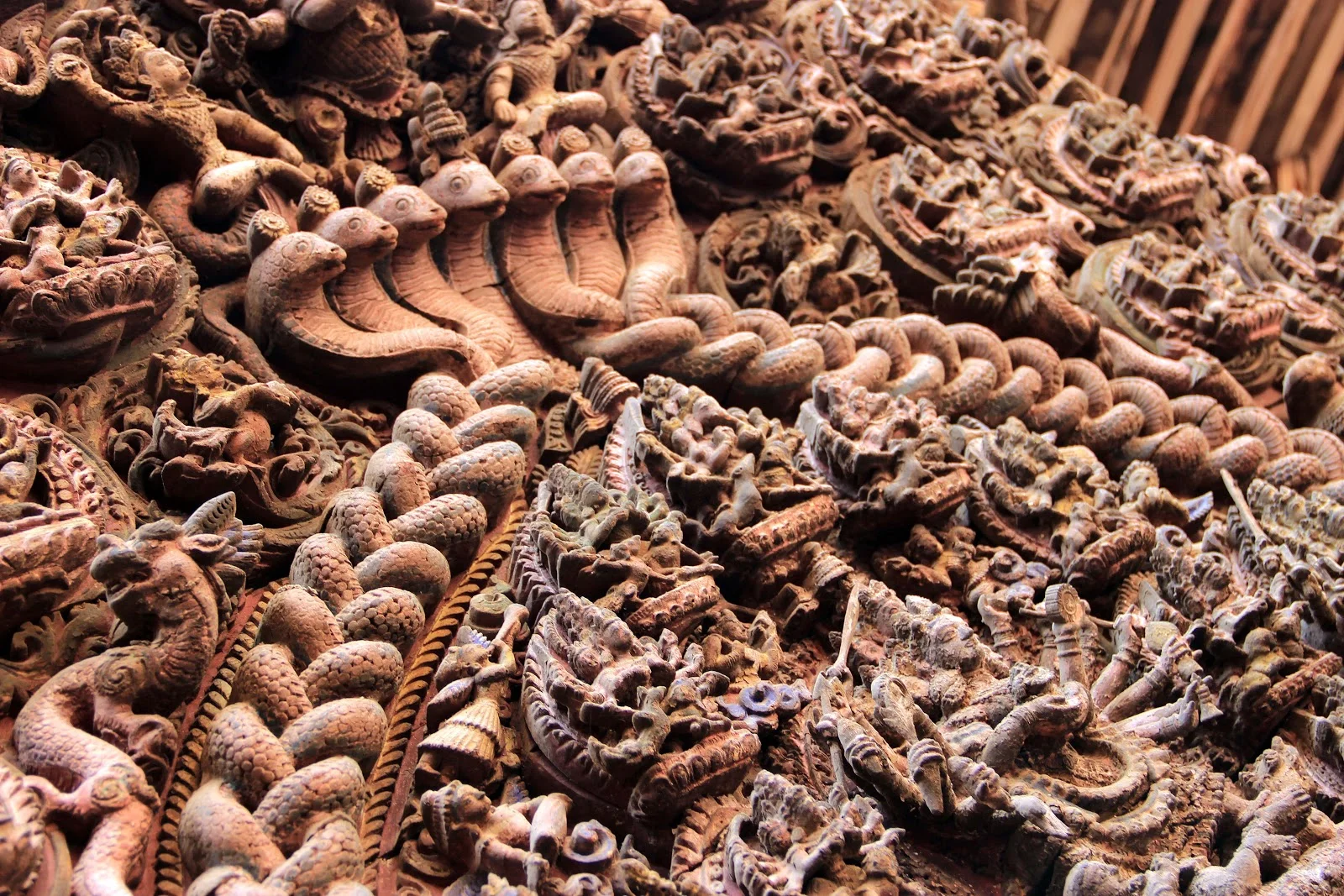
Kathmandu Valley’s Serpentine Culture
Kathmandu Valley was once a gigantic lake in which dwelled an innumerable number of serpents. They were uprooted by humans who set about draining the lake to make the valley inhabitable. The serpents became angry…
It is not only in temples that you will see wood carvings depicting serpent figures; you may well see them even in some hotels in Nepal with a heritage bent. The reason serpents are so visible everywhere is because they play a big part in Kathmandu Valley’s culture.
There’s this eternally mystifying myth about the valley’s origin. Once upon a time, a long time ago, the valley was said to be an enormous lake called Nagdaha (naag: snake deity, daha: lake). As the name signifies, it was inhabited by a large number of serpents. Now, the valley was well protected on all sides by huge mountains, and the weather was lovely. In other words, if only the lake could be drained out, it would be a fine place to live in; agriculture could thrive. So it was no surprise that some enterprising folk got together to do so. Their endeavor was not taken well by the nagas, who were roused from their slumber. As a matter of fact, they were really angry. Since they had power over the rains, they decided to punish the intruding humans by creating a state of severe drought—no rain whatsoever for years.
The frightened humans didn’t know what to do; how to pacify the furious nagas? They were at a total loss, until one fine day, a king came into the valley; a king with great tantric powers. He immediately called upon his powers and succeeded in compelling the nagas to allow the rains to come down again. But, tantric that he was, he also acknowledged the terrible powers of the nagas and understood only too well that they had to be kept appeased. They had to be given the respect they were due. So he proclaimed that, henceforth, the fifth day of Shrawan (July/August) would be celebrated as Naag Panchami in their honor, a day in which they would be worshipped by humans. The king also realized that suitable sites would have to be provided where the nagas could live safely. Thus, certain specific lakes in Kathmandu Valley were decreed to be safe refuge for the nagas. The lakes so chosen were Taudaha in Kathmandu and Nagadaha in Lalitpur.
Taudaha is a large lake in Chobar, some six kilometers from Kathmandu, to the southwest. Aside from its cultural significance, it is also a refuge for many wetland birds, it being the only remaining natural lake in Kathmandu Valley. People come here during Naag Panchami (August 1 this year) to pay homage to Karkotak Naag, the king of the nagas. There’s a lot of flora and fauna around the lake as well. Nagadaha is located in Dhapakhel of Lalitpur district. It is a large natural pond (about five hectares). Aside from these two, there is a man-made pond to the east of the former royal palace that is small in size. It has a totem pole in its center with a naga on top. Like the bigger sites, this too is where devotees flock to during Naag Panchami. On this day, you’ll see most houses in the valley with a colorful picture of a naag pasted with cow dung over, or beside, their main door. You’ll also see Lord Krishna featuring prominently in some of the pictures. That’s because there’s another prevalent myth about Naag Panchami in the Hindu religion. It is said to be a day to celebrate the victory of Lord Krishna’s victory over Kaliya, an evil and gigantic serpent.
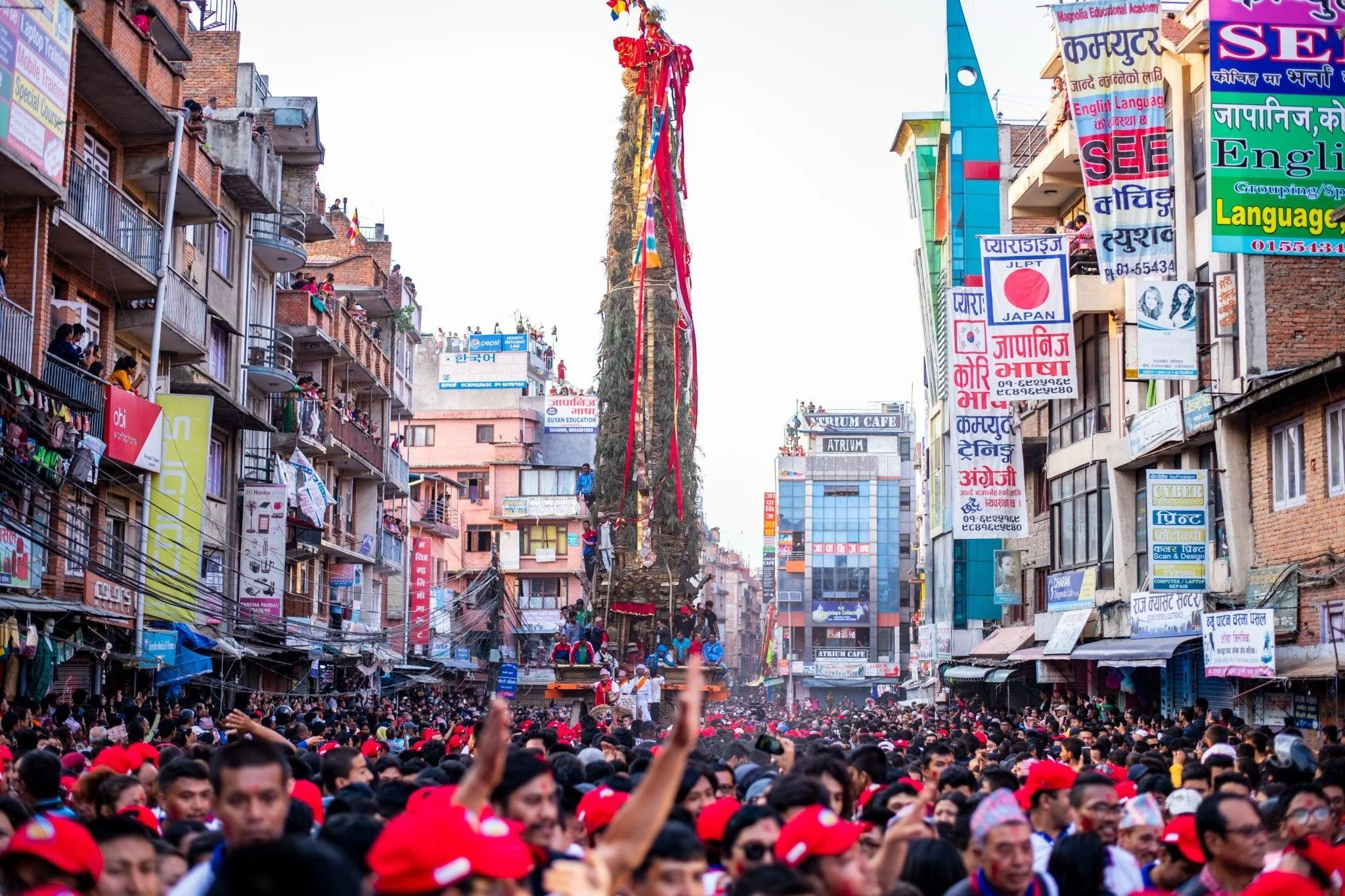
Another festival with serpentine connotations in Kathmandu Valley is the Rato Matsyendranath Jatra, which is celebrated every year for month (May/June). It is a festival participated in by thousands of Patan-dwellers who haul a giant chariot containing an image of Lord Matsyendranath through the lane of the city, with various sites designated as resting spots for a certain period of time. The origins of this colorful (and vigorous) festival are as mystical as that of any other festival. Here’s how the myth goes: many centuries ago, there was a great sage called Goraknath who dwelled in a cave in Gorkha. Once, he happened to come to Patan, and as is the norm for ascetics, went door-to-door seeking alms. Now, the locals were not exactly that generous lot, and in fact, the sage was subjected to some disrespect as well. In his righteous anger, he decided to bring about a drought as never seen before by the valley denizens. With this objective in mind, he promptly sat down on the heads of the nine rain-bringing nagas. Then, he started meditating, and in doing so, slipped into a trance that lasted days on end. The rains stopped pouring down because the nagas were immobilized.
The people begged him to break his trance and get down from the nagas’ heads. Desperation prevailed, since the mighty sage remained unmoved. Now, luckily, there were a couple of cunning fellows around, and they devised a clever plan of action. They traveled all the way to Assam in India, where resided Goraknath’s teacher (guru), Matsyendranath. He was brought to Kathmandu posthaste. On realizing that his guru had come to see him, Gorakhnath promptly stood up in respect, and his trance was broken. The nagas were thus liberated and free once more to do what they did best, that is, to make the rains come pouring down on the valley. With so much depending on the nagas, it is, therefore, no wonder that the people of Kathmandu Valley hold so much respect for them. And, no wonder that you may see more than just a couple of serpent figures in the wood carvings around hotels in Nepal.