
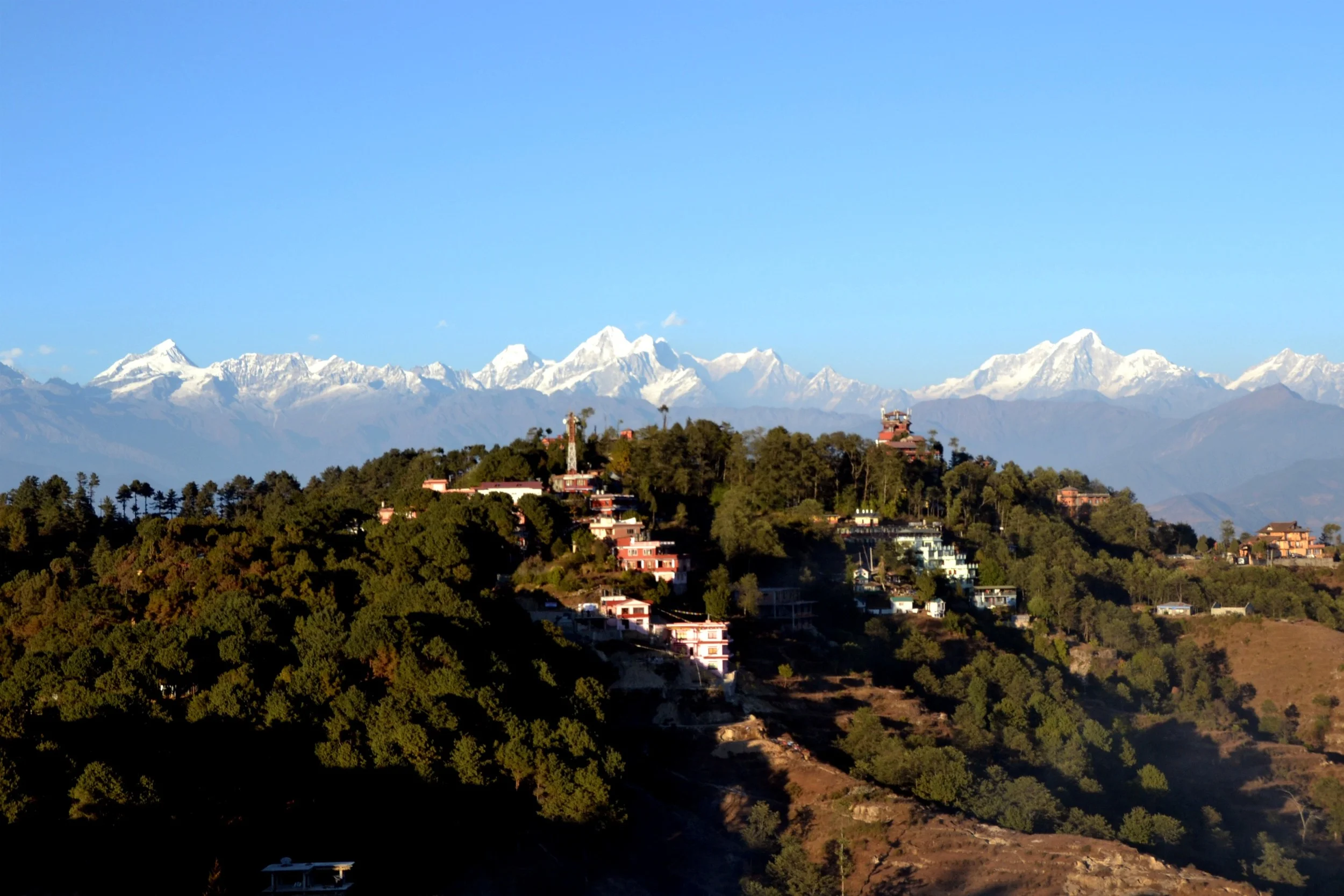
Nagarkot, Nature at its Best
Nagarkot is surely one of the most favored destinations of all tourists visiting Nepal, and why shouldn’t it be? After all, it is blessed with nature’s bounties, and is just 32 km from Kathmandu.
Most visitors go gaga over the lovely scenery around Kathmandu Valley, and their appreciation becomes all the more pronounced when traveling to Nagarkot (2,100 m), and spending a night or two there. Nagarkot is a mere 32-km east of the capital. As the road starts climbing from Bhaktapur, you’ll surely be in for a thrilling ride. It’s a lovely drive through verdant hillside forests, but it can also be a bit scary at times, especially when a bus is coming your way, hogging most of the narrow road. Still, all said and done, you’ll likely be exclaiming, “This is it. This is what I came to Nepal for!” You might well come back with the fond wish that you could have a personal retreat there, so wonderful are the surroundings.
On reaching Nagarkot, you are assured of spectacular panoramic views of majestic ice-capped Himalayan peaks. There are many attractive resorts, some of them located on hilltops, their backdrops being rolling hills that change color with the distance. Nagarkot gets a lot of visitors every day because of its proximity to Bhaktapur and Kathmandu, and also because of the many amenities available there. In case you are the sort looking for a more secluded retreat, you could go hiking on fine isolated trails that will take you across quiet villages where you’ll meet simple village folk going about the same everyday tasks as they have done for ages. In other words, you’ll find the lifestyle pretty laidback, and perhaps that should be to your liking.
You have the option of choosing from quite a few back tracks around Nagarkot, all of which give you the opportunity to experience rural life up close. For example, one trail takes you to a place called Telkot, a matter of a few kilometers only, but you’ll be surprised at how different it is from the touristy Nagarkot. From tranquil Telkot, you can walk to the nearby dam, or to Changunarayan village, which is some distance further. There’s a lookout point in Telkot from where the views are, of course, just splendid. The sunset from here, the gradual fading of colors in the sky from orange to blue, is a special treat. Far below, dark green pines and brown terracotta homes mesh together in an artistic tapestry. Another pleasant trek, the one going to the Muhan waterfalls, should take one hour or so. The trail goes up and down steep slopes and through lovely forests. On the way you’ll come across some nice picnic spots, meaning, you can hike at your own pace, taking as many breaks as you want to enjoy the beautiful country scenery.
Hiking is no doubt the most popular way to explore the countryside, but you can also go mountain biking, since the trails make for excellent biking tracks. When driving up to Nagarkot, you’ll probably come across some mountain-biking enthusiasts making their way uphill to Nagarkot from Kathmandu (4-5 hours). Such bikers often ride along the back trails around Nagarkot to secluded villages and return via stone-back roads to Kathmandu. Oh yes, Nagarkot has plenty to keep you refreshingly occupied for a few days, and there’s always those lovely resorts to relax in between all the hiking and the biking. Stay a night or two, because you don’t want to miss the sunrise, the early morning sky changing its hues from black to purple to different shades of red and orange behind the magnificent Himalayan peaks. It’s something else altogether!
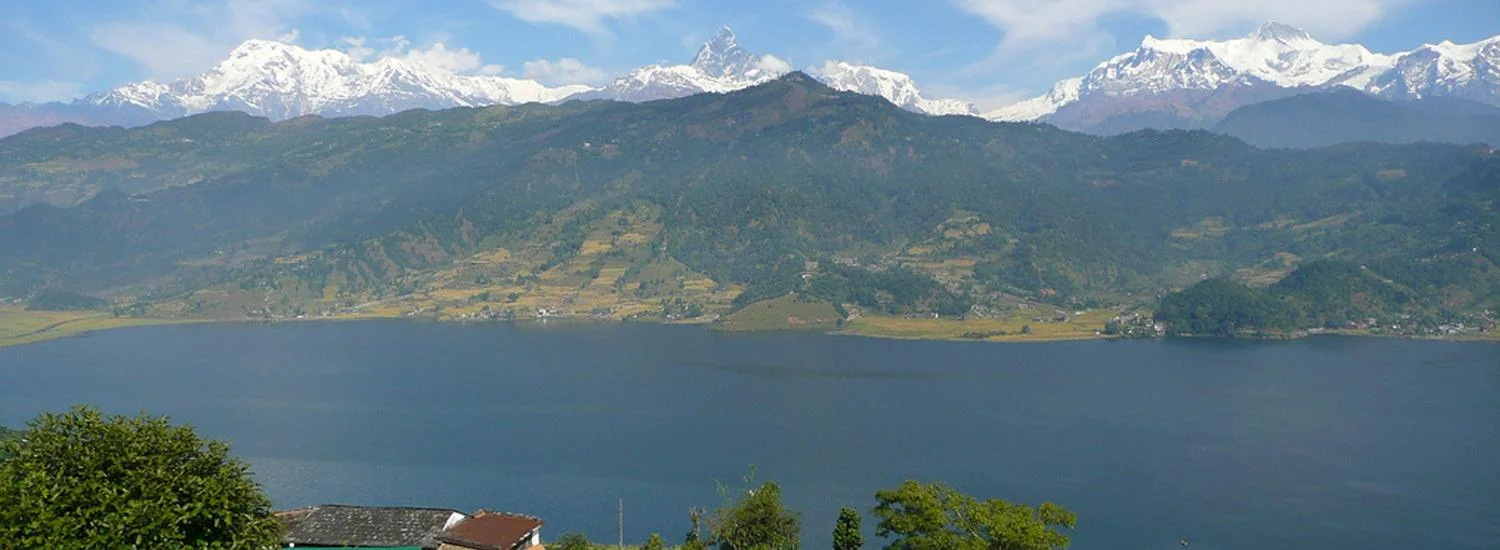
Pokhara, a Paradise on Earth
Its other name is “City of the Lakes”, and its guardian angel is Machhapuchchhre Himal, a.k.a. Fishtail Mountain, one of the loveliest of all Himalayan peaks. Welcome to Pokhara, where you’ll find a veritable paradise.
In May 2002, Junko Tabei, the first woman to summit Mount Everest (May 16, 1975) inaugurated the soft opening of the International Mountaineering Museum (IMM) in Pokhara along with Appa Sherpa (who had by then climbed Everest a dozen times). The museum complex, which covers an area of around five hectares, is themed as ‘Man, Mountain, and Mountain Activities’. It consists of the Mountain People Gallery (exhibiting culture and lifestyle of mountain people); Mountain Gallery (exhibiting geological facts about the origin of world mountain systems); Mountain Activities Gallery (chronicling historical ascents, explorations, and trekking exploits); Associates' Gallery (highlighting INGO and NGO activities in mountain areas); Library; and Audio Visual Hall. The museum is no doubt a grand addition to the other charms of the “City of the Lakes”.
Charms that include the serene Fewa Tal, the dark and dank Mahendra Gufa, and Devi’s Falls. Fewa Tal is a large-sized lake that’s really beautiful to look at. Boat riding on the lake is a great pleasure; it’s a lot of exercise as well, what with all the paddling. However, paddle to the other side, and you’ll find a row of nice eateries awaiting you with chilled beer and fried fish. The famous Bindabasini Temple on the lake is also worth a visit. Entering the dark depths of Mahendra Gufa, a cave in the mountainside, can be quite a thrilling experience, especially as the dim lights along the walls inside may shut down suddenly sometimes. Thrilling, what? As for Devi Falls with its cascading waterfalls, the closer you get to it (and you can get quite close), the more terrifying it becomes.
Actually, all said and done, it has to be admitted that Pokhara doesn’t have too many of such landmarks. Yet, this lovely city is by far the most favored destination for many tourists from around the country, and around the globe. The reason it is so is because of its fabulous scenic beauty. This is the one unique selling point of Pokhara that few other cities can rival. The early morning sight of sunlight glinting off the face of Machhapuchchhre Himal (Fishtail Mountain), which towers over the city, is something that is sure to give a fantastic start to your day, every day. Another thing about Pokhara that sets it apart from the pack is the traditional stone architecture of the place which gives a distinct identity to the city. All this makes Pokhara a city that inspires even the laziest to be out and about, whether hiking, biking, or boating. It’s a city for the adventurous at heart. And, really, who wouldn’t be in such a setting?
Talking about adventure, you can look forward to some great adventure activities like paragliding, parasailing, and ultra flight, besides both short and long treks around the area, and boating to your heart’s content on the lovely Fewa Tal. In fact, one of the country’s most popular paragliding sites is here in a hill called Sarangkot (1,592 m). Need it be said that soaring high above the city is an experience you are not likely to forget in your lifetime? It’s all pretty much of an adrenaline rush. And, to help you relax and rejuvenate, Pokhara has plenty of hotels and restaurants suitable for both high-end and budget travelers, many of which are situated on the famous Lakeside area. There’s no better way to wind down after a hectic day of adventure than by taking a leisurely stroll down Lakeside, and then sitting down at one of the many restaurants with a refreshing bottle of beer in hand.
Pokhara has much to offer, that’s for sure, and new experiences for you to try your hand out on. So, welcome to Pokhara, welcome to adventure.
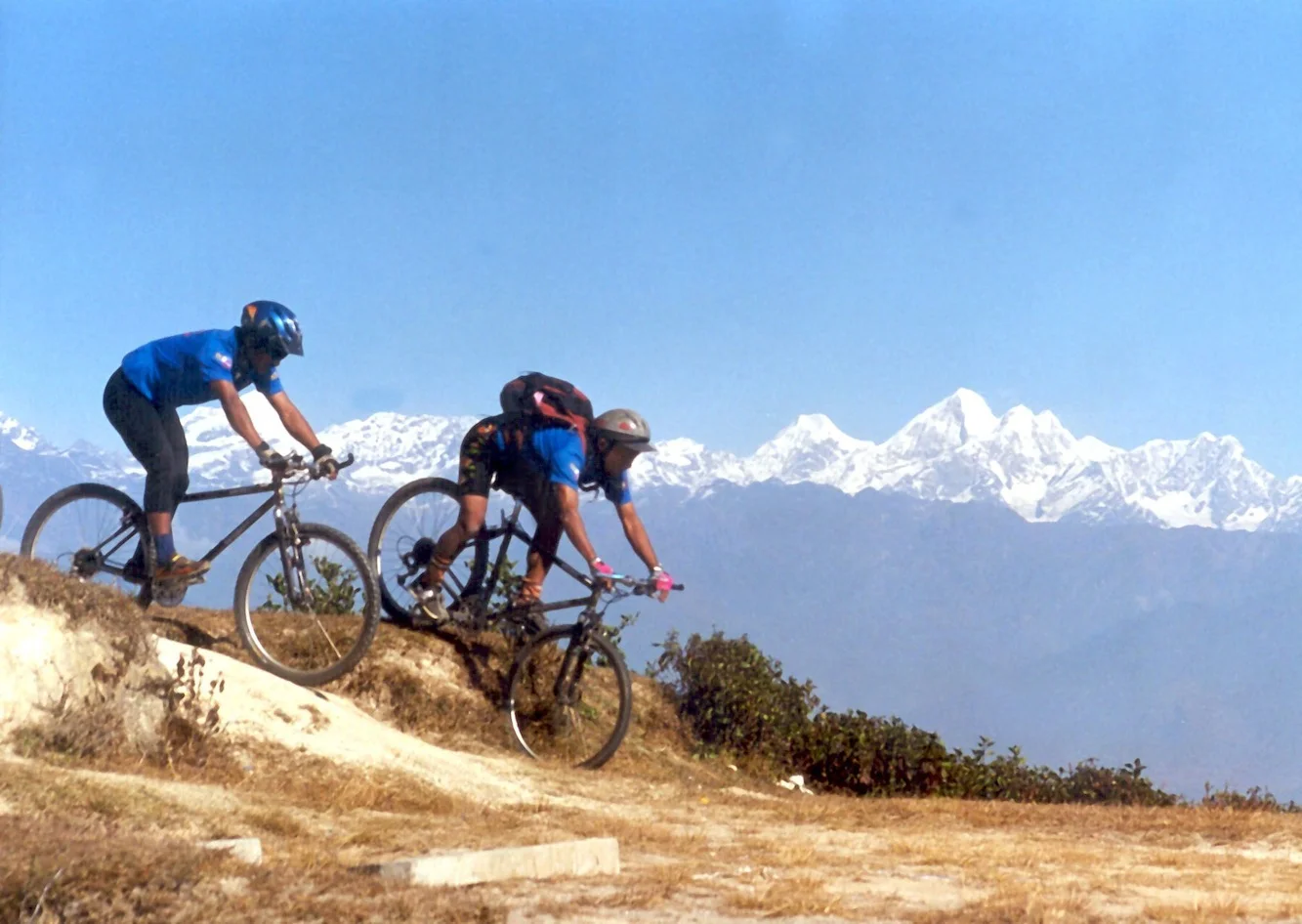
Pedaling around Kathmandu Valley 2016
There’s no better way than to get close and personal with the people and experience the lifestyle of Nepali villagers than by pedaling around the valley at your own pace.
No question about it, cycling is certainly one of the best ways to know Nepal. The sharp descents and steep climbs of the terrain challenge not only your physical limits but your adventurous spirit, as well. Besides, cycling around the countryside brings you closer to the land and the local inhabitants. Nepal’s terrain, especially Kathmandu Valley’s, with its many dirt trails and the highs and lows of the land, is ideal for cycling. Another clear advantage is the temperate weather all year round. There cannot be a more pleasant way to make new discoveries around the valley than by cycling, or mountain biking, to be more precise. You can expect to cycle on never-ending single tracks and down steep descents. The views on the way are of course great, and you’ll be meeting quite a few pleasant-faced locals with welcoming smiles.
There are many professional agencies in Kathmandu waiting to provide you with an adventurous cycling experience. A typical 3-day itinerary begins with an early start. Right after breakfast, you begin to pedal from Kathmandu (1,315 m) towards the ancient city of Bhaktapur, from where you ride uphill to the hill resort of Nagarkot (2,100 m). Bhaktapur is worth spending some time in to explore its many artistic and cultural treasures. While there, do try out its famous curd known as “juju dahi” (king of curds). The rich creamy taste will make you want to have “just one more cup, please.” It will also fortify you for the next phase of your cycling adventure, for now you will be pedaling on ever upwards for some 20 km to the tourist hotspot of Nagarkot. The verdant forests and rows of terraced rice fields on the way should keep you inspired enough to keep on going. Of course you will be resting a lot on the way. You got to, because you deserve time enough to absorb the great views and imbibe the serene atmosphere all around you.
From Nagarkot you get fantastic panoramic views of majestic Himalayan peaks, and this alone will make your efforts worthwhile. No doubt the climb is challenging, but on the positive side, this is something that will give you all the more satisfaction. And, anyway, you are guaranteed rest and relaxation, sumptuous food, and a good night’s sleep at one of Nagarkot’s many fantastic resorts, some of which are world famous. Well, having had a rejuvenating sleep (probably dreamless), the next morning after a hearty breakfast you are on your way again. However, this time around, you’ll not be pedaling away to glory, since it is mostly downhill initially. You’ll be passing through some interesting villages before getting onto a dirt trail that goes up and down small hills before reaching Namo Buddha, a holy Buddhist shrine in memory of a prince who made the ultimate sacrifice of cutting himself to pieces to feed a starving tigress and her cubs.
The road then carries on towards scenic Dhulikhel (1,750 m), another place with some really fantastic resorts, not to mention, spectacular scenery and great views of the Himalayan peaks. Rest awhile here, in fact, settle down for the night, because how can you afford to miss out on one of the most beautiful sunrises in the world? The glorious sun rising above from behind the ice-capped peaks, and sending out a plethora of changing colors while doing so. You are assured of a restful night as in Nagarkot, good food as well, and that should be enough rejuvenation to make you up and eager to cycle to Panauti the next day. Panauti is touted as the fourth most important heritage site of the valley, after Kathmandu, Patan, and Bhaktapur. Go around the place and revel in its many ancient temples and courtyards. Then, having had your fill of historical sites, pedal on to Sisneri, and then to Patan, and finally, Kathmandu. Hope you have a nice trip!
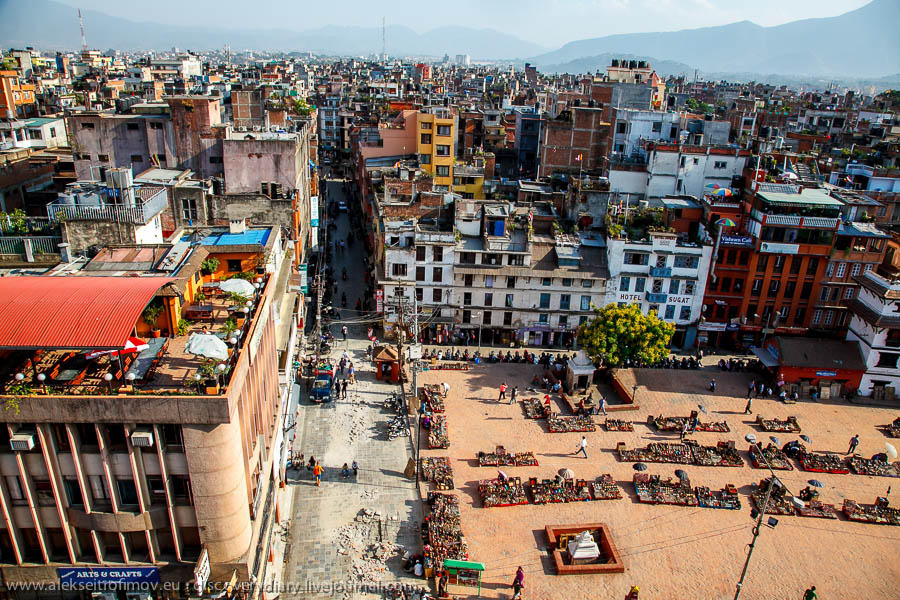
Freak Street, Meeting Point of the Famous & Infamous
Cat Stevens wrote a song about ‘Katmandu’ while having chai and pie and hashish in one of its numerous ‘chai and pie’ shops. And, some say that Charles Sobhraj plotted a few of his murders when living in one of its many cheap guesthouses.
In the ‘60s and ‘70s, and sometime into the ‘80s, it was one of the most famous streets in the world. As well known as the Arc De Triomphe of Paris. It a less-than-one-kilometer-long street lined by old Newari houses, many of them having eateries (‘chai and pie’ shops), real restaurants, used bookshops and second hand stores, curio and souvenir shops, et al, to whet the tourist’s appetite, on their ground floors. Okay, but not much, is what you might be thinking.
But, wait, once upon a time, in the decades mentioned above, this particular street also had a distinctive aroma of hashish and marijuana wafting out of the chai and pie shops throughout the day. And, wait, this street would be teeming with flower children from all over the world. Besides many famous cultural figures of the time, the street also had a particularly infamous individual as a guest in one of its numerous guesthouses; the devil-incarnate himself, Charles ‘the Cobra’ Sobhraj. Yes, the very same poisonous villain who’s now spending the rest of his sinful life in the central jail for the murder and robbery of half a dozen or so young foreign girls in Nepal and India. Yes, in case you are wondering, his modus operandi was to poison unsuspecting girls lured by his Vietnamese-French-Indian mixed-blood charm.
On the other hand, Cat Stevens, too, spent quite some time living in a guesthouse in Freak Street. The famous singer, best known for the melodic song, “It’s a Wild, Wild World”, was a big fan of the Kathmandu of the time. He fell so much in love with its groovy culture that, one fine day, while having pie and chai, and obviously stoned out of his soulful mind with Jomsom hashish, began to scribble down some lines of tribute to this veritable Shangri La. This is what he wrote: “I sit beside the dark / Beneath the mire / Cold grey dusty day / The morning lake / Drinks up the sky / Katmandu I’ll soon be seeing you / And your strange bewildering time / Will hold me down.”
Titled, “Katmandu”, it went on to be one more of his many popular numbers, and perhaps was helpful in letting the world’s flower children, the hippies, know that Katmandu was where the action was. Of course, even before he sang this song, Kathmandu had already become an irresistible magnet that pulled youngsters of the time from all corners of the globe. Perhaps his song further validated the fact that there was no other place in the world that was as welcoming to hippies as Kathmandu of that time. And, invariably, the tide of hippies coming to Kathmandu along the Ankara-Kandahar-Istanbul-Kathmandu trail in search of hashish and nirvana were sure to make Freak Street their home for at least the next few months.
Another fantastic piece of promotional item of Kathmandu as a hippie paradise was a calendar that the most famous establishment in Freak Street, Eden Hashish Centre, published every year, and it can be assumed that it was one of the best souvenirs of for any tourist to take back. Mostly, the calendars would feature a colorful picture of some jovial looking god like Ganesha, or a wrathful looking one like Shiva, and the following words would be printed below them:
‘Late Us Take Higher’
Eden Hashish Centre
Oldest & Favourite Shop in Town serving you the Best Nepalese Hash and Ganja
Available in Wholesale & Retail
Come and Visit us for all Your Hashish Needs
5/1 Basantpur, Kathmandu, Nepal
If you want to see one that still exists, you’ll either have to visit eBay, where a few are still on sale for $32 each, or you could go to Himalaya Guest House on a side lane of Freak Street, one of the few surviving relics of that time, and ask the owner to show you one of these famous calendars that hangs on the wall besides the staircase. By the way, don’t be misled by the address above, Freak Street (Jhochhen Tole being its real name) was one of the highlights of Basantpur, the other being Kathmandu Durbar Square, which adjoined the Street. Just as a matter of interest, the abovementioned guest house’s owner’s daughter, Moni Mulepati, was the first non-Sherpa Nepali girl to summit Everest, on May 30, 2005. While on the top, she thought, why not set another record? So, she got married then and there to her Sherpa beau, Pem Dorjee, who had accompanied her!
Asian Safari Destination Nepal
Nepal’s rich wildlife does justice to its claim as being an Asian Safari Destination.
Nepal’s amazing biodiversity, on account of the fact that the elevation ranges from 70 meters above sea level in the Terai to 8,848 meters (Mt. Everest), and that this range is within less than 400 kilometers distance, assures a wealth of different fauna within areas that aren’t very far from each other.
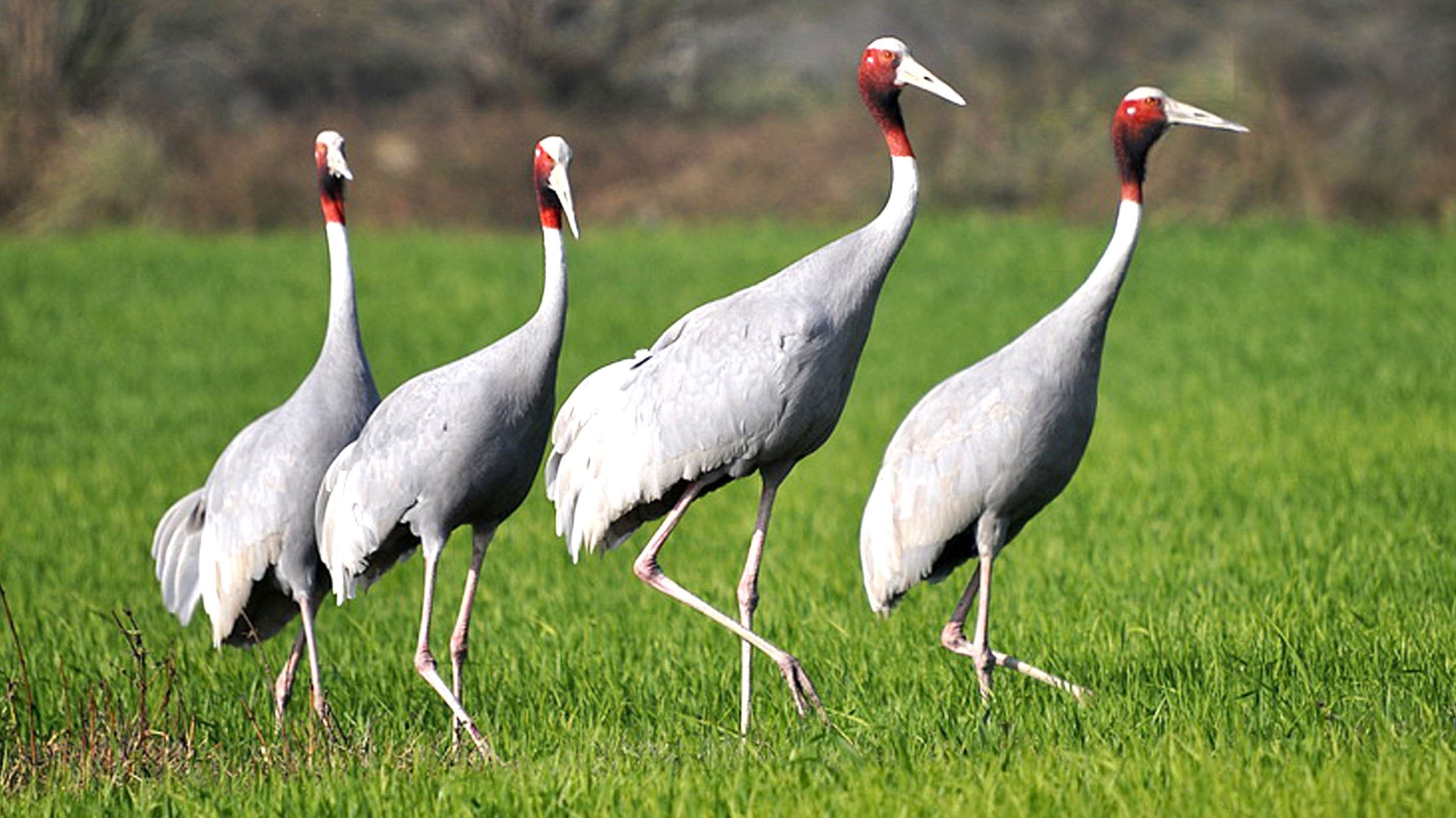
Nepal is rich in bird species, with Shivpuri, Pokhara, Chitwan, Lumbini, and Koshi Tappu being the prime locations to view more than 870 species of birds. Koshi Tappu, the first Ramsar (wetland) site to be developed in the country, is a birdwatcher’s paradise, and on a two-week tour, you may see a many as 300 species. Along with the wetlands, the Sapta Koshi River provides refuge for many migratory birds and waterfowls, including the elegant white Ibis.
Nepal has around 20 globally endangered bird species, which include the lesser Adjutant Storshoi, but at the same time, specie like the barn owl, which is in the danger list in many countries due to rampant use of harmful chemicals, is pretty safe here. Also safe is the Eurasian large owl. However, the Terai’s white rumped vulture is not safe. Many have died because of indiscriminate use of the pain-killer Diclofenac Sodium (which has a toxic effect on the kidneys) on livestock, the carcasses of which vultures gorge on.
The Eurasian Griffon, black kite (of Mustang), and the Lammergeuer (an eagle with a three-meter wing span that soars over the Himalayan valley and is known as the protector of the Himalayas), are particularly interesting bird species found in Nepal. The Sarus crane of Lumbini, among the large variety of cranes, and tallest of flying birds, is believed to be the harbinger of bumper harvests and a happy conjugal life. During the second week of October, one may see the Demoiselle crane (karyang kurung), a migratory bird that travels from Dar E Salaam, over the Himalayas, and on to Gujarat and Rajasthan. As for the butterfly; experts state that Nepal has about 650 species. It’s an amazing number or such a small country.
Coming to four legged creatures, the Suklaphanta Reserve has the largest herd of swamp deer (Bara Singhe), while other deer like chital and hog deer are found aplenty throughout the country. The Blue Bull, largest antelope of the sub continent is also found in Nepal, as is found the fierce arna (ancestors of the domestic buffaloes) although they number only a few hundreds, if that. The Gaur bison, the world’s biggest wild cattle, is to be found in the Churiya hills, although many have succumbed to foot and mouth disease.
Regarding the endangered one-horned rhino, although the scenario was bleak during the 1950s and 1960s, conservation efforts have paid good dividends, and now there is quite a good growth in their number. In addition to this rare species of wildlife, the presence of royal Bengla tigers, sloth bear, Himalayan black bear, brown bear, wild boar, common leopard, clouded leopard, snow leopard, red pandas, jharal (himalayan mountain goat), bharal (blue sheep), etc. justify Nepal’s claim as an Asian safari destination.
Revisiting the History of Nepal Part 3
Someone once said that if we do not learn from history, then it will repeat itself. There’s much to learn from Nepal’s history.
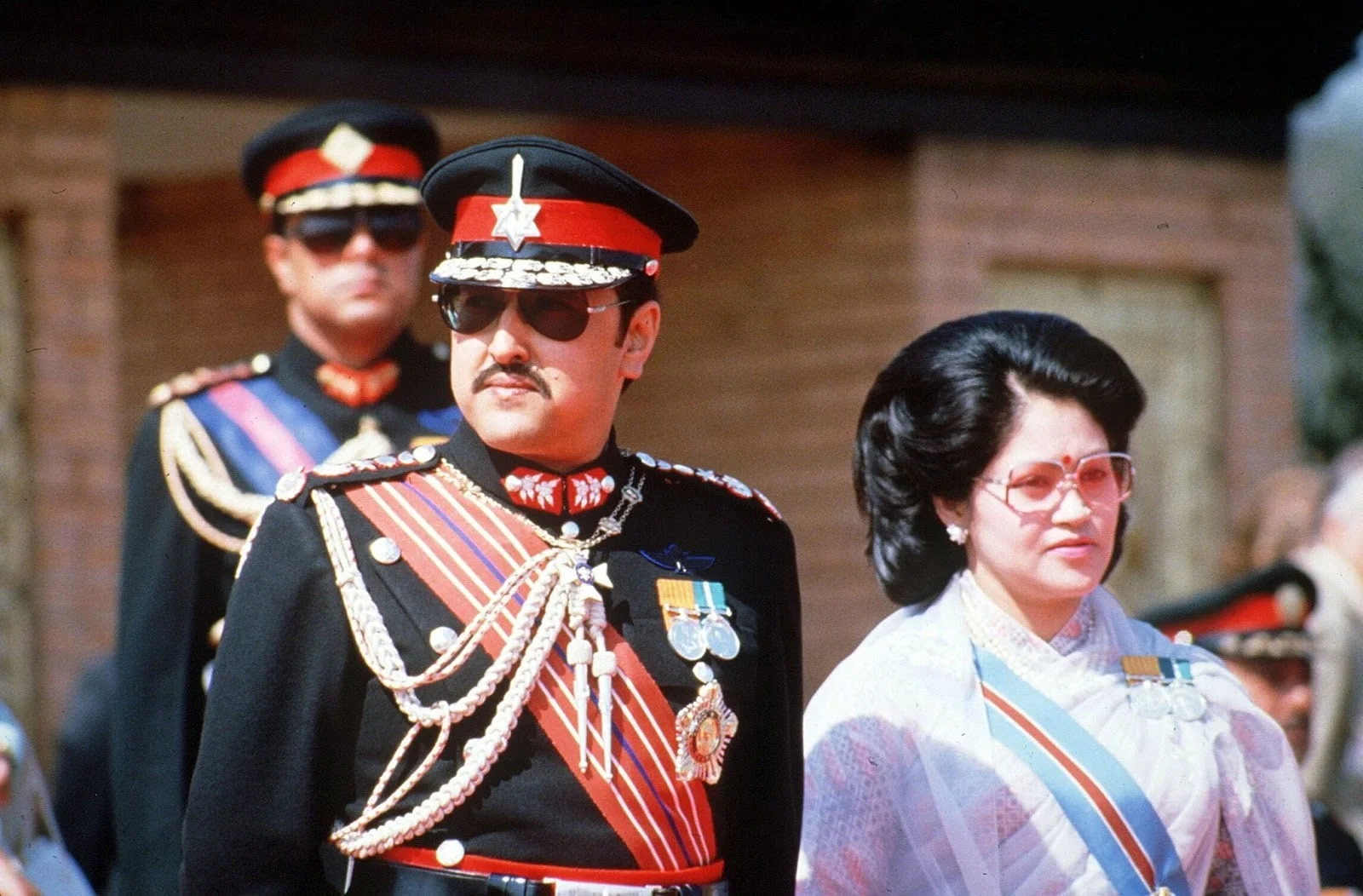
In 1972, the 27-year-old Eton-educated Birendra became king after his father’s untimely death, and in 1979, he held a referendum to choose between the Panchayat system and a multiparty one. The former garnered 55% of the votes, while the multiparty faction received 45 percent. Of course, the latter were unhappy with the result, and they continued pushing for change. In early 1990, over 200,000 people demonstrated on the streets of the capital. They were met by bullets and tear gas, and thousands were arrested. On April 9, the king conceded to lifting the ban on political parties, and on April 16, he agreed to become a constitutional monarch. An interim government was formed by the opposition.
Some years later, in 1996, the Maoists, who were thoroughly disenchanted by the corrupt practices of those in power, declared a 'people's war', which began in the poverty-stricken regions of far-west Nepal. It was an insurgency that steadily gathered momentum throughout the country. Then, on June 1, 2001, an event occurred that shocked not only all Nepalis, but the entire world. At one of the regular family gatherings in the Narayanhiti Palace in Kathmandu, Crown Prince Dipendra apparently gunned down most members of the royal family, sparing just a few. To add to this grief, the political situation in the country turned from bad to worse, with personal enrichment becoming the norm for politicians, and the Maoist war raging unabated in the countryside.
Thus it was that, in February 2005, King Gyanendra, one of the survivors of the palace massacre along with his family, and who had been crowned king, declared a state of emergency and dissolved parliament. He gave his word that there would be return to democracy within three years, but he wasn’t to have that time. In April 2006, following massive and sustained demonstrations, he was compelled to restore parliament, and the very next month, the first promulgation of the reinstated parliament was to reduce him to a figurehead without any powers. Later, that year, the government succeeded in forging a peace deal with the Maoists, who then went on to win in the ensuing election held on April 10, 2008. One month later, the new parliament voted to abolish monarchy (560 votes to four), and a new government was formed under Maoist leader Pushpa Kamal Dahal (a.k.a. Prachanda).
Well, as is obvious, new pages are being added to Nepal’s history with amazing rapidity. The country has a new name now: Federal Democratic Republic of Nepal. The Constitutional Assembly elections that were held for the first time some six years ago put over 600 members in the Assembly. However, in its four year’s mandated time, it couldn’t come up with a new constitution, and another election had to be called for. This time around, the major parties in the Assembly agreed to act as one in ensuring that a new constitution was made, which they did some months ago. But, instead of improving the situation, it has led to a complete shutdown of the country, with the Terai (Madhesh) parties crying foul that the agreements with them have not been honored, and resorting to a continuous bandh (shutdown) for the last two months, along with blockage of the major transit points with India, resulting in acute shortage of fuel, especially, in the country. There’s a general feeling that India is hand in glove in ensuring the success of the blockade.
As in 1950, when it was the capital of the revolutionary Nepali Congress provisional government, Birgunj, today, is also the focal point of the Madhesh movement, it being by far the most important transit point with India. And, interestingly, Kerung, from where Chinese troops once invaded Nepal in 1792, has become a focal point for opening trade routes to China, so as to reduce the dependency on India. History has a peculiar way of bringing up old scenarios to the forefront again.
Revisiting the History of Nepal Part 2
Nepal’s history shows long periods of progress and prosperity, and equally long periods of tyrannical rule; and some moments that were momentous in nature.
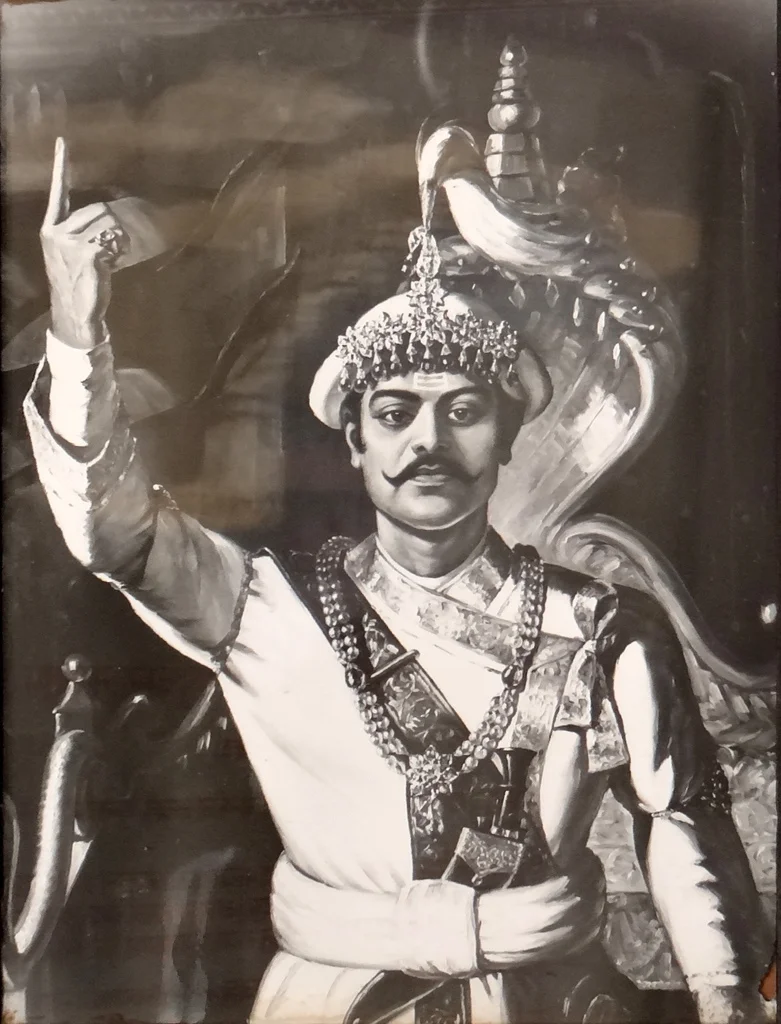
During that time, however, a ruler of the tiny hilltop kingdom of Gorkha, King Prithvi Narayan Shah, was setting out on his quest to unify the country, and in A.D. 1768, he took over Kathmandu, and then, Kirtipur, one year later. He set up his capital in Kathmandu, and thus began the dynasty of the Shah rulers, who reigned for almost 240 years over the country now known as Nepal. In the initial stages, within six years of taking over Kathmandu Valley, Prithvi Narayan Shah’s victorious Gorkha army conquered eastern Nepal, as well as the adjoining state of Sikkim. Next, it turned its attention westwards into Kumaon and Garhwal in India, where a one-eyed Punjabi king named Ranjit Singh just about managed to stop them at the Punjab border.
It was a heady time for the new kingdom, with its army winning one battle after the other, and with new territory being added with every victory. But, in 1792, an excursion into Tibet was not so successful, a bit too much adventure for the valiant Gorkha army to swallow, and they suffered defeat at the hands of a large Chinese army, which then advanced to within 35 km of Kathmandu, advancing down from the Kerung Valley. Leaving this unfortunate episode aside, Nepal had expanded considerably by now, its borders stretching from Kashmir to Sikkim.
Of course, as with everything else, all good things had to come to an end, and the Gorkha’s exploits eventually brought them face-to-face with the all-powerful British Raj in India, resulting in the first Anglo-Nepali war that carried on for two-years, with the British finally emerging victorious. However, the amazing fighting spirit of the Gorkha’s was admirable, and so, the British began to recruit Gorkhas into their own army. At the same time, they also came up with the Sugauli Treaty of 1816 that halted Nepal’s expansionist ambitions, and drew its modern boundaries. This meant giving up Sikkim, Kumaon, Garhwal, and a substantial part of the Terai. In 1858, to show their appreciation of Nepal’s support in putting down the Indian Mutiny, some of this land was restored.
In between all this, King Prithvi Narayan Shah died in 1775, and his death led to intrigue-riddled succession struggles, which culminated in the Kot Massacre of 1846 that was engineered by Jung Bahadur, a young nobleman of the Chhetri clan. He, with the queen's consent, arranged for the massacre by his soldiers of hundreds of noblemen, soldiers, and courtiers who were made to assemble, under some pretext, in the Kot courtyard near Kathmandu Durbar Square. Next, Jang Bahadur exiled thousands of the murdered victims’ families to ensure that there were no revenge attacks. The result was that the Shah dynasty was pushed into the sidelines, with Jung Bahadur’s dynasty becoming all powerful. Changing his family name to the more prestigious one of Rana, he claimed for himself the designation of Prime Minister, and later, entitled himself maharajah, a title that would henceforth be hereditary. Thus, the Ranas became another ‘royal family' within the kingdom, keeping a firm hold on the rein of power, and this they continued to do for another 100 years. The Shah kings became mere figureheads.
Finally, in late 1950, King Tribhuvan Bir Bikram Shah took refuge in the Indian embassy, and was flown to India. At the same time, a political party called Nepali Congress led by a man called B.P. Koirala succeeded in forcibly taking control of most parts of the Terai, where they established a provisional government with its capital in Birgunj. In 1951, the king returned to Nepal and established a new government made up of Nepali Congress party members and some demoted Ranas. In 1955, the king died, and was succeeded by his son, Mahendra. In 1959, the country held its first general election, as per the provisions of the new constitution that provided for a parliamentary system. The Nepali Congress, expectedly, won, and B.P. Koirala became the new prime minister. It was a short-lived reign, however, because in late 1960, the king took over complete control, and had the cabinet thrown into jail. He then established a party-less Panchayat (council) system in 1962, and banned political parties.
Revisiting the History of Nepal Part 1
In light of the current chaotic state of affairs, when new history is being created, it would be interesting to revisit this small nation’s journey through the ages.
Nepal has a proud history of never having been colonized by external forces, unlike many other nations of the world, including its two closest neighbors, China and India. This proximity between such large countries also meant that Nepal has enjoyed a geographical advantage by being a neutral route between the two, a route utilized through the ages by traders, travelers, and pilgrims. This gave Nepal a measure of prosperity and self sufficiency in the days of yore. However, with modernity came modern needs, and it is as clear as day that today Nepal is completely at the mercy of outsiders when it comes to fulfilling its energy needs, without which there is total collapse not only of progress and prosperity, but even of conducting everyday life.
In this background, it would be interesting to revisit this small nation’s history if only to indulge in a bit of nostalgia. Though Nepal’s modern history begins in the 18th century, its recorded history begins in the 7th or 8th century B.C., with the coming of the Kiratis, a Mongoloid people, from the east to Kathmandu Valley, which they ruled. The first of the 29 Kirati kings was King Yalambar, whose name is mentioned in the Mahabharata. In the 6th century, a momentous event occurred in the country. A prince was born in Kapilvastu, near Lumbini, in the southwest terai. He was Siddhartha Gautama, who in young manhood, renounced all he had, including his family and his title, to embark on a path of meditation that led him become the Buddha, ‘The Enlightened One’.
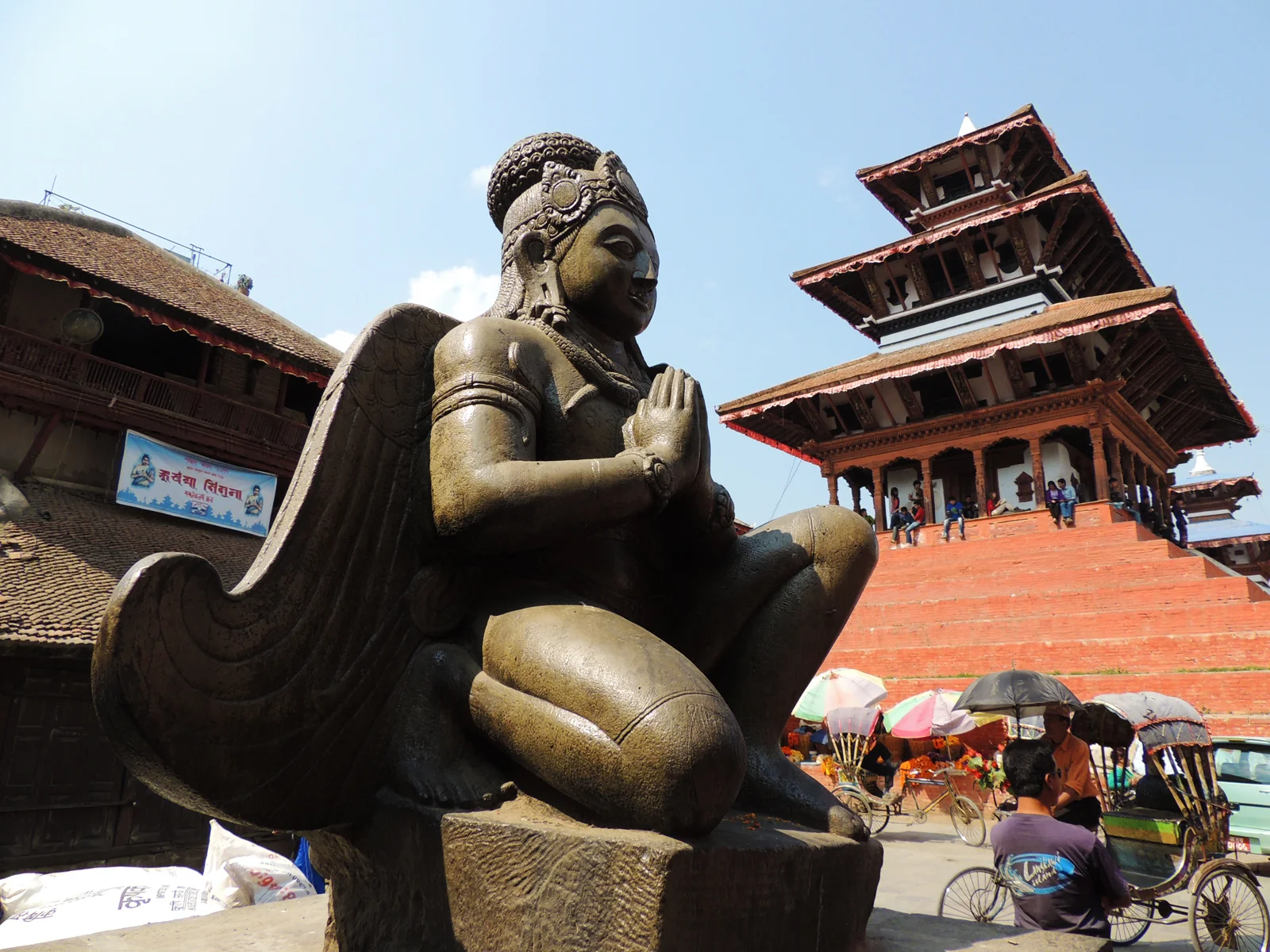
The religion he created, Buddhism, however, declined down the ages, with Hinduism reasserting itself along with the coming of the Licchavis from north India. These new arrivals, in A.D. 300, overthrew the Kiratis, who returned to the east. The Licchavis were culturally progressive, and between the 4th and 8th centuries, they introduced and established many cultural aspects to life in Kathmandu Valley. One of the oldest testimonies to their cultural brilliance is the Changu Narayan Temple, located north of Bhaktapur, where one will find many fine examples of wood, stone, and metal craft, aside from architecture. The Licchavis are also credited with making many of the original stupas of Swoyambhunath and Boudhanath.
In A.D. 602, the first Thakuri king, Ansuverma, came to power, and he was as astute a ruler as one would find anywhere. To ensure consolidation of his power in the north and south, he married his sister to a prince of India, and his daughter, Bhrikuti, to King Songsten Gompo of Tibet. In the 10th century, King Gunakamadeva found Kantipur (later, Kathmandu). Around A.D. 1200, the valley saw the emergence of the first of the Malla kings, whose dynasty carried on for the next 550 years, a period of progress and prosperity in all spheres. The valley was united by King Jayashithi Malla (A.D. 1382-1395), who then codified the laws.
However, in A.D. 1482, after the death of King Yaksha Malla, his sons divided the valley among themselves into three kingdoms: Kathmandu (Kantipur), Bhaktapur (Bhadgaon), and Patan (Lalitpur). The rest of the country, as it was then, consisted of about 50 independent states scattered from Palpa to Jumla, as well as two semi-independent states, that is, Pharping and Banepa. The three kingdoms of the valley competed with each other for excellence, and this was manifested most obviously in the building of temples and monuments. King Pratap Malla (1641-74) of Kantipur stands out, specially, in this regard, with Hanuman Dhoka Palace and Rani Pokhari being two of his most famous creations.
King Jaya Prakash Malla, in 1750, built the Kumari (Living Goddess) Temple, and not long after, another grand example of Newari architecture was built in Bhaktapur, that is, the famous Nayatpola Temple. Doubtless, the Malla era gave birth to most of the artistic and architectural wonders that define Kathmandu Valley today, with some of them being listed as world heritage site monument zones by UNESCO in the 1990s. Many of the valley’s festivals, too, originated during the Malla period, two well known examples being the vibrant chariot festivals of Indra Jatra and Machhendranath. Indeed, the Malla period was a golden period in Nepal’s history, or more precisely, in the history of Kathmandu Valley. However, all that was to change soon with the arrival of King Prithvi Narayan Shah of Gorkha.
Trek to Ghalegaun Village
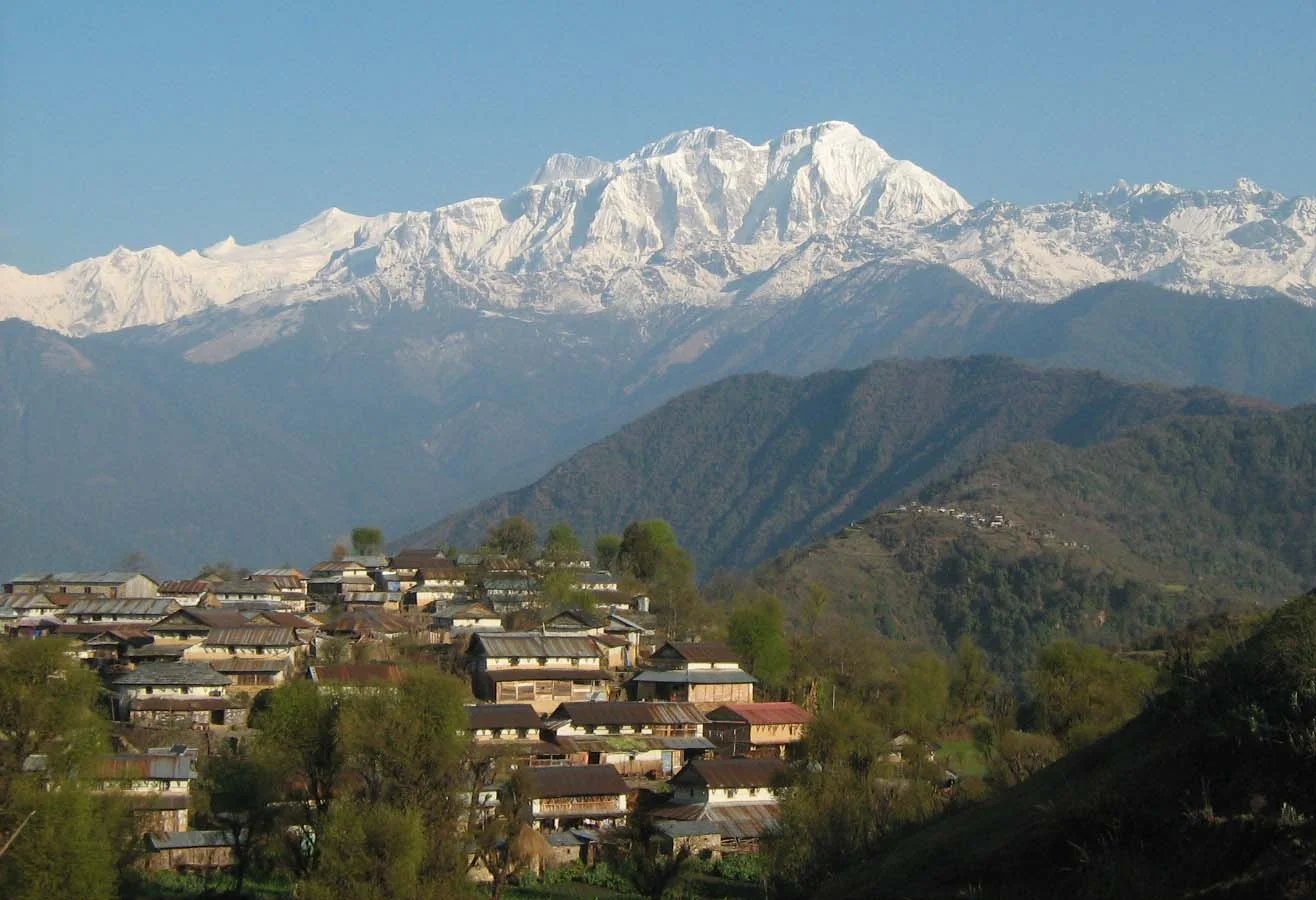
Among a number of short and pleasant treks in the Annapurna region, none is more fulfilling than the trek to Ghalegaun, a lovely village in the Nepal hills.
The Annapurna Base Camp (ABC) trek is a very popular trek; most trekkers put it right up there with the best in the world. However, this time around, let’s take the route northwest of the main ABC trek trail, and visit a lovely little village called Ghalegaun (2,016 m). This short trek is also very popular, especially for those pressed for time, since you can do it in a matter of just three to four days.
It all begins by driving down from Kathmandu to a bustling town called Besisahar; should take around six to seven hours. From there, the trail goes alongside the Marsyangdi River to Khudi (2,493 m), and then meanders along the Khudi River, before climbing steeply for four to five hours. Once you are at the top, you’ll get to see awesome sunsets and sunrises over the lofty Annapurna and Manaslu ranges. That aside, you’ll be coming across lovely waterfalls on the way, and walking across swinging suspension bridges, besides hiking through some very charming villages that are made all the more picturesque by the surrounding terraced paddy fields, bamboo groves, and rhododendron forests.
It will take you some seven hours to reach Ghalegaun from Khudi, but what a seven hours it’s going to be! Stunning views of ice-capped Himalayan peaks will certainly mesmerize you. And, these are really tall peaks, such as, Annapurna I (8,091m), Annapurna II (7,939 m), Annapurna IV (7,525 m), Bouddha Himal (6,974 m), Himalchuli (6,747 m), and Machhapuchchhre (6,693 m). Just so you know, Annapurna I is the 10th highest peak in the world.
Ghalegaun, snuggled in the midst of green hills and surrounded by majestic Himalayan peaks, is home to the Gurungs, who have earned name and fame for their martial prowess. They are one of the major ethnicities that go to make the fearsome Gurkhas. However, away from the battlefield, they are some of the most hospitable, polite, jocular, and friendly people you’ll find anywhere. This, you’ll see for yourself when you are in Ghalegaun, more so, because you’ll be most probably staying in a homestay, meaning that you’ll be living with a local family in their home, and sharing meals and experiences.
The homestay arrangements have been fine tuned in Ghalegaun, whereby, even if you are living with a family, you are assured of complete privacy and most modern amenities. A walk through the village in the evening takes you along cobblestoned paths between traditionally made houses huddled close together. You’ll get plenty of people to talk to you, and dodging lots of chickens on the way. A night’s stay is often rewarded with a cultural program, where you’ll be treated to traditional songs and dances performed with youthful vigor.
Back in your home, a nice dinner awaits you: customary dishes like dhindo (a porridge-like food made from a mixture of maize and wheat) and kukhura ko masu (chicken curry) with vegetable, spinach, pickle, and so on. You’ll also find the setting to be quite agreeable: sitting on the floor with the glow of the cooking fire providing light, and pleasant light-hearted conversation all around. You go to bed quite early. You don’t want to miss out on one of the primary highlights of your trek, that is, watching the fabulous sunrise over the lofty peaks, and to view these peaks in the early morning light when the view is the cleanest. So, at the crack of dawn, you’ll be up on the tower on the nearby hill with a hot mug of tea in your hand. Don’t blink now, because sunrise is an event that occurs without warning, and you’ll find the dark sky suffused with sunlight in an instant.
Savor the moment; savor the feeling of tranquility that falls upon your senses as you watch the breaking of a new dawn. Soon enough, everything—the mountains, the valley, the rivers, Ghalegaun village—present themselves to your sight, all at their pristine best. It’s a fantastic experience. You’ll also see far-off Besisahar, from where you started your trek, so clear is the air, and thus, the view. After you have captured memories for a lifetime in your camera, you walk back to your home, where there’s some serious breakfast waiting for you. Again, delight in traditional Gurung fare like kodo ko sel (round shaped bread made of barley) and rajma ko tarkari (bean curry), along with plenty of steaming hot tea.
Having fortified yourself, you are ready to make a more thorough exploration of Ghalegaun, where you’ll discover ancient shrines and even a dhunge dhara (stone spout). On the hills around, you’ll come across grazing donkeys and horses. You’ll be delighted, no doubt, to know that the village also has a museum, where you can see traditional wear of the Gurungs, ancient and not so ancient tools used in agriculture, photographs of mud houses that once served as their homes, and so on. You will also be surprised to see a large sized tea garden that’s situated some distance away from the village.
After your pleasant sojourn in this lovely village, you might want to extend your trek, to Ghanapokhara, which is a one-hour walk, and Bhujung (two-and-a-half-hours). The trail then goes uphill for some three hours to Khumre Danda (2,000 m), before descending to the Mandi River, and then to Pakhrikot (6 hours). From there, you walk to Thusmsikot and take a ride to Pokhara.
Copper in their Veins, the Tamrakars
The Tamrakars have been working at making various items out of copper for a very long time, and why shouldn’t they? After all, the very word ‘Tamrakar’ means ‘those who give shape to copper’.
When I was working on “Treasures of Nepal”, a book profiling national award winning artists/craftspeople of Kathmandu, I discovered that many of them lived in some pretty historic places. One such artist-cum-craftsperson is Mr. Chin Kazi Tamrakar, whose house is right behind the famous Kasthmandap Temple in Maru, next to Kathmandu Durbar Square, after which Kathmandu city was named. According to the octogenarian, the locality is inhabited by people of the Tamrakar clan, and 28 Tamrakar families live there currently. The famous temple was brought down to rubble by the devastating April 25 earthquake, and many of the houses in the locality have been damaged severely. While restoration of the temple is of prime concern today, there are also serious discussions going on about how to go about repairing the damaged houses of the Tamrakar locality. This is because all the houses are linked to each other, and anything done on one house is sure to affect the other. It’s all a bit challenging, one can be sure of that.
That having been said, the Tamrakar community in Maru is only a small part of the whole. Known as ‘Tamo’ or ‘Tamot’ in ‘Nepal Bhasa’ (Newari), the Tamrakars are widespread within and outside the valley, but mostly concentrated in the heart of Patan. As everybody knows, the Newars, especially those of Patan (or, Lalitpur, the ‘city of the arts’) are renowned for their artistic skills, and there are many different clans, each specializing in a certain vocation. The Tamrakars’ vocation is making copperware. The word ‘Tamrakar’ is derived from ‘tama’ meaning copper, and ‘aakar’ meaning shape or, to give shape.
Mr. Chin Kazi discloses that, once upon a time, the entire Maru Tamrakars were involved in copper work, but now they have all discontinued the profession. And, while his own family has a couple of workshops, they now only do work in silver nowadays. He himself is famous as a repousse artist, and as the pioneering maker of trophies in the country. However, as mentioned above, most of the Tamrakars are concentrated in the heart of Patan. If you wander along the streets south of the Patna Durbar Square, you will discover a row of shops displaying copper, brass, and bronze ware, and most probably, the names of these shops will have the word, ‘Tamrakar’ or ‘Tamot’ in them, for example, “Tamot Traders” in Tangal, and “Tamrakar Handicrafts” in Chakrabahil. As a matter of interest, one of the oldest such shops established was in Haugal by Mr. Tirtha Lal Tamrakar, whose grandson looks after “Tamot Traders”. Unlike Maru’s Tamrakar families, in Patan, the Tamrakars continue to do business as usual, making beautiful copper items down the generations.
While, originally, the Tamrakars mostly made household utensils and ritual items for worship, later on, they were drawn towards more artistic work involving various integral requirements of temple architecture, which of course also included deity images. You may have noticed the intricate toranas above temple doorways; they are mostly repousse works in copper, made by skillful repousse artists like Mr. Chin Kazi Tamrakar. Likewise, the deity figures, too, are made of copper, or its major alloys, bronze and brass. It is interesting to note here that, previously (before 1955, or thereabouts), nobody in the valley made deity figures using copper, mainly because it was difficult to attain the high degree of heat required to melt it. This is where a man called Mr. Bhim Shakya, a chiseler of acclaim (81 years old now), who leaves in the premises of the beautiful Rudrayana Mahavihar in Okubahal of Patan, came into the picture. Realizing the absence of copper figures, on which much finer chiseling and face painting could be done, compared to brass and bronze, he figured out that the valley craftsmen didn’t know how to bring in coal, which could ensure the high degree of heat required to melt copper. He went about doing the needful, and commissioned sculptors to make copper statues that he would embellish with his fine chiseling and painting skills.
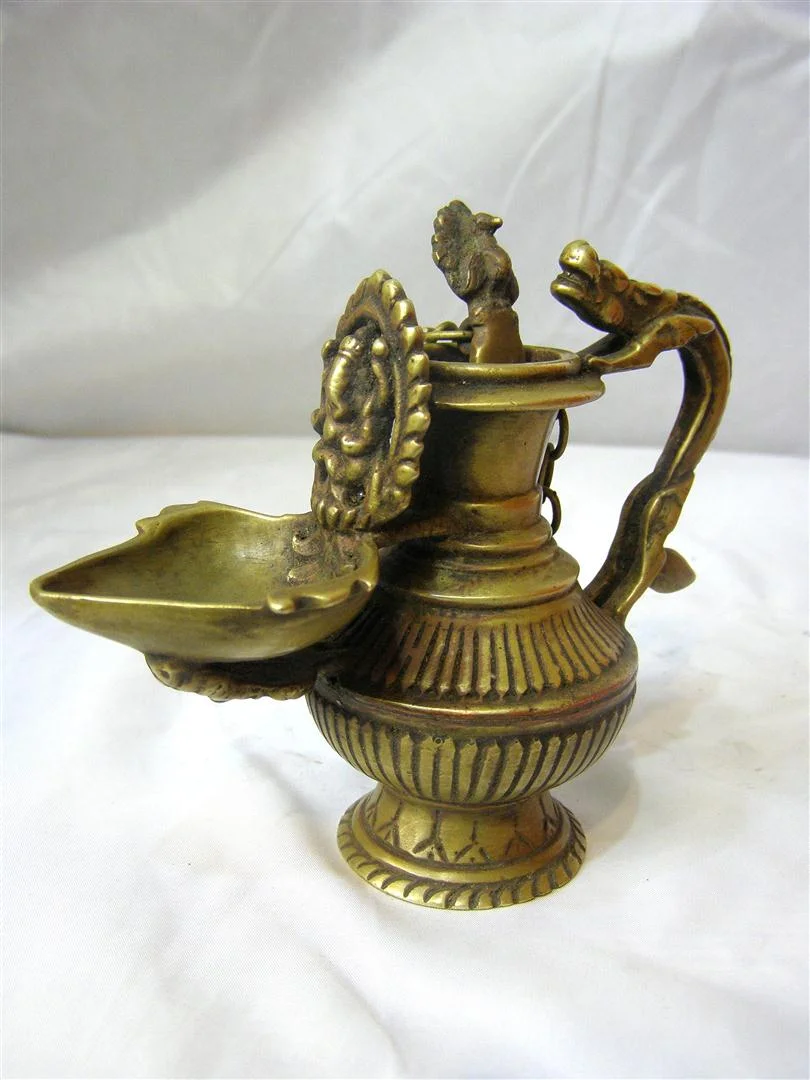
Besides household utensils, deity images, toranas, and other temple decorative items, gagaris, ghyampas, and so on, ritual items for worship (by both Hindus and Buddhists) make up a significant part of the Tamrakars’ work. These include ‘mana’ (prayer wheel), ‘dhupdani’ (incense holder), ‘bhumbha’ and ‘sherkem’ (small vessels for holy water), ‘pauwahi’ (a vessel to contain rice for holy offering), ‘panas’ (tall-standing lamp), ‘kotaha’ and ‘kalaha’ (to carry puja items), ‘khadelu’ (hanging oil lamp), etc. Early in the mornings, and during festivals, you’ll see plenty of women carrying such items, on their way to some temple or the other. While such ritual items continue to make their presence felt, there’s a definite decline in the use of household utensils made of copper, due to the availability of more modern kitchenware. Be that as it may, there is a certain exoticism about copper utensils, which is why you’ll see plenty of them being used as decorative items in both houses and hotels. Copper has a charm all its own, that’s for sure! And, the Tamrakars of Patan will keep on at their traditional vocation, no doubt about it.
Conquering Everest
A considerable number of men and women have conquered the highest point on earth, Mt. Everest, but it still holds a formidable challenge that calls for grit and courage from climbers everywhere.
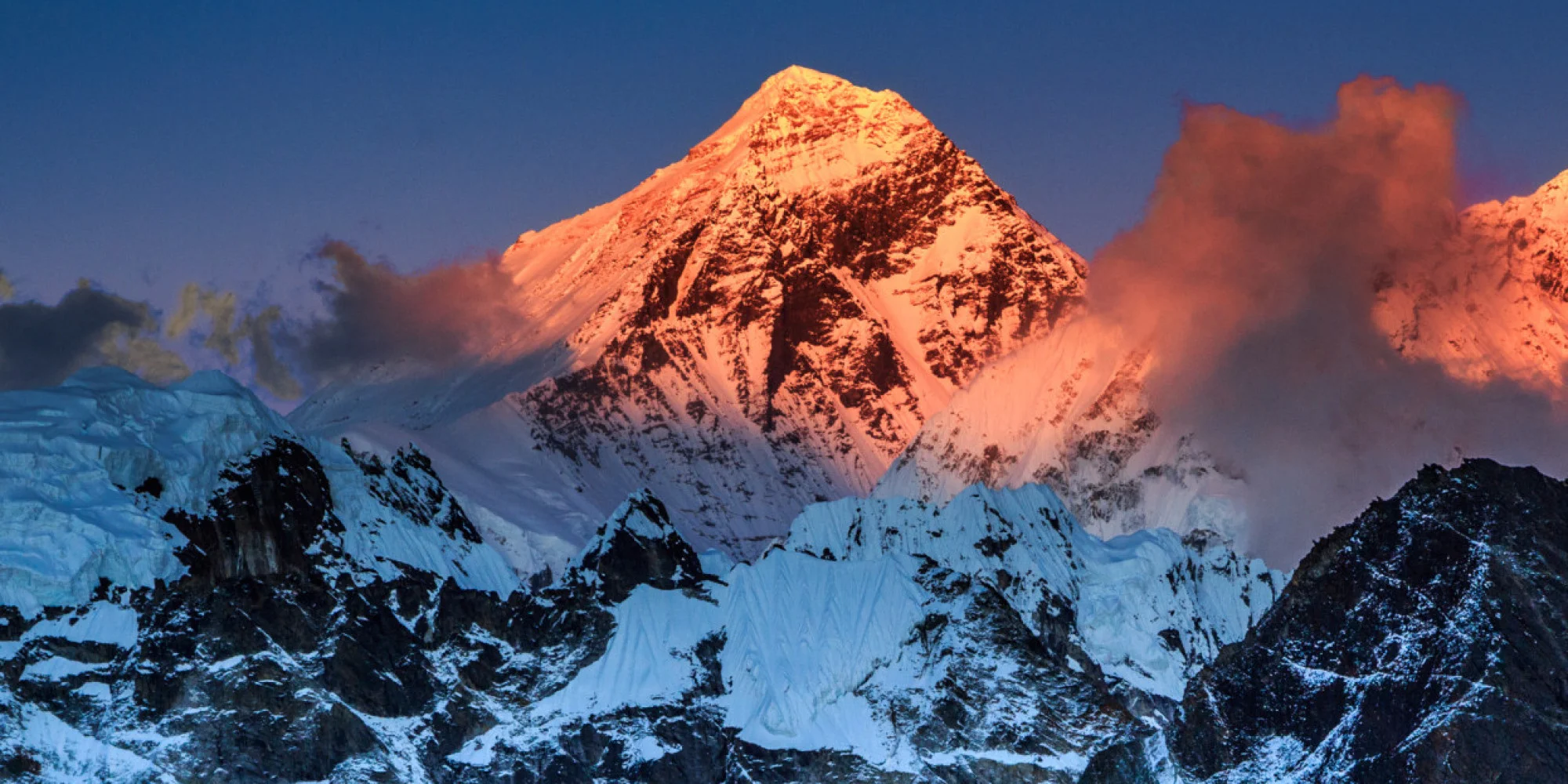
There are some dates in history that have become landmarks in the passage of time of our world. One such date is Friday, May 29, 1953. This was when man stepped for the first time atop the highest point on earth, Mount Everest (8,848 m), a.k.a. Sagarmatha, in Nepal. Actually, it was not one man, but two, Tenzing Sherpa, 39, and Edmund Hillary, 33, who have the credit, jointly, for being the first to conquer Everest. It was a long time in coming, since Everest had been identified as the highest peak on earth way back in 1852.
In the six decades since (1953-2013), a total of 5099 ascents have been recorded, with 3144 climbers from 83 countries succeeding in achieving this singular feat, while 227 climbers perished during the expeditions. Successful climbers have included a fair number of women, along with a few physically challenged climbers, octogenarians, and teenagers. With the passage of time, climbing equipment and techniques have improved considerably, routes have been well defined, and conditions better understood and analyzed, with the result that critics have been forced to say that climbing Everest is no more the great challenge it once used to be.
So it is understandable that the Nepal government has issued a directive that anyone wishing to climb Everest will have to prove their experience in climbing high altitude mountains before attempting a summit of the highest peak in the world. The last couple of years have not been good years for climbing Everest, with a record number of deaths, and the devastating earthquake this year on April 25. A Japanese climber, aiming to be the first to summit this year after the earthquake, failed to do so, and had to abandon the ascent.
Looking back again to history, there were some serious attempts made by the British to summit Everest since 1852. The eighth attempt, in 1953, was made by a Royal Geographical Society Alpine Club team led by John Hunt. The expedition included 13 climbers and 35 Sherpa guides, and 350 porters to carry 18 tons of food and climbing equipment. On May 26, 1953, Tom Bourdillon and Charles Evans almost reached the peak, but had to turn back just 300 feet short of the summit due to the failure of one of their oxygen masks. Three days later, Tenzing and Hillary achieved the feat, becoming the first two to conquer Everest.
On May 23, 1956, Swiss climbers Ernst Schmied and Juerge Marmet posted their names in history as the third and fourth summiteers to climb Everest, and on May 25, 1960, three Chinese mountaineers, Wang Fu Chou, Konbu, and Chu Ying Hua, reached the summit from its more difficult northern side for the first time. Nawang Gombu of India, the 10th summitteer to conquer Everest, was the first man to do it twice, in 1963 and 1965. In 1973, Sambhu Tamang, 18, became the youngest climber to summit Everest, and in 1978, Reinhold Messner and Peter Habeler became the first to do so without the use of bottled oxygen.
On May 16, 1975, Junko Tabei of Japan became the first woman to reach the summit, and in April 22, 1993, Pasang Lhamu Sherpa became the first Nepali woman to reach top of the world, but tragically, she died on the way down. In 2000, Pemba Doma Sherpa became the first Nepali woman to climb Everest via its north face, and she went on to climb it a record six times, the last one in 2007. Unfortunately, she lost her life when she fell from a height of 8,000 m while climbing Lhotse later. The first woman to climb Everest from both sides is Maya Sherpa, while Ming Kipa Sherpa became the world’s youngest woman to conquer Everest, on May 24, 2003, at the age of fifteen. Her 31-year-old sister, Lhakpa Chiri, who had already summitted in 2001, accompanied her. On May 30, 2005, Moni Mulepati, 24, became the first non-Sherpa Nepali woman to climb Everest. InMay 2008, the ‘First Inclusive Women Sagarmatha Expedition 2008 Spring’ (Sushmita Maskey, Maya Gurung, Usha Bisht, Chunu Shrestha, Shailee Basnet, Pemadiki Sherpa, Nawang Phutti Sherpa, Nimdoma Sherpa, and Asha Kumari Singh Chaudhary).succeeded in reaching the summit. And, Churrim Sherpa became the first woman to summit Everest twice within a single season (May 12 and 19, 2012).
Well, it’s been a long time since that day man first stepped on the highest point on earth, and the pioneers, Tenzing Norgay Sherpa and Edmund Hillary, have already passed away (on May 9, 1986, at 72, and in 2008 at 88, respectively), but Everest still holds a formidable challenge to men and women everywhere, notwithstanding modern developments in climbing.
Nepal’s Most Popular Festival, Tihar
Tihar is the most popular festival for many Nepalis, and this is because of the many fun activities that take place during all of its five days.
Ask any Nepali what their favorite festival is, and chances are that most of them will say, Tihar. Also known as Deepawali (festival of lights), it’s a really fun festival lasting five days, during whichtime, dogs, crows, cows, Goddess Laxmi (goddess of wealth), oxens, and brothers are worshipped on different days. And, yes, in the order mentioned above.
November 9, the first day of Tihar, is known as Kag (Crow) Tihar. Now, if you are wondering why crows, of all birds, should be so honored, know that they are the messengers of Lord Yamaraj, the god of death. So, people try and ensure that these deadly messengers don’t carry the wrong message to their master, by feeding them delicious tidbits on at least one day of the year. A plate full of such delicacies is kept outside in the courtyard or the terrace of every Hindu household.
November 10 is Kukur (Dog) Tihar. Dogs get their deserved due on this day, and you’ll see all sorts of dogs, even some of the X-breeds on the streets, with a garland of marigold around their necks, and with bright red tikas on their furry heads. They are treated to teeth gnashing, lip smacking morsels especially prepared for them. Most people feed them a couple of boiled eggs along with other delicacies. Now, you might be thinking that it’s a day to show one’s gratitude towards dogs for being such loyal friends, but there’s more to it than that. Dogs are believed to guard the gates to the netherworld, and their master is yes, the lord of death, Yamaraj himself! So, it’s a good idea to ingratiate oneself with animals so well connected with death. Everybody dies. Remember?
November 11 is Gai (Cow) Tihar. The cow, a most sacred animal for Hindus, has always been the national animal of Nepal (a Hindu kingdom for ages), yet, there were some who believed that this would change in the newly promulgated constitution of the now secular Nepal. However, it has retained its honored position as the nation’s national animal, and so you can imagine that Gai Tihar is a very important day. The cow is a fantastic animal, giver of so many provisions, from nourishing milk to holy manure to soul purifying urine.
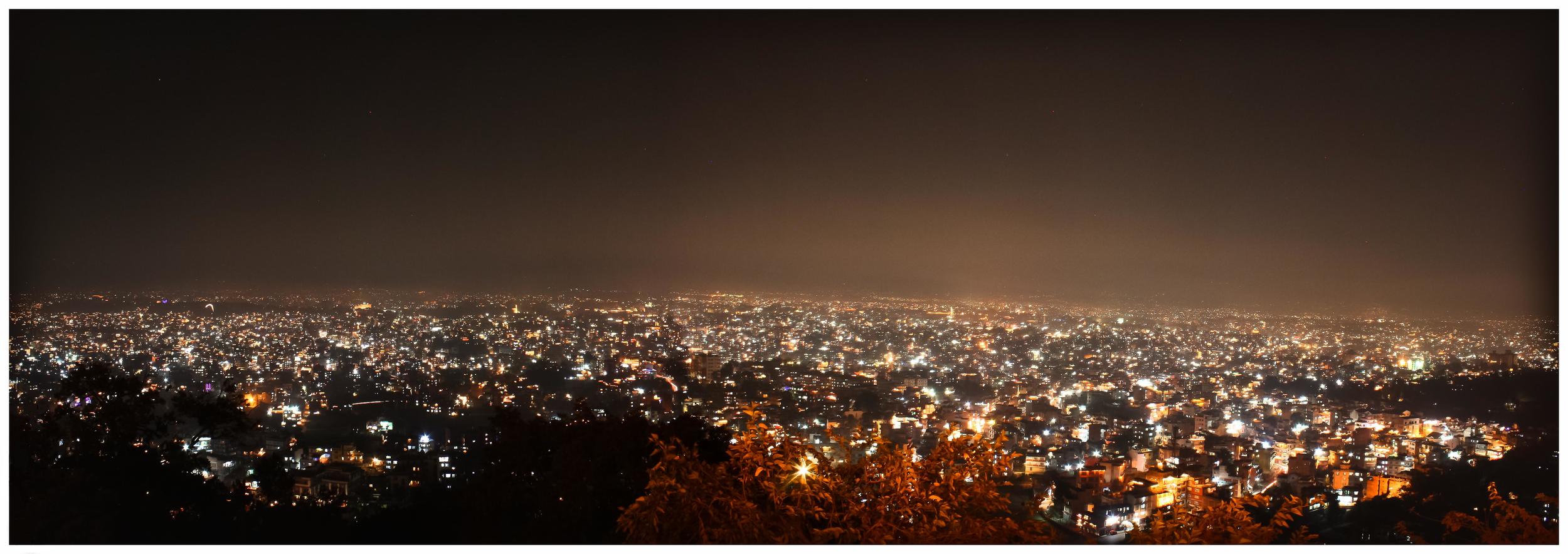
November 11 is also Laxmi Puja, simply the most important day in the lives of all Hindus, for this is the when you get to invite the goddess of wealth, Laxmi, into your humble, or not-so-humble, abode. This is the day when villages and towns and cities twinkle and sparkle with brightly colored lights, and all houses are decorated with strands of marigold garlands over doorways, windows, etc. In the golden days of simpler times, people illuminated their houses with rows and rows of diyos (small earthen vessels with cotton wicks dipped in oil), and it was a tremendously satisfying sight to behold. Nowadays, most houses are illuminated with twinkling strands of electric lights. Still, that is not to say that diyos are not used, they are, but to a lesser degree. Oil has become pretty expensive, don’t you know?
Anyway, the main thing to know is that all homes undergo a thorough cleaning, new curtains are put up, as are new bedsheets, and so forth, and those who can, have their houses repainted. The purpose of all this hard work is to make sure that Goddess Laxmi finds your home up to her standards to pay a visit. To double make sure, she is worshipped with much pomp and fanfare in the evening, with lots of sweetmeats and cash offerings. A female member of the household dips her hands in red mud and imprints them in front of the main doorway, making a trail leading to the puja room. People are expected to try out their luck on this day, and so there’s a fair bit of gambling in many homes, with card games like flush, paplu, and marriage being the favored card games.
November 12 is Goru (Oxen) Tihar, also known as Govardhan (literally, cowdung wealth) Puja. Cow dung has many significant uses: as manure, fuel, and biogas, and for cleansing the courtyards and other surroundings of houses, and plastering mud walls of village houses, etc.
November 13 is Bhai (Brother) Tika, a day when brothers are invited to their sisters’ homes to be worshipped. The symbolism is clear: brothers are supposed to be their sisters’ protectors, and they are therefore duly appreciated for this on Bhai Tika. This day is the last day of Tihar, so everybody takes it a bit easy. The puja of the brother is a long drawn out affair, with a lot of merrymaking. Lots of foodstuffs are offered to the brother, plenty of fruits and dry fruits, sweetmeats, homemade traditional bread (sel roti) and other sweets, fried fish and meat, yogurt, alcohol, etc. The sister gets cash or other gifts in return.
There are other asides of this fun festival, with song and dance being the highlights. Girls go to homes in their neighborhood in groups, and dance to the singing of songs known as bhailo. Boys, similarly, go around singing songs known as deusi while some of them dance. They receive cash and foodstuff for their efforts. Another highlight is the setting off of firecrackers on Laxmi Puja day; literally, millions of rupees go up in fire, smoke, and thunder on this day! Dancing, singing, gambling, feasting, firecrackers…indeed, there’s a lot of reasons why Tihar is the most popular festival of Nepal.