
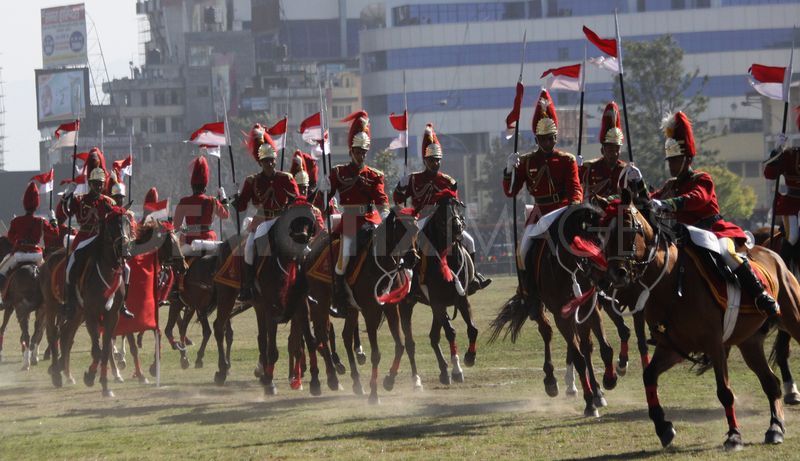
Ghode Jatra, the Festival of the Horses
Ghode Jatra is a grand spectacle attended by both the masses and the classes, with horses being at the forefront of the festivities.
On March 20, 2015, you’ll see much pomp and ceremony being enacted on the Army ground near Tundikhel in the capital, Kathmandu. The seats on the gaily decorated pavilion will be filled with national and international dignitaries, including the head of state and the prime minister, ministers, ambassadors, et al. The iron fence around the grounds will be ringed with hundreds of eager spectators, most of them people from around the outskirts of the Valley, the urban folk being a bit more jaded. They are all there to witness the Army’s cavalry unit put up a display of fine horsemanship, along with demonstrations by the Army’s gymnasts and martial art exponents of judo, karate, and tae kwon do. The Army will also enact a scenario wherein a man is rescued from a building on fire, with the rescuers sliding down a rope from a hovering helicopter. The finale of this festival known as Ghode Jatra (Festival of Horses) will be paratroopers descending down from the sky on billowing parachutes, carrying the national flag.
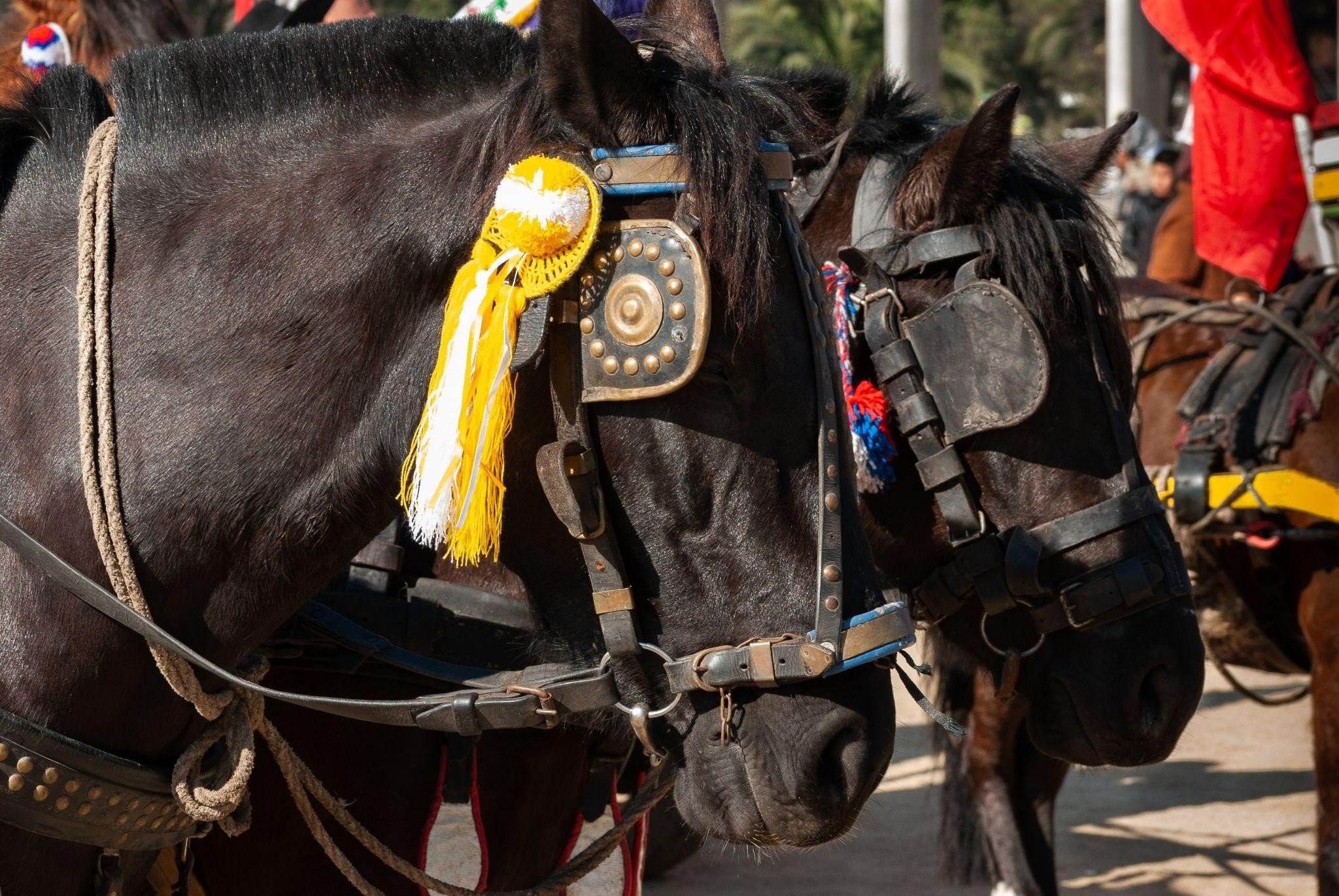
Pomp and ceremony are assured by the rows of smartly uniformed and dressed dignitaries on the pavilion, the bright uniforms of the Army band and their gleaming instruments, the magnificent horses, and the rousing music. A terrific spectacle is guaranteed by the horses galloping around the field and jumping over numerous hurdles. The sound of their hooves clattering on the hard ground is sure to set heart beats racing. Indeed, the horses are what Ghode Jatra is all about. It’s the clamor that they make that is at the root of the origins of this festival.
The story goes that, once upon a time, there was a demon called Tundi who lived in a pasture that later became known as Tundikhel. Now this was one mean demon, and he was creating fear and havoc among the valley dwellers. Somehow or the other, they eventually succeeded in capturing Tundi, whom they tied up and buried into the ground in Tundikhel. To make doubly sure that he would remain buried, they brought in some horses and made them trample the grounds thoroughly. Every year in Feb/Mar, horses gallop around the nearby Army grounds, and it is believed that the clamor created by the galloping hooves will scare the living daylights out of Tundi so that he doesn’t dare come out of his underground lair.
The participating horses during Ghode Jatra come from a special cavalry unit. Incepted in 1849, and originally known as the Risalla, later, in 1952, it came to be known as the King’s Household Cavalry. This cavalry unit played an especially outstanding role during the 1911-1912 Nepal-Tibet war, earning many accolades, and it often holds centre stage during state ceremonies. An interesting aside to Ghode Jatra is that, a king of Patan, seeing how the Kathmandu inhabitants were so thrilled by the festival, decided to have one in his kingdom, too (those days, the Valley had three kingdoms: Kathmandu, Patan, and Bhaktapur). And so, on this day, there’s a Ghode Jatra in Patan as well. However, it comes with a twist. The Patan festival involves one horse that’s thoroughly inebriated, as is its rider, and the whole point of the event is for spectators to try their best to frighten the horse into riding around wildly around the locality of Balkumari and see how long the drunk rider can hold on to his saddle.
Another aside to the Ghode Jatra is that, on the day before, Newars of various tols (wards) do a bit of spring cleaning around their localities, and then take out colorful parades of deity idols on chariots; it’s part of a three-day festival called Pahachare. Idols of the deities Bhairav, Bhadrakali, Lumadi, and Kankeshwari are carried on palanquins to the ancient Ason Bazaar (a once-in-a-year gathering of these four gods), and this grand occasion is celebrated by the locals with great fervor and joy. Their palanquins are made to crash against each other in front of the Annapurna Temple; that’s to announce in no uncertain terms that they have now met each other. Come evening, the celebrations are shifted to Tundikhel so as to propitiate a demon called Gurumumpa. Ghode Jatra falls on the second day of the Pahachare festival.
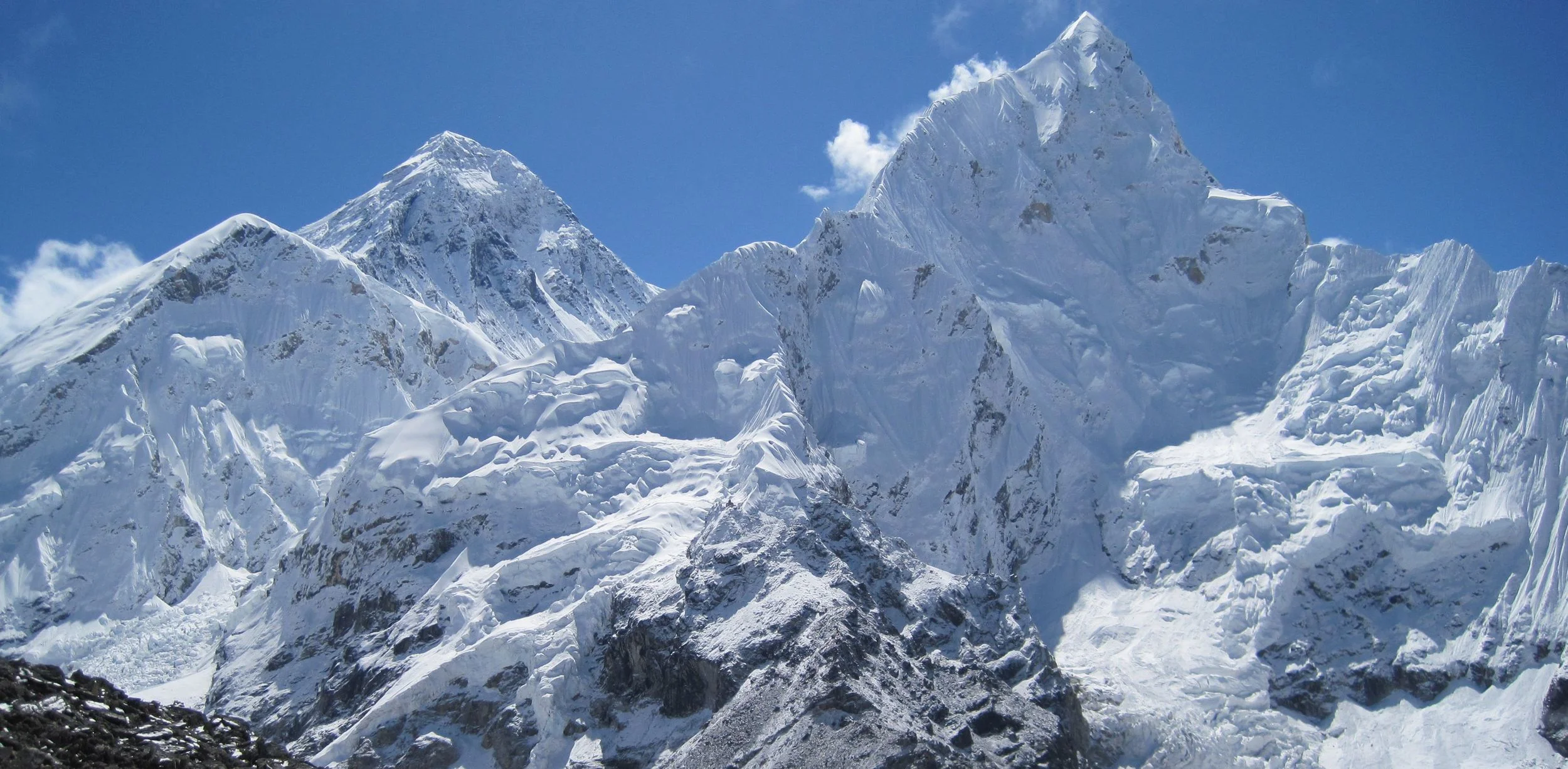
The Everest Base Camp Trek: A Trek like No Other
The Everest Base Camp trek is the most popular trek of Nepal, and justifiably so, since it gives you the opportunity of being up close and personal with the highest mountain on earth.
There are treks and treks, and then there is the Everest Base Camp trek. It has been recommended as one of the must-to-be-done things during a lifetime. It’s got that much of a reputation! Naturally, it is the most popular trek of Nepal, a country with many other treks that are also challenging, interesting, and fulfilling. What makes the Everest Base Camp trek really outstanding is that you get to have a spectacular view of Mount Everest, really close up and personal.
Most trekking agencies have a two-week itinerary for this trek, and it all starts with a flight up to Lukla (2,800 m) from Kathmandu. Yes, it will take you only 45 minutes to get there, but what a 45-minute it is! First of all, although there are daily flights, one needs to be aware that high winds, dense clouds, and low visibility could hamper the schedule anytime. In case everything’s fine with the weather, you fly, and on the way you’ll get great views of Himalayan peaks on the horizon. However, it’s when you near the Tenzing-Hilary Airport (Lukla Airport) that the action really begins. You’ll be coming through two massive mountains as you begin to land, and you can be expected to be buffeted somewhat. The runway is pretty small, only 1,500 ft, with the northern end terminating in high terrain, and the southern end falling steeply into the valley below. One end of the runway is actually 60 m higher than the other end! All in all, it calls for a high degree of skill on the pilot’s part to both land and take off. Some call it one of the most adventurous airports in the world; the less polite call it a dangerous airport. Anyway you call it, it’s a picturesque airport.
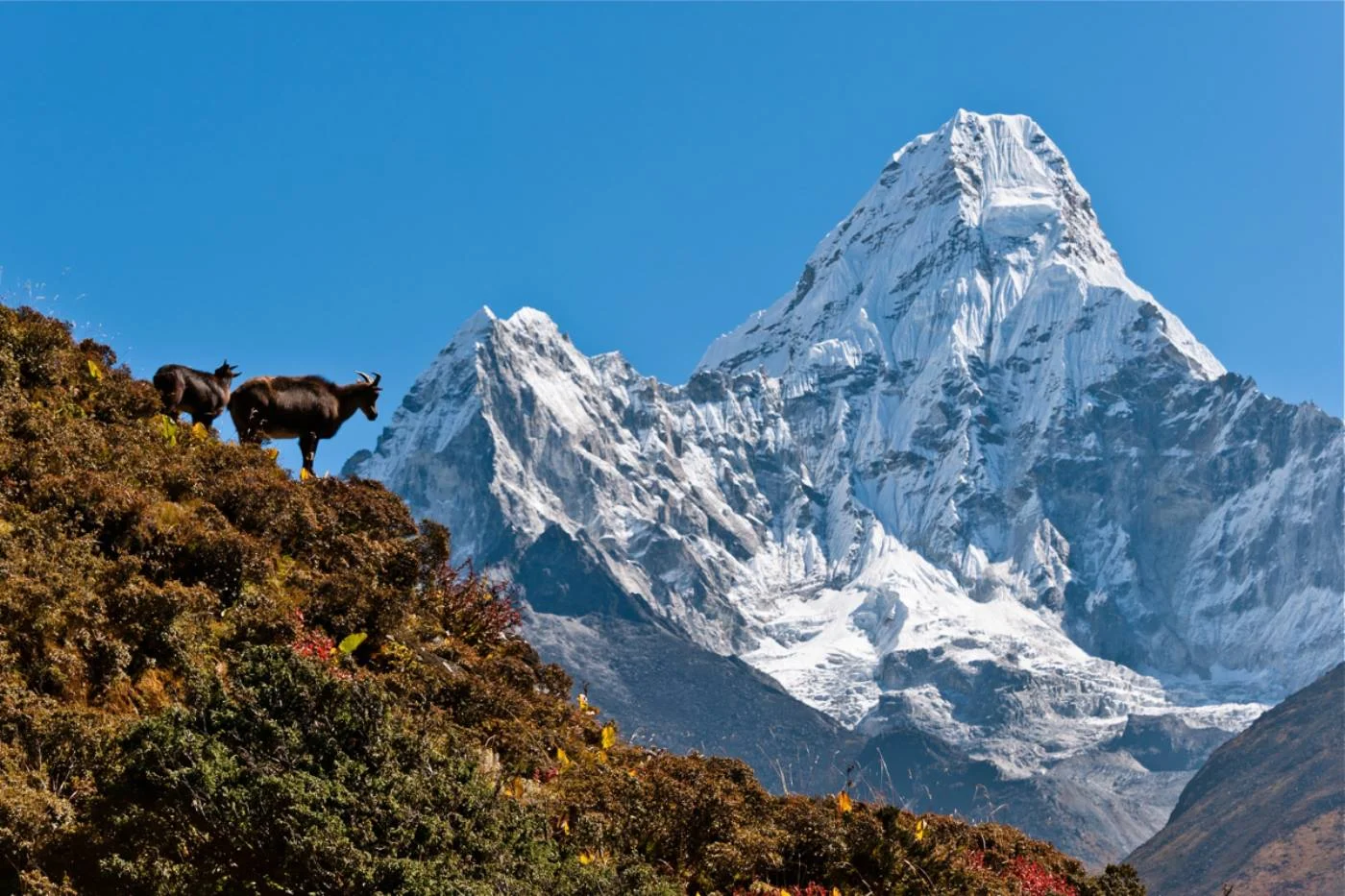
Anyway, after landing, you arrange your gear and head off along the Dudh Kosi River to Pakding (2,600 m). You’ll be walking through lovely pine and cedar forests and will be probably meeting yak caravans transporting climbing or trekking supplies and equipment. If you are downhill to one coming your way, give way, because the yaks aren’t going to be as polite, and will be coming in a heavy rush. Right from your landing, you have perhaps already been transported into a different world from the one you’re used to; these caravans will only help to take you away further, they paint such an exotic picture! As you walk along, keep an eye out for wildlife like the Himalayan tahr and musk deer. The former have thick wool coats and large backward-curving horns reaching up to 18 inches.
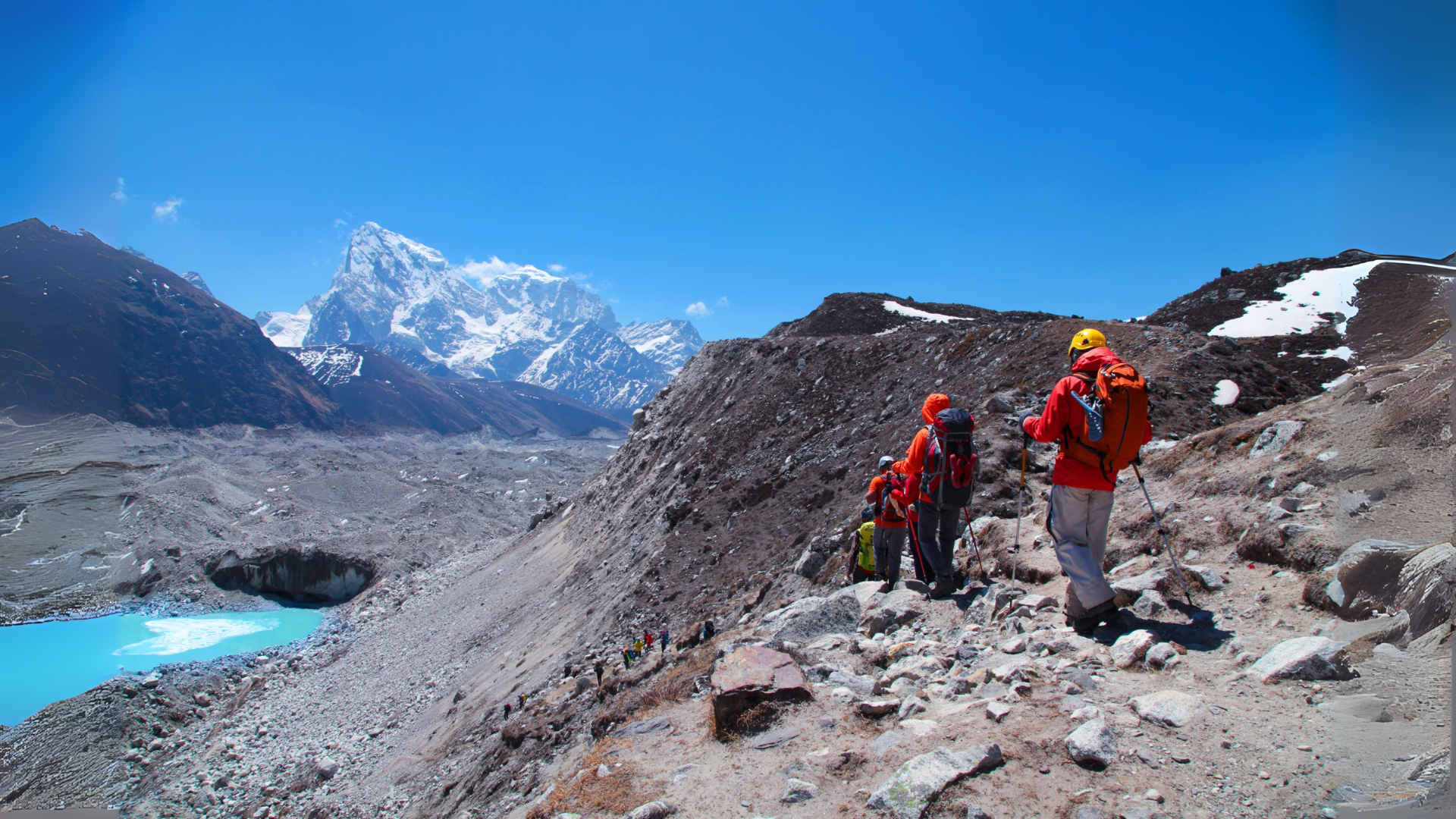
The next day, you trek to one of the biggest Sherpa settlements in the country, that is, Namche Bazaar (3,450 m). By now, your uphill trekking should have set your muscles working extra hard, now you got to rest for a day here so as to allow your body to acclimatize to the higher altitudes. You’ll find Namche to be a bustling place, and the rest day allows you to take a short outing to Thame Valley. You’ll come across elaborate carved mani stones along the way, and a lovely gompa, as well. All in all, a day well spent. Then, the day after, you leave Namche and carry on through rhododendron forests and across suspension bridges to reach Tengboche (3,860 m) from where the you get sensational views of Everest (8,848 m), Lhotse (8,516 m), Nuptse (7,864 m), and Ama Dablam (6,812 m). All along the route, you’ll surely be enthralled by the sight of the Dudh Kosi River flowing serenely through the valley far below, and you’ll see a lot of chortens and mani walls alongside the trail, as well. You’ll no doubt be paying a visit to the magnificent Tengboche Gompa (estd. 1912), which has immense religious and cultural importance for inhabitants of the Khumbu region.
The following day, you walk up stone steps through wood full of birch, conifer, and rhododendron trees, and here, too, keep a sharp eye out for some more Himalayan wildlife. This time, it’s pheasants, which make for a colorful sight. You’ll come across a small village called Deboche, where there’s a nunnery. Then as you go onwards, you’ll notice that the trail is leading to alpine meadows full of scrub juniper (in the warm months, there will be a riot of wild flowers here), and eventually you arrive at Dingboche (4,400 m). You’ll notice a lot of barley grown around here, and the views of the mountains all round are simply outstanding. Another day to acclimatize yourself is called for again, and so you take a rest day. You can use this day to explore the Chhukung Valley, hiking there via the Imja Khola. You’ll have fine views of Imjatse (Island) Peak (6,189 m), Lhotse, and Ama Dablam.
Day seven finds you on your way to Lobuche (4,900 m), as you trek through alpine meadows and pasture land towards the end of the Khumbu Glacier moraine. Then on, it’s a tough climb that is pretty challenging. As in some other places, where there are monuments to departed mountaineers, here too you’ll come across similar stone memorials. You keep on climbing, and you’ll surely find it tough going as you climb onto the Changri Glacier. The altitude is now truly Himalayan, and the next day, you climb further up to Gorakshep (5,150 m) where there’s a small lake that’s frozen most times. You’ll not want to miss the chance to go to Kala Patthar, which requires a small detour, since one of the best views of Everest is guaranteed from there. Now, as you plod on, you’ll find it easier going, since you don’t have to climb much, but you’ll have to be careful as you walk because there’s lots of ice around on the trail. By and by, you reach your goal, that is, Everest Base Camp (5,337 m), situated high up on the famous Khumbu Glacier. The trek back is through Lobuche, Pangboche, Namche Bazaar, and Phakding, before reaching Lukla, from where you take that adventurous flight back to Kathmandu.
SIMILAR POSTS
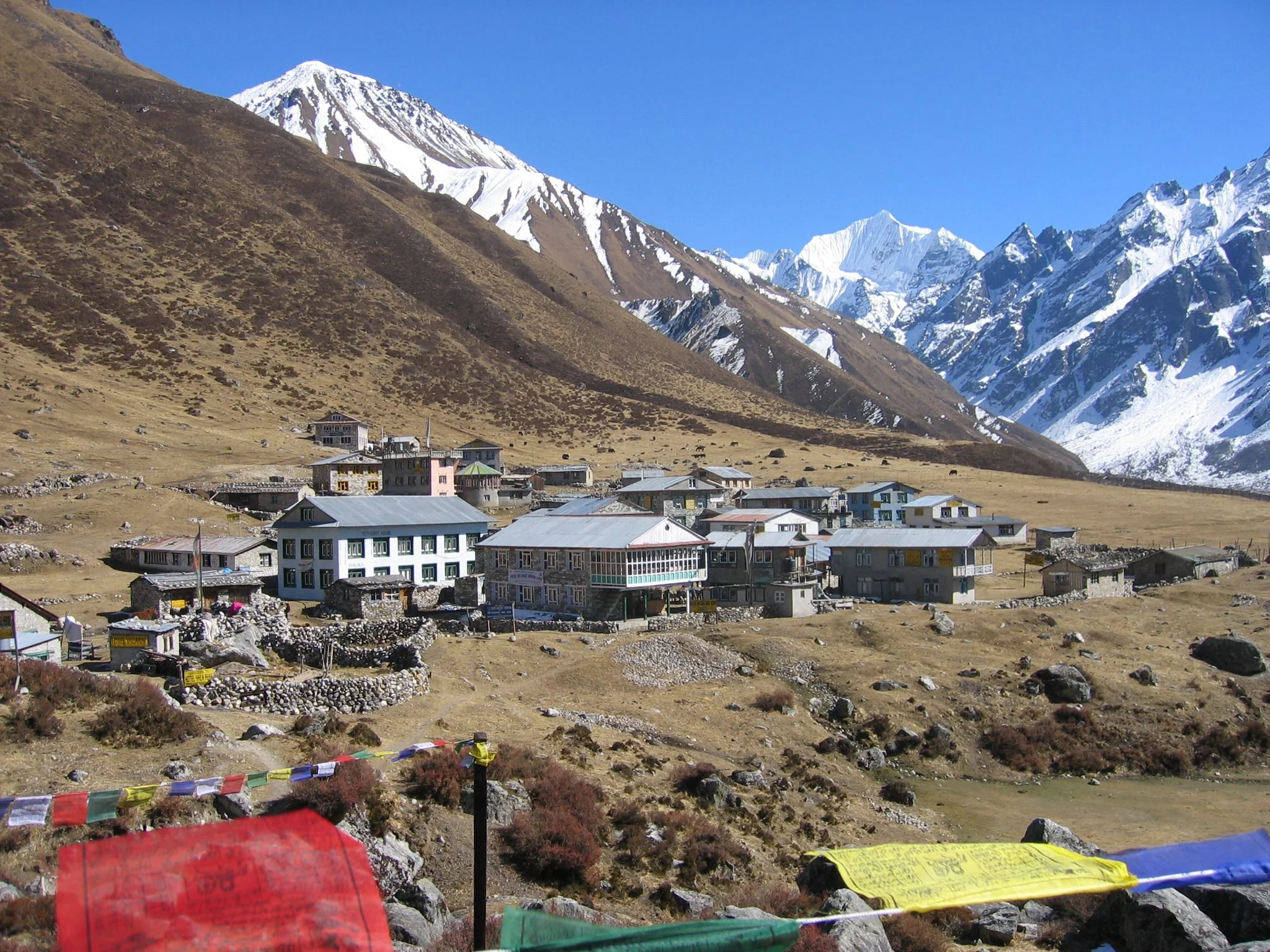
The Helambu Trek
A trek through the Helambu region gives you the chance to be up close with the Sherpas, a community famous for its climbing skills.
Ever since Tenzing Norgay Sherpa became the first man, along with Sir Edmund Hillary, to conquer the world’s highest peak, the Sherpas have enjoyed a status as hardy mountaineers, and trusted guides for any expedition on its way to climb the lofty Himalayan peaks. Many Sherpas have etched their names in the record books for many daring feats of skill and courage in the field of climbing. Not only that, they have also garnered an enviable reputation for their hospitality, trustworthiness, and simplicity.
Trekking through the Sherpas’ heartland, that is, Helambu, allows you to experience the lifestyle and culture of these simple folk with sinews of steel. A Helambu trek can be usually completed in a matter of a week and involves staying over in home stays. Actually, it’s perfect for those looking for a less-than-strenuous trek, one that doesn’t go up to high altitudes, and one where the focus is more on days of leisurely hikes through a landscape that is beautiful and refreshing. Of all Nepal treks, the Helambu trek is the one that is most easily accessible from the capital, Kathmandu. It’s a most pleasant walk through a number of Tamang and Sherpa villages, the familiar terraced paddy fields, verdant valleys, and dense forests of oak and rhododendron. And, all the while, you’ll be mesmerized by the sight of the magnificent Himalayan peaks on the horizon.
The route goes from Sundarijal to Chisopani, Kutumsng, Tharepati, Tarkeghyang, Sermanthang, and Melamchi Pul. To begin with, you take a one-and-a-half hour drive to Sundarijal from Kathmandu, where there’s a big reservoir that supplies water to the valley. It’s the place from where your Helambu trek begins. You start hiking for some time before the trail begins to go uphill, passing a lovely waterfall on the way, and then through some rich forests full of oak and pine trees, as well as deep red rhododendrons flowers. You’ll also be walking through small villages of the Tamangs, one of the larger communities in Nepal. By and by, you’ll reach Borlang Bhanjyang, a pass at a height of 2,348 meters above sea level, and then arrive at Chisopani (2,194 m). The day’s trek is for about five hours.
The next day’s hike, which is for about six hours, doesn’t involve much of uphill trekking. As you reach Gul Bhanjyang, another Tamang village, you’ll revel at the sight of the lovely green terraced paddy fields set on the hillsides. Here onwards, you’ll come across a couple of villages inhabited mostly by people of the Brahmin and Chettri communities. You’ll be hiking along some ridges, from where the views are excellent, before reaching the day’s destination, Kutumsang (2,470 m).
The third day’s goal is to trek for some six hours to reach Tharepati (3,510 m), and it’s a more challenging hike than the previous two days’, as it involves hiking long some high pastures where the solitude is pretty striking, since not many villagers are to be found here. You may come across a few woodcutters or shepherds, but on the whole, you’ll enjoy the isolated wilderness. You’ll also be walking through forests on your way to the pastures. Before reaching Tharepati, you’ll come to a chorten located on a hilltop from where you get good views of Jugal Himal and Rowaling Himal.
Day four takes you to Tarkeghyang (2,740 m), and it begins with walking down a ravine, which is quite a steep descent, to arrive at a suspension bridge, and then hiking onwards to Malemchigaon, one of the bigger villages inhabited by Sherpas. It’s a neat village where orchards and fields surround houses with prayer flags fluttering up front. The Sherpa community here has some differences with the Sherpas of Solu Khumbu in the Himalayan region, mostly in the manner of how women dress (red cotton dresses in lieu of Tibetan type dresses). There are also dissimilarities in dialect spoken in the two places. Soon, you’ll reach Melamhi Khola, and from here, you start climbing again to reach Helambu’s biggest Sherpa village, that is, Tarkeghyang, where the houses are made of stone and look quite impressive. This village also has a beautiful gompa with a mammoth prayer wheel made of brass.
The next two days is quite easy walking, the trail being, more or less, a pretty level one. It’s also a pleasant outing, walking as you’ll be through lovely Sherpa villages, burbling clear mountain streams, and cascading waterfalls. You’ll come across many chortens on the trail, and walking along a ridge, as well, before arriving at Sermathang (2,590 m). After this, you begin descending slowly to reach Melamchi Pul (870 m) and then Melamchi Bazaar, from where you drive back to Kathmandu (1,300 m).
If you can afford the time, and you have the inclination to experience the real Nepal at close quarters, then you shouldn’t hesitate to go on this seven-day trek to Helambu. Most trekking agencies have it on their itineraries, and unlike the longer and more challenging Nepal treks, this one should be a cakewalk, one that’s suitable for one and all.
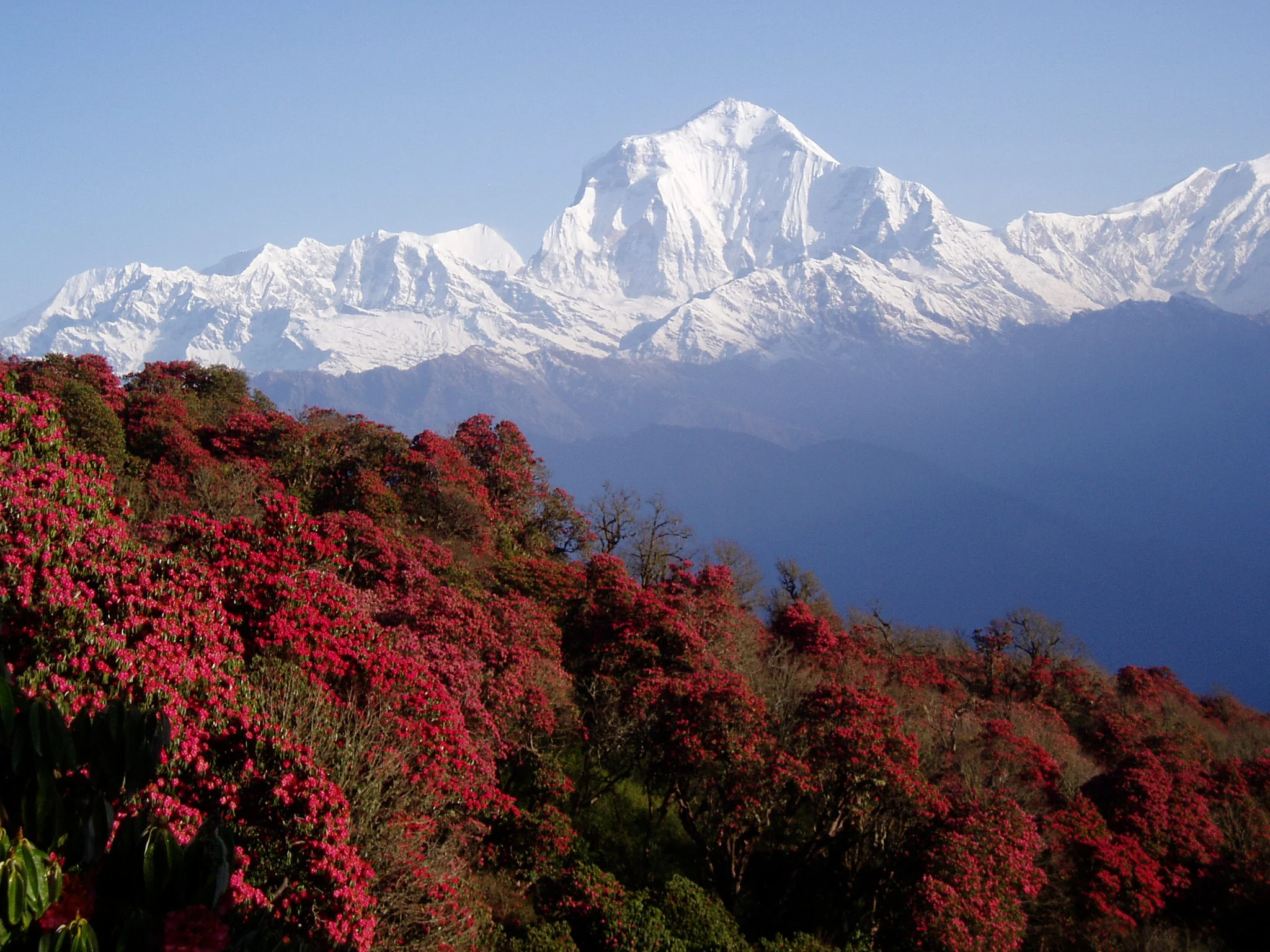
Nepal’s Wonderful Flora
Nepal’s great eco-diversity is due to its amazing climatic extreme—from hot and humid in the Terai to arctic in the Himalayas—all within a mere distance of 200 kilometers.
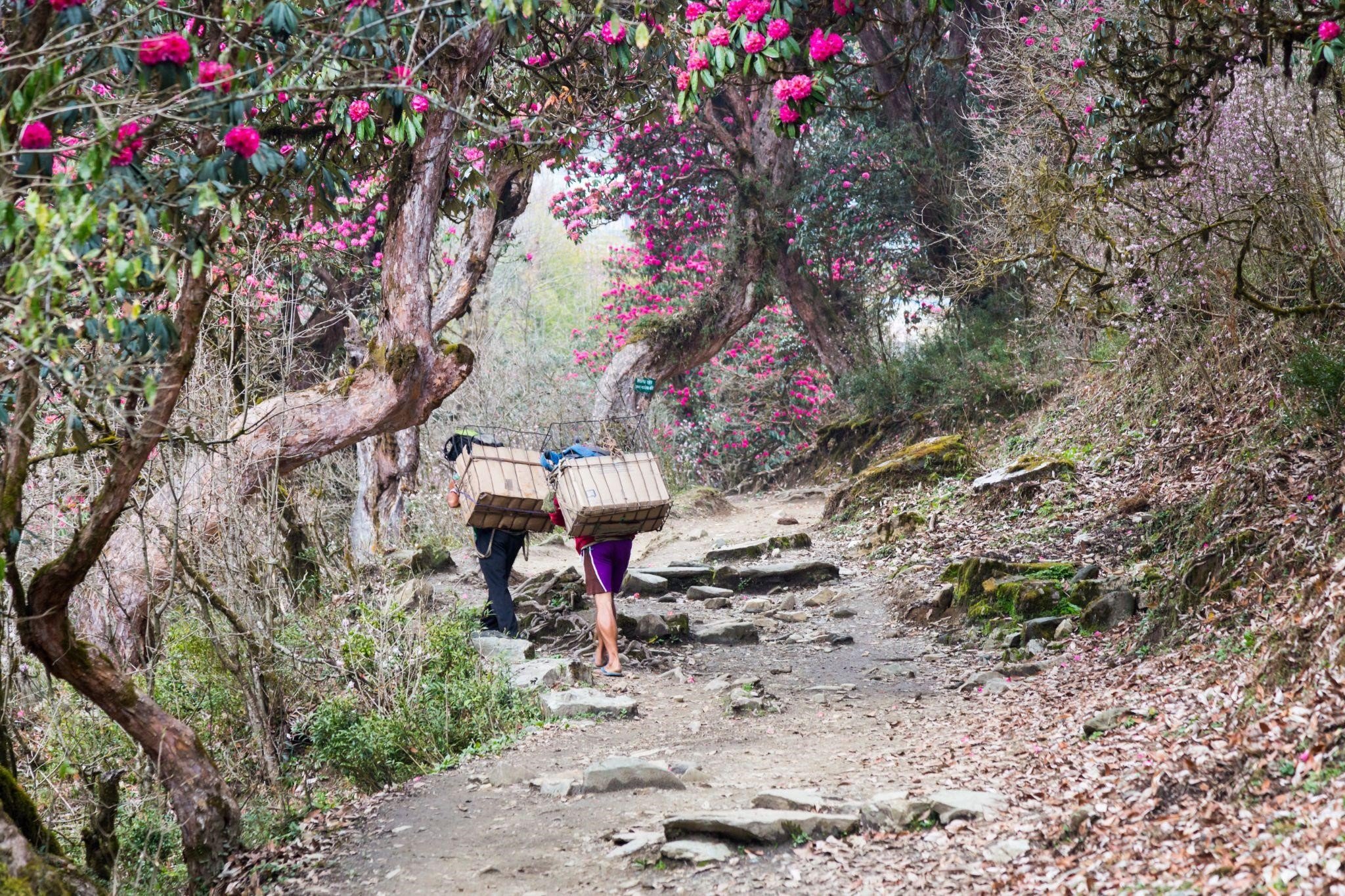
The 'Lali Gurans' (Rhododendron arboreum) is one hardy flower. It can survive, and in fact, flourish even at temperatures of 10 degrees below zero Celsius. Many sub species (over 30) are to be found in the region of the high western Himalayas as well as at lower elevations. Eastern Nepal is also happy hunting grounds for Rhododendrons, especially around the Tophe Lake (3,860 meters) in Taplejung district. If you were to go trekking in the period March to May, you’ll be treated to the glorious sight of whole hillsides colored deep red due to the blooming of innumerous Rhododendron flowers. Not that they are only red in color, you’ll also come across quite a few Rhododendron forests with white and pink flowers along with red (Rhododendron arboreum ssp. cinnamomeum) in the central Himalayan region, and these, too, are as hardy as their first cousin, surviving pretty well at temperatures ranging from -15 0C to -18 0C.
However, it is the rose-red flower that is the national flower of Nepal, and rightly so, considering how much it reflects the vitality of the typical Nepali. Indeed, one cannot conceive of another flower that can claim its proud place as the country’ national flower. You cannot fail to notice this bright red flower in various emblems of Nepal, just pay some heed. As exotic as the Rhododendrons are the orchids of Nepal, of which some 386 varieties have been discovered so far. Known in Nepali as Sunakhari, they are especially abundant in central Nepal. The lovely lake city of Pokhara, because of its abundant rainfall, is where one will find the most orchids, with the epiphytic species being the most plentiful. Alpine terrestrials are to be found at higher altitudes, and it’s during the summer monsoon when one will find them blooming in all their glory. It might be pertinent here to differentiate between the three types of orchids: the chlorophyll-less saprophytes depend on neighboring fungus for nourishment and have little ornamental value. Terrestrials contain chlorophyll and grow in soil, while epiphytes grow on trees, decaying tree trunks, and mossy rocks, deriving nourishment from the humus they grow in.
If you happen to visit the remote mid-western district of Dolpa during a trek, or when visiting the Shey Phoksundo National Park, where is located the deepest lake of Nepal, Phoksundo Lake, keep a sharp eye out for an orchid species known as Dactylorhinza hatgirea. Ask the locals if there are any Panch Aunlles to be seen around the place; that’s the local name for this orchid, and it means, literally, ‘five-fingered’. It’s an orchid that’s highly prized for its ability to impart vigor and vitality. Similarly, other species to look out for are Flickingrea macrei and Pholidota articulate. They are both known as Jivanti (means: giving life) and they, too, have immense medicinal value, and are used in a very popular ayurvedic tonic preparation called Chaywanprash. So, you see, it’s not only that famous aphrodisiac, Yarsagumba, that’s to be found in the rich herbal treasure trove that is Nepal’s hills and mountains.
However, if you are mostly in Kathmandu during your visit to Nepal, do make it a point to visit the Godavari Gardens, which is the country’s national botanical park. It’s just about 12 km from Satdobato in Lalitpur, and a pleasant drive all the way on a smooth asphalted road. Once there, make a beeline for the orchid section where you’ll find about 90 species, among which the most popular are Dendrobium densifloram (Sungava) and Coelogyne cristata (Chandigava). March-April and July-August are the periods when you’ll see many of them in beautiful bloom. It’s all a really beautiful sight; after all, an orchid in bloom is among flowers what the glitter of a diamond is among gems.
Rhododendrons and orchids may be the kingpins as far as Nepal’s flora is concerned, but due to the country having climate that ranges from hot and humid (in the Terai) to arctic (the Himalayas) within a distance of just 200 km, expect to find an amazing diversity in ecology here. According to the experts, this small country has about 7,183 plant species, which include 380 species of ferns alone. One of the most interesting facets of the forests in the Terai is the seven-feet-high elephant grass, while up in the Himalayas, you’ll find the southern face rich in deciduous and deodar forests; that’s because it gets the full force of the monsoon every year. The northern face, particularly Chumle (2,750 m), has an abundance of blue pine forests, and above Ekla Bhatti (2,780 m), you’ll come across steppe vegetation. The Eswa Valley has plenty of fir forests, while on the sub alpine pastures of Tiwa Gairi (3,730 m), you’ll see fields full of marigold flowers.
The country is home to 14 poppy species, which according to researchers is 36% of the world’s species. Now, that’s a high percentage, you’ll agree. (For the record, the 32 species of Rhododendrons found in Nepal constitute some 6% of the world’s species.) Coming back to the poppy flower, you’ll find four species endemic to the country in eastern Nepal, which grow at heights of 3,000 m and above, and include Meconpsis dhowjii and Meconpsis napoulensis. One of the most beautiful poppy species, Meconpsis horidula (the ‘Blue Poppy’) grows in Jaljale at heights ranging from 3,000 m to 5,800 meters. Other notable and interesting flora of Nepal include Bombex ceiba (silk cotton tree) which is found in Kushi (1,300 m), Aconite spicatum, (locally known as ‘Bikha’ due to its poisonous nature) found in Yangle (3,580 m), and Samssurea gossypiphora (cotton ball plant) which is to be found at altitudes of 3,500 m-5,600 m, and the Himalayan Rhubarb, which is found at 3,900 m-4300 meters.
In conclusion, Nepal may be a country small in area but it is a veritable paradise for a diverse and interesting range of flora. This makes the country a prime attraction for nature lovers all over the world, and the abundance of lovely flora is what gives added charm and serenity to those challenging treks that the country is world-famous for.
Top 5 Treks in Nepal
Abundant natural scenery, fantastic ecological diversity, and friendly people go to make Nepal an extremely popular trekking destination.
Statistics show that roughly 4 out of 10 foreign visitors to Nepal go on one trek or the other during their stay here. It’s a high percentage by any standards, and goes to show the global popularity of trekking in Nepal. What makes the country such a favorite for trekking? It’s a combination of many things—abundant natural scenery, fantastic ecological diversity, ancient culture, friendly people—all these and more go to make Nepal an extremely popular destination. What’s more, there are any number of trekking routes to choose from, depending on your age, the time at hand, your physical shape, and the challenges you are willing to undertake. As they say, there’s something for everyone. However, listed below are some of Nepal’s top five treks, in reverse order.
5. Ghalegaun Village Trek: If you want to see the villages of the honey hunters of Nepal made famous by the documentary by photo journalists Diane Summers and Eric Valli, you got to go on this trek. It’s a 10-day trek during which you’ll be hiking through some spectacular landscape that includes inspiring views of the Annapurna range. You get to interact with local Gurung families and experience their simple but hospitable lifestyle. First you drive down to a small town called Besisahar from where the trekking begins, the trail going along the lovely Marsyangdi River to Khudi, nd then its uphill for some 4-5 hours to Ghalegaun (2,016 m). Here, you get to stay with locals, and are treated to a beautiful sunset view of Annapurna and Manaslu. Sunrise, in the early morning, is as absorbing, but you got keep moving, and so, now you hike down to Ghanpokhara and Bhujung (1,500 m), where the waterfalls are simply wonderful, and the rhododendron forests, lovely. Then you got some climbing to do again (3 hours or so) before arriving at a hilltop called Khumre Danda (2,000 m). Then onwards, it’s all downhill to Pasgaun, then the Mandi River, and on to Pakhrikot and Thumsikot, and finally, Pokhara.
4. Imjatse (Island Peak) Trek: This is one trek where you can fulfill your desire to climb an authentic Himalayan peak. Not only that, it’s a trek that will provide you with a fantastic view of Everest. The adventure begins with a 45-minute flight to Lukla (2,800 m), the flight and the landing itself being an adventure by itself, what with the Lukla airport, as well as the descent path, being somewhat of an adrenaline rush. Once you have landed, and sent a thank you to the gods for having done so safely, you start your trek. A trek that will take you across high valleys and glaciers of the exciting Himalayan region; your trek takes you along the Dudh Kosi River, meeting long yak caravans on the way, which will generally be carrying equipments and supplies for some climbing expedition or the other, before reaching Phakding (2600 m).
The next destination is the famous Namche Bazaar (3,450 m), heartland of the Sherpas. You’ll be resting here for a day to allow for acclimatization, and then carry on to Tangboche (3,860 m), then to Dingboche (4,400 m), where you get another rest day to further acclimatize. You’re in the higher stratosphere now, so it’s better not to take any risks. Your next port of call is Lobuche (4,900 m), and then Kala Patthar (5,545 m), from where the view of Everest is legendary. Trekking back again to Lobuche and then Dingboche, you carry on to Chhuking (4,750 m), and finally to Imjatse Base Camp (4,970 m). From her, first you reach High Camp (5,600 m) and then Imjatse Summit (6, 189 m). There, you’ve done it; climbed a Himalayan Peak. Returning the same way you came, you catch a flight back to Kathmandu from Pokhara, and once again are treated to another adrenaline rush.
3. Mustang Trek: Mustang is an arid region in western Nepal that still appears to have retained some degree of mysticism. It was a kingdom in its own right for quite some time. Bordering the great Tibetan plateau, the region is heavily influenced by Tibetan culture and religion. First you drive down to Pokhara (915 m) from Kathmandu (1300 m), and then take a 20-minute flight to Jomsom (2,720 m) from where the trek begins. Your first destination is Kagbeni (2,900 m), known as the gateway to Mustang, which should take around three-and-a-half hours or so. Then it’s onwards to first Tangbe, then Chele (2,900 m), Ghiling (3,510 m), and Charang (3,650 m). Each of these villages is reached in 5-6 hours, and that’s the time you’ll be trekking each day.
You’ll have observed all those Tibetan-styled flat roofed houses on the way, many with sheep’s horns over their doorways, and numerous monasteries, as well as large Tibetan mastiffs tied near doorways. You’ll also see apple orchards, for which the area is famous. Apple pie and apple brandy are specialties you’ll get to taste on the way. Next, you’ll arrive at Charang (3,650 m) before reaching Lo Manthang (3,730 m), the seat of an ancient kingdom. It’s an interesting place to explore, what with its houses made of sun-baked pale colored mud bricks, its narrow alleys, and the palace of the kings of yore. Marang La (4,353 m) comes next on your rout, and from her, its downhill all the way to Ghimi, Samar (3,700 m), and Kagbeni, and then to Muktinath (3,750 m), where you’re likely to meet plenty of pilgrims visiting this holy site. Ay your prayers, pay your respects to the gods at Muktinath, and then continue downwards to Jomsom from where you fly back to Pokhara.
2. Annapurna Circuit Trek: This is regarded as one of the most popular treks by many trekkers to Nepal, and it begins with you taking a 7-hour drive down to Besisahar (via Dumre), the starting point of the trek. You hike along the Marsyangdi River and pass through many Gurung and Tamang villages on the route. Your trek takes you to Bahun Danda (1,310 m), Chamje (1,430 m), Dharapani (1,860 m); the hiking is not that difficult and very, very enjoyable. On day six or seven of your trek, you reach Chame (2,670 m), from the sight of Annapurna is spectacular. You start off for Pisang (3,200 m) the next day, walking through barley fields and apple orchards, and eventually come to a narrow gorge, through which you make your way into upper Mustang. Come morning, and you’re off to Manang (3,540 m). You’ll come across chortens and mani walls everywhere, and in Braga village, you’ll see an impressive looking gompa on the hillside above a number of Tibetan style houses below. Your spirits uplifted by the imposing view of Annapurna II (7,937 m), III (7,555 m), and IV (7,525 m). A day’s rest at Manang is called for now to allow for acclimatization. Having done so, you hike to Leder (4,260 m), then to Throng Phedi (4,450 m), and finally reach Throng La (5,416 m).
After Thorung La, the trek is much easier, taking you down to Muktinath (3,800 m), Jomsom, Tukche (2,590 m), Ghasa (1,970 m), and Tatopani (1.189 m). You’ll go through the Kali Gandaki gorge, and that’s something, since it’s said to be the world’s deepest ravine. The next day, you climb up to Ghorepani (2,750 m), nearby which is Poon Hill, from where the sunrise and sunset views are fantastic. From here, you stroll down to Pokhara.
1. Everest Base Camp Trek: This trek is the one most in demand for trekking in Nepal, more so since it has been touted as “one of the things you must do before dying” by some popular magazine. Lukla is your starting point, which you reach after a 45-minute flight from the capital. It’s trek that will take you through astounding mountain scenery that consists of pretty Sherpa villages, verdant fir and colorful rhododendron forests, and walk over high and swinging suspension bridges, while on the way you’ll come across picturesque caravans of yaks and zobkyos (yak-cow crossbreeds), their backs loaded with equipment and supplies of climbing expeditions.
Your first destination is Phakding (2,600 m), which is a 5-hour hike, and after that, Namche Bazaar (3,450 m), which also takes 5 hours to reach from Phakding. One day’s rest is mandatory here, so as to acclimatize to higher altitudes, and you can use this day to explore Thame Valley. Then it’s on to Tengboche (3,860 m) and then Dingboche (4,400 m), where again you get a rest day that you can use to visit the lovely Chhukung Valley. Near Tengboche, look out for a line of rock formations, some rocks having metal plaques on which are inscribed the names of mountaineers and trekkers (some as commemoration of their visits, and some in memory of those who had died here).. Then you trek to Lobuche (4,900 m) and Gorakshep (5,150 m), before reaching Everest Base Camp at 5,337 meters. On the way to Lobuche from Thukla, at Dughla, you’ll see similar memorials, which are also present around Gorakshep and at upper Pangboche on a ridge. They serve as poignant reminders of the risks involved as well as the joys of trekking and climbing the high Himalayas.
That, then, constitutes some of the most popular trekking routes in Nepal. All promise adventure and a once-in-a-lifetime experience that is unparalleled by any other sporting activity in the world. Trekking in Nepal demands the best from you physically and mentally, and it promises you excitement and discovery.
Fascinating Wildlife of Nepal
Nepal has a rich diversity of exotic wildlife that includes many endangered species, and which can be seen at its many wildlife parks and reserves.
It is common knowledge that Nepal is home to a significant number of the endangered one-horned rhinos (Rhinoceros unicornis), the preservation of which is a continuous effort of the government. Most of them are to be found in Chitwan National Park, with some in Bardiya National Park, and smaller numbers in Suklphanta Wildlife Reserve. Rhinos can weigh up to 2700 kg each. It is also common knowledge that the country has quite a number of the splendid Royal Bengal tigers (Panthera tigris bengalensis) which call the abovementioned parks their home. Males can weigh around 235 kg while females weigh about 140 kilograms. Both are magnificent animals, and visitors at the parks consider themselves fortunate to see them in the wild.
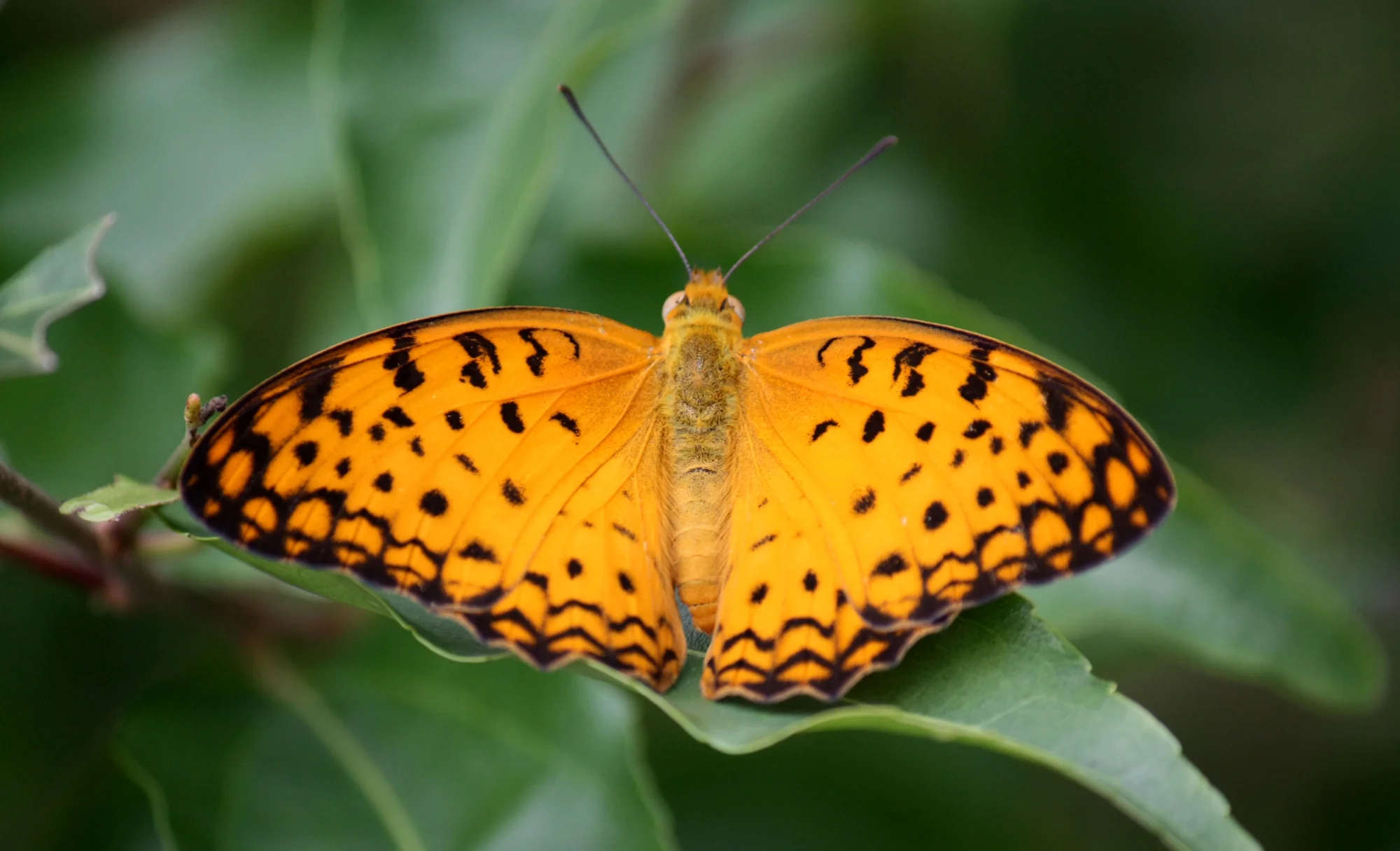
What is less known is that Nepal is also home to some 650 species of butterflies, which is a hefty 4.2% of the global population. Similarly, there are about 870 species of birds in the country. Thirty-five species, including the barn owl, the Eurasian large owl, the Lesser Adjutant Storhoi, and the white-rumped vulture are in the globally endangered list. The Indian Sarus crane, a migratory species which comes to Nepal annually from Dar Es Salam in Africa, is also on the red list of the International Union for Conservation of Nature (IUCN).
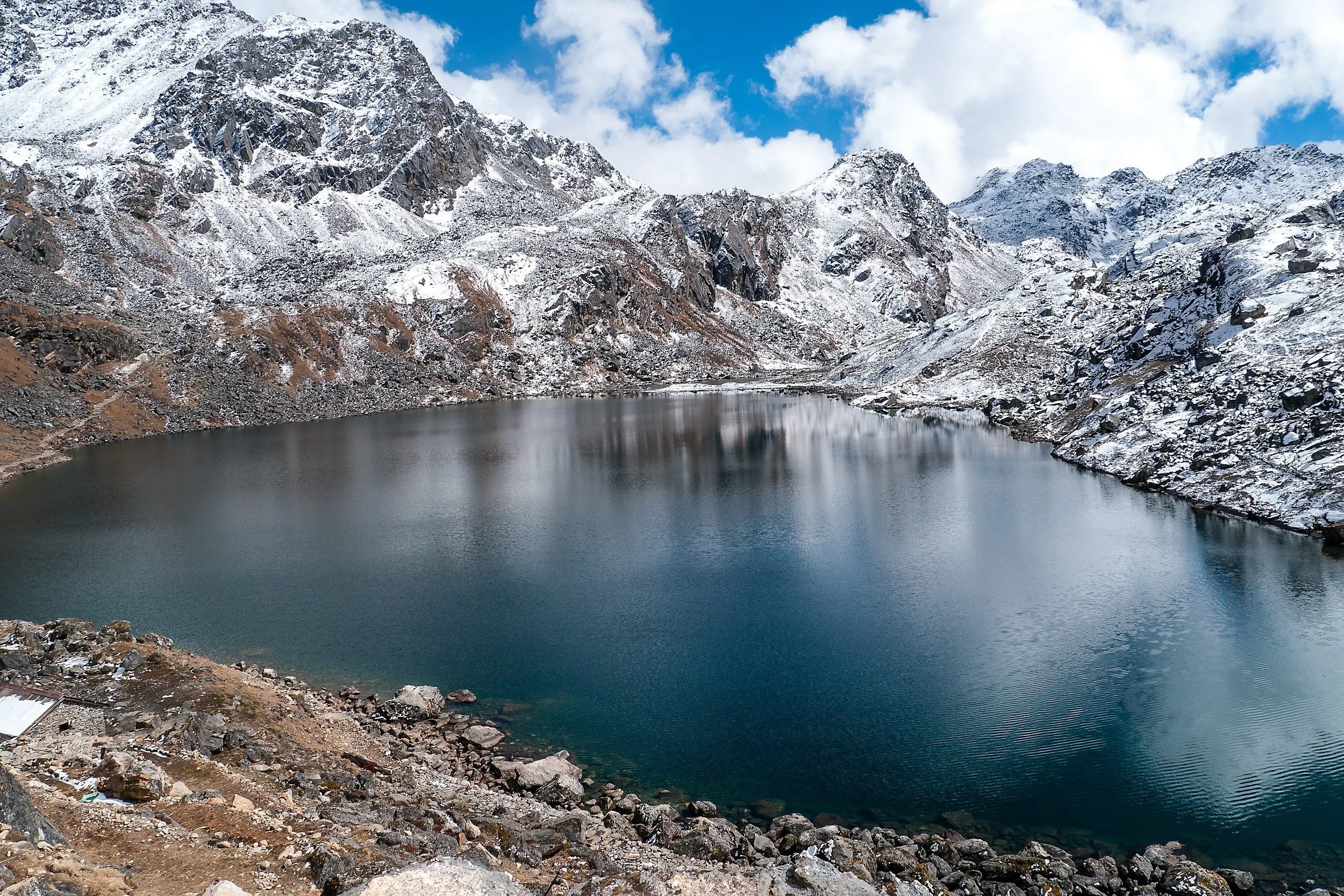
There are nine wetlands (Ramsars) in different parts of the country, all excellent sites for bird watching. Among these, Koshi Tappu (17,500 h) in eastern Nepal is the largest, as well as the first Ramsar to be developed, in 1987, with Gokyo and associated lakes in Solukhumbu being the second largest. Beeshazar and associated lakes (Chitwan), Ghodaghodi Lake (Kailali), Rara Lake (Mugu district), Gosainkunda and associated lakes (Rasuwa district), Jagadishpur reservoir (Kapilvastu), Mai Pokhari (Ilam), and Phoksundo Lake (Dolpa) are the others wetland sites. Clearly, bird watchers have the choice of a diverse range of sites that offer a large variety of bird species.
Particularly interesting are species like the Himalayan Griffon vulture, the black kite, and the Lammergeuer (called the protector of the Himalayas). Also found in the high Himalayan region is Nepal’s national bird, the Monal pheasant (Lopophorus impejanus), known as danfe locally, one of the most colorful among a large number of other pheasants that are as colorful. Adult males are multihued with metallic green crests; females, in contrast, are a dull brownish in color. A danfe in dance is a lovely sight, with its spread-out wings and tail feathers showing off a fantastic range of beautiful colors.
Coming back to mammals, the Suklaphanta Reserve has the country’s largest herd of swamp deer (locally known as Bara Singhe), while the last surviving population of the country’s water buffalo (Arna) are to be found in Koshi Tappu. Some of the world’s largest cattle, the Gaur bison, have been seen in the Churiya hills in central Nepal. The beautiful snow leopard can be found at heights between 3,000 to 5,500 m in places like Mustang, Dolpa, and Humla, while the Himalayan blue sheep (Bharal), which has characteristics of both the wild sheep and the goat, but is not blue, can be seen at altitudes over 4,000 meters. They are extremely sure-footed and have curved horns.
When talking about Nepal’s exotic mammals, how can one forget to mention the sturdy yaks (Bos grunniens), even if they may not be considered as wildlife? These thick-coated animals, blessed with extraordinarily strong lungs, can weigh up to 550 kg each. Found at altitudes up to 6,000 m, yaks are man’s best friends in the high Himalayan region, carrying heavy loads, plowing fields, and providing rich milk and meat, besides wool (for clothing), dung (for fuel), and hide (for making leather goods). Even their bones are put to good use to make artifacts, while their hair and wool goes towards the making of ropes, tents, blankets, and sacks. Doorways of homes are decorated with their horns (to ward off evil spirits), the tails make good dusters, and their blood is regarded as a cure-all for many ailments. Males are called yaks while females are known as naks (or driks) in the Sherpa language, and when they are crossbred with cows, the offspring are called dzo (if male), and dzomo (if female).
Another of Nepal’s interesting wildlife is the gharial (Gavialis gngeticus), a rare crocodile with a bulbuous growth on the nose of males. It is an endangered animal that can be seen in Chitwan National Park, where they have a breeding program for the species. This rich diversity of exotic wildlife makes Nepal a highly desirable destination for animal lovers, and the country has made good efforts with the help of international organizations, towards its conservation. Accordingly, the country has nine national parks and protected areas. The former includes Chitwan, Bardiya, Sagarmatha, Annapurna, Langtang, Shey Phoksundo, Khaptad Dhorpatan, and Rara National Parks, while the latter includes Koshi Tappu, Parsa, and Shukla Phanta Reserves.
Traveling in Nepal, Some Unusual Tips
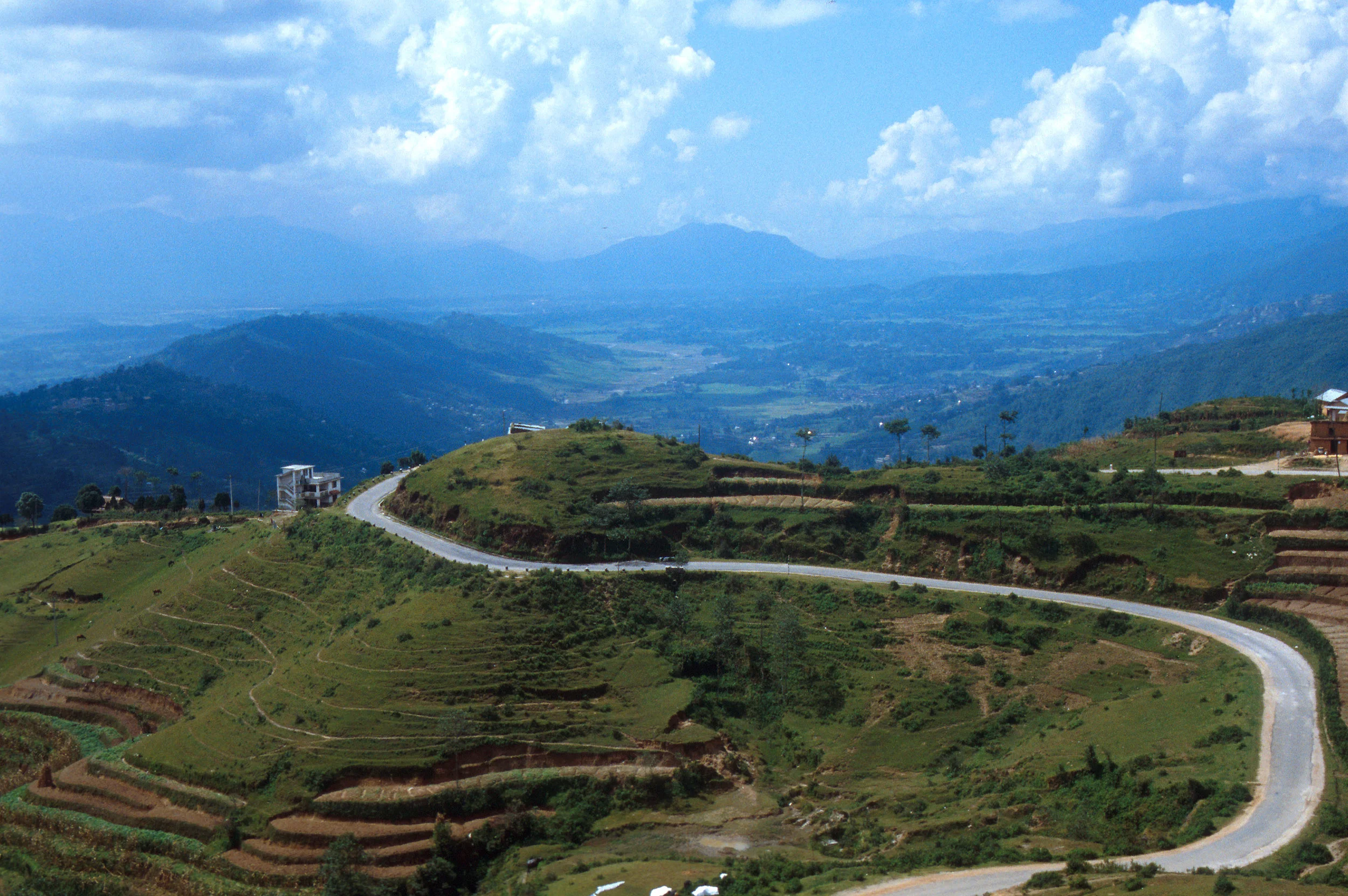
Though we hear a lot about certain times of the year being the best times to trek/travel in Nepal, many believe that anytime is a good time for trekking/traveling in Nepal. This is because the country has a wide range of climatic diversity, from the sweltering heat of the Terai to the arctic conditions in the high Himalayas, with pleasant temperate weather in the hills and valleys in between. Depending upon when one wants to visit, one can choose where to go according to the season.
One thing that must be said for traveling/trekking in Nepal is that no matter what kind of upheavals and struggles are going on (the bane of developing countries), there have been practically no known cases of travelers/trekkers being harassed, and in fact, even at the height of the 10-year Maoist insurgency (1996-2006), trekking went on as usual. Those adventurous souls out on the trails during that period surely must have had an extra spring in their steps, not knowing what awaited them over the next hill!
you’ve surely heard a lot about certain times of the year being the best times to trek/travel in Nepal, but let me hasten to say that anytime is a good time for trekking/traveling in Nepal.
Anyway, all this is not to say that you should leave everything to chance; there’s actually very little chance of that happening if you are being looked after by a competent agency, of which there are plenty in Kathmandu. Now, before proceeding further, here’s some food for thought: you’ve surely heard a lot about certain times of the year being the best times to trek/travel in Nepal, but let me hasten to say that anytime is a good time for trekking/traveling in Nepal. This is because the country has a wide range of climatic diversity, from the sweltering heat of the Terai (plains) in the south to the arctic conditions in the high Himalayas to the north, with pleasant temperate weather in the hills and valleys in between. So, depending upon when you arrive, you can choose where to go according to the season.
Just to recapitulate on the seasons here, there are four: spring (March-May: warm and dusty with rain showers), summer (June-August: dominated by the monsoon), autumn (late September-November: cool with clear skies), and winter (December-February: cold at night and foggy in the early mornings, but afternoons are mostly clear; occasional snow in the mountains). As for the monsoon, it begins in June and continues up to September. Autumn is the peak tourist season, and during this time, the trekking trails, particularly the more popular ones, become quite crowded. So, it’s worth a thought to plan a trip during the off-season months so that you get to enjoy the much-talked about solitude of the Himalayan trails, and revel in the natural beauty for miles and miles with not many souls around to disturb your reverie.
Give a thought, too, to a sojourn of the country during the monsoon. For a fact, Pokhara, the most beautiful of all Nepali cities, gets the most rainfall during this time. But it’s a curious fact you won’t find any place in the city that’s waterlogged even during the heaviest downpour! That’s because the city is located on a mass of gravel, a result of flash floods due to an earthquake in the Annapurna region long ago, and water immediately gets soaked into the ground. There’s a river, the Seti, which flows deep beneath the city, and probably all that rainwater flows into it. Fascinating stuff, all this, so why don’t you plan a trip to this lovely city during the rainy season? Doubtless, all that cleansing rain is surely going to make the surroundings all the more verdant and the environment more invigorating. There’s plenty of trekking routes starting from here, including one to Dhampus, some 23 km from away, which was once the only gateway for treks to Annapurna Base Camp, Machhapuchchhre Base Camp, Annapurna Sanctuary, Jomsom, Mustang, Ghandruk, Ghorepani, and Poon Hill. Famous names, all.
You might also know that the pride and joy of Pokhara, beside its awesome Machhapuchchhre Himal (Fishtail Mountain), is Fewa Tal, a huge lake that reflects the deep green color of the surrounding lush greenery. Boating is what you do here, and it’s real fun, but what would the experience be like doing it when it’s raining? Could be pretty interesting, is what we say; you’ll need a large-sized umbrella and a raincoat, of course. All this talk about Pokhara and its many charms is to emphasize that it’s a city that could be worth visiting even during the rainy season. A couple of excellent hotels in Pokhara have special monsoon packages every year, so you could go for that. You’ll get a good deal, undoubtedly, since it’s officially the off-season. Well, make it your season, and aside from saving precious bucks, you’ll be gathering a bagful of tall tales to take back home.
The jungles of Chitwan, home of the renowned one-horned rhino, now, that’s another place that will have added charm during the monsoons. That’s of course if you are not the kind to be fazed by minor stuff like leeches and so forth. Anyway, wear knee length boots, and you should be all right for the most part, and it will be, as they say, a walk in the park, the Chitwan National Park. Only, in this case, you’ll be walking through a park that’s been designated a UNESCO world heritage site because of the fantastic biodiversity of its flora and fauna. Aside from the endangered one-horned rhino, this famous wildlife reserve also has quite a few royal Bengal tigers, and the snout-nosed gharial, along with many other animals. Elephant rides are the order of the day here, and around the park are some resorts that are simply out of this world, including some world-famous names.
Well, so much for tips for trekking/traveling to Nepal for the moment. There really aren’t many tips as such, because like said before, aside from the usual precautions and preparations, which your trek/travel agency will anyway arrange for you, it’s actually how far off the beaten track you wish to go that really matters, and in such a case, all we can say is, expect the unexpected!
SIMILAR POSTS


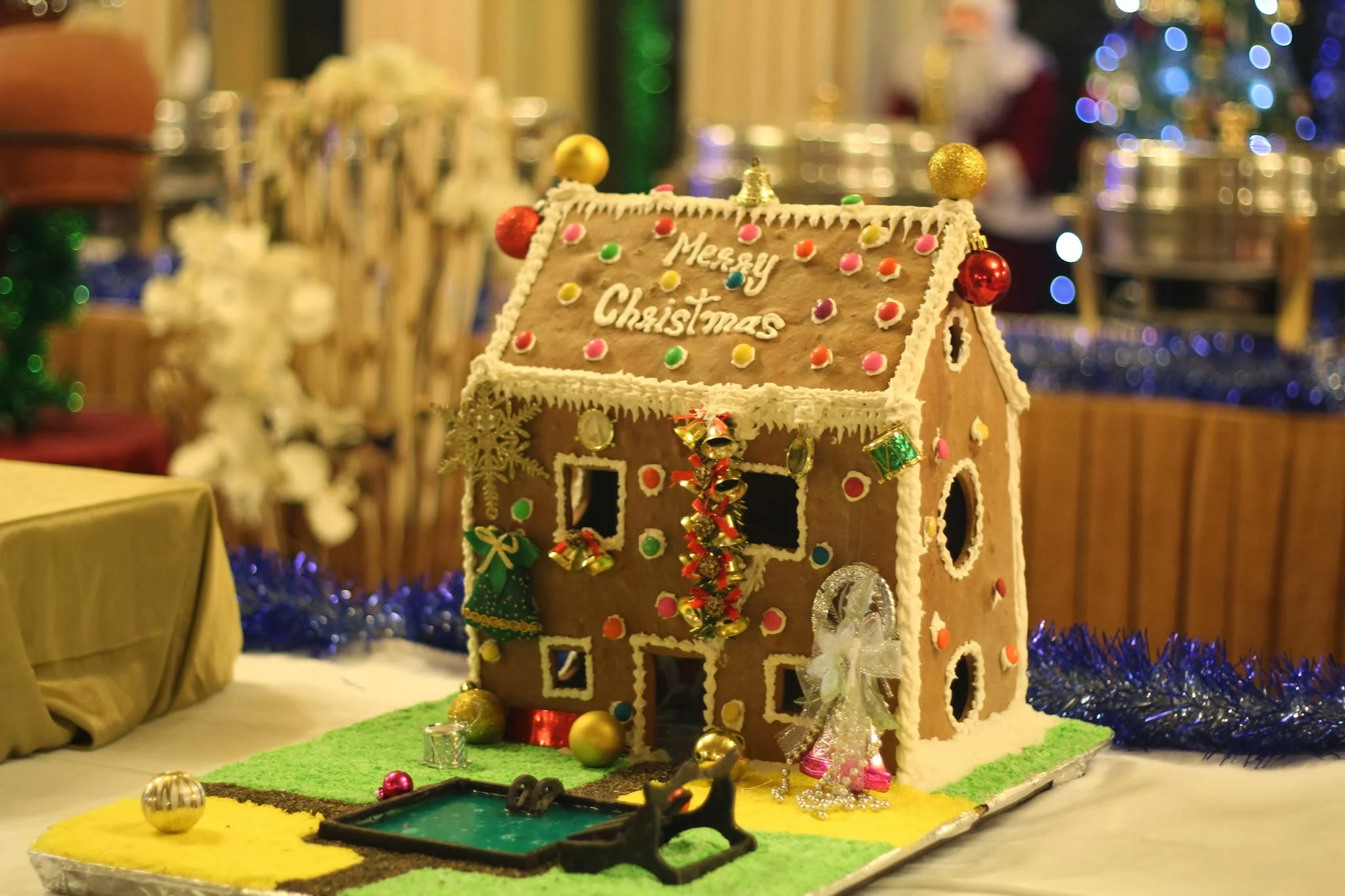
Christmas Celebrations
Enjoy a fantastic Christmas Eve for NPR 1999 (adults). Book your table now.
Enjoy a fantastic Christmas Eve at Hotel Shanker, Kathmandu, Nepal.
A traditional family friendly experience at the great value price of just NPR 1999 nett /per person (NPR 1499 nett for kids-below 10 years)
Children 11 years and above will be charged the adult rate.
Christmas Eve
Date: Wednesday, 24 December 2014
Time: 7 PM onwards
Price: NPR 1999 / 1499 for Adults and Children respectively. (incl. of taxes)
Book your stay now for a stay period that includes Christmas Eve through our website and this cost will be automatically included in your room rate at a discounted price. (No need to book your table)
This fantastic package includes:
- A traditional mulled wine reception (Christmas Eve)
- A festive feast
- Live entertainment from talented local artists
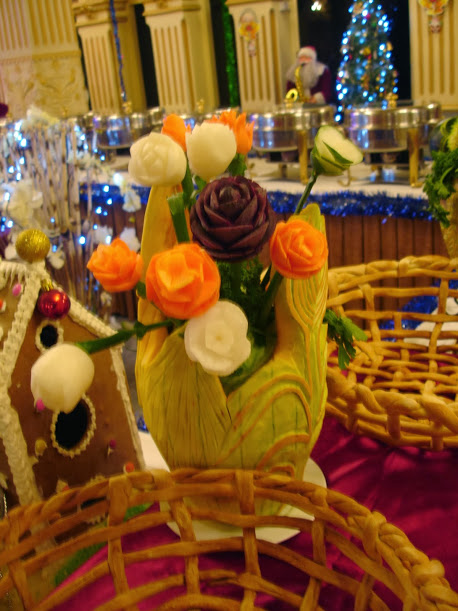
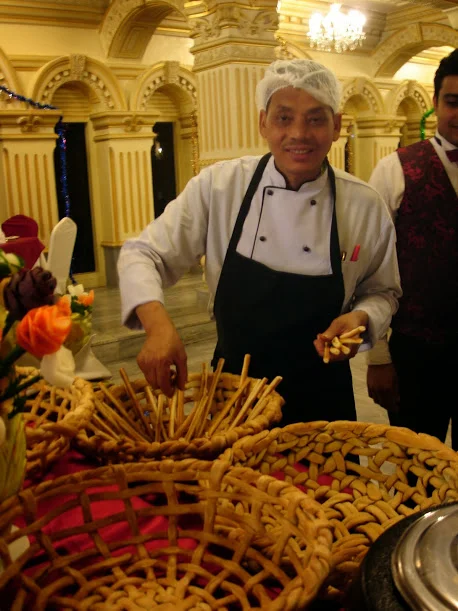
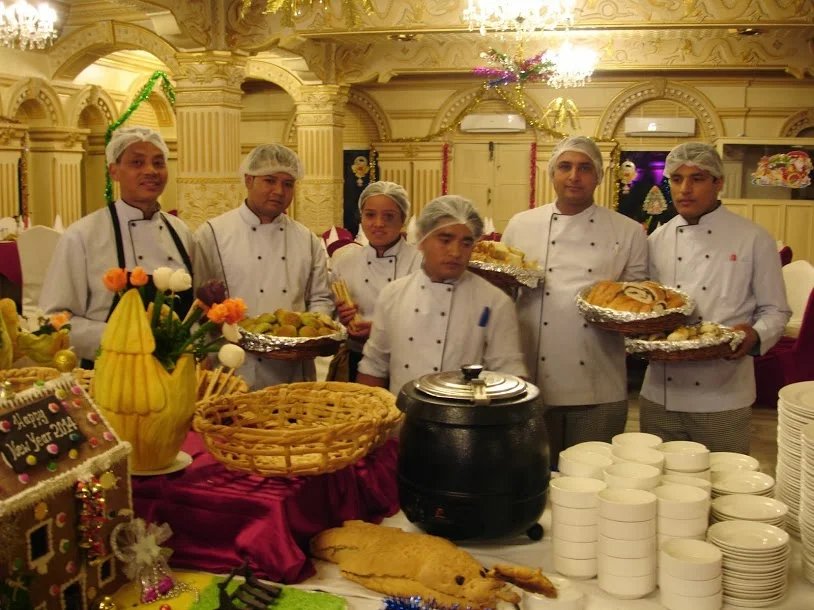
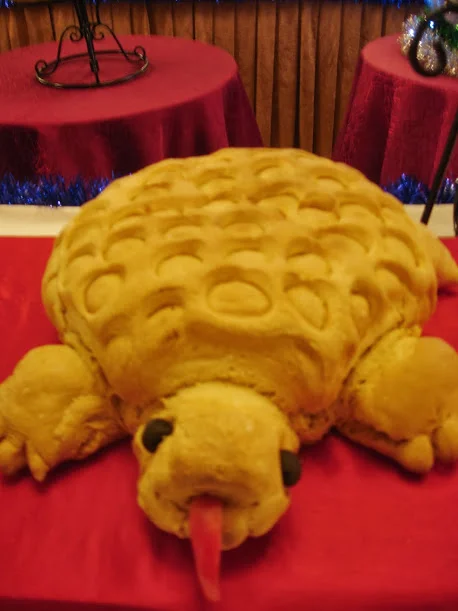
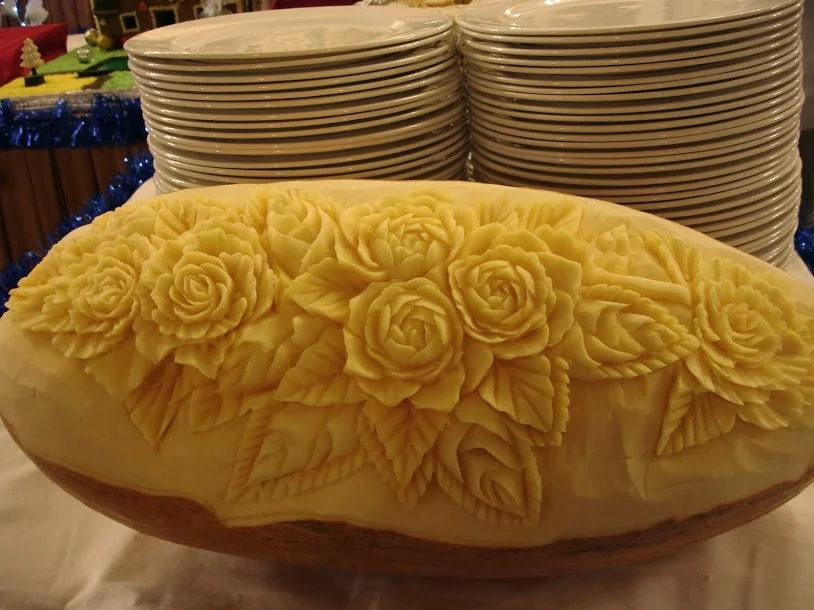
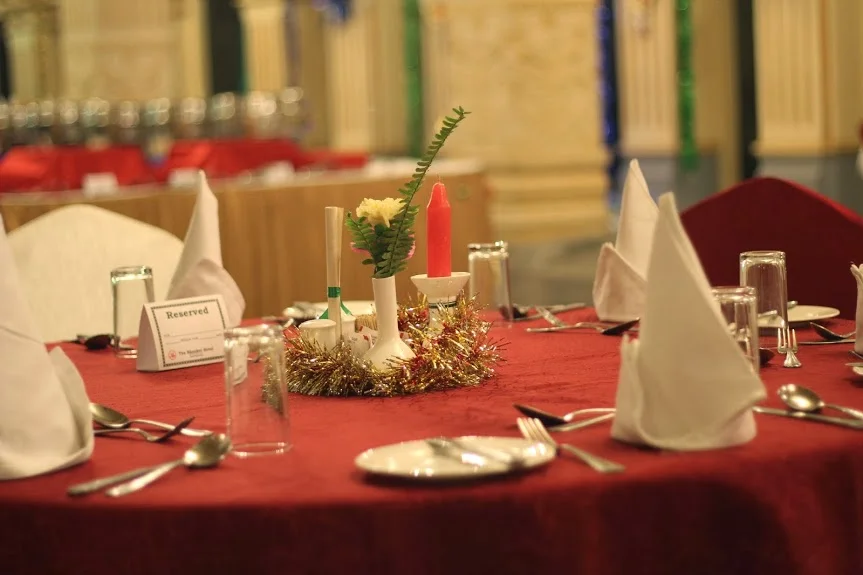
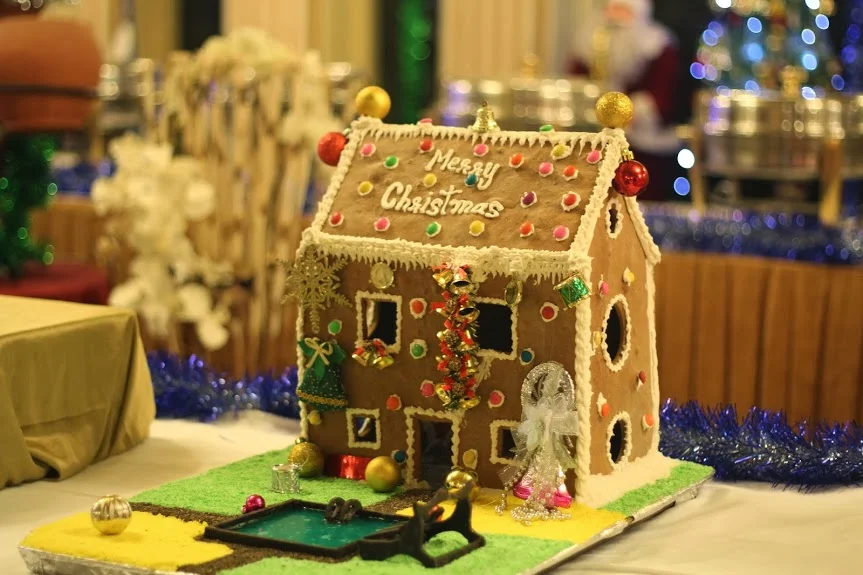
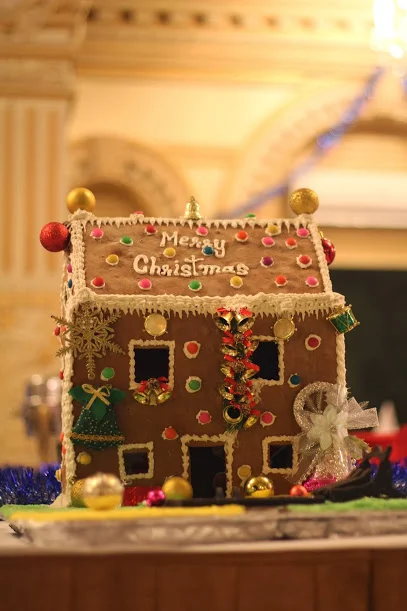
Photos from last year's celebrations:
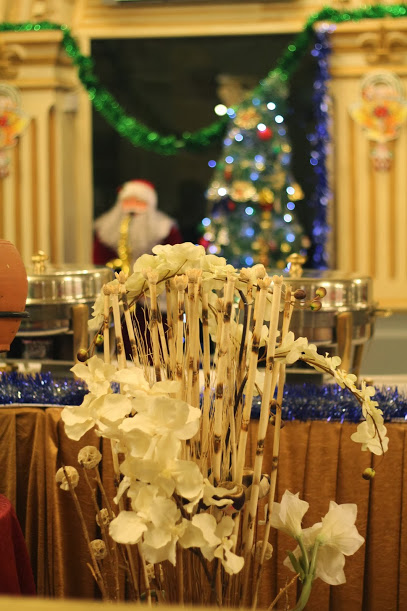
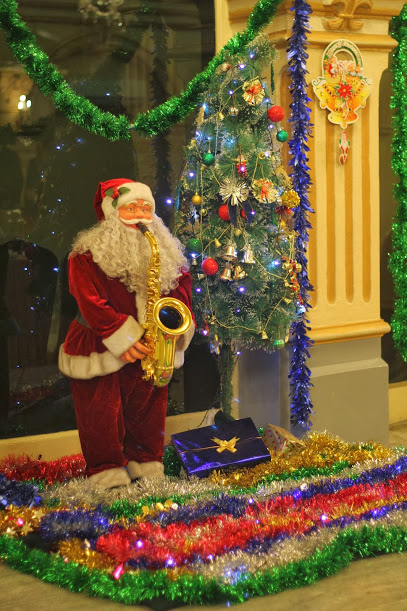

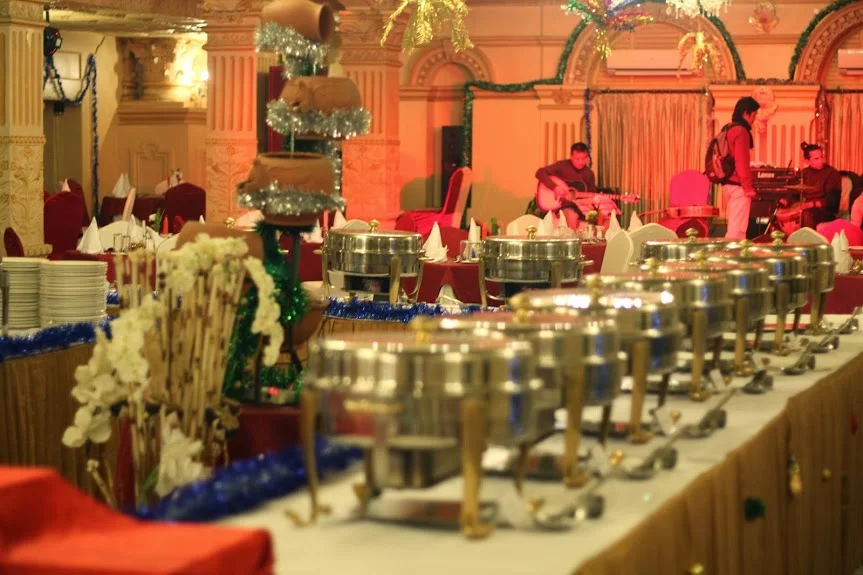
Himalayan Ecology at Risk
The effects of global warming on the high Himalayas are becoming more visible by the day and poses great risks to the fragile mountain ecosystem.
While Nepal may have its fair share of shortfalls, there is no denying that it is a magnet for all mountaineers the world over, simply because the country has Mount Everest, the ascent of which is the ultimate test for any climber worth his/her salt. Not only that, Nepal also has a significant number of the world’s tallest peaks. The exploits on the high Himalayas feature prominently and regularly on the world stage; and they could be not only for good reasons, but also for the bad. In recent times, the headlines haven’t been of the good kind.
Here’s one dated May 20, 2014 (http://goo.gl/NIj9CT):“Global Warming Threatens More Deadly Everest-Like Avalanches”. The report goes on to say that “mountaineering tourism in Nepal faces a threat from global warming as melting glaciers feed the risk of more deadly disasters such as the avalanche on Mount Everest that killed 16 people last month.”
This is not something new; there have been umpteen discussions on the subject of global warming vis-à-vis the Himalayas. This latest tragedy will perhaps give added impetus to the issue of global warming and its effects on the fragile ecosystem of the Himalayas. Stretching for about 3,500 km between Afghanistan and South China, the surface area covered by the Himalayas is a vast 1,000,000 square kilometers. Eight-hundred kilometers of this vast chain of immense mountains, the central part, lie in Nepali territory. It consists of over 1,300 peaks of 6,000 m and above, which includes eight of among the world’s 14 highest mountains. Implication: anything that happens to this part of the Himalayas is certain to have substantial significance to the rest of the world.
These ice-clad mountains are an integral part of Nepal’s geography and ecosystem, which, by any standard, is diverse to the extreme, going from 70 m in the Terai (the plains) to 8,848 m (that is, Mount Everest, the highest point on earth) across a short distance of about 75 km only. You can travel from the sweltering lowlands bordering India to the frigid slopes of the Himalayas bordering China in a jiffy, and numerous ethnicities (about 100), cultures, and lifestyles are other factors that add to the diversity. The plains folk are fortunate in that they live on land that is pretty suitable for agriculture, but mountains folk have to really break their backs eking out a living from the rocky mountain terrain.
Coming back to ecology and the Himalayas, it has been in the limelight for quite some time now, particularly when the talk veers around to global warming. Global warming’s effects are beginning to be seen in a quite visible manner; mountaineers and experts state that one is liable to see more of rocks nowadays, in contrast to the comforting cover of virgin snow in days gone by. Conclusion: the melt down of snow is occurring at a faster pace now. Authorities say that, since ages ago, over 3,000 glaciers have been counted in the region, but over the last century, an equal number of glacial lakes have been formed. Conclusion: the melt down of glaciers, along with snow-capped peaks, are occurring pretty rapidly.
Risks of glacial lake outbursts have increased manifold, which could lead to massive floods causing a lot of destruction to the local inhabitants. The risks of avalanches and rock-falls have also increased greatly because of the rapid melting of the mountain snow. This obviously does not bode well for climbers; additionally, they are coming across significantly larger numbers of exposed rocks on climbing routes, which besides consuming more energy to traverse through, are also more difficult to walk on. All this means that climbers now need to further gear up the technical aspects of their mountaineering skills.
Global warming and its effects on the high Himalayas is, no doubt, the central issue when talking about dangers to the fragile mountain ecology. However, there are other issues that threaten life in the mountains as significantly, and these are the issues to do with manmade environment degradation. The Himalayas is a magnet for visitors from around the world. Besides ever-increasing numbers trying to climb different peaks every season, trekkers, too, are increasing by the day, with newer trails being discovered (opened) to provide extra novelty and challenge.
Trekkers and climbers, both, are invariably accompanied by many guides and porters, and the routes take many days to be navigated through. Many nights are passed camping on the way, which means that a lot of firewood will be used; this in turn means that the forests are threatened. Deforestation is an ever present danger. Mountain tourism is an important part of Nepal tourism, and it is also a significant consumer of forest wood. As it is, flora and fauna of the Himalayan region, many of which are rare and endangered species, are in danger due to human transgressions; deforestation further decreases their chances of surviving into the future.
Overcrowding in camp sites is common, and this results in problems of waste and garbage disposal. There have been many complaints about plastic materials, empty bottles, and aluminum cans littering the trails. In fact, this issue has come into the spotlight on many occasions, and garbage accumulation on Everest, particularly, has often been featured prominently in global media as the most telling example of manmade degradation of the mountain environment. From time to time, this has prompted ambitious clean-up campaigns. The "Save the Everest Mission" organized by Everest Summiteers' Association (ESA) in 2011 succeeded in collecting 8.1 tons of garbage from Everest and its trails. That’s a lot of garbage! Well, the signs are there. Cleaning up after the act is not always a probability, and if you add global warming to the picture, what you get is a situation that’s very, very dangerous to the fragile ecosystem of the Himalayan region.
The Gorkha Story
Much before it opened its doors to the outside world; much before mountaineers everywhere started coming to climb the highest mountains on earth; Nepal was already gaining fame due to the extraordinary bravery of the Gorkhas.
Once upon a time, the Gorkha kingdom extended from Trisul Ganga in the east to the Marsyangdi River in the west, with its capital being the hill state of Gorkha, which gave them the name ‘Gorkhali’. The late 1700s were a period of great expansion of the Gorkha kingdom. In 1789 they annexed Sikkim, and then invaded Tibet, but were driven back by a huge Chinese and Tibetan army. In 1794, they occupied Kumaon and Garhwal in India. These aggressive excursions eventually resulted in war in 1814 with the colonial power of the time, the imperial British forces of India. The major highlight of this war was the British army’s siege of the Khalanga-Nalapani fort in Dehradun—the famous ‘battle of Nalapani’.
The British, led by General Gillespie, had impressive resources: 20 battalions of infantry and cavalry, 20 pieces of artillery, and two troops of horsed artillery. At the time, the entire Gorkhali army numbered just 12,000 soldiers, and the Nalapani fort was manned by a meager 600 Gorkhas. The battle dragged on for over a month, at the end of which, 750 soldiers and 31 officers of the British army had been killed or wounded. The Gorkha leader, General Balbhadra Singh Thapa (Kunwar), managed to escape with just 90 soldiers. In a place called Jyathak, 300 fresh Gorkhas joined their depleted ranks, which, soon after, came under attack by three British detachments, and a ferocious battle ensued. At the end of it, 12 British officers and 1,500 of their soldiers were either dead or wounded. On February 17, 1815, 2,000 Indian soldiers under Lieutenant Fredrick Young panicked and ran for their lives on coming face to face with 200 Gorkhas under Ranjore Singh Thapa. Young was taken prisoner.
Finally, in 1816, the war came to an end with the signing of the Sugauli Treaty on March 4, 1816, the British finally having managed to defeat Amar Singh Thapa’s army in Makanpur. A major term of the treaty was that Gorkhas should be allowed to be recruited into the British army. There could not have been a greater recognition of an adversary’s valor. Now, true to their fondness for order and discipline, the British set about identifying the true Gorkhas; to them, all the martial races of Nepal were ‘Gorkhas’. They discovered that the Gorkhas in the Nalapani fort had been mostly Magars. Besides this fearsome clan, Gurungs, Tamangs, Thakuris, and Puns (most of them living in the western hills) also had an excellent aptitude for soldiering. The British also realized that there were some pretty tough clans in eastern Nepal, as well: the Rais, Limbus, and Sunwars, as well as Tamangs. People of another martial community, the Chettris, were spread throughout the country. It was from Amar Singh Thapa’s defeated forces that the first three battalions of British Gorkha soldiers were raised on April 24, 1816, in Dehradun. Eleven Gorkha regiments were serving in the British Indian Army by the time World War I started.
During the course of World War I, heavy recruitments led to the formation of 33 battalions consisting of 200,000 Gorkhas. How vital was their contribution to the allied efforts is evident from the fact that 2,000 gallantry awards were awarded to the Gorkhas. Similarly, the Gorkhas played an equally vital role in World War II, when 250,000 of them in 42 infantry battalions further added to the already legendary status of the Gorkhas as the best fighting soldiers in the world by winning 2,734 different awards for courage under fire. Till date, the Gorkhas have won a total of 26 Victoria Crosses, the highest possible recognition for valor.
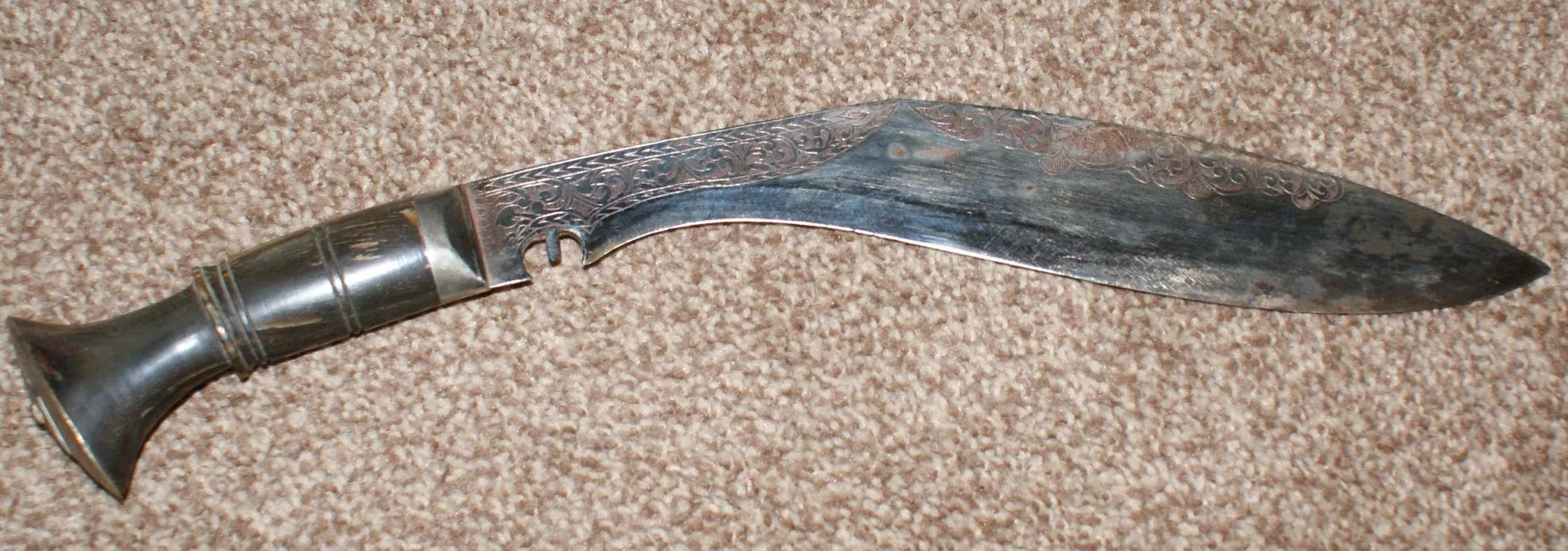
The Gorkhas have exhibited their tremendous courage and bravery in many arenas of war at different times around the world, and undoubtedly, the two World Wars have been the biggest arenas by far. Many legends have arisen out of their exploits, and some are close to mythical, so fantastic are the tales. Here’s one—during World War 1, an officer ordered some Gorkhas to bring back as many severed heads of the enemy as they could, and in quick enough time, one Gorkha, returning from the dense jungle, came up to the officer and threw some two dozen human ears to the ground. Before the gawping officer could utter a single word, the Gorkha explained in a matter of fact manner, “The heads were too heavy.” Here’s another: a Japanese officer with a samurai sword comes face to face with a Gorkha carrying a khukuri, the dreaded weapon of the Gorkhas. What ensues is a slash and hack duel, during which, the Japanese slices off one arm of the Gorkha. His exultation is evident on his face. It is, however, short lived, because the Gorkha tells him, “Okay, so you cut my arm, but why don’t you just nod your head?”
Indeed, it’s difficult to say where fact ends and fiction begins when talking about the exploits of Gorkhas in the fields of battle. Whatever the case may be, an awesome reputation precedes them wherever they go, and this was well vindicated during the Falkland War in 1985. At the end of it, this is what Brigadier David Morgan said, “It was the Gorkhas’ reputation that helped win the war in the Falklands.” The surrender of the Argentinean forces was hastened by the sight of hundreds of deadly blades glinting in the sunlight, as the Gorkhas landed on the beach with their khukuris in their hands. One Argentinean soldier reportedly said later that they didn’t want their heads to be chopped off!
Window to History, National Museum’s Hall of Sculpture
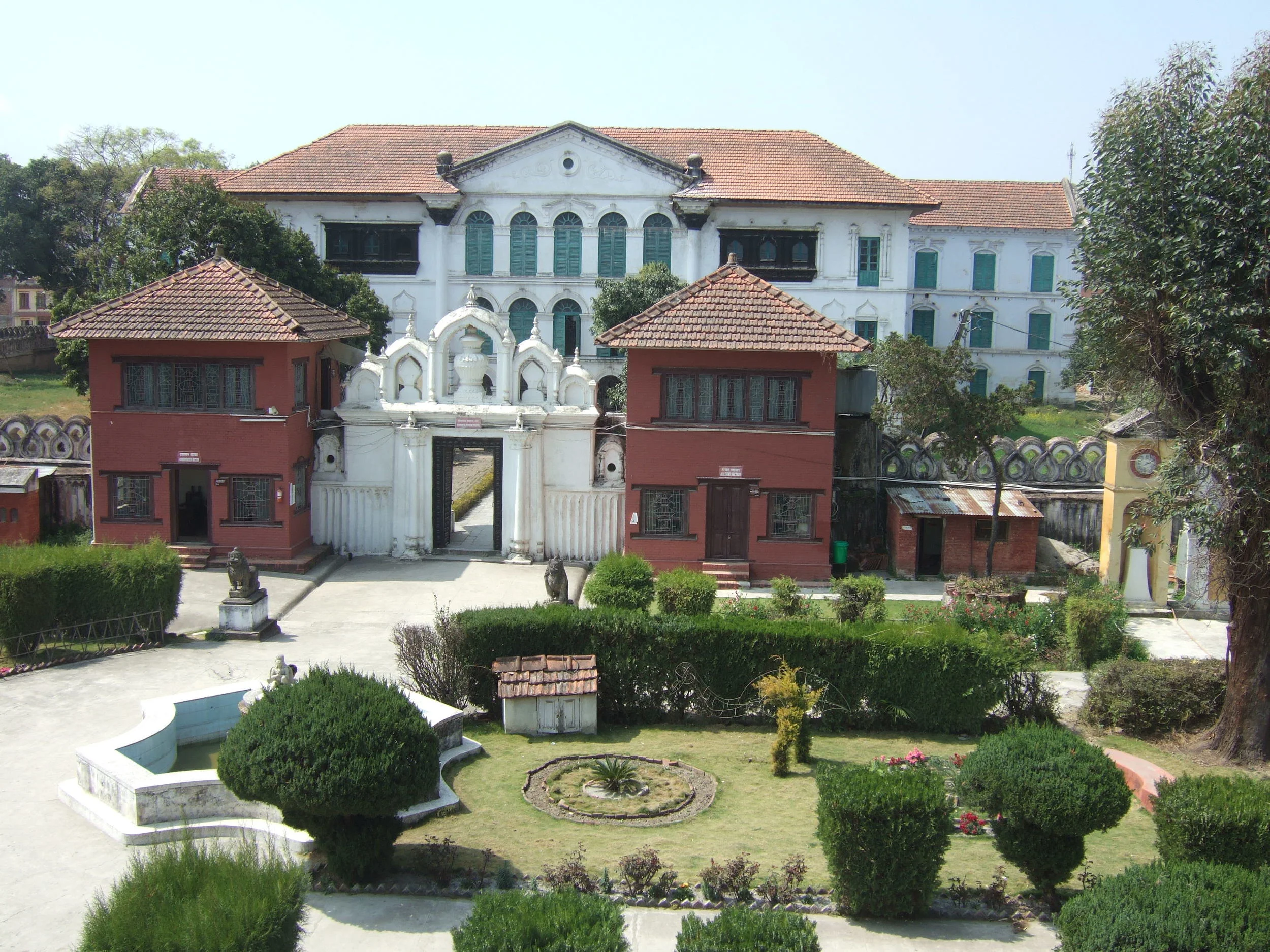
The National Museum’s Hall of Sculpture is a treasure trove of priceless antiques that provide a window to Nepal’s fascinating history.
‘Samvat 107 sri paramadeva pka maharajesu jayavarmma’—this inscription on the base of a life-sized statue unearthed in Maligaon of Kathmandu in May 1992 created quite a stir. Experts finally deciphered the statement as: ‘The year 107. Among the Kings, the Fourth, Late Sri Jayavarmma.’ They also dated the statue as from the 2nd century A.D., which made it the earliest statue with Licchavi period inscriptions found in the country. Quite a find, no doubt—today, it stands tall in the Hall of Sculpture of the National Museum in Chauni, Kathmandu.
The National Museum was established in A.D. 1928 but opened to the public only in 1938. It is a treasure trove of priceless antiques that provide a window into the fascinating history of Nepal. The Hall of Sculpture is but one part of the whole, but it is such as to keep a visitor spellbound for hours on end, so varied are the collections, and so ancient the sculptures. For those with interest in pursuing knowledge, this Hall is a source that will be highly appreciated. For example, this is what you’ll learn immediately on entering its doors: “The earliest stone images are recognized with their distinct stylized features. These features are displayed in the form of the plain halo, very fleshy body, cupped varadamudra (hand posture), zigzag and finely plated decorative folds of the garments, lack of sacred thread, minimal use of garments and ornamentation, and heavy earrings and anklets.”
Among the many stone and terracotta statues in the Hall of Sculpture, there are quite a few that stand out for sheer antiquity, while other stand out for the high quality of their craftsmanship. A major antique is the headless figure of Yaksha, which was found in Handigaon and has been dated 1st century A.D. According to some experts it is a figure of Bodhisattva, while others say it may be an incomplete figure of King Jayavarma. Whatever the case may be, it is the earliest stone image found in the country. Other really ancient pieces are the figures of Matrika (a.k.a. Harati) from the 1st century A.D., Kumbha (goddess of prosperity) dated 2nd century A.D., and Yaksha Yakshini, dated 1st/2nd century A.D. Keep an eye out for the figures of Simhevahini Durga (13th century), Sri Krishna (13th/15th century), Surya (13th century), Garuda (16th century), and Uma Maheswara (20th century), which are beautifully sculpted.
In an adjoining room, you’ll come across various terracotta figures: make a note of the various mother goddesses of Kathmandu Valley: Brahmayogini, Shailaputri, Chandraghanta, Vaishanvi, Kusmanda, Bhavani, Maha Gauri, Chamunda, Kali, and Varahi. These are indeed masterpieces. Next, you carry on to the metalwork section which consists of mostly bronze figures. The first objects you’ll come across are sleek figures of Kumari, Tara, Aparamita, Shaileswari, and Lokeswara, all dated 19th-20th century. Then there are the 20th century statues of Jogini, Uma Maheswara, and Mahisasur Mardini; the last one, especially, a work of high caliber.
In the middle of the room are bronze figures that could well excite excitable minds; these are the statues of different Samvaras, each with a shiny erect phallus that thrusts out provocatively. Mahesh Samvara, Nara Simha Samvara, and Vrish Samvara are from the 17th-18th centuries, while Simhamukha Kamabhairava is from the 14th century. Another 14th century figure, that of Sukhavara Samvara, is pretty graphic, portraying a lovely beauty with her legs clasped around the waist of the beastly Samvara. Here, it would be pertinent to point out that Samvara is a fierce protective Buddhist deity whose consort is Vajravarahi.
You’ll probably spend some time gazing at these fantastic figures, but after a while you got to move on, since other visitors might start looking at you somewhat quizzically. Anyway, the next thing your eyes will alight upon is a large and beautiful 18th century figure of Bhairava with a torana above him. (Toranas are semi circular, carved wooden (sometimes metal-plated) structures found over temple doorways.) The next figure you’ll encounter is that of Nagakanya (20th century) seated on makara (alligator) under a nine-headed serpent canopy. Besides this are two 17th century figures of a Malla king and queen. It must be said here that the Malla dynasty (12th century-18th century) was a golden period for art, craft, and culture in the valley.
A small but beautiful figure of Surya and a 17th century Nagapasa (11 coiled serpents), along with another 17th century figure of Nagapheni (seven-headed serpent) are also captivating, as is the statue of Vishnu with a lotus arising from his abdomen (16th century). Further along the room are displayed a Buddha head and a replica of the famous Krishna Mandir of Patan, and a finely detailed 20th century figure of Viswarupa, which can be said to be one of the most outstanding bronze works in the gallery. Now, your eyes will probably be assailed by a huge 19th century Hayagrib Lokeshwara Swagata Mandala that’s enmeshed with many semi-precious stones. Next, you come across a large and lovely figure of Mahisasur Mardini (12th century) and alongside, a beautifully sleek figure of Queen Lalit Tripura Sundari (early 20th century), a powerful historical figure who was the acting regent of Nepal from 1806 to 1832. Similarly, there’s another regal statue, that of King Bhuatindra Malla (1696 to 1722) that’s also pretty good.
All in all, a tour through the Hall of Sculpture is a delight to the senses, and a testimony of the skills of the valley’s artisans. So, make it a point to pay a visit to the National Museum during your tour to Nepal.
Panauti, Town of Temples, Festivals, and Yomari
It is the fourth most important heritage town in Nepal, after Kathmandu, Patan, and Bhaktapur. It is also where yo-mari was born.
“There are nearly as many temples as houses, and as many idols as inhabitants.” These were the words used by British emissary Colonel William Kirkpatrick in 1811 to describe Kathmandu Valley in his 'An Account of the Kingdom of Nepaul'. In those days, some other travelers/academics had even stated that, in Kathmandu, there were more shrines per square kilometer than anywhere else around the globe. Does this statement stand true today? How many shrines are there in Kathmandu Valley, exactly? Interesting questions, one would think, and pretty difficult to answer. One source has conjectured the valley as having 2500 shrines and temples. Well, it’s one number: how near the mark it is, or how ridiculously far from reality, is something for the more curious to dig out. For now, let’s talk about one place in the valley, Panauti, where we have a fairly accurate idea about the number of temples located in it.
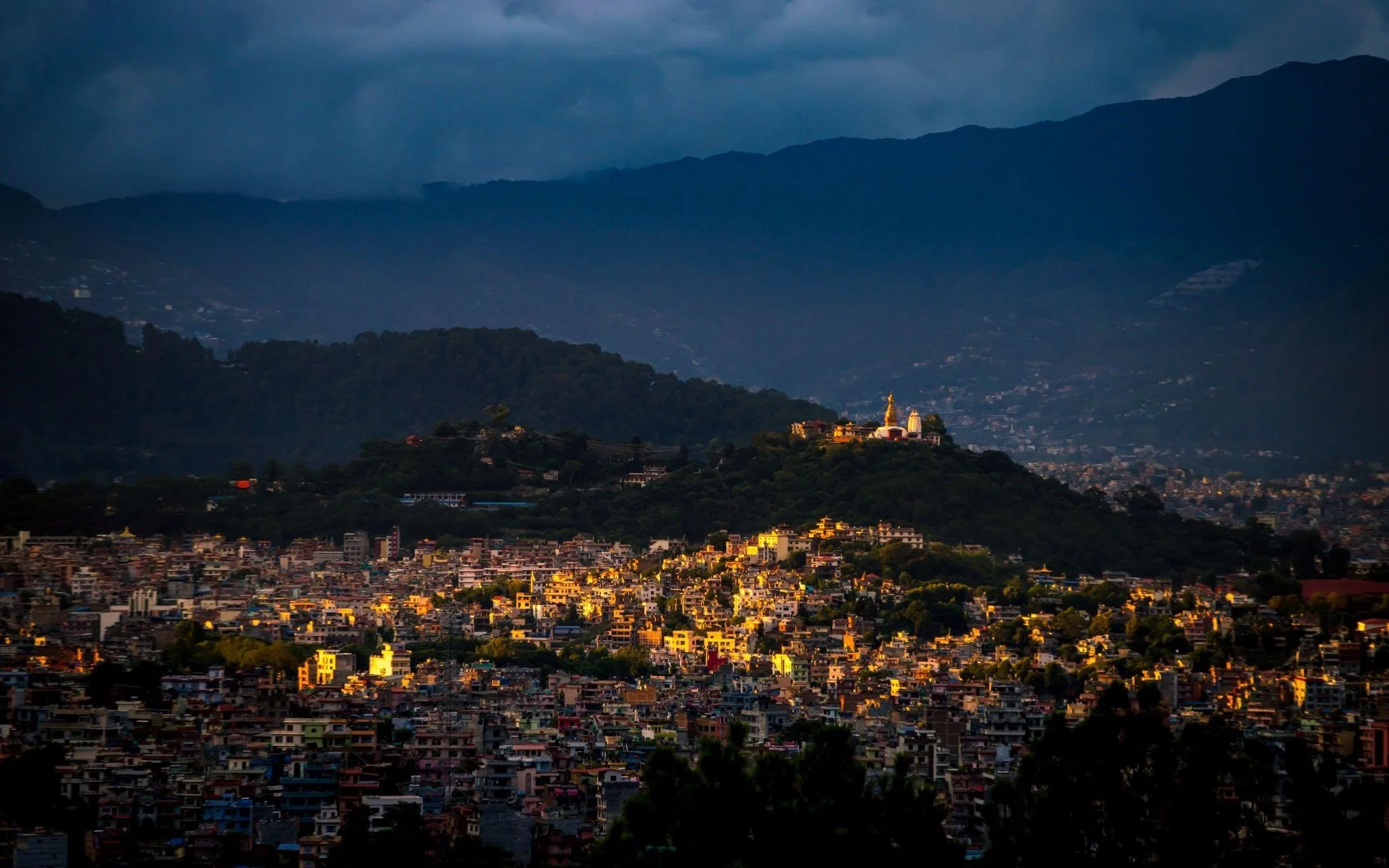
Situated about 32 km southeast from Kathmandu, Panauti is the fourth most important heritage town in the country after Kathmandu, Patan, and Bhaktapur. It is one of three municipalities in Kavrepalanchok district, the other two being Banepa and Dhulikhel. Panauti is believed to stand on one massive rock, which is the reason that no earthquake till date has been able to inflict any damage on the town. How solid is this fact is another mystery to be discovered by the more curious. Anyway, coming to the number of temples in this earthquake-proof town, the number is a little more than forty. Now, you have to look at it in the correct perspective: the town is only one kilometer long, so it’s a large number, you’ll agree.
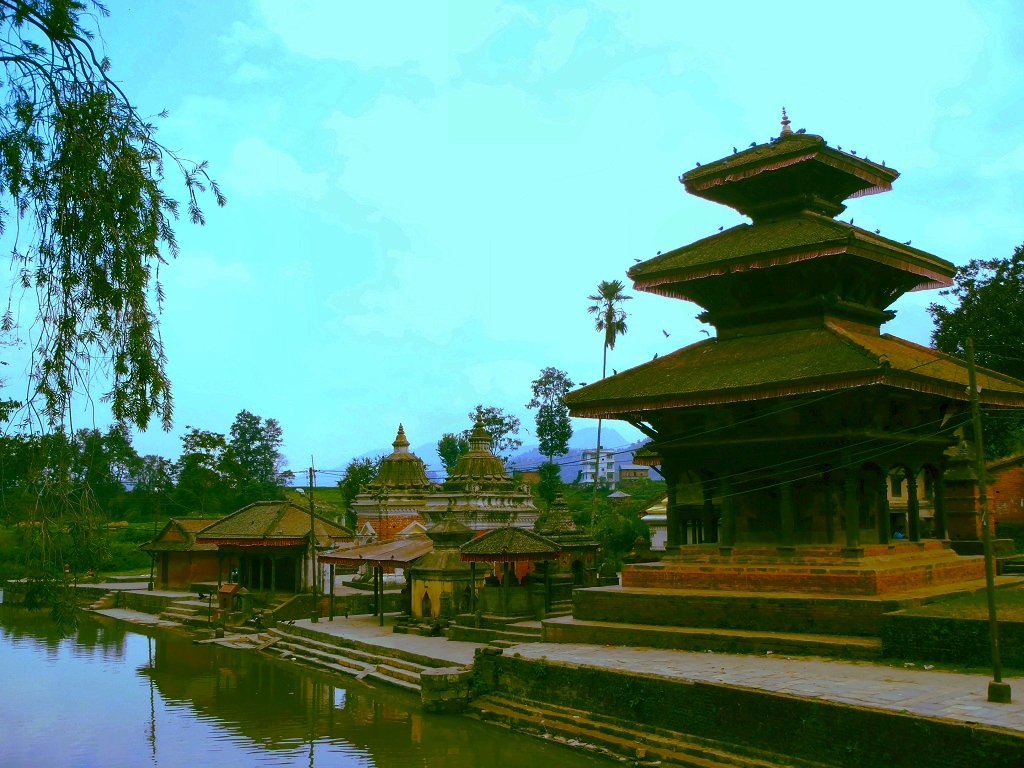
A 15-minute walk on an uphill track to the north east of the town takes you to Gorakhnath Hill (2000 ft), from where you’ll notice the peculiar fish-like shape of this small town, which is not even a kilometer in length from east to west. You’ll also observe the profusion of pagoda-style temples. Two rivers, the Roshi and Punyamati, flow from west to east and converge at the town’s eastern end, that is, at Triveni Ghat, which has a score and more temples dedicated to various gods and goddesses, including Badrinath, Kedarnath, Bishwanath, Tulsinath, Mukteshwor, Shiva Narayan, Madhav Narayan, Brahmayani, Saraswoti, Krishna, and Ram, Sita, and Laxman.
One of the more eye catching temples (a classic example of Newari craftsmanship) is the three-tiered Indreshowr Mahadev Temple, which stands in the center of a large brick-paved courtyard. Its elaborately carved wooden windows, doors, struts, and beams are testimony to the skills of the valley’s Newari artisans, and these are also very much evident in the other temples located in the same courtyard, that is, Unmata Bhairav, Krishna, and Ahilya Temples. Across the Punyamati River are still more temples, two of which, Brahmayani and Krishna Narayan, are especially noteworthy.
Indeed, Colonel William Kirkpatrick could well have been describing Panauti when he wrote, “There are nearly as many temples as houses, and as many idols as inhabitants.” Made of terracotta, the pagoda-style temples have gilded roofs and lots of beautiful wood carvings. The courtyards around the temples are generally spacious. Aside from the Hindu temples, there are half a dozen Buddhist stupas, three dyo-chens (communal houses with a deity on the top floor), and a bahal (Buddhist shrine). Also scattered around the town are a number of patis (public resting places), dabalis (where dramas and dances are held), dhunge dharas (stone water spouts), and chowks (public squares)—all very much in character with a traditional Newari town.
Panauti has a lot going for it as a touristy heritage site, one that has the added charm of being surrounded by lots and lots of green paddy fields. It also has its fair share of historical glory. One such glory is yo-mari, a delectable ethnic Newari delicacy made once a year during a festival called Yomari Punhi. Made from a mixture of treacle and sesame seed wrapped in stupa-shaped rice dough, yo-mari was the result of an experiment with a fresh yield of rice by a local married couple many, many, years ago. Everyone in the village loved it and they named it yo-mari (tasty bread), which went on to become a valuable addition to Newari cuisine and culture.
Panauti is also the birth place of King Ansuverma, the greatest of the Licchavi rulers, as also of Prince Mahasatwo, who became a saint due to his great deed of supreme sacrifice in feeding a starving tigress and her cubs with his own flesh in the nearby jungle of Namobuddha. It is now one of the most sacred Buddhist pilgrimage sites in the country, and there’s a stone slab in which is etched the story of the prince and the tigress. While we are on legends, it must be mentioned here that, besides the Roshi and Punyamati Rivers, it is said that there is another, the Lilawati, which flows into the above rivers. However, it is not visible to ordinary folk, rather, you got to be among the awakened to be able to see it!
Well, reading all this, your curiosity must surely have piqued somewhat, and you’ll certainly want to visit this fascinating town. A town that has a lot of beautiful temples, and naturally, it must follow that there has to be a lot of festivals, too! Twenty-eight, to be exact; that’s right, there are 28 major festivals celebrated every year, of which many are the same as those celebrated throughout the country. Some are, however, unique to Panauti, and these include:
Jya Punhi (Panauti Jatra): Held in May-June, this boisterous festival is a three-day post-harvest festival, during which chariots bearing various deity figures are taken around the town, starting from the durbar square, and on the third day, the chariots are banged against each other. Lots of action, lots of spectators, lots of revelry, and perhaps, lots of inebriated chariot bearers!
Makar Mela: Held once every 12 years at Triveni Ghat, this month-long festival is well attended by tens of thousands of pilgrims from near and far who come to attain atonement for sins committed by talking a dip in the holy rivers.
Yomari Punhi: Held in December every year (this year, Dec 6) to celebrate Panauti’s great creation, the yo-mari, as also to thank Goddess Annapurna, the goddess of grains, for a fine harvest.
Namobuddha festival: Held to commemorate the great sacrifice of the noble Prince Mahasatwo.
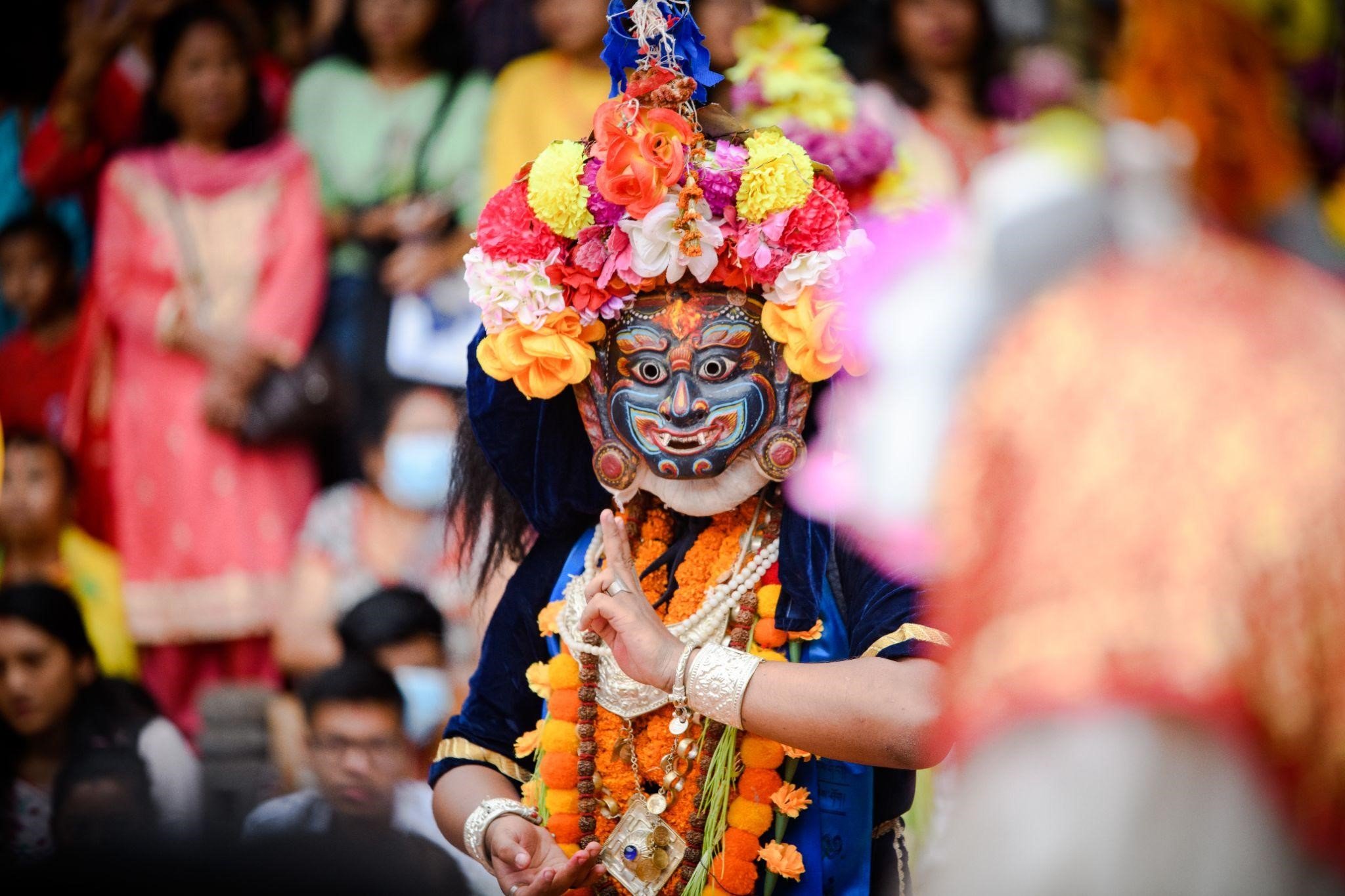
Devi Nach (masked dance): Held on the same day as the great festival of Indra Jatra in Kathmandu, this famous masked dance is said to have its origins in Panauti. During this vigorous dance, deities, demons, animals, etc. are depicted through colorful masks.
That’s it then, you now know a lot about one town in the Kathmandu valley; you know how many temples there are in this town, which was our starting premise, if you remember, for this article. You’ll appreciate this knowledge all the more when you realize that it is next to impossible to keep count of temples and shrines in other comparable towns in the ‘Valley of the Gods’!