
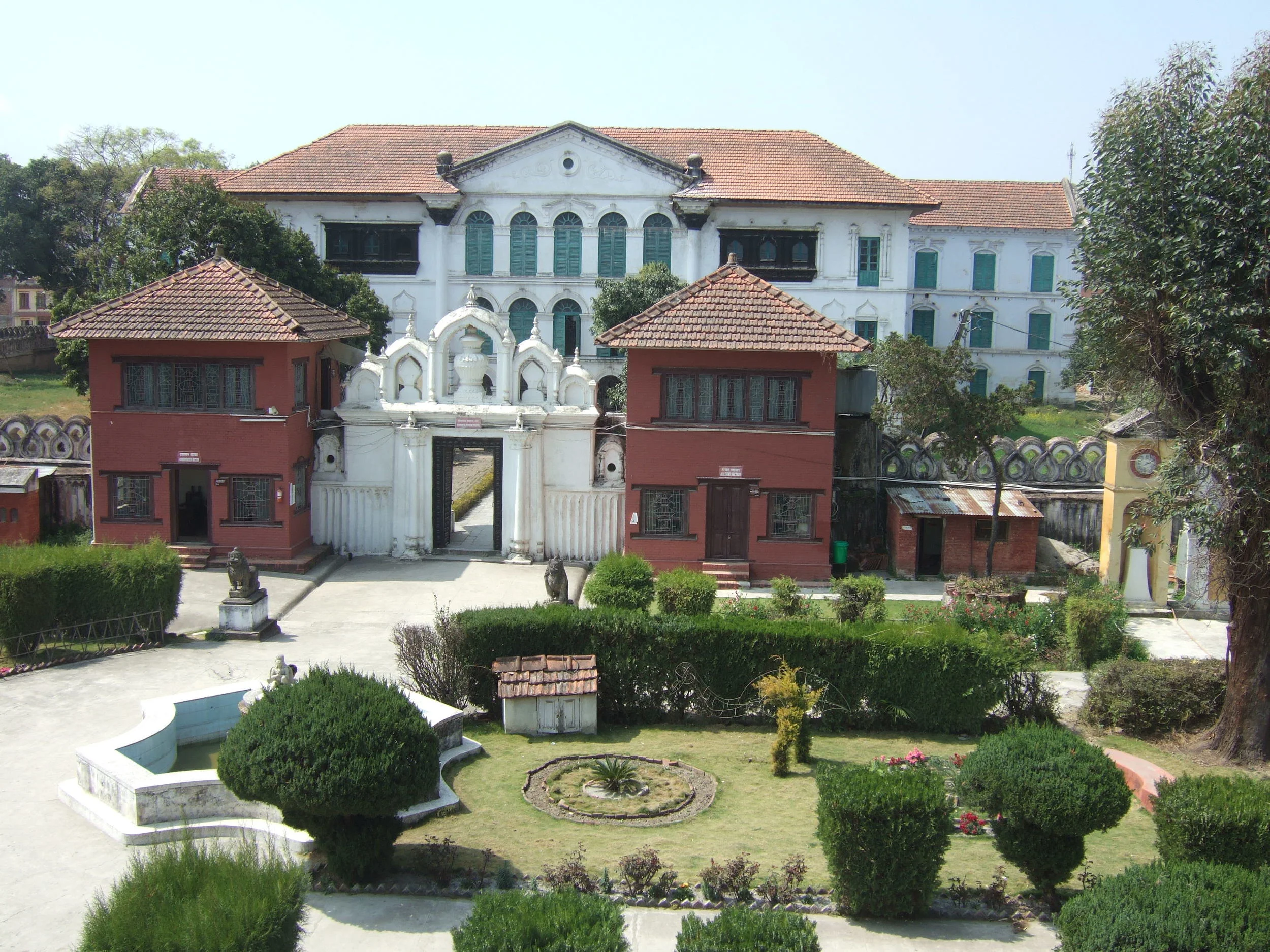
Window to History, National Museum’s Hall of Sculpture
The National Museum’s Hall of Sculpture is a treasure trove of priceless antiques that provide a window to Nepal’s fascinating history.
‘Samvat 107 sri paramadeva pka maharajesu jayavarmma’—this inscription on the base of a life-sized statue unearthed in Maligaon of Kathmandu in May 1992 created quite a stir. Experts finally deciphered the statement as: ‘The year 107. Among the Kings, the Fourth, Late Sri Jayavarmma.’ They also dated the statue as from the 2nd century A.D., which made it the earliest statue with Licchavi period inscriptions found in the country. Quite a find, no doubt—today, it stands tall in the Hall of Sculpture of the National Museum in Chauni, Kathmandu.
The National Museum was established in A.D. 1928 but opened to the public only in 1938. It is a treasure trove of priceless antiques that provide a window into the fascinating history of Nepal. The Hall of Sculpture is but one part of the whole, but it is such as to keep a visitor spellbound for hours on end, so varied are the collections, and so ancient the sculptures. For those with interest in pursuing knowledge, this Hall is a source that will be highly appreciated. For example, this is what you’ll learn immediately on entering its doors: “The earliest stone images are recognized with their distinct stylized features. These features are displayed in the form of the plain halo, very fleshy body, cupped varadamudra (hand posture), zigzag and finely plated decorative folds of the garments, lack of sacred thread, minimal use of garments and ornamentation, and heavy earrings and anklets.”
Among the many stone and terracotta statues in the Hall of Sculpture, there are quite a few that stand out for sheer antiquity, while other stand out for the high quality of their craftsmanship. A major antique is the headless figure of Yaksha, which was found in Handigaon and has been dated 1st century A.D. According to some experts it is a figure of Bodhisattva, while others say it may be an incomplete figure of King Jayavarma. Whatever the case may be, it is the earliest stone image found in the country. Other really ancient pieces are the figures of Matrika (a.k.a. Harati) from the 1st century A.D., Kumbha (goddess of prosperity) dated 2nd century A.D., and Yaksha Yakshini, dated 1st/2nd century A.D. Keep an eye out for the figures of Simhevahini Durga (13th century), Sri Krishna (13th/15th century), Surya (13th century), Garuda (16th century), and Uma Maheswara (20th century), which are beautifully sculpted.
In an adjoining room, you’ll come across various terracotta figures: make a note of the various mother goddesses of Kathmandu Valley: Brahmayogini, Shailaputri, Chandraghanta, Vaishanvi, Kusmanda, Bhavani, Maha Gauri, Chamunda, Kali, and Varahi. These are indeed masterpieces. Next, you carry on to the metalwork section which consists of mostly bronze figures. The first objects you’ll come across are sleek figures of Kumari, Tara, Aparamita, Shaileswari, and Lokeswara, all dated 19th-20th century. Then there are the 20th century statues of Jogini, Uma Maheswara, and Mahisasur Mardini; the last one, especially, a work of high caliber.
In the middle of the room are bronze figures that could well excite excitable minds; these are the statues of different Samvaras, each with a shiny erect phallus that thrusts out provocatively. Mahesh Samvara, Nara Simha Samvara, and Vrish Samvara are from the 17th-18th centuries, while Simhamukha Kamabhairava is from the 14th century. Another 14th century figure, that of Sukhavara Samvara, is pretty graphic, portraying a lovely beauty with her legs clasped around the waist of the beastly Samvara. Here, it would be pertinent to point out that Samvara is a fierce protective Buddhist deity whose consort is Vajravarahi.
You’ll probably spend some time gazing at these fantastic figures, but after a while you got to move on, since other visitors might start looking at you somewhat quizzically. Anyway, the next thing your eyes will alight upon is a large and beautiful 18th century figure of Bhairava with a torana above him. (Toranas are semi circular, carved wooden (sometimes metal-plated) structures found over temple doorways.) The next figure you’ll encounter is that of Nagakanya (20th century) seated on makara (alligator) under a nine-headed serpent canopy. Besides this are two 17th century figures of a Malla king and queen. It must be said here that the Malla dynasty (12th century-18th century) was a golden period for art, craft, and culture in the valley.
A small but beautiful figure of Surya and a 17th century Nagapasa (11 coiled serpents), along with another 17th century figure of Nagapheni (seven-headed serpent) are also captivating, as is the statue of Vishnu with a lotus arising from his abdomen (16th century). Further along the room are displayed a Buddha head and a replica of the famous Krishna Mandir of Patan, and a finely detailed 20th century figure of Viswarupa, which can be said to be one of the most outstanding bronze works in the gallery. Now, your eyes will probably be assailed by a huge 19th century Hayagrib Lokeshwara Swagata Mandala that’s enmeshed with many semi-precious stones. Next, you come across a large and lovely figure of Mahisasur Mardini (12th century) and alongside, a beautifully sleek figure of Queen Lalit Tripura Sundari (early 20th century), a powerful historical figure who was the acting regent of Nepal from 1806 to 1832. Similarly, there’s another regal statue, that of King Bhuatindra Malla (1696 to 1722) that’s also pretty good.
All in all, a tour through the Hall of Sculpture is a delight to the senses, and a testimony of the skills of the valley’s artisans. So, make it a point to pay a visit to the National Museum during your tour to Nepal.
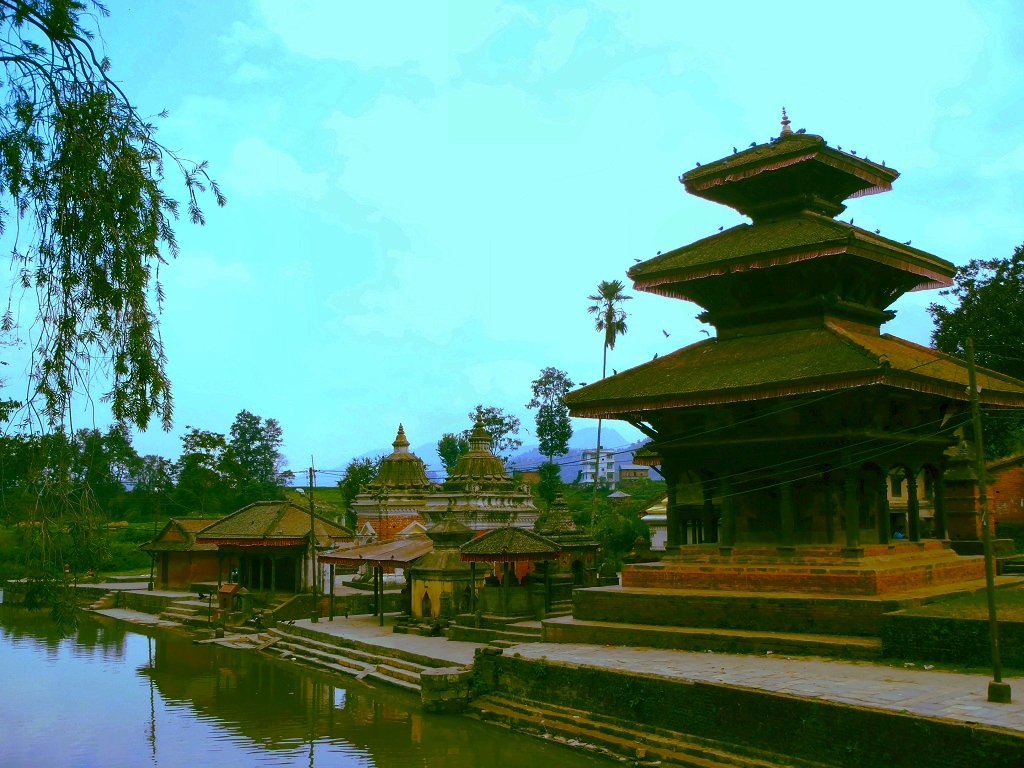
Panauti, Town of Temples, Festivals, and Yomari
It is the fourth most important heritage town in Nepal, after Kathmandu, Patan, and Bhaktapur. It is also where yo-mari was born.
“There are nearly as many temples as houses, and as many idols as inhabitants.” These were the words used by British emissary Colonel William Kirkpatrick in 1811 to describe Kathmandu Valley in his 'An Account of the Kingdom of Nepaul'. In those days, some other travelers/academics had even stated that, in Kathmandu, there were more shrines per square kilometer than anywhere else around the globe. Does this statement stand true today? How many shrines are there in Kathmandu Valley, exactly? Interesting questions, one would think, and pretty difficult to answer. One source has conjectured the valley as having 2500 shrines and temples. Well, it’s one number: how near the mark it is, or how ridiculously far from reality, is something for the more curious to dig out. For now, let’s talk about one place in the valley, Panauti, where we have a fairly accurate idea about the number of temples located in it.
Situated about 32 km southeast from Kathmandu, Panauti is the fourth most important heritage town in the country after Kathmandu, Patan, and Bhaktapur. It is one of three municipalities in Kavrepalanchok district, the other two being Banepa and Dhulikhel. Panauti is believed to stand on one massive rock, which is the reason that no earthquake till date has been able to inflict any damage on the town. How solid is this fact is another mystery to be discovered by the more curious. Anyway, coming to the number of temples in this earthquake-proof town, the number is a little more than forty. Now, you have to look at it in the correct perspective: the town is only one kilometer long, so it’s a large number, you’ll agree.
A 15-minute walk on an uphill track to the north east of the town takes you to Gorakhnath Hill (2000 ft), from where you’ll notice the peculiar fish-like shape of this small town, which is not even a kilometer in length from east to west. You’ll also observe the profusion of pagoda-style temples. Two rivers, the Roshi and Punyamati, flow from west to east and converge at the town’s eastern end, that is, at Triveni Ghat, which has a score and more temples dedicated to various gods and goddesses, including Badrinath, Kedarnath, Bishwanath, Tulsinath, Mukteshwor, Shiva Narayan, Madhav Narayan, Brahmayani, Saraswoti, Krishna, and Ram, Sita, and Laxman.
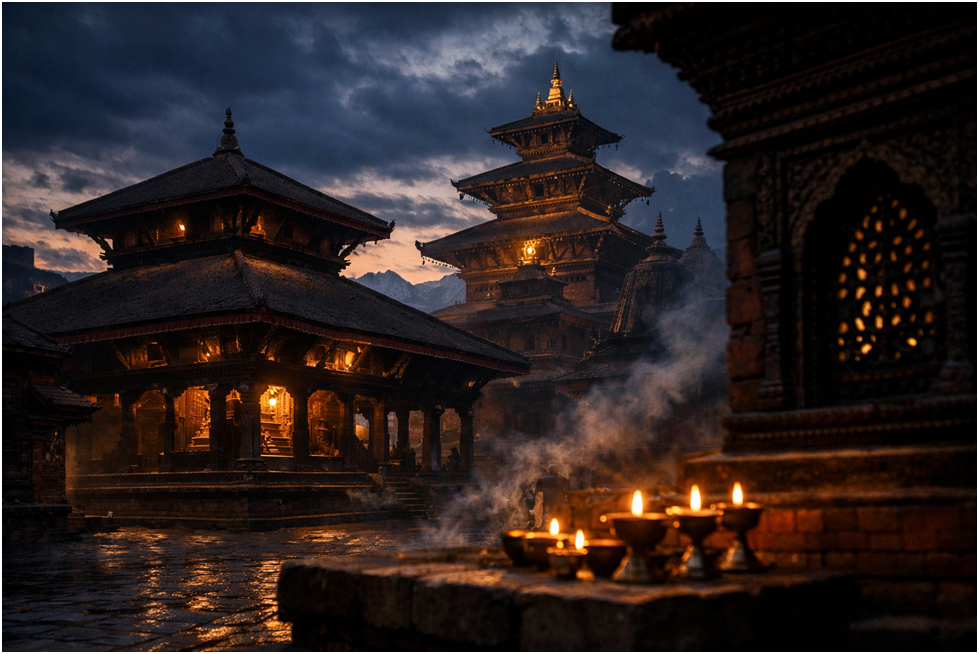
One of the more eye catching temples (a classic example of Newari craftsmanship) is the three-tiered Indreshowr Mahadev Temple, which stands in the center of a large brick-paved courtyard. Its elaborately carved wooden windows, doors, struts, and beams are testimony to the skills of the valley’s Newari artisans, and these are also very much evident in the other temples located in the same courtyard, that is, Unmata Bhairav, Krishna, and Ahilya Temples. Across the Punyamati River are still more temples, two of which, Brahmayani and Krishna Narayan, are especially noteworthy.
Indeed, Colonel William Kirkpatrick could well have been describing Panauti when he wrote, “There are nearly as many temples as houses, and as many idols as inhabitants.” Made of terracotta, the pagoda-style temples have gilded roofs and lots of beautiful wood carvings. The courtyards around the temples are generally spacious. Aside from the Hindu temples, there are half a dozen Buddhist stupas, three dyo-chens (communal houses with a deity on the top floor), and a bahal (Buddhist shrine). Also scattered around the town are a number of patis (public resting places), dabalis (where dramas and dances are held), dhunge dharas (stone water spouts), and chowks (public squares)—all very much in character with a traditional Newari town.
Panauti has a lot going for it as a touristy heritage site, one that has the added charm of being surrounded by lots and lots of green paddy fields. It also has its fair share of historical glory. One such glory is yo-mari, a delectable ethnic Newari delicacy made once a year during a festival called Yomari Punhi. Made from a mixture of treacle and sesame seed wrapped in stupa-shaped rice dough, yo-mari was the result of an experiment with a fresh yield of rice by a local married couple many, many, years ago. Everyone in the village loved it and they named it yo-mari (tasty bread), which went on to become a valuable addition to Newari cuisine and culture.
Panauti is also the birth place of King Ansuverma, the greatest of the Licchavi rulers, as also of Prince Mahasatwo, who became a saint due to his great deed of supreme sacrifice in feeding a starving tigress and her cubs with his own flesh in the nearby jungle of Namobuddha. It is now one of the most sacred Buddhist pilgrimage sites in the country, and there’s a stone slab in which is etched the story of the prince and the tigress. While we are on legends, it must be mentioned here that, besides the Roshi and Punyamati Rivers, it is said that there is another, the Lilawati, which flows into the above rivers. However, it is not visible to ordinary folk, rather, you got to be among the awakened to be able to see it!
Well, reading all this, your curiosity must surely have piqued somewhat, and you’ll certainly want to visit this fascinating town. A town that has a lot of beautiful temples, and naturally, it must follow that there has to be a lot of festivals, too! Twenty-eight, to be exact; that’s right, there are 28 major festivals celebrated every year, of which many are the same as those celebrated throughout the country. Some are, however, unique to Panauti, and these include:
Jya Punhi (Panauti Jatra): Held in May-June, this boisterous festival is a three-day post-harvest festival, during which chariots bearing various deity figures are taken around the town, starting from the durbar square, and on the third day, the chariots are banged against each other. Lots of action, lots of spectators, lots of revelry, and perhaps, lots of inebriated chariot bearers!
Makar Mela: Held once every 12 years at Triveni Ghat, this month-long festival is well attended by tens of thousands of pilgrims from near and far who come to attain atonement for sins committed by talking a dip in the holy rivers.
Yomari Punhi: Held in December every year (this year, Dec 6) to celebrate Panauti’s great creation, the yo-mari, as also to thank Goddess Annapurna, the goddess of grains, for a fine harvest.
Namobuddha festival: Held to commemorate the great sacrifice of the noble Prince Mahasatwo.
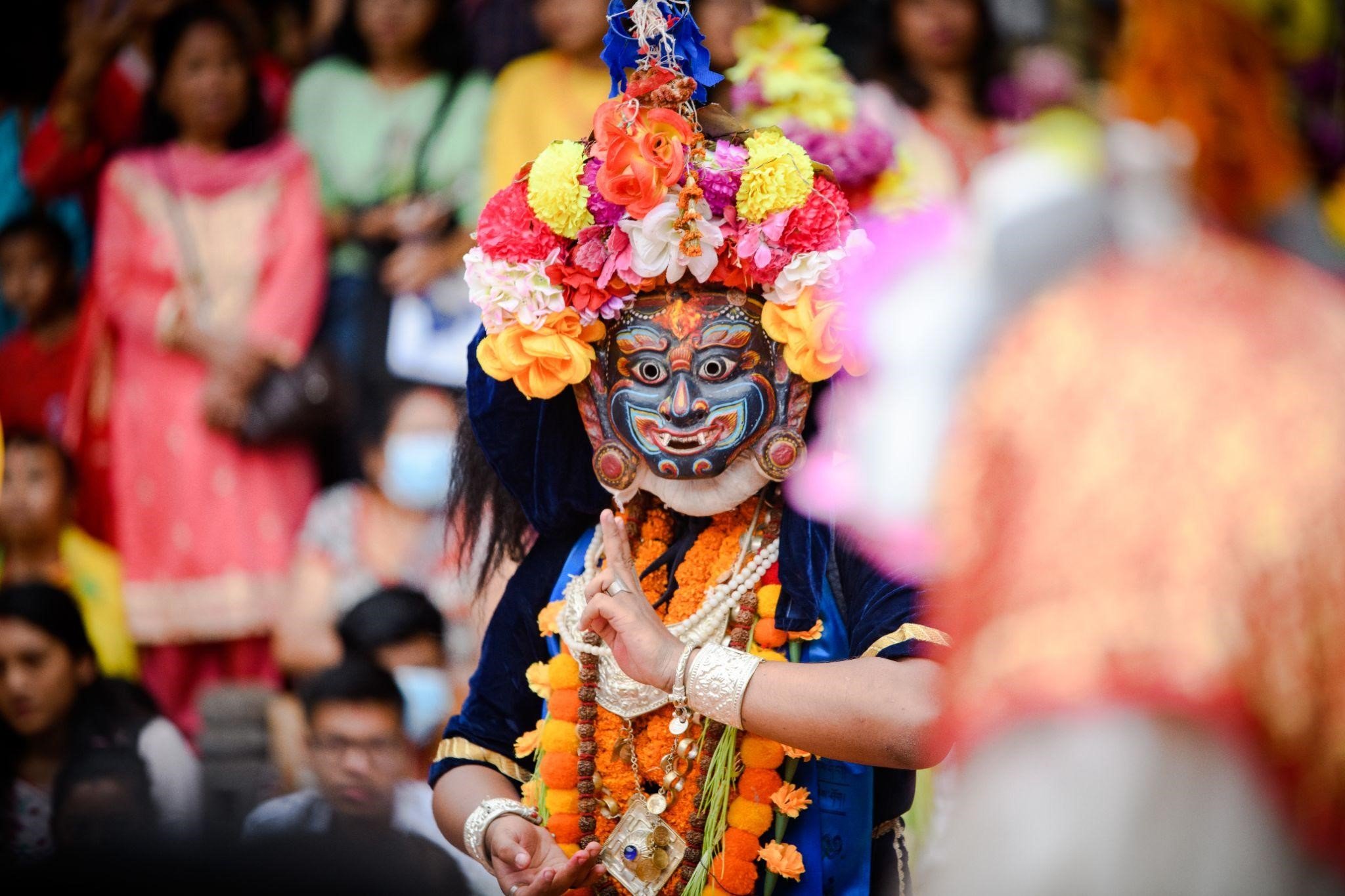
Devi Nach (masked dance): Held on the same day as the great festival of Indra Jatra in Kathmandu, this famous masked dance is said to have its origins in Panauti. During this vigorous dance, deities, demons, animals, etc. are depicted through colorful masks.
That’s it then, you now know a lot about one town in the Kathmandu valley; you know how many temples there are in this town, which was our starting premise, if you remember, for this article. You’ll appreciate this knowledge all the more when you realize that it is next to impossible to keep count of temples and shrines in other comparable towns in the ‘Valley of the Gods’!
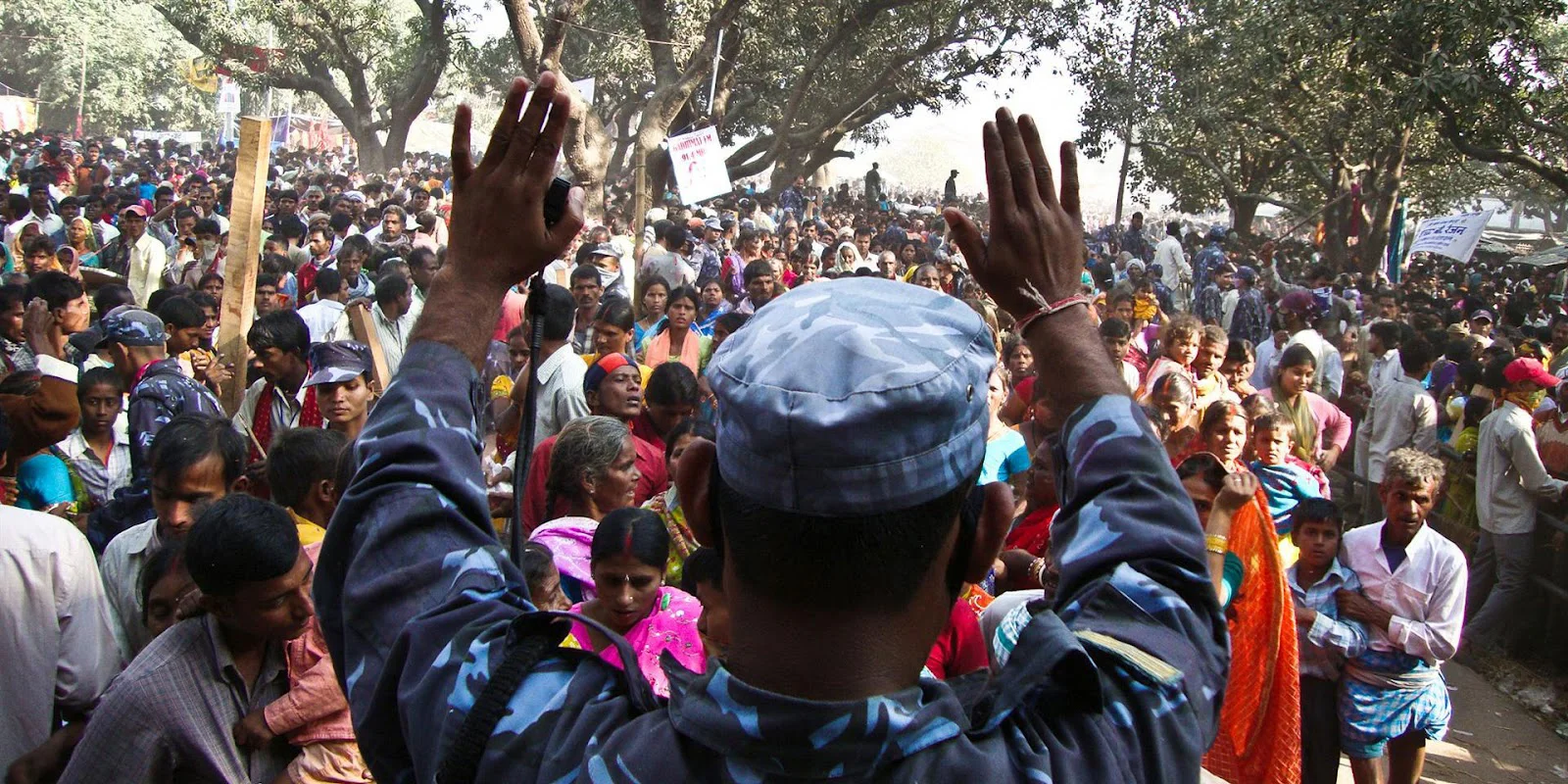
Gadhimai Mela, Slaughter Fest
The Gadhimai Mela may be a centuries-old tradition, but it has now gained notoriety as the largest sacrificial slaughter of animals in the world.
Sometimes, I like to while away time looking at old photographs, the older the better, which means invariably, black and white photographs. I was doing just that the other day, when I came across one which showed me as a small (perhaps 10-year-old) kid, standing next to a bullock cart on a dusty looking road in the countryside. A similarly-aged cousin was with me. A nondescript photograph at best, nothing special about it, but at the moment, it has acquired a completely new meaning, and has become one of the most meaningful photographs in my motley collection.
You see, it was taken during our trip to Bariyarpur from my hometown, Birgunj, to attend the then famous (now very infamous) Gadhimai Mela, a huge festival that is held once every five years in a small village called Bariyarpur some seven kilometers from Kalaiya, the district headquarters of Bara District in the Terai. I remember that our family (which was a relatively wealthy one) had traveled on half a dozen bullock carts; those days there were no metal-topped roads and very few motor vehicles, and I think we all had to do with hurricane lamps for light, since there was no electricity. Anyway, that photograph, today, brings back hazy recollections of large crowds, swirling dust, and the crescendo of noise of thousands of buffaloes, goats, and other animals. Somehow or the other, I have absolutely no recollections of the mass slaughter that must have taken place then, or perhaps we had gone a few days before the grounds became killing fields.
Now, today, there’s a lot of noise about the Gadhimai Mela, which has gained the notoriety of being the single largest sacrificial slaughter of animals in the world. This gruesome festival, which many declare to be inhumane and unnecessary carnage of hundreds of thousands of innocent farm animals, is justified by those who conduct it with a single phrase: to appease Goddess Gadhimai. Who is Gadhimai? Well, she is said to be a sister of Goddess Kali— yes, the very same Kali in whose temples hundreds of thousands of animals are sacrificed on Maha Asthami, the eighth day of Dashain, the biggest Hindu festival in Nepal that takes place every year around October.
However, Gadhimai Mela is in a class apart as far as sheer number is concerned in a single site, with about 250,000 different kinds of animals slaughtered in 2009, including 20,000 water buffaloes on the first of the two-day orgy of mindless violence. Although it is a month-long affair, with a carnival atmosphere all around the Gadhimai Temple, that began on November 15 this year, November 28 and 29 are the two days when around 250 ‘licensed’ killers will be entering the enclosure holding tens of thousands of male buffaloes (both big and small) and putting on a gory spectacle for the swarming crowds of eager spectators gathered around the ‘killing field’.
Expectedly, animal rights and other activists are up in arms, righteous in their anger and disgust, and the many photographs posted all over the internet are indeed gruesome to the extreme, with innumerable buffaloes lying in their own pool of blood, their heads decapitated from their bodies. And, among these bloody carcasses, fervent men with red bandanas around their heads brandishing long wicked looking knives, looking around for more ‘kills’. Reportedly, most of these ‘licensed’ killers are already quite high on alcohol before embarking on their unholy task. Of course, it is certainly not an unholy task for them, since they believe that they are fulfilling a religious duty, and in doing so, attaining the favor of Gadhimai.
The day of the slaughter is initiated with the sacrificing of five different animals (‘panch bali’: panch meaning five, bali meaning sacrifice)) to the goddess Gadhimai. These animals are: pig, buffalo, goat, rooster, and rat. Their throats are slit and their blood is sprayed all over the goddesses’ statue. More sacrifices follow in quick succession, with pigeons and ducks joining the ranks of the sacrificial animals. However, on the first day, it is the brutal slaughter of tens of thousands of buffaloes that is the center of attraction. Reportedly, some of the larger buffaloes are quite hard to be decapitated, and it requires the butchers to hack away many times before the head is severed from the body. The butchers take pride in achieving as many ‘clean’ kills as they can, that is, severing off the head with a single slash of the knife.
The second day, too, is a day when the ground turns a deeper red with the blood of hundreds of thousands of goats, chicken, pigeons, ducks, rats, and more buffaloes. Watching all this horrendous drama, and carrying along their own animals to be sacrificed, are crowds of people numbering in the hundreds of thousands. Reportedly, the last time around (that is, in 2009), the festival was attended by more than five million pilgrims. Now, imagine if you will: swarming throngs of excited people, innumerable milling animals (the large black buffaloes being the most conspicuous), roadside shops and eateries all over the place, fairgrounds with swings, different types of rides, and balloon sellers with large bunches of colorful balloons. Oh yes, for the uninitiated it will all seem like a great big fun-filled mela (carnival), but come November 28, and everything changes. The whole atmosphere becomes a frenzied one, and bloodletting becomes the name of the game.
An ironic fact about the Gadhimai Mela is that it is primarily a festival of the Tharu community, because traditionally, only someone from this community can be the priest of the Gadhimai Temple, and the Tharu community is known to be one of the most peace-loving of all communities in Nepal. Yet, every five years, they preside over a ‘mela’ that is now regarded with horror as the largest sacrificial slaughter of animals in the world. It’s not something that anybody would want to be associated with, and certainly, goes so very against the gentle character of the Tharu people. Something like the Gadhimai Mela is also not something that does any good to the image of a gentle, peace-loving country like Nepal.
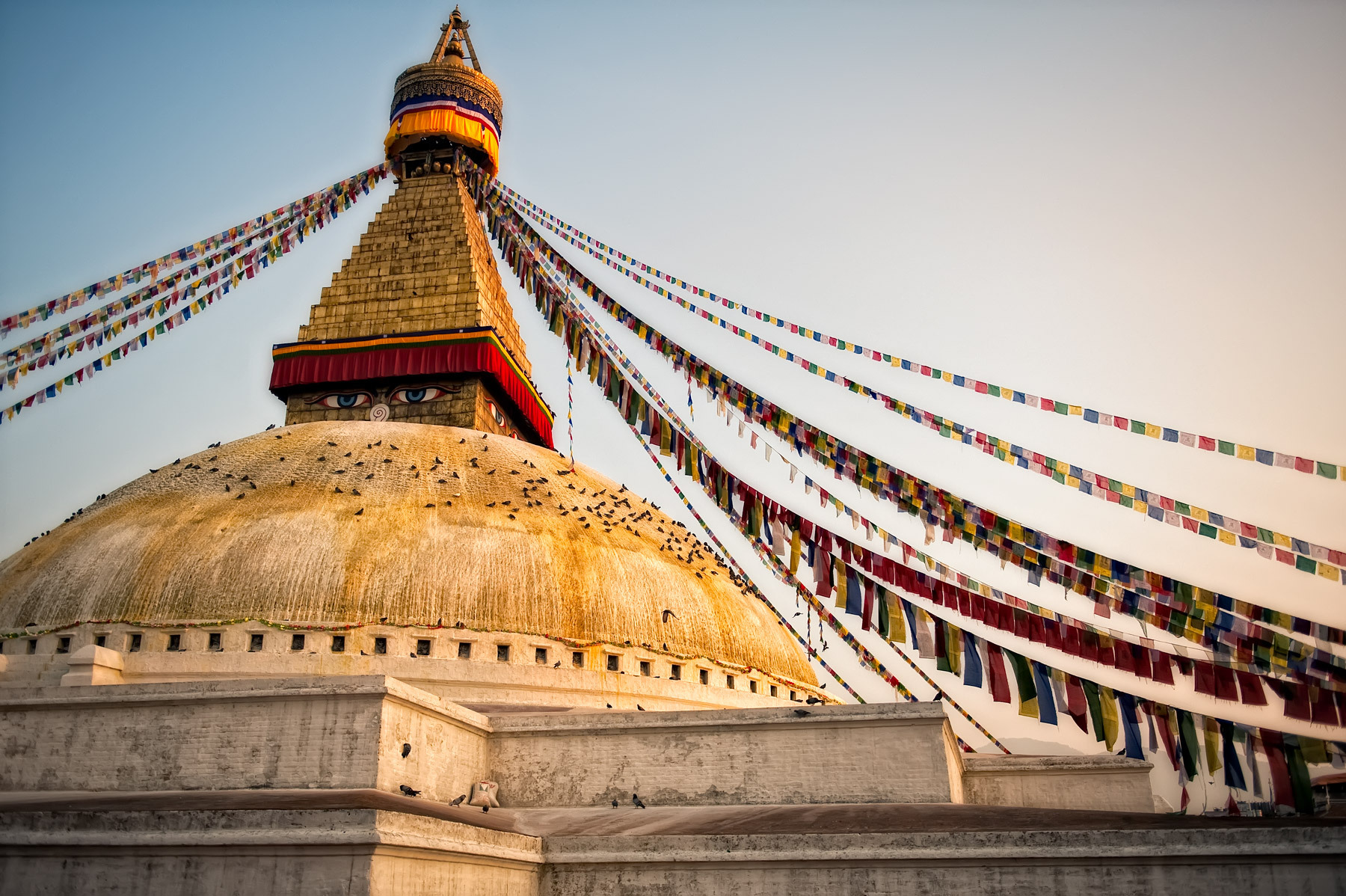
Lesser Known Facts about Nepal’s Most Famous Stupas
As expected of world famous shrines, Boudhanath and Swoyambhunath, too, have quite a few interesting stories related to them.
It is common knowledge that Boudhanath Stupa is one of the largest stupas in the world, measuring almost 100 m in diameter and 40 m in height. If you get to visit the Patan Museum in Patan Durbar Square, you’ll be able to see comparative models of various stupas (a.k.a. chaityas), that form part of a comprehensive exhibit on the stupa,mand you’ll be surely struck by how Boudhanath stands out from the crowd. Indeed, whether it is the model or the real thing, this world heritage monument is a magnificent sight. Not only that, the area in which it is located, that is Boudha, was once almost like a kingdom in itself. Here’s the story.
In 1853, when the Sino-Gorkhali war was coming to its conclusion, peace discussions were proposed and agreed to by both the warring parties. On the Gorkhali side, Prime Minister Jung Bahadur Rana wasn’t too comfortable at the prospect of going into peace talks without an able interpreter who could speak both Nepali and Chinese. On asking around, he realized that there was a Chinese man called Taipo Shing living in the Boudha area. He was a Szehuanese Nyingampa Buddhist, who had, during the course of a pilgrimage, ended up at Boudha, a place he decided to henceforth call home. Taipo Shing proved to be a capable interpreter and his work was appreciated all around. What’s more, he continued to do a lot of good work in and around the Boudha area, and in 1859 he was rewarded with the abbotship of Boudhanath Stupa, the pride and joy of Boudha, and the holiest of all Buddhist shrines in Nepal. It was a high honor, indeed!
Taipo Shing thus became the very first Chini (Chinese) Lama of Nepal, and he further consolidated his power by marrying the daughter of Jung Bahadur’s favorite concubine. In addition, his power was made all the greater by the Dalai Lama appointing him as his consul to the Kingdom of Nepal. Subsequent head abbots of Boudhanath Stupa, even if they were not Chinese, came to be known as Chini Lamas, a term that is reserved only for the head abbots of Boudhanath Stupa. Because of their high standing, the earlier Chini Lamas (from the mid-19th century to the time of Punya Vajra (1886-1982), the third Chini Lama, Boudhanath’s stature as a major Buddhist pilgrimage site grew to significant heights.
After Punya Vajra’s death, the running of the famous stupa became the responsibility of a committee (guthi), the members of which were mainly families and descendants of Tamang disciples living close to the stupa. One of the better known descendants (reportedly, the fourth son of a Chini Lama) is the renowned photographer Mani Lama who has carved out a name for himself both nationally and internationally as an accomplished photographer of art, landscape, travel, wild life, portrait, etc., as well as for his many documentaries. If you are in Boudhanath early in the morning, look out for him, because obviously, Boudhanath is his favorite haunt, and he has said that he never gets tired of capturing the different moods of this world famous site. So, you might well get to meet him there, a genuine descendant of a Chini Lama!
Not many people know all this about Boudhanath, and it provides fascinating insight into the history of Nepal’s holiest Buddhist stupa, and one of the world’s largest. Now, what’s there about the other world famous stupa, an icon in its own right, that is, Swayambhunath Stupa, that’s quit off the beaten track, something not many have any inkling of? Here’s what few know—this iconic stupa, situated on the top of a conical hill, was once in very real danger of slipping down the hill. Towards the end of 1978, architect John Sanday received a distress call from UNESCO while he was in England. Sanday was a consultant to this august organization, and had shown his mettle in and round 1972, when he was in charge of restoring Hanuman Dhoka in time for Nepal’s event of the century, that is, King Birendra’s coronation.
The missive Sanday received from UNESCO was that Swoyambhunath Stupa could slide down the hill from where it towered over the valley, because the top of the hill was apparently shifting this way and that! UNESCO was deadly worried, the magnificent stupa was something dear to their heart, and since they had designated it as a world heritage monument, it was their responsibility, too, to ensure its safety. Sanday, their able consultant, had already earned quite a reputation as a restorer par excellence, and he immediately set about doing his bit, which, as it turned out, was fraught with danger. He and his team began the sensitive work of excavating below the two conspicuous towers to see what the situation was with the foundations. It was a ‘frightening excavation’ for Sanday. However, they kept on digging, and went down to almost 25 ft before reaching the bedrock.
What they discovered was that the foundations were based on a ledge, which meant that if something wasn’t done soon, the risk would always be there of ‘slippage’; a simple enough term, but full of risks when applied to the foundations of a huge monument like Swoyambhunath Stupa. In fact, what Sanday realized was that the huge monument had always been in danger ever since the time it was built because of the faulty foundations. Corrective measures followed the ‘frightening excavation’, which resulted in giving this most ancient of all holy shrines in Nepal the stability and poise to once again preside over the whole of Kathmandu Valley from its lofty abode. Hail Sanday! Hail UNESCO!
Discover New Wonders in Lalitpur
No matter how little time you have, do not miss visiting Patan Industrial Estate when in Lalitpur; it’s a proper hotbed of artistic splendor.
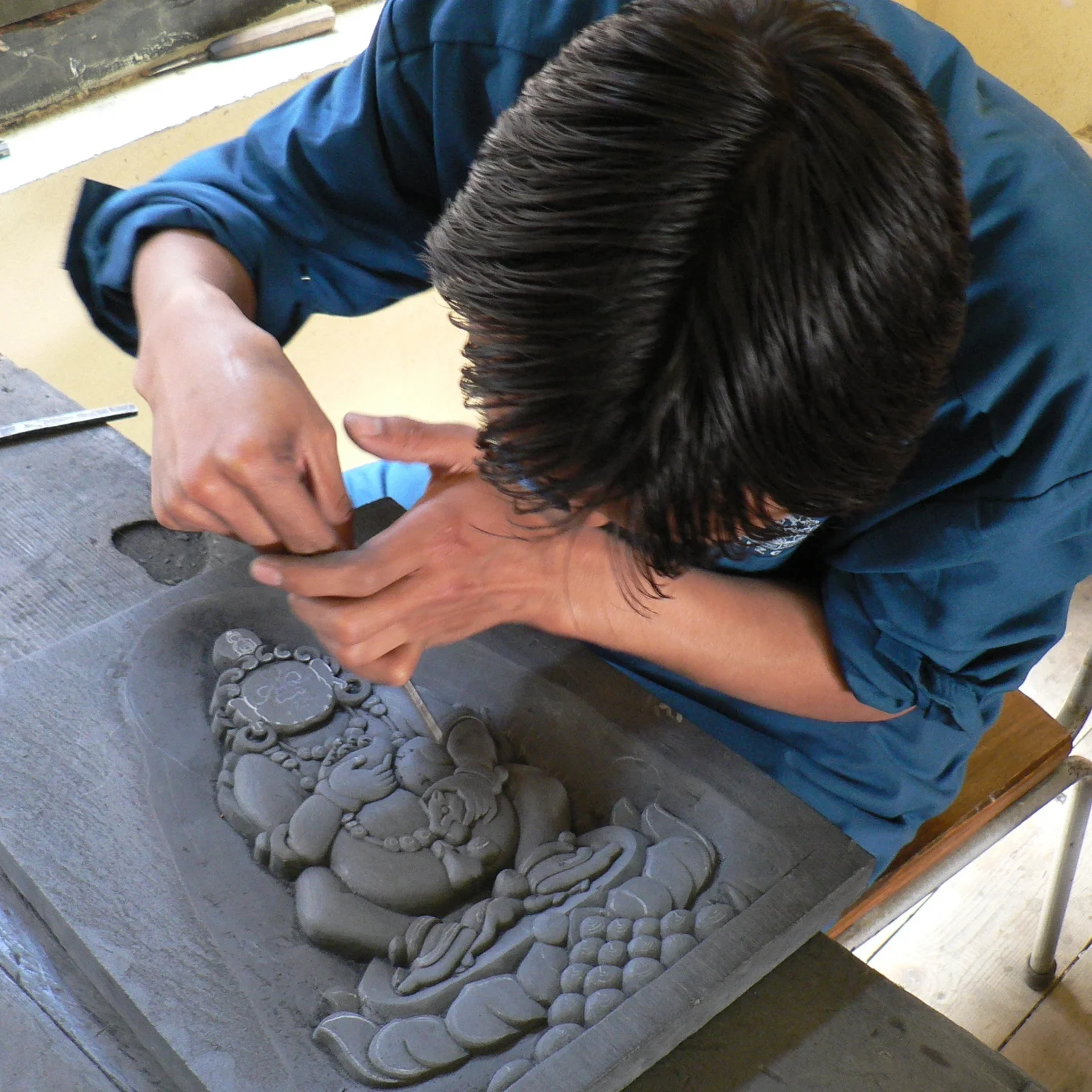
When you are visiting Patan, do not—I repeat, do not—miss out on a tour of the Patan Industrial Estate. It is a large sprawling area with hundreds of handicraft establishments where you’ll be able to see the fabled artisans of this “City of the Arts” practicing their ancient crafts. You’ll see stonecarvers chipping away at mammoth blocks of stones to bring them to life in the form of sacred deities, many of which, when finished, will need the help of huge cranes to be transported to their destined sites—perhaps a high hilltop? perhaps a meditation retreat? You’ll see woodcarvers focused totally on carving intricate designs on massive wooden windows destined for some exotic destination—perhaps a hotel in Lhasa? in Beijing? And, you’ll see metalsmiths crouched over huge 100 kg bronze bells, etching out elaborate patterns around the rims; all of them ordained to become a major part of temples and shrines all over the country.
Sometimes, time is of the essence, and a bit of luck comes in handy as well, since you can’t always predict when you’ll be in Nepal, and by the time you are in Patan Industrial Estate, somebody may inform that you about a huge work of art that has been moved just the other day to some far-off site that could be days away. Take, for example, the case of the 3000 kg bronze bell that used to hang next to the doorway of the famous maker of bells, Nepal Dhalaut Udhyog. Well, even today, if you ask for directions to the establishment, most people around will tell you that there’s a massive bell hanging out front. If you go by their words, you’ll be searching forever, because it isn’t there anymore; it was moved some months back to the Muktinath Temple in Bhaktapur. Anyway, aside from all that, imagine what a boost this temple must have got with a 3000 kg bell out front!
The famous bell makers also make other metal sculptures; if you go now, you’ll see a couple of enormous lion-heads made in the Chinese style; you know, the kind you see during those elaborate Chinese festivals, except in this case, they are made of bronze and weigh 500 kg each! Generally, the bells displayed around the place are of three sizes: 25 kg, 50 kg, and 100 kg. It should interest you to know that most of the metal craft are made by craftspeople of Okubahal, a locality near Patan Durbar Square, which, for generations, has spawned the most accomplished metalsmiths of Kathmandu Valley. Actually, this is a unique feature of the “City of the Arts”—each of the old localities is renowned for some particular craft.
Sundhara and Bhinchebahal being two such localities that have most of the remaining 15 or so families involved in stone carving, some of whom you’ll find chipping away at blocks of stones more than 10 feet high at Arnico Stone Carving in Patan Industrial Estate. Now, if size is your thing, as it’s for most ordinary folks, then don’t waste time; they’re in the process of sculpting a 32-ft 40-ton Shakyamuni Buddha statue for a monastery in Mustang of western Nepal. The head alone is going to be six-feet-tall! It’s a commission that has been going on for more than a year already, and will probably take another year or so to be completed. Still, it’s a wondrous experience to see those tough stone carvers chiseling away at the lifeless and implacable blocks of limestone, not knowing how successful they will be in carving out the correct proportions at the end of it all.
However, one can be fairly confident that it’s going to be a great work of art, going by the finished 18-ft tall 10-ton statue of Ganesha that stands out in front. It’s a fantastic work of art, no one can doubt that. In fact, one gets the feeling that it is just waiting for somebody really knowledgeable, and with clout in the world of art, to declare it a ‘masterpiece’. The proportions are lovely, and the aura this colossal Ganesha imparts is such as to make one stare at it in awe for quite some time. But, be warned again, time is of the essence, because it will soon be travelling to far off Tansen, and then there goes your chance to see a modern day masterpiece in stone, the kind Michelangelo would have been proud of. Remember, also, that stone carving is the toughest and most demanding of all crafts, so the number of stonecarvers is on a steady decline. All the more reason to make a beeline for Arnico Stone Carving at the earliest possible opportunity!
Now, about those windows meant to decorate some hoity-toity hotels in Lhasa, and maybe Beijing; well a score and more woodcarvers at Purna Woodcarving Industries are hard at work on carving out a complete set, meaning, maybe a score or so really large-sized wooden carved windows. You’ve seen plenty of such Newari style windows all over the valley; in many hotels, houses, temples, and so on. But, take it from me, you might not have seen the kind they’re making here, certainly not such huge ones. One can only imagine how immense must be the size of the hotel they are being built for! The carvings are, as expected, top-notch, and how couldn’t they be? After all, most of the woodcarvers are from Bungamati, a small nearby village where almost each and every household has been involved in the woodcarving business from time immemorial.
With so much ancient skills handed down through the generations, in stone, in metal, in wood, is it any wonder that the Patan Durbar Square—where many of the best examples of such work are on perpetual display—is a world heritage monument? Which is very fine and all that, but why not take that extra step and grab the opportunity to see the very creation of such magnificence, such splendors?
Boosting Hindu Pilgrimage Tours in Nepal
Nepal was once the only Hindu Kingdom in the world, No more can it be said to be so, however, it is still the world’s leading country for Hindu pilgrimage tours.
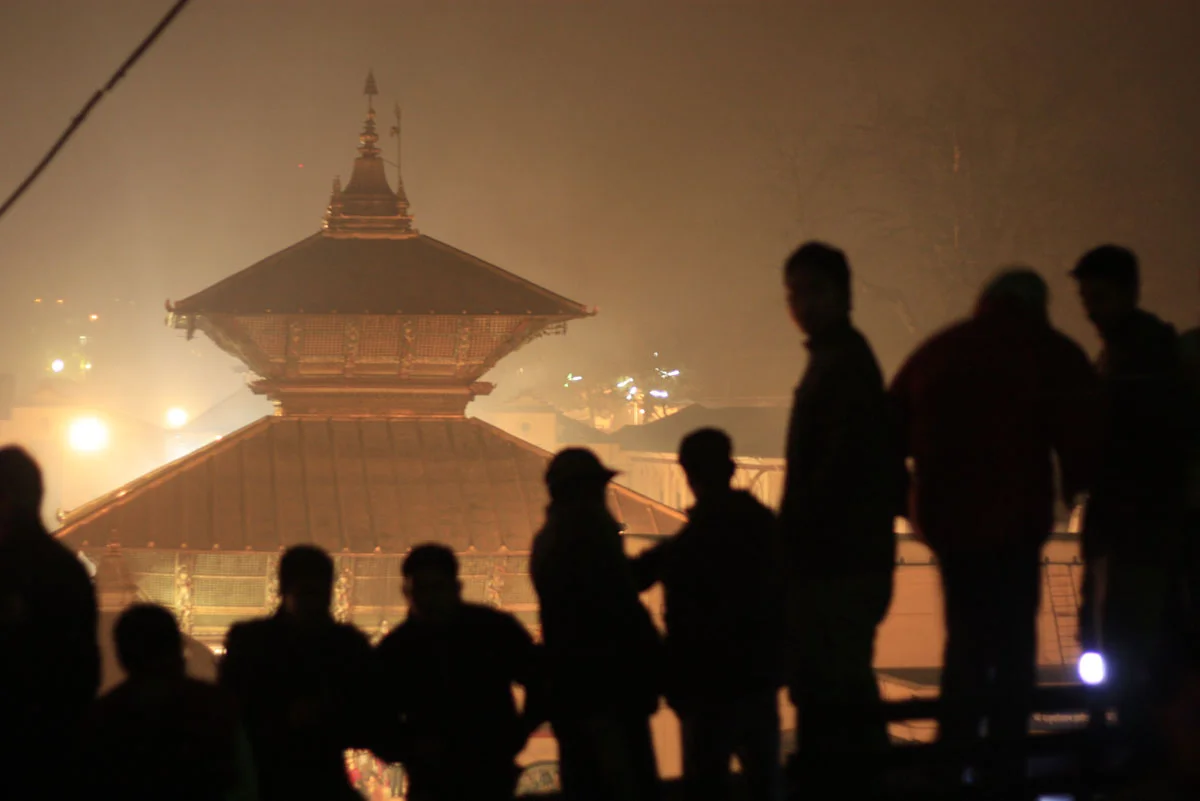
In the last six months, one South Asian leader who has been grabbing accolades by the bushel is India’s Prime Minister Narendra Modi. In a short earlier visit to Kathmandu, his first order of business was to pay respect to Lord Shiva at Pashupatinath Temple. Those in the tourist business here say that, since then, there has been a dramatic increase in visits to this famous temple by Hindu devotees, particularly those from India. “For Indian tourists, a visit has now become mandatory,” says one travel operator. Of course, this most magnificent of pagoda style temples, and Nepal’s holiest Hindu shrine, has always drawn a continuous stream of devotees, but now, as they say, the stakes have doubled!
Well, the charismatic leader is coming back once again, this time to attend the SAARC Summit later this month, which is being held in Kathmandu. But trust him to do something news-grabbing once again! This time, he has announced that he will be coming by road, and that he wishes to visit Janakpur first before flying on to the capital. Janakpur is the birthplace of Goddess Sita (a.k.a. Janaki, daughter of King Janak). Janakpur, or Janakpurdham, was once the capital of the Mithila kingdom, and it is about 400 km from Kathmandu. The Janaki Temple is the focal point of the town, and the white plastered three-storied temple’s design is a mix of Muslim and Rajput architecture. It was made in 1910 by General Amar Singh Thapa.
Janakpurdham features prominently in Ramayana, one of the two most popular epics of Hinduism, the other being Mahabharata. This was where many princes once gathered from far and wide to try and win the beautiful Princess Sita’s hand. King Janak threw down the challenge that only the prince who could lift and string the legendary ‘Shiva’s Dhanush (bow)’ would be the one worthy of being his daughter’s husband. None of the strongly built powerful princes could as much as even nudge the fabled bow from its resting place. Finally, only the dashing young Lord Ram of Ayodhyaya remained. Not only did he lift it and string it without much effort, so strong was he that the bow broke into two as he was stringing it. Janakpurdham has many more such fantastic stories that have become part of the local culture. Well, not that it is not already a major site for pilgrims on a Hindu pilgrimage tour to Nepal, but expect it to get substantially added mileage now after Mr. Modi’s visit!
There’s more. After the Summit, he will be visiting Lumbini, birthplace of Lord Buddha, and then the equally revered Muktinath Temple in Mustang district. Now, Lumbini has developed into an international Buddhist pilgrimage site, with scores of Buddhist countries vying with each other to create the most beautiful stupas possible. Interestingly, it was PM Modi himself, who, by publicly stating in the Nepal Parliament that Lord Buddha was born in Lumbini, laid to final rest the controversy about Buddha being born in some other place in India. With this settled, efforts have magnified a hundredfold now to make Lumbini the world’s focal point of Buddhism.
As for his tryst with Muktinath in Mustang district, sad to say, tragic news has preceded his planned visit, the district having witnessed its most terrible loss of lives, both national and international, in an unprecedented blizzard in October this year that resulted in at least 39 deaths of trekkers, guides, and porters trekking on the popular Annapurna Circuit, of which Muktinath Temple is a part. Sacred to both Hindus and Buddhists, Muktinath has been touted for its three ‘wondrous miracles’. First, the ever-flowing icy cold water that is believed to originate from the sacred Lake Mansarovar in Mount Kailash that is channeled through 108 carved spigots behind the Vishnu Temple within the complex. All pilgrims take a running shower under all the 108 spigots to cleanse themselves of sins committed in their lifetimes. Should be a great TV opportunity when PM Modi does the same!
The other ‘miracle’ is the presence of saligram fossils, which are regarded as sacred representations of Lord Vishnu by Hindus, and as the serpent deity, Gawo Jogpa, by Tibetan Buddhists. Saligrams are black ammonite fossils that date back more than 165 million years, when the Tethys Sea covered this entire area, and eons before the Himalayas were formed. The miracle is that such ancient sea-creature encrusted fossils are found so high in the Himalayan region. Hindus say that where there is a saligram, there will be Lord Vishnu. The third ‘miracle’ is the presence of two small fires in Jwalamukhi Temple, south of Vishnu Temple, that appear to burn naturally and continuously. One burns from the earth, while the other burns inside a tiny spring of water.
Before, one had to walk many days to witness these ‘wondrous miracle’, but now one can drive right down to Muktinath from Jomsom, so it’s become very popular with both young and old, the fit and the not-so-fit. After all, one is absolved and gets mukti (liberty) from all sins committed by going there, so why shouldn’t everybody? And, now with the TV channels most probably preparing to show the ruggedly built PM Modi taking the ritual showers, Muktinath will be getting a pretty stupendous fillip, that’s for sure! By the way, who knows, all those cold showers might invigorate him so much that he might even go on to have a dip in the frigid waters of Damodar Kund that’s situated high up at some 5000 meters and has an interesting part to play in the story of Lord Krishna. I wouldn’t put it past the robust Mr. Modi to zip up there in a helicopter and take a brave dip, even if it’s only for a second or so!
Kartik Naach, Many Nights of Rousing Performance
An ancient dance/drama with few equals, the many tales enacted during the Kartik Naach by vigorous dancers keep spectators entranced and spellbound for hours at a time.
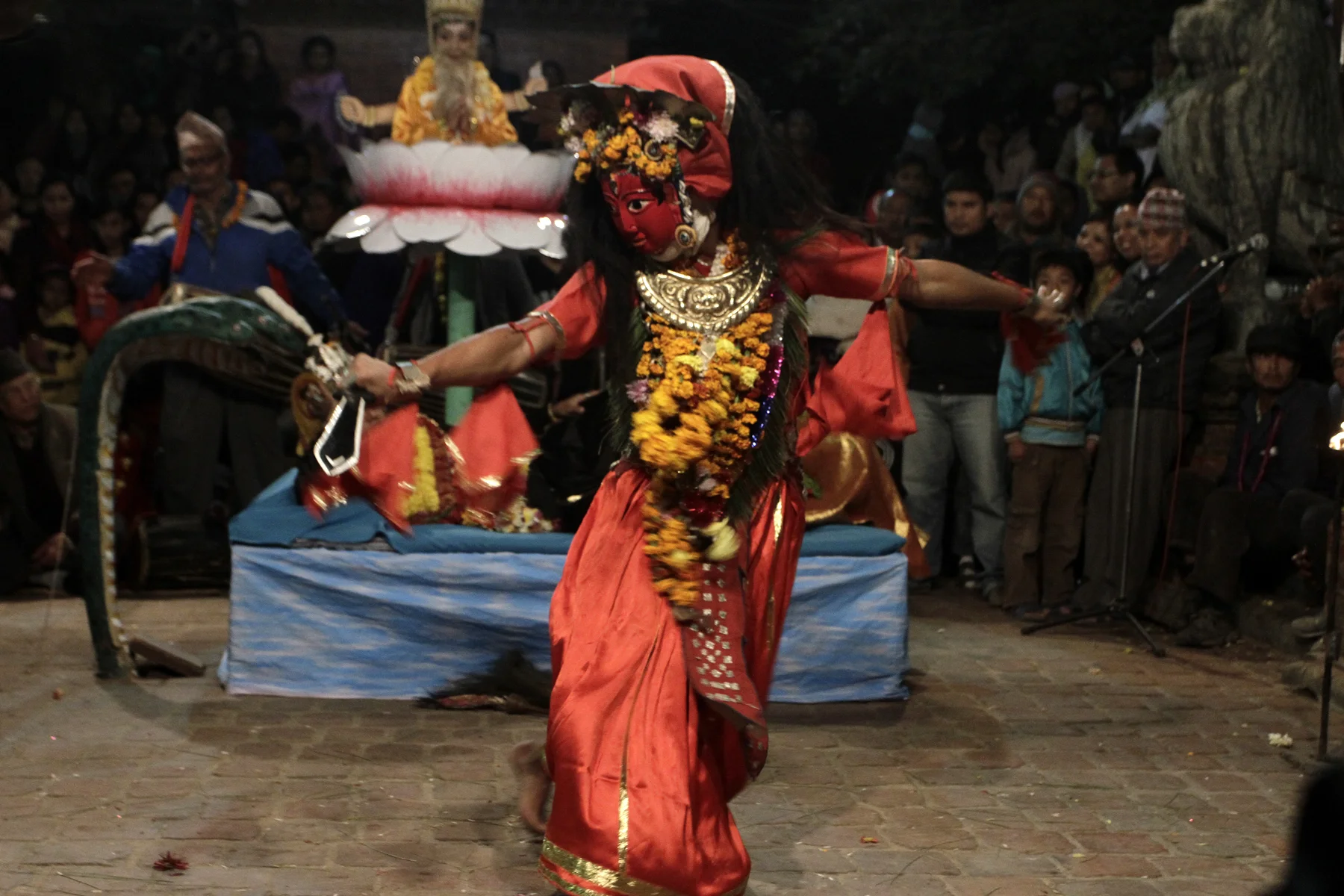
In Kathmandu Valley, the Malla Era (A.D. 1200-1769) was a period of great accomplishments in art, architecture, and culture. Besides the creation of many beautiful monuments, dance and drama, too, received a tremendous boost, and, dabalis (raised platforms for public performance of dance and drama) became the norm in many courtyards and squares around the valley. The contributions of King Pratap Malla (A.D. 1641-1674) were especially great, and his patronage of dance and drama was above the ordinary. In fact, legend has it that the king once had a dream about an epic battle between three goddesses and hordes of terrifying demons. It was such a wonderful dream that he wanted to share it with everybody. So, he ordered that his dream be enacted through a dance/drama performance which could be performed year after year for one and all. Thus was born the Mahakali dance, which enacts the tale of the goddesses Mahakali, Mahalaxmi, and Kumari and their valiant battle with demons. This famous dance is performed during the week-long Indrajatra festival in Kathmandu Durbar Square.
However, before Pratap Malla’s time, King Siddinarsingh Malla of Lalitpur (Patan) was an ardent patron of the arts as well, as were all the Malla rulers of the era. In A.D. 1641, he began the tradition of holding an annual dance/drama that would last eight days in the month of Kartik (Oct/Nov). Religious in nature, the Kartik Naach (Kartik Dance) would portray, through dance, the story of Narsimha (an incarnation of Lord Vishnu) as described in the Vishnu Puran. In 1723, his son King Sriniwas Malla added a week to the eight-day-dance by including comic portrayals titled ’Batha’ (‘Clever Man’) describing the antics of three cunning brothers, Gu daju, Sama daju, and Batha kija, with the last being the cleverest one of all. ‘Batha’ depicted the social realities of the times and had moral overtones.
Later still, Sriniwas’s son, King Yognarendra Malla, extended the days further so that now the Kartik Naach went on for the whole month of Kartik, except for three days of Tihar (one of the biggest festivals of Nepal, which also falls in Kartik). How was the extension made possible? Well, following his father’s lead, he, too, added a couple of new dramas, and these were pretty lengthy love classics. The month-long schedule was followed right till 1949, but from 1950, with drastic changes in the political system, it became just a two-day affair. However, in 1982, it again reverted to its original period, that is, eight days. Currently, efforts are being made to extend it to a month-long program, and this year, it is being held for 12 days (Oct 26-Nov 6). Certainly, this historic dance has a tremendous history, even if it’s a bit convoluted!
In the first chapter of the Kartik Naach, ‘Bhakti Surdas’, dancers enact the story of Surdas, the blind devotee of Lord Krishna, who gets blessed with sight, but fails the test of continued devotion by falling for an attractive maiden called Mohini. Finally, coming to his senses, he returns the gift of sight because he realizes that it is not needed to remain fervent in his commitment to the Lord.
The second chapter, ‘Sudama’, tells the story Lord Krishna’s childhood friend Sudama, who, after growing up, remains poor, while his friend moves into a palace. In desperation, one day, Sudama’s wife Sushila asks him to request his powerful friend’s help in getting out of their poverty. Reluctantly, at her insistent request, he goes to the palace and offers Krishna some chipped rice as a gift, which the latter eats with relish. When Sudama returns home, he finds that his hut has been transformed into a mansion, with many riches inside.
Following these chapters, the dancers enact various comic stories of the three cunning brothers (‘Bathas’): namely, ‘The Unfaithful Wife’, ‘Price of a Goat’, ‘Tricking the Brahmin’, ‘Selling the Earrings’, ‘Unfortunate Bathas’, ‘The Greatest Fool’, and ‘Crossing the River’ They are all folksy in nature and with a moral message at their end. And, of course, they are pretty funny. For instance, in the first story, the three brothers are forced to look for shelter one evening when on a journey. They enter the house of a man called Lanake, and pretending to be his relatives, manage to stay the night. The next day, when Lanake is in the fields, they espy a man called Matin kaji entering the house and dallying with their host’s wife, Punavati. Unfortunately for her, Lanake returns sooner than usual, and she rolls her lover in a carpet. And then follows a series of comic antics of the three brothers, who finally succeed in unraveling his wife’s unfaithfulness to Lanake.
One would think that these funny episodes are an interlude to the main story, which is that of utmost religious sentiment. But, hold on, there’s some love stories next (added by King Yognarendra): the first is ‘Madhavanal’, which relates the classic love story of Madhavanal and Kamukundala written by a renowned Indian poet, Gopal Kayestha. The second is titled ‘Usha Haran’, portraying the love story of Usha, granddaughter of King Bali, and Anirudra, grandson of Lord Krishna. Now, after the interlude of comic and love stories, its back to the original dance as devised during King Siddhinarsingh’s time: ‘Jala Sayan’ first, then ‘Varah Avatar’, and finally, ‘Narasimha Avatar’.
One thing to be noted is that the final three chapters of Kartik Naach must be performed on three specified days of the lunar calendar, that is, Ekadashi, Duadashi, and Triyadashi (three very auspicious days in Kartik). Incidentally, the first of these three days is the only time when the doors of the famous Char Narayan Temple in front of the royal palace are opened for devotees, of which you’ll see quite a large number queuing up to pay their respects. The dabali in front of it is known as the Kartik Dabali, and this is where the Kartik Naach is performed every night from 7:00 p.m. onwards for about three or four hours.
Anyway, coming back to the dances, all the three mentioned above are about Lord Vishnu’s wiliness in battles with demons who had been granted immortality by the gods themselves, namely, he himself and Lord Brahma. ‘Jala Sayan’ depicts the story of his victory, with the help of Maha Maya (a goddess with amazing powers), over two powerful antagonists, Madhu and Kaithba. ‘Varah Avatar’, similarly, is about how he vanquishes another powerful demon, Hiranyaksha, son of Hiranyakshyapa, by taking on the form of a wild boar (varah), since that animal had not been among those mentioned as not having any powers to harm the villain.
‘Narasimha Avatar’ is about how Hiranyakshapa, angered at Vishnu’s killing of his son, goes into such deep meditation seeking Lord Brahma’s favor, that the god is compelled to grant him his wish: that he cannot be killed by man or animal; in the day or at night; in heaven or on earth; and neither by any weapon or other instruments. Ironically, his other son, Prahlad, is an ardent devotee of Lord Vishnu, and he makes many attempts to have him killed. Finally, Lord Vishnu comes up with a solution to do away with the demonic king. He takes on the form of Narasimha (who is half man and half lion), and one day, at the exact time of sunset, accosts Hiranyakshapa under a doorway of his palace, puts him on his lap, and rips his entrails out with his claw-like nails. Well, you’ll surly agree that it’s as rousing an ending to an epic performance as one could imagine!
Actually, there are three more chapters left: the ‘Vastra Haran Lila’, the ‘Dadhi Lila’, and the ‘Bouddha Lila’. The first two are to do with the romantic flirtations of Lord Krishna, first with his admirers, the ‘Gopinis’, and the next with his lover, Radha, while ‘Bouddha Lila’ recounts Lord Buddha’s appeal to his followers to refrain from animal sacrifice. Finally, all that’s left to say is that it is up to the skills of the dancers to do justice to so fantastic a dance/drama as Kartik Naach, and in this, one can say that the 70 or so dancers who take part are well versed in the art, since they have been doing this for ages. While most branches of the Newar community can be performers, the Chitrakars are the one who usually perform the part of the deities, while Narasimha is generally the prerogative of Rajopadhyas.
And, yes, there’s one more interesting thing that must be disclosed here: on the night of the ‘Narasimha Avatar’ dance, the golden window of the palace facing the dabali has to be kept open. Why? Well, that’s because King Siddhinarsingh Malla himself, the founder of the Kartik Naach, will be watching from that window—should surely put more spirit into the dancers’ performances!
History and Culture of Kathmandu Durbar Square
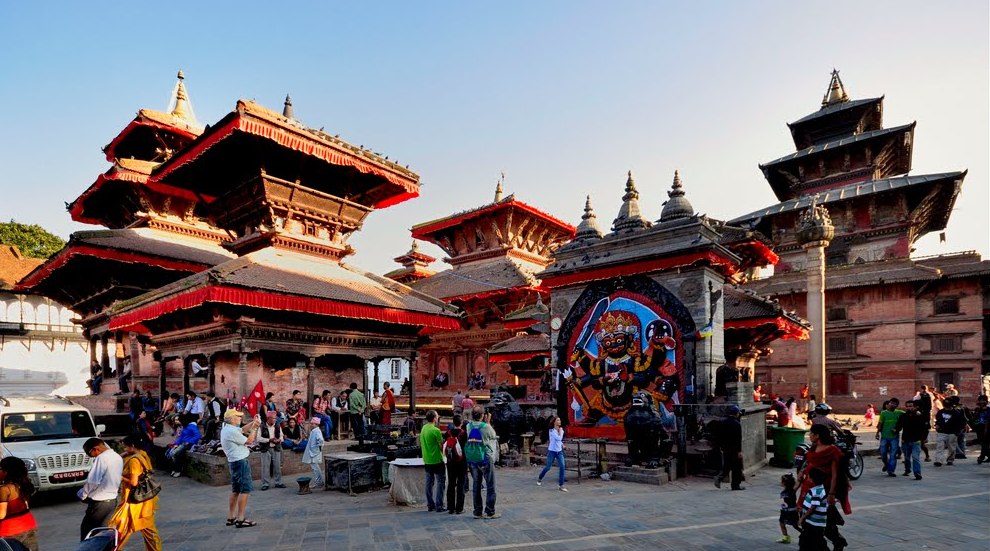
Kathmandu Durbar Square (a.k.a. Hanuman Dhoka) is one of Kathmandu Valley’s most important world heritage monuments, and it is where history and culture abound. Besides, it is as ‘living’ a ‘museum’ as one would find anywhere.
The eight-day-long Indra Jatra festival in honor of Indra, the ‘god of rain’, is held every year in August/September (September 23 this year). It heralds the coming of Nepal’s biggest festival, the ten-day-long Dashain, soon after, which is a time to get together with family and have lavish feasts throughout. Dashain becomes all the more enjoyable if the preceding harvest had been good, which is, of course, dependent upon bountiful rains. Indra Jatra festival is held to thank the ‘god of rain’ for just that, and to keep him in a good mood so he blesses the valley with as good rains the following year too. During this colorful festival, Kumari (the Living Goddess), Lord Ganesha, and Lord Bhairabh are paraded around the city on chariots.
As colorful as the festival is, what makes it even more interesting is that it is held in a world heritage monument, that is, Kathmandu Durbar Square (a.k.a. Hanuman Dhoka). The royal palace in this fantastic square was the seat of power of the Malla and Shah Kings of yore. King Pratap Malla (1641-74), one of the brightest firmaments of the Malla Period (12th-18th centuries), is credited with the construction of the Hanuman Dhoka Palace. You can see his statue atop a tall pillar facing the Taleju Temple in the square. Another renowned site in the square, the Kumari Ghar, the abode of the Living Goddess, was built in the 1750s by King Jaya Prakash Malla.
In 1768, King Prithvi Narayan Shah, ruler of the tiny kingdom of Gorkha, conquered the Kathmandu valley during his bid to unify the country. Thus began the rule of the Shah Kings (1768-2008) from the Hanuman Dhoka Palace. As was usually the case in those days, as far as royalty was concerned, Prithvi Narayan’s death in 1775 was followed by succession struggles highlighted by assassinations and intrigue. In 1846, a Chettri nobleman, Jung Bahadur, organized what is infamously known as the Kot Massacre, during which the elite of the Shah durbar were killed in their hundreds while assembled in a kot (courtyard) adjoining Kathmandu Durbar Square. This horrendous act brought the Ranas into power, with Jung Bahadur becoming, first, Prime Minister, and then Maharajah, a title that was given hereditary status. The Shah Kings remained mere figureheads for a century and more.
Indeed, a tour of the Kathmandu Durbar Square is a tour of the country’s history, and its culture, as well. The historic square is where, on the seventh day of Dashain, that is, Fulpati, jamara (barley sprouts having ritual significance) and other ritual items are brought in from Gorkha in a stately procession, carried in a covered palanquin by Brahmins, and escorted by musket-carrying soldiers dressed in uniforms of the bygone era. On the eighth day (Maha Asthami), Kathmandu Durbar Square is where numerous animals (goats, buffaloes, ducks, and pigeons) are sacrificed to Goddess Kali. On the ninth day (Maha Nawami), the Taleju Temple is opened for the public, which is the only time it is done so, while in the kot (courtyard) of Hanuman Dhoka, army men slaughter more sacrificial animals with khukuris in front of a high profile audience of officers in full dress regalia and other dignitaries. It is a spectacular event, with brass band, cannons sounding off big bangs, et al.
Kathmandu Durbar Square’s cultural significance is also obvious from the numerous ancient shrines and temples in and around its premises, including those dedicated to various gods of the Hindu pantheon like Ganesh, Shiva-Parvati, Bhagwati, Saraswoti, Krishna, etc., besides Taleju and Kumari Ghar. Close to the famous square is a temple from which Kathmandu’s name is said to be derived, that is, Kasthamandap Temple (mandap: pavilion, kastha: wood). The wood of a single tree is said to have been used to construct it.
Speaking of constructions and such, here’s some modern history to do with this world famous square—King Birendra Bir Bikram Shah was proclaimed King on Jan 31, 1972, after his father’s death, but the formal coronation ceremony was held only on February 24, 1975. During the three years in between, the first restoration works in the valley began, and it started with restoration of the Hanuman Dhoka Palace, where the main ceremonies of the coronation would be held. Funded by UNDP, an UNESCO consultant, Architect John Sanday, was put in charge of the project. Although the project went on five years, involving some 300 hundred workers (including 50 wood carvers), Sanday managed to complete quite a lot of work, especially restoration of the façade and the main courtyard, in time for the historic coronation, a lavish spectacle attended by royalty and dignitaries from all over the world.
In 2000, a comprehensive plan for restoration of the temples at Kathmandu Durbar Square was launched as the ‘Kathmandu Durbar Initiative’. Funded by the U.S. Ambassador's Fund for Cultural Preservation, it was conducted by Kathmandu Valley Preservation Trust (KVPT) under Architect Dr. Rohit Ranjitkar. Its major beneficiaries were the Kal Bhairav Shrine, Kageshwar Mahadev Temple, and Lakshmi Narayan Temple. No doubt, Kathmandu Durbar Square has benefitted immensely from such attention, but at the same time, it must be said that there is so much of ancient artifacts that remain as solid as they were hundreds of years ago, that even without any embellishment they are attractions that continue to captivate the senses.
Without doubt, Kathmandu Durbar Square lives up to its high status as a UNESCO designated world heritage monument, and the fantastic thing about it is that it continues to play such an important role in the lives of all dwellers of the enchanted valley of Kathmandu.
POPULAR ITINERARIES
SIMILAR POSTS

Hidden Gems of Patan
Patan (Lalitpur), the ‘City of the Arts’, is chock-a-block with treasures at every nook and cranny. There are also many fascinating but lesser known places that can pique your curiosity and sense of adventure.
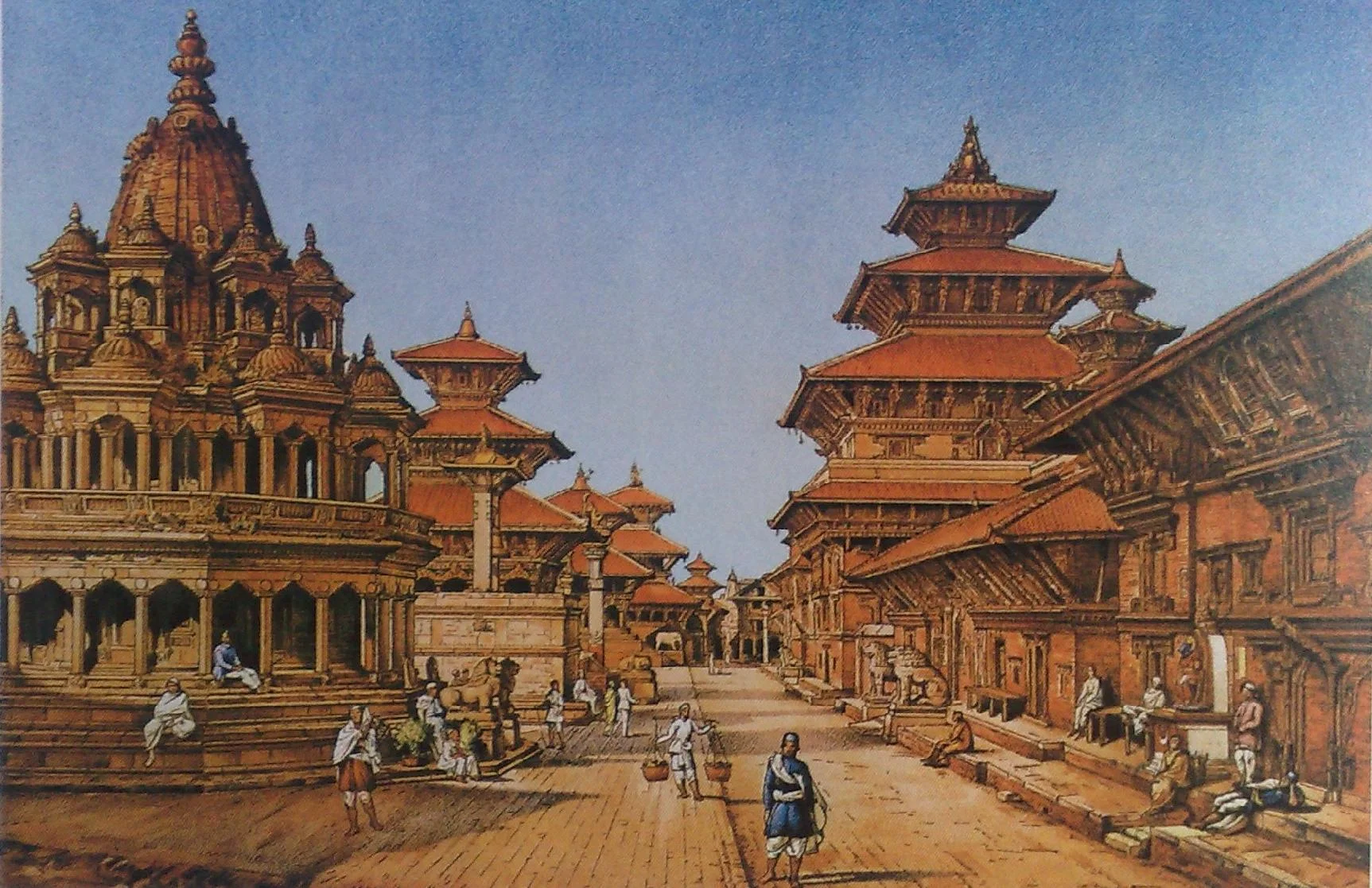
You’ve heard about Patan’s world heritage monument, the Durbar Square, with its many fascinating monuments, including temples of many different architectural styles. You’ve also probably heard about the restorations completed in recent times, such as that of Tusha Hiti, as well as ongoing restorations at sites such as the Bhaideval Temple. Patan Museum inside the former royal palace is one of the more famous renovation projects, a successfully completed Nepal-Austrian joint venture with architect Gotz Hagmueller (also responsible for ‘Garden of Dreams’ in Keshar Mahal in Thamel) at the helm. However, most other restoration/renovation works around the locality are the efforts of an organization called Kathmandu Valley Preservation Trust (KVPT).
Kathmandu Valley Preservation Trust
Many renowned restorers/architects are part of this trust, which was also responsible for the making of the famous Baber Mahal Revisited, an extensive renovation of what was once just a cowshed that was part of a 250-room palace called Baber Mahal, one of nine neo-classical palaces built by Prime Minister Chandra S.J.B. Rana in 1901-1929. Baber Mahal Revisited is one of KPVT’s most visible accomplishments, but there are many more important works to their credit. Now, if you’re in Nepal, make it a point to visit their office, located in an old building in one corner of the Patan Durbar Square.
Besides its architectural offices, there’s also a library with a collection of some pretty interesting hard-to-find photographs, old drawings, and historical books. The top floor is a guest quarter with tasteful and comfortable ethnic interiors where you could spend a night or two. The small veranda has a sweeping view of the durbar square, and really, sitting there watching the activities below throughout the day, you’ll realize why we keep on talking about ‘living culture’ all the time.
Birth-to-death Shop
There’s a shop on the ground floor of the same building that’s referred to by locals as the ‘Birth-to-death Shop” (real name: Hem Narsingh ko Pasal). Ask, and the shopkeeper will show you a file full of lists pertaining to items needed for rituals ranging from birth to death for the Newar community, as well as for parbates (hill people), and Buddhists. The shop’s reputation is based on the precinct that it will have available, at all times, even the smallest item needed. The shop also sells the rare Matsyendranath flower that’s meant for offering at the sacred Matsyendranath Temple, and root-like herbs called sadewa and sadewi (male-female in English) that are said to have the power to make anyone besotted to you if you just touch them with it.
Dare if you want to, but know that the one besotted will be after you forever and more, and if the love is unrequited, you’ll be in serious trouble! Among the shop’s regular clients are shamans who come shopping for such things, as well as for bear’s hair, tiger’s whisker, etc. for their tantric practices. So, visit the ‘Birth-to-Death-Shop’ and browse around for some truly exotic souvenirs.
Jyotishis and shamans
Although there are plenty of excellent hospitals in Patan, jyotisis (astrologers) and shamans, too, have thriving practices, with many clients seeking out-of-the-world cures for various ailments. Here’s a typical scene at one: Time: evening. The jyotishi: a man in his 70s who sits on a sofa behind a table full of parchments, scrolls, and a brass plate containing raw rice. The client: a well-dressed middle-aged woman. The conversation: “My husband is an important government official. Things are not going well for him; a promotion is overdue.” She hands over her husband’s janma patra (document showing planetary positions at time of birth). The jyotishi studies it for some time, and does some calculations. “Your husband’s graha dasha (planetary configuration) is not favorable for the next six months. I will give you a mantra (Vedic incantation). Ask him to repeat it 100,000 times. He should also wear a coral Ganesh ring. Things will start getting better.”
You don’t need a janma patra; your birthday and year will also do if you want to have your fortune told and want a cure for some bad karma. Look around for signboards, you’ll find quite a few around the area known as Prayag Pokhari, as well as in Satdobato. You’ll also find jyotishis in well-known tantric shrines like the Baglamukhi and Bhairabhnath temples.
What bout shamans? Well, here’s what I observed at Buddhi Kumar ‘Gurujyu’’s place of work in Kutisawagal, a 15-minute-walk from Patan Durbar Square, A ‘Shiva tantric’, he sat under a canopy of colorful wooden snakes. Shelves held deity figures as well as plastic bags containing herbs and vials of so-called ‘Himalayan Oil’. A woman and a frail-looking boy of about five sat cross-legged facing him across a brass topped counter.
The woman said, “He keeps on crying all the time. Don’t know why.” She handed over a plastic bag of rice. Gurujyu poured the rice on a brass plate, picked up a few, and then let them fall on the plate. He repeated this procedure a couple of times, and then declared, “Runche bimari (crybaby syndrome)”. He offered some rice to one of the deities, and then flicked some on the child. Next, he blew forcefully on the boy’s face. The young mother murmured, “Doctor said...pneumonia…” The shaman again flicked some grains at the child, waved a black-feathered broom over his head, and blew forcefully twice more on his face. “He will be all right now,” he said. The woman thanked him, and bowing respectfully, went out with her son.
Next, a young woman entered and handed over 10 rupees. In return, Gurujyu handed over a small plastic bag with some herb inside. “They are ‘karne paat’ (a variety of leaf),” he said, adding, “They can only be collected at midnight in the jungle.” Apparently, it is a cure for alcoholics and the woman is a regular customer. One can assume that she must be administering the cure in a surreptitious manner to her husband. If you are interested in shamanism, do visit the Gurujyu. He’s a robust middle-aged man with an open and forthcoming manner. Among his clients are many women who come to look for a cure to prevent their husbands from deserting them. He also claims to communicate with spirits, especially for patients suffering from acute depression.
Fire temple
Another fascinating but less well-known site in Patan is a fire shrine called Agnishala Temple that’s located at the end of a lane opposite Kumaripatti (where Patan’s Living Goddess Kumari give audience during big festivals) in Kumaripati Road near Jawalakhel. As far as anybody knows, a fire has been kept burning at one or more of its five fire altars for the last 4000 years or so. According to the priests here, it may perhaps be the only fire temple in the world with five kundas (fire altars), most of the others making do with only one. These are called Vishnu Kunda, Brahma Kunda, Shiva Kunda, Surya Kunda, and Savya Kunda. The first is the largest and most important while the last is meant for end-of-life rites. Homs (fire rites) are conducted for those wanting to negate the impacts of bad graha dashas or to enhance their fortune by appeasing various gods/goddesses as well as the planets. Birthdays are special days, when visitors have a hom done to please their planetary ruler/s as determined by their birth charts.
Sacred pear tree
There’s something else about this unique temple that is worth knowing about. On its premises are some tall dense trees, the likes of which are not to be found anywhere else in the country. Called Barun Brikshyas (Barun: god of water; brikshya: tree), it is said that water will never dry out in wells around its locality. Scientifically named Crateava religiosa, they are also called ‘sacred garlic pear trees’. Myth has it that sages in ancient times ate one of these pears to stave off hunger for a whole month of meditation. You might be lucky to get one too!
Well, there you have it. These are but a few of the many hidden gems of Patan that are pretty fascinating; and you should not only make it a point to visit them, but also make the effort to discover more during your Nepal tour. Oh yes, you can rest assured that there’s plenty more!
Hiking in and around Kathmandu Valley
While Nepal is famous as a trekking destination, there are also some shorter hikes, especially around Kathmandu Valley, that are refreshing to the extreme.
Legend has it that the Kathmandu valley was once a gigantic lake called Nagadaha inhabited by innumerable snakes (nagas). How did it come to be a valley fit to be lived in by humans? Well, according to the most popular myth, there was once a revered Buddhist sage called Bodhisatva Manjushree who came upon the giant lake during one of his travels. He decided to make it inhabitable for humans, and with a single massive stroke of his so-called ‘Sword of Wisdom’ sliced out an enormous gorge in a place called Chobar in Kirtipur, that’s some six kilometers southwest of Kathmandu. Water immediately began to gush out of the huge lake, and in due time, it was drained completely.
This gorge is one of the places that you will come across when visiting Kirtipur during your hike in and around Kathmandu Valley. Beside its fabled history, there is something else that should be of interest. There’s a suspension bridge spanning the gorge that was made in Scotland (Aberdeen) in 1903 and carried into the valley, a part at a time, since there was no road to speak of then connecting with the outside world. A herculean feat, no less! You’ll also find numerous caves in the cliffs around the gorge. Nearby is the Taudaha Lake, a natural lake that’s a wetland site for quite a few bird species.
Kirtipur, a short distance away, is an ancient Newari town with a fascinating history. During the time when King Prithvi Narayan Shah (1723-1775) was on his mission to unify the many states of the country into a unified Nepal, he attacked Kirtipur twice, and was soundly repelled both times. The third time around, he managed to do so, but that was due to a huge stroke of good luck. The story goes that during the battle, a Kirtipur soldier had the king at his mercy, and was on the verge of chopping off the royal head. However, a rock stood in the way between the king’s head and the soldier’s khukuri, and so the king escaped certain death. Apparently, even today, people spit on that very same rock as they pass it by, and so they should, considering what happened after Kirtipur’s fall. The enraged king ordered the noses and lips of all local males to be cut off, and these cut off parts weighed 80 pounds at the end of the bloody frenzy! So, keep an eye out for this infamous rock during your hike.
About 15 km away from this historic town is a very famous temple of the valley, that is, Dakshinkali Temple. Dedicated to Goddess Kali, the rituals here are tantric in nature, with animal sacrifices conducted on Saturdays, as also during festivals like Dashain. Your hike to these places begins from the ring road and takes you across the sprawling grounds of Nepal’s premier university, Tribhuvan University, on a well-maintained road that gradually goes up. All in all, it’s a most pleasant hiking experience. Another hike you will like is the one that takes you to the villages of Bungamati and Khokana.
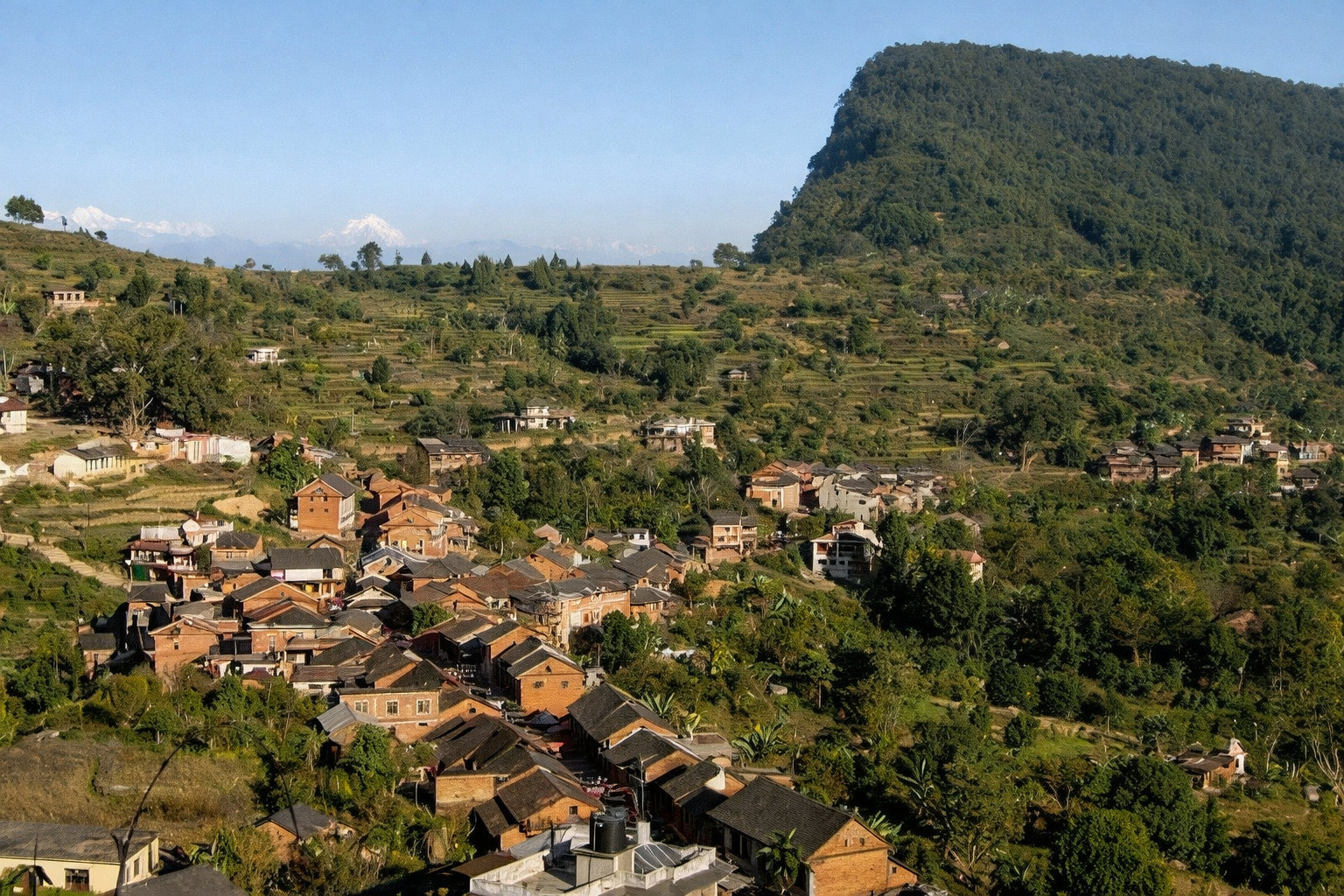
Bungamati is a Newari village in the traditional mold that dates back to the 16th century and is located about 10 km south of Kathmandu. Full of brick houses and flagstone-paved lanes, it is famous for two things: first, as the winter residence of Rato Matsyendranath, in whose honor a major month-long festival is held every year in Patan (Lalitpur), and second, as the village with the best woodcarvers in the valley, perhaps in the country. Speaking about the first, the sandalwood idol of Rato Matsyendranath is kept here in a temple for six months, and some weeks prior to the beginning of the festival, it is taken to Lagankhel (in Patan), where it is given a holy bath followed by certain rituals, such as repainting of its face.
After taking the one-hour drive from Kathmandu to Bungamati, you begin your explorations on foot, and start exploring the quaint village at your leisure. When doing so, you’ll observe quite a few woodcarvers busily carving objects such as wooden windows, doors, and so forth; veritable objects de’ art, you’ll agree on looking at the end results. Indeed, such are their skills that Bungamati’s woodcarvers are much sought after in many handicraft industries around the valley. From this village of Rato Matsyendranath and skilled woodcarvers, you next walk to another classical one that’s quite close by, walking through lovely scenery and in pretty good weather, especially in the October-December season.
The village you’ll be hiking to is called Khokana, and it, too, is inhabited by Newars. However, this village is famous for a completely different thing, and that is, the production of mustard oil. Well, what’s so great about mustard oil? You may well be asking. Right, but Khokana’s mustard oil is the kind that you might not get anywhere else but here, made as it is using methods that are as ancient as is the valley’s history. You’ll understand this when you come across oil-pressing mills around the village with their ancient-looking implements, and when you see how the oil is pressed. Khokana’s mustard oil is in high demand throughout the valley, and while walking around Kathmandu’s bazaars, if you see men with weathered faces shouldering heavy tin cans hanging on both sides from a bamboo staff, chances are good that they have come to sell mustard oil from Khokana.
Well, now you know why these hikes are highly recommended when visiting Nepal. You’ll get a pretty good experience of life as it has been for centuries. A far cry from what you are used to, surely. You’ll probably be amazed at how laidback the lifestyle is in areas around Kathmandu city, despite being in such close proximity with the capital’s hustle and bustle. What’s more, you can even spend a night or two, if so inclined, at a homestay in Bungamati, where living with a local family allows you to absorb more of this blessed lifestyle.
Buddhist Pilgrimage in Nepal
A Buddhist pilgrimage starts from Lumbini, the birthplace the Buddha. At the same time, one cannot miss visiting some other sacred Buddhist sites within the country, as well.
LUMBINI
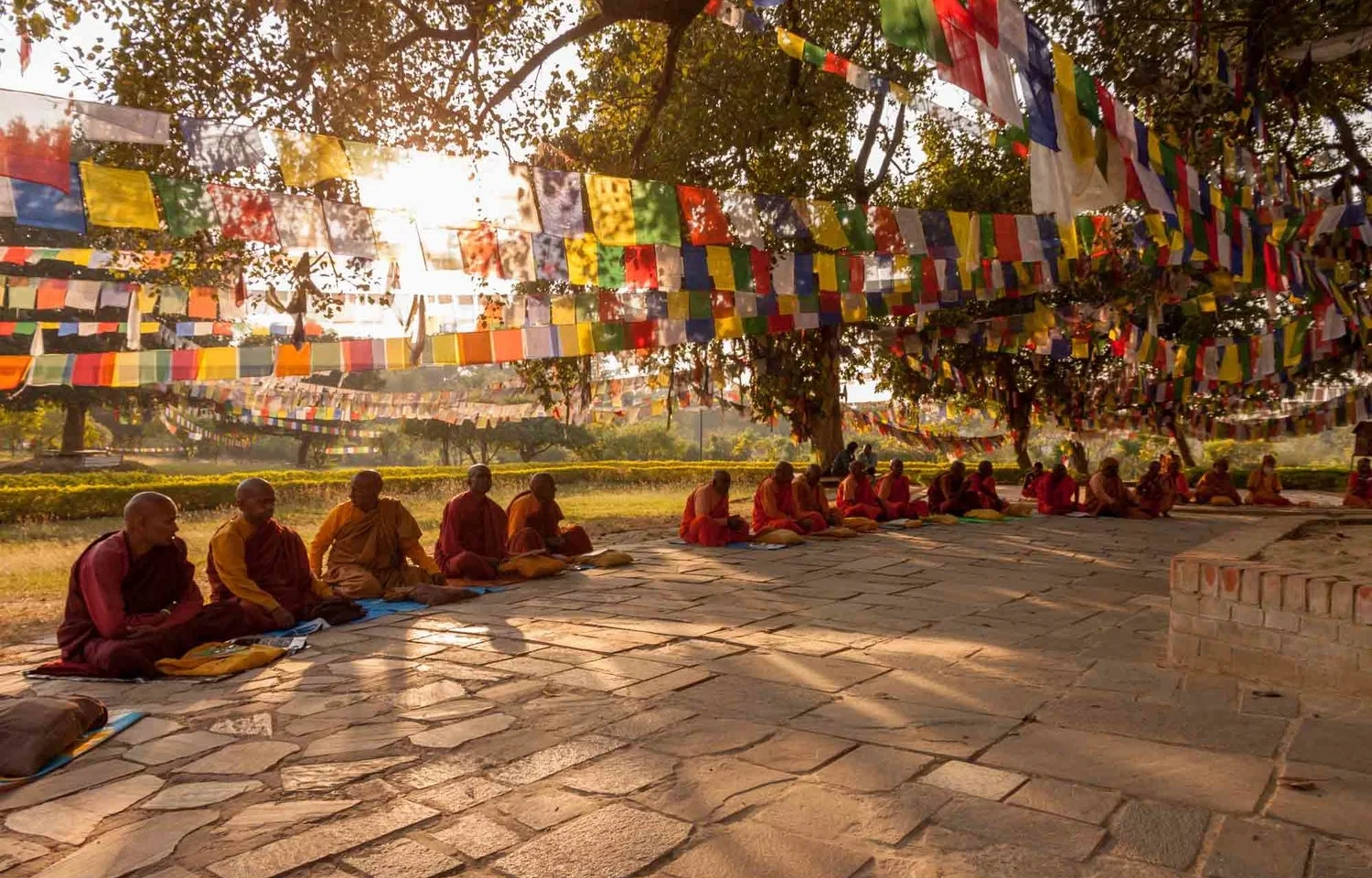
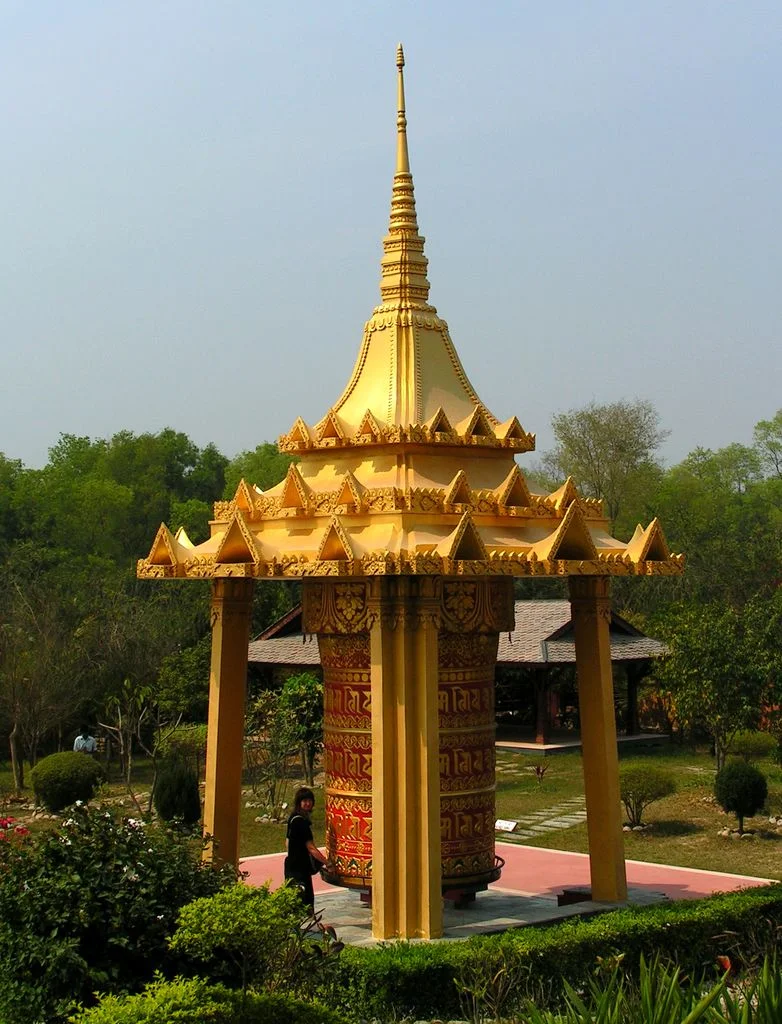
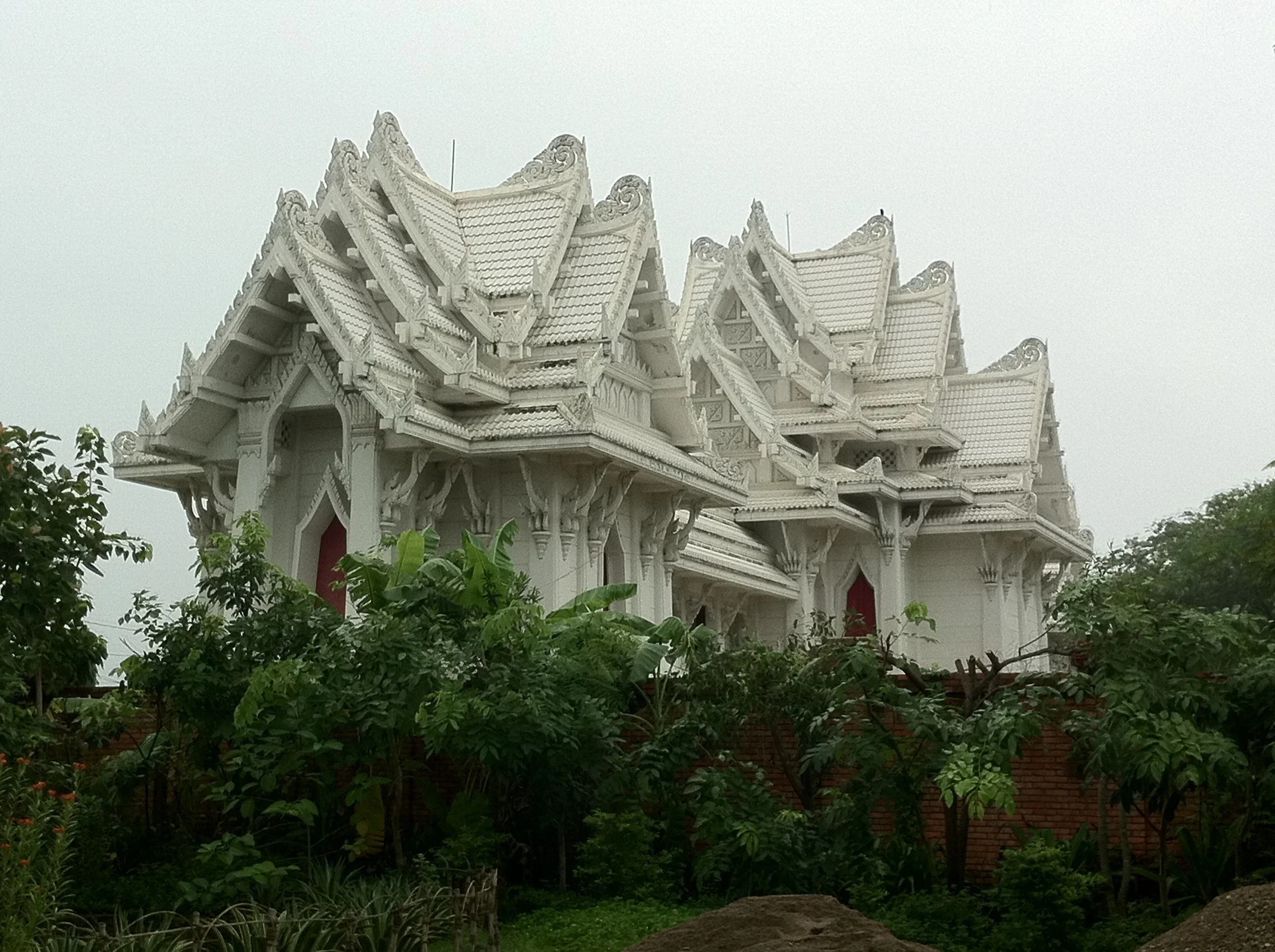
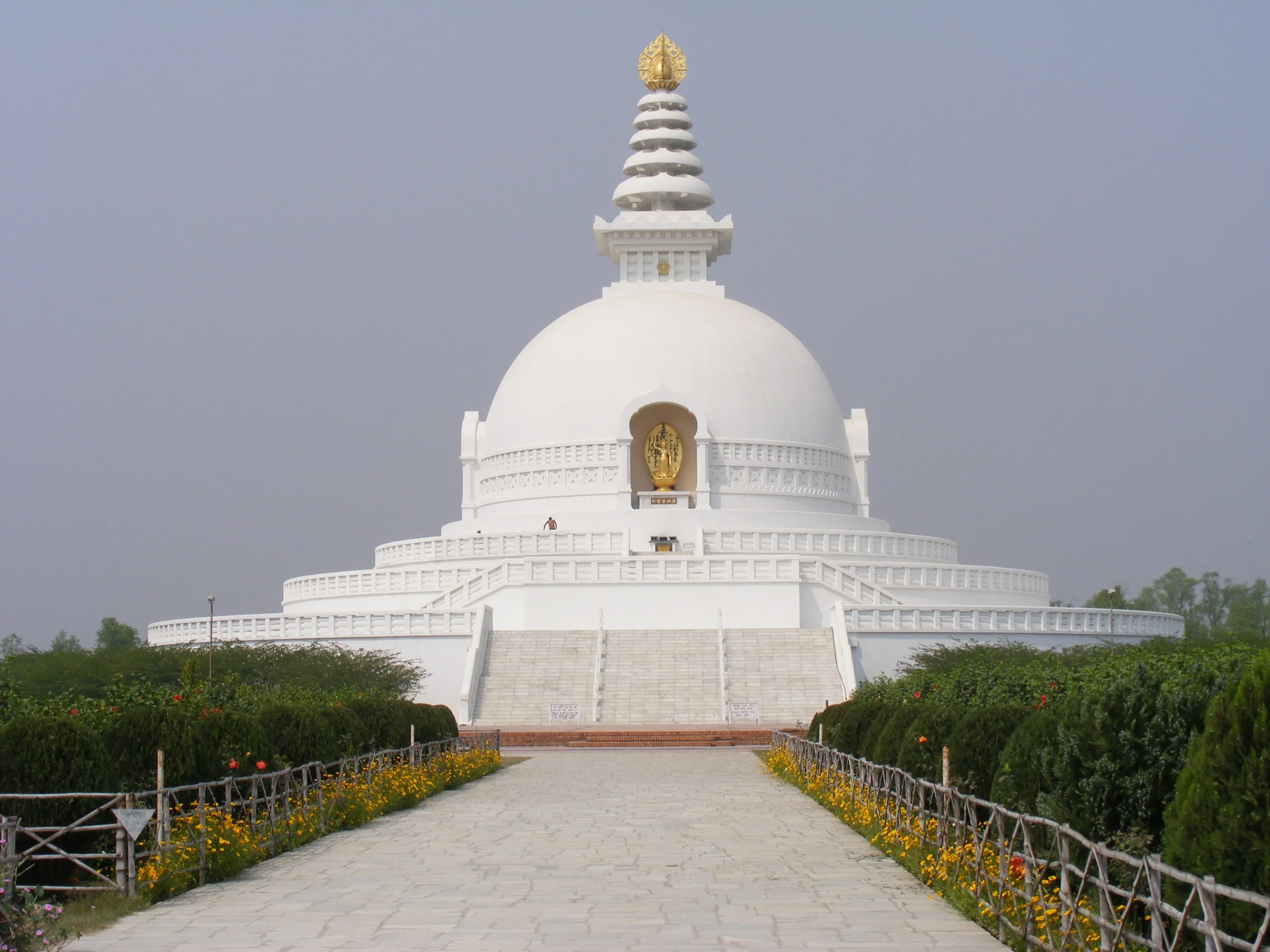
Lumbini is where it all began. Circa 563 B.C., in a place called Lumbini in mid-western Nepal, Queen Mayadevi of Kapilvastu gave birth to a child she named Siddhartha Gautam—a child who went on to be revered as Lord Gautam Buddha, the ‘Apostle of Peace’. After living in Lumbini for the first 29 years of his life, he began seeking the true meaning of life, and in doing so, attained enlightenment. His teachings gave directions to a new way of life for mankind, and eventually became one of the world’s great religions—Buddhism. His birthplace, Lumbini, is thus the most sacred site for Buddhist pilgrims from around the globe. To give it its due and make it worthy of an international pilgrimage site, in 1978, renowned Japanese architect Kenzo Tange was given the responsibility of making a master plan for what is known as the Lumbini Development Trust Area.
Accordingly, Lumbini was segregated as Sacred Garden Zone, Monastic Zone, and Educational and Culture Zone. The centerpiece of the garden is the Mayadevi Temple, with its stone image of the queen giving birth to Siddhartha, and near to it is the Puskarini Pond, where the divine infant was given his first bath. Nearby, too, is the famous Ashoka Pillar. Erected in 249 B.C.E. by Emperor Ashoka, it marks the Buddha’s birthplace. The Monastic Zone is divided into the East and West Zones. In the former are to be found monasteries built by followers of Theravat Buddhism, while in the latter are those built by followers of Mahayana Buddhism, as well as by those of Tibetan Buddhism. Inscribed as a World Heritage Site by UNESCO in 1997, Lumbini is a six-hour drive (about 265 km) from Kathmandu, and a 30-minute drive from Siddharthanagar (formerly called Bhairahawa), from where the Gautam Buddha Airport is three kilometers away.
Lumbini is, however, just the beginning of a Buddhist pilgrimage tour in Nepal. There are two other world heritage monuments, Boudhanath Stupa and Swyambhunath Stupa, both in Kathmandu, which are very important pilgrimage sites as well. Not only that, there are many other sacred Buddhist pilgrimage sites in Nepal that make the pilgrimage an extremely fulfilling one—sites such as Hiranyavarna Mahavihar, Kopan Monastery, Namobuddha, Seto Gumba, Dharmakirti Vihar, and so on.
Photos of Lumbini (below)
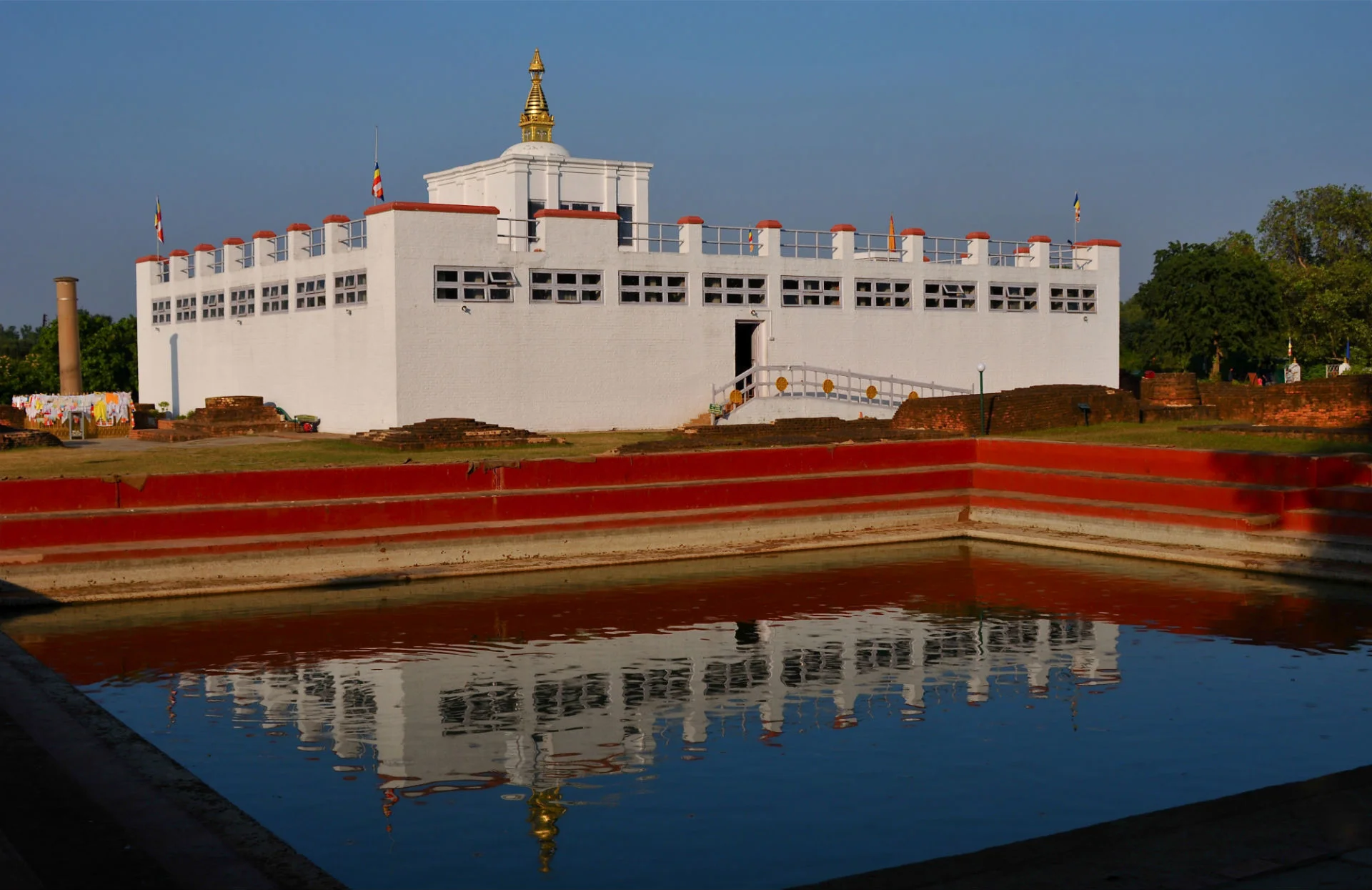
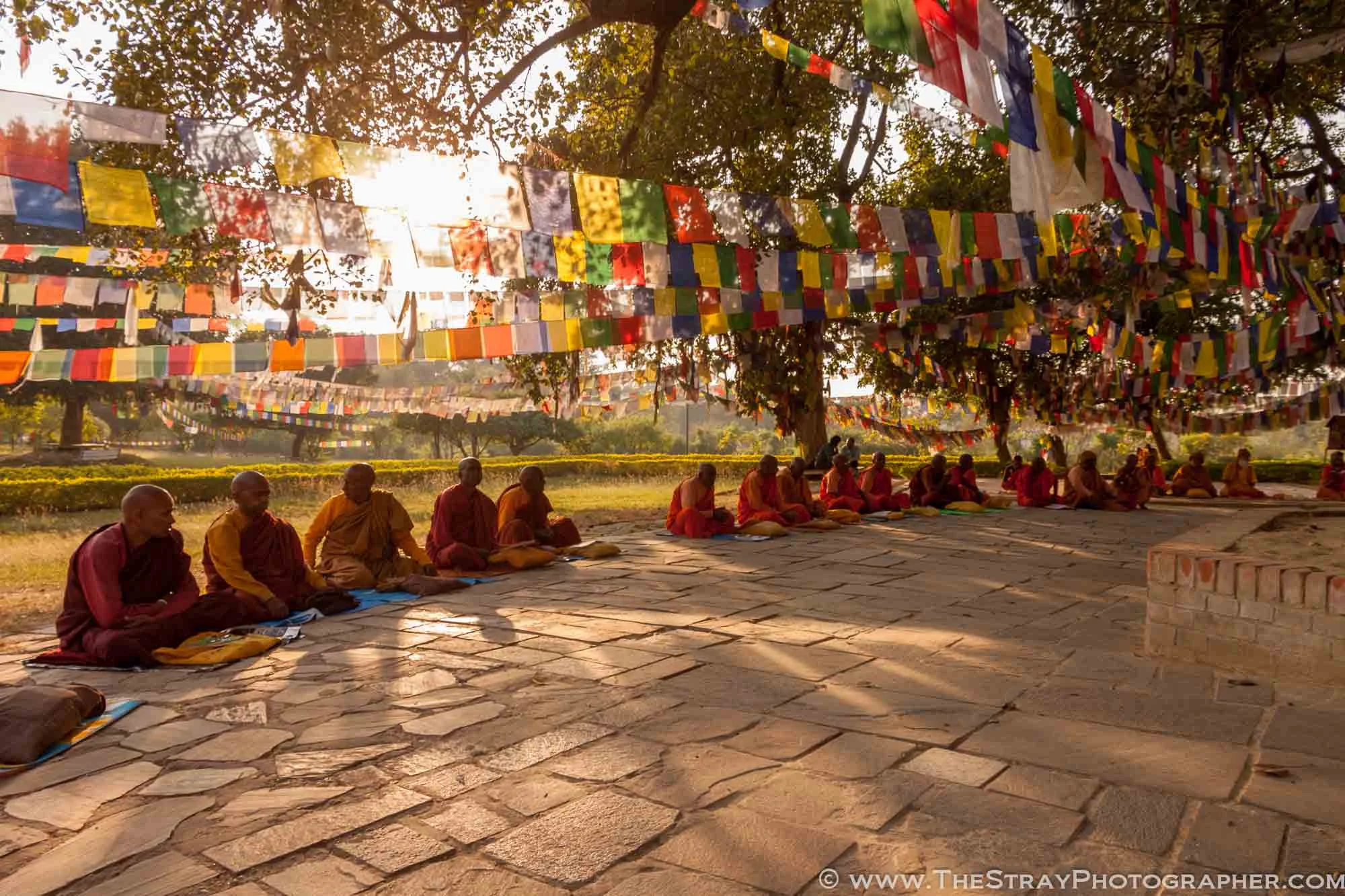
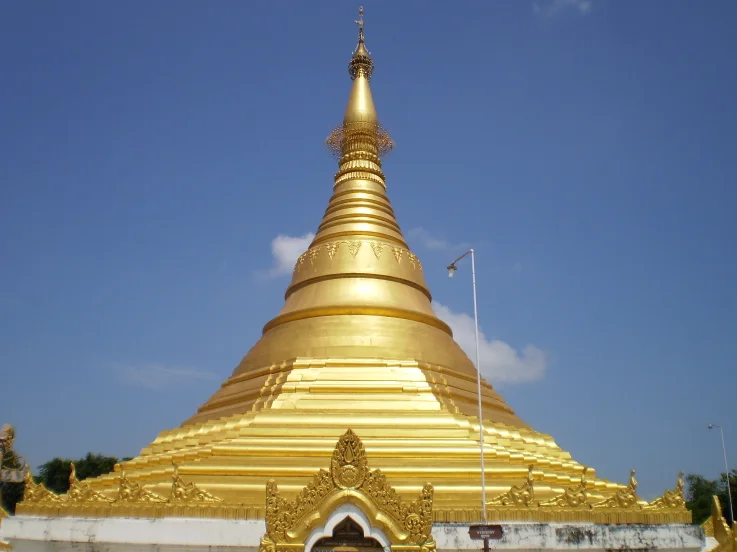
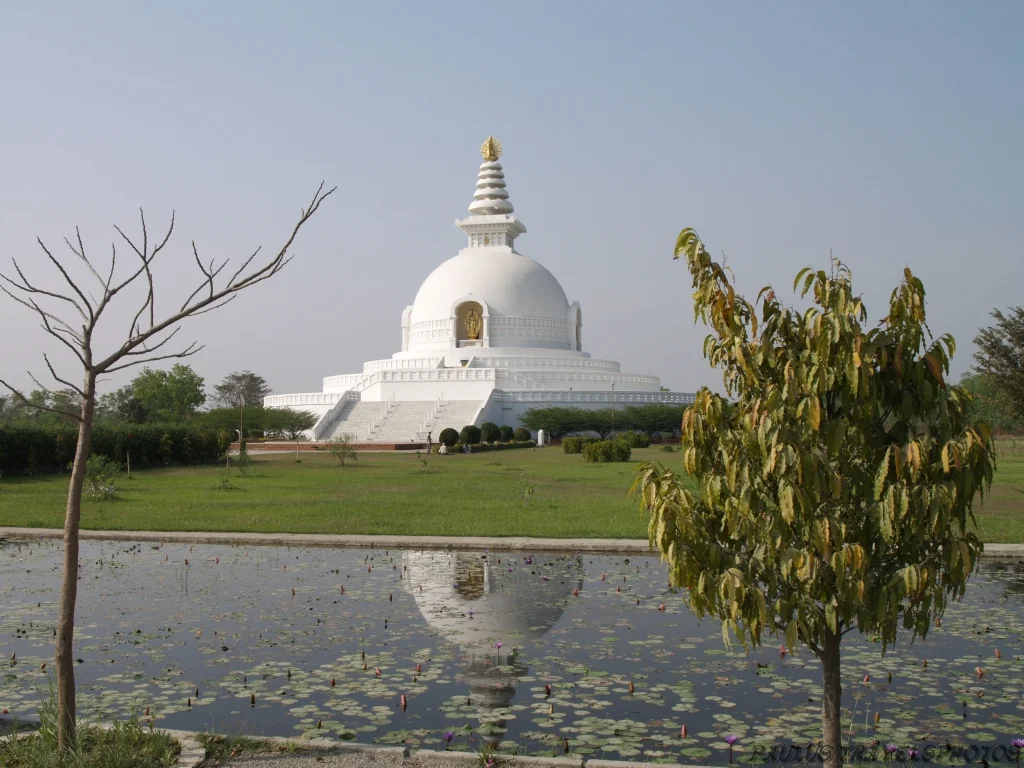
BOUDHANATH STUPA
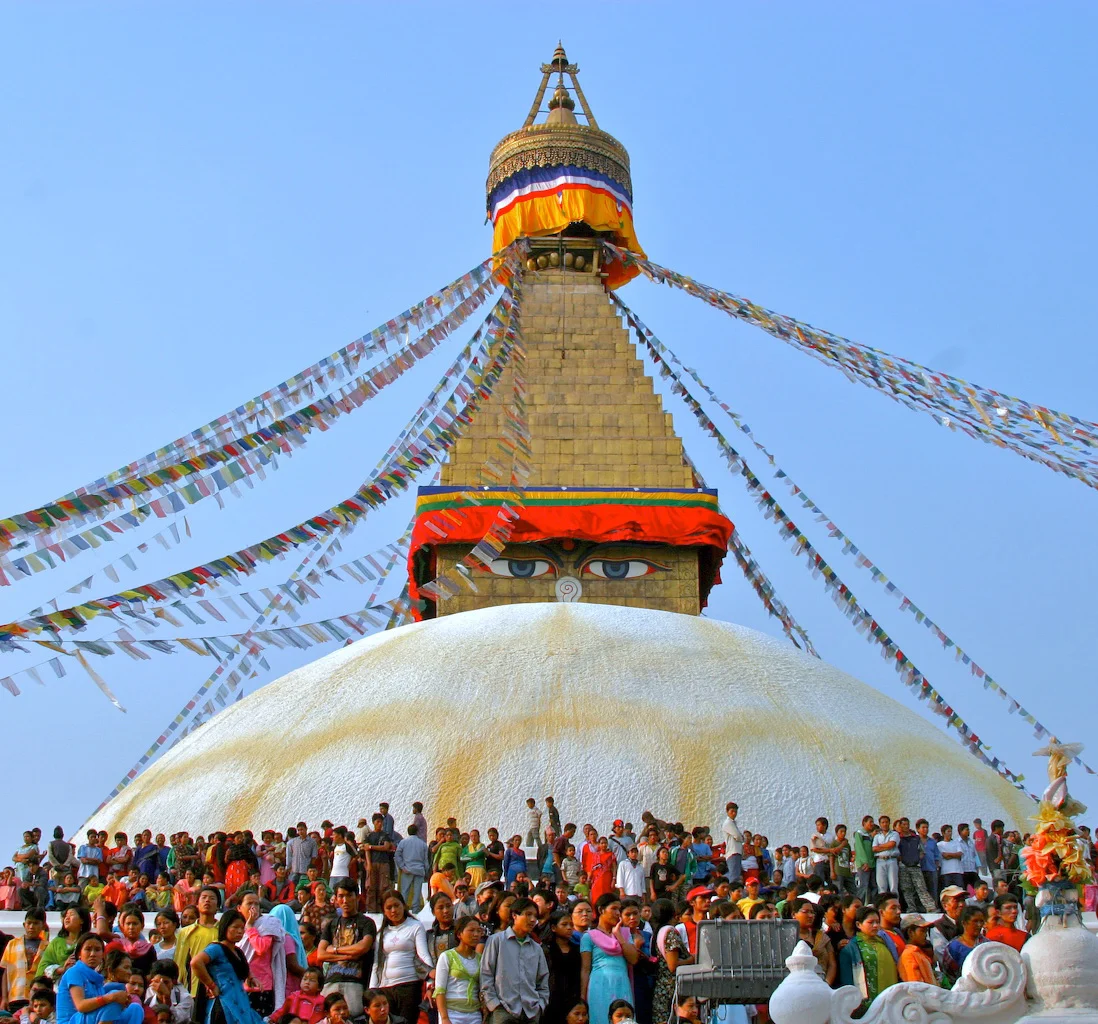
Boudhanath Stupa, the most holy Buddhist site in the country, is said to be one of the world’s largest stupas, measuring about 100 m in diameter and about 40 m in height. The massive dome, with Buddha’s eyes gazing in all directions, sits on a three-layered base, around which are 108 deity figures and hundreds of brass prayer wheels that are spun by devotees when circumambulating the shrine. Within the Boudhanath premises are a number of monasteries of Mahayana Buddhism, and the remains of the past Buddha Kashyapa are said to be enshrined within the stupa. This fascinating site is visited by Buddhists from far and near, and more so, by Buddhists from Tibet.
SWOYAMBHUNATH STUPA
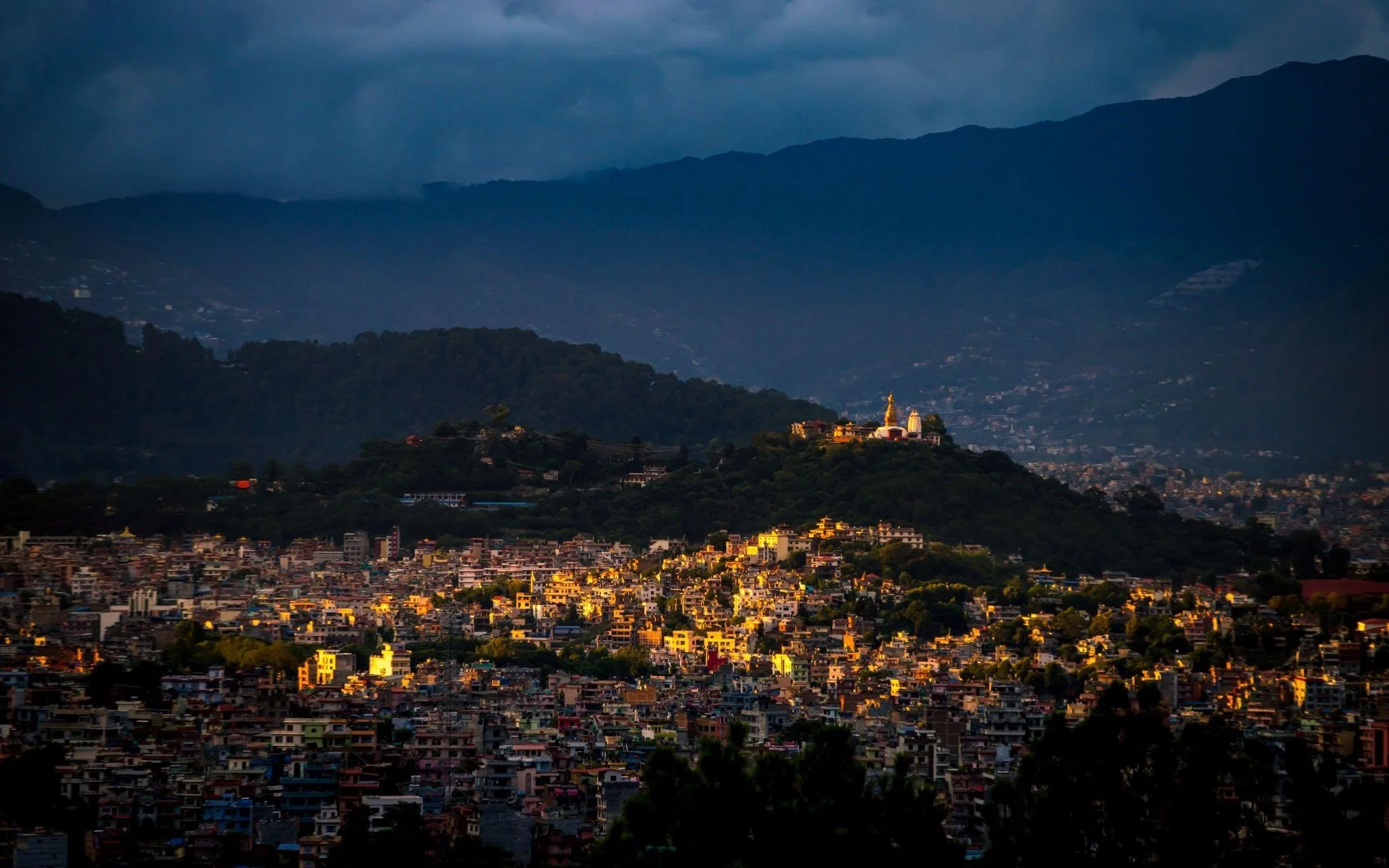
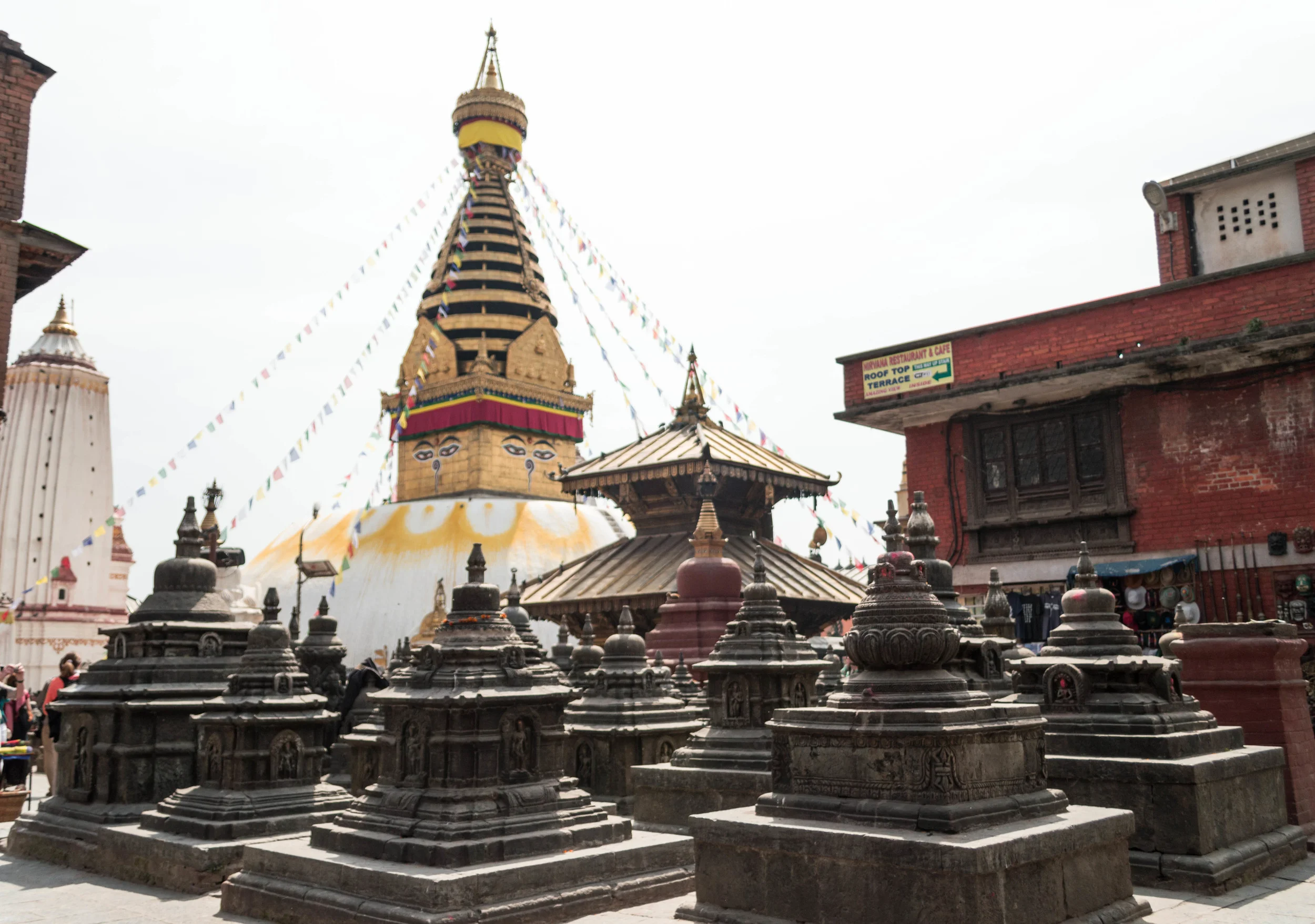
Swoyambhunath Stupa, located on top of a conical hill, has a lofty white dome, around which are the eyes of the Buddha (each pair having a third eye above them), and a glittering golden spire. One of the most ancient shrines in the valley, Swoyambhunath is believed to have been a revered Buddhist pilgrimage site since the 5th century. Losar (Tibetan New Year), Buddha Jayanti (Buddha’s birthday), and Gunla (a month-long Newari Buddhist festival) are some festivals that are celebrated with gusto here, when thousands of devotees reach the shrine either by climbing 365 steps up the hill, or by a winding road winding on the other side.
ANANDAKUTI VIHAR
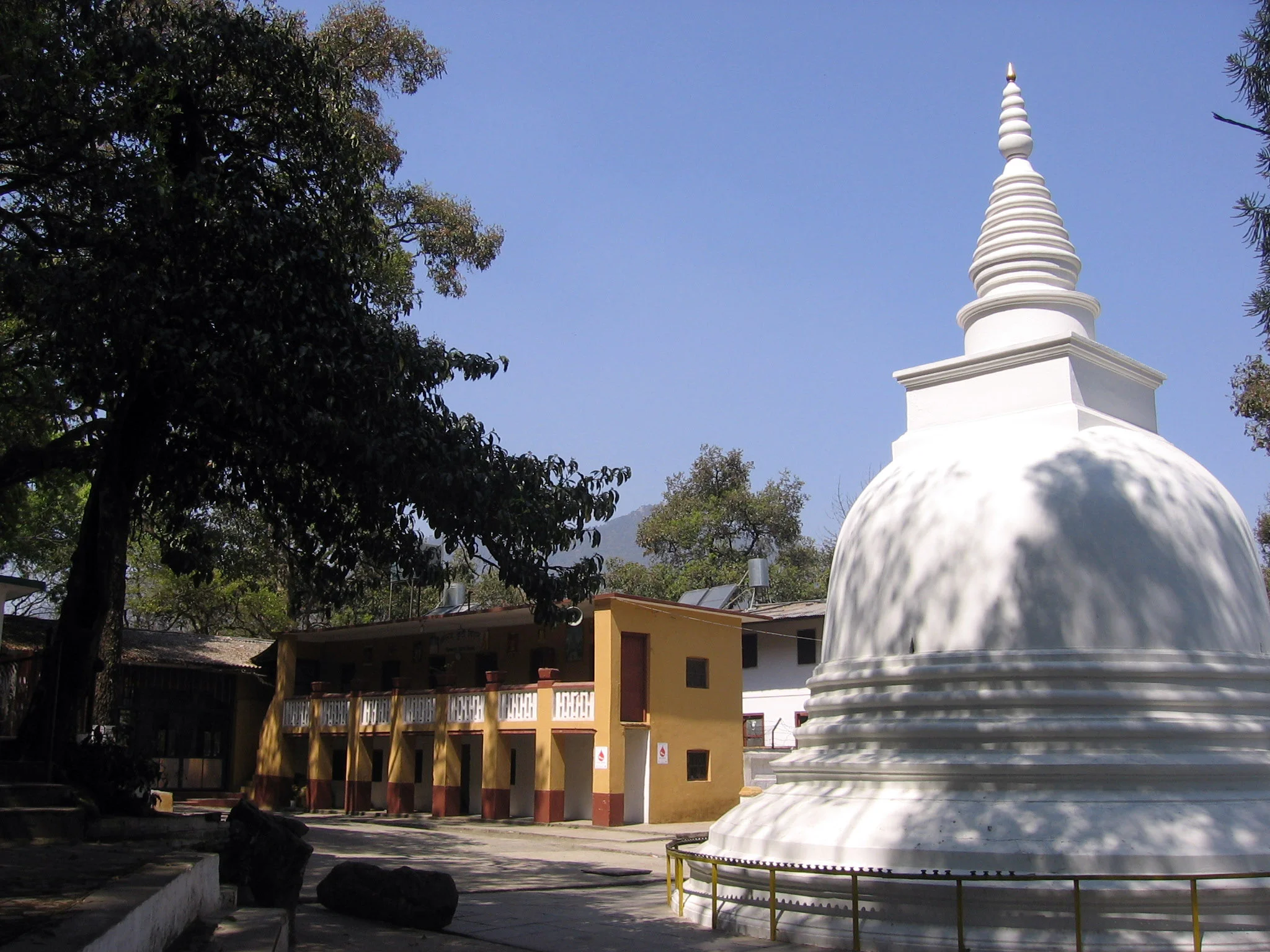
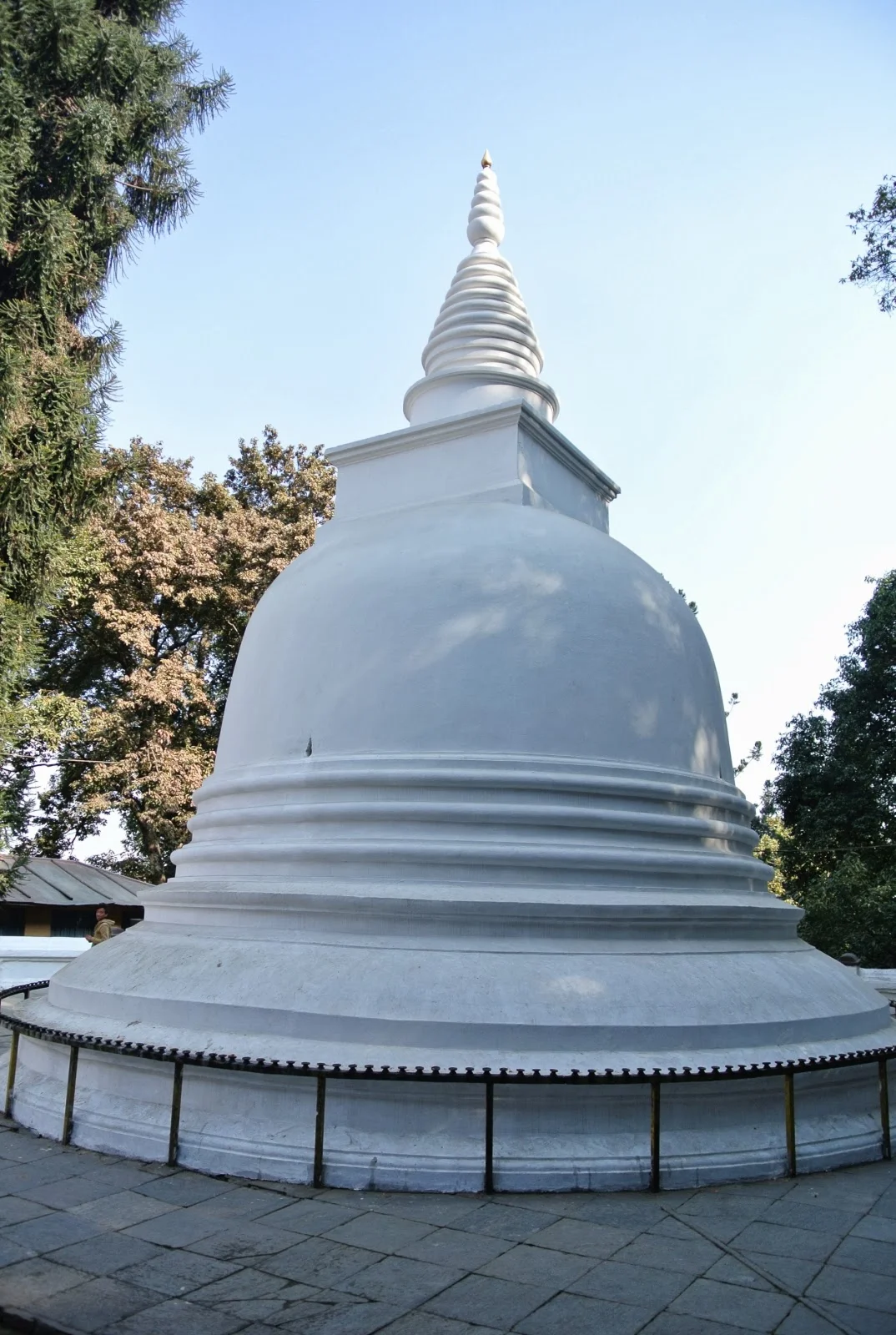
Anandakuti Vihar, which is on the way to Swayambhunath, was established in 1943 by monks from Sri Lanka who follow the school of Theravada Buddhism. In 1945, they made a precious gift to the Vihar—three of the Buddha’s teeth. These sacred relics are put on view for the public once every year on the day of Buddha Jayanti. The late Bikchhu Amritananda Mahasthavir established a school, Anandakuti Vidyapeeth, in January 1952 as a Buddhist boarding high school under the Vihar’s jurisdiction.
HIRANYAVARNA MAHAVIHAR
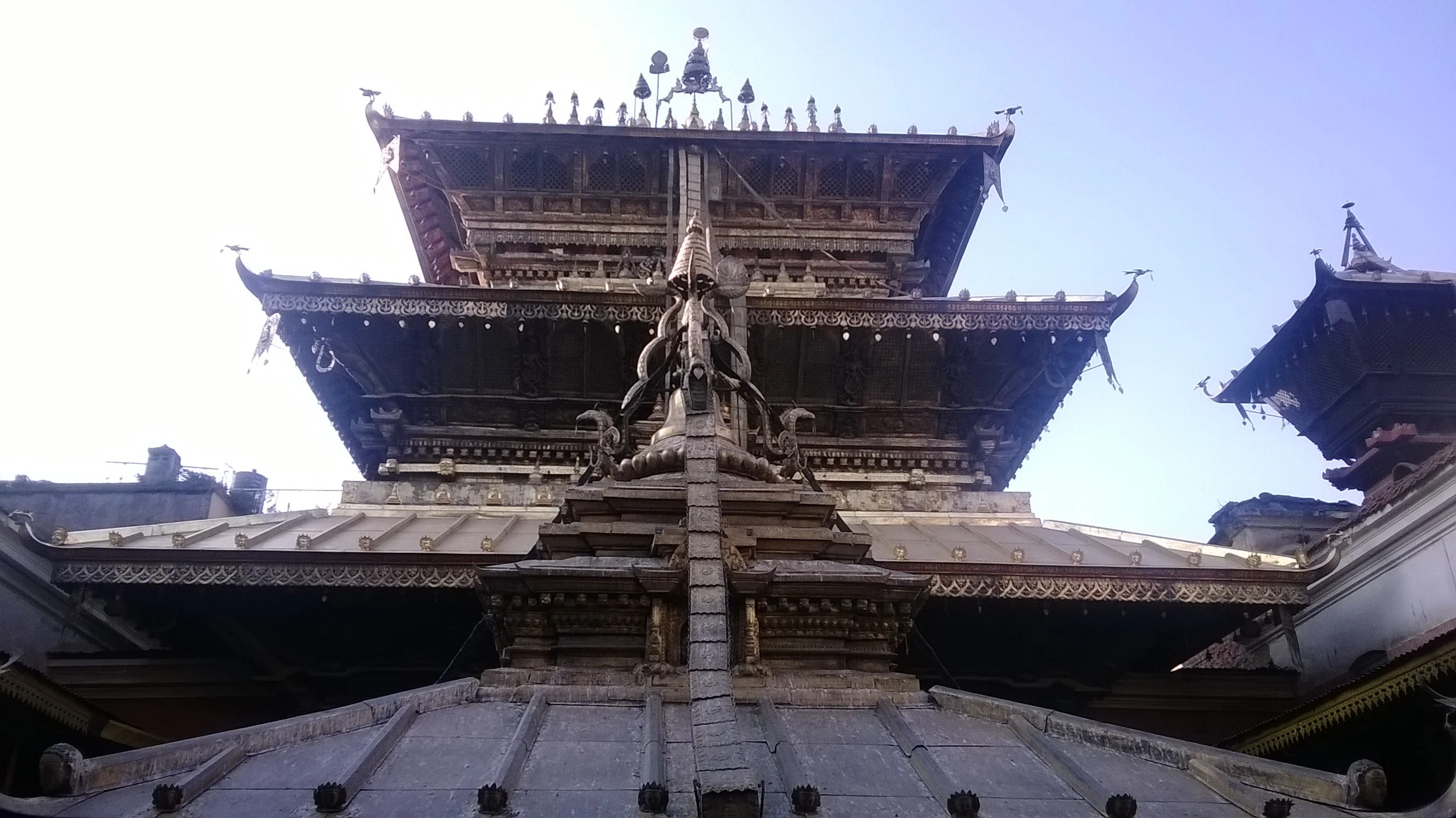
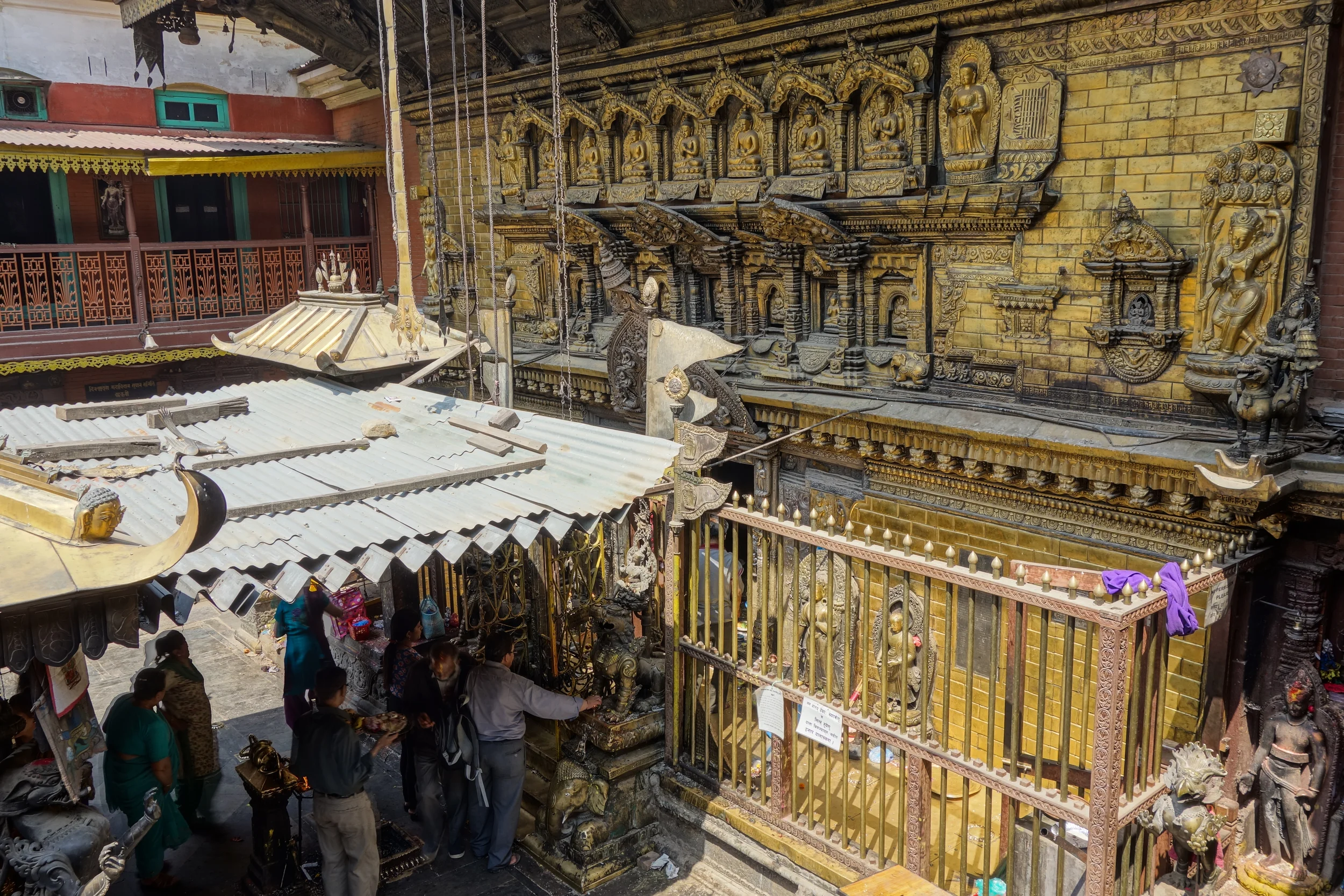
Hiranyavarna Mahavihar (a.k.a. the Golden Temple), situated in Kwabahal of Patan, is a three-roofed pagoda-style temple housing a large silver figure of Shakyamuni Buddha. Famed for its beautiful architecture, there’s a smaller temple in front that is as beautiful as the main one, with a gilt roof and copper patakas (metal banners descending from the top). It is said that visiting the Golden Temple does away with the need for visiting other temples, since one will find shrines of most of the major temples of the valley here, including a lovely silver replica of Swayambhunath. A Dharma Dhatu Mandala with a large vajra is set on a double lotus podium up front, while around the courtyard are various deity figures. There’s a gumba (prayer hall) within the precinct, where monks gather in front of a fascinating figure of Amoghapasa Lokeswor (eight-handed Buddha).
KOPAN MONASTERY
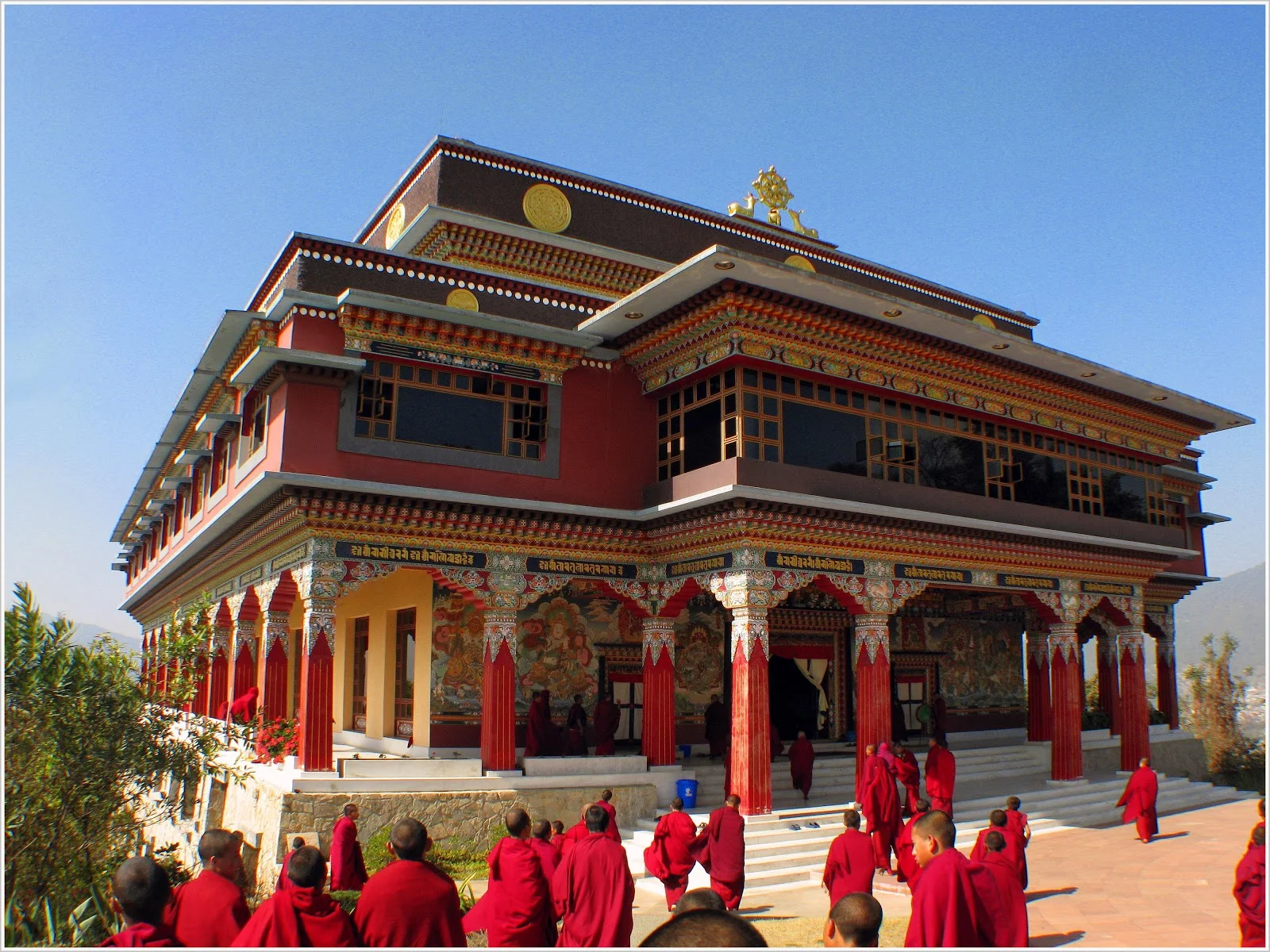
Kopan Monastery, located north of Boudhanath, is a major center for the study and practice of Mahayana Buddhism based on the Tibetan Gelug tradition of Lama Tsong Khapa. It was founded by Lama Thubten Yeshe and Lama Zopa Rinpoche, with the first community of 25 monks making it their home in 1972. Today, the community numbers about 360, which include monks and lamas, besides other workers. Initially, the monastery also housed nuns, but later, a nunnery, Khachoe Ghakyil Ling, was built for them nearby in 1994, and it has now more than 300 nuns living there.
SETO GUMBA (DRUK AMITABH MOUNTAIN MONASTERY)
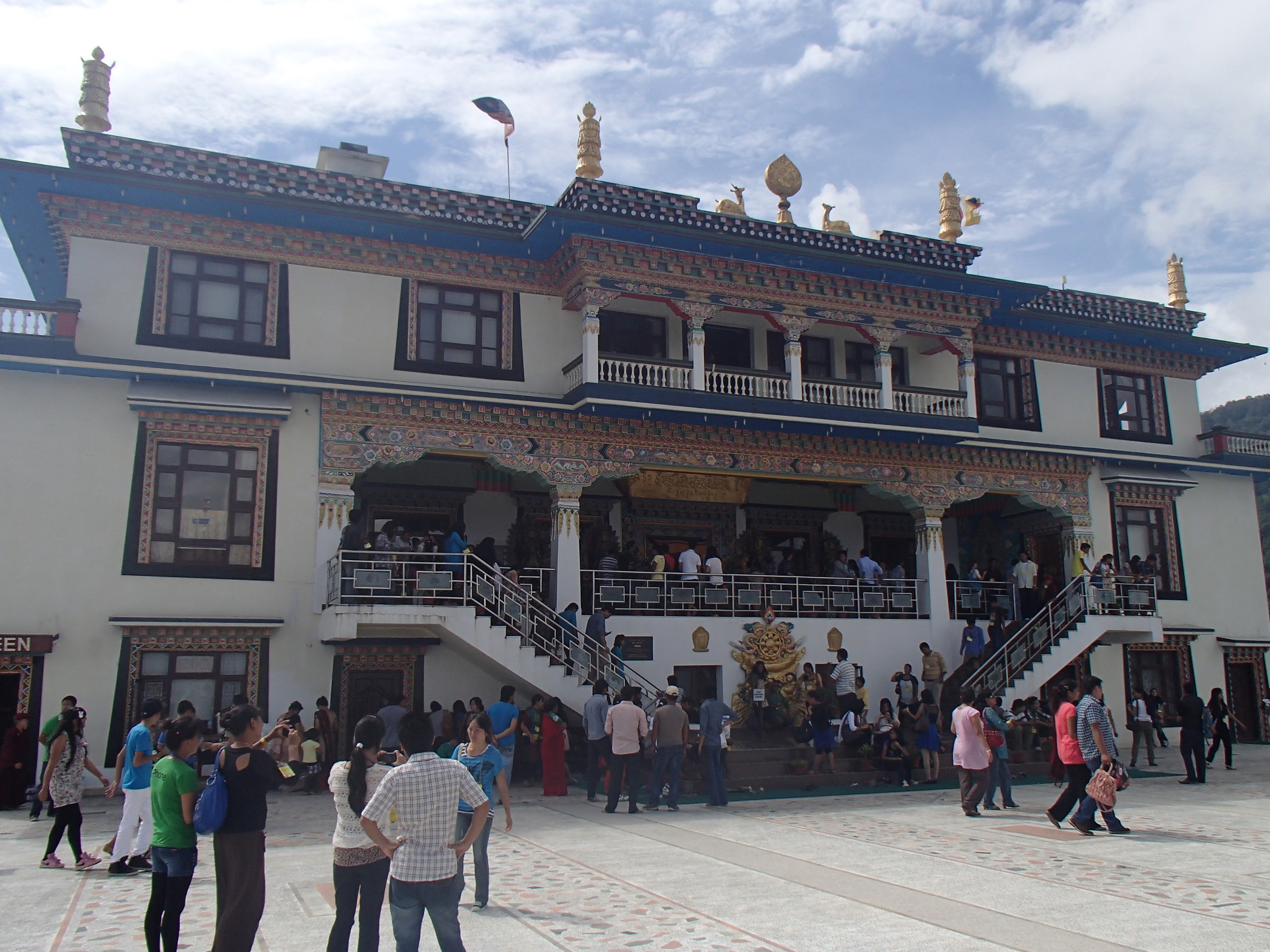
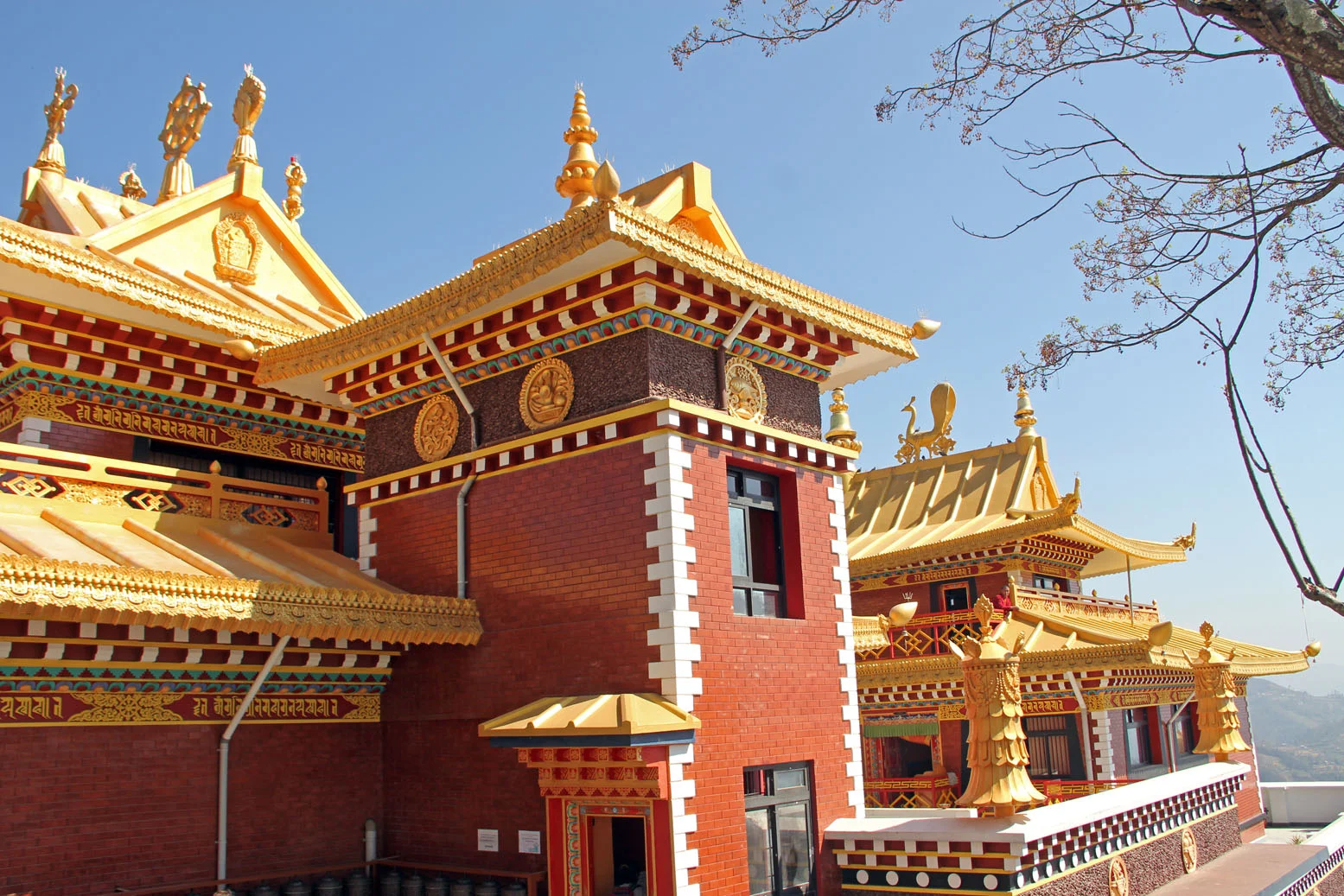
Seto Gumba (Druk Amitabh Mountain Monastery) was established in 1989 by His Holiness the Gyalwang Drukpa on a hill some three kilometers from Swoyambhunath Stupa. The Druk Gawa Khilwa Nunnery, with about 300 nuns, is housed here. The Tibetan style architecture is splendid, and there are many beautiful statues and paintings all over the place. With a lovely garden area, the whole atmosphere is refreshing, and quite a number of people take the two-hour hike to the site on weekends.
NAMOBUDDHA
Namobuddha is located 10 km from Panauti, an ancient Newar town that’s about 32 km from Kathmandu. The shrine here is dedicated to a prince’s supreme act of sacrifice. According to the legend, Prince Mahasatwo of Panauti once had gone to the jungle of Namobuddha for hunting. There he encountered a starving tigress and her cubs; they were so weak from hunger that they did not even move when he approached them. The prince was deeply moved, and there and then started to cut his own body parts to feed them. A festival is held every year in April/May to commemorate this extraordinary event.
DHARMAKIRTI VIHAR
Dharmakirti Vihar, in Naghal of Kathmandu was established in 1965 by followers of Theravada Buddhism to propagate its tenets. It has 20 lifetime ordained nuns (anagarikas) living there, who conduct Buddha Puja and Dharma Desana (preaching Dharma) five days a month. On special occasions, such as during Gunla (a month-long festival in July/August), pujas are held daily. It also runs the Dharmakriti Sikshya Sadan to impart moral education to preschoolers. Myanmar´s Aung San Suu Kyi was once a student at the Vihar for three months.
Well, these are some of the more fascinating Buddhist pilgrimage sites around Nepal, and one daresay, for Buddhist pilgrims from around the world, these are must-visit places when on a pilgrimage tour here.
‘Namaste’, a Most Gracious Greeting
‘Namaste’, the customary form of greeting in Nepal, is one of the most humble, respectful, and gracious forms of greeting found anywhere around the world.
The traditional Nepali greeting of putting palms together and saying “Namaste” has taken on a new dimension.
Ever since it was disclosed that one of the precautions against being infected with swine flu was to avoid shaking hands, I have made it a point to avoid shaking anybody’s hand. That’s also because it is being increasingly accepted that it’s best not to be too touchy-touchy if you want to avoid getting any sort of germs transferred. Nowadays, the big talk is about the importance of hand-washing, especially in this part of the world, where the hands are used for everything. So, the traditional Nepali greeting of putting both palms together and saying ‘Namaste’ has taken on a new dimension.
Namaste Meaning
Not that ‘Namaste’ was any less important, and any less significant, at any other point in time. It has always been one of the gentlest, and politest, forms of greeting anybody. It’s elegant, too. In fact, the meaning of the word itself says a lot about the culture here. ‘Namaste’ is a word derived from the ancient Sanskrit script, according to which it means, ‘I bow to the divine in you’. In a country where the culture dictates that guests are to be regarded as gods, it is apt that our greeting should be in sync with that dictum.
When you are traveling to Nepal, you’ll probably first experience this greeting when boarding your plane, when the pretty air hostess welcomes with a warm smile and a graceful ‘Namaste’. You’ll probably return the greeting similarly, and continue to repeat the process at different times during your stay here. You can’t help it, since it’s the kind of greeting that calls for an equally gracious response, and none is more gracious than a ‘Namaste’! Anyway, aside from that, it’s a fine way to start absorbing some of the ancient culture of Nepal. A ‘Namaste’, accompanied with a smile, will take you miles. At the least, it will endear you to the locals you come across, and make you more welcome anywhere you go. A proper ‘Namaste’ can unlock many doors, and open hearts, too. So, go ahead, practice a couple of ‘Namaste’s’ even before you embark on your journey to this Himalayan country.
A ‘Dhanyabad’ (thank you) accompanied by a ‘Namaste’ gesture is sure to be pretty well appreciated.
Leave the strong and hearty handshake behind, although nowadays, you’ll meet plenty of folks out here who’ll prefer to push their hand forward to receive one. A sign of the times, but all said and done, they’ll still be likely to give you a ‘Namaste’ before doing so. So deeply ingrained are Nepalis in the culture of their land. A ‘Namaste’ is not only used for greeting and welcoming, it’s also used for farewells, and for demonstrating your gratitude too. A ‘Dhanyabad’ (thank you) accompanied by a ‘Namaste’ gesture is sure to be pretty well appreciated. An all-in-one-greeting, that’s what a ‘Namaste’ is. Whatever the case may be—greeting, welcoming, goodbye, or demonstrating thanks—one cannot go wrong with a ‘Namaste’ since it is such a humble gesture that anybody will appreciate it heartily.
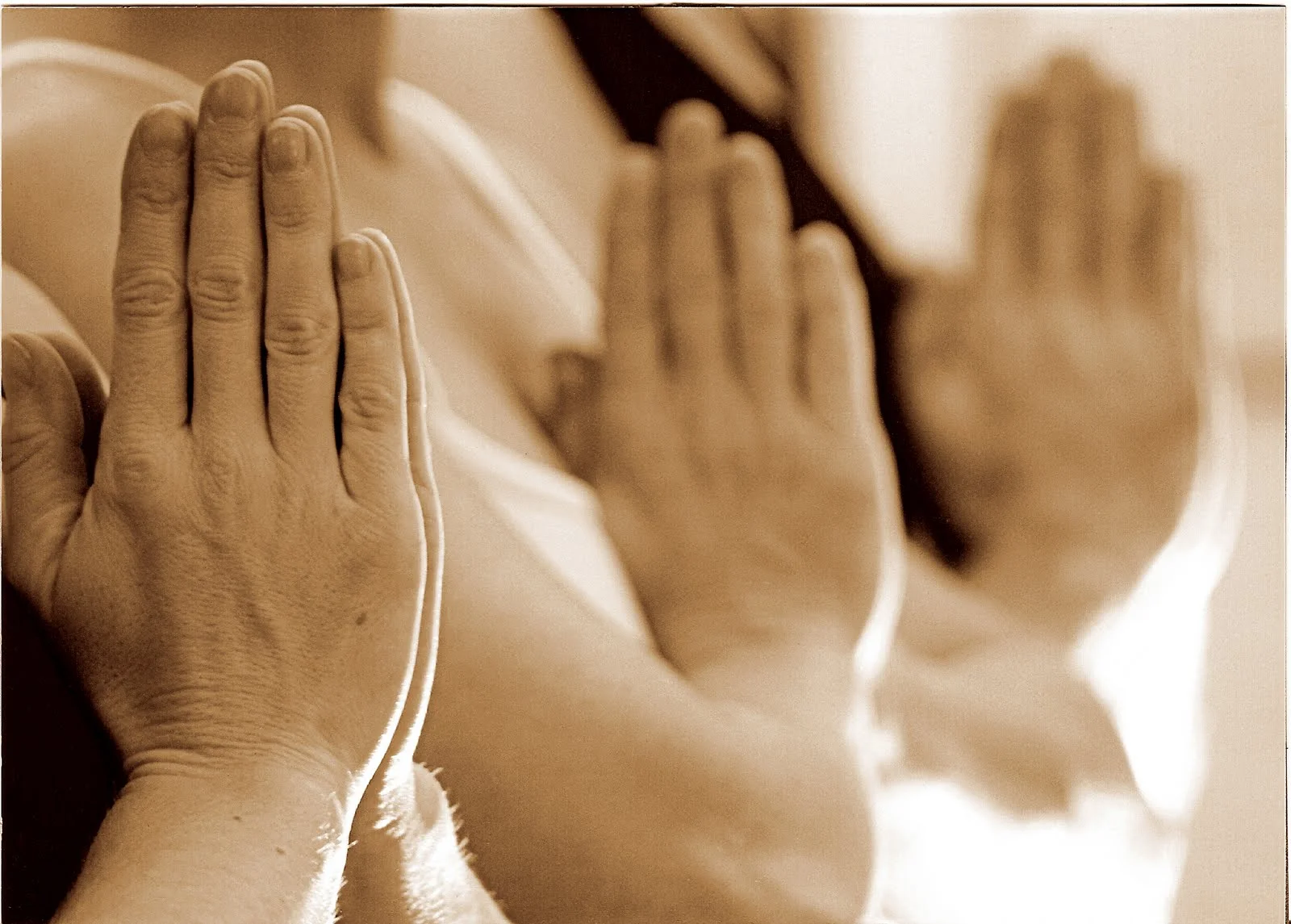
What’s the proper way of doing a ‘Namaste’, you may ask? Well, here’s what you do—first you bring your hands together, the palms pressed against each other; then you place them just below your chin; now, slightly bowing your head, you bring a gentle smile to your lips (and your eyes, too, for that matter), and say, ‘Namaste’ in a polite voice. Some people have their eyes downcast when doing so, while some look into your eyes; it doesn’t matter all that much what you do.
Your humility-signifying folded hands, the warm smile on your face, well, that’s more than enough to convey your warmth and respect for the one you are saying ‘Namaste’ to.
Yes, in the final analysis, that’s what a ‘Namaste’ signifies—respect. Respect for the god in others, respect for their inherent goodness. And, humility, that’s what the person saying ‘Namaste’ is displaying. Well, anybody would want to reciprocate such beautiful feelings, wouldn’t you say? How do you do that? By doing likewise, of course, which means giving an equally heartfelt ‘Namaste’ in return.
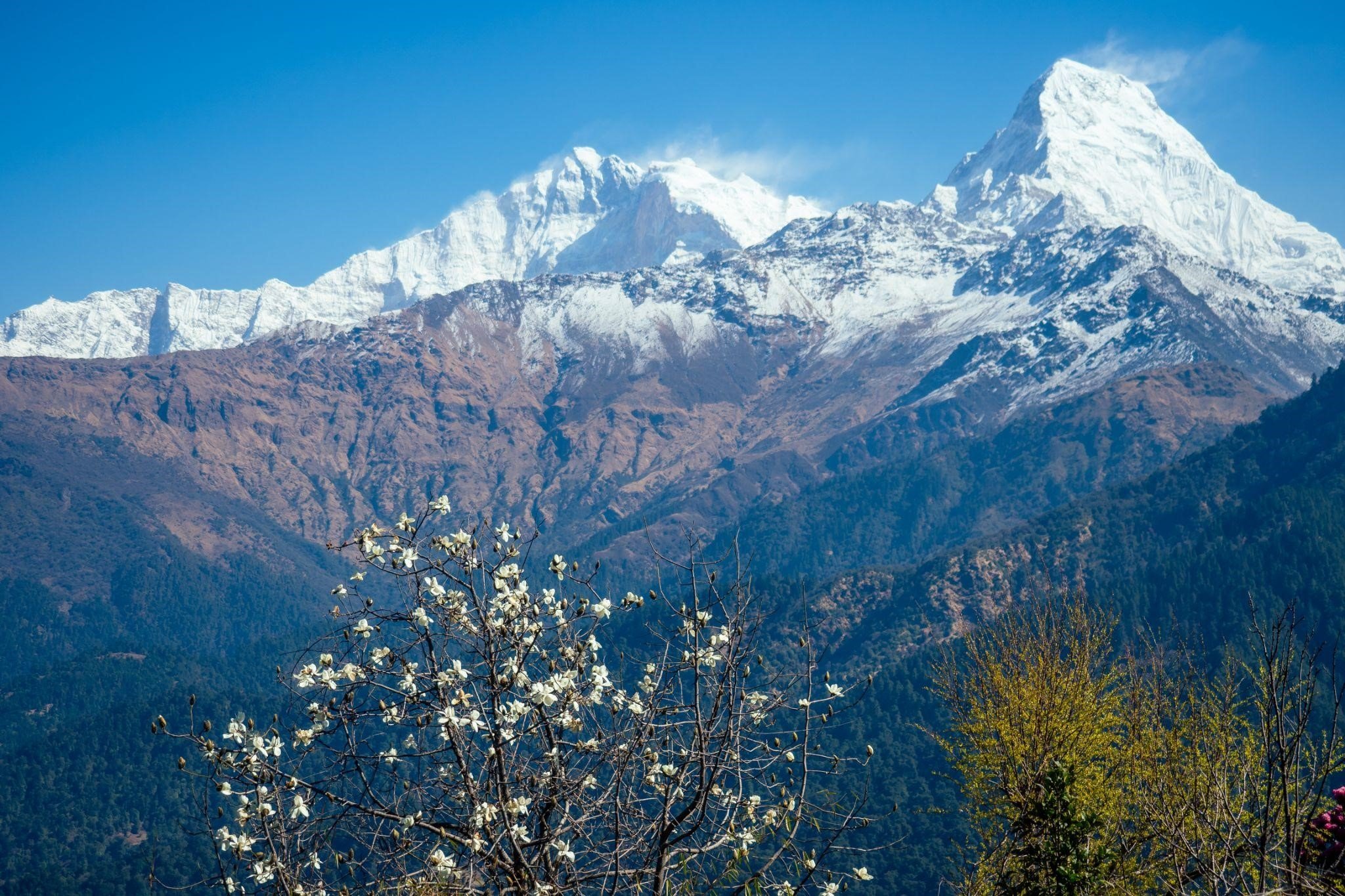
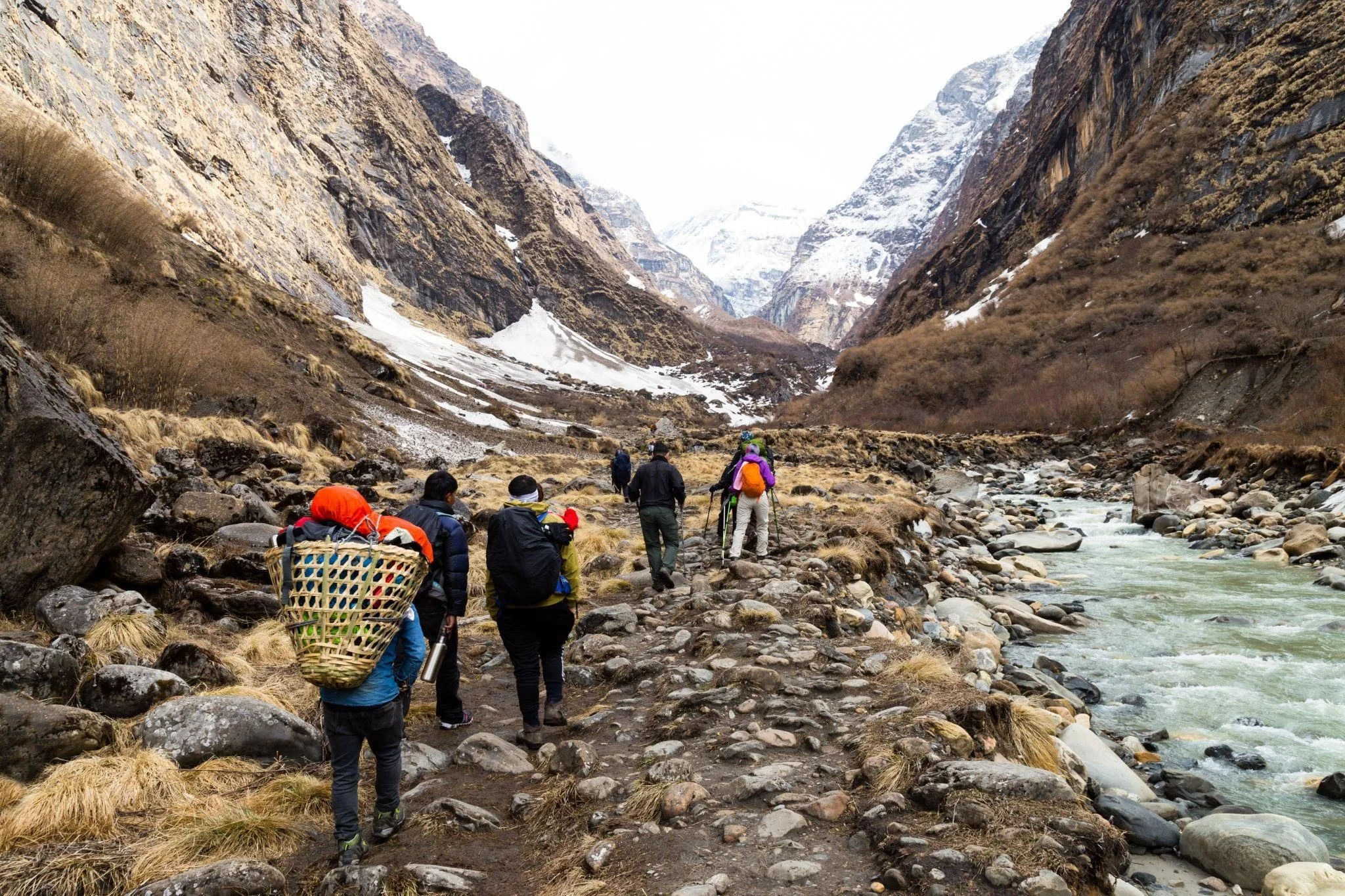
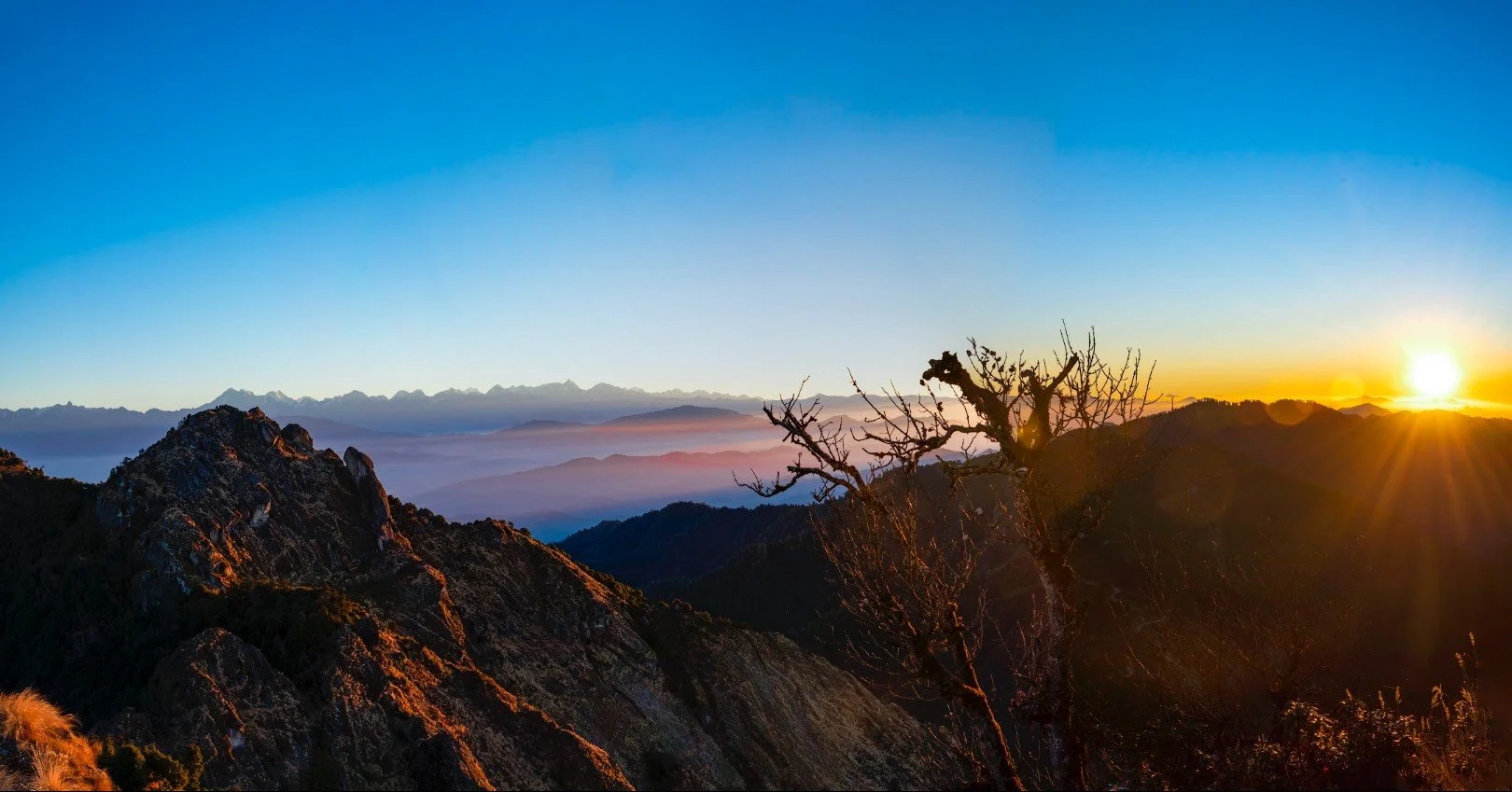
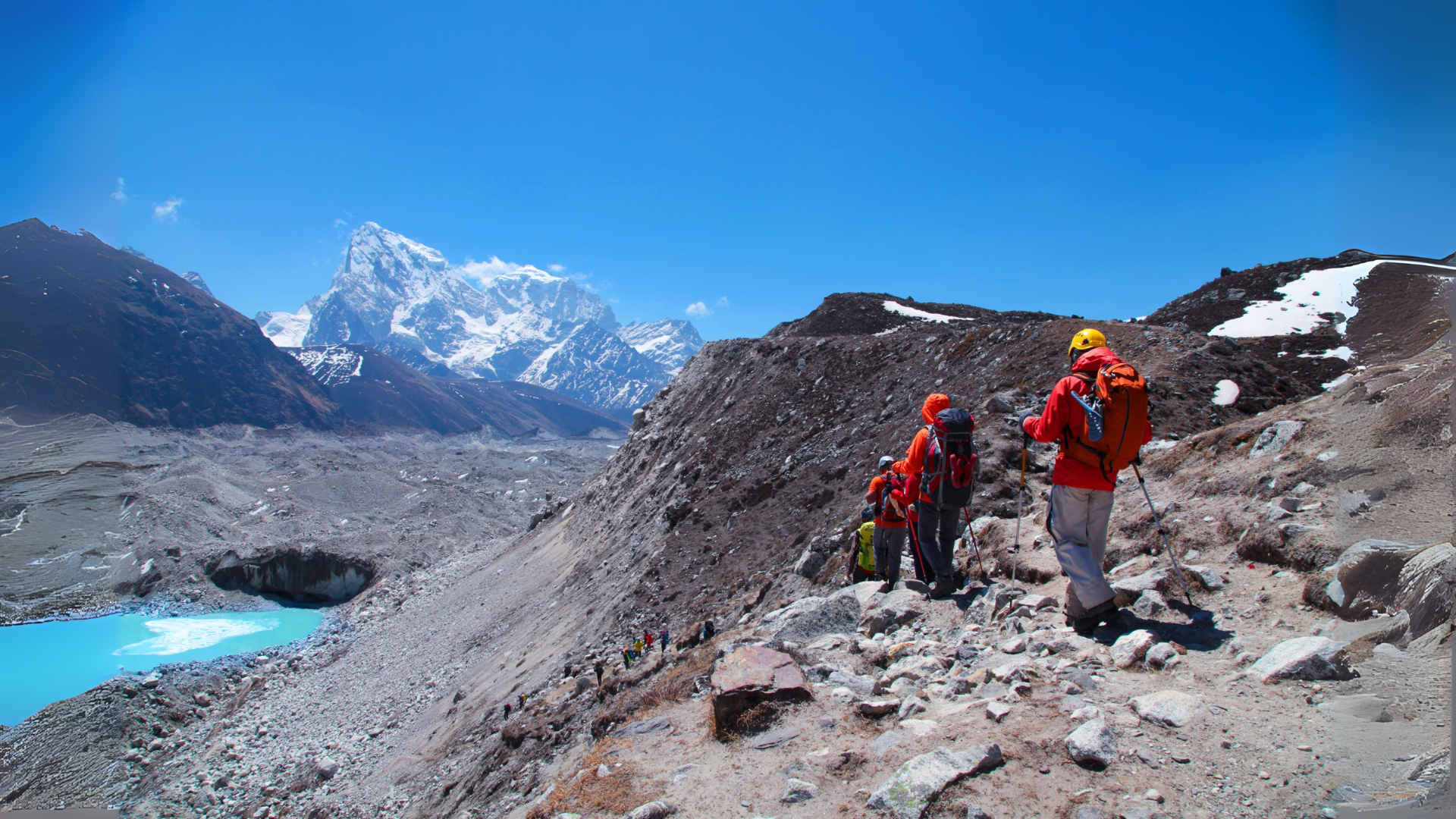

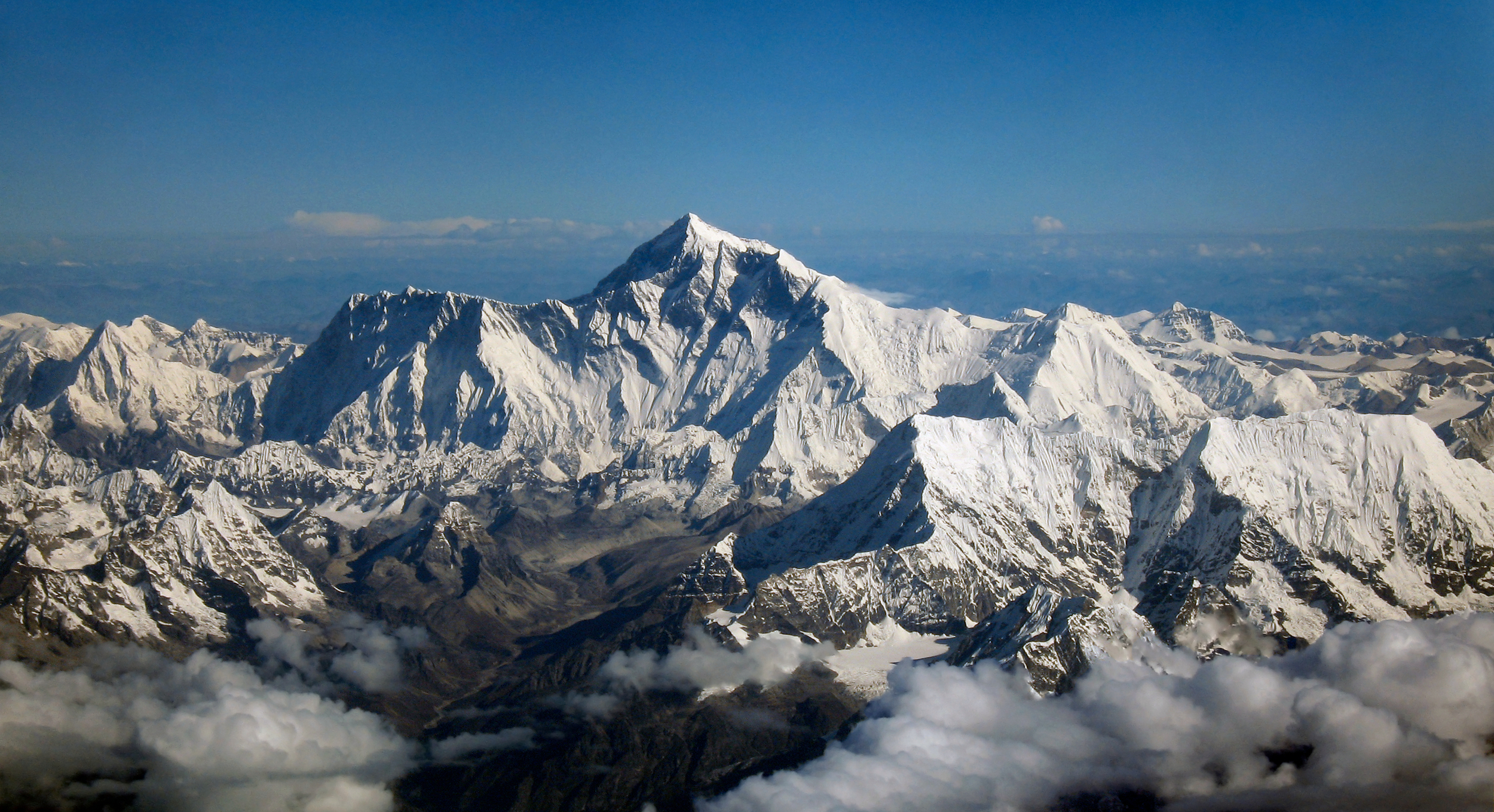
This trek is specially designed to reach the Everest Base Camp including Kala Pattar which is the best view point to view the sunrise over the high Himalayas including the Mt. Everest. This trek requires 13 days.
USD 1515 PER PERSON -- TWIN ROOM SHARING BASIS