
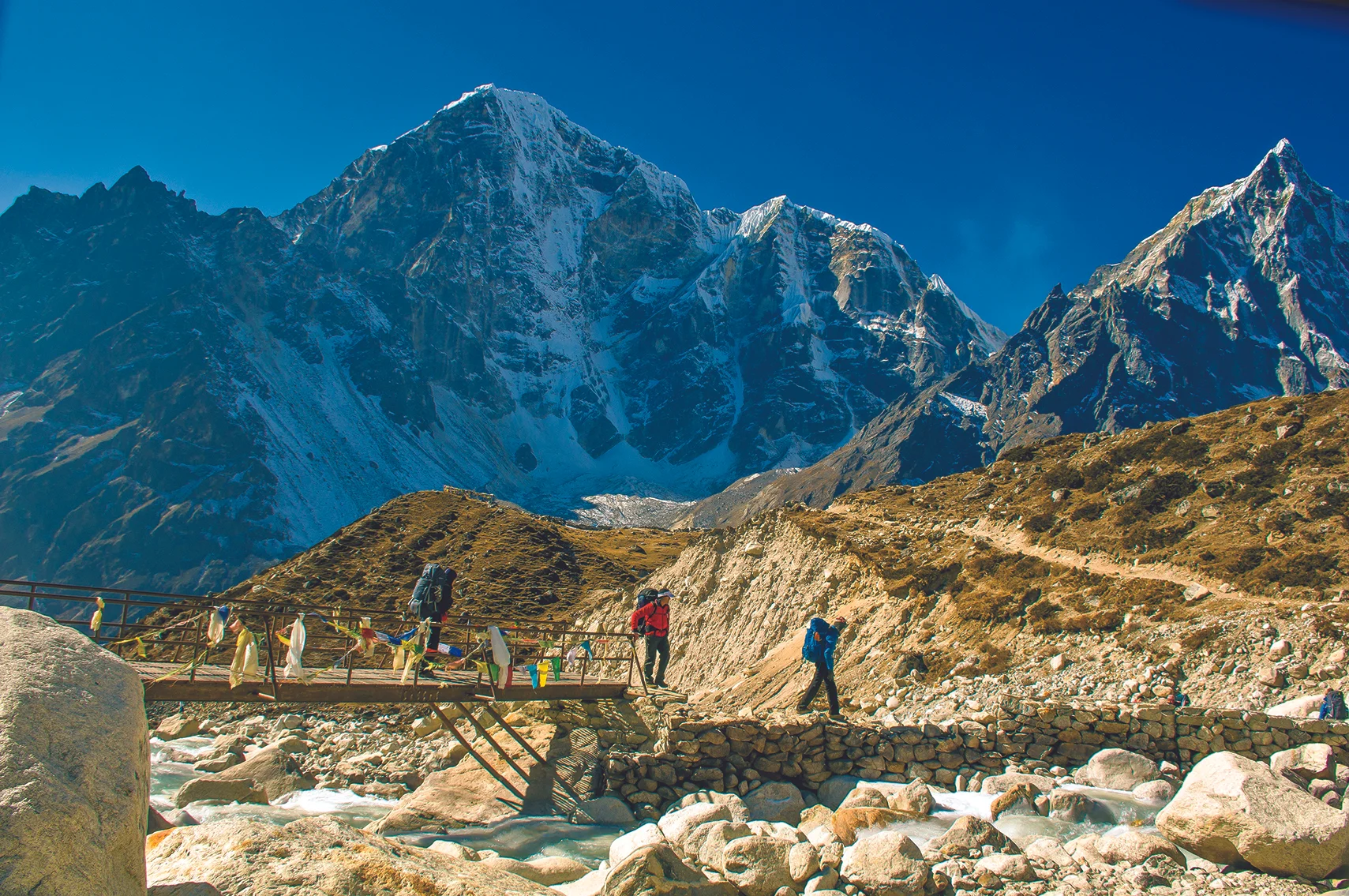
A Tranquil Escape: Trekking In Nepal
If you are planning to trek in Nepal but don't know where and when is the best to plan a trek in Nepal or wondering to visit Nepal to make an enjoyable and memorable trip with your loved ones. There are numerous popular trek destinations and various activities in Nepal for solo to a group of families and friends from all over the world.
There are numerous trekking routes to venture upon this high land and it is known as the 'Great Himalaya Trails.' It is an immense trail system that covers areas of Nepal from Humla and Darchula which lies in the west to Kanchenjunga in the east.
Trekking in Nepal is found to be completely different than that of mid 1960s. Only a few trekkers visited Nepal as a part of expedition group. But now, situation has completely changed and with the facility of accommodation with food and lodging facilities, trekkers from all around the world are encouraged to visit our country.
The three major trekking areas and the easily accessible ones are Langtang, Everest and the Annapurna regions. Amongst three, Annapurna and Langtang have an advantage as they can be reached through road connections. The Great Himalaya Trails has substantial amount of information on other hiking regions which can be easily accessible on domestic flights. Kanchenjunga, Dolpo, Makalu and Far West are some grounds covered by flights. However, this is just the starting of the journey and it takes several days of trekking to reach higher mountain areas from the local centers of population and administration.
Domestic flights usually occur early morning and two domestic flights are required to reach the starting destination of the trek. The popular trek areas in Everest, Manaslu, Annapurna and Kanchenjunga are able to provide lodge with better accommodation. Similarly, the west of Annapurna is the less visited trekking route and they may not have proper lodging facility; but they most definitely have camping style trek support.
Mustang trek has become of the most popular and common trekking destination among the visitors and travelers. It is famous for international as well as national tourists. Mustang Trekking is a superb trekking route in the Western Nepal as it takes tourists to the hinterlands of the western region of Nepal. Previously, Mustang Trekking was restricted for expedition and the land was alienated from the travelers. But now, it is be swarming with visitors and has become a major tourist hub.
Along with this, Manaslu Circuit Trek is another famous trekking route. It has successfully attracted the intended tourists and adventure seekers. Many come here for the purpose of hiking and trekking. They get full experience of the serene beauty of high lands. Nepal has captured the imagination of the entire world with its unsurpassed beauty.
The southern areas of Nepal are usually preferred to trek as they receive higher level of precipitation. We can find climate variations as some routes along the Great Himalaya Trails lie in the rain shadow. These dry lands on the north fall on the leeward side of mountains. The places that fall under it are Mustang to the north of Annapurna with Manaslu and Dolpo to the north of Dhaulagiri.
Post monsoon season can be a great time for trekking as the weather tends to be clearer. Winter can be good but the trekkers have a disadvantage as this season has shorter days. Spring season can also be affected by the seasonal rain and snow storms. Summer season does not last long and it is quickly followed by the monsoon season. Thus, no season is perfect for trekking purpose and the trekkers have to make though decision about which kind of season is most desirable for them.
- Here are few of the refreshment activities that you can try on the Himalayas:
- Yoga and meditation – As dramatic as it sounds to climb to the top for meditation; yoga is a stress reliever and you can relax peacefully in a calm environment.
- Indulge yourself with nature – Flora and fauna found in abundance in the mountains and you can carry your camera and explore this rich land. Who knows, you may even stumble upon a Yeti! You can immerse yourself in the lakes, rivers and lowest gorges.
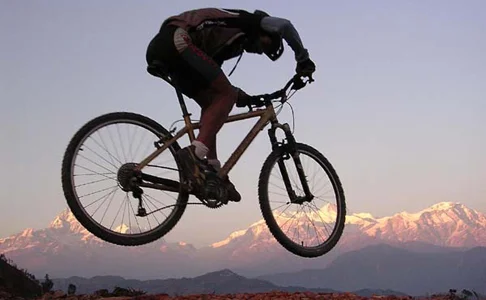
- Mountain biking - You may want to test your physical limit by taking a mountain bike up to the high lands. As the trail is diverse, you can bike on a clean bumpy road to bumpy rough trails. You will enjoy delightful greenery and elevated mountains in the backdrop.
- Everest Skydive?! – As crazy as it sounds, you can have the best spine chilling adventure with the combination of the highest peak of the world and mind blowing sport of skydiving. You can get view of the Everest region with stupendous mountain views and the Sherpa settlement below makes this experience a lifetime achievement.
- Take mountain flights – You can choose to fly close to the Himalayas to get an unbelievable scenic view of this tremendous chain of snow covered mountains.
- Shopping! – Who does not like doing good old shopping? Astounding handicrafts items of excellent craftsmanship are found in the Himalayas. You can get souvenirs for you and your loved ones. Items like thangkas, pashmina, carpets, jewelry, prayer wheels, stone carvings etc. has great cultural significance.
- Faith healing – You can explore the mysticism of the animalistic of Himalayan culture. The process involves honoring the earth and respecting the spirit which is believed to reside in all of us.
- Mingle with the locals – Nepalese are considered to be the friendliest of the lot and you can always socialize with them. You can feel their optimism, simple yet powerful spirit and get a taste of their genuine warmth. A simple gesture of 'Namaste' can lead to great friendships with unforgettable memories.
The trekkers can be enthusiastic about the idea of solo trek with their own schedule and convenience. But do you want to risk the unknown and get stranded in a situation with a major storm, temperature of at possibly 5,000 m and zero visibility? Thus if you want to avoid the risk, it is advisable to you travel with a group of trekkers for support and guidance.
Similar Posts
The Magic of Boudhanath
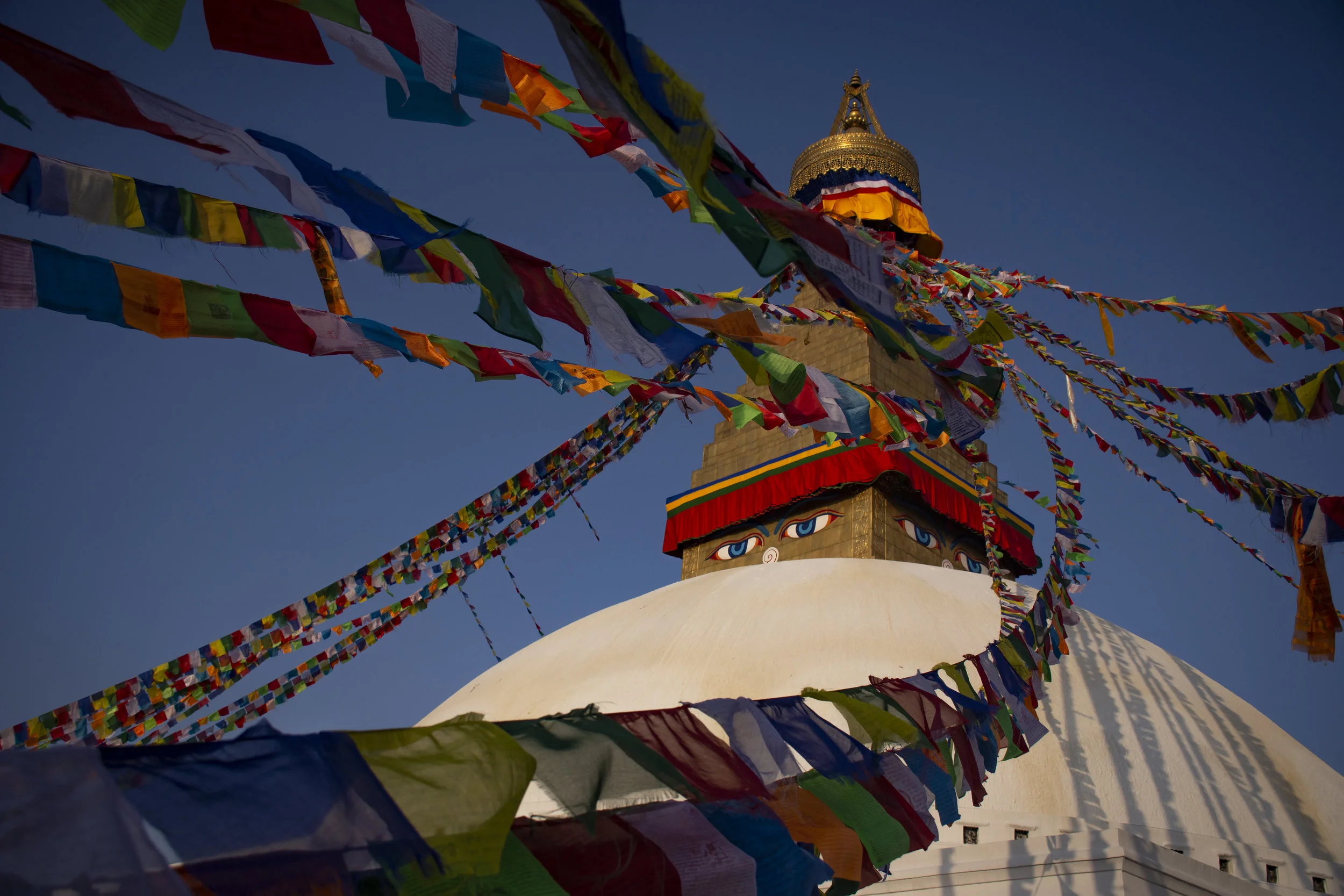
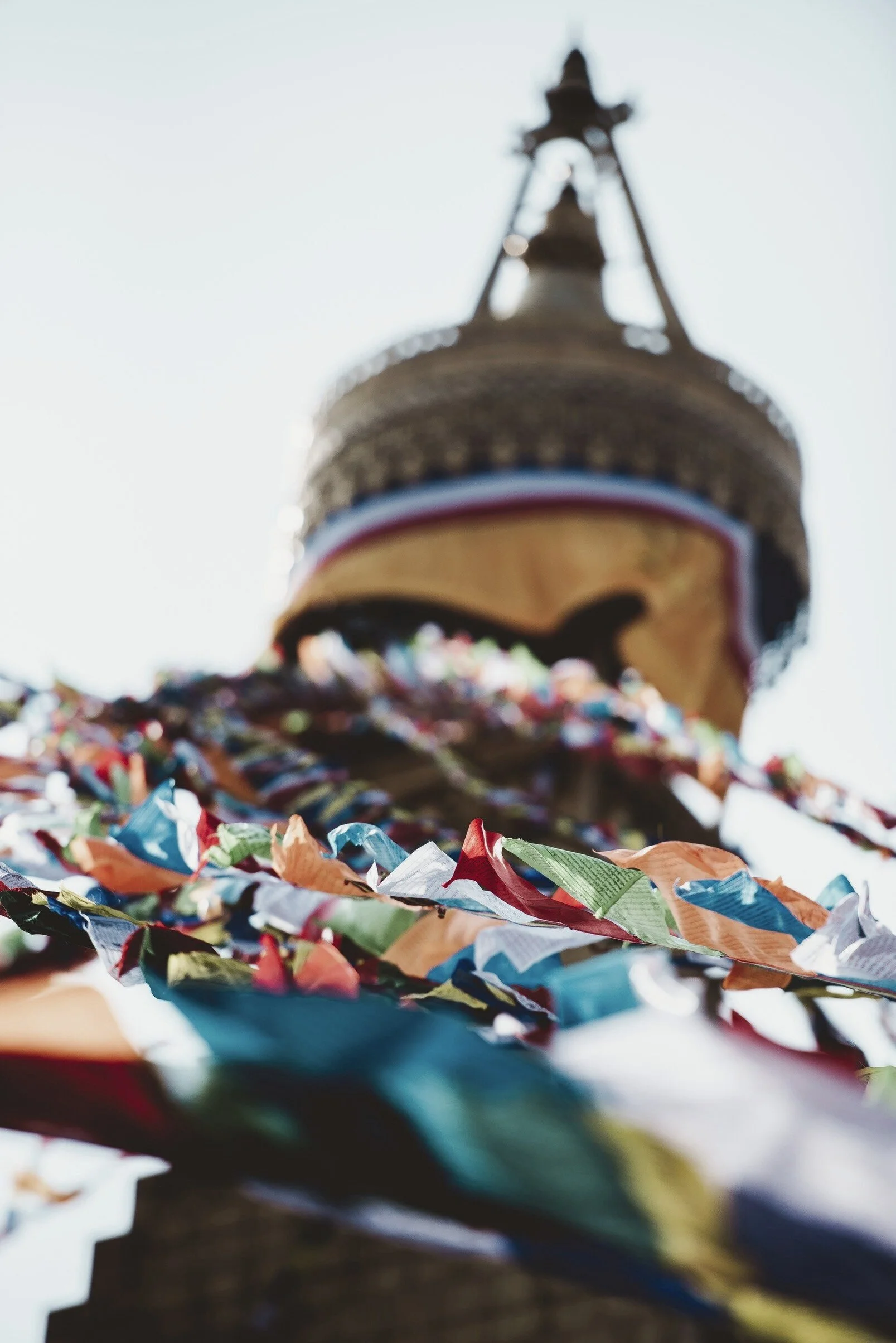
We have heard the origin of Swayambhunath Temple atop the hill of Kathmandu. Similarly, like a Swayambhunath, Boudhanath which is one of the largest stupas of its kind and another pilgrimage to the Hindu and Buddhist all over the world. Many of us are still unknown to the origin of 36-meters sky high stupa, Boudhanath yet.
Shreyashka Vikram Raj Maharjan
Entering the premises of Boudhanath, at times feels as if I magically transitioned into an other worldly dimension. As I sat down, by the bench, I couldn’t but help but question, what makes Boudhanathso magical?
The sites and sounds at this tiny mescocosm, has a tint of serenity. From the melodious chants, to the aroma of incense, one can’t help but close their eyes and just escape in the magic. When a site amazes me, the first thing I do is photograph everything that gives the place life. The monuments, people, relics and buildings. Resting my camera atop the table, scrolled through the catches of the day. I looked up how the place was in ancient times, the pictures that came up made me wish I had H.G Well’s time machine.
The second thing on my list is looking up the history and seeking the masters who gave this its transcendent magic. Flipping through my archives of chronicles, I found the most accurate writings of the creation of Boudhanath in the pages of the “History of Kings of Nepal” compiled by Daniel Wright. As the legend go, King Vikrama-Kesari found that the shrine of his forefathers the Narayana fountain suddenly went dry. He was at dismay and grieved at the loss of the memorial of his forefathers and thus to find a malady he went to Buddha Nil-kantha for advice. “ The deity told him to consult the astrologers. He did so, and after some deliberation they said that it required a sacrifice of a human being possessed of the thirty-two attributes. The raja resolved to obey these directions; but thinking that to sacrifice a subject would be a sin, and to kill his own son, who possessed all the requisite attributes, would be cruel, he determined to be himself the victim. He therefore called his so Bhup-Kesari and ordered hum to kill, without looking at his face, a certain man, whom on the fourth day after that, he should find lying covered over on the fountain. The price, going there on the appointed day, in accordance with his father’s commands, and not knowing who the person was, cut off his head. Blood rushed out of the dhara, and the crocodile on the fountain turned back his head that he might not see a parricide. The son then went to wash his hands in the Ikshumati river, and was surprised to see swarms of worms floating in the water. On returning to his house, he heard a great noise of people shouting out that the price had killed his father. The prince then silently performed his father;s funeral ceremonies, and making over charge of the government to his mother, he went to Mani Jogini to expiate the sin of parricide. Seeing him very forlorn, the Jogini informed him that he could expiate his crime by building a large Buddhist temple, two miles in circumference, and having four circles of gods. The spot for the temple would be indicated by the perching of a kulang (crane) which would take it’s flight from the mountain. The bird accordingly alighted, the spot for the temple was marked out, and the work begun.” - Wright, 1877, 99-100
The stupa of Boudhanath is also called the “Stupa of a million due drops” as during the construction of the temple a great drought had over shadowed the Nepal Valley and the workmen made the bricks for the temple collecting water from dew. They also according to the legends, soaked their cloth in the streams wrang out the moisture. It is said, “When the bricks were being made, Barahi Devi to test their strength, came in the shape of a sow and trod on them. This visit being repeated the Raja inquired who she was and the Devi, acceding to his prayer, disclosed herself in her true form. The Raja to show his gratitude, placed her image at the entrance of the Buddhist temple which contained all the deities.” - Wright, 1877, 100-101
After finishing the temple, the Prince presented himself to Mani Jogini. She was well pleased with him for having punctually carried out the directions which she had given for building the temple, and said. “You have been cleansed from sin, and your grandfather who got the tree of riches and expended them in charity will again appear in the world, when three thousand years of the Kali Yuga have passed away, and he will change the era, when will then be known as Vikram Sambat, or the era of Vikramaditya.”
When hearing the legends today, they might sound out of place but that’s the beauty of time and lineage. It is a testament of how out of darkness comes light and that is what the stupa of Boudhanath is. It has been the centre of faith of not just the natives of this valley but also to travelling pilgrims who view the stupa with great veneration and hold it close to their heart. It is the same faith and devotion that lead to the stupa to be rebuilt the quickest among the the monuments that were affected by the 2015 earthquake.
The city around the stupa of Boudhanath might have changed. The traditional houses now, towers of steel and concrete, the streets leading to Boudhanath now paved with asphalt. But the stupa, which has withstood the test of time is still a remarkable example of faith and devotion.
Similar Posts
A guide to the highest peaks in Nepal
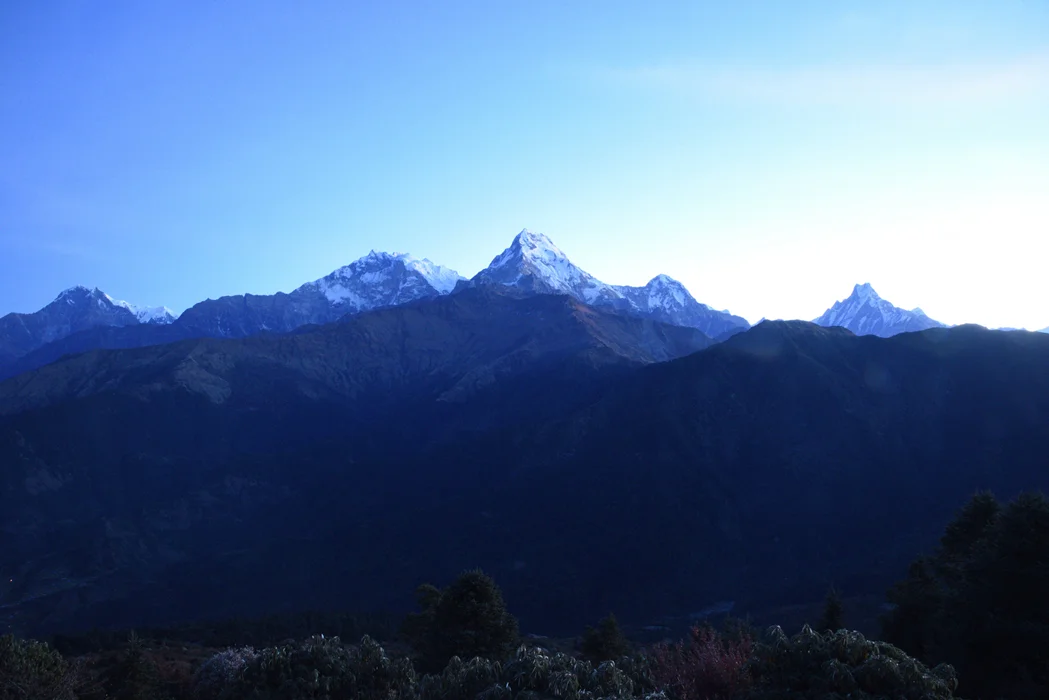
A short guide to the highest peaks in Nepal to help plan the next trekking destination for the coming season. Those who want to venture for a simple trekking route or daring trekkers who want to venture virgin lands with the help of skillful guides, Nepal has several trekking trails that are suitable for every trekker.
Aasma Aryal
Nepal is a land of the exalted Himalayas and a home of the greatest mountain chain in the world. More than 250 peaks are found to be congregated in our beloved country and it is a unique cluster of giant and dazzling summits. There are approximately 800 km of the Himalayas in Nepal amongst which eight of the world's fourteen highest peaks fall under it. Nepal is considered to be the major highlight of mountain tourism(trekking in Nepal) as the spectacular mountain range overlooks the deep valleys with rambling pastures and the swarming Sherpa villages.
The western edge of the Himalayas prolongs up to the Indus River and the Nanga Parvat. It is considered to be the highest mountain in the western side of the Himalayas and is the 9th highest in the world. Whereas, the north-western section of the Himalayas are known as Karakoram and the Hindu Kush. In total both of these ranges cover more than 1300 kilometres.
The Himalayas have one of the largest ice accumulations in the world after the Polar Regions. The Himalayas have about 1500 glaciers and they hold up to 3000 cubic miles of fresh water and it is considered to be the source of one of the biggest tributaries in the world. Some of the major tributaries with starting points to reach the glacier deposits are: Jhelum, Ravi, Sutlej, Brahmaputra, Ganges, Yamuna, Beas, Yarlung Tsangpo, Ayerwadi, Indus, Salween, Mekong, Chenav, Ravi, Yangtze and Huang He.
The mountains of our country have proved to be major sources of many rivers along with the glaciers which play an important role in the country's economy. About 9% of our total land is covered by Himalayas and there are many climbable peaks in that region. However, some of the peaks are left unclimbed and it is held sacred by the local ethnic group.
The giants are sacred to the religions of Bon, Jain, Buddhism and Hinduism. From historical point of view, Nepal is known as the home of the Himvat which is considered to be the father of Ganga and Parvati. Similarly, Kailash in the Tibet is known as the home of the Buddhist messengers, Hindu gods along with the root of Jain and Bon religion.
Nepal has the highest Himalayan ranges of the world and it wraps and protects the Himalayan lifestyle and culture. Various expedition programs are arranged for adventurous trekkers who come to prove their might by stepping on the giant peaks of the world. Some trekkers might want to venture simple trekking routes whereas daring trekkers can venture virgin lands with the help of skillful guides.
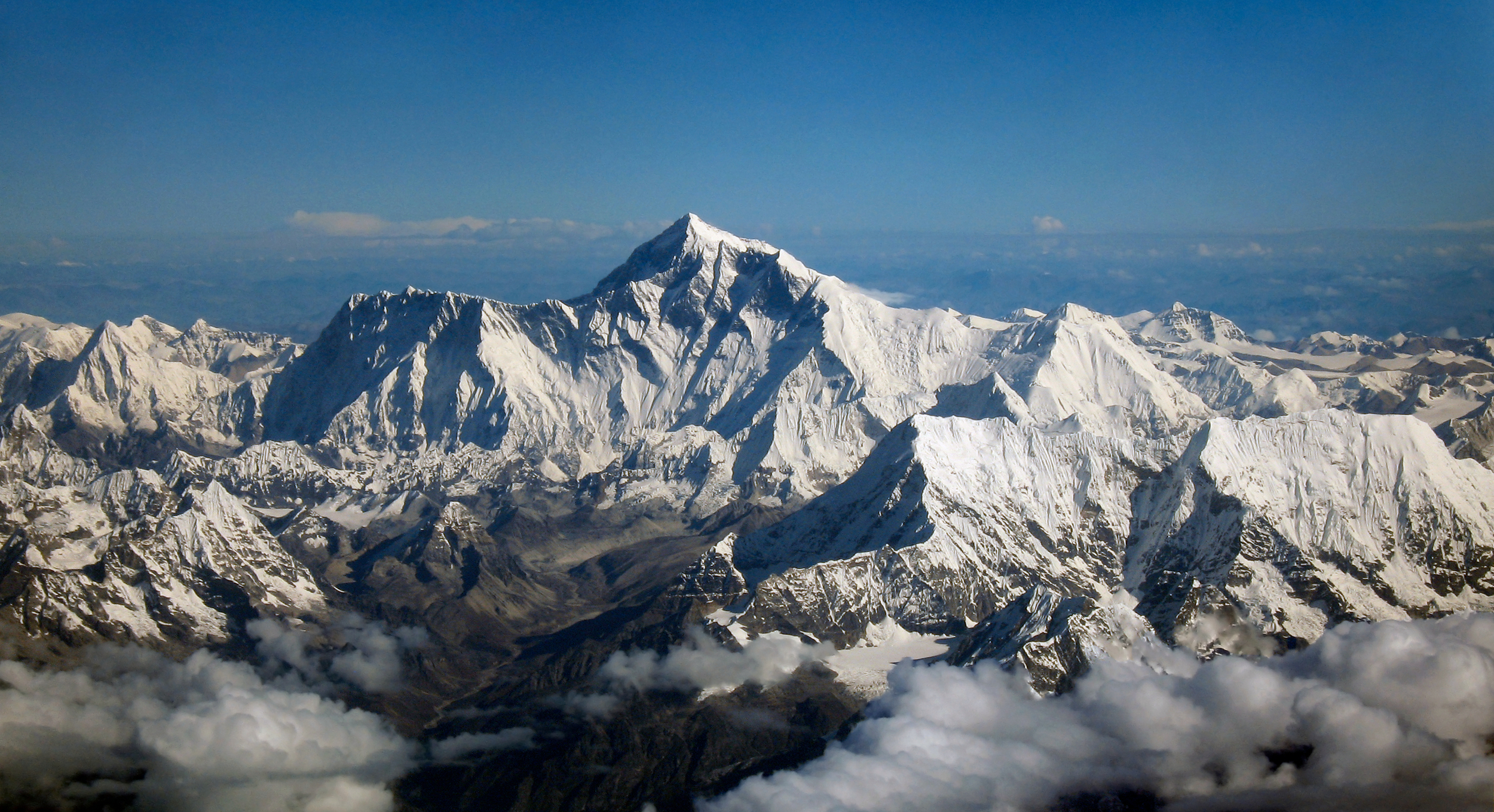
Everest is the place for outdoor enthusiasts and thrill seekers. The giant of the giants lies in between the border between Nepal and Tibet and remains to be sacred for people of both places. It has proudly stood throughout history as the highest peak of the world.
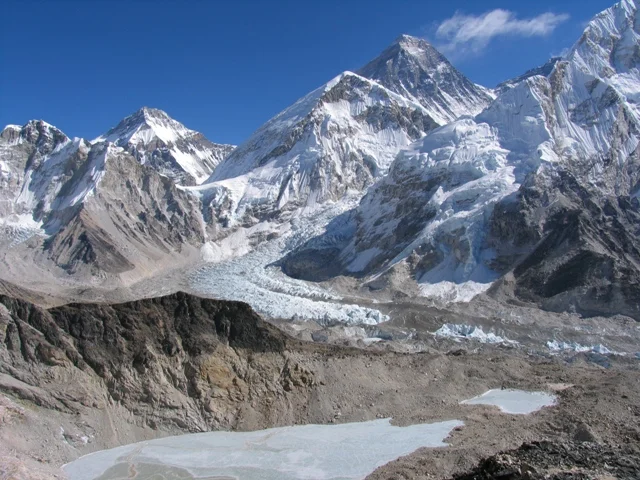
Everest Base Camp trek is one of the popular multi-day trekking destination in Nepal
Kanchenjunga is the third largest mountain in the world and lies on the east of Great Himalayan Trails. The locals consider this summit as sacred. Kanchenjunga literally means "five treasures of snow" as it consists of five separate peaks.
Lhotse is the fourth tallest mountain of the world. Besides this main summit there are Lhotse Middle (8,414 m) and Lhotse Shar (8383 m). Lhotse is connected to Mount Everest via the South Col and the name signifies "South Peak" in Tibetan. As it is joined by a ridge to Everest, many climbers venture upon both the mountains.
Machhapuchhre (fishtail mountain) is the most iconic and well known mountain of the Himalayan horizon. Visitors can admire this giant from the city of lakes, Pokhara which is only 25 km away. This mountain is considered holy and apparently no one till record has climbed it to the summit.
Similar Posts
The Legend of Bhoto Jatra
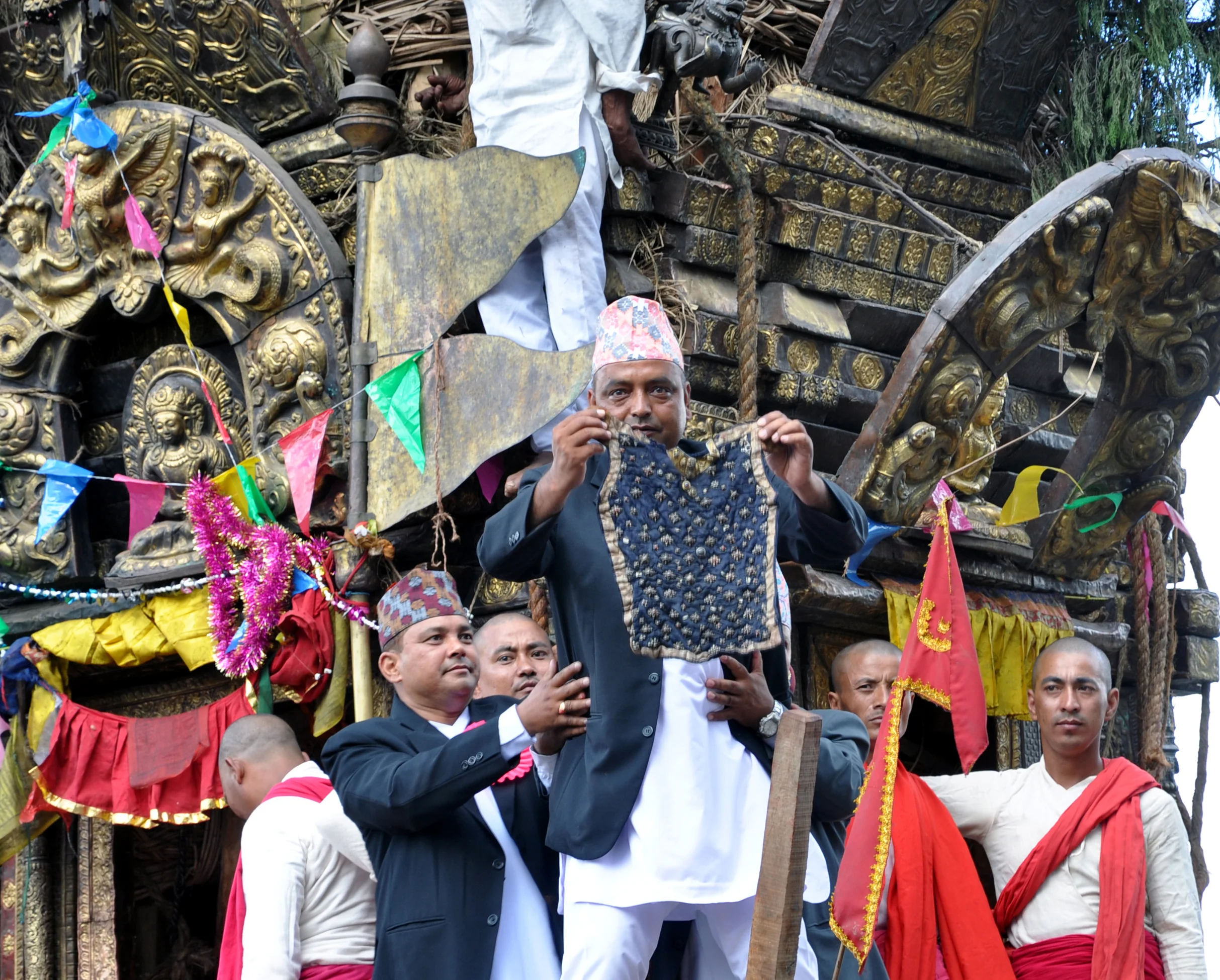
The legend of a jewel-studded vest (Bhoto) that came into possession of a priest when no one came to claim with evidence to whom it belongs. Today, the same Bhoto is displayed ending the month-long celebration of Rato Matsyendranath Festival in Lalitpur. And it is said, Bhoto is shown every year to the public as of an announcement to claim for it.
The annual festival of Rato Matayendranath, dubbed the longest chariot festival is the world is drawn to a close with the infamous bhoto jatra. The chariot begins its journey after the construction of the chariot, which is when pulled by revellers through the ancient roads of the city of Lalitpur.
Once the chariot festival reaches its final destination in the Jawalakhel, where it is placed for four days for religious observance. The bhoto is shown to a to the crowd, which is believed to rid all those who see it of there sins. It draws a large crowd, with from dignitaries to layman, from all over Nepal.
"According to legends, one day a Baid (Physician) of King Harisinha - deva of the Lichavi Dynastyc was preparing to bathe in the water at the junction of Bagmati and Bishnumati. When he was accosted by the King of Snakes (Karkotak) who in the form of a Brahman(Priest) was seeking for a Baid to cure a malady with which his Rani’s (Queen) eyes were affected. The King being satisfied with the physician entreated him to go to his house and see a patient. The Baid, after finishing his ceremonies and bathing, went with the Brahman. They arrived at a pond, at the south-western corner (of the valley of Kathmandu), a thousand bow shots beyond Chaubahal(Chabahil). The pond was so deep, and the water so black, that it was frightful to look at. It was shaded by trees, large fish played in it and it was covered with waterfowl. The King told the Baid to shut his eyes, and in a moment he jumped with him into the water, and they arrived at the Durbar (court) of the Nag-raj ( Snake King) in Patalpuri. The walls of the palace were of gold. The windows of diamond, the ragters and beams of sapphire, the pillars of topaz adorned with rubies. The darkness of the subterranean palace was dispelled by the light emanating from large jewels in the heads of the Nagas. They entered the palace, and saw the Nagini, sitting on a throne studded with jewels of several sorts, shaded with three umbrellas of white diamonds, one above the other and surrounded by beautiful Naginis. King Karkotak assuming his proper form, took the Baid by the hand, and gave him a seat near the throne. He himself mounted the throne, and showed the patient to the Baid. The Baid, having examined her eyes, took out a drug from a bad which he carried at his waist, and having rubbed it on a clean stone, applied it to the eyes which were instantly cured. King Karkotak gave the Baid a handsome present and a dress of honour, and having expressed his gratitude, made him a promises that his descendants would be good curers of eye- diseases. The descendants of the Baid, accordingly, were renowned as a good eye doctors Hari-sinha - deva, having been made acquainted placed to reside in, near Sesha Narayana ( On route to Chobar)." Wright, 1877, 178-179
The Baid wore the vest at all times but one day, while he was working in his farm he got very hot and took off the Bhoto and placed it down. At that moment, a ghost stole the Bhoto which bestowed its wearers great strength reeked havoc to the citizens of Patan. During the final day of the chariot festival of Rato Matayendranath, the ghost was causing trouble which attracted a huge crowd. The Baid heard the commotion and went to see what was happening and was shocked to see it wearing the bhoto. He immediately began to quarrel with the ghost stating that the bhoto was his property and that it was given to him by King Karkotak. As they quarrelled they were suggested to take it up to the King and Lord Karunamaya.
The King gave each a chance to prove that the bhoto was their possession but, both failed to show substancial proof. Thus the King decided that, until the rightful owner of the bhoto comes back with proof that it belongs to them. It would remain under the protection of Lord Karunamaya and it would go where ever he went. And every year the bhoto would be shown to the onlookers after the chariot reaches Jawalakhel, when one could contest for the bhoto.
Till this day, after the chariot of Karunamaya (Rato Matsyendranath) reaches Jawalakhel and on the fourth day. The bhoto which is kept with Karunamaya, is unsealed and shown to the onlookers. Devotees from around the country come to bare witness the Bhoto, which is believed to rid its onlookers of all sin.
After the ceremony the bhoto is resealed with a lal mohar (Red Stamp) and taken to a safe undisclosed location by the Guthi of Karunamaya.
Similar Posts
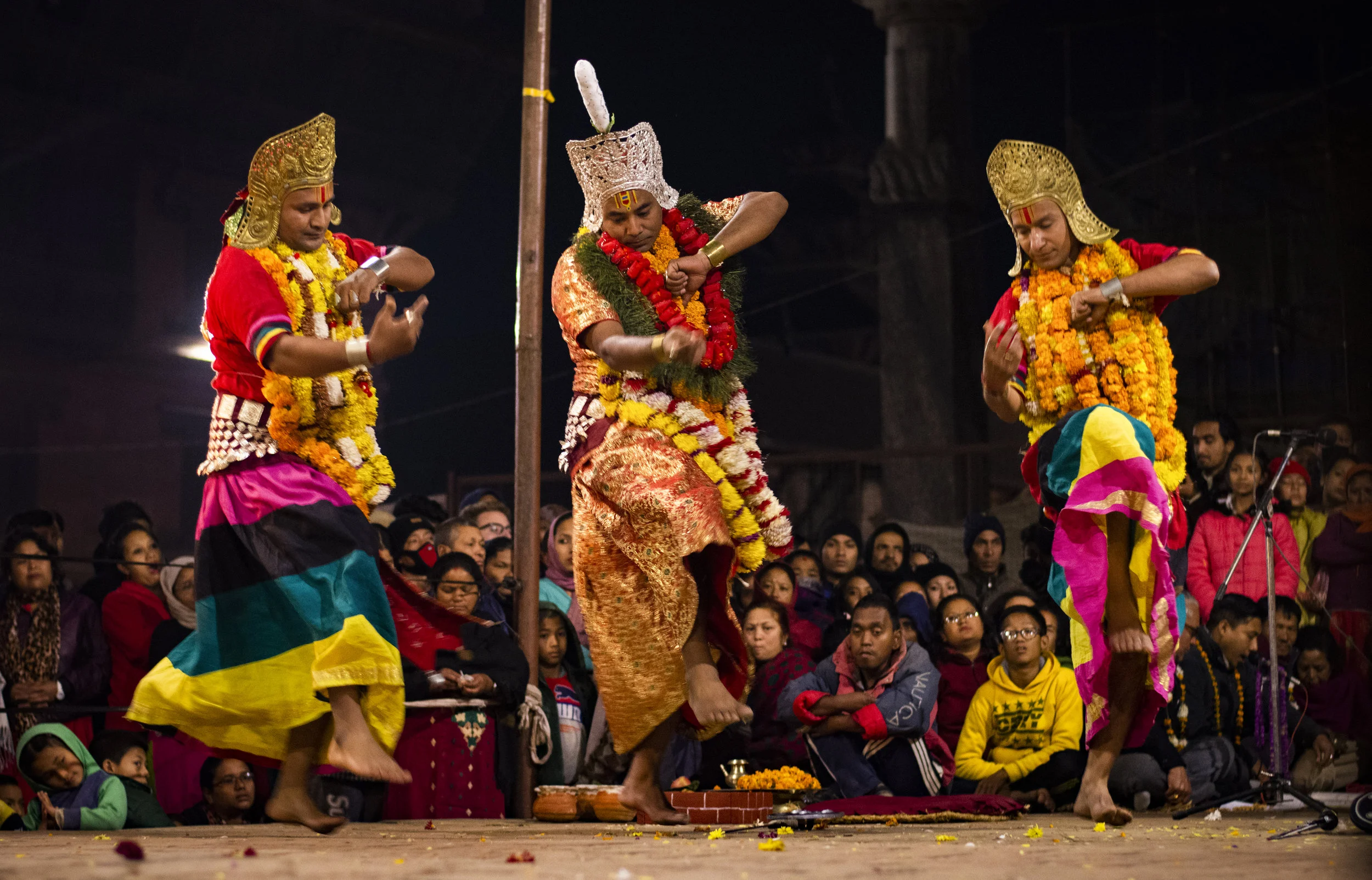
Kartik Naach : An Archaic form of story telling
This particular act carries a message that anyone who tries to do ill and harm others, s/he is punished and no one escapes justice. A story of a powerful demon king had a son. The son refused to acknowledge his father as supreme lord of the universe and claimed that Lord Vishnu was all omnipresent
Dubbed the longest Naach(Dance) in the world "Kartik Naach" has been entertaining the crowds that gather in Kartik Dabali on the chilly nights of Autumn for more than 376 years. Siddhi Narsingh Malla, staged the first ever performance in 1641 AD (1728 B.S). During his era, Kartik Naach lasted for 15 days which was extended to 25 days by his son Srinivasa Malla and to 27 days by his grandson Yog Narendra Malla. But nowadays, due to lack of proper funding it is only performed for 10 or 12 days according to the astronomical charts.
This dance has faced many hurdles and obstacles such as during the revolution of 2007 B.S(1950 AD), the dance was only performed for two days. Before which it was performed for the complete 27 days, only two acts were shown till 2037 B.S the dance of "Barahi and Narasimha". In 2048 B.S (1990 AD) the dance was lengthened to 8 days with the help of different groups and individuals. In 2070 B.S(2013 AD), two more days were added and again in 2071 B.S (2014AD) it was extended to a 12 days.
The main crowd puller is on Kartik Krishna Pakshya Trayodashi Tithi, when the Narasimha avatar is staged where Narasimha an incarnation of Lord Bishnu who is part a fiery lion with the body of a human kills the demon Hiranyakashyapu. This particular act carries a message that anyone who tries to do ill and harm others, s/he is punished and no one escapes justice. According to Bhagwat Purana, Hiranyakashyapu was a powerful demon king and had a son Pralhad. The son refused to acknowledge his father as supreme lord of the universe and claimed that Bishnu was all omnipresent and described the benevolence of the deity. The demon king became angry and tried to kill the son. All his efforts went in vain. One evening Hiranyakashyapu asked his son if his god was there in the pillar. Upon hitting the pillar, out came Narasimha, an incarnation of Bishnu, in the form of half-man and half-animal. The deity then killed the demon with his nails keeping him in his lap, standing on the threshold at dusk.
This year, it shall be staged on 2nd of November ( 16th of Kartik). Kartik Naach as 11 more acts this year which started form 24th of October with the act of Sudhama and shall end on 4th of November with the Act of Dadhi Leela.
A Brief History
During the reign of Siddhi Narsingh Malla, relating the legend, a great misfortune befell on the land. It was as if the city had lost its luster. No amount of pujas and yagyas seemed to restore the original splendor of the city. Downhearted, the king consulted with his learned gurus. They advised him to invoke Narasimha, the ferocious, wrathful and blood thirsty incarnation of Bishnu, to help him solve the problem. But there was a catch—invoking Narasimha to his aid demanded a hefty price—narbali, the ritual sacrifice of a man, which had to be performed annually, without fail.
The King was skeptical. Surely, none would gladly put their life on the line, not even for the Gods. His gurus, Haribansha Rajopdhayay and Bishwanath Rajopdhayay, suggested an alternative , one that would avert disaster and, most importantly, spill no innocent blood. They would invoke the gods through Tantrik means, with strong spells, a form of symbolic narbali.
A brilliant idea struck the king; to stage a play. The play would symbolically offer the gods their desired narbali, it would be a good education for the people. He wrote the complete play by himself . The theme revolves around Narasimha, the wrathful god, who was called forth to divert the disaster.
Times have changed, since the golden era of the Malla Kings were spells and magic averted and lifted misfortune, Nepal is in a tunnel of transition from a traditional to a modern society. During the struggle for economic and individuals prosperity, we have lost allot of valuable historic traditions, rituals, culture and literature. The rise of globalization and technology has changed the way we view the world and western influence has charmed us with its appeal. Which is leading us to a complete white wash of our cultural identity, archaic traditions like the Kartik Naach are in much need of the peoples attention and support as this is not just a dance , but a peak into the culture and history of the people of then Nepal.
Similar Posts
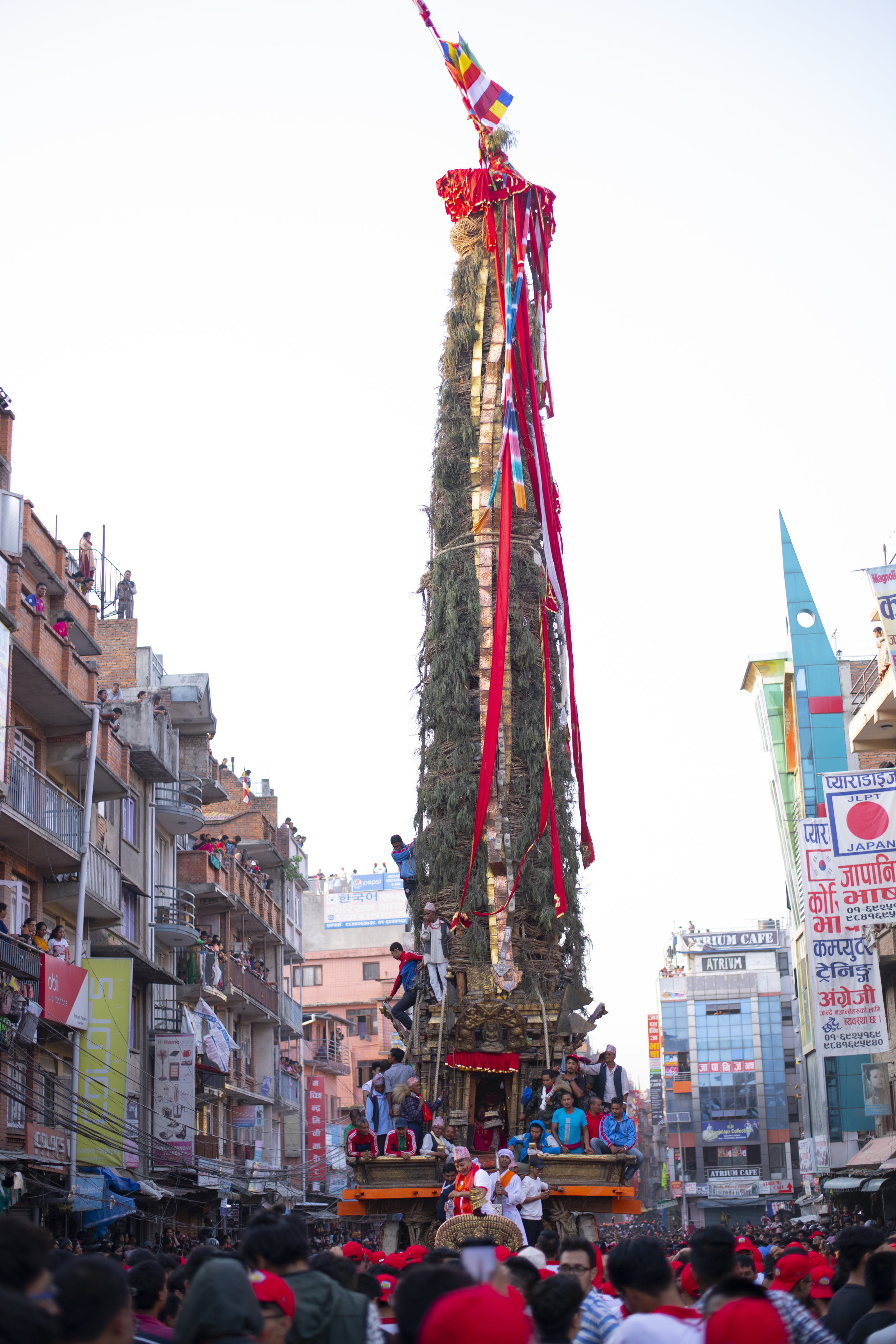
The Festival of Rato Matsyendranath
The legend of a giant chariot festival began with the Kingdom that drought for years causing misfortune and chaos as a result of disrespect to Gorakhnath. And, how Matsyendranath through devout and prayer, guru of Gorakhnath protected the valley with rain for the harvest, pulling the chariot and celebrating the coming of Lord Karunamaya.
Rato Matsyendranath Festival in Nepal
As you look up at the pinnacle you can't help but marvel at the feat of architecture that is achieved every single year. You can't help but fathom and hold a breath when the revellers put all their hearts and strength to pulling the chariot to the words of, "Haste Haiste."
The annual chariot festival of Rato Matsyendranath in Nepal, dubbed the longest chariot festival is the biggest chariot festival for the people of Lalitpur. The deity known by various names in various regions and religious doctrines, Bunga Dyo(God of Bungamati), Matsyendranath(In Hinduism), Aryavalokiteswara Padmapani(In Buddhism) and Karunamaya(In Newar Pantheon) is celebrated as the god of rain, protector of the city and lord of prosperity.
The origins of the chariot festival is entangled with a great tale of devotion, endevoured to relieve the kingdom of a drought that had stricken the city for twelve years. One of the best documented legends, the tale of bringing Karunamaya to the valley kingdom of Nepal dates back to the Lichhavi Era. During when, a drought which had caused great chaos and misfortune caused by the disciple of Karunamaya, Goraknath who had been meditating atop the naags(Snakes) to achieve great blessings from Karunamaya.
King Baradeva, son of Narendradeva struggled to relieve his kingdom. With every measure taken and none yielding the gift of rain. The King then left his court in secret, disguised as a commoner to listen to his people. He eavesdropped upon the elders to know his people’s pain and if the elders had a way out of this. One night, the King went to Triratna Bihar where an Acharya named Bandhudatta lived. The King eavesdropped upon the conversation he was having with his wife. The wife asked, "Acharya, what is causing this great drought? Is there no remedy?" to which the Acharya replied, "The only one who is able to put a stop to this is Aryavalokiteswara, who resides in the Kapotal mountain; and he can be brought only by the prayers of the ruler of the country. Now the Raja is young and foolish, and the old man his father, Narendra-Deva is living in a lonely Bihar because he and his son do not agree."
"There was still hope, not all was lost." The King went back to his palace, and the next morning he went to visit his father at Ak-Bahal in Bhatgaon. King Bar-Deva must have hesitated for some time, for he was to meet his father who left the riches of the Kingdom for a life of meditation and harmony. He sat with him and told everything he had heard at Triratna Bihar. "We must act now. I may be a King by the crown but you are my father. This is your Kingdom, if not for me then for the people you must."
The Acharya was summoned to the palace. He was asked to relieve the distress upon the Kingdom for which the Acharya promised he do everything in his power. But, he would not be successful without his Yajamana(King) for which Narendra-Deva left with the Acharya. The Acharya instructed King Bara-Deva to take a large supply of offerings and halt at a spot south of Patan where they will find a Dolana Tree. Here they were to perform great ceremonies and offerings, starting with one thousand and then up to ten million.
As the Acharya foresaw the journey ahead, only one element remained, for which he performed a purascharana (prayer) reciting the mantra one crore times. The winds must have howled and the sun beamed away from trees as Jogambara-Gyana-Dakini appeared. The goddess pleased promised to offer her assistance. The Acharya then ascended the hillock upon which Gorakh-Natha was in devout meditation and was performing Nag-sadhana (bringing the Nags under his control). He freed Karkotak Nag from his grasp. And thus they began the journey to bring home the Aryavalokiteswara- Matsyendranatha, in the native dialect called Karunamaya - the Lord of Compassion.
Encountering many frights placed along the way - bad terrain and high rivers - the Acharya took assistance from Karkotak Nag riding on its back to overcome the mighty rivers. When they reached Kapotal mountains the Acharya performed purascharana to invoke Aryavalokiteswara. They then came to know that Aryavalokiteswara resided in the home of a Yakshini (Demon Queen) who was known as Gyana-Dakini. The Acharya recited mantras to summon Aryavalokiteswara, but just as he was about to go to Bandhudatta, his mother prevented him. Aryavalokiteswara thus transformed himself into a large black bee and entered into the kalas. As the party was about to leave, Gyana-Dakini, with numerous gods, yakshas, and devils, attacked Bandhudatta who called upon the gods of Nepal for assistance. The Queen thus gave into the gods of Nepal and let the party leave for the valley of Nepal.
The kalas, in which Aryavalokiteswara resided, was carried by four Bhairava, Hayagriva, Harisiddhi, Lutabaha, and Tyanga. They entered the valley through Kotwal Dwar where the valley had been drained by Boddhistva Manjusri, whereupon the back of Karkotak Nag they crossed the grear river. Thereafter plentiful rain fell in Nepal, as they moved towards the valley center. At a certain spot Harisiddhi Bhairava in the shape of a dog barked and said, "Bu"" which the Acharya explained to the King to mean "Birth-Place." Thus in consultation with the King they built the city of Amarapur (Bungamati) where he placed the kalas in a temple. They assigned priests and plentiful land for the maintenance of the city and the temple.
They then made their journey to Lalitpattan (Lalitpur) when they decided to institute a rath-jatra with an image of the god. The image created from the earth from Hmayapido mound (across Balaju) is believed to be the chaitya of Swayambhu that was built from the same mound. After this they took the image to Amarapur (Bungamati) to worship it and then the spirit of the god was transferred to the image.
Bandhudatta Acharya then established all the rites of worship. He stated that the image of was to be brought from Amarapur (Bungamati) and to be placed facing the northern hemisphere and kept in Tirtha Bihar (Te Bahal) The image was to be bathed on the 1st of Chait Badi and be kept in the sun on the 8th. On the 12th and 13th the das-karma was to be performed. On 1st of Baisakh, Sudi was to be placed on a rath and taken around the city of Lalitpattan (Laitpur) and later be taken back to Amarapur (Bungamati).
Thus began the festival of Karunamaya. Today known as Rato Matsyendranath, the festival is still conducted still upon the very set of instructions issued by Bandhudatta Acharya. The rath (chariot) is a marvel of architecture symbolizing the elements of how Aryavalokiteswara was brought into the valley of Nepal. The four wheels represent the four Bhairavas that carried the kalas from Kotpal (the mountains near Kotwal Dwar) to the valley. The Gyo Si, or Dhoma (longinsh piece of wood protruding outward) represents Karkotak Nag, upon the back of which all obstacles are overcome. On the forehead of Karkotak Nag is a bronze face of Hawo Grawo Bhairava who is believed to ward away all obstacles during the chariot festival. The image of Karunamaya is placed at the center of the chariot atop which is a log of sal (pine) held by traditional rope with a wooden joint core. It is said to symbolize the Shikhara temple of Karunamaya at Bungamati. The pinnacle is topped by a Ba: Mwo (circular base created with traditional rope) atop of which the Swayambhu yantra is placed.
Worshipped as the Lord of compassion and rain, the chariot festival of Karunamaya begins from Baisakh Chaturthi and is dubbed the longest chariot festival in Nepal. Devotees flock in numbers to worship and take part in the chariot festival from all over Nepal. The festival ends with the ceremonial display of a Bhoto and the image of Karunamaya is placed in a palanquin and taken to Bungamati. This is where Karunamaya resides for the next six months after which the image is brought to Patan and placed in Te Bahal.
The love and compassion shown by Karunamaya through the protection of the valley and provision of plentiful rain for the harvests is returned by the people of the valley through devout worship and prayer. It is not just a festival for the gods but also a medium of communal gathering and celebration which has helped built strong communal bonds between communities of Patan. In turns they pull the chariot of Karunamaya through the passages of the city of Patan, celebrating the coming of the Lord and rejoicing in the grace of Aryavalokiteswara Karunamaya Padmapani.
Similar Posts
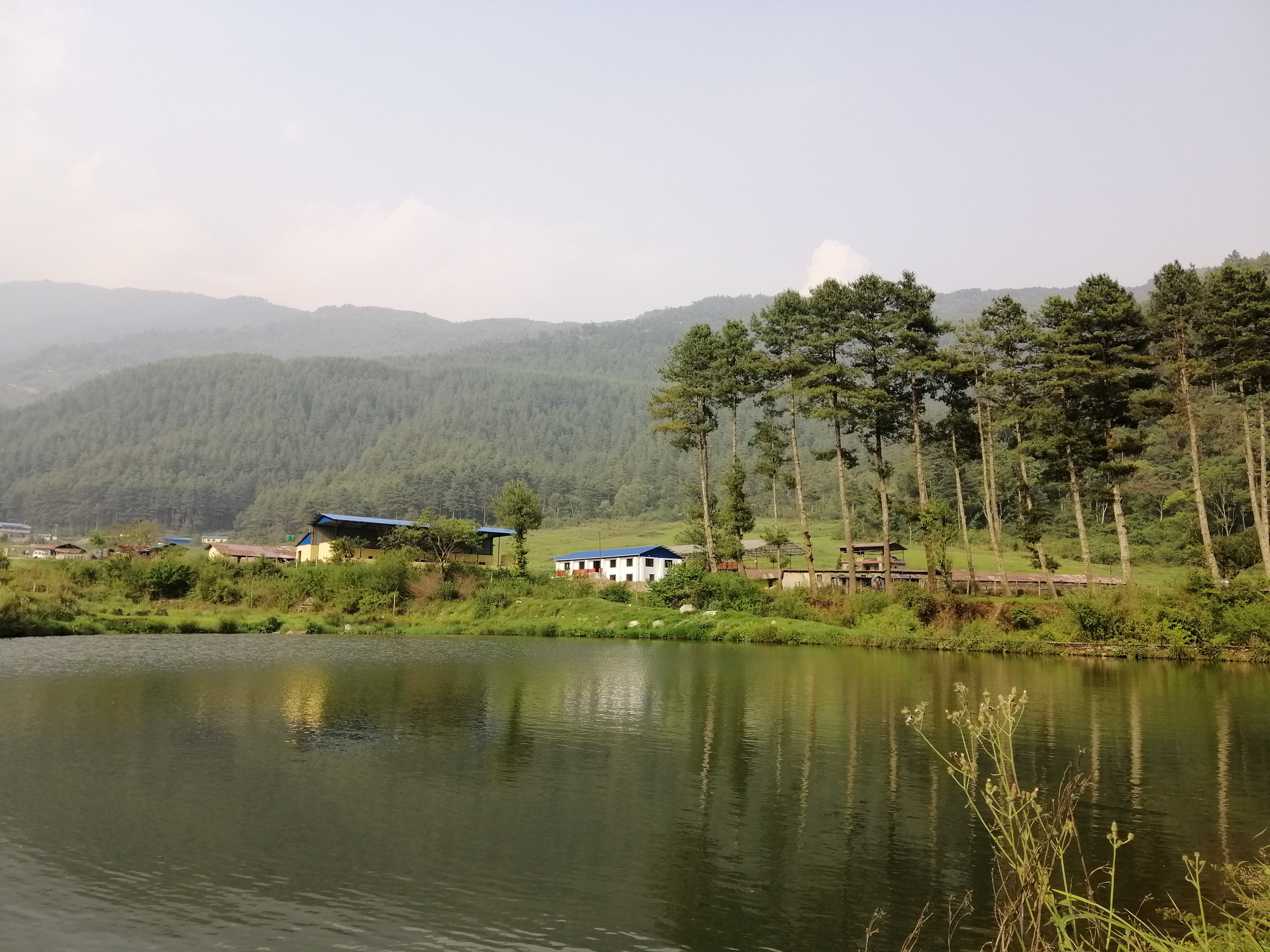
An unexpected journey to paradise
The mountain passes of Jiri and the picturesque hill of Kalinchowk were heavenly. For someone who was born and raised inside the walls of a city, this escape made me understand the expression, "Nepal is heaven on earth." Even though the journey only lasted for two days, we traveled and saw many highs and lows.
In life, there aren't many moments that aren't many moments that are memorable as the ones made spontaneously. With this mindset, my dad and my friend and I decided to go on a trip to Jiri, which turned out to be anything but ordinary. In this blog, I have talked about our adventure in the highlands with a rejuvenating experience. The memory will remain with us and it will be cherished forever.
When confronted with the gorgeous hills of Jiri, we came to realize that Nepal is more than just the two peaks of himalayas. Visitors were cycling, running around the hills, immersing themselves in the environment. We shared a collective appreciation of nature, which gave me a warm feeling.
Turns out Jiri has been noted as the highly praised and popular trekking route to reach the Everest Base Camp. I told my dad may be we could also try, but he laughed and retorted that it was not possible as I couldn't even walk a mile. Upon further exploration, we saw a pond where fishing was made commercialized. A boy screamed with joy when his dad caught a fish, which probably will be their meal later on. The local people were more than happy to guide us around the place. While roaming around, I also saw vendors selling cheese and durkha, a special delicacy of Jiri, yum! Overall, Jiri is one of the big towns of Dolakha which is very strict about cleanliness and security. Unfortunately, the journey in Jiri only lasted few hours as we had to descend downwards to reach our next destination 'Charikot.'
We planned on staying one night in Charikot as it served to be a mid point on our road to Kalinchowk. After sleeping in a wonderful climate without mosquitoes, it gave us a fresh start to travel in the morning. The road was jerky and uncomfortable but the expectation of the glorious Kalinchowk kept us going. On the way up, I noticed white colored rhododendrons blooming, which surprised me. I thought that rhododendrons were only red in color. However, the entire valley was covered in white rhododendron. The walk to the top of Kalinchowk was going to be a long one so we prepared ourselves by stuffing ourselves with locally prepared food 'Chana' and chiya. At first, our bodies were shivering from cold, but eventually our body started adjusting to the cooler climate and we were pumped up for our adventure for the day.
After panting and gasping for what seemed like forever, we reached to the top of Kalinchowk temple. The breath of icy fresh air, made it seem like paradise. Devotees were praying and offering sacrifices. I cherished my existence and opportunity to be in Kalinchowk as I felt like I was on top of the world. Although the views of the Himalayas were covered by fog, we did get a glimpse of it and it was a wondrous sight. Though we wanted to stay and marvel at the beautiful scenery, we had to return back to Charikot. The ride on the Bolero again became thrilling and our motion was out of control. Although, this rickety ride caused our body to be sore, the view made it worth it.
The journey only lasted two days but we experienced many places. We are so close to the touch of the heavens regardless of our occupation as city dwellers. The need to escape to such wonderland every once in a while could easily be fulfilled if we ventured outside our bubble. Even though the journey only lasted for two days, we travelled and saw many highs and lows. The mountain passes of Jiri and the picturesque hill of Kalinchowk were heavenly. For someone who was born and raised inside the walls of a city, this escape made me understand the expression, "Nepal is heaven on earth." I have so much to explore and so much of this beautiful land to see. Now I wait to get to my next destination.
Similar Posts
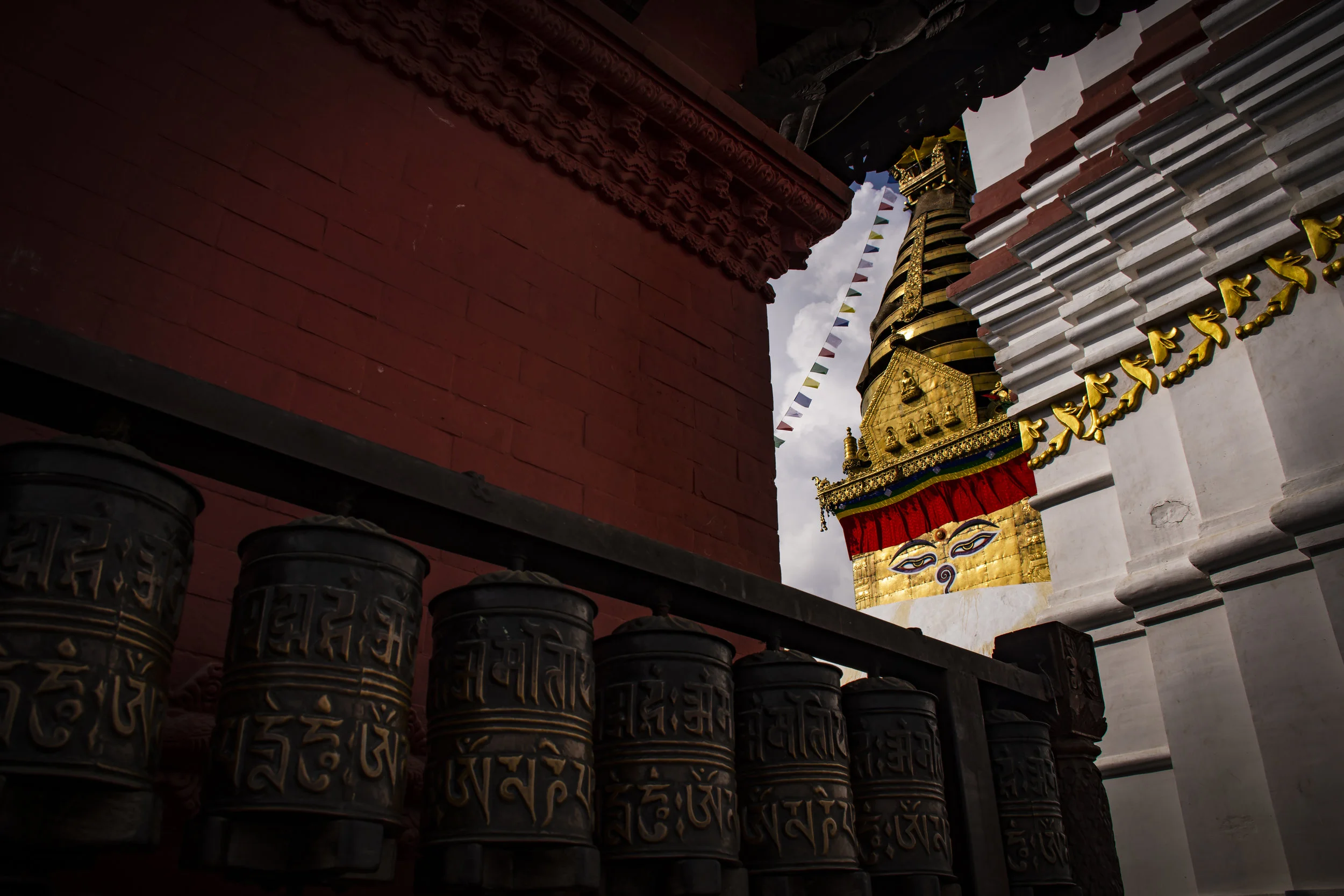
Swayambhu: A Symbol of Buddhism
Legend continues as the same lotus-seed brought forth a lotus-flower and in the center was Swayambhu, who came from Aknisht Bhuban (Sacred Land) appeared in the form of light. In Treta Yuga, Manjusri came from Mahachin(China) and saw the light of Swayabhu, he then cut a passage through a mountain that drained ...
The Sacred Origins
Bipaswi Buddha came from a city named Bandhumati: and took abode on a mountain west of Nag Hrad(Ancient name of the valley when it was a lake). He sowed a lotus-seed in the Hrad on the full moon in the month of Chaitya. In honor of this a Mela is held on the mountain on the full moon on the month. Today its known as Gunla Festival(Newari Festival in Nepal) where it is believed one must visit the chaitya at least once. “Gunla Baja” is played every morning by the various tole’s(communities) around Swayambhu, People ascend the 365 and venerate shrine before returning home.
The legend continues as the same lotus -seed brought forth a lotus-flower and in the center was Swayambhu, who came from Aknisht Bhuban ( Sacred Land) appeared in the form of light. In Treta Yuga, Manjusri came from Mahachin(China) and saw the light of Swayambhu, he then cut a passage through a mountain that drained this ancient lake and thus emerged the valley of Kathmandu.
In today’s modern and skeptical world, one might find it hard to believe these mystical tales of faith and Gods. Kathmandu Valley is a sacred land where you are guided in every turn by a temple or a chaitya, “You are never alone” is a statement that fits right at home in the 3 sister states of Kathmandu, Lalitpur and Bhaktapur. But Swayabhu is center of all the Newars of the valley and is revered by not just people of faith but by everyone for its sheer beauty, design and architecture. When you look up to the shrine atop of the chaitya as you ascend the steps of a year, you feel a jolt go down your spine and goosebumps in your arms as you get charmed by the inscents, enormity and aura of this wonder.
The Origin of Swayambhu Shrine
At the ending years of Dwapar Yuga, an Acharya named Santikar who is also known as Sant-sri saw that the Kali Yuga was approaching, during which mankind would be utterly sinful. So, he covered the light of Swayambhu with a stone and built a chaitya and temple over it. Entangled with this same legend is another fascinating the legend, it is believed that Sant Shri who built the chaitya also built 5 rooms surrounding the chaitya named after the 4 elements and one the soul called Santipur, where he locked himself and stayed in the state of divine meditation. He thus entered a mystic state, achieving immorality and vowed to stay in the room and emerge when the valley of Kathmandu truly needed him.
Swayambhu Today
In Newar Buddhism it’s called Semgu, meaning "self-sprung” in Tibetan “Sublime Tress” , it is also known to many travelers as the monkey temple. Entering the periphery of the Swayambhu hill you will be greeted first by obviously monkeys allot of monkeys. The lush vegetation, high trees have created a rich habitat for them to live and amuse the locals Just don’t carry any food in your hand or in a bag, they are known to be quite mischievous sometimes stealing foods and drinks from the people and leaving many crying children stealing.
The base of the chaitya is rimmed with prayer wheels and the stupa is surrounded by many other temples and monasteries. The Harati Temple is on the north side of the shrine and there are two shikhara temples erected by Pratap Malla which collapsed during the earthquake of 2015. The Semi-peripheri is littered with souvenir shops and tea shops for the travelers and locals who enjoy there hours looking at the scenic view of the valley with there cup of tea.
As the eyes of Swayambhu, ever omnipresent watch over this city, one can only smile over the everlasting awe of this beautiful hill. One who has seen this beauty can never unseeing it and one can never again imagine the valley without it.
Hashtags: #MonkeyTemple #HeritageNepal #HeritageKathmandu #WorldHeritage #TimelessWonder #KathmanduValley #Nepal
POPULAR ITINERARIES
SIMILAR POSTS


Avifauna Jewels Of Chitwan National Park
Chitwan national park is 12th national parks of Nepal, also enlisted in the UNESCO World Heritage site. It was inscribed in the heritage book in 1984 AD under the criteria of Natural sites. It spans a total area of 932 Sq.Km and is located in the Inner Terai Low Lands of South-Central Nepal.
Chitwan National Park is of 12 national parks of Nepal, it is also enlisted in the UNESCO World Heritage site. It was inscribed in the heritage book in 1984 AD under the criteria of Natural sites. It spans a total area of 932 Sq. Km and is located in the Inner Terai Low Lands of South-Central Nepal.
Chitwan National Park is home to more than 543 species and more than 180 visiting bird species. Some of the species that dwell in the area of the Nepal are threatened and on the endangered species list, such as Bengal Florican, Lesser Adjutant, Grey-Crowned Prinia, Swamo Francolin, GFrass Warblers, Oriental Darter, Spotted Eagle and many more.
The Nepal is a home to beautiful and vibrant bird species which call this national park home due to its suitability for habitat. This list consists of 5 Jewels one can spot in Chitwan National Park.
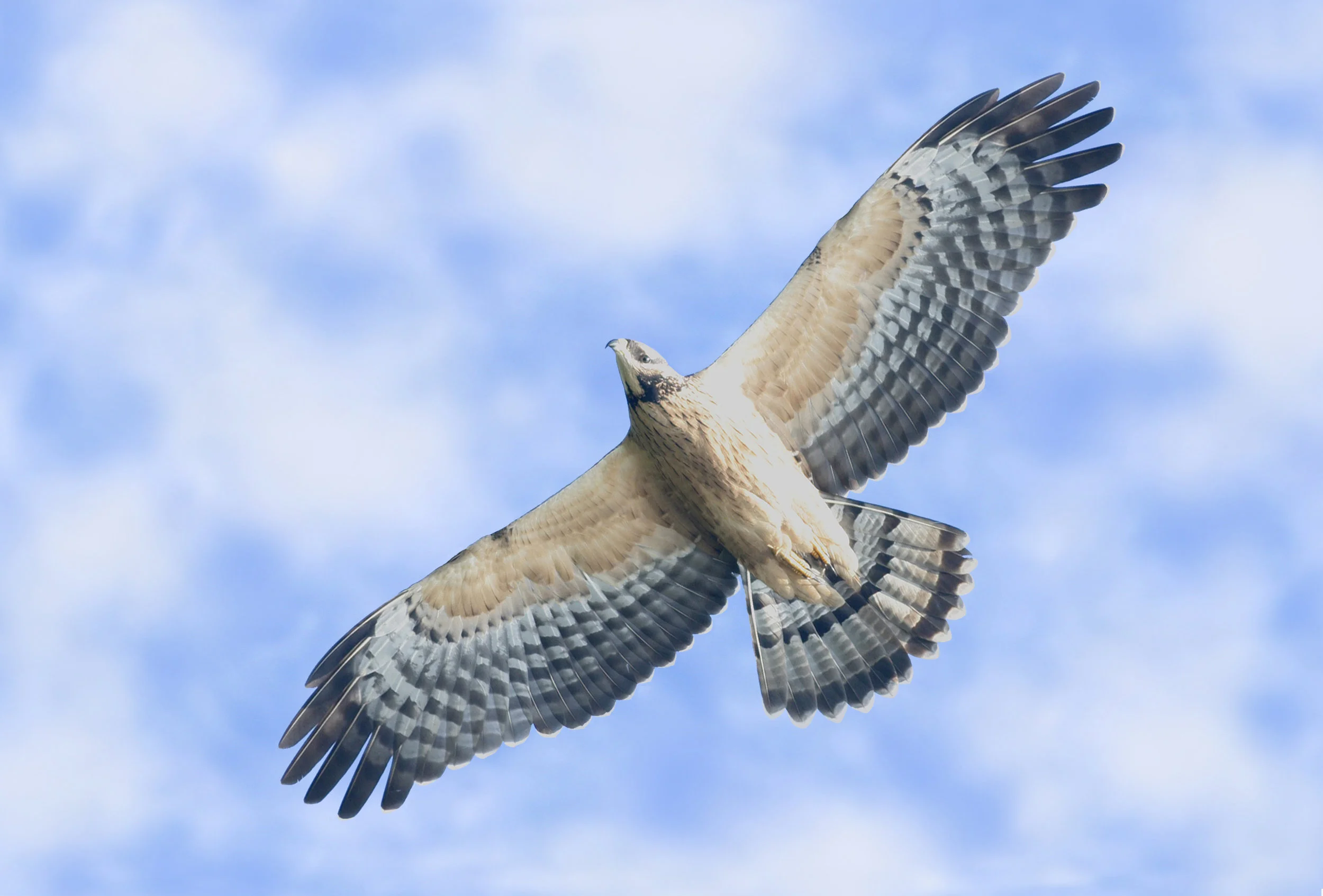
Honey Buzzard
The crested honey buzzard (Pernis ptilorhynchus) is a bird of prey in the family Accipitridae, which also includes many other diurnal raptors such as kites, eagles, and harriers. This species is also known as the Oriental honey buzzard.
Darter
The darters or snakebirds are mainly tropical waterbirds in the family Anhingidae having a single genus Anhinga. There are four living species, three of which are very common and widespread while the fourth is rarer and classified as near-threatened by the IUCN. The term "snakebird" is usually used without any additions to signify whichever of the completely allopatric species occurs in any one region. It refers to their long thin neck, which has a snake-like appearance when they swim with their bodies submerged, or when mated pairs twist it during their bonding displays. "Darter" is used with a geographical term when referring to particular species. It alludes to their manner of procuring food, as they impale fisheswith their thin, pointed beak. The American darter (A. anhinga) is more commonly known as the anhinga. It is sometimes called "water turkey" in the southern United States for little clearly apparent reason; though the anhinga is quite unrelated to the wild turkey, they are both large, blackish birds with long tails that are sometimes hunted for food.
Alexandrine parakeet
The Alexandrine parakeet or Alexandrian parrot (Psittacula eupatria) is a member of the psittaciformes order and of the family Psittaculidae. The species is named after Alexander the Great, who is credited with the exporting of numerous specimens of this bird from Punjab into various European and Mediterranean countries and regions, where they were considered prized possessions for the nobles, royalty & warlords.
Hoopoe
Hoopoes /ˈhuːpuː/ are colourful birds found across Afro-Eurasia, notable for their distinctive "crown" of feathers. Three living and one extinct species are recognized, though for many years all were lumped as a single species—Upupa epops.
Grey Heron
The grey heron (Ardea cinerea) is a long-legged predatorywading bird of the heron family, Ardeidae, native throughout temperate Europe and Asia and also parts of Africa. It is resident in much of its range, but some populations from the more northern parts migrate southwards in autumn. A bird of wetland areas, it can be seen around lakes, rivers, ponds, marshes and on the sea coast. It feeds mostly on aquatic creatures which it catches after standing stationary beside or in the water or stalking its prey through the shallows.
Grey Head Fish Eagle
The grey-headed fish eagle (Haliaeetus ichthyaetus) is a fish-eating bird of prey from South East Asia.[2] It is a large stocky raptor with adults having dark brown upper body, grey head and lighter underbelly and white legs. Juveniles are paler with darker streaking. It is often confused with the lesser fish eagle (Haliaeetus humilis) and the Pallas's fish eagle. The lesser fish eagle is similar in plumage but smaller and the Pallas’s fish eagle shares the same habitat and feeding behaviour but is larger with longer wings and darker underparts.
Green Bee Eater
The green bee-eater (Merops orientalis) (sometimes little green bee-eater) is a near passerine bird in the bee-eaterfamily. It is resident but prone to seasonal movements and is found widely distributed across sub-Saharan Africa from Senegal and the Gambia to Ethiopia, the Nile valley, western Arabia and Asia through India to Vietnam. They are mainly insect eaters and they are found in grassland, thin scrub and forest often quite far from water. Several regional plumage variations are known and several subspecies have been named.
Great White Pelican
The great white pelican (Pelecanus onocrotalus) also known as the eastern white pelican, rosy pelican or white pelicanis a bird in the pelican family. It breeds from southeastern Europe through Asia and Africa, in swamps and shallow lakes.
Cattle Egret
The cattle egret (Bubulcus ibis) is a cosmopolitan species of heron (family Ardeidae) found in the tropics, subtropics and warm temperate zones. It is the only member of the monotypicgenus Bubulcus, although some authorities regard two of its subspecies as full species, the western cattle egret and the eastern cattle egret. Despite the similarities in plumage to the egrets of the genus Egretta, it is more closely related to the herons of Ardea. Originally native to parts of Asia, Africa and Europe, it has undergone a rapid expansion in its distributionand successfully colonised much of the rest of the world in the last century.
Lesser Adjutant
The lesser adjutant (Leptoptilos javanicus) is a large wading bird in the stork family Ciconiidae. Like other members of its genus, it has a bare neck and head. It is however more closely associated with wetland habitats where it is solitary and is less likely to scavenge than the related greater adjutant. It is a widespread species found from India through Southeast Asia to Java.
Purple Swanphen
Grey-headed swamphen (Porphyrio poliocephalus) is a species of swamphen occurring from the Middle East and the Indian subcontinent to southern China and northern Thailand. It used to be considered a subspecies of the purple swamphen, but was elevated to full species status in 2015; today the purple swamphen is considered a superspecies and each of its six races are designated full species.
Rufous Necked Laughingthrush
The rufous-necked laughingthrush (Garrulax ruficollis) is a bird species in the laughingthrush family, Leiothrichidae. It was formerly placed in the genus Dryonastes.[2] It is found in Bangladesh, Bhutan, China, India, Myanmar and Nepal, where its natural habitats are subtropical or tropical moist lowland forests and subtropical or tropical moist montane forests.
Little Egret
The little egret (Egretta garzetta) is a species of small heron in the family Ardeidae. The genus name comes from the Provençal French Aigrette, "egret", a diminutive of Aigron," heron". The species epithet garzetta is from the Italian name for this bird, garzetta or sgarzetta.
Eastern Nepal for an Exhilarating Experience
It is one of the most beautiful regions in Nepal, and it has some really exciting treks
I read in a newspaper recently that a committee had been formed to celebrate 2016 as Visit Eastern Nepal Year. That’s a great idea, and one that has been a long time in the coming, for eastern Nepal is full of great natural beauty and extremely hospitable people. Unlike the far-west, there is no far-east in the country, but the further east you go, the better is everything, including the weather. You get good rains here, and so the forests are verdant, the paddy fields are lush green, and the rolling tea estates are very pleasant to look at.
While Ilam, where most of Nepal’s tea estates are, and Taplejung get a fair amount of tourists, there’s a district called Sankhuwasabha that is also pretty fetching, and where the best khukuris are made. Yes, the very same khukuris that the Gurkhas made so famous in the two Great Wars. The prima donna of eastern Nepal, however, is Kangchenjunga, which at 8,586 m, is the third highest peak in the world. It’s not only for its height that it is so well known, it is also one of the best looking mountains in the Himalayan range, equal to Machhapuchchhre of Pokhara in beauty. It borders India, and is the highlight of Darjeeling—a most iconic backdrop to the queen of hill stations. Another famous peak in this region is Jannu (or Kumbakarna), which is 7,710 meters tall, and which used to be once called “Mystery Peak”.
Then, there is also the Makalu-Barun National Park here, established as an extension of Sagarmatha National Park (world’s highest national park) in 1992. It sprawls for some 1,500 km2 across Solukhumbu and Sankhuwasabha districts, and has Makalau (at 8,463 m, world’s 5th highest peak), Chamalangu (7,319 m), Baruntse (7,129 m), and Mera (6,654 m) within its precinct. This park has amazing elevation, with the Arun River valley (344-377 m) in the southeast arising to 8,463 m at the apex of Makalu. The park has many diverse species of fauna, including exotic ones like snow leopard, clouded leopard, red panda, Himalayan tahr, etc., with the Asian golden cat being one of the rarest. Plenty of bird species, too, including the rare rose-ringed parakeet, Blyth’s kingfisher, deep-blue kingfisher, blue-naped pitta, sultan tit, white-naped vuhina, and so on.
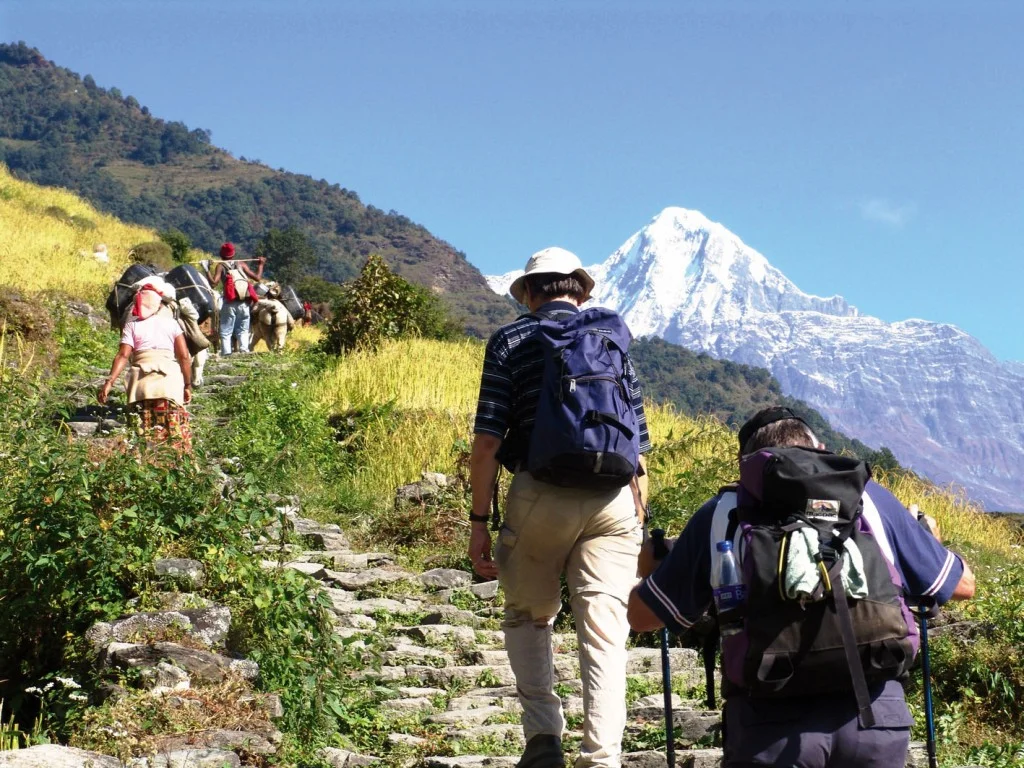
Now, you can trek through this area on your way to Makalu base camp. Generally, you start off by taking a 40-minute flight from Kathmandu to Tumlingtar (457 m). From here, you take a one-hour drive to Khandbari (1,036 m), the district headquarter, from where your trekking adventure begins. Here is where you’ll find people making the best khukuris. After a halt for the night in a lodge or homestay, the next morning you begin walking to Chichilla (1,920 m), about a five-hour hike. There’s a place called Chhyankuti Chhyankuti on the way, 10 km to the north of Khandbari that has spectacular views all around, including that of the magnificent Himalayan peaks. At Chichilla, you get comfortable lodgings for the night. Come the dawn, and you are again on the trail, this time to Mude (2,060 m), which will require about 5-6 hours. Along the route, you’ll be treated to some really rugged mountain landscapes.
After a night of rejuvenating sleep, you should be ready next day to take the 3-4 hour walk to Saduwa, which is in fact the last village before entering the Makalu-Barun National Park. Your hike will first take you steeply downhill, before again going steeply uphill. The next day, you trek to Tashigaon, stay in a teahouse, and enjoy the local culture. Your guides will usually allow you a day of rest and recuperation at Tashigaon. And, you will appreciate this, because the next day you walk up, up, and up for 6-8 hours to reach Khongma (3,400 m). Early the following morning, you go to Dobate, or Mombuk, (3,540 m), walking for some 4-5 hours. You got to start early so as to avoid landslides risks further in the day.
The coming days, you’ll be first hiking to Yangle, or Nhe Kharka, (3, 750 m, 4-5 h), then to Langmale, or Shersong (4,600 m, 6 h), before finally reaching the Makalu base camp which is at a height of 4,800 meters. There’s a lovely glacial lake called Dudh Pokhari that will mesmerize you with its serene beauty. The return trip is along the same route, and you’ll be back in Khandbari in 5-6 days time from the base camp. There are some other routes on this trek as well, and it’s up to you which one you choose. However, no matter which route you opt for, it will be one of the most exhilarating times of your entire life, that much can be assured! So, what say, do we now plan a trek in beautiful eastern Nepal?
Now’s a Good Time to Visit Nepal
The devastating April 25 earthquake caused many deaths and much destruction, but Nepal is rapidly rising out of the rubble to create a ‘Naya(New) Nepal’.
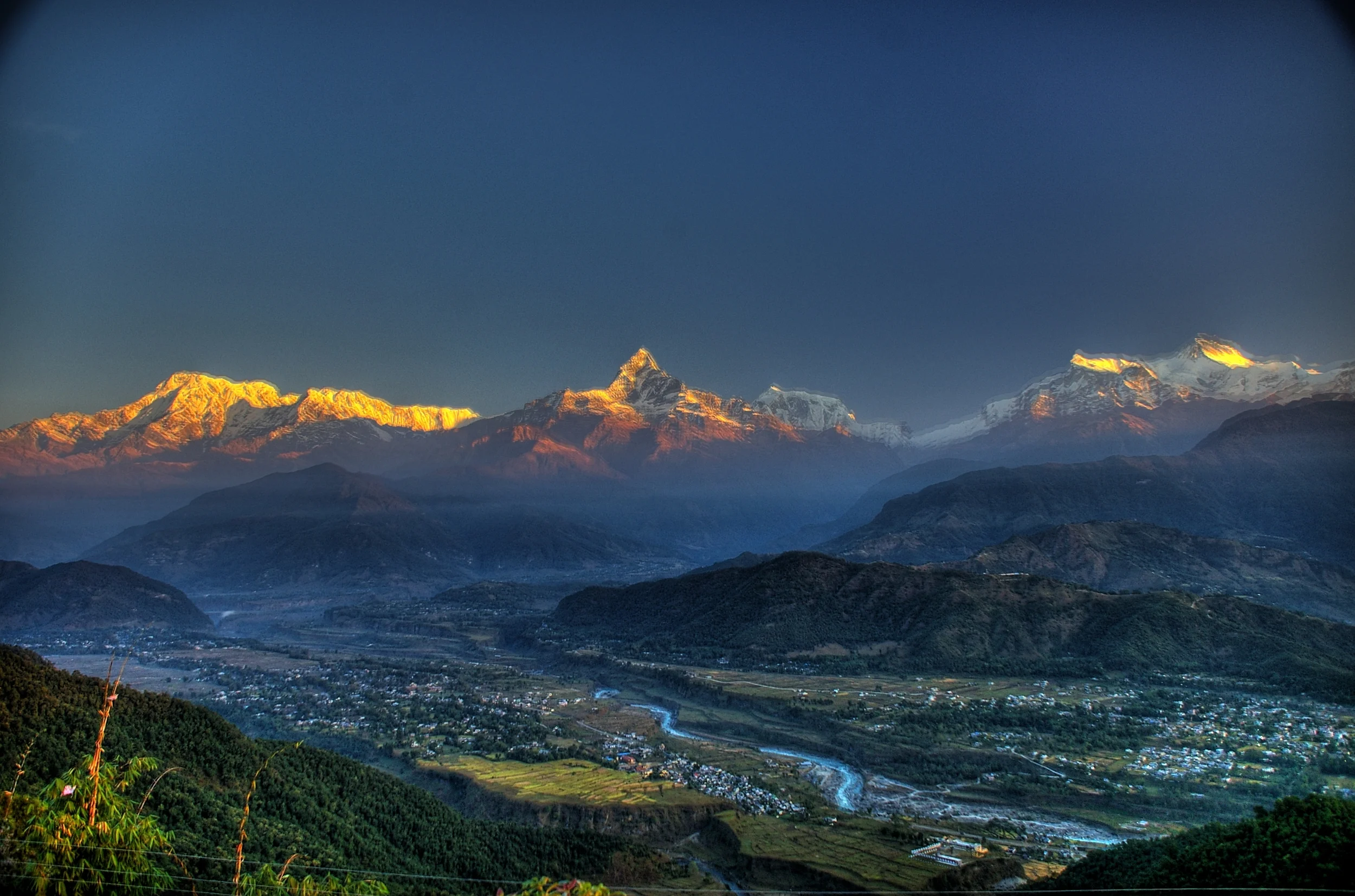
June 15 is when all the seven world heritage monument zones that go to make Kathmandu Valley a World Heritage Site are again open to tourists. The April 25 earthquake reduced some of the relics inside these seven zones to dust, or caused partial damage to some others. Restoration plans are well underway, and this will of course be a prolonged affair, since it is quite an intricate process. And, because Kathmandu has some of the best restorers in the world—restorers who are well versed in their highly specialized craft—one can rest assured that something beautiful is sure to come out of their efforts.
No doubt, even with the destruction caused by the Great April 25 Earthquake, Kathmandu Valley still overflows with such sights and experiences as does justice to its claim to be one of the most interesting places to visit in the world. June 2 was when the highest temperature, 34 degrees Centigrade, was recorded in the valley. A pittance, compared to the near-50s sweeping over neighboring India. Most times, the valley enjoys mild temperate climate, and with the onset of the pre monsoon season, weather-wise, the valley will revert back to its lovely climate again. Just as, with the back-to-business sense of urgency that is very much evident now, Kathmandu is once again open for business, and waits with wide open arms to welcome visitors from around the globe.
While the quake caused untold suffering and many tragic deaths, it also resulted in world media attention on Nepal, leading to millions of viewers becoming witness to the never-say-die-spirit of the Nepali people. It is true that, in addition to its rich culture and heritage and its fantastic natural beauty, Nepal is also known equally as a land of the brave, the hardy, and the hospitable. All this have been on world view for the past month or so. The resolute villagers of the quake affected areas have already begun the process of rehabilitating themselves, and the government and international organization are lending the much needed helping hand with vigor.
The quake has brought people together in a very symbolic way that will hopefully transform into something concrete in the future. The mantra is now of rising from the rubble with strengthened resolve to create a ‘New Nepal’. This is not to mean that ancient heritage will be kept in the backseat. Not at all. Heritage will continue to be part and parcel of whatever route the country’s development takes now, because its proud heritage is what gives Nepal its unique identity. An identity that is synonymous with a high degree of artistic and cultural finesse, a sumptuous richness of natural beauty, and a well established reputation as a country with some of the happiest and most hospitable people on planet Earth.
No wonder then that so many visitors are so deeply impressed when they come here. The wealth of art, craft, culture, and heritage everywhere is impressive, the fabulous scenery all around is breathtaking, and the welcoming smiles of the people is heartwarming. Right now, with the country at the crossroads between the old and the new, could well be one of the most interesting times to visit this interesting country.