

Esoteric Healing Techniques in Nepal
There’s more to Kathmandu than just world heritage sites and Thamel; there are also centers that teach natural arts of healing both the body and the mind.
Nepal was once a land of mystery and adventure, and mysticism and romance. Times have changed with unfortunate rapidity, but fortunately, some aspects remain that still bring back the lore of a Shangri La in the Himalayas. Yoga and other esoteric meditation and healing techniques based on Eastern philosophies are still going strong around here.
Take pranic healing, for example, which revolves around the idea of energy. It is an ancient technique using energy to heal and treat pain and stress. If you want to experience this unique method of healing and relieving stress, then a visit to the Pranic Healing Center in Kamaladi, Kathmandu, is called for. The concept of this technique is based on the idea of prana (life force), the central unit in a human body that is integral not only for development, but also for the stability of the physical body. Prana is the invisible life force that keeps the body alive, and pranic healing’s goal is to revitalize this force.
The second principle of pranic healing is the concept of self recovery, meaning that the body is capable of healing by itself, and it is through the techniques of pranic healing that the body’s ability to heal itself is speeded up. It is believed that the body’s energy is kept in synchronization by chakras that rotate clockwise and anticlockwise continuously. Disturbance in their movement, or the blocking of their pathways, result in illness, disease, physical unease, and mental stress. The objective of pranic healing is to make things right again, and remove such congestions, thus revitalizing the body’s energy, or life force.
A high degree of faith on the sufferer’s part is required in order for pranic healing to be effective; he/she has to be in a receptive frame of mind and open towards the positive energy emanating from the healer. Pranic Healing Center provides two-day basic courses as well as more advanced ones, including intensive classes that consist of psychotherapy, or Arhatic yoga. One interesting course is the “Twin Hearts” meditation that focuses on two of the more important chakras, the heart chakra and the crown chakra, which are regarded as the epitome of love and enlightenment.
Besides this unique healing center, there are of course numerous yoga centers in Kathmandu. There used to be one called the Healing Hands Center in Maharajgunj; don’t know if it is still there. It specialized in Nuad-Bo-Rarn, a Sanskrit term for ancient Thai massage that is actually based on yoga postures, and is also said to be “yoga for lazy people”. In reality, Nuad-Bo-Rarn is for those who are unable to do yoga by themselves due to old age or infirmity, and need a helping hand to do so. Like pranic healing, it, too, is based on the idea of energy running through the body in a specific manner and taking particular pathways. According to this form of yoga, or ancient Thai massage, there is a second body comprised of many energy lines in addition to the physical body, out of which 10 are believed to be vital pressure points.
At the Arogya Ashram in Tangal, you’ll come across the art of naturopathy, the credo of which is that prevention is better than the cure. Chemical medicines are a big no, no, since they have harmful side effects, and the goal of treatment is to detoxify the body of all toxins that cause disease. Treatment regimes may vary (clay therapy, solar therapy, hydrotherapy, and so on), but the basic parameter of all is based on the philosophical aspect of panchakarma, that is, the five elements of fire, air, earth, water, and akash (vacuum). Regular classes are conducted every day, and the central goal is to change bad habits and harmful lifestyles. Generally, a treatment may last for a month; however, for chronic problems, it can go up to six months or so. It would be good to note that naturopathy is often said to be the ‘mother therapy’, since it is compatible with most other treatment methods.
Some other well known centers of yoga and other esoteric healing arts are Ananda Yoga Centre in Satungal, Pranamaya Yoga Studio in Kantipath (which teaches ‘power yoga’), and Osho Tapoban in Nagarjun, where the path of self realization is explored in depth through meditation and discourse. Jain Mandir in Gyaneswar, Kathmandu, also has regular yoga classes every day, and these are for free to all who come. Different yoga centers teach different styles of yoga. Bishal Ayurveda Ausadhalaya and Yoga Centre in Anamnagar, Kathmandu, teaches Patanjali yoga. A typical routine is as follows: 10 minutes of jogging, all the while focusing on balanced breathing; then, a period of Om dhoni (a continuous humming of the word ‘Om’). This is followed by the asanas, and then, pranayana and dhyan.
Vipasaana is another method that many swear by to get balance and serenity in their lives. It was actually one of the discoveries of Lord Buddha himself that meditation enhances two qualities, namely, samantha (tranquility) which steadies and concentrates the mind, and vipassana (insight), which makes you more observant. Vipassana classes are held regularly in Shivpuri, Kathmandu, which consists of 10 days or so of silent retreat, wherein one abstains from any desire and bad habits before delving into aanam (breath work), which is followed by deep meditation, or vipasaana.
So, you see, there’s more to experience when in Kathmandu than just world heritage sites and Thamel. There are plenty of centers where you can spend some fruitful time learning one of the esoteric arts of natural healing. It would certainly be worth your while, because good health is after all the most precious asset anyone can have.
Praying for an Uneventful Rato Matsyendranath Jatra
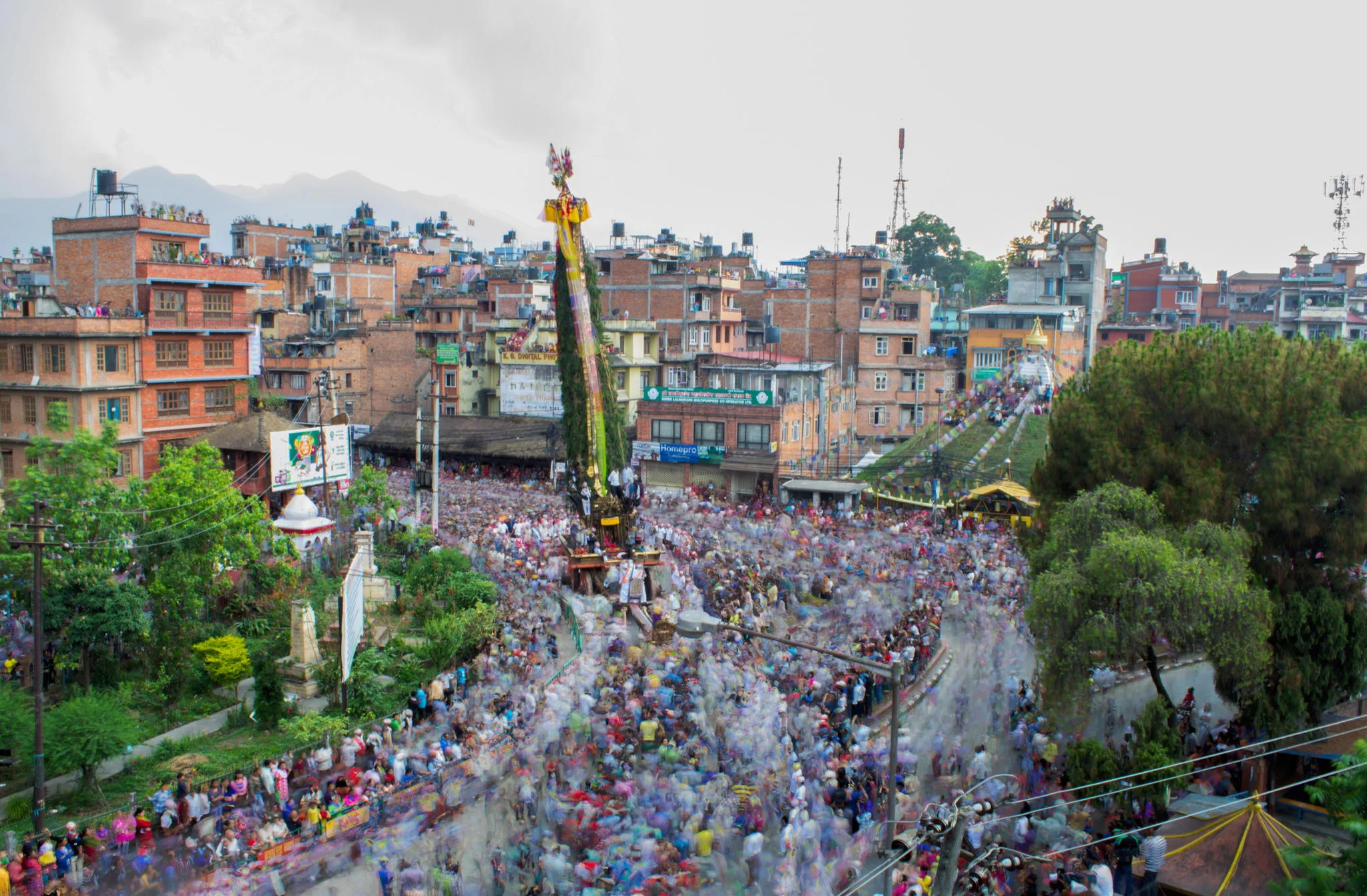
Calamitous events have occurred when things have fallen apart during the month long Rato Matsyendranath Jatra.
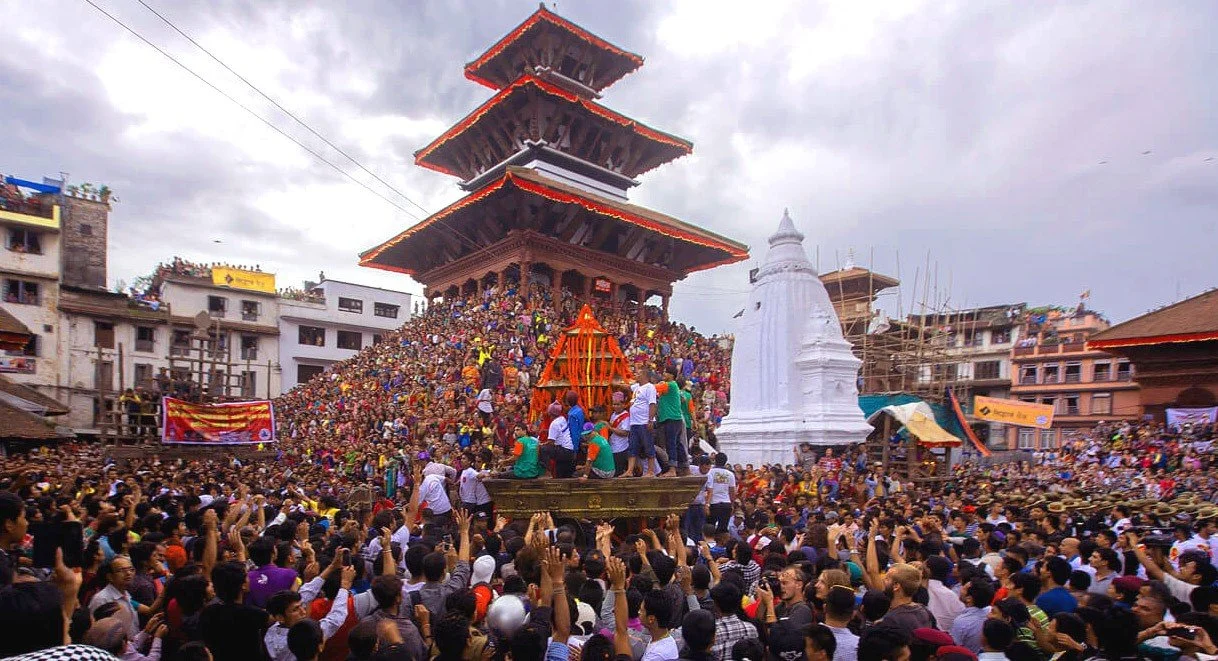
Preparations are well underway this month for the longest festival of Lalitpur, that is, Rato Matsyendranath Jatra. It begins on the first full moon of Baisakh (April/May). History has recorded several calamitous events associated with this important festival. But, before going into that, here are some interesting facts about the festival
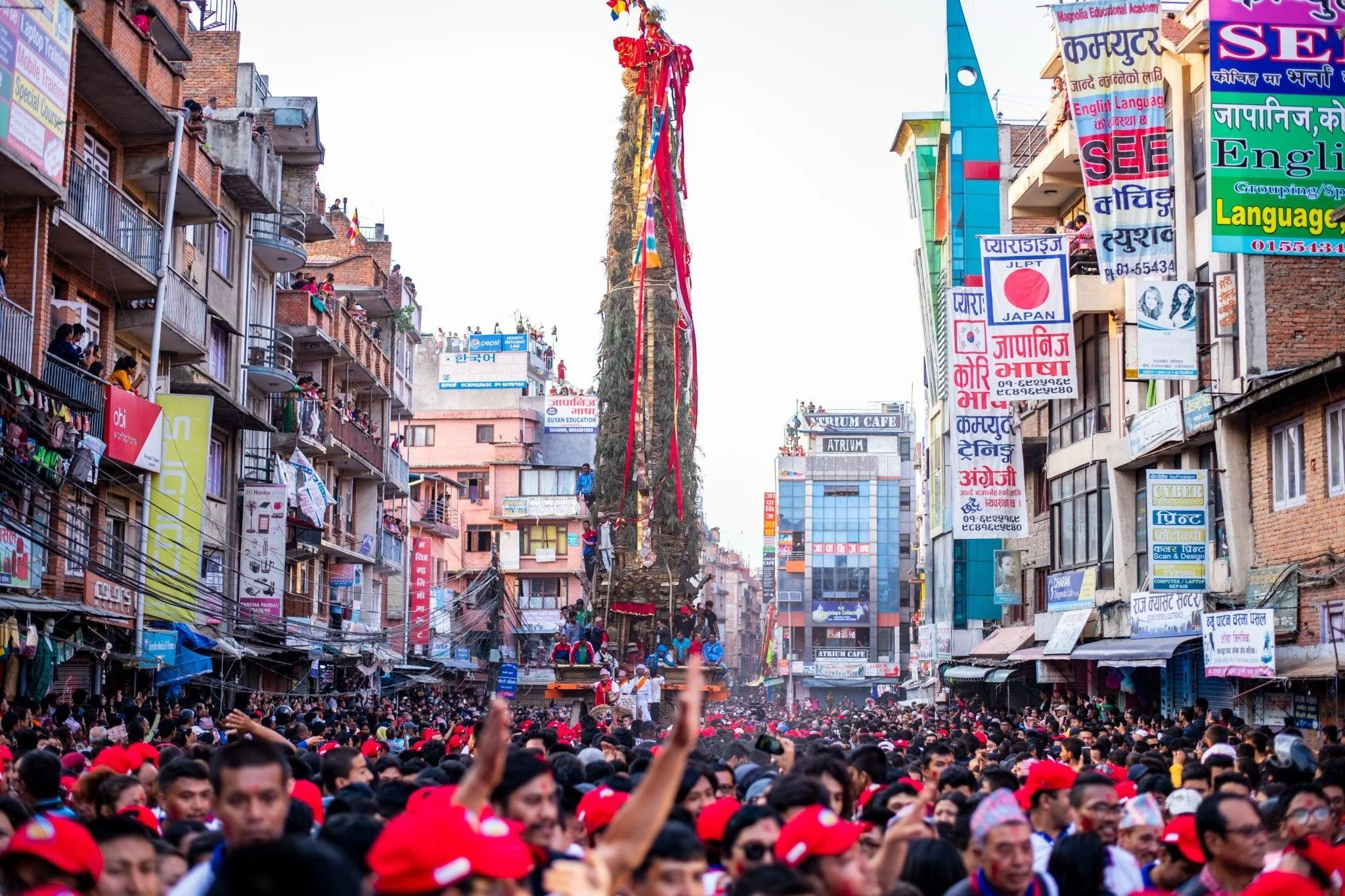
As with many other festivals in the Kathmandu valley, the chariot is the focal point of the event. It’s a mammoth structure, standing about 48 feet tall; including a spire that’s around 10 feet high. Much effort, and a great deal of expertise and ritual, goes into its making. The wood for making the wheels comes from carefully selected trees of the forests of Chitwan. The massive wheels may weigh up to two tons each. The construction of the chariot begins from the wheels and the axel, with the axel being the only structure where metal is used. Otherwise, it’s an all-wood affair. Next, the platform base (ashi) is built, followed by the four pillars. Then, the much bigger platform and the tower are constructed.
Down the ages, it is only three clans that are given the responsibility of constructing this huge chariot, the Barahis, the Yawals, and the Chitrakars. While the Barahis do all the work concerning the edifice, the Yawals do all the work involving ropes, and it’s a vital undertaking, because all the different parts of the wooden chariot are bound tightly with ropes made from bamboo. Any carelessness can result in disaster, considering its size. The Chitrakars, on their part, are responsible for all the paint jobs.
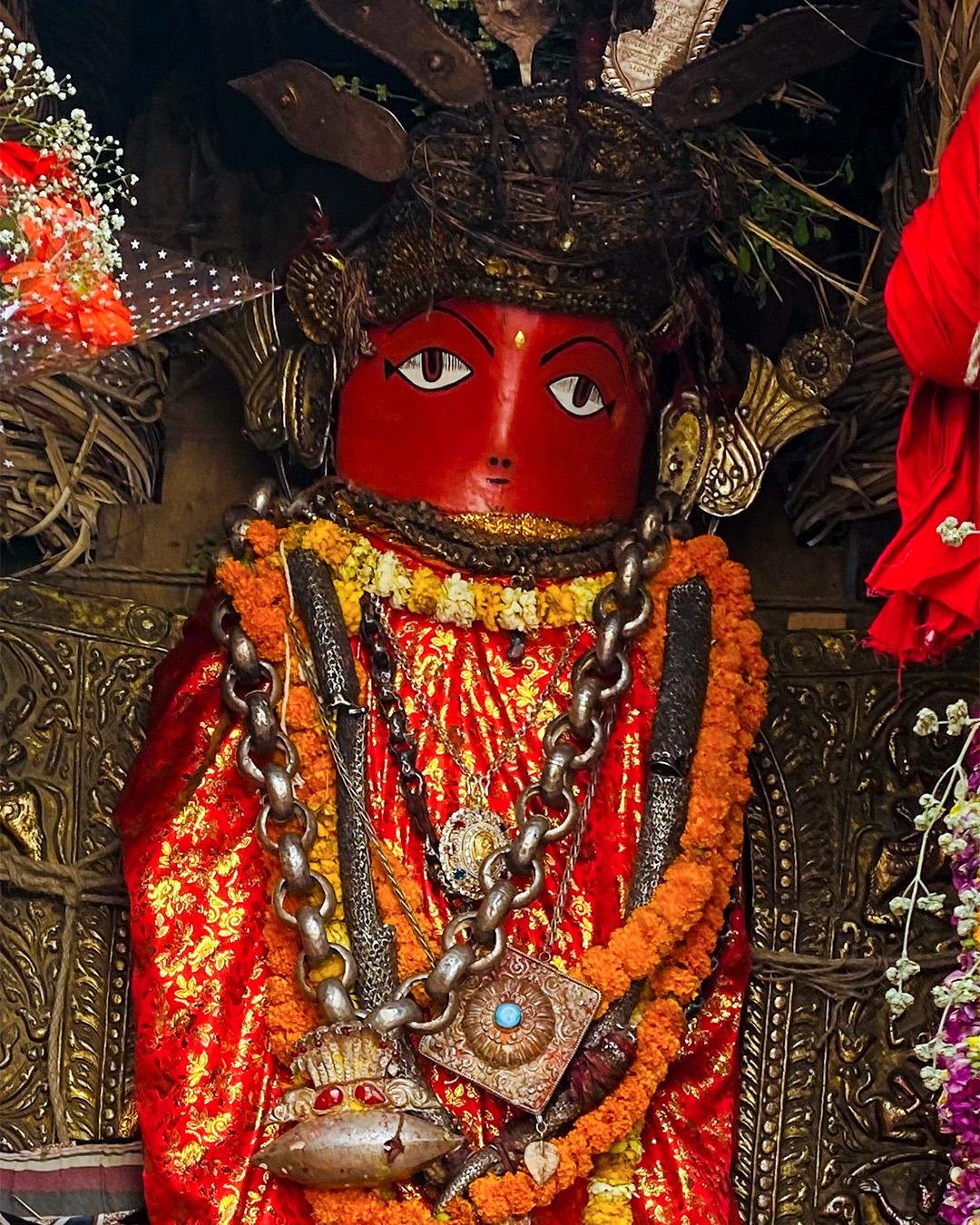
It is on this chariot that Lord Matsyendranath, also known as Bunga Dyo in Newari, is paraded around the various streets and alleys of Patan city for a month. His idol is brought from his birthplace of Bungamati, a small town some eight kilometers from Kathmandu, where he resides in a temple for six months of the year. A few weeks before the festival is to begin, the simply carved sandalwood idol is taken from its temple and taken to Lagankhel, where it is bathed in holy water, Lagankhel being where he is believed to have rested on his journey from Assam to Patan. This is followed by 10 elaborate rituals, which also includes fresh repainting of the idol’s face, which is done by artists of the Chitrakar clan, who also paint the eyes on the wheels of the chariot.
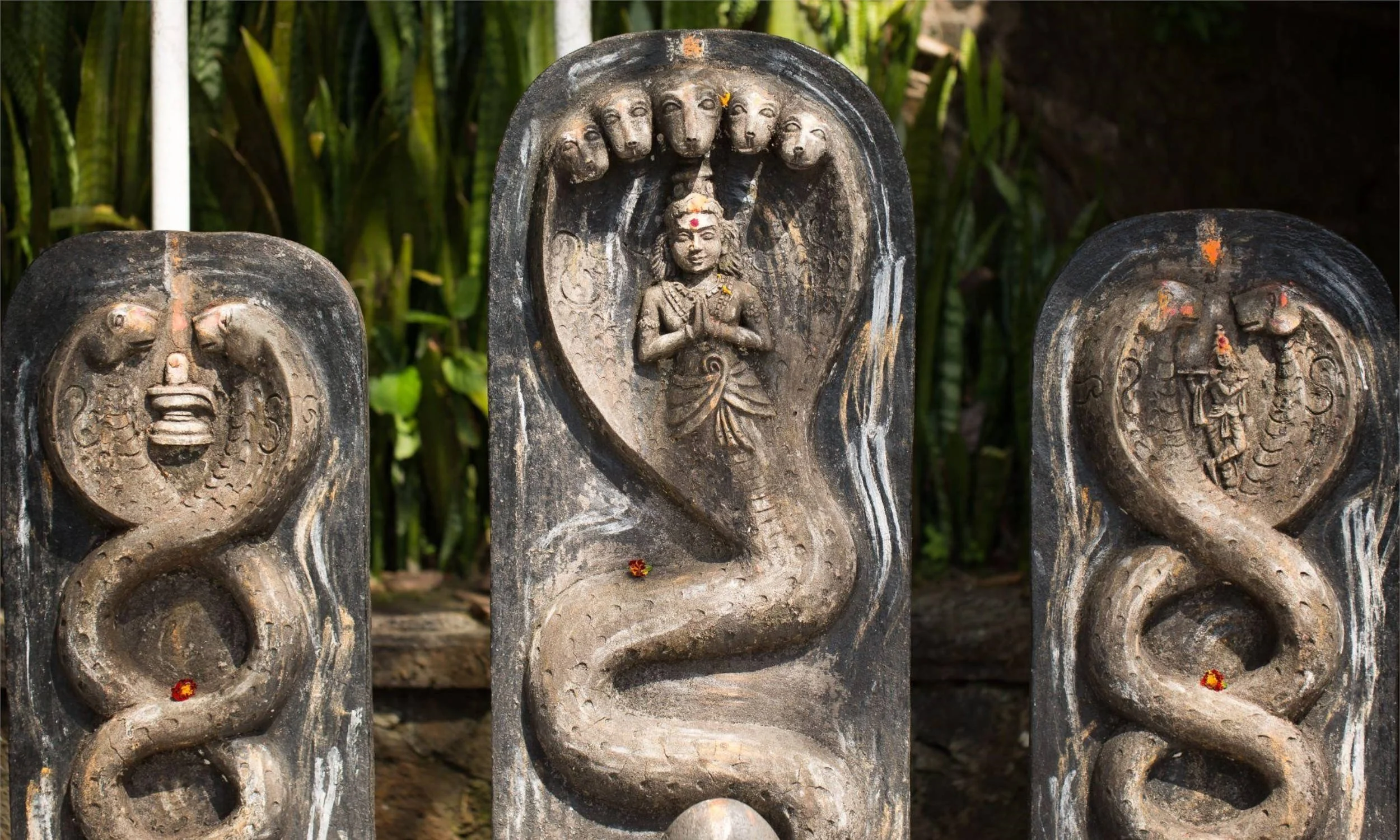
The story of Lord Matsyendranath is quite interesting. It goes like this: the revered sage, Goraknath, once had come to Kathmandu Valley on a visit, where he became so furious at the disrespect he was shown by the valley dwellers, that he decided that he would subject the valley to severe drought. Thus, with this in mind, he sat down on the heads of the nine snake gods responsible for bringing down rain, and then went into a state of deep meditation. Soon, the desperate valley dwellers were begging him to come out of his trance and to stand up, so as to free the snake gods. However, the angry sage remained unmoved, and continued to sit on their heads, all the while meditating deeply. Drought continued to plague the valley for a long time.
Then, some clever Newar fellows devised a plan to end his meditation and make him stand up. They traveled all the way to Assam in India, where Gorakhnath’s guru Matsyendranath lived, and pleaded with him to accompany them back to Kathmandu. He agreed and came to the valley with them, and was taken to the site where his disciple sat in a trance. On knowing about the presence of his guru before him, Gorakhnath promptly stood up respectfully, and in doing so, freed the captive snake gods, who did what they were supposed to do, that is, bring down pouring rain on the parched valley. So grateful were the people that they decided to hold a festival in Matsyendranath’s honor every year.
Now, coming to the above-mentioned ‘disastrous events’ linked to the festival, the first one recorded was way back in 1680, when people observed that Lord Matsyendranath’s face had lost some of its paint, and this was considered to be an extremely bad omen. That night, King Nripendra Malla, then the ruler of Patan, died in his bed, and he was seen to be quite fit and healthy just the day before. Similarly, in 1817, it was again observed that the idol had again lost some paint off its face. That very same day, a massive earthquake struck the valley, causing death and destruction everywhere.
At another time, King Viswajit Malla, another king of the valley, had a bad dream, one in which he saw Rato Matsyendranath turning his back on him. It was a dream that troubled him greatly, since it, too, foretold that something terrible would be occurring soon. Sure enough, the king became a victim of murder on the night following the dream. Similarly, in another period of history, one king himself took part in pulling the chariot through the streets of Patan. It was not a favorable undertaking; the axel broke a total of 31 times during the procession. This, too, was a sign of bad things to come. The said king died soon enough.
In 2000, as the massive chariot was making its way down a narrow street of Patan, its tall spire fell down amongst the crowd below. Everyone was horrified, and wondered what unfortunate event was to befall the country. Well, they didn’t have to wait long. Soon after, there occurred one of the most horrifying events in the country’s history—the massacre of the entire royal family inside Narayanhiti Palace. Is it any wonder, then, that people pray fervently that nothing unforeseen happens during the month long festival of Rato Matsyendranath?
Artistic Nepal
No matter what your particular preference is regarding the arts, you’ll find something here that should excite and inspire you.
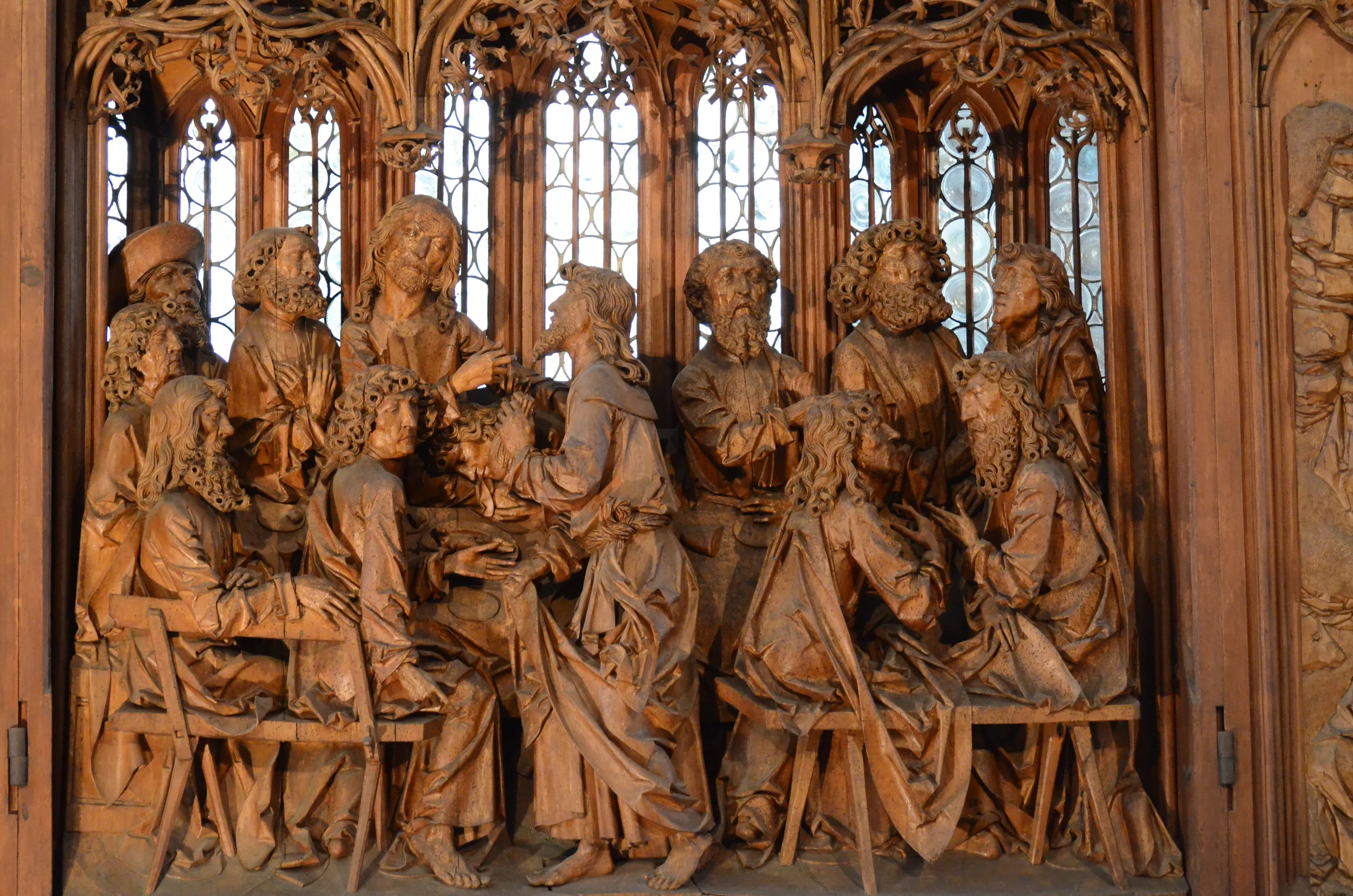
If you are visiting Lalitpur, the city of the arts, do make a point to take a look around the numerous workshops in Patan Industrial Estate. You’ll be pleasantly surprised, maybe even astonished, to see such a wealth of artistic talent within its premises. Take for instance, Arnico Stone Carving. Enter its doors and you’ll be greeted by a massive stone statue of Lord Ganesha, a statue that weighs 10 tons and stands 18 feet tall. It’s a masterpiece of stone craft, commissioned by Tansen municipality in mid western Nepal. Go into the showroom and you’ll find scores of beautifully sculpted idols of various deities, along with other objects of a religious nature. The one responsible for such an impressive body of work is Dharma Raj Shakya, one of the foremost stone sculptors of Nepal.
If you want to feast your eyes on some wonderful works in metal, then visit Nepal Dhalaut Udhyog, where you’ll find a lot of deity idols, some large lion heads, and quite a few bells, in both bronze and brass. The last are actually the specialty of this establishment, and it is just one of the very few makers of bells in the country. These bells come in all sizes, from small (25 kg) to really, really huge sized ones. Till some months back, a 3000 kg bell used to hang outside its doors; now this bell adorns a temple in Bhaktapur district. Much of the intricate carvings on the bells are the handiwork of the company’s owner, Pragati Ratna Shakya, while many of the other works are done by his assistants at the workshop, as well as by commissioned artisans in a locality called Okubahal that has a reputation as the center for metal sculptors.
As said before, the Estate has numerous other workshops, and one that’s highly reputed for wood work is Purna Woodcarving Industries. It’s a pretty big establishment, and you’ll find a lot of wood carvers busy making a diverse range of wood craft, among which, finely carved windows that are quite mammoth in size are sure to catch the eye. Apparently, this organization has some pretty impressive works abroad to its credit, including a temple in Singapore and one other in Disneyland in Florida, U.S.A. The mammoth windows are also meant to be installed in some hotels in Tibet. In line with the size of its business, the organization also has a workshop in Bungamati, which is known for its skilled woodcarvers.
If you are interested in paintings, go down to Kandevsthan near the Thapathali Bridge, close to where are located the studios of the Kasthamandap Art Group, which consists of six very talented young artists, each with a style of his/her own. All of them have individually earned a fair bit of name and fame in the Valley’s art world; yet, credit it to their innate humility and sense of consideration that they have remained a cohesive unit for more than a decade now. In fact, in addition to solo exhibitions, they also regularly put up group exhibitions, which are quite highly anticipated by art lovers.
The group members—Asha Dangol, Erina Tamrakar, Bhairaj Maharjan, Binod Pradhan, Pradip Bajracharya, and Pramila Bajracharya—are all in their thirties, and a most pleasant group to be around, such are their personalities. Despite the fact that they have won numerous awards, and are well known, the one thing that really is striking is their humble demeanor. While all of them describe their works as being semi abstract, it is obvious to the viewer that there are distinct differences in their styles. While many of Asha’s works are graphic illustrations of a mixture of traditional and contemporary subjects, his wife Erina’s canvases are full of feminine figures in all sorts of situations and poses. The outstanding way in which they are portrayed is to be appreciated.
Bhairaj’s works are strong depictions of day-to-day activities of women, mostly, and they are so pleasingly depicted that one gets the feeling of witnessing secret moments through the artist’s eyes. Binod, on the other hand, specializes in architectural aspects, primarily cityscapes and temples, as well as portrayals of common folk busy with their daily chores. He uses vibrant colors and interesting textures, and plays around with light and shade. Pradip’s canvases pulsate with exciting images of the colorful festivals of the Valley, and it is his particular ability to bring to life the revelry and vibrancy of such occasions. Pramila can be classified as an artist whose forte is landscapes. However, her landscapes are like no other, being of a very original nature, and always abstract. So, no matter what your own preference is, no matter what sort of art attracts your finer sense, you’ll probably find it at the group’s studios.
The above are but a few examples of the kind of talent you’ll discover in the Valley, more so in Lalitpur. And, undoubtedly, you’ll agree that, indeed, one of Nepal’s greatest riches is its abundance of highly talented artists and artisans.
Kathmandu and its SPAs
The last few years has seen a tremendous rise in the number of spas in Kathmandu. Wellness is in.
Everybody knows that spas originated in the cradle of civilization, that is, Rome. The Romans fought so many battles it was felt that the war weary soldiers needed something to rejuvenate them in double quick time so that they could return to yet another battle soon. And, so, they came up with spas. Spa is a Latin acronym for ‘sanus per aquam’ (health through water). Huge baths were built for the purpose. The routine went like this: begin with some heavy wrestling and boxing in a courtyard or in a palaestra (gym), then go into a tepidarium (warm room), where expert masseurs rubbed away the sweat and grit with a stimulating massage using different kinds of aromatic oils. Next, step into a heated pool, and having soaked away to glory, it’s into the steam room for some time. Finish up the routine by jumping into a plunge pool in the frigidarium (cold room). And, voila, you’re ready to fight again!
While that was what a spa experience meant in those days, it’s different today, even though the basic premise is the same. Step into any spa in Kathmandu and the most striking part will probably be the Jacuzzi, which is a bath with swirling water. However, that’s just a small part of the whole; it’s the massage that’s most important in any spa experience in Kathmandu today. There are quite a number of different types of massages, all of them with exotic names and mostly of Eastern origin. A massage means that you got to lie down on bed, and so, you’ll find all kinds of beds at spa parlors here. Although most such beds are quite simple in structure, one that stands out is a mahogany colored really exotic-looking one in a small room in the Midas Day Spa Salon in Durbar Marg.
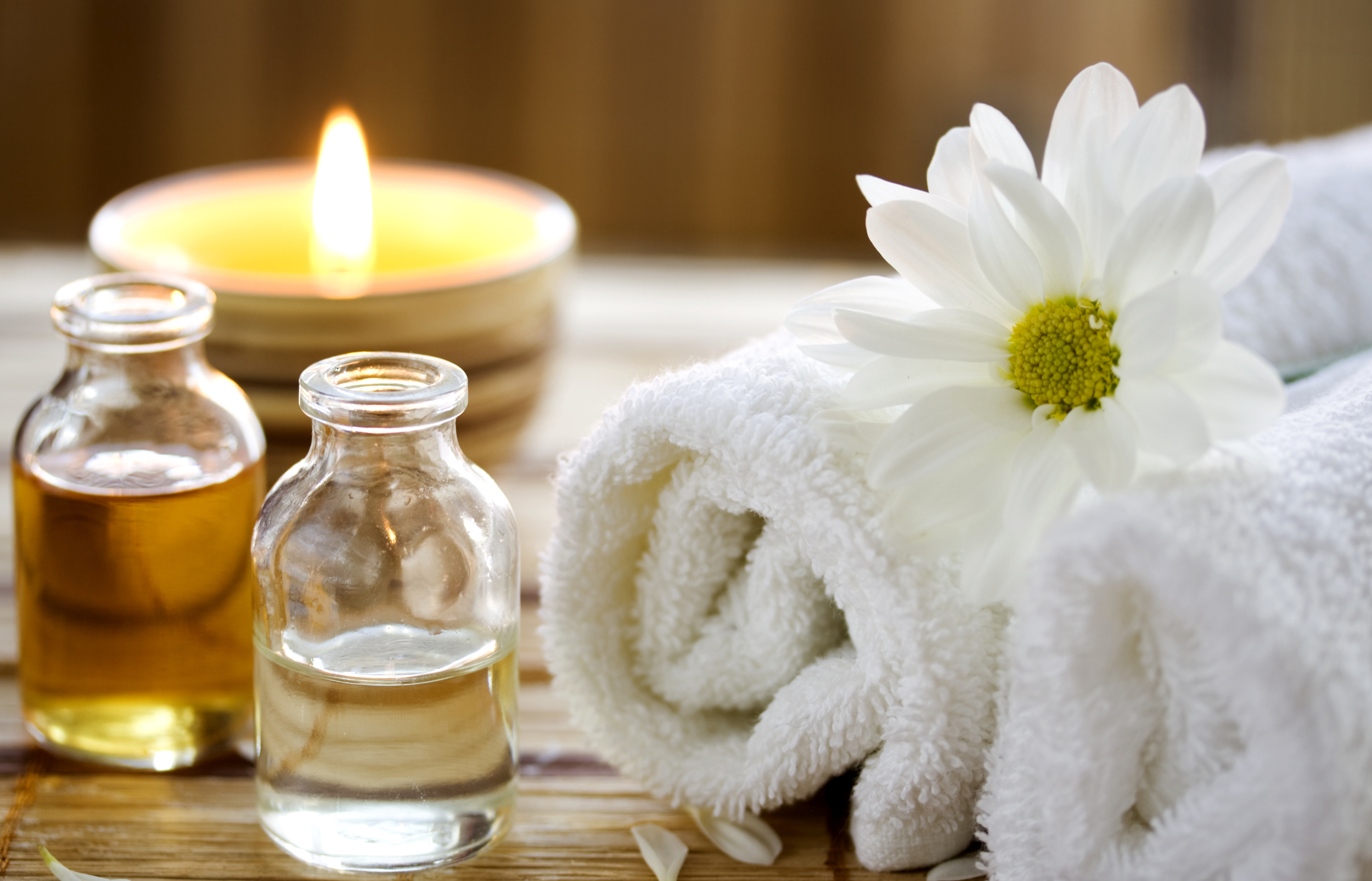
But, no matter how great the bed is, what matters most is the quality of the massage you get while lying on it. Besides the technique, it is also the kind of oil used that can make a massage into a heavenly experience. At Spa Prana, also in Durbar Marg, they claim to use 30 different kinds of oils for their massages. Aside from the kind of massage being given, clients’ preferences are also a deciding factor on the choice of oils used. Most masseurs in such high-end spas are naturally highly skilled individuals, having a great deal of knowledge about things like herbs and aromas, as well as the effect of different oils on the body, more so, on the skin.
While coaxing muscles into a relaxed state through expert kneading is the goal of all massages, a glowing skin is also an important end result. In other words, ‘body polishing’, also known as body scrubbing. This is especially all the more important when there are no facilities for working up a sweat beforehand, as the Romans used to do. At the same time, many of the spas in high-end hotels (most of them have a spa) have sweat-inducing facilities like gyms and tennis courts. But, even if day spas may lack this, they more than make up by providing services bordering on the royal.
Since the environment is of utmost importance to endow clients with a sense of tranquility so that they begin to relax immediately on entering a spa, you can expect the interiors to be soothing, elegant, and very tasteful. Be it Hyatt Regency’s Club Oasis or Gokarna Resort’s Harmony Spa or Midas Day Spa or Spa Prana or Sparsh Spa or Healing Hands; and Chaityana or ☛ Tranquility Spa at Hotel Shanker, the ambience is pleasant and relaxing. A soothing décor, dim lighting, stylish furniture, high quality equipment: these are all a given when talking about spas in Kathmandu. But, all these would come to naught if the personal touch were missing. So, what you have are smartly dressed staff with impeccable manners. A body scrub may be the beginning of a spa experience, but even before that, it’s the welcoming smile and the courteous behavior of the staff that makes you feel really good about yourself.
You’ll get this kind of welcome at all spas, and ☛ Tranquility Spa is no exception, in fact, it has a spa training center in Lazimpat, so its staff at its various branches around the city are top-of-the-line regarding this. And, while facilities might vary among different spas, you can expect most spas to provide, at the least, indigenous treatment methods for an all-round wellbeing experience. This means using locally available herbal ingredients and traditional ayurvedic massages. Anyway, whatever may be the ingredients or the method, a typical spa package could include a body scrub (body polish), a bath, a body wrap, a massage (the focal point of the whole experience), and a facial, manicure, and pedicure. All in all, the aim of all spa packages is a truly holistic experience that will leave a person relaxed, refreshed, and rejuvenated both in body and mind.
To go into this in a bit more detail, a body scrub’s goal is to make your skin smooth and soft through use of an exfoliant (an abrasive material like salt, rice bran, coffee grounds); oil (some oils like sweet almond oil and macadamia oil can be pretty expensive); and fragrance, emanating from essential oils such as spearmint and rosemary. A shower, later, is followed by application of a body lotion. Next comes the body wrap, in which your body is covered with mud or algae or seaweed, and then a thermal blanket is wrapped around you. This is a detoxifying treatment, the aim of which is to stimulate your metabolic system. If cream or lotion is used instead, then it’s called hydrating. Some herbs, yogurt, honey, etc. may also be used.
The bath is also special, in that it could be an aromatic, herbal, floral, or a milk bath. Apparently, the last one is the most popular. A few teaspoons of honey may also be added to the bath. Depending on the kind of essential oil used, an aromatherapy bath can be muscle-relaxing, hydrating, detoxifying, or even aphrodisiacal. Five drops each of sandalwood, lavender, and rose essential oils in the bath is supposed to raise your libido. Sometimes, ginger and clove are used in aphrodisiacal baths, as they raise body temperature.
The massage can last from 30 to 90 minutes, and can include techniques like gliding, kneading, and cross-fiber friction strokes. Massage oils are an integral part of the process, which increases circulation and releases tension. Massages can be of many different kinds, viz. deep tissue massage, hot stone massage, aromatherapy, lymphatic drainage, myo-facial release, cranio-sacral therapy, trigger point therapy, neuromuscular therapy, and so on. Ayurvedic massage, Thai massage, Swedish massage, reflexology, Shiatsu, Watsu, Rolfing…the list goes on. Because of the therapeutic factor central to all massages, the practitioners are referred to as therapists instead of merely masseurs.
All spas offer facial, manicure, and pedicure facilities, the culmination of the spa experience. Facials consist of different treatments: steam, exfoliation, extraction, masks, peels, and massage, in that order. A facial massage, using toners and protective creams, stimulates the facial muscles. Facial masks have vitamins, minerals, and fruit extracts, and they can be deep cleansing to get rid of acne scars and other blemishes or for enhancing skin tone. ‘Age defense’ facial’, ‘oxygen facial’, ‘photo facial’, and ‘collagen facial’ are some special types of facials that spas also provide.
A spa experience is something that will make you feel on top of the world. You’ll come out of it with a feeling if deep relaxation and wellbeing. So, the next time you are in Kathmandu, make sure you visit one of the many beautiful spa parlors around town and in the better hotels, because it’s going to add another memorable page to your Nepal adventure.
POPULAR ITINERARIES
SIMILAR POSTS
Reliving History on the Daha Chowk Hike
Up on the hills, near a village called Daha Chowk, is where lies the tomb of one of Nepal’s greatest generals, Kazi Kalu Pandey.
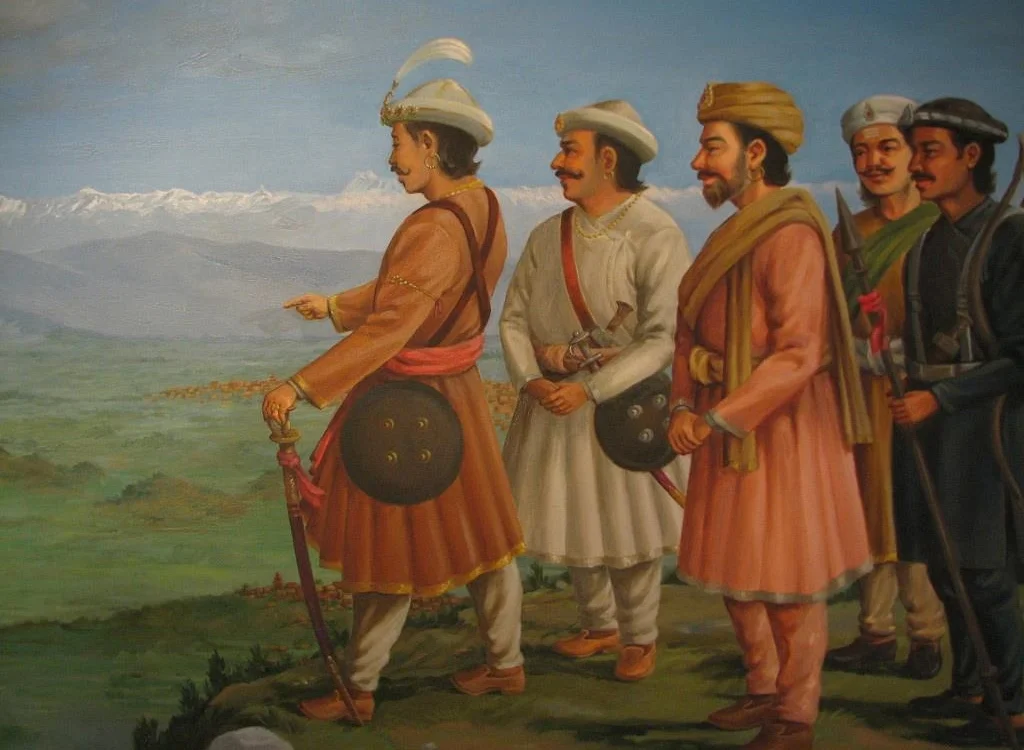
After the death of his father, Nara Bhupal, Prithvi Narayan Shah (1723-1775) became the king of Gorkha on April 3, 1743. A young man brimming with farsightedness and determination, his overriding ambition was to enlarge his small kingdom. And so, he set about conquering other kingdoms, a campaign that eventually led to victory over many of the 22 kingdoms known collectively as baisi raijya, as well as the 24 kingdoms known as chaubasi rajya west of Gorkha, the Sen kingdom in the east, and Kathmandu Valley. In 1769, he shifted his capital to Kathmandu, and named his unified kingdom as Nepal.
His conquest of the Valley was the most challenging of his entire campaign. In this endeavor, one of his most strategically valuable conquests was that of Nuwakot. It was not an easy task, and his army was repelled on the first try. Not only was his army ill-equipped, there was another reason for his defeat—his two ablest supporting clans, the Pandeys and the Basnets, were at loggerheads. The king decided that unless he settled their dispute, he wouldn’t be able to go far. So, he promoted the leader of the Pandeys, Kalu Pandey, to the post of Mul Kazi, equivalent to the post of a prime minister. Now, Kazi Kalu Pandey was one of the most war-savvy and bravest warriors around, and he put in his all to win Nuwakot for his king, which he did on Oct 2, 1744.
This was the beginning of the end for the various kingdoms of the Valley. Kazi Kalu Pandey’s strategy was to blockade the Valley by taking over strategic positions on the surrounding hills. In the next two years, the Gorkha army under his generalship seized important sites such as Pharping, Shivapuri, Mahadevpokhari, Chitlang, Naldrum, Dharmasthali, and Siranchok. He then made Kirtipur the center of his attention because he reckoned that its subjugation would ease the conquest of the whole Valley. However, the Kirtipur army was a tough nut to crack, and on December 4, 1757, during the first attack on the town, Kalu Pandey was killed, and the king himself nearly beheaded. It was the worst possible thing to happen to an army at war, the loss of its greatest general, a warrior of legendary proportions. The Gorkha army’s second attempt in August 1765 was also repelled. A severe blockade was the applied, which resulted, finally, in Kirtipur’s surrender on March 17, 1766.
To say that Kazi Kalu Pandey was one of the foremost figures responsible for the unification of Nepal would not be an understatement. He inspired great confidence in his soldiers as also in his king, and it was due to his excellent strategies that King Prithvi Narayan Shah could fulfill his ambition of creating a single country out of numerous smaller kingdoms. The body of the legendary Kazi Kalu Pandey was buried in a place called Daha Chowk of Chandragiri Municipality, Kathmandu District.
Knowing a bit of the country’s history and Kazi Kalu Pandey’s role in it certainly makes the day-long hiking trip to this historic place more interesting. The hike begins from Thankot, goes through Naikap and Balambu, and then carries on up a steadily climbing dusty road towards Daha Chowk. The route is lined with rhododendron trees, and the thickly-wooded Chandragiri hills present an imposing backdrop. By and by, your hike finds you walking up a set of stairs, at the top of which is a small hexagonal temple dedicated to Goddess Bindabasini. Originally, before the statue of the goddess was made, a tree stub used to be worshipped instead as the Baan Kali deity, and the story is that this is where King Prithvi Narayan Shah prayed for success before embarking on his conquest of Kirtipur.
Passing the temple, soon enough, you come to a pasture, and it too is a part of history due to the fact that the king’s army did their drills here to keep themselves in shape for the upcoming attack. Up ahead is a small settlement called Indrasthan where there’s a communication tower guarded by some soldiers. This tower’s history isn’t good; in 1999, a passenger plane flying the domestic route crashed into it, killing all 15 onboard. After walking for some more time, you come to the village of Daha Chowk, where there’s a sacred pond called Indra Daha, and nearby, at some 10-minutes walking distance, the tomb of the man who helped make King Prithvi Narayan Shah’s dream come true, that is, Kazi Kalu Pandey. Apparently, the general, in his dying moments, made a wish to be buried at a site from where Gorkha could be seen, as also Manakamana Temple, one of the more famous shrines of Nepal. There’s a replica of this temple here, as well, which was built in 1757, and dedicated to Goddess Bhagawati.
So, you see, a hike to Daha Chowk is a hike through the pages of history, for some very important events took place in and around it during the time when a new country by the name of Nepal was being created.
A No-Holds-Barred Affair, the Nepali Wedding, Part 2
(2/2) In any culture, marriages are celebrated with much pomp and ceremony; a Nepali wedding, too, is an occasion that’s full of ritual and revelry, and yes, quite a bit of ostentation too.
A day or two later, the swayambhar ceremony takes place. This is the central part of the wedding ceremony. The janti (groom’s procession) arrives at the site of the swaymbhar (previously, it was usually held at the bride’s home, but nowadays, more people prefer to have it at some hotel or some commercial banquet sites (a.k.a. party palaces). This is because it’s easier to look after the janti, which could number a score to a few hundreds, as well as friends, family, and relatives of the bride. Snacks, drinks, a lunch, and so on, are catered by the concerned establishment. This also means that it’s another reason for digging into the piggy bank, more substantial expenses. The groom, on his part, has also probably arranged for his procession to gather at some hotel, where the guests (again, family, friends, relatives) can drink to their heart’s content so as to be in a jovial mood, and partake of tasty morsels served by the hotel.
The janti is preceded by a brass band belting out the latest hits and wedding-related numbers. Considering the distance, the procession reaches the site of the swayambhar before the appointed time on vehicles, and then get down a few hundred meters away to walk the rest of the way on foot. Where the distance is not so great, the janti dance their way to the swayambhar site, at least some of them do, and it’s a merry occasion, to be sure. The groom is taken by the hand by the bride’s father and taken to the place where the swayambhar will be held. Garlands and rings are exchanged between the couple, followed by some other rituals.
The photographer is the busiest man around by now, recording everything for posterity and Facebook. This ceremony is a longish affair, and would have been still longer if it weren’t for the fact that on reaching puberty, the bride, like other girls, underwent a bel bibah (a ritual in which she is wedded to the bel fruit). Please note that the wedding being described is that of the Newar community. This means that she has already undergone many of the wedding rituals, so not much is left at the wedding itself. There’s one interesting custom during the swaymbhar; the bride’s sisters and other young female relatives hide the groom’s shoes, and at the end of the ceremony, money is demanded from him for their return. Nowadays, this demand can burn a hole in his pocket!
Anyway, it’s a contentious affair between the bride’s young female relatives and the groom’s friends/relatives. There’s a lot of bargaining, but in the end, the bride’s side always prevails. After that, the couple gets into the groom’s car, which is covered on top by a bright red and gold brocaded piece of cloth. The procession then leaves for the groom’s home, where the action now shifts. On entering the gate of his home, the couple’s way is blocked by his sisters and other young female cousins who demand money to let them in. Again, money changes hands after some heavy bargaining. Once inside, the couple rest for some time, before relatives start arriving bringing with them sagun (auspicious foodstuff; usually fried fish, meat, and lentils, curd, badas, a doughnut type snack, fruits, etc.) and presents in the form of clothing.
It becomes a never-ending affair since families here are mostly large in number. By and by, the couple at last gets some rest. However, if the reception from the groom’s side is held on the same evening, then it becomes one heck of a tiring day. If it’s held on the day following, it becomes more of a leisurely affair. Another thing to be mentioned here is that the supari mentioned earlier (all those trays bearing gifts and foodstuff) is returned to the groom’s house after the swayambhar. It’s a funny custom, since it consists of just taking the trays back and forth. The bride’s side add a couple more trays, and the fish, especially, is replaced with fresh ones. And, yes, keeping in tune with modern times, the supari sent by the groom also includes a wedding cake that’s cut by the bride and enjoyed by all present.
So, there you have it—a typical Nepali wedding. You’ll agree it’s a momentous event, and one that entails much preparation and money. But, then, as they say, a wedding is a once in a lifetime occasion, and should be celebrated as such.
A No-Holds-Barred Affair, the Nepali Wedding, Part 1
(1/2) In any culture, marriages are celebrated with much pomp and ceremony; a Nepali wedding, too, is an occasion that’s full of ritual and revelry, and yes, quite a bit of ostentation too.
The date of the actual wedding may be months away, but the fervor, especially among the concerned families’ womenfolk, begins to be felt far ahead in advance. More so if it’s a first-time wedding in the family. Then, it’s a no-holds-barred affair, meaning, the joyous parents are going to leave no paisa behind in the pocket to ensure that the occasion is a memorable one, something that’ll raise their status in others’ (especially relatives’) eyes. In this day and age, when marriages are taking place much later on in life than it used to before, it’s natural that there should be more ebullience on the bride’s side, but on the groom’s side, too, there’s a great big sigh of relief at having found a suitable bride.
Love marriages may be in vogue, but traditional marriages are still in the majority; however, no matter which kind, the rituals are the same for both. And, there are quite a few. Now, before delving into all that, it should be mentioned that in the case of the groom, there’s a custom away from the main celebrations that’s pretty demanding on the wallet. This is the tradition of presenting close women relatives (aunts, sisters, cousin sisters, etc.) with glitzy sarees weeks in advance. Each of these elaborately brocaded and sequined sarees cost good money. Understandably, it’s a big burden to those who are working on a tight budget, but for the more wealthy, it’s a something to be taken great pleasure in. Especially because this kind of goodwill gesture will certainly guarantee the beneficiaries’ deeper involvement in all aspects of the wedding—like they say, “The more the merrier!”
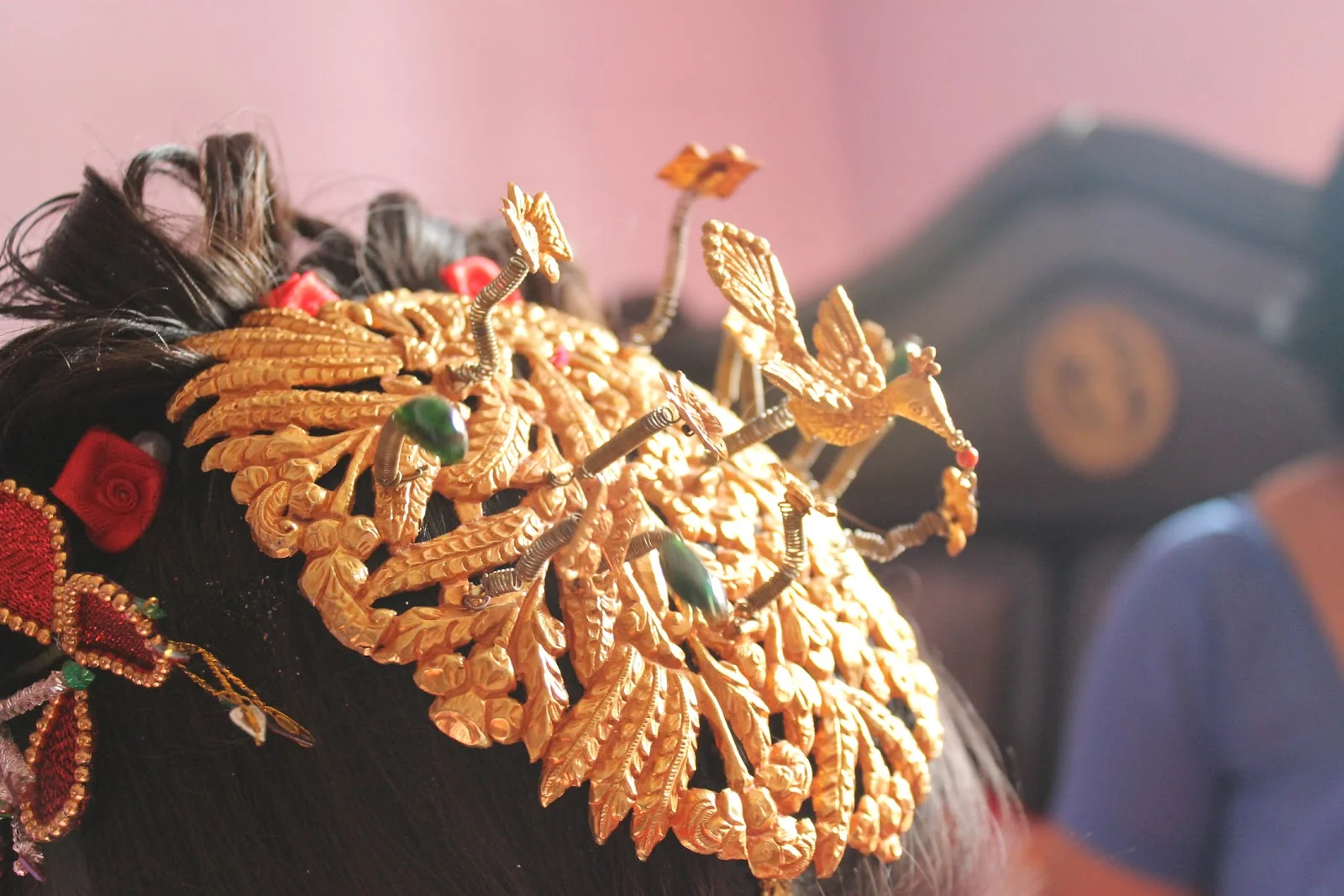
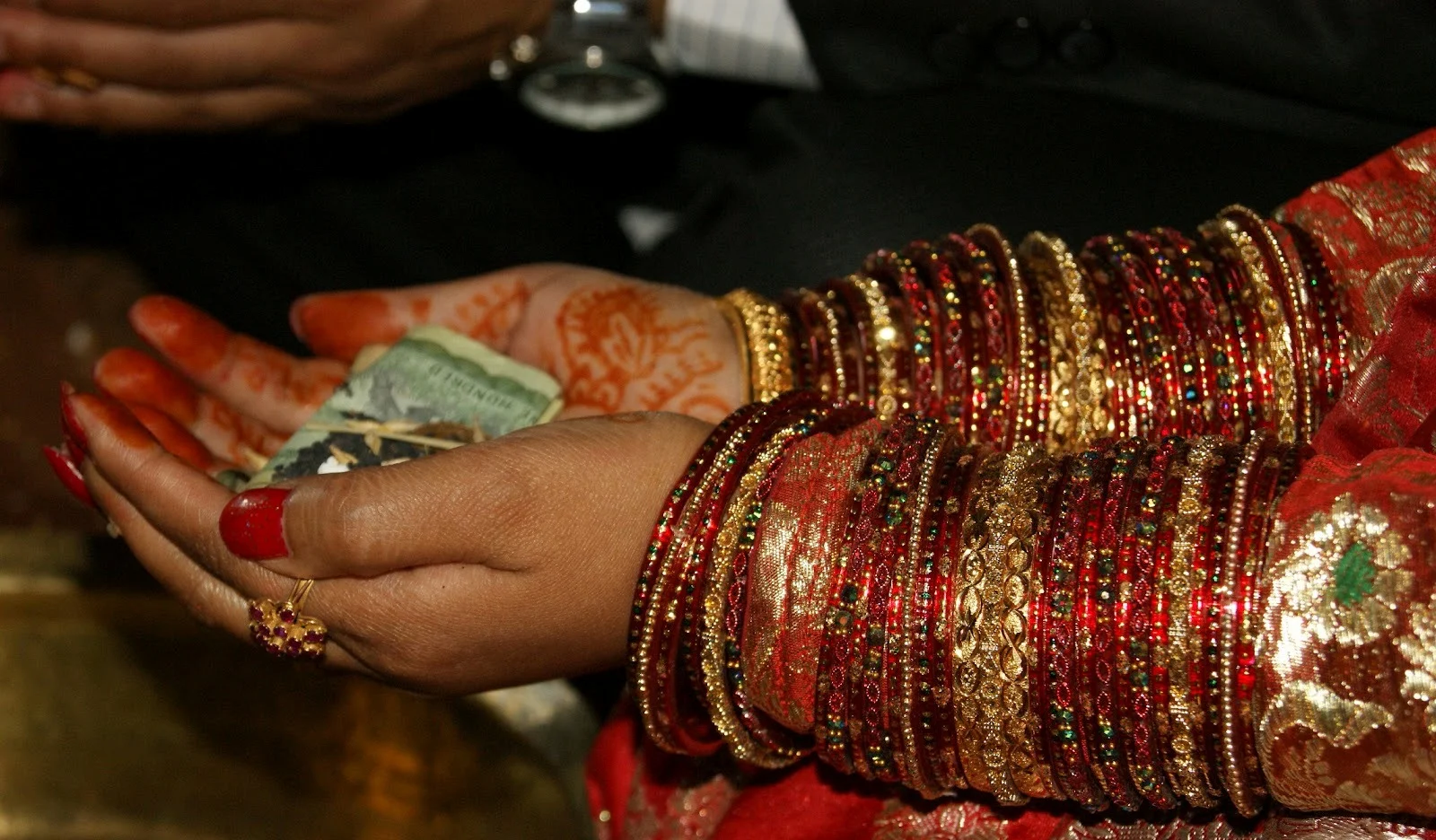
And, so, weeks head of the wedding, you’ll find plenty of ladies in the groom’s house, keeping themselves busy with various small tasks, not to mention, keeping themselves entertained with lots of chit chat and gossip. In the bride’s home, meanwhile, the parents are probably busy having the house repainted and refurnished, besides making plenty of trips to the market to buy the interminable list of essential items needed for the wedding. A major part of their trips will perhaps be to the goldsmith, or the jewelry shops, since gold is what’s most in view at any Nepali wedding. The ostentation part, for sure, and the most bank-breaking venture of the entire occasion. Like said before, it’s likely that if it’s a first-time wedding, even the piggy bank is not going to be spared, and the gold jewelry worn by the bride on the wedding day will be observed with keen eyes and calculating minds by most of the women present.
So, the bride’s gold jewelry is important, to make an understatement, and on a lesser financial scale, but as important on an aesthetic level, is what the bride wears on the different days of what is actually a quite long drawn out affair, probably over three or four days. And, just so you know, as everywhere, a wedding trousseau doesn’t come cheap. All in all, this is also quite a drain on the financial resources at hand. The day when the groom’s side sends the supari (a score and more trays containing all sorts of stuff: from vegetables, fruits, and sweets to clothes, ornaments, and makeup to sweets, fish and betel nuts, etc.) to the bride’s home, the bride needs to be decked out in a glamorous outfit. The sending of the supari signifies that the wedding is now confirmed beyond doubt, and so is a day of great joy. Only a few close relatives of the groom accompany the trays, but they are treated like royalty. Along with all the goods mentioned above, the supari also brings along with it a handwritten note by the priest concerned mentioning the subha sait (the auspicious hour) of the main wedding ritual. This day of supari is a minor part of the wedding, but there’s a feast involved, anyway, for close relatives present.
The next day, in most cases, the bride and her family host a grand party which is attended by hundreds. The bride is dressed in her best on this day: her throat, hands, and head glittering with gold jewelry. It’s a fact that the bride will not look better on any other day after this day so glowing and radiant will she be on this occasion, and so heavily decked out in a beautiful saree and blouse that probably cost a hefty packet. Photos are in high demand, with the bride posing with all and sundry. The feast is, of course, delicious, and the occasion is a sublime one for all. One thing to be mentioned in passing: nowadays, many invitation cards request guests not to bring any material gifts. Cash gifts are fine, thank you (of course, this is not mentioned, but, it’s understood!).
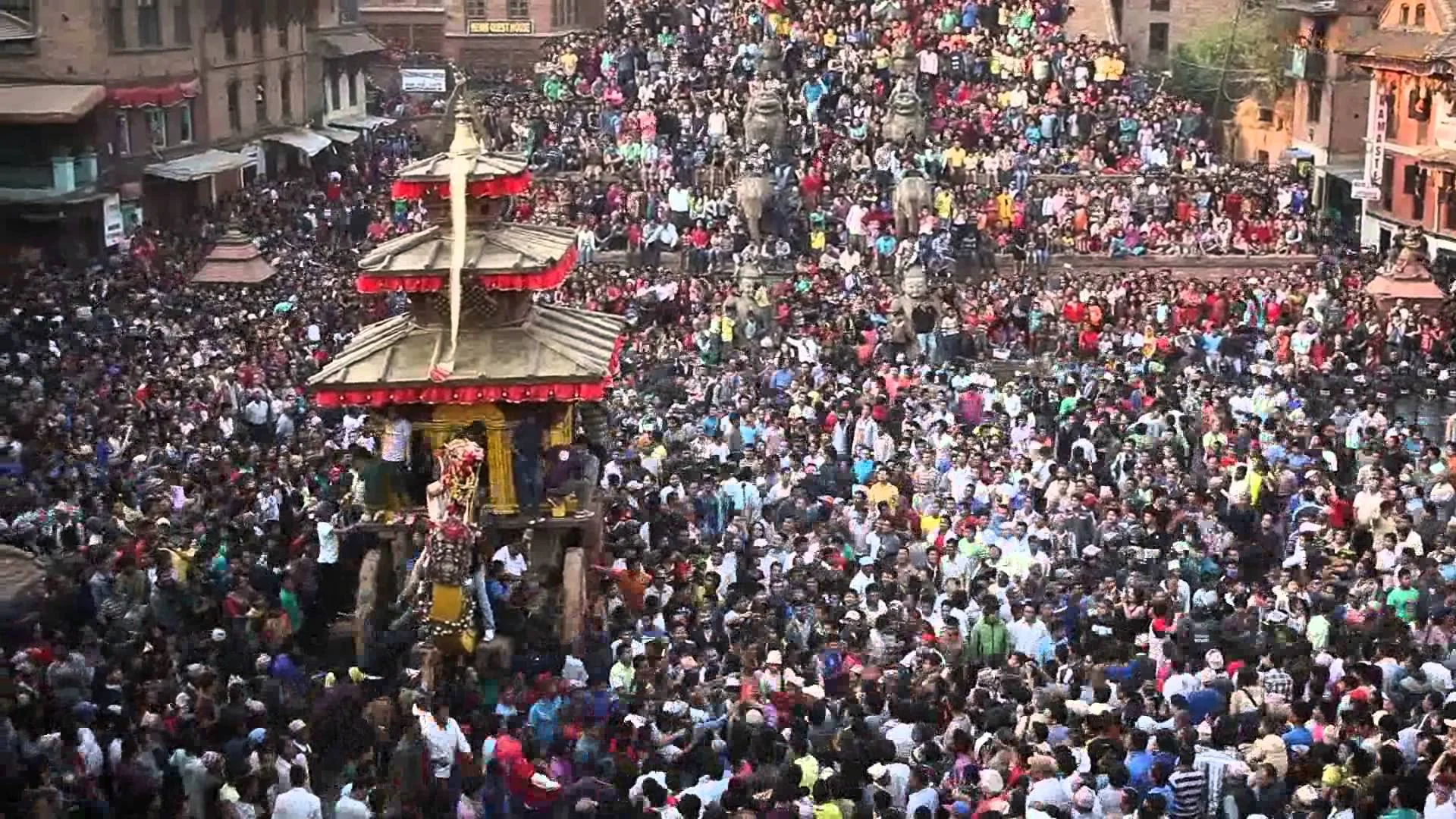
Bisket Jatra, Boisterous to the Extreme
Here’s a chance to participate in a festival that’s pretty boisterous, a festival in which two huge wooden chariots are pulled by hundreds of enthusiastic folks — in all directions!
Bhaktapur’s Bisket Jatra is one spectacle that’s hard to get out of the mind once you have been part of it. And, it will be a fortunate thing if there are no fatalities due to accidents during this festival. Yes, it has claimed quite a few victims in the past, some of whom have been crushed under the chariots’ mammoth wheels, while some have been unlucky to be at the wrong spot when the chariot itself overturns (yes, this happens sometimes). You see, it’s not a simple matter of tugging the chariots along a specific path; more often, different groups try to pull the chariots in different directions. The groups concerned are factions of various localities of the historical city, and to add to the bedlam, many of them are high on strong local liquor. Certainly, saying that the Bisket Jatra is a lively festival would be somewhat of an understatement.
Celebrated for a week before, during, and after the Nepali New Year (April 14) in Bhaktapur, the festival’s origin is quite interesting. King Jagajyoti Malla (1613 to 1637) was much enamored by a legend about a cursed princess, which went like this: whoever married her died the day after the first night, and there was no consummation of the marriage, either. Several young men thus lost their lives, quite unfulfilled! Then, along came one more brave young man who was willing to take the risk of marrying the cursed princess. He, however, came with a definite plan. No matter what happened, he was determined to stay awake the whole night of the honeymoon. And so, on the fateful night, he witnessed a sight that scared the living daylights out of him. As the princess slept, a fearsome-looking serpent slithered out of one of her nostrils. Terrified as he was, the new groom did not hesitate, and with a single stroke of his sword, cut off the serpent’s head. This was the legend King Malla wished to be remembered through the Biket Jatra festival every year (originally known as Bisyau Jatra).
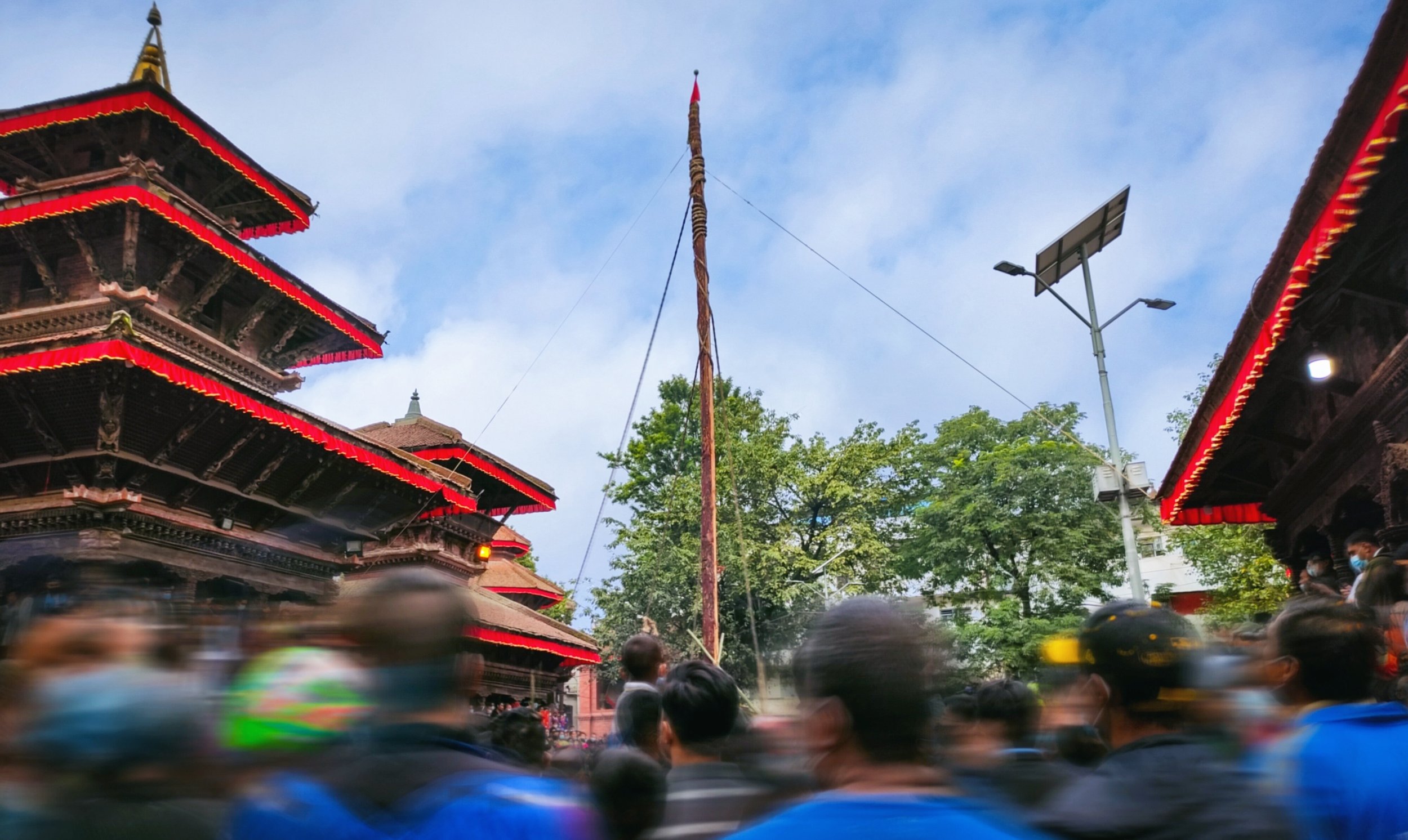
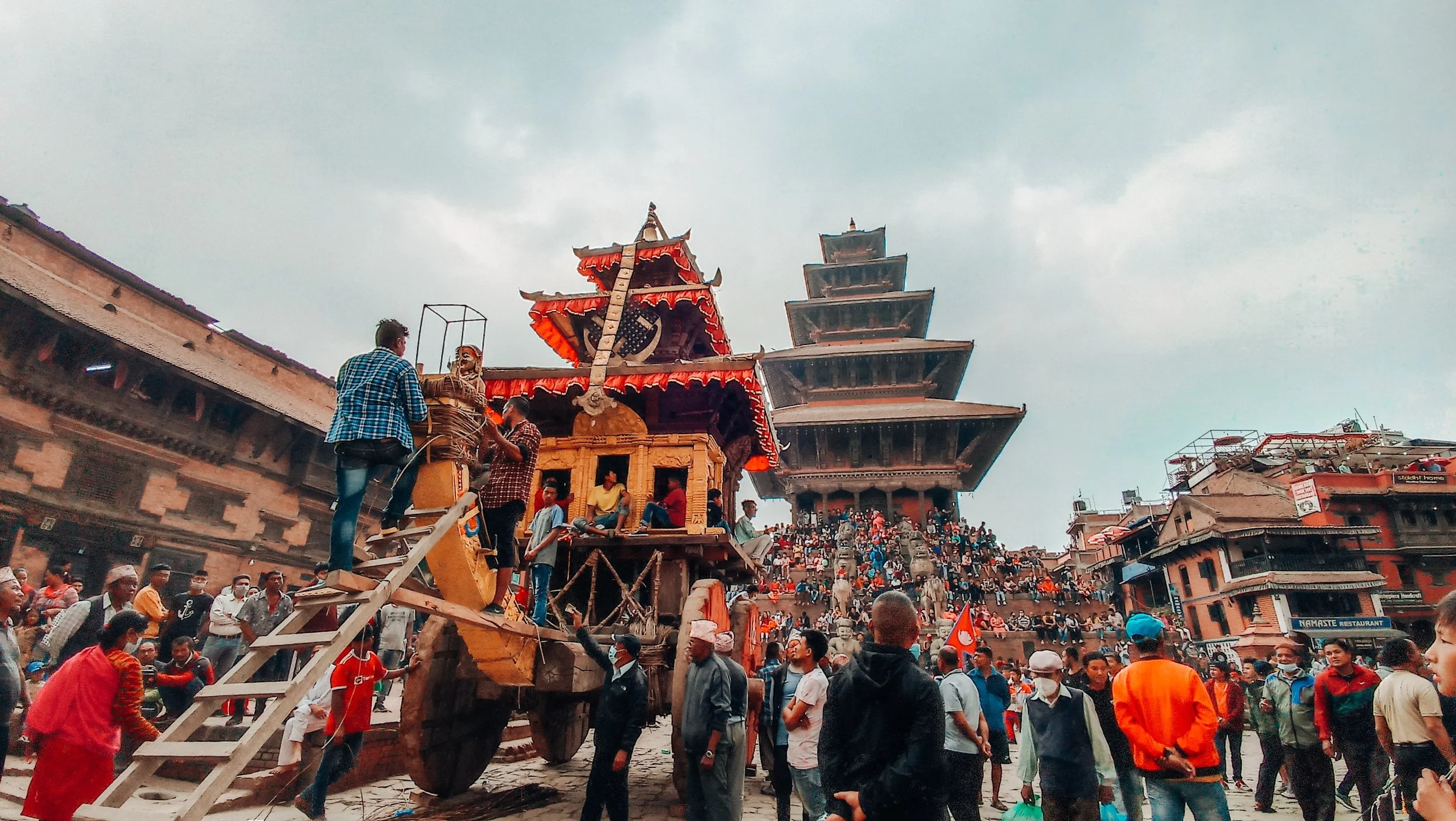
During the festival, two massive wooden chariots (raths) carrying the gods Bhairab and Bhadrakali, along with various other gods on palanquins, are taken in a procession through the different localities of the ancient city. Hundreds of young men pull on strong ropes to move the chariots. The chariots are rested at certain places, where the people of that locality come to pay their respects to the deities. Around the same time, two tall wooden poles (lingos) are installed in separate places around the city. On the day of the New Year, the bigger one is brought down, and the two raths are crashed against each other. The bringing down of the pole symbolizes the slaying of the serpent, while the clashing of the raths symbolizes successful consummation of the marriage.
All these activities of bringing down the pole and crashing the chariots against each other is when things turn really active, and the atmosphere becomes rowdy and boisterous. And, this is also when accidents can happen. The pulling and pushing of the massive chariots becomes somewhat like a tug of war between groups of hundreds, and the bringing down of the pole is also a very contentious affair, with different groups vying for the honor to do so.
A typical Bisket Jatra program goes like this:
Day 1: The two chariots (carrying Bhairab and Bhadrakali) start off from Taumadhi square
Day 2: Palanquins with statues of other gods and goddesses are taken in a procession
Day 3: Same as Day 2, that is, palanquin procession of different deities
Day 4: The day before New Year; pillars are erected in pottery square and Yosinkhel
Day 5: New Year; people have feasts in the morning. The pillar in Yosinkhel is brought down, while the two chariots are crashed against each other near Taumadhi square.
Day 6: Festivals in nearby Thimi and Bode; Balkumari Yatra and Sindure Jatra in the former and tongue-piercing ceremony in the latter.
Day 7: Worship at temples of the eight mother goddesses (Astamatrikas)
Day 8: Bringing down of wooden pole in pottery square.
Well, here’s wishing you a memorable outing during the Bisket Jatra, and hope you take good care of yourself. Safety first, is what we say!
POPULAR ITINERARIES
SIMILAR POSTS

Some Great Newari Dances
The Malla Period was the golden age for artistic endeavor in Kathmandu Valley, and dance flourished as well.
Dr. Kumar Prasad Darshan received royal patronage to study dance in Mumbai in 1959. He has a six-volume series called “Nepalese Classical Dance Education” and one called “Nepalese Classical and Folk Dance Collection”. In his own fraternity, he is, of course, well known and respected as a knowledgeable exponent of Nepalese dance forms. However, he gained more public fame when an article appeared once in a monthly with the title of, “Dance Guru of Crown Prince Dipendra”. He has a photo in his home in Indrachowk showing the late prince and his paramour, Devyani, both dressed in the national costume (he in daura suruwal and she in gunyo choli) taking part in a group dance.
Whatever tragic designs history was proved later to have devised for the dancing prince, it is an indicator that dance holds an important place in the country’s culture. In fact, one could say that dance is an integral part of any culture, and in a country as diverse in ethnicity and culture as Nepal, one can expect there to be quite a large number of dance forms.
Newar dances
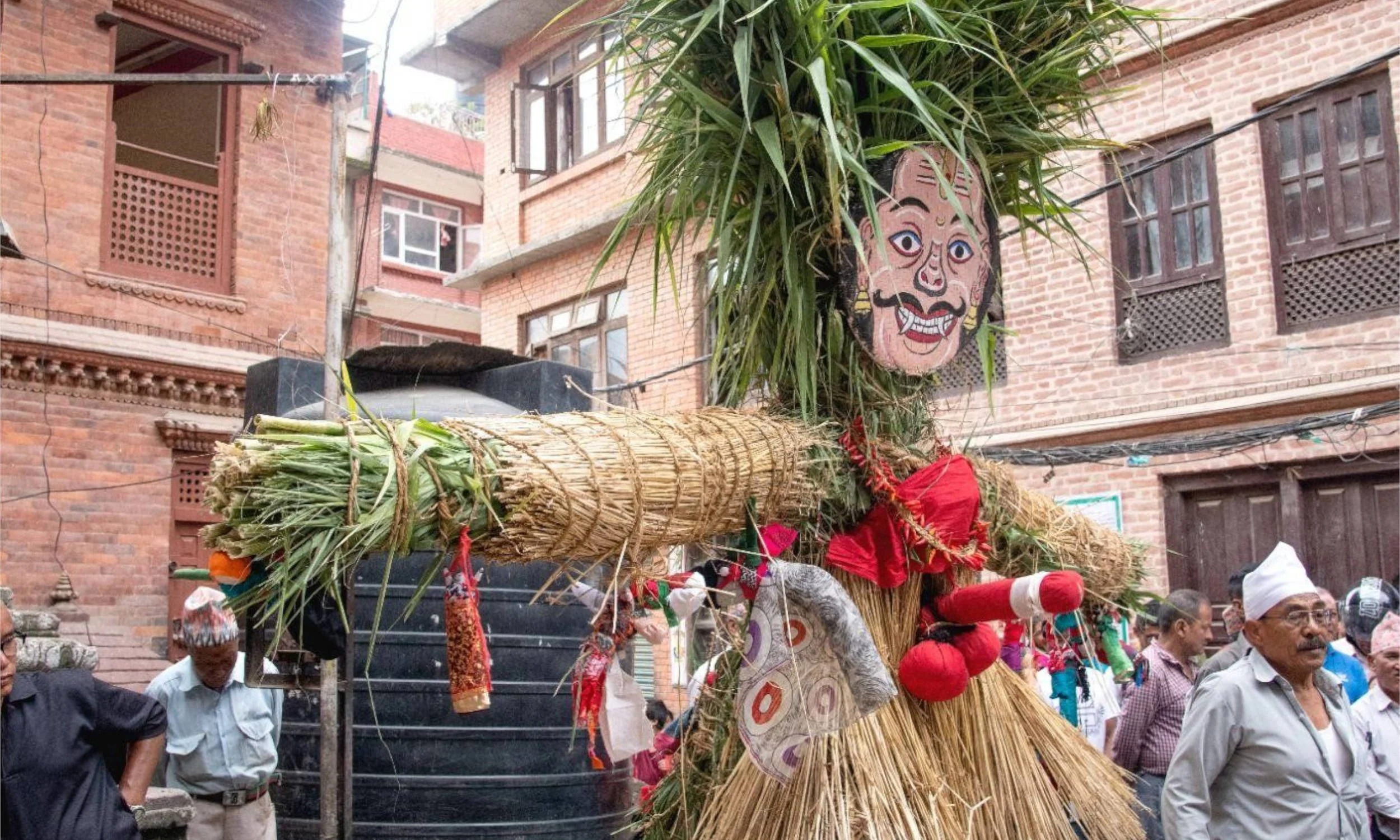
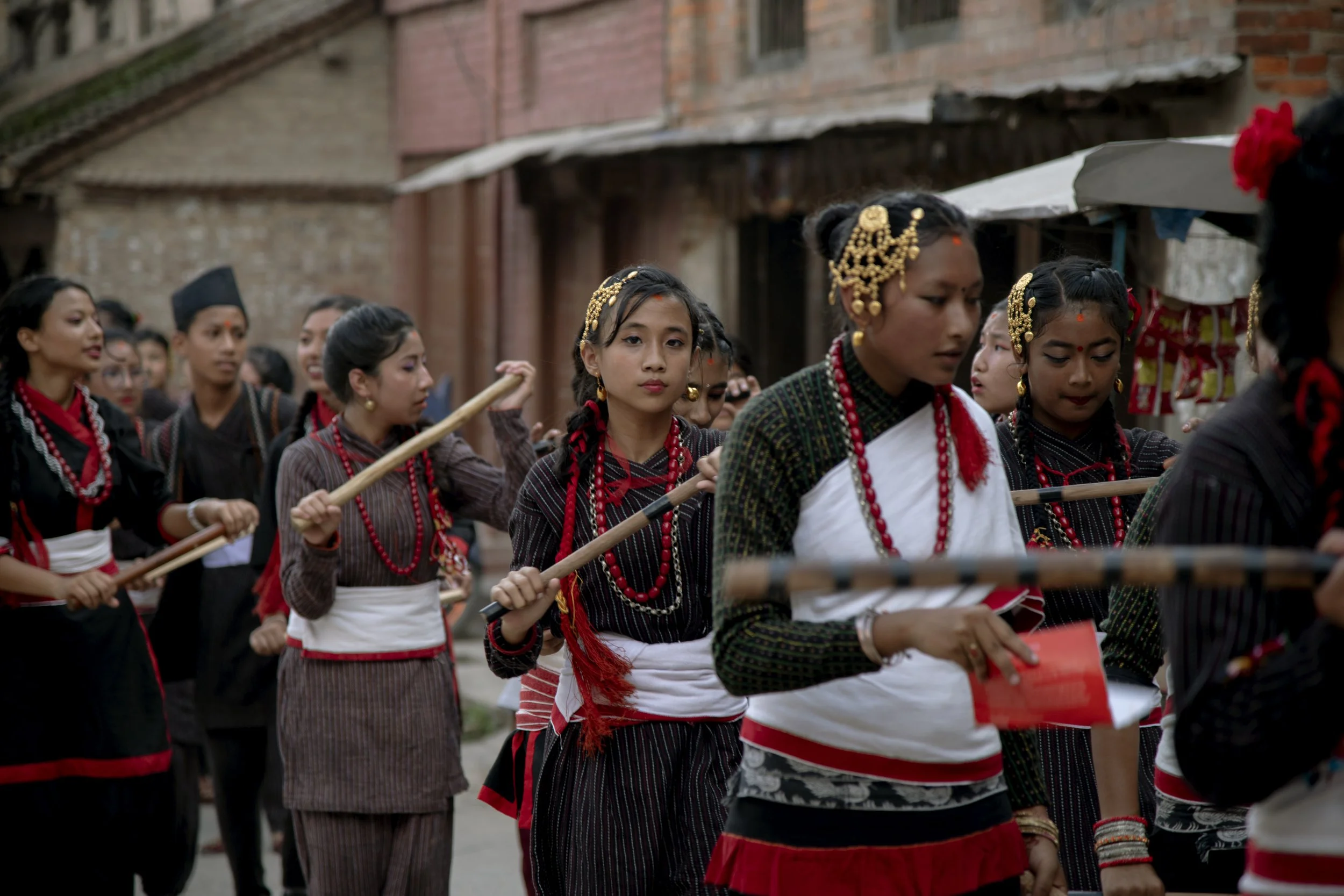
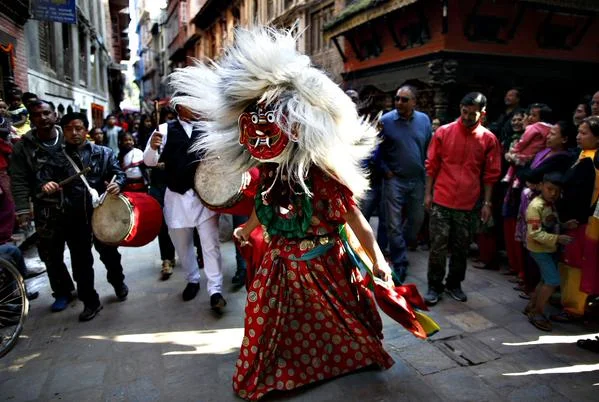
The Malla period (A.D. 1200-1769) was a flourishing period for all things artistic in the Kathmandu valley, and this included dance. In this regard, one king who must especially be remembered is King Pratap Malla (A.D. 1641-1674). The dabalis (raised platforms) that you see around many of the squares in the valley were built during the Malla era; these were where dance and theater were performed regularly for the public. In the three durbar squares, too, you’ll see such dabalis; the royal members would watch from the windows of their palaces while the common folk would congregate around the dabalis. Now, coming to the dances themselves, here are some of the more famous ones: Mahakali naach (dance):
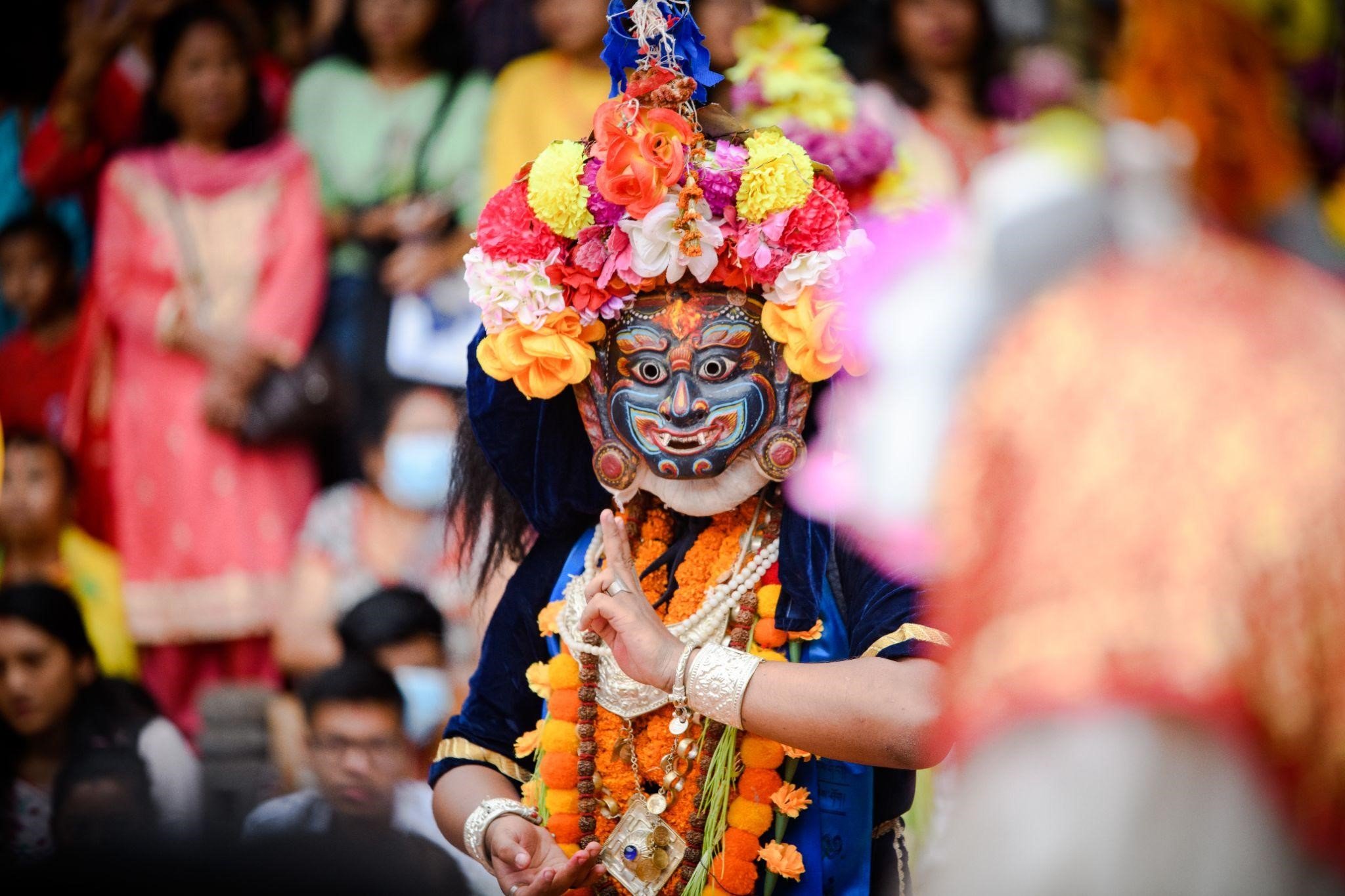
The origin of this dance is credited to a dream that King Pratap Malla once had in which he saw three goddesses fight it out with demons; it was such a vivid dream that he desired to have it recorded forever through a dance performance year after year. A masked dance, it enacts the epic battle between the goddesses Mahakali, Mahalaxmi, and Kumari and demons bent on destroying the valley. The shrill sound of the shehnai signals the beginning of the dance. Performed during the Indrajatra festival (Sept/Oct), a Mahakali naach can go on for about two and a half to three hours. This dance incorporates many of the dances mentioned below.
Mahalaxmi naach:
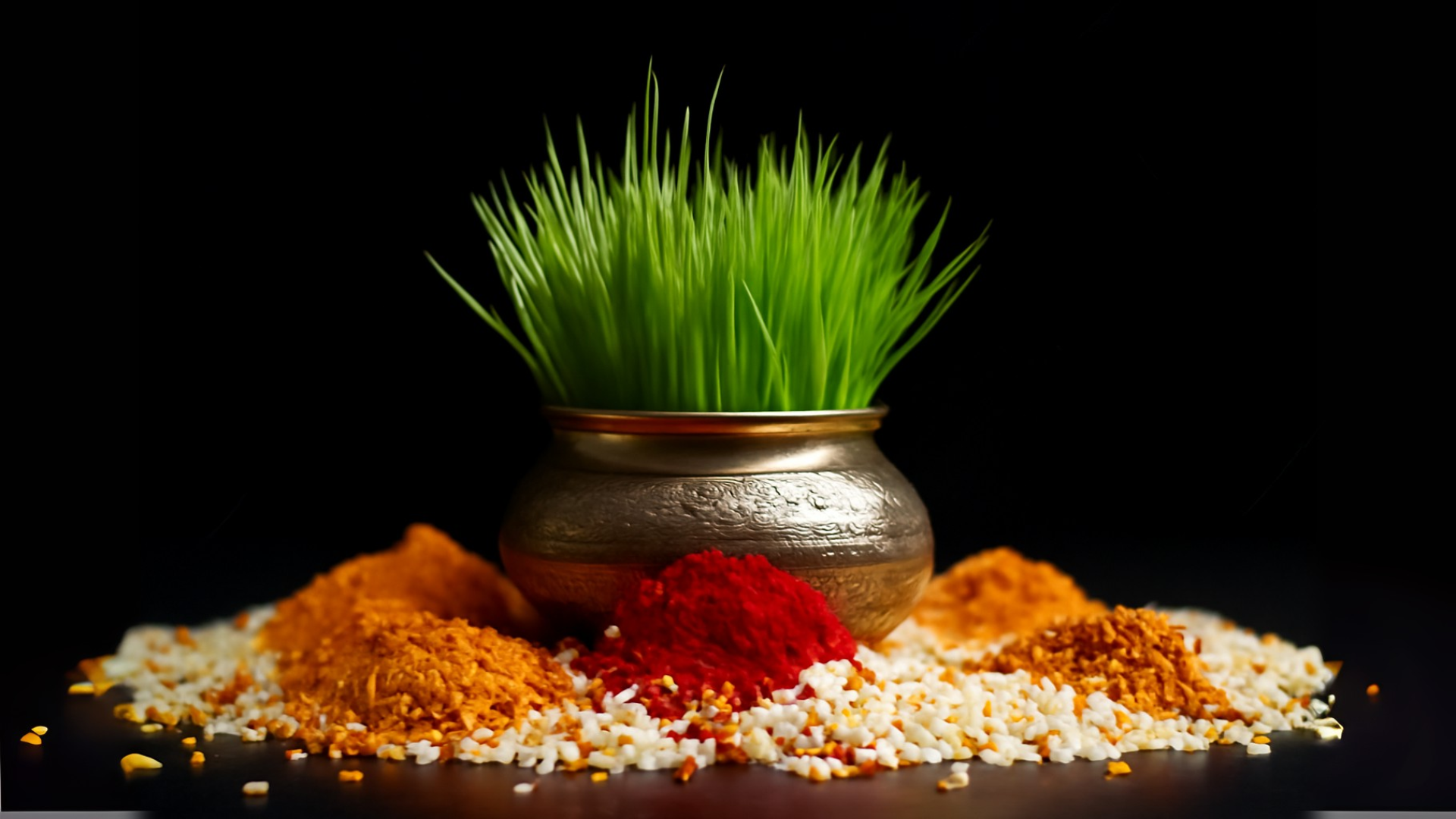
To the rhythmic beat of the madal, a masked dancer portraying the goddess Mahalaxmi enters the stage and starts dancing around the dabali, swinging a weapon in her hand. Eventually, she takes an asana (pose) at the center, and does some purification rites at the site where holy jamara (braley sprouts) are meant to be grown. Having done this, she then dances her way to the corners calling out to two khyaks (friendly demons figures) and two skeletons who join her in the dance. The luscious-looking jamara, which has now sprouted, tempts some demons (who are disguised as buffaloes).
Kumari naach:
This is a dance involving a large number of figures representing 55 animals, two khyaks, two skeletons, and a specter. They make a dramatic entrance with their hands on the shoulders of the one in front, and as they take their stand around the dabali, they do so with quivering legs. Next, Goddess Kumari leaps on to the stage in front where she is shown doing her shingar (self beautification), after which she offers alcohol to the figures around her before taking a drink herself. Then she begins to go into a wrathful fit, while the 55 animal figures perform a serpentine dance, eventually taking trembling asanas at the back. Meanwhile out in front, Kumari and the evil figures challenge each other in a warlike dance. Finally, the goddess and her supporters decide to make a retreat from the battle, while the evil figures do a victory dance.
Devi daitya sangram naach: Demons, taking on the form of fierce looking buffaloes, enter the dabali in a vigorous manner, leaping and jumping, but stop short on seeing Goddess Mahalaxmi, who along with her supporters, immediately attacks them. However, the demons regroup and begin to fight back strongly. The supporters fall back, and the goddess steps forward herself, which inspires her supporters, who then move forward. At this point, Mahalaxmi realizes that it is midnight, and this is when the demons are at their strongest. She and her supporters, therefore, make themselves invisible.
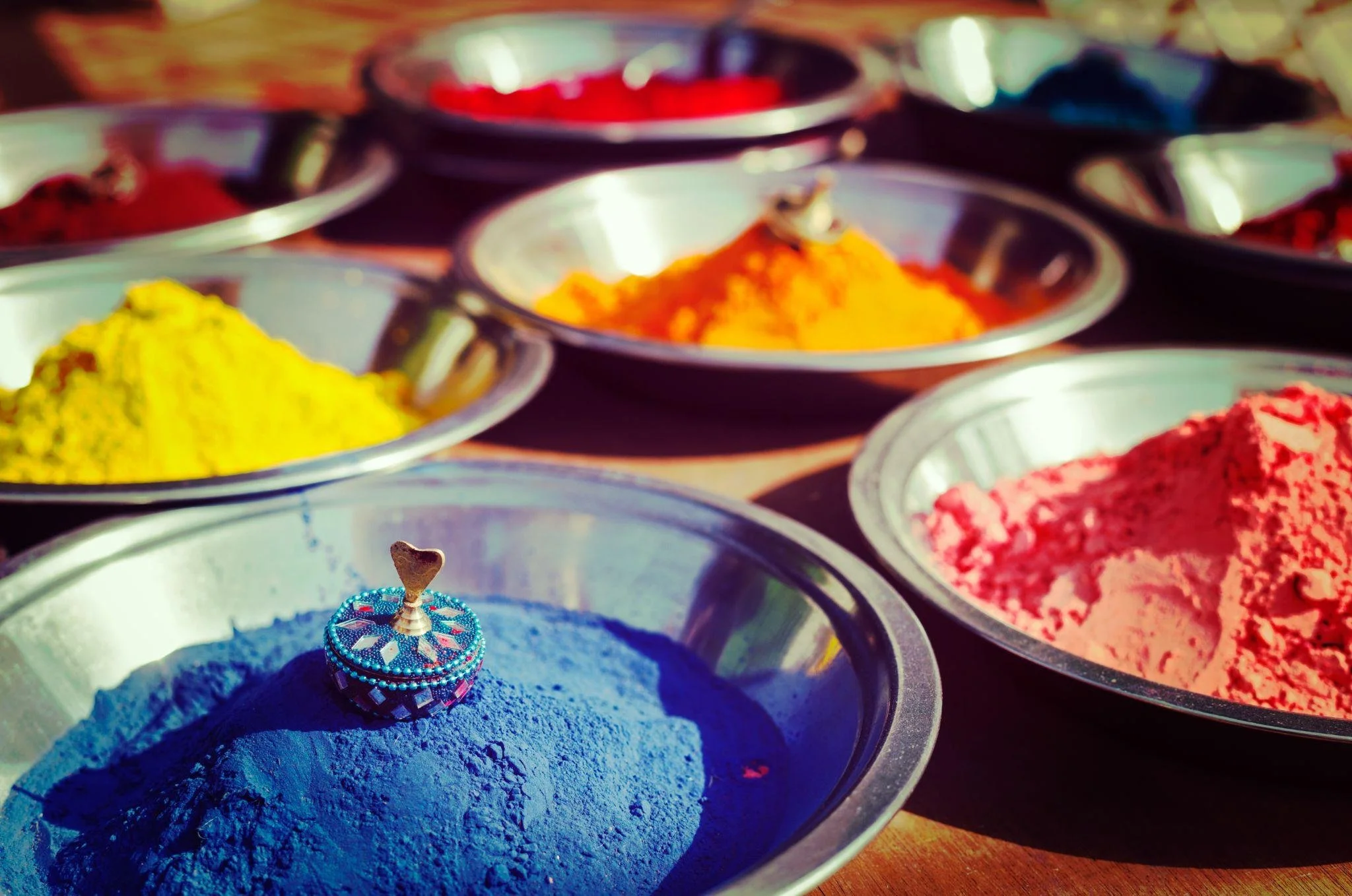
The demons think that their enemies have been defeated, and they celebrate. Come the dawn, Mahalaxmi and five supporters arrive to reconnoiter the battlefield, and soon enough, another battle begins, at the end of which, the demons are all killed, and the victorious figures trample their dead bodies. Flowers descend from the sky, showered by other gods and goddesses, who then arrive to pay homage to Mahalaxmi. At the same time, Kumari and her followers do a celebratory dance. Tika (a mixture of vermilion powder, rice, and curd) is put on one each other’s forehead to signify victory.
Khyak naach:
Totally devoted to Mahalaxmi, these black-furred friendly demon figures (khyaks) are also the guardians of her immense wealth. Their dance accompanies the other dances.
Kawan naach:
The kawans (skeletons) have an important role to play during many of the epic dances mentioned above. They add to the bloody drama of the dances, during which they are shown drinking the corpses’ blood on the field of battle, and fighting among themselves over the ghastly remains. They demonstrate grisly delight at the battle raging all around, which promises them hideous rewards.
Sadhus on Centre Stage - Maha Shivaratri
Sadhus take centre stage during Maha Shivaratri, the Grand Night of Shiva, one of Hinduism’s most exotic festivals.
"May Lord Pashupatinath bestow good fortune on all of us."
This was how every royal speech ended during the times when Nepal was a Hindu kingdom. This actually makes Pashupatinath (Lord of the Animals) the country’s major deity. Even though the nation has become secular and is no more a kingdom, more than 80% of the population is Hindu. Thus, Maha Shivaratri (the Grand Night of Shiva) is celebrated with gusto and vigor, as befits a god known for his wild ways and terrible fits of wrath. This boisterous festival is held on the 14th night of the new moon every year during the dark half of Falgun (Feb/March). It falls on February 18 this year.
Shiva’s story, like that of most of the other deities in the Hindu pantheon, is full of drama, tragedy, revenge, and bloodshed. One particular episode of his life is particularly revealing of his character. It is a story with a tragic ending, it is the story of his love affair with Dakshyani. She was the daughter of Dakshya Prajapati, a descendant of Lord Brahma, and he despises Shiva with some intensity because of his unkempt look and rough shod ways. Despite everything, the couple gets married, but the father-in-law is not done as yet. To humiliate Shiva, he performs a Asvamedha Yagya (a Vedic royal fire ritual of great significance) where all gods are invited except Shiva and his wife. Nevertheless, Dakshyani decides to go, but at the yagya, her father doesn’t spare his words in insulting her husband in front of everybody.
She cannot bear the abuse heaped on Shiva, and jumps into the flames of the yagya (for this sacrifice, she was thenceforth worshipped as Sati, the chaste one). Shiva comes to know of this dreadful incident and dispatches two of his most terrible henchmen, Virbhadra and Mahakali, with orders to cause mayhem to the yagya. He follows them shortly after and breaks down on seeing his beloved wife’s half burnt body. He carries her on his shoulders and starts his legendary tandava nritya (dance of destruction). Wherever he goes, he leaves in his wake destruction and death. Lord Vishnu is entrusted with the task of pacifying him. He believes that as long as Shiva carries his late wife’s corpse, he will be in a state of insanity. So he follows him, cutting off the corpse piece by piece using his chakra (discus). The sites where the various parts fall come to be known as Shakti Piths, one of which is Guheswari Temple, just a stone’s throw away from Pashupatinath Temple in Kathmandu.
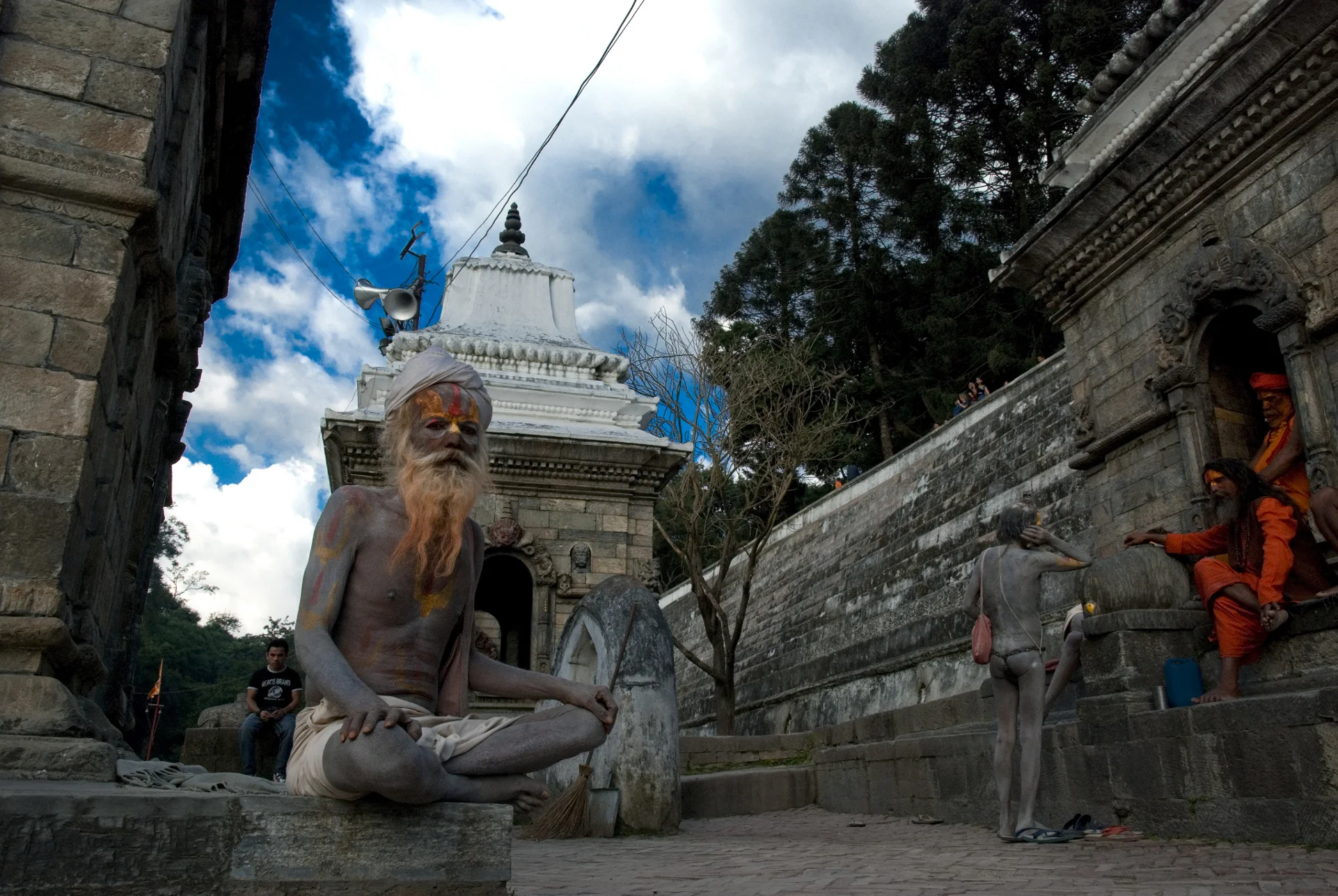
This story should give you a good idea of the kind of god in whose honor Maha Shivaratri is celebrated. Naturally, it’s the biggest festival for Hindu sadhus (those half naked, ash-smeared ascetics with wild unkempt hair in thick braids) from all over the world, particularly from India and Nepal. Their whole outlook and lifestyle is fashioned after their major god, Shiva, and this adds a really exotic allure to the festival. Added to this is the sweet smell of marijuana all around the temple on this day. Yes, it’s a day when smoking pot is supposed to please Shiva, who was high most of the time himself. Pot is legal, even if it’s for a day, as long as you smoke it at the temple.
The sadhus begin to arrive days ahead and camp out on the grounds of the temple complex, their wellbeing being the primary concern of the temple officials, who see to it that they do not want for anything. A particular sect known as the Naga sadhus make for the most arresting sight, their stout bodies completely smeared in ash, their hair in dreadlocks, and without so much as a loin cloth on them. Meaning, they are stark naked. Reading all this, you might be thinking that Maha Shivaratri is one rowdy festival; well, let me tell you, it’s not. It’s, in fact, a very spiritual experience. An experience that hundreds of thousands of devotees are eager to be part of, standing for long hours in serpentine queues to pay homage to the 14th century six-foot-tall four-headed Shiva Lingum (phallic symbol of Shiva) within the Pashupatinath Temple.
POPULAR ITINERARIES
SIMILAR POSTS
Ghode Jatra, the Festival of the Horses
Ghode Jatra is a grand spectacle attended by both the masses and the classes, with horses being at the forefront of the festivities.
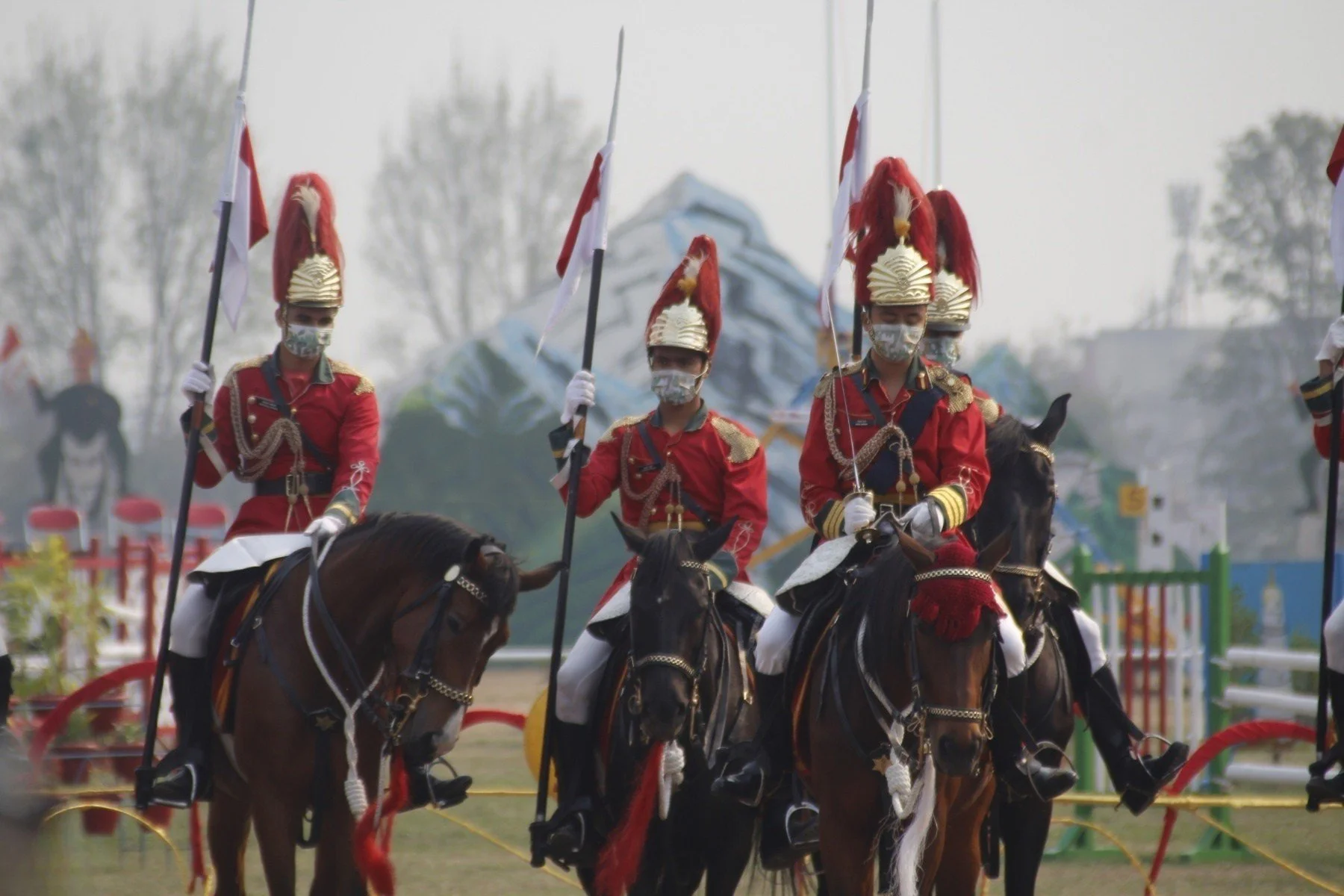
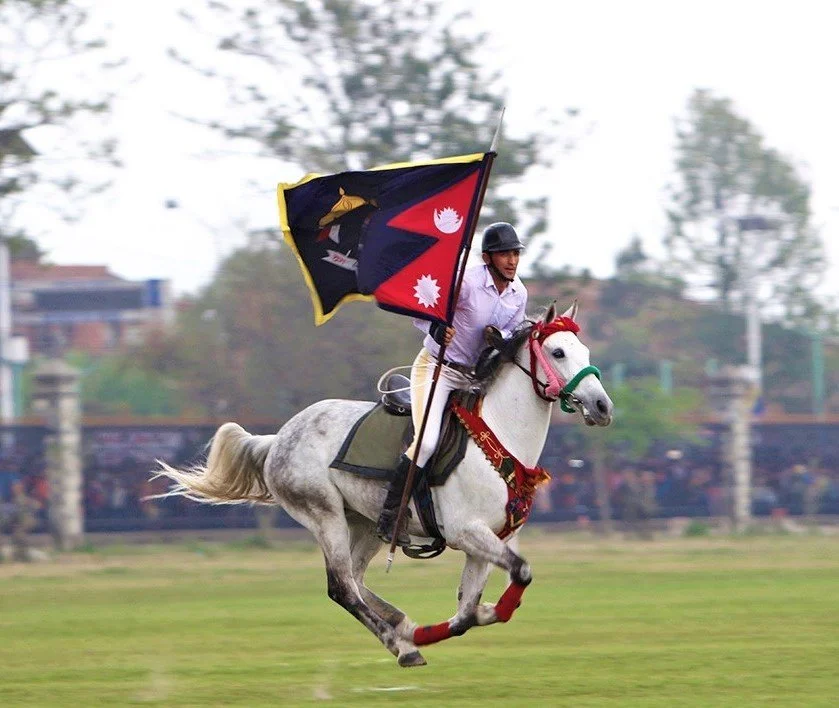
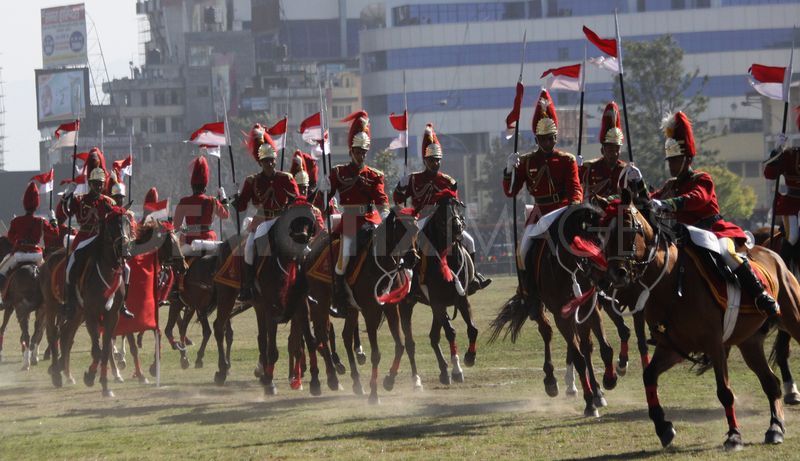
On March 20, 2015, you’ll see much pomp and ceremony being enacted on the Army ground near Tundikhel in the capital, Kathmandu. The seats on the gaily decorated pavilion will be filled with national and international dignitaries, including the head of state and the prime minister, ministers, ambassadors, et al. The iron fence around the grounds will be ringed with hundreds of eager spectators, most of them people from around the outskirts of the Valley, the urban folk being a bit more jaded. They are all there to witness the Army’s cavalry unit put up a display of fine horsemanship, along with demonstrations by the Army’s gymnasts and martial art exponents of judo, karate, and tae kwon do. The Army will also enact a scenario wherein a man is rescued from a building on fire, with the rescuers sliding down a rope from a hovering helicopter. The finale of this festival known as Ghode Jatra (Festival of Horses) will be paratroopers descending down from the sky on billowing parachutes, carrying the national flag.
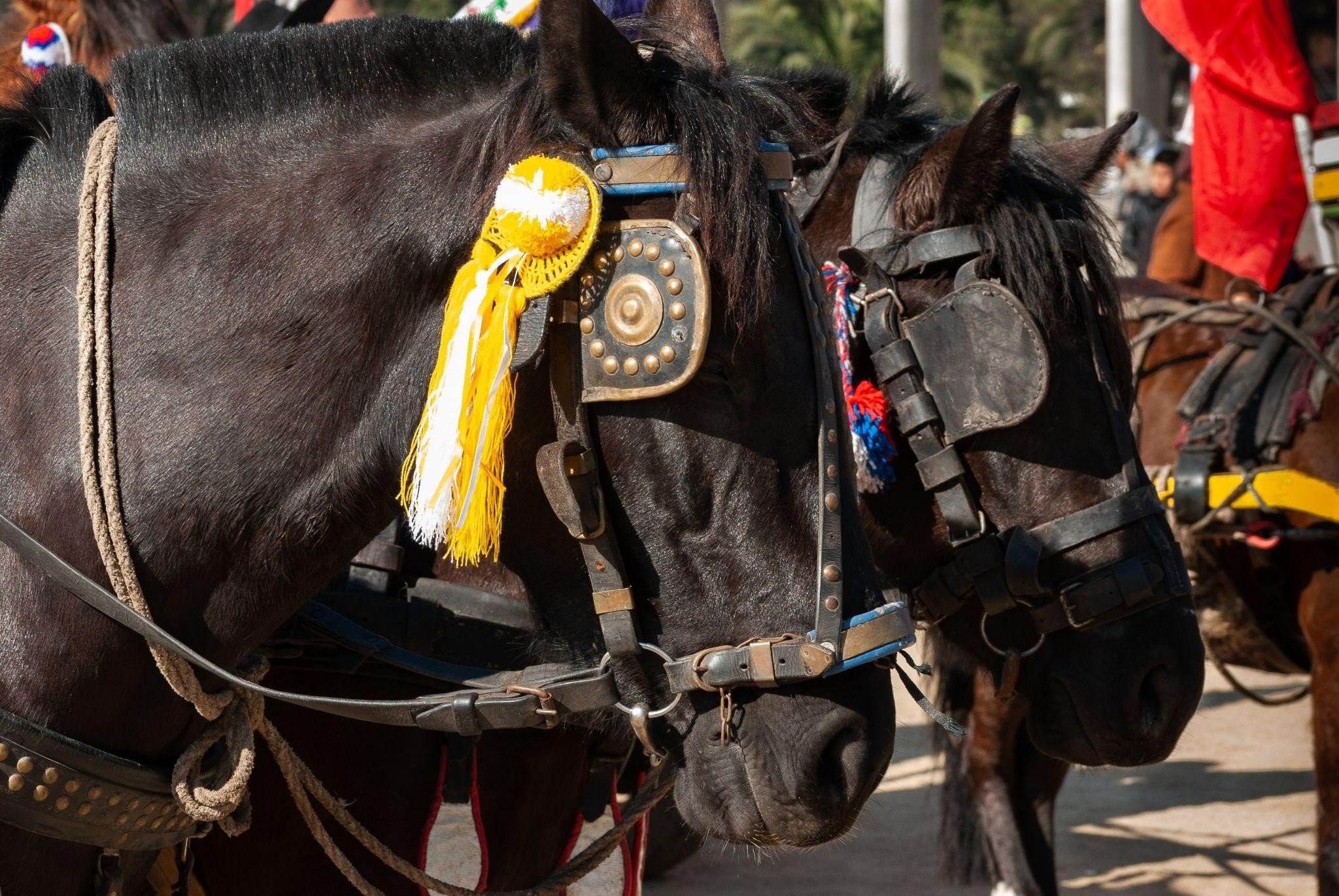
Pomp and ceremony are assured by the rows of smartly uniformed and dressed dignitaries on the pavilion, the bright uniforms of the Army band and their gleaming instruments, the magnificent horses, and the rousing music. A terrific spectacle is guaranteed by the horses galloping around the field and jumping over numerous hurdles. The sound of their hooves clattering on the hard ground is sure to set heart beats racing. Indeed, the horses are what Ghode Jatra is all about. It’s the clamor that they make that is at the root of the origins of this festival.
The story goes that, once upon a time, there was a demon called Tundi who lived in a pasture that later became known as Tundikhel. Now this was one mean demon, and he was creating fear and havoc among the valley dwellers. Somehow or the other, they eventually succeeded in capturing Tundi, whom they tied up and buried into the ground in Tundikhel. To make doubly sure that he would remain buried, they brought in some horses and made them trample the grounds thoroughly. Every year in Feb/Mar, horses gallop around the nearby Army grounds, and it is believed that the clamor created by the galloping hooves will scare the living daylights out of Tundi so that he doesn’t dare come out of his underground lair.
The participating horses during Ghode Jatra come from a special cavalry unit. Incepted in 1849, and originally known as the Risalla, later, in 1952, it came to be known as the King’s Household Cavalry. This cavalry unit played an especially outstanding role during the 1911-1912 Nepal-Tibet war, earning many accolades, and it often holds centre stage during state ceremonies. An interesting aside to Ghode Jatra is that, a king of Patan, seeing how the Kathmandu inhabitants were so thrilled by the festival, decided to have one in his kingdom, too (those days, the Valley had three kingdoms: Kathmandu, Patan, and Bhaktapur). And so, on this day, there’s a Ghode Jatra in Patan as well. However, it comes with a twist. The Patan festival involves one horse that’s thoroughly inebriated, as is its rider, and the whole point of the event is for spectators to try their best to frighten the horse into riding around wildly around the locality of Balkumari and see how long the drunk rider can hold on to his saddle.
Another aside to the Ghode Jatra is that, on the day before, Newars of various tols (wards) do a bit of spring cleaning around their localities, and then take out colorful parades of deity idols on chariots; it’s part of a three-day festival called Pahachare. Idols of the deities Bhairav, Bhadrakali, Lumadi, and Kankeshwari are carried on palanquins to the ancient Ason Bazaar (a once-in-a-year gathering of these four gods), and this grand occasion is celebrated by the locals with great fervor and joy. Their palanquins are made to crash against each other in front of the Annapurna Temple; that’s to announce in no uncertain terms that they have now met each other. Come evening, the celebrations are shifted to Tundikhel so as to propitiate a demon called Gurumumpa. Ghode Jatra falls on the second day of the Pahachare festival.
The Everest Base Camp Trek: A Trek like No Other
The Everest Base Camp trek is the most popular trek of Nepal, and justifiably so, since it gives you the opportunity of being up close and personal with the highest mountain on earth.
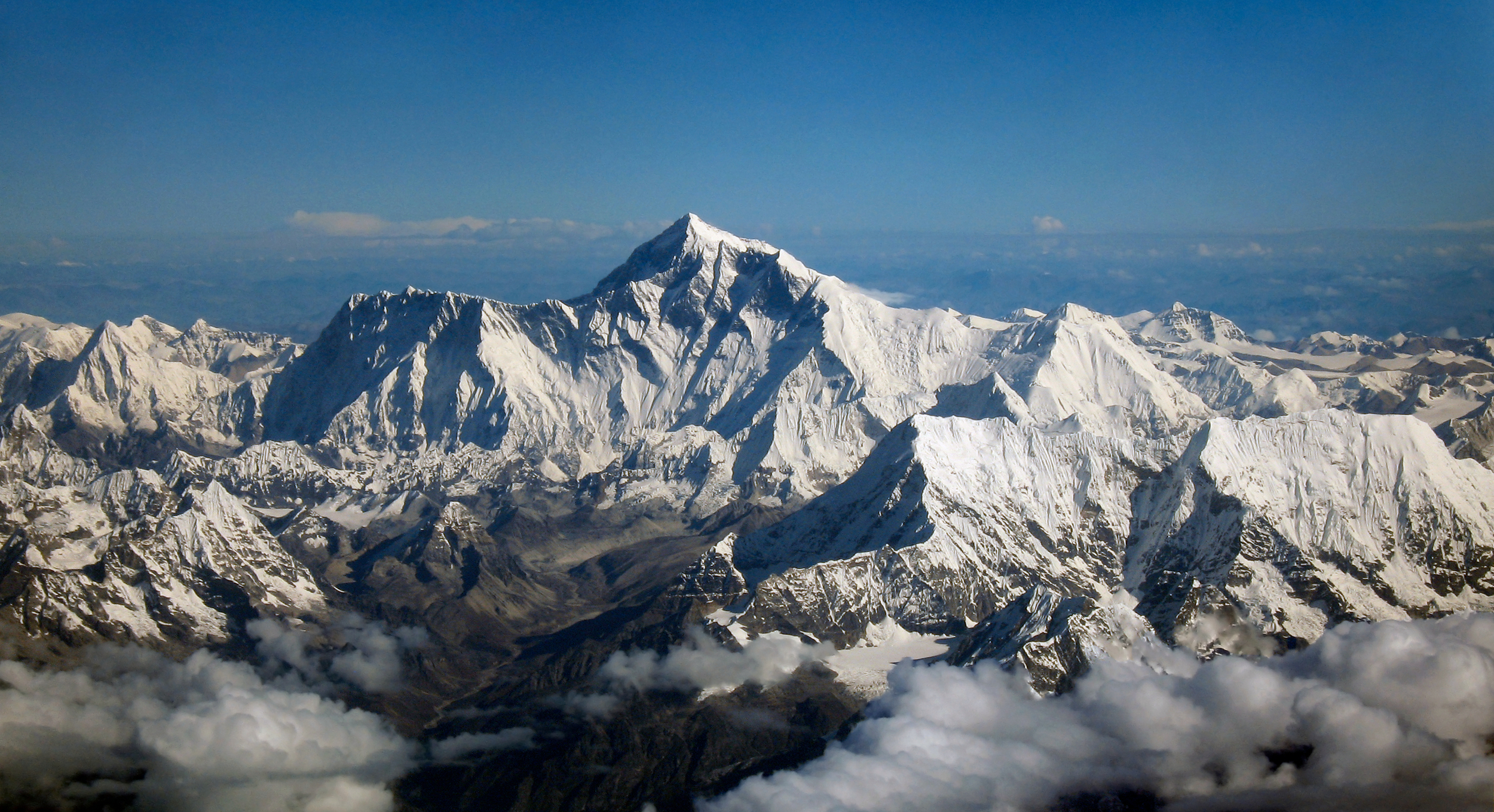
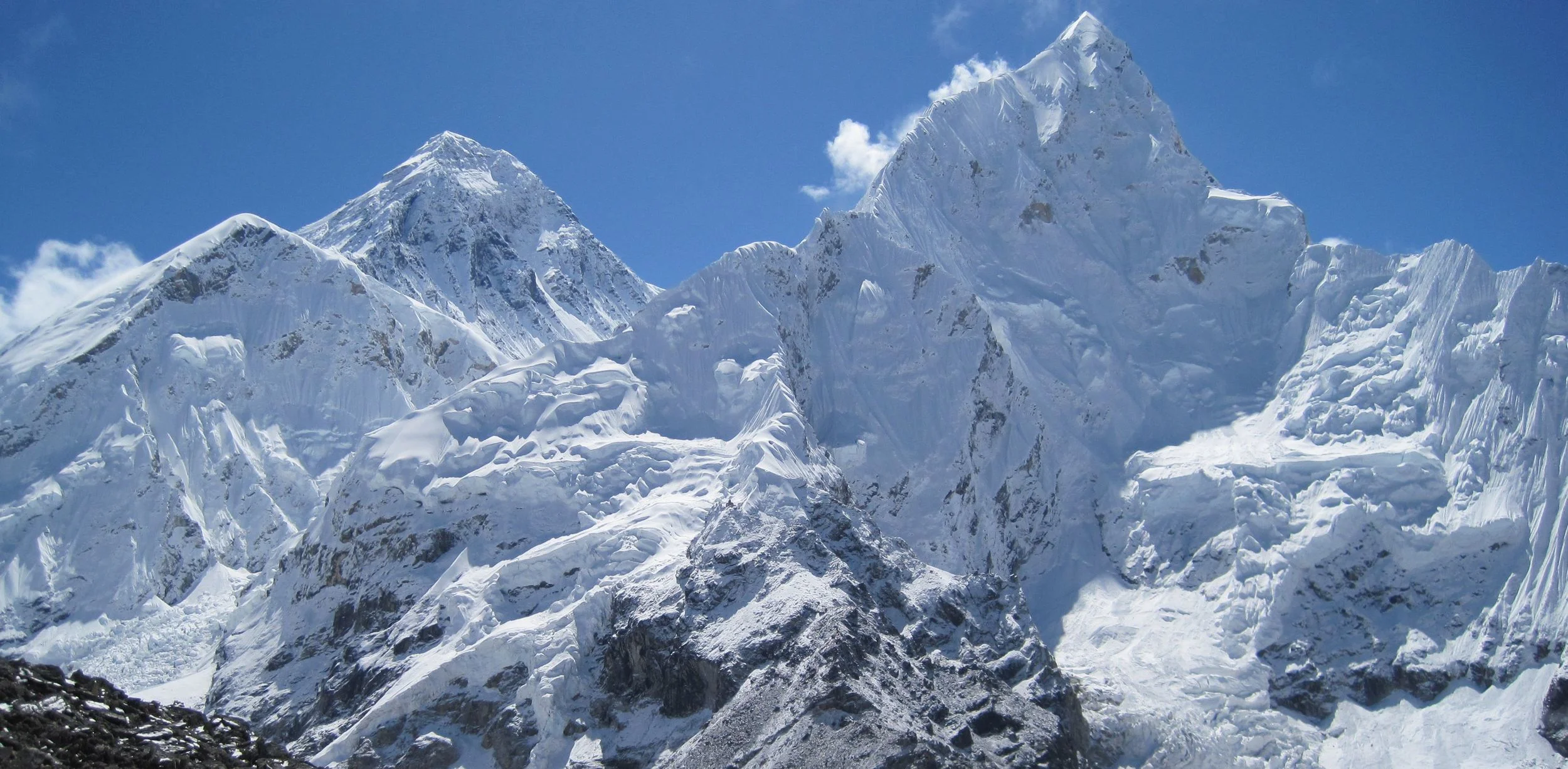
There are treks and treks, and then there is the Everest Base Camp trek. It has been recommended as one of the must-to-be-done things during a lifetime. It’s got that much of a reputation! Naturally, it is the most popular trek of Nepal, a country with many other treks that are also challenging, interesting, and fulfilling. What makes the Everest Base Camp trek really outstanding is that you get to have a spectacular view of Mount Everest, really close up and personal.
Most trekking agencies have a two-week itinerary for this trek, and it all starts with a flight up to Lukla (2,800 m) from Kathmandu. Yes, it will take you only 45 minutes to get there, but what a 45-minute it is! First of all, although there are daily flights, one needs to be aware that high winds, dense clouds, and low visibility could hamper the schedule anytime. In case everything’s fine with the weather, you fly, and on the way you’ll get great views of Himalayan peaks on the horizon. However, it’s when you near the Tenzing-Hilary Airport (Lukla Airport) that the action really begins. You’ll be coming through two massive mountains as you begin to land, and you can be expected to be buffeted somewhat. The runway is pretty small, only 1,500 ft, with the northern end terminating in high terrain, and the southern end falling steeply into the valley below. One end of the runway is actually 60 m higher than the other end! All in all, it calls for a high degree of skill on the pilot’s part to both land and take off. Some call it one of the most adventurous airports in the world; the less polite call it a dangerous airport. Anyway you call it, it’s a picturesque airport.
Anyway, after landing, you arrange your gear and head off along the Dudh Kosi River to Pakding (2,600 m). You’ll be walking through lovely pine and cedar forests and will be probably meeting yak caravans transporting climbing or trekking supplies and equipment. If you are downhill to one coming your way, give way, because the yaks aren’t going to be as polite, and will be coming in a heavy rush. Right from your landing, you have perhaps already been transported into a different world from the one you’re used to; these caravans will only help to take you away further, they paint such an exotic picture! As you walk along, keep an eye out for wildlife like the Himalayan tahr and musk deer. The former have thick wool coats and large backward-curving horns reaching up to 18 inches.
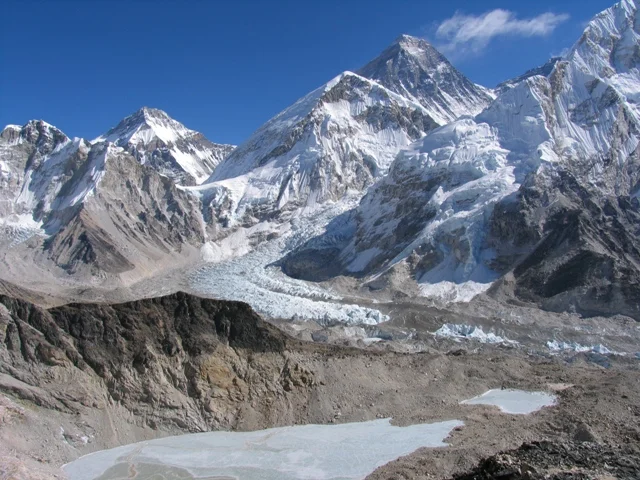
The next day, you trek to one of the biggest Sherpa settlements in the country, that is, Namche Bazaar (3,450 m). By now, your uphill trekking should have set your muscles working extra hard, now you got to rest for a day here so as to allow your body to acclimatize to the higher altitudes. You’ll find Namche to be a bustling place, and the rest day allows you to take a short outing to Thame Valley. You’ll come across elaborate carved mani stones along the way, and a lovely gompa, as well. All in all, a day well spent. Then, the day after, you leave Namche and carry on through rhododendron forests and across suspension bridges to reach Tengboche (3,860 m) from where the you get sensational views of Everest (8,848 m), Lhotse (8,516 m), Nuptse (7,864 m), and Ama Dablam (6,812 m). All along the route, you’ll surely be enthralled by the sight of the Dudh Kosi River flowing serenely through the valley far below, and you’ll see a lot of chortens and mani walls alongside the trail, as well. You’ll no doubt be paying a visit to the magnificent Tengboche Gompa (estd. 1912), which has immense religious and cultural importance for inhabitants of the Khumbu region.
The following day, you walk up stone steps through wood full of birch, conifer, and rhododendron trees, and here, too, keep a sharp eye out for some more Himalayan wildlife. This time, it’s pheasants, which make for a colorful sight. You’ll come across a small village called Deboche, where there’s a nunnery. Then as you go onwards, you’ll notice that the trail is leading to alpine meadows full of scrub juniper (in the warm months, there will be a riot of wild flowers here), and eventually you arrive at Dingboche (4,400 m). You’ll notice a lot of barley grown around here, and the views of the mountains all round are simply outstanding. Another day to acclimatize yourself is called for again, and so you take a rest day. You can use this day to explore the Chhukung Valley, hiking there via the Imja Khola. You’ll have fine views of Imjatse (Island) Peak (6,189 m), Lhotse, and Ama Dablam.
Day seven finds you on your way to Lobuche (4,900 m), as you trek through alpine meadows and pasture land towards the end of the Khumbu Glacier moraine. Then on, it’s a tough climb that is pretty challenging. As in some other places, where there are monuments to departed mountaineers, here too you’ll come across similar stone memorials. You keep on climbing, and you’ll surely find it tough going as you climb onto the Changri Glacier. The altitude is now truly Himalayan, and the next day, you climb further up to Gorakshep (5,150 m) where there’s a small lake that’s frozen most times. You’ll not want to miss the chance to go to Kala Patthar, which requires a small detour, since one of the best views of Everest is guaranteed from there. Now, as you plod on, you’ll find it easier going, since you don’t have to climb much, but you’ll have to be careful as you walk because there’s lots of ice around on the trail. By and by, you reach your goal, that is, Everest Base Camp (5,337 m), situated high up on the famous Khumbu Glacier. The trek back is through Lobuche, Pangboche, Namche Bazaar, and Phakding, before reaching Lukla, from where you take that adventurous flight back to Kathmandu.