An Interesting Yomari
The mouthwatering delicacy known as Yomari is a staple in Newari households. Traditionally prepared during the Newar month of Thinla, which coincides with the Gregorian period of December, the treat is a homage first presented to the deity Annapurna Devi. It is prepared in a similar shape in most Newar households but in a peculiar manner in the community of Pucho.
The month of Thinla in the Newari calendar is when the paddy seeds planted during Tachala sway like fields of gold. The delicacy of Yomari is part of the harvest moon festival, which is known as Yomari Punhi (Purnima). It coincides with the Gregorian month of December.
A Yomari has a special place in the heart of most Newars. The name is derived from a fruit that falls in the fig family natively found in the region. The shape of the fruit is a base for a traditional Yomari prepared with the first batch of grain and presented to Annapurna Devi. Linguistically, Yo means preferred or liked, and Mari means bread.
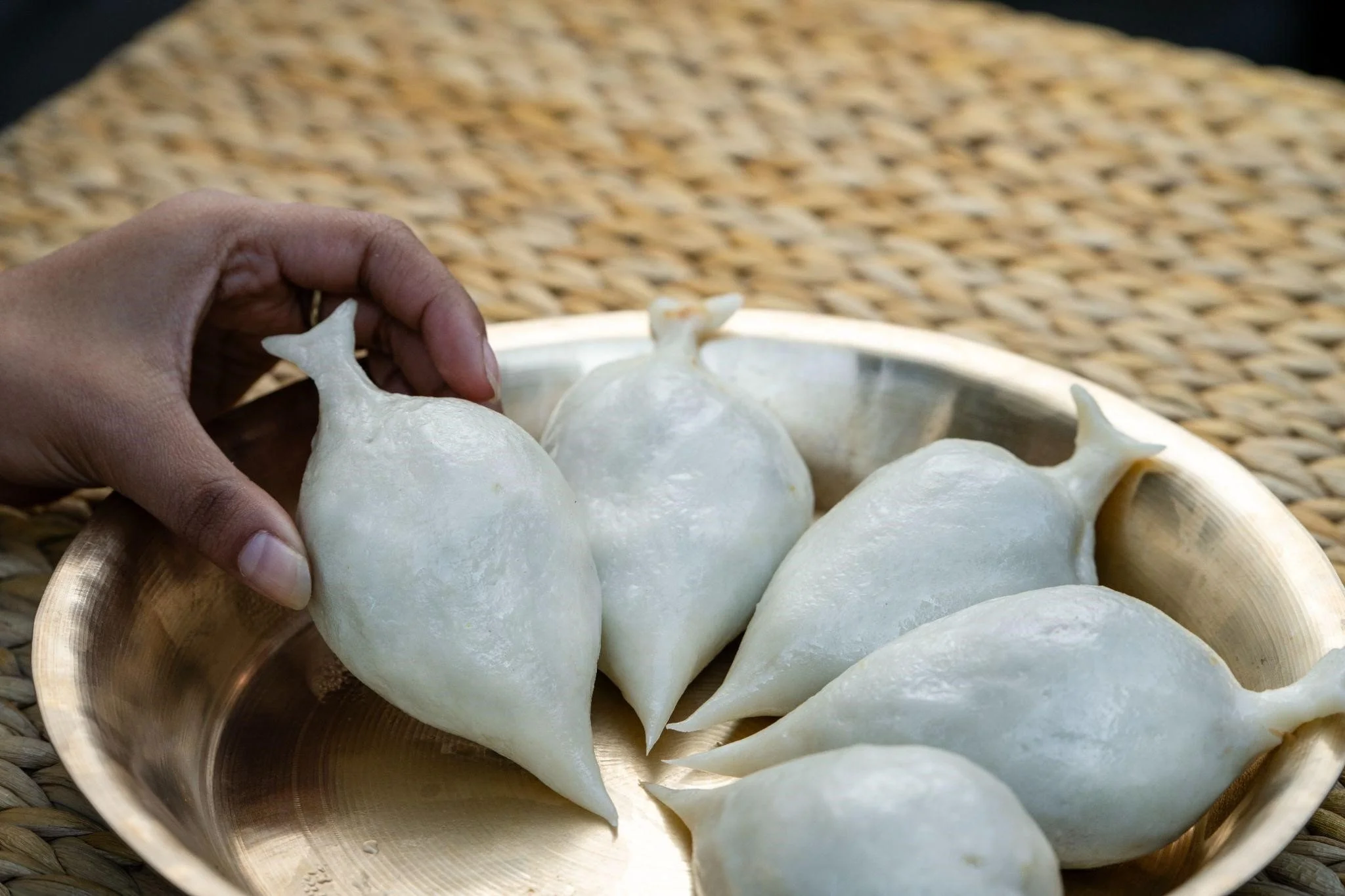
Traditionally it features a mixture of molasses and brown sesame seeds. The shell is prepared from powdered white rice and is shaped to resemble the Yomari fruit. Apart from the month of Thinla, the delicacy is put together during various family rituals, especially during the second birthday. Medium to small-sized Yomaris are strung together to make a garland offered to the child.
The account of an interesting Yomari is from the community of Pucho. This place today is generally called Pulchowk. This area is home to Maharjan farmers whose ancestry is from the Eastern mountains. As per chronicles, the King of Patan gave refuge to Kirats banished from their homeland. The King welcomed them with open arms. Acknowledging their preference of living in higher altitudes, they were given a place in Pucho.
The historicity of the region goes as back as the draining of the lake known as Nagard, which today is the Kathmandu Valley. The peak of the hillock of Pucho is known as Shilapur Banagiri. Banagiri in ancient Newari means a place where an arrow fell. As per chronicles, after Bodhisatva Manjushri decided to drain this lake to create a sanctum, he shot a powerful arrow for the purpose. It fell on this very hill. Post which, Bodhisatva Manjushri came up with a different plan which featured draining the water from Kotwaldwar (Devichaur). Kotwal is the name of the mountain, and dwar means a gate.
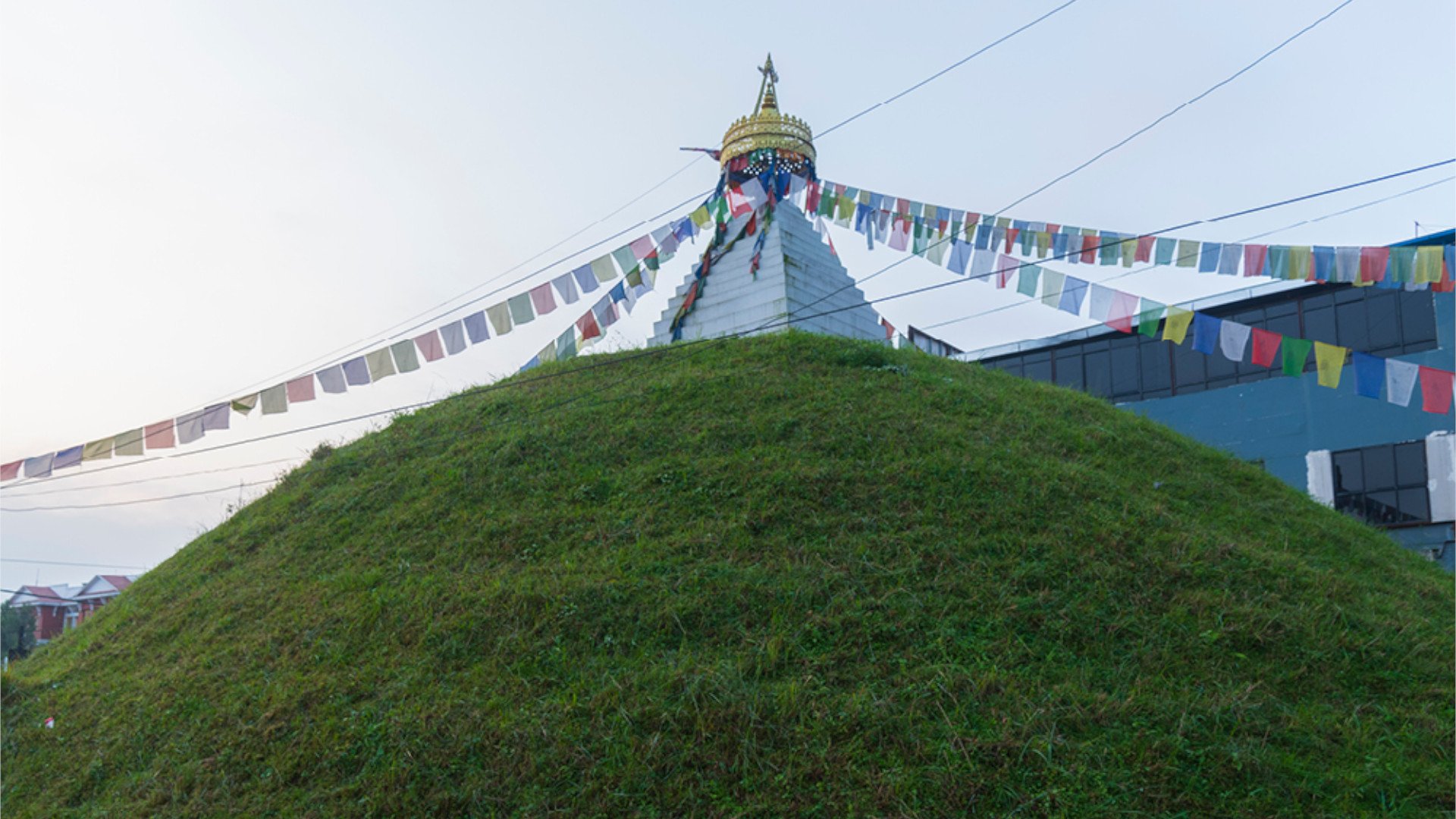
As the valley prospered, it became renowned in Asia as a prime Buddhist sanctuary. Locals suppose that the Great Samrat Ashoka visited this valley and established five earthen mounds. Four of which were dedicated to the yugas. The symbolism behind the fifth is still unknown. These mounds then later become the boundary of the city of Patan. The western stupa is on the foothill of Silapur Banagiri.
This mound plays a historic role as not just a boundary marker but also a landmark. The community of Pucho, which primarily featured Buddhists and the later Kirat refugees who assimilated into the Newars, hold it as a part of their identity.
During Yomari Punhi, the locals cook the delicacy in a unique shape similar to the earthen mound. It is known as Chibamari, Chiba meaning an earthen mound/stupa and Mari meaning bread. The shell is distinctly triangular and bears an uncanny resemblance to the 13 step finial of the Pucho mound. The filling is more chunky in this area, meaning the molasses is not melted.
The incorporation of two distinct cultures shows the importance of religious values and monuments of this region. The Chibamari is distinct. Over the years, it has become the identity of the people.
POPULAR ITINERARIES
SIMILAR POSTS
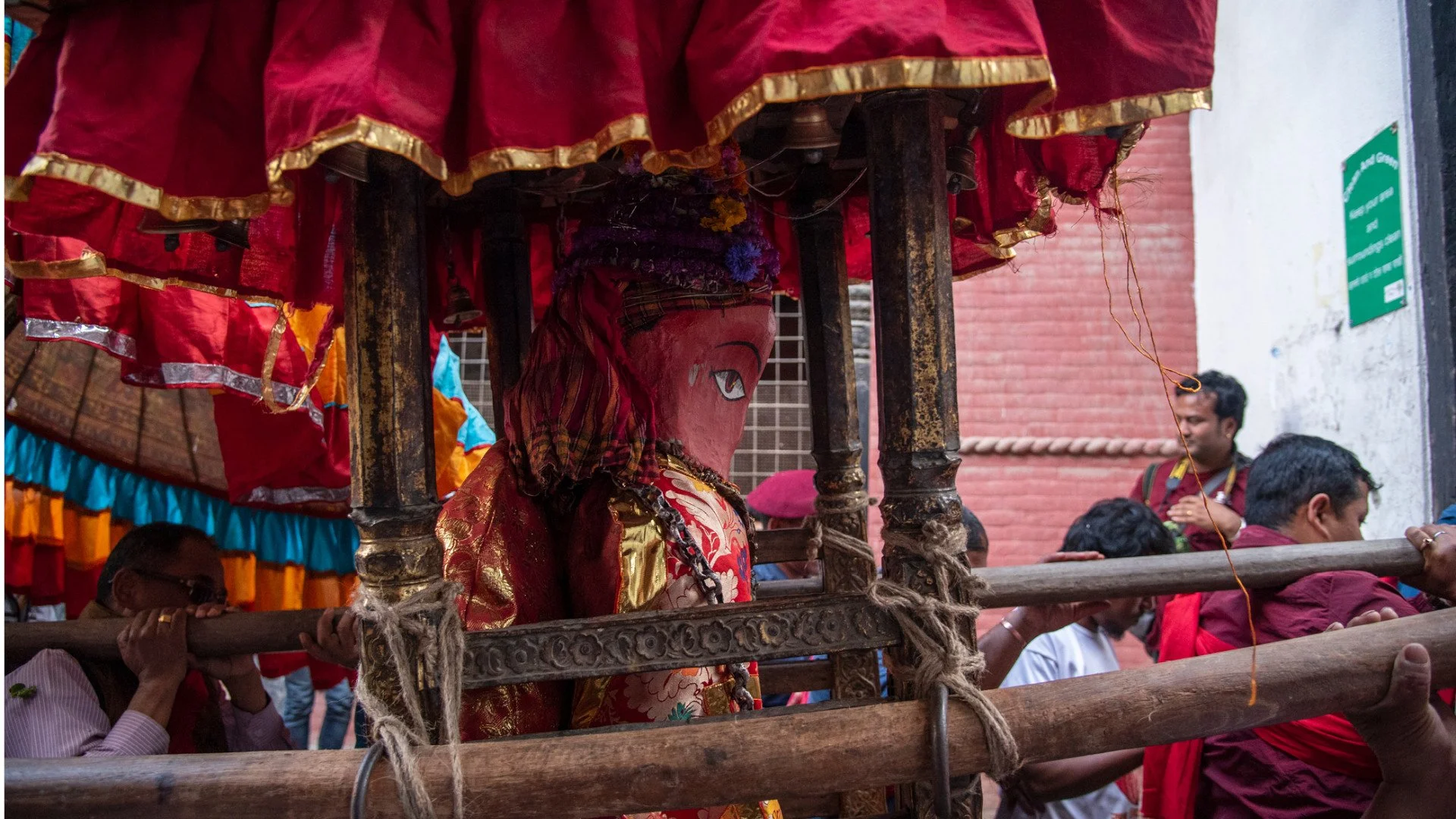
The Importance of Karunamaya: Rato Matsyendranath
Amongst the various deities of the Kathmandu Valley, Karunamaya holds the highest rank. He is known by multiple names such as Bunga Dyo (God of Bunga), Aryavalokitshwor Padmapani and Rato Matsyendranath. He is revered by citizens of both the Hindu and Buddhist faith. One of the most elaborate chariot festivals in the world happens annually in his honour.
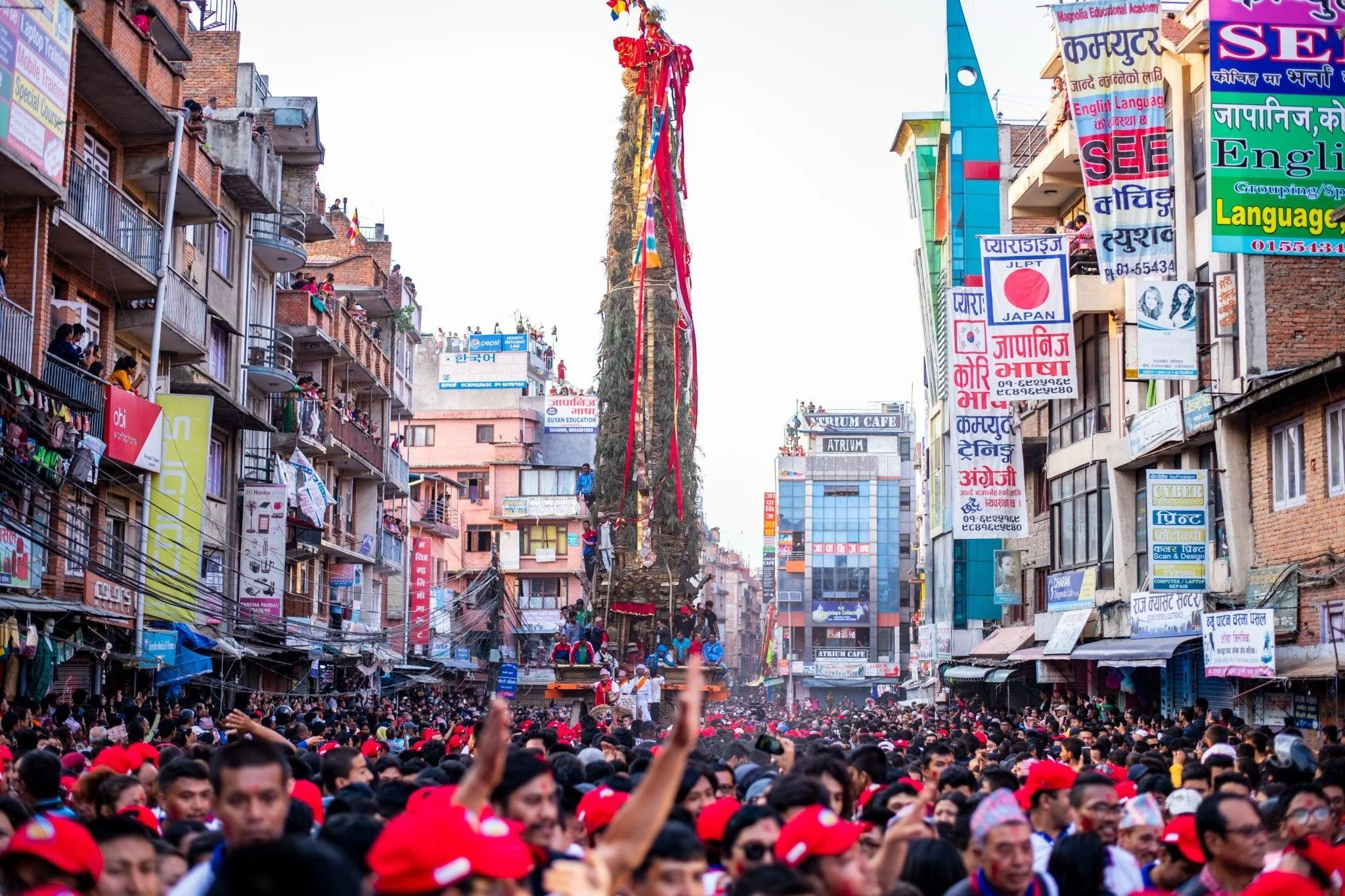
Non-Newars always marvel at the magnitude of the festivities that surround them. The pop and flair combined with the faith and dedication towards building a chariot 5 stories tall and circumventing it in the old streets of Patan is a sight to behold. The locals view him as a messiah and would not refrain from turning any stone for his celebration.
So why is Karunamaya so important?
Thousands of years ago, the citizens of this valley faced a dire crisis. It was significant enough to wipe out the entire civilisation of Kathmandu Valley. As agriculture was the occupation of the native inhabitants, a mysterious ill plagued the fields. The seeds planted with love and care grew to only wither. The farms that were to resemble gold began to look like desolation.
The people didn't know the cause, nor did they know the exact remedy. With the years harvest down the drain, they could only hope the reserves would last them long enough for a rescue. As the people began to worry, the King could not hold his heart. King Narendra-deva was known for his service and dedication to his people. But he had abdicated the throne in favour of his son. King Narendra-deva chose to spend the rest of his life observing monastic discipline.
The tantric master named Banudhatta Acharya, who sided in Te Bahal, knew that far away in a distant land resided the solution to our crisis. He informed the present King Bara-deva and requested him to go to his father and request if he would accompany the tantric master in his journey. For as long as the true King is alive, he cannot take his son.
King Narendra-deva accepted. He, along with Bandudhatta and Ratnakar Jyapu, left for an adventure. The destination was Kamakhya, which falls in present-day Odisha of India. There, the team met with a master farmer named Karunamaya. The trio told him of the ill that plagued their kingdom. Karunamaya wished to visit the valley and relieve it himself but wasn't allowed to by his mother. Thus, he passed on to them the needed tools, seeds and knowledge to compact the famine. The trio then bid farewell to the master and returned to the valley. They then applied the findings as instructed, and the fields slowly but steadily began to sway like gold.
It was this feat, the generosity of one man. Who, without any expectations, helped three ailing strangers that earned him a high rank in the pantheon of this valley. Even though he was mortal, the people in this valley immortalised him. A temple was built in his honour in the village of Bungamati. The settlement was renamed Amarpur, meaning a land immortal.
An elaborate chariot festival was designed by priest Bandudhatta. A 5 storey tall chariot was envisioned with featured all the elements of the journey and the temple of Bungamati.
Thousands of years later, even to this day, the people of this valley have not forgotten his generosity. Historians believe that he had a different name. Karunamaya was the general call name which means the compassionate one. Members of the Buddhist faith refer to him as Aryavalokiteshwor Padmapani, whereas Hindu's call him Rato Matsyendranath due to the connection with the tantric master Gorakhnath.
The people ensure the chariot festival happens even at the worst odds because they fear the illness shall return again. All the necessary rituals are performed every year to invoke the deity to ensure the valley's prosperity. The chariot is built at Pulchowk and circumvents the old routes of the city. It comes to an end in the open field known as Jawalakhel. Once the ceremonial display of the bhoto is complete, the idol is taken to Bungamati. Here it rests for 6 months of the year and the other half in the temple inside Patan.
POPULAR ITINERARIES
SIMILAR POSTS
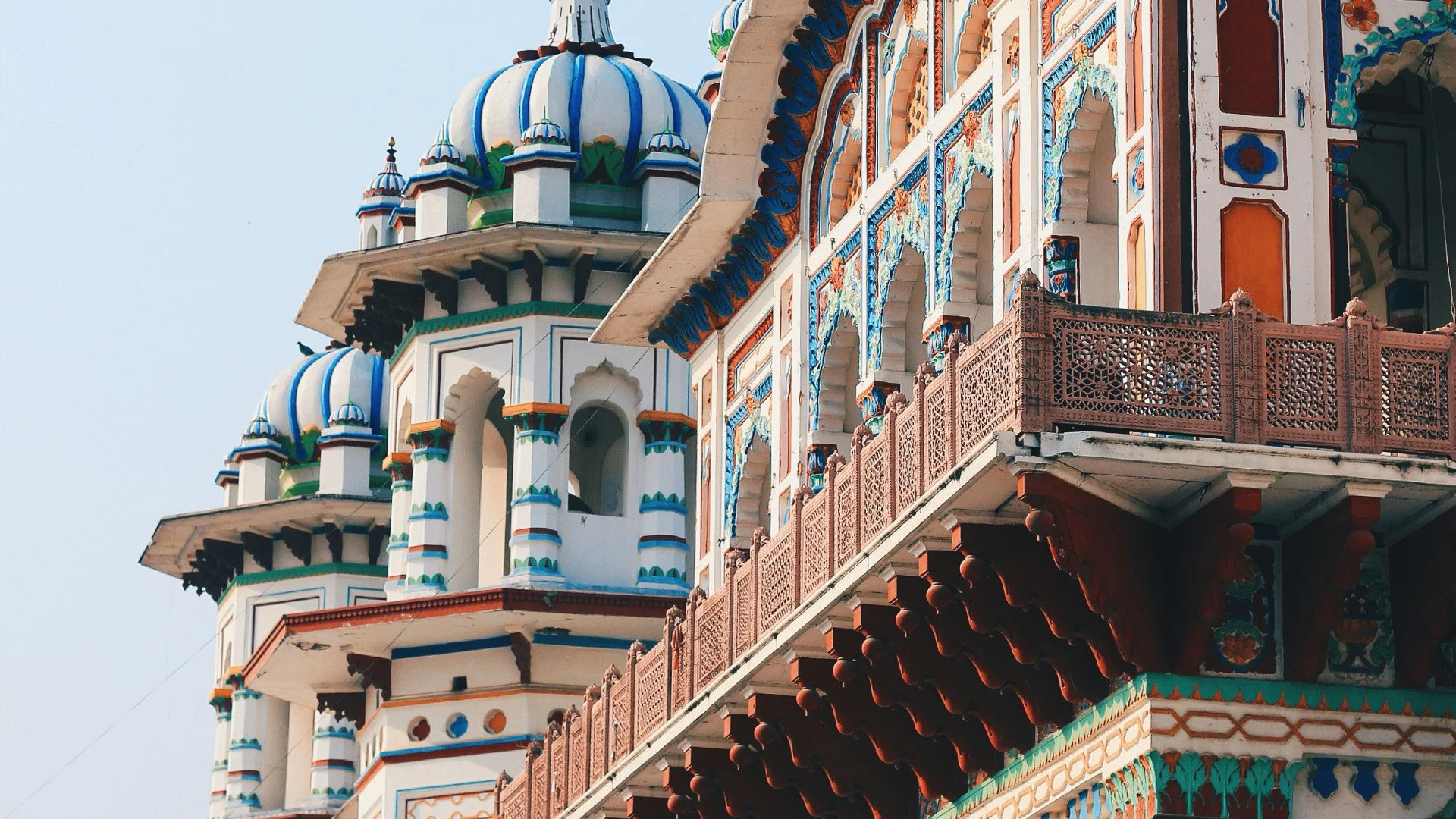
A Unique Day: Bibah Panchami
Bibah Panchami, the day that marks the marriage of Lord Ram and Goddess Sita, is a beautiful festival of the Mithila Culture hosted every year in Janakpur, the Mithila capital. On this day, a week-long reenactment of the marriage is done with grand celebrations of the deed that frameworks the ancient Mithila culture and its history.
As written in the legend of Ramayana, the ancient city of Janakpur was the home of the eldest daughter of King Janak, the king of the Mithila Kingdom, princess Sita. She was the daughter of the universe, an extraordinary, ideal woman resonating the beauty of womanhood and femininity. She is also known as the daughter of the Earth. Sita, being the only one who so effortlessly lifted the impossible bow of Lord Shiva, King Janak organized a Swayambar for her where he decided that the man who could lift up that bow would be the one to marry the beautiful princess. After countless men trying but failing the task, the Prince Ram of Ayodhya came in and lifted the bow as effortlessly as Sita did.
The divine couple got married, and ever since then, to celebrate the union of the idealistic gods, Bibah Panchami is celebrated on the fifth day of the Shukla Paksha in the Aradhayana months according to the Mithila Calendar (that falls somewhere around November to December).
As written in the Ramayana, the couple along with Ram’s brother went to reside in a forest (vanvas) as per the wish of his stepmother. The king had told his young queen that he would grant her two wishes. She then told the king to banish Ram and crown her son, Bharata as king of Ayodhya. During this exile, Sita was abducted by Ravan, the king of Lanka. A large battle was bought between the forces of Lord Ram and Ravana. Lord Ram became victorious and was reunited with Sita. Lord Ram was then hailed as a hero and was rightfully instated as the king of Ayodhya. Over the years, their story became a symbol for Hinduism and the victory of good over evil.
Thousands of people crowd the Janaki Temple, Ram temple, and many other temples of the Holy city of Janakpur to worship the god Ram and Sita in the mornings. The Janaki Temple is decorated for the celebration with colourful garlands, flowers, Mithila arts, and the sacred statue of Ram and Sita that stands in the centre of the temple is also cleaned and put on new clothes, just like it is done during any Mithila weddings.
The devotees perform different traditional marriage rituals that are traditionally done at weddings. Every rite is run through with devotional songs ‘bhajans’ that recite the stories and purposes of every action performed. Men and women, especially kids, are dressed up as Lord Ram and Mother Sita and are carried around in chariots during this day. The procession takes place on the bustling roads in front of the temples. Traditional wedding music is played to imitate the ‘baaraat’ (janti) of Lord Ram as he came to marry the princess. In the evenings, the devotees and people of the city gather up in the fairs put out in front of temples where people can explore, dance, eat to celebrate the auspicious day of their gods with each other.
Bibah Panchami stands as a symbol of Mithila culture, which dates back thousands of years. Even today, the exact process followed during the marriage of Ram and Sita are followed with the utmost attention to detail. The various aspects of the celebration present the rich artistic history of the Mithila people and the communities culture. Which has been passed down for generations.
Along with which a sense of togetherness is also taught to the next generation. Families, neighbours, far relatives come together as one, share delicacies they prepared at their homes the night before, and find a reason to appreciate each other and their identity as a community to celebrate the holy matrimony. Making the festival of Bibah Panchami a portrayal of the integrity of the community they build up together.
POPULAR ITINERARIES
SIMILAR POSTS

The Tale of Shankadhar Sakhwa - Part II
The act of Shankadhar Sakhwa is more than of selflessness and grace. His wit and faith did not just bring him good fortune but also to the former kingdom of Kantipur.
Continued…
The day was almost at an end. Sakwal was at his courtyard staring at the heap of sand. Confusion could be seen in his face. Why did the coolies choose to dig at that very spot? They even waited for an exact time. What is this mystery?
Sakwal failed to notice that the sun had already gone down. He was so lost in his thoughts that he could not hear his wife call him for dinner. He then suddenly came back to reality and saw how it was already late. He made his way to his kitchen, where his wife was waiting for him. He finished his meal and called it a night.
In the morning, Sakwal woke up early, as usual, to head to the nearest temples and monasteries to offer his regards. He walked out of his house and was about to open the main door when he noticed something shining in the corner. He opened the main gate, and as light entered, it unveiled something that he could not comprehend. He was quick to close the door so that no one else would see it. He stood there, stiff as a tree trunk with eyes wide open.
It looked like he had seen a ghost. He called for his wife and asked her to come downstairs quickly. As she entered the courtyard, she noticed her husband just standing there. He called her to where he was and told her, my wife, please tell me that this is not a heap of gold dust?
The wife looked down and was utterly surprised. She looked towards him and said, dear husband, this is a heap of gold dust!
Inside the royal palace of Bhaktapur, one could sense that the king was angry. He was at his courtyard staring at a heap of sand. He looked towards his astrologer and said, your prediction failed. The astrologer was confused, but deep within, he was angry. He told himself that he did everything as instructed.
With the king's permission, the astrologer left for his house. He poured out all his anger within the sanctum of his four walls.
The king knew the greatness of his astrologer and how he was never wrong. While he was headed towards his room, he stumbled upon the baskets inside which the sand was brought. He saw an unusual glitter. He moved closer and inspected. He saw specks of gold dust at the bottom. He told himself, my astrologer was right!
The king ran with great haste towards the house of his astrologer. He barged inside and climbed up the stairs quickly. He saw a fire kindling in the fireplace. He noticed a book being burnt. He looked towards his astrologer and said, is this that very book you consulted to turn sand into gold? The astrologer replied, yes, my king!
The king then rushed to save whatever was left of the book. He put his hand into the fire and pulled the pages, and dipped them in a pot of milk that stood near the fire palace. The astrologer rushed to aid his king.
Once they saved what they could, the astrologer asked his majesty why he did that. The king then turned to his astrologer and said, you were right, but we were outsmarted!
Inside the royal palace of Kathmandu, Sakwal was in an audience with the king of Kantipur. Your majesty, I am a merchant, and I have enough wealth for myself and my family. I have stumbled upon this great treasure that I wish to share with my people. I am a righteous man, and if I become greedy, I might have a luxurious life, but it shall come to bite me when I have to cross the holy river after my death. I wish to pay the debt of my country and each citizen with this treasure. I am here to request your permission to do so, said Sakwal. The king was impressed by his righteousness and virtue. He gave permission to Sakwal to complete his endeavour.
To commemorate this feat, Sakwal was given the right to start a new era. He consulted with great astrologers of the kingdom and issued the new epoch of Nepal Sambat.
POPULAR ITINERARIES
SIMILAR POSTS

The Tale of Shankadhar Sakhwa - Part I
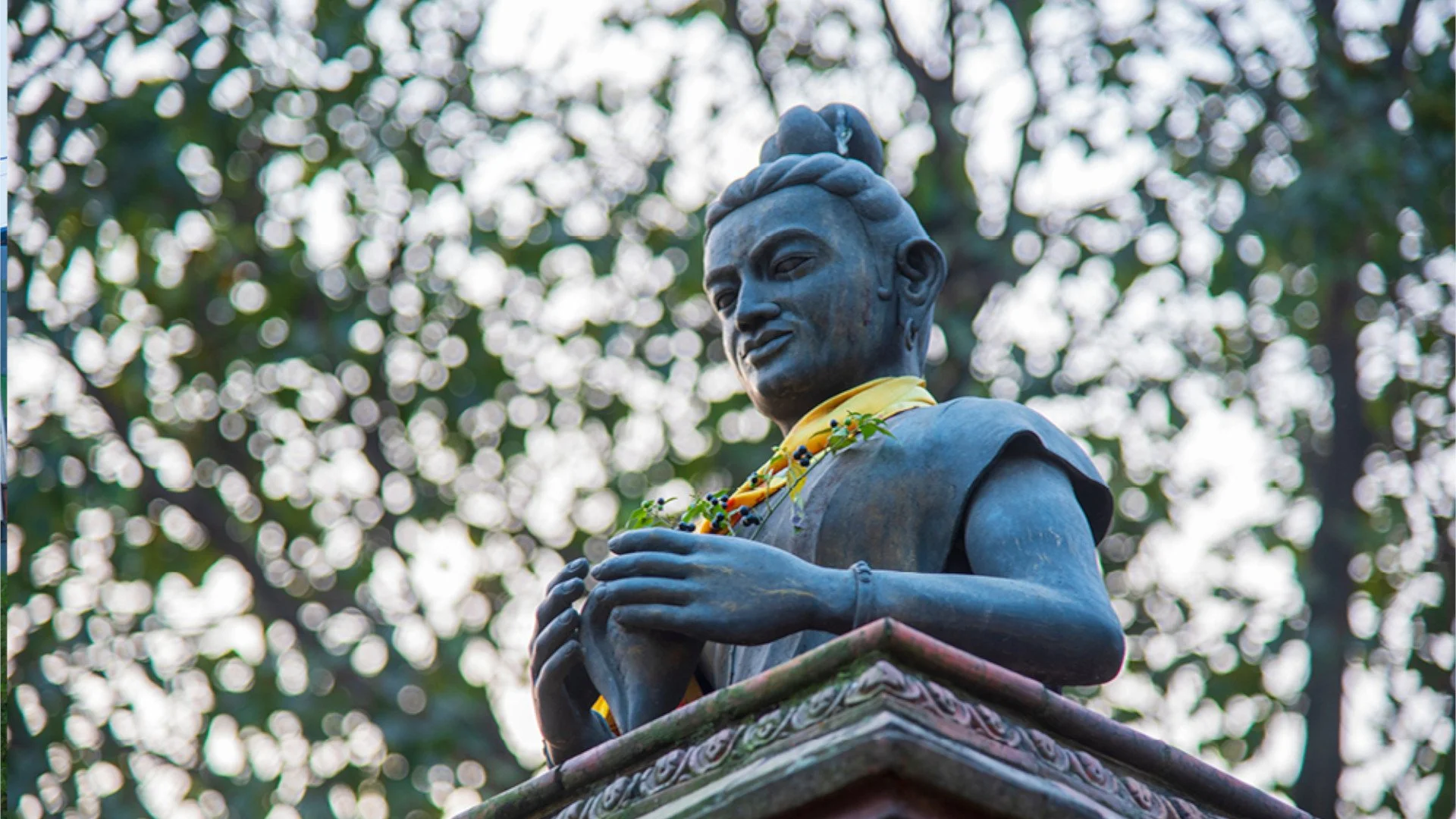
Shankadhar Sakhwa also known as Sakhwal is the founder of the Nepal Era also known as Nepal Sambat. This man’s story is an epitome of how wit is more powerful than strength.
The calendar of Nepal Sambat is the official calendar for the Newars. It was introduced more than 1100 years ago and is lunisolar. The story behind its origin is fascinating and sometimes hard to believe. Various aspects of it are correct. Due to the gravity of the act, the founder Shankadhar Sakhwa was indoctrinated into the list of national hero's by the former His Majesty's Government.
As per various chronicles and historical narratives, the story goes as follows:
One day a team of coolies (porters) were gathered at Lakhu Tirtha, the confluence of Bagmati and Vishnumati rivers near the Royal Palace of Kantipur, present-day Kathmandu. They were impatiently waiting and pacing at times. As the sun reached a certain point in the sky, they knew the time was right!
They started digging in haste and began to load their baskets with heaps of sand. Once their baskets were filled, they took a sigh of relief. Ensuring the load was secure, they then hit the road. When they reached Maru, they saw a resting house and given the weight was making them heavy and hot, they decided to take a break.
During this time, a merchant commonly referred to as Sakhwal left his house for his endeavour. When he reached the spot where the coolies were resting, he was surprised to see heaps of sand with them. He observed for a while and deduced that they were from Bhaktapur. He was familiar with the dialect of the region. He asked himself, why did these men come all this way to Kantipur for sand? The rivers in Bhaktapur have enough sand to last a lifetime.
To quench his curiosity, he approached the men and asked them that question. The coolies responded, Sir, this sand is not for us. We are only servants, and we do as our master pleases. He instructed us to come here and dig for sand near Lakhu Tirtha at an exact time. We were on our way home and noticed this resting house and decided to take a break.
Sakhwal was fascinated. Why here? He asked himself. He decided to request the coolies to dumb the sand at the courtyard of his house. To do so, he asked them to come to his home for a meal before he left. The coolies were more than happy to receive a free meal.
Once fed, Sakhwal requested the coolies to dumb the sand in the courtyard. The coolies were quite confused. To lighten the situation and motivate them, Sakhwal pulled out his pouch and paid the coolies handsomely. He instructed the coolies to take another heap of sand to their master.
With a free meal and free money, the coolies were very delighted. They were also being paid by their master for this assignment. Thus they felt like it was their lucky day. The men dumped the said and bid farewell to Sakhwal. Once at the junction, they topped their baskets again and left for Bhaktapur.
As the coolies reached Bhaktapur, they took the road to the palace. The guards inspected them. Once satisfied, they were allowed to enter the king's court. Within the palace, king Ananda Malla was patiently waiting for their arrival. Beside him was his dear astrologer, who was very anxious.
The coolies entered the court, and both the king and his astrologer were quick to their feet. They came forward and analysed their baskets. The king looked to his astrologer and said, I hope your prediction comes true. He instructed the coolies to leave the basket and its contents adjacent to the courtyard. They were then paid by the kings chief.
The king asked, so what do we do with this pile of sand now? We wait, replied the astrologer.
POPULAR ITINERARIES
SIMILAR POSTS
Chhath: A Homage to the Sun God
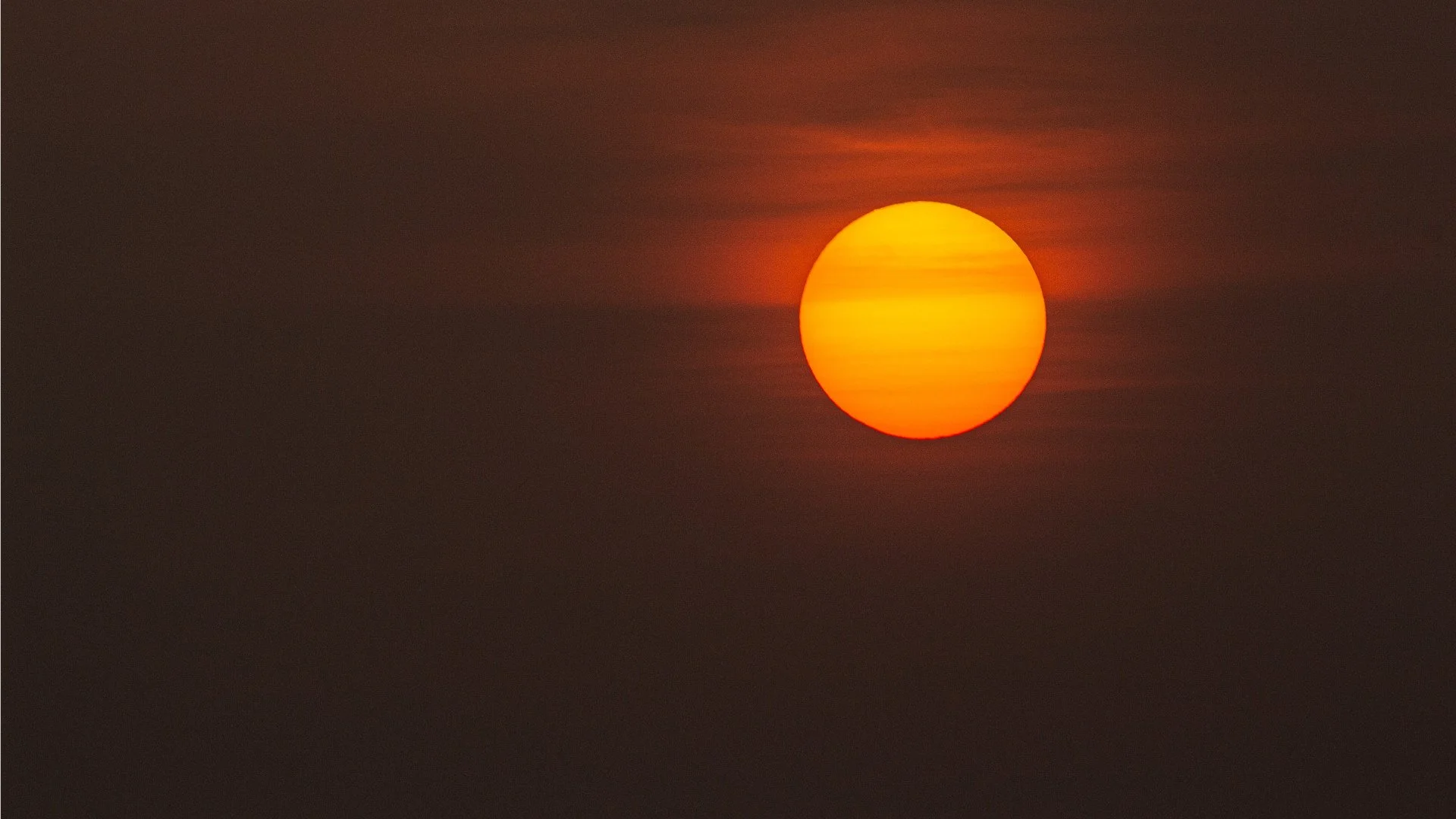
The festive flair in Nepal never dies. The diversity of various ethnicities and their traditions go on throughout the year. Amongst such festivities, Chhath is the largest festival in the Madhesh community. The celebrations last for a total of four days. During which, devotees worship the sun god and various other deities and pray for prosperity and longevity.
The communities of the southern region of Nepal, collectively known as the Madeshi community, have numerous festivals such as Holi, Chaitya Dashain, Chhath, Dashera, Dipawali and others. Amongst them, Chhath holds great significance.
During the festival of Chaath, devotees worship the Sun God with high venerations. People view this deity as the force that binds the universe together and provides energy. Through the rituals and traditions, families welcome prosperity into the family and prevent bad omens. Worshippers also pray for longevity and happiness.
The history of Chhath can be traced back to the early Vedic Period in Hinduism. As per folklore, Chhati Maiya, the wife of the Sun God, can grant all wishes. Her blessings can bring prosperity and positive energy into one's life.
Most festivals feature unique hymns and songs which depict the purpose of the festival. During Chhath, devotees recite similar songs and hymns. The community present various offerings and chant holy prayers to the god of light during the four-day celebration.
Day 1: Nahaye Khaye
As the name suggests, 'Nahaye' means to take a bath and 'khaye' means to eat. The first day of the festival features a dip at the nearby holy river, post which devotees wear a pair of fresh clothes. Devotees then indulge in a pure vegetarian breakfast. The meal also doesn't incorporate garlic and onions.
This day symbolizes the start of the holy fasting performed in the festival, also known as ‘Vrat’, and the devotees take a vow to finish their fasting to attain blessings.
Day 2: Kharna
On the second day, believers fast for a full day. The process of gaining purity features a holy bath and eating purely vegetarian food to break the fast. A series of delicacies and sweets are prepared in house using recipes passed down from generations.
‘Kasaar’, a sweet made from roasted rice, is prepared during the daytime. Other popular desserts are ‘Thekua’, a mix of wheat flour and caramel fried in oil and ‘Bhusuwa’, a sweet prepared similar to thekua but shaped spherically.
In the evening, ‘kheer’ (rice pudding) and ‘puri’ are prepared to break the fast. Individuals refrain from consuming salt, garlic or onions on this day.
Day 3: Sandhya Araghya
The third day is the prime day of Chhath puja, where devotees begin a fast, where they don't even drink a drop of water the entire day. During the evening, they go to the edge of a river, lake, or pond called 'ghat' with their families, carrying a bamboo basket decorated with fruits, sugarcane, and sweets prepared from the day before.
Diyos (oil lamps), candles, smoke sticks are set up in the ghat to perform the Araghya, special prayer. As the sun sets, devotees hold fruits and smoke sticks in their hands and stand in the water, worshipping and offering their Araghya at the setting sun, Chhathi Mata, and the Vedic Goddess of Dawn. Offerings or ‘prasad’ such as milk, fruits, sweets bestowed to the gods. As the sun sinks and night comes, they return to their homes to prepare for the coming morning.
Day 4: Usha Araghya
On this day, before the sunrise, devotees visit the ghat to offer the morning Araghya to the gods of the rising sun. Once the Araghya is complete, holy water from the river is sprinkled over the family members by the elder. The 36-hour fasting is brought to an end by the devotees by eating the prasad. This ritual is also known as Parana.
And with that, the festival of Chhath concludes.
POPULAR ITINERARIES
SIMILAR POSTS
Ready To Welcome You
The Nepalese people have always been praised for their strength, hospitality and profound culture. With the introduction of tourism into this country, the people never failed to share these aspects with the world. Now that we are open after a grueling period of almost two years, we are all set and ready to give you a lifetime experience.
The government of Nepal recently introduced a new set of regulations for immigration. This is a welcoming sight for the tourism industry. It for almost two years experienced the largest stalemate since Nepal became open to the outside world in 1950 AD.
Since then, tourism has come a long way in Nepal. It has become a part of the nation not just economically but also socially. The impact of travellers who choose to experience Nepal’s yonder can be seen in the majority of the households. The provision of jobs for the general public and development of various parts of Nepal for solely tourism alone shows the depth of its impact.
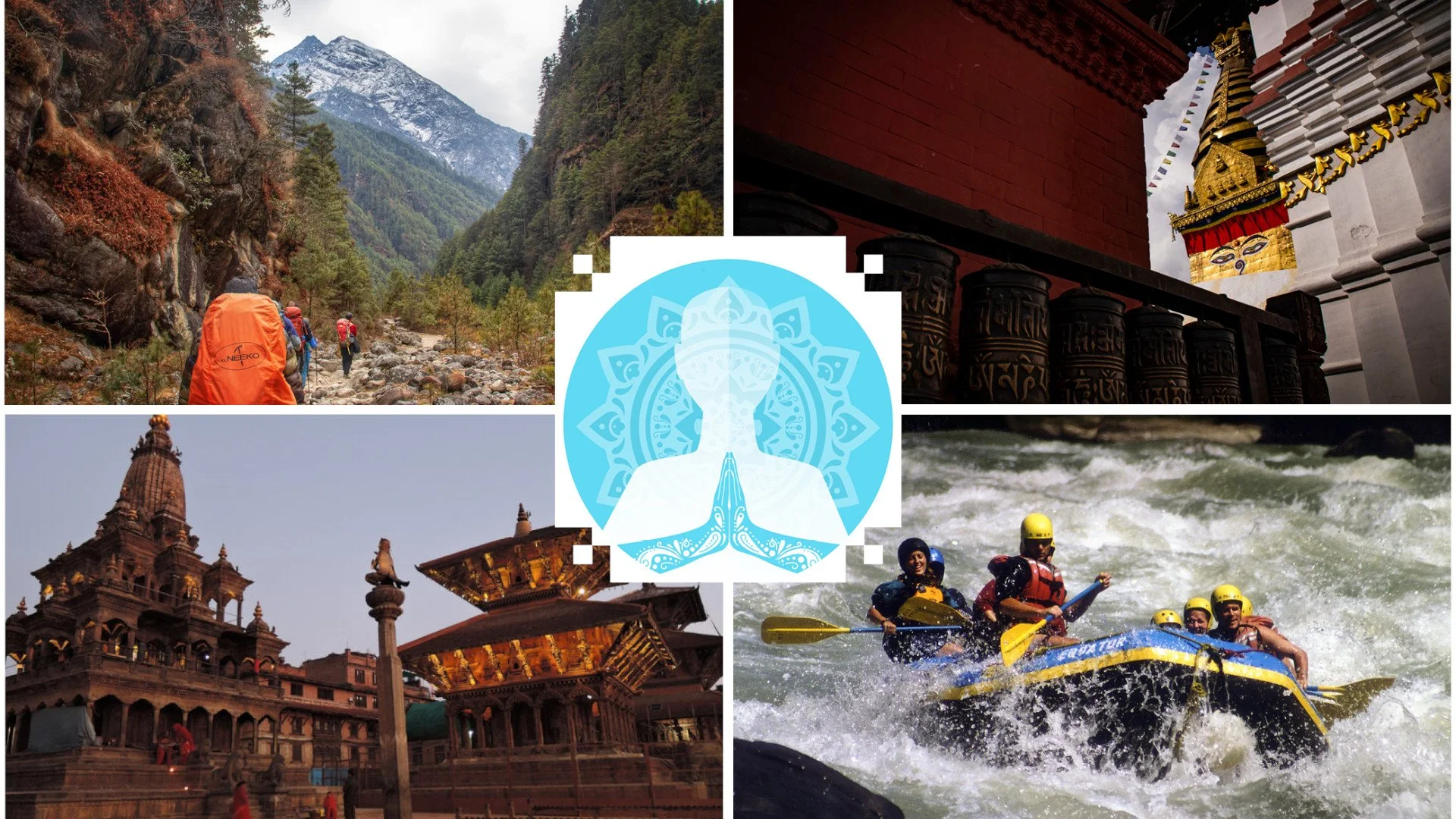
Nepal has a lot to give, and we are ready to welcome you. We have so much to offer that words cannot justify the sheer beauty and adventures that await you. Mentioned below are some of the activities you can indulge in during your trip to Nepal.
1. Cultural Discovery
Nepal is a land of multiple ethnicities. Its historicity goes back thousands of years, with mentions of its various natural elements in the profound pages of holy books. Even though the history of the modern face of Nepal only begins in the early 18th century, the magnitude of cultural aspects and history of various ethnicities in their domain is unfathomable in one single lifetime.
For enthusiasts of culture and history, Nepal is an opportunity to witness the old in the new. The people have maintained traditions that date back thousands of years and still celebrate them with joy. Each community has its own process and structure, and it comes together beautifully to create an amalgam that validates the thought of harmony in diversity.
2. A Mountainous Escape
The call of the mountains for wanderers has always been profound. The calling combined with the love and hospitality of the people creates an experience beyond anything else. Mountain tourism has always been one of the highest contributors to the tourism industry. Various initiatives, both public and private, have sustainably uplifted the infrastructure.
One of the largest lures in this genre has been Mt Everest. The two popular treks in this region are the Everest Base Camp Trek and the Everest Circuit trek. Both allow the trekker to experience the magnitude of the mountains along with the lives of the people.
The establishment of the Annapurna Conservation Area (ACA) gave a new purpose for the inhabitants of this region. Tourism has not just provided good jobs but has also motivated Nepalese working foreign nations to return. The ABC trek is the most popular in the area, followed by the Poonhill trek, Upper and Lower Mustang Trek and others. Over the years, this region has become a favourite for all trekkers of all genres.
3. An Adrenaline Adventure
Adrenaline is the fuel that sparks greatness. Up until a few years ago, adventures in Nepal were only trekking, mountaineering and jungle safaris. But today, the list of activities to get a kick out of is growing. The potential was always there, but the effort was not made to develop the infrastructure to present Nepal as a truly adventurous destination.
Today, activities such as sky diving, paragliding, bungy jumping, abseiling, canyoning, rock and ice climbing and zip flying are available in countless exotic destinations of Nepal.
4. Culinary Escapade
Every ethnicity in Nepal has its own cuisine. It is an amalgam of the geography, climate and availability of resources. Experts have always talked about Nepal’s potential of becoming a culinary destination, but not a lot of effort has been made. The dominance of international cuisine is apparent, but research and standardisation can accelerate Nepal’s growth in this genre. Various cuisines such as the Newars, Sherpa, Maithali, Madeshi and Thakali are already popular, but many more await discovery.
These activities are only the tip of the iceberg when it comes to discovering Nepal. All it takes is a desire for growth and hard work to bring forth new activities and challenges for the world to experience in this beautiful nation.
POPULAR ITINERARIES
SIMILAR POSTS
Revisiting Nepal
Ever since Nepal opened its doors to the outside travelers, it became a beacon to escape the world. The journey for the tourism industry has been turbulent, but nothing was as surprising as the pandemic. Now that the old and the new have fused to create a contemporary normal, it's time to revisit Nepal and once again escape into serenity.
This small but humble nation for years has been an escape to countless tired souls. An adventure into the wilderness of its diverse ecosystem has quenched the thirst of many wanderers. The open hearts of the people have welcome travelers into their homes, given them the utmost hospitality and made sure they always felt welcomed.
The pandemic hit this nation hard. The damage was not just the loss of life but also an economic crisis. We did not anticipate to close our doors, but we had no choice. Prior to the C-19 pandemic, tourism contributed 10 % in the annual GDP of the nation. Indirectly its impact in uplifting livelihood of Nepalese was even greater. But in 2020, the year when we were to give the world a lifetime experience the contribution to the GDP came down to 5%.
Tourism supported over a million jobs in Nepal, the indirect figures are even larger. The pandemic crippled their livelihood by taking away income that supported them and their family. Many businesses were shuttered as it became impossible to cope with the mounting debt. The stress and troubles were greatly amplified during this period.
The span of almost two years felt like a decade because time moved slow. The people could no longer attend to their jobs, which is equal to saying that they could not tend to their guests. On 24th September 2021, the joy for the tourism industry was immense. Tourists fully vaccinated 14 days before arrival do not require quarantine and are eligible for visa on arrival. The procedure for entry was again updated on 4th October 2021, which gave more precise details.
Click Here: To View COVID-19 Status Update Page by Nepal Tourism Board
Slowly but steadily, life is coming back to normal. But it is not the same due to multiple factors. The C-19 stress left a scar that would take a very long time to heal. The danger is still out there, and one must take precautions to not get infected. Even though the situation is better, it isn't the best, and we all have to deal with the new normal a step at a time.
Now that Nepal is open- visit us!
This country has so much to offer, and the people shall ensure that you experience the best of everything during your stay. Some amenities will take time to fully open, but the basic is ready for your arrival.
One can choose from a long list of treks and adventures. You can bask in the eternal glory of the Himalayas or explore the vast wilderness of the Terai region. A plethora of cultural experiences awaits you in the ancient cities of Kathmandu, Lalitpur and Bhaktapur. Indulge yourself in a tranquil and artistic experience absorbing the beautiful architecture, art and masonry.
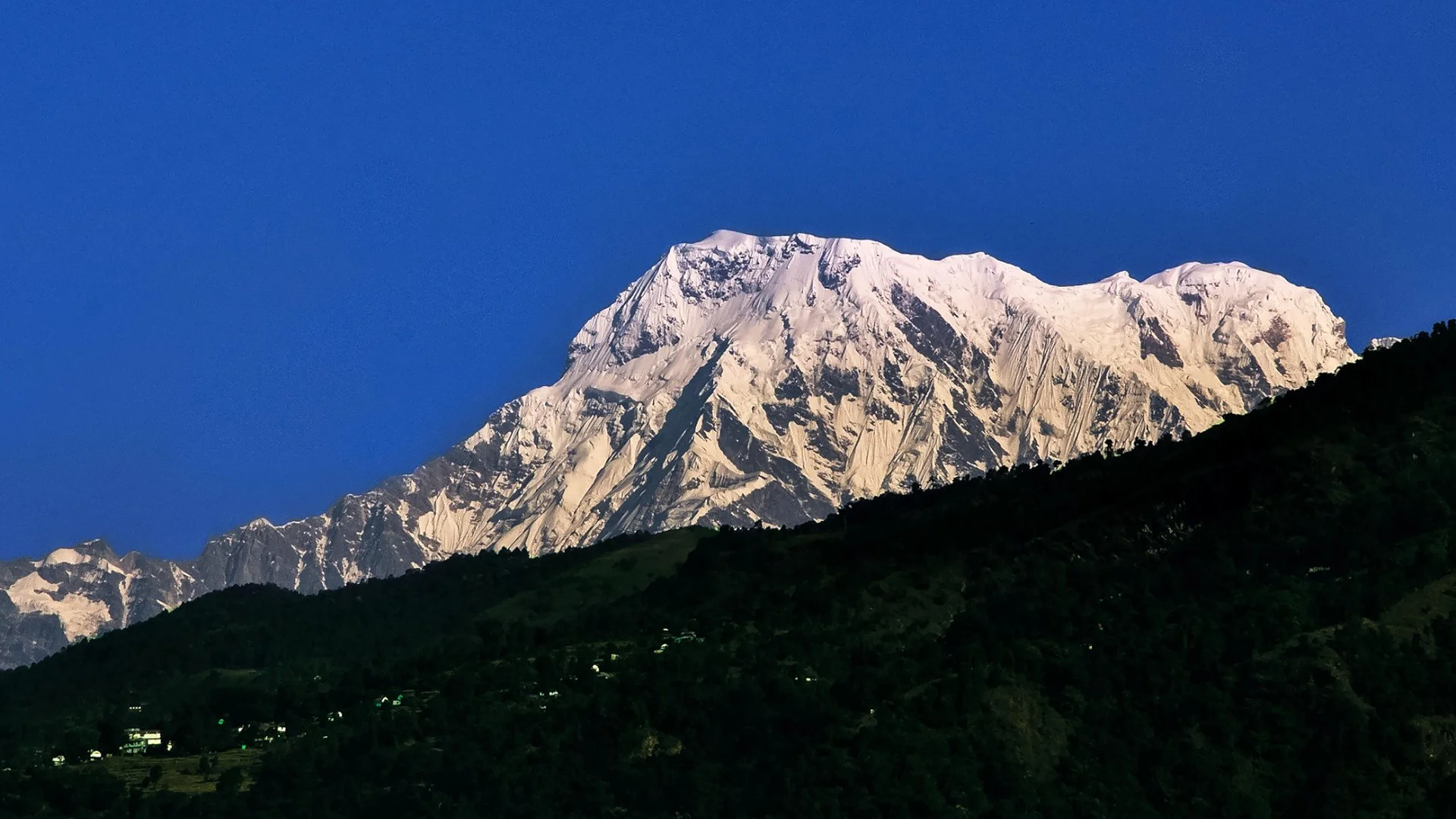
At the end of your trip consider taking with you something made by the people. You'll take with you the memories of people, who regardless of their circumstances, made sure to take care of you. In frame and memory shall be the image of tranquillity - the high snowy mountains, the silent yet riveting outback, and lush wilderness.
Once will never be enough when it comes to exploring Nepal. Choose to revisit us, and take on challenges and absorb something new every time. We are here, and we are ready!
POPULAR ITINERARIES
SIMILAR POSTS
Autumn Trails
Nepal is a country that holds immaculate landscapes with endless options to experience. Autumn comes with the luxury of being one of the most favorable times to pack the bags and carry your adventurous impulses.
The season of autumn (Mid-September to Mid-November) is trekking season in Nepal. The skies are generally clear with a brisk breeze and low to no rainfall. The trail can feel a bit congested due to the heavy traffic of trekkers. Apart from which, it's a heavenly experience.
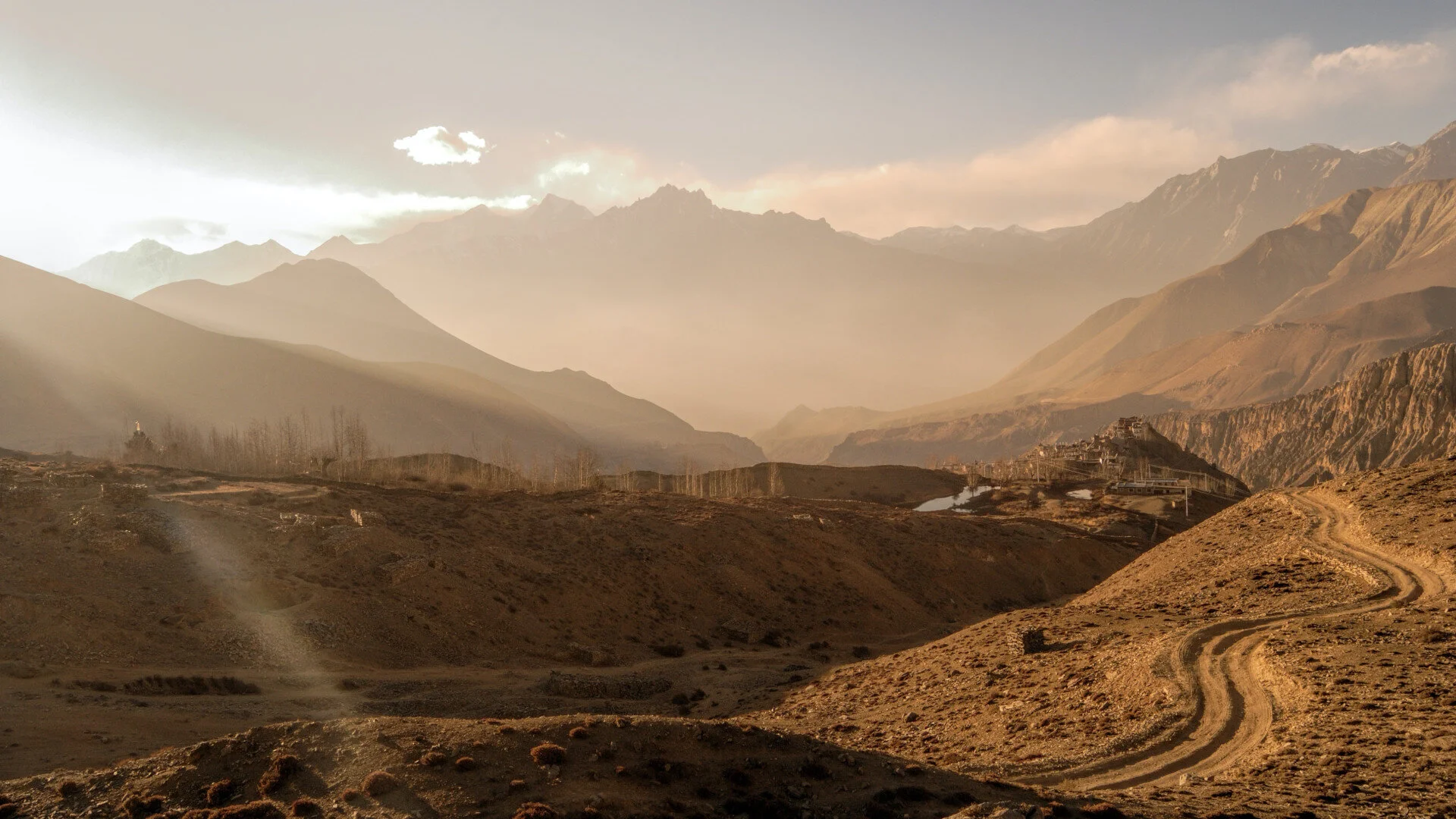
Lower Mustang Trek
The Lower Mustang is abundant with a blend of the majestic mountain range, rocky Tibetan Plateau, and terrace farming vegetation that complement the peaceful yet stirring lifestyle of the people. Colourful Buddhist prayer flags run across this beautiful vale where the old meets the new in a rugged landscape. The Lower Mustang trek features tantalizing views, numerous religious sites and beautiful smiles. This 9-day trial is perfect if you're looking for an easy yet adventurous experience.
On your 30-minute flight from Pokhara to Jomsom, your window seat will allow you to experience the stunning view of the Kali Gandaki gorge. The scene at the airport of Jomsom will be just a teaser for the adventurer in you. The sight ahead is better, beautiful and breathtaking!
The city of Jomsom is fascinating. Here you will witness the graceful mountain range that seems to hug the city. There is no corner where you won't take a sigh looking at the gorgeous mountains. The next stop is the pristine stone village of Marpha, also known as the apple capital of Nepal. The walk from Jomsom to Marpha is a total of two hours. For your next stop, the trials will lead you to the magical Kagbeni village situated on the cliff of Kali Gandaki. As you follow along the trail, in a 3-4 hours walk, you'll reach Jharkot to explore this ancient village, take a detour off the Red Gompa, and visit the Muktinath Temple. Your trial ends with a quick adventure through the beautiful Buddhist Bon Lupra village, visiting the ancient Bonpo Monastery.
Ghandruk - Landruk Trek
This trek in the lower side of Annapurna is simple and allows one to unearth various jewels of this region. From the indigenous lifestyle of the local Gurung community to the miraculous rhododendron forests- it offers more for less.
Your trek starts from Phedi Khola, in the southern outskirts of Pokhara, as you walk through the enchanted forest of rhododendron trees under the pristine mountain view to reach Pothana and then the enticing village of Dhampus. The lively teahouses there will welcome you to rest for the night before continuing on your second trek. As you make it to Landruk, get lost among the harmonious lifestyle of the Gurung villages in between the panoramic view of the mountain range. The trails again pass through more villages until you reach the largest Gurung settlement of the region, Ghandruk. The breathtaking view of the houses, alpine lakes and fields blending into the green blankets of hills blending into the magnificent snowcapped mountains will undoubtedly serve you with a worth-the-while experience.
Dhampus Trek
The tranquil Gurung village of Dhampus is a sublime weekend getaway that offers an elegant view of the Annapurna mountain range.
With a 3 hour drive from Pokhara to Phedi reiver, your trekking venture will start. In only 3 hours, the trail along the forests will lead you to the peaceful Gurung settlements of the beautiful village of Dhampus.
After an overnight stay here, your morning shall begin with a heavenly view of sunrise reflecting the mountains.You can spend the day exploring the pristine surroundings and lifestyle of the people, away from the crowding city. You can also trek to the Sarangkot village to admire the scenery. You can start your trek back to Pokhara the very same day or the next, concluding your short but graceful visit to Dhampus.
POPULAR ITINERARIES
SIMILAR POSTS
Elements of Indra Jatra - Part II
The spectacle of Indra Jatra is an experience of a lifetime. It isn't just a tradition but a heritage of the Newar culture and its people.An amalgam of various traditions, it is a period of great joy and devotion.
The assimilation of Indra into Yenya is still regarded as a great mystery. He is revered as the King of heaven, god of rain and worshipped by the clans of Kshatriya warriors. His banner is known as Indra Dhwoja, and historically it is hoisted in his honour.
The local legend goes as follows. A man was apprehended while trying to steal a flower in the yard of a farmer. He was tied to a pole by the people and hoisted high for all to see. During the festival, the locals witnessed a white elephant dancing out on the street. A few days later, a woman appealed to the people to let her son go. After seeing his mother, Lord Indra removed his human disguise, and the locals were in awe. She told them that he came to Earth on her request to collect a sacred flower, which she required for a ritual.
As a reward for releasing her son, she vowed to provide the last rainfall before autumn for the crops to prosper every year. She also promised to show them the way to heaven. The people followed them to find the entrance. After a certain distance, the duo conjured a thick fog and disappeared.
A god of the Vedic era, Indra Jatra may be one of the last grand celebrations which include him. A common assumption is of Hindus trying to make sense of an animistic (worship of nature and animals) tradition after their arrival into this valley.
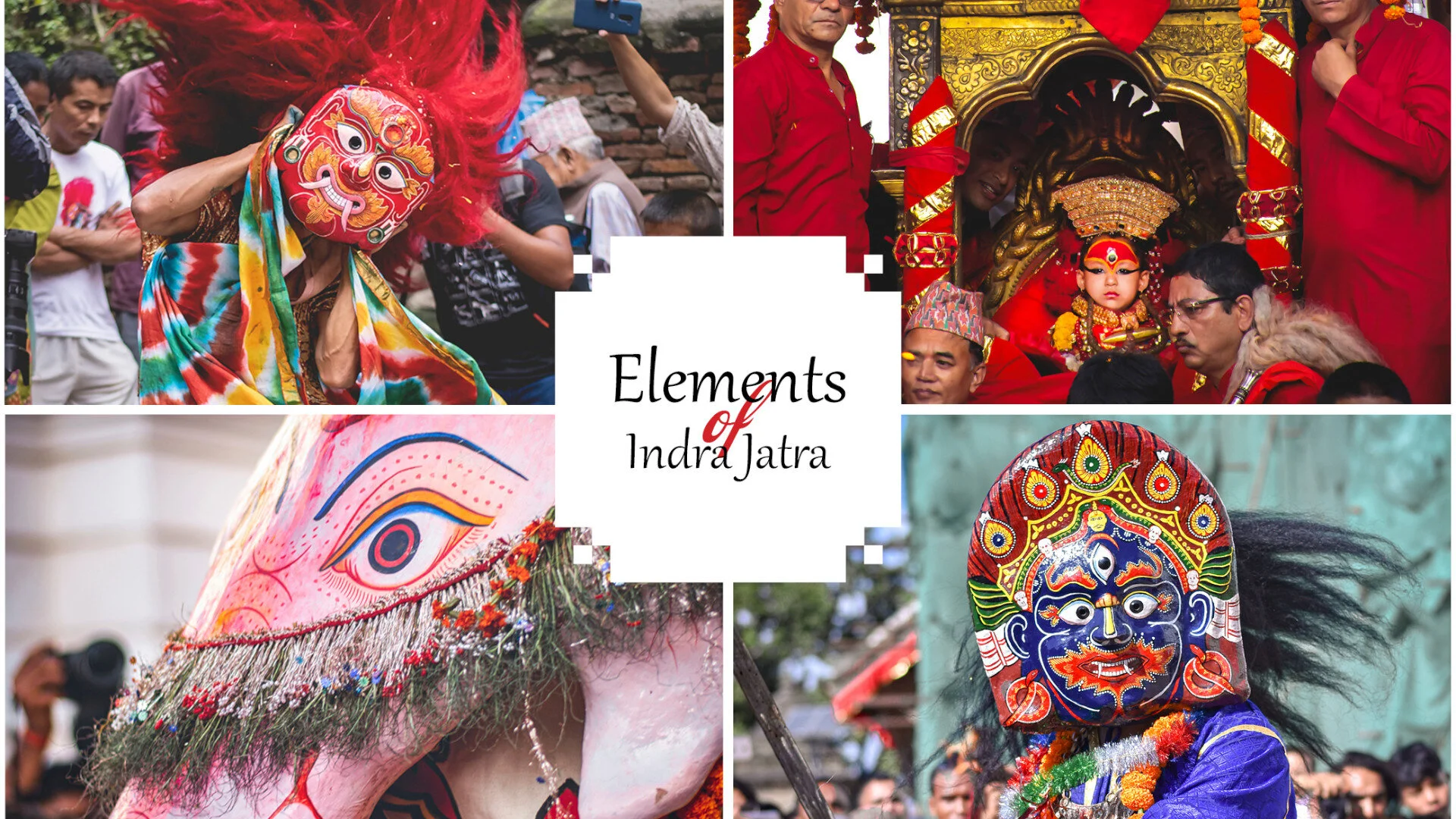
During the festival, an effigy of Airavata - the white elephant of Indra dances in the streets and courtyards of Kathmandu. In Newari, it is called Pulu Kisi. Pulu means a torch, and Kisi means an elephant in Nepal Bhasa (Newari).
Another free dancing character is Majipa Lakhe, traditionally known as Santa Bhairab or Bhoot (Tibetian) Bhairab. The legend, in brief, is how he was the servant of a goddess brought from Tingri, a vast plain in Tibet. Once there was no rainfall in the valley for quite some time. The acaju's (priests) deduced an animal sacrifice is required. They also needed a goddess. They suggested visiting Tingri, the land of the giants and bring their goddess. The only problem is, the giants ate men, and no man ever dared to step foot on that plain.
The acaju's had no choice, they left for Tingri, and once they arrived, they chanted a spell that made them invisible. They found the goddess and told her of the dire situation. She agreed to visit the valley. One their way back, one night, the acaju's heard tigers roar in the jungle and the sound of bells. They were frightened and ran to the feet of the goddess. She asked them why they were scared?
What abomination rings the sound of bells in the middle of nowhere? To which the goddess replied, it's a Lakhe, my servant. He is a frightening creature. But as long as I am here, he will not hurt you. The acaju's expressed their concerns about how he might cause trouble in the valley. He will not harm anyone, told the goddess. She instructed the acaju's to keep him outside the city.
They arrived in the valley, and the King bowed to her. She gave him her sword and special instructions, after which it rained. Meanwhile, the Lakhe had become all friendly with the people- drinking, playing and making merry. Seeing the sight, the goddess told the King, the Lakhe will represent me in this valley. Since then, the locals began referring to him as Shanta Bahairav, Shanta meaning peaceful.
The final attribute is of the living goddess. The great King Jayaprakasha Malla of Kantipur introduced this tradition. He took the worship of a Kumari even further by sanctioning it by the state, building a palace home and commencing a chariot festival. Two living gods- Bhairab and Ganesh accompany the goddess.
Today, the chariots are the centrepiece of the festival, along with various traditional dances such as Dee Pyakhan, Swa Bhaku (Halchowk) and Mahakali Pyakhan. The citizens of Kathmandu also take part in pilgrimages in memory of their ancestors.
POPULAR ITINERARIES
SIMILAR POSTS
Elements of Indra Jatra
The festival of Indra Jatra is a grand amalgam of traditions. This day is the biggest festival for the Newar community of Kathmandu. Its sister cities also have their methods to mark the day. The elements of which all-together help create a vibrant atmosphere and pompous flare.
The festival of Indra Jatra is the biggest for the citizens of Kathmandu. In its neighbouring cities, it is marked differently. You must be wondering why? The answer is simple, Indra Jatra is an amalgam of centuries of traditions. It features remnants from as far back as pre Lichhavi era. Over time, multiple dynasties ruled this valley - each contributed an element to this festival.
In Nepal Bhasa, the language of the Newars, this day is called Yenya Punhi. It is the full moon day of the Newar month of Yanla, which in Nepali is called Bhadra Purnima.
The Newar calendar is lunisolar, and every full moon has its symbolism and cultural rituals. For example, the full moon of the month Thila is Yamari Punhi. Its equal in the western world is the Harvest Moon. The Newars mark Yamari Punhi as the end of the harvest and offer the first grains to Annapurna Devi. They also present a traditional sweet with molasses filling known as Yamari.
To understand what Indra Jatra means, one must de-construct its various elements to see the meaning of the whole.
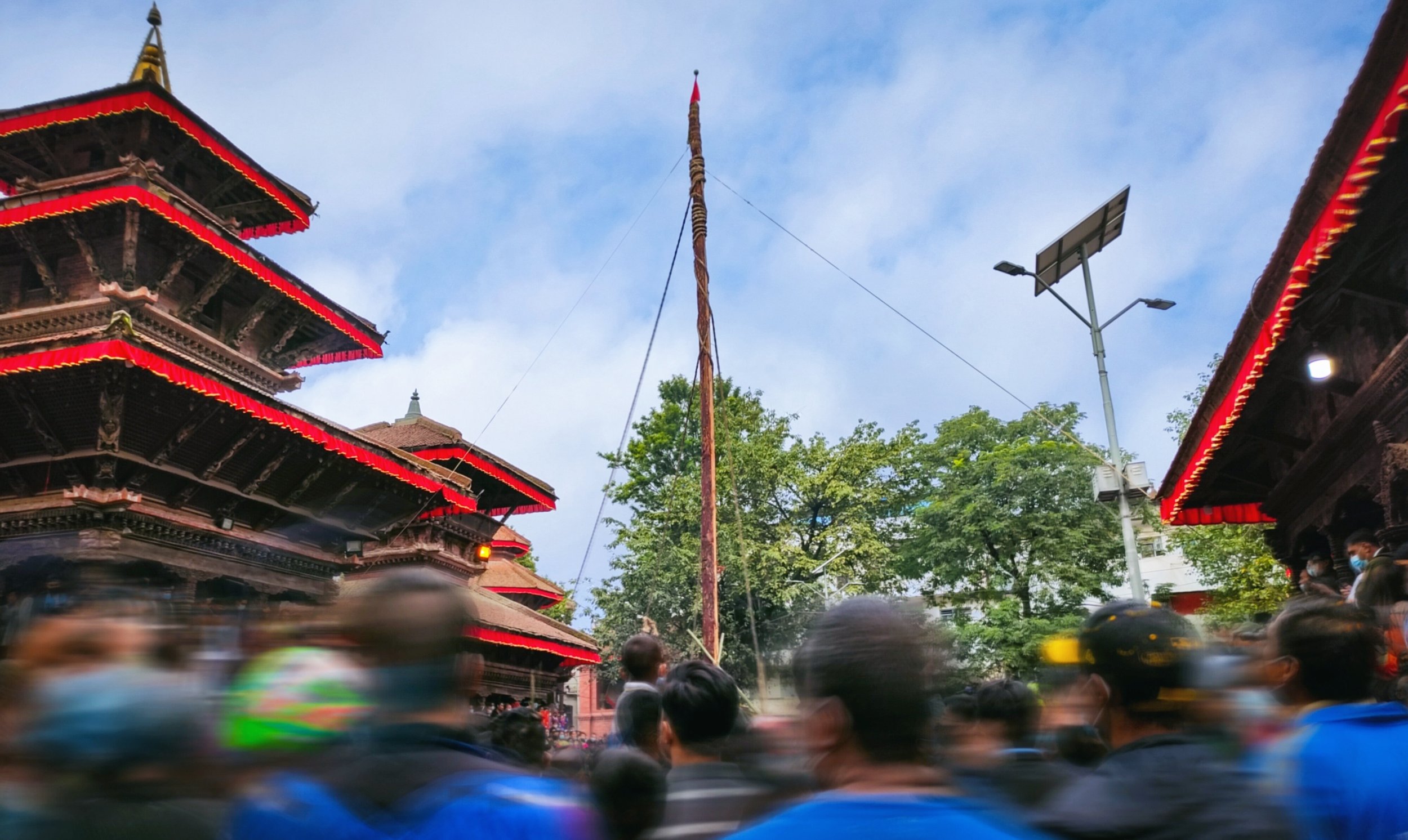
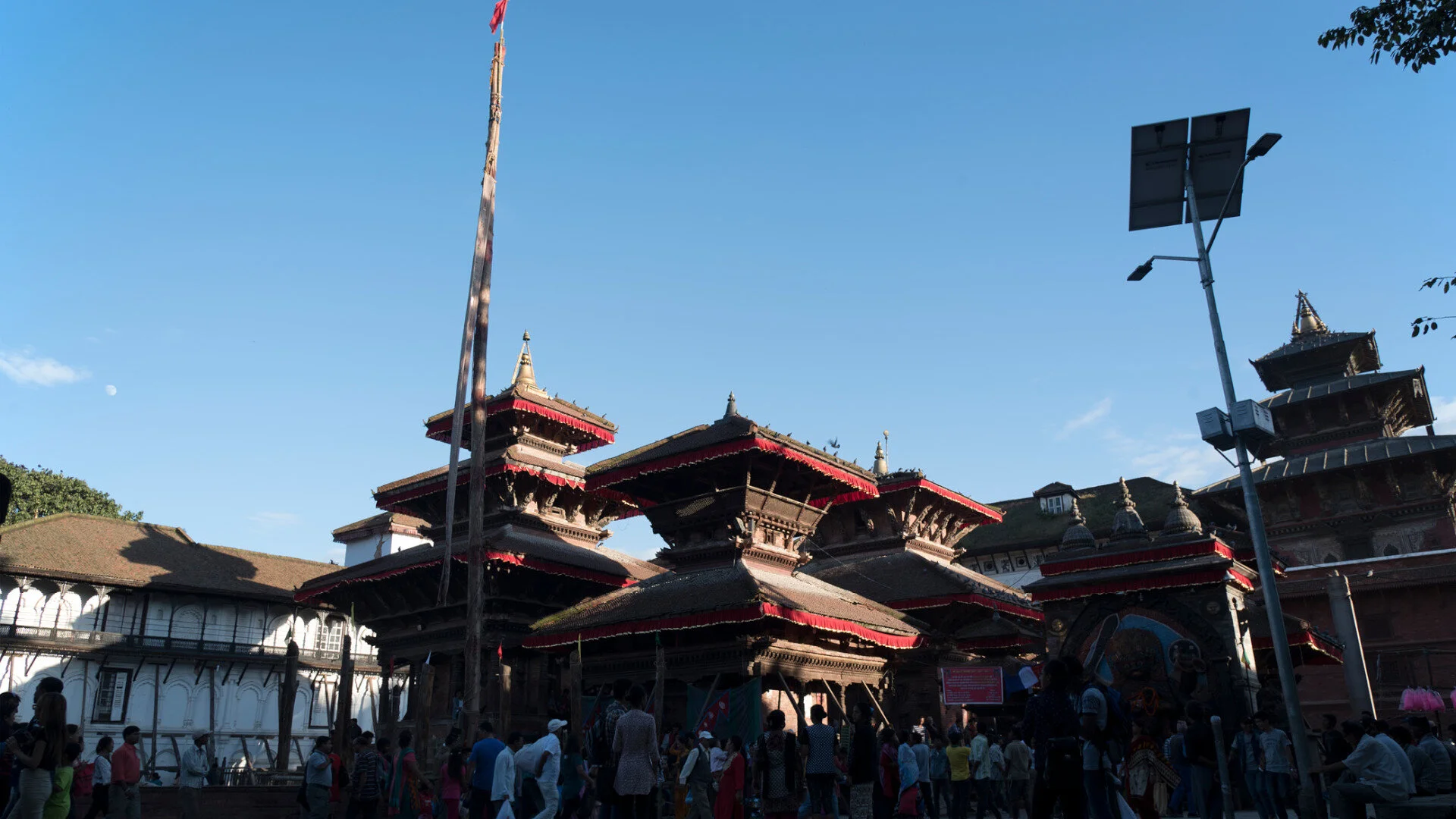
Let us start with the ceremonial pole known as Yoshi in Newari and Lingo in Nepali. Renowned Nepalese historian Babu Ram Acharya in his article, ‘Indra Jatra’ (Vide Himbat Sanskriti No.2), wrote of similarities between the ceremonial hoisting of the Maypole in Europe with the Yoshi.
The Maypole is a similar high pole raised in May in Europe. Its origin is Pagan (Ethnic religions of Europe before Christianity). The celebration of Mayday is to welcome spring. The colourful ribbons wrapped in the pole symbolise spring and warmth.
In Nepal, the Yoshi symbolises the turning of the season from Barsha (Rainy) to Autumn. It is the first layer of the festival.
For an agricultural and pastoral society, the seasons play a huge role. The ancients could have devised this mechanism to inform the people.
Just as in the Mayday festival, the pole is in the centre of the celebration. Its erection marks the beginning and its fall, the end of the festivity. Indra Jatra begins with the hoisting of the pole on the 12th day of the bright fortnight.
It is taken down on the 4th day of the dark fortnight of Yanla.
In the Lichhavi Era came the second attribute. In a dream, King Gunakamadeva was instructed to create a new city north of his present kingdom. He was requested to centre it around the ancient temple of Kanteswara, at the junction of Bagmati and Vishnumati rivers. The vicinity where the renowned sage Ne Muni performed various austerities. Kanteswara is one of the most revered Newar deities. He is called Aju Dya (Eldest God) in Newari and Aakash Bhairab in Nepali. The scared river junction in front of the temple is now a street.
As instructed, the King merged the existing villages of Koligram (Yambhu) and Dakshin Koligram (Yengal) and defeated rulers of various petty states and created his new city. He also established a beautiful stone spout gilded in gold, Lu Hiti (Gold- dhara/ Sundhara). It featured an intricate water-management system, royal canals (Rajkulos) channelled river water to the spout. He named the city Suvarna Pranali Kantipur. Here, Suvarna means golden; Pranali means system. Kantipur is a mixture of two words - Kanti, meaning beautiful and pur, means place.
To celebrate the momentous occasion, he initiated a festival known as Yenya. The word is a mixture of Yen- the Newari name of the city and Ya- celebration. It is also called the celebration inside the town.
It is possible King Gunakamadeva’s celebration overlapped the change of seasons, and the two elements became one.
In the next part of this article, we call look into the arrival of Indra.
POPULAR ITINERARIES
SIMILAR POSTS
Exploring Panauti
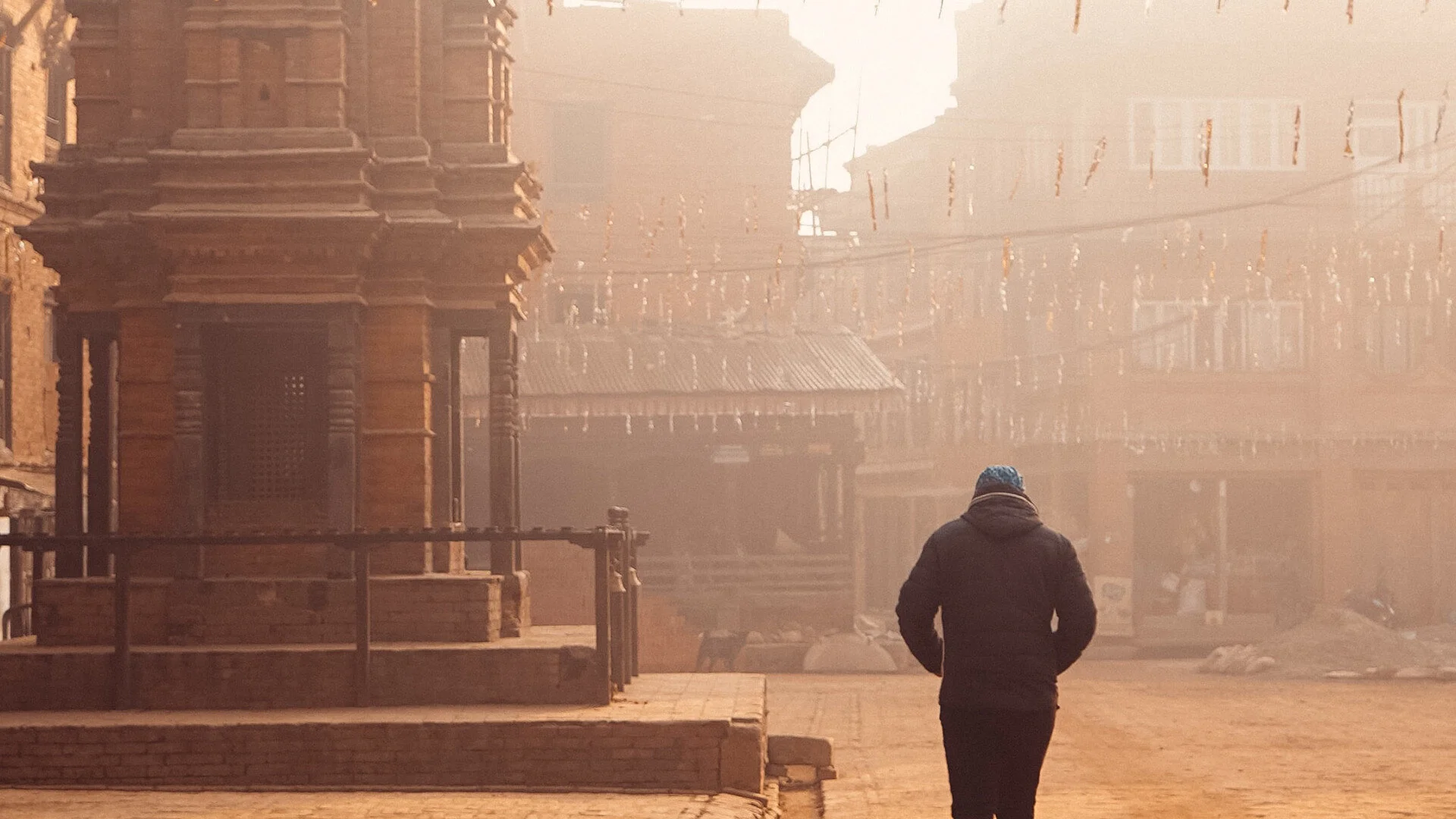
The city of Panauti is an arcane wonder. The roads that lead to it feel like a time tunnel taking the traveller back centuries. The culture, heritage, architecture and traditions of the bygone era still stand tall in this city. Dubbed the last remnant of a traditional Newar township- Panauti is an escape to the past.
A Newar city- traditional houses, bricked roads, dark wood frames, the sound of bells and the smell of incents. These cities have seen the rise and fall of great empires. Time flies by everywhere but inside the city. Situated about 30 kilometres southeast of Kathmandu is Panauti, a city that dates back to the 13th century or before. Bright green farms at the outskirts of the valley and the sacred Punyamati and Roshi rivers encompass this city.
A 17th-century temple dedicated to Brahmayani lies at the edge. The path from it leads to a suspension bridge across the Punyamati river. It is as though the bridge is a time travel tunnel leading you to a city that has survived its cultural essence through the austerity of time.
Origin of the city
“This younger brother (Ananda Malla,) being very generous and wise, gave up the sovereignty over the two cities, and having invoked Annapurna Devi from Kasi founded a city of 12,000 houses which he named Bhaktapur(Bhatgaon) and included sixty small village in his territory.After this, the Raja having obtained the favour and directions of Chandeswari, founded seven towns; viz. Banepur (Banepa) near Chandeswari Pitha, Panavati (Panauti), near the Pragaga Tirtha of Nepal, celebrated in the Shastras on the site where Panchala-des formerly stood, Nala, near Nala Bhagavati, Dhaukhle near Narayana; Khapu near Dhaneswari, Chaukot near the residence of Chankora Rishi; Sanga near Nasika Pitha.” - Wright 1877: 163
King Bhupatindra Malla presented this state as dowry to his sister in the 17th century.
Temples and Monuments
This town was a state with its kingship in the Malla era. It features a lyakhu (Durbar) in the centre. Today, in the central vicinity, the city boasts a beautiful museum (Panauti Museum). The space features numerous artefacts found in the town. The town is also an open-air museum. It features more than 40 temples, open squares and various other heritages.
The tallest temple in Panauti is of Indreshwar. The elders speak of how the linga (a monolithic idol symbolised as Lord Shiva) was created by Lord Indra. The construction of the temple dates back to the 1200s. This three-storied pagoda is rich in wood carving and ancient artefacts that warmly sit beneath its warm and peaceful atmosphere. Various smaller temples surround the main temple.
Towards the south of the city lies Unmatta Bhairab Temple. It is a one-storied temple with three human figures in its three windows representing the King, a saint, and devotees of the deity. A temple dedicated to god Naryan, the preserver, is also found in this area.
Festivals and Dances
Panauti Jatra, is the most symbolic in the city. It is held every year from the tenth day of the bright fortnight of Jestha and continues till the full moon- Panauti Punhi/ Jya Punhi. The chief gods and goddesses of the town are placed on palanquins and brought to the lyakhu. The chariot festival commences during the evening of the first day. The procession features unique chariots- an open roof chariot, pagoda chariot and a peculiar cross bamboo construction with a structure similar to a birdhouse, is placed in the centre.
As the city is a sound amalgam of both Hinduism and Buddhism, the people celebrate majority of the festivals alike their neighbouring cities.
Panauti Today
Today, Panauti still stands with its cultural and historical pride flourishing through its streets, houses, and temples. It is a real-life reflection of how the Kathmandu Valley used to look decades ago.
The lost lustre of this town is slowly but steadily returning. Post the construction of the Arniko Highway and the end of salt trading in the mid-20th-century economic stagnation plagued the city. Once a prominent hub between the trade route between India and Tibet, the cities glory came from commerce and hospitality.
Local and state efforts have allowed the same spirit to rekindle in the town. The growth of infrastructure for hospitality and tourism is breathing life back into this beautiful arcane city.