
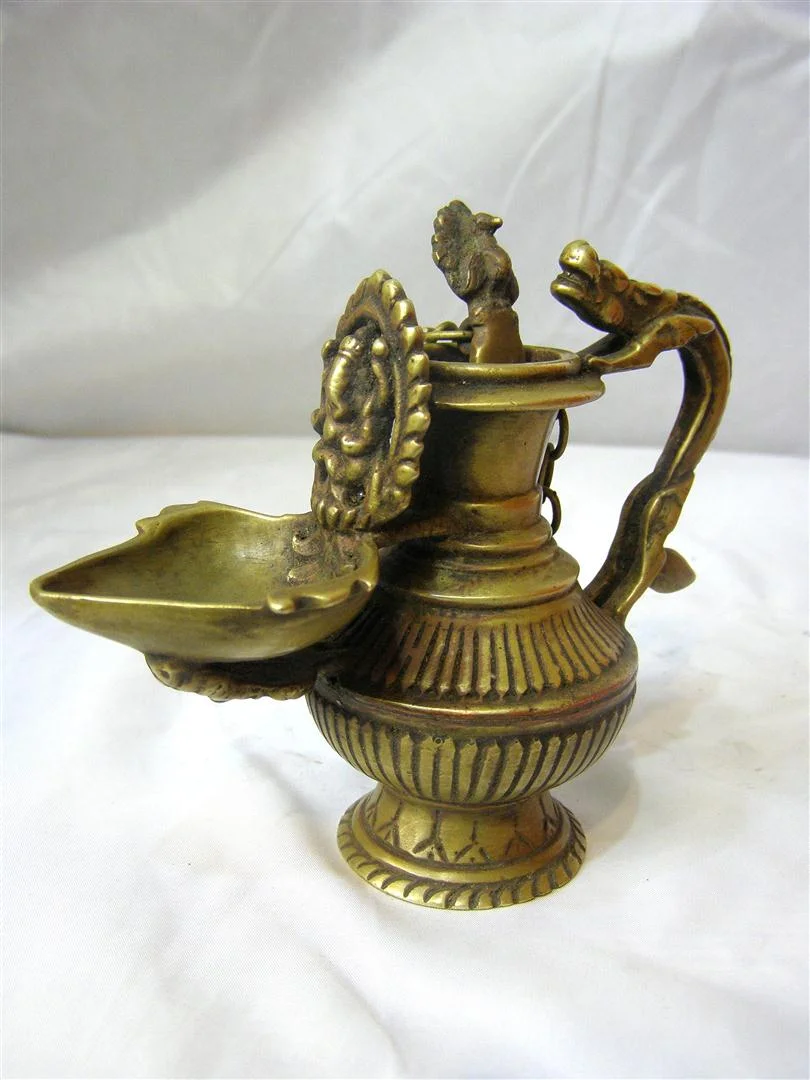
Copper in their Veins, the Tamrakars
The Tamrakars have been working at making various items out of copper for a very long time, and why shouldn’t they? After all, the very word ‘Tamrakar’ means ‘those who give shape to copper’.
When I was working on “Treasures of Nepal”, a book profiling national award winning artists/craftspeople of Kathmandu, I discovered that many of them lived in some pretty historic places. One such artist-cum-craftsperson is Mr. Chin Kazi Tamrakar, whose house is right behind the famous Kasthmandap Temple in Maru, next to Kathmandu Durbar Square, after which Kathmandu city was named. According to the octogenarian, the locality is inhabited by people of the Tamrakar clan, and 28 Tamrakar families live there currently. The famous temple was brought down to rubble by the devastating April 25 earthquake, and many of the houses in the locality have been damaged severely. While restoration of the temple is of prime concern today, there are also serious discussions going on about how to go about repairing the damaged houses of the Tamrakar locality. This is because all the houses are linked to each other, and anything done on one house is sure to affect the other. It’s all a bit challenging, one can be sure of that.
That having been said, the Tamrakar community in Maru is only a small part of the whole. Known as ‘Tamo’ or ‘Tamot’ in ‘Nepal Bhasa’ (Newari), the Tamrakars are widespread within and outside the valley, but mostly concentrated in the heart of Patan. As everybody knows, the Newars, especially those of Patan (or, Lalitpur, the ‘city of the arts’) are renowned for their artistic skills, and there are many different clans, each specializing in a certain vocation. The Tamrakars’ vocation is making copperware. The word ‘Tamrakar’ is derived from ‘tama’ meaning copper, and ‘aakar’ meaning shape or, to give shape.
Mr. Chin Kazi discloses that, once upon a time, the entire Maru Tamrakars were involved in copper work, but now they have all discontinued the profession. And, while his own family has a couple of workshops, they now only do work in silver nowadays. He himself is famous as a repousse artist, and as the pioneering maker of trophies in the country. However, as mentioned above, most of the Tamrakars are concentrated in the heart of Patan. If you wander along the streets south of the Patna Durbar Square, you will discover a row of shops displaying copper, brass, and bronze ware, and most probably, the names of these shops will have the word, ‘Tamrakar’ or ‘Tamot’ in them, for example, “Tamot Traders” in Tangal, and “Tamrakar Handicrafts” in Chakrabahil. As a matter of interest, one of the oldest such shops established was in Haugal by Mr. Tirtha Lal Tamrakar, whose grandson looks after “Tamot Traders”. Unlike Maru’s Tamrakar families, in Patan, the Tamrakars continue to do business as usual, making beautiful copper items down the generations.
While, originally, the Tamrakars mostly made household utensils and ritual items for worship, later on, they were drawn towards more artistic work involving various integral requirements of temple architecture, which of course also included deity images. You may have noticed the intricate toranas above temple doorways; they are mostly repousse works in copper, made by skillful repousse artists like Mr. Chin Kazi Tamrakar. Likewise, the deity figures, too, are made of copper, or its major alloys, bronze and brass. It is interesting to note here that, previously (before 1955, or thereabouts), nobody in the valley made deity figures using copper, mainly because it was difficult to attain the high degree of heat required to melt it. This is where a man called Mr. Bhim Shakya, a chiseler of acclaim (81 years old now), who leaves in the premises of the beautiful Rudrayana Mahavihar in Okubahal of Patan, came into the picture. Realizing the absence of copper figures, on which much finer chiseling and face painting could be done, compared to brass and bronze, he figured out that the valley craftsmen didn’t know how to bring in coal, which could ensure the high degree of heat required to melt copper. He went about doing the needful, and commissioned sculptors to make copper statues that he would embellish with his fine chiseling and painting skills.
Besides household utensils, deity images, toranas, and other temple decorative items, gagaris, ghyampas, and so on, ritual items for worship (by both Hindus and Buddhists) make up a significant part of the Tamrakars’ work. These include ‘mana’ (prayer wheel), ‘dhupdani’ (incense holder), ‘bhumbha’ and ‘sherkem’ (small vessels for holy water), ‘pauwahi’ (a vessel to contain rice for holy offering), ‘panas’ (tall-standing lamp), ‘kotaha’ and ‘kalaha’ (to carry puja items), ‘khadelu’ (hanging oil lamp), etc. Early in the mornings, and during festivals, you’ll see plenty of women carrying such items, on their way to some temple or the other. While such ritual items continue to make their presence felt, there’s a definite decline in the use of household utensils made of copper, due to the availability of more modern kitchenware. Be that as it may, there is a certain exoticism about copper utensils, which is why you’ll see plenty of them being used as decorative items in both houses and hotels. Copper has a charm all its own, that’s for sure! And, the Tamrakars of Patan will keep on at their traditional vocation, no doubt about it.
10 Days in Kathmandu with Jin Jin Cheung
Jin Jin extended her stay in Kathmandu by another 10 days, because in the two months she was here, she found that there was so much more to be discovered. It was a power-packed 10 days, all right!
2nd part of ‘Two Chinese Girls in Kathmandu’
Having seen off Sun Yang (Emily) on Saturday, Jin Jin was back early in the office the next day. She was pretty perked up, but did have a look of some concern on her bright face; she was probably wondering how fruitful her 10-day extension in Kathmandu would be. Well, as it turned out, it went on to become perhaps the busiest 10-days of her young life, and certainly one of the most interesting. I am glad that I had a big role to play in that.
We planned on visiting some of the Valley’s most accomplished proponents of traditional art and craft. This was something I had to do anyway, since I was working on a book about them for an organization. Jin Jin—as smart as they come, and not one to waste a good opportunity when she sees one—was ever-ready and willing to go wherever and whenever with me. However, before starting on our traditional art and craft odyssey, she wanted to visit the famous Hotel Shanker, a result of her reading some of my articles extolling its many virtues.
The next morning found us driving down the hotel’s long driveway, and then after parking my bike, we carried on to the magnificent Kailash Hall where some NGO program was about to begin. As was her bent, Jin Jin wanted to meet the organizers and ask some questions, which she did. I had to drag her away to meet the hotel manager, Mr. Bijay Krishna Shrestha, in the adjoining banquet area, which also served as a restaurant. He invited us to partake of the munificent breakfast buffet set out on a dozen long tables.
I should point out here that Hotel Shanker offers complimentary breakfast to all its guests. The genial head chef, Mr. Keshav, joined us, and asserted “Our hotel’s breakfast fare is the best among all hotels here; I take special care to ensure that there’s a lot of variety.” After having tasty morsels of a range of delicacies, we were given a tour of the hotel; some repair works were being undertaken in some parts. However, there was plenty to see, and Jin Jin was enchanted. A stroll in its expansive garden ended our tour of the day in the famous hotel. (We came back later, on a nice evening, to have a great dinner of Chinese cuisine; Jin Jin was doing a review feature of Chinese food in Kathmandu’s hotels for the Chinese edition of ECS NEPAL. More on this later.)
That evening onwards, we visited the homes and workshops of some of Kathmandu Valley’s greatest artists and craftspeople. We met paubha: painters, repousse artists, stone and metal sculptors, and teachers of traditional art. We spent plenty of time with each, for they were after all the masters of their crafts. Jin Jin never stopped asking questions—Why? How? What? Where?—with Why? being her favorite. So much so, that I started calling her Jin Jin Why? She took careful notes in her exquisite handwriting (Chinese and English), and photos of each and everything. Not only is she one smart cookie, she is a meticulous one, too!
Here are some of the masters we visited:
Stone sculptor Dharma Raj Shakya, maker of the famous Dharma Raj Shakya lions guarding Basantpur Durbar Square, at his establishment, Arnico Stone Carving, in Patan Industrial Estate.
Repousse artist, metal sculptor, and trainer of traditional art, Mr. Prachanda Shakya, at his school, Nepal Traditional Handicrafts Training Center, located just below Akheswor Mahavihar in Pulchowk.
Paubha: painter Lok Chitrakar, whose unbelievably intricate paubhas: are a source of joy here and around the world, at his studio/school, Simrik Atelier in Patan Dhoka.
Silver repousse artist and trophy-maker Chinikaji Tamrakar, who designed the country’s highest award, Nepal Ratna, at his home/workshop in Maru right behind Kasthmandap.
Bust and statue maker Bal Krishna Tuladhar, who with his father made the busts of the four martyrs and King Tribhuvan installed at Shahid Gate, in his home cum workshop in Bafal Chowk, Tahachal.
Metal sculptor Kalu Kumale, who is renowned for his wrathful deity figures, especially Megh Sambhar, at his spacious home cum workshop in Haatiban.
What’s more, at the invitation of the chairperson of Handicraft Design and Development Center (HANDECEN), Mr. Dharma Raj Shakya, Jin Jin and I also attended a meeting at the organization’s office in Thapathali, where many celebrated artists and craftspeople were present.
Well, Jin Jin certainly can now claim to be more proficient in Nepal’s traditional art and craft, having spent so many hours with some of the leading lights of the country. Hope she will use her newfound knowledge to promote Nepal’s amazing art and craft in her own country. Let me add that she was most Jin Jin ‘How?’ at Mr. Kalu Kumale’s workshop, where she wanted to know all the how’s of making metal statues through the lost wax method that’s used by most metal sculptors in the valley.
You are probably thinking that, indeed, it seems to have been a busy 10 days, but really, there’s much more we managed to do during this time. For instance, we visited the oldest mari (Newari bread) shops in Maru, where Jin Jin tasted genuine Newari sweetmeats; we sat in Snowman’s Café in Freak Street, digging into its fantastic apple pies and chocolate banana cakes (still exactly same as in those glory days when it was one of the most popular hangouts of hippies high on hashish and marijuana); and yes, we went around town to review the Chinese cuisine at different hotels. You’ll read about it in the next blog. Huítóu jiàn! Zài jiàn! One of them got be right—I meant to say, “See you again, soon”. Maybe I’ll ask Jin Jin.
Two Chinese Girls in Kathmandu
Going around Kathmandu and Patan with first-time visitors gives you a fresh perspective, as one gets to look at everything, however familiar, through their enthralled eyes.
The past one month has been an interesting one, a time when I’ve had the chance to show off the various aspects of Kathmandu and Patan to two young Chinese girls, Jin Jin Cheung and Sun Yang (a.k.a. Emily) who are journalism students at Shantung University in Guangzhou province, and here on internship at ECS Media where I work. Both of them speak and write English quite well, and so it was no problem communicating with them.
The first place I took one of them, Jin Jin, was to a center in Gongabu called Entire Power in Social Work (EPSA) that provides skill training, employment, and shelter to some 25 women with various physical disabilities. The next evening, we visited another center in Chabel, Voice of Creative Disabled (Srijanshil Apang Awaaz) that provides refuge and education to about 15 young girls with physical disabilities. Jin Jin and I spent almost four hours, from around 4:00 p.m. to 9:00 p.m. at the second center, so engrossed was she in conversations with the girls and their founder Ms. Tulasa KC. Jin Jin took a lot of photos and plenty of notes. Some days later, she visited EPSA again on her own to have a more detailed talk with the center’s founder, Ms. Sangita Pant. There are many such centers in the valley, a side of Kathmandu that most tourists usually don’t see. I’m sure something good will result out of our visits, at the least, some useful features in some magazine or the other, here and in China.
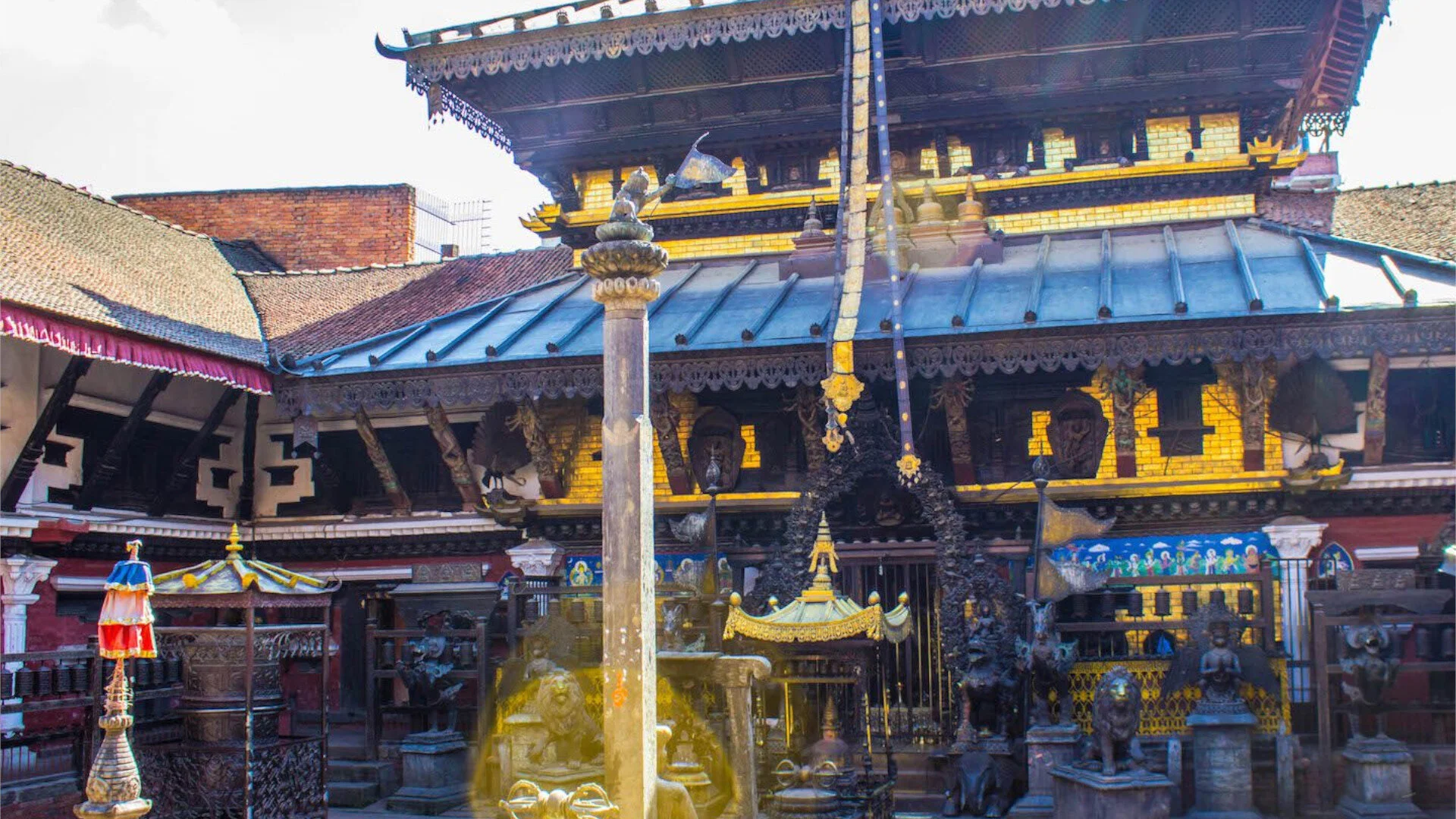
The next week, I took Sun Yang (Emily) for a stroll around Okubahal in Lalitpur, home to many talented metal sculptors. We went through a narrow alley that opened out onto a spacious courtyard at the center of which is a large white stupa. Rows of houses surround the courtyard, which is known as Ta:Go Chiva, meaning ‘Big Stupa’. At the front is the famous Rudra Varna Mahavihar, one of the best maintained mahavihars in the valley. I expected Sun Yang to be amazed at the location, and I wasn’t disappointed. Her first action was to start snapping away with her camera. Before entering the mahavihar, we visited one of the country’s masters in the art of statue making, Mr. Sanat Kumar Shakya, whose house is the first one at the alley’s entrance to the courtyard.
He and his son, Sabin, took us around the various rooms in his house where different aspects of statue making were in progress. Mr. Shakya is especially famous for his Sahasra-bhuja Sahasra-netra ((Thousand-armed, Thousand-eyed Avalokitesvara) figures, many of which can be seen in various monasteries around the valley. Sun Yang (Emily) was rightly delighted to get the chance to see a number of men and women, including Sabin’s sister Sabina, at work, and the beautiful finished statues on display simply enthralled her.
After this informative tour, Sabin was good enough to accompany us inside Rudra Varna Mahavihar. It is such a clean and beautiful shrine, with so many lovely works of art, many of which are ancient, that we spent quite some time there taking photos from every conceivable angle, and of everything on view. Then, since there was still half-an-hour or so for the evening prayers to begin, we went to the equally renowned Mahaboudha Temple nearby. This shrine has a thousand Buddhas made of terracotta, and at the moment had steel scaffolding around it due to some damage due to the recent devastating earthquake.
We got permission to watch the evening worship and prayer recitals, after which Sabin took us inside the adjacent house, which has been converted into a guest house without changing its traditional features. There were a couple of small single rooms and some double beds. The interesting thing was the ambience—low ceilings, ethnic furnishing, lots of wood and metal craft décor, and of course, the grand Mahaboudha right next to the windows. There’s also a café on the ground floor that looks quite cozy.
Then, we went back to Rudra Varna Mahavihar to witness the daily evening worship, which is conducted by a priest and a group of elders of the Shakya clan. According to Sabin, every Bajracharya male of his particular clan has to do a two-week duty as the mahavihar priest once in his lifetime. The current priest was young, and dressed in the customary black priest’s robes. He went around the mahavihar with a smoking incense holder in his hand, and while he was going to all corners, everyone inside the mahavihar, including us, had to stay completely still. Then the priest, along with four or five elders, sat down in front of the main shrine and started reciting prayers. After watching all this for some time, Sun Yang (Emily) and I took our leave.
Our next stop was Honacha, the very popular eatery in the durbar square. It was pretty crowded, as always, with people sitting down on low stools all over the place, in front of the open kitchen where a matronly lady was busy cooking the eatery’s famous badas (pancake-like lentil dish with either egg on top or minced meat, or both, according to preference) on a large black iron wok. Large containers around her held more of other delicious Newar cuisine. We ordered egg and minced meat badas, choila (a very spicy meat dish), bhuttan (fried intestinal parts of buffalo), and glasses of thwon (sweetish rice wine) that went very well with the meat dishes, especially with the hot choila. Again, needless to say, Sun Yang (Emily) was thrilled, and in fact said that she was sure that this was the best restaurant she had visited yet. We asked for some of the dishes to be packed for her to take home to Jin Jin.
The evening was probably one of the highlights of Sun Yang’s stay in Kathmandu, during which time other friends took her to many of the interesting sites around the valley, as well. Nevertheless, despite being delighted to see so many exotic places, Patan became her favorite place, and till the day she went back some 10 days ago, she made it a point to visit the ‘City of the Arts’ again and again. She went back to China, no doubt, with very happy memories. However, one wish of hers remained unfulfilled. She wanted to spend a night in some house near the durbar square so that she could roam around it late into the night and see what it was like in the morning, Maybe next time, Sun Yang?
What about Jin Jin? Well, she didn’t want to go back as yet, she wanted to see much more and do more stories, so she extended her stay for 10 more days. What has she been doing, then? I’ll tell you, because I have been with her most of the time, meeting master artists and craftspeople, reviewing Chinese cuisine at different hotels and restaurants, and generally hanging around in interesting places. The story will continue in part two of this blog—‘Around Kathmandu with Jin Jin Cheung’.
POPULAR ITINERARIES

SIMILAR POSTS

Artistic Nepal
No matter what your particular preference is regarding the arts, you’ll find something here that should excite and inspire you.
If you are visiting Lalitpur, the city of the arts, do make a point to take a look around the numerous workshops in Patan Industrial Estate. You’ll be pleasantly surprised, maybe even astonished, to see such a wealth of artistic talent within its premises. Take for instance, Arnico Stone Carving. Enter its doors and you’ll be greeted by a massive stone statue of Lord Ganesha, a statue that weighs 10 tons and stands 18 feet tall. It’s a masterpiece of stone craft, commissioned by Tansen municipality in mid western Nepal. Go into the showroom and you’ll find scores of beautifully sculpted idols of various deities, along with other objects of a religious nature. The one responsible for such an impressive body of work is Dharma Raj Shakya, one of the foremost stone sculptors of Nepal.
If you want to feast your eyes on some wonderful works in metal, then visit Nepal Dhalaut Udhyog, where you’ll find a lot of deity idols, some large lion heads, and quite a few bells, in both bronze and brass. The last are actually the specialty of this establishment, and it is just one of the very few makers of bells in the country. These bells come in all sizes, from small (25 kg) to really, really huge sized ones. Till some months back, a 3000 kg bell used to hang outside its doors; now this bell adorns a temple in Bhaktapur district. Much of the intricate carvings on the bells are the handiwork of the company’s owner, Pragati Ratna Shakya, while many of the other works are done by his assistants at the workshop, as well as by commissioned artisans in a locality called Okubahal that has a reputation as the center for metal sculptors.
As said before, the Estate has numerous other workshops, and one that’s highly reputed for wood work is Purna Woodcarving Industries. It’s a pretty big establishment, and you’ll find a lot of wood carvers busy making a diverse range of wood craft, among which, finely carved windows that are quite mammoth in size are sure to catch the eye. Apparently, this organization has some pretty impressive works abroad to its credit, including a temple in Singapore and one other in Disneyland in Florida, U.S.A. The mammoth windows are also meant to be installed in some hotels in Tibet. In line with the size of its business, the organization also has a workshop in Bungamati, which is known for its skilled woodcarvers.
If you are interested in paintings, go down to Kandevsthan near the Thapathali Bridge, close to where are located the studios of the Kasthamandap Art Group, which consists of six very talented young artists, each with a style of his/her own. All of them have individually earned a fair bit of name and fame in the Valley’s art world; yet, credit it to their innate humility and sense of consideration that they have remained a cohesive unit for more than a decade now. In fact, in addition to solo exhibitions, they also regularly put up group exhibitions, which are quite highly anticipated by art lovers.
The group members—Asha Dangol, Erina Tamrakar, Bhairaj Maharjan, Binod Pradhan, Pradip Bajracharya, and Pramila Bajracharya—are all in their thirties, and a most pleasant group to be around, such are their personalities. Despite the fact that they have won numerous awards, and are well known, the one thing that really is striking is their humble demeanor. While all of them describe their works as being semi abstract, it is obvious to the viewer that there are distinct differences in their styles. While many of Asha’s works are graphic illustrations of a mixture of traditional and contemporary subjects, his wife Erina’s canvases are full of feminine figures in all sorts of situations and poses. The outstanding way in which they are portrayed is to be appreciated.
Bhairaj’s works are strong depictions of day-to-day activities of women, mostly, and they are so pleasingly depicted that one gets the feeling of witnessing secret moments through the artist’s eyes. Binod, on the other hand, specializes in architectural aspects, primarily cityscapes and temples, as well as portrayals of common folk busy with their daily chores. He uses vibrant colors and interesting textures, and plays around with light and shade. Pradip’s canvases pulsate with exciting images of the colorful festivals of the Valley, and it is his particular ability to bring to life the revelry and vibrancy of such occasions. Pramila can be classified as an artist whose forte is landscapes. However, her landscapes are like no other, being of a very original nature, and always abstract. So, no matter what your own preference is, no matter what sort of art attracts your finer sense, you’ll probably find it at the group’s studios.
The above are but a few examples of the kind of talent you’ll discover in the Valley, more so in Lalitpur. And, undoubtedly, you’ll agree that, indeed, one of Nepal’s greatest riches is its abundance of highly talented artists and artisans.
Whither Nepali Handicraft?
A decade and a half ago, the global demand for Nepali handicraft was such as to make the country proud; the situation has been somewhat stagnant in the last few years.
Today, as I write this, the streets of Kathmandu are witnessing traffic slowdown in many places because of the hasty last-minute panic-filled attempts to beautify the Capital, which will be playing host to heads of state of Afghanistan, Bangladesh, Bhutan, India, Maldives, Pakistan, and Sri Lanka from Nov 26-27 for the 18th SAARC Summit. Those in responsible positions are no doubt cursing themselves—why, oh why, didn’t we start earlier? Well, now all one can hope is that at least the paint on the roadside railings is dry by the time the limousines start to roll down the new-looking streets!
There’s another set of folks who’re also having a merry runaround this week; they are the officials of the Federation of Handicrafts Associations of Nepal, which is holding the 12th Handicraft Trade Fair 2014 from Nov 27-Dec 01 in the Capital. Let’s hope they are having an easier time organizing their event than those desperate folks putting giant flower pots with newly planted saplings all along the sidewalks, and hoping to the high heavens that the saplings at least stand up straight till the big-do is over!
Anyway, having got that out of the way, what’s the situation with Nepali handicrafts? Once upon a time, in the late 1990s, the country witnessed such a demand for pashmina (cashmere) that businessmen of all hues and colors began leaving what they had been doing and started getting into pashmina. By 1998, orders were coming thick and fast from all corners of the globe for pashmina products, especially shawls. As a result of this tremendous demand, the pashmina industry made up more than 80% of all handicraft exports, with sales figures going through the roof from Rs.3 million in 1997 to Rs.5.6 billion in 2000! But, as usually happens, this boom, too, didn’t last. By 2010, exports had plummeted to just Rs.473.60 million.
Actually, the story of Nepali pashmina reflects the overall scenario of the handicraft sector of the country. There has been nothing much to shout about after those heydays when Nepali handicrafts were taking the world by storm. That is not to say that everything’s bad; it’s just that the graph refuses to show peaks anymore, and it’s, more or less, a straight line through the years. Now, here’s what constitutes Nepal’s handicrafts: pashmina, hand knotted carpet, handloom and dhaka products, woolen goods, silver jewelry, metal craft, wood craft, stone craft, handmade paper products (lokta), hemp/allo goods, leather products, paubha (thangka), bone and horn items, ceramics, incense, beads, bamboo products, etc.
The softest natural fiber in the world, pashmina is derived from inner coats of mountain goats (chyangras), which live at altitudes of 3,000 meters and higher in the high Himalayas. After its drastic fall in fortune, blamed primarily on unethical manufacturers (here and in neighboring countries) tarnishing its reputation by passing off non-pashmina as genuine pashmina, the Nepali authorities decided to establish a collective trademark logo for all pashmina made in Nepal as “Chyangra Pashmina”, and this trade mark has now been registered in many countries around the globe. It guarantees the purity of Nepali pashmina products, and the hope is that it will give a boost to the industry.
Among the top handicraft exports of the country are also hand knotted carpets, once the biggest foreign currency earner for the country. But this industry, too, suffered a similar fate as pashmina, and for similar reasons. Its introduction in Nepal was only in the 1960s, when Tibetan refugees fleeing the upheaval in their country, arrived in Kathmandu, bringing with them the fine art of carpet weaving. Their carpets were made of Tibetan wool, which supposedly made them better with age, and the designs, too, were eye catching to the extreme, with strong colors like red, yellow, blue, and gold being predominant. In short time, the valley saw a profusion of Nepali Tibetan carpet manufacturers, with hundreds of thousands involved in weaving as many carpets as possible in the shortest time possible to cater to the ever-growing demand from Europe. Sadly, like in the case of pashmina, quality took a hit, and hard-earned reputations went on the line due to the unethical behavior of some. Currently, the carpet business is a far cry from what it once was. From a high export figure of 25, 09,452 sq m in 1999/2000, it has come down to just 461,065 sq m in 2013/1014.
Well, so much for two of the prima donnas of Nepali handicrafts—their fall from grace has been dramatic, to say the least! The going has been more or less a more stable one for other handicrafts, which is not a happy state of affairs, as without growth, the whole sector is getting stunted. Talking about handlooms, dhaka is a popular fabric that’s used to make a host of apparels and furnishings. In fact, you’ll notice it everywhere in places like Kathmandu, where people wear the typical Nepali caps made of dhaka (dhaka topi). At weddings, too, it’s a pretty strong fashion statement for the groom to be attired in a daura suruwal (the national dress) made of dhaka. Dhaka is also used to make a large variety of furnishings for the home. While dhaka’s origins lie in Tansen of western Nepal, one will find Rai and Limbu women of the eastern hills weaving out fine traditional patterns, as well, on wood and bamboo treadle looms. Another fabric gaining quite a name for itself is allo, a natural fabric extracted from the bark of the giant nettle (Girardinia diversifolia). A pretty intricate process is involved in its making, consisting of first boiling the bark in wood-ash-mixed water; and then after it is dried, the fibers are beaten and coated with white micaceous clay soil. An open back strap loom is traditionally used for the weaving.
Away from pashmina, carpets, and handlooms, Kathmandu Valley has always been more famous for its high standard of craftsmanship in metal, wood, and stone, examples of which are so very evident in numerous temples, monasteries, houses, hotels, etc. all over the valley. Lalitpur, the “City of the Arts”, particularly, abounds in highly skilled craftspeople, and there are different localities that specialize in certain types of craft. For instance, Okubahal, inhabited mostly by Shakyas and Bajracharyas, is considered to be the mecca of metal craftsmanship. For the most part, deity statues are the norm (made using the lost wax method), along with ritual objects used for worship. There is also a particular Newar community of Tamrakars (tama: bronze) whose trade since time immemorial has been to manufacture various items in bronze and copper for household and decorative use, as also for ritual purposes. Outside the valley, there’s a place called Bhojpur in eastern Nepal that is renowned for making khukuris, the deadly weapon of the valiant Gurkhas.
Wood carving is another of the fabled skills of the Newari artisans of Kathmandu Valley, and perhaps this is the most in show everywhere you go, including in most good hotels. You cannot fail to notice the elaborately carved wooden windows adorning many houses, hotels, temples, and so on. These huge windows have earned fame throughout the world, and among these, the ‘Peacock Window’ is a favored souvenir, as also a gift highly appreciated by everybody, be it statesman, head of state, or royalty. The high level of skills displayed by Newari woodcarvers has been acknowledged by all throughout the centuries, and, in fact, they were much in demand in China even during the time of the great Emperor Kublai Khan for doing the woodcraft work in shrines. Today, many woodcarving establishments in the valley are busy making huge carved wooden windows meant for installment in high-end hotels in Tibet and China. So, the legacy continues!
If the Newari artisans are so adept in metal and woodcraft, can they be any less in stone craft? Of course not, and a walk around the durbar squares of the valley will give you the opportunity to appreciate the talent of the valley’s stone carvers. In fact, in Patan Durbar Square, you’ll see two temples done in the shikara style, and dedicated to Lord Krishna, that are made entirely of stone. They are both wonderfully constructed, as you’ll see for yourself.
Other noticeable works of art in stone are the beautiful dhunge dharas (stone spouts) at the hitis (public watering places) that you’ll come across in many places around the valley, two of the more exemplary ones being Sundhara in Kathmandu and Tusha Hiti in Patan. Recent years has seen a trend towards the commissioning of really massive statues of various gods, and such projects can keep teams of stone carvers busy for years and years. A case in point is the ongoing project to sculpt a 32-ft tall statue of Sakyamuni Buddha out of solid stone at Arnico Stone Carving in Patan.
Well, all said and done, even if today the growth is not as hoped for, and not at all as promising as it was one-and-a-half decades ago, the talented craftspeople of Kathmandu Valley continue to chip, chisel, carve, and weave with dedication and commitment, knowing that it is but a question of time before the world’s craving for Nepal’s fantastic handicrafts reaches new heights once again.
Nepali Topi, Mark of the Nepali Man
Whether in the cities’ bazaars, or in the countryside’s paddy fields; whether on the trekking routes, or in immigration counters and government offices, the one thing you cannot miss is the sight of the Nepali topi on many heads.
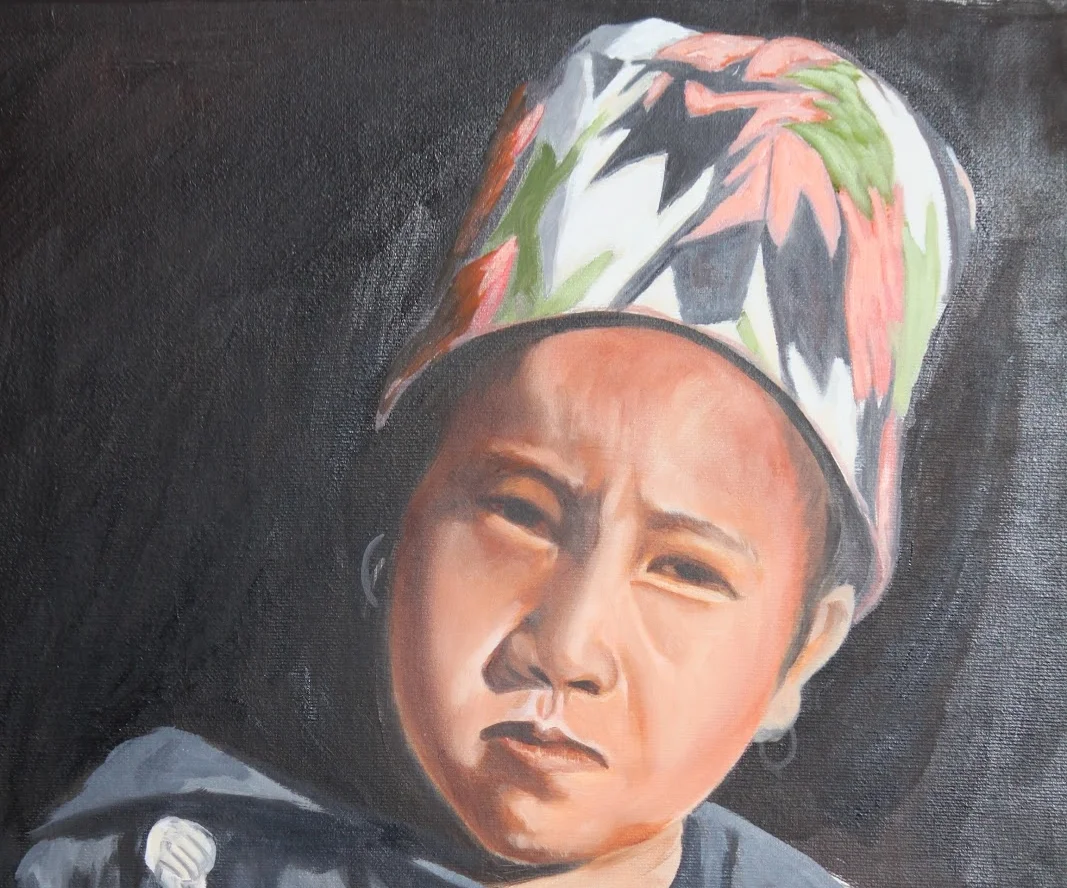
Perhaps the most distinguishing feature that sets a Nepali man apart from all others is the cloth cap that he wears on his head. They may be in varied hues; they may be crumpled, or they may be sharply ironed, with knife-edge creases; they be of different types of fabrics (usually two types); they may be worn in different ways, some wear it crested arrogantly like a Himalayan peak, while some take great care to have the creases just exactly right, and then there are many who don’t really care a hoot; they just crumple it over their head.
Once upon a time, not many decades ago, wearing a Nepali topi (Nepali cap) was mandatory at many official functions and for gaining access to most government offices. Maybe this has not been completely done away with in some places, at least, but with the collapse of royalist power and rise of people power, along with drastic changes in the very structure of the country, the Nepali topi, once the most unifying factor among the country’s 100 and more different ethnicities, now has very little importance as a commonality to bind the people into one nationality.
However, even if the Nepali topi has less of a role in the political scenario, it is still dearly loved by millions and millions of Nepalis all over the country. What make it such a popular part of attire? Simplicity—could be the first response. Unlike the flamboyant hats of other countries (think sombrero, think 8-gallon cowboy hat, to name just two), the Nepali topi perfectly symbolizes the very nature of the typical Nepali man. One who is simple and naïve to the extreme, one who trusts without any hesitance, one who will let you know exactly what he thinks, even if you’ve never met him before. And so on and so forth. And, yes, one whose lifestyle is so simple and basic that he has no time for convoluted thoughts and shrewd maneuverings. Well, actually, if you take a Nepali topi in your hand and think about all this, you’ll probably agree that there couldn’t be a simpler mode of headwear in the whole wide world. And, if you have been here for even a short time, you’ll agree that there couldn’t be a simpler people as well!
Talking about the Nepali topi, there are, in fact, two kinds—the most popular is the Palpale Dhaka topi, while the other is the more traditional, and known as the Bhadgaunle topi. Let’s talk about the latter first, since it carries the weight of seniority. It is named after Bhadgaun, which is what present day Bhaktapur was once called. It is almost always black in color, and has quite a distinctive texture and pattern. If you happen be at a photography exhibition in town, you’ll be sure to see lots of very old black and white shots of scenes around the valley, and most certainly, all the men in those photos will be wearing Bhadgaunle topis. In fact, the Bhandgaunle was, for many years, part of the national attire, capping off, as it were, the debonair daura suruwal and the jazzy waistcoat. In today’s times, however, the Bhadgaunle can be seen mostly only on the heads of people of Bhaktapur and thereabouts. And, interestingly, it is still only made in Bhaktapur. Nowhere else!
The main reason for its decline was the rise of the Palpale Dhaka topi, which is available in a large variety of colors and patterns, so that one can choose the perfect match for the dress worn for the occasion, whatever it may be. Of course, that is not to say that the stately Bhadgaunle is not a show stopper; in fact, because of its solid black color and intricate design, it is a fitting tribute to the status of any man, be it a diplomat or a bureaucrat, a soldier or an officer of the army, a politician or a businessman. Nevertheless, one has to go with the times, and the Palpale Dhka topi is now the Nepali topi in vogue.
Palpali Dhaka topi is made out of a textile known as Dhaka that originated in Palpa in western Nepal, which is mostly inhabited by Newars who had migrated from Kathmandu Valley ages ago. Skilled artisans that they are, they established Palpa as a center of excellence in many types of handicrafts, including handlooms like Dhaka. Creative to the extreme, these Newars have introduced so many textures, so many lovely subtle colors, and so many sophisticated patterns in the Dhaka that the Palpale Dhaka topi has become, in actuality, a pretty posh part of the Nepali man’s attire. If you have attended typical Nepali wedding, you may have noticed the groom dressed in a daura suruwal made entirely of Dhaka, and with a matching Palpale Dhaka topi, to boot. You’ll be hard put to find a more debonair groom, is what we say!
Just as you’ll be hard put to find a more happy-go-lucky man than the one bending his strong back when plowing his field, the ubiquitous Nepali topi pulled tight over his head, stopping the sweat from getting into his eyes. Once in a while, he’ll straighten up, take the cap off his head, and wipe his face with it. Then, the short break over, the topi is back where it belongs, and even from afar, anyone can see that it is a Nepali man.
Hidden Gems of Patan
Patan (Lalitpur), the ‘City of the Arts’, is chock-a-block with treasures at every nook and cranny. There are also many fascinating but lesser known places that can pique your curiosity and sense of adventure.
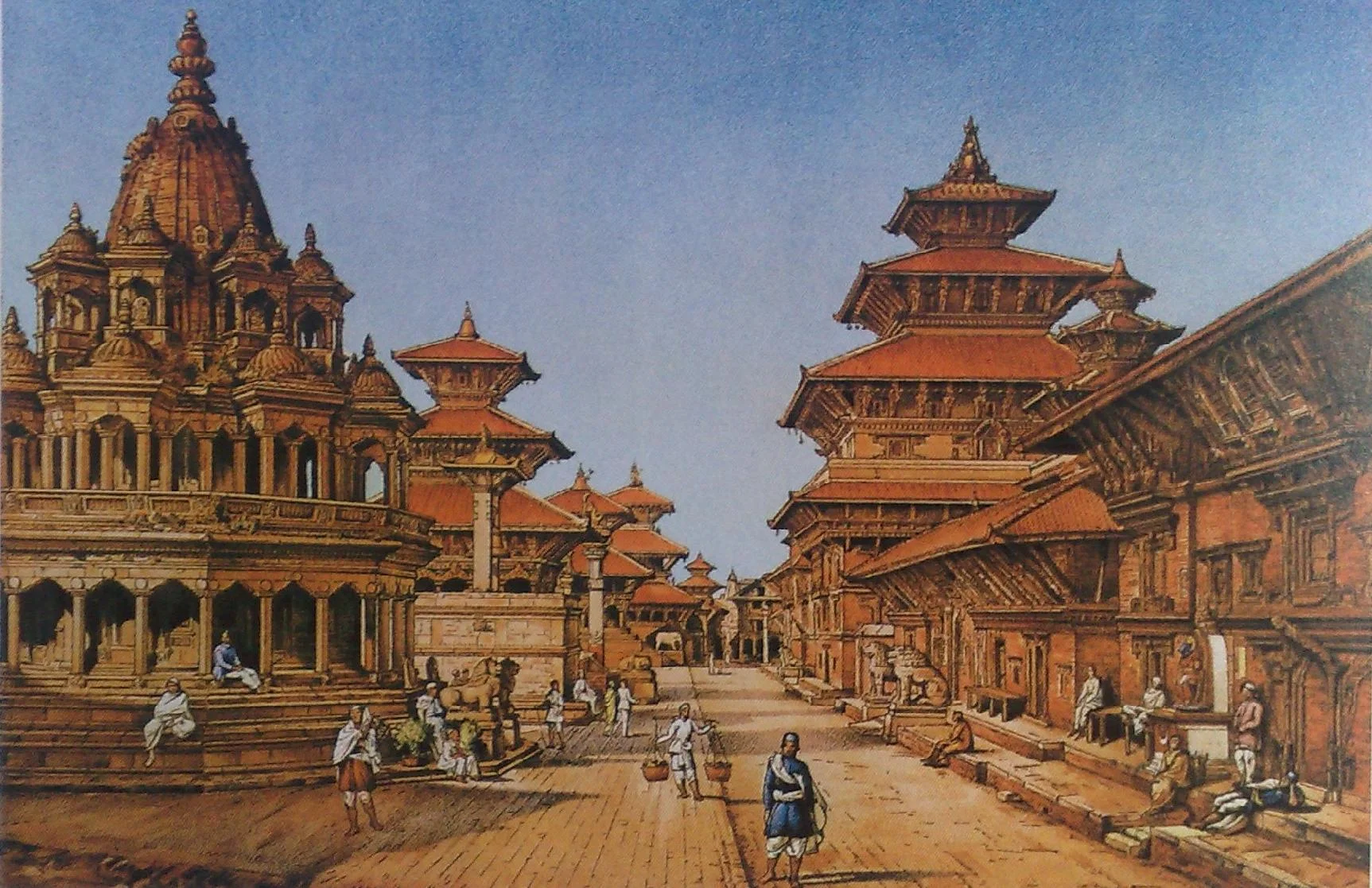
You’ve heard about Patan’s world heritage monument, the Durbar Square, with its many fascinating monuments, including temples of many different architectural styles. You’ve also probably heard about the restorations completed in recent times, such as that of Tusha Hiti, as well as ongoing restorations at sites such as the Bhaideval Temple. Patan Museum inside the former royal palace is one of the more famous renovation projects, a successfully completed Nepal-Austrian joint venture with architect Gotz Hagmueller (also responsible for ‘Garden of Dreams’ in Keshar Mahal in Thamel) at the helm. However, most other restoration/renovation works around the locality are the efforts of an organization called Kathmandu Valley Preservation Trust (KVPT).
Kathmandu Valley Preservation Trust
Many renowned restorers/architects are part of this trust, which was also responsible for the making of the famous Baber Mahal Revisited, an extensive renovation of what was once just a cowshed that was part of a 250-room palace called Baber Mahal, one of nine neo-classical palaces built by Prime Minister Chandra S.J.B. Rana in 1901-1929. Baber Mahal Revisited is one of KPVT’s most visible accomplishments, but there are many more important works to their credit. Now, if you’re in Nepal, make it a point to visit their office, located in an old building in one corner of the Patan Durbar Square.
Besides its architectural offices, there’s also a library with a collection of some pretty interesting hard-to-find photographs, old drawings, and historical books. The top floor is a guest quarter with tasteful and comfortable ethnic interiors where you could spend a night or two. The small veranda has a sweeping view of the durbar square, and really, sitting there watching the activities below throughout the day, you’ll realize why we keep on talking about ‘living culture’ all the time.
Birth-to-death Shop
There’s a shop on the ground floor of the same building that’s referred to by locals as the ‘Birth-to-death Shop” (real name: Hem Narsingh ko Pasal). Ask, and the shopkeeper will show you a file full of lists pertaining to items needed for rituals ranging from birth to death for the Newar community, as well as for parbates (hill people), and Buddhists. The shop’s reputation is based on the precinct that it will have available, at all times, even the smallest item needed. The shop also sells the rare Matsyendranath flower that’s meant for offering at the sacred Matsyendranath Temple, and root-like herbs called sadewa and sadewi (male-female in English) that are said to have the power to make anyone besotted to you if you just touch them with it.
Dare if you want to, but know that the one besotted will be after you forever and more, and if the love is unrequited, you’ll be in serious trouble! Among the shop’s regular clients are shamans who come shopping for such things, as well as for bear’s hair, tiger’s whisker, etc. for their tantric practices. So, visit the ‘Birth-to-Death-Shop’ and browse around for some truly exotic souvenirs.
Jyotishis and shamans
Although there are plenty of excellent hospitals in Patan, jyotisis (astrologers) and shamans, too, have thriving practices, with many clients seeking out-of-the-world cures for various ailments. Here’s a typical scene at one: Time: evening. The jyotishi: a man in his 70s who sits on a sofa behind a table full of parchments, scrolls, and a brass plate containing raw rice. The client: a well-dressed middle-aged woman. The conversation: “My husband is an important government official. Things are not going well for him; a promotion is overdue.” She hands over her husband’s janma patra (document showing planetary positions at time of birth). The jyotishi studies it for some time, and does some calculations. “Your husband’s graha dasha (planetary configuration) is not favorable for the next six months. I will give you a mantra (Vedic incantation). Ask him to repeat it 100,000 times. He should also wear a coral Ganesh ring. Things will start getting better.”
You don’t need a janma patra; your birthday and year will also do if you want to have your fortune told and want a cure for some bad karma. Look around for signboards, you’ll find quite a few around the area known as Prayag Pokhari, as well as in Satdobato. You’ll also find jyotishis in well-known tantric shrines like the Baglamukhi and Bhairabhnath temples.
What bout shamans? Well, here’s what I observed at Buddhi Kumar ‘Gurujyu’’s place of work in Kutisawagal, a 15-minute-walk from Patan Durbar Square, A ‘Shiva tantric’, he sat under a canopy of colorful wooden snakes. Shelves held deity figures as well as plastic bags containing herbs and vials of so-called ‘Himalayan Oil’. A woman and a frail-looking boy of about five sat cross-legged facing him across a brass topped counter.
The woman said, “He keeps on crying all the time. Don’t know why.” She handed over a plastic bag of rice. Gurujyu poured the rice on a brass plate, picked up a few, and then let them fall on the plate. He repeated this procedure a couple of times, and then declared, “Runche bimari (crybaby syndrome)”. He offered some rice to one of the deities, and then flicked some on the child. Next, he blew forcefully on the boy’s face. The young mother murmured, “Doctor said...pneumonia…” The shaman again flicked some grains at the child, waved a black-feathered broom over his head, and blew forcefully twice more on his face. “He will be all right now,” he said. The woman thanked him, and bowing respectfully, went out with her son.
Next, a young woman entered and handed over 10 rupees. In return, Gurujyu handed over a small plastic bag with some herb inside. “They are ‘karne paat’ (a variety of leaf),” he said, adding, “They can only be collected at midnight in the jungle.” Apparently, it is a cure for alcoholics and the woman is a regular customer. One can assume that she must be administering the cure in a surreptitious manner to her husband. If you are interested in shamanism, do visit the Gurujyu. He’s a robust middle-aged man with an open and forthcoming manner. Among his clients are many women who come to look for a cure to prevent their husbands from deserting them. He also claims to communicate with spirits, especially for patients suffering from acute depression.
Fire temple
Another fascinating but less well-known site in Patan is a fire shrine called Agnishala Temple that’s located at the end of a lane opposite Kumaripatti (where Patan’s Living Goddess Kumari give audience during big festivals) in Kumaripati Road near Jawalakhel. As far as anybody knows, a fire has been kept burning at one or more of its five fire altars for the last 4000 years or so. According to the priests here, it may perhaps be the only fire temple in the world with five kundas (fire altars), most of the others making do with only one. These are called Vishnu Kunda, Brahma Kunda, Shiva Kunda, Surya Kunda, and Savya Kunda. The first is the largest and most important while the last is meant for end-of-life rites. Homs (fire rites) are conducted for those wanting to negate the impacts of bad graha dashas or to enhance their fortune by appeasing various gods/goddesses as well as the planets. Birthdays are special days, when visitors have a hom done to please their planetary ruler/s as determined by their birth charts.
Sacred pear tree
There’s something else about this unique temple that is worth knowing about. On its premises are some tall dense trees, the likes of which are not to be found anywhere else in the country. Called Barun Brikshyas (Barun: god of water; brikshya: tree), it is said that water will never dry out in wells around its locality. Scientifically named Crateava religiosa, they are also called ‘sacred garlic pear trees’. Myth has it that sages in ancient times ate one of these pears to stave off hunger for a whole month of meditation. You might be lucky to get one too!
Well, there you have it. These are but a few of the many hidden gems of Patan that are pretty fascinating; and you should not only make it a point to visit them, but also make the effort to discover more during your Nepal tour. Oh yes, you can rest assured that there’s plenty more!
Kathmandu Valley’s Serpentine Culture
Kathmandu Valley was once a gigantic lake in which dwelled an innumerable number of serpents. They were uprooted by humans who set about draining the lake to make the valley inhabitable. The serpents became angry…
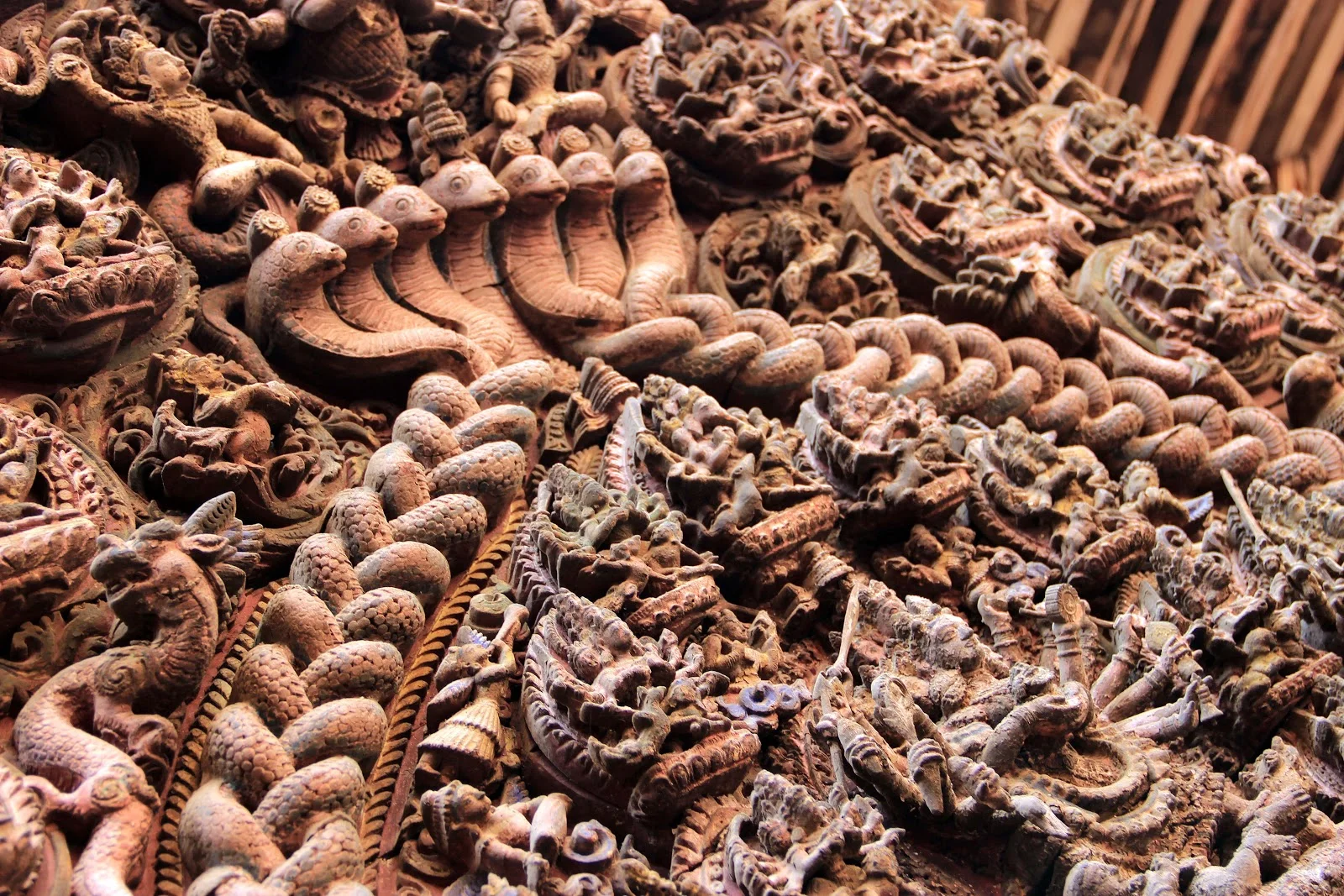
It is not only in temples that you will see wood carvings depicting serpent figures; you may well see them even in some hotels in Nepal with a heritage bent. The reason serpents are so visible everywhere is because they play a big part in Kathmandu Valley’s culture.
There’s this eternally mystifying myth about the valley’s origin. Once upon a time, a long time ago, the valley was said to be an enormous lake called Nagdaha (naag: snake deity, daha: lake). As the name signifies, it was inhabited by a large number of serpents. Now, the valley was well protected on all sides by huge mountains, and the weather was lovely. In other words, if only the lake could be drained out, it would be a fine place to live in; agriculture could thrive. So it was no surprise that some enterprising folk got together to do so. Their endeavor was not taken well by the nagas, who were roused from their slumber. As a matter of fact, they were really angry. Since they had power over the rains, they decided to punish the intruding humans by creating a state of severe drought—no rain whatsoever for years.
The frightened humans didn’t know what to do; how to pacify the furious nagas? They were at a total loss, until one fine day, a king came into the valley; a king with great tantric powers. He immediately called upon his powers and succeeded in compelling the nagas to allow the rains to come down again. But, tantric that he was, he also acknowledged the terrible powers of the nagas and understood only too well that they had to be kept appeased. They had to be given the respect they were due. So he proclaimed that, henceforth, the fifth day of Shrawan (July/August) would be celebrated as Naag Panchami in their honor, a day in which they would be worshipped by humans. The king also realized that suitable sites would have to be provided where the nagas could live safely. Thus, certain specific lakes in Kathmandu Valley were decreed to be safe refuge for the nagas. The lakes so chosen were Taudaha in Kathmandu and Nagadaha in Lalitpur.
Taudaha is a large lake in Chobar, some six kilometers from Kathmandu, to the southwest. Aside from its cultural significance, it is also a refuge for many wetland birds, it being the only remaining natural lake in Kathmandu Valley. People come here during Naag Panchami (August 1 this year) to pay homage to Karkotak Naag, the king of the nagas. There’s a lot of flora and fauna around the lake as well. Nagadaha is located in Dhapakhel of Lalitpur district. It is a large natural pond (about five hectares). Aside from these two, there is a man-made pond to the east of the former royal palace that is small in size. It has a totem pole in its center with a naga on top. Like the bigger sites, this too is where devotees flock to during Naag Panchami. On this day, you’ll see most houses in the valley with a colorful picture of a naag pasted with cow dung over, or beside, their main door. You’ll also see Lord Krishna featuring prominently in some of the pictures. That’s because there’s another prevalent myth about Naag Panchami in the Hindu religion. It is said to be a day to celebrate the victory of Lord Krishna’s victory over Kaliya, an evil and gigantic serpent.
Another festival with serpentine connotations in Kathmandu Valley is the Rato Matsyendranath Jatra, which is celebrated every year for month (May/June). It is a festival participated in by thousands of Patan-dwellers who haul a giant chariot containing an image of Lord Matsyendranath through the lane of the city, with various sites designated as resting spots for a certain period of time. The origins of this colorful (and vigorous) festival are as mystical as that of any other festival. Here’s how the myth goes: many centuries ago, there was a great sage called Goraknath who dwelled in a cave in Gorkha. Once, he happened to come to Patan, and as is the norm for ascetics, went door-to-door seeking alms. Now, the locals were not exactly that generous lot, and in fact, the sage was subjected to some disrespect as well. In his righteous anger, he decided to bring about a drought as never seen before by the valley denizens. With this objective in mind, he promptly sat down on the heads of the nine rain-bringing nagas. Then, he started meditating, and in doing so, slipped into a trance that lasted days on end. The rains stopped pouring down because the nagas were immobilized.
The people begged him to break his trance and get down from the nagas’ heads. Desperation prevailed, since the mighty sage remained unmoved. Now, luckily, there were a couple of cunning fellows around, and they devised a clever plan of action. They traveled all the way to Assam in India, where resided Goraknath’s teacher (guru), Matsyendranath. He was brought to Kathmandu posthaste. On realizing that his guru had come to see him, Gorakhnath promptly stood up in respect, and his trance was broken. The nagas were thus liberated and free once more to do what they did best, that is, to make the rains come pouring down on the valley. With so much depending on the nagas, it is, therefore, no wonder that the people of Kathmandu Valley hold so much respect for them. And, no wonder that you may see more than just a couple of serpent figures in the wood carvings around hotels in Nepal.
POPULAR ITINERARIES
SIMILAR POSTS

Kathmandu and its Fascinating Antiques
Kathmandu Valley is often touted as a “living museum” because of the fact that in many places of the valley life continues as centuries before, and antiques abound in every nook and corner of towns and villages
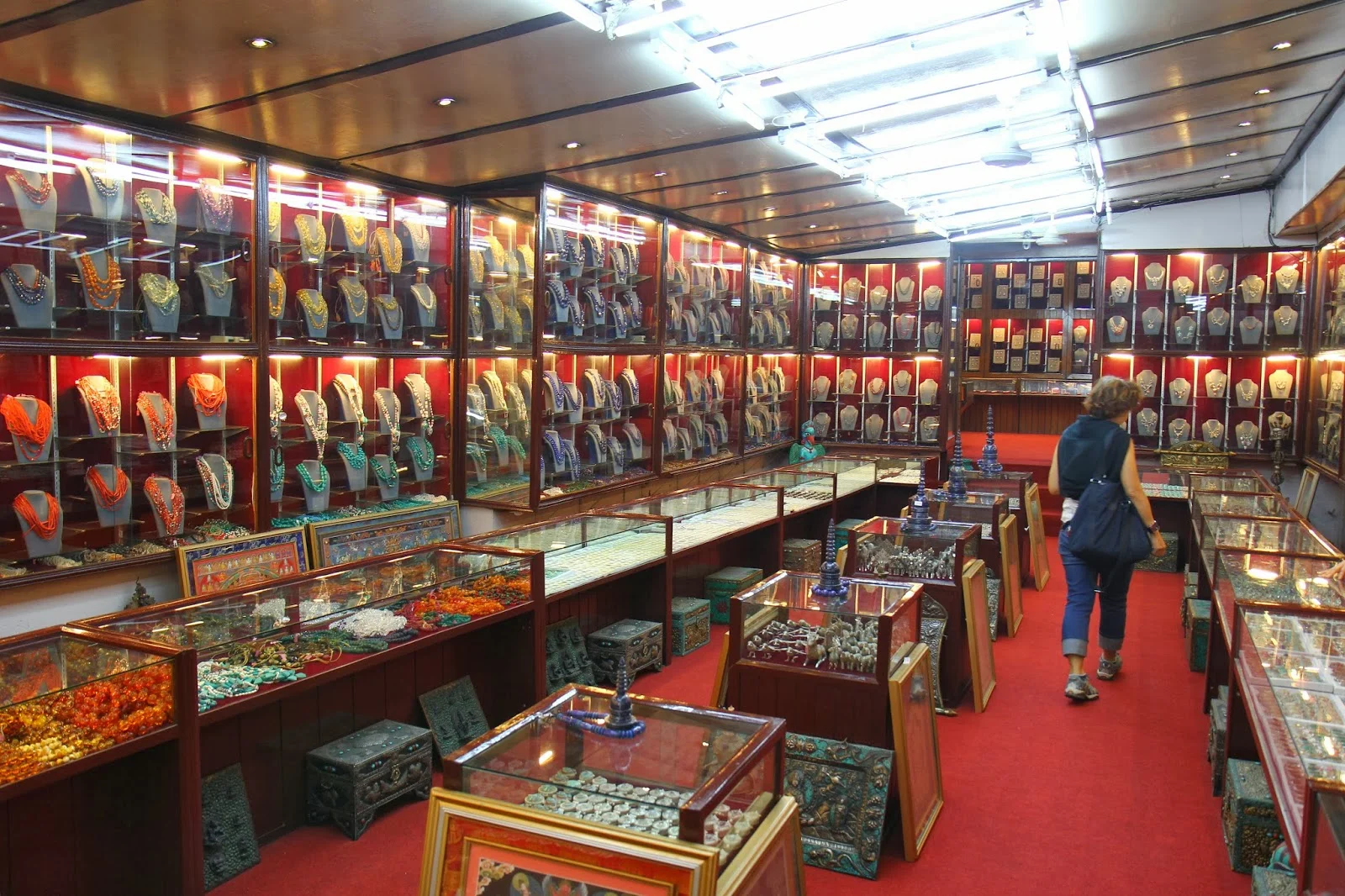
Many of the better hotels in Kathmandu, Nepal, are likely to have a couple of antique shops in their establishments. These antique shops are a magnate for tourists looking for good souvenirs to take back home, and happy hunting grounds for antique and curio enthusiasts. Nepal’s civilization goes back thousands of years incorporating great periods of art, architecture, and culture, so there are bound to be great works of antiquity around. For those really bent on looking at ancient artifacts, visiting only antique shops in and around the hotels in Kathmandu might not be enough, although for souvenir hunters, they are pretty rewarding.
For the former, a day or two at the National Museum in Chauni of Kathmandu is called for. It is a treasure trove of priceless artifacts that take you through hundreds of centuries of Nepal’s history. Here, on entering the doors of the stone images section on the ground floor, you will learn that “the earliest stone images are recognized with their distinct stylized features. These features are displayed in the form of the plain halo, very fleshy body, cupped varadamudra (hand posture), zigzag and finely plated decorative folds of the garments, lack of sacred thread, minimal use of garments and ornamentation, and heavy earrings and anklets.” That’s quite a bit of knowhow that should make you a wiser person, and it really helps you to understand more as you walk around studying the ancient stone images. Mark the word ‘ancient’, that’s the world you’re entering now.
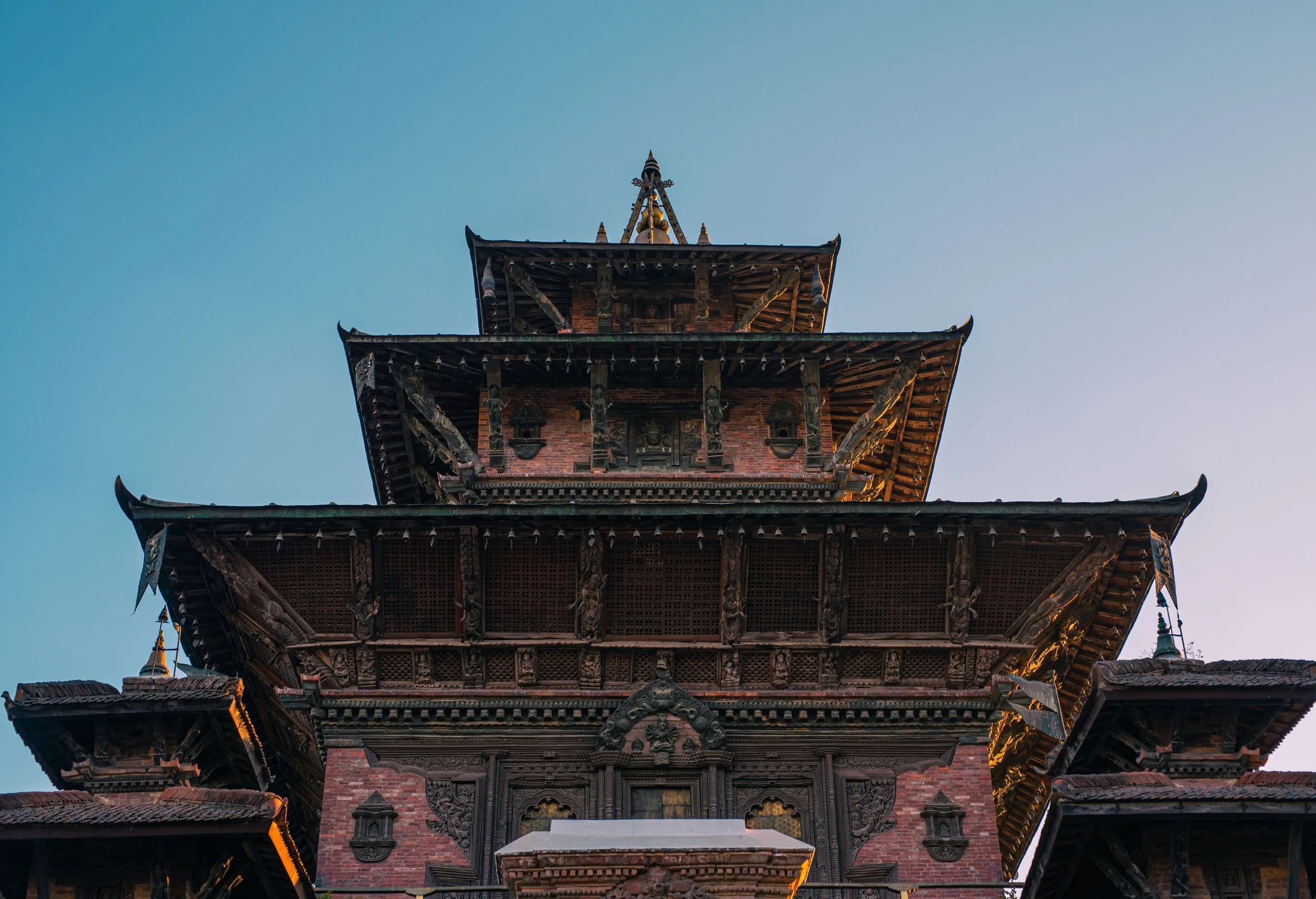
The first row of stone images makes up the narrative panel depicting Lord Shiva and his consort Parvati’s epic romance: all established as 6th/7th century works. This section of the museum includes various other deity images from ages ago, ranging from 1st century to 17th century. One statue that’s sure to catch your attention is the striking life-size figure of the Lichchavi king, Jayavarma, which was discovered in Maligaon of Kathmandu in May 1992. It is from the first Lichchavi samvat (Saka samvat: 2nd century A.D.). Another striking artifact is the headless figure of Yaksha dated 1st century A.D. It is the earliest stone image found in the country. Another ancient piece is the figure of Kumbha (goddess of prosperity) dated 2nd century A.D. Numerous other figures are also on display, many of them from the 12th century onwards, and some are really well sculpted.
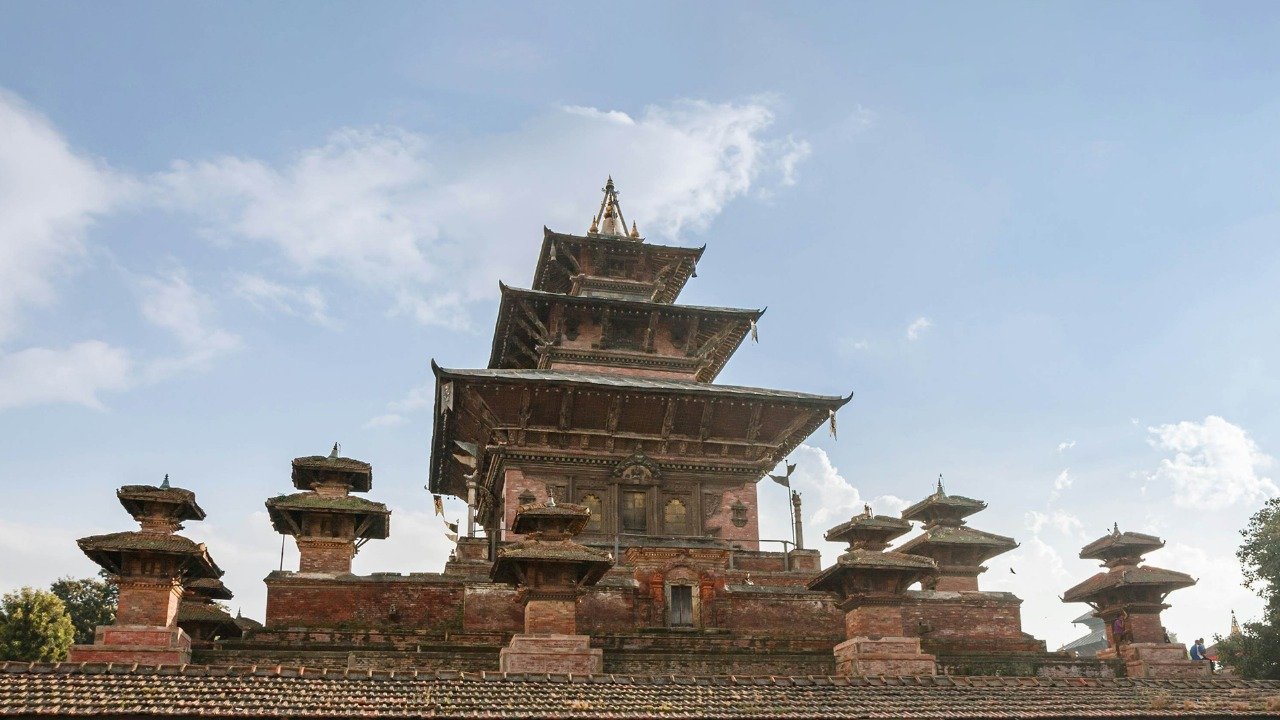
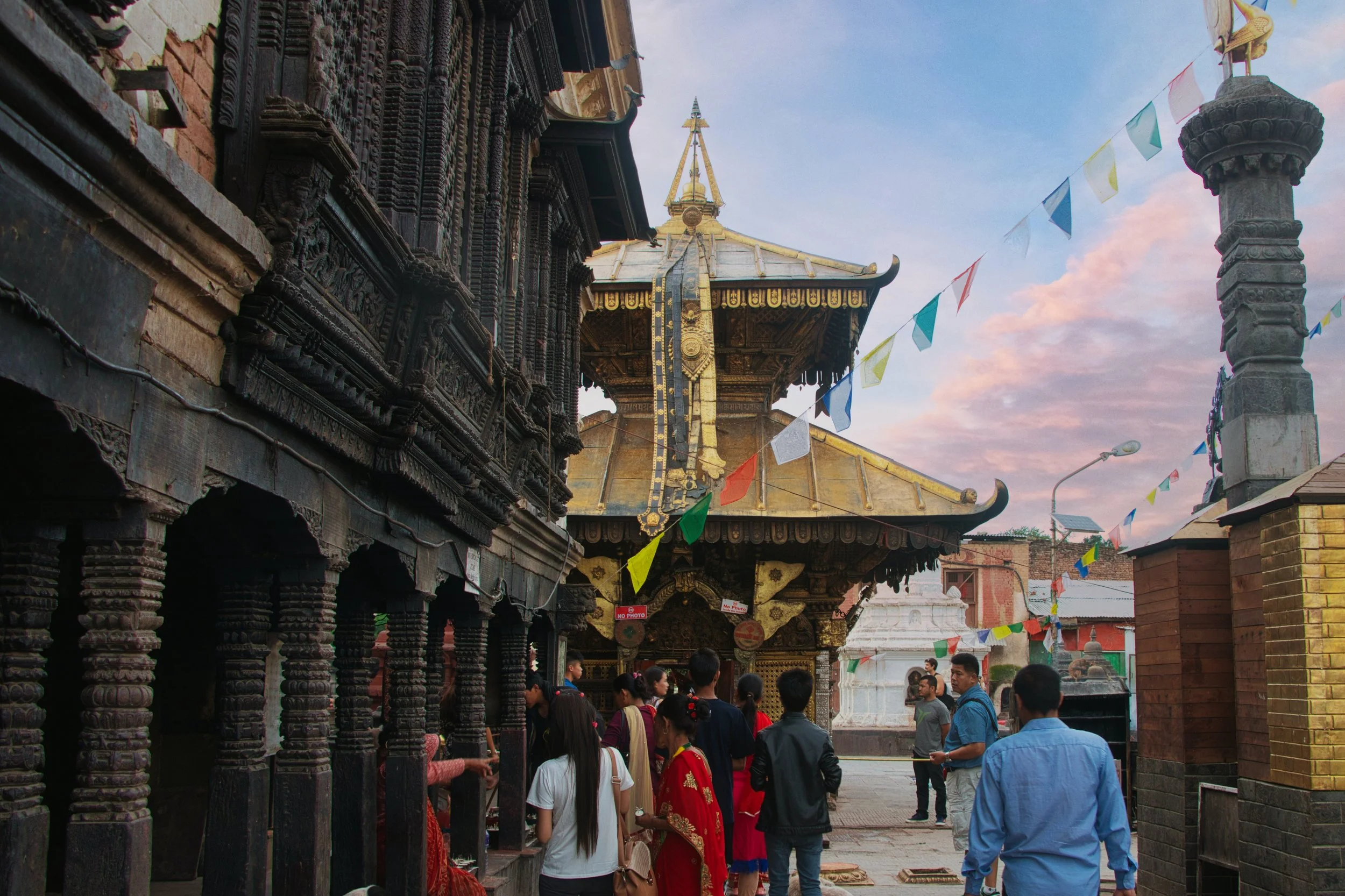
Actually, the above details are just to give you a taste of what to expect when visiting Nepal’s National Museum, and just a small part of the whole. The museum has an entire building devoted to Buddhist artifacts. You’ll agree that you won’t be able to see such antique objects at the antique shops in and around hotels in Kathmandu! However, you should also keep in mind that many travelers have described the entire Kathmandu valley as a ‘living museum’, wit ancient monuments to be found at every nook and corner. The three durbar squares of Kathmandu, Patan, and Bhaktapur contain rich heritage in the form of shrines, palaces, and relics like wood, metal, and stone sculpture.
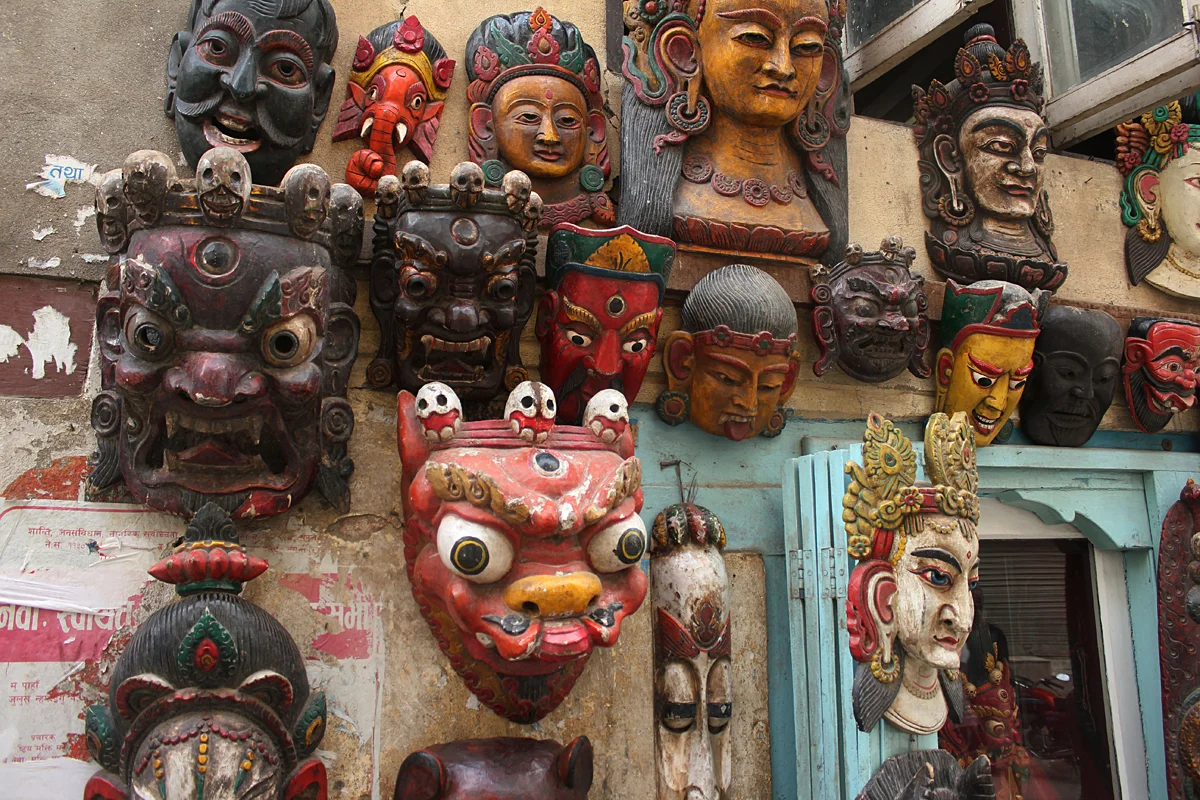
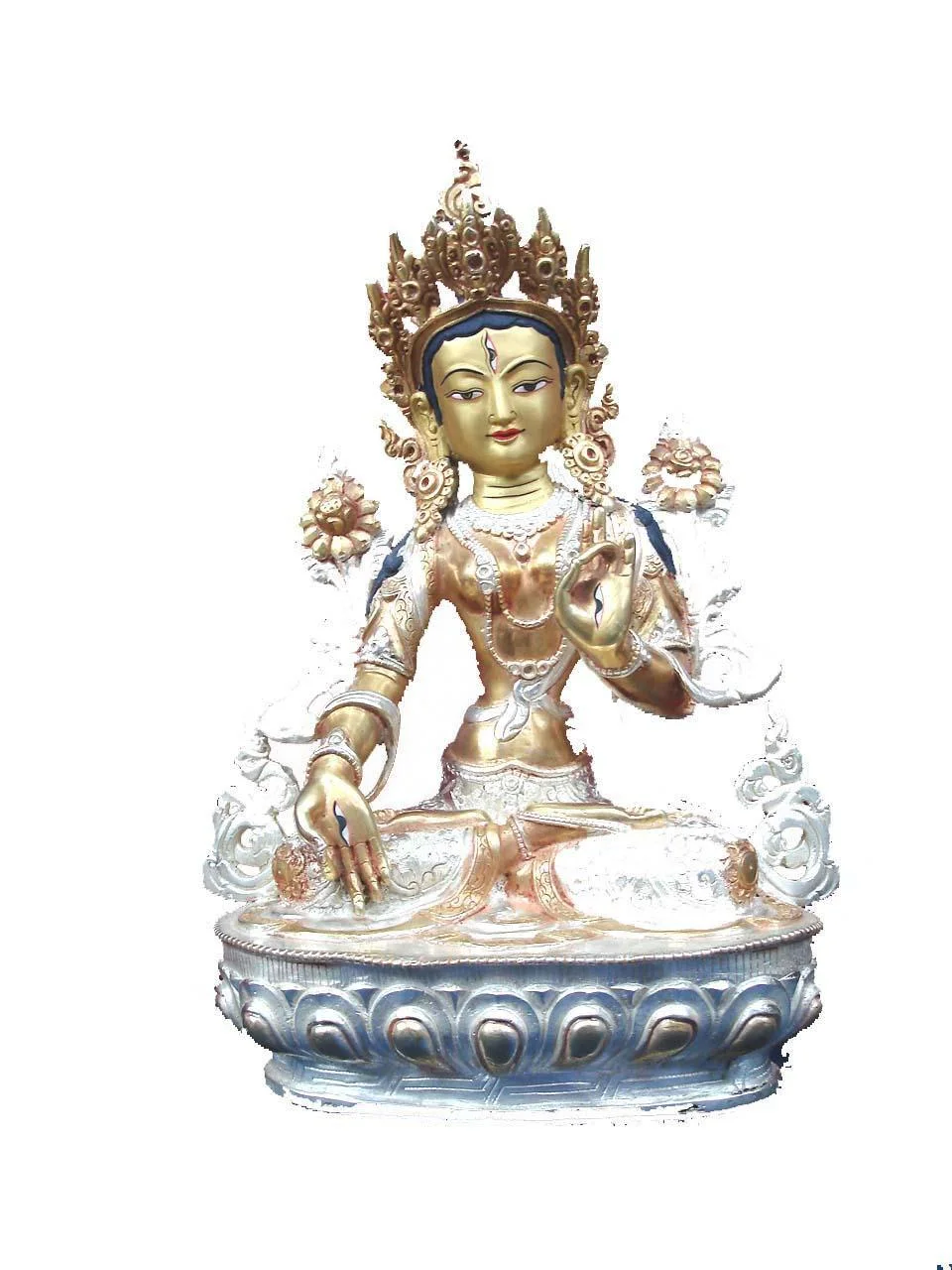
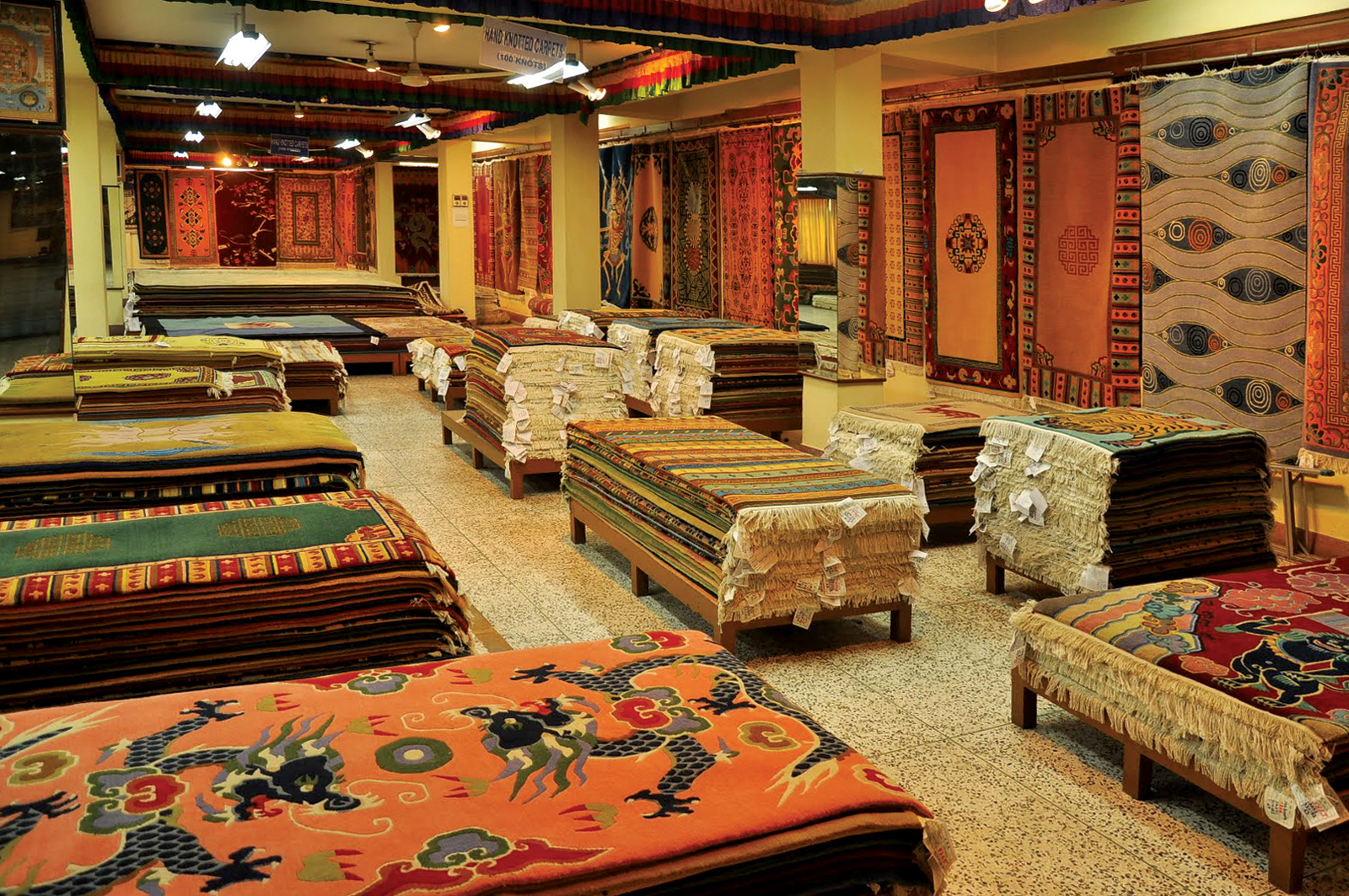
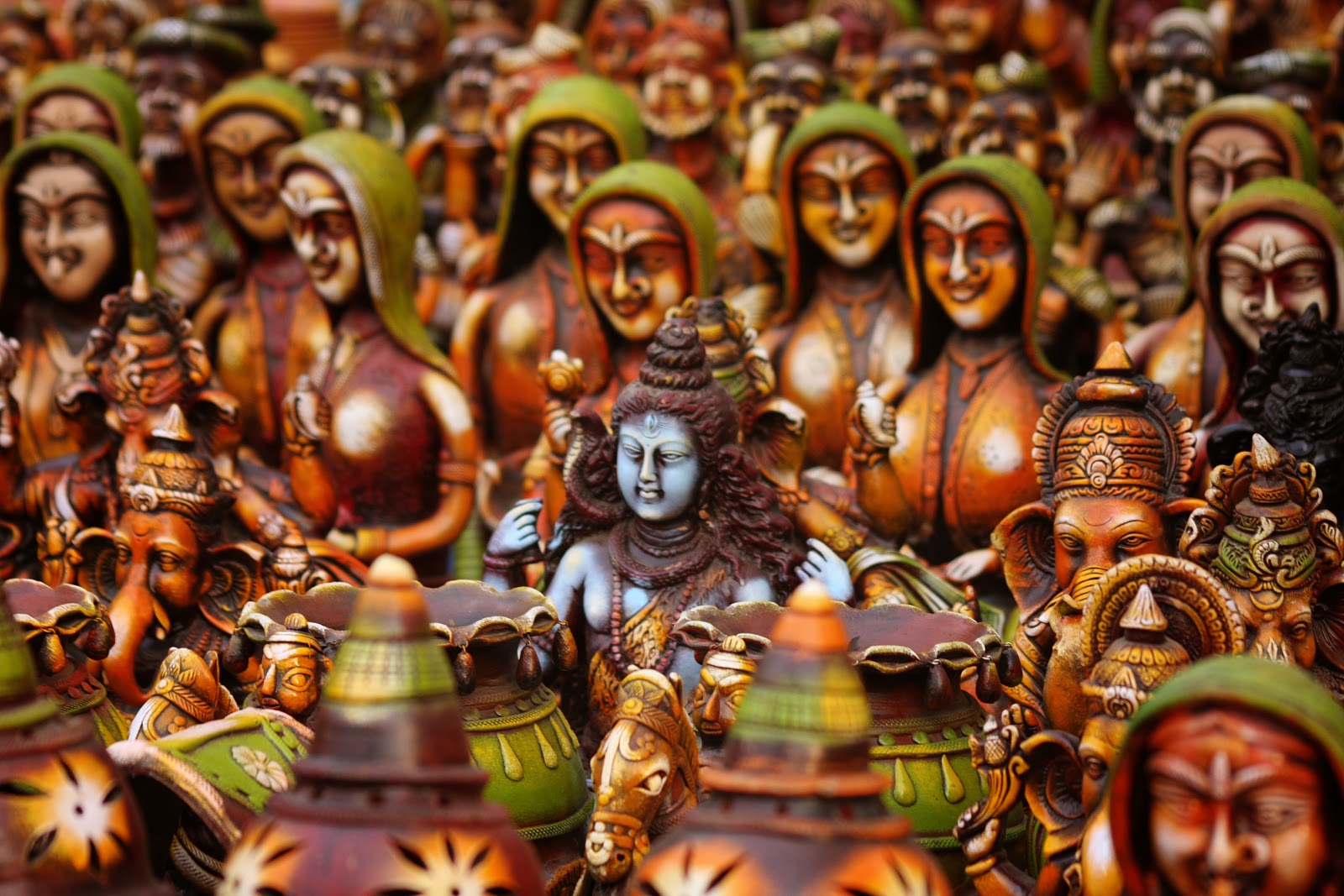
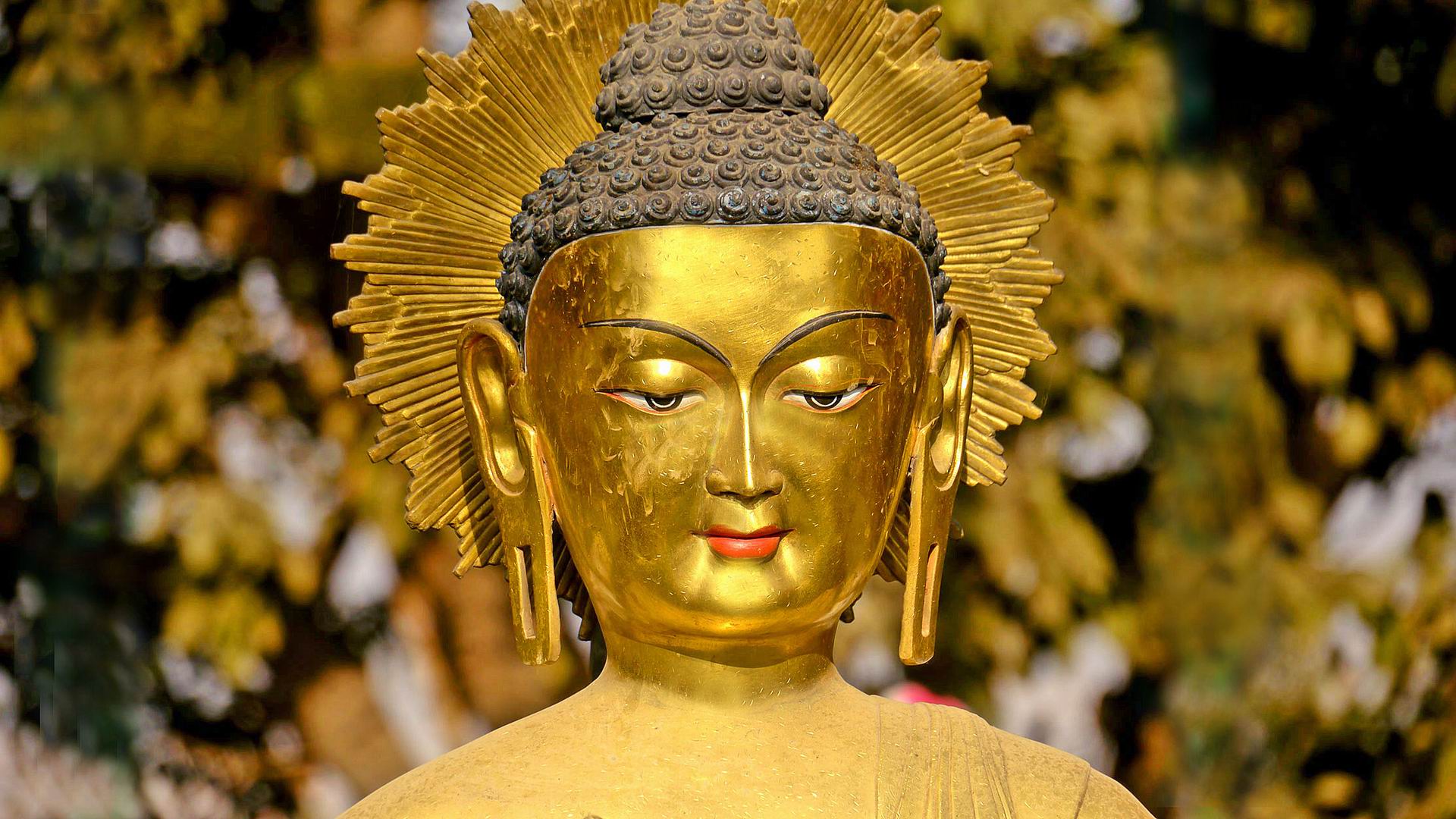
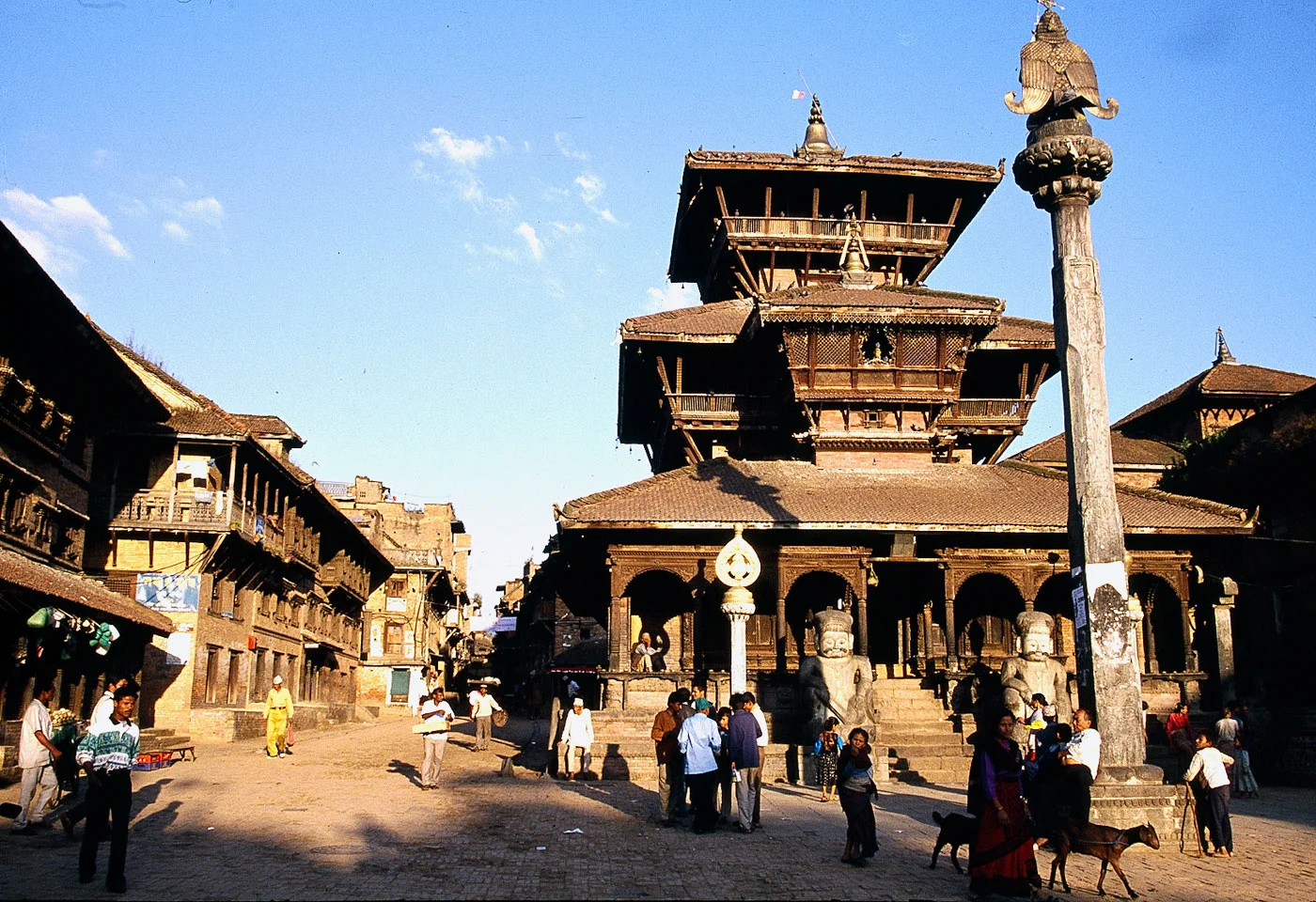
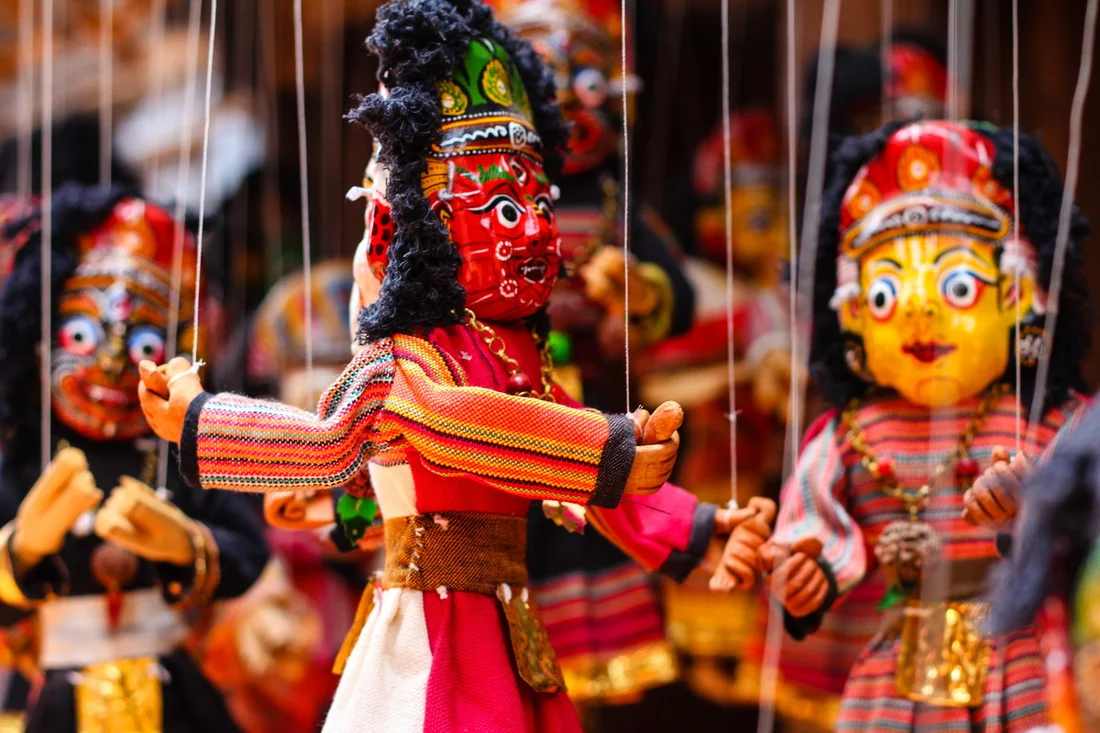
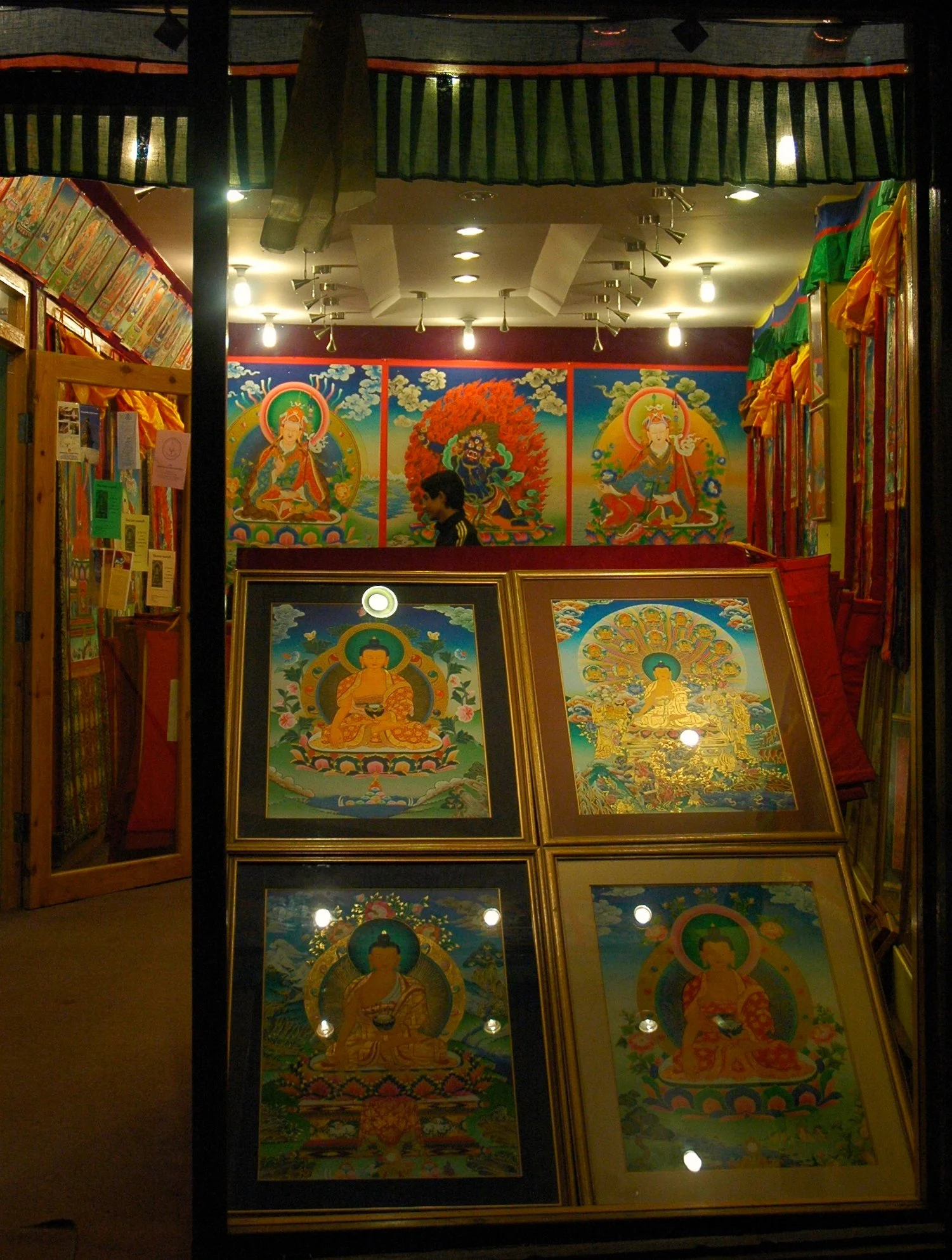
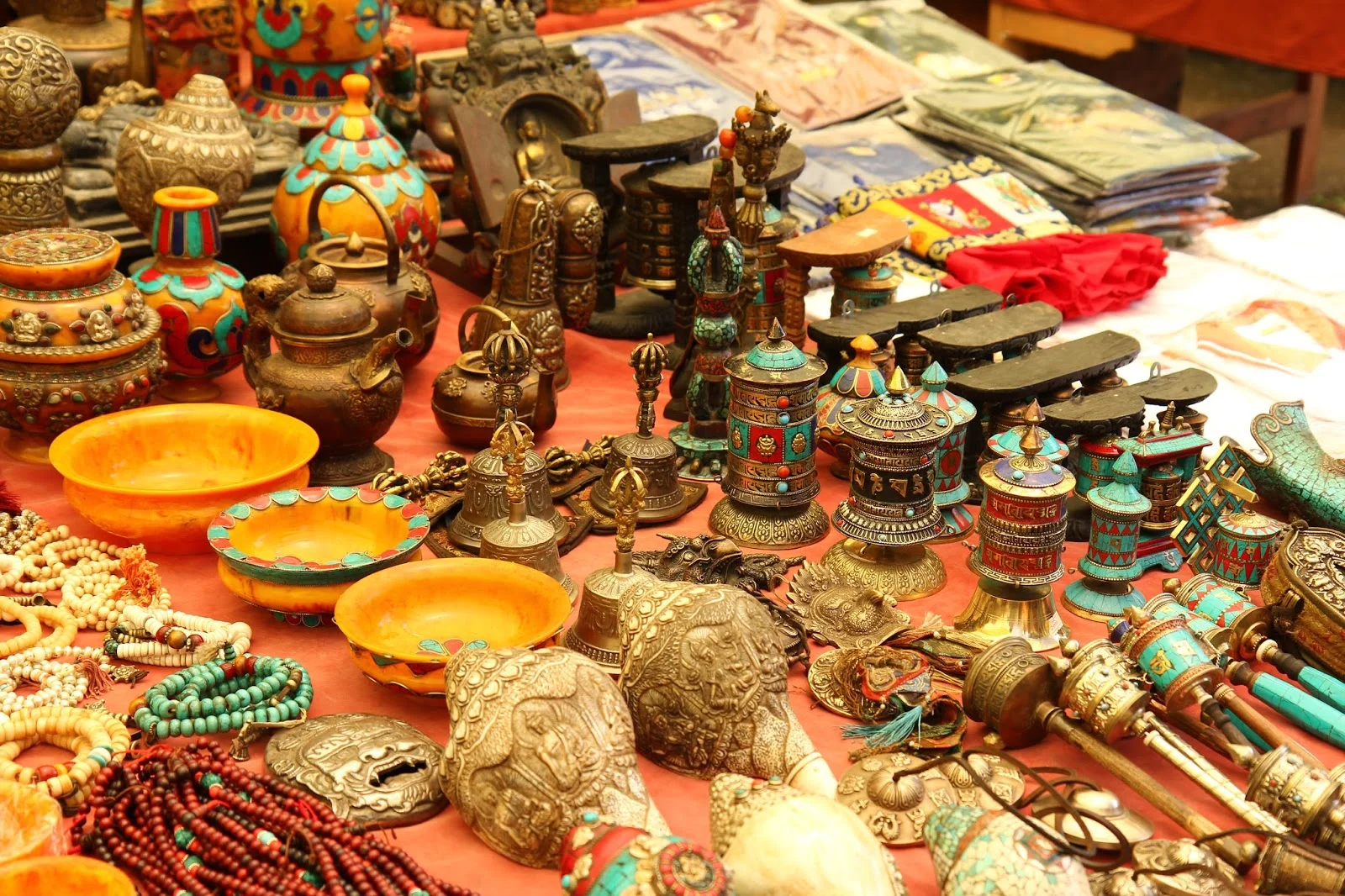
Similarly, aside from the above-mentioned antique shops in the better hotels in Kathmandu, one is likely to discover plenty of curios and antiques in the many curio shops around the valley, particularly in tourist hotspots like Thamel, Swayanmbhu, Boudhanath, etc. Many of the antique objects are still very much in use in households around the valley. Be warned, however, that not all antiques are genuine. In fact, you got have some knowledge about the more reputed shops around town to buy antiques and curios. Such items may come in the form of colorful masks, intricately detailed copper incense stands, paubhas, or thankgkas, (religious paintings), and deity images in bronze (some gilted, some not). You will also find indigenous musical instruments, wooden boxes, copper vessels, primitive figures, bells, manuscripts, clothes, bhote talchas (antique locks), mana pathis’ (set of 8 measuring vessels of Licchhavi period), and dhungros (milking pails). The list is endless. Here’s more: shaman sets (belt with lots of curious hardware worn by Tamang shamans), lisnus (narrow wooden ladders of Trishuli), et al. Well, you’re sure to have a wide choice of souvenirs to take back home to decorate your mantelpiece with.
Talking about musical instruments specifically, here’s a list of indigenous ones: narsimha, dama, dholke, jhyali, shehnai, tempu, kernel, dhyangro, bansuri, tungna, sarangi, and so on. So, you see what options you have? You’ll also find many Tibetan curios, including red wooden chests, leather boxes, thangkas, and even old chairs and carpets. Besides these, some antique and curio shops also have ancient carved doors, different kinds of weapons, antique jewelry, etc. Yes, indeed, the world of antiques and curios is a varied one, and often, some expertise comes in handy to differentiate between the really antique and the not-so-antique stuff. According to one Nepali expert who’s been dealing in such things for decades, it’s hard to know the difference, and while previously he used to judge according to the object’s patina (sheen due to years of use), now he believes that that too is manipulated. At the same time, he isn’t much concerned, as he has discovered that most tourists don’t really care about antiquity as such.
There’s another thing about dealing in antiques that dealers, including the one in the shops nearby your hotel in Kathmandu, have to be wary of. That’s dealing in metal statues. Apparently, there’s a lot of hassle involved, since one could be breaking the law regarding antiquities unknowingly. Stolen idols of Nepal have often been in the spotlight. Before 1950, many antiques were taken abroad due no definite legislation. The Ancient Monuments Preservation Act was passed only in 1956, which put a hold on exporting any artifact more than a century old, and idols worshipped even if for a day were not to be taken out of Nepal, because they were part and parcel of the living culture. Nevertheless, between 1960 and 1980, Nepal’s tourism spiked like never before, with the unwanted side effect of widespread antique smuggling. Ancient metal idols ensconced for ages in their shrines were prized items.
Anyway, despite all those precious antiques taken abroad to foreign lands, Nepal, and especially Kathmandu Valley, is still chock-a-block with antiques, and all one needs is a keen eye and a lively interest to discover them while going round on a tour. Needless to say, the antique and curio shops in and around the hotels in Kathmandu could also quench, to some extent, your thirst for discovery. Happy hunting!