
Yenya Punhi: A Jubilation of Kathmandu - Part II
According to legends, it is believed that the mother of Lord Intra required a Parijat( a white flower) to perform a ritual. For which Lord Indra descended to earth in search of the flower. He disguised himself as a commoner and while trying to take the flower out of the lawn of a Jyapu. He caught Lord Indra and held him captive blaming him of trying to steal. Lord Indra was imprisoned and not allowed to go back to heaven.
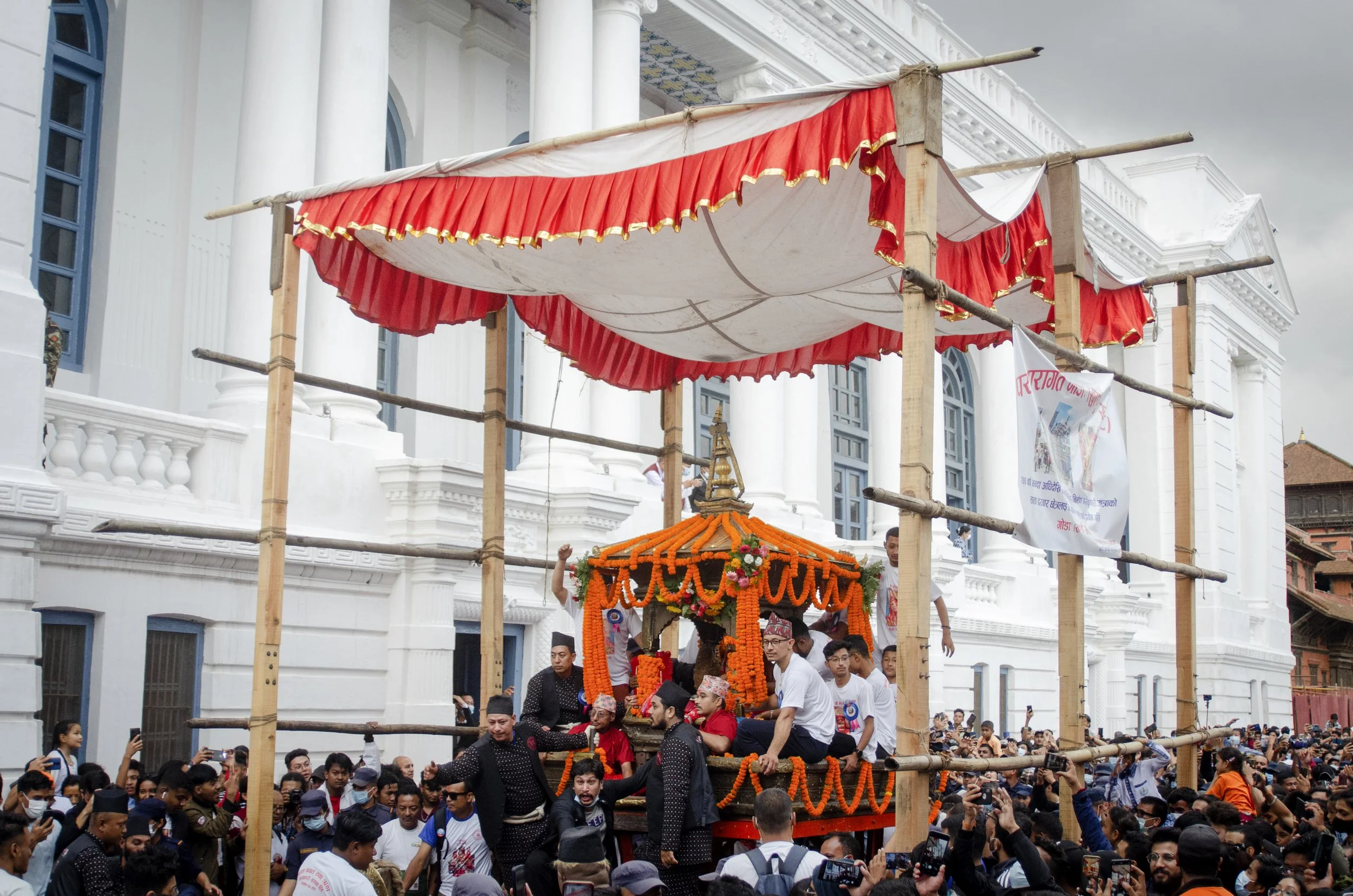
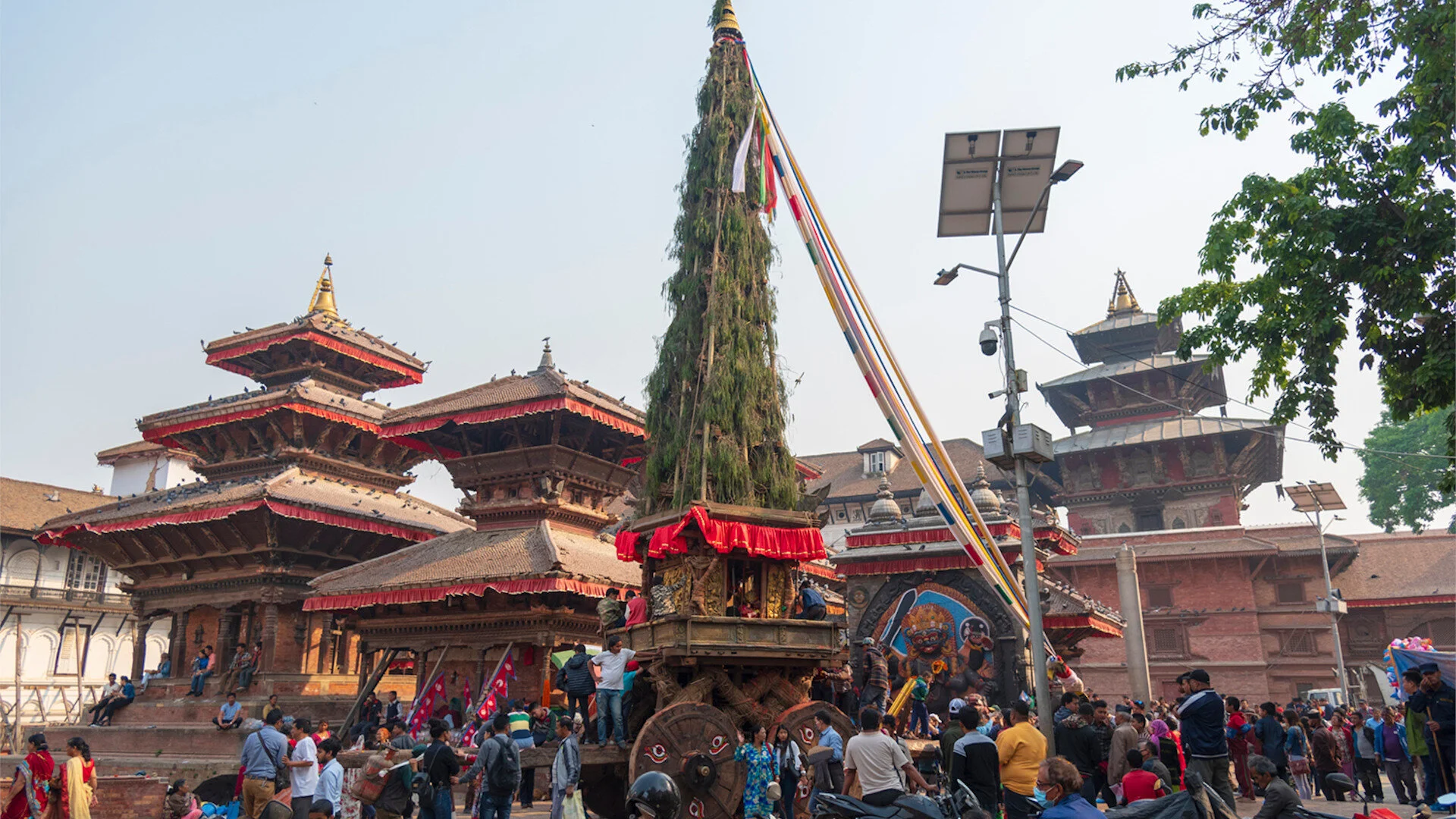
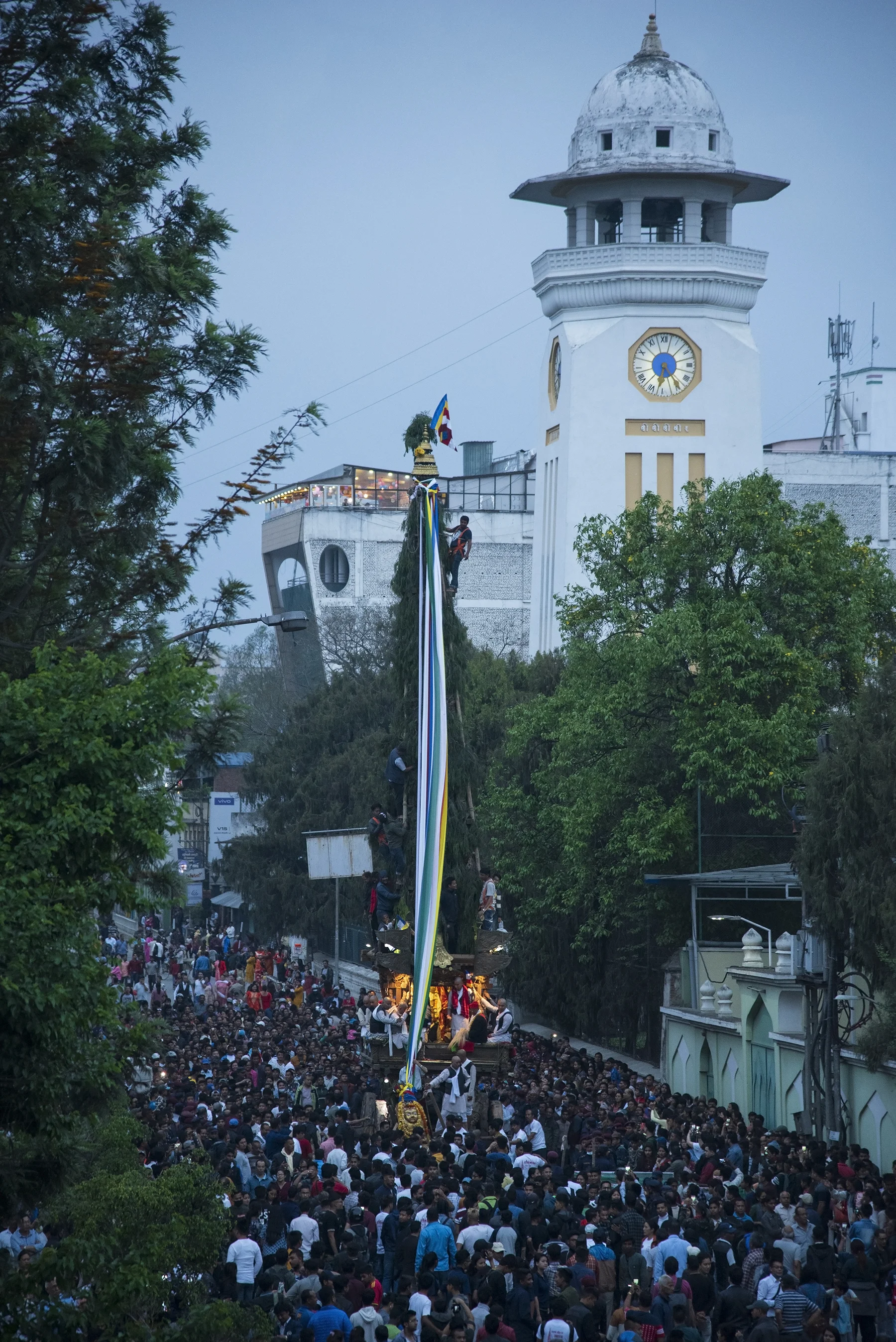
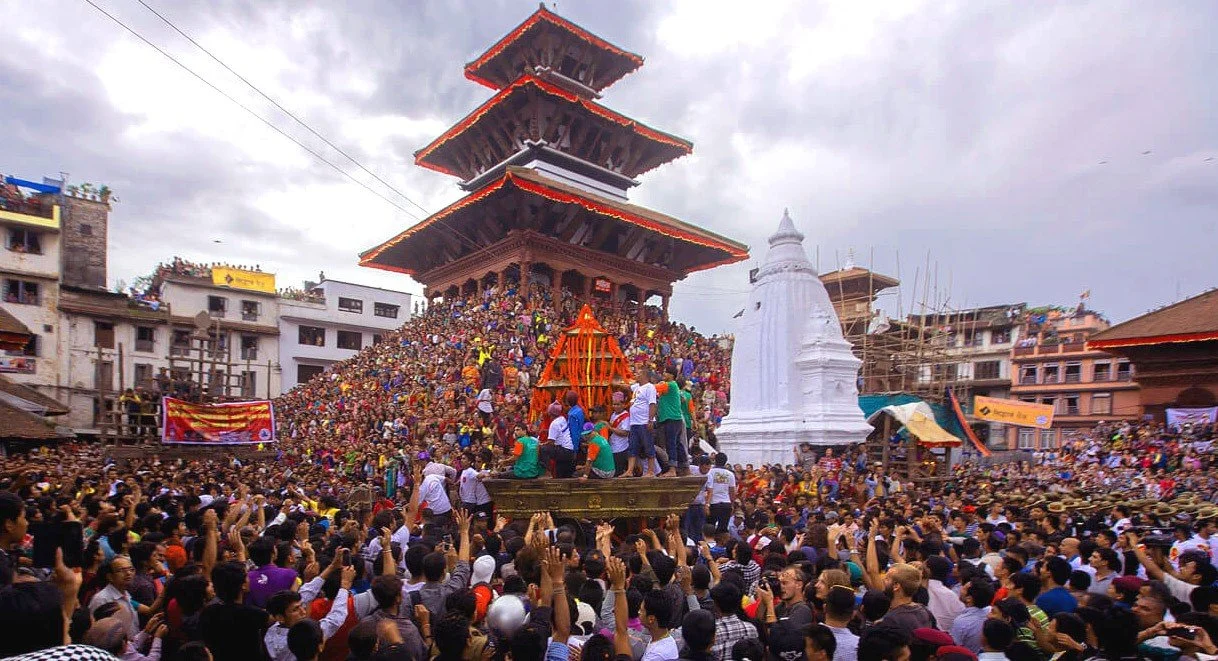
Regarded as the biggest festival of the then Kingdom of Nepal Valley, the true origin of the festivals are still debated. But this festival is believed to be founded during the Licchavi Era by King Gunakamadeva, the founder of the city of Kantipur (Kathamandu). The celebration of Indra Jatra is made of three different series of rituals: Kumari Jatra, Indra Jatra and Bhairava Jatra. Each have their own legends and ceremonial components but as a whole, turn the centre of Basantapur Durbar Square into a grand affair. The square is a sight to behold from the break of dawn till midnight, as the chariots of Kumari, Ganesh and Bhairava make there way through the inner city of Kathmandu. Every street comes to life with masked dances, merry music during the eight days of festivities.
According to legends, it is believed that the mother of Lord Intra required a Parijat( a white flower) to perform a ritual. For which Lord Indra descended to earth in search of the flower. He disguised himself as a commoner and while trying to take the flower out of the lawn of a Jyapu. He caught Lord Indra and held him captive blaming him of trying to steal. Lord Indra was imprisoned and not allowed to go back to heaven.
The mother of Indra grew worry some as her son hadn’t returned from Earth. Phul Khusi ( The Vahan of Indra) descended upon Earth to find his master and wondered around the streets of Kathmandu. During when a great festival was occuring in the Kathmandu and after hours of searching, Phul Khusi found Lord Indra. Phul Khusi took the news to heaven after which, his mother descended from heaven to free her son. She requested the villagers to release her son, but didn’t heed to her words. Only after Lord Indra reveled his true form. The mother of Indra made a promise to the villagers to give in return a final rainfall for their harvest to prosper and she would lead them to the gateway to heaven.
Accepting the conditions the villagers freed Lord Indra and let him go with his mother, a group of villagers followed them to the outskirts of Kathmandu to find the doorway to heaven. But Lord Indra’s mother tricked the villagers by putting forth a large mist which left the villagers confused and in dismay as Lord Indra and his mother went to heaven. To commemorate this event, during the celebration of Indra, a Dagi ( Procession) takes the same path every single year. “The circumbulation of the city is performed in order to reach heaven in the Dagi’s footsteps to meet the dead relatives. The families scatter grain by the wayside so that they would not forget the way home. One finished, they throw what remains of there offerings in a plce called Bhuta Satta, near Kasthamandap, and wash their faces at Maru Hiti fountain. Afterwards, they either return home or go to bathe in Indra’s Pond ( Yamki Da), which is located on a hill 12 kilometers west of Kathmandu.” Toffin,1992,86)
The festival of Indra Jatra is a feast to all senses, the air is scented with the smell of incense, and the sound of drums and traditional instruments tranquil once ears. For the eyes, one can behold the procession of Living Goddess Kumari along with Lord Ganesh and Lord Bhairav. The chariot is pulled for three consecutive days. The first day is known as Kwaneya during when the chariot makes its way from Basantapur, Maru, Chikanmugal, Jasidewal, Lagan, Bhimsensthan, Baru and ends at Basantapur. The second day is known as Yenya Punhi on which the chariot procession begins from Basantapur to Pyaphal, Nyata, Tengal, Nhyaokha, Nhaikan Tol, Asan, Kel Tol, Indra Chowk, Makhan and ends at Basantapur. The final day of the procession is known as Nanichaya, the chariot is pulled by revellers from Basantapur tp Pyaphal, Yatkha, Nyata, Kilagal, Bhedsing, Indra Chowk, Makhan and ends at Basantapur.
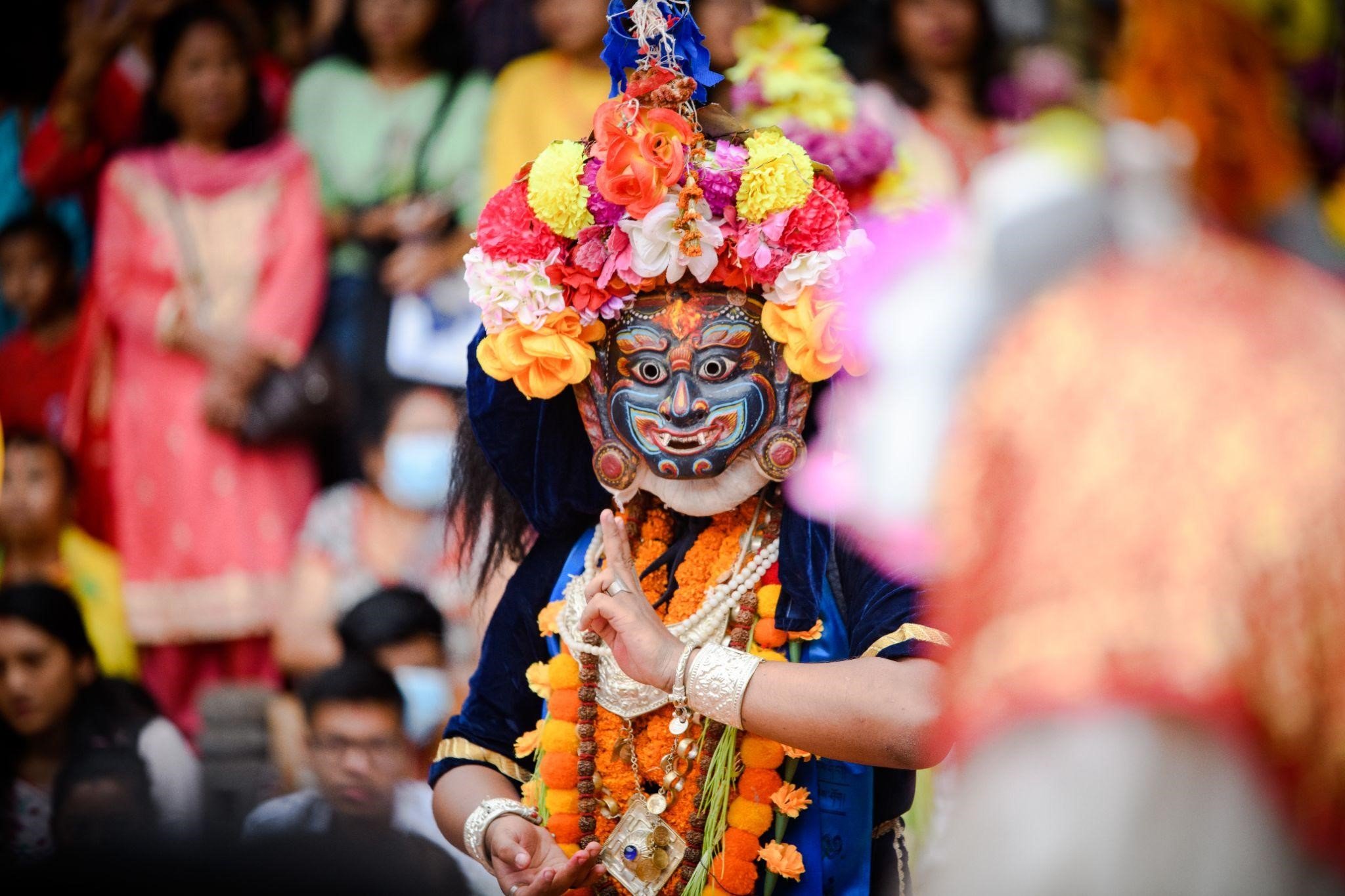
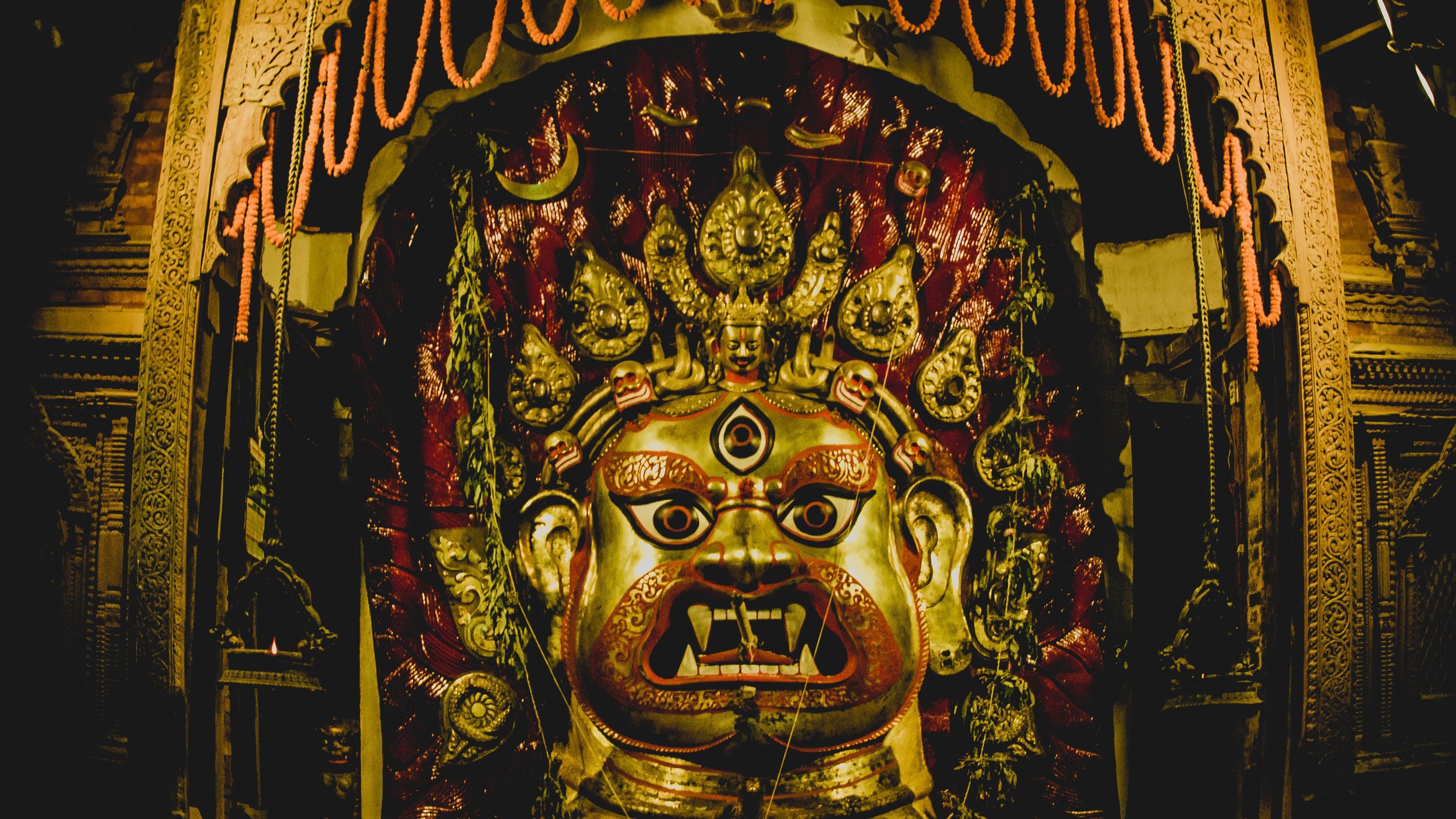
During the festival of Indra, various idols and masks of goddess are taken out of their normal abode to be exhibited to the people. The most prominent of which are the Sweta Bhairab mask and the idol of Akash Bahiran. Similarly an image of Indra is displayed at Maru and Indra Chowk. Various forms of dances such as of Lakhe Aju, Mahakali Naach, Halchowk Bairab, Phul Kushi, Devi Kyakhan are performed on specific days and nights of the festival.
POPULAR ITINERARIES

SIMILAR POSTS
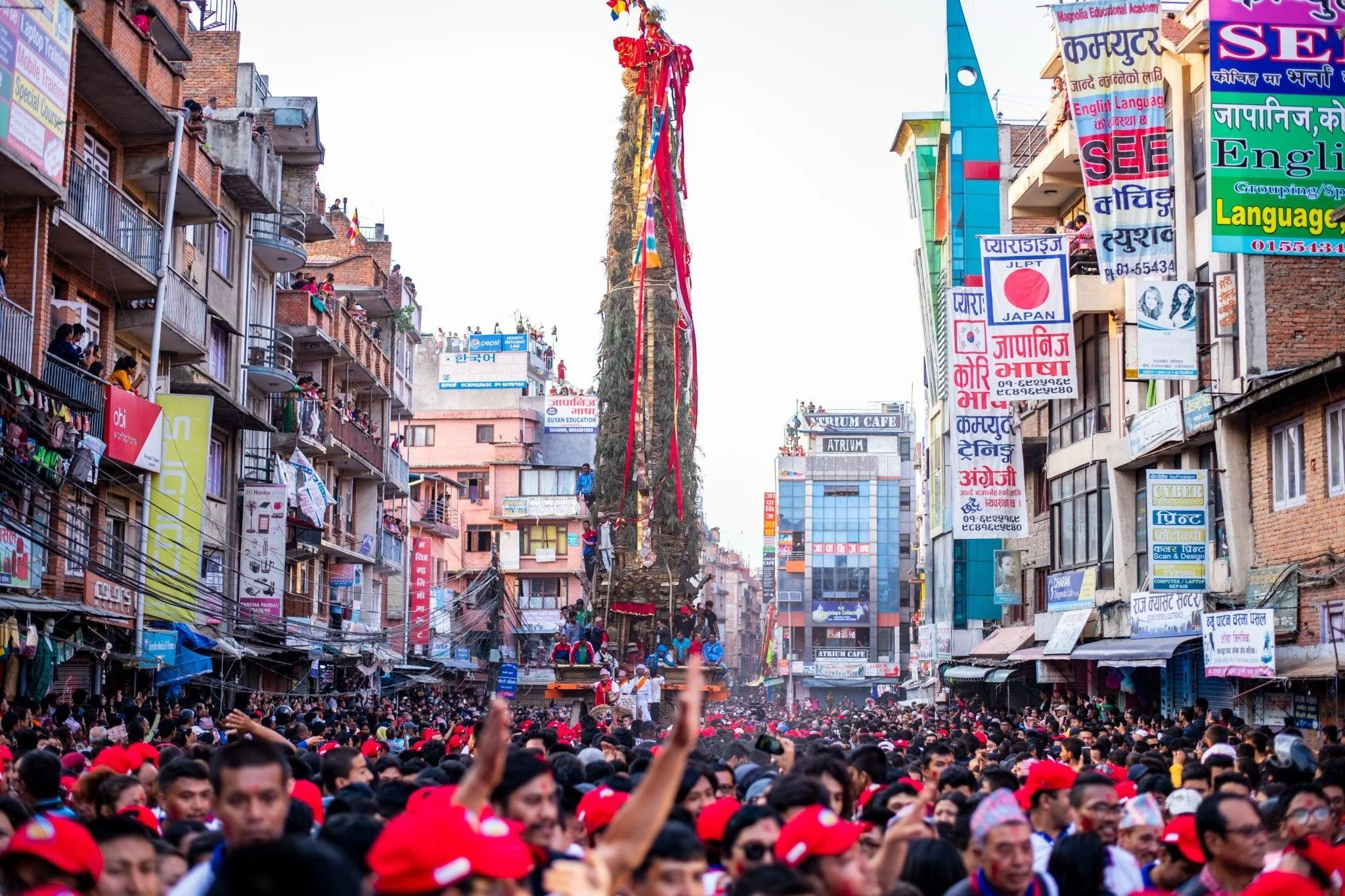
Yenya Punhi: A Jubilation of Kathmandu - Part I
Amongst the great celebrations of this valley, nothing beats the pomp and flair of Yenya Punhi. Commonly known as Indra Jatra- a name derived from the lore of Indra- the heaven king's visit to Nepal. This festival is larger than life, with symbolism and meaning going back thousands of years- neatly preserved by the Newars.
The jubilation of Kathmandu is a combination of festivals. It features the veneration of multiple deities. The Newar name Yenya denotes "Celebration (ya) of Kantipur/ Kathmandu (yen)". The township during the Lichhavi era was called Yen. Its sister cities were respectively called Yala (Lalitpur), Kwopa (Bhatgaon/Bhaktapur) and Kipu (Kirtipur).
The origins of the festivities are very vague. However, the careful analysis presents a similarity to ancient paganistic rituals of Europe. The day of Yenya Punhi aligns with the change of season in this valley. The season transfers from Barsha (Monsoon) to Sarad (Autumn). Reviewing the procedures of various festivals in the valley: evidence is drawn to how the Yasi/ Yosi (Ceremonial Pole) is hoisted to alert the citizens of change. The same was observed in medieval Europe. The ceremonial May Day pole symbolized the advent of spring. A stark similarity to Bhaktapur's Yoshi was erected during Bisakh Jatra to celebrate the end of winter and the beginning of spring.
After the Earth, the festival features associations with the guardian deity of Nepal Kingdom- Bhairava. The association was made during the Licchavi Era. A legend goes as follows:
As instructed, the King merged the existing villages of Koligram (Yambhu) and Dakshin Koligram (Yengal). He defeated rulers of various petty states and created his new city. He also established a beautiful stone spout gilded in gold, Lu Hiti (Gold- dhara/ Sundhara). It featured an intricate water-management system, and royal canals (Rajkulos) channelled river water to the spout. He named the city Suvarna Pranali Kantipur. Here, Suvarna means golden, Pranali means system. Kantipur is a mixture of two words - Kanti, meaning beautiful and pur, which means place.
To celebrate the momentous occasion, he initiated a festival known as Yenya. The word is a mixture of Yen- the Newari name of the city and Ya- celebration. It is also called the celebration inside the town.
It is possible King Gunakamadeva’s celebration overlapped the change of seasons, and the two elements became one.
The inception of Indra in the festival is a great mystery. Indra is a god from the Vedic era. He had deep roots in the classical Indian pantheon, but his worship slowly began to fade. Some believe that due to his nature his worship began to fade. Anthropologist G.S Nepali writes, "The festival of Indra Jatra suggests perhaps the memory of a conflict between the two tribes- the followers of Indra and their opponents. The festival is perhaps an Indo-Aryan feature which survives in Nepal, but is totally forgotten in India."
The goddess of Indraghat arrived in the Nepal Kingdom during the rule of King Dharmadatta. The goddess is referred to as Indrayani, locally known as Manamaiju. The hill where she settled in this valley is referred to as Manamaiju. It could be that after her arrival, the worship of her husband Indra also began.
The third fold of this festival is the female guardian of the Nepal Kingdom- Kumari. A Kumari is a living goddess embodying the energy of the divine feminine. She is worshipped as Taleju Bhawani, Durga or Parvati. During the Malla Era, King Jaya Prakash Malla had an unfortunate encounter. He lost the trust of his tutelary deity Tulaju Devi (today known as Taleju). After multiple requests, she came to his dreams and directed him to begin worshipping a virgin girl of the Bandra (Buddhist Newar) community as her manifestation.
To read the full version of the incident click here
These elements combined have created an atmosphere of great jubilation. The core activities related to these deities are accompanied by various magical creatures and the presentation of beautiful dances and plays.
POPULAR ITINERARIES
SIMILAR POSTS
A Guide To Newari Festivals - Part VI
Newari communities in Nepal celebrate numerous festivals every year. All these festivals are tied to its culture and heritage, events for ancient mythology, agricultural calendar, family, and communities.
Jana Baha Dyo Jatra
Celebrated In: March*
Commonly known as Seto Matsyendrath, it is natively known as Jana Baha Dyo, Yalameshwor. The chariot procession is marked for Chaitya Dashain, and the building process is commenced a week prior. A group of traditional builders with the help of volunteers build the 4 storied chariots shaped in Shikhara architecture.
The chariot makes its way through various parts of the old routes of Kathmandu. The chariot is pulled within 3 days and on the third day a special puja is conducted after which the image of Jana Baha Dyo is taken back to the temple at Jana Bahal.
The chariot makes it’s way from Durbar Marg to Bhotahity and rests in Asan on the first day. After which it is pulled to Ket Tol, Indra Chowk, and rests in Hanuman Dhoka. On the final day, it makes its way through Basantapur Durbar Square, Jasidega and circles the mother tree three times in Lagan.
Learn More About Jana Baha Dyo Jatra: The Chariot Festival of Seto Matsyendranath
Biskah Jatra
Celebrated In: April*
Biskah Jatra which is commonly known as Bisket Jatra is a festival which is celebrated according to the solar calendar (Bikram Sambat) rather than the lunar Nepal Era Calendar. It is derived from the word, “Bee Sikah”, which means ‘after the death of the serpents’. The festival is centred around the worship of the deities Lord Bhairav and Goddess Bhadrakali. The festival lasts for a total of 9 days from the 27th of Chaitra to 5th of Baisakh.
A procession of two chariots, being pulled in a tug-of-war setting between Thane(Upper) and Kone(Lower) part of town begins the festivities of Biskah Jatra. Two lingo’s known as Yo Shi (55-feet-tall each) are erected in two different locations of the central city on New Year’s Eve and brought crashing down on New Year’s Day symbolizing the killing of the serpents. To symbolize the consummation of the marriage, the two raths (chariots) are made to crash against each other. This occurs during midnight when the Bhairab and Bhadrakali chariots are collided symbolizing copulation.
Learn More About Biskah Jatra Here: Tales Of Biskah Jatra
Bunga Dyo Jatra
Celebrated In: April-May*
Dubbed as one of the longest chariot festivals of the world, the Bunga Dyo Jatra holds huge importance in the Newar Pantheon. Also known as Rato Matsyendranath, the festivals origin dates back to the Lichhavi era.
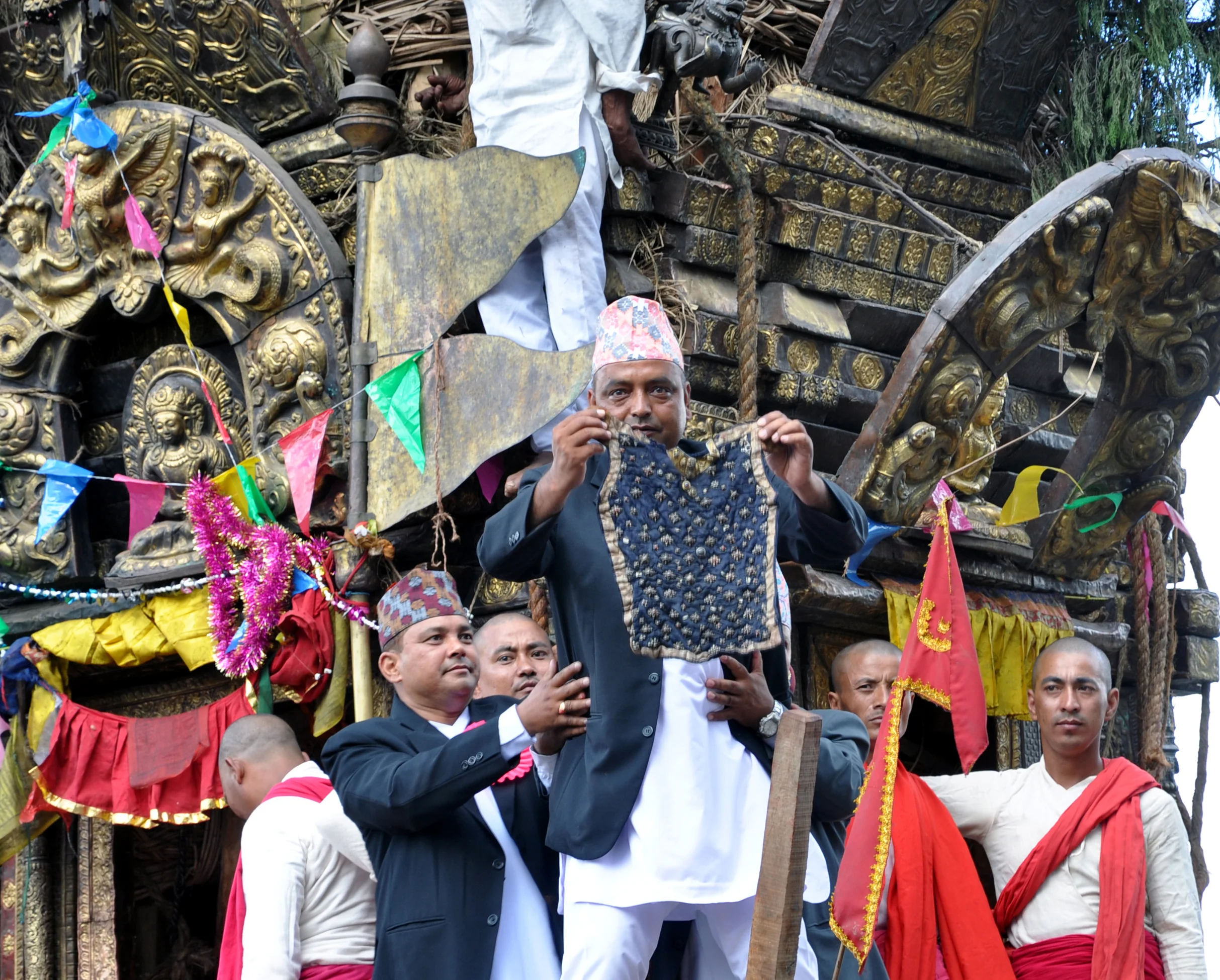
The chariot festival commences a day after Mata Tirtha Ausi ( National Mothers Day) when the idol of Karunamaya is placed onto the chariot which is built at Pulchowk of Lalitpur. The elements of the chariot hold multiple significance in regards to the journey of bringing Karunamaya into the valley. The chariot is pulled by revellers on the fourth day after it is placed in the chariot. It makes its way through the ancient routes of Patan and ends in Jawalakhel after which the Bhoto (Vest) is displayed. After which the idol of Karunamaya is taken home to Amarpur (Bungamati) where it spends the next six months, after which a few weeks before Yomari Punhi the idol is brought to Patan and placed at Ta Bahal of Lalitpur.
Locally known as Bunga Dyo, the deity is also known as Karunamaya Lokeshwor who is regarded as the deity of compassion according to Buddhism. In local significance, the deity is the patron deity of Bungamati thus the name Bunga Dyo. The farmers of the Nepal Mandala ( The Valley Kingdom of Nepal) worship the Bunga Dyo as the god of rain.
Learn More About The Chariot Festival Here: The Festival of Rato Matsyendranath
Learn More About The Bhoto Here: The Legend Of Bhoto Jatra
Swanya Punhi
Celebrated In: May-June*
The day of Buddha Jayanti is known as Swanya Punhi in Nepal Bhasa. This day is celebrated as the day of birth, enlightenment and death of Lord Buddha, who is regarded as the light of Asia. Devotees and worshippers take special pilgrimages to various Buddhist sites, monuments, monasteries in and around the valley.
Sithi Nakhah
Celebrated In: June*
The festival of Sithi Nakhah is the last in the festive calendar of the Newar people. It is a festival that is dedicated to Lord Kumar, which falls on the sixth day of the bright lunar fortnight. Kartikeya Kumar is traditionally known as Sithi Dyah in Nepal Bhasa. It is believed that he was born on this day. Devotees take a holy bath and also clean their households on this day. Various public areas such as well's, conduits, pathi’s and pauwa’s are cleansed on this day. Households prepare Chatamari- a typical Newari delicacy made from rice flour crepe along with which Wo- which is a flat cake of black lentils.
*: As Newar festivals are celebrated according to the lunar Nepal Era calendar, the dates in the Gregorian calendar are interchangeable.
POPULAR ITINERARIES
SIMILAR POSTS
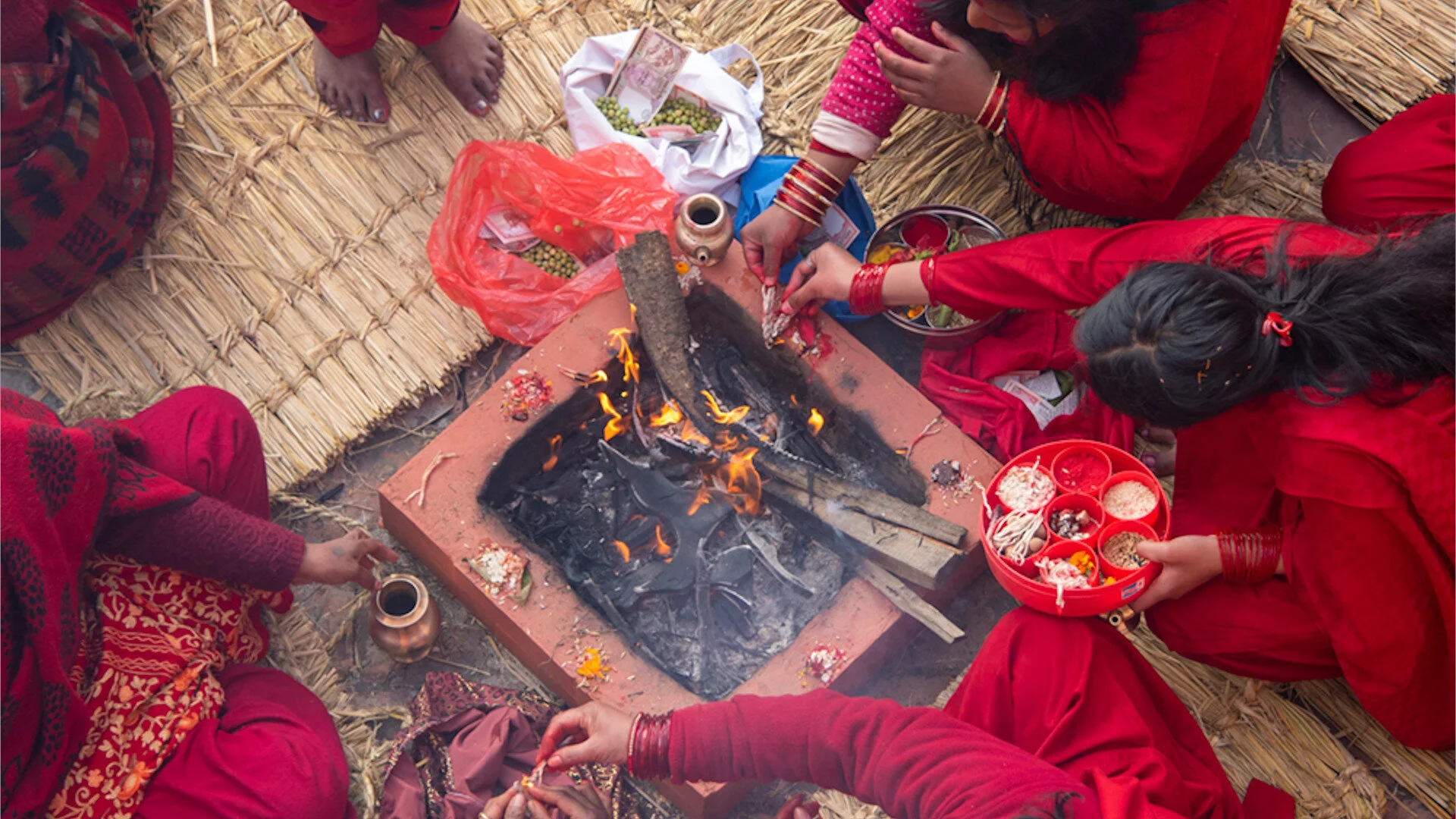
A Guide To Newari Festivals - Part V
Newari culture is very rich and ritual throughout the year and the Newari communities celebrate numerous festivals every year. All these festivals are tied to its culture and heritage, events for ancient mythology, agricultural calendar, family, and communities.
Ghayh Chaku Sanhlhu
Celebrated In: January*
Commonly known as Maghe Sankranti, Newar households celebrate this day as Ghayh Chaku Samhlhu where Ghyah means Ghee (Clarified Butter) and Chaku which is molasses in Nepal Bhasa. This festival is observed according to the solar calendar of Bikram Sambat (B.S), rather than the traditional lunar calendar. This day begins with people taking a holy bath at the crack of dawn, which is followed by special worship.
Households prepare special delicacies such as yam, spinach, sesame candy and molasses which is consumed with the additions of ghee, ginger, and beaten rice. This day is also marked as the winter solstice, and consumption of the aforementioned foods helps warm their bodies.
Read more on the delights of Maghe Sankranti: Feasts of Maghe Sankranti
Swasthani Bakhan Kanegu
Celebrated In: January to February*
During the month of Magh, from Mila Punhi to Shi Punhi in the Nepal Era calendar, Swasthani Bakhan ( Tales of Swasthani) is recited every evening during this month. Devotees visit the Swastani temple in Sankhu and take a holy dip in the Sali Nadi, along with various other rivers. It is generally believed that worshipping Swasthani brings forth happiness, and well being in life.
Read more on Swasthani: Swasthani Bratakatha Festival In Nepal
Shree Panchami
Celebrated In: February*
Shree Panchami also is known as Basanta Panchami is regarded as the day when winter ends and spring begins. The day is centred around the worship of Goddess Saraswati, who is regarded as the Goddess of Knowledge. During this day children are taken to the nearest Saraswati temple to take blessings. A tradition during this day is to write something, on the walls in the vicinity of the temple. Buddhist households worship Lord Manjushree on this day.
Sila Charhre
Celebrated In: March*
In the lunar calendar of Nepal Era, there are a total of 24 nights dedicated to Shiva, which is commonly known as Shivaratri. Amongst all the days of dedication, Sila Chahre is celebrated as the main night. This day is also referred to as Maha Shivaratri. This day honours Lord Shiva who is known as “The Destroyer” within the Trimurti.
This festival is marked to “Overcoming darkness and ignorance”, for which Lord Shiva is remembered. Devotees on this day fast, pray and meditate and visit various Shiva temples in their vicinity. Believers from all over the world, make a special pilgrimage to the temple of Pashupatinath in Kathmandu to offer their prayers and worship.
To learn more about the temple of Pashupatinath: UNESCO World Heritage: Pashupatinath
To Learn more about the legend: The Legend of Pashupatinath
Holi Punhi
Celebrated In: April*
Also known as “The Festival of Colour”, Holi is celebrated as the coming of spring. The beginning of the festival is marked by raising a ceremonial pole known as Chir in Basantapur of Kathmandu. The Chir features, clothes of various bright colours to symbolize the coming of the month of spring. People celebrate this occasion by offering colours to each other and having a feast.
Learn More About Holi: The Coming of Spring- Falgun Purnima
Pahan Chahre
Celebrated In: April*
Pahan Chahre is a festival that is specifically observed in the Kathmandu valley. It is also known as Pasa Charhe, where Pasa means friends. Celebrated for a total of 3 days, the first day sees the worship of the deity Luku Mahadyah (Lord Shiva). The second day is Dyah Lwakegu which is celebrated at the open field of Tudikhel in the evening. This day also coincides with the annual Ghode Jatra. On the final day, a grand celebration occurs at Asan of Kathmandu. The palanquins of Lumadhi Ajima (Maheshwari) also known as Bhadrakalai, Kanga Ajima (Varahi) and Tebhana Ajima (Chamunda) are paraded in the streets.
Newar households of Kathmandu invite their neighbours, extended families and friends for a grand feast to commemorate this day.
Learn more about Pahan Charhe: Pahan Charhe- Festival in Nepal
*: As Newar festivals are celebrated according to the lunar Nepal Era calendar, the dates in the Gregorian calendar are interchangeable.
POPULAR ITINERARIES
SIMILAR POSTS
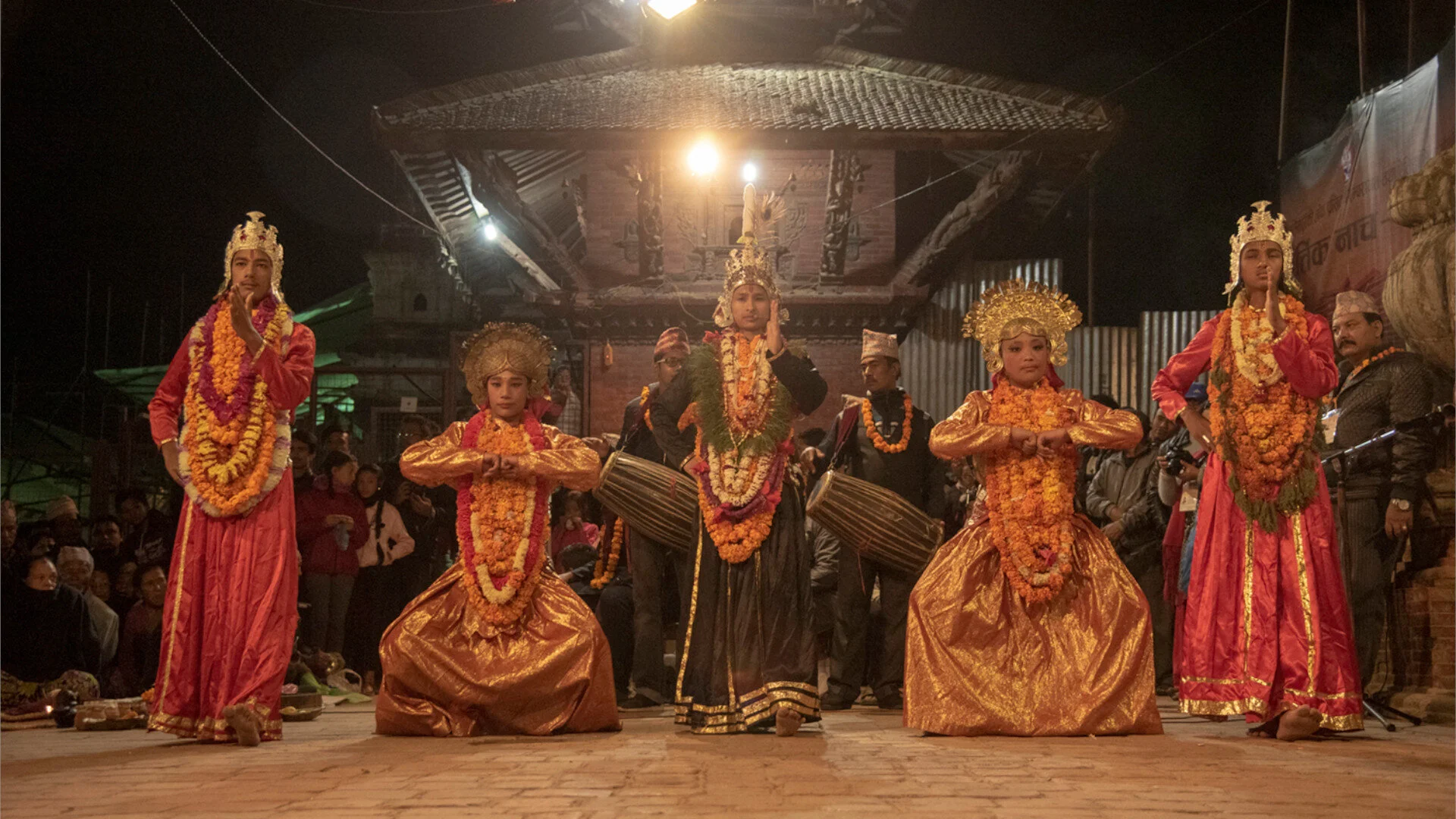
A Guide To Newari Festivals - Part IV
Svanti festival is known by several names: Tihar, Dipawali, Pancaka, and Yamanpanchaka. And most popularly known by its other name Tihar, is one of the national festivals of Nepal celebrated throughout the kingdom by Hindu and Buddhist populations.
Svanti
Celebrated In: October*
“Svanti is one of the national festivals of Nepal celebrated throughout the kingdom by the Hindu and Buddhist population. This festival is known by several names: Svanti, Pancaka, Yamapancaka, Tihar and Dipavali. Both the words ‘Tihar’ and ‘Dipavali’ are derived from the Hindi words ‘Tyauhara’ and ‘Divali’. Svanti, Pancaka and Yamapancaka are words from Nepalese origin (Naghabhani 1991:30).“
Svanti is derived from Swanhu Tithi (three auspicious days). Whereas Yamapancaka means ‘ Five days dedicated to Yama’.
“During this festival, Yama, the god of death is invoked and so it is called ‘Yamapancaka’. People assume that during these five days, Yama descends on this world. On the first and second day of this festival, Yama’s messengers, the crow and the dog are worshipped. On the third day, the cow is worshipped. Although the cow is worshipped as Lakshmi, the goddess of wealth, she is also respected as an animal associated with the realm of Yama. Yama’s assistance is sought in order that recently deceased people may cross the river Baitarani to reach heaven. Honouring Yama and his messengers Yamadut on the day of Mhapuja and worshipping Yama and his bookkeeper Citragupta on the day of Kijapuja clearly mark the relation of this festival to death.”1
This direction of the celebration of Svanti weakened over time, as it took on the facets of Tihar and Dipavali with the worship of Goddess Lakshmi, initiation of Bhai Tika and the overall view of the celebration as “Festival of Lights”.
“Although Yama is invoked on each of the live days during this festival, many people disagree with the name "Yamapancaka" because the lofty ways of celebrating Laksmi, the worship of the self, and the worship of brothers have weakened the worship of Yama considerably (Naghabhani 1991: 47)”
Today in the modern Newar household, Svanti is celebrated for a total of five days:
Kva Puja: Worship of crows, messengers of death;
Khicapuka: Worship of dogs;
Sa Puja and Laksmi Puja: The worship of cows and Goddess Laksmi, the goddess of wealth;
Mah Puja: The worship of the self and beginning of New Year in Nepal Sambat Calendar; and
Kija Puja: The worship of brothers by their sisters.
Saki Mila Punhi
Celebrated In: November*
Saki Mila Punhi, also known as Saki Manā Punhi is the full moon of the Newar month Kachhala. Saki stands for Taro and Mana means to boil. Thus on this day households prepare boiled taro/arum along with sweet potato. Halimali which are sacred art made from puffed rice, corn, wheat and black soybean which are exhibited in front of temples accompanied by Dapha Bhajan or Dhalcha Bhajan (chanting religious hymns).
Bala Charhe
Celebrated In: December*
Commonly known as Bala Chaturdashi, this day sees family members of the Newar Households scatter seeds (sadhbew) and pray for the souls of the departed in Pashupati of Kathmandu.
Yomari Punhi
Celebrated In: December*
Traditionally Newar Households, feature a majority population of farmers. They sow their seeds pre Gathamugah and post collect the harvest of the season. During the full moon of the month, the households celebrate Yomari Punhi. It is a post-harvest festival of worshipping Goddess Annapurna, also known as Angsa Maru Ajima located at Asan of Kathmandu. Various temples dedicated to Goddess Annapurna all over the valley, feature devotees offering prayer, worship and thanking by presenting the fruit of the first harvest, “Yomari.”
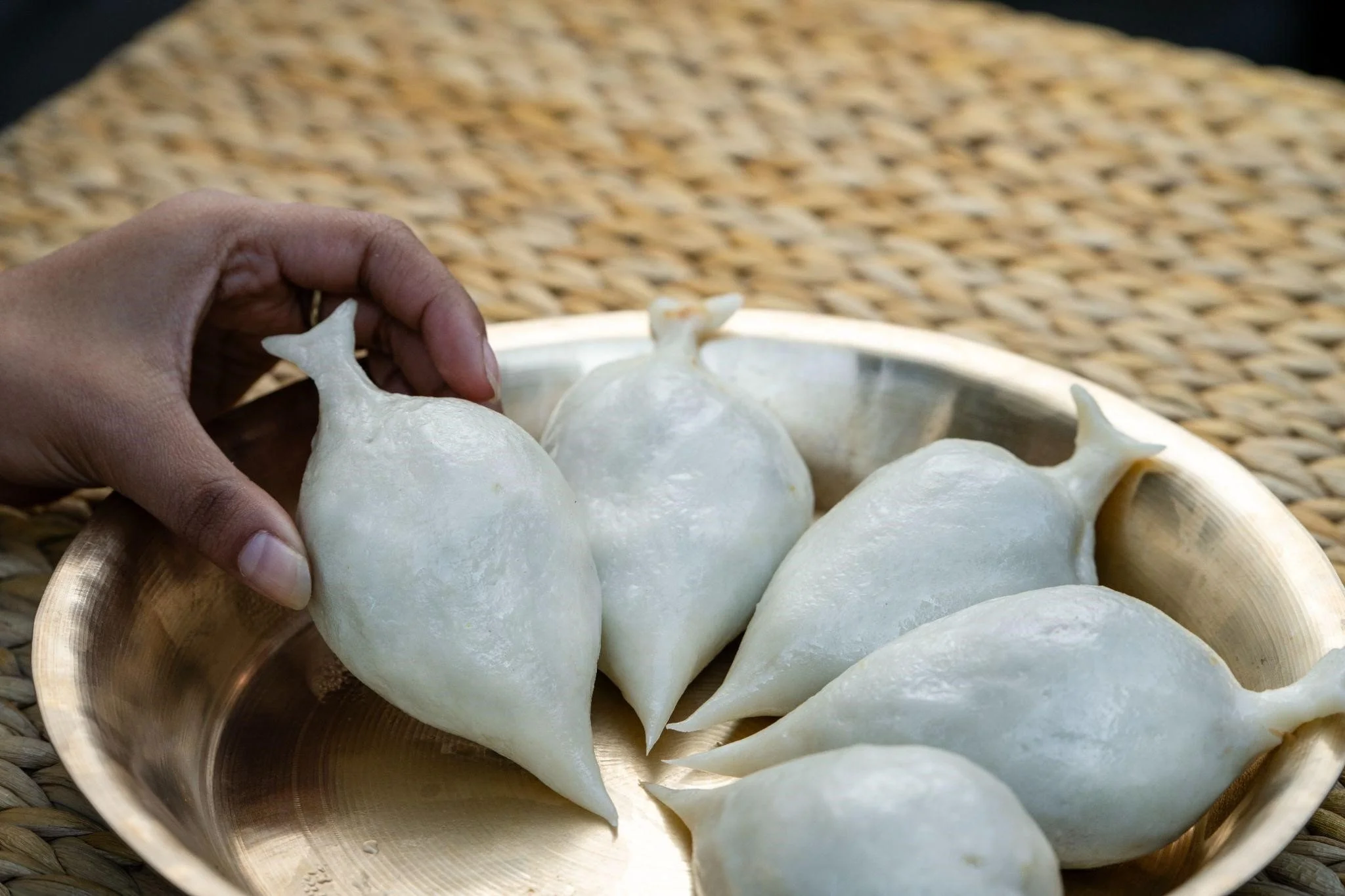
The full moon takes its name from Yomari which is a steamed rice cake filled with molasses, locally known as Chakku. Households offer prayer, worship and place a Yomari in the Dhukoo (Grain Store Room). Communal celebrations see parades of children and young go door to door with traditional music. They are offered grain, Yomari and money by the households.
Learn more about the origin of Yomari: Yomari Punhi
*: As Newar festivals are celebrated according to the lunar Nepal Era calendar, the dates in the Gregorian calendar are interchangeable.
POPULAR ITINERARIES
SIMILAR POSTS
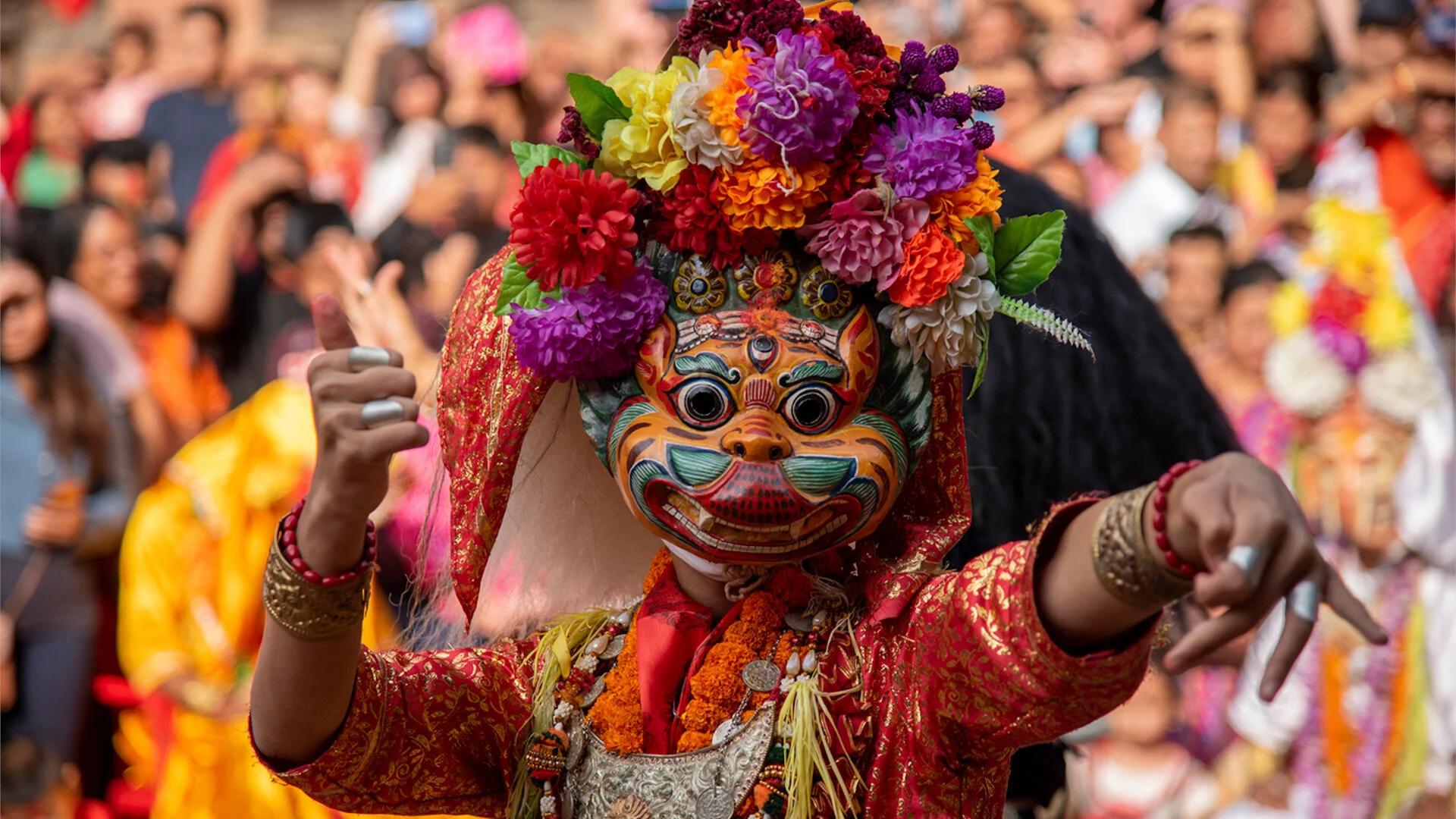
A Guide To Newari Festivals - Part III
The events of Mohani can be divided into two: Family & Communal and bears similarities with the celebration of Dashain. And, the general perception of individuals views the two festivities as the same, but Mohani is specific to the Newari communities. Mohani is centered around the family’s tutelary deity, whereas Dashain is the celebration of the victory of gods over evil.
Yenya Punhi
Celebrated In: September*
Yen denotes Kathmandu and Ya means celebration according to Nepal Bhasa, the language of the Newar people. Yenya Punhi is the beginning of “The Celebration of Kathmandu”, and is marked by masked dances ( Lakhey Aju, Dee Pyakhan, Sawa Bhaku, Phulukushi, Mahakali Naach), idols of Indra displayed at various points in the old city, along with Bhairav’s of Kathmandu (Swet Bhairav, Aakash Bhariav and Baka Bhairav), the tableau of Das Avatar is shown near Kumari Chhen (Kumari Home) and is highlighted by the chariot festival of the Royal Kumari of Kathmandu. Her chariot is followed by the chariots of the Living Ganesh and Bhairab which circumvents the old routes of Kathmandu in three days.
To know more about Indra Jatra: The Festival of Indra
Mohani
Celebrated In: October*
Amongst the numerous Newar festivals, Mohani is considered as the most important. Lasting for a total of 2 weeks, main celebrations, however, occur from 8th to 11th day of the lunar Nepal Era Calendar (Nepal Sambat).
The events of Mohani can be divided into two: Family & Communal and bears similarities with the celebration of Dashain. The general perception of individuals views the two festivities as the same, but Mohani is specific to the Newar community whereas elements of Dashain were introduced with the arrival of Hinduism brought by Lichhavi’s and Malla’s. Dashain in Hinduism signifies the victory of Goddess Durga over Mahisasur, Goddess Chamunda destroying the demon Chunda. Whereas in the Newar celebration of Mohani it is centred around the family’s tutelary deity.
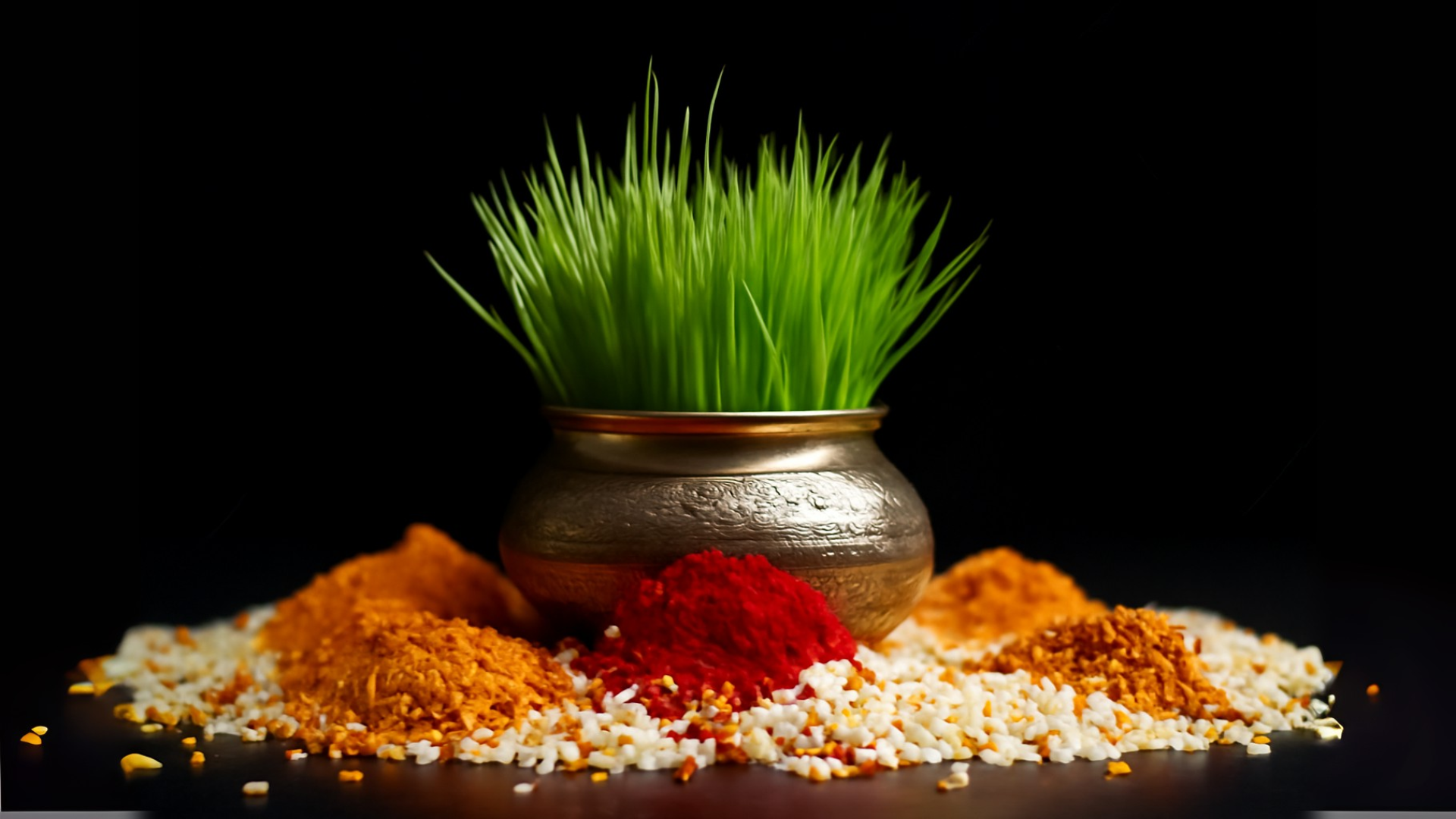
The celebrations begin on fortnight with the planting of Barley seeds in an earthen bowl on the sand. The bowl is placed in the shrine room or Agam Chhen (God House) which is where families place the tutelary deity. This process is known as Nalaswane and has the seeds be placed in the room for a total of nine days. Eight days from the fortnight is known as Astami, on this day Kuchhi Bhoya is held. Members of the family sit in a row for a feast which encompasses two mana i.e roughly two kilograms of beaten rice. The eldest takes the place of honour at the top and the youngest at the bottom. The next day is known as Syakwa Tyakwa which falls on Navami, which is the ninth day of the fortnight in the lunar calendar. During this day, special rituals are performed in the shrine room of the tutelary deity of the household. Various tools of the household and trade are cleaned and a special offering is made to them.
Individuals also get an opportunity to visit the sacred temple of Taleju Bhawani, who is the tutelary deity of the old Malla King’s of Nepal.
The final day is known as Chala, which occurs on Dashami, the tenth day of the fortnight. The Nalaswan shoots are taken out of the shrine room and placed in the family worship Thali (Plate). A special service is commenced at the Agam Chhen, after which members of the family take blessings from their elders. They are offered a sacred red tika ( Vermilion, Rice and Yoghurt) and a black tika which is also known as Mohani Tika. This colour is only utilized during the celebration of Mohani. This is followed by a Ko: Kha (a red shredded piece of cloth) which is tied on the neck. In cases where the household has lost a family member, all the ritual celebrations are omitted in the core home, and the elders are called onto the homes of the married daughters where they offer blessings with a yellow and black tika. During the evening, families prepare for a special ceremony known as Paya. A circular ash ground is painted to symbolize the demon and is chopped in full force by members of the family with their families ancient weapons.
Communal celebrations of Mohani, are centred in various parts of Nepal Mandala. The ceremony of Paya is conducted on a communal scale in most parts of the city, which takes the outlook of a procession with scimitars. Examples of which are the Mahalaxmi Paya in Patan and Khadga Jatra in Bhaktapur. On the fifth day of the fortnight, of the lunar calendar, the procession of Pachali Bhairav is conducted. The region of Kokhana has a unique celebration during this period known as the Sikali Jatra. The Navadurga Naach (Dance) is displayed in various locales of Bhaktapur, and central Patan indulges in Ga Pyakhan (Dance of Gods).
*: As Newar festivals are celebrated according to the lunar Nepal Era calendar, the dates in the Gregorian calendar are interchangeable.
POPULAR ITINERARIES
SIMILAR POSTS
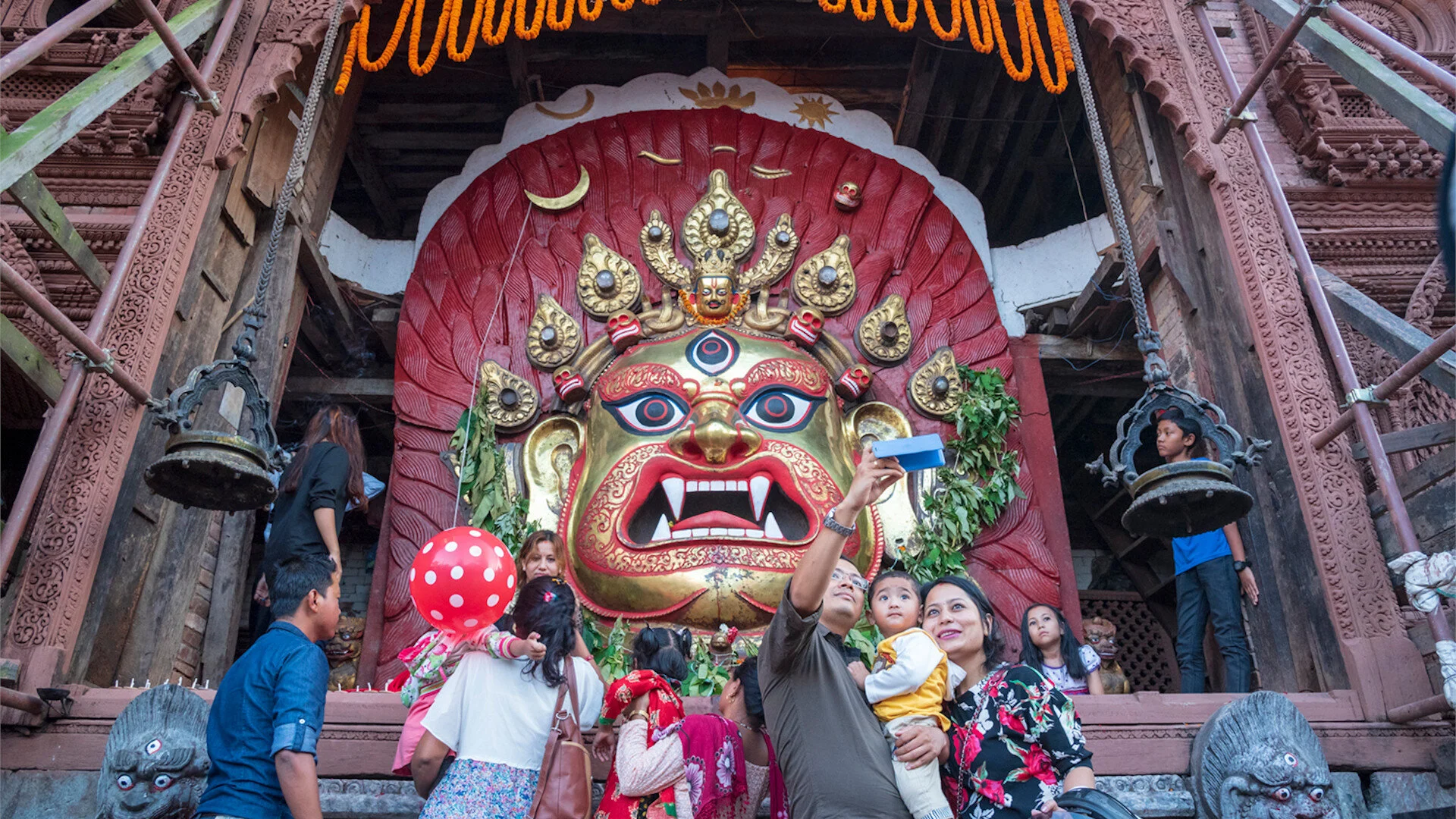
A Guide To Newari Festivals - Part II
Newari communities in Nepal celebrate numerous festivals every year. And it seems Newars always have a reason to celebrate. Several reasons: rich culture and heritage, honoring deities, marking the agricultural calendar, celebrate events from ancient mythology, and to emphasis family and community.
At times it does feel true, we the Newar people seem to always have a reason to celebrate.
The Newar people also are known as Newa in Nepal Bhasa are the historical inhabitants of the Kathmandu Valley and its surrounding territories and states. This region was historically called Nepal/ The Valley Kingdom of Nepal (Nepal Mandala). The history of this land can be divided into two: Ancient and Modern Nepal. The transition occurs after the unification campaign of Late King Prithvi Narayan Shah who is also known as the founder of Modern Nepal.
The Newar/ Newa people sociologically classified as an ethnic group. As they have their language (Nepal Bhasa), calendar( Nepal Sambat), behaviour, custom, tradition, cuisine, territorial association and heritage. Newars feature a set of diverse ethnicities who follow Hinduism and Buddhism.
“The Kathmandu Valley and surrounding territories constituted the former Newar kingdom of the Nepal Mandala. Unlike other common-origin ethnic or caste groups of Nepal, the Newars are regarded as an example of a nation community with a relict identity, derived from an ethnically-diverse, previously-existing polity. Newar community within it consists of various strands of ethnic, racial, caste and religiois heterogeneity, as they are the descendants of the diverse group of people that have lived in Nepal Mandala since prehistoric times. Indo- Aryan tribes like the Licchavis and Mallas (N) form respective Indian Mahajanapada (I.e Licchavis of Vajji and Malla(I)) that arrived at different periods eventually merged with the local population by adopting their language and customs. These tribes however retained their Vedic culture and brought with them their Sanskritic languages, socials structure and Hindu religion, which was assimilated with local cultures and gave rise to the current Newar civilization. Newar rule in Nepal Mandala ended with its conquest by the Gorkha Kingdom in 1768.” - Wikipedia
Saparu
Celebrated In: August- September*
The second day is known as Saparu, which in the local terminology is known as Gai Jatra. The day sees members of the family who have lost a member of their family during the past year, dress up in traditional outfits and parade around the city. Some households also parade cows during this day. Members of the Newar community also make a holy pilgrimage to the lake of Gosaikhunda, leaving to reach the lake on the day of Saparu. This is believed to help rid one's soul of past sins and foul.
Saparu is celebrated in various communities with each community having a different take. One of the most notable celebrations is conducted in the city of Bhaktapur. It draws an ample crowd to witness the community create humour and satire which is a traditional process created to uplift the spirits of the members of families who have lost a family member during the past year. In Patan, Matya is celebrated a day after Saparu, during when devotees make a holy pilgrimage to the various sites, temples and monuments in the core city of Patan. With over 3000 such sites, Matya is not an easy affair. Individuals clad in a special uniform carrying candles, or dress up as comical characters to help create an environment of laughter and joy. Devotees are generally members of households who have lost a family member or devotees who wish to partake. As no restrictions are placed even enthusiasts of national and international decent join in this holy pilgrimage.
The last day of Gunhu Punhi is Krishnastami, celebrated as the day of birth of Lord Krishna an incarnation of Lord Vishnu. Various micro festivities are conducted in all vicinities of the Newar communities such as Narsingha Yatra in Lalitpur, Krishna Puja in all three Newar cities and devotees queue to offer prayer and worship at the Krishna Temple in Patan.
Pancha Dan
Celebrated In: August- September*
Pancha denotes five and Dan giving alms. The name is derived from the five gifts presented as alms which include rice grains, unhusked rice grains, salt, money and pulses. Observed by the Buddhist communities of the Newar Ethnicity, this day sees various activities such as display of metal sculptures of the various Buddha’s, Lokeshwor’s and deities along with giving alms to Buddhist monks also known as dharma. Different days are designated in the cities of Kathmandu, Lalitpur and Bhaktapur, and glimpses of Pancha Dan can also be seen in Panauti and Banepa.
*: As Newar festivals are celebrated according to the lunar Nepal Era calendar, the dates in the Gregorian calendar are interchangeable.
POPULAR ITINERARIES
SIMILAR POSTS
A Guide To Newari Festivals - Part I
Newari communities in Nepal celebrate numerous festivals every year. And it seems Newars always have a reason to celebrate. Several reasons: rich culture and heritage, honoring deities, marking the agricultural calendar, celebrate events from ancient mythology, and to emphasis family and community.
“It seems to be that the Newar’s always a reason to celebrate,” said a dear friend of mine during his month-long stay in the Kathmandu Valley. To give him a true taste of our culture, history and diversity I had intentionally called him to visit a week before Dashain. My mission was as a glorious success. Seeing his face glow as he took blessings from the Kumari, and him swaying to the tantalizing tunes of Gaan Pyakhan, experience the delights of Koochi Bhoya (Family Feast) gave me the utmost satisfaction of being his host.
Bidding him farewell was a difficult task, for he didn’t want to leave. He had so much to experience, from the sweetest Yomari Punhi to witnessing the sheer energy of Sila Chahre ( Maha Shivaratri). At times it does feel true, we the Newar people seem to always have a reason to celebrate.
The festivals of the Newar people begin during Gathan Mugah and ends in Sithi Nakhah.
Gathan Mugah
Celebrated In: August*
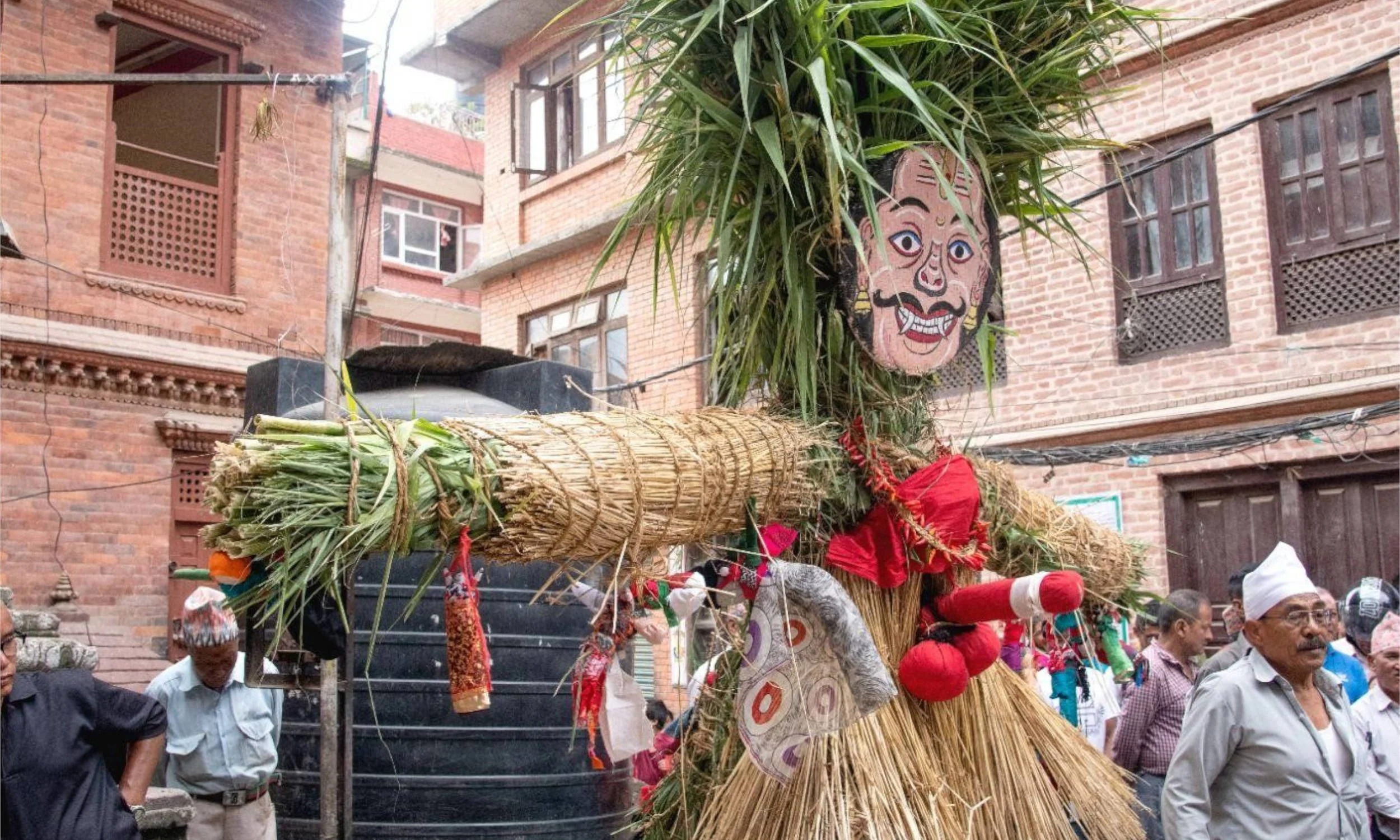
Gathan Mugah which falls in August is the awakening of the grand festivities of the Newar people. It is symbolized as a festival of cleaning. From riding one's fields from the spirits recruited to assist, to one's home and community of the evil omens. The ideology of cleaning is taken made literal with the Newar people taking a bath during the first light of this day. Clothes are washed, houses and communities cleaned. In the old days, girls used to even throw away their playing dolls, as they used to be made from straw wrapped in jute or soft cloth. Incense is burned to rid the homes of pests and bugs. The people wear a special ring locally known as, “Chahray Angu” which is a ring made of metal alloy. Bringing the festivities to a close, straw from the old harvest is set to light and the air is spread to fill the home symbolized as a process of cleaning. It is then thrown at the crossroads of one's home. A symbolic effigy of Gathan Mugah (Evil Demon) is made of green reeds, dragged by the local community, beaten and then burnt at near the riverside.
This altogether helps symbolize ridding oneself, his/her home from evil and the pests s/he has accumulated in the last year. From burning of the straws which helps eradicate mites, bugs and foul smell, to wearing a symbolic metal ring to protecting one's soul from the evil spirits. This prepares the Newar People for another year of hardship, celebration and worship.
Gunla Dharma
Celebrated In: August- September*
The month of Gunla is celebrated according to the Nepal Era calendar, according to which the period of worship falls in the mid months of the monsoon. It is considered to be a very holy period for the Buddhist community. Devotees make time to visit Buddhist monasteries, courtyards and shrines to offer prayer and worship.
A special ensemble of Gunla Bajan ( Traditional Newar Instruments of the Buddhist Community of Newar’s) is conducted during the month which includes Dhah and Naykhin ( Types of Drums) accompanied by cymbals and shwam.
The period of Gunla sees the shrines, deities and monuments decorated, cleansed and worshipped throughout the period. Individuals of the sect take holy walks, along with pilgrimages to different holy sites of Buddhism during this period.
Gunhu Punhi
Celebrated In: August- September*
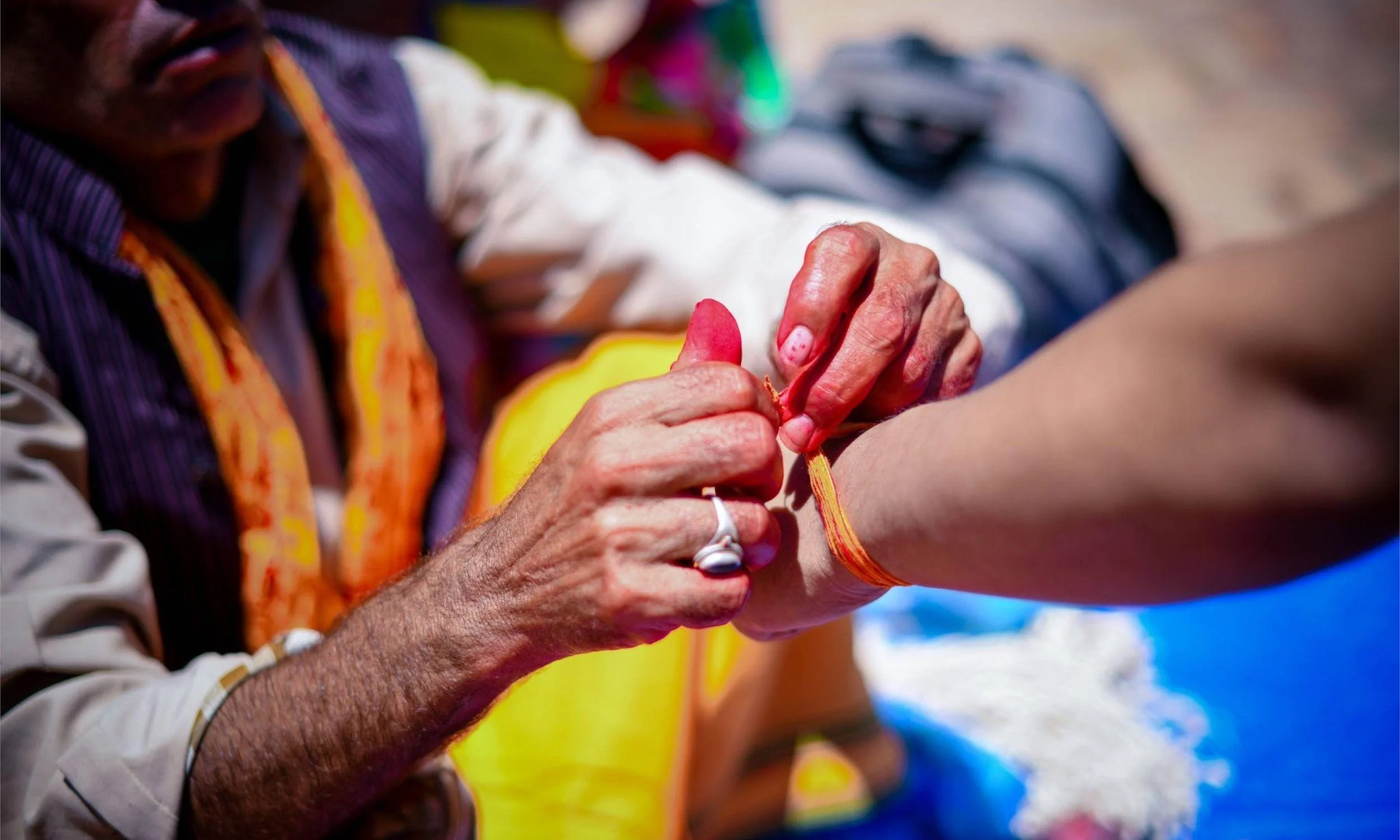
Gunhu Punhi which is not to be mistaken with Guru Punhi (Teachers Day) as this is one of the most significant set of festivals celebrated by the Newar community. Lasting for a total of for nine days the first day is known as Gunhu Punhi. During when a traditional broth (locally known as Kwati) consisting of spouted mixed cereal is consumed. It is believed to help boost immunity and give strength for the upcoming change in season. A traditional doro (string), which is a protective cord is tied onto one's wrist by the Brahman priest. Also known as a Janai this day is generally celebrated by the other communities as Janai Purnima.
In the Newar farming households, food offerings are placed for frogs in their farms and community which is known as Byanja Nakegu. Frogs play a vital role in the farmlands of the Newar household, as they consume bugs and pests that can cause illness to their crops. Thus to pay homage for the service by these friendly creatures a day is separated to honour their efforts.
*: As Newar festivals are celebrated according to the lunar Nepal Era calendar, the dates in the Gregorian calendar are interchangeable.
POPULAR ITINERARIES
SIMILAR POSTS
Tales of Samyak Mahadan
Samyak Mahadan is a Buddhist alms-giving festival, also known as the festival of Dipankara Budhha is celebrated once every five years in Patan, Lalitpur. The festival has been important for Buddhist Newars, as it has become a way of practising daan dharma(alms-giving).
I recall being ten and a half, walking down the streets of Gabahal heading towards my mama ghar (Mother’s Home). The streets to my surprise were quite crowded, as we reached Nakabhail Tole. “I’m going to show you something very special today.”, said my mother as we walked towards Nag Bahal. My mother made way in the hustling crowd, whereas I made sure to hold her hands tight.
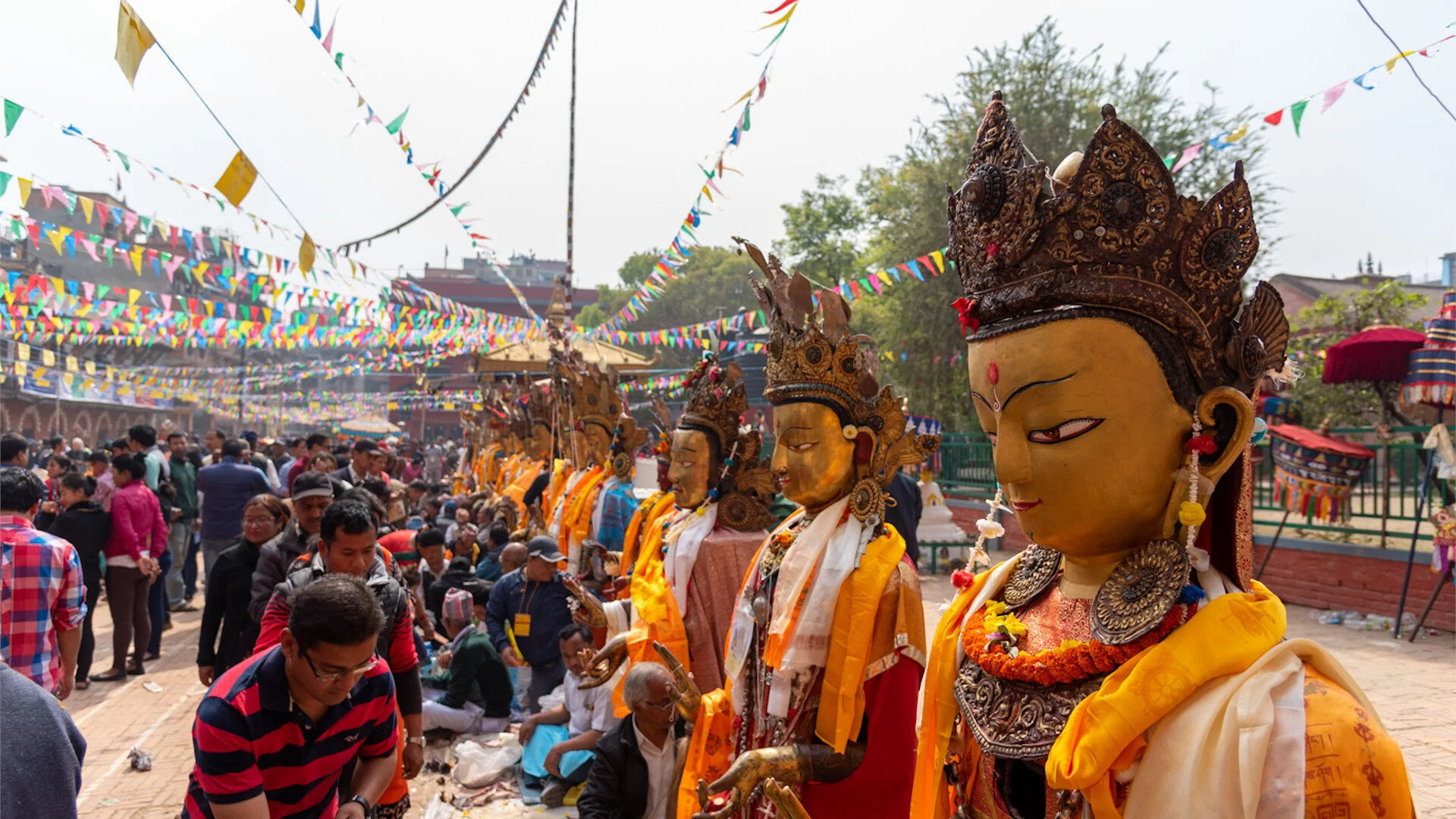
Putting to words the first time I witnessed the spectacular scene of glistening statues of what seemed to be Lord Buddha lined up in rows, standing tall is still difficult. I looked to my mother in awe, thanked her for letting me witness the feat of Ilan Samyak Mahadan.
The inception of this celebration of giving is approximately dated to Nepal Sambat 135 (1015 AD). Popularly believed to have been first organized by Bhari Bharo, a Thakuri King, son of King Bhaskar Deva.
Being a wise nobleman, during those times even the Kings had to earn their share in society just like a commoner. It is believed that he engaged in nominal work disguised as a simpleton to provide for his family. Even though he shared a royal bloodline, he was believed to have been poor but had a generous heart.
He wished for all to think he was rich, thus started collecting guintha (Cow Dung) from the local Khel (Pasture) and stored them in a room under lock and key. He kept it a secret even from his wife to make her presume that he has ungodly riches. It is generally not a good idea to keep secrets from one’s wife.
She started getting curious about what her husband hid behind closed doors. King Bhari Bharo was smart enough to always have the key on him, he wore it tied to a string. One fine morning he went for his daily bath, he took off the string as it caused him discomfort. She seized the opportunity to take the key and look into the room where she found heaps of gold and riches. She was quite surprised to the ungodly amount of gold and even was King Bhari Bharo as he stared into the room where he had been storing guintha.
The King was amused and humbled by the generosity of Lord Dipankar Buddha whom he revered deeply. To commemorate this great moment and continue the act of giving, he called upon all the Bahal’s and Bhaili’s to bring their Patron Gods. King Bhari Bharo, offered the riches to all through a process of giving alms (daan) to their patron deity as an act of dharma.
It is believed that this celebration was a yearly affair till 1806 AD, after which the festival was organized once in every five years. The official opening of the festival is when a Yoshi (ceremonial pole) is erected at Nagbahal. After which the aajus (highest in the rank of Newar Buddhist community) with an entourage circumvent the valley inviting all the Bahal’s and Bahili’s to the festival. On the eve of the Samyak, the idols are brought together at the square of Mangal Bazar. At the stroke of midnight, they are carried to the courtyard of Nagbahal and placed in an orderly manner.
The next day is a grand celebration which left me speechless when I was little. The idols of brass feature deities such as Basundhara, Arya Tara, Aryavalokiteshwara and Dipankar Buddha. The larger life-size idols are carried by a caretaker from their respective Bahal or Bhaili. Smaller ones are brought in a palanquin. Devotees come in flocks to offer rice, grain, money and goods to each deity. The giving of alms lasts till 3 PM after which the Samyak is drawn to a close.
The festival is officially drawn to a close when the Yoshi is grounded and a special puja at Jal Binayak, Chobar is conducted. With this, Ilan Samyak Mahadan. Is officially brought to a close and the great glistening idols rest to be displayed in another 5 years.
POPULAR ITINERARIES
SIMILAR POSTS
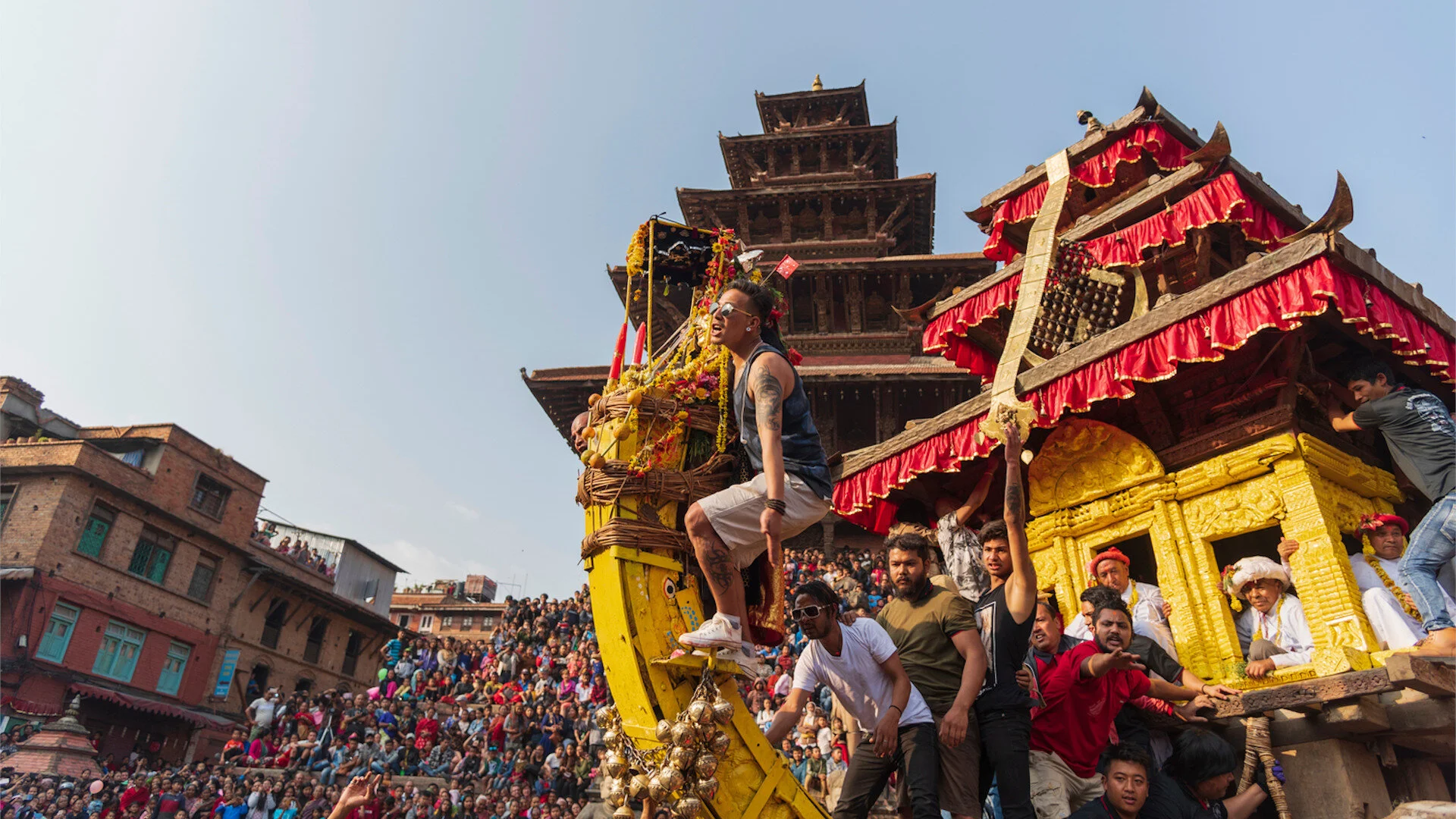
Tales of Biskah Jatra
Bisket Jatra, also known as Biskah Jatra(festival) is a weeklong yearly occasion of Newari community in Bhaktapur. Among many other popular festivals in Kathmandu Valley, Biskah Jatra is celebrated with special rites and rituals in the historical and cultural city Bhaktapur.
Regarded as one of the biggest celebrations of the Newar community in Bhaktapur. Locally known as either ‘Biskah’ or ‘Bisket’ is derived from the ancient name of the festival ‘Bee Sikah’, which means ‘After the death of the serpents’. The origin of the celebration features great folklore most members of the Newar community grow up listening to from their elders.
The festival is celebrated in the communities of the old greater kingdom of Bhaktapur which was founded by the first Malla dynasty of the Valley Kingdom of Nepal. Whereas the city of Thimi celebrates it in a unique ‘Sindoor Jatra’ as the coming of the Nepali New Year according to the Vikram Era (BS).
“This younger brother (Ananda Malla, son of Abhaya Malla being very generous and wise gave up the sovereignty over the two cities (Kathmandu and Lalitpur) founded a city of 12,000 houses, which he named Bhaktapur (Bhatgaon) and included sixty small villages in his territory. After this, the Raja having obtained the favour and directions of Chandeswari founded seven towns; viz Banepur(Banepa) near Chandeswari Pithal; Panavati ( Panauti) near the Pragya Tirtha of Nepal. Celebrated in the Shastras, on the site of where Panchala-des formerly stood, Nala near Nala Bhagvati, Dhaukhel(Dhulikhel) near Narayana; Khadpu near Dhaneswar; Chaikot, near the residence of Chakora Rishi; and Sanga, near Nasika Pitha.” (Wright,1990)1
The name and purpose of the celebration date back to the medieval era, where it is believed there was once a beautiful princess who was very unfortunate with finding a husband. As she had a terrible curse be put on her which decreed that anybody who wedded her would die the very next day. Several men had already died due to the curse. The palace seemed to have lost all hope, but one young man came with a desire to end the ungodly curse. He with knowledge of his faith took upon himself to wed the forsaken princess but was forbidden by his elderly mother. But to the surprise of many an old lady (Goddess Bhadrakali in disguise) offered advice to the young man, which she asked him to follow in full and it would ensure his safety.
After the ritual ceremony ended, the two laid in bed and the princess feel right into sleep. ‘You are not to fall asleep with her, but await her to drift into sleep and be ready’, the young man remembered the advice of the old lady. As time passed on he was determined not to fall asleep and stared at the face of his wife. All seemed normal but out of a sudden two reptiles are said to have slithered out of the princesses nostrils!
In surprise and dismay, it was these two who had been the death of so many men and if not for the advice of the old lady, they would have already slain their next victim. He quickly picked up his razor-sharp knife and wasted no time in cutting the reptiles.
‘After the death of the serpents’, came the grand celebration of Bisyaku Jatra ( The original name of the festival). The then Malla King, began the festival as he wished all to remember the valour of the young man and offer worship to the principal deities Lord Bhairab and Goddess Bhandrakali.
A procession of two chariots, being pulled in a tug-of-war setting between Thane(Upper) and Kone(Lower) part of town which occurs begins the festivities of Biskah Jatra. Two lingo’s known as Yo Shi (55-feet-tall each) are erected in two different locations of the central city on New Year’s Eve and brought crashing down on New Year’s Day symbolizing the killing of the serpents. To symbolize the consummation of the marriage, the two raths (chariots) are made to crash against each other. This occurs during midnight when the Bhairab and Bhadrakali chariots are collided symbolizing copulation.
The festival lasts for a total of 9 days from the 27th of Chaitra to 5th of Baisakh. As the festival follows the solar Vikram Sambat (B.S) calendar the dates are exact every year.
This years edition of the Bisakh Jatra is to conducted within closed doors due to the SARS-CoV-2 Pandemic. As an alternate to the regular chariot festival the head priests are to perform special rites and rituals.
1: Wright, Daniel. (1990). History of Nepal (pp. 163). New Delhi, Madras: Asian Educational Services. (Original Work published in 1877)
POPULAR ITINERARIES
SIMILAR POSTS
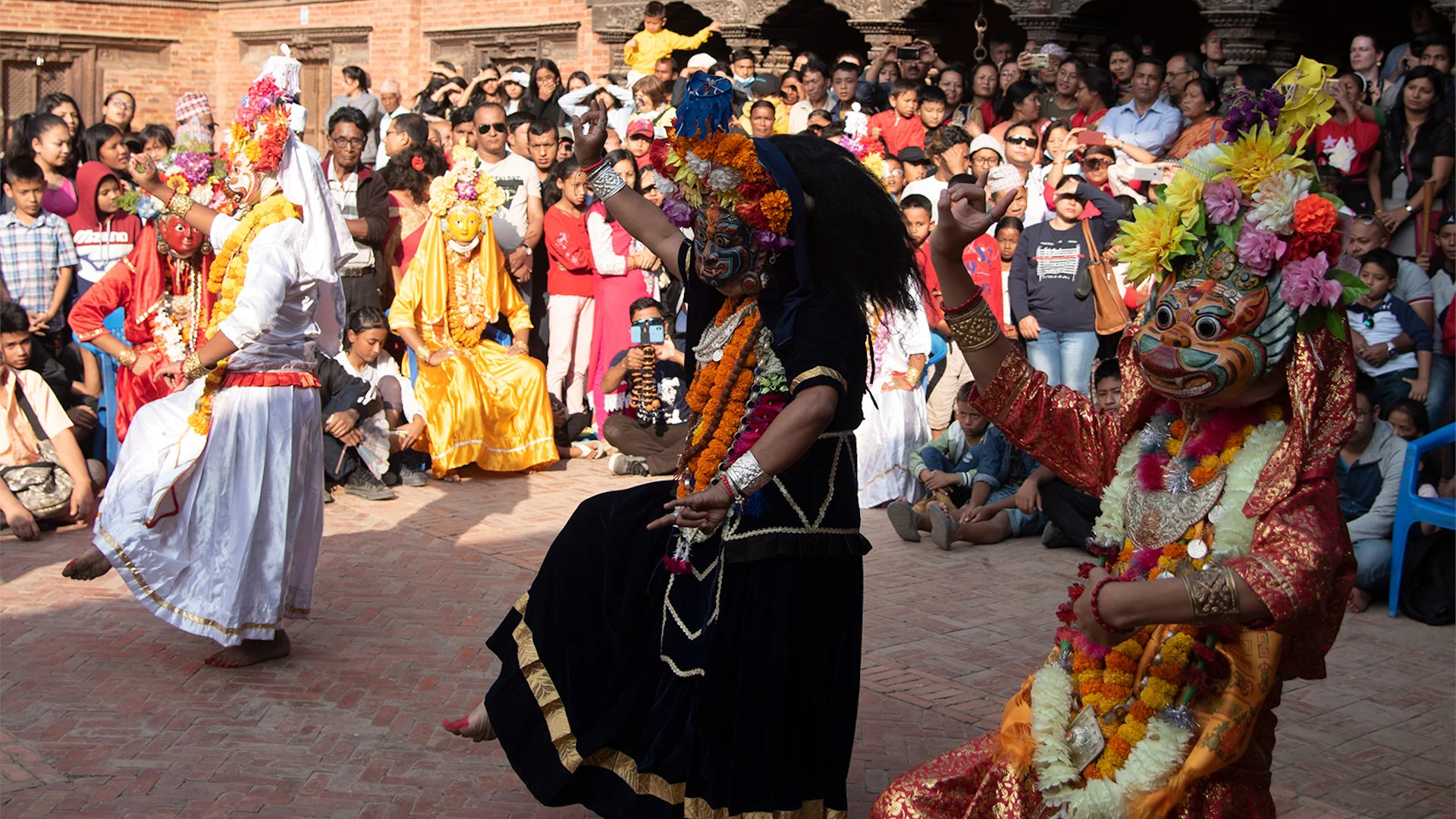
Pahan Charhe - Festival in Nepal
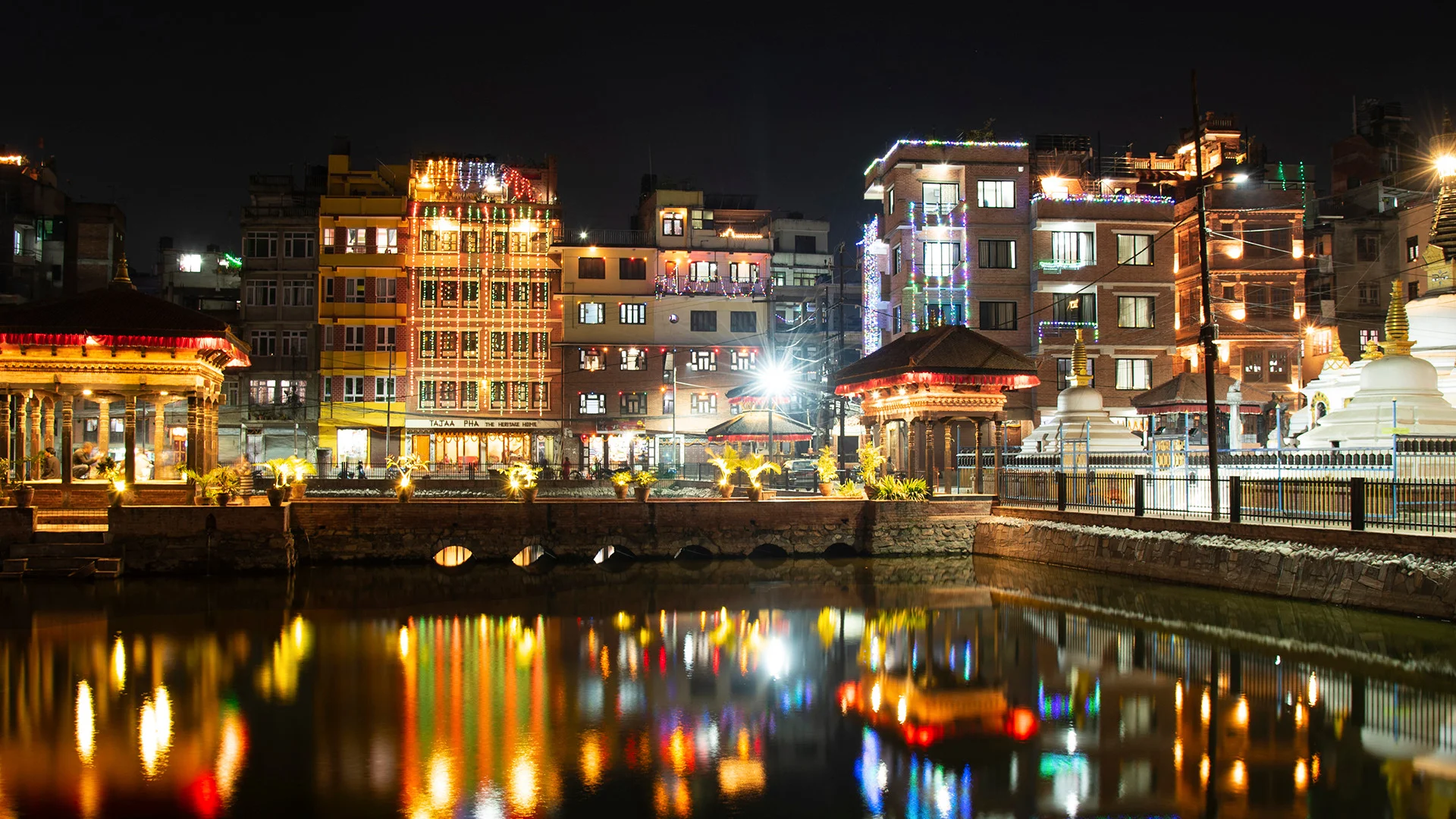
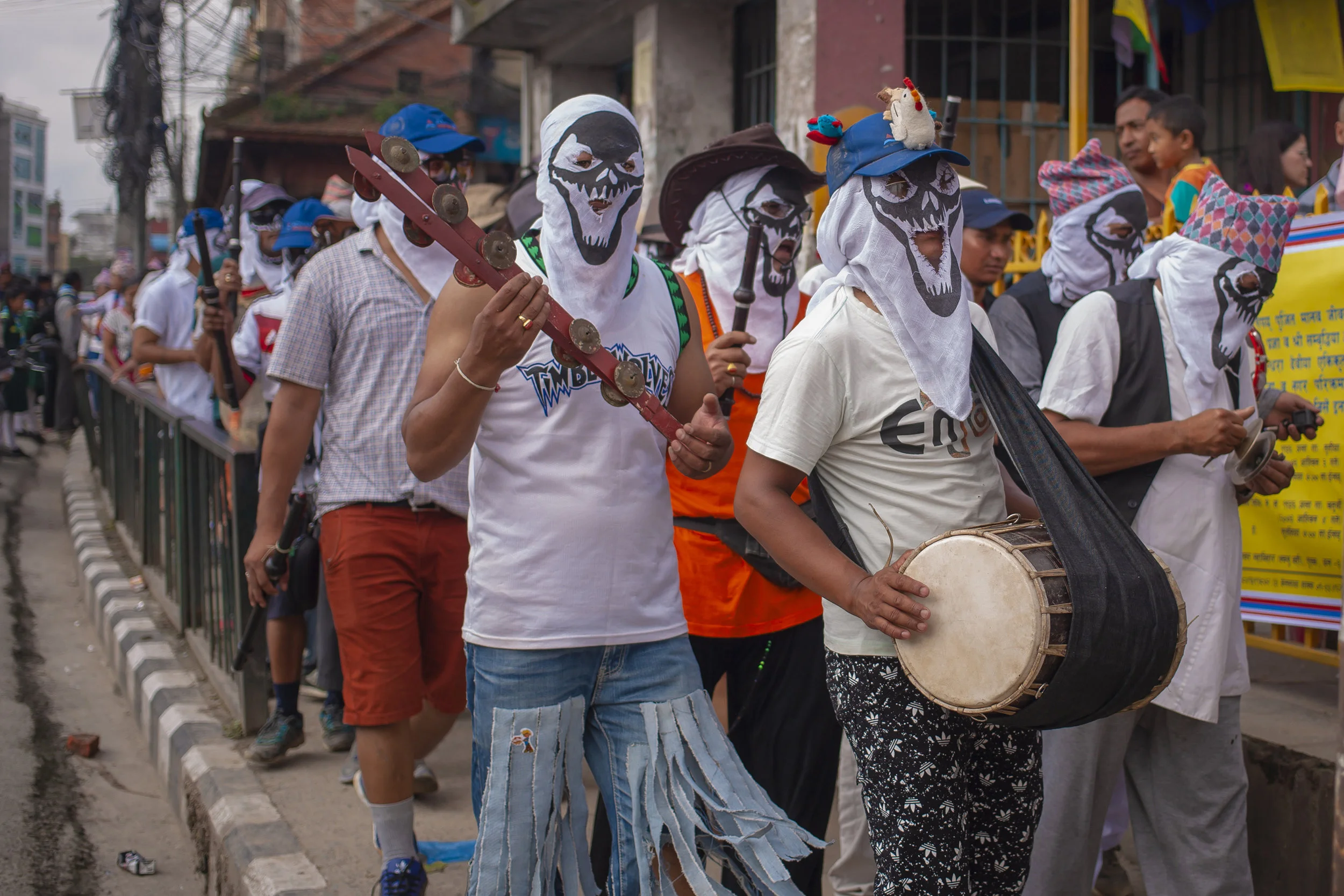
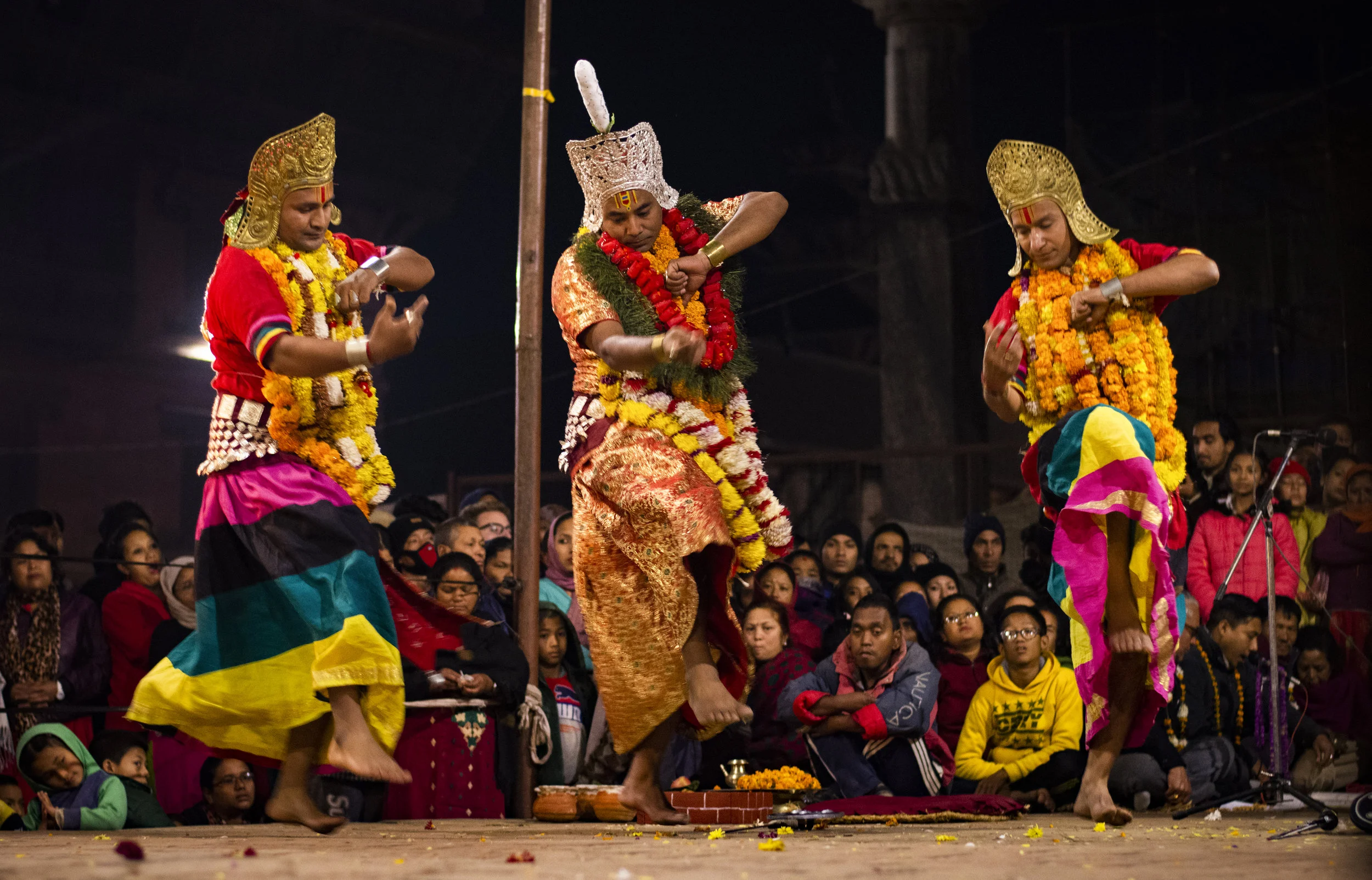
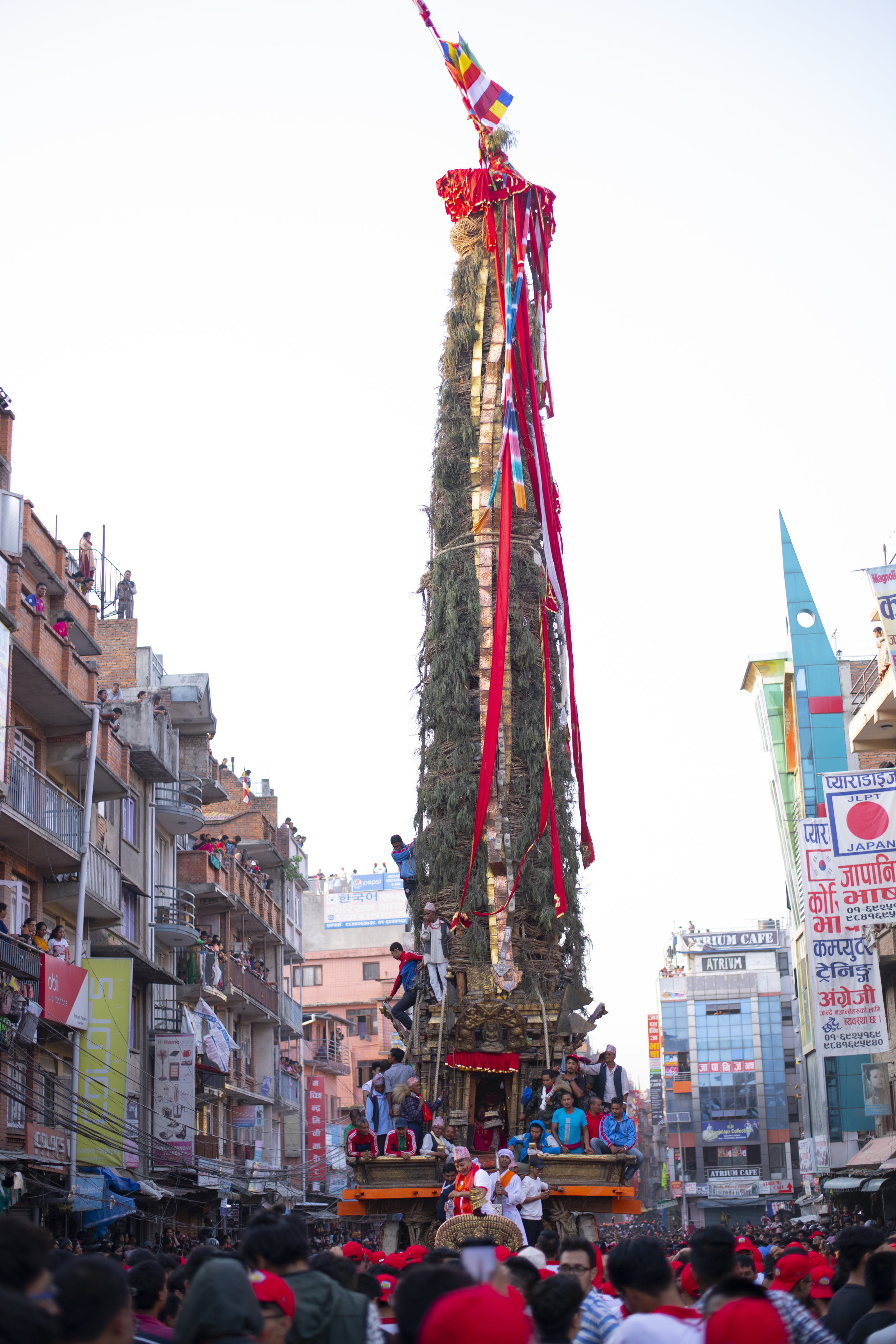
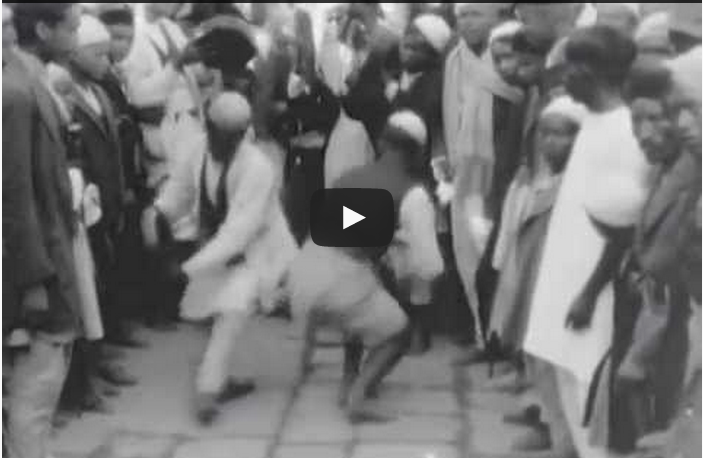
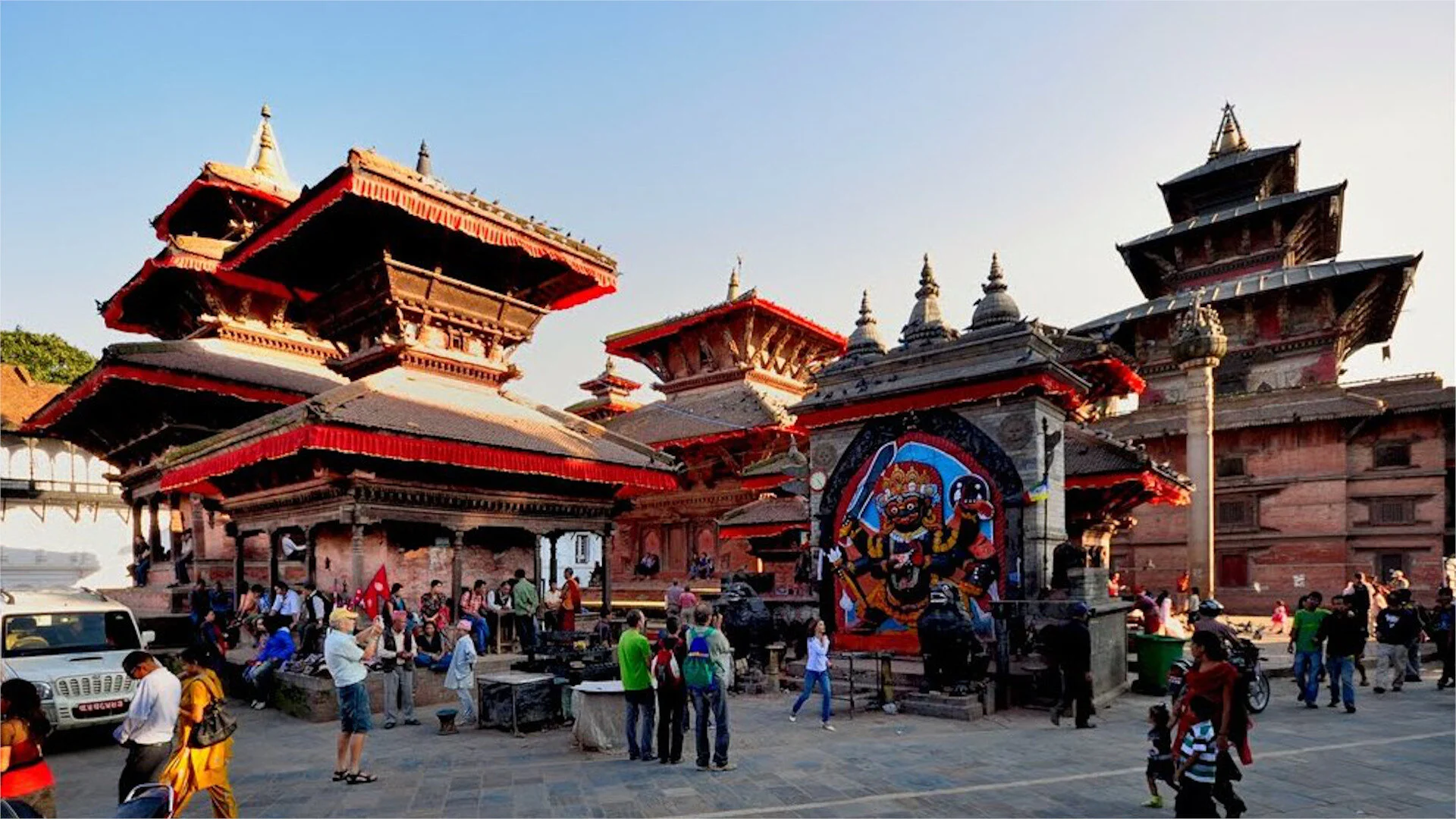
Pahan meaning guests and Charhe meaning on the fourteenth day of the lunar fortnight, the avid tunes of the festival can be heard for three consecutive days in the old towns of the city of Kathmandu. This three-day festival brings together the community in a unique manner and has helped build communal strength and friendship.
Synopsis: In Newar, Bhasa Pahan means to invite and Charhe means on the fourteenth day of the lunar fortnight. The celebration sees the old town centre of Kantipur ( Now Kathmandu) filled with devotees as the palanquin of three mother goddesses are paraded by revellers. This three-day festival brings together the community in a unique manner and has helped build communal strength and friendship.
Pahan meaning guests and Charhe meaning on the fourteenth day of the lunar fortnight, the avid tunes of the festival can be heard for three consecutive days in the old towns of the city of Kathmandu. The festival sees the invitation of beloved guests and members of the family to take part in a magnificent feast prepared for the occasion.
The tradition of Pahan Charhe is commenced a week earlier with an invitation from the mother of the Ajima’s. The festival is also known as Duru Cha Cha Jatra, and once the invitation is received the celebration of Pahan Charhe is commenced exactly a week after.
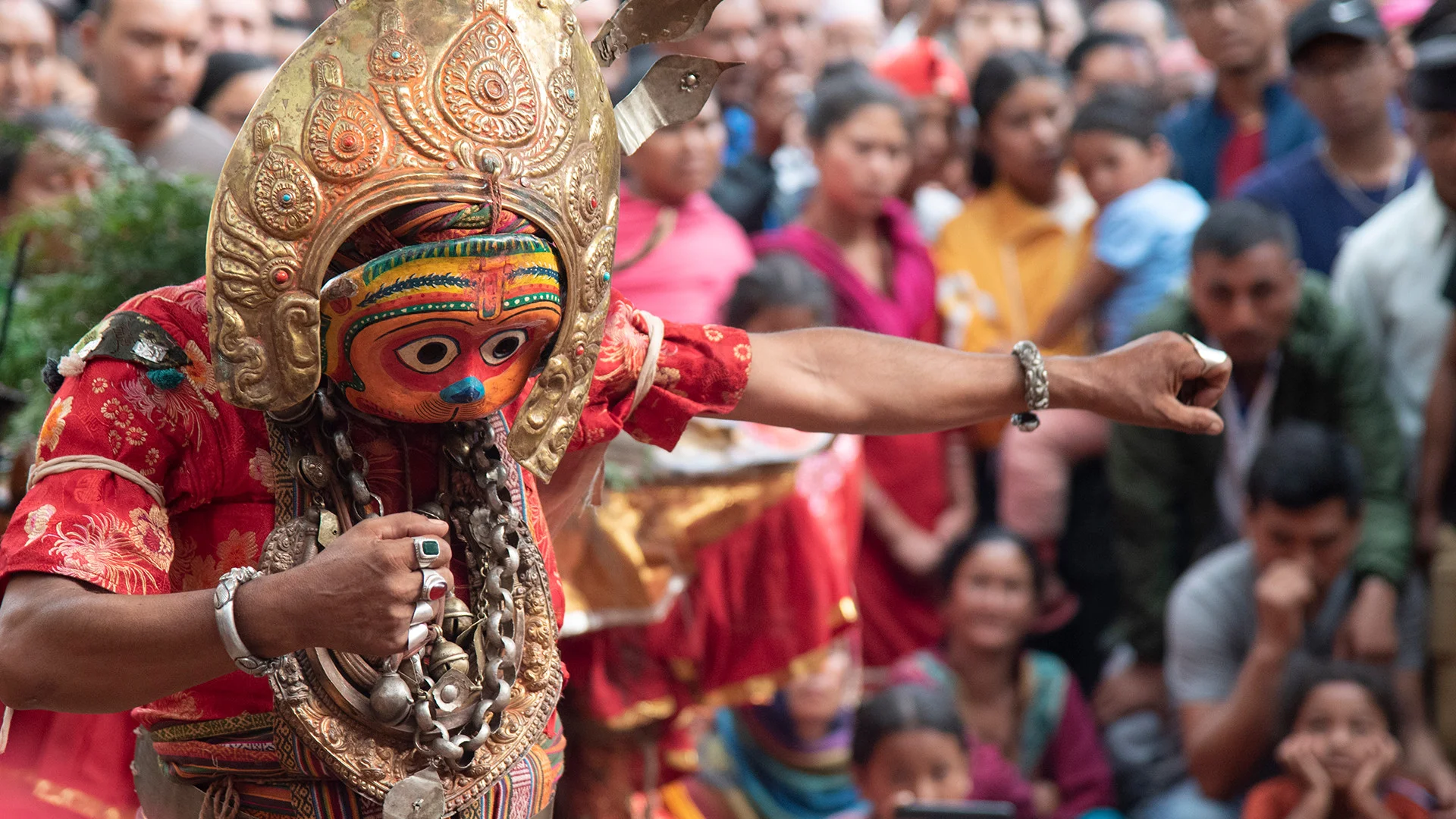
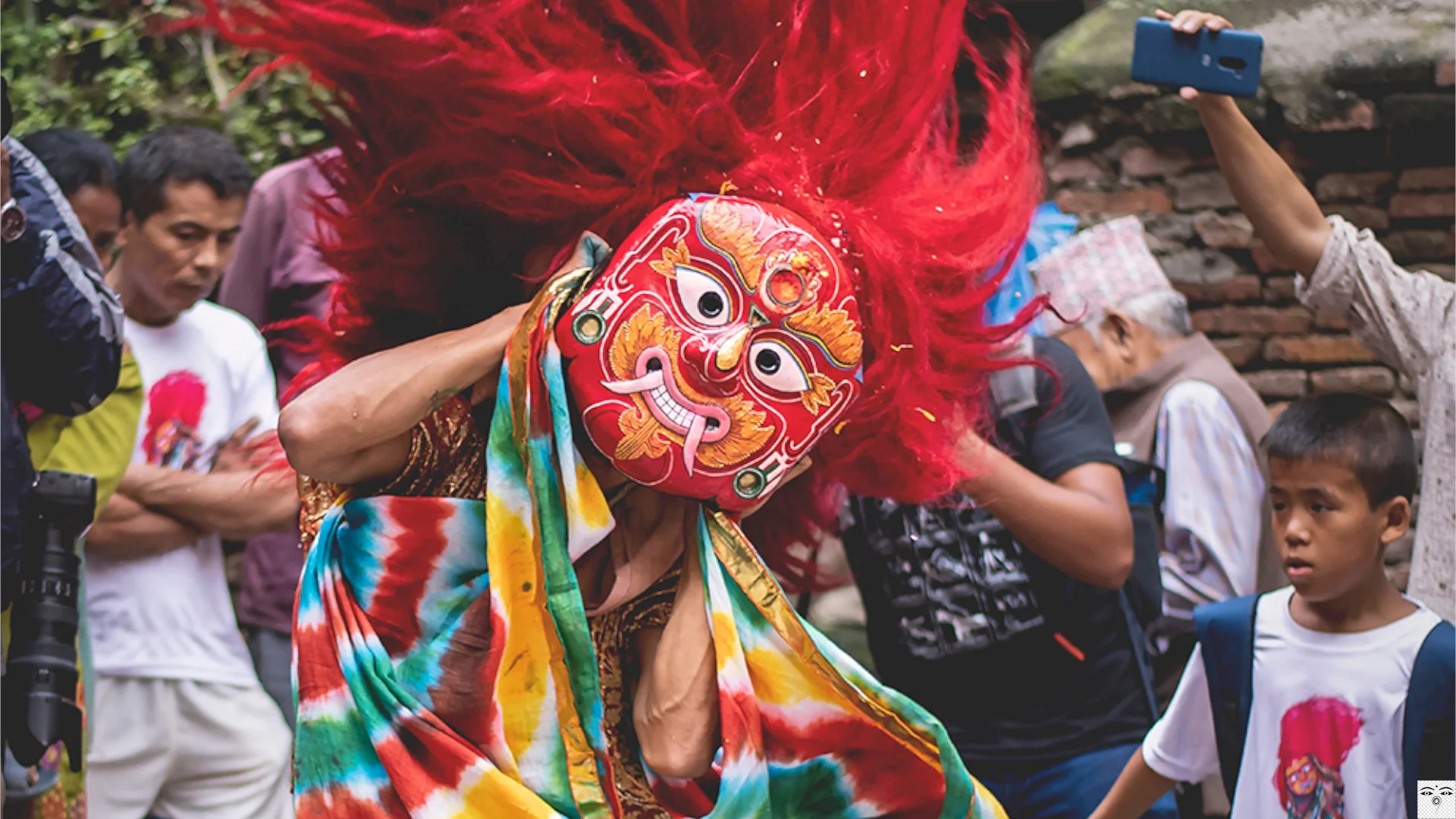
Pahan Charhe is celebrated for three days, the first day sees the worship of the deity of Luku Mahadyah ( Lord Shiva). Luku in Newari means hidden whereas Mahadyah is a local name for Lord Shiva. This day sees members of the household clean their homes and surroundings and make offerings to the deity. At Nyata in Naradevi a special mask dance of the Nyatamaru Ajima is performed. The sacred dance features performers dressed in the traditional colours of the Ajima’s with a mask perform tales of Swetkali. The dance is in an archaic form of storytelling, which starts in the evening and continues through the night.
The Ajima’s are protective goddesses placed by the Malla Kings at strategic locations around the city to form a protective ring. It is tradition to place an army barrack near the temple of the Ajima, even today the army barrack is situated beside Lomari Ajima also known as Bhadrakali. Each Malla city has it’s own version of the protective goddesses, wherein Patan they are known as Asta Matrika and in Bhaktapur; Nawa Durga.
The protective goddesses are symbolized as the shakti (strength) of Male Goddesses. The eight mother goddesses are Brahmayani (The Shakti of Lord Brahma), Maheswari (The Shakti of Lord Shiva), Bal Kumari (The Shakti of Lord Bhairav), Vaishnavi (The Shakti of Lord Vishnu), Varahi (The Shakti of Lord Narayan), Indrayani (The Shakti of Lord Indra) whereas Chamunda and Mahalaxmi are fierce manifestations of Goddess Kali and Laxmi.
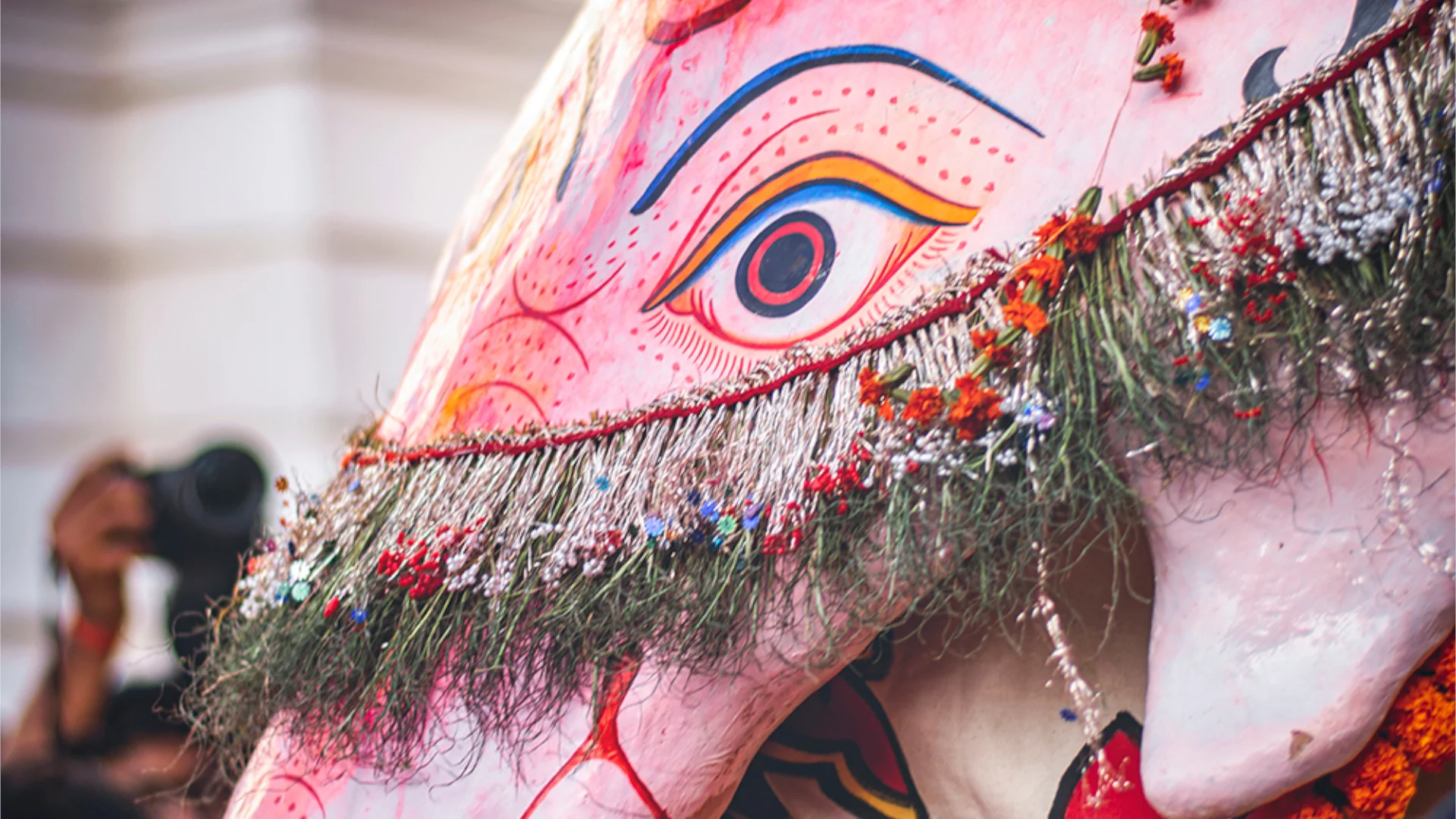
On the second day, which is also known as Dyah Lwakegu is celebrated at the open field of Tudikhel. During when shrines of the Ajima are placed in a palanquin and paraded in their respective locals in Kathmandu. The day also sees the celebration of the annual Ghode Jatra, one of the most important festivals of the Newar Pantheon. The legends of the Gurumapa are stories with which Newar children grow up with and is folklore in the valley.
During the night, the palanquin is taken to Tudikhhel which is followed by an entourage of devotees and traditional Newari musical ensemble. Each community brings forth a flame torch which is exchanged symbolizing the meeting of the goddesses. The palanquin procession of the Ajima was started by King Amar Malla during the Nepal Sambat year 580 (1460AD).
The third and final day of the festival sees the gathering of huge masses at the old city centre of Asan. The palanquins of Lumadhi Ajima(Maheshwari), Kanga Ajima (Varahi) and Tebhana Ajima (Chamunda) are brought in there respective palanquins and paraded in the street. These Ajima are believed to be sisters. The historic market place sees the meeting of the individuals of the respective locales-who all wear coloured hats of red, blue and yellow which are respective of the localities.
During the Dyah Lwakegu ceremony, participants accompanying the shrines exchange flaming torches. Devotees offer traditional Newari rice bread, known as Chatanmari to the deities and during this day can be seen thrown from even the rooftops of the homes in Asan. Traditional seasonal songs are placed the musical ensemble during the meeting of the gods, where participants can be celebrating with avid fanfare and dancing to the beautiful melancholy.
POPULAR ITINERARIES
SIMILAR POSTS

Yomari Punhi
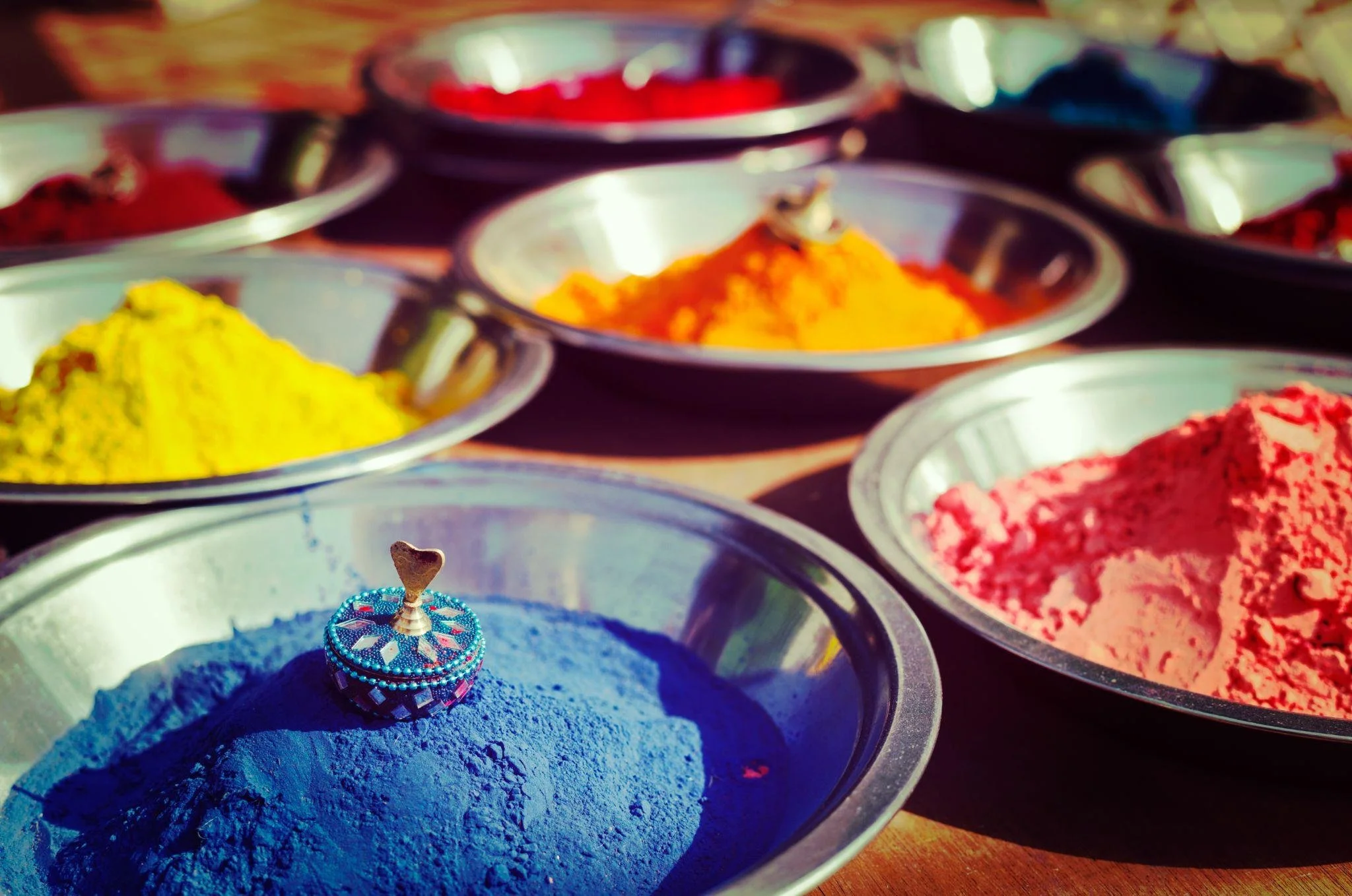
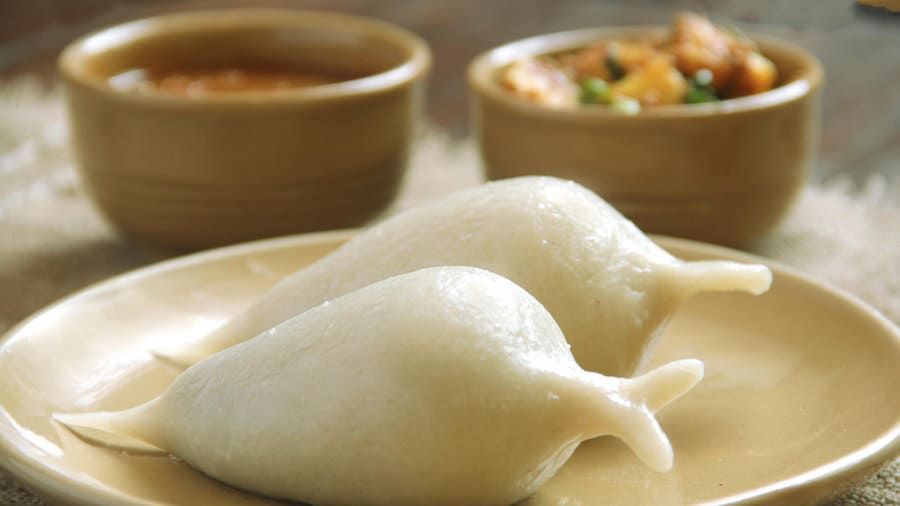
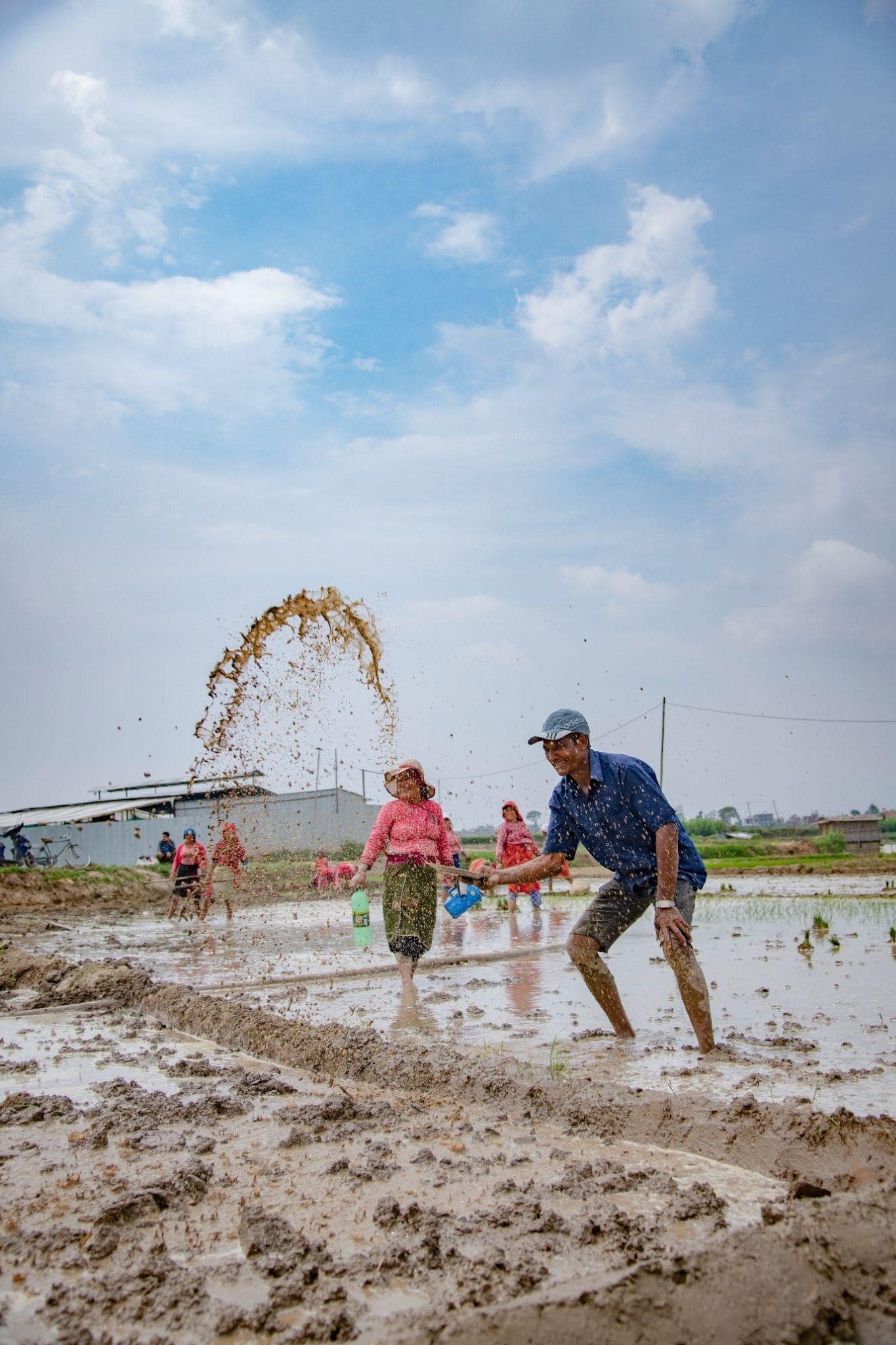
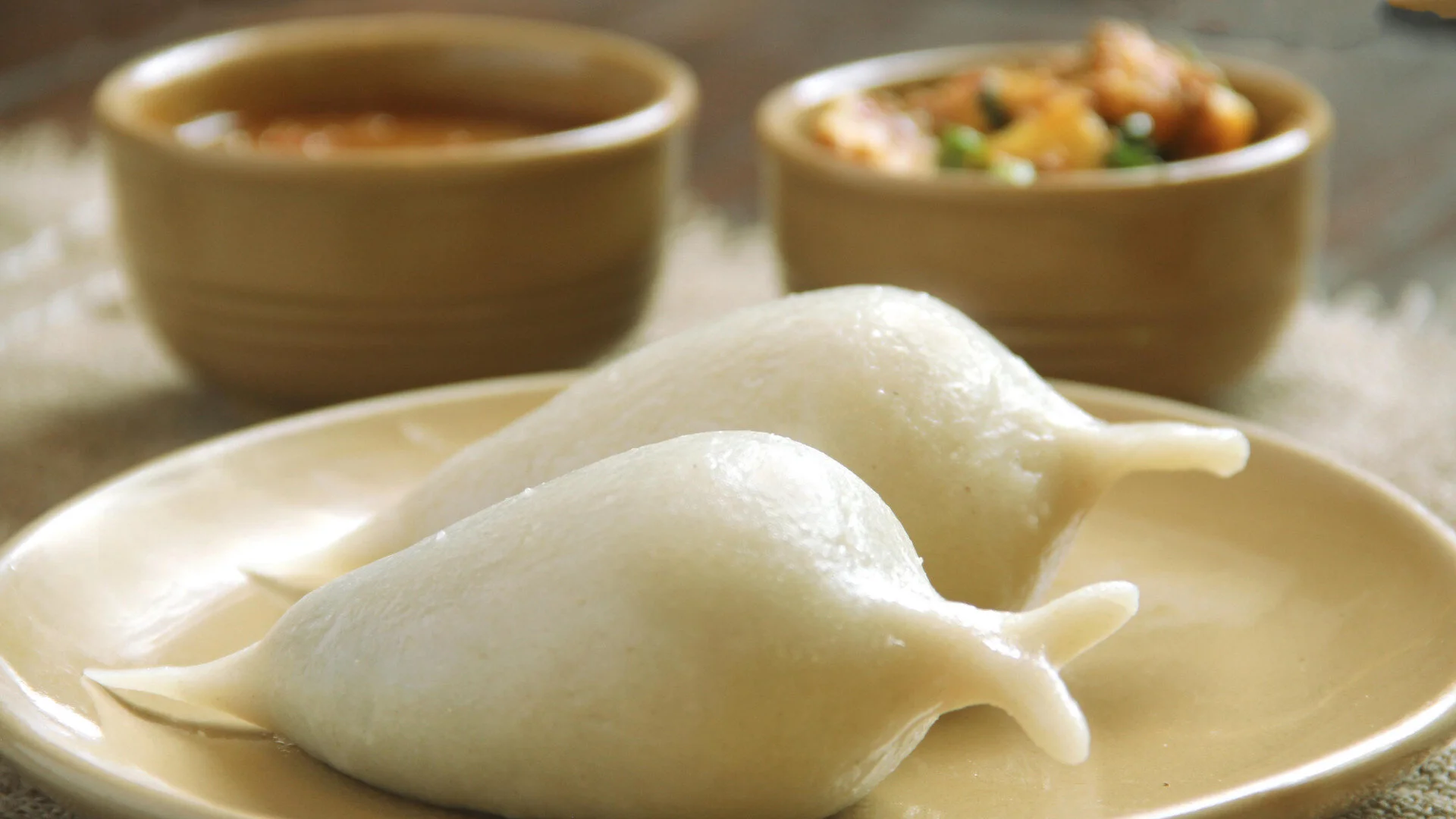
Yomari Punhi, a Newari festival in Nepal is celebrated every year by Newari Communities marking the end of the rice harvest during the full moon day of November/December. It is said that eating Yomari or Yamari, a steamed dumpling made with rice flour with sweet such as Chaku inside takes away the cold.
The following story is based on ancient myths and texts which has been interpreted with additions of details to provide gravity.
As the winds of winter began beating the drums, it became obvious that the upcoming season was to be one of the coldest they would see. As Krita woke up, on a fine morning she couldn’t help but take a fresh breath of morning due, with a light hint of incenses. She went for her morning routine, and as she was about to head out to the Indreshwar Temple for her daily ritual. She cried out for her husband, “You have to wake up now. Today is the end of the harvest, help me out bringing in the grains. They aren’t going to roll themselves in the store! You also need to assist me in the kitchen today, if not then you should make plans to eat at your friend's house today. I can’t do it alone, I hope the harvest is enough to keep us this winter. Wake up!”
With a grunt, Suchandra tries to shrug her off but as Krita pulled the blanket, and as the winds of the fall morning made contact, Suchandra was awake as an owl. Krita left her husband, who looked like he had been hit by a wall of bricks for the temple of Indreshwar.
Along the way, she greeted the elders, took their blessings and heard the words of a celebration of the harvest festival to happen in the evening. She was filled with happiness and said to herself, “A festival that sounds amazing. When was the last time I was at a festival? Oh, When Suchandra and I went to Bhaktapur to see the Biska Jatra. He doesn’t even take me out anymore, he has grown lazy too, well typical of men!” Krita was mesmerized with the thought a festival in town and as she imagined the vibrant streets, the merry music she had a smile on her face. She was so lost in her thoughts, she failed to realize that she had already walked past the temple. Only later to come back to earth, when an elder asked the direction to the temple.
She walked with the elderly gentlemen, as they were headed the same direction. As they reached the temple, she bowed to him and told him that she shall part from here. The elder reached out his hand touched her forehead and said, “Bhagyamani Gui Ma!” ( May you be fortunate!)
As she offered her prayers to the deity she stopped by the local vendor, confused about what to put together for the daily meal. She noticed something peculiar amidst the produces being sold on that very day. The vendor had an assortment of Chaku (Sugar Molasses) and with the evening festivities in mind, she wished to make something new.
She bought a few blocks of Chaku along with a few more products and headed towards home. Suchandra had woken up and had started to prepare to bring in the grains of this seasons harvest. She smiled at him as she stepped inside her home and went towards the kitchen to sort all the produces. She stared at the Chaku as she placed it atop the table and wondered what treat she could whip up with this new ingredient. After placing all the produces, she headed outside to help her husband bring in all the grain.
As if in the blink of an eye, the day had passed by and with a quick lunch they continued taking in all the grain and began inventory. “This year it seems the gods have taken all our fortunes and given it at one go,” said Suchandra with a delightful smile as the grains this year had tripled last years harvest. “Did we cut down someone else's crops too?” Questioned Suchandra.“ Well if we had worked as hard as this year in the previous years, then we could have collected on our fortunes the previous years as well,” said Krita.
As the sun slowly set its way towards the western horizon the evening was soon to approach. The merry tunes of the drums could be heard playing in the distance. Krita is a panic, “What are we to prepare for the tonight?” Suchandra, “Well I don’t know, how should I know!”
Krita left the store in a hurry and made her way to the kitchen and stared at the produces she had collected earlier. Each great but none go together in avid confusion she began checking the stores. She took some rice grains from this year's harvest and took it in a hurry to the mill. She had them grounded to fine grain and wished to make her husbands favourite Chatamari (Rice Crepe). As she began preparing, she couldn’t help but stare at the Chaku she had procured in the morning. She then had an idea! “What if? No, I shouldn’t.”
She called out to Suchandra, “Can you help me in the kitchen? I want to finish early and go watch the festival. Suchandra made his way to the kitchen and Krita asked, “What if we make something different today?” Suchandra amused, “What do you mean by different?” Krita replied, “Can you take that Chaku and have it heated until it turns liquid? I have a thought.”
To which Suchandra replied, “Well if it doesn’t work then I’m be having your thoughts for the night meal.” Suchandra began heating the Chaku and Krita took the rice flour and kneaded it into a dough. She asked Suchandra to grab a dowel and asked him to pour the Chaku into the dough which she had shaped into a triangular and made a hollow in the middle. Suchandra amused didn’t want to get into another conversation began doing what Krita said. As the Chaku reached the rim of the shell she closed the top and had it sealed. She made two horn-like structures, “ These are your horns, the ones that you gain when you have a bit extra alcohol.” said Krita. Suchandra grunting placed two halves of black lentils onto another shell and said, “These are the beautiful eyes that you look at me with every day.” Krita couldn’t help but smile as she placed them onto a steaming basket.
Both had gotten very hungry and with every passing second, they felt like their stomach was coiling up like the body of a snake. “They must be ready, check them I’m very hungry” cried Suchandra. “ No they need more time, the shell wouldn’t even have hardened.“ said Krita. “Just a few minutes longer, your patience will be rewarded.”
In a short while, Krita opened the lid of the steamer and stared at a beautiful shell’s filled with delicious sugary goodness. Suchandra in a haste tried to grab one and have it devoured but Krita stopped Suchandra and said, “Not until we present it to Annapurna Devi. The only reason we get to have these treats is because of the great harvest we had this year. It’s all because of her blessings.” Krita took two of the shells and placed it in a leaf plate and went up to the pooja room. She got to her knees and placed the treats at the foot of a beautiful ideal of Annapurna and bowed to hear and offered her prayers.“ May you bless us, with a good harvest of grain every year.“ After lighting a bunch of incenses she came down to the kitchen and saw Suchandra’s hungry face. She rushed to pick up two shells and had it placed on a leaf plate and gave it to him. “My dear husband, your patience has been rewarded. Here you go.” Suchandra in the blink of an eye took a big bite of the shell and as he chewed the molten molasses dripped from the side of his lips. His frown turned into a smile and he exclaimed, “Yomari, Gajau Sau Mari!!” ( Such a delicious bread)
It is believed that Krita and Suchandra were the ones who first conceptualized the delicious treat of Yomari. Which today is enjoyed by the people of Nepal in the Punhi (Full Moon) which marks the end of the harvest season.