

The Dance of Nayata Bhulu Ajima - A Sacred Dance Part II
In ancient times, the ajima’s were regarded the ultimate protectors of the valley. They were strategicallly placed in cardinal points along with military infrastructre to ensure the cities protection from both physcial and supernatural forces. Amongst, the mother goddesses of Kathmandu is Nyata Bhulu Ajiima.
In the previous blog, we looked into various historical elements of Nayata Maru Ajima and the legends surrounding her origin. The iconic 12-year presentation was conducted this year by the Management Committee.
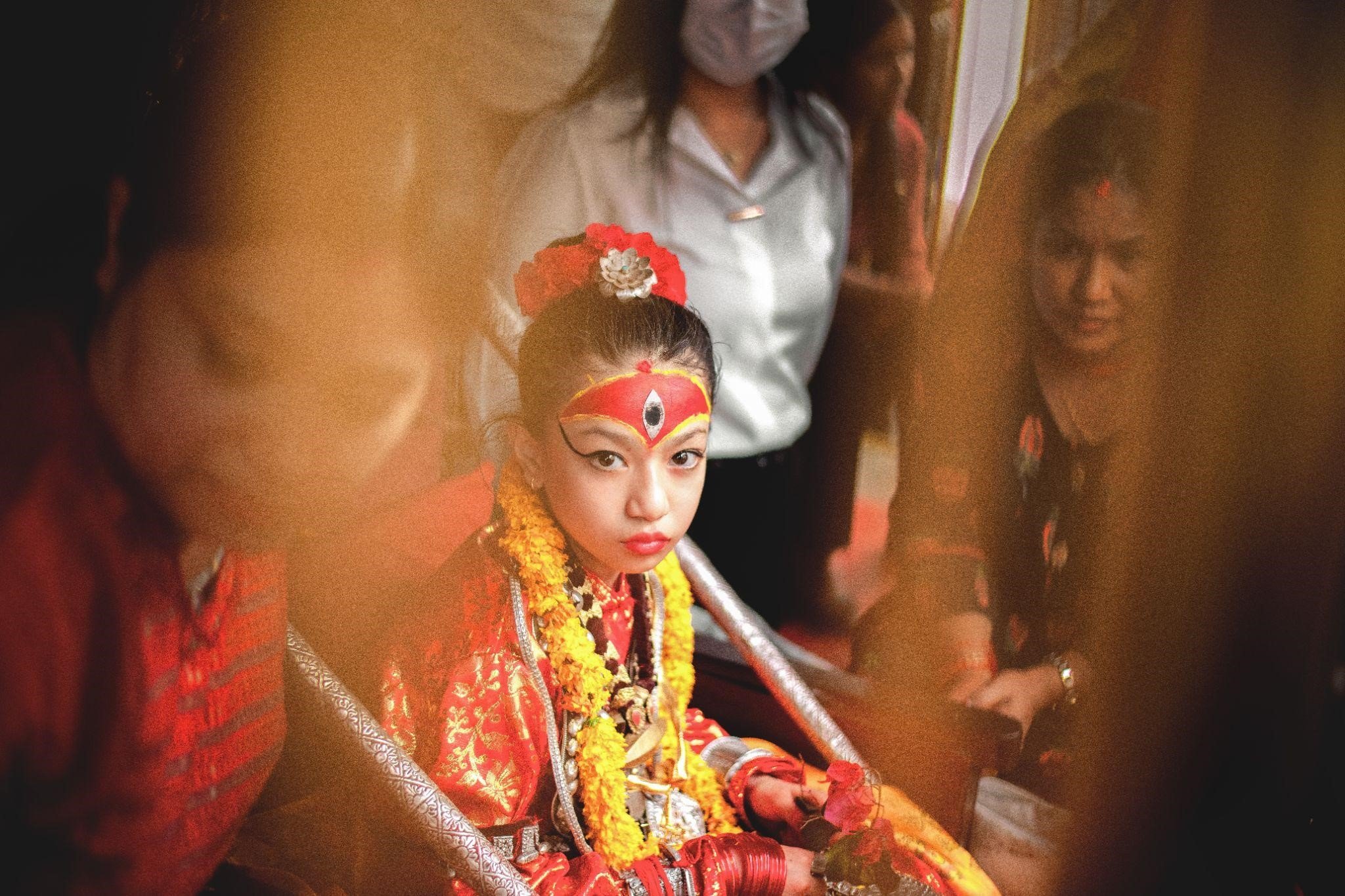
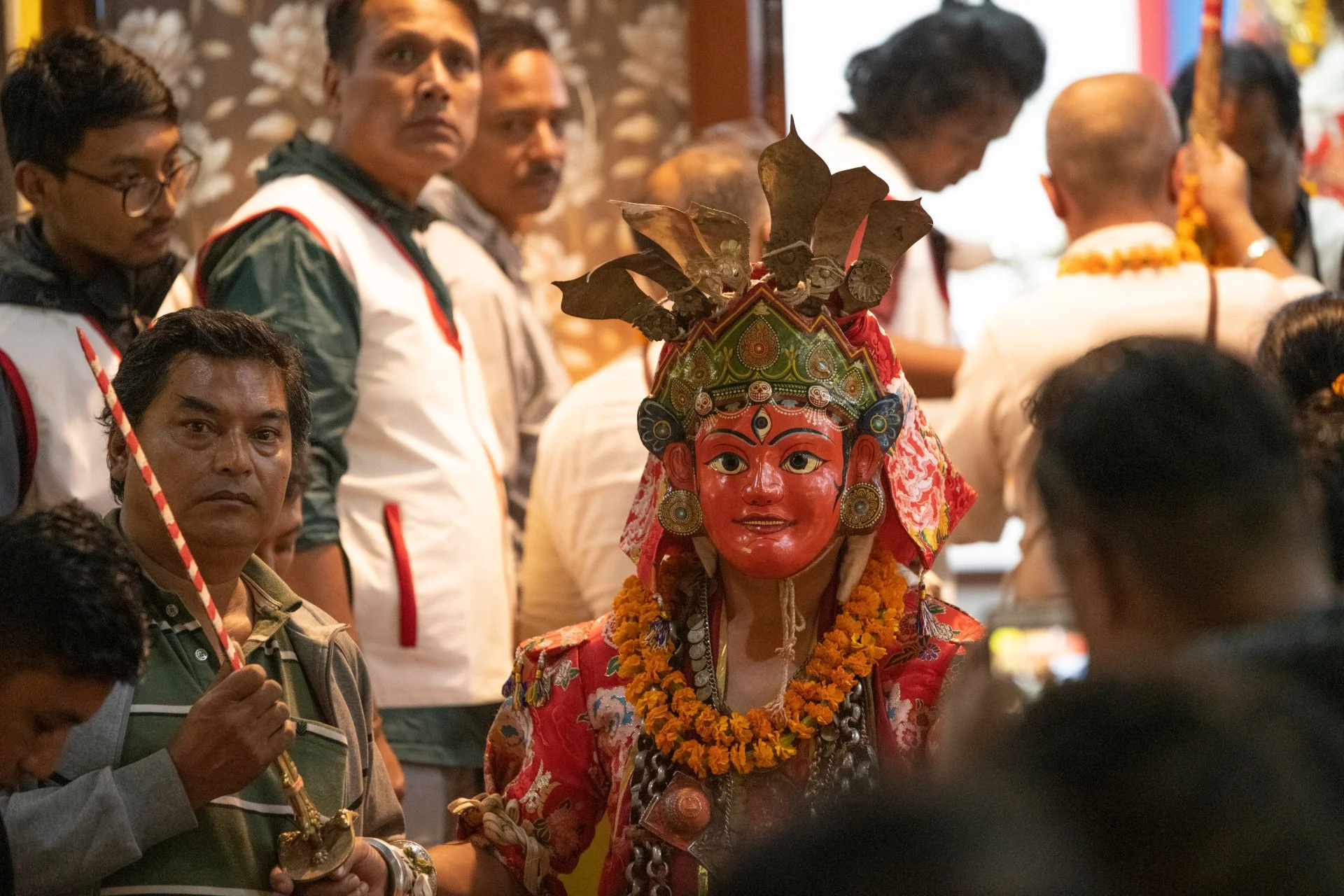
The dance and skit were presented in Trishul Chowk inside the Hanuman Dhoka Palace by the Nardevi Shweta Kali Conservation and Management Committee. Even though the dance is performed annually, the 12-year presentation is unique. It features godly characters who had only passive/dormant roles in the yearly rituals.
The most iconic of all is Su:tha Maju. Su:tha means morning, and Maju means mother in Nepal Bhasa. As per ritualistic traditions, the performances for the day only begin after she (Su:tha Maju) performs at the break of dawn. Locals state that even though Su:tha Maju, commonly referred to as Lokeshwor, is revered in the Buddhist community, the tradition binds all religions, faith and ideals found in this valley. Elders state how the manifestation of Su:tha Maju is an avatar of Nyata Maru Ajima.
The dance and skit last for four days in total. For two days, the artists perform at Trishul Chowk inside the main palace complex of Hanuman Dhoka. The remaining two days are at the open-air stage (Dabali) adjacent to the Gadhi Baithak, in front of Kumari Chhen (House).
Each character presents their opening, followed by the skit of Chandeshwari. The story summarized is as follows- Chandashur Daitya is a powerful demon. He is strong, mighty and fearless. The daitya (demon) falls in love with Chandi- the daughter of Nyata Bhulu Ajima. Ajima learns of this unholy union and tries their best to persuade her daughter. It seemed like nothing worked, but she created a powerful potion to intoxicate and hypnotize her daughter. In her influenced state, she turns on her lover- the daitya. She trades her sword with her mother and delivers a lethal blow killing the demon. After that day, Chandi was known as Chandeshwari- the slayer of Chandashur.
The 12-year celebration features special pujas at the mother goddess temples of Kathmandu valley. The mother goddesses featured in the dance and skit of Nayata Maru Ajima are found in its sister cities as well. These mother goddesses protect the kingdom from supernatural evil and create a tantric shield around the city. Most were established during the Lichhavi Era, and the custom of establishing an army camp or military facility near these goddesses continued till the Mala Era. An example of this can only be seen at Lumadi Ajima, today known as Bhadrakali.
POPULAR ITINERARIES
SIMILAR POSTS

The Dance of Nayata Bhulu Ajima - A Sacred Dance Part I
Mysticism is the greatest suite of Kathmandu. In the labrynth of allies and temples lie symbolism deeper than seen by the eye. One of such mystical elements of the city of Kathmandu is the celebration of Nyatabhhulu at its centre
Nayata Bhulu, a name that only a few ditizens of this valley know the meaning and location of once held high ranks in the sites of Kathmandu. Today, this area is known as Naradevi- one of many change of addresses that occurred after the occupation of Kathmandu Valley by Prithivi Narayan Shah. Nyata means centre, Bhulu means protector. As per Devmala Chronicles, the goddess of Nyata Bhulu was established by King Gunakamadev.
He is credited by numerous chronicles as the founder of the city of Kantipur. Chronicles states that he shaped the city in the outline of a sword- to be precise, the sword of Boddhisatva Manjushree. Historians have long emphasised the need for good research to better understand and preserve this unique culture of Kathmandu. “ As most meaning and symbolism of various temples and monuments in this valley are passed down orally, it is open to being highly twisted or misinterpreted. In the case of Nyatabhulu Ajima, we do not have any concrete inscription, script or cross-citations to create an authentic narrative. The Devmala Chronicle states that the area of Nayatabhulu is the ‘centre’ of the city. But other chronicles state how the city of Kantipur was founded with Kanteshwor Mahadev, today known as Aakash Bhairav, as its centre.” said Shreyashka Maharjan, a sociologist and cultural archivist.
The dance of Nayata Bhulu Ajima is a unique spectacle to behold. It is performed annually. But, once in 12 years- it is performed on a larger scale. This year was the year of the grand presentation. When performed annually, 12 deities are invoked, whereas in the 12-year show, 19 deities are invoked they are as follows:
1. Su:tha Maju (Lokeshwor/ Karunamaya)
2. Nyata Bhulu
3. Bhairav
4. Chandeshwari
5. Ganesh
6. Brahmayani
7. Rudrayani
8. Narayani
9. Kumari
10. Barahi
11. Indrayani
12. Mahalaxmi
13. Simhini
14. Byangini
15. Kumar
16. Chanashur Daitya (Demon)
17. Mahadev (Lord Shiva)
18. Dhwa (Tiger)
19. Khicha (Dog)
Legends state that the temple and goddess were established during the reign of Gunakamadeva, but the performance/ dance was initiated by King Amar Malla. Local experts mention that King Malla held Nayata Bhulu Ajima in high regard and credited her for his military victories against his neighbouring kingdoms. Thus, to honour her, he facilitated various rituals and sacred dances to be conducted annually to memorialise her for countless generations.
We shall explore various facets of dance in the next blog.
POPULAR ITINERARIES
SIMILAR POSTS
Symbolism of Dashain
Dashain- a grand celebration of victory over evil. The festival at its core is similar to Dashera celebrated in India but over time numerous elements have been through cultural practise. It is a festival with deep symbolism and roots in all of our cultures
Upon hearing Dashain people envision a long holiday where people rejoice in flying kites, wearing new clothes, eating good food, and exchanging kind greetings with loved ones. The most powerful symbolic message is the celebration of the victory of truth and virtue against injustice. This auspicious festival starts with Ghatasthapana where people fill a vessel to the brim with sand. Then they sow barley seeds and maize while covering it in a pitch black room and worshipping it for 10 days.
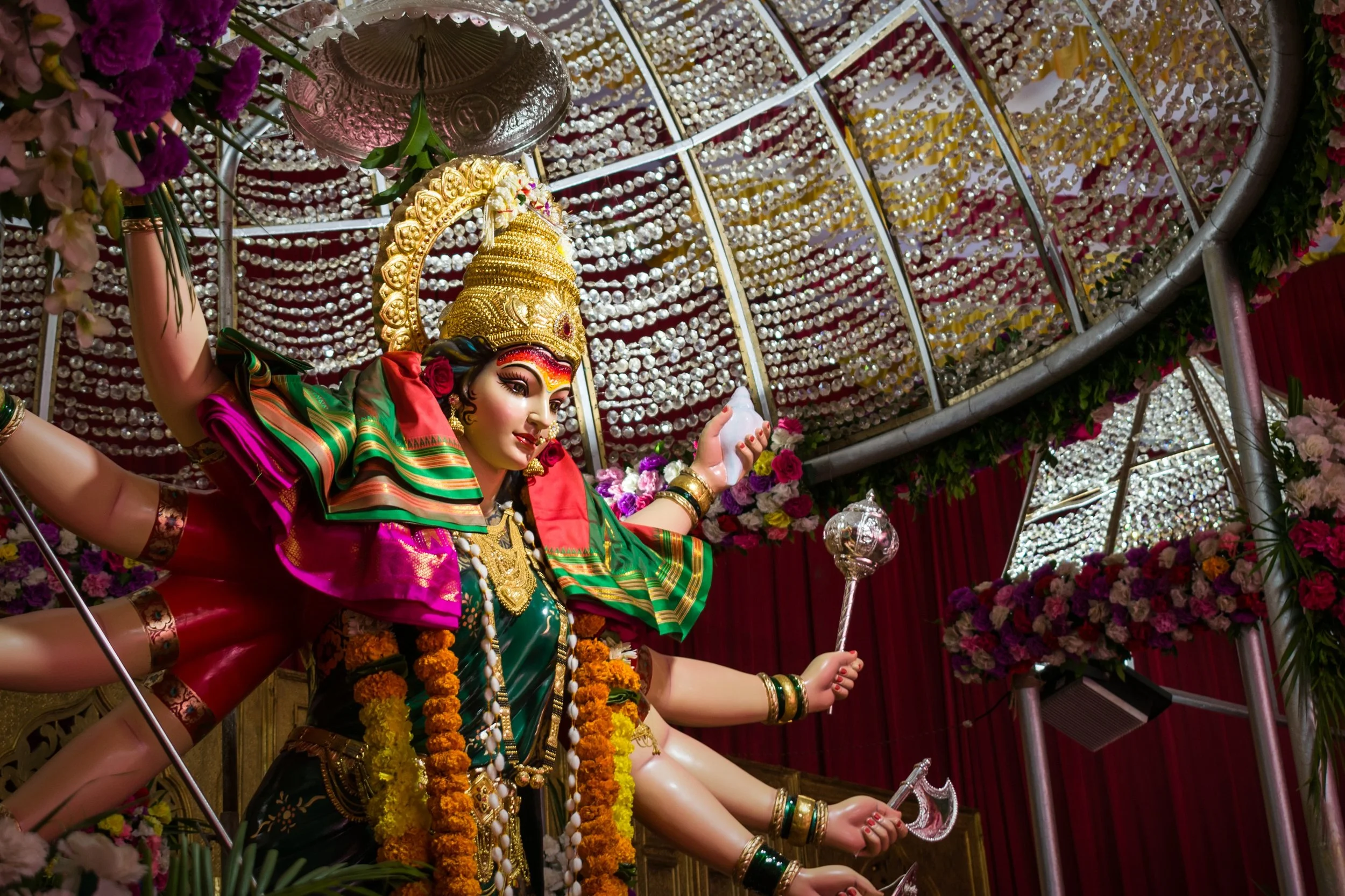
Similarly, on the seventh day, Phulpati is observed in the form of Saptami and is commemorated by an official ceremony held in Dhulikhel. After that, the Fulpati parade is taken to the residence of the president of Nepal as he’s a leader of the country. Followed by the eighth day, Maha Asthami is devoted to the name of Goddess Kali, who is a manifestation of Goddess Durga. To appease the fiery rage of Kali, people tend to sacrifice hens, goats, and buffaloes in temples. Now comes the ninth day of Dashain Mahanavami where we remember Lord Vishwakarma who is famously known as the divine creator of the world. People spent their day worshiping their tools, equipment, and vehicles. Another value of this important day is the opening of Taleju Temple. Its gates are open to the public only on Mahanavami.
Commonly, it’s considered to be a nine-day festival and is called Nauratha or Navaratri. During this time, we dedicate our time to worshipping many avatars of Goddess Durga like Brahmacharini, Shailputri, Kushmanda, Chandraghanta, Katyayani, Skandamata, Siddhidatri, and Mahagauri. On the tenth day, to mark the end of the ritual, people distribute Prasad as sweets and Jamara. Not to forget the most exciting part for children, elders bless them with Dakshina (money). It symbolizes blessings passed down from one generation to another. To give the exact timeline, the tradition of receiving Tika and Prasad starts from Ashwin Shukladashami and ends on Ashwin Shuklapoornim.
The fifteenth day is the last of this festival and falls on a full moon day. Preserving the historical ethos of the vibrant festival, it concludes after staying awake for the whole night and following various proceedings in the name of Mahalaxmi. This night is popularly called Kojagrat Purnima. The actual meaning of Kojagrata is someone ‘who is awake.’ There’s a common belief that Goddess Lakshmi visits earth and she keeps tabs on people who stayed awake to worship her. She brings prosperity and luck to people who prove their unyielding commitment.
However, there are some superstitious elements at play during this season as well. Animal sacrifices are done in the name of the weapon, Maulo, and Kotpuja. Although this practice has been notably reduced, they are still apparent in some typical Nepalese neighborhood. Our values should lie in the fact that saving the lives of harmless creatures should be done even if the tradition says otherwise.
Overall, the Dashain festival represents Nepal as being rich in cultural diversity. The Malshree dhun is integrated as a piece of mainstream Nepalese music and represents the tune of Dashain. Since the start of Nauratha, the pleasant melodies of Mohalibaja, Fluit, Dhime, and Jhyamtebaja denotes the arrival of our most awaited festival.
Also, the appealing weather with warm and lovely sunrays in the daytime and foggy mornings make the festival even more joyous. It falls under the perfect time, the ending of the rainy season, and the beginning of the winter season.
The elements of bonding and family reunion make Dashain a valuable and memorable time for all. Other key aspect includes bonding, elder’s blessings, family reunion, and entertainment making it a heartwarming time spent with loved ones.
POPULAR ITINERARIES
SIMILAR POSTS
Sikali: A Unique Take on Dashain
While most of us rejoice for nine days in the most auspicious festivity of Dashain, people of the Newa community partake in a unique cultural blend in a historic town. For ages, the post-harvest celebration has had its own significance and this Newar festival for the people of Khokana is parallel to the ideologies of Dashain, ‘Victory of good over evil.’
Historically speaking, the festival is dedicated to the name of the goddess Sikali, more commonly known as Rudrayani and Ajima. Famously known for carrying the reputation of a healer in society, Sikali are guardians committed to being the protector of children. During the seven days long festivals starting from Ghatasthapana, Goddess Rudrayani is carried in a wooden chariot for a stroll throughout the village. She then rests in front of the Sikali temple where she belongs surrounded by religious copper vessels.
On the day of Fulpati, they commemorate the occasion with a special cultural dance in the heart of Khokana. In the Malla era of the 15th century under the ruling of the King, Amar Malla made various temples under the name Matrika’s (Mother Goddesses). Amongst them, Rudrayani, commonly known as Maheshwari became a well-renowned deity. A special temple was made in her name and the town of Khokana dedicated its life to her service. For that matter, the King selected Dangols and Maharjans and relocated them to Pachali Bhairav for maintaining and catering service. While establishing the foundation of the Kingdom, the city was famously known as Jitapur.
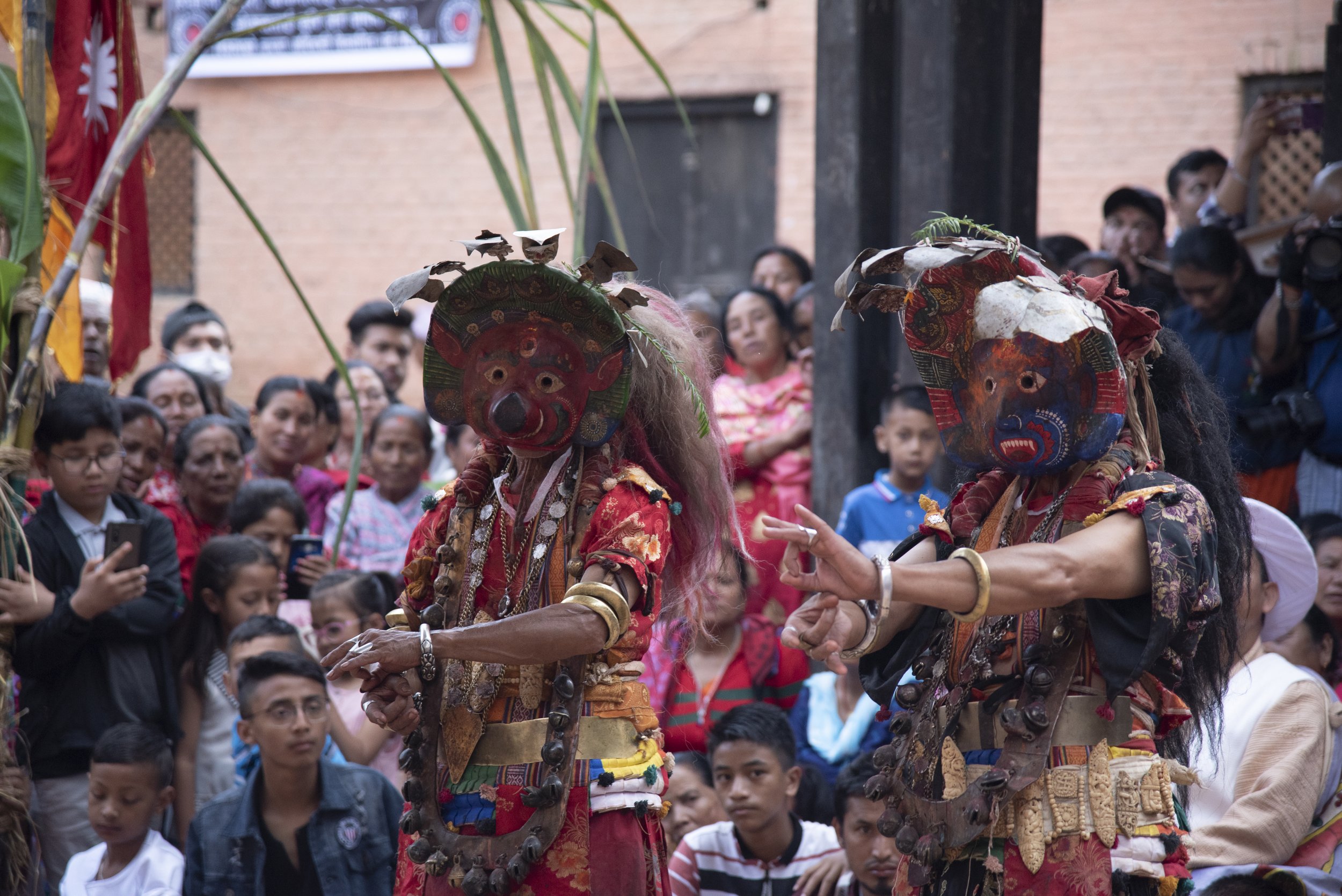
So, in today’s era, how is tradition conducted? Well, it is conducted by the prestigious priests with decorative ornaments and plain white robes. About 14 masked goddesses come together to perform a graceful dance with each other. Locals have strong faith that their devotion to protecting them and their town from grave calamities and misfortunes. Previously, the deeds performed in the festivity were also known to reduce the high child mortality rate in Nepal. It was a common myth before modern medicines and vaccines came into existence.
Talking about the origin of the word Khokana, it is a Newari word Khokana where “Kho” means to weep and “Kana” means to tell. Legend says that in this land a respected Maharjan priest of Pachali Bhairav residing in Kathmandu lost consciousness because of a high cold fever. The village Vaidya, in a state of shock and confusion, thought he was dead and was taken to the bankside of Bagmati for cremation. His wife joined beside him in the pyre following the historical Hindu practice of Sati Pratha.
A heavy downpour then resulted in everyone leaving the cremation and running towards the shelter. But surprisingly, as the pyre started burning, the priest gained consciousness. Thinking of this as a bad omen, the people of the locality didn’t allow both of them to enter the city again.
With nowhere else to go, they decided to make their living in Kudesh, ‘Ku’ meaning Bad and ‘Desh’ meaning country. There’s a hearsay that claims Goddess Sikali Devi blessed the couple and they started a new settlement on the northwest side of Khokana, the rest is history.
During the final day, a distinct performance is held by the elders of the community. Presented in an archaic form of storytelling, it involves traditional music with people in godly dress up and a mask of famous gods and notorious demons. This represents a great diversity of people coming together as one. A huge commotion is created by individuals to witness the auspicious occasion of Sikali being taken to the temple. The spectacles take blessing from her for health and prosperity. Even tourists from far and long come to get a glimpse of this holy entity.
POPULAR ITINERARIES
SIMILAR POSTS
Yenya Punhi: A Jubilation of Kathmandu - Part II
According to legends, it is believed that the mother of Lord Intra required a Parijat( a white flower) to perform a ritual. For which Lord Indra descended to earth in search of the flower. He disguised himself as a commoner and while trying to take the flower out of the lawn of a Jyapu. He caught Lord Indra and held him captive blaming him of trying to steal. Lord Indra was imprisoned and not allowed to go back to heaven.
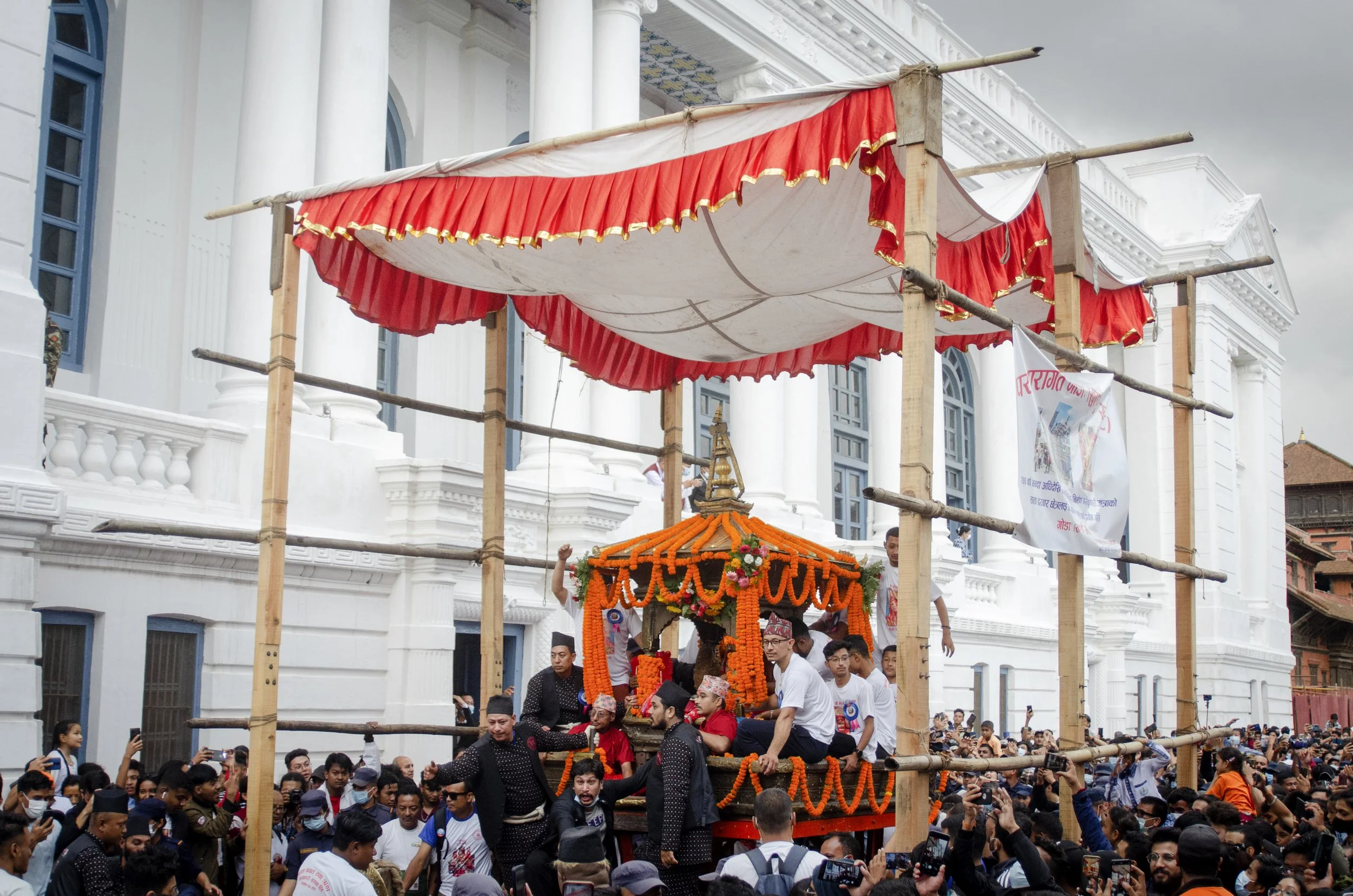
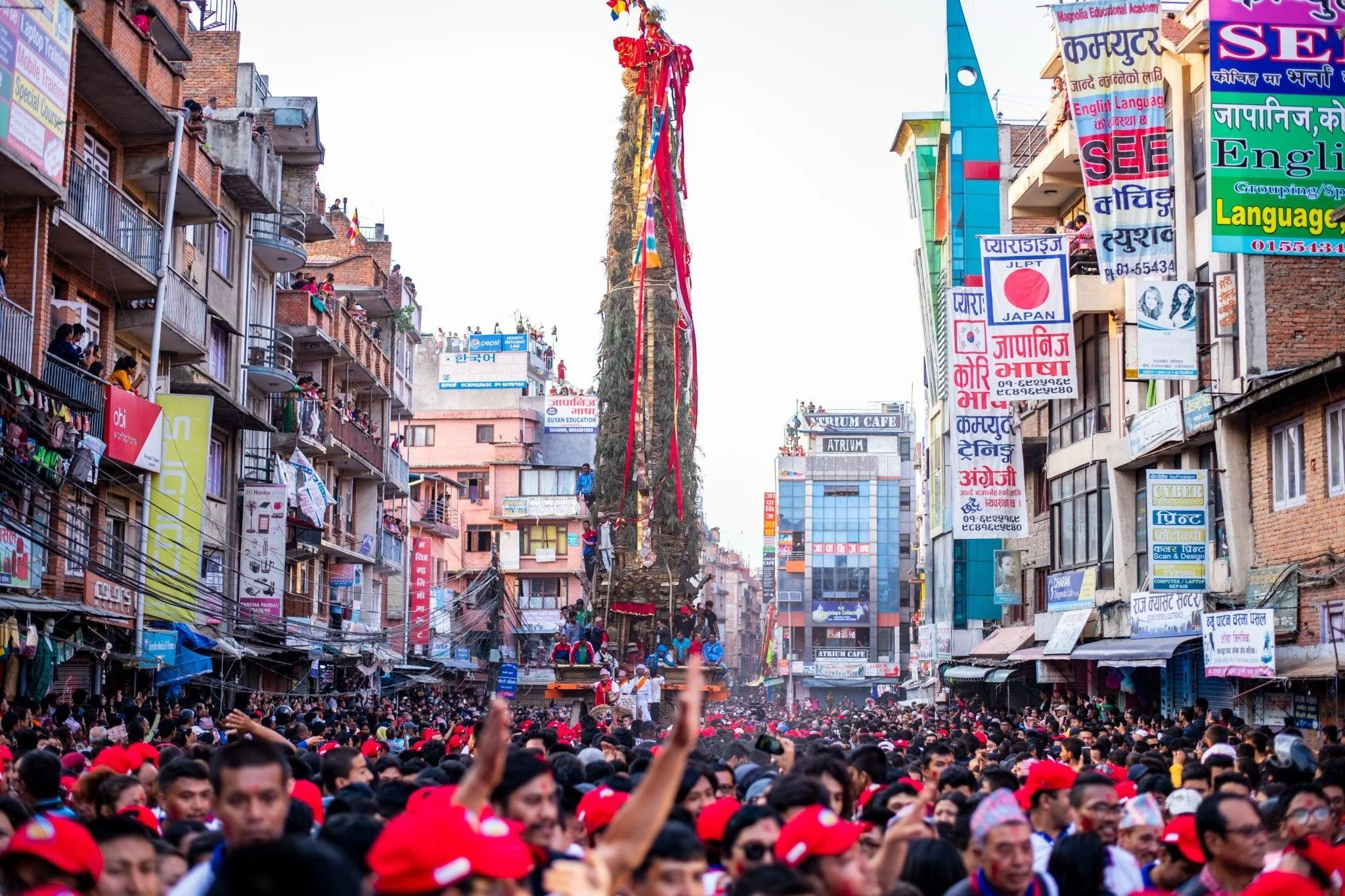
Regarded as the biggest festival of the then Kingdom of Nepal Valley, the true origin of the festivals are still debated. But this festival is believed to be founded during the Licchavi Era by King Gunakamadeva, the founder of the city of Kantipur (Kathamandu). The celebration of Indra Jatra is made of three different series of rituals: Kumari Jatra, Indra Jatra and Bhairava Jatra. Each have their own legends and ceremonial components but as a whole, turn the centre of Basantapur Durbar Square into a grand affair. The square is a sight to behold from the break of dawn till midnight, as the chariots of Kumari, Ganesh and Bhairava make there way through the inner city of Kathmandu. Every street comes to life with masked dances, merry music during the eight days of festivities.
According to legends, it is believed that the mother of Lord Intra required a Parijat( a white flower) to perform a ritual. For which Lord Indra descended to earth in search of the flower. He disguised himself as a commoner and while trying to take the flower out of the lawn of a Jyapu. He caught Lord Indra and held him captive blaming him of trying to steal. Lord Indra was imprisoned and not allowed to go back to heaven.
The mother of Indra grew worry some as her son hadn’t returned from Earth. Phul Khusi ( The Vahan of Indra) descended upon Earth to find his master and wondered around the streets of Kathmandu. During when a great festival was occuring in the Kathmandu and after hours of searching, Phul Khusi found Lord Indra. Phul Khusi took the news to heaven after which, his mother descended from heaven to free her son. She requested the villagers to release her son, but didn’t heed to her words. Only after Lord Indra reveled his true form. The mother of Indra made a promise to the villagers to give in return a final rainfall for their harvest to prosper and she would lead them to the gateway to heaven.
Accepting the conditions the villagers freed Lord Indra and let him go with his mother, a group of villagers followed them to the outskirts of Kathmandu to find the doorway to heaven. But Lord Indra’s mother tricked the villagers by putting forth a large mist which left the villagers confused and in dismay as Lord Indra and his mother went to heaven. To commemorate this event, during the celebration of Indra, a Dagi ( Procession) takes the same path every single year. “The circumbulation of the city is performed in order to reach heaven in the Dagi’s footsteps to meet the dead relatives. The families scatter grain by the wayside so that they would not forget the way home. One finished, they throw what remains of there offerings in a plce called Bhuta Satta, near Kasthamandap, and wash their faces at Maru Hiti fountain. Afterwards, they either return home or go to bathe in Indra’s Pond ( Yamki Da), which is located on a hill 12 kilometers west of Kathmandu.” Toffin,1992,86)
The festival of Indra Jatra is a feast to all senses, the air is scented with the smell of incense, and the sound of drums and traditional instruments tranquil once ears. For the eyes, one can behold the procession of Living Goddess Kumari along with Lord Ganesh and Lord Bhairav. The chariot is pulled for three consecutive days. The first day is known as Kwaneya during when the chariot makes its way from Basantapur, Maru, Chikanmugal, Jasidewal, Lagan, Bhimsensthan, Baru and ends at Basantapur. The second day is known as Yenya Punhi on which the chariot procession begins from Basantapur to Pyaphal, Nyata, Tengal, Nhyaokha, Nhaikan Tol, Asan, Kel Tol, Indra Chowk, Makhan and ends at Basantapur. The final day of the procession is known as Nanichaya, the chariot is pulled by revellers from Basantapur tp Pyaphal, Yatkha, Nyata, Kilagal, Bhedsing, Indra Chowk, Makhan and ends at Basantapur.
During the festival of Indra, various idols and masks of goddess are taken out of their normal abode to be exhibited to the people. The most prominent of which are the Sweta Bhairab mask and the idol of Akash Bahiran. Similarly an image of Indra is displayed at Maru and Indra Chowk. Various forms of dances such as of Lakhe Aju, Mahakali Naach, Halchowk Bairab, Phul Kushi, Devi Kyakhan are performed on specific days and nights of the festival.
POPULAR ITINERARIES
SIMILAR POSTS
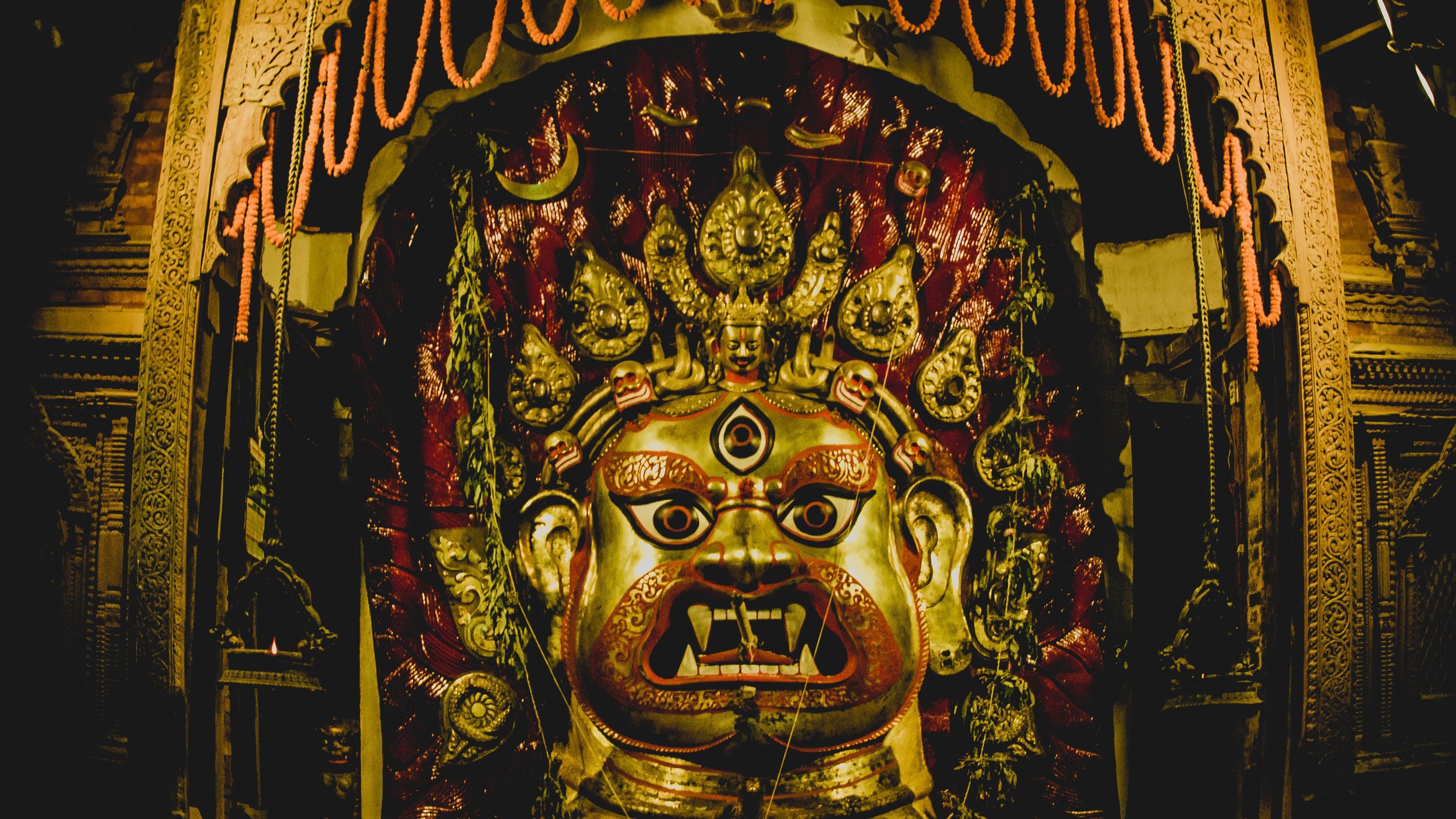
Yenya Punhi: A Jubilation of Kathmandu - Part I
Amongst the great celebrations of this valley, nothing beats the pomp and flair of Yenya Punhi. Commonly known as Indra Jatra- a name derived from the lore of Indra- the heaven king's visit to Nepal. This festival is larger than life, with symbolism and meaning going back thousands of years- neatly preserved by the Newars.
The jubilation of Kathmandu is a combination of festivals. It features the veneration of multiple deities. The Newar name Yenya denotes "Celebration (ya) of Kantipur/ Kathmandu (yen)". The township during the Lichhavi era was called Yen. Its sister cities were respectively called Yala (Lalitpur), Kwopa (Bhatgaon/Bhaktapur) and Kipu (Kirtipur).
The origins of the festivities are very vague. However, the careful analysis presents a similarity to ancient paganistic rituals of Europe. The day of Yenya Punhi aligns with the change of season in this valley. The season transfers from Barsha (Monsoon) to Sarad (Autumn). Reviewing the procedures of various festivals in the valley: evidence is drawn to how the Yasi/ Yosi (Ceremonial Pole) is hoisted to alert the citizens of change. The same was observed in medieval Europe. The ceremonial May Day pole symbolized the advent of spring. A stark similarity to Bhaktapur's Yoshi was erected during Bisakh Jatra to celebrate the end of winter and the beginning of spring.
After the Earth, the festival features associations with the guardian deity of Nepal Kingdom- Bhairava. The association was made during the Licchavi Era. A legend goes as follows:
As instructed, the King merged the existing villages of Koligram (Yambhu) and Dakshin Koligram (Yengal). He defeated rulers of various petty states and created his new city. He also established a beautiful stone spout gilded in gold, Lu Hiti (Gold- dhara/ Sundhara). It featured an intricate water-management system, and royal canals (Rajkulos) channelled river water to the spout. He named the city Suvarna Pranali Kantipur. Here, Suvarna means golden, Pranali means system. Kantipur is a mixture of two words - Kanti, meaning beautiful and pur, which means place.
To celebrate the momentous occasion, he initiated a festival known as Yenya. The word is a mixture of Yen- the Newari name of the city and Ya- celebration. It is also called the celebration inside the town.
It is possible King Gunakamadeva’s celebration overlapped the change of seasons, and the two elements became one.
The inception of Indra in the festival is a great mystery. Indra is a god from the Vedic era. He had deep roots in the classical Indian pantheon, but his worship slowly began to fade. Some believe that due to his nature his worship began to fade. Anthropologist G.S Nepali writes, "The festival of Indra Jatra suggests perhaps the memory of a conflict between the two tribes- the followers of Indra and their opponents. The festival is perhaps an Indo-Aryan feature which survives in Nepal, but is totally forgotten in India."
The goddess of Indraghat arrived in the Nepal Kingdom during the rule of King Dharmadatta. The goddess is referred to as Indrayani, locally known as Manamaiju. The hill where she settled in this valley is referred to as Manamaiju. It could be that after her arrival, the worship of her husband Indra also began.
The third fold of this festival is the female guardian of the Nepal Kingdom- Kumari. A Kumari is a living goddess embodying the energy of the divine feminine. She is worshipped as Taleju Bhawani, Durga or Parvati. During the Malla Era, King Jaya Prakash Malla had an unfortunate encounter. He lost the trust of his tutelary deity Tulaju Devi (today known as Taleju). After multiple requests, she came to his dreams and directed him to begin worshipping a virgin girl of the Bandra (Buddhist Newar) community as her manifestation.
To read the full version of the incident click here
These elements combined have created an atmosphere of great jubilation. The core activities related to these deities are accompanied by various magical creatures and the presentation of beautiful dances and plays.
POPULAR ITINERARIES
SIMILAR POSTS
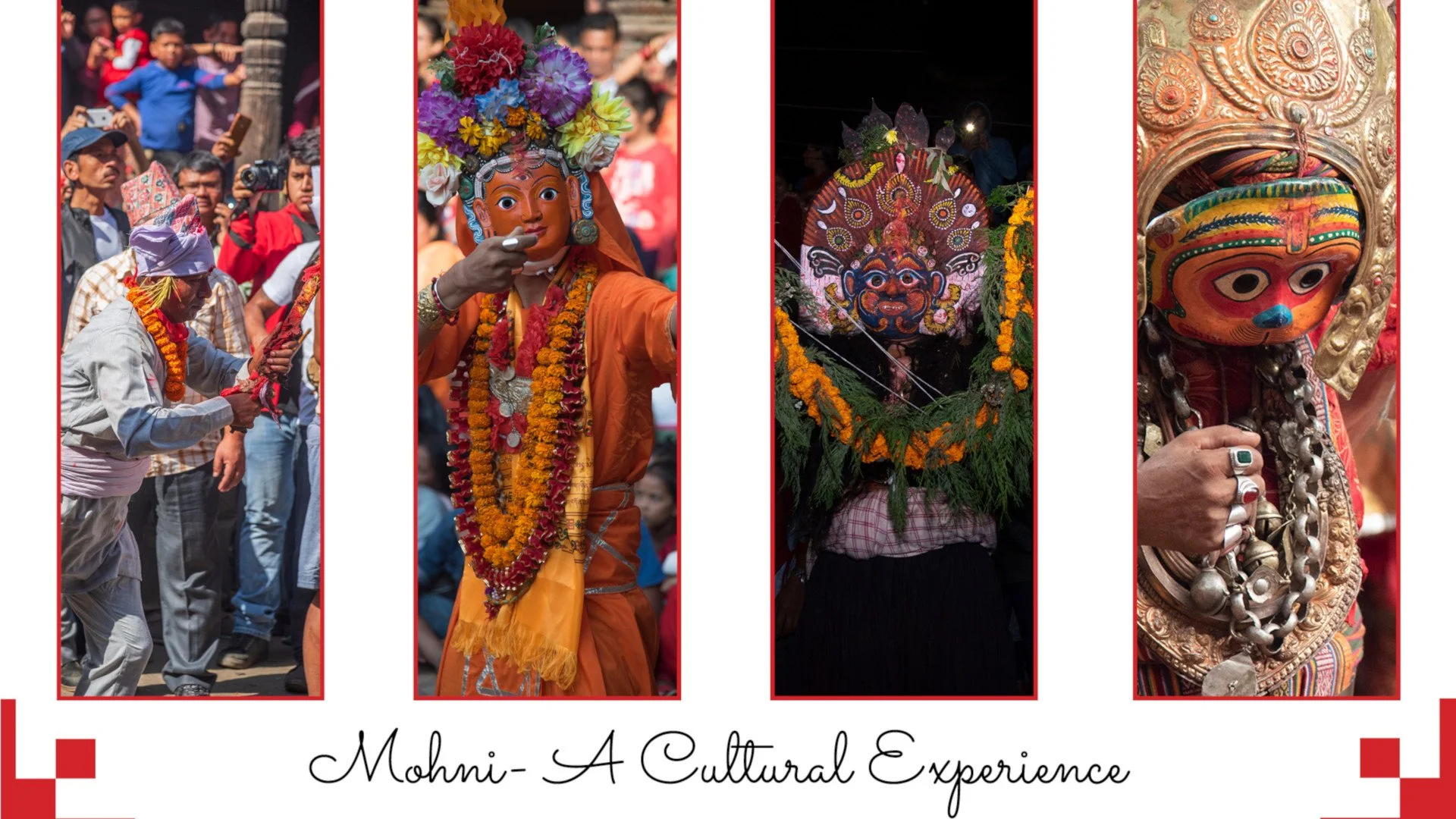
Mohni- A Cultural Experience
For an outsider to truly experience Mohni, s/he has to be invited by a Newar to their home. Over the years, due to its close celebratory proximity to Dashera, the grand festival of India, it was also considered Dashain- the Nepali rendition of Dashera. But, in reality, Mohni features a few similar elements brought by migrants from the south. Apart from this, the customs and traditions are completely different.
The core celebrations are private. But the Newars, over the years, found a way to liven the public atmosphere as well. Thus, various smaller events take place during the core two-week festival. As these cultural traditions take place in public spaces, one can absorb the cultural experiences easily.
To learn more about the celebration: Click Here
Mentioned below are a few of these events. They amplify the celebrations of Mohni via the presentation of numerous dances, skits and others.
Sikali Jatra
On the southern end of the city of Lalitpur lies the picturesque village of Khokana. Historic in nature, stepping foot inside the settlement is equal to walking back in time. The old mud-brick houses and ancient heritage mingle with the new concrete construction.
A unique aspect of this village is how the inhabitants do not celebrate the main festival of Dashain. They, however, rejoice in a celebration known as Sikali Jatra. It begins on the day of Ghatasthapana and ends on the day of Fulpati.
During this period, the inhabitants perform ancient rituals. Amongst these are the Sikali Naach and the skit of Khokhana. Elders adorn the masks of various deities and re-create a play depicting old tales. Whereas in the premises of the Sikali temple, an arcane ritual takes place.
Asta Matrika Dance
Traditionally known as Ga Pyakhan, this ensemble features 13 masked dancers who embody the principal mother deities of the city and chief gods. In Nepal Bhasa (Newari), Ga means group and Pyakhan- dance, whereas Asta Matrika Dance in Nepali.
This dance originated in the 17th century. As per chronicles, the king saw the deities dance towards his palace and enter the courtyard. The king rushed to take their blessings, but as he entered the court, they vanished. To commemorate this auspicious event, he initiated this dance.
This performance is annual and begins on Ghatasthapana- the first day of Mohni. The dancers follow strict discipline for eleven days. Primarily the presentation takes place in the evening, but on the seventh and tenth day, the show takes place during the day at Mul Chowk of Patan Durbar.
Pachali Bhairab Jatra
Towards the southern end of Kathmandu lies an open-air temple with a peculiar deity. The worship of Pachali Bhairab, as per numerous chronicles, began in the 10th century, during the rule of king Gunakamadev. The festival of Pachali Bhairab takes place on the fifth day of Mohni. Devotees flock to the temple to seek his blessing and to witness the chariot festival. The deity is carried on a palanquin by community members and take a designed route on the old city roads. At Hanuman Dhoka, the idol rests, and special puja is conducted. Post which, the procession heads towards Kumari Chhen (House), where the living goddess locks eyes with the bronze idol. Until she instructs that she is satisfied, the ritual doesn’t stop. After her instructions, the procession completes the circuit, and the statue rests inside the temple premises.
Khadga Jatra
On the morning of the tenth day, three scared swords are brought to Patan Durbar Square from the temple of Mahalaxmi in Lagankhel. Young boys tease the sword-bearer, and a deadly chase ensues. It is a spectacle that attracts a handsome crowd. Once they reach the palace cortex, the sword-bearers are welcomed with a special ceremony. The swords are then placed inside the temple and taken out in the evening.
Thecho Navadurga
The ensemble from Thecho, a semi-urban village south of Lalitpur, visits Patan Durbar Square on the evening of the tenth day. It features masked dancers who embody mother goddesses and other chief gods. They perform a sacred dance in the palace courtyard and indulge in a feast as well.
POPULAR ITINERARIES
SIMILAR POSTS
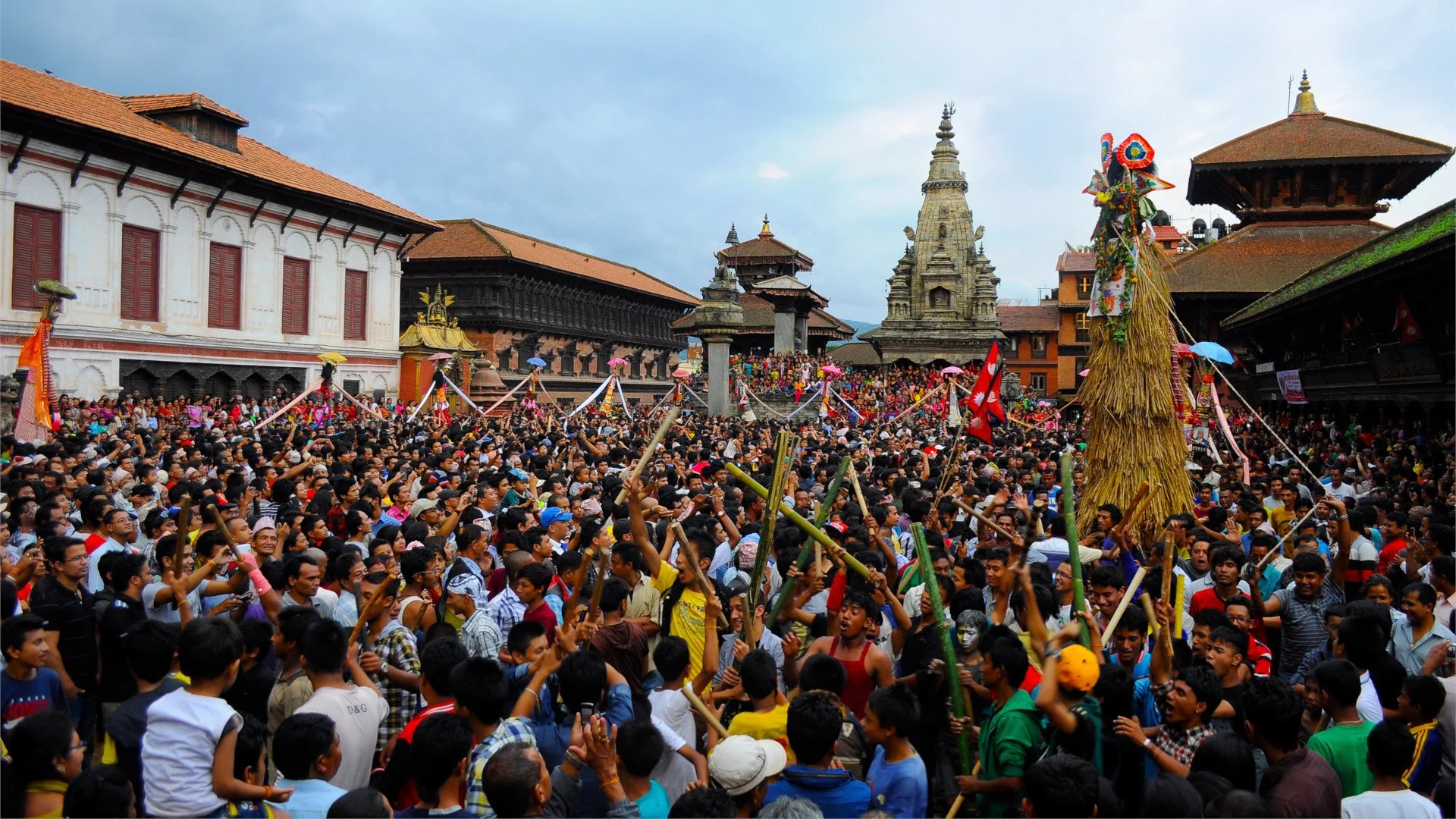
Gai Jatra A Day of Remembrance
Annually on the day of Bhadra Krishna Pratiprada, the valley of Kathmandu wakes to celebrate a festival like no other. Known as Sa Paru in Newari, and Gai Jatra in the Nepali, during the day individuals choose to commemorate the members of their family who have recently departed.
The thing that makes this festival so unique, is the way of commemoration, it isn’t done shedding tears but by spreading laughter and love. The festival is observed for a total of eight days, but the grand festivities occur on the first day. Celebrated only inside the Kathmandu Valley, by the natives of the Newar Community each city of the then Kingdom of Nepal celebrates the day in their unique manner.
According to legends, it is believed that King Pratap Malla of the Malla Dynasty instituted the Gai Jatra after the death of his son. His wife had been stricken with grief and all remedies of had thus failed. King Pratap Malla couldn’t bare the condition of his beloved wife and thus instituted a long procession, to bring forth to the Queen that it wasn’t only she who had lost a dear member of the family. Seeing the procession eased her sorrows, but it didn’t get the job done. Thus he announced a reward would be granted to anyone who would be able to put a smile on the queens face. It is also believed that, he granted full freedom of speech during the festival. The citizens accepted the challenge and came forth with various jokes and ridiculous apparel. Seeing which, the Queen finally broke a smile and laughed.
After which the celebration of Gai Jatra took a new leaf in the valley, where it became not just a way to commemorate the departed but also a way to spread joy and happiness to the once who did. Anil Chitrakar in his article for ECS Nepal states another legend related to the beginning of Gai Jatra, “As the Buddha was going around teaching the Dharma, a woman by the name of Krisha Gautami approached him crying and carrying a dead child. She demanded that if he was as great as people had told her he was, the Buddha should bring her child back to life. It is said that the Buddha calmly asked the woman to get some mustard seeds from a home where there had been no deaths so that he could sprinkle them on the child and bring him back to life. The woman agreed and began her quest to get the seeds from a home where no one had died. House after house she had to listen to sad tales of death in each family. As the day wore on, the woman realized the futility of her effort. The process of healing had begun.”
It is believed that Gai Jatra is a tribute to the departed soul. In Hinduism and Hindu mythology the cow is believed to a holy animal which would lead wondering spirits of the departed soul towards heaven. The departed are believed to hold the tail of the cow while they make their journey across the Vaitanrni River( The river between Earth and Naraka, the realm of Yama the god of death) without facing any hurdles.
The festival of Gai Jatra has multiple forms of observance in each city of the then Kingdom of Nepal Valley. In the city of Kantipur (Kathmandu), the procession makes its way thorough the old routes of the city and to the Durbar Square. Revellers of all forms can be seen, but the pack is normally lead by children dressed what we call, “ Gai Jatra” attire. In Patan, the day of Gai Jatra has very less participants as Patan( Lalitpur) celebrates Mataya. Mataya and Gai Jatra bare similarities, both long processions and mostly observed by individuals who have lost a member of their family in the recent year.
If one truly chooses to see the grand festival of Gai Jatra, then one must head to Bhaktapur. The entire Durbar Square area, lights up in a grand celebration with chariots known as Taha-Machas, which indicate the departed are taken around the city. The most unique paradeis known as Ghinta Ghisi which has two rows of individuals each with two small sticks hitting each others stick. It bares similarities with the Indian dance of Dandiya.
The festival of Gai Jatra holds a special communal importance in the Newar communities. The communities come together to organize, songs and music for the procession. The festival brings together members of the community where they can share condolences and also provide encouragements to the family members of the departed. It also helps make aware the younger generation, the cycle of life and how everyone has to die and it is a part of life. But that doesn’t mean that one has to always stay in mourning, and sorrow and the activities of the festival help bring love, laughter and joy into their lives.
POPULAR ITINERARIES
SIMILAR POSTS
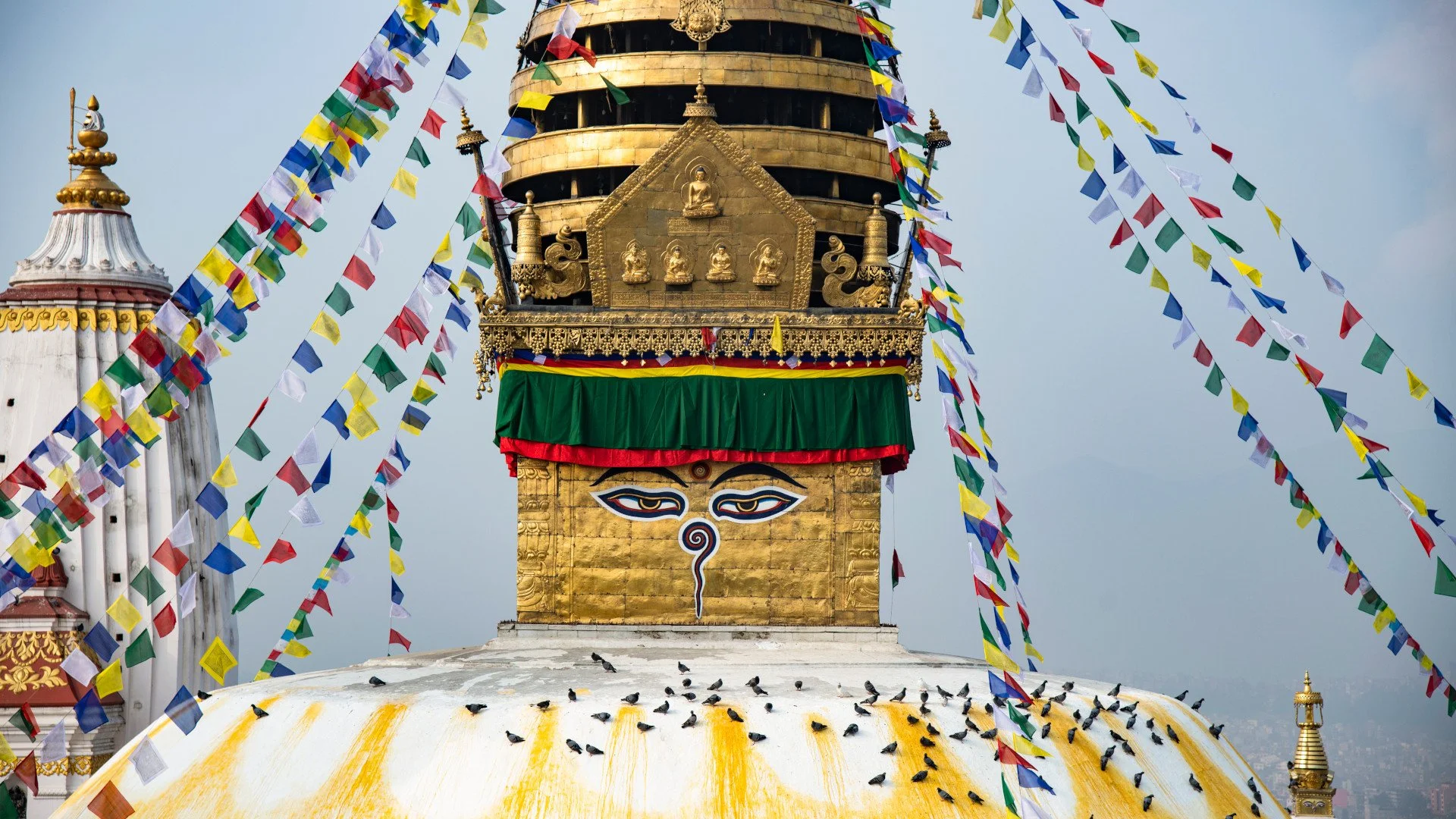
Major Buddhist Sites of Kathmandu Valley
Buddha Jayanti is an auspicious occasion. This day celebrates the death and enlightenment of the most recent Buddha, Shakyamuni, Gautam Buddha. The valley of Kathmandu holds numerous great Buddhist shrines that pay tribute to the Buddha and his teachings.
This valley and enlightenment have an entangled history. As per local lore, the first seeds sown were by Tathagata Vipasvin (Vipasyi Buddha). From it grew a lotus in the shape of a chaitya. It was called jyotirupa, a jewel in the form of light. Bodhisattva Manjushree learnt of it during meditation and embarked on a pilgrimage. He drained the valley, giving the world access to jyotirupa.
The first township in the valley was Manjupattana, a beautiful city created by Manjushree. Buddhism flourished in this vale, a sacred haven built by Bodhisattva Manjushree.
The greatness of this valley kingdom was known far and wide, attracting refugees, sages, bodhisattvas and more.
Many great shrines symbolise the Buddha's journey and his teachings. These sites bustle with devotees during Buddha Jayanti. They present various offerings and pray for peace and well-being.
Swayambhu
For the Newars of this valley, the hill is as sacred as the stupa. "Especially among the Newar, it has a great popularity since mythical times not as a stupa-building but as a holy place and even as a god.", wrote Wolfgang Korn in his book the "The Traditional Newar Architecture Of The Kathmandu Valley".
In Newari, the hill is known as sahyengu. Sa denotes cow and hyen tail, whereas gu means hill. The short version of this name is still used by elders, singum. As per research by Rospatt, it was only during the 15th century that the hill became Svayambhu. This correlates with Svayambhu Purnana being written in the same century. The hill gained an association with Adi Buddha, self-existent, through this writing because researchers did not discover any mention of Adi Buddha in the 14th-century chronicle The Gopalarajvamsavali.
Travelling forward in time, Svayambhu today is the crown jewel of this valley. Over the years, various elements have been added to this site, such as mani-walls, statues of Buddha, Manjushree, Padmasambhava and others. It is known as Svayambhu Stupa and Svayambhunath. It is a symbol of Buddhism, which receives numerous devotees. It was indoctrinated into UNESCO's World Heritage Sites in 1979.
Boudha
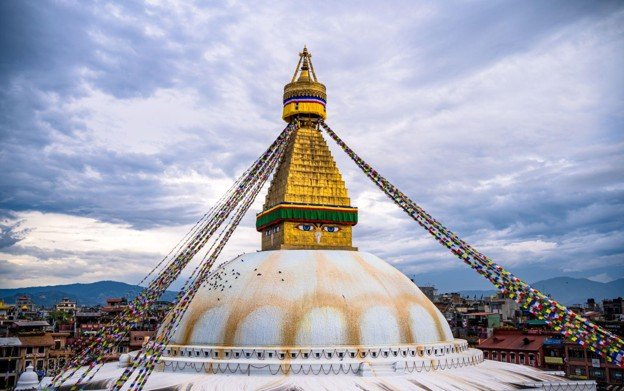
The stupa of Boudha is yet another stellar representation of Buddhism in Kathmandu Valley. As per Tibetian belief, the stupa is a tomb holding the remains of Kasyapa Buddha, the predecessor of Shakyamuni (Gautam Buddha).
As per Newar chronicles (Vamsavali), Manadeva I built the chaitya in the 5th century. Devotees regard the eyes of this stupa as the guardian of the whole world. For a long period of history, the local Newar population disregarded the stupa. Author Wolfgang Korn writes, "It is obvious that this stupa was not integrated into the religious calendar and life of the Valley Buddhist population, the Newars, as it was not mentioned for about 600 years."
Today, Boudha is a sacred space highly revered by the national and international population. It sees thousands of pilgrims and visitors very year.
The four Ashokan Stupas of Patan
In the ancient city of Patan, which today lies in the larger town of Lalitpur, exists four mysterious stupas. The four stupas are collectively called the Ashokan Stupas of Patan. Their origin is widely debated in the cultural community. One sect believes that the Mauryan emperor Ashoka erected the stupas in the 3rd century BCE. The second sect counters the claim stating that it isn't Ashoka but his daughter Charumati, who was married to the prince of Nepal Devapala Khastriya.
The names of the stupas are as follows:
A. Tetas (East)
B. Lagan (South)
C. Pucho (West)
D. Yampo (North)
These stupas were regarded as the boundary of the inner city of Patan. Newars identity them as thur rather than stupa. For a long period of history, these stupa/thur were only viewed as landmarks. It was only later that they were incorporated into the religious rituals by the Newar population.
POPULAR ITINERARIES
SIMILAR POSTS
The Jewels of Province 2
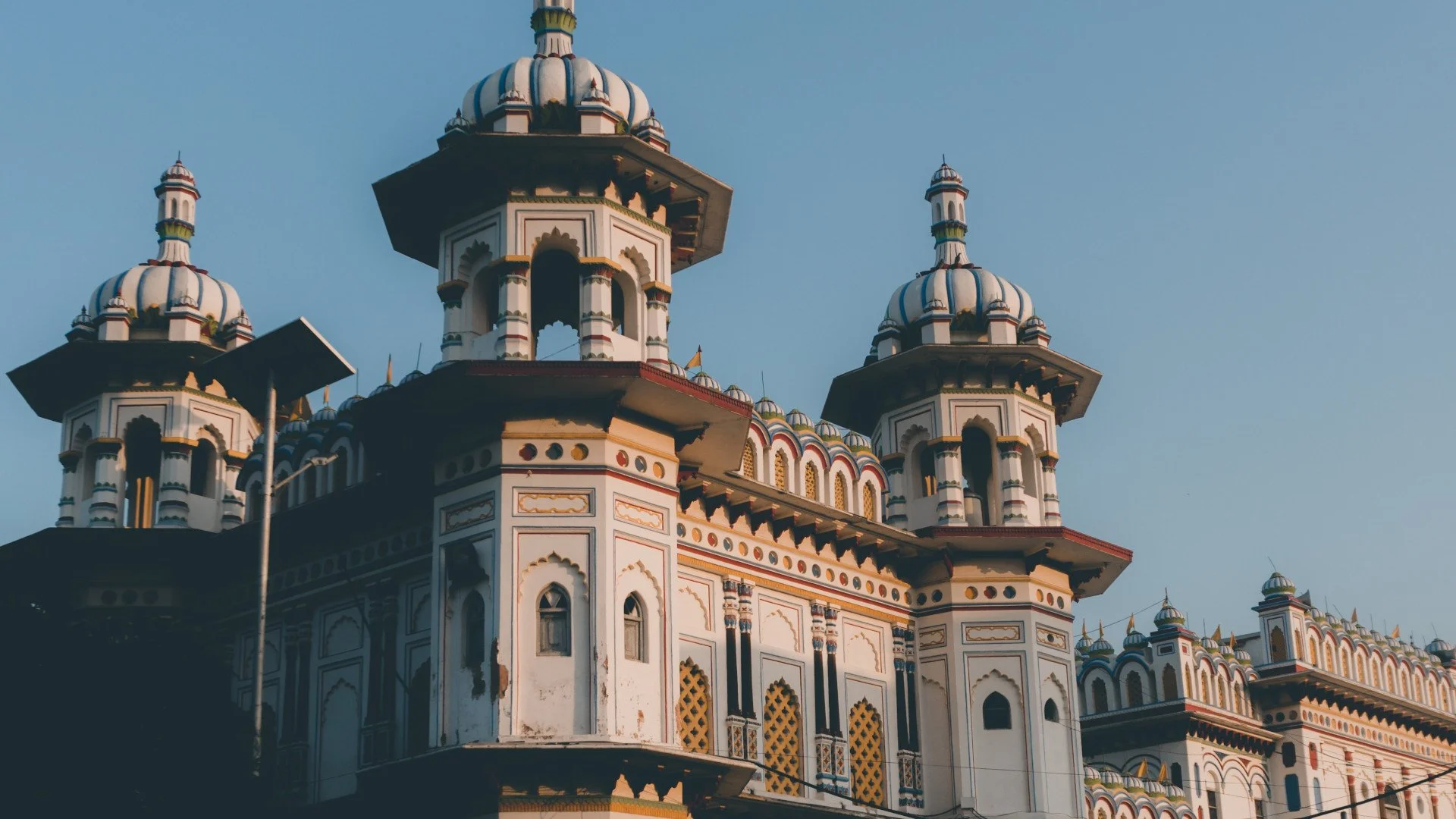
Province 2, also known as Madhesh Province, is a majestic gem. It is home to numerous destinations that have both regional and national importance. The population of this province is southern ethnicities and Madeshi castes. A few highlights of this area are Parsa National Park, Janaki Temple and Gadhimai Temple.
The word Madhesh is derived from Sanskrit and means madhya desh (middle country). This title was used to identify the land in the middle of the Himalayas and the Vidhya mountains. In Modern Nepal, the word is used to describe the Terai region (land south of Siwalik Hills). The province features 20 large cities and towns. Amongst them, the largest is in Birgunj, with a population of 240,922. Second on the list is Janakpur, with 159,468.
The terrain in this region has minimal difficulties. It is the only province with a passenger railway line in Nepal. In terms of road connectivity, the main link is the Mahendra Highway. Also known as the East-West Highway of Nepal. This highway crosses through multiple areas of the province. The Tribhuvan Highway begins at Birgunj but doesn't have a large footprint as the Mahendra Highway. Other highways that link to this region are BP Highway, Birendra Highway and Postal Highway.
The region features 3 domestic airports:
A. Rajbiraj Airport
B. Janakpur Airport
C. Simara Airport
Nepal's largest international airport, Nijgadh International Airport, is currently under construction in this region.
45.36% of the population speak in Maithali. Bhojpuri and Bajjika are spoken by 18.59% and 14.68% of the population. The national language, Nepali, is spoken by only 6.56%. In terms of religion, 84.75% of the population is Hindu. 11.55% are Islam, and 3.01% are Buddhist.
In terms of tourism, province 2 has 26,092 individuals tourism workers. The majority of the popular destinations in this region are religious. There are no UNESCO World Heritage sites in this province, but Parsa National Park and Janaki Temple are two sites of great national interest.
Janaki Temple
Queen Virsha Bhanu of Tikamgarh built the temple in 1910 AD. The local name of this temple is Nau Lakha Mandir. Nau Lakha means 9 lakhs.
It is said that the construction cost was about the same amount. The temple was built on a holy site. As per legends, King Janak (Seeradhwaj) performed the worship of Shiva-Dhanus on this site. In 1657, a golden statue of Goddess Sita was found at this spot. Some historians state that Sita's home once stood here. Sannyasi (Saint) Shurkishordas is credited for discovering the golden image. He is also hailed as the founder of modern Janakpur.
Janaki Temple sees an influx of pilgrims, especially during Ram Navami, Vivaha Panchami, Dashain and Tihar. During other times of the year, traffic is very minimal. The majority of the pilgrims are from Nepal, India and Sri Lanka.
Parsa National Park
PNP is the 12th national park of Nepal. It spans two provinces (Madesh Province and Bagmati Province). The park's western boundary is Chitwan National Park, Makwanpur to its north, Bara to its east and Parsa and Valmiki Tiger Reserve to the south.
Initially, the area was protected as a wildlife reserve in 1984 AD. The aim was to preserve the habitat of the Asian Wild Elephant (Elephas maximus) and the remaining Char-Khose-Jhadi. In 2015 AD, 128.39 km2 of Bara district was incorporated into the reserve. In 2017 AD, the status of the demarcated area was raised to National Park.
The current land size of this park is 639 km2. The major attractions of this park are:
A. Royal Bengal Tiger
B. Bison
C. One-horned Rhinoceros
D. Wild Dog
E. 490 species of birds
F. Common Leopard
The best time of the year to visit PNP is during winter. The locals are permitted to cut the thatch grass during this reason, thus increasing visible range. This time of the year is optimal to view wildlife. For bird watching the months of February, April, September and November are best. Various species of migratory birds join the residential birds creating a spender view. The park management have built various view towers for enthusiasts to site wild elephants and tigers. There are also 3 elephant camps located respectively at Amlekhgunj, Partapur and Gaduwaline. Numerous providers offer jungle drives and elephant rides.
POPULAR ITINERARIES
SIMILAR POSTS
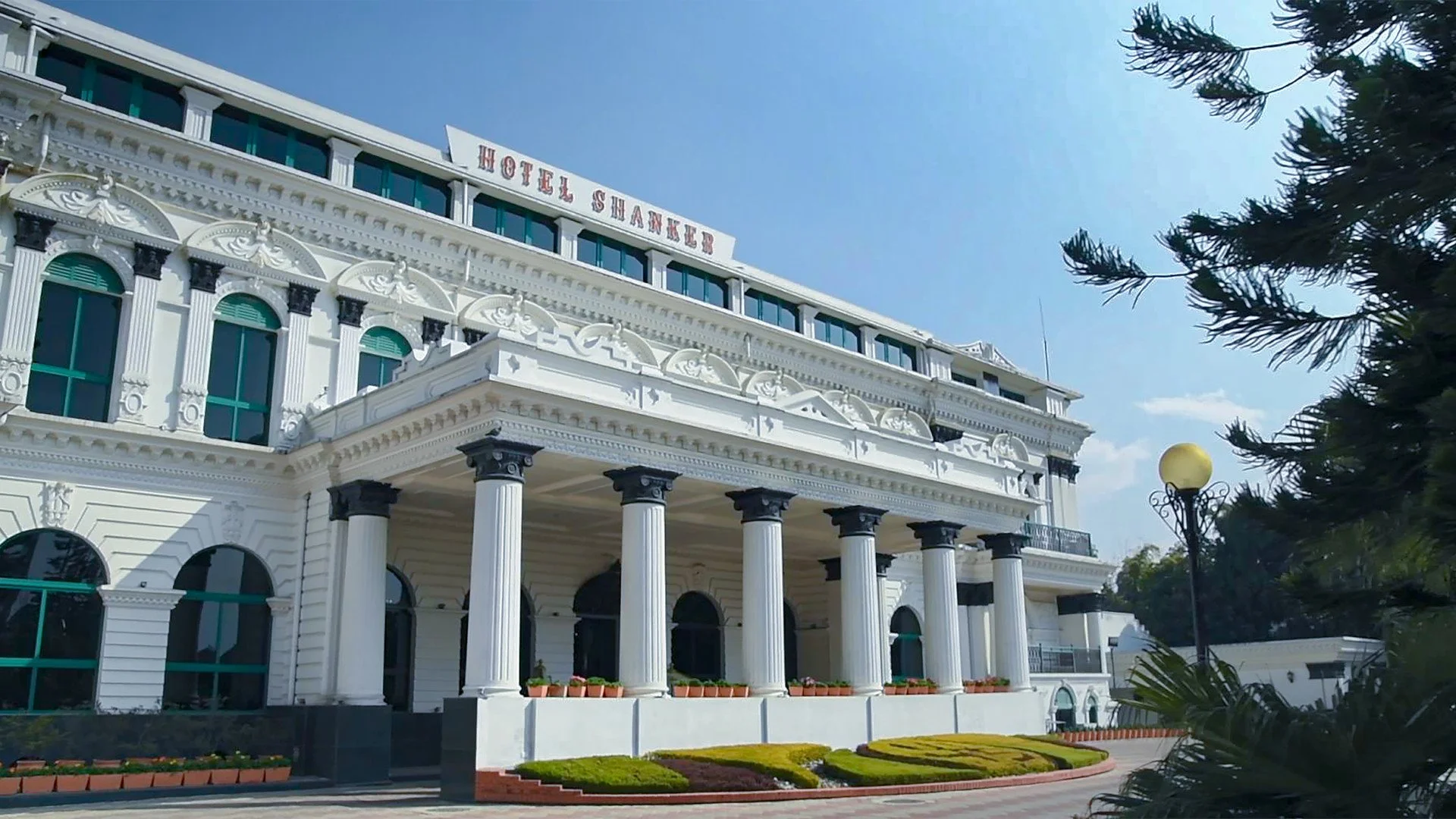
Hotel Shanker: An Architectural and Historical Landmark
Timeless and a class apart are a few words that are enough to describe a piece of architecture that has stood the testament of time. Hotel Shanker, over the years, has grown as a landmark of this city and shall forever be an example of heritage that meets hospitality.
Acknowledgement of one's history is what makes a concept ever so beautiful. Hotel Shanker is a living, breathing example of such a thought. Before its establishment as a luxury hotel, the estate was known as Lazimpat Durbar and Agni Bhawan. You might wonder, how did the estate get its names?
Toponymy
As per local accounts, this lane was formerly known as "lodge path". The area got its title from the magnitude of lodges available during the 19th century. It is said that the title was used by British residents who came to reside in Nepal after the Sugauli Treaty in 1816. Over the years, the name was localized to Lazimpat. Another account of history (Chief Historical Palaces of the Rana Era by Purushottam Shamsher Jawara) states that the locale got its name from the very palace of Lazimpat.
From 1914, the palace complex was known as Agni Bhawan as the estate was handed over to Agni Shamsher JB Rana. Digging deep into history, the original structure that occupied this land was built by Kaji Bir Keshar Pande, cousin- uncle of Damodar Pande. Damodar Pande is an influential figure in Nepalese history. Historians argue that the first prime minister of Nepal was Damodar Pande and not Bhimsen Thapa. Damodar Pande was the youngest son of Kalu Pande, the chief Kaji of King Prithivi Narayan Shah.
Thapathali, originally Nwakhusicho in Newari, is known as the abode of Thapa (Thapa- thalo). Similarly, Lazimpat Durbar is known as the abode of the Pande families. Kaji Bir Keshar Pande was amongst the nobles massacred in 1846 during the Kot Parva (Kot Massacre). After his death, the palace complex came under the occupancy of Kaji Mama Col. Tribikram Singh Thapa. During the army revolution, the old complex took significant damage. The property was taken over by Prime Minister Bir Shumsher JB Rana, who demolished the old structure and erected a new palace designed by Jogbir Sthapit in neoclassical style. The complex was built for his brother General Jit Shumsher. As he (Jit Shumsher) had no heir. In 1913, the place was captured by Juddha Shumsher after Jit Shumsher died. He gave it to his son Agni Shumsher JB Rana.
After Agni Shumsher passed away. The estate was equally distributed amongst his children. Kendra Shumsher sold his share to Ram Shanker Shrestha. Mr Shrestha then converted the place complex into the historical palace hotel that we know of today.
Humble beginnings
Late Mr Ram Shanker Shrestha, a renowned industrialist, inaugurated the palace complex as a hotel in 1964 AD. In between those years, he remodelled the interior but maintained the exterior. Operations began with just 23 rooms and expanded to its current capacity. For his service to the king and country, he was posthumously awarded the Order of the Gorkha Dakshina Bhau (Order of knighthood of Nepal).
A Neoclassical Abode
When you enter the premises, the grandeur makes you rethink which side of the planet you're on. The exterior facade takes you back not just to 19th century Nepal. But also mid-18th century Europe, a time when neoclassical movement was born. But we missed something important here. We leaned much towards the neoclassical elements of Europe.
This hotel is a symbol of the splendour of Newar neoclassical architecture. Best defined by a quote from the study conducted by Katharina Maria Lucia Weiler of Heidelberg, "Their residences, built during the first half of the 20th century in the larger cities of Kathmandu, Patan and Bhaktapur, adapted and incorporated neoclassical elements. In fact, the Ranas and Newars were attracted by universal themes that were appropriated into indigenous Nepalese buildings. This architecture thus exhibits a unique Newar building style, the Newar neoclassical, or "Rana style", as it is often called by the Newars themselves. Besides neoclassical forms, certain elements originating from Mughal architecture in India were introduced into the Newar vernacular architecture."
This amalgam is exhibited at Hotel Shanker, with elements of both Newar and European traditions coming together to create perfect eye candy.
POPULAR ITINERARIES
SIMILAR POSTS
Resilience and Heart
Ever since Nepal opened its doors to the outside world in 1950AD, tourism grew as an avenue of income for various communities of Nepal. The pandemic derailed the nations ambitious plan of welcoming the world in 2020 AD. It became a year of survival and resilience for the Nepalese people. The people saw 2022 as the year they could slowly recover the mountain of debt lost, but with a fresh new wave, things were darker and gloomier than ever.
Tourism over the years became the backbone of this humble nation. Nepal is a land blessed with natural yonder and great adventure potential.
It slowly became a prime destination for travel bugs. During this process, communities all over Nepal flourished as their area saw foot traffic. The pandemic stunned Nepal’s rapid growth. It brought to a halt various leaps taken in the tourism sector.
The situation got darker day by day.
As normalcy was within grasps, a new wave has grappled this nation. It has struck communities far and wide, some prepared while others can do nothing but wait. Through all of this, the Nepalese people have not let down hope. Resilient at heart. Nepalese have in the darkest days shown great dexterity in making the most out of every situation. In the year 2021, arrivals were down 35% from the past year. In 2020, Nepal welcomed 230,085 travellers whereas the figure was just 150,962 in 2021.
These aren’t just numbers. The major contributor to development through tourism was trekking. In 2021, only 34,000 travellers visited Nepal for trekking purposes. Routes once dense were deserted, and domestic trekkers were also low. Trekking brought the income right in front of a simple Nepali families doorstep. Regions such as Annapurna, Everest, Kanchanjunga and Mustang flourished greatly due to trekking and tourism. Trekking and mountaineering were both contributors to the national GDP. The industry took a 6.7 % share of the GDP in 2019 and was responsible for 6.9 % of all employment.
Even with low arrival’s, the businesses are doing their best to survive. Most businesses owners are dilemmatic. They can neither move forward nor shut down. Some have a large debt, whereas others hang on by a thread. In all of this, Nepalese souls still have hope. They see good days ahead of them, a new normal where they can bring back the glory of the yesteryears.
Development experts had always warned of a dire economic crisis that would emerge out of dependency in only one sector. On paper, tourism is only a minimal contributor. But for communities in tourism centred destinations, it was the prime source of income. Families had to find new means or go back to traditional methods to sustain themselves.
So, what can be done? Even though it isn’t just Nepal that is grappling with the pandemic, we can learn a lesson from our failures. Firstly, income needs to be diversified, especially for small communities heavily reliant on tourism. Secondly, better protocols for safety and hygiene must be drawn. It must be followed by not just major establishments in the urban centres but also in the trekking regions of Nepal. Thirdly, domestic travel should be heavily promoted with incentives and vacation days provided via legislation. Finally, businesses and the tourism entities of Nepal need to start thinking outside the box to attract more travellers.
Apart from these measures, all the tourism industry can do is wait and watch. In solidarity must all the sectors work together to support each other in these difficult times. For travel bugs however, they can plan today and travel tomorrow.