
Museums in the Kathmandu Valley - Part 1
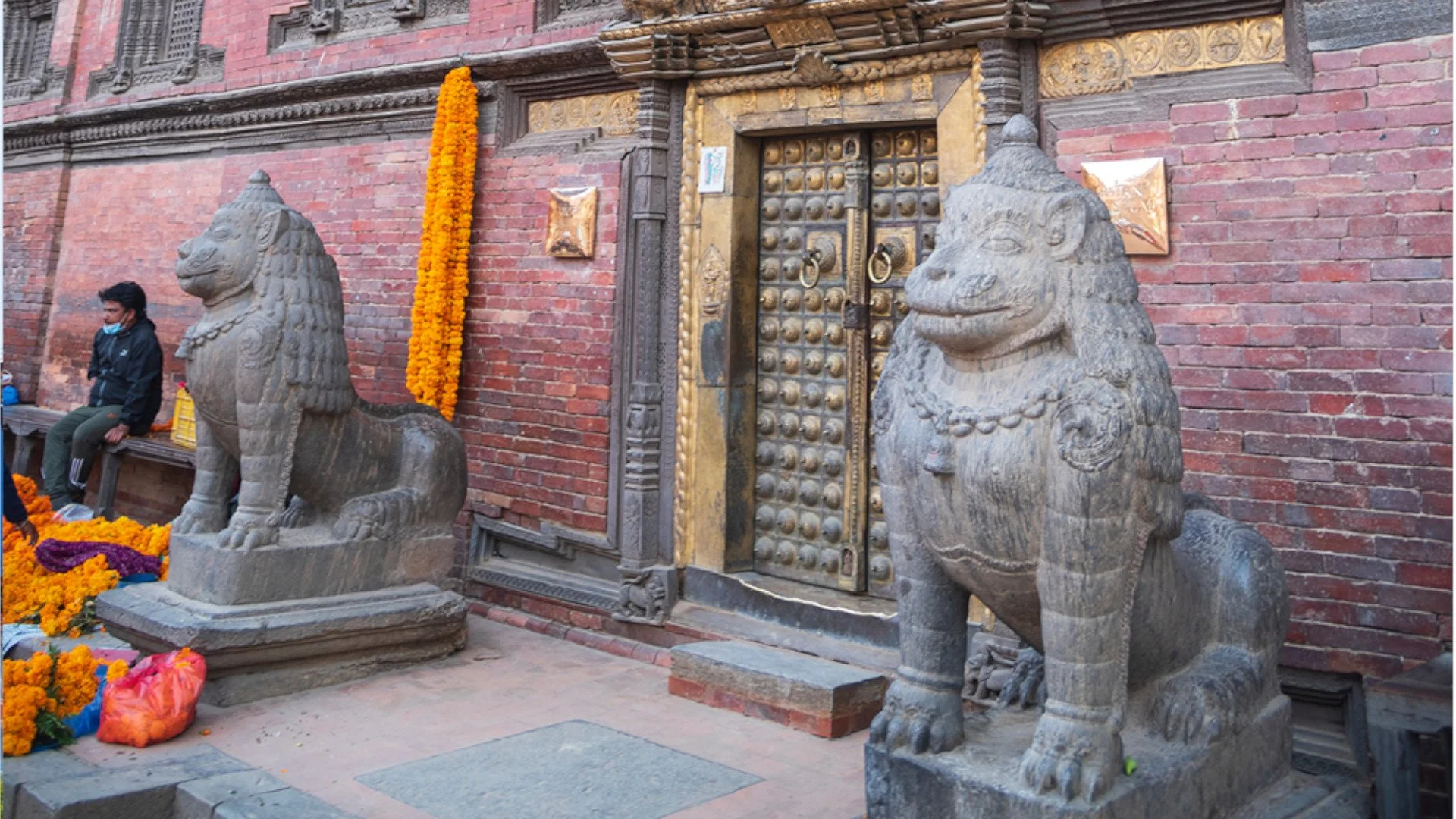
Museums are the storytellers of history. They don’t just tell the stories through written and recorded but make a home for details of various arts, antiquities and remains of a bygone era. The Kathmandu valley is home many of these beautiful spaces which house the lineage and history of this nation.
The general public over the years has lost interest in museums. Its sad to see how these structures that house the lineage and history of the nation and its people is forsaken. But, they play a crucial role in protecting and conserving the remains of the past. In Kathmandu, the capital city of Nepal, there are numerous museums which help bring to the people the true beauty of the nation.
Narayanhiti Palace Museum
The modern Naryanhiti Palace was established by King Mahendra Bir Bikram Shah in 1963 AD. The old palace featuring baroque architecture was commissioned by Prime Minister Bir Shumsher. After its completion, the residence was moved to Naraynhiti from Hanuman Dhoka.
Today, in the remembrance of the lives of the Royal Family, the palace has been turned into a museum that safeguards valuable items and artefacts under the serene semi-modern Nepalese architecture surviving through the decades. It stands as an image of the Royal families. The rooms in the palace museum feature names derived from the various districts of Nepal. It is also the home of the Royal Crown. The museum portrays how the royal family spent their daily lives in each room, from where they dined together and celebrated events. Today, it has become a place of exploring the mystery of the Royal Massacre with the bullet scars and bloodstains still remaining. The palace museum is located in Durbarmarg, Kathmandu.
Jyapu Museum
Jyapu Museum offers a journey through the history of the Jyapu community, their lifestyles, and artefacts all the way from the Kirat and Licchavi dynasty to the present times. It was established by the local Jyapu Community of Patan in 2012 to nurture and preserve the stories of their ancestors for the present and future generations. Jyapus are known for their hard work as farmers, musicians, and artists.
The museum starts with a portrayal of the ancient lifestyle through clay utensils and artefacts of Jyapu culture. It follows through the periods in chronological order, showcasing household objects and modes of presenting the art from the time of their ancestors. Today it serves as a symbol of their hard work and integrity. From traditional handlooms and water vessels to more than fifty ancient Newari musical instruments that used to be played in the ceremony, this museum stands as a reflection and resonation of the history built by this community. It is located amid the Jyapu community settlement in Patan, Lalitpur.
It all together combines the intricacies that make up the Jyapu community who are credited as the true native inhabitants of this valley. The space also doubles as the head quarter for Jyapu Samaj, an organization created for the upliftment of the Jyapu community.
Patan Museum
The Patan Durbar, built-in 1734, used to be one of the royal palaces of the former Malla king of the Kathmandu Valley. However, its origin is believed to go as old as the Licchavi Period. After multiple renovations and restoration of the ancient glory, Patan Museum opened in 1997 to safeguard the culture and artefacts preserved through centuries. Historians and archaeologists believe that the main structure during ancient times was part of a monastery which was then converted into the residence for the monarchs during the Lichhavi Era.
The Lichhavi development structure always features the concept of the divine centre. Patan, one of the most ancient cities of the valley features the same style with the royal palace right at its heart. Today it houses unique antiquities of the Newar culture, especially of Lalitpur and presents them in an organized manner for the public. The square of Patan Dubar is credited as an open air museum due to the high significance of its various temples and monuments.
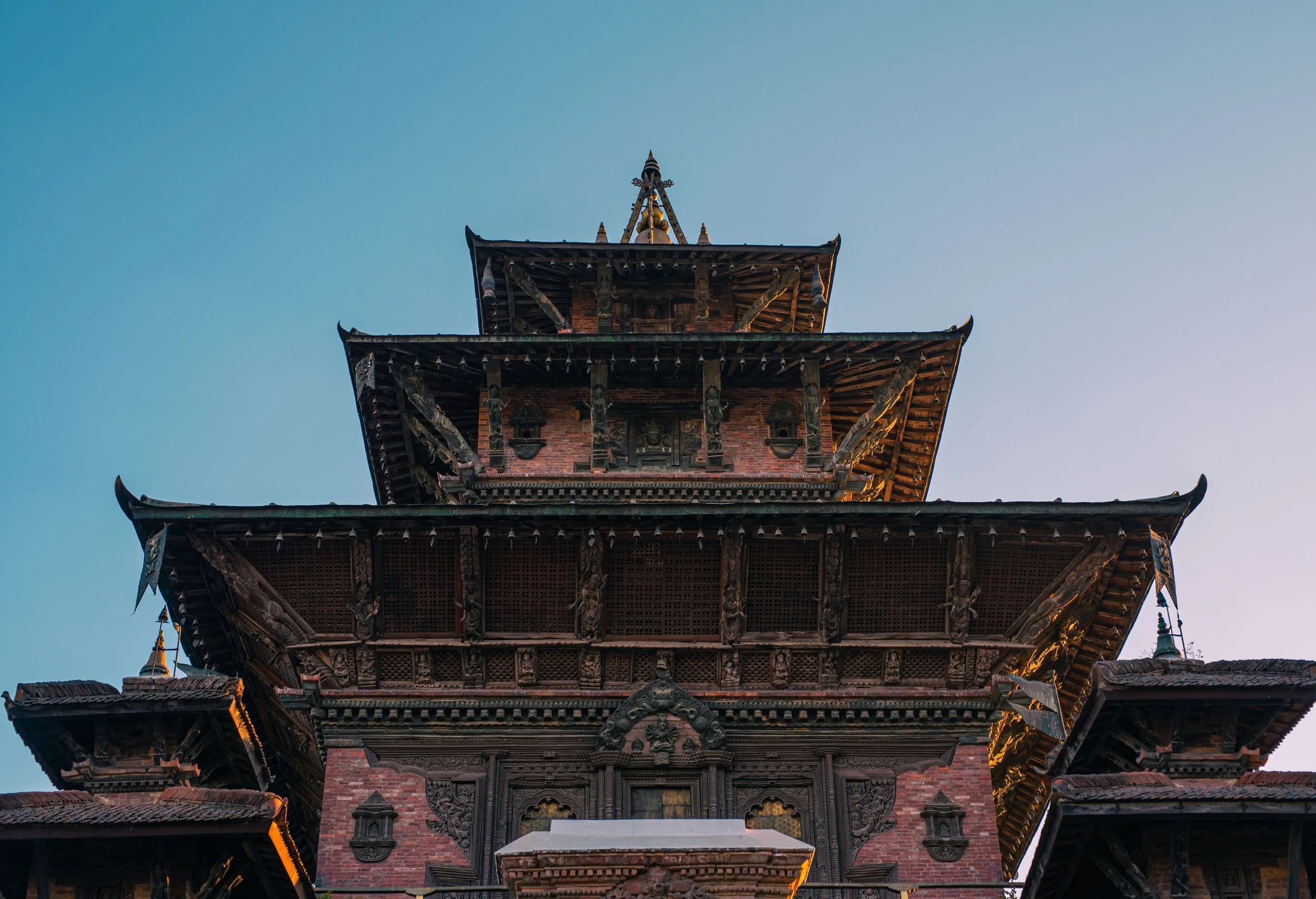
It is constructed with a blend of ancient and modern architecture. The rooms are built of timber wood and brick, and the carefully preserved artefacts are lined up in the room. It protects ancient artefacts ranging from paintings, weapons, and musical instruments to costumes, statues, and weapons. It is situated inside Patan Durbar Square, and it takes about 2 hours to take a breath into its wonders.
POPULAR ITINERARIES
SIMILAR POSTS

The Legend of Bhimsen - Part II
While walking down the narrow allies of Newar dwellings, you might hear the phrase, Bhimsen maharaj ki jaya (Cheers to Lord Bhimsen). His name is invoked by his patrons while lifting heavy weights or before a trading venture. Worshipped by both Hindus and Buddhists, he holds a special place in the pantheon of Newar deities.
Continued…
The king was impressed with the artist's creation and gave his approval. It was brought to the hall of the temple for the installation ceremony by the priests. During the installation process, the king personally paid a visit. He wished to bask under the aura of the triumphant statue.
The priests initiated the ritual process to bring life into it. He began chanting spells and bestowed many offerings to Bhimsen. To demonstrate his tantric capacity, the priest inserted a piece of cotton inside its nostrils. To the surprise of all, the idol sneezed thrice. During this process, light emanated from the idols nostrils, concluded that it had come to life.
The king was astounded seeing this magnificent feat. He quickly took off a ring of nine jewels from his right hand and presented it to his guardian deity. From this point on, the square opposite the temple was renamed tuyulako by the people, meaning a place blessed by Bhimsen light.
The people of Lalitpur amongst all the Newar dominions worship Bhimsen the most.
He is revered as the god of wealth and prosperity by them. Households engaged in trade and commerce regard him as their patron saint.
Bhimsen his strength and fierceness are desired by all. Children chant, I want to be like Bhimsen; strong and mighty.
In Lalitpur, we have two festivals dedicated to Bhimsen; Bhin dyo Puja and Bhimsen Jatra. The first is a linear procession that features devotees clad in traditional attire. They circumvent the city and offer their prayers to the numerous temples dedicated to him. It is celebrated annually in the month of Magh (January-February).
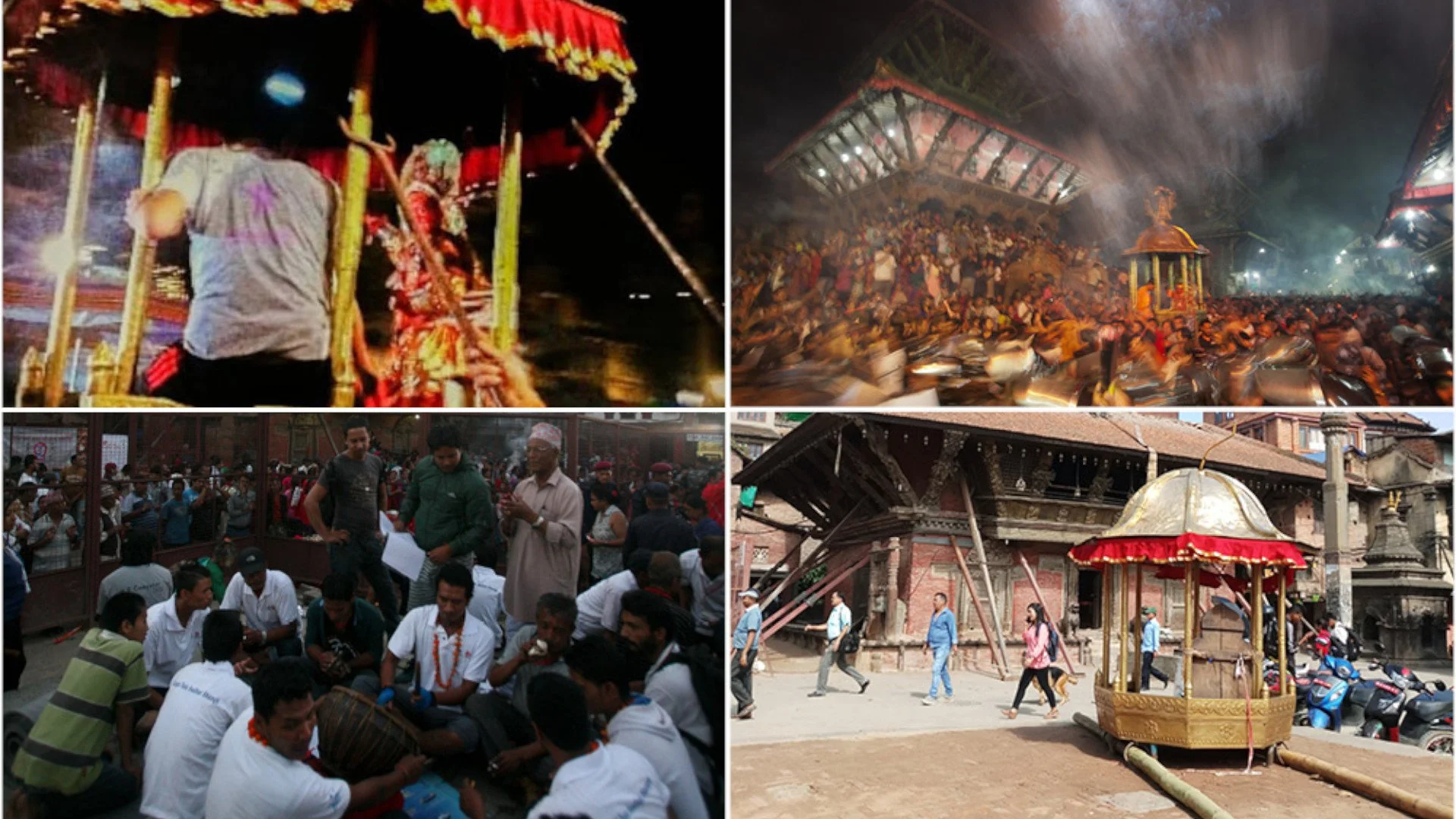
The second festival, Bhimsen Jatra, is celebrated with great pop and flare. On the ninth day of Bhadras (August- September) dark moon, a gilded chariot is placed on the dabbali (raised platform) in front of the temple by devotees.
Thousands of devotees wait to witness a procession that makes a designated route around the city. The temple priest ventures onto the upper floor of the temple to take a replica idol of Bhimsen. Legend has it that it is full of many replicas. A statue automatically comes forward while the priest enters the room.
He then gently brings it down onto the second floor and performs an invoking ritual. It is then taken outside the temple by him, and a loud cheer follows. The revellers make ready the chariot, and the idol is placed onto it by the priest. The revellers chant Bhimsen maharaj ki jaya as they lift the heavy chariot. Musical ensembles provide tunes of encouragement, and the procession moves forward. Patrons holding incenses lead the parade.
The prescribed route is within the old city. It makes its way through narrow allies and stops time and again due to an overhead maze of wires. Revellers take turns to lift the chariot, and the festival ends almost at midnight after it completes its circular route.
It is then rested in front of the temple by the revellers. The priest carries the idol back into the temple. The festival is then drawn to a close. The revellers complain of aching shoulders but tell tales of a glorious night the next day.
This festival is the hallmark of Newari culture, the Newars credit Bhimsen for their blessed fortunes. Newars dominated branches of the silk route and became renowned traders and merchants.
The farming community worships Karunamaya (Rato Matysendranath) and the merchants, Bhimsen. These two living deities who attained divinity through their compassion, strength and grace hold a special place in the heart of all Newars. The temple sustained damage during the 2015 earthquake. The restoration was completed recently with the help of patrons and agencies.
POPULAR ITINERARIES
SIMILAR POSTS

The Legend of Bimsen - Part I
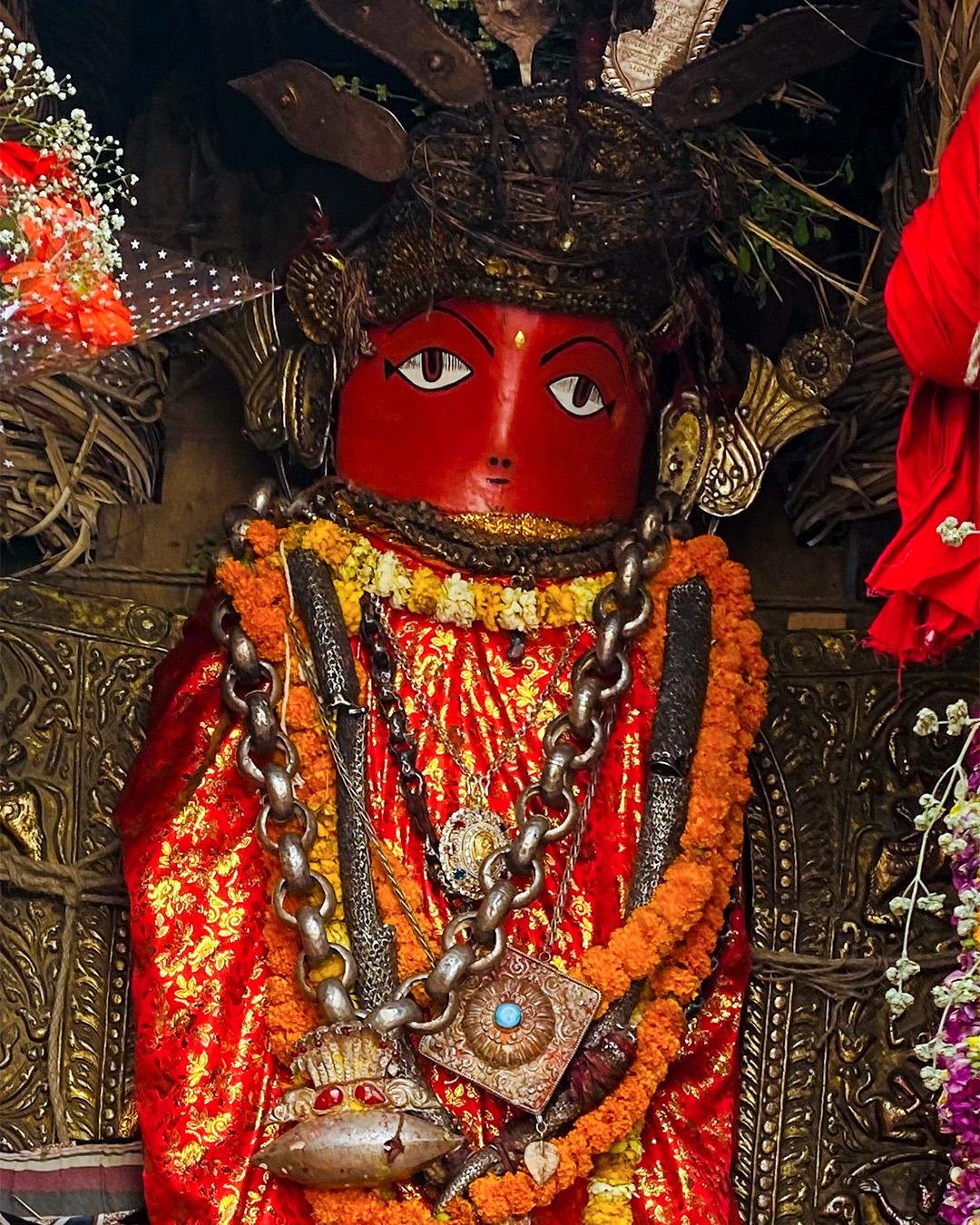
The Newar pantheon features a multitude of deities. It is a diverse array of gods and goddesses of both Hinduism and Buddhism. Amongst them is Lord Bhimsen, worshipped by the households with the occupation of trade and commerce. Revered as the god of wealth and physical strength, he also has a festival known as Bhimsen Jatra. How he entered our pantheon is foretold by a legend, something that I, like other Newars, grew up with as a classic bedtime story.
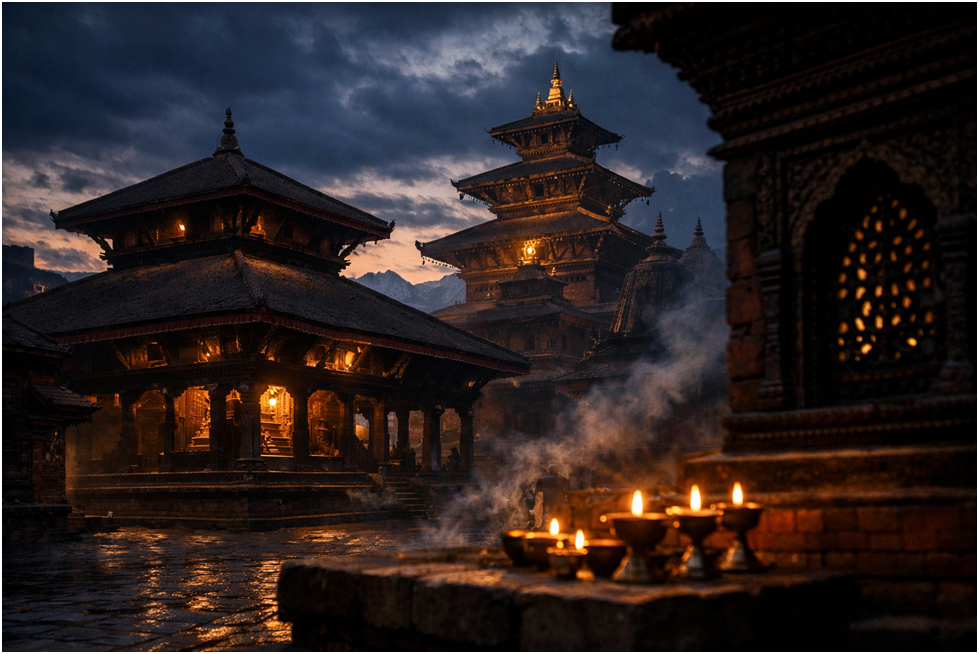
In the square of Patan Durbar lies a beautiful temple dedicated to Lord Bhimsen. In Newari, he is called Bhin Dyo. He (Lord Bhimsen) is one of the five Pandava brothers of the epic Mahabharata. Amongst them, he is the only one worshipped as people believe he alone attained divinity.
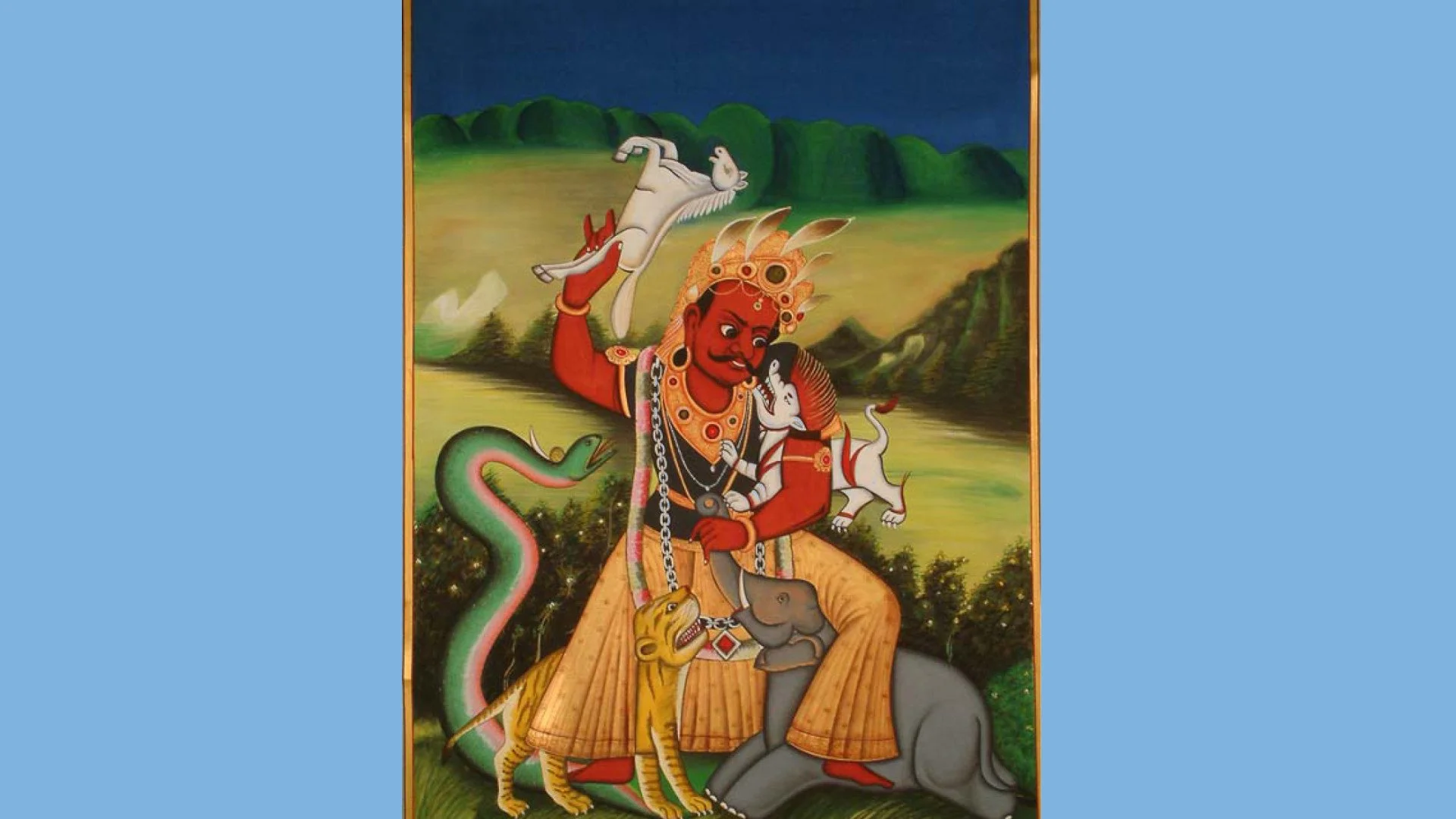
He was an extraordinary child with great strength and bravery. Hence he was named Bhimsen, meaning terrific. During his youth, he was famous for two things: his brute strength and a large appetite. Reaching adulthood, he grew a robust moustache, one to match his terrific and fierce outlook.
The highlight of his life was a great battle fought against Dushasana, his rival. He (Dushasana) was one of the Kauravas who dragged Draupadi. She was the common wife of the Pandavas. During an event, Draupadi was pulled by her hair and stripped naked right before her husbands. Bhimsen was consumed with rage but was helpless. He upheld the code of honour but marked Dushasana and vowed to kill him.
During the great war of Kurukshetra, he killed Dushasana with one blow from his mace.
In a land, east of Kathmandu valley lies Dolakha. Here it is believed the Pandavas spent their twelve years of exile. It is also home to a unique temple dedicated to Bhimsen. In the centre of this temple is a triangular shaped stone idol of Bhimsen. The local people worship it as an idol. The temples uniqueness comes from its ability to foretell danger.
The idol perspires from time to time, and it symbolises a bad omen for the country. The locals believe that it is Bhimsen trying to protect his people by warning them through sweating. The idol is said to have sweated in:
1. 2007 B.S: When the Rana Regime ended
2. 1934 A.D: Before the great earthquake
3. 2001 A.D: A few days before the royal massacre
In an ancient time, a lady of Dolakha was married to the prince of Lalitpur. She brought with her a clay idol of Bhimsen as dowry. It depicted him engaged in battle with Dushasana. The figure was enshrined in a small temple by them.
The temple was restored after a fire in the 17th century by King Sri Nivas Malla. He raised it to 4 storeys high and placed three roofs.
After the death of Sri Navas Malla, his son Yog Narendra Malla became King. He desired to replace the clay idol with a metal one. He paid a visit to the workshop of a renowned artist and put forth his request. This craftsman was known for being the best in metal casting and modelling. The King envisioned a magnificent statue of Bhimsen stance in a fighting pose against his rival.
The artist began work, and within a few days, he prepared a handsome wax model. An ancient technique where molten metal is poured onto a wax mould to develop a cast.
The King inspected the model but was disappointed as it lacked life. He requested the artist to remodel and focus on a more lively fighting style. The artist remodelled it as requested, but the King was still disappointed. The King became so furious that he caught hold of the artist's neck.
The artist cried loudly, my King, forgive me. I know what is missing, and you have shown it to me. Give me another chance. I shall not disappoint again. He let go of his neck and gave him one last chance.
He was able to satisfy the King in his final attempt. The idol looked fierce, lifelike and portrayed Bhimsen in a fighting stance about to kill Dushasana.
POPULAR ITINERARIES
SIMILAR POSTS

The Importance of Karunamaya: Rato Matsyendranath
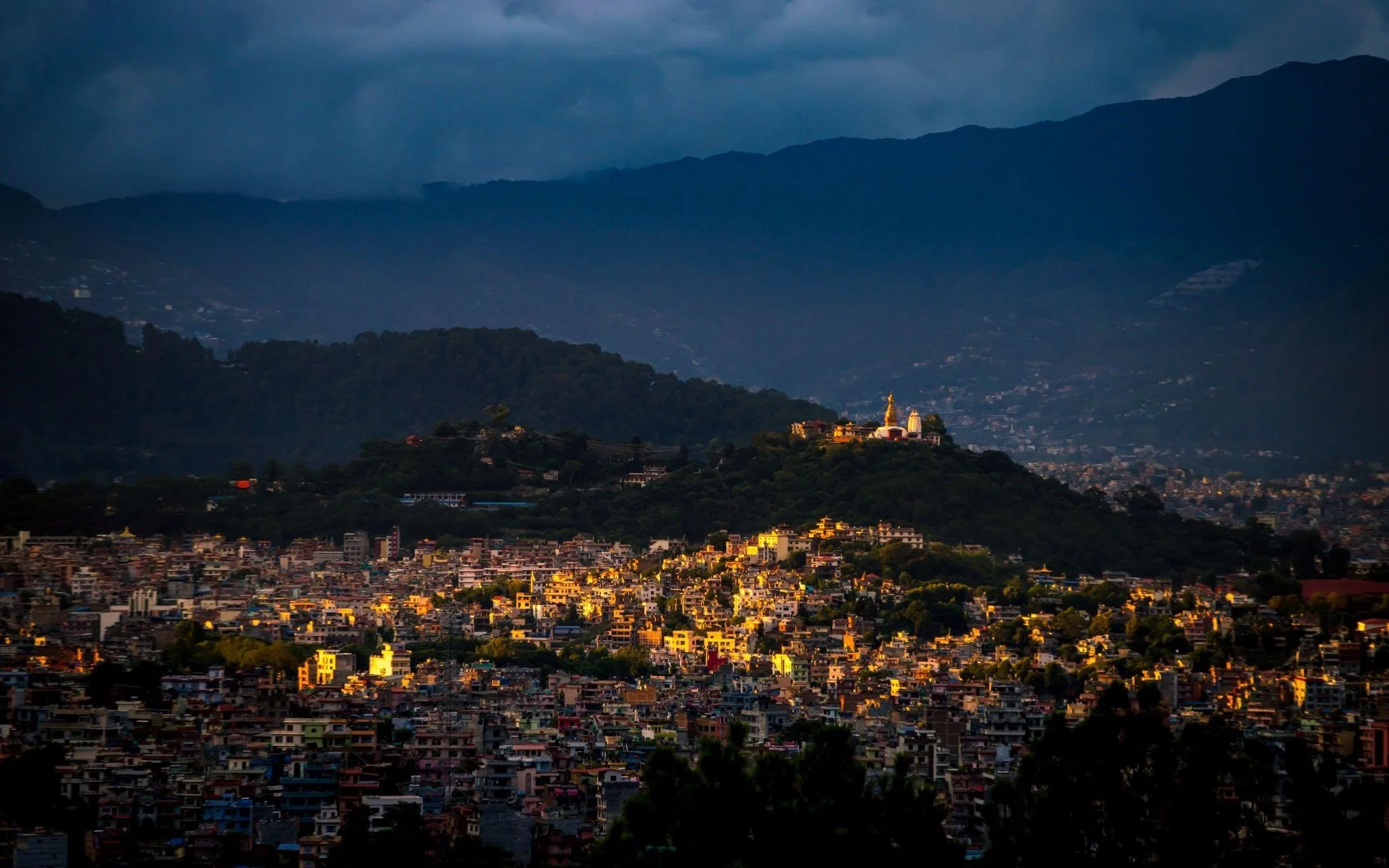
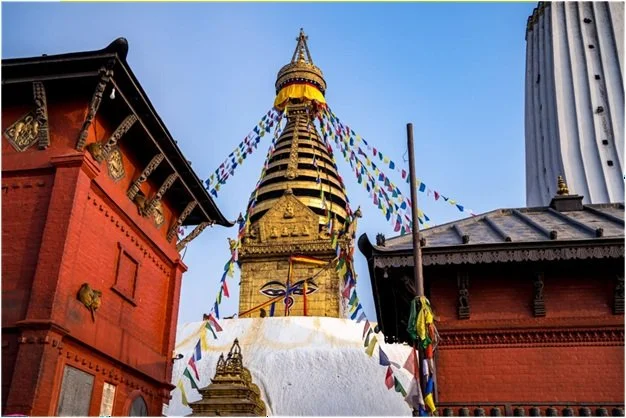
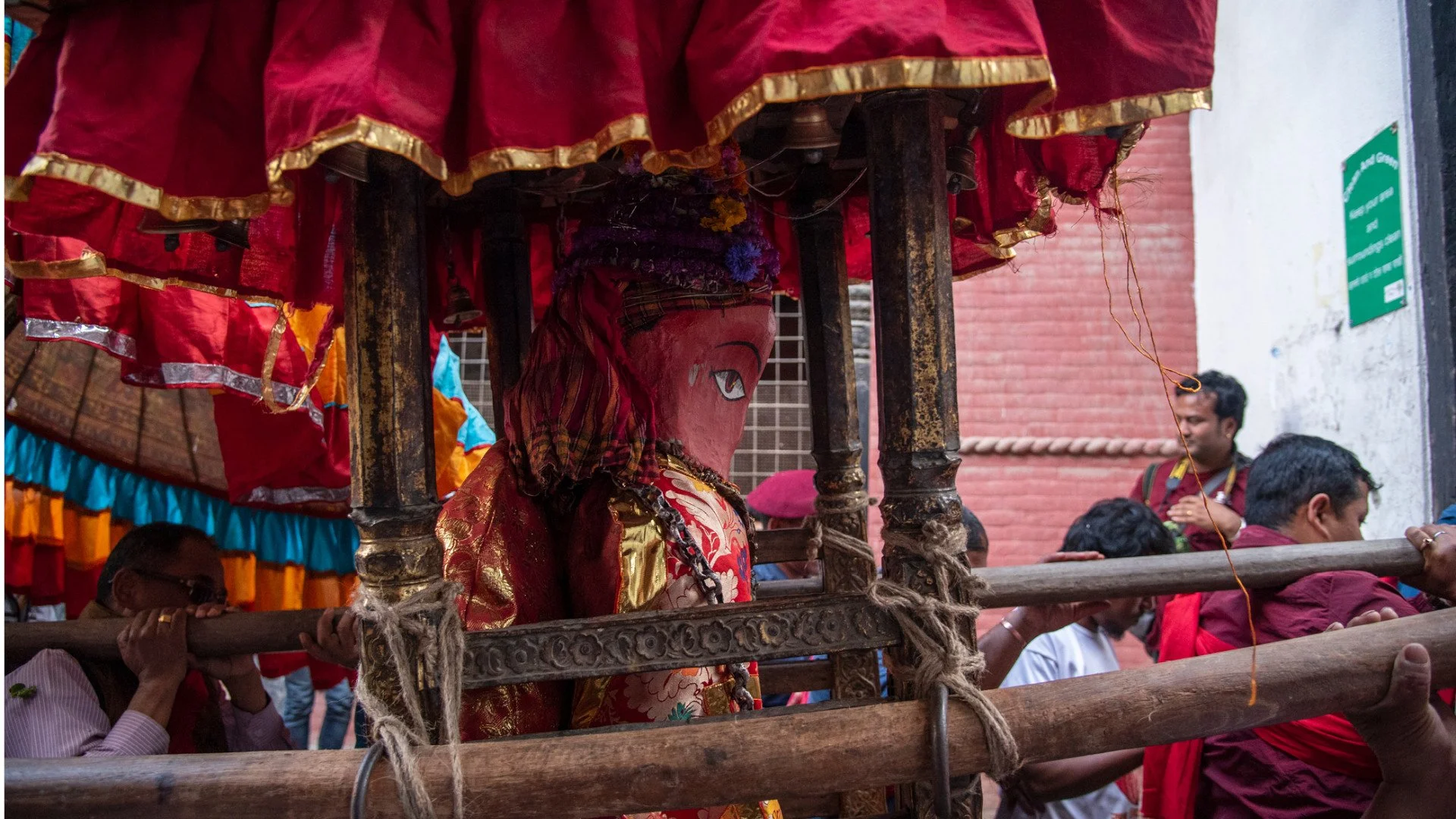
Amongst the various deities of the Kathmandu Valley, Karunamaya holds the highest rank. He is known by multiple names such as Bunga Dyo (God of Bunga), Aryavalokitshwor Padmapani and Rato Matsyendranath. He is revered by citizens of both the Hindu and Buddhist faith. One of the most elaborate chariot festivals in the world happens annually in his honour.
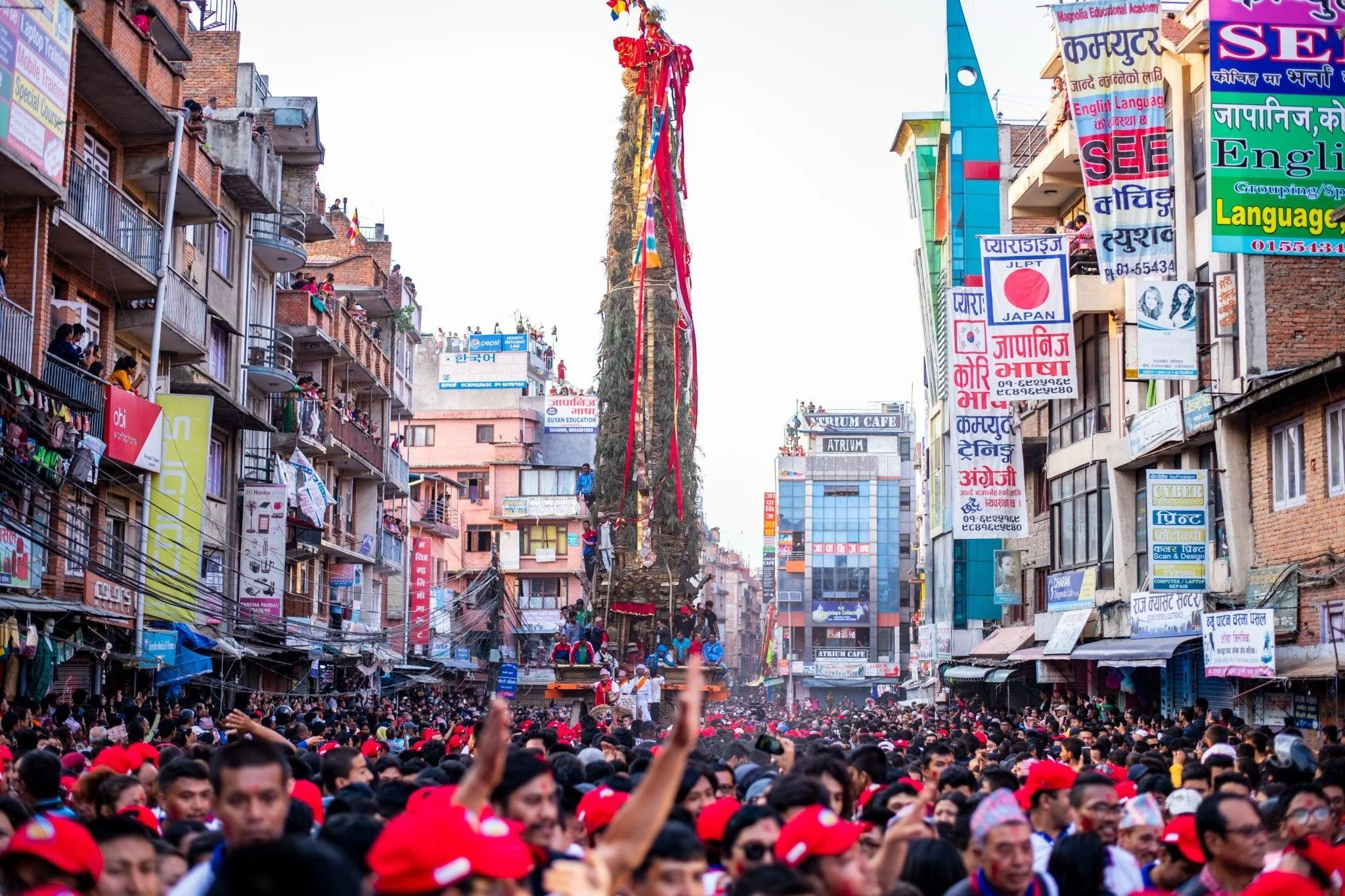
Non-Newars always marvel at the magnitude of the festivities that surround them. The pop and flair combined with the faith and dedication towards building a chariot 5 stories tall and circumventing it in the old streets of Patan is a sight to behold. The locals view him as a messiah and would not refrain from turning any stone for his celebration.
So why is Karunamaya so important?
Thousands of years ago, the citizens of this valley faced a dire crisis. It was significant enough to wipe out the entire civilisation of Kathmandu Valley. As agriculture was the occupation of the native inhabitants, a mysterious ill plagued the fields. The seeds planted with love and care grew to only wither. The farms that were to resemble gold began to look like desolation.
The people didn't know the cause, nor did they know the exact remedy. With the years harvest down the drain, they could only hope the reserves would last them long enough for a rescue. As the people began to worry, the King could not hold his heart. King Narendra-deva was known for his service and dedication to his people. But he had abdicated the throne in favour of his son. King Narendra-deva chose to spend the rest of his life observing monastic discipline.
The tantric master named Banudhatta Acharya, who sided in Te Bahal, knew that far away in a distant land resided the solution to our crisis. He informed the present King Bara-deva and requested him to go to his father and request if he would accompany the tantric master in his journey. For as long as the true King is alive, he cannot take his son.
King Narendra-deva accepted. He, along with Bandudhatta and Ratnakar Jyapu, left for an adventure. The destination was Kamakhya, which falls in present-day Odisha of India. There, the team met with a master farmer named Karunamaya. The trio told him of the ill that plagued their kingdom. Karunamaya wished to visit the valley and relieve it himself but wasn't allowed to by his mother. Thus, he passed on to them the needed tools, seeds and knowledge to compact the famine. The trio then bid farewell to the master and returned to the valley. They then applied the findings as instructed, and the fields slowly but steadily began to sway like gold.
It was this feat, the generosity of one man. Who, without any expectations, helped three ailing strangers that earned him a high rank in the pantheon of this valley. Even though he was mortal, the people in this valley immortalised him. A temple was built in his honour in the village of Bungamati. The settlement was renamed Amarpur, meaning a land immortal.
An elaborate chariot festival was designed by priest Bandudhatta. A 5 storey tall chariot was envisioned with featured all the elements of the journey and the temple of Bungamati.
Thousands of years later, even to this day, the people of this valley have not forgotten his generosity. Historians believe that he had a different name. Karunamaya was the general call name which means the compassionate one. Members of the Buddhist faith refer to him as Aryavalokiteshwor Padmapani, whereas Hindu's call him Rato Matsyendranath due to the connection with the tantric master Gorakhnath.
The people ensure the chariot festival happens even at the worst odds because they fear the illness shall return again. All the necessary rituals are performed every year to invoke the deity to ensure the valley's prosperity. The chariot is built at Pulchowk and circumvents the old routes of the city. It comes to an end in the open field known as Jawalakhel. Once the ceremonial display of the bhoto is complete, the idol is taken to Bungamati. Here it rests for 6 months of the year and the other half in the temple inside Patan.
POPULAR ITINERARIES
SIMILAR POSTS
The Tale of Shankadhar Sakhwa - Part II
The act of Shankadhar Sakhwa is more than of selflessness and grace. His wit and faith did not just bring him good fortune but also to the former kingdom of Kantipur.
Continued…
The day was almost at an end. Sakwal was at his courtyard staring at the heap of sand. Confusion could be seen in his face. Why did the coolies choose to dig at that very spot? They even waited for an exact time. What is this mystery?
Sakwal failed to notice that the sun had already gone down. He was so lost in his thoughts that he could not hear his wife call him for dinner. He then suddenly came back to reality and saw how it was already late. He made his way to his kitchen, where his wife was waiting for him. He finished his meal and called it a night.
In the morning, Sakwal woke up early, as usual, to head to the nearest temples and monasteries to offer his regards. He walked out of his house and was about to open the main door when he noticed something shining in the corner. He opened the main gate, and as light entered, it unveiled something that he could not comprehend. He was quick to close the door so that no one else would see it. He stood there, stiff as a tree trunk with eyes wide open.
It looked like he had seen a ghost. He called for his wife and asked her to come downstairs quickly. As she entered the courtyard, she noticed her husband just standing there. He called her to where he was and told her, my wife, please tell me that this is not a heap of gold dust?
The wife looked down and was utterly surprised. She looked towards him and said, dear husband, this is a heap of gold dust!
Inside the royal palace of Bhaktapur, one could sense that the king was angry. He was at his courtyard staring at a heap of sand. He looked towards his astrologer and said, your prediction failed. The astrologer was confused, but deep within, he was angry. He told himself that he did everything as instructed.
With the king's permission, the astrologer left for his house. He poured out all his anger within the sanctum of his four walls.
The king knew the greatness of his astrologer and how he was never wrong. While he was headed towards his room, he stumbled upon the baskets inside which the sand was brought. He saw an unusual glitter. He moved closer and inspected. He saw specks of gold dust at the bottom. He told himself, my astrologer was right!
The king ran with great haste towards the house of his astrologer. He barged inside and climbed up the stairs quickly. He saw a fire kindling in the fireplace. He noticed a book being burnt. He looked towards his astrologer and said, is this that very book you consulted to turn sand into gold? The astrologer replied, yes, my king!
The king then rushed to save whatever was left of the book. He put his hand into the fire and pulled the pages, and dipped them in a pot of milk that stood near the fire palace. The astrologer rushed to aid his king.
Once they saved what they could, the astrologer asked his majesty why he did that. The king then turned to his astrologer and said, you were right, but we were outsmarted!
Inside the royal palace of Kathmandu, Sakwal was in an audience with the king of Kantipur. Your majesty, I am a merchant, and I have enough wealth for myself and my family. I have stumbled upon this great treasure that I wish to share with my people. I am a righteous man, and if I become greedy, I might have a luxurious life, but it shall come to bite me when I have to cross the holy river after my death. I wish to pay the debt of my country and each citizen with this treasure. I am here to request your permission to do so, said Sakwal. The king was impressed by his righteousness and virtue. He gave permission to Sakwal to complete his endeavour.
To commemorate this feat, Sakwal was given the right to start a new era. He consulted with great astrologers of the kingdom and issued the new epoch of Nepal Sambat.
POPULAR ITINERARIES
SIMILAR POSTS
The Tale of Shankadhar Sakhwa - Part I
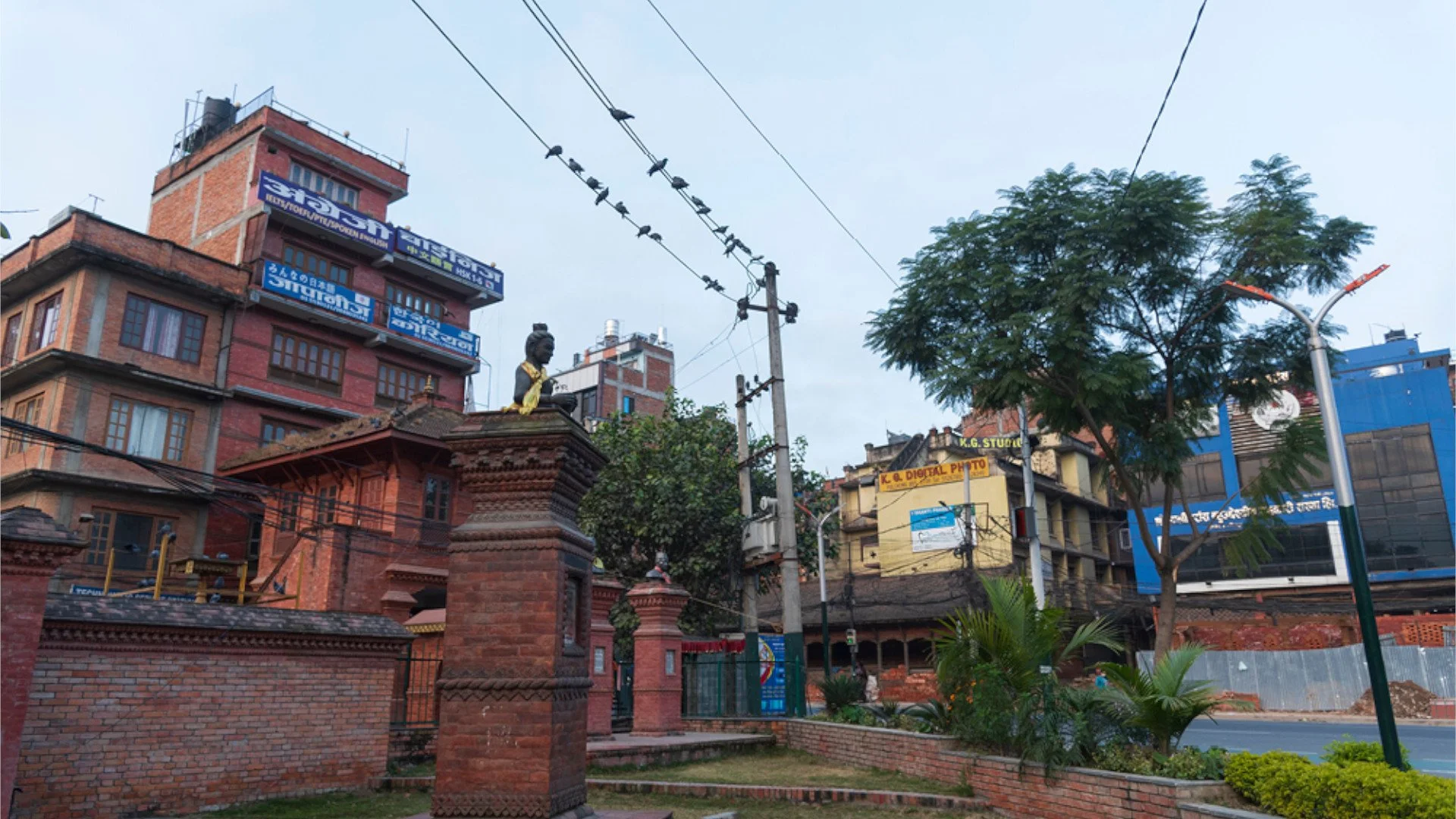
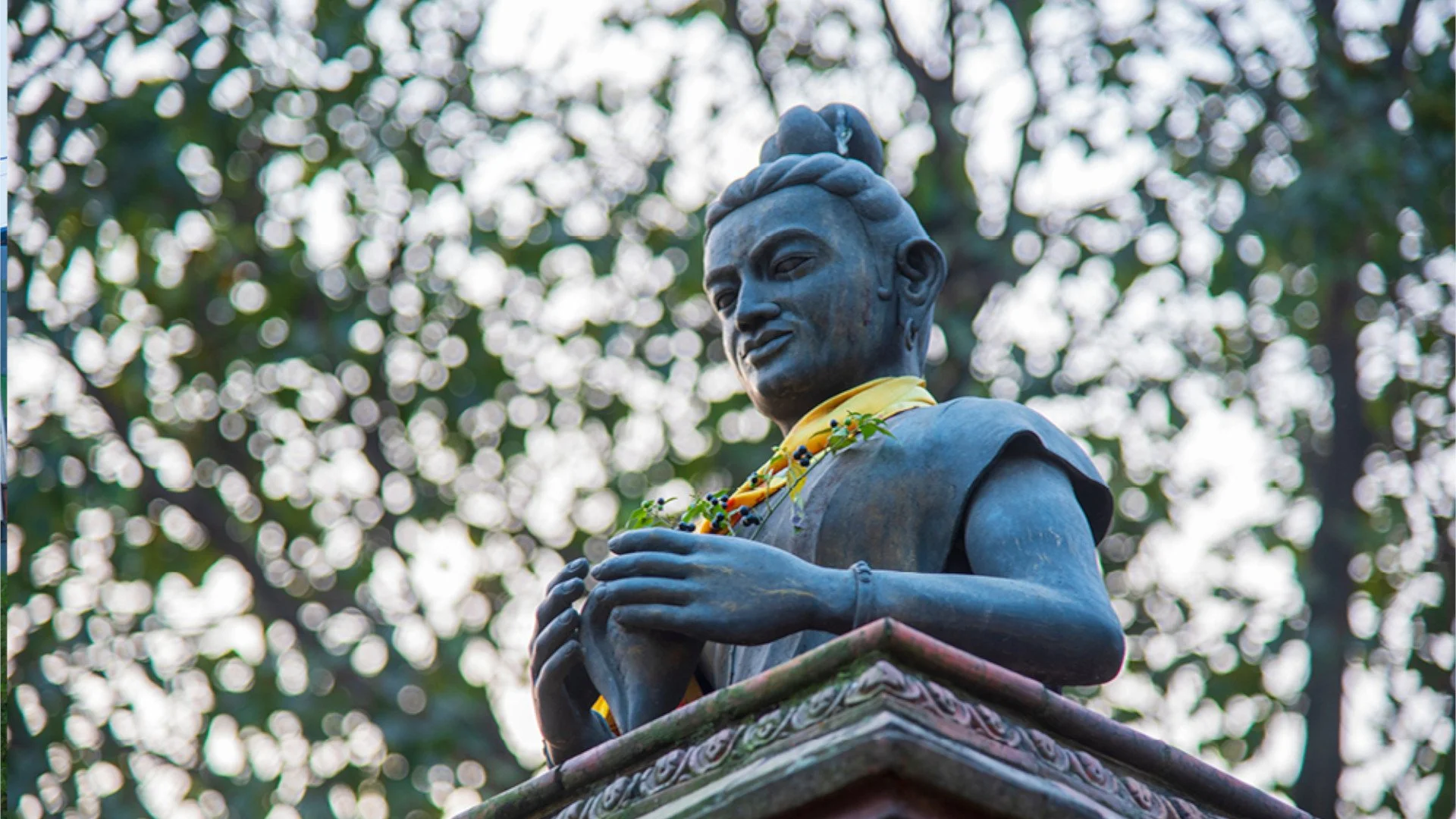
Shankadhar Sakhwa also known as Sakhwal is the founder of the Nepal Era also known as Nepal Sambat. This man’s story is an epitome of how wit is more powerful than strength.
The calendar of Nepal Sambat is the official calendar for the Newars. It was introduced more than 1100 years ago and is lunisolar. The story behind its origin is fascinating and sometimes hard to believe. Various aspects of it are correct. Due to the gravity of the act, the founder Shankadhar Sakhwa was indoctrinated into the list of national hero's by the former His Majesty's Government.
As per various chronicles and historical narratives, the story goes as follows:
One day a team of coolies (porters) were gathered at Lakhu Tirtha, the confluence of Bagmati and Vishnumati rivers near the Royal Palace of Kantipur, present-day Kathmandu. They were impatiently waiting and pacing at times. As the sun reached a certain point in the sky, they knew the time was right!
They started digging in haste and began to load their baskets with heaps of sand. Once their baskets were filled, they took a sigh of relief. Ensuring the load was secure, they then hit the road. When they reached Maru, they saw a resting house and given the weight was making them heavy and hot, they decided to take a break.
During this time, a merchant commonly referred to as Sakhwal left his house for his endeavour. When he reached the spot where the coolies were resting, he was surprised to see heaps of sand with them. He observed for a while and deduced that they were from Bhaktapur. He was familiar with the dialect of the region. He asked himself, why did these men come all this way to Kantipur for sand? The rivers in Bhaktapur have enough sand to last a lifetime.
To quench his curiosity, he approached the men and asked them that question. The coolies responded, Sir, this sand is not for us. We are only servants, and we do as our master pleases. He instructed us to come here and dig for sand near Lakhu Tirtha at an exact time. We were on our way home and noticed this resting house and decided to take a break.
Sakhwal was fascinated. Why here? He asked himself. He decided to request the coolies to dumb the sand at the courtyard of his house. To do so, he asked them to come to his home for a meal before he left. The coolies were more than happy to receive a free meal.
Once fed, Sakhwal requested the coolies to dumb the sand in the courtyard. The coolies were quite confused. To lighten the situation and motivate them, Sakhwal pulled out his pouch and paid the coolies handsomely. He instructed the coolies to take another heap of sand to their master.
With a free meal and free money, the coolies were very delighted. They were also being paid by their master for this assignment. Thus they felt like it was their lucky day. The men dumped the said and bid farewell to Sakhwal. Once at the junction, they topped their baskets again and left for Bhaktapur.
As the coolies reached Bhaktapur, they took the road to the palace. The guards inspected them. Once satisfied, they were allowed to enter the king's court. Within the palace, king Ananda Malla was patiently waiting for their arrival. Beside him was his dear astrologer, who was very anxious.
The coolies entered the court, and both the king and his astrologer were quick to their feet. They came forward and analysed their baskets. The king looked to his astrologer and said, I hope your prediction comes true. He instructed the coolies to leave the basket and its contents adjacent to the courtyard. They were then paid by the kings chief.
The king asked, so what do we do with this pile of sand now? We wait, replied the astrologer.
POPULAR ITINERARIES
SIMILAR POSTS
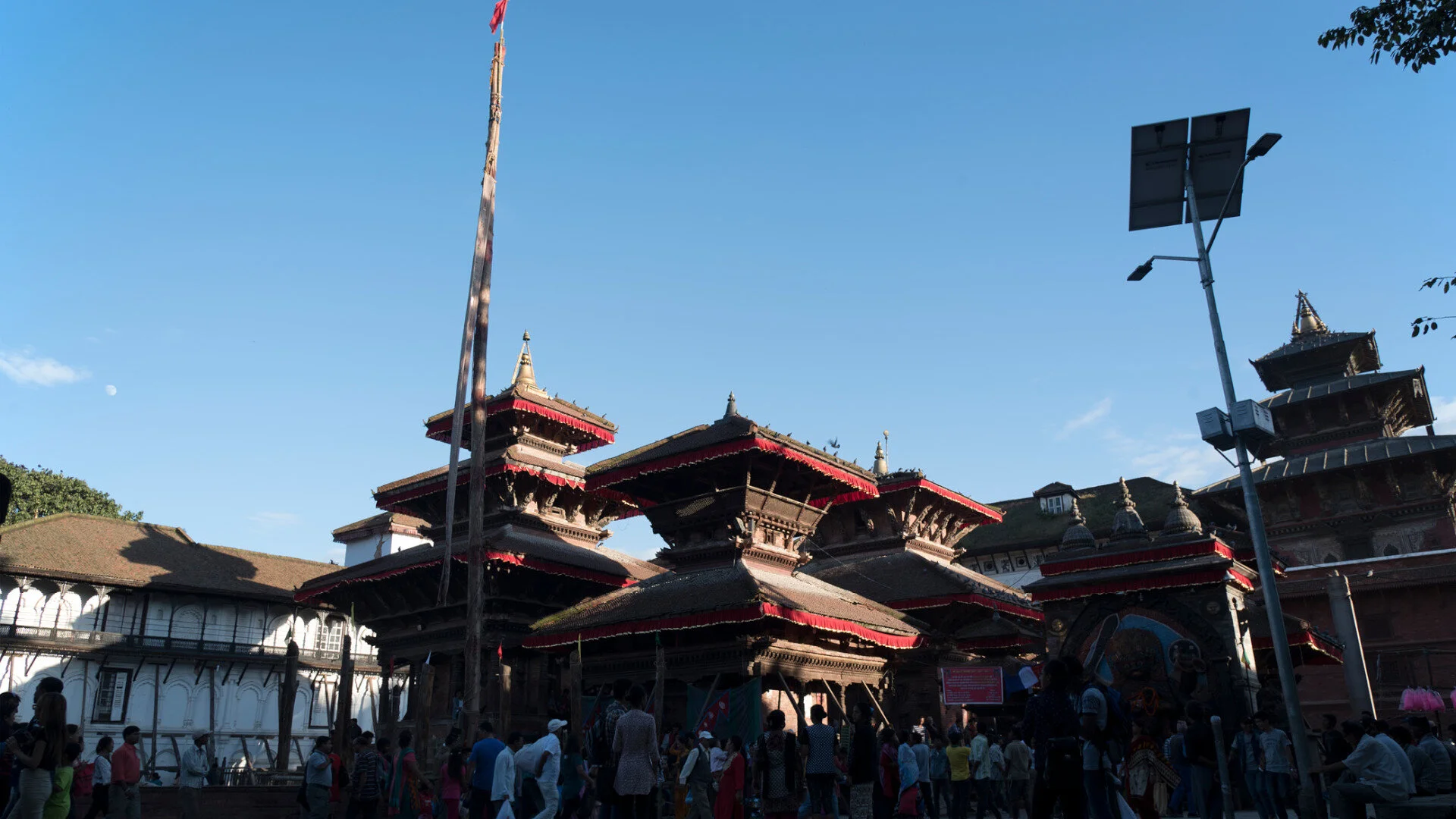
Elements of Indra Jatra
The festival of Indra Jatra is a grand amalgam of traditions. This day is the biggest festival for the Newar community of Kathmandu. Its sister cities also have their methods to mark the day. The elements of which all-together help create a vibrant atmosphere and pompous flare.
The festival of Indra Jatra is the biggest for the citizens of Kathmandu. In its neighbouring cities, it is marked differently. You must be wondering why? The answer is simple, Indra Jatra is an amalgam of centuries of traditions. It features remnants from as far back as pre Lichhavi era. Over time, multiple dynasties ruled this valley - each contributed an element to this festival.
In Nepal Bhasa, the language of the Newars, this day is called Yenya Punhi. It is the full moon day of the Newar month of Yanla, which in Nepali is called Bhadra Purnima.
The Newar calendar is lunisolar, and every full moon has its symbolism and cultural rituals. For example, the full moon of the month Thila is Yamari Punhi. Its equal in the western world is the Harvest Moon. The Newars mark Yamari Punhi as the end of the harvest and offer the first grains to Annapurna Devi. They also present a traditional sweet with molasses filling known as Yamari.
To understand what Indra Jatra means, one must de-construct its various elements to see the meaning of the whole.
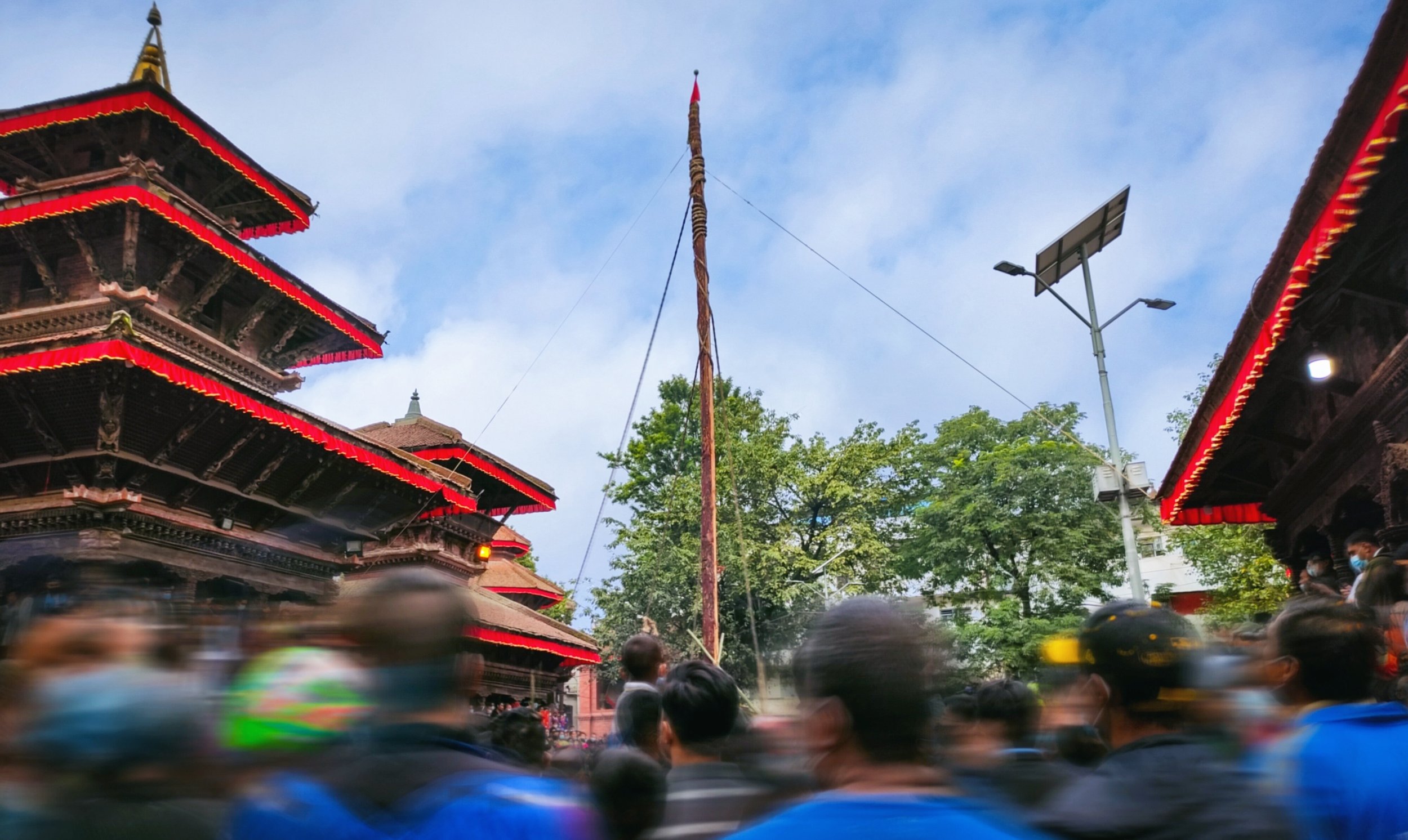
Let us start with the ceremonial pole known as Yoshi in Newari and Lingo in Nepali. Renowned Nepalese historian Babu Ram Acharya in his article, ‘Indra Jatra’ (Vide Himbat Sanskriti No.2), wrote of similarities between the ceremonial hoisting of the Maypole in Europe with the Yoshi.
The Maypole is a similar high pole raised in May in Europe. Its origin is Pagan (Ethnic religions of Europe before Christianity). The celebration of Mayday is to welcome spring. The colourful ribbons wrapped in the pole symbolise spring and warmth.
In Nepal, the Yoshi symbolises the turning of the season from Barsha (Rainy) to Autumn. It is the first layer of the festival.
For an agricultural and pastoral society, the seasons play a huge role. The ancients could have devised this mechanism to inform the people.
Just as in the Mayday festival, the pole is in the centre of the celebration. Its erection marks the beginning and its fall, the end of the festivity. Indra Jatra begins with the hoisting of the pole on the 12th day of the bright fortnight.
It is taken down on the 4th day of the dark fortnight of Yanla.
In the Lichhavi Era came the second attribute. In a dream, King Gunakamadeva was instructed to create a new city north of his present kingdom. He was requested to centre it around the ancient temple of Kanteswara, at the junction of Bagmati and Vishnumati rivers. The vicinity where the renowned sage Ne Muni performed various austerities. Kanteswara is one of the most revered Newar deities. He is called Aju Dya (Eldest God) in Newari and Aakash Bhairab in Nepali. The scared river junction in front of the temple is now a street.
As instructed, the King merged the existing villages of Koligram (Yambhu) and Dakshin Koligram (Yengal) and defeated rulers of various petty states and created his new city. He also established a beautiful stone spout gilded in gold, Lu Hiti (Gold- dhara/ Sundhara). It featured an intricate water-management system, royal canals (Rajkulos) channelled river water to the spout. He named the city Suvarna Pranali Kantipur. Here, Suvarna means golden; Pranali means system. Kantipur is a mixture of two words - Kanti, meaning beautiful and pur, means place.
To celebrate the momentous occasion, he initiated a festival known as Yenya. The word is a mixture of Yen- the Newari name of the city and Ya- celebration. It is also called the celebration inside the town.
It is possible King Gunakamadeva’s celebration overlapped the change of seasons, and the two elements became one.
In the next part of this article, we call look into the arrival of Indra.
POPULAR ITINERARIES
SIMILAR POSTS
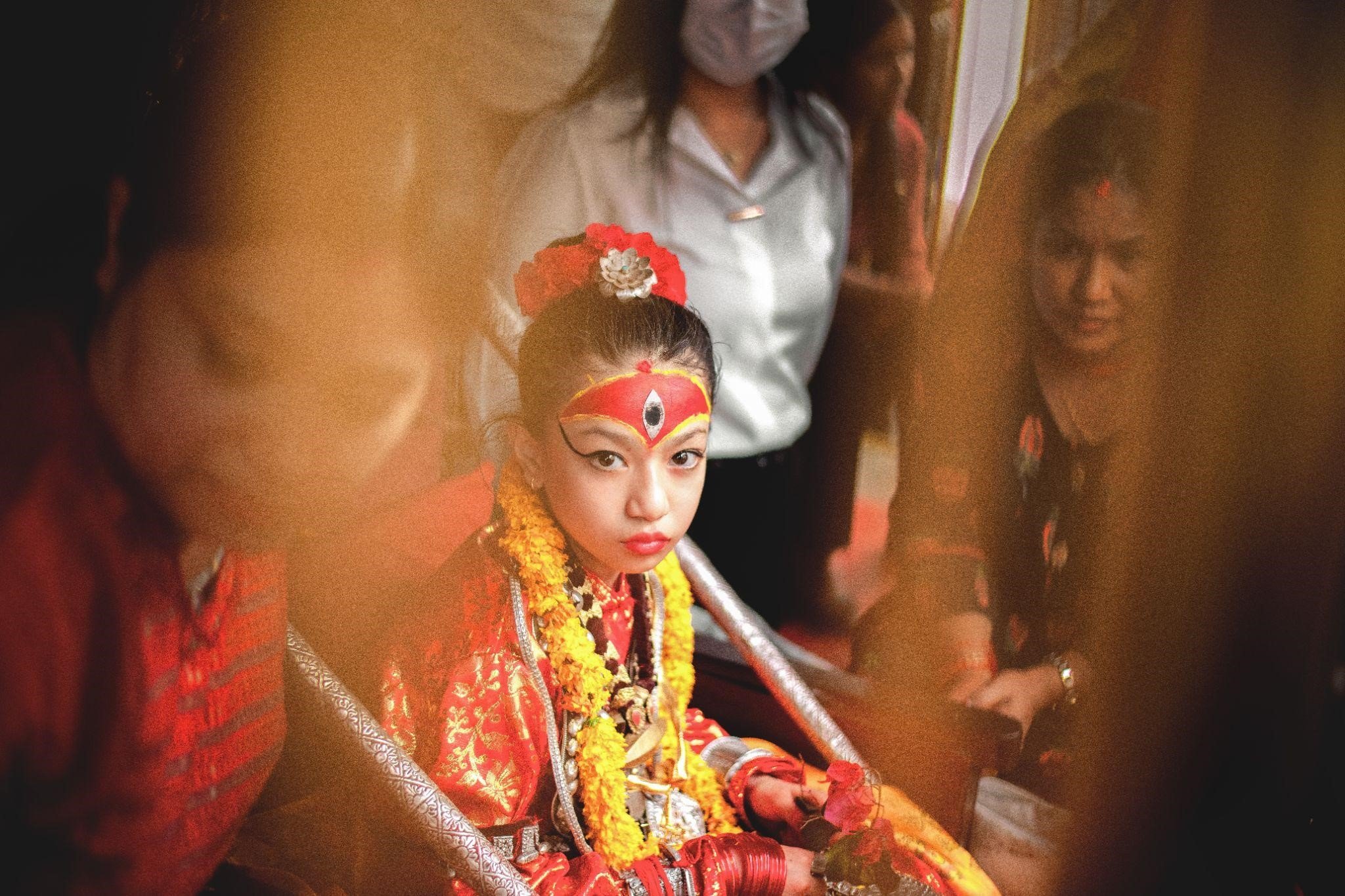
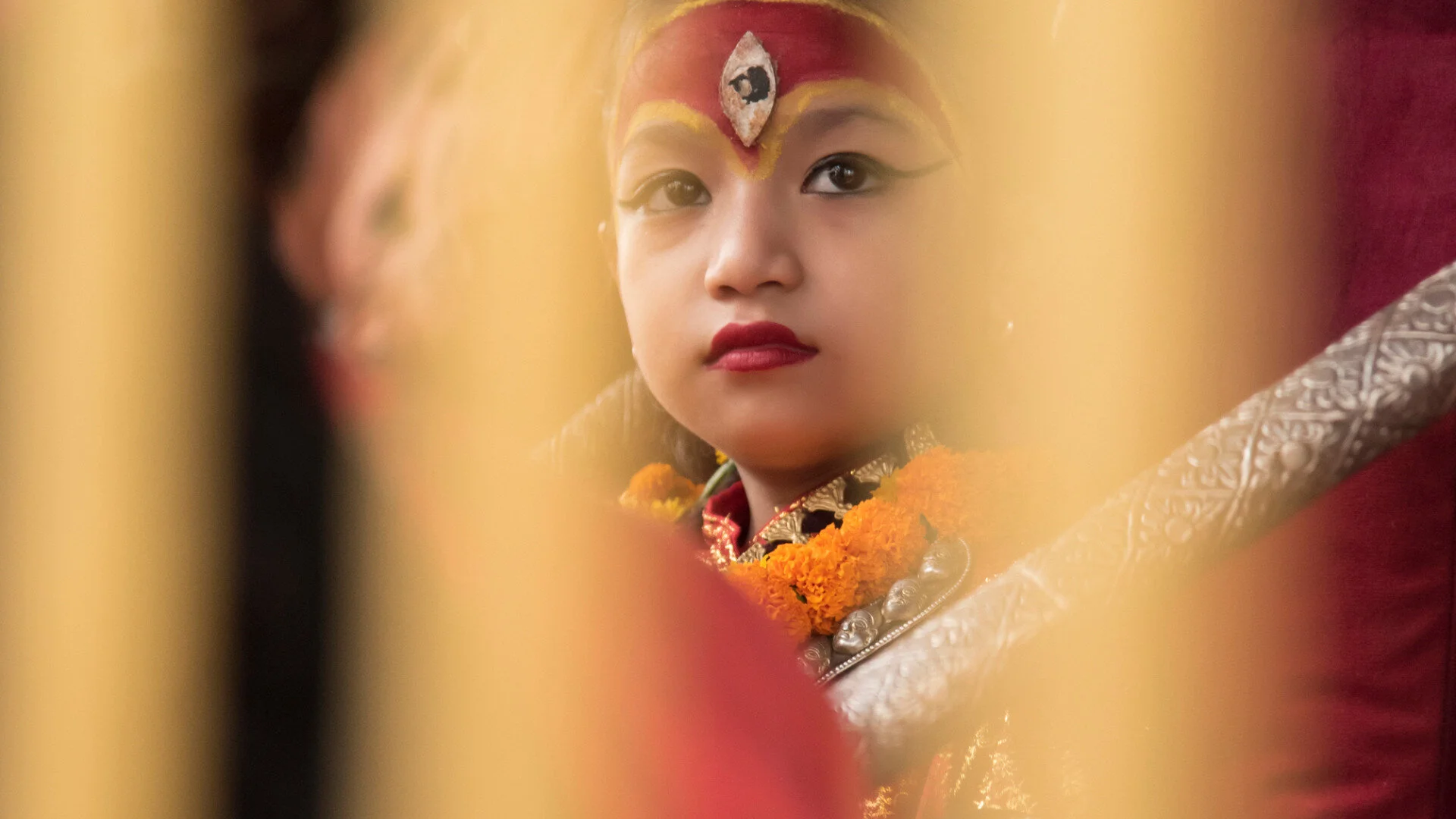
Kumari: The Tale Of The Goddess - Part III
There are many legends about the origin of how the Kumari Jatra tradition started. The most popular one is of King Jaya Prakash Malla, the last ruler of the Malla dynasty, which tells how the goddess Kumari vanished when the queen finds out to whom the King secretly visited every night.
The tale passed down from oral traditions goes as follows.
Continued…
He looked to her and asked, “Should I be worried about my neighboring kingdoms?”
She took the dice, and just as she was about to roll them, the door was bust open!
Armed guards surrounded the duo from every corner. The king felt confused, and just as he was about to speak, the queen entered the room.
“So, this is where you disappear to, MY KING!”
To which the king responded, “My beloved let me explain.” The king was interrupted by the queen, “DON’T! I find you in the late hours discussing state affairs with such a beautiful young woman!”
“But my love…” the king tried again.
“I can’t even leave you out of my sight for a moment!”
“Both of you… I had enough.” The attention of the room now shifted toward the beautiful young woman. Even the simplest of minds could have noticed that she is no ordinary mortal.
The room fell silent.
She gently placed the dice atop the board. She looked around the room: her sight reached the king’s eyes. She smiled.
She then looked to the queen, and that beautiful smile turned into a sharp look of authority.
In an instant, she threw herself up and spread her ten arms, eight of which held vessels of wielding power. An aura of flame emanated and surrounded her. Her gentle face turned frightening, and her third eye appeared.
Her nostrils flared, as she drew in deep breaths in anger.
She was no other than Taleju herself, revered as a wrathful aspect of Durga.
The soldiers dropped their weapons, and the queen drew back. The king was on his knees.
“HOW DARE YOU THINK OF ME IN SUCH A MANNER?”, she took in a breath and as she exhaled the aura of flame around her grew warmer. “Goddess, please forgive us! Please, I beg of you!” said the king.
“YOU HAVE SEEN THE LAST OF ME! I shall not stay in this kingdom any longer. You mortals and your jealousy, ENOUGH!”
“Goddess, please heed my cry! How would I reign without you?” appealed the king.
“You won’t! Your reign will soon come to an end, and your dynasty with it. For you and your brothers will unite for the last time. You shall fight alongside them, and it shall be your last.”
The flame grew larger and turned into a blinding streak of light. The Goddess had disappeared.
“I think your mission has now been accomplished?” said the king in a deep voice. “How should I have known, that it was goddess Taleju herself?” exclaimed the queen.
“You could have just minded your own business and leave me to mine.”
This night might have been the last but wasn’t the first time the king discussed state affairs with the Goddess. He had become so dependent on her advice, that after this incident: he lost all command to rule.
He kept his priests busy inside the Goddesses mammoth three-storied temple, making offering of all sorts; leaving no stone unturned. He prayed, heeded to her and waited anxiously.
Finally, the Goddess appeared but in a dream.
“Oh, my dear king, you’ve prayed more in these past few days, then many do in their entire lifetime. Your priests have been making offerings for days and nights. I will never forget the insult I suffered. But if you wish to see me again in mortal form, find a young virgin girl of the Bandya caste group. Choose the unblemished one, who exhibits thirty-two signs of perfection, for she will be my living manifestation, and your kingdoms living Goddess. Celebrate her, worship her as you worship me.”
The king awakened from his sleep. He joined his hands and thanked the Goddess. The morning that followed, he called in his ministry and his priests.
He instructed his priests to find the exact match and his ministers to put together the schematic to build her a beautiful home/palace. In the days that followed a young child from the Bhandya household who met all the criteria was found. She then was taken to the Taleju temple and in a special ceremony installed as the living embodiment of the Goddess.
To conclude this article, before king Jaya Prakash Malla, a living goddess sanctioned by the state was in the city of Lalitpur installed by Lichhavi king Laxmikamadeva. Over time, it is possible the tradition died out or took the form of a hidden cult. Many bahals and bahils of Nepal Mandala (Kathmandu Valley) have evidence of being the home of a living Goddess. The commonality among them is that embodiment of the Goddess has always been a girl from the Bhandya (Shakya and Bajracharya) caste group.
During the reign of Jaya Prakash Malla, he could have stumbled upon the hidden cult. Thus, he must have commissioned grotesquely introducing the tradition and have it sanctioned by the state in his kingdom of Kathmandu. We should keep in mind how, after king Yaksha Malla divided the kingdoms amongst his children: the Malla kings became rivals.
The merger of Goddess Taleju and the primordial Kumari of Nepal Mandala is an example of cultural assimilation. He took it further and build her a home/palace, and also introduced a chariot festival. It helped embolden the process and aided in creating the new identity of the primordial Goddess Kumari and her manifestation.
Today the three old Malla kingship states (Kathmandu, Lalitpur and Bhaktapur) have their customs and methods when it comes to caring for their living Goddess. They are one but different, but truly unique and primordial.
Correction:
In part I of this article, I mentioned she is called Dyah Meiju in Newari. Dyah means god and Meiju roughly translates to a noblewoman. It is also a word used to refer to a woman of the Bandya caste group.
POPULAR ITINERARIES
SIMILAR POSTS
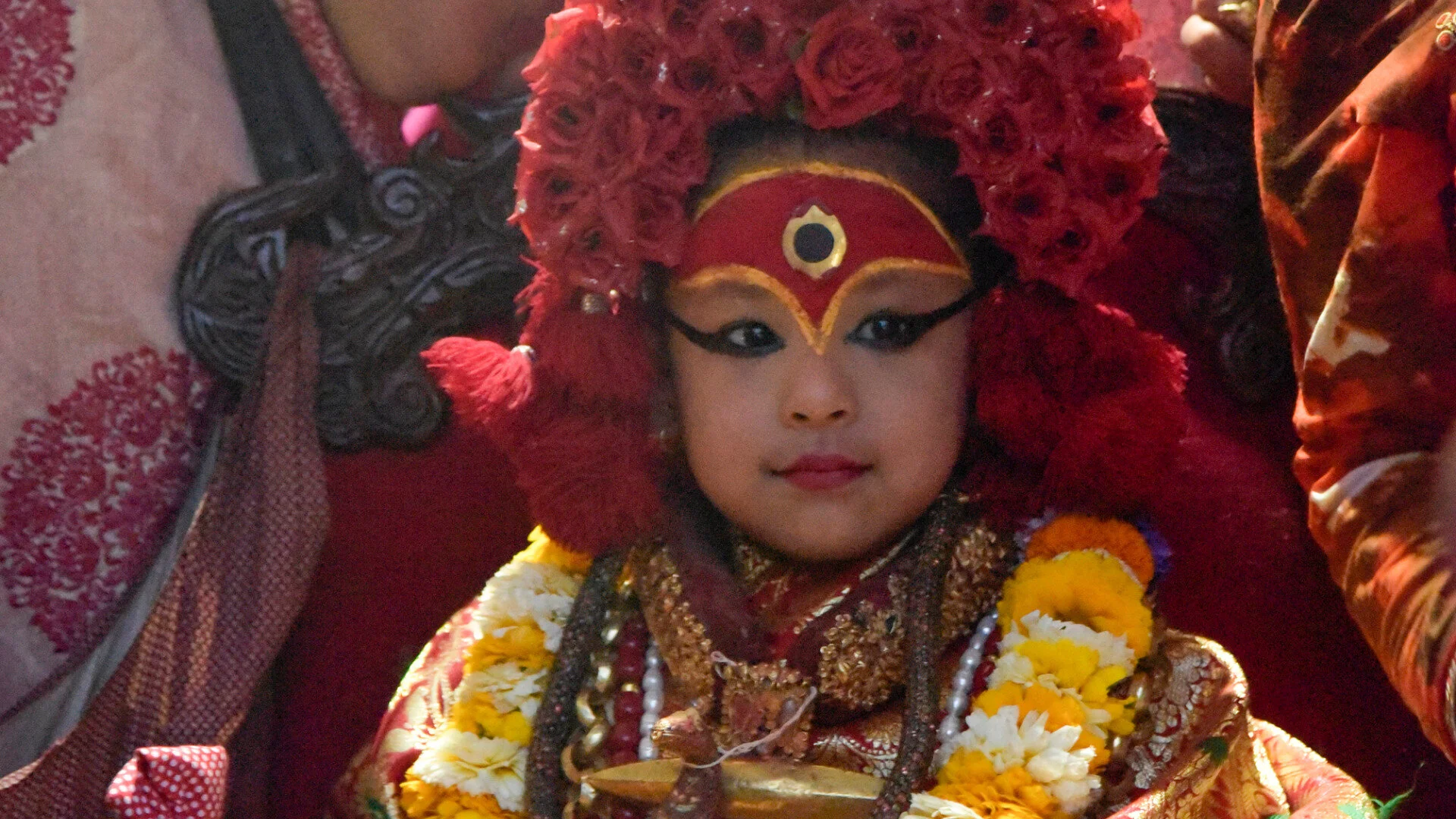
Kumari: The Tale of the Goddess - Part II
The assimilation of Taleju and Kumari occurred in Kathmandu and is said to have been during the reign of King Jaya Prakash Malla, the last Malla king of Kathmandu. The most well-known tale of the living goddess was born during the reign of Malla Kings.
The most well-known tale of the living goddess was born during the reign of these Malla Kings.The chronology of Malla kings varies in multiple chronicles. The word Malla denotes wrestler. During the reign of the second Rajput Dynasty in Nepal Mandala, the son of kking Ari Deva was a valiant wrestler. He was given the title of Malla and was known as Abhaya Malla. It was during his reign Nepal Sambat calendar was introduced. “Nepal era introduced, beginning in October 880 AD”- (Wright, 1990: 314)
After which historical lines are blurry of the Malla Kings. Their lineage resurfaces after a significant amount of time in the city of Bhaktapur. A township built by king Ananda Malla, second son of king Abhaya Malla it is from here the Malla Era of Nepal Mandala began.
According to legends, during the conquest of the Mugal Empire king Harisinha Deva, a king of Ayodhya Dynasty who ruled Simraungarh fled to Nepal Mandala along with his people. It is said Bhaktapur and Simraungarh had good relations fortified by trade and marriage. They were welcomed, with open arms in Bhaktapur and both cultures assimilated to create the unique identity of Bhaktapur.
A part of this assimilation was the introduction of Tulaju Devi. She is commonly known as Taleju Bhawani. Over time she became the tutelary deity (family deity) of the Malla Dynasty. She is believed to have been the tutelary deity of king Harisinha Deva.
She (Tulaju Devi) is worshipped, through a sacred yantra which was brought to Bhaktapur by King Harisinha Deva’s people.
Today, temples of Taleju Bhawani can be found in all of the Malla kinships of Nepal Mandala. In Bhaktapur, her yantra is housed in a sacred courtyard. Whereas in its sister states she has two mammoth temples built in traditional pagoda design. The construction of both, were in the late Malla period. The temple in Kathmandu was built by king Mahendra Malla in 1500 AD, and that of Lalitpur was first built by king Siddhi Narshinga Malla in 1640 AD and later by king Srinivasa Malla in 1667 AD after it was damaged by a fire.
The assimilation of Taleju and Kumari occurred in Kathmandu and is said to have been during the reign of King Jaya Prakash Malla, the last Malla king of Kathmandu. He is also the king who commissioned the chariot festival of the living goddess during Yenya Punhi (Indra Jatra).
The talepassed down from oral traditions goes as follows.
The last ray of sunlight had fallen and the people of Nepal Mandala slowly made ready their bed. At Yeh Lyakhu (Kathmandu Durbar) the palace gates were shut. The guards made their regular patrol. The Byanjankars (cooks) prepared the royals their nightly meal. After which the queen left for bed, and asked her husband to join soon.
The king, however, had a different intention.
The moon had almost reached the centre of the sky. The king felt the time was right. He made his way through the royal courtyard and entered a secret room.
“You’re late today? Was anything the matter?”
“No, I was just waiting for the courtiers to fall asleep.” said the king.
The room was lit by a dim lamp, at the center of which was a small table. The king made ready the board and dice (a game of Tripasa) atop it.
“How were your people today?”
To which the king responded, “Nothing of urgency came up. Only news of the Gorkha Rajas (Kings) another triumph. His eyes are set on this Mandala, he will not rest until he conquers it.”
The king took a brief pause, and with hopeful eyes looked to her and asked, “What do you think I should do?”
“For now do nothing,” she paused to throw the dice and continued, “The whispers of war can be heard. The people are already scared! For when the tower of this valley falls ring the war bell. Fortify your gates, and make arms ready.”
The king made a mental note and paused to take a deep breath. He took the dice and threw them.
“Aha, beautiful!” he looked please at the results.
He looked to her and asked, “Should I be worried about my neighboring kingdoms?”
She took the dice, and just as she was about to roll them, the door was bust open!
POPULAR ITINERARIES
SIMILAR POSTS
Kumari: The Tale Of The Goddess - Part I
There are several tales about the history and culture of Nepal. Among all those legends and stories, one is the goddess Kumari. The story tells about the origin of the goddess Kumari, a living goddess worshipped by Hindus and Buddhists of Nepal.
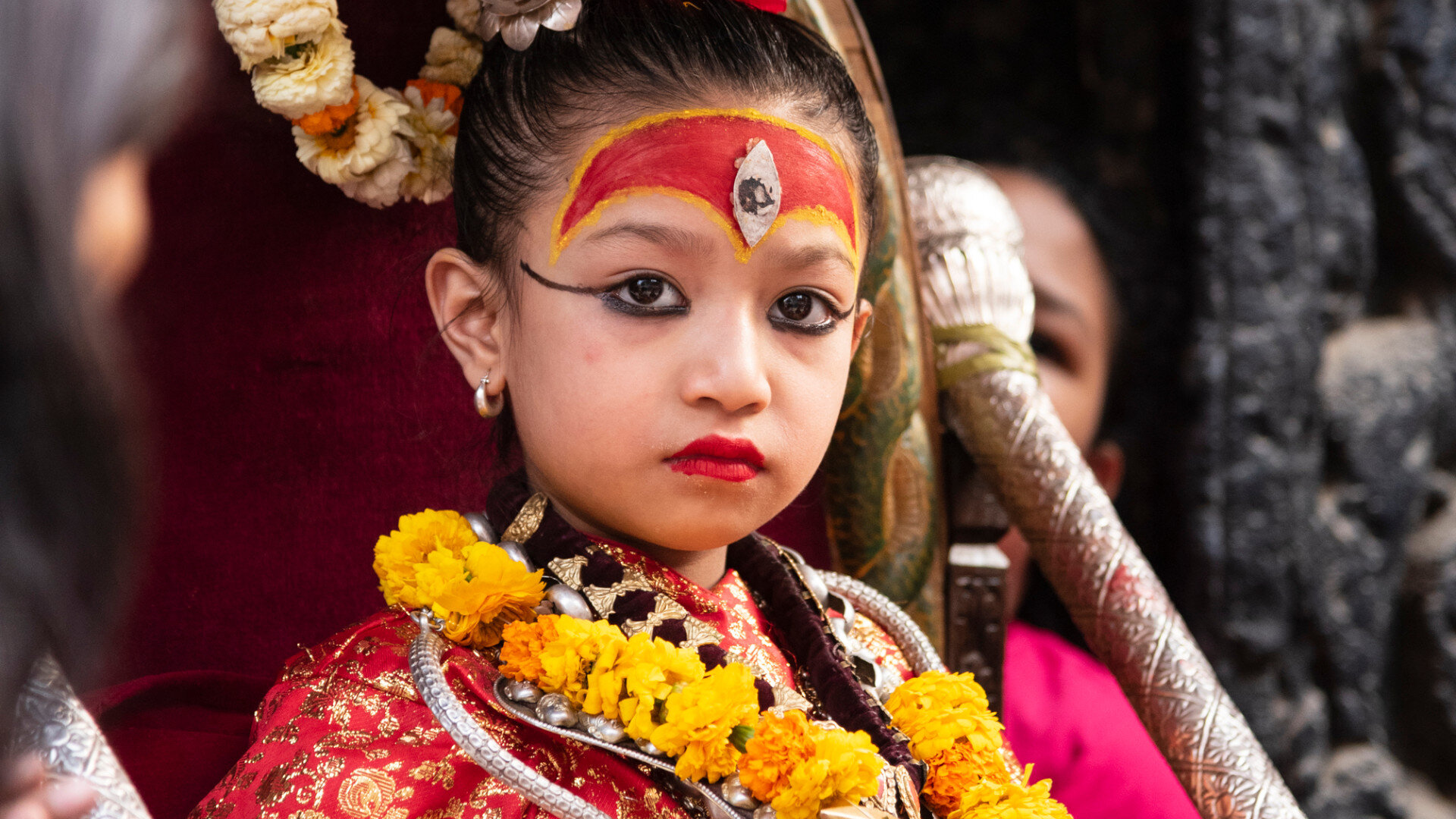
When one pictures the magical heartland of Nepal, the image of Kathmandu is incomplete without a young girl dressed in red with mascara highlighting her eyes and seated in a throne. Traditionally known as Dyah Meiju (God Mother), this enchanting young girl is the symbol of power, candour, and divinity.
Tracing chronicles, the first mention of Kumaris comes during the episode of Pingala which occurred in the Dvaparayuga and lasted for fifty years. This period is denoted as the arrival of the goddesses in Nepal Mandala (Kathmandu Valley).
“Having heard of the arrival of the goddess, all the Kumaris of different directions appeared- Balakumari of Thimi in the east, Kvathache Balakumari in the south, Maitidevikaumari in the west, close to Janesvara who came from Balkhu Pitha, and Kaumari of Mangalapura in the north, who formerly resided in Visalanagara near Bhasmesvara. These Kumaris are the primordial ruling deities of Nepal.” - Bajracharya & Michaels. 2016 “History of the Kings of Nepal: Introduction and Translation” Himal Books: 26
These deities are still highly regarded in the Newar pantheon. They are also viewed as the manifestation of Devi, and some as Shakti Pitha’s.
It is believed that the Kumaris aided King Gunakamadeva, during his conquest of creating a township. He was a king during the Lichhavi Era who in a dream was instructed to found a city north of his abode at the junction of Bagmati and Vishnumati rivers and to centre the city around the temple of Kanteswara Mahadev (today known as Aakash Bhairav).
The town that he put together is known as “Suvarna- pranali- Kantipur” (Wright, 1990: 156). He designed the township in the shape of a Khadga ( Sword of Goddesses) with the temple of Kanteswara Mahadev in the centre. After the completion of the town, a day was marked in celebration of the occasion. Today that day is known as Yenya Punhi in Nepal Bhasa ( Yen meaning Kantipur/Kathmandu and Ya meaning celebration). Today it is commonly known as Indra Jatra, which is an assimilation of Yenya Punhi, Indra’s arrival to Kathmandu and Kumari Jatra which was instituted by King Jaya Prakash Malla.
His grandson, King Laxmikamadeva is credited to have been the founder of a cult which worshipped a living goddess.
“ This Raja thinking that his grandfather had acquired so much wealth and conquered the four quarters of the world through the aid of the Kumaris, he resolved to do the same. With the intention he went to Patan Durbar, and having worshipped as Kumari the daughter of a bandya, living in a bihar near the Durbar, known by the name of Lakshmi-barman, he erected an image of Kumari and established the Kumari Puja.” - Wright, Daniel. 1990 “History of Nepal.” Asian Educational Services: 157
During the reign of the famous Malla King Siddhi Narshinga Malla, this bihar was moved west and today is known as Ratnakar Mahabihar. The spot of the old bihar houses Sundari Chowk, and the famous golden tap, Tusha Hiti.
Even till this day, the daughter of a bandya (Shakya and Bajracharya) is worshipped as the living goddess. The cult has its set of rules, customs and norms during the selection process. She (The Living Goddess) is chosen at a young age and sits on the throne till she reaches puberty. She is succeeded by another young girl selected from the registered bandya households.
I presume the cult grew and diffused to other vicinities of Nepal Mandala (Kathmandu Valley). Multiple pieces of evidence show the cult existed in various bahals of Nepal Mandala which have been documented by Isabella Tree in her book “The Living Goddess.” Over time the cult dissipated from multiple bahals.
Nepal today has three Royal Kumaris ( Kathmandu, Patan, Bhaktapur), five Communal Kumaris ( Makhan Tol, Kilagal, Nuwakot, Bungamati, Tokha) and three living gods; two in Kathmandu ( Kathmandu Ganesh & Bhairava) and one in Tokha (Ganesh).
Defining what she represents is difficult due to the primordial nature of the goddess Kumari. But in my research and understanding, she is viewed as the shakti of Lord Bhairava. She is one of eight mother goddesses(Asta Matrika) in Lalitpur. It is known as Aji Ma group in Kathmandu and Nava Durga in Bhaktapur and Thecho. Over time cultural assimilation has lead to additions and loss of the core identity of the goddess and her living manifestation.
The most well-known tale of the living goddess was born during the reign of the Malla Kings.
POPULAR ITINERARIES
SIMILAR POSTS
The Little Golden Bird of Prosperity - Part I
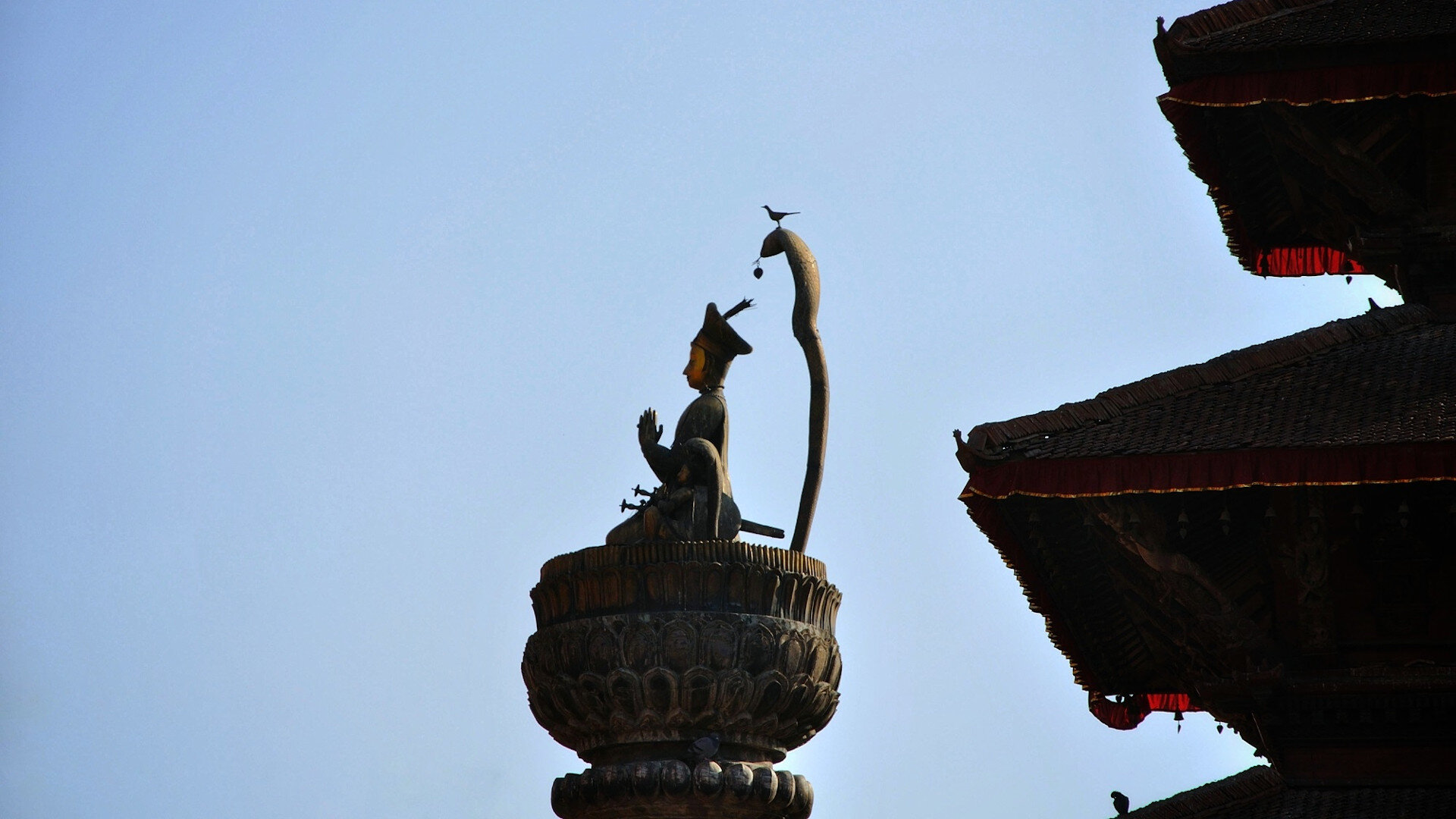
Every city has it’s riveting tales passed down from one generation to another through written or oral traditions. These folk tales help create an aura of mysticism and magic; bring life to the city. Such as the legend of “The little golden bird of prosperity,” atop a serpent head rising above the golden statue of King Yog Narendra Malla at Lalitpur Dubar Square.
Every city has it’s riveting tales passed down from one generation to another through written or oral traditions. These folk tales help create an aura of mysticism and magic; bring life to the city. Lalitpur has its share of folk tales which have contributed to continuing legacies, traditions, beliefs and culture. Amongst them is the legend of, “The little golden bird of prosperity.”
At Lalitpur Durbar Square, one can’t but be overwhelmed at the sheer beauty of the well-preserved temples of multiple architectural styles, monuments, courtyards and shrines. At the centre of this UNESCO World Heritage site lies a stone pillar some 40 feet in height which is supported by a solid stone base. Atop the column is a lotus capital ( bloomed lotus) which symbolises purity. Above it lies the golden statue of King Yog Narendra Malla in a seated position with folded hands facing the temple of the tutelary (guardian) deity of Malla Kings, “Taleju”. The statue is protected by a serpent called Karkotaka, rising high above the Kings head. Perched atop the serpents head is a little golden bird, poised in a manner where it looks like it’s about to take flight.
This little golden bird plays a fundamental part in the philosophy of longevity. This thought relates how Yog Narendra Malla, a 17th century Malla King is still alive. You like others who’ve heard or read this tale, would ask the same question, how? How can someone have such a long life?
This tale begins in the southern suburb of Lalitpur, in the town of Khokana. Here lived a wise elder who possessed a rare precious jewel, bestowed as an award for disclosing the truth about an incident to serpent Karkotaka of Taudaha Lake.
The incident goes like this, one day while the elder was taking a walk, he noticed ripened stalks of wheat crushed at his field. He looked closer to investigate and found two serpents who had turned the ground a trysting place for lovers. He recognised them quickly. The male was a serpent of his village, while the female was the wife of Karkotaka. Saddened at the crushed wheat and angered discovering the cause, he beat them with his big stick severely after which the lovers fled.
Full of bruises and pain the wife of Taudaha serpent laid on her bed. Her husband had been on his tour, returned to find his loving wife all beaten up. He asked her, “ What’s the matter! What happened?”
To which the wife of Karkotaka narrated a false story, and demanded the wise elder of Khokana be caught and punished. She claimed that he used his magical powers to inflict these wounds upon her and that until he is dead, she will be ill. Saddened and angered, the Taudaha serpent took human form and embarked to Khokhana with the motive of revenge. He found the elders house and entered through a window.
As he sneaked around the house, he heard the elder. He moved towards the room and found him telling his wife about the serpents in their field. “ Karkotaka of Taudaha Lake is viewed as the king of serpents. His good behaviour and repute are known to all, but his wife has no character at all. She came to our wheat field the other day; I discovered her making love with our Khokhana pond serpent. They had turned our wheat field into a trysting ground. Ripened stalks of wheat, crushed and trampled everywhere! I was infuriated so; I beat them with my stick severely. I think both lays in their sickbeds.”
Karkotaka after hearing the truth, couldn’t kill the wise elder. He was rather very impressed by him and grateful for revealing the truth about his wife’s mysterious sickness. So he appeared in front of the old couple and stated, “ Dear wise elder, I came to know the true story of the event that occurred in your wheat field. As a reward, I would like to present you something.” Karkotaka presented the elder with a precious jewel and said, “ If you keep this with yourself, even death cannot touch you. You will be an immortal man.”
To which the elder responded, “ What’s the point of living such a long life?”
He was old, and the world had lost its charm neither did he have the desire to lengthen his life. So he expressed his desire to pass away just like his ancestors, kin and peers.
Karkotaka found the concerns reasonable thus said, “ Please don’t worry wise elder! For when you wish to pass away from this world imagine eight impossible things to be accomplished.”
POPULAR ITINERARIES
SIMILAR POSTS
Unravelling Nepali History
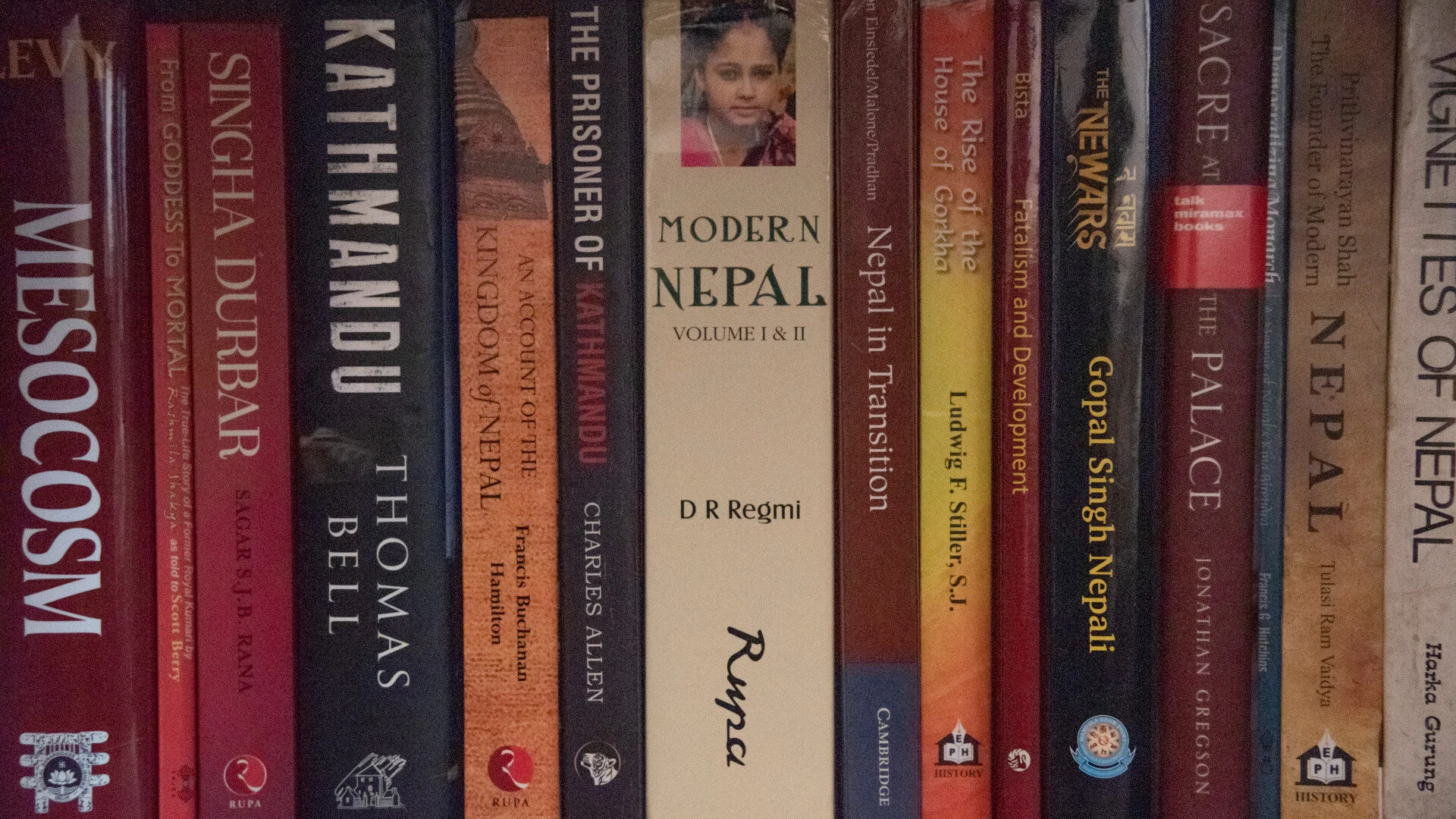
When Nepal was opened in 1950s for the world to experience, arrival of historians and academics helped document the history and unravel treasures of a forgotten past. Among the many books that have helped conserve Nepali history, here we made list of a few books to get one started.
When travelling to a country such as Nepal, with layers of history and significance. One can get lost in the beauty of this tranquil escape but never know the true reason for its creation. The diversity in Nepal is so rich that in a small square such as of Patan, Kathmandu and Bhaktapur lie countless bricks of the bygone era layered one atop the other. Temples of the then forgotten world, stand tall with the new architecture and even among the temples, lie countless tiers of history.
The external beauty is enriched and uplifted with knowledge of their creation, are significance and its value. One can feel as if they have been transported to a bygone era, as his/her imagination contemplates the creation of these sites as they flip through pages of history carefully protected and transcribed into the pages of a book.
History is complicated, especially when it comes to Nepalese history which features so many diversities, micro kingdom, a lack of documentation and dark eras during when neither history was documented but was rather lost.
When Nepal was opened in the 1950s for the world to experience, it didn’t just boost the tourism industry but also the arrival of historians and academics helped document the history and unravel treasures of a forgotten past. Among the many books that have helped conserve Nepali history, listed below are a few books to get one started.
A History of Nepal by John Whelpton
While John Whelpton's history of Nepal focuses on the period since the overthrow of the Rana family autocracy in 1950-51, the early chapters are devoted to the origins of the kingdom and the evolving relations of its diverse peoples. Whelpton portrays a country of extraordinary contrasts, whose history has been buffeted constantly by its neighbours, China and India. Economic and political turmoil over the last fifty years came to a climax with the massacre of the royal family in 2001 when the country erupted into civil war. This book is the most comprehensive and accessible English-language one-volume history of Nepal. John Whelpton, who works as a teacher in Hong Kong, is a historian and linguist. He has worked and travelled extensively in Nepal, and has written numerous articles and books on the subject. These include Nationalism & Ethnicity in the Hindu Kingdom: The Politics and Culture of Contemporary Nepal (Routledge, 1997), and Kings, Soldiers and Priests: Nepalese Politics and the Rise of Jang Bahadur Rana, 1830-1857 (South Asia Books, 1992).
Kathmandu by Thomas Bell
One of the greatest cities of the Himalaya, Kathmandu, Nepal, is a unique blend of thousand-year-old cultural practices and accelerated urban development. In this book, Thomas Bell recounts his experiences from his many years in the city—exploring in the process the rich history of Kathmandu and its many instances of self-reinvention.
Closed to the outside world until 1951 and trapped in a medieval time warp, Kathmandu is, as Bell argues, a jewel of the art world, a carnival of sexual license, a hotbed of communist revolution, a paradigm of failed democracy, a case study in bungled western intervention, and an environmental catastrophe. The layered development of the city can be seen in the successive generations of its gods and goddesses; its comfort in the caste system and ethos of aristocracy and kingship; and the recent destabilizing effects of consumerist approaches and the push for egalitarianism and democracy. In important ways, Kathmandu’s rapid modernization can be seen as an extreme version of what is happening in other traditional societies. Bell also discusses the ramifications of the recent Nepal earthquake.
A comprehensive look at a top global destination, Kathmandu is an entertaining and accessible chronicle for anyone eager to learn more about this fascinating city.
History of The Kingdom of Nepal by Daniel Wright
History of Nepal by Daniel Wright and translated from the Parbatiya by Munshi Shew Shunker Singh and Pandit Shri Gunanand forms part of the indispensable canon of works about the Himalayan Kingdom of Nepal. Daniel Wright has his own distinctive style of wright about the people, culture, customs and history of Nepal. In his book, he talks about not only the history and geography of Nepal but also gives us an insight into the traditional instruments, songs and original manuscripts of this Picturesque country. It is an excellent book to gain the perspective of a foreign national regarding Nepalese culture and history. The book contains an interesting history of Nepal including that of Newaris and Kathmandu. It is also termed as the myth of Kathmandu.
Battles of the New Republic: A Contemporary History of Nepal by Prashant Jha
Battles of the New Republic: A Contemporary History of Nepal is a story of Nepal's transformation from war to peace, monarchy to a republic, a Hindu kingdom to a secular state, and a unitary to a potential federal state.
Part-reportage, part-history, part-analysis, part-memoir, and part-biography of the key characters, the book breaks new ground in political writing from the region. With access to the most powerful leaders in the country as well as diplomats, it gives an unprecedented glimpse into Kathmandu's high politics. But this is coupled with ground-level reportage on the lives of ordinary citizens of the hills and the plains, striving for a democratic, just and equitable society.
It tracks the hard grind of political negotiations at the heart of the instability in Nepal. It traces the rise of a popular rebellion, its integration into the mainstream, and its steady decline. It investigates Nepal's status as a partly-sovereign country and reveals India's overwhelming role. It examines the angst of having to prove one's loyalties to one's own country and exposes the Hindu hill upper-caste dominated power structures.
Battles of the New Republic is a story of the deepening of democracy, of the death of a dream, and of that fundamental political dilemma - who exercises power, to what end, and for whose benefit.