
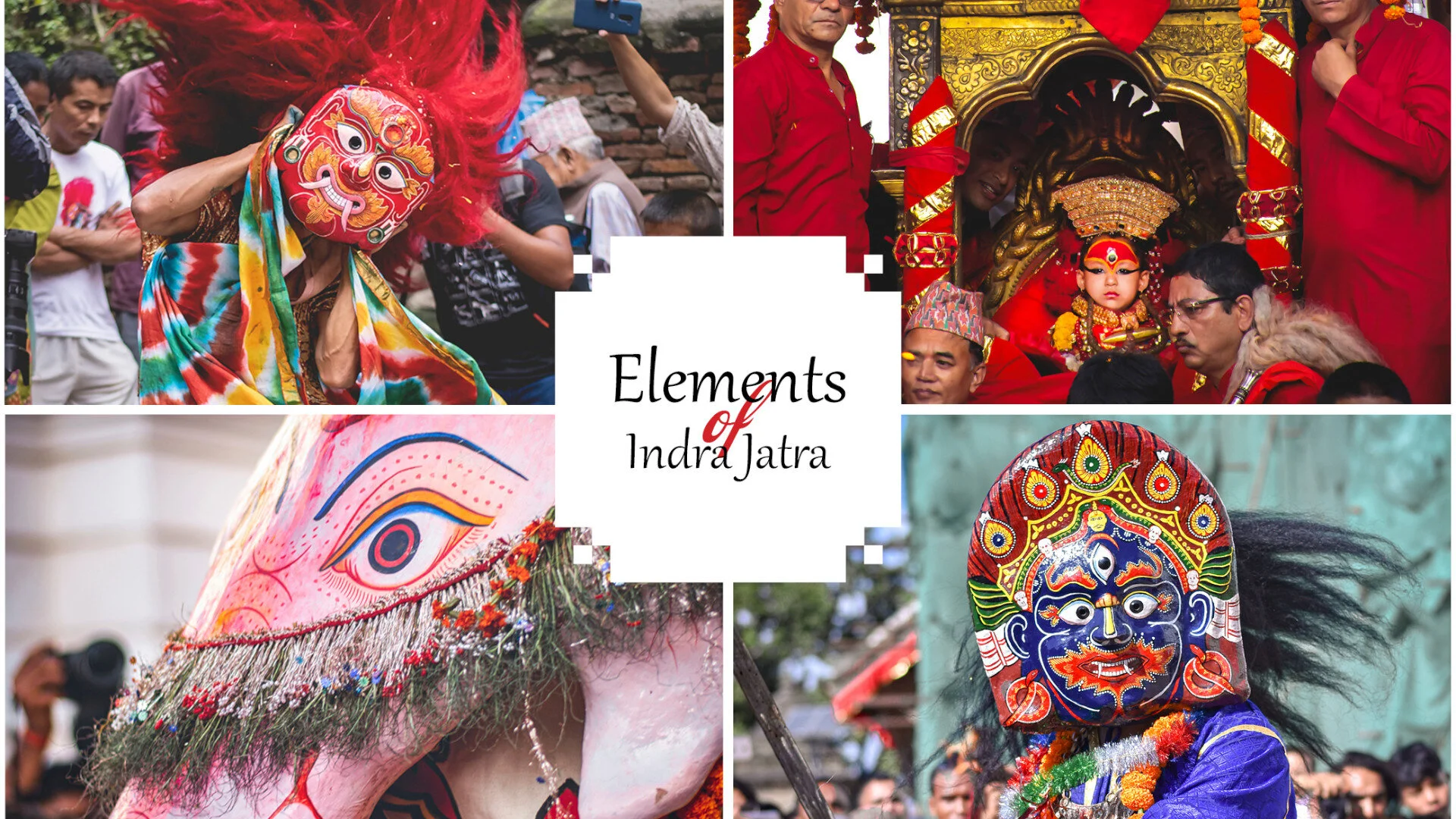
Elements of Indra Jatra - Part II
The spectacle of Indra Jatra is an experience of a lifetime. It isn't just a tradition but a heritage of the Newar culture and its people.An amalgam of various traditions, it is a period of great joy and devotion.
The assimilation of Indra into Yenya is still regarded as a great mystery. He is revered as the King of heaven, god of rain and worshipped by the clans of Kshatriya warriors. His banner is known as Indra Dhwoja, and historically it is hoisted in his honour.
The local legend goes as follows. A man was apprehended while trying to steal a flower in the yard of a farmer. He was tied to a pole by the people and hoisted high for all to see. During the festival, the locals witnessed a white elephant dancing out on the street. A few days later, a woman appealed to the people to let her son go. After seeing his mother, Lord Indra removed his human disguise, and the locals were in awe. She told them that he came to Earth on her request to collect a sacred flower, which she required for a ritual.
As a reward for releasing her son, she vowed to provide the last rainfall before autumn for the crops to prosper every year. She also promised to show them the way to heaven. The people followed them to find the entrance. After a certain distance, the duo conjured a thick fog and disappeared.
A god of the Vedic era, Indra Jatra may be one of the last grand celebrations which include him. A common assumption is of Hindus trying to make sense of an animistic (worship of nature and animals) tradition after their arrival into this valley.
During the festival, an effigy of Airavata - the white elephant of Indra dances in the streets and courtyards of Kathmandu. In Newari, it is called Pulu Kisi. Pulu means a torch, and Kisi means an elephant in Nepal Bhasa (Newari).
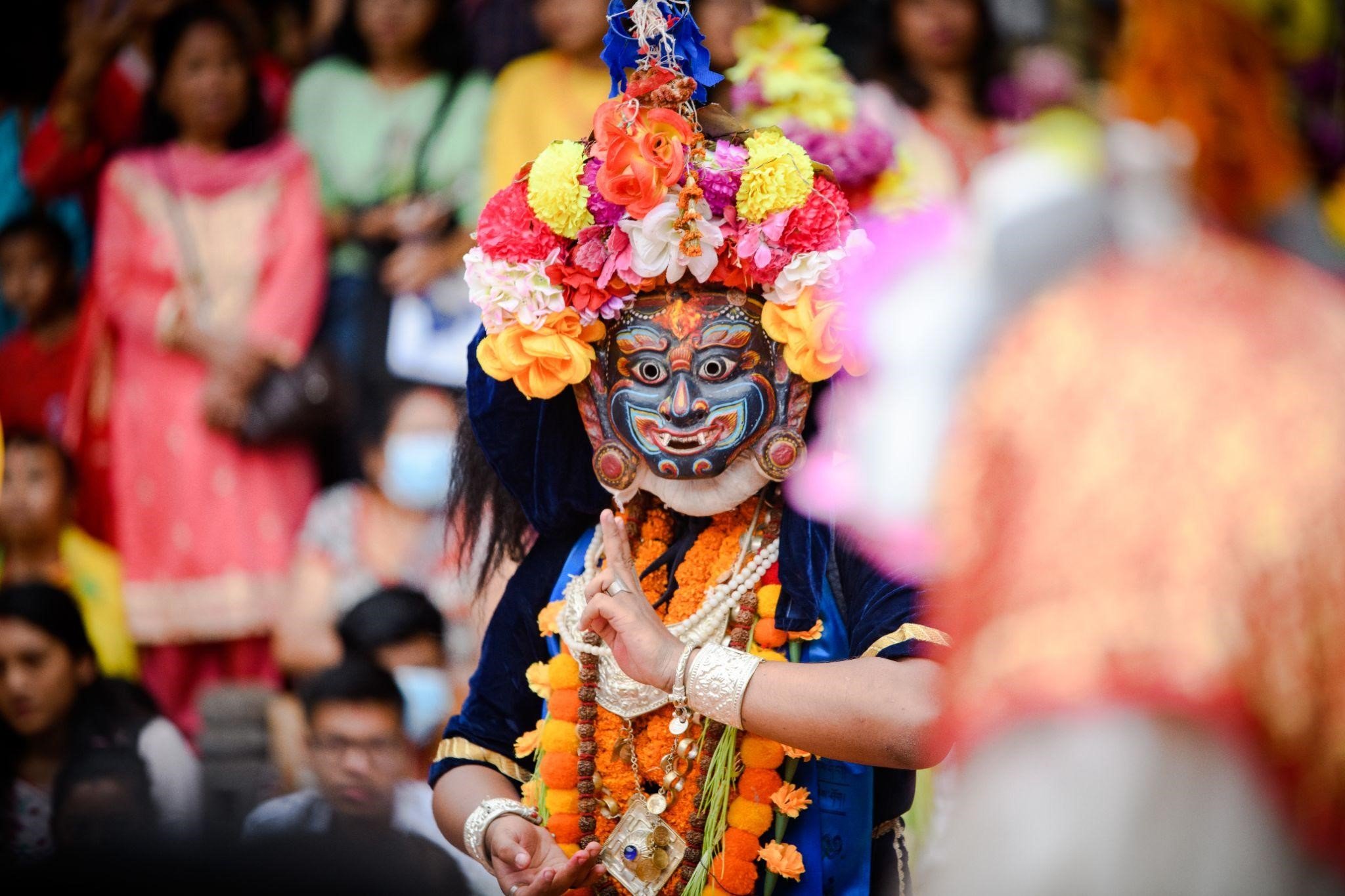
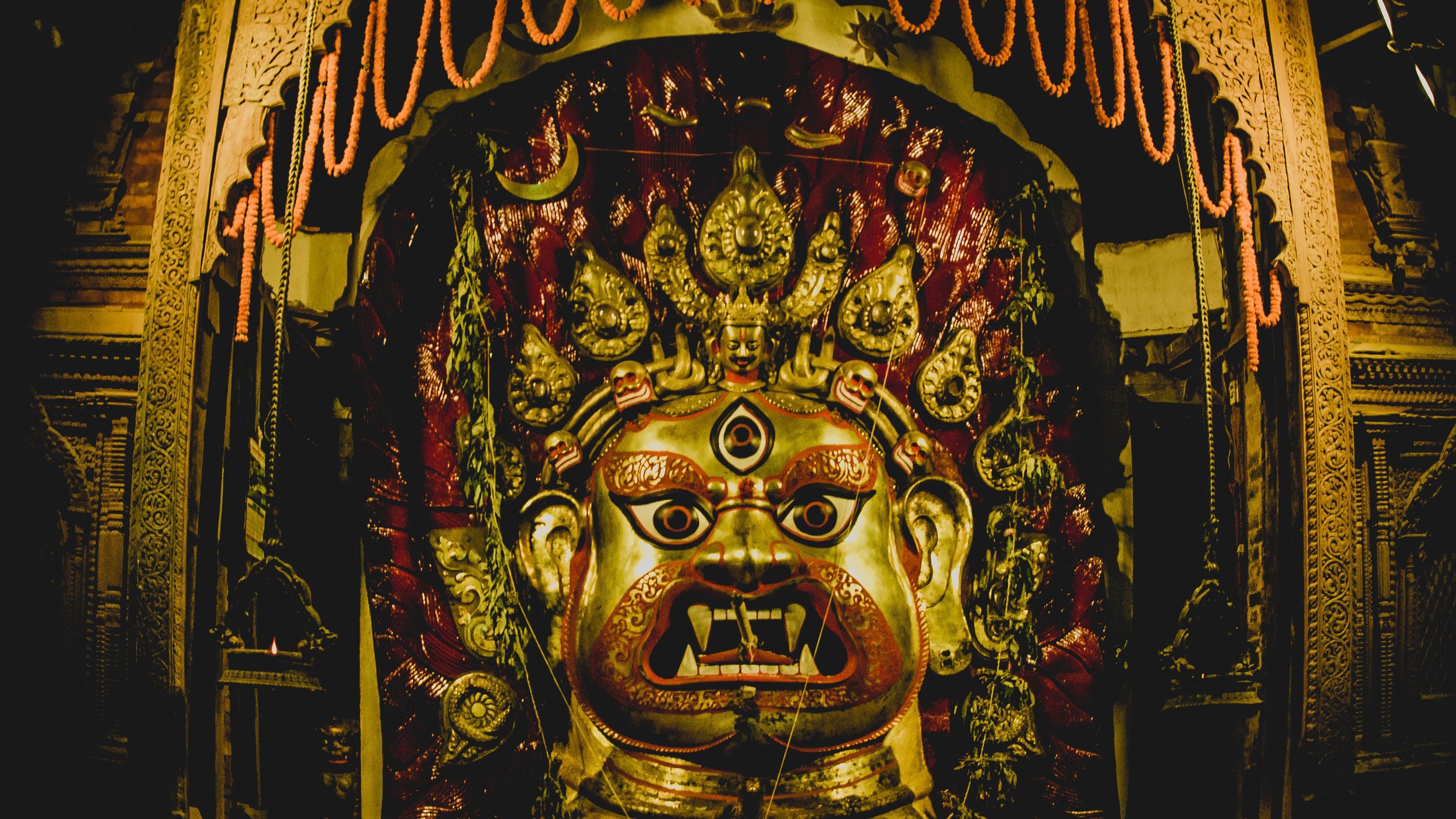
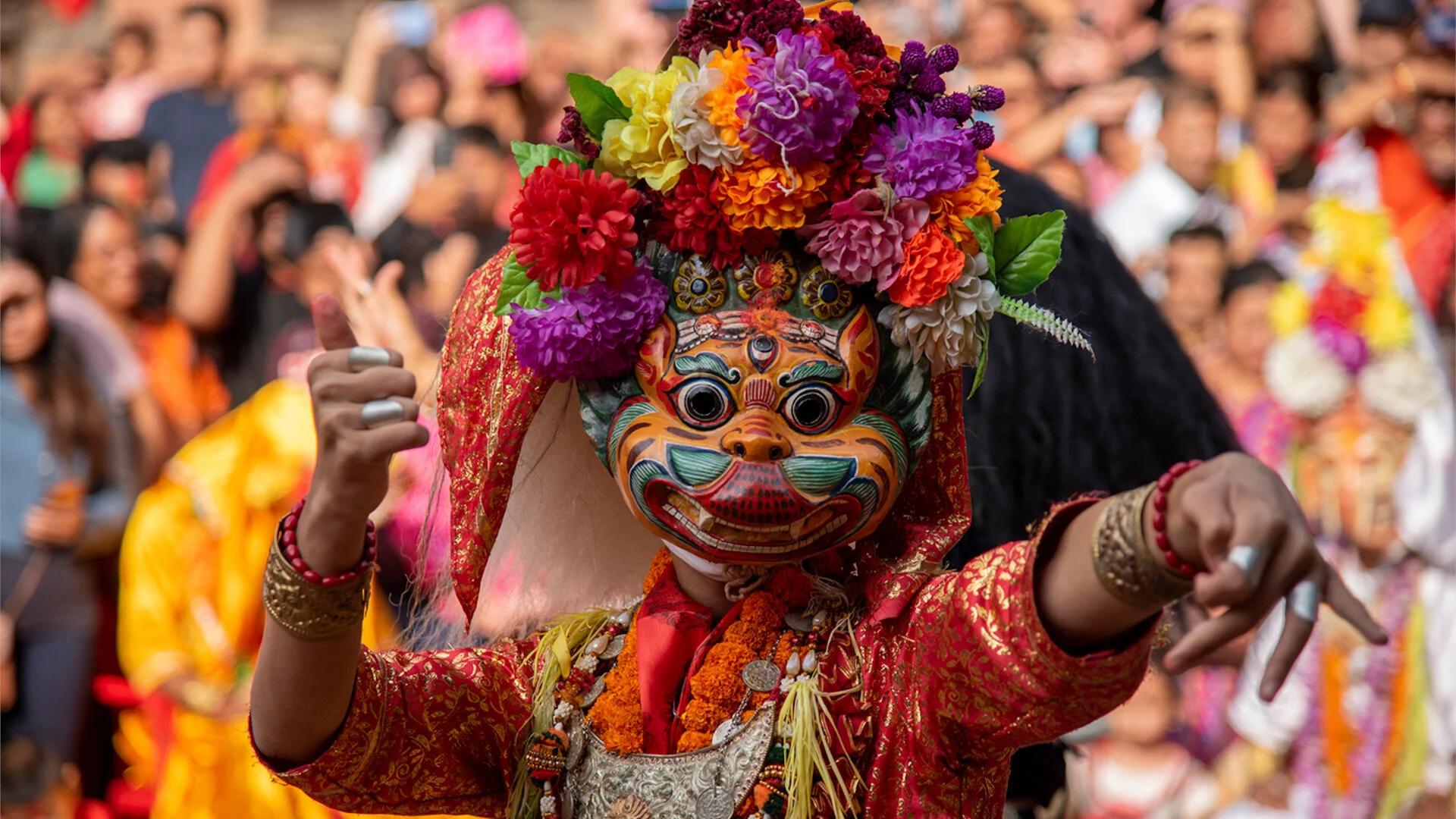
Another free dancing character is Majipa Lakhe, traditionally known as Santa Bhairab or Bhoot (Tibetian) Bhairab. The legend, in brief, is how he was the servant of a goddess brought from Tingri, a vast plain in Tibet. Once there was no rainfall in the valley for quite some time. The acaju's (priests) deduced an animal sacrifice is required. They also needed a goddess. They suggested visiting Tingri, the land of the giants and bring their goddess. The only problem is, the giants ate men, and no man ever dared to step foot on that plain.
The acaju's had no choice, they left for Tingri, and once they arrived, they chanted a spell that made them invisible. They found the goddess and told her of the dire situation. She agreed to visit the valley. One their way back, one night, the acaju's heard tigers roar in the jungle and the sound of bells. They were frightened and ran to the feet of the goddess. She asked them why they were scared?
What abomination rings the sound of bells in the middle of nowhere? To which the goddess replied, it's a Lakhe, my servant. He is a frightening creature. But as long as I am here, he will not hurt you. The acaju's expressed their concerns about how he might cause trouble in the valley. He will not harm anyone, told the goddess. She instructed the acaju's to keep him outside the city.
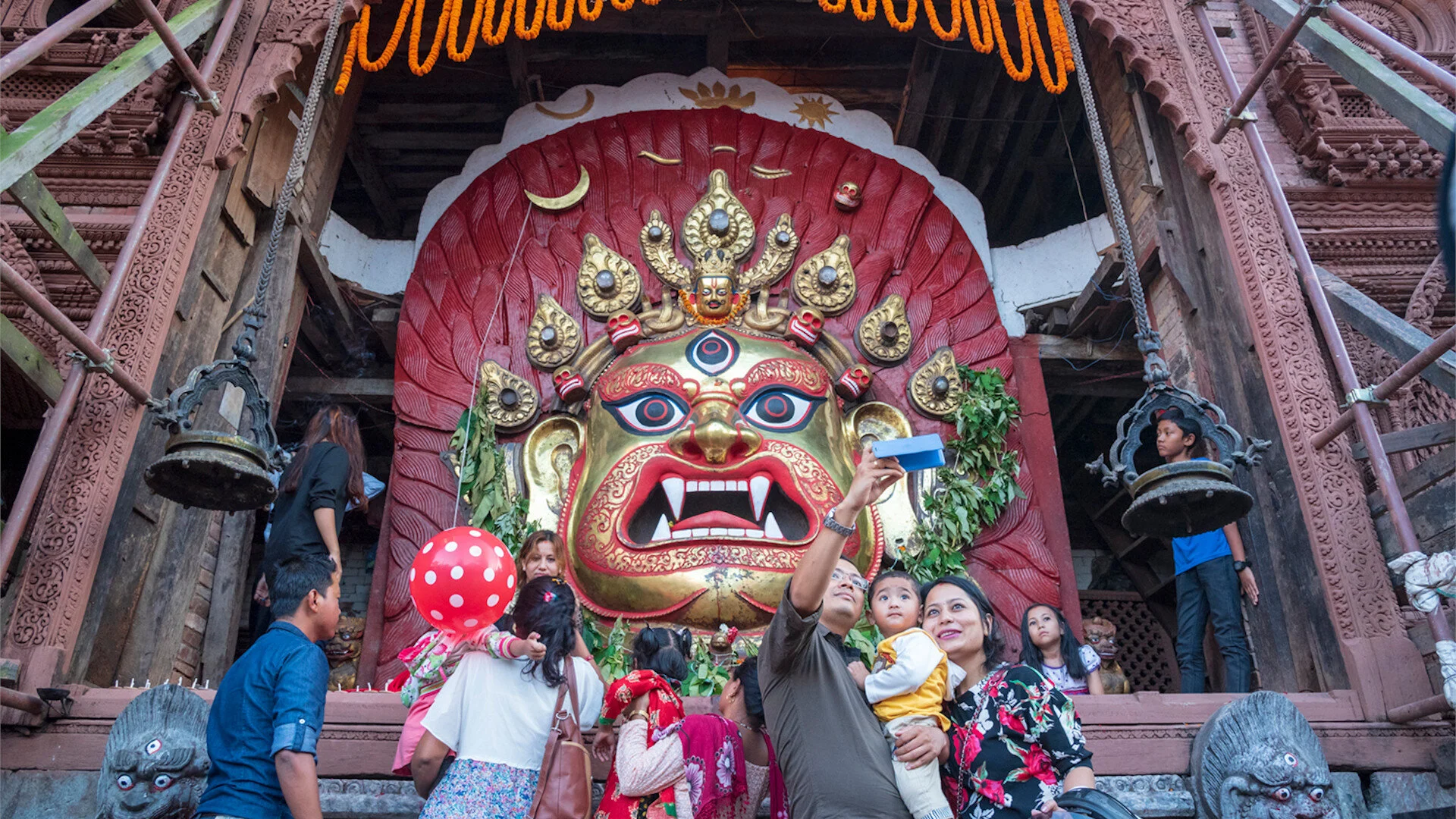
They arrived in the valley, and the King bowed to her. She gave him her sword and special instructions, after which it rained. Meanwhile, the Lakhe had become all friendly with the people- drinking, playing and making merry. Seeing the sight, the goddess told the King, the Lakhe will represent me in this valley. Since then, the locals began referring to him as Shanta Bahairav, Shanta meaning peaceful.
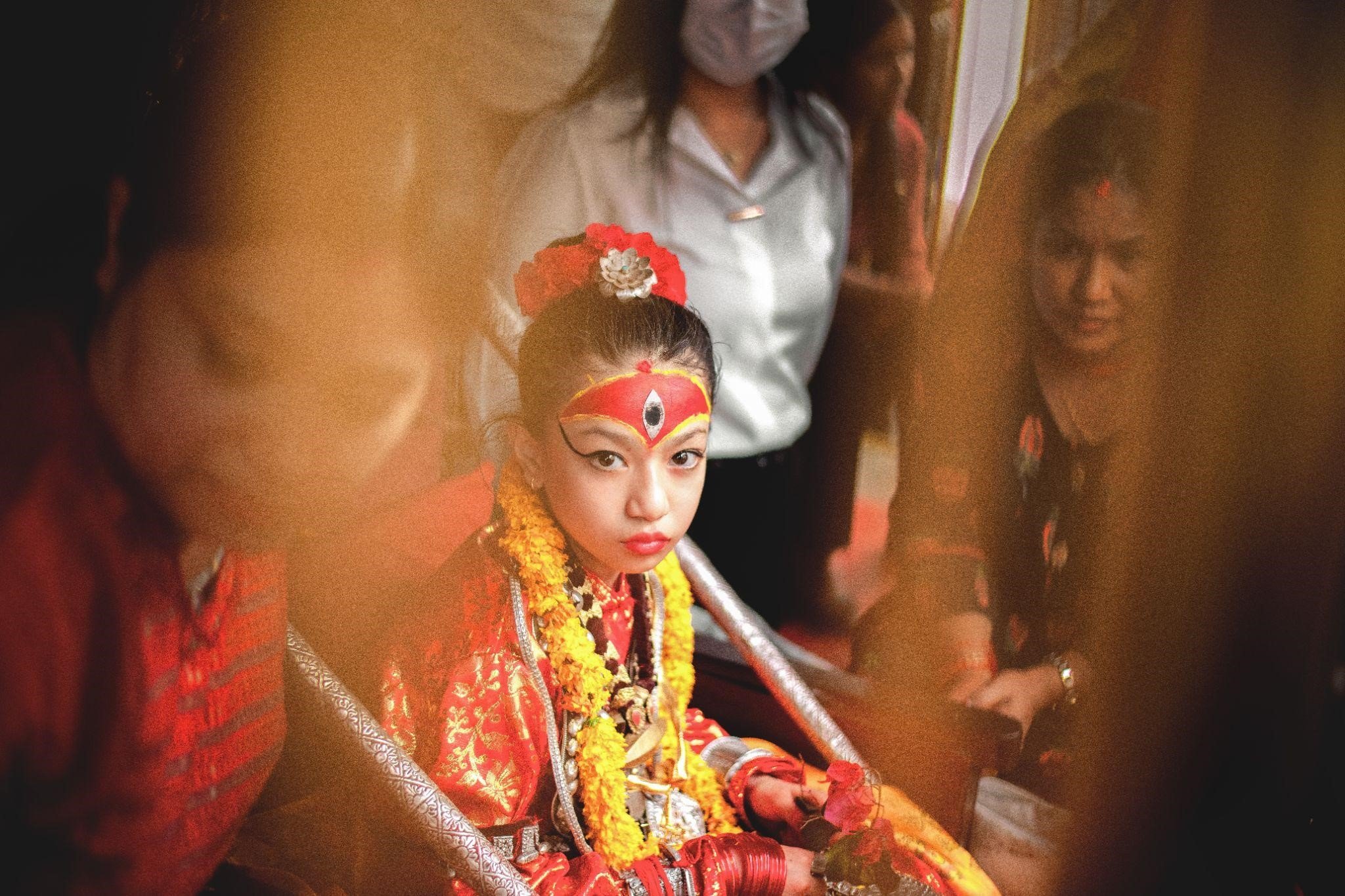
The final attribute is of the living goddess. The great King Jayaprakasha Malla of Kantipur introduced this tradition. He took the worship of a Kumari even further by sanctioning it by the state, building a palace home and commencing a chariot festival. Two living gods- Bhairab and Ganesh accompany the goddess.
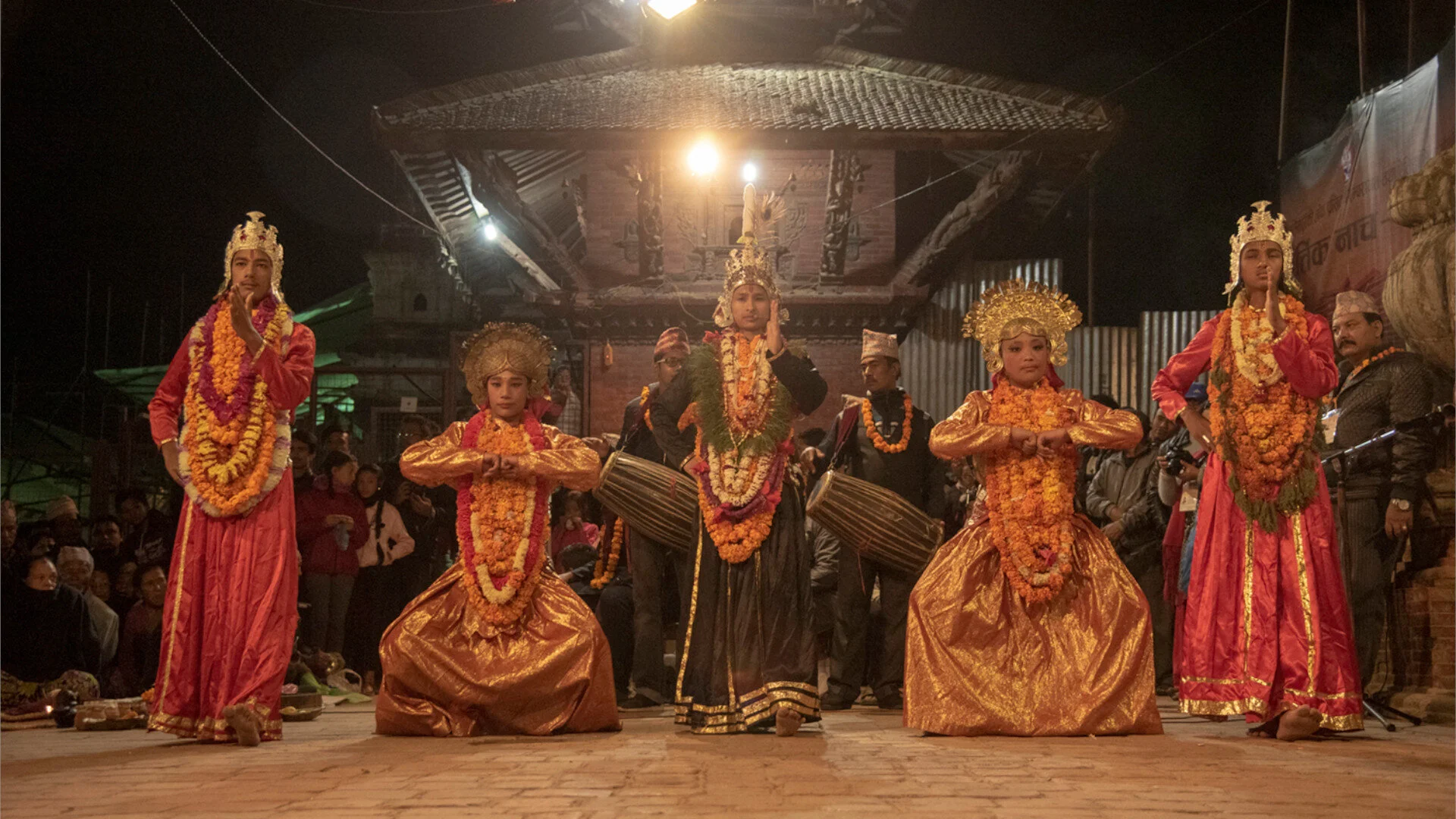
Today, the chariots are the centrepiece of the festival, along with various traditional dances such as Dee Pyakhan, Swa Bhaku (Halchowk) and Mahakali Pyakhan. The citizens of Kathmandu also take part in pilgrimages in memory of their ancestors.
POPULAR ITINERARIES
SIMILAR POSTS
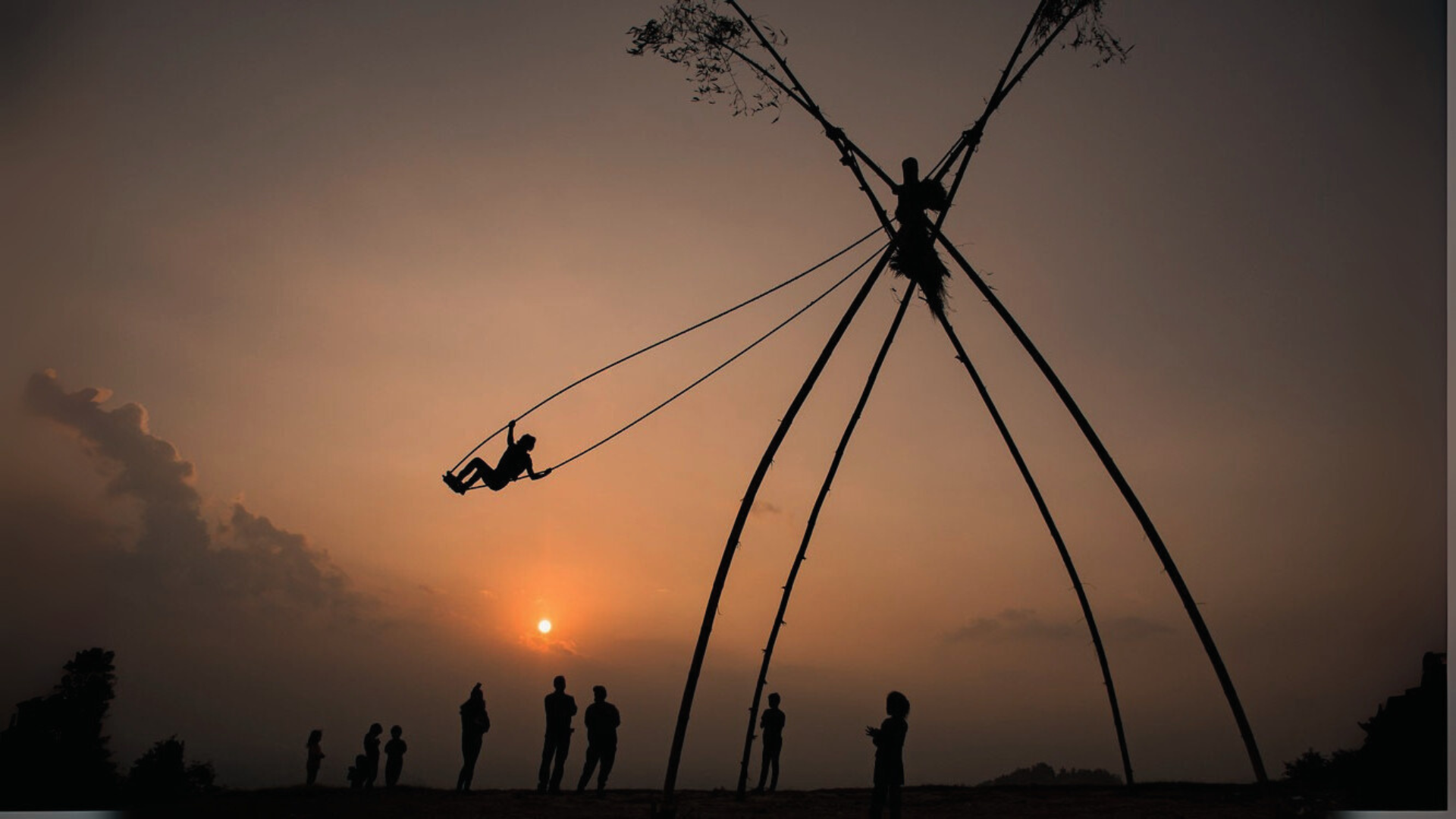
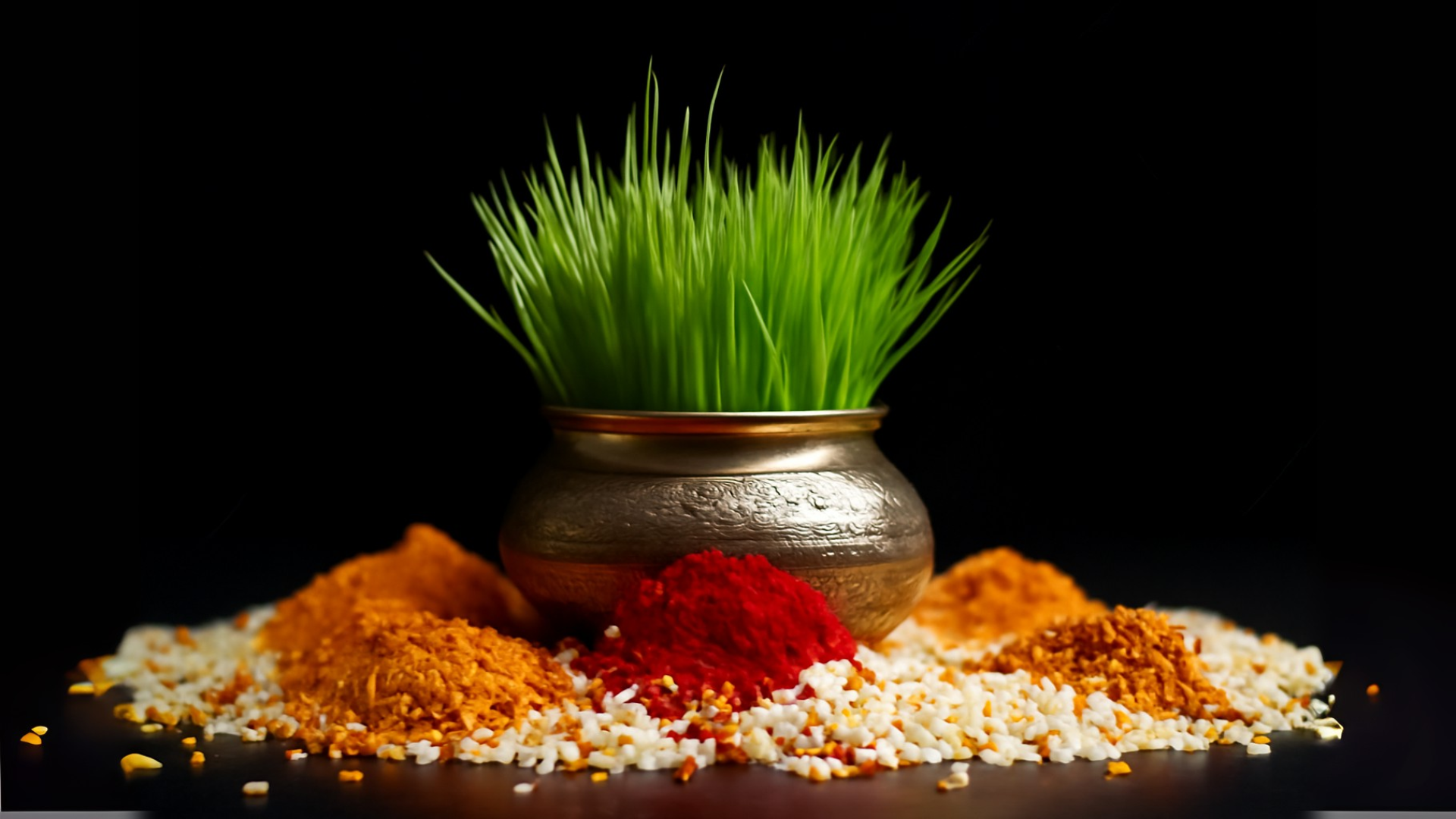
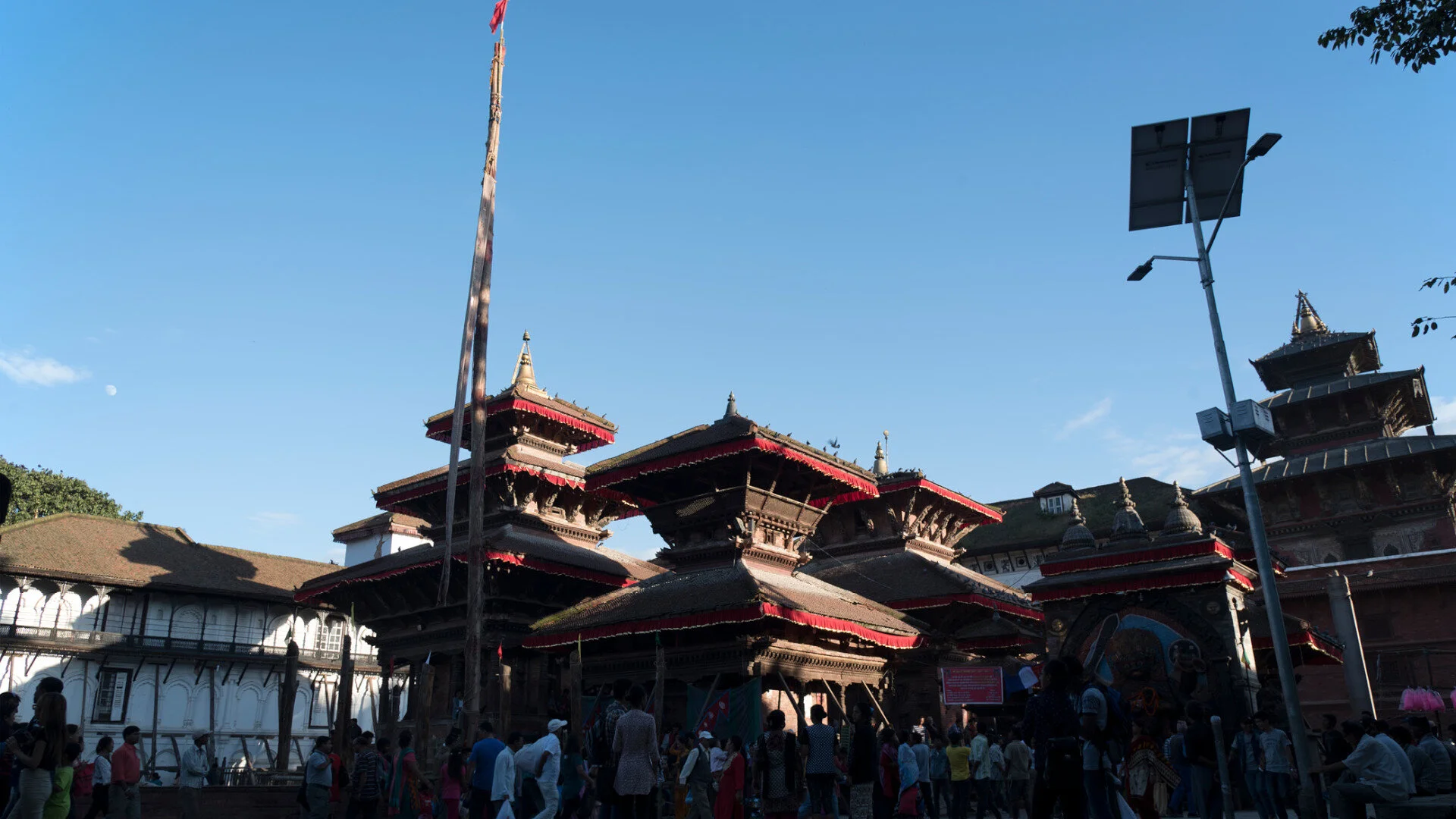
Elements of Indra Jatra
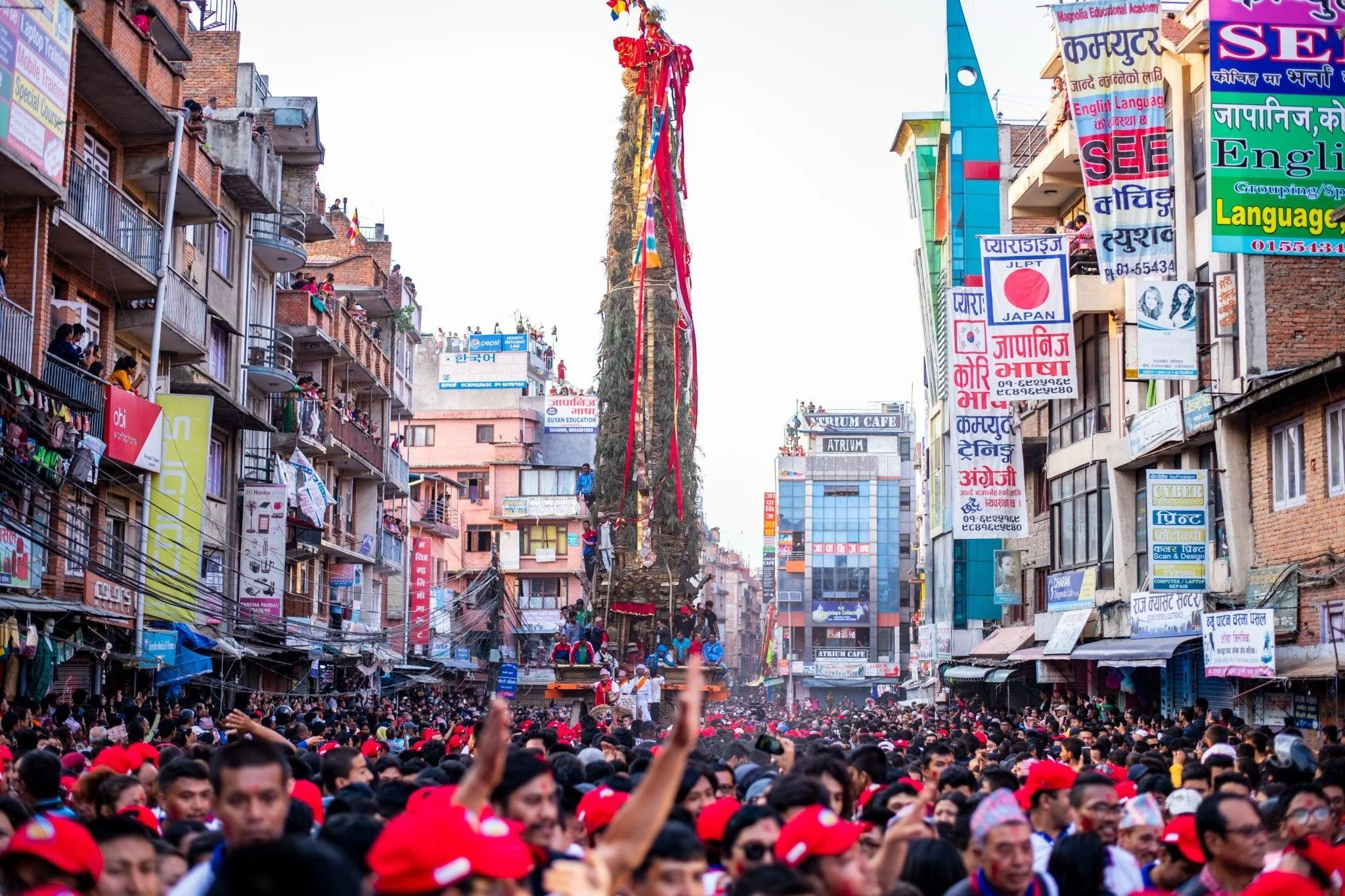
The festival of Indra Jatra is a grand amalgam of traditions. This day is the biggest festival for the Newar community of Kathmandu. Its sister cities also have their methods to mark the day. The elements of which all-together help create a vibrant atmosphere and pompous flare.
The festival of Indra Jatra is the biggest for the citizens of Kathmandu. In its neighbouring cities, it is marked differently. You must be wondering why? The answer is simple, Indra Jatra is an amalgam of centuries of traditions. It features remnants from as far back as pre Lichhavi era. Over time, multiple dynasties ruled this valley - each contributed an element to this festival.
In Nepal Bhasa, the language of the Newars, this day is called Yenya Punhi. It is the full moon day of the Newar month of Yanla, which in Nepali is called Bhadra Purnima.
The Newar calendar is lunisolar, and every full moon has its symbolism and cultural rituals. For example, the full moon of the month Thila is Yamari Punhi. Its equal in the western world is the Harvest Moon. The Newars mark Yamari Punhi as the end of the harvest and offer the first grains to Annapurna Devi. They also present a traditional sweet with molasses filling known as Yamari.
To understand what Indra Jatra means, one must de-construct its various elements to see the meaning of the whole.
Let us start with the ceremonial pole known as Yoshi in Newari and Lingo in Nepali. Renowned Nepalese historian Babu Ram Acharya in his article, ‘Indra Jatra’ (Vide Himbat Sanskriti No.2), wrote of similarities between the ceremonial hoisting of the Maypole in Europe with the Yoshi.
The Maypole is a similar high pole raised in May in Europe. Its origin is Pagan (Ethnic religions of Europe before Christianity). The celebration of Mayday is to welcome spring. The colourful ribbons wrapped in the pole symbolise spring and warmth.
In Nepal, the Yoshi symbolises the turning of the season from Barsha (Rainy) to Autumn. It is the first layer of the festival.
For an agricultural and pastoral society, the seasons play a huge role. The ancients could have devised this mechanism to inform the people.
Just as in the Mayday festival, the pole is in the centre of the celebration. Its erection marks the beginning and its fall, the end of the festivity. Indra Jatra begins with the hoisting of the pole on the 12th day of the bright fortnight.
It is taken down on the 4th day of the dark fortnight of Yanla.
In the Lichhavi Era came the second attribute. In a dream, King Gunakamadeva was instructed to create a new city north of his present kingdom. He was requested to centre it around the ancient temple of Kanteswara, at the junction of Bagmati and Vishnumati rivers. The vicinity where the renowned sage Ne Muni performed various austerities. Kanteswara is one of the most revered Newar deities. He is called Aju Dya (Eldest God) in Newari and Aakash Bhairab in Nepali. The scared river junction in front of the temple is now a street.
As instructed, the King merged the existing villages of Koligram (Yambhu) and Dakshin Koligram (Yengal) and defeated rulers of various petty states and created his new city. He also established a beautiful stone spout gilded in gold, Lu Hiti (Gold- dhara/ Sundhara). It featured an intricate water-management system, royal canals (Rajkulos) channelled river water to the spout. He named the city Suvarna Pranali Kantipur. Here, Suvarna means golden; Pranali means system. Kantipur is a mixture of two words - Kanti, meaning beautiful and pur, means place.
To celebrate the momentous occasion, he initiated a festival known as Yenya. The word is a mixture of Yen- the Newari name of the city and Ya- celebration. It is also called the celebration inside the town.
It is possible King Gunakamadeva’s celebration overlapped the change of seasons, and the two elements became one.
In the next part of this article, we call look into the arrival of Indra.
POPULAR ITINERARIES
SIMILAR POSTS

What is Gunla Dharma?
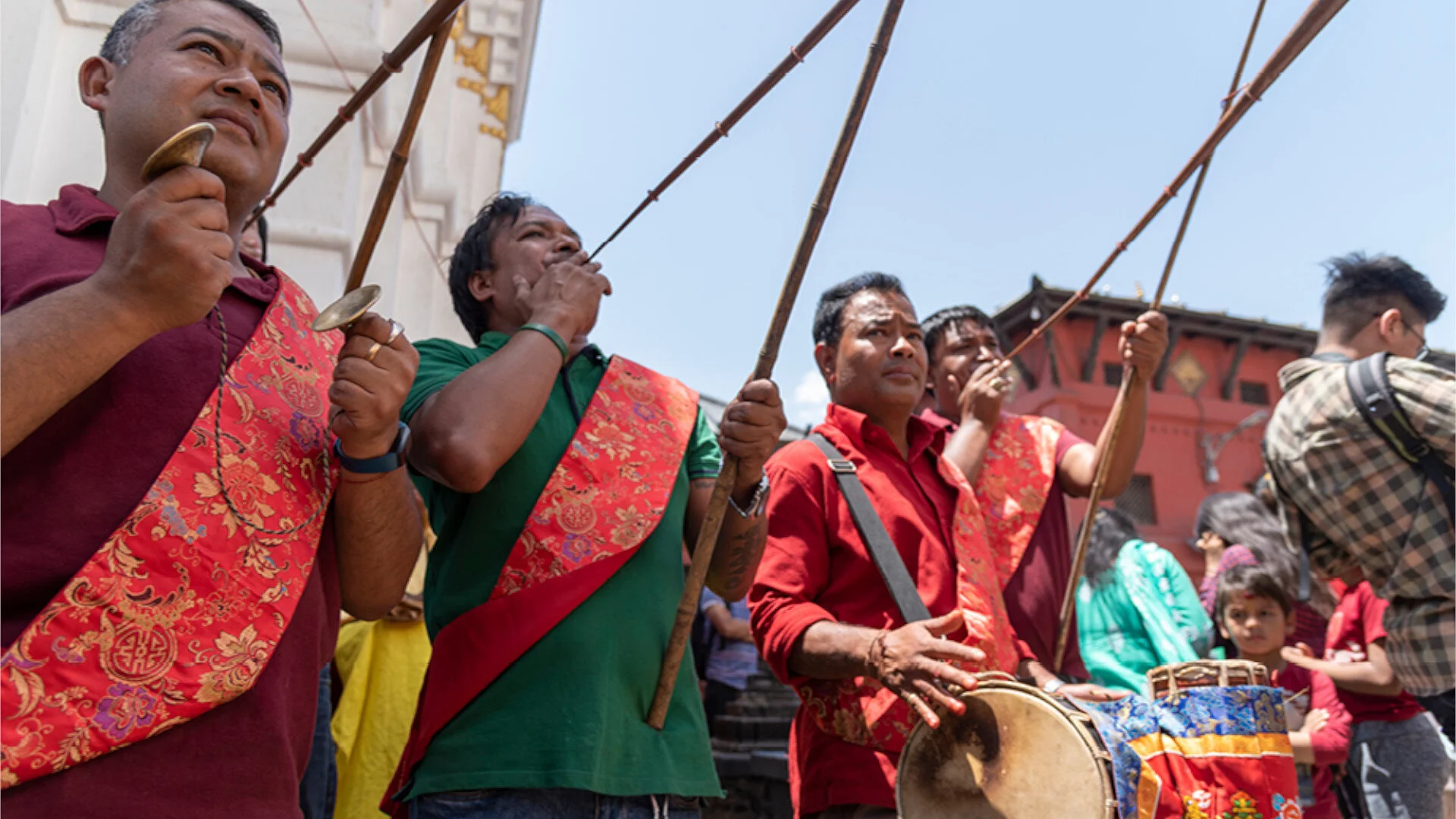
During the month of Gunla, Newar Buddhists pay homage to various Buddhist sites around the valley. It lasts for a month and features numerous activities such as prayers, pilgrimages and rites. Traditional ensembles perform musical acts in monastic complexes and temple premises. It is a spectacle like no other.
The inhabitants of this valley follow two traditional calendars. The first is known as Bikram Sambat (B.S), and the second is Nepal Sambat (N.S). The N.S calendar is also known as the Newar calendar incepted in the 9th century A.D.
As per chronicles and valley history, the new calendar marks the turn of an era. The shift was the righteous act of a man known as Shankadar Sakwa, a merchant who paid all debt of this valley. His deed was so profound that the state rulers, Mallas, initiated a new calendar. Nepal Sambat is a lunar arrangement that features 12 months, one of which is known as Gunla. The full moon is Gun Punhi.
It holds special importance for the Newar Buddhist households (Shakya & Bajracharya). During this month, each family, on a suitable date, performs numerous acts of charity. They (Newar Buddhists) restrain from consuming meat, fish and eggs for a month. They embark on a special pilgrimage to Kwa Bahal and Svayambhu. They as per their capacity perform numerous austerities and give alms.
Non-Buddhist Newar households only mark some of the events.
So what exactly is Gunla Dharma?
Dharma is a religious process. It features many activities and austerities, which include pilgrimages, prayers, meditation, giving of alms and others. Gunla Dharma is one month dedicated to providing the utmost reverence to Shakyamuni Buddha. This month is a holy month for Newar Buddhists.
On the first day of Gunla, devotees and musicians gather at a designated block in Lalitpur at 3 A.M and make ready for a grand procession. It is known as bogiwanegu. Devotees chant Buddhist hymns, and the musicians play an ensemble known as Naubaja. They head towards numerous Buddhist monasteries along a prescribed route.
The special alms for this month is locally known as Satu, wheat grain toasted and ground. It is offered to Shakyamuni Buddha by devotees. Whereas on the days of Pancha Daan, Buddhists offer five summer gifts: wheat grains (raw), unhusked rice grains, salt, money and fruits.
Vala is also known as Sringabheri, is till a week before Matayah. During Vala, devotees take daily walks to Buddhist sites. Matayah, however, is a full-day pilgrimage to all Buddhist landmarks of Lalitpur. This tradition (Matyah) is unique to the city and principalities of Lalitpur. Those who do not wish to partake in Matyah but have recently lost a family member visit the 4 stupas of Lalitpur at mid-night before Matayah.
Click here to read about Matyah
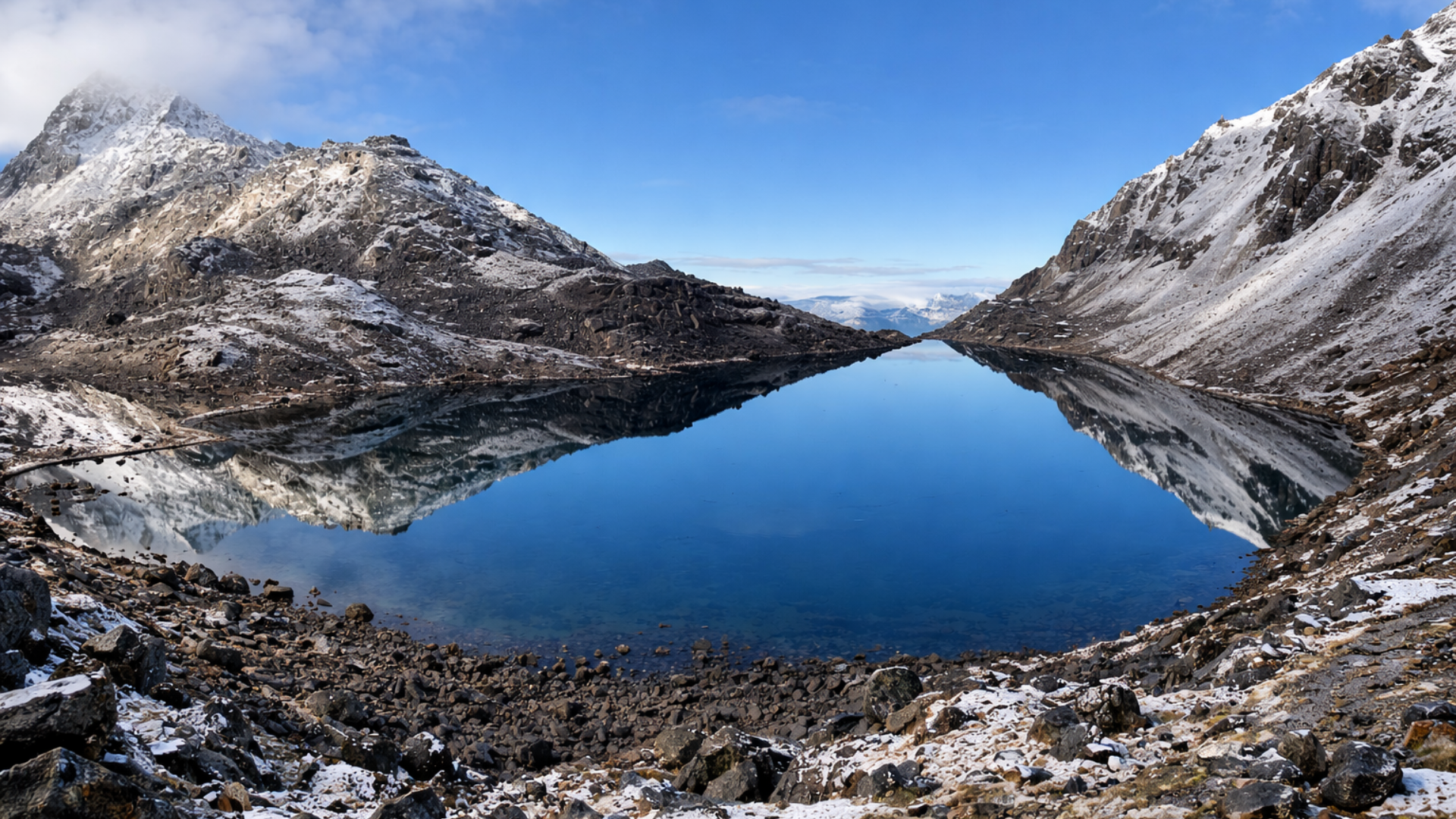
Another such pilgrimage is to Gosaikunda. This tradition is centuries old, where a family member of a grieving house embarks on a trek to this lake. They must reach it on Gun Punhi, which in Nepali is Janai Purnima. The elders speak of how taking this pilgrimage will assist the ascent of the recently departed to heaven.
The next day of Gun Punhi is Saparu, an important Newar event. Newar Buddhists visit the ample Bahah and Bahil’s of their city and present alms in earthen bowls. The offerings presented are as per the economic capacity of the giving family.
One of the last activities of Gunla is the Pancha Dan of Kathmandu. This occasion falls on Juga Charhe, which is three days before Nepali Fathers Day.
For this entire month, master musicians create an ensemble called Naubaja. They play various numbers in the bahah’s and bahil’s of their city. They also perform a grand orchestra at Buddhist monuments such as Svayambhu. Their plethora of instruments, when played together, create a performance that renders the audience speechless.
POPULAR ITINERARIES
SIMILAR POSTS
The Beginning of Newar Festivities
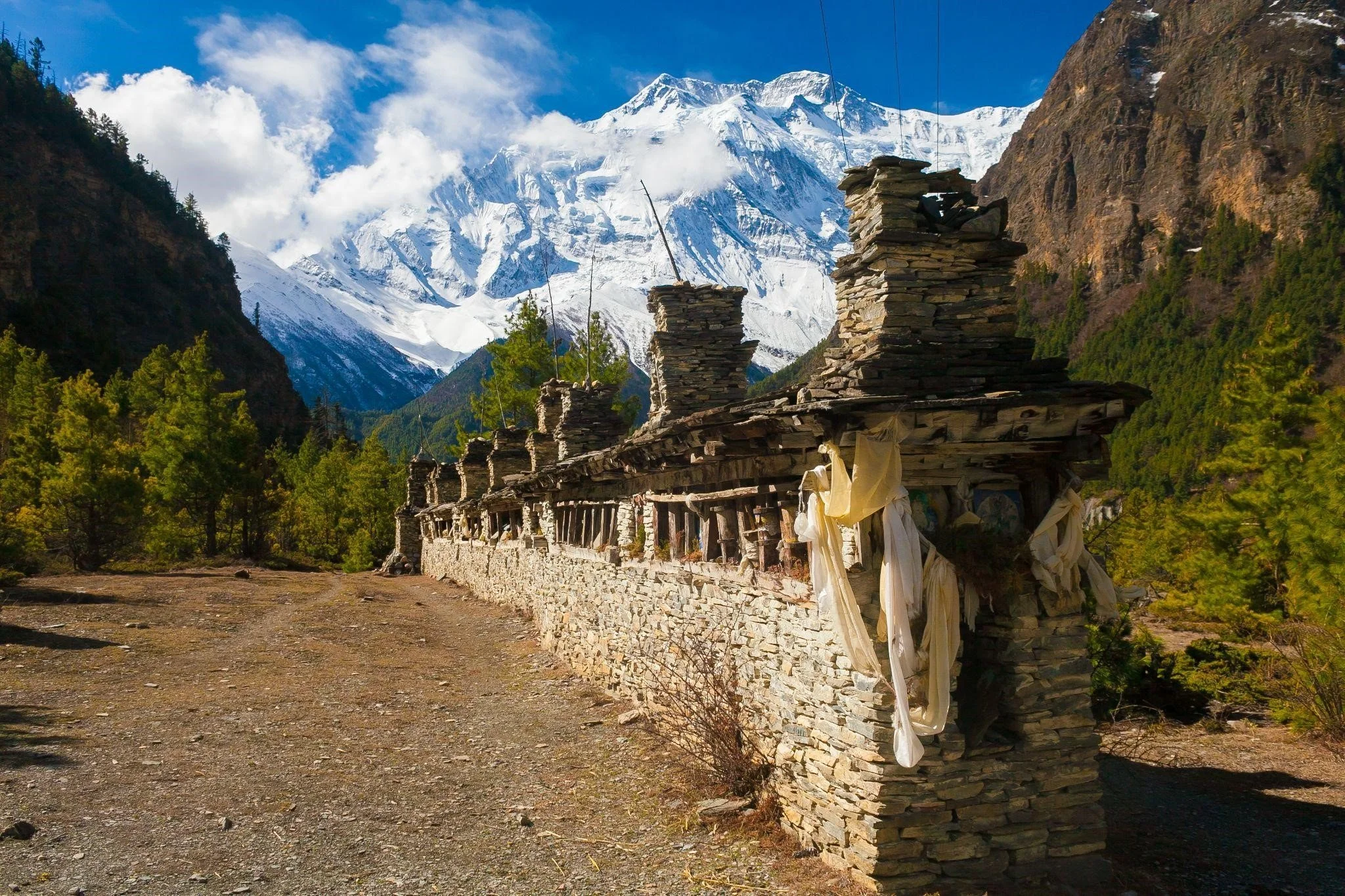
The festive season for the Newar community has arrived. The day of Gathe Mangal is the first of the festive calendar, which shall come to an end before the next plantation season. Newars, native inhabitants of Kathmandu valley, shall rejoice and make merry during this period paying homage to numerous gods and goddesses.
A common question arises from the non-Newar community, why do Newars have so many festivals? We have been presented with this question many times. The answer requires us to indulge the other in numerous tales and stories.
In short, the Newars, native inhabitants of the valley, are a community with diversity. Our culture developed through migration. Our ancestors chose to call this place home, detaching themselves from their place of origin due to numerous factors.
We brought with us our old culture. We continued the traditions in our new home and added to it elements from other cultures. Over time through cross-cultural mingling and communal unity, our new identity was born, Newars.
As we distanced ourselves from the patterns of our old tradition, we could filter it, meaning remove what was unimportant and add new elements to it. It is why some celebrations might seem similar such as Dashain and Tihar. Newars developed their new methodology of celebrating these landmark occasions, which became our tradition and heritage.
Isolation is also a crucial factor. Given the Himalayas are hard to reach due to the harsh topography, our culture was isolated, allowing it to preserve its core. This isolation is also the reason why the Himalayas are Shangri-La. The ancestors of many Newars had fled from their native homeland in a bygone era to escape war and evil. Thus, numerous old traditions such as the Kumari, which were once practised all over Ancient India, survived and prospered.
This diversity within our community, along with stark economic growth, allowed us to spend our time and money lavishly on celebrations. Let us not forget, temples don’t fall out of trees. We built these monumental heritages due to our economic might. Given god is all: the creator, preserver and destroyer, we made sure to please the plentiful gods to ensure our well-being.
We developed various practices to remove evil from our society and ensure social stability. The success of which allowed Newars to reach pinnacles unmatched. The status of Newars today is defined by one phrase, what goes up will eventually come down.
As part of this cultural mechanism developed to create social harmony, Gathe Muga Chare also known as Gathe Mangal is marked as the first day of the festive calendar. This day in brief, features ritualistic processes to remove evil from the society. Evil in the form of plagues, spirits and demons are attached to the scarecrow which was used for the plantation season.
Click Here: To read the tales of Gathe Muga
Post which, numerous festivals keep the social current flowing. The month of Gunla features pilgrimages to fords (holy places near water) and Buddhist heritages. After which is the period of Gunhu Punhi. The inhabitants pay homage to their ancestors and those who recently departed from this mortal world. Amongst the many activities, Saparu, also known as Gai Jatra, is the highlight. It is marked with avid fanfare and is a non-tangible heritage of this valley. In Lalitpur, Mataya, a pilgrimage takes place on the final day. Individuals who recently lost a family member embark on this journey.
Click Here: To read more about Mataya: The Festival of Light
Pancha Daan commences in all three cities: Kathmandu, Patan and Bhaktapur, and its sister principalities (Banepa and Panauti). During this occasion, effigies of Dipankar Buddha, along with other champions of Buddhism, are displayed by Buddhist householders.
In a short few months after Pancha Dan, the festival of Indra commences. Post which, the grand festivities of Monhi and Swanti (Dashain and Tihar) begin.
Click here: To learn more about Newar festivities
In short, these occasions play a role in stabilising society and developing communal harmony. They help renew our faith in the chief deities and allow us to unite.
POPULAR ITINERARIES
SIMILAR POSTS
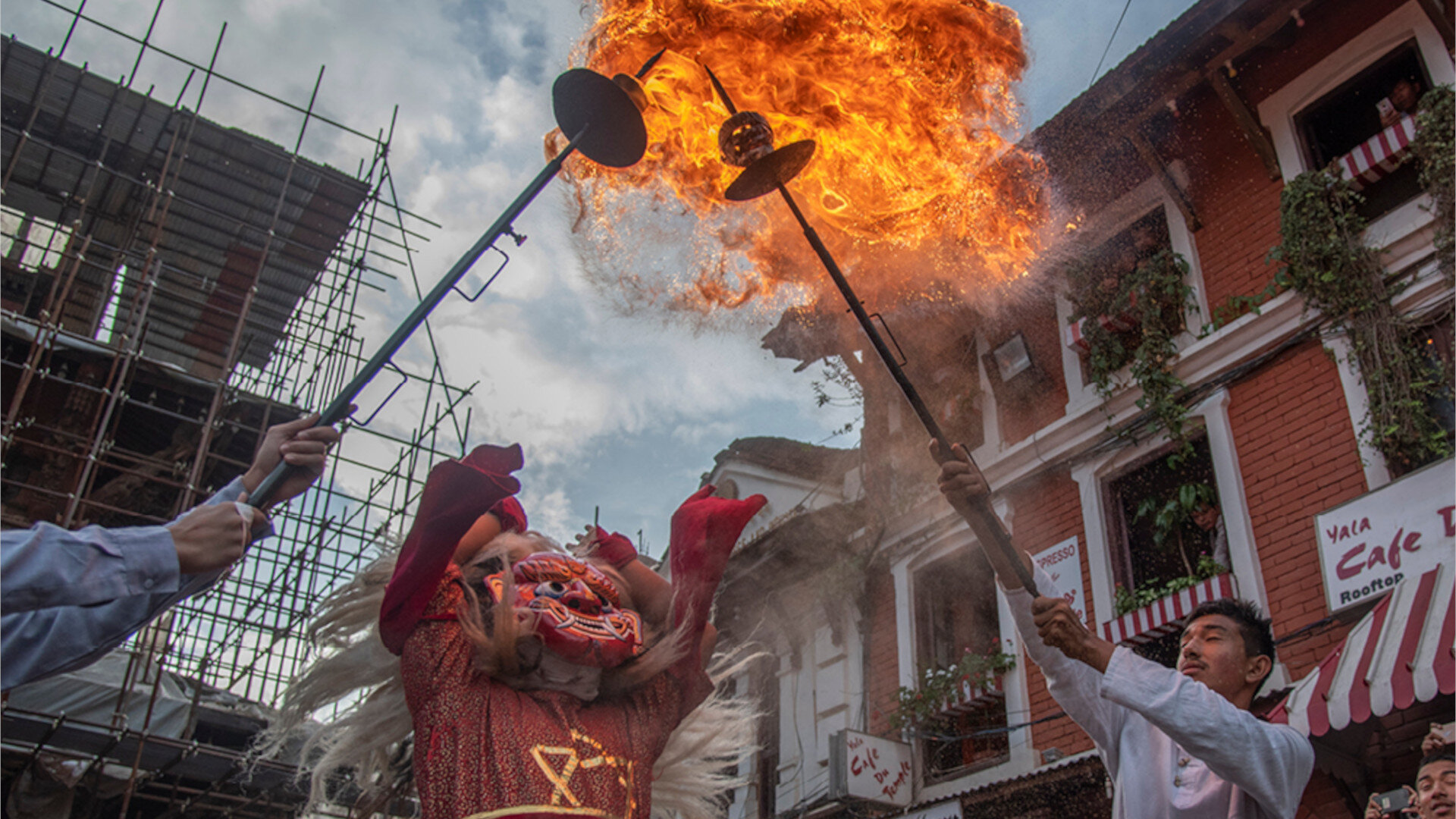
A Friendly Demon: Mi Pwa Lakhey
While roaming around Patan Durbar Square, if you stumble upon a creature creating ghastly fireballs, don't be alarmed. He is a friendly Lakhey who the locals call Mi Pwa Lakhey. Mi Pwa in Newari means balls of fire and Lakhey, a helpful demon.
Every year in Patan, post the harvest season, an ensemble performs a unique dance. It features a terrifying face which is locally known as Lakhey. This creature dances to a merry tune played by musicians clad in traditional attire. It roams around the old routes of the city, creating ghastly fireballs, which is a spectacle that sends a bolt down one's spine.
Lakhey's, as per valley lore, are friendly demons who protect the people from evil. Majipa Lakhey and Mi Pwa Lakhey are amongst the most popular in this valley.
You are bound to stumble upon this mystical creature known as Lakhey, especially during the cultural season. It holds an important place in various cultures all over Nepal. This Lakhey, however, is peculiar. Unlike its various renditions, it seems to have this ability to conjure fireballs. He does so in crossroads, cultural centres and open squares.
You might be wondering, why?
The harvest season is a cultural break. The inhabitants are hard at work in their farms to ensure a good harvest. Once the paddy plantation is complete, the tradition of Gathe Mangal is marked. During this day, communities (twah) throw scarecrows at their nearest crossroads. The elders speak of a bygone era when the locals channelled spirits and demons from the dark dimension to aid them during plantation. They allowed the entities to possess them. With their dark strength, they would complete large batches of work in record time. But once they turn demonic, they would require a lot of food as the evil within them would always be hungry.
If unable to control the demon within them, they would go rampant pillaging.
Thus, during Gathe Mangal, the evil is removed from the body and trapped into the scarecrow. Once the transfer is complete, the individual wears a ring made of iron so that the evil may not enter their body again. The scarecrow is then dragged to the river bank and then burnt. This process releases them back to the dark dimension.
But, not all transfers are successful. Some spirits and demons either escape the scarecrow or cleverly leave the human body before the transfer. They linger in the town, causing trouble when the opportunity arrives.
Our Lakhey comes to the rescue.
The music attracts the evil entities, and its fireball destroys them. The Lakhey conducts this feat numerous times and for multiple days to cleanse the township.
This tradition once had disappeared from Patan. But what is good will always return.
This particular Lakhey dance features two main characters; the Mi Pwa Lakhey and an annoyer. Dressed in green, carrying broken branches in both hands, it does what it does best, annoy the Lakhey. A chase ensues, the annoyer runs desperately. The local kids also partake in teasing the Lakhey. They also run as fast as possible.
This game of cat and mouse livens up the atmosphere.
A team of local volunteers assists the Lakhey. Two individuals hold flaming torches, which the Lakhey utilises to create the fiery spectacle. Musicians clad in traditional attire follow the Lakhey providing a merry tune of encouragement.
This event falls during the week of Gathe Mangal. Before the team begins its route, they perform a special ritual in the cortex of Nriteshwor, the god of dance and drama. The performance comes to an end in Mangal Bazar of Patan Durbar Square.
POPULAR ITINERARIES
SIMILAR POSTS
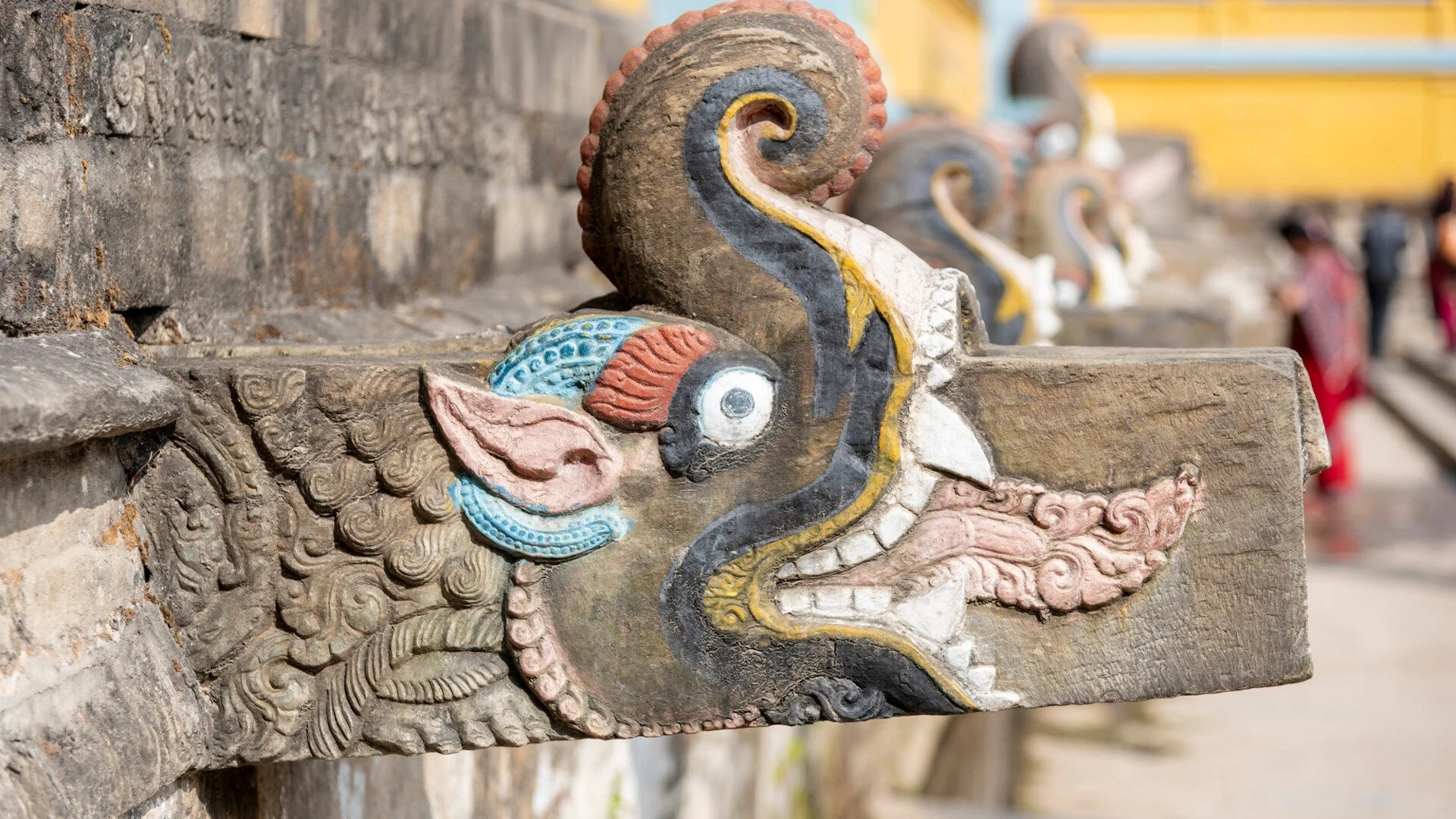
Siti Nakha: A day with deeper meaning
Siti Nakha is a special day in the Newar community dedicated to cleaning water sources. From spouts to taps, wells to ponds, the people band together to ensure its cleanliness. If not done right, great evil spawns from these depths, which decimates the entire city.
The Kathmandu Valley is the home of the Newars, an indigenous group that has reached pinnacles in all genres of society. Archaeological finds from as early as the 6th century present a highly developed community.
One of the most striking elements of the Newars is the sizable amount of cultural rituals and traditions. These festivals, customs and events aren’t just celebrations. They hold various meanings: symbolic and literal.
The day in focus, Siti Nakha is a similar event that holds a deep and dark meaning. Historians have not been able to pin when this tradition began, but it has relations with the urbanisation of this valley. Historical materials are scarce due to the practice of surface archaeology.
If you’ve been around the present-day central areas of the three cities, you’ll notice something peculiar. None of them has a dedicated natural water source. They are almost 4-6 km away from the dwelling. Thus, citizens rely on groundwater.
The secondary is through spouts. These feature an intricate system of ‘Raj Kulo’ ( royal water channel system).
The monarch’s primarily Lichhavi kings, also devised an intricate watershed system. These are for emergency or to maintain stock of the vital resource. It is the prime reason why Newar cities feature ample amounts of man-made ponds. Each community has its pond, spout and wells.
Now, why is this important?
Siti Nakha is marked right before the prime plantation season, which is during peak summer and beginning of monsoon. This time of year equals waterborne illnesses and pests if the spout, shed or source are contaminated. Stagnant pools are a haven for mosquitoes; they always make things worse.
Crowding in urban areas, improper waste management system, open defecation and unsanitary habits gave birth to gruesome epidemics. Elders still speak of these hellish days when life hung on the balance. The state and community devised Siti Nakha to mitigate the nightmare. It falls on the sixth day of the bright fortnight of Jestha (Siti Sasthi). The day begins with the worship of Lord Kumar/ Kartikeya, the eldest son of Lord Shiva and Parvati. A mandap (mandala) of Lord Kumar is drawn at the Pikhalakhu (a place outside the house) by the elder.
While the male members make ready cleaning supplies, women mince lentils soaked overnight. They are then pan-fried. This delicacy is known as Wo, pan-fried lentil patties. It is served as an accoutrement during a bhwe (Newar full plate) or consumed as a snack. Individuals then embark to their closest water area and work full-swing to ensure its fit. Depending upon the community, lunch for this day is Chatamari, rice flour crepes. It is either served with sides or topped with delicious toppings such as eggs, diced vegetables or minced meat. Modern renditions include toppings such as sauce, cheese and aged meat. Chatamaris versatility gives it status equal to an American Pizza in the Newar community.
Families delight themselves in a Newar full plate accompanied by traditional liquors such as Jaad/Chyyang (Rice Beer) and Aila (Spirit) during the evening. Dessert includes a light portion of beaten rice followed by a generous serving of yoghurt topped with sugar, radish and carrot sticks.
Another significance of this day, it marks the completion of the festive calendar. Newars for the upcoming month engage themselves in rice plantation. Once complete, they place or throw scarecrows (Gathe Mwo) at the nearest crossroad. This day is known as Gathe Mugah. It marks the beginning of the Newar festive calendar as well. Communities must also complete the Dewali Puja, ceremonial worship of the tutelary deity before celebrating Siti Nakha. Dewali Puja includes a ceremony that welcomes the newlywed daughter-in-law into the family.
POPULAR ITINERARIES
SIMILAR POSTS

The Moving Temples of Kathmandu Valley - Part V
In this edition, we look into the moving temple of Bhaktapur. Commonly referred to as Biska Jatra, it is a unique celebration exclusive to the principalities of Bhaktapur. Celebrated with utmost veneration and respect, it overtime has become an intangible landmark. The highlights are the tug-of-war, vermilion festival and the tongue piercing ceremony.
Born and raised in this beautiful valley, I’ve had the honour of witnessing most of its chariot festivals. The moving temples are the same every year, but the pomp and flair never fail to strike a bolt of awe in my heart. The creaking of wood, thunder of cheers and clang of metal combined create a euphoric atmosphere. It never seems to get old.
In this article, we dive into the final moving temple of this valley. It is the hallmark of a unique festival celebrated in Bhaktapur. Collectively, it is known as Biska Jatra. This festival is celebrated in various dwellings of this region.
Did you know Bhaktapur was the capital of Nepal Mandala (Ancient Nepal)? This city is by far the most organized amongst its sisters (Lalitpur and Kathmandu). King Ananda Malla commissioned this city in the 9th century.
“This younger brother (Ananda Malla, son of Abhaya Malla being very generous and wise gave up the sovereignty over the two cities (Kathmandu and Lalitpur) founded a city of 12,000 houses, which he named Bhaktapur (Bhatgaon) and included sixty small villages in his territory. After this, the Raja having obtained the favour and directions of Chandeswari founded seven towns; viz Banepur(Banepa) near Chandeswari Pitha; Panavati ( Panauti) near the Pragya Tirtha of Nepal. Celebrated in the Shastras, on the site of where Panchala-des formerly stood, Nala near Nala Bhagvati, Dhaukhel(Dhulikhel) near Narayana; Khadpu near Dhaneswar; Chaikot, near the residence of Chakora Rishi; and Sanga, near Nasika Pitha.” (Wright,1990)1
Another fun fact, the festivals original name is Bisyaku Jatra. It means a celebration (jatra) after the death of serpents (Bisyaku).
Click here to read our article on the tale of Biska Jatra
On the first day of this celebration, a great tug of war ensues between (Thane) uptown and (Kone) downtown. Teams tussle to bring the kha (chariot) of Bhaila Deo (Bhairab) to their part of town. His chariot features three roofs, a dhoma (horizontal log), a golden pinnacle and four wheels.
The design features exquisite Newar woodwork with no nails. A joint based locking system (chuka) holds the chariot together. At the heat of war, it sways beautifully.
Simultaneously, in another part of town, Nakinju Ajima (Bhadrakali) is placed on a similar but smaller chariot. These two deities meet on the 4th day at Yoshin Khel. This area gets its name from Yoshin, meaning a long wooden pole erected in the middle of an open field (Khel).
Biska jatra also has another meaning. It symbolizes conjugation, creation and continuity of life. The depiction of which is the mating of Bhailo Deo and Nakinju Ajima. Their symbolic copulation occurs at Gahiti during midnight of new years day.
A local legend states how Bhailo Deo’s chariot doesn’t even move an inch during copulation. It is rather Nakinju Ajima who passionately dashes Bhailo Deo.
On the final day of the festival, the chariots head to their designated locales. The shrines are removed and carried to their temples.
Celebrations of Biska occur at various other localities of Bhaktapur. In Thimi, it is called Sindoor Jatra. Similar, Chapacho and Bode also have their version of Biska.
Click here to read our article on Sindoor Jatra.
POPULAR ITINERARIES
SIMILAR POSTS
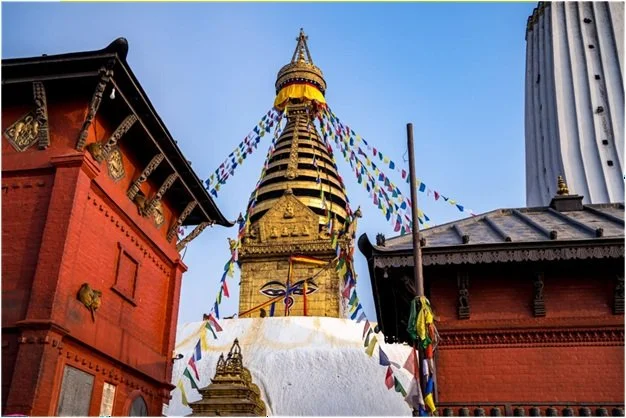

The Moving Temples of Kathmandu Valley - Part IV
The grand jubilation of Kumari Jatra celebrated during Yenya Punhi (Indra Jatra) is a sight to remember. A day when magic and mystery from all parts of Nepal Mandala (Ancient Nepal) meet at Yeh (Kathmandu) for an opulent festival.
Every Newar dwelling has its mammoth festivity. Matysendras chariot festival is the largest of Patan and Indra Jatra is of Kathmandu. The celebrations of the capital is unique due to the intersection of multiple facets.
Folk tales state how Lord Indra (King of heavens) descended to earth looking for Parijat (Night Jasmine). He took mortal form and found the plant in the yard of a Newar farmer. While picking the flower, he was caught and imprisoned.
As he did not return, his mother began to worry for his safety. She asked Phul Kusi, the white elephant of Lord Indra, to find him.
It searched for him day and night but failed to locate him. While roaming the streets of Kantipur (old city within Kathmandu), Phul Kusi was mesmerized by the music of the festivities. It danced its way through the streets with the locals.
Flabergasted was Phul Kusi when it reached the city centre. Chained atop a tall wooden pole was Lord Indra.
Phul Kusi took the news to swarga loka (heaven), and in a flash mother of Indra descended from heaven. She demanded her son be released. The locals told her that he was a thief. Indra watched the argument and began to grow restless. A great light imitated as he revealed his identity.
The locals were rendered speechless and feared his wrath. His mother offered them something that they could not refuse in exchange for her son.
She promised them a final rainfall before harvest season so that their crops can prosper. Also, she vowed to show them the gateway to heaven.
They freed him and followed them to the outskirts of the city. She tricked the villagers and generated a large mist. Amidst the confusion, the trio returned to heaven.
A fascinating tale, isn’t it?
The true origins of this festival, however, is still debated. The closest scientific rendition requires understanding various elements of Newar society. On a gist, the full moon of this period is Yenya Punhi. Primordially this day marked the last of Barsha (rainy season). Post which is Sarad (Autumn). Hoisting of a pole is a ceremonial act. The same can be seen during the end of winter and beginning of spring (Biskah Jatra of Bhaktapur). A similar act is placing scarecrows (Gatha Mwah) at the nearest crossroad after the saplings mature during the plantation season. This day is known as Gatha Mugah or Gathe Mangal.
Newar festivities begin in full swing after this day (Gathe Mangal) and end on Sithi Shasti/ Sithi Nakah, right before plantation season.
Now, onto the glorious chariots of Yenya Punhi.
As mentioned previously, over time this day as gained various facets. One of which is of Kumari Jatra, a grand festival of the guardian of this valley. She is viewed as the primordial protector along with Bhairab. Their worship dates back to the origin of this vale.
Click here: To read our article on the Kumari
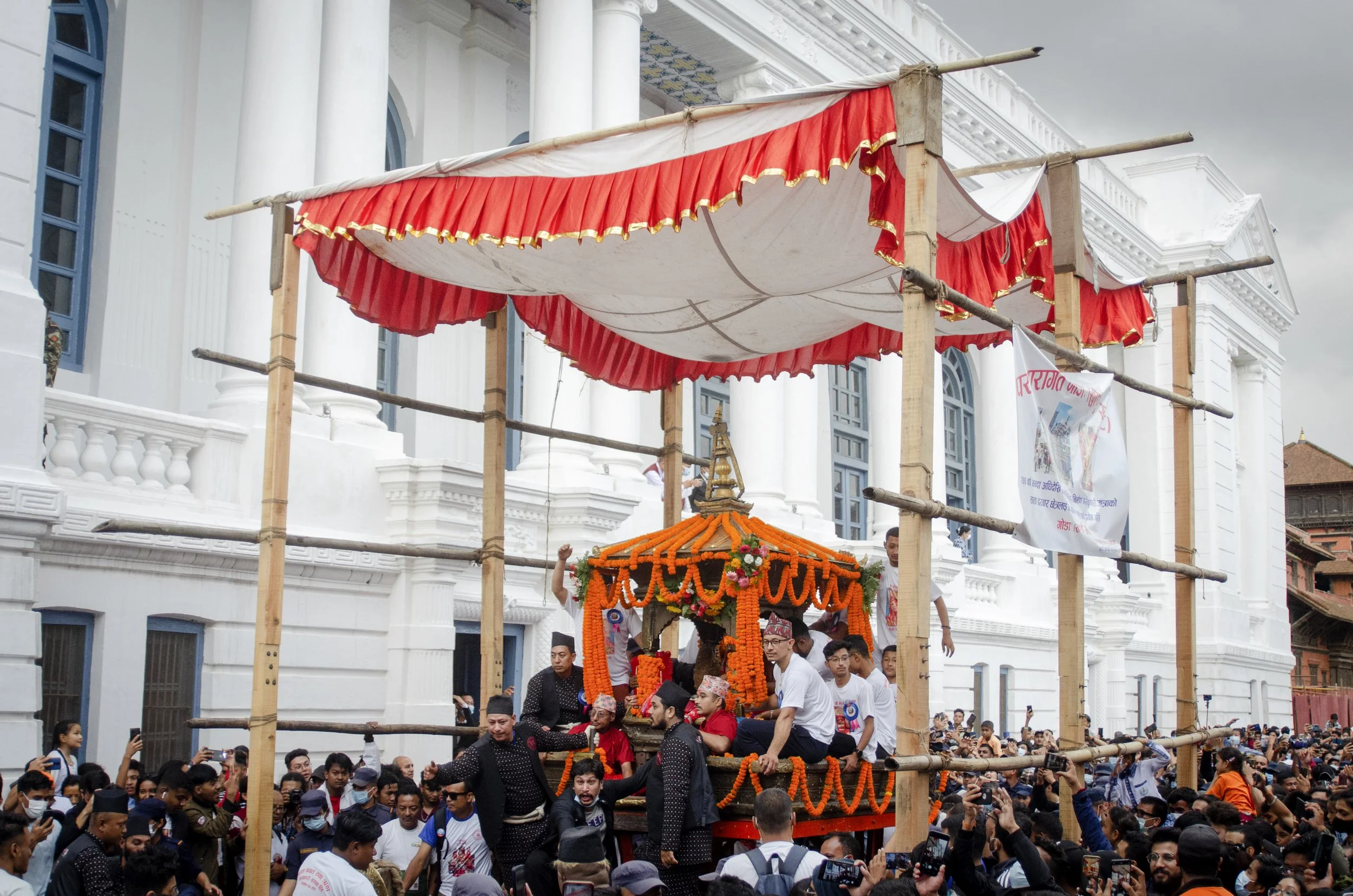
According to chronicles, King Jaya Prakash Malla commissioned the festival. He incorporated Kumari Jatra into Indra Jatra. The living goddess and the living gods (Ganesha and Bhairab) are placed onto pagoda-style chariots and circulated on a designated route for three consecutive days.
On the first day, the chariots are pulled to Kwaneya (Downtown) area by revellers. The jubilation lasts till late as the route is quite ridiculous and narrow. At around 5 pm the next day, the trio are taken to Thaneya (Uptown). Revellers are encouraged by traditional tunes played by musicians. The final route is to Nanichaya (Midtown). It makes way from Basantapur to Pyaphal, Yatkha, Kilagal, Bedasing, Indra Chowk, Makhan and comes to an end at Basantapur.
A ritual (Kumari Puja) commences in front of the Kumari Chhen (home), after which Kumari Jatra is complete.
POPULAR ITINERARIES
SIMILAR POSTS
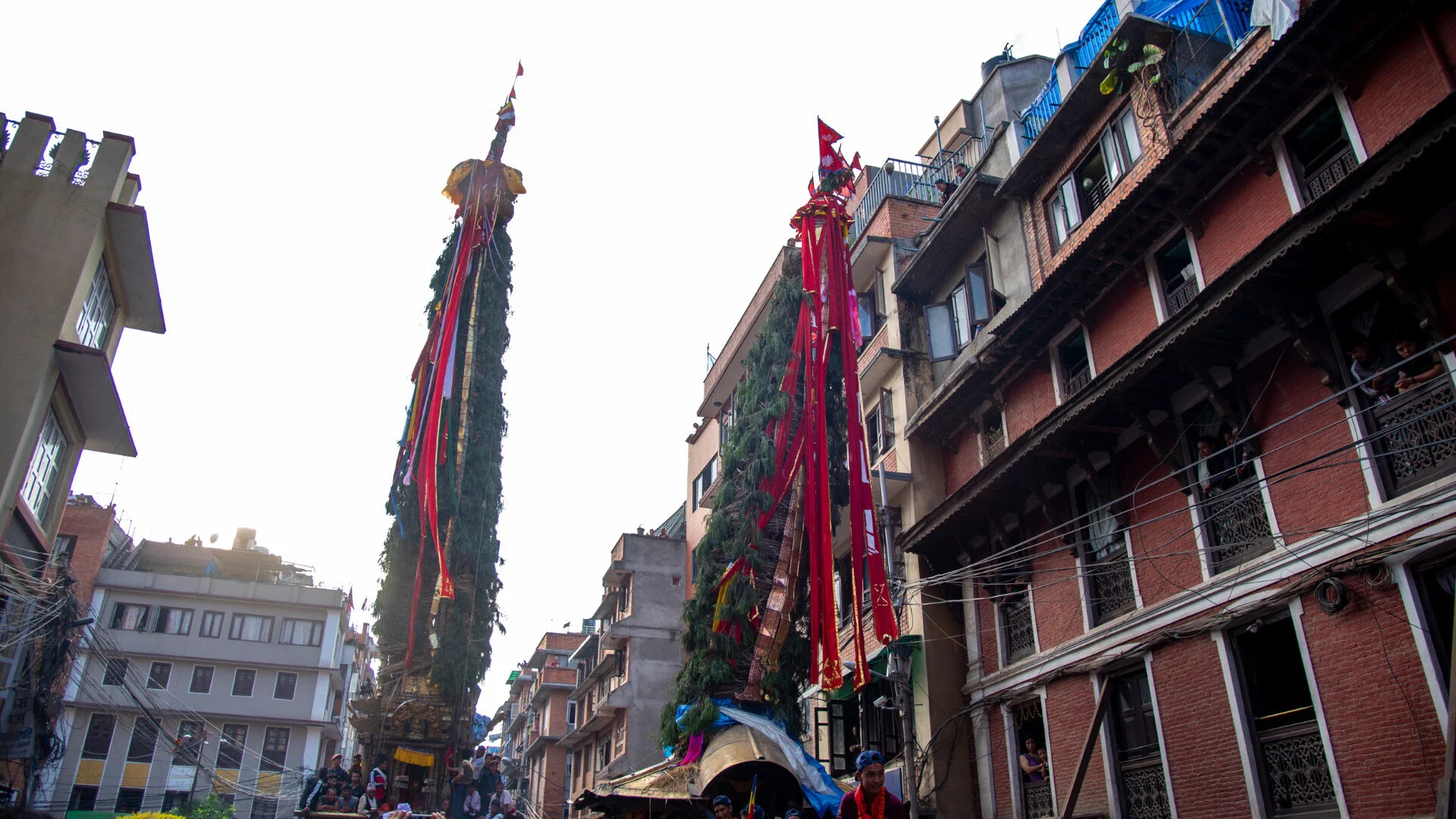
The Moving Temples of Kathmandu Valley - Part III
Every temple has a story. Within it lies a deity who has provided some boon to its devotees. His/her celebration is an act of acknowledging their righteous act and reliving history. The Newars added pomp and flare to this celebration with mammoth chariots, traditional tunes and communal merrymaking.
Continued….
The trio applied their findings. In a few years, they witnessed an end to the slumber. The fields began to resemble gold swaying with the gentle winds of the harvest season. Slowly but steadily, the lost lustre returned to Nepal Mandala (Ancient Nepal).
The people hailed Matsyendra as a messiah. A consensus emerged to honour his compassion and immortalise him. A temple was envisioned on the outskirts of the principal dwelling by the trio. It was designed in the Shikhara style and built at Bunga (A small village 5.2 kilometres away from Lalitpur).
The small village was renamed Amarpur by the monarch, meaning immortal or everlasting. It was an effort to memorialise Matsyendra and make him a god. Taking it a step further a chariot festival was conceptualised.
Lalitpur already had numerous chariot festivals. The monarch instructed to discontinue them. He wanted to make room for a mammoth celebration of Matsyendra. The legend of Chak Baha Dyo (Min Nath) states how he did not want his festival discontinued. Priest Bandudatta requested him numerous times, all of which failed. Min Nath opened his third eye and projected a great beam of light. It hit a stupa outside the cortex.
His chariot festival is the only one that continues.
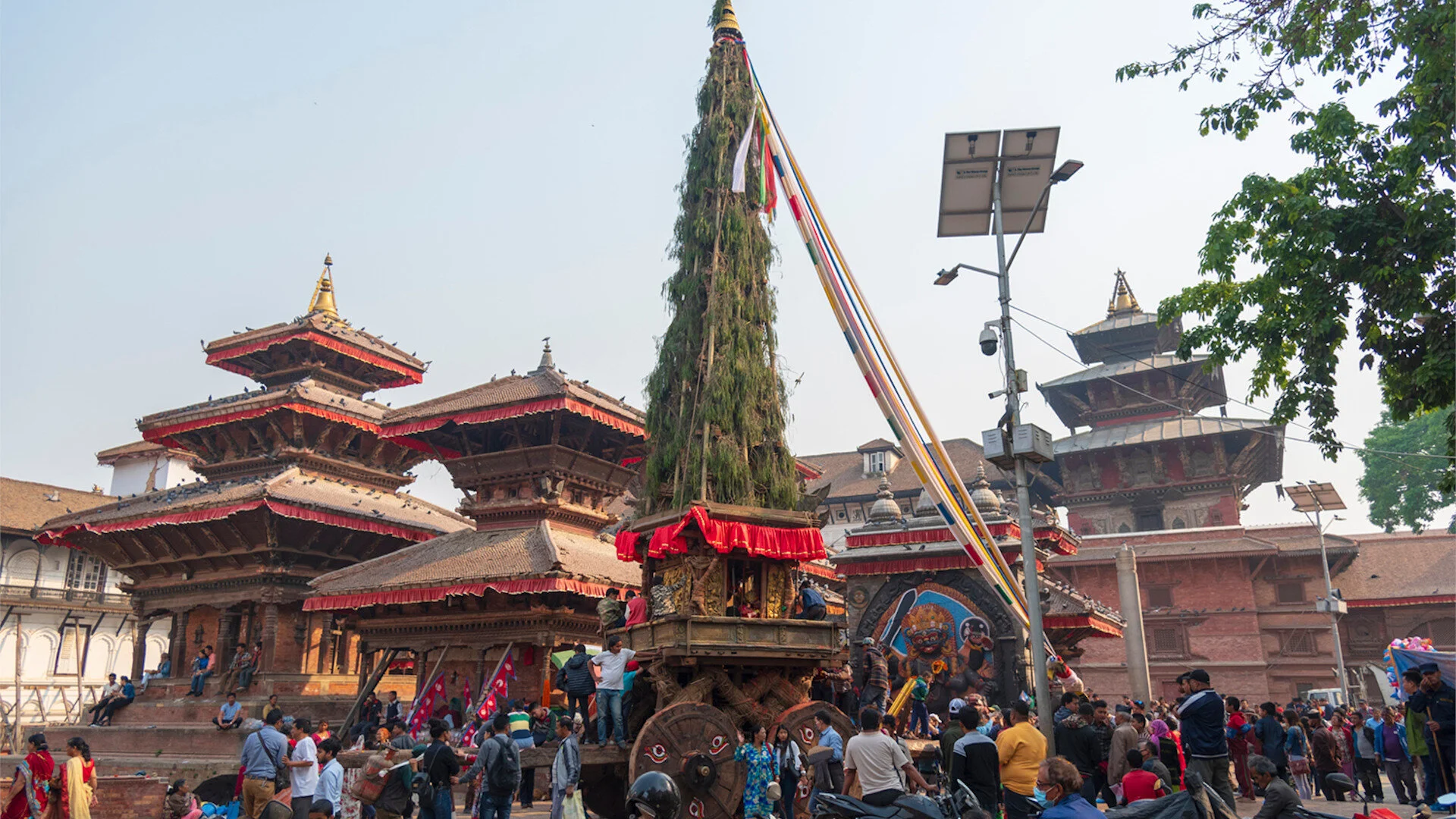
Why is Matsyendras chariot so tall is a common question. It is because the core features seven kha’s (levels). The first is known as biman kha. At this level, the idol of Matsyendra sits accompanied by his caretakers. The top kha is known as yaka kha, as a single member of the Barahi (woodworkers) community installs it. The remaining five levels are dedicated to Dhalaksha’s Lokanath, Matilinagar’s Batuk Bhairav, Satha’s Naryana, Calalse’s Harisankar, Kolima’s [ Kulimha’s] Mahesvara.
In a bygone era the chariot used to be pulled every year from Bunga to Lalitpur. During the Malla era, either Siddhi Narasimha or Sri Nivas Malla envisioned a glorious plan.
" Historical sources are silent on the matter, but historians have deduced that possibly as early as 1621, at any rate by 1652 when Kunu Sharma wrote his Kritipataka eulogizing the city, one or other of the two kings had taken the decision to establish a second temple of Karunamaya (Matsyendra) in Lalitpur itself.
Henceforth Karunamaya was to spend six months in each temple, thus bringing him closer to the people of Lalitpur, who were his devotees and no doubt increasing the popularity of the King. Ta Bahah was chosen as the site for his new temple. It seems that the membership of this ancient monastery had died out and some Vajracharyas from a small monastery in Dau Bahah twah called Bhelakhu Bahah [29] were assigned to it (Locke 1980:334; 1985: 137). " (N. Gellner, 1996)
References
N. Gellner, D. (1996). A sketch of the history of Lalitpur (Patan) with special references to Buddhism. CNAS Journal, 23(1), 139–140.
POPULAR ITINERARIES
SIMILAR POSTS

The Moving Temples of Kathmandu Valley - Part II
Since time immemorial, humans have created temples. It is a place of worship where individuals offer their prayers and gratitude to their deities. These infrastructures are static, making it difficult for all to reach them at times. Whereas in Nepal, temples move from one place to another in select few days. A process in which, god comes to our squares and doorsteps.
In Nepal Mandala (Ancient Nepal), the natives took notes from various neighbouring cultures and devised a unique system. They noticed how their temples were static, and with age, its citizens were not able to make long commutes to offer prayers and gratitude to their deities. Thus, they envisioned a magnificent secondary temple. These were to be mobile, allowing those incapable of reaching the main temple to bask in the gods' aura.
These temples were to be crafted seasonally and display symbolic markers of the deity. For mobility, they envisioned a temple with wheels. They would be created in a manner to mimic the primary temple and display its hallmarks. This ambitious dream of the past developed the rich cultural reality of modern Nepal.
The biggest festival of the Newars revolves around these very mechanized temples.
It helped strengthen faith and communal unity among the diaspora. It also became a catalyst in the development of Newar culture and heritage.
Renowned for trade endeavours, Newars amassed wealth and built themselves a robust network. They invested in magnificent temples and dedicated their success to them. Today these have become the hallmark of Newar culture and tradition.
There are numerous chariot festivals dedicated to various deities of Kathmandu valley. Amongst them, some chariots are a feat of human ingenuity that feature unique craft and symbolism. In this article, we shall explore in brief these elements along with handy information which shall add value to your journey of discovering the true beauty of Nepal.
The chariot festival of Rato Matysendranath
A jewel of the citizens of Lalitpur, it is dubbed the longest in the world. Worship and revelling of Rato Matsyendranath, natively known as Karunamaya (Lord of Compassion) and Bunga Dyo (God of Bungamati), last for almost 3-4 months.
Centred around the samaritan act of Matsyendra, who helped the kingship and people of Nepal Mandala during the Lichhavi era, this chariot festival is an earnest dedication to his compassion. As per the Matysendra vamshavali (chronicle), Nepal mandala faced a crisis in a bygone era. A series of unfortunate events caused crops to wither: a famine that lasted for 12 years.
Over time various interpretations developed of the cause. The most popular is of Lord Goraknath, a discipline of Matysendranath meditating upon the great nagas (snakes) leading to a drought. But a scientific analysis using holistic overview, observation and comparative analysis shows how it was a mysterious disease that ravaged the farms of Nepal Mandala.
Society was agricultural. Farming was the backbone of our economy. The citizens practised a subsistence form of living and were highly dependent on their farming yields. Thus, such an infection proved deadly.
The monarch of Nepal Mandala, King Baradeva, consulted with his chief astrologer Bandhudatta Acharya. He advised making a journey to Kamakhya in Assam. He must have learned about the geographical similarities and their agricultural prowess through historical insight and networks. King Narendra Deva (father of King Bara Deva, who had left worldly affairs to live in a monastery in Bhadgeon), priest Bandhudatta and Rathacakra Jyapu left for Kamakhya.
They acquainted Matsyendra, a leprous agricultural master of Kamakhya who provided the needed to the trio. As per the vamshavali, they returned with a holy vessel (Kalash) containing the essence of Matsyendra. Interpreting this scientifically, he (Matsyendra) must have provided various seeds that would suit Nepal Mandala's topography. He must have also imparted the needed knowledge to make agriculture sustainable and reliable.
Matsyendra being leprous is through my research observations. Devotees are not allowed to touch his idol. You shall become leprous is communicated to them by the caretakers. The statue moulded for the chariot festival is a replica of him. The weak stature and disfigured hand is a telltale sign that helps add weight to my findings.
POPULAR ITINERARIES
SIMILAR POSTS

The Moving Temples of Kathmandu Valley - Part I
Even though an imitation, over the years, the festival of Seto Matsyendranath has created its own identity. It has developed various symbols and is a timeless heritage of Kathmandu. Today it is known as Jana Baha Dyo (God of Jana Bahal of Ket twah). The idol is viewed as Aryavalokiteswara (God of compassion) by devotees.
The moving temple of Seto Matsyendranath
When King Gunakamadeva created a new city north of Lalitpur, it was a sight to behold. He named it 'Suvarna- pranali- Kantipur' (Wright, 1990, p.154). The monarch, however, was not satisfied. He greatly missed Matsyendra of Lalitpur, his glorious temple in Bunga and the chariot festival. He wished for his new city to have something similar.
"Then, in imitation of the Lokeswara jatra of Patan, he made an image of Khasarppa Lokeswara, and caused his jatra to be celebrated every year." (Wright, 1990, p.155)
A shikhara style temple within the Hambal monastery housed Khasarppa Lokeswara. During the last years of the Lichhavi era of Nepal Mandala (Ancient Nepal), Mukunda Sena, King of Palpa, attacked this valley. "The victorious soldiers broke and disfigured the images of the gods, sent the Bhairava placed in front of Machchindranatha to their own country, Palpa and Butawal." (Wright, 1990, p.171)
The Bhairab stolen from the Hambal monastery today is known as Tansen Bhairab. The shikhara temple and monastery were in ruins. In the aftermath, people found that the statue was lost. Hundreds of years later, during the reign of Yaksha Malla, it was discovered by potters looking for clay. King Yaksha recognised the ancient idol when it was brought to the palace by them.
From here on, it became Yamaleswara.
The site of its rediscovery was renamed Yamal (today is known as Jamal) by the monarch. "The king, having seen the image, performed the rituals of renovation; took the image inside the city and established it by building a large temple." (Bajracharya et al., 2016, p. 90)
He built a mammoth temple in the cortex of Jana Baha in Ket Twah. During the reign of his son Pratapa the grounds of Hambal monastery was converted into a pond. The temple was rebuilt but housed a different deity. "Pratapa Malla, then rebuilt the chariot of Lokesvara, the white Matsyendra, according to tradition. He had Lokesvara placed on the chariot and initiated an annual procession that moved the chariot around the city." (Bajracharya et al., 2016, p. 106)
From then on, the image was called white (seto) Matsyendra.
Members of various communities tasked with creating the chariot finish the building process by Chaitya Dashain. On this day, the idol is placed on a palanquin and brought to Durbarmarg. A traditional musical ensemble leads the march. A loud cheer erupts once the parade reaches the area.
The statue is placed within the chariot by the caretakers. A military regiment dressed in traditional Gurkha uniform offers salutations. Three muskets perform an aerial salute once the wheels make their first spin.
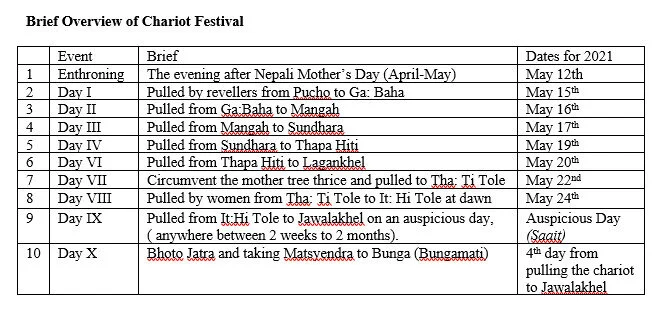
The revellers pull it to Asan Chowk. In the next two days, the chariot circumvents the traditional route and reaches Lagan. It circles the mother tree thrice. After which, the festival comes to an end.
The festival falls on the following days in 2021 AD.
Day 1 of chariot festival - Durbarmarg- Bhota Hiti- Asan - 20th April 2021
Day 2 of chariot festival - Asan - Indra Chowk- Basantapur - 21st April 2021
Day 3 of chariot festival - Basantapur- Maru- Jasi Dewal- Lagan - 22nd April 2021
References
Wright, D. (1990). History of the kingdom of Nepal. Asian Educational Services. (Original work published 1877)
Bajracharya, M., Gutschow, N., & Michaels, A. (2016). Nepālikabhūpavaṃśāvalī (History of Kings of Nepal): Vols. 1 (Introduction and Translation) (First edition). Himal Books.
POPULAR ITINERARIES
SIMILAR POSTS
The Vermilion Festival: Sindoor Jatra
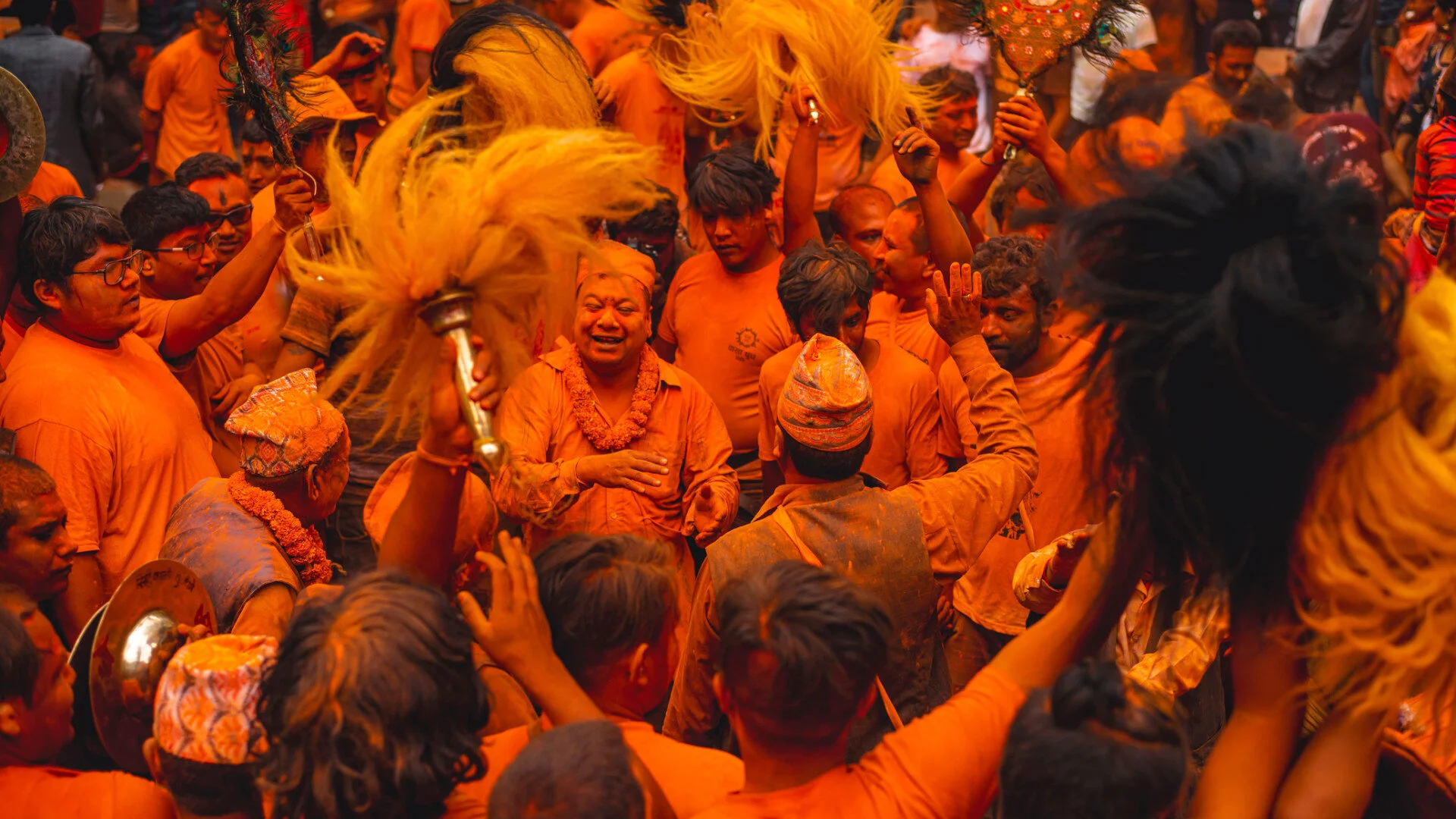
Commonly referred to as Sindoor Jatra, it is also known as Biska Jatra of Thimi. It is one of the most vibrant festivals celebrated in Kathmandu Valley. The highlight is the ceremonial use of vermilion powder which adds a new layer of pomp and flair. The locals rejoice for four days during the new year period, devotees offer prayers and worship various gods and goddesses.
Even though celebrated in a Newar township, the Sindoor Jatra is the jubilation of the Nepali new year (Vikram Sambat). Newars generally do not celebrate the solar new year, rather mark Nhu Daya bhintuna in October. The festivities occur in the locales of Thimi and Bode. The festival begins a day before the new year day. The locals perform Gunsin Chhoyekegu, which means firing of forest wood.
A traditional wooden pole known as yoshin is erected outside the temple premises of Balkumari by locals. It, however, has sadly been discontinued due to various reasons. A chariot festival takes place in Vishnuvir during the day. Deities are taken on khats (chariots) to Kwachhen (Dakshin Barahi) from Layakhu during the night. Once the revellers reach Kwachhen they revolve the chariot multiple times.
On new years day, devotees present offerings and pray to Balkumari. They flock in masses to her temple in old Thimi. Through time immemorial, she is the consort of Bhairab. They both are the guardian deities of Kathmandu Valley.
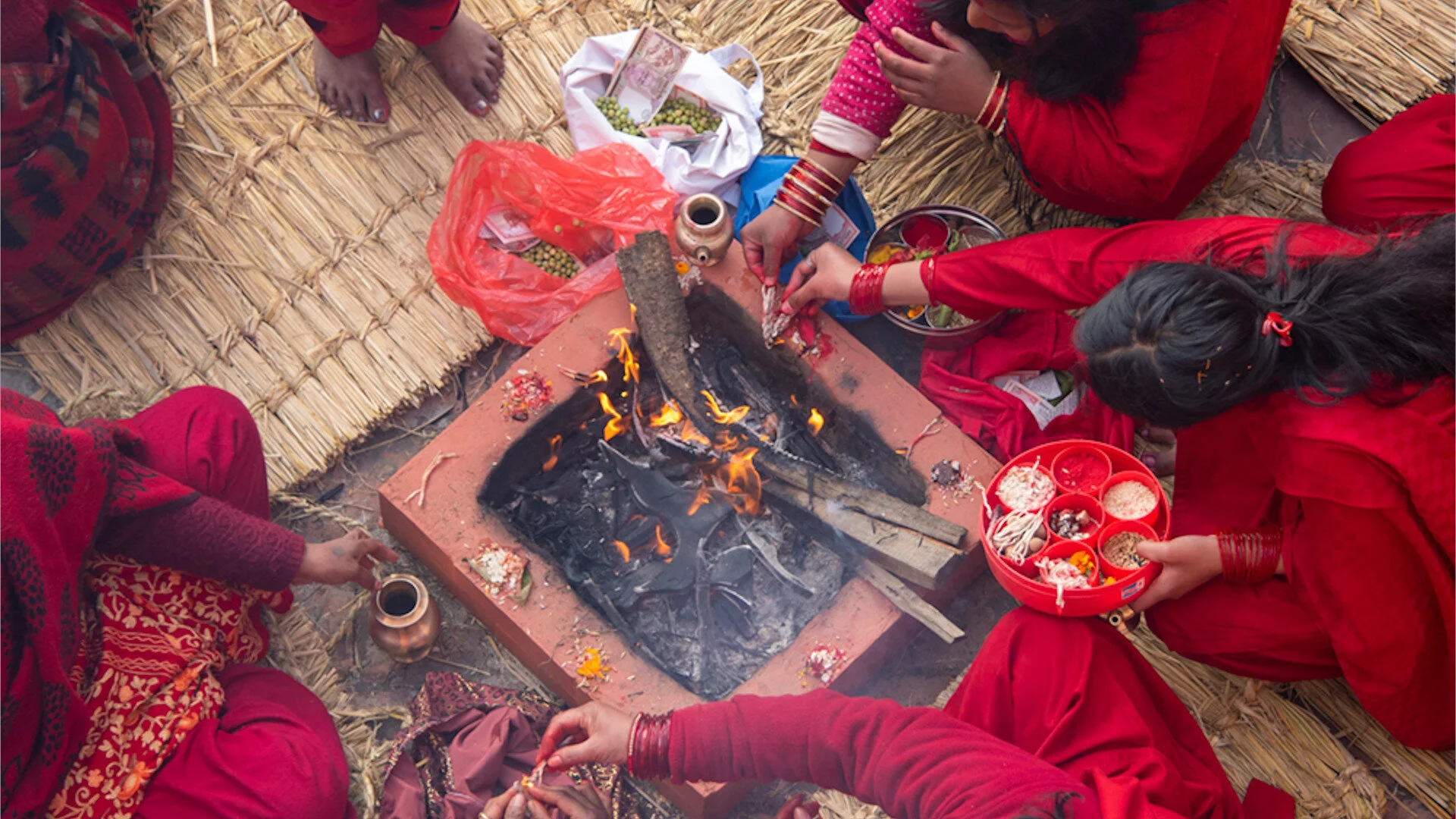
During the evening, devotees perform righteous acts such as lighting oil lamps. Some even place them on their legs, chest, forehead, arms and lie static for hours.
The next day (2nd Baisakh) is the highlight of this festival. Several khats (chariots) are carried to the Balkumari temple in the morning by revellers. Thirty-two khats are spaced around the temple which later circumvent it. To liven up the atmosphere, musicians play Dhimay Baja (traditional drums and cymbals). These tunes help encourage the revellers. Devotees and locals colour each other in vermilion powder, a symbol of prosperity. The entire area is filled with vibrancy and joy as devotees make merry while revolving their community chariots.
Thousands await for an idol of Ganesha, which is brought from Nagadesh by locals. Commonly referred to as Khat Ganesh, once his chariot arrives, a loud cheer erupts. Once Ganeshas’ chariot completes circumventing the temple premises, it tries to make a break for home. Revellers hoist up their chariots, and a game of catch ensues. Other chariots try to block its path. By hook or crook, Khat Ganesh is brought back to Nagadesh by revellers. The festival does not end until Khat Ganesh reaches Nagadesh.
After which, the procession of chariots makes way for the Taleju temple. A sizeable number of animal sacrifices are made here by the priests. Once the ceremonies are over, members carry the chariots back to their community, bringing an end to the festivities.
Simultaneously in the village of Bode, seven chariots are circumvented through a prescribed route. At Bhangu Tole of Bode, the iconic tongue piercing festival occurs. A member of the Shrestha clan of Bode volunteers to have his tongue (jibro) pierced. The locals believe spirits enter his body, and he experiences a spiritual trance. With an iron spike pierced in his jibro, he carries around a bamboo rack on his shoulder. Multiple flaming torches are placed on the frame by righteous men. He then walks around town in a designated route.
Locals believe that a successful tongue piercing ceremony brings good fortune to the villagers and the volunteer. The act though painful is righteous and holy. The volunteer becomes the town hero until next year.
The next day (3rd Baisakh) is the Biska Jatra of Chapacho and Bode. Communal chariots are taken around the area by locals who rejoice and make merry.
The end of this act draws Biska Jatra to a close. It is a unique festival native to the principalities of Bhaktapur. Marked with great fanfare: it is also known as the festival of human emotion. Over the years, it has become a non-tangible landmark of Bhaktapur, which draws thousands of onlookers and devotees. It, along with multiple similar festivals, help create Nepal’s image as a lifetime experience.