
Exploring Lalitpur
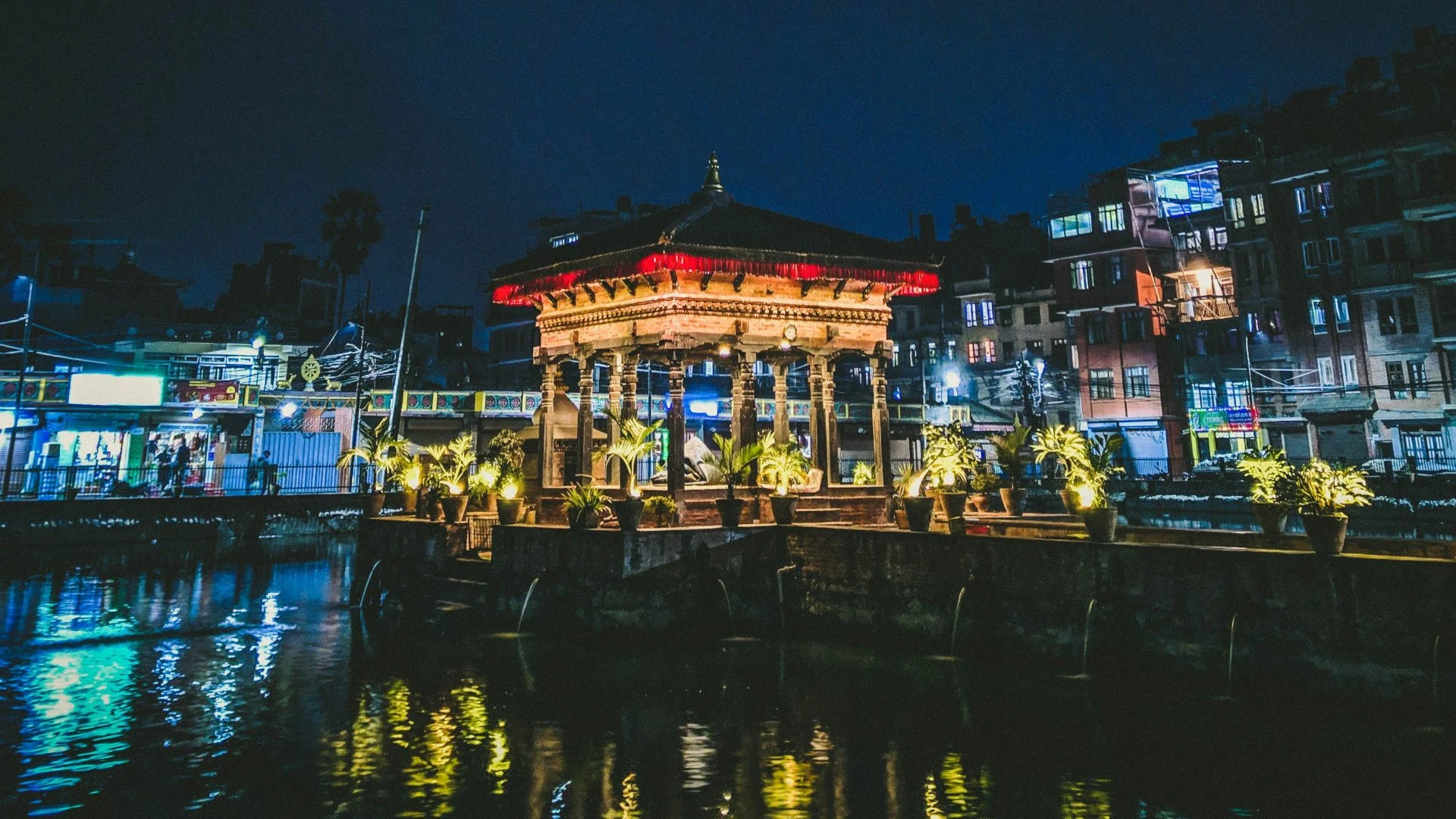
Historically known as Patan, the present city of Lalitpur is a stellar representation of cultural representation through the arts. Also known as Manigal, this city traces its roots to numerous states, such as Matirajya, Irshyarajya, and Dipavati were united in the Lichhavi Era to create this grandiose city.
Rarely do we discover places in the world that feature- living heritage. The cities of Lalitpur, Kathmandu, and Bhaktapur are great examples of living heritage. The iconic landmarks, temples, and monuments date back hundreds of years. The local population found a way to integrate these icons, temples, and monuments into their wheel of life and customs.
Tracing historical roots, the oldest settlement within the current boundaries is the kingdom of Dipavati. As per the chronicles, this city existed in the Satya Yuga. Dipavati means land where Dipankara Buddha had manifested himself. He is revered as a great enlightened mind born before Shakyamuni Buddha (Gautam Buddha).
The second oldest territory of this region is known as Matarajya. Matarajya was a flourishing kingdom that stretched southwards with its center around present-day Lagankhel. The greatest landmark of this kingdom– the Maitrajya Chaitya, stands tall to this day. Chronicles write of a great tale between two cities- Matirajya & Irshyarajya, the tale is as follows: "Once a certain man named Bhoja came to Visalnagara to become king. He heard of Vikramajit's greatness and wandered around boasting that he would do the same and that he was ready to sit on the lion's throne. At that moment, each of the thirty-two auspicious signs of the lion-throne turned into butterflies, told various stories of Vikramajit’s knowledge and dharma, and flew away. Despite this, King Bhoja insisted on seating himself on the lion throne. At that moment, the lion throne flew away on the path to heaven to reach its own place. Since, the king was hauthy, Navasagar-bhagvati fatefully became enraged in the middle of one night. She raised fire from the well in front of her and destroyed many people and animals throughout the night. The king and the people of Visalnagara were burnt and the city became desolate. Only small villages in Nepala survived. Among the people belonging to four castes, some went eastwards across the Manohara River and built their own houses. Some went southwards across the Vagmati River, formed together a small territory, named it Matarajya and lived there."
The above extract was taken from History of the Kings of Nepal, A Buddhist Chronicle which is an updated translation of the 19th-century Newar Chronicle compiled by Daniel Wright. Using historical markers and borrowed knowledge from other chronicles, Vishalnagara was the grand city created during the Lichhavi Era. The capital of this city is presumed to be Hadigaun. The current Bishalnagar got its name from this ancient city.
The third ancient settlement Irshyarajya was created by the survivors of the Vishalnagara fire who refused to live in Matarajya. “Some people, having seen those who built Matarajya and settled there said: “ We will not live in this place. The territory became known as Irsarajya since it was formed out of envy (irsa).”
A fourth historic settlement also exists but its origins are highly debated. The settlement of Imadva further east of Dipavati came into existence at the same time as Matarajya & Irsarajya. The origin of this settlement as per the Buddhist Chronicle is as follows, “In a similar way, some other Buddhists were in great confusion. They thought: This chaitya has been there since the time of Manjupattana City and it was not destroyed, even when Danasura blocked the water passage. Visalanagara has now been destroyed and no one has remained here any longer. It is neither possible to carry the caitya away, nor is it possible to make a living here. One night, the caitya ordered somebody in a dream: O devotee, a certain bird will come to rest on my parasol tomorrow morning. Then the bird takes off from the parasol and at the spot where it lands, you should stay. I, too, will come to stay there. The next morning, the Buddhists went to pay darsana to the caitya and found an eagle on its parasol, just as mentioned in the dream. They followed the eagle to the place where it landed. Some of them inhabited that place and established a chaitya by contemplating the chaitya image of Visalanagara. From that day on, the place has been known as Imadva. Since “eagle” (in Nevari) is ima and the spot was identified by it, the caitya was named Imadva Chaitya (“the chaitya at the Eagle-Mound”).
POPULAR ITINERARIES
SIMILAR POSTS
Museums in the Kathmandu Valley - Part 2
The Kathmandu Valley is an ancient city, parts of which are still left to be studied. It is abundant of stories and artefacts from decades and centuries ago, waiting to be told. The museums of the valley do exactly that; giving a sensation of reflecting and reliving the history through details and artefacts that come from its history.
Hanuman Dhoka Museum
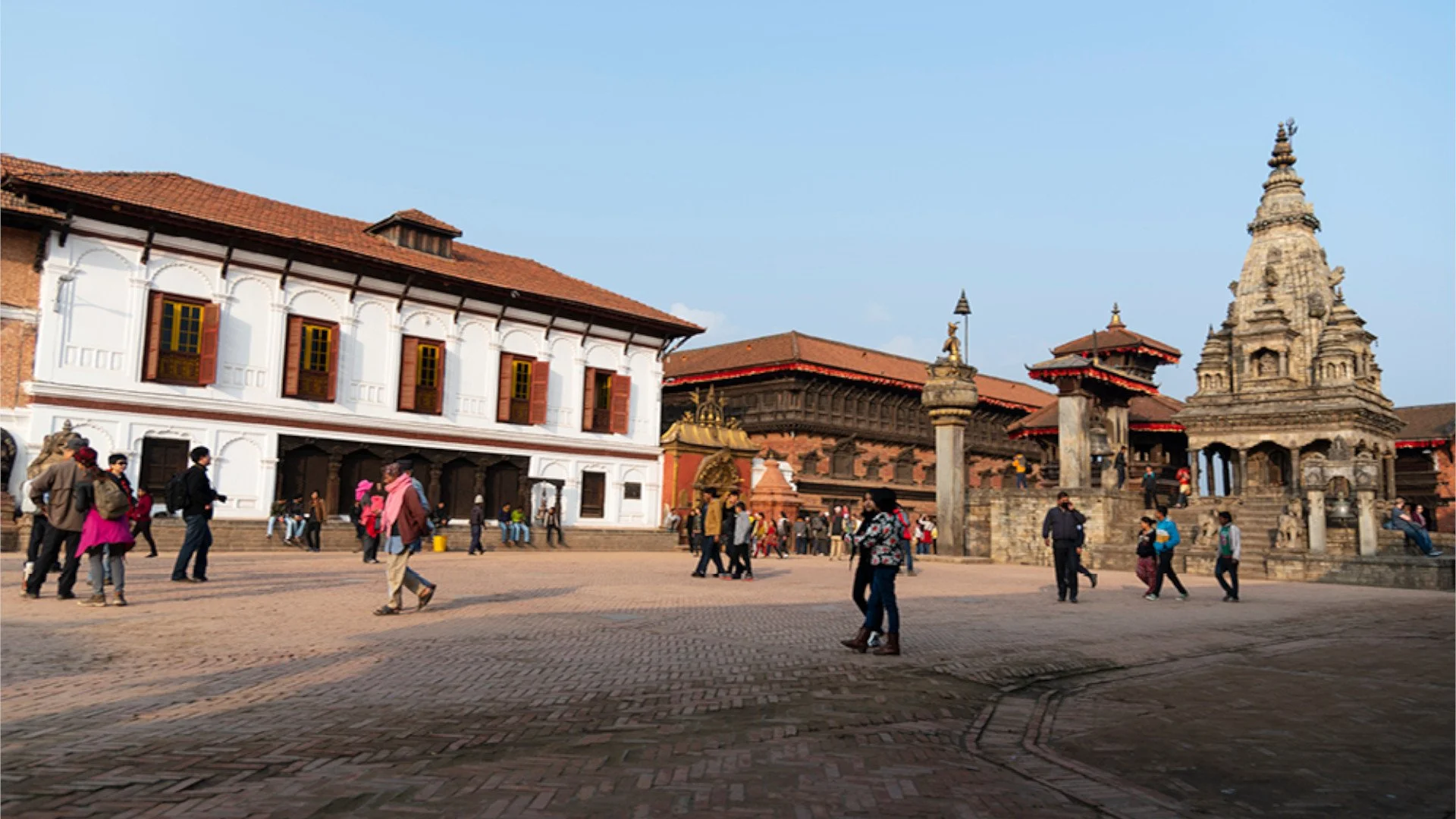
The Hanuman Dhoka palace was built during the Licchavi period, around the 4th to 8th century, and it was expanded in the 17th century by king Pratap Malla. The main palace was constructed during the Malla period, and the rest of it was later constructed by the Ranas.
Surviving through the earthquake of 1934 and 2015, after multiple reconstructions, today, it stands tall with the integrity of its history and is now turned into Hanuman Dhoka Museum. In the entrance, a more than three hundred years old statue of Hanuman is situated as a symbol of protection. The main courtyard after the entrance of the museum is Nasal Chowk. This extravagant area used to be the place that held coronations for the former Kings. With that, the Narsingha Statue, the statue of Lord Vishnu in its man-lion form is located that was built by King Pratap Malla in 1673. In the Galleries of the museum lies the age-old objects and artefacts from the Licchavi dynasty to the Malla dynasty to the Shah dynasty. It is situated in the heart of the Kathmandu Durbar Square in Kathmandu Valley.
Bhaktapur Museum
The ancient city of Bhaktapur is built with centuries-old rich architecture among its bricked temples, palaces and is home to three museums, out of which the National Museum is one of the most significant museums in the valley.
Tucked in between two serene statues of lions, The National art museum was opened, formally as a palace, in 1980 by King Bhupatindra Malla. Later, in 1960, it was set up as the National art gallery by the Government of Nepal. For centuries, this palace, now a museum, has been the hub for medieval and Licchavi art and history. This tiny haven of wonders, although covering a small area, encompasses the collection of manuscripts and chronicles coming from the 11th century. It also holds on to ancient paubha paintings, Hindu versions of Thangka paintings along with classic paintings of deities, gods, and goddesses surviving the age of time. The gallery is also lined up with portraits of all the Shah Kings until the end of the monarchy. This museum is located at the west entrance of the Bhaktapur Durbar Square in Kathmandu Valley.
National Museum
Once known as ‘Chhauni Silkhana’ meaning ‘the stone house of arms and ammunitions’, was established in 1928. The National Museum or the Chhauni Museum is one of the most popular museums of the country that has been a major attraction to re-living through the incidents and artefacts of the wider history.
The courtyard of the building once was used as a space to worship and perform rituals during the time of Dashain as a symbol of purity. The starting attraction of the museum is the historical artworks in the form of sculptures, murals, and paintings that are out up in the gallery.
Different weapons used in the wars of the 18th to 19th century are also displayed. This museum also safeguards natural historical artefacts of different animals, reptiles, and insect species as well. Not only that, but this museum is also the home to moon rocks collected from the moon, the mandibular bones of the whale that is the largest mammal in the world, a fossil of reptiles from the Jurassic period, and many more. It stands as a symbol of national history and artefacts, showcasing astonishing objects and moments of a different time.This museum is located in Chhauni, Kathmandu Valley.
POPULAR ITINERARIES
SIMILAR POSTS


Architectural Marvel: Pagoda
Nepali architecture embodies history and tradition. The temples, shrines, palaces, and ancient buildings have stood the test of time and exhibit artistic brilliance. All these marvelous ancient architectures are the prime attraction to tourists, both local and foreign.
Nepal’s art and architecture show influences from various cultures and a prominent symbol of heritage. The marvelous ancient architecture is a prime attraction to tourists, both local and foreign. The unique architecture is present within the Kathmandu Valley and its neighbouring areas.
With both indigenous and historical styles, present not only in religious structures but also in public buildings, the country’s architectural legacy remains strong even after the damage caused by the 2015 earthquake.
Nepali architecture embodies history and tradition. The temples, shrines, palaces, and ancient buildings have stood the test of time and exhibit artistic brilliance. These magnificent structures found throughout the Kathmandu Valley are each an architectural marvel.
What makes the legacy stronger are the prominent styles that make them architectural marvels. Together with elements from the Newari people, traditional Nepali architecture comprises three groups---the Pagoda Style, the Stupa Style, and the Shikhara Style.
The Pagoda Style
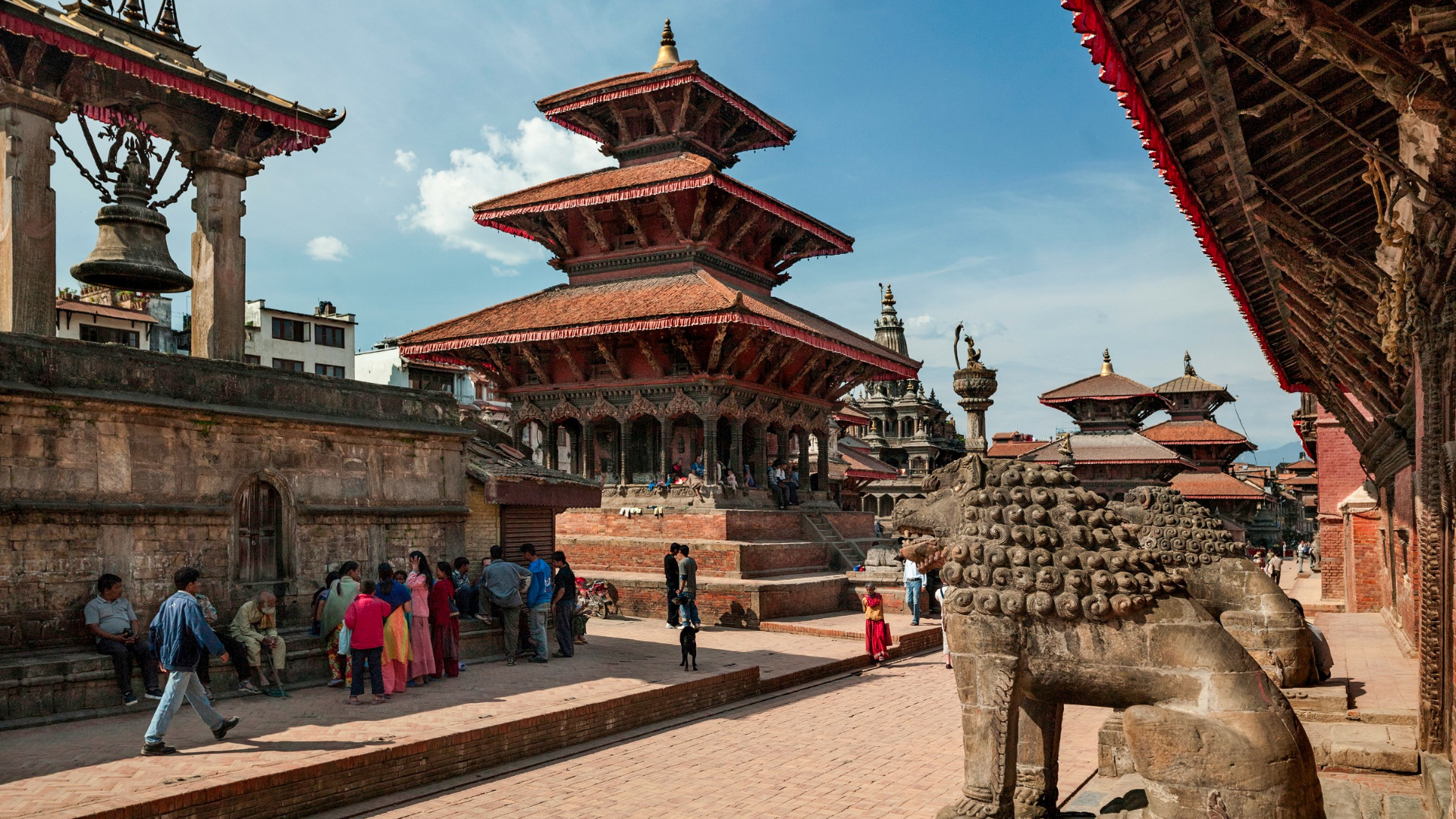
Pagoda, in general, means diminishing tiered roofing. The word “pagoda” originated in English as a reference to Japanese architectural styles. This style features in Nepali temples, with multi-roofed structures supported by beautifully carved wooden struts.
In Nepali architecture, the pagoda style evolved from dome-shaped stupas prominent in Newari architecture that stored sacred relics. This influence came from across East and Southeast Asia, over time, blending with Chinese architecture.
In the 13th Century, at Emperor Kublai Khan’s invitation to China, Araniko—the young Nepali architect—helped spread the pagoda style across the region. The pagoda flourished in Nepal during the Malla dynasty, and even in history, we can find very few pagodas in Nepal before this period.
Pagodas were initially constructed in Kathmandu Valley as high structures. Hindus believed that the Gods resided in high heavens, so to provide passage between heaven and earth, these temples were built to their tall heights.
The Kasthamandap Wooden Pagoda is among the exceptional examples of the pagoda style built during the Malla period. The Basantapur Tower—built by King Prithvi Narayan Shah—is another outstanding example, while Pashupatinath, Taleju; temples in Patan Durbar Square; Nyatapola and Dattatreya temple in Bhaktapur Durbar Square, Kabindrapur and Changu Narayan temples are magnificent examples other pagoda structures.
In Nepali architecture, the Changu Narayan Temple is considered the oldest temple in Nepal. It is also the oldest pagoda-style temple in Nepal. The two-storey temple stands on a high plinth of stone and is a milestone in Nepali architecture. The temple is located in Bhaktapur and is a shrine dedicated to Lord Vishnu.
Features:
Tiered roofing is the most striking feature in this architectural practice. The projecting roofs, set one above another, diminish in size from the bottom to the top. While two and three-tiered pagodas are most common in Kathmandu, there are few single-tiered, four-tiered, and five-tiered pagodas.
While square roofs are customary, the shape depends upon the plans as well. We can find rectangular, octagonal, or circular pagodas too. These sloped roofs hang on the inner walls with wooden struts on the outer edges on wooden pillars or brick walls, providing extra support.
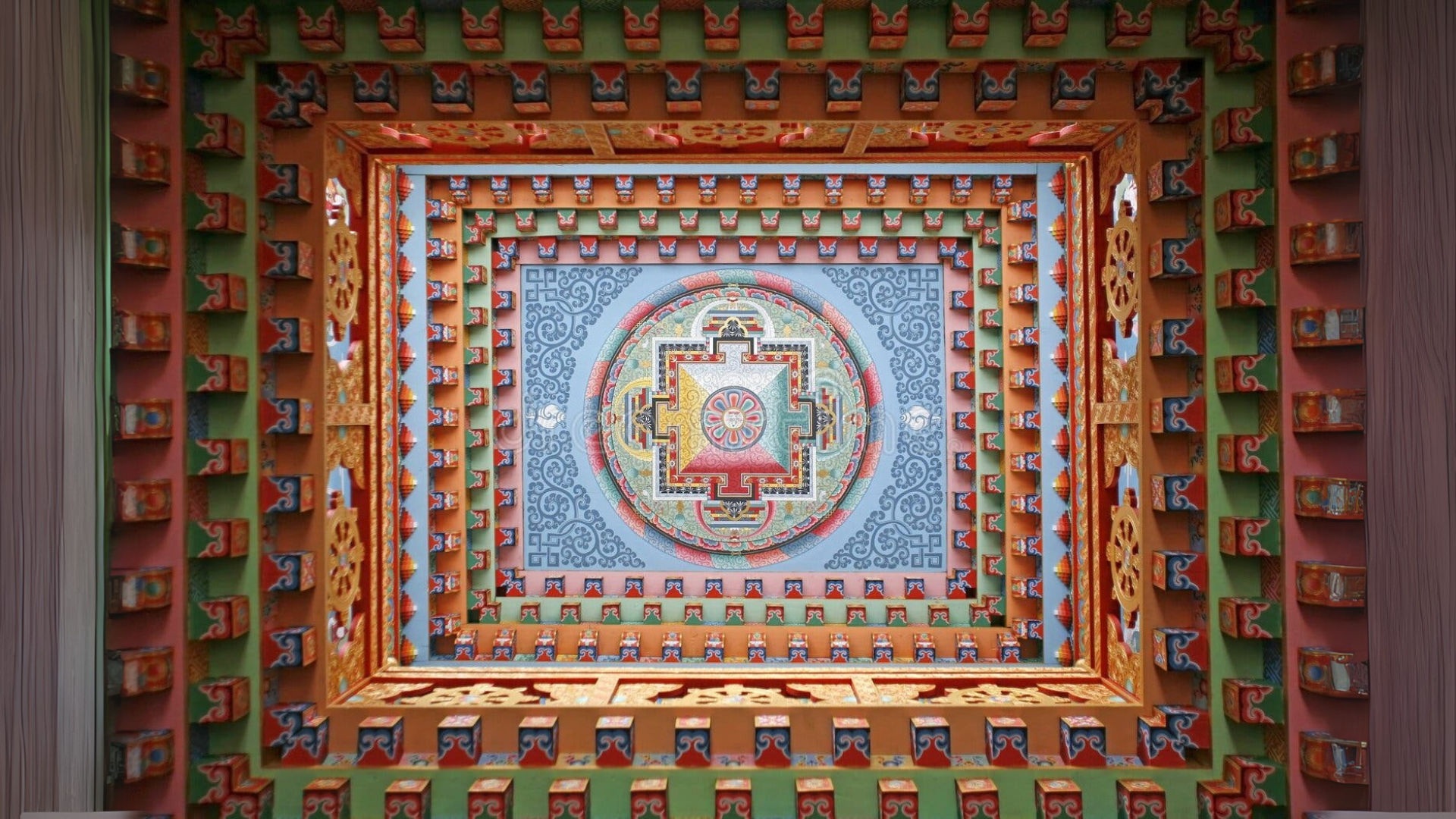
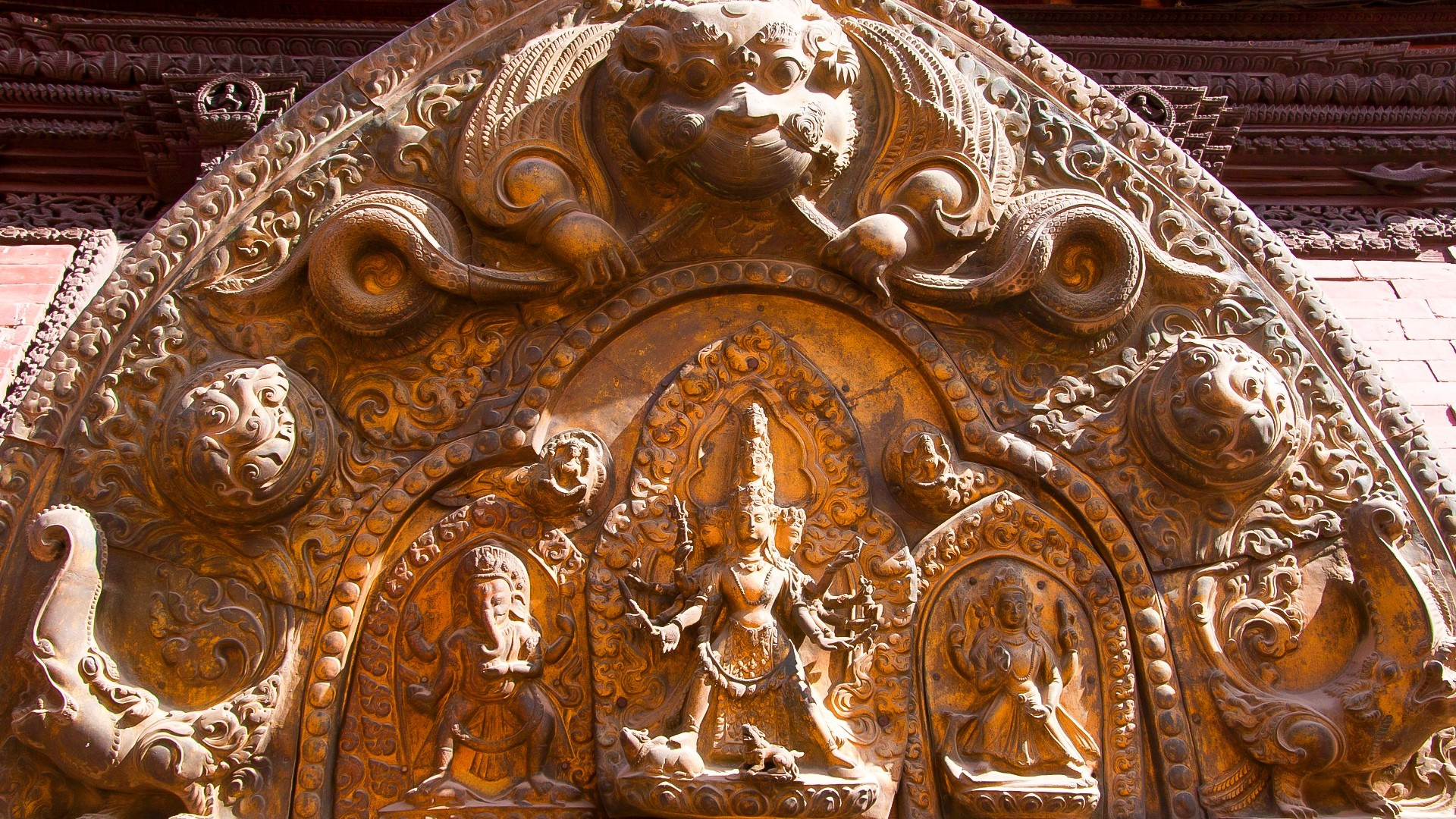
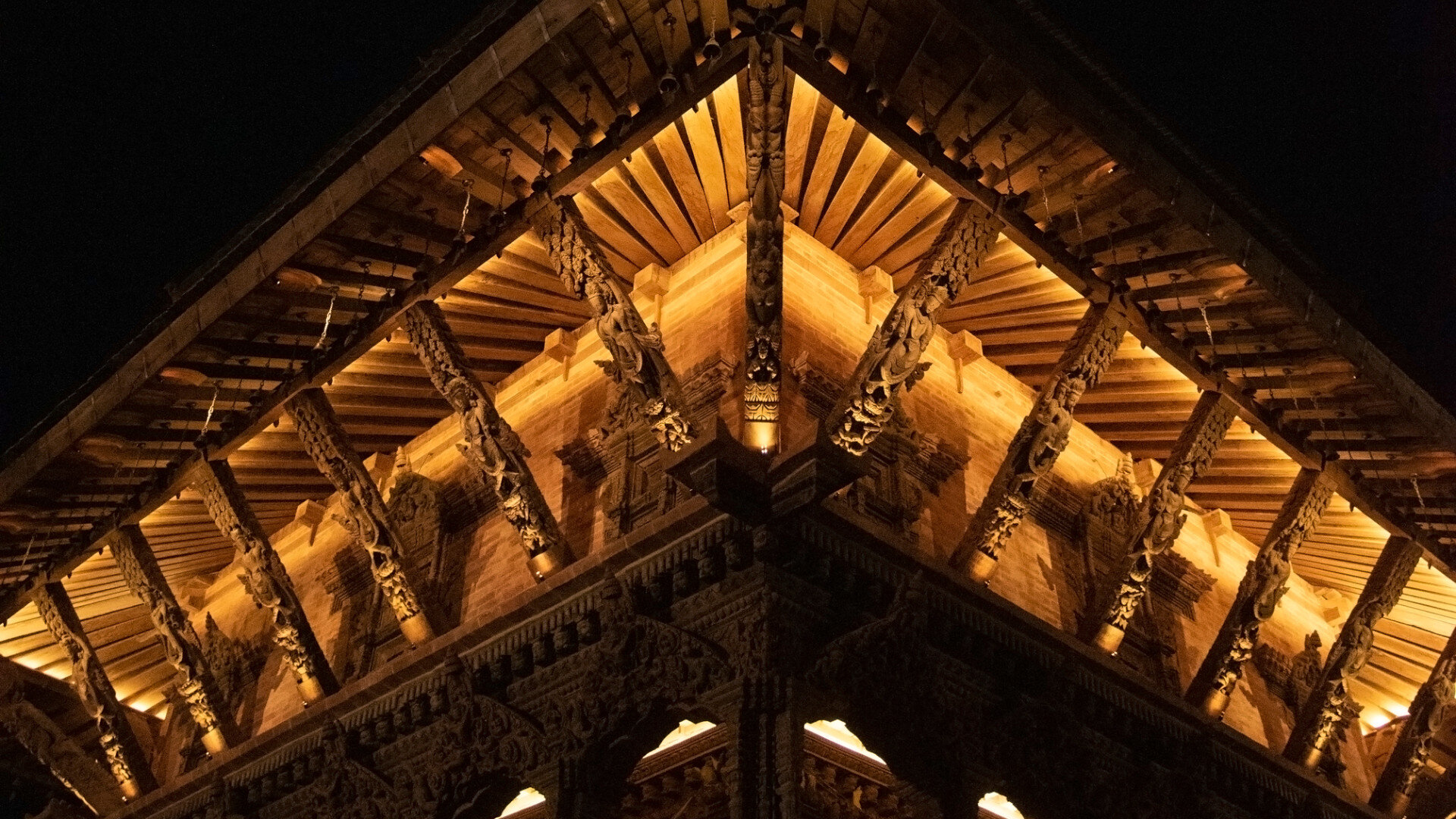
The wooden struts, known as Tundals, are wooden structures with carvings of different deities and gods related to the temple. They serve to support the sloped roofs, and, often, add to the aesthetics.
The tiered roofed temples and palaces also have wooden windows on each level. The uniquely decorated windows are placed in odd numbers depending on the size of the wall.
They also feature a bay window on the third floor. These windows slant outwards, providing privacy and ventilation at the same time. These windows are either closed with wooden lattices--with each lattice carved separately and interlocked--or open types.
Each element has equal emphasis as they play a unison role in defining the overall design. While the windows are an intricate part of this style, the doorways are equally important. While the design may differ based on the significance and importance of the temple, they are either carved wood or embossed metal.
The doors usually have a low height—4.5-5 ft.—to symbolize that gods and kings are superior to men, and should always have their subjects bowing their heads when entering the palace or temple.
Finally, the gajur or the pinnacle completes the temple. It is the topmost element of the structure made of heavy metals like copper, brass, and iron. The gajurs in major temples have either silver or gold platings. Although single gajurs are most prominent, some structures may have two or three smaller ones on either side of the centre gajur.
The gajur on temples were installed to cover the top joint of the four-sided sloping roof but are now the pinnacle and pride of the structures.
Hashtags: #NepaliArchitecture #KathmanduValley #PagodaStyle #NewariHeritage #CulturalLegacy #AncientTemples #2015EarthquakeRestoration
POPULAR ITINERARIES
SIMILAR POSTS
Great Souvenirs to Take Back Home This 2020
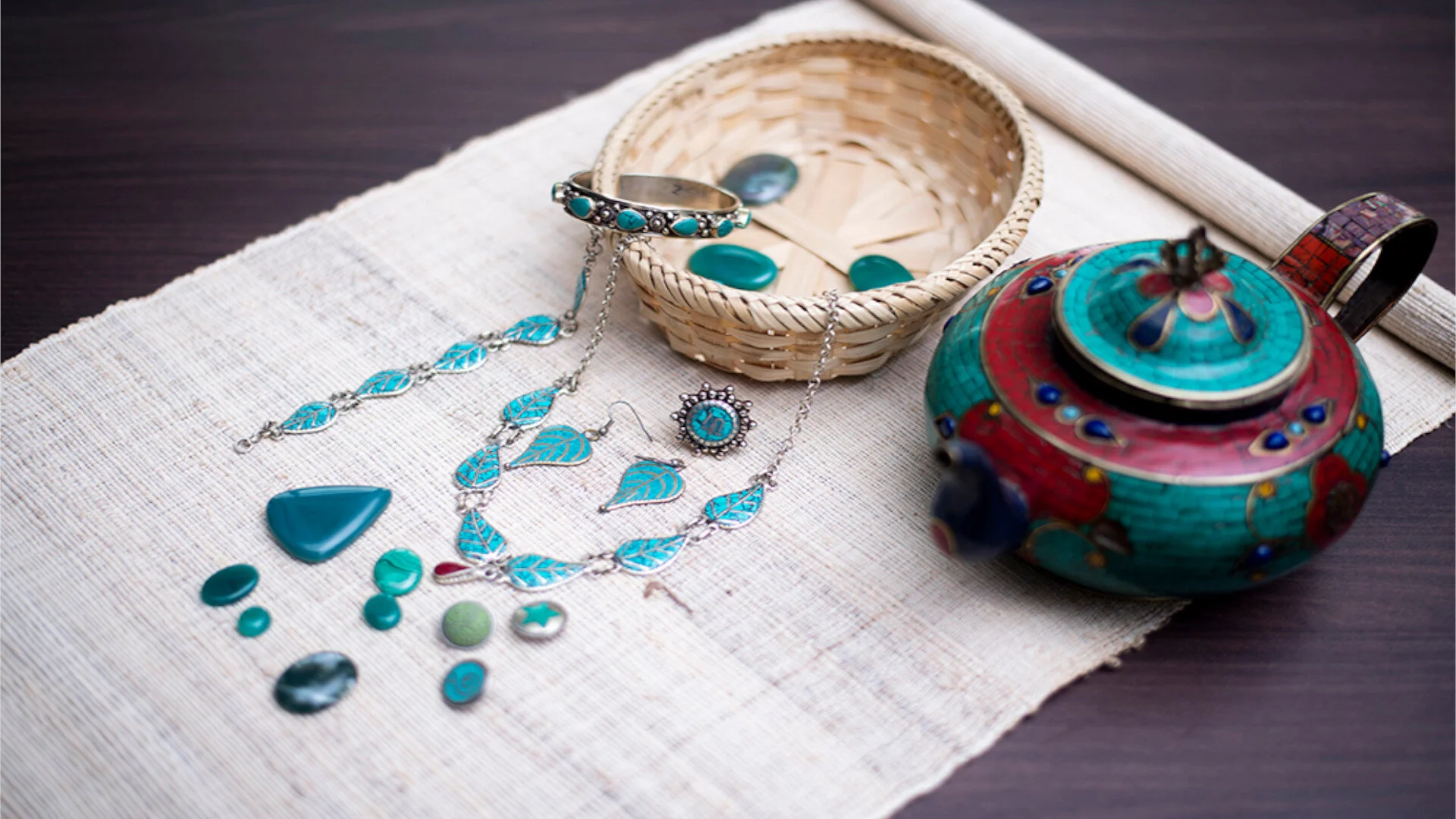
Take home the best and the popular Nepali souvenirs as a memory to remember the visit to the Himalayan country, Nepal. After each visit to Nepal, every tourist carries back these popular souvenirs as memory and gifts to family and friends.
Nepal, a country where one can find diverse culture and traditions, is a world in itself. Lying along the southern slope of the Himalayas, the country is not only enriched with exquisite floras and faunas upholding a harmonious relationship, but also with numerous culture tradition dialects and people of all walks of life. From the magnificent snow-clad mountains in the north to the humongous plains of the Terai, one can find extreme serenity admiring the complexity of natural beauty the country beholds. The country has so much to offer which can be a sweetener to your family, friends or yourself as a remembrance. Various relics that depict the country and its culture makes anyone not go back home empty-handed.
Anything That’s Dhaka
The eccentric piece of clothing i.e. Dhaka has an all-pervading influence in the culture and traditions of the people living in Nepal and has been reckoned as the artefact of honour and culture of the nation. The Dhaka cloth is very well-liked and admired by the locals along with visitors which has led the textile to be affirmative when it comes to export. Moreover, the handwoven fabric from organic cotton yarns has successfully arrested the curiosity and the attention of the tourists. Nowadays, Dhaka is being used to make various goods and accessories such as shirts, shawls, scarves, purses, bags, hats for men and sarees for women by utilizing numerous vibrant and ranges of colors to make it look more alluring and attractive. The peculiar style and noteworthy quality can be sublime to the taste of the tourists which could be a good souvenir to take back home.
Buddhist Prayer Flags
“The most eye-catching and homestyle memento is no doubt those decorative Buddhist prayer flags which endorse the concept of peace, empathy, warmth and wisdom. The simplicity and the beauty itself is the key excuse for tourists to take them back home,” says the reporter, Juliyana Shah, from Tourism Mail, ensuring the aesthetic along with its importance. “They are more than just a piece of art, they give you ethereal and intangible triumph which is something you would love to share and give to someone you want to make happy.” Buddhist prayer flags might not be extravagant but they have deep spiritual significance and make for thoughtful souvenirs.
Singing Bowls
The artistic hand-hammered antique allows oneself to cherish the plentiful euphony produced by it which can be used for healing and meditative gains. Singing bowls are one of the most delicate and pleasant pieces that are available here in Nepal. These metallic bowls make calming and reassuring sounds which take anyone to their euphoric state. There are some benefits of it and one being that it gives clarity to the mind, body, soul and intuition. Highly beautified and well-thought bowls have a small wooden stick that works as an accessory for us to knead the rim of the bowl in a circular way to create the soothing chime.
Lokta Paper
Made out of rice husks, rice paper is a very popular textile that is patently available in the markets of Nepal. Also known as “Nepali Paper”, it is often used as a base for various art paintings and documents paper. The country is a huge producer of rice paper and has managed to make its place in foreign markets. Many items are being produced with the help of rice paper such as journals, lanterns, albums, diaries and many more. Rice paper has flourished itself in the tourism domain.
Khukuri (Gurkha Knives)
Both used as a tool and a weapon, Khukuri is the national armour as it represents the galore of the country. “One notable thing is that tourists are very fascinated towards Khukuri,” Dipchandra Kalika says. “The sole reason behind this interest maybe because they see these knives on sale which symbolizes as a token of bravery which perhaps is a rare case in the western countries. Another excuse would be because they find it fancy as the knives we have here are differently structured or have a distinct recurved blade.” With the opinion of Khukuri being a new concept when it comes to craftsmanship, he concludes by saying that despite the ravishing design, this makes a thoughtful souvenir from the country itself to its visitors.
SIMILAR POSTS
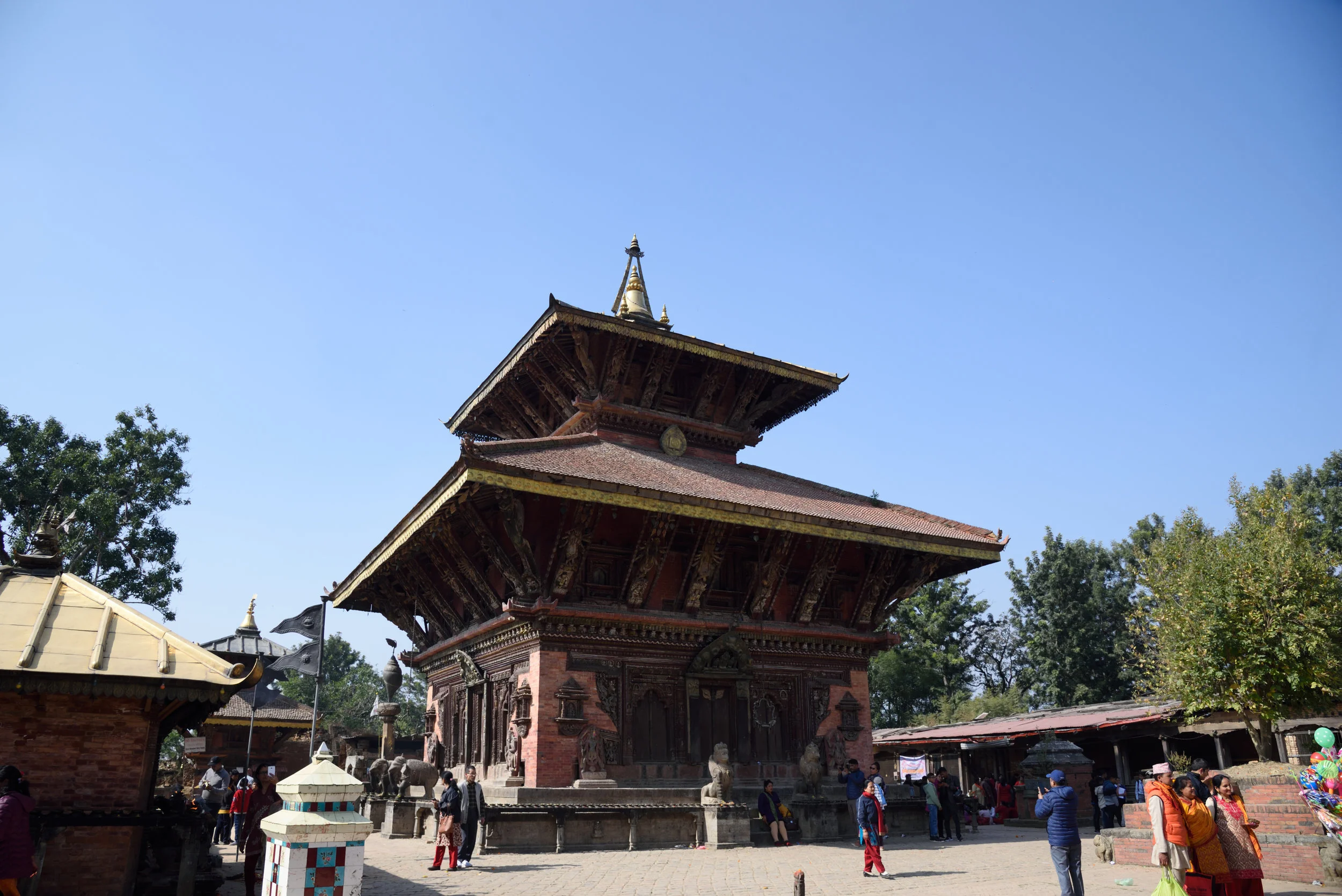
UNESCO World Heritage: Changu Narayan
One of the most historic temples, the temple of Changu Narayan dates back almost 3000 years and is said to have been built during the Lichhavi Era around the 4th Century. Perched on a hill top 4 kilometers north of the city of Bhaktapur, in ancient times the temple was surrounded by a lush champak tree forest and a small village known as Changu. The hill is 12 km east of the capital and the Manohara river flows right beside the hill. The principle shrine is believed to have been established in 325 AD, the temple was reconstructed in 1702 Ad after a devastating fire.
One of the most historic temples, the temple of Changu Narayan dates back almost 3000 years and is said to have been built during the Lichhavi Era around the 4th Century. Perched on a hill top 4 kilometers north of the city of Bhaktapur, in ancient times the temple was surrounded by a lush champak tree forest and a small village known as Changu. The hill is 12 km east of the capital and the Manohara river flows right beside the hill. The principle shrine is believed to have been established in 325 AD, the temple was reconstructed in 1702 Ad after a devastating fire.
The temple is dedicated to the Hindu diety Lord Vishnu, apart from the main temple numerous other shrines at the premises dedicated to Gods and Goddesses such as Chinna Masta, Lord Ganesh and Lord Krishna. The premises of Changu Narayan is also home to one of the oldest stone slab which dates to the 5th century and features various inscriptions form the Lichhavi Era.
Among the various foundation lores surrounding the temple it is stated that one of the Kings of Kashmiri Kings gave his daughter, Champak, in marriage to the price of Bhaktapur and the temple is named after her. The chronicle of the history of Nepal documents the origin of the temple, " Takshak Nag, who was also formerly compelled by Manjusri to leave the valley, became angry, when it was again under water, began to bite people without any provocation. This sin produced leprosy in his body, and, to expiate his offence against Manjusri he came to Nepal and began to practice austerities at Gokarn, where the price Gokarn had obtained salvation. Garud, seeing him, came to catch him, but he being more powerful than Garud , on account of the austerities he had practiced, caught hold of Garud and kept his head under water. Guard invoked the aid of his master Vishnu, who came, and was going to strike Takshak with his chakra, but in the mentine Aryavalokiteswara-padma-pani-bodhistwa, seeing that a Nag observing austerities was being killed, came from Sukhavati Bhuvan (heaven) to protect him. Vishnu then took him on his shoulders and the Lokeswara caused friendship to be established between Garud and Takshak and put the latten round Garud's neck. Then Garud lifted Vishnu; and the hon, which had been ridden by the Lokeswara, lifted up Garud, and, flying into the air, alighted on a mountain, which was named Hari Hari Bhana, where the Lokeswara disappeared. This mountain was in consequence named Charu, but since then has been corrupted into Changu. (The hill 5 miles east of Kathmandu lies a composite image, represting Lokeswara upon VIshnu, upon Garud, upon a lion.) "- Wright, 1877, 95
The temple itself is a magnificent piece of Nepali architecture with rich embossed works of wood and bronze. The temple is two-storey roofed temple standing on a high plinth of stone, research conducted by Professor Madan Rimal of the department of Sociology and Anthropology state that the temple is neither a Shikara style nor the Pagoda Style,but is a traditional architecture of Nepali temples, and the temple bears similarities to the Gokarna Mahadev temple.
The temple has four entrances and the gates are guarded by life-size pair of animals such as lions, sarabhas, griffis and elephants on each side of the entrance. The struts of the temple feature the ten incarnations of Lord Vishnu and other idols craved in wood. The temple premises lights up during festivals such as the Changu Narayan Jatra, Mahashanan, Haribodhimi Ekadashi and especially Nag Panchami.
POPULAR ITINERARIES
SIMILAR POSTS
UNESCO World Heritage: Swayambhu Nath
"In Satya Yuga, Bipaswi Buddha came from a city known by the name of Bandhumati; and having taken up his abode on the mountain to the west of Nag Hrad(Kathmandu Valley) sowed a lotus-seed in the tank, on the day of the full moon in the month of Chait. The lotus seed that had been sown brought forth a lotus flower, in the middle of which Swayambhu (who had come from Aknisht Bhuban) appeared in the form of light, on the day of the full moon in Aswin." Wright 1877: 77-78
"In Satya Yuga, Bipaswi Buddha came from a city known by the name of Bandhumati; and having taken up his abode on the mountain to the west of Nag Hrad(Kathmandu Valley) sowed a lotus-seed in the tank, on the day of the full moon in the month of Chait. The lotus seed that had been sown brought forth a lotus flower, in the middle of which Swayambhu (who had come from Aknisht Bhuban) appeared in the form of light, on the day of the full moon in Aswin." Wright 1877: 77-78
Most of the historic chronicles have the lotus seed that brought light be marked as the beginning of the history of the Kathmandu Valley. The light of Swayambhu was inaccessible till the age of Treta Yuga, when Bodhistva Manjushri came from Mahachin(China) and drained the lake from the pass at Kotwal(The place where Bagmati passes out of the Valley) with other passes drawn at Chobar. With the valley drained, Bodhistva Manjuri made the valley inhabitable and the light of Swayambhu accessible to its worshippers.
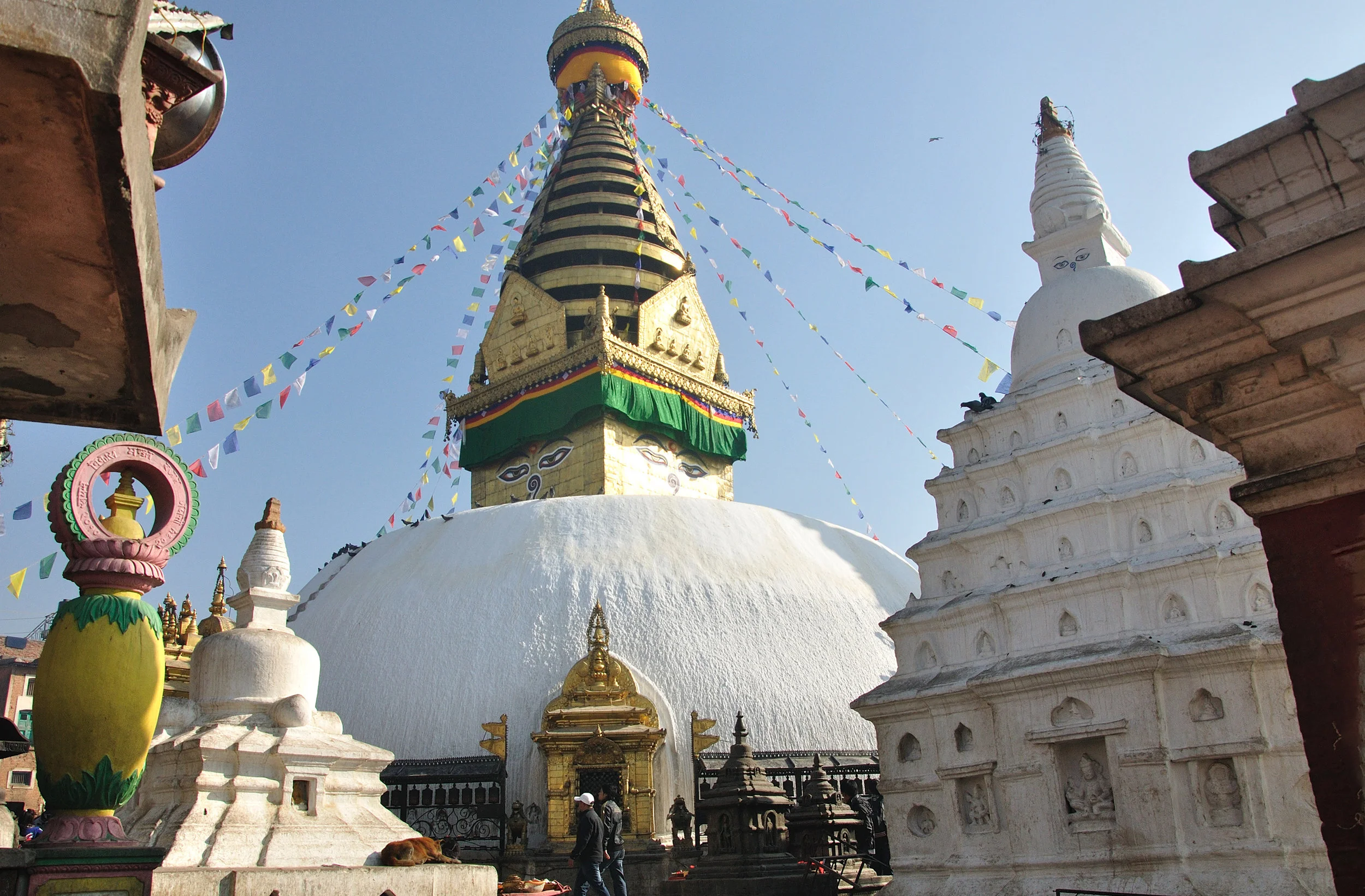
The shrine of Swayambhu, the dome stupa with eyes of the enlightenment and the pinnacle was built only in the Kali Yuga. Before which it is believed that at the summit of Padma (Padma- Giri Hill; the mountain upon which Swayambhu stands) the place where the shrine is today was a great beam of light that penetrated heaven and even the depths of hell.
"The Kali Yuga, in which mankind would be utterly sinful, was approaching. He (Sant-sri) therefore covered the Swayambhu light with a stone, and built a chaitya and temple over it. He then built five rooms named Basupur, Agnipur, Bayupur, Nagpur and Santipur in the last which he lived, absorbed in devout meditation." Wright 1877:84
It is believed in local legends that even till this date Sant-sri, is in devout meditation in Santipur and shall emerge to protect the valley in times of grave danger. I remember the first time I climbed the steps to the top of Padma-Giri, as I took the last step with deep breaths. The shrine of Swayambhu was a sight to behold, view it form any perspective you wish.
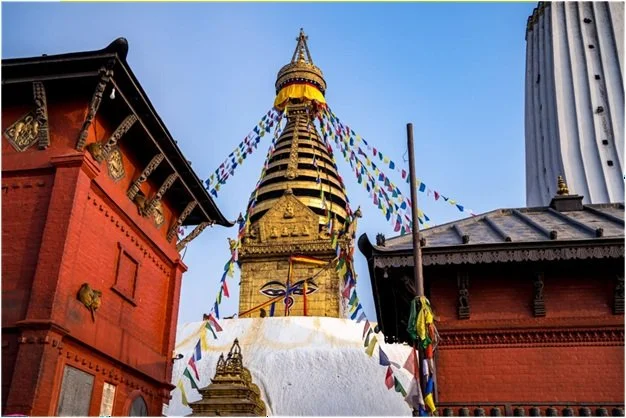
Architecturally it is a phenomena, the dome base atop which a cubical structure painted with the eyes of Shakya-Muni (Lord Buddha) in all four direction shielded by the pentagonal Torana with symbolic engravings. Above the Toranas are thirteen tiers crowned by a Gajur, now imagine a time lapse of its creation? Symbolically the base dome represents the world; the eyes of Shakya-Muni represent the status of enlightenment free from all bonds of the world. The thirteen tiers of the pinnacle symbolize thirteen stages of spiritual realizations to the enlightenment.
Spiritually as a native Newar it is the center of all our devotion and from the perspective of a sociologist, a beautiful lineage of history which has become the epicenter of Newar culture.
Today, the shrine of Swayambhu is known as Swayambhu-Nath or The Monkey Temple and is a major tourist attraction of Kathmandu Valley. Riddled with numerous shrines of Bodhistva's, Lichavi chaitya and stupas, mists of incents and chants of prayer. The Padma-Giri is a hill of spiritual awakening, the light of Swayambhu ever since history began has been a beacon of enlightenment attracting its seekers to the valley, even till this date many take great journeys to find sanctum in its light.
During the 2015 earthquake, the principal stupa didn’t suffer major damage but the surrounded chaityas, shikharas and temples along with living residents of the priests suffered major damage. The most notable difference was not seeing the two Shikharas built by Late King Pratap Malla in 1668 AD. Flanking the principal stupa, Late King Pratap Malla had built the two Shikharas with Agam Devtas within them along with which he placed a Bajra( Thunderbolt) in the Dharmadhatu mandala in front of Akshobhya Buddha. Having them being fully restored with other shrines and chaityas repaired, the area of Swayambhu was one of the very first UNESCO sites to reach a full restoration state.
For it may withstand many quakes to come, shall the eyes of enlightenment forever bring peace to its beholders. For may it always be a sanctum for its seekers and the light of Swayambhu always shine.
Hashtags: #Swayambhu #KathmanduValley #NewarCulture #BuddhistHeritage #EnlightenmentJourney #UNESCOSites #NepalEarthquake2015
POPULAR ITINERARIES
SIMILAR POSTS

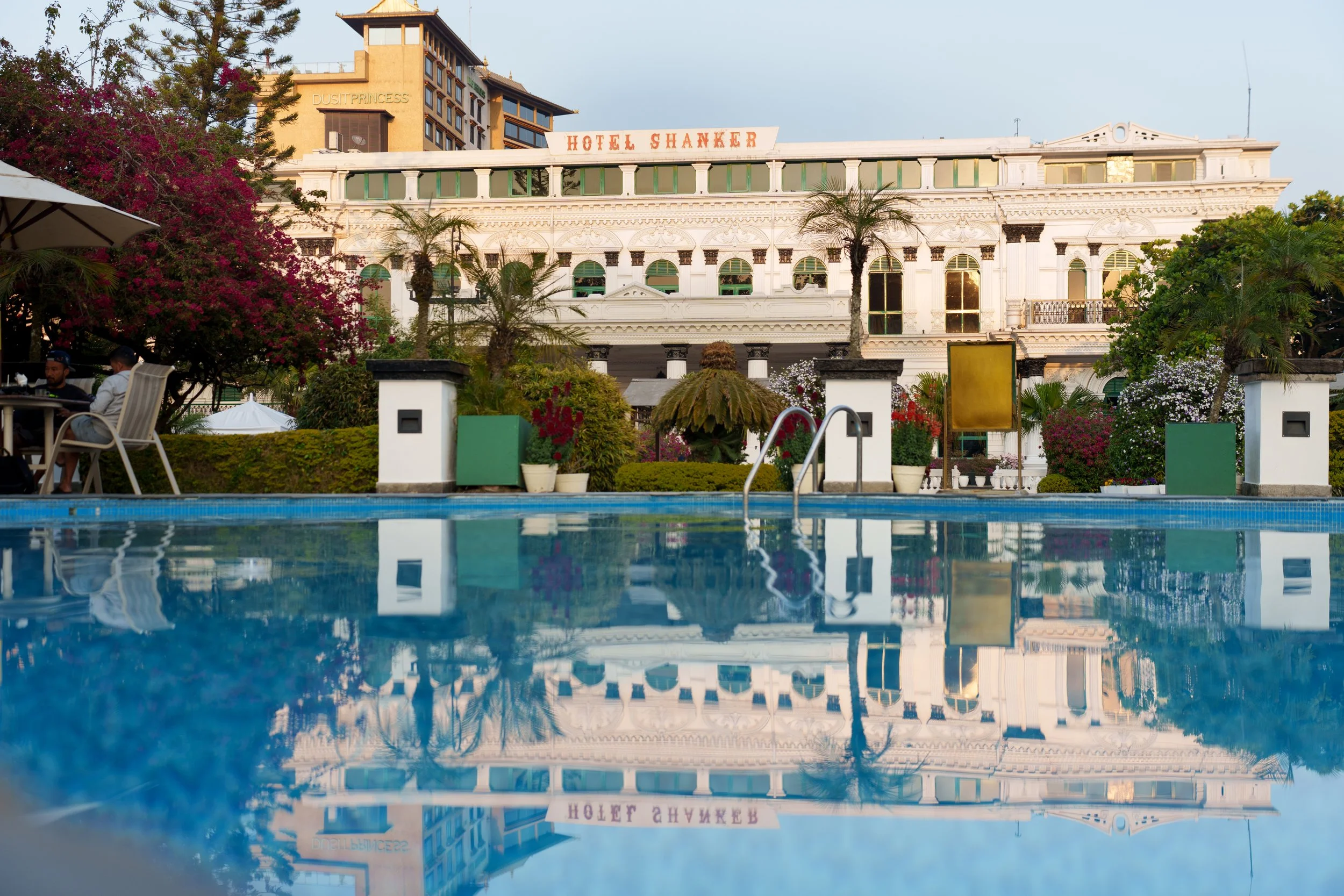
Nepal’s Living Museum, Lalitpur
No visitor coming to Nepal goes back without some time spent in Lalitpur, and it is indeed time well spent, because Lalitpur has much to offer.
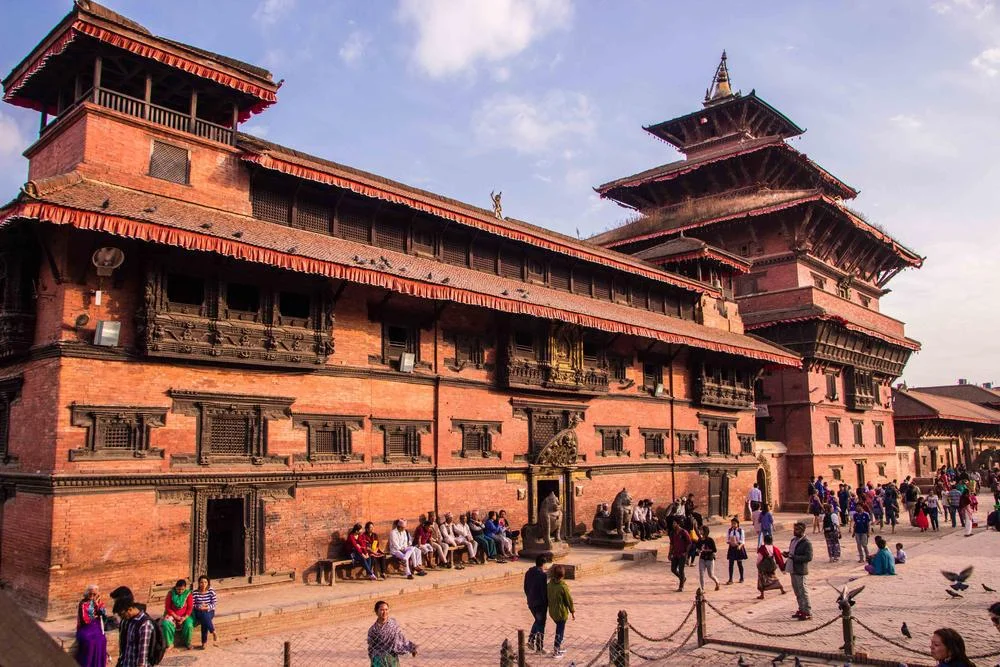
There’s much that you’ll find in Lalitpur (a.k.a. Patan), besides what it is world famous for—its renowned art, craft, and architecture. Here is where you’ll find the Patan Durbar Square, a world heritage monument, the Golden Temple and many other equally impressive shrines, and narrow alleyways and side streets full of workshops making statues in metal, stone, and wood
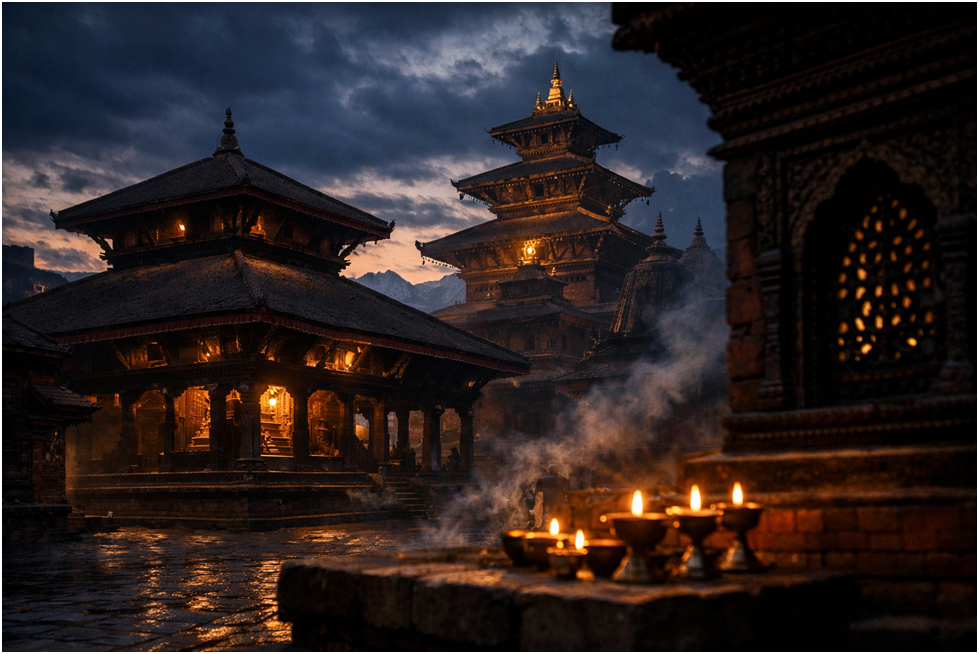
You could say that the durbar square is the soul of Lalitpur. It perfectly gives meaning to the phrase, ‘living museum’. From early morning to late night, it is a busy center full of thriving activities. If you visit its many temples at the crack of dawn, what you’ll find are throngs of devotees joining the morning prayers, the surroundings shimmering with a thousand butter lamps, and the air heavy with the scent of burning incense. The alleyways and the streets outside may be serenely quiet, with nary a soul in sight, the shutters down in the numerous shops lining the streets, with even the mongrels deep in slumber, but the temples are where the action is, a different world altogether! The Golden Temple (Hiranaya Varna Mahavihar) is where you should go if you want to be a part of this deeply spiritual experience.
As the day progresses, the square becomes busier, it is after all a thoroughfare, too, linking half a dozen or so streets. Early morning joggers and walkers stop for a while to have a glass of hot tea at one of the teashops in the area and exchange pleasantries with friends and acquaintances. There’s one particular teashop near the Narsing building, where the Kathmandu Valley Preservation Trust is located, that is extremely popular with tea aficionados. It’s full of customers throughout the day, and well into the evening, a hangout for the locals, as well.
Early mornings are also when you’ll find the hiti (watering place) next to the palace, and opposite the Bhimsen Temple, full of chattering women, who’ve come there to fill their brass vessels with water from the dhunge dharas (stone spouts). Some will be washing clothes, and it’s all a very homely sight. This hiti is famous, since it is also part of the Patan Durbar Square. For your information, there is a royal bath in one of the palace’s three courtyards that underwent quite a bit of restoration some years back, and that is also very famous. It is surrounded by numerous deity figures, a fact that made the chief restoration architect question its status as a royal bath. “I don’t believe a king would be naked in front of the gods,” was his observation.
Anyway, with the morning light becoming stronger, the square is now a proper city center, with lots of school kids crossing it to go to their schools, or bus stops, old folks taking up their usual vantage points to warm their rickety old bones, and while away the hours sightseeing. The most interesting of which, for them, will be the groups of tourists moving through the square, giving a keen eye to the temples, before entering the palace to explore and discover. The museum inside on the first and second floors of one wing could be a must-visit for some, while others may just like to amble around, clicking away a few up-close shots of the carvings on the windows and doors and struts, as well as the metalwork evident everywhere. It’s all a treat for those with an artistic bent, one can assume.
That’s how the day goes by in the square, but now that evening is falling, let’s see what happens in and around the famous square. If you walk through the side streets at around this time, you could well espy pretty young girls coming out of doors and doorways leading to smaller squares inside around which are situated many houses. They are dressed in all their finery, and looking fresh and vibrant. It’s their time for a stroll around the square, to meet friends and check out the boys, and have a taste of the delicious tongue tingling pani puris (small puffed up fried dough balls filled with a spicy mixture of boiled potatoes, peas, and what not, and a spicier liquid concoction) at the stands around the square that also serve other equally delicious stuff like chaats (mix of many edibles, including samosas, curd, tamarind water, spices, etc.) and so on.
The place is actually a foodies’ delight. There’s an eatery near the above-mentioned popular teashop known as Honacha’s that is famed for its wholesome baras (lentil patties topped with either minced meat, egg, or both) and its thwon (rice beer) that you can order by the jug or by the glass. You get other Newari delicacies, too, and this place, which has deliberately been kept as it has been down the years (that is, humble-looking, with well-worn wooden tables, chairs, and small stools, in case the tables are full). The highlight, besides the baras, are the women making them in the open kitchen. There they sit, cross-legged, these amply endowed ladies, their hands continuously pouring the lentil mixture on the extra-large wok on a big stove, shaping them with ladles into neat round shapes, then breaking an egg over them, or placing minced meat on them, flipping them over and cooking both sides till just done. A couple of men and boys take the orders and serve the food. I took a Chinese friend there once, and she exclaimed that it was the best restaurant she had visited in Kathmandu. She had taken a few glasses of thwon!
One could go on talking about the many attractions of this renowned square, but for this piece, suffice it to say that it lives up to the phrase, ‘living museum’.
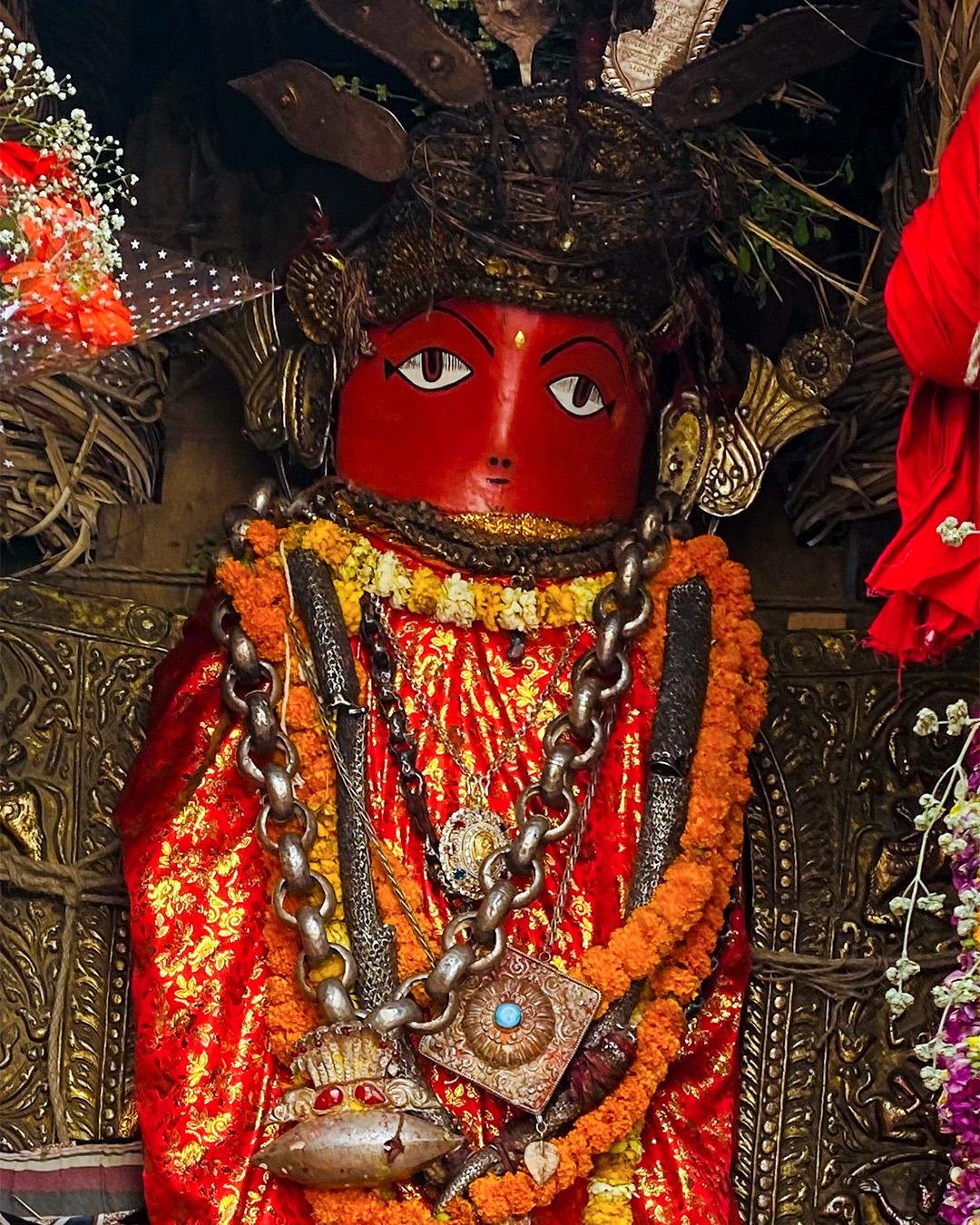
Nepal's Principal Deity, Jai Shree Pashupatinath
Fire is His head, the Sun and Moon His eyes, space His ears, the Vedas His speech, the wind His breath, the universe His heart. From His feet the Earth has originated. Verily, He is the inner self of all beings.” –The Upanishads: translation from the Sanskrit.
Shiva (Śiva in Sanskrit) means "The Auspicious One". According to the Linga Purana, he has one thousand names, among which some of the more popular ones are: Ashutosh (one who is easily pleased), Bholenath (the innocent one), Bhairav (deity of annihilation), Nataraja (the king of dance), Neelkantha (the blue-necked one), Lingaraja (the phallic king), Pashupatinath (lord of animals), Gangadhar (one who controls the flow of the Ganges River), Trilochana (the three-eyed lord), Omkara (creator of the Hindu chant, “Om”), Trilokpati (supreme ruler of Earth, heaven, and hell), etc.
Shiva is one of the three most influential deities in Hinduism, the other two being Brahma and Vishnu. At the highest level, he is regarded as formless, limitless, transcendent, and unchanging. He has both benevolent and wrathful forms. As a benevolent deity, he is depicted as an all-knowing yogi living an ascetic life on the sacred Mount Kailash, and as a family man, with wife Parvati and their two children, Ganesha and Kartikeya. As a wrathful god, he is often depicted as killing many different kinds of demons. In addition, Shiva is considered to be the patron divinity of yoga, meditation, and the arts.
The third eye on his forehead and the snake (Vasuki) coiled around his neck, are unique iconographical features of Shiva, as is the crescent moon on his head, and the Ganga River flowing from his matted hair. In one hand he holds a trishul, his weapon of choice, while the other has a damaru, his favorite musical instrument. Devotees worship him in his aniconic form of the Lingam (a phallic object representing divine generative energy). The Lingam ("shaft of light” in Sanskrit) is usually found in conjunction with the Yoni (vulva), symbolizing Goddess Shakti, who is regarded as the ultimate source of creative energy. Together, the Lingam and the Yoni constitute Brahma, that is, the Universe. So, there you have it—the Trilogy—Creator, Destroyer, and the One.
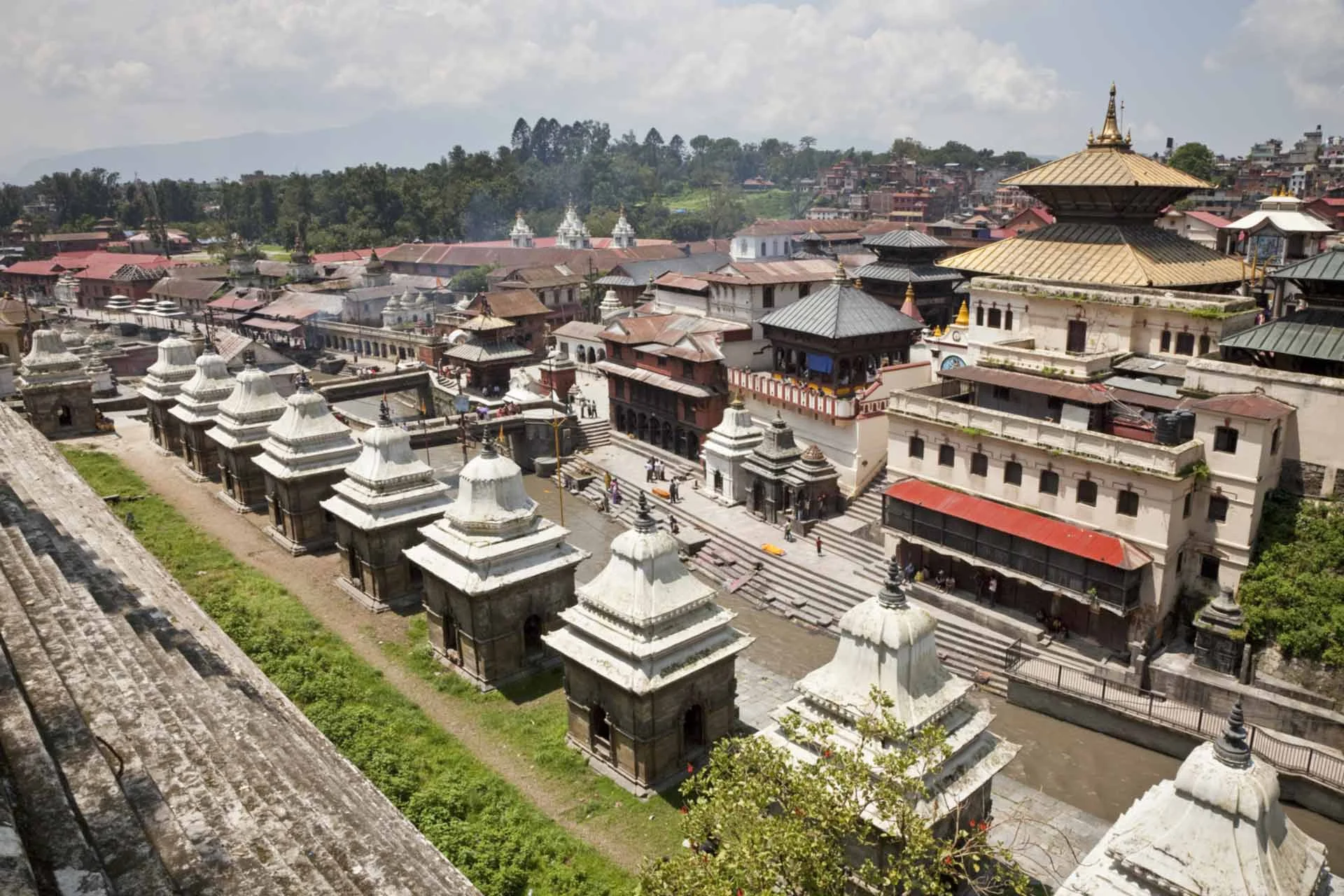
Lord Shiva’s temple, Pashupatinath, is the most sacred of Shiva’s shrines, as also the finest example of the famous pagoda-style temples of Nepal. It has a two-tiered gold plated roof with a golden gajur (pinnacle) on top, its four main doors are silver-embossed, and the wood carvings on the tundals (roof struts) have intricate carvings. A massive 300-year-old gold-plated figure of Shiva’s vehicle, Nandi the bull, sits on a platform facing the doors. Inside the temple stands a 14th century six-foot-tall Lingam with four faces (thus known as Chaturmukhi: four-faced).
Situated on the banks of the Bagmati River, the entire complex covers about 281 hectares. An inscription discovered here shows that another temple dating to the 5th century initially stood where the main temple now stands. The temple as it is now is believed to have been built in 1653. There are numerous smaller temples on the complex’s premises, as well as the ghats (cremation sites) on the banks of the Bagmati River. Till about a decade ago, one section (Arya Ghat) was reserved for royalty. The doors of the main temple are open for worship only at specific hours on regular days, but are kept open through the night during Maha Shivaratri, the biggest celebration of Pashupatinath. This, ‘The Night of Lord Shiva’, is held on the 14th night of the new moon during the dark half of Falgun (Feb/March) every year. On the day, you’ll see swarms of devotees taking a ritual bath in the Bagmati River. You’ll see long lines of other devotees standing patiently for hours with offerings for worship in their hands, both in front and at the back of the temple. You’ll also see hundreds of monkeys in the precincts, busily moving among the crowds, picking up anything edible that can be found.
But, most colorful will be the sight of numerous sadhus (ascetics) with ash smeared all over their faces and bodies. While most will have some sort of clothing covering their private parts, you will probably come across some who are stark naked, their privates smeared with ash, as well. The sadhus come mostly from neighboring India, Pashupatinath being one of their regular annual pilgrimage sites, and there will obviously be many from around Nepal. They are, to say the least, as weirdly colorful a tribe as can be imagined, and you’ll no doubt observe that, more than anything else, it is their hairdo that is the most exotic part of their persona.
Many will be dreadlocked, not cleanly as is the case with the urban stylish, but really rough and unkempt. You might also notice that most of these sadhus are pretty solid looking, and this, along with their dreadlocks and the trishuls (tridents) they carry, make them a frightening sight for children. Indeed, Maha Shivaratri is what it is—an exotic festival—largely due to the presence of these particular denizens of the Hindu world, and also, a most fitting tribute to one of Hinduism’s most intriguing gods, Lord Shiva, who goes by more than a thousand names, Pashupatinath being one.
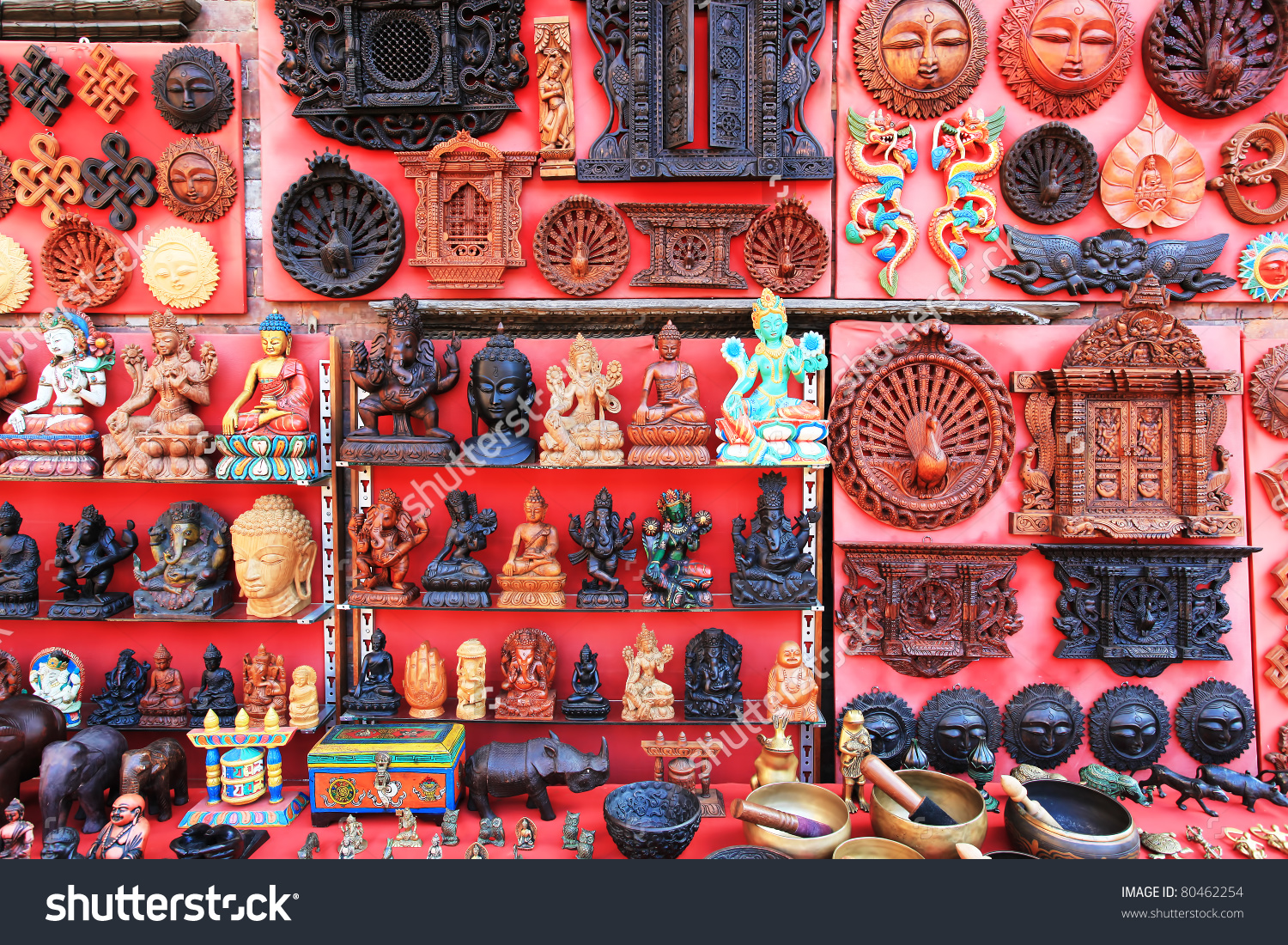
Souvenirs from Nepal
After the jetlag is over, it’s time to meet near and dear ones, and you can’t wait to see their delight when you gift them the fabulous souvenirs that you have brought all the way from Nepal.
The Federation of Handicraft Associations of Nepal (FHAN) held the 14th Handicraft Trade Fair from November 25-29, 2016, along with the 12th Craft Competition. It is an annual event to promote Nepali art and craft. As expected, there was enthusiastic participation from many artists, craftspeople, and institutions and organizations involved in the sector. The variety and diversity of Nepali handicraft on display was a sight for sore eyes, with craftwork ranging from metal, wood, and stone craft to textile, pashmina, and wool products, and many others like felt, lokta, , nettle, and leather items in-between.
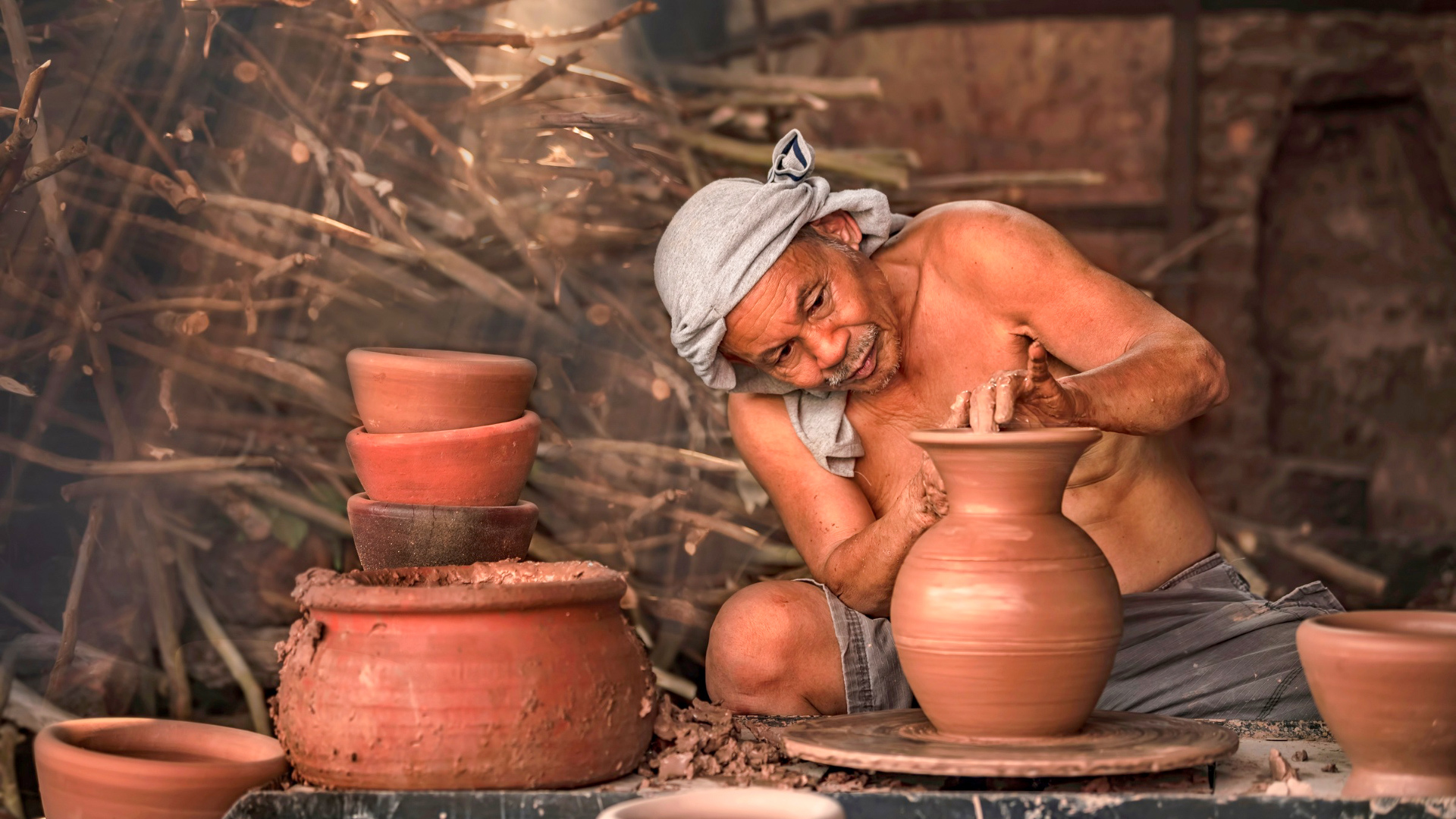
No one can deny that Nepal is rich in its wealth of handicrafts. While the majority of fine artwork and craftsmanship come from the Newar craftspeople of the capital, Kathmandu, a significant number of craftwork also come from other ethnic communities around the country. For example, ceramics from Bhaktapur, Mithila paintings from Janakpur, metal items from the eastern hills, especially Bhojpur, which is famous for its khukuris, the famed weapon of the legendary Gurkhas, Dhaka textile from Palpa, woven baskets ofkaas and moonj (two types of grass) from Chitwan, lokta paper from the hilly regions, and so on.
Some big organizations based in the capital, such as Association of Craft Producers of Nepal (ACP), with its famous outlets called Dhukuti; Mahaguthi, Craft with Conscience; and Sana Hastakala, are at the forefront in supporting handicraft producers throughout the country, by providing training and developing both domestic and international markets for their creations. By doing so, these establishments claim rightly to be active in uplifting deprived and marginalized communities, and much of their focus is on encouraging women’s economic development. Additionally, they contribute a part of their earnings to social welfare work. All three have their primary showrooms in Kupondole of Lalitpur, and as expected, Christmas, the season for giving gifts, is their most busy time, when you can expect to find a great variety of new creations.
Of course, there are numerous other handicraft outlets all over Kathmandu, this being no surprise, as fitting souvenirs for the folks back home, and for that spot on the mantelpiece, or in the glass fronted cabinet, is what is on top of every tourist’s mind when the time to leave Nepal nears. And, because Nepali handicrafts are not only about variety, but also about the extremely high quality of craftsmanship combined with exoticism, souvenirs from Nepal are prized by all. The tourist hub, Thamel, probably has the most density of handicraft shops, some of which call themselves curio shops because of the intriguing nature of many of their products. For instance, paraphernalia worn and used by shamans, traditional milk pails used in the hills, numerous ethnic musical instruments, etc.
However, other areas like Durbar Marg, Lazimpat, Ason Bazaar, and so on also have quite a few fine souvenir shops. But, it must be said that the center of handicrafts is still the ‘City of the Arts’ that is, Patan, or Lalitpur, where Pulchowk, with its many leading handicraft outlets, is situated. The alleys of Patan are must-visit places for anyone looking for some genuinely artistic souvenirs. In fact, a bit of research beforehand will save you considerable time, and increase your chances to find something that will really satisfy your desire. This is because the city has specific sites specializing in certain types of handicraft work, and this is a natural result of most handicraft work being family affairs, with skills handed down through the generations. Some localities are such that all its inhabitants are likely to be involved in some craftwork or the other! The Patan Industrial Estate in Lagankhel is also where you’ll find plenty of good souvenirs, since most of the establishments there are handicraft producers.
So, knowing all this, have a rewarding souvenir hunt, and don’t be miserly, either in your efforts or in your large heartedness, because you can rest assured that Nepal’s exquisite handicrafts are such as to bring great joy to anyone.
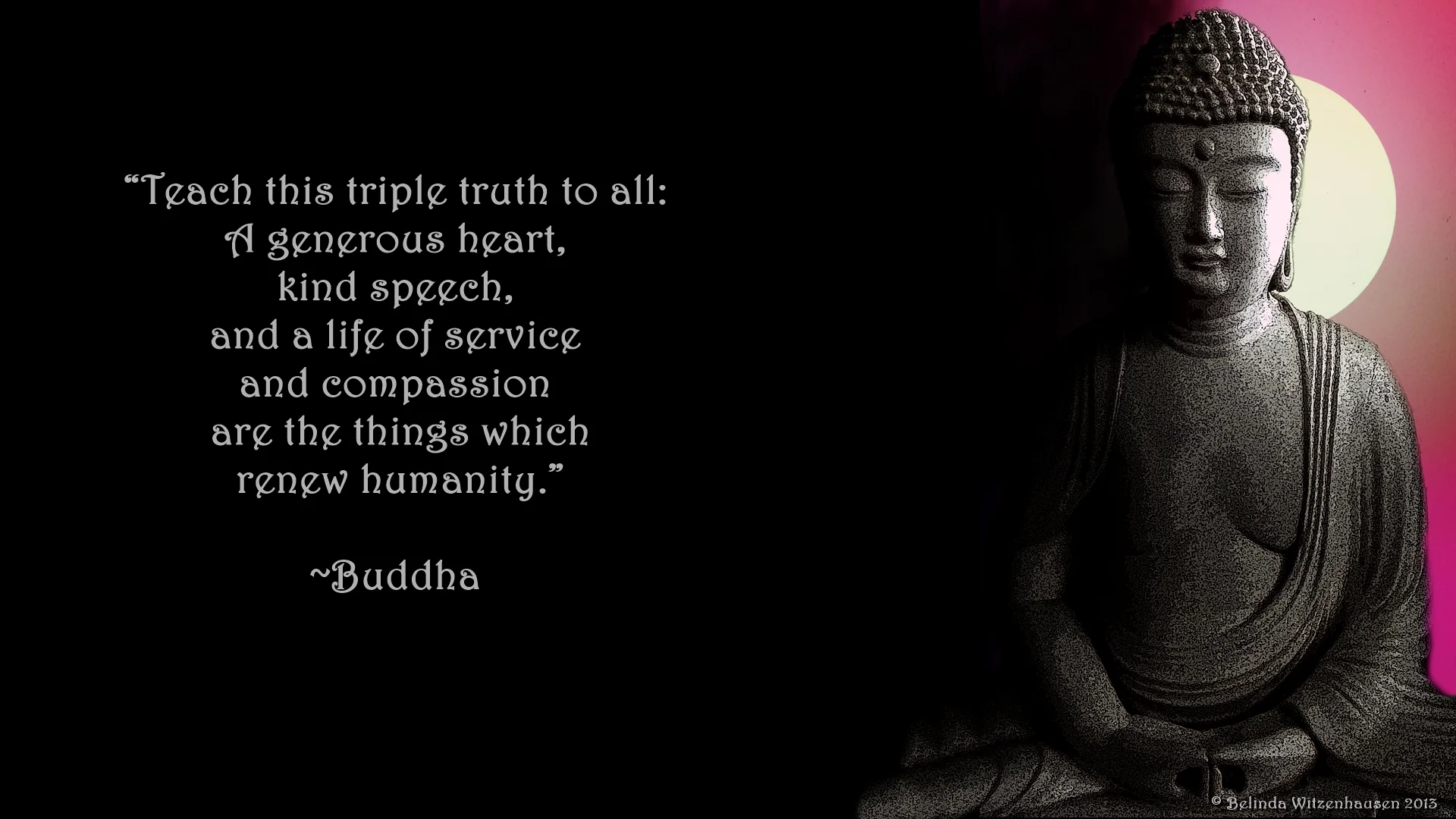
The Teachings of Buddha
Lord Gautam Buddha’s discourses show humankind a new understanding of life.
The Majjhima Nikāya, which consists of 152 discourses of Buddha and his chief disciples, states, “A monk called Gotama, it seems, a son of the Sakyans, who went forth into homelessness from a Sakyan clan, has come...He teaches a True Idea that is good in the beginning, good in the middle, and good in the end…”
The anointed prince of a rich kingdom, Siddhartha Gautam had everything a person could conceivably want and desire. But, after realizing the reality of the real world outside the palace walls, he chose the path of renunciation so as to discover answers to the three questions uppermost in his mind: Why does suffering exist? What causes suffering? What will end suffering?
After a long period of sacrifice and meditation, he gained enlightenment and became the Buddha, or The Awakened One, and came to the conclusion that suffering is universal; that everyone suffers from birth, sickness, old age, death, and grief; that ignorance and greed are the causes of suffering; and that it can only be ended by denouncing greed and ignorance, and by following the noble eightfold path of right view, right thought, right speech, right conduct, right livelihood, right effort, right mindfulness, and right concentration.
Indeed, the ideas of Buddha brought about a great change in the world, with millions being influenced by them. It was soon after his enlightenment that he started giving his earliest discourses, which have been narrated in great detail in the sutras. Among his first discourses, four stand out: “Setting Rolling the Wheel of Truth”, “The Not-self Characteristic”, “The Fire Sermon”, and “The Discourse on Arising and Ceasing”, because they were the foundations of all his later teachings.
In “Setting Rolling the Wheel of Truth”, he talks about the impermanence of anything of conditioned origin, and lists the Four Noble Truths, that is, suffering, arising of suffering, cessation of suffering, and the practice that results in cessation of suffering. He emphasizes that it is essential for seekers to realize the Four Noble Truths by themselves, and that too in the present moment. This is a basic tenet of all of Buddha’s teachings.
In “The Not-self Characteristic”, he discusses the idea of not-self. According to him, not-self means that anything, whether animate or inanimate, cannot be permanent or remain unchanged. He describes the three characteristics of existence as not-self, impermanence, and dissatisfaction, which he says are inter-related. To realize this better, he urges seekers to understand that only five aggregates (material form, feeling, perceptions, volitional states, and consciousness) make up the sentient being.
The three evils afflicting all beings are passion, anger, and delusion, which he reveals in “The Fire Sermon”. These, he says, traps them in the vicious cycle of birth, death, and suffering. This sermon was given to a group of fire-worshippers, hence the name, and he declared to them, “…The eye, the forms, the eye-consciousness, the impressions, and whatever sensation…they are all on fire…And with what are they on fire? I say with the fire of lust, of aversion, and passion; with birth, with old age, with death, lamentation, misery, grief, and despair…”
In his fourth discourse, “The Discourse on Arising and Ceasing”, Buddha discloses the chain of events leading to sorrow and despair. Ignorance leads to volitional processes to consciousness of mind and body and the six sense spheres, resulting in contact, which leads to feeling, craving, and attachment. This, in turn, leads to continuation, birth, old age, death, sorrow, and pain.
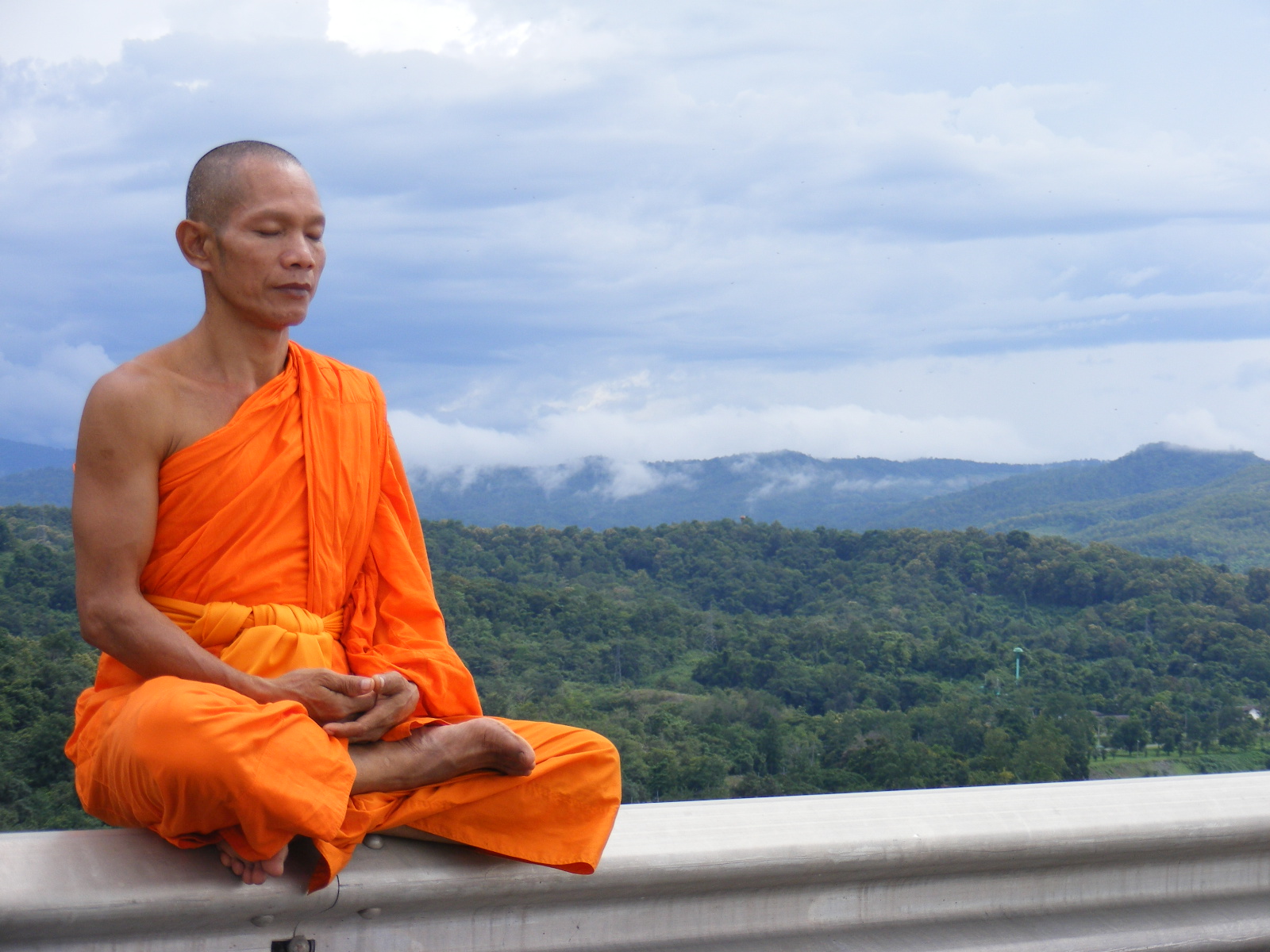
Two Valuable Meditations of Buddhism
In Buddhism, the threefold path to enlightenment and nirvana consists of meditation (samadhi), virtue (sila), and wisdom (panna). As far as meditation is concerned, Mindfulness of Breathing (Anapanasati) and Loving Kindness Meditation (Metta Bhavana) are believed to be two of the most valuable among the different types of meditation taught by the Buddha.
In Buddhism, the threefold path to enlightenment and nirvana consists of meditation (samadhi), virtue (sila), and wisdom (panna). As far as meditation is concerned, Mindfulness of Breathing (Anapanasati) and Loving Kindness Meditation (Metta Bhavana) are believed to be two of the most valuable among the different types of meditation taught by the Buddha.
Good posture, practice, and problems are the three parts of Anapanasati. The meditating person sits with straight back and folded legs on a cushion, with the eyes closed and hands nestled in the lap. This is what goes to make a good posture. Conscious counting of each breath taken during the meditation, where attention is focused on inhalation and exhalation of each breath, is what is meant by practice. As expected, after a certain time of doing the above, the meditating person will start to have problems, such as discomfort or pain in the knees and other joints, itches on different parts of the body, and so on.
Despite all this, concentration must be absolute. There should be no movement, and the meditating person must continue to count the ins and outs of each of his/her breath. Now, it is natural for the mind to begin wandering here and there, and generally get distracted, with many different thoughts coming to mind. But, the breathing must continue as before. One will have to have lots of patience, and keep on trying to bring back one’s attention to the breath. Gradually, the distracting thoughts will start to disappear one by one, the discomfort to various parts of the body will begin to be forgotten, and the meditating person will experience periods of mental calm and inner peace.
Wakeful Mindfulness and Mindfulness in Everyday Activities are also forms of Anapanasati. Monks of the Theravada tradition, especially, practice the first (Wakeful Mindfulness and Mindfulness) in their monasteries and retreats. They first seek out a quiet place for long walks, and then, while walking, concentrate on movements and sensations. They try to consistently make the mind free from interfering thoughts. Their aim is to lose the self, which will help in gaining deeper insight into ‘no-self’ and impermanence. Mindfulness in Everyday Activities, on the other hand, is simply being mindful of everyday activities by concentrating on all activities, whether big or small. This is believed to help in making one live in the present moment, besides making one more effective and efficient.
Metta Bhavana is an additional meditation technique to Anapanasati, and its objective is to develop universal love, which is done through a three-stage process—specific pervasion, directional pervasion, and non-specific pervasion. Specific pervasion is the process of conveying love and kindness to yourself, to a respected individual, to somebody cherished, to some stranger, and finally, to someone you don’t like, hate, abhor, or fear. Visualization (imagining that ‘someone’ to be joyful), reflection (on that someone’s positive qualities), and mantra (repeating positive words like, ‘May I be calm and peaceful; may my mind be free from hate; may my heart be full of love.’) are part and parcel of specific pervasion. Emanating love and kindness in all directions, by thinking of friends, well-wishers, and like-minded communities around the world, is directional pervasion. Radiating love and kindness in daily life (throughout the day) is non-specific pervasion, which is, in fact, an outcome of the first two stages.
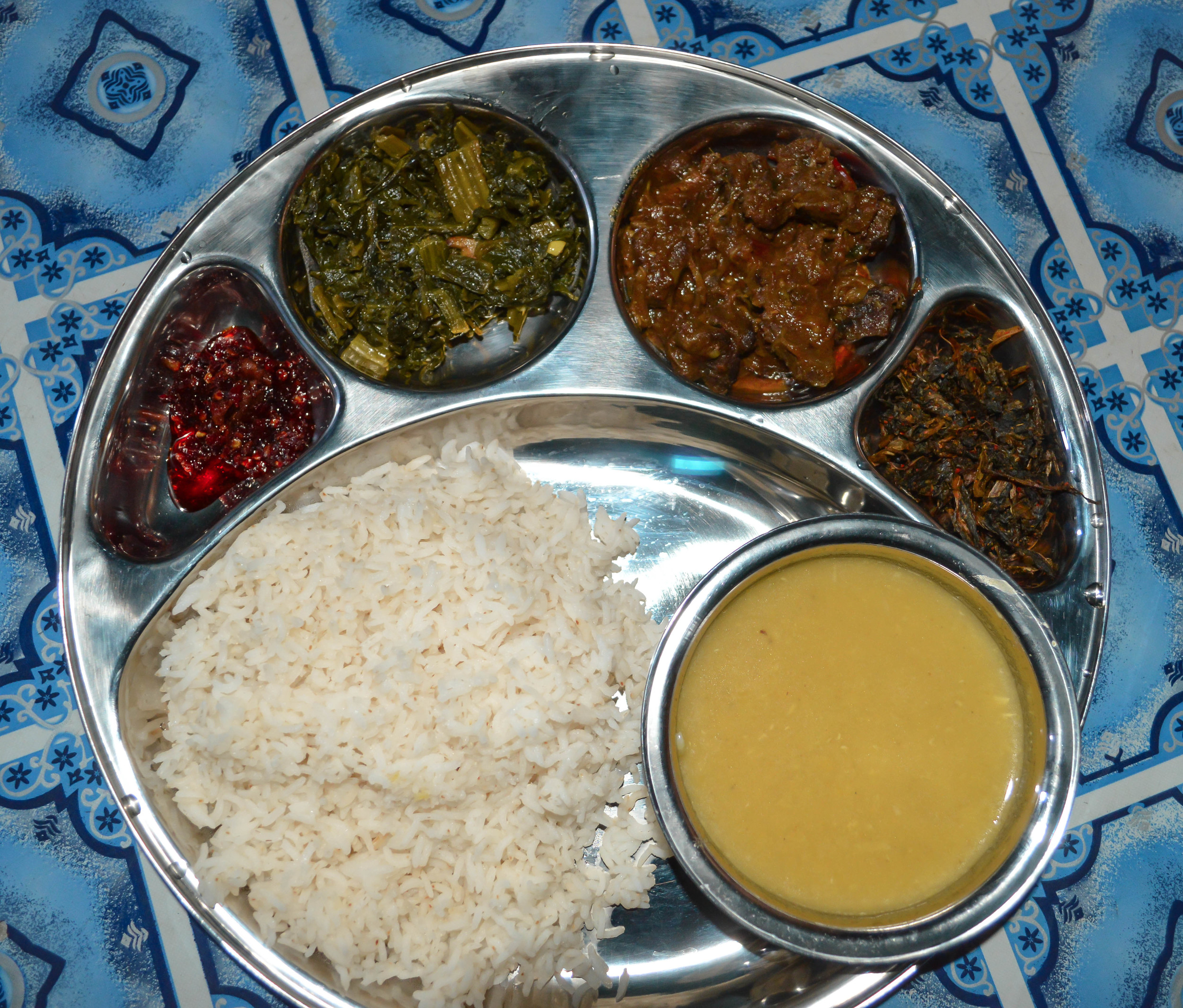
Cooking, the Nepali Way
Do you want to enrich your cultural experience when in Nepal? Well then, why don’t you take some to learn the fine art of cooking Nepali cuisine?
Are you planning to visit Nepal soon? It may be a small country, but it has the highest mountain in the world, the eternal Mount Everest, along with more than half a dozen of the world’s highest peaks, making it a climber’s paradise. The country may be poor, but it is a veritable abode of the gods, with temples and monasteries and other shrines around every corner. It is also, of course, the birthplace of the Apostle of Peace, Lord Gautam Buddha. Well, welcome to this land of the high Himalayas, cascading mountain rivers, lush forests, and a thousand and one gods. You can look forward to an exciting time, lots of adventures on the challenging trekking trails that go through scenic valleys and windswept mountain passes and over sturdy suspension bridges high above the swirling rapids below. However, even as you experience such adventures, here’s a suggestion that could add spice to further enhance your trip.
Give a thought to learning about Nepali cuisine when here. More specifically, learn some Nepali cooking. After all, food is an integral part of our culture, as anywhere else; so boost your cultural experience. Nepal prides itself on its rich culture, and certainly, its unique cuisine. You know well that the country is sandwiched between the two great and diverse cultures of China and India. You also know that Chinese cuisine has carved out quite a reputation globally, and that Indian cuisine is known for its use of many exotic spices that go to make it pretty special. Well, one obviously expects such ancient cultures to have quite a bit of influence on Nepal, but, still, you should know that Nepal has developed its own unique identity, and its own exceptional cuisine.
Now, let’s see where you can learn Nepali cooking in the capital, Kathmandu. There’s such a place near Thamel, the tourist hub of Kathmandu, known as “Nepal Cooking Course”. It actually has shifted some 15 minutes away from its original location in Thamel to Goldhunga after the April 25, 2015, earthquake damaged it. You can opt for a half-day course (morning or afternoon), or full-day, two-day, three-day, five-day, six-day, and seven-day courses. All programs include one hour of Nepali language lessons.
What kind of cooking do you get to learn? Well, the full-day course teaches you how to make daal bhaat, curry, pickle, and momo (the most popular staples of Nepal), as well as sel roti (a special festival bread) and kheer (rice pudding) for celebratory occasions. Classes start at 9:00 a.m. and finish at 5:00 p.m. It will cost you about 5,000 rupees. Naturally, you’ll get to learn how to prepare other food, as well, in case you choose the longer programs; dishes such as alu daam, alu paratha, samosa, Newari snacks like bara, chatamari and yomari, as well as a variety of meat dishes. If you take the seven-day course, you also get to learn how to make chyang (local beer made from rice, millet, wheat, corn, or even some fruits). You’ll surely enjoy sharing what you cooked with friends after classes are over and done with.
Of course, there are other establishments that provide lessons in Nepali cookery, such as ECS Services in Lazimpat, which teaches household staff of expatriates mostly, but could maybe fit in a schedule for you as well. In addition, an increasing number of homestay programs include cookery lessons as part of their services. Ask you travel operator for more information regarding this. Some smart agencies even arrange for special cooking courses with some skilled Nepali housewife, a most suitable teacher to give you really good tips on homely Nepali cooking.
It’s a given that you’ll be roaming local bazaars to buy fresh food items including just-picked vegetables and newly slaughtered meat, as well as freshly-ground masala (spices). You’ll surely find this to be a very refreshing exploration. And, you may find it pretty interesting to learn about how to use the many masalas; what and how much goes into dishes that are part of a typical Nepali meal: daal (lentil soup), tarkari (vegetable curry), saag (spinach), maasu (chicken or mutton that needs a mix of at least 12 kinds of spices), achar (pickle: a popular one being a mix of potatoes, radish, and small brown beans). Except for maasu, which is taken once or twice a week, these are the usually food items that Nepalis eat every day. Therefore, expect your housewife-teacher to really good, since she probably cooks them day in and day out.
Well, all said and done, discover your culinary skills, in addition to testing your physical limits, when in Nepal. It will be a worthwhile endeavor.