

10 Essential Things To Do In Kathmandu Valley - Part II
The valley- is an astonishing amalgam of religions, culture and heritage. It isn’t just the political centre point of our nation but also the melting pot where you can discover the country through one beautiful melting pot.
In the previous article, we mentioned visiting the Hanuman Dhoka Palace Museum and hunting down UNESCO World Heritage sites of the valley. In this part, we shall explore more activities.
3. Visit Chandragiri
Chandragiri is a popular hill station in Kathmandu Valley. Before the gondola transportation system, this region was under the radar. This point is a great vantage to see the valley basin. It also has historical significance.
The hills are 16 km from central Kathmandu. A drive or ride would face South-West. It is situated at an altitude of 2551 metres, making it the second highest hill point in the valley after Shivapuri at 2732m. The last two hills are Pulchhowki at 2695m and Nagarjun at 2095m.
If a gondola isn’t your cup of tea, you can hike, drive or ride to reach the top. The trip would be nothing short of an adventure as the terrain is uneven and rocky.
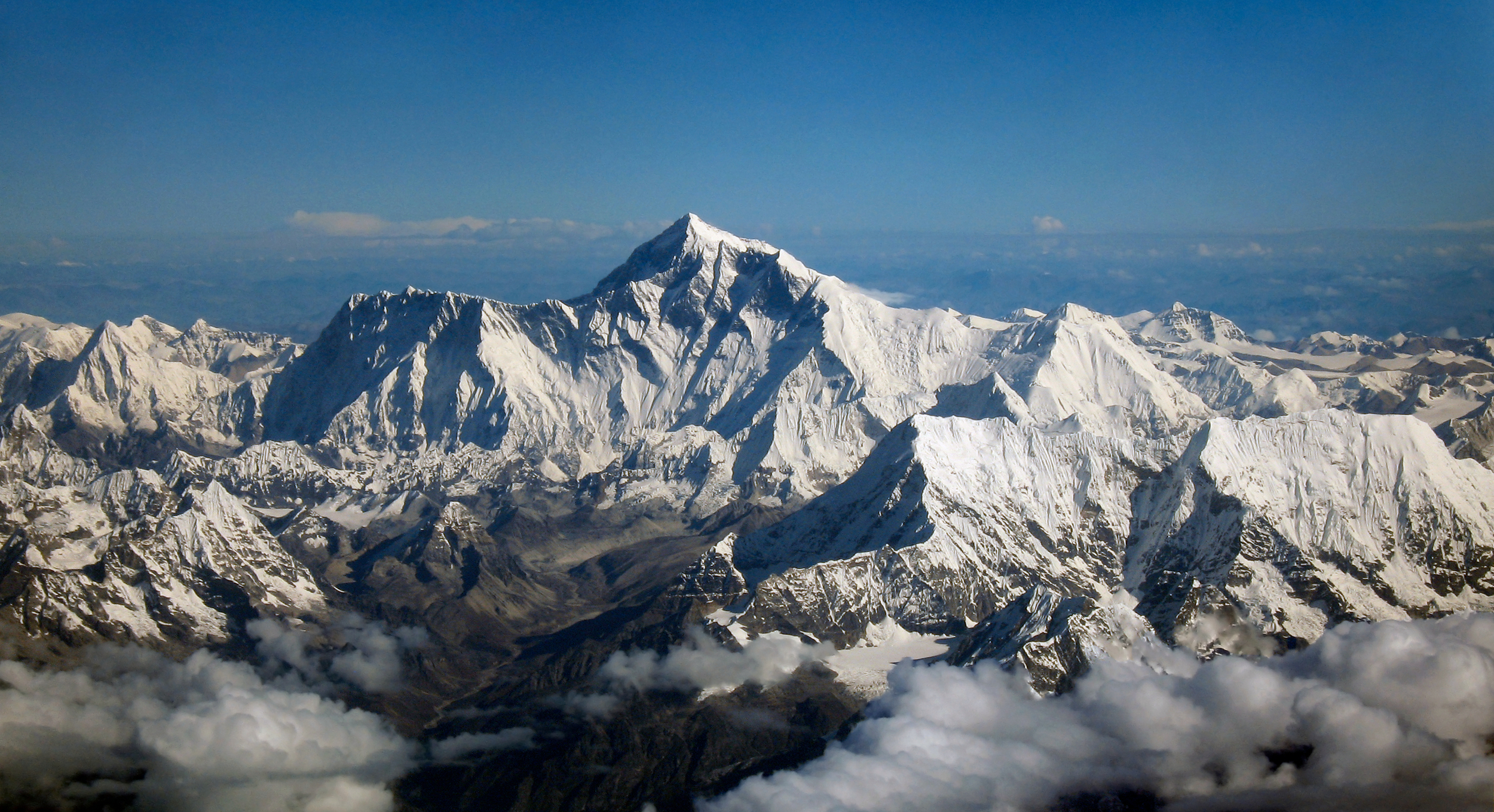
From the highest point in Chandragiri, depending upon the season, you can see numerous peaks of the Himalayan Range. During perfect weather, you can even see Mount Everest.
4. Indulge in the local cuisine
A diverse cultural scene equals culinary diversity. The melting pot of Kathmandu Valley has establishments that serve numerous ethnic cuisines. Even though it might seem like fast food and Newari cuisine dominate the landscape, it is not true. With a bit of research, you can create a beautiful culinary exploration map to try mouth-watering delicacies.
Two regional cuisines are dominant- Thakali & Newari. Thakali flavours are from Western Nepal, and their staple dish is a divine Thali.
The second cuisine is of the indigenous inhabits of the Kathmandu Valley- The Newars! Their stride in the crafts can be seen in the iconic squares, whereas their exceptional choice of taste is visible in their assortment of dishes.
The Newar cuisine represents the migratory roots of the Newar people. Multiple ingredients were brought to this valley by merchant families during their trade adventure. Some dishes are similar to out neighbour nations. However the Newar touch makes the version available in the valley unique.
Other ethnic groups as Rai, Tamang, Sherpa have their eateries set up in this valley. They stride to serve you an authentic taste using native ingredients and spices.
VIDEO GALLERY




POPULAR ITINERARIES
SIMILAR POSTS
10 Essential Activities In Kathmandu Valley - Part I
The valley of Kathmandu at times feels like a chaotic amalgam of traditional and modern culture. This transitional era of Nepal has given birth to numerous activities in the Kathmandu Valley both traditional and modern
The Valley of Kathmandu is home to numerous cities. The most popular are Kathmandu (Capital of Nepal), Lalitpur, Bhaktapur & Kirtipur. These three, along with their confederate states, were considered the Kingdom of Nepal (Nepal Mandala) before the formation of the modern kingdom of Nepal by King Prithvi Narayan Shah.
In 1769 AD, after the successful assault on Bhaktapur where he had cornered all the (King Jaya Prakash Malla of Kathmandu, King Tej Narsigha Malla of Patan & King Ranjit Malla of Bhaktapur) claimed victory over the valley.
King Shah made the valley a focal point of his expansion campaign due to the power and treasures accumulated by the Malla kings. Once conquered, the Malla controlled checkpoints, and their treasures and strategic forts now belonged to King Shah.
1. Visit The Hanuman Dhoka Palace Museum
The history mentioned above is just a teaser of the rich political past of Nepal. King Shah, after 1769, moved to the former royal palace of the Mallas. This valley later became the centre of his political and military advance. He and his descendants walked the halls of this palace museum, once a glorious palace home.
This palace museum hosts well-preserved artefacts, relics and reliefs of the bygone era of Nepal. This place is the perfect place to start your deep dive into rich cultural, political and military history.
2. UNESCO Heritage Site Hunt
The valley of Kathmandu is home to 7 of the 10 listed UNESCO World Heritage Sites of Nepal. The list goes as follows:
These sites are in close proximity to each other. You can explore them with ease. During your visit to these iconic sites, absorb as much of the place as possible.
The furthest location on this list is the magnificent temple of Changu Narayan. Historians believe that this temple is the oldest in Nepal. Some sources are that it was built during the 2nd century during the Lichhavi rule. However, the local experts state that the temple is much older.
In the upcoming blog, we shall explore more essential activities for Kathmandu Valley.
VIDEO GALLERY
POPULAR ITINERARIES
SIMILAR POSTS

Trekking Annapurna
The Annapurna region of Nepal is a surreal gem of Nepal. This region is home to ample natural beauty, flora and fauna. This region today features the most traversed trails in our nation.
Annapurna- the giver of food and nourishment! The region named after the snowy peaks of Annapurna stands true to its name. Since time immemorial, these mountains have been the source of the elixir of life- water! The stream and rivers that flow from these mountains helped shape its unique lifestyle and beauty. Even today, these mountains and their ecosystem provide bread and nourishment to numerous families all over Nepal. The world comes to witness this natural yonder and traverse its beaten trails.
The gateway to this immaculate wonder is the peaceful lake town of Pokhara. This picturesque valley is a bustling tourist hub featuring ample amenities set up to cater for the flock of adventurers and trekkers who descend upon this valley all-around the year, especially during spring and autumn, to escape in the tranquil lap of nature.
Every day and every mile in this region is a new adventure here. The diversity of ecosystems and terrain is out of this world. The Annapurna Conservation Area begins at 790 m above sea level and reaches 8,091 m at the summit of Mount Annapurna I, the 10th tallest peak in the world.
Enchanted forests, magical high passes and breathtaking scenes await a traveller in this region. Some of the most popular treks in the region are as follows:
Poonhill Trek
Basic Itinerary Days: 4-5
Route: KTM-PKR (Flight)-Naya Pul (Drive)- Tikhe Dhunga- Ghorepani- Tadapani- Poonhill (morning hike)- Ghandruk- Naya Pul- Pokhara (Drive)- Kathmandu (Flight)
Trek Style: Tea House
Max Elevation: 3210m
Attractions: Poonhill view point, sunrise view, culture and lifestyle of gurung people, panoramic mountain views
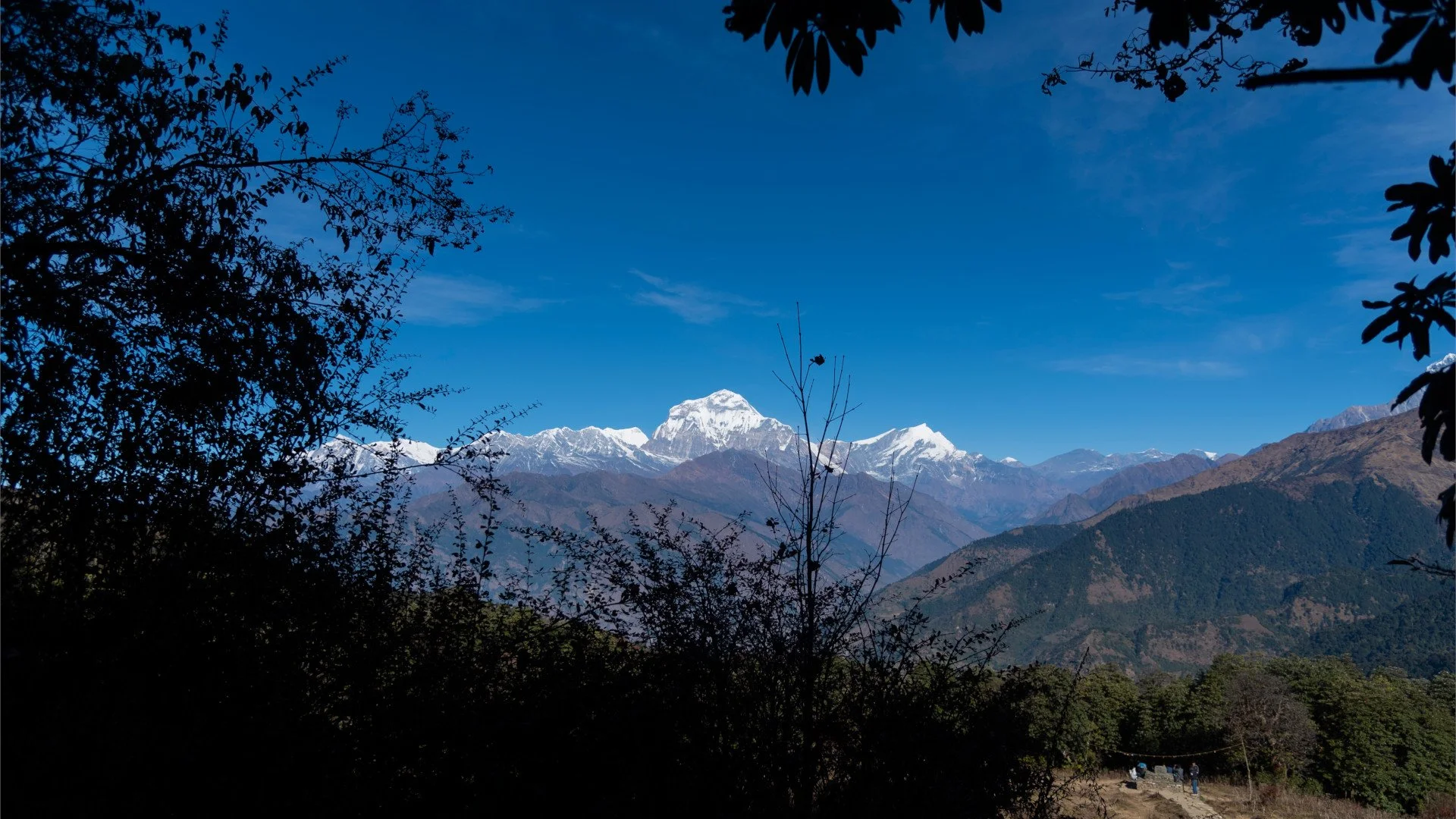
Ghodepani is synonymous with Poonhill, the magnicent mountain viewing station literally takes ones breath away with surreal views of the Annapurna Range and Dhaulagiri Range. A strenuous trek of 5 days bears the fruits of beautiful opportunity to experience the himalayan lifestyle and indulge in the beauty of the Himalayas.
The Ghodepani Circuit is part of the larger Annapurna Circuit which starts from Besiahar Lamjung and ends in the pareses known as Pokhara. The 21-26 day tour is a stretch that most cannot endure thus the Ghodepani Circuit though challenging is short enough for most to conquer and experience the Himalayas.
Lower Mustang Trek
Basic Itinerary Days: 9 Days
Route: KTM- PKR- Jomsom ( Flight) - Kagbeni (Trek) - Jharkot (Trek) - Muktinath (Trek) - Lupra (Trek) - Jomsom - PKR (Flight)
Trek Style: Tea House
Max Elevation: 3795 M
Attractions: Red Gompa, Apple Orchids, Muktinath Temple, Panoramic Peaks View, Thak Kola, Bonpo Monastery, Sayka Gompa
Best Season: May- Nov
The barren landscape of Lower Mustang at times can feel like an otherworldly experience. With its rustic atmosphere, barren hills and tantalizing view of the Himalayas, it also offers the travellers an opportunity to experience the traditional lifestyle of the Thakali people who have called this region home for thousands of years. A far and easy trail which departs from Jomsom, with moderate altitude climbs and features a fair trial for all to enjoy.
Royal Trek
Basic Itinerary Days: 5 Days
Route: KTM- PKR (Flight/Bus)- Bijayapur (Drive)- Kalikasthan (Trek)- Syaklung(Trek) - Chisapani(Trek)- Sundare Danda ( Trek) - Pokhara (Drive)
Permit: Basic Permit (T.I.M.S)
Cost: USD $25
Trek Style: Tea House
Max Elevation: 1730M
Attractions: Lakes such as Rupa, Begnas and Fewa, Rhododendron Forests, Panoramic Peaks View with mountains such as Dhaulagiri, Manaslu, Machhapuchhre, Annapurna and it’s sisters.
Best Season: September - December and March to May
The trail gets its name after Prince Charles and his entourage explored Annapurna region through this path in the early eighties. One of the most popular short trails in Annapurna Conservation Area, the basic itinerary of 5 days is great for adventurers who don’t have much time but still wish to explore the region. Located in the North-Western side of Pokhara, the trails of Royal Trek allows you to experience the majestic mountains of Machapuchre, Manaslu, Annapurna, Lamjung Himal and Dhaulagiri and others. It also provides you with an opportunity to witness the life of the ethnic communities of Gurungs and Magars.
The trek passes through beautiful Gurung hamlets, where one can indulge in the traditional lifestyle, culture, and traditions of the Gurung people which they have preserved and maintained even till this day.
VIDEO GALLERY
POPULAR ITINERARIES
SIMILAR POSTS

An Adventure in Ghale Gaun and Bhujung Gaun - Part III
The villages of Ghale Gaun & Bhujung Gaun are two great examples of life in the Annapurna region. The beauty of the panoramic vista along with the smiles of the humble people are enough to create memories that last a lifetime.
Day 4: Sightseeing day at Ghale Gaun
The fourth day is dedicated to exploring all the elements of the village. We recommend waking up early to witness the sunrise from the viewpoint. It is 10 minutes from the main town. You can take great photographs of the Himalayas and the village from this site.
After breakfast, you shall head towards Ghale Gaun Museum. It displays various tools, artefacts and clothes of the local community. You can borrow the traditional attire to take a few pictures for yourself. After the museum tour, you can visit the local religious sites such as the Uttarkanya temple and the local monastery. Further, you can take a small break at the tea garden.
There is a beautiful lake in the area named Talangyo lake. It is a popular site for bird watching. In the afternoon, make sure to witness the sunset.
The village community shall organise a cultural dance and music program before dinner.
Day 5: Ghale Gaun- Khudi - Besisahar - Kathmandu
After a good breakfast in the early morning, we embark on Khudi. The hike averages 4 hours. Once at Khudi, you shall get on board a vehicle that shall take you to Besisahar. A bus shall be waiting for you that shall take you to Kathmandu.
Once you reach Kathmandu, you can further explore this beautiful city. Out hotel features multiple tour packages. It includes an experienced travel guide along with a private shuttle. You can enquire about our offerings at the travel desk located in our hotel lobby. If you choose to explore the valley on your own, you should remember a few things.
Things to remember while exploring Kathmandu
1. Make sure to stay away from street hawkers: As Kathmandu Valley is a tourist destination, the streets of the major sites and monuments are filled with street hawkers. They shall approach you to sell a variety of local and imported goods. We advise you to polity decline any offerings provided by them. If you feel like you are being harassed by them, you can call the hotel or dial 1144 to contact the tourist police.
2. If you travel via public transportation, please be cautious of your surroundings and belongings. A safer option would be to hail a cab or use ride-sharing applications such as Pathao and Tootle. The fare charged is nominal and less than a cab. These rides are safer than public transportation.
3. Always check restaurant reviews for a better dining experience.
4. Make sure to wear a mask and proper covering to avoid air pollution.
5. Try and learn a few phrases in the local language. This makes travelling more convenient.
POPULAR ITINERARIES
SIMILAR POSTS

An Adventure in Ghale Gaun and Bhujung Gaun - Part II
The two villages of Ghale Gaun and Bhujung are one of the oldest settlements in this region. The native people, and the ethnic community of Gurung, feature a rich cultural history. They are the masters of this terrain and have lived sustainably in these mountains for centuries. This trek offers you the chance to not just indulge in the natural serenity but also witness the lifestyle of the people. Their smiles will strike your heart, and their humble hospitality shall make this trip a once-in-a-lifetime experience.
About the trip
Difficulty: Moderate
Average Duration: 4 Nights and 5 Days
Maximum Altitude: 2157 metres
Accommodation Type: Tea House
Route: Kathmandu- Besisahar- Khudi- Ghale Gaun- Ghanpokhara - Bhujung- Ghale Gaun- Khudi- Besisahar- Kathmandu
Day 1: Arrival at Kathmandu
Once you arrive at TIA (Tribhuvan International Airport), our staff shall receive you at the airport (if you've requested airport pick up). If you're staying at Hotel Shanker but didn't opt for pick up, you can take a taxi. You can use Google Maps if the driver doesn't know the exact location.
You can take the day to travel to the capital- Kathmandu. The city is a unique gem that boasts its unique cultural heritage and monuments. The valley of Kathmandu, with its three cities- Kathmandu, Lalitpur, and Bhaktapur combined features 7 of the 10 UNESCO world heritage sites of Nepal.
Read more on the heritage sites through the links mentioned below:
7. Changu Narayan Temple
Day 2: Depart to Khudi via Besisahar and trek to Ghale Gaun
After breakfast, we shall arrange your departure to Besishar- the district headquarters of Lamjung District. It is 173 kilometres from the capital. The bus ride averages 6-7 hours. You can read the first part of the article for further details.
Click on this link to read the first part of this blog
Once you arrive at Besisahar, you shall be switched to a private vehicle that shall take you to Khudi. The drive averages 30 - 40 minutes. Once you reach Khudi, you can relax before the trek begins. You shall then walk 4 to 5 hours to Ghale Gaun. The hike difficulty is moderate, with gradual inclines and declines. You shall witness numerous small villages which display the traditional lifestyle of the people of this region. In terms of mountain views, you shall be greeted by the panoramic vista of the Annapurna range and Manaslu.
Once you arrive at Ghale Gaun, you shall be received with great respect. The village elders shall offer you a flower garland, place a tika on your forehead and offer you a traditional beverage. The village has good cellular reception from the national carrier (NTC) and private carrier Ncell, with random latency caused by the weather. Wifi service is also good.
The toilet and bath are not attached to the main home in this region but are just a few steps away from the main compound of the house.
Day 3: Ghale Gaun - Ghan Pokhara - Bhujung Gaun - Ghale Gaun
We recommend waking up before sunrise and heading to the local viewpoint to witness the beautiful sunrise. After a good breakfast featuring both traditional offerings, you shall travel to Ghan Pokhara. The hike averages about 40-45 minutes. The hike features a good number of uphill climbs. You shall see numerous Rhododendron forests and honey hunting sites.
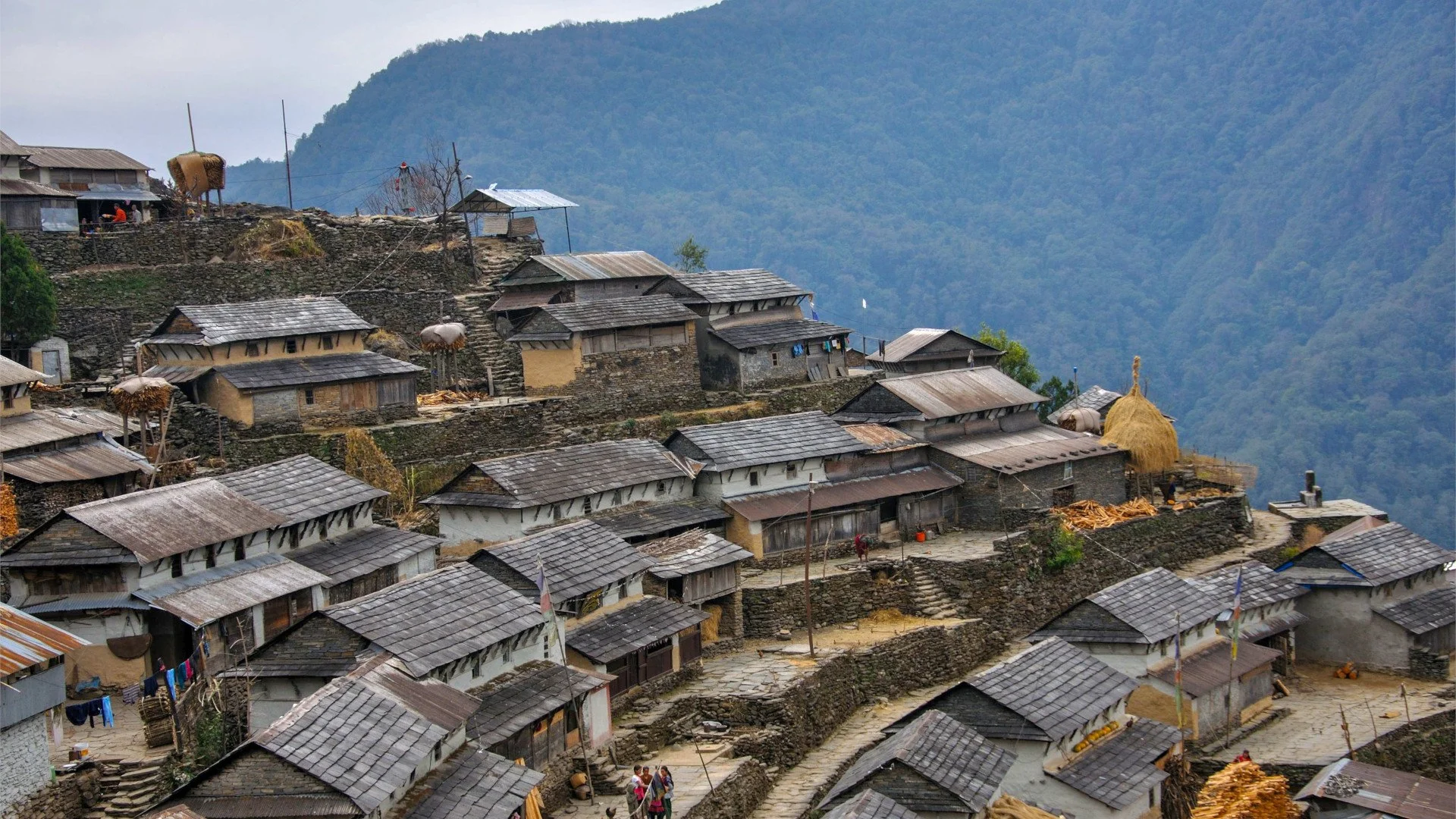
Once you reach Ghan Pokhara, refreshments will be provided. After a short break, you shall head towards Bhujung Gaun - the largest Gurung settlement in the Annapurna region. One of the most unique facets of this village is the arch terrace layout of houses.
The primary occupation of the people in this region is agriculture and animal husbandry. They practice a sustainable style of living. Your lunch for the day shall be at this village.
Things to do in Bhujung Gaun
Take par in the village tour
Visit the Bhujung Museum
Visit the tea garden
Visit the Kaiyo waterfall
Visit the local monastery
Visit the local hydro power site
Buy the handicraft as a souvenir
After exploration, you shall return to Ghale Gaun. The hike back to Ghale Gaun averages 2 hours. Once you reach Ghale Gaun, you can relax and take a shower before dinner.
POPULAR ITINERARIES
SIMILAR POSTS
Exploring The Unexplored - Part III
So much is yet to be explored! A humble nation, traversed by thousands over time, still has so many new places to be discovered? There are many facets of existing popular destinations that have never seen the light of day. Let us look at a few places to explore, shall we?
Panauti
Province: Bagmati
Distance from Kathmandu: 32 km
Accessibility: Land at TIA (Tribhuvan International Airport) and take a 1.5 hour bus ride along Araniko Highway
Attractions: Well preserved traditional Newar architecture, Indreshwar Mahadev Temple, Brahmayani Temple, Tindhare Waterfall, Old Bazzar
When we think of the Newar culture; and their dominion, the valley kingdoms of Lalitpur, Kathmandu (Kantipur) and Bhaktapur come to mind. But, they aren't the only cities that feature a sizeable population of this ethnic community that once dominated the landscape of this region. Cities such as Panauti, Bandipur, Kirtipur, Bhimphedi, Banepa, Nuwakot and Palpa also feature brilliant examples of Newari culture and lifestyle.
Panauti was once a flourishing kingdom. It was a trading hub in Tibet and India's ancient Salt Trade Route. Historically, this region was a small state. As per historical findings, the settlement was created by King Ananda Malla.
“This younger brother (Ananda Malla) being very generous and wise, gave up the sovereingty over the two cities, and having invoked Annapurna Devi from Kasi founded a city of 12,000 houses which he named Bhaktapur(Bhatgaon) and included sixty small village in his territory.After this, the Raja having obtained the favour and directions of Chandeswari, founded seven towns; viz. Banepur(Banepa) near Chandeswari Pitha, Panavati(Panauti), near the Pragaya TIrtha of Nepal, celebrated in the Shastras on the site where Panchala-des formely stood, Nala, near Nala Bhagavati, Dhaukhle near Narayana; Khapu near Dhaneswaril Chaukot near the residence of Chankora Rishi; Sanga near Nasika Pitha.”
Wright 1877: 163
Later, during the reign of King Bhupatindra Malla, the state was presented his passed on to his sister as dowry (offerings given by the bride's side during marriage). Panauti is a city of great historical significance. As per chronicles and historical findings, this region was where the Panchala-desh once stood. Panchala was one of sixteen mahajanapadas (states) of the Indian subcontinent. Characters of Mahabharata such as Draupadi, Drupada, Satyajit, and Sage Dhaumya are said to be natives of Panchala.
Panauti is an example of what the entire valley once looked like once. The city is stagnant today like many other once trading hubs of the ancient salt route. This stagnation helped preserve the historicity of the city and its architecture.
Koshi Tappu Wildlife Reserve
Provinces: 1 & 2 ( Madesh Province)
Distance from Kathmandu:
Accessibility
By Road: 8.5 hour bus ride (338.6km) via B.P Highway & East-West Highway, Daily buses (Day & Night) service from Kathmandu to Kakarbhitta and Biratnagar, visitors shpuld disembark at Jamuha and walk 2.5 km to the reserve head quarter.
By Air: 35 minute plain ride from Kathmandu to Biratnagar then a 1.5 hour bus ride
Attractions: Sapta Koshi River, last surviving population of wild buffalo, fauna species such as hog dee, wild deer, spotted deer, blue bull and rock python, panoramic views of Himalayan peaks including Makalu (8643m), 441 species of birds (14 endemic)
Koshi Tappu Wildlife Reserve KTWR) is a marvellous example of conservation at its finest. Originally this area was announced as a Hunting Reserve in 1969 with a total area of 12 km2. In 1976, the reserve area was enlarged to 65 km2. A third phase extension was conducted in 1980 to feature the present total area of 175 km2.
When we think of the conservation area projects in Nepal- the eastern flank is highly reclusive. Due to ineffective development of transportation and lack of adequate promotion compared to its western siblings are less traversed.
KTWR is the last habitat for Babalus arnee, also known as Wild Buffalo or Arna in the Nepalese language. It is also the habitat for 14 endemic species of birds that thrive in this wetland. This area has thee distinct seasons- Summer (February through May), which is very hot with minimal precipitation. The monsoon beings in late May/early June and lasts till September. The monsoon features intense flooding of the region. Winter beings in October and lasts till January. Even this season features moderate temperature, it can get cold sometimes.
The last time KTWR came into the spotlight was when Gangetic dolphin's were spotted in the lake system. The reserve is home to the endangered Gharial crocodile and is the perfect habitat for various migratory birds.
POPULAR ITINERARIES
SIMILAR POSTS
Exploring The Unexplored - Part II
We travel for various reasons. Some do it to recreate, while others to discover oneself and the world. It is a unique process that allows us to understand life and its multiple folds. Nepal’s potential as a great retreat is a fact known to all. But within the explored lies countless other places which await you.
The Barun Valley
Province: Province 1
Distance from Kathmandu: 173 km
Accessibility
By Road: 12 hour bus ride to Tumlingtar
By Air: Land at Tumlingtar Airport- 2 hours then a 3 hour drive
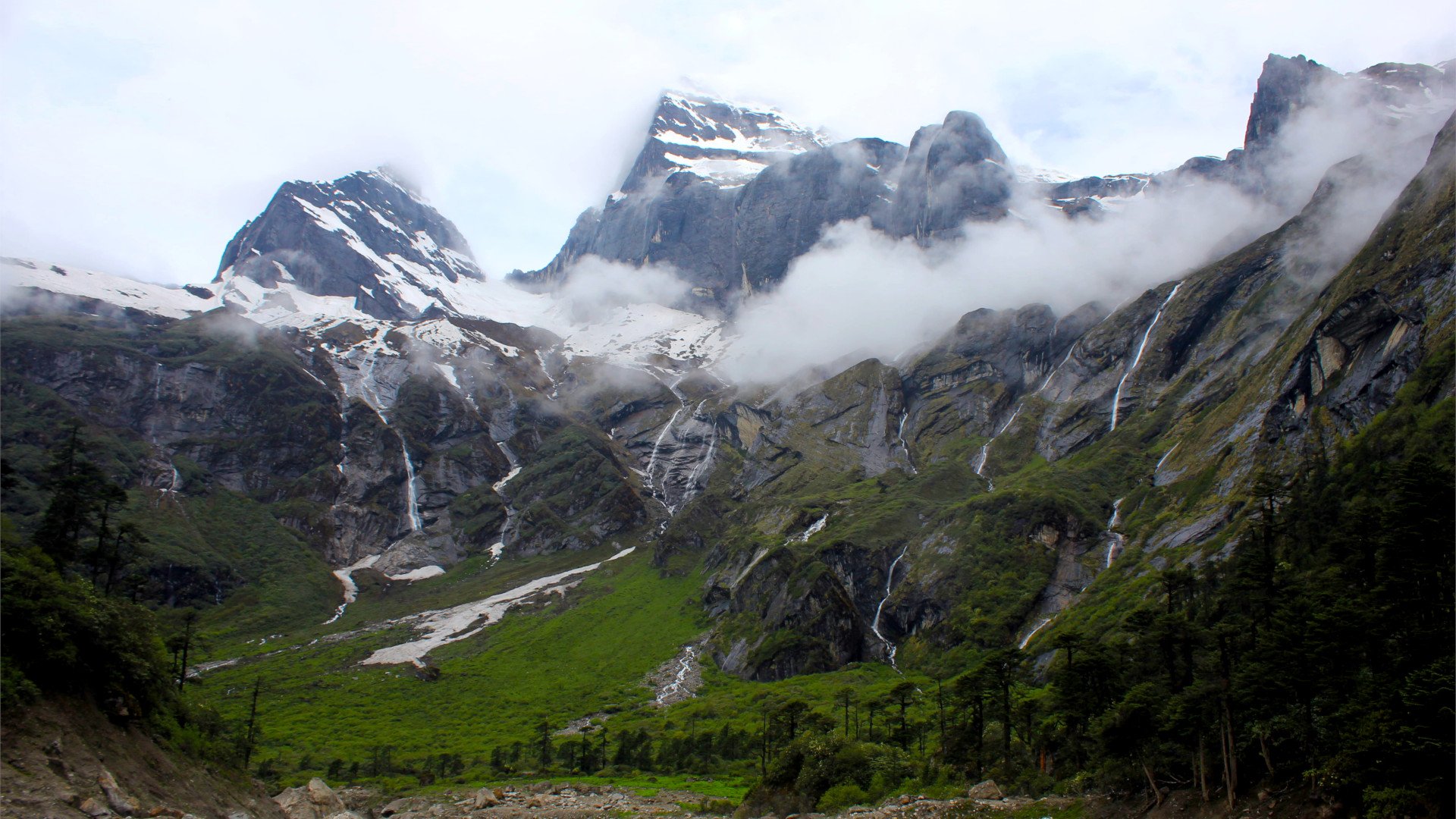
Attractions: Panoramic vista of the Himalayas, Makalu Himal- 5th highest mountain in the world, Makalu Base Camp, Salpa Pokhari, Thulo Pokhari, Barun Pokhari, Dudh Pokhari, Shiva Dhara, Kirat culture and monuments, plethora of flora and fauna.
The great himalayan outback is pristine and unexplored. Much of this great space is unknown to travellers. This remoteness has helped preserve the regions authenticity but it has also hindered it from advancing and truly meeting its tourism potential. Amongst such destinations is the Barun Valley. This beautiful valley, something straight out of a sci-fi plot is magical. It features breathtaking views of the great panoramic vista, and exotic flora and fauna species. This valley is located at the base of Mt. Makalu in the Sankhuwasabha district of Nepal. It is a part of Makalu Barun National Park.
This valley was created by the Barun River. In terms of inhabitants, historians believe that it was previously inhabited by Yakkha and Limbu people centuries ago. This valley is also mentioned in the ancient Buddhist books- seven Beyul (Nghe- Beyul Khimpalung). This book mentions great mystical lands in the Himalayas where no one gets old. It is said that if a great cataclysm occurs, these seven areas of the world will only survive. One of the seven Beyul is said to be situated in the Makalu- Barun region. Historians state that it could well be this pristine valley.
Palpa
Province: Lumbini
Distance from Kathmandu: 273.7 km
Accessibility:
By Road: 8 hours and 14 minutes
By Air: Land at Gautam Buddha International Airport in Bhairahawa and drive 2 hours and 24 minutes to reach Palpa region
Attractions: Argeli Palace, Rambha Devi Temple, Ranighat Palace (Ranimahal), Rishikesh Complex, Tansen Bazzar, Bhairabsthan Temple (Tansen Bhairab), Shrinagar Hill, Tansen Durbar
Travel Season: Throughout the year
The region of Palpa has much to offer in multiple genres of tourism. The potential of this region as a religious site along with sightseeing and cultural tourism is strong. The central attraction of this place is the hill station of Tansen. In 2008 AD, UNESCO added this area to its tentative list for World Heritage in the cultural category.
The whole of Palpa has a strong note of Magar culture, but there is Newar influence in multiple locales. The souvenir of this region has always been Palpali Dhaka. It is a unique cloth produced by the local Newars. One of the most famous landmarks is the “Golghar”, an octagonal pavilion in the middle of Sitalpati, the main market square. Srinagar hill is a popular viewpoint that offers a beautiful panorama of the high Himalayas. Peaks such as Dhaulagiri, Tukuche, Nilgiri, Annapurna, Himchuli and others are visible on a clear day.
The unique fusion of Palpa makes it a great destination. It offers something for all genre of travellers, which has always been its greatest strength. Exploring the core settlements of Tansen at times makes you feel like you are in Kathmandu due to the strong influence of Newar culture.
POPULAR ITINERARIES
SIMILAR POSTS
Exploring the unexplored - Part I
We travel for various reasons. Some do it to recreate, while others to discover oneself and the world. It is a unique process that allows us to understand life and its multiple folds. Nepal’s potential as a great retreat is a fact known to all. But within the explored lies countless other places which await you.
We travel for various reasons. Some do it to recreate, while others to discover oneself and the world. It is a unique process that allows us to understand life and its multiple folds. Nepal’s potential as a great retreat is a fact known to all. But within the explored lies countless other places which await you.
In this article, we look into these prospective gems. They have so much to give in terms of natural yonder, cultural values and lifestyle experiences.
Therathum
Province: 1
Distance from Kathmandu: 493 km
Accessibility:
By Road: 13 hours and 3 minutes
By Air: Land at Tumlingtar Airport in Sankhuwasabha and drive 3 hours 46 minutes to reach Therathum region
Attractions: Deurali Dada, Hyatrung Waterfall, Tea Garden
Travel Season: Throughout the year
Therathum has for years been on the radar as a potential tourism goldmine. It has a unique cultural setting with ethnic and natural diversity. These are great lures to draw in both domestic and foreign tourists. In ancient times this region was part of Pallo Kiraat province. One of many footholds of the Kirat dynasty.
Amongst the numerous locations suited for tourism, Deurali Dada (Deurali Hill) is a great rendezvous. Also known as the capital of lali guras (rhododendrons), this hilltop during spring is a sight to behold. It also has a charming lake known as Chichilung. The longest waterfall of Nepal, known as Hyatrung, is located at Ishibu. This waterfall ranks as the second-highest in the whole of Asia. Apart from these, Solma is also popular due to its robust tea gardens, which create a picturesque landscape.
Shey Phoksundo Lake
Province: 6
Distance From Kathmandu: 315 km
Accessibility:
By air: Shey Phoksundo can be only accessed through Nepalgunj or which has to take a flight to Nepalgunj and from there to Juphal in Dolpa and 4 days trek to Ringmo
By road: 24-25 hour bus ride from Kathmandu- Radi Bazar and 4 days trek to Ringmo
Route by road & return by air: Kathmandu- Radi Bazzar- Tallo Bagar - Supani - Suligad - Kagani - Chhepka - Rachhi - Samjhana Hotel - Jharna Hotel - Ringmo (Shey Phoksundo Lake) - Chhepka - Kagani - Suligad - Juphal Airport - Nepalgunj - Kathmandu
Attraction: Tshwo Gompa, Highest Waterfall in Nepal, Himalayan Panaroma
Travel Season: Spring (March-May) and Autumn (Sep-Nov)
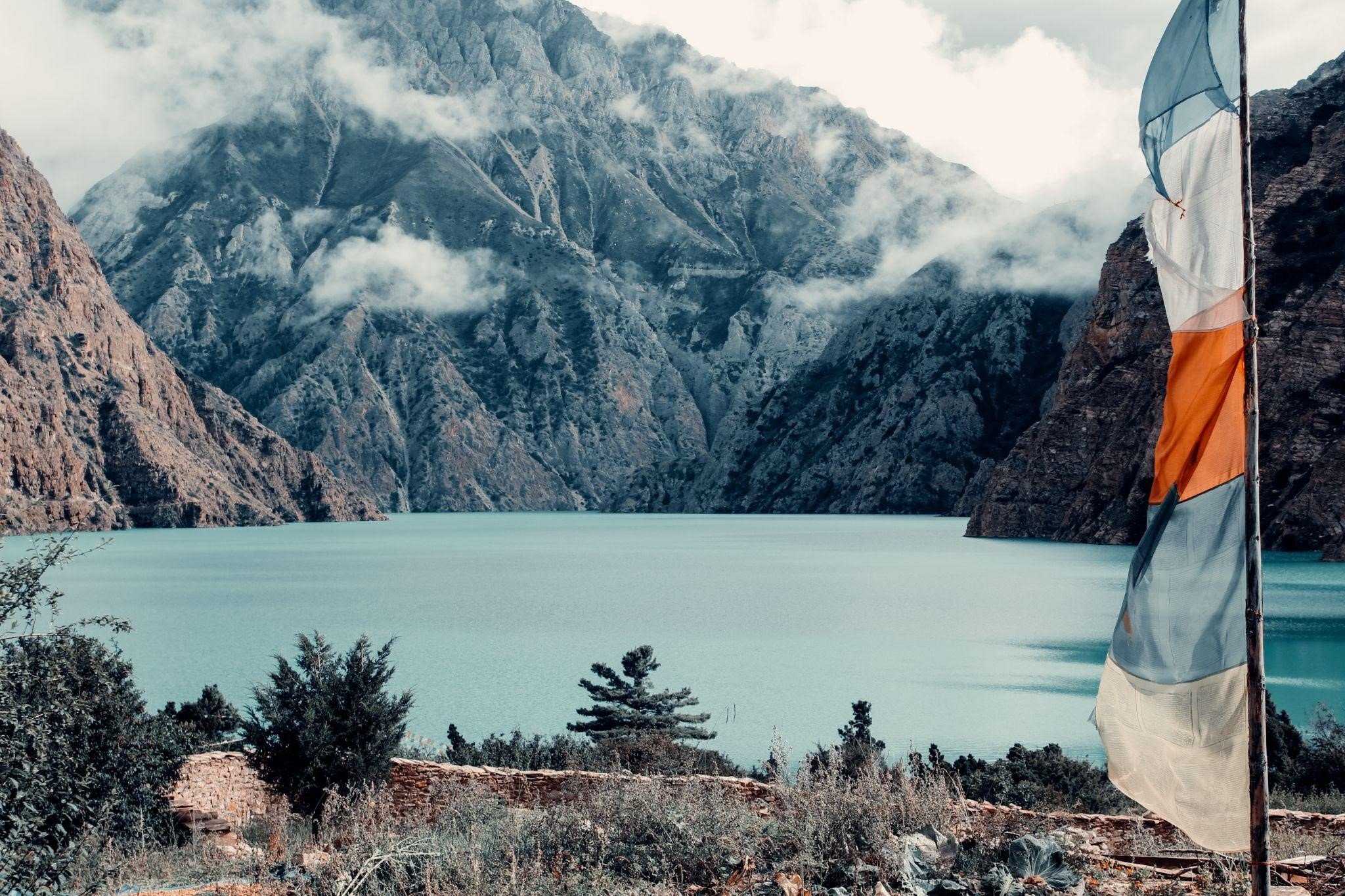
The sea-green water of this magnificent lake at golden hours is hard to describe. Sitting by it with the distant sound of a waterfall under an open blue sky is an experience straight out of heaven. The Phoksundo lake is within Shey Phoksundo National Park, the largest and only trans-Himalayan protected area of Nepal. On the southern end of the lake lies the village of Ringmo on top of a landslide dam created 30-40,000 years ago.
This body of water lies at an elevation of 3,660 m (12,010 ft). Surrounded by glaciers in its upper range, it is famous for its magnificent turquoise colour. Near the lake’s outlet is the country’s highest waterfall. The trek to this part of Nepal is strenuous, but the reward is an experience worth multiple lifetimes. The trip offers landscapes beyond words. Getting to experience the lifestyle of the ethnic community is a bonus.
Tsho Rolpa Glacial Lake
Province: 3
Distance From Kathmandu: 114 km
Accessibility:
8 hour drive from Kathmandu to Singati Bazzar, trekking itinerary can be anywhere between 7-9 days
Route: Kathmandu - Singati Bazaar - Chhetchhet - Simigaun - Dongang - Beding- Na - Tsho Rolpa- Beding - Kyalche - Chhetchhet- Singati Bazaar
Attractions: Gaurishankar Himal (7134m), Glacial Lake, Sherpa Culture of Rolwaling Valley
Travel Season: Spring, Autumn
The Rolwaling valley of central Nepal for years has laid under the shadow of its neighbouring Everest region. Its possibility as a tourism destination has for years been talked about by tourism specialists. But lack of interest made this valley a hidden gem.
Its crown jewel is the Tsho Rolpa (Cho Rolpa) glacial lake situated at 4,580 m (15,030ft). In recent years, it garnered attention due to the accelerated melting of the glacier.
Reaching Tsho Rolpa is a challenging trek, but the tranquil glacial water is worth the hardship. This area is home to the Sherpa community, dispersed in beautiful villages. This trek also allows one to experience their traditional culture and lifestyle. An extended itinerary to explore the Daldlung Pass features splendid views of the high Himalayas.
POPULAR ITINERARIES
SIMILAR POSTS
An Adventure In Ghale Gaun and Bhujung Gaun - Part I
The Annapurna region for years has fascinated travellers and wanderers. One of the most popular destination is the scenic village of Ghale Gaun. It is located in Lamjung District at an elevation of 2100 meters above sea level. It boasts views of popular mountains such as Mount Machhapuchre, Annapurna Mastiffs, Lamjung Himal and more
For years, travellers and trekkers have flocked to the the beautiful villages of Ghale Gaun and its neighbouring village of Bhujung. The hill station village of Asia’s model tourism village. The village is situated approximately 108 km north west of Nepal’s capital- Kathmandu. Whereas, it is 12.5 km north-east of Pokhara- the popular lake city of Nepal.
Highlights of Ghale Gaun Trek
Stunning panoramic views of mountains such as
Mount Machhapuchre (6693m)
Mount Annapurna (8091m)
Mount Annapurna II (7939m)
Mount Annapurna IV (7525m)
Mount Lamjung (6932m)
Mount Bouddha (6974m)
Himal Chuli (6747m)
Witness the traditional lifestyle of the Gurung community
Savour traditional delicacies and drinks of the Gurung Community
Rejoice in the traditional dance and music of the Gurung Community
Rekindle with yourself in the peaceful mountainous setting and rejuvenate in nature.
Where do I get the permit and card? How much does it cost?
A trekker needs to pay the ACAP Permit, $20 per person. You need to acquire the TIMS (Trekkers Information Management System) card from Nepal Tourism Board. It’s offices are located in Kathmandu and Pokhara.
Can I trek to Ghale Gaun alone?
Yes! You can perform a solo trek to Ghale Gaun. There are no restrictions placed on solo trekking in this region by the government of Nepal. As the route is well mapped and features plenty of local and international travellers especially during the main season, you shall not have much difficulty in maintaining our route.
How do I start?
Once you have landed at TIA (Tribhuvan International Airport), you can either experience a bit of the capital (Kathmandu) for a few days or get a connecting flight to Pokhara. The distance between Pokhara and Kathmandu is 200 KM. You can opt to take a bus instead of a flight as well. Your available options are either local or deluxe buses.
Deluxe buses leave at 7 AM from Sorakhute Bus Station in Kathmandu. You may either book a ticket beforehand or arrive an hour early, pay and embark directly at the terminal. We recommend these buses as they have air conditioning. The travel time ranges between 7-8 hours, with stops for lunch and snacks at good quality rest stops.
Once you explore Pokhara, you can catch a bus to Besisahar from Pokhara Bus Stop. The drive time is a total of 3-4 hours.
You can skip all of the hassles by contacting the front desk officer at the hotel. S/he shall do their best to arrange these services for you. They can also develop a proper itinerary to experience Lower Mustang at a reasonable rate.
If you do not want to visit Pokhara then you can take a bus to Besisahar from Kathmandu. The bus is available at Gongobu Bus Park. We recommend reporting half an hour earlier. The drive time is 6 to 7 hours with a total distance of 173 km.
Normally the buses leave at 8:30 in the morning.
When is the right time to trek?
In Nepal, Spring and Autumn is prime trekking season. The skies are clear with light to minimal rainfall. Autumn (Mid-September to Mid-November) is best for Lower Mustang Trek.
During other months such as December - February, the climate is colder and potential high snowfall may not allow you to trek above High Camp. Whereas during pre-monsoon ( Mid-May to Mid-July) and monsoon (Mid-July to Mid-September), chances of rain and clouding are high. The forest area shall be full of leeches and mosquito's.
Spring (Mid-March to Mid-May) is also a great time to trek this region. Temperature is nominal, and winds are light, allowing you to have a beautiful walk. The plant life will be blossoming: amplifying the atmosphere.
What should I wear and carry?
Proper clothing is vital while trekking to remote areas. In Spring and Autumn, you need summer/light clothing for the day hours and warmers for the night. If you’re travelling during the pre-winter and winter months, you need to wear your heavy jacket. During pre-winter and winter, warm clothes are essential. A heavily padded jacket, full sleeve t-shirt and fleece-lined pants are essential. During spring and autumn, a parka is mandatory. An umbrella and a raincoat should be carried as well.
Does the trek cost the same around the year?
No, the cost presented to you by your tour agent varies as per the season. The cost of accommodation is higher during peak season. Food costs rise during winter as transportation of goods becomes difficult. During peak season, you are bound to be over-charged. Off-season treks are usually less expensive due to slow business. You’ll get a sweet deal if you time your adventure off-season.
In the next part of this article we shall discuss the itinerary of Ghale Gaun.
POPULAR ITINERARIES
SIMILAR POSTS
Exploring Dhampus
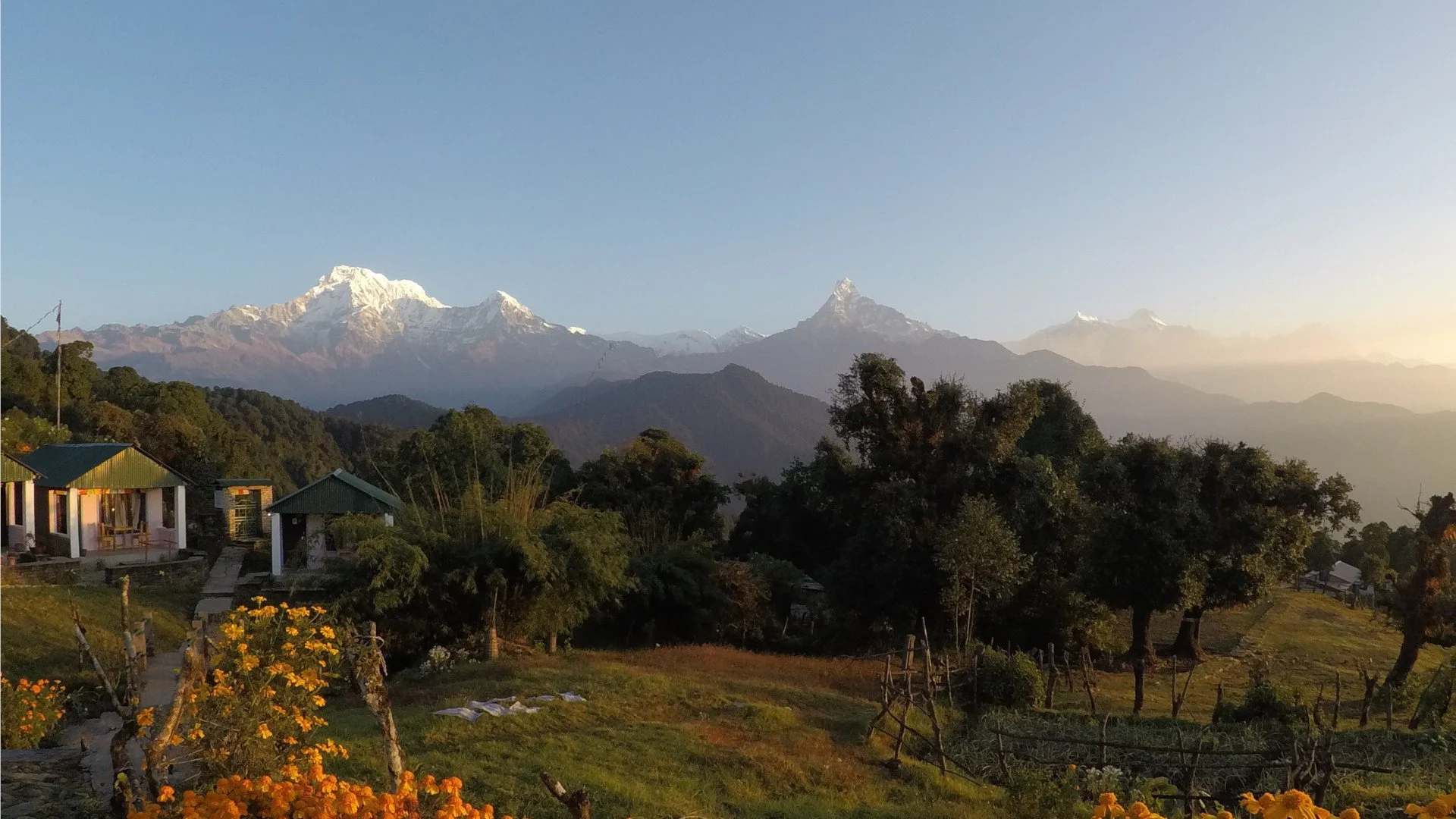
The region of Annapurna is a plethora of adventure. Amongst the numerous picture-perfect villages of this region, Dhampus is one of them. A trek to this scenic village is short but filled with great opportunities to witness the greatness of the area of Annapurna
The shire of Dhampus is located approximately 25KM from Pokhara. The population of this village is mostly Gurung. The trek to this tranquil village is easy. In a short period, you get a glimpse of the culture, natural beauty and wonders of the Annapurna region.
Highlights of Dhampus
A chance to witness the ethnic lifestyle of the Gurung community.
Opportunity to observe and participate in traditional Gurung dances and songs
Explore the natural beauty of the Dhampus village
Watch the sun rise and set across the panoramic vista of the Annapurna ranges, Mt.Fishtail, Nilgiri, Pokhara and Phewa Lake.
Savour the ethnic cuisine of the Gurung community.
Tour the city of Pokhara Valley, Lakeside, Tal- Barahi Temple and Phewa Lake.
When is the right time to trek?
In Nepal, Spring and Autumn is prime trekking season. The skies are clear with light to minimal rainfall. Autumn (Mid-September to Mid-November) is best for Dhampus Trek.
During other months such as December - February, the climate is colder. Whereas during pre-monsoon ( Mid-May to Mid-July) and monsoon (Mid-July to Mid-September), chances of rain and clouding are high. The forest area shall be full of leeches and mosquito's.
Spring (Mid-March to Mid-May) is also a great time to trek this region. Temperature is nominal, and winds are light, allowing you to have a beautiful walk. The plant life will be blossoming: amplifying the atmosphere.
What should I wear and carry?
Proper clothing is vital while trekking to remote areas. In Spring and Autumn, you need summer/light clothing for the day hours and warmers for the night. If you’re travelling during the pre-winter and winter months, you need to wear your heavy jacket. During pre-winter and winter, warm clothes are essential. A heavily padded jacket, full sleeve t-shirt and fleece-lined pants are essential. During spring and autumn, a parka is mandatory. An umbrella and a raincoat should be carried as well.
Itinerary To Dhampus Village
Once you arrive at the TIA, our representative shall be waiting for you at the arrival hall (if you’ve signed up for pick-up). When you reach our hotel, our staff shall help you with the check-in process and escort you to your room. If you wish to explore the beautiful cultural valley of Kathmandu, we can arrange a sightseeing package for you.
To start our official journey to Dhampus, we must first reach the scenic lake city of Pokhara. A flight to Pokhara from Kathmandu is approximately 15 minutes. Deluxe buses leave at 7 AM from Sorakhute Bus Station in Kathmandu. You may either book a ticket or arrive an hour early, pay and embark directly at the terminal. We recommend these buses as they have air conditioning. The travel time ranges between 7-8 hours, with stops for lunch and snacks at good quality rest stops.
Once you are at Pokhara, settle into your hotel and make sure to explore the beautiful lake. The next day, after breakfast, we drive to Phedi. The drive takes 30 minutes. You make your way from Pokhara to Baglung to Phedi via the Rahmarg Road.
Once you reach Phedi, you make your way to Dhampus on foot. The trail is steep that passes through beautiful sub-tropical forests. Depending upon your physical fitness, the trek takes anywhere between 2-3 hours.
An alternate route is to drive to Kande and trek to Dhampus. It shall take you 2 hours to reach the Dhampus Australian Camp. You can spend the night at teahouses in the camp and hike to Dhampus village the next day. The walk ranges from 1-2 hours. Once at Dhampus, you can explore the scenic shire and the ethnic lifestyle of the Gurung community.
POPULAR ITINERARIES
SIMILAR POSTS
A World Within A World
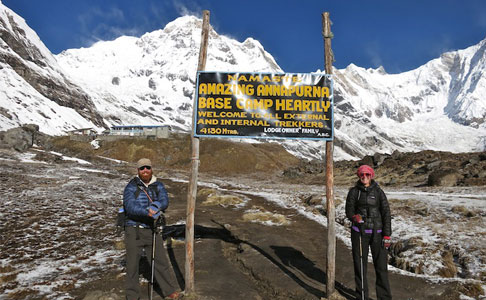
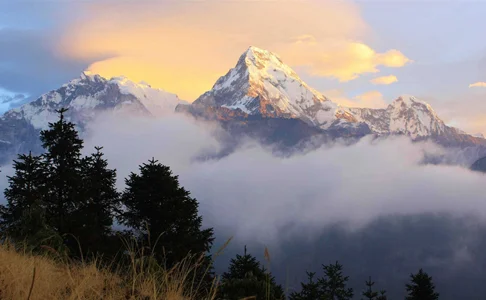
Even though Nepal occupies only a tiny portion of the world, it is a world within a world. The diversity of Nepal's terrain and climates gives you- the traveller, an opportunity to explore what the world offers within our nation's small boundary.
Those familiar with the geography of Nepal know that it is a miraculous haven. Within the area of 143,350 sq km that stretches 241 km west to east and 193 km north to the south lies countless opportunities to reconnect with nature. To the south are tropical alluvial plains at 60m above sea level. To the north is the forehead of the world- Mt. Everest at 8,848.86m. The Himalayan mountains are rugged and permanently covered with snow and ice.
Unearthing the wonders of Nepal, researchers have identified a total of 118 ecosystems in Nepal. Amongst them are 112 forest ecosystems, four cultivation ecosystems, one water body ecosystem and one glacier ecosystem. Such is the diversity of this small but humble nation. In terms of fauna, Nepal is home to 175 species of mammals, 836 bird species, 147 reptile and amphibian species, 180 species of fish, 640 species of butterflies and a staggering 6000+ species of moths.
Facts aside, Nepal truly is heaven on earth! Our natural beauty is our greatest strength. We must take great strides to balance our need for modernization to maintain this pristine beauty. It isn't just for our environment but our livelihood as well. Our economy is heavily reliant on our natural resources. Agriculture and tourism greatly rely on the presence of our natural wonders.
As we expand our cities and footprints around the nation, we must remember- we are the guests! We must think creatively and develop sustainable measures to reduce encroach and push more species into extinction. The theme of this year, World Environment Day, captures this very thought at best, 'Only One Earth'. The time is now, and every second that we fail to understand the importance of harmony with nature, we come close to disastrous encounters. From climate change to wildlife attacks, they're all interlinked.
The celebration of World Environment Day isn't just about parading and increasing awareness. The thoughts must come into action. As famously said, change begins from one, and it's up to all of us to take greener measures in our daily lives to shorten the production and consumption cycles that are deteriorating our environment.
Every year post the climbing season, we see pictures of camps just filled with waste. Yes, waste occurs, but if you analyse it in a calm setting, even you wonder, Why? You can say no to single-use plastic and make sure to not litter during your escapade in the Himalayas. During your adventure in the Himalayas, you can rent your equipment instead of buying them. It reduces the chance of them becoming baggage after your trip is over. A diverse scape always means diverse cuisine! On your next adventure, try and tingle your taste buds with native flavours.
The list of sustainable activities is plentiful. While on your journey, think of the most sustainable actions to reduce your carbon footprint.
POPULAR ITINERARIES
SIMILAR POSTS
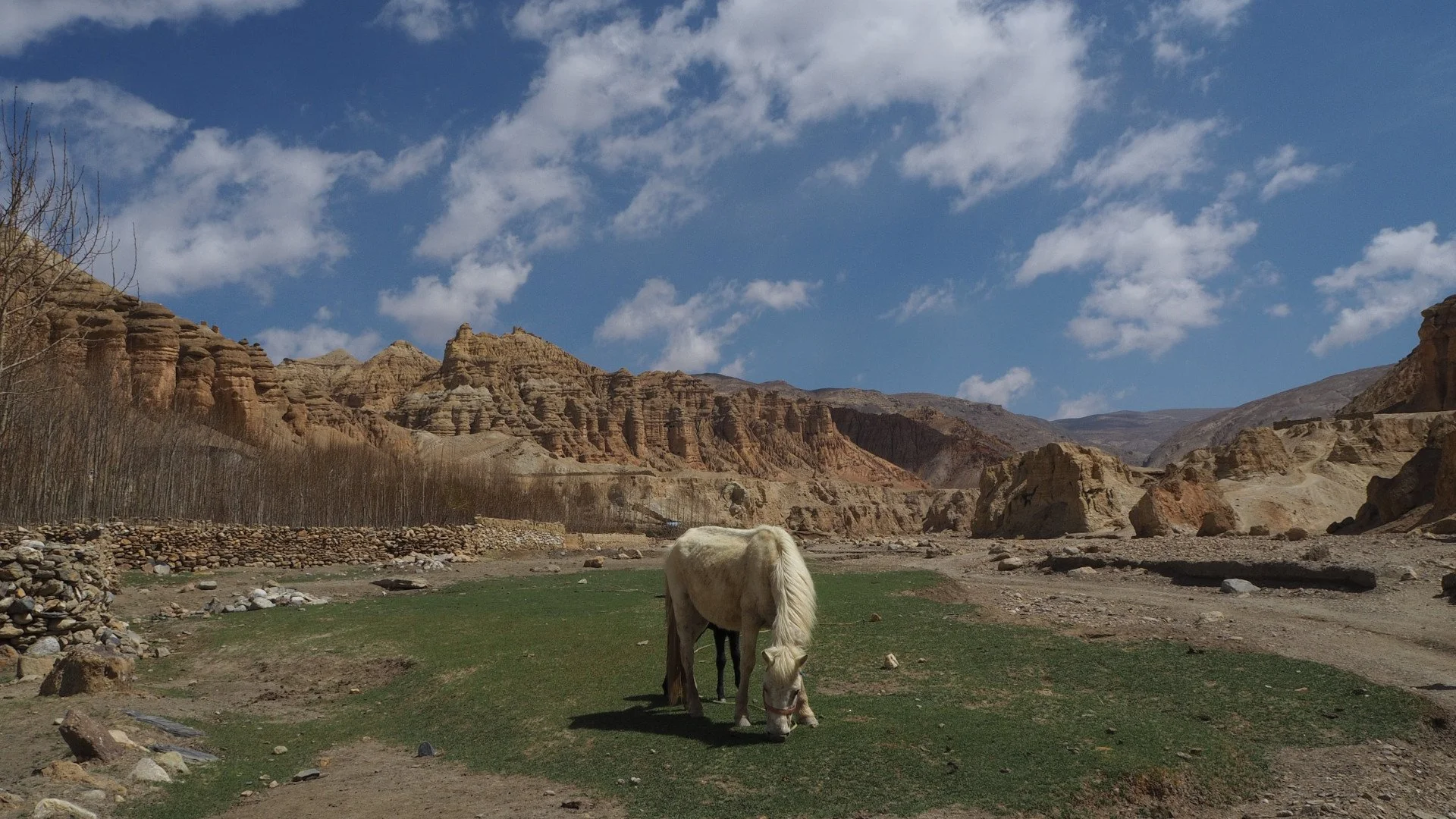
An Adventure In Upper Mustang | Part III
Upper Mustang is the picturesque pride of Nepal, life in this highland is tough, but this toughness brings about a smile that stays with you for the rest of your life. As you witness the Himalayas standing tall, all you wish to do is freeze this moment to cherish it for the rest of your life.
Day 6: Ghami to Charang
Altitude: 3560m
Trek Time: 4 hours
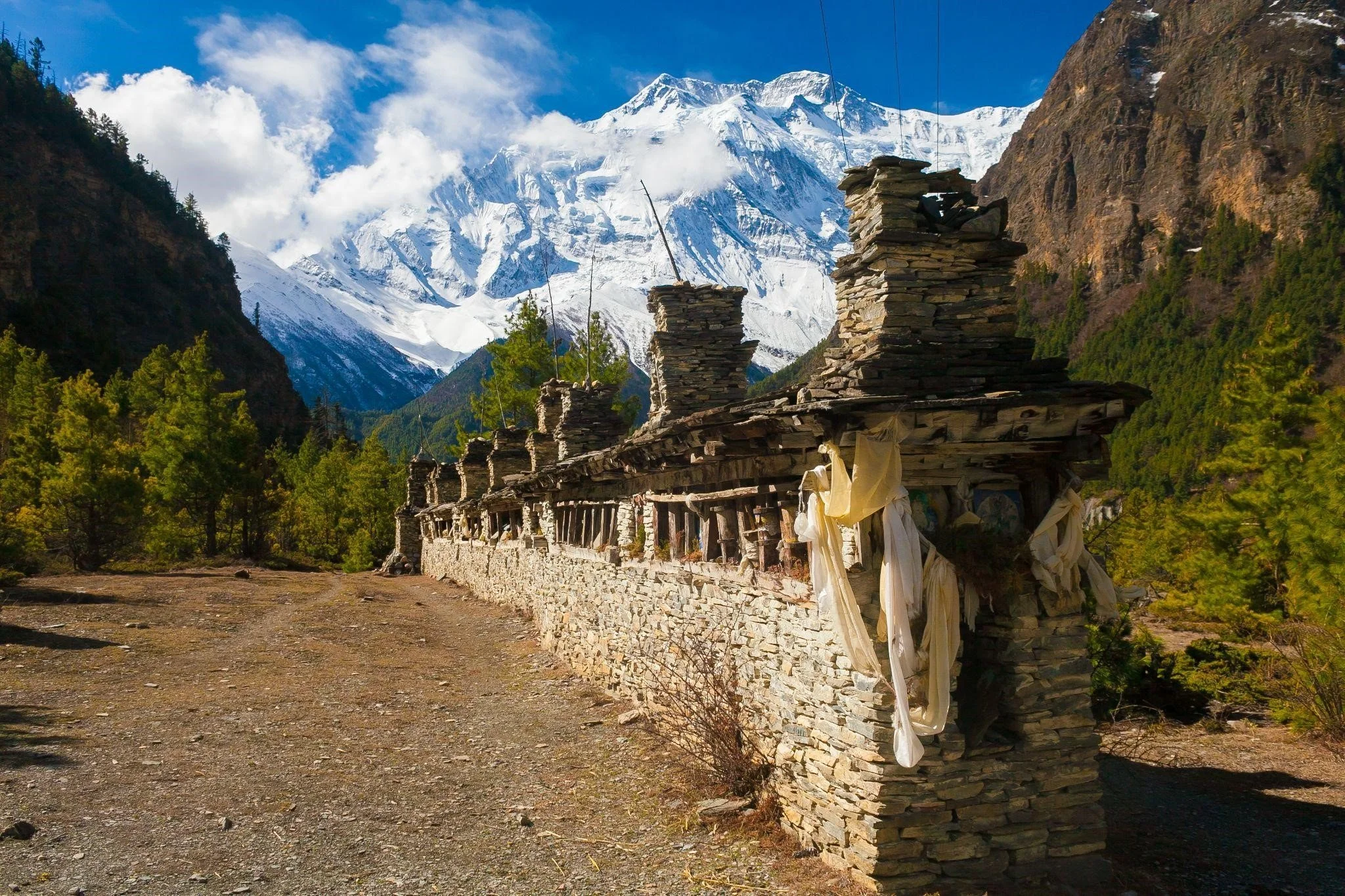
After a good night's rest at Ghami and breakfast, you shall head out to Charang. We advise you to walk cautiously. The trail is very rough and slippery right before the descent of Ghami Khola. During the hike, your hall comes across mani walls. Next up, you shall cross the Charang La pass at 3870m. You shall witness the majestic Charang Chu canyon during your journey. Atop it lies the beautiful village of Charang. The highlight of this village is its ancient fortress and red gompa (monastery) towards its east. As the trek time is approximately 4-5 hours, you shall have plenty of time to explore the village after lunch.
Day 7: Charang to Lo Manthang
Altitude: 3770m
Trek Time: 5 hours
The next day after breakfast, you shall make your descent down the canyon. You need to cross a river and ascend the Lo La pass at 3950m. At the end of the pass, you shall be greeted with your first view of the historic village of Lo Manthang.
This village historically was the capital of the Kingdom of Lo and is home to the royal palace of its king. Unlike the previous hamlets, you shall see a lot of Buddhist elements. The surrounding peaks of Nilgiri, Tilicho, Annapurna and Bhrikuti Peak liven up the vibe of this ancient setting.
Day 8: Outing to Chhoser Cave
Trek Time: 6 hours
This day is fully dedicated to exploring the Chhoser Caves. Also known as sky caves, these are ancient dwelling spaces dug into the side of valleys. These caves are 155 feet or more from the ground. They are thought to be more than 1000 years old. The purpose, origin and creator of these caves are still unknown.
The cave society is equipped with burial chambers, monasteries, hidden rooms and living quarters. Researchers assume native inhabitants built these caves to escape predators and dacoits.
Day 9: Lo Manthang to Dhakmar
Altitude: 3800m
Trek Time: 7 hours
The trek to Dhakmar is more challenging than previous legs, but it features beautiful sights and sounds. En route, you should stop at Gyakar Village. It is home to the ancient Ghar Gompa. This monastery is home to some of the most exquisite rock paintings in the region. A tradition in this region is you must make a wish. Stange right? Once your prayers and wishes are conveyed, you head towards Dhakmar.
Day 10: Dhakmar to Ghiling
Altitude: 3860m
Trek Time: 6 hours
The trek to Dhakmar is more challenging than previous legs, but it features beautiful sights and sounds. En route, you should stop at Gyakar Village. It is home to the ancient Ghar Gompa. This monastery is home to some of the most exquisite rock paintings in the region. A tradition in this region is you must make a wish. Stange right? Once your prayers and wishes are conveyed, you head towards Dhakmar.
After a splendid night at Dhakmar, you are requested to hit the trail early as the winds are powerful in this part of the trail. You shall cross a dry plateau and notice patches of agricultural fields along the road to Ghiling. The winds are a nuisance, but the views of Dhaulagiri and Nilgiri are worth the difficulty.
Day 11: Ghiling to Chuksang
Altitude: 3050m
Trek Time: 6 hours
This leg of the trek is perfect for understanding the lifestyle of this region because you pass through numerous villages. You can engage with the locals and make cherishable memories.
Day 12: Chuksang to Jomsom
Altitude: 2715m
Trek Time: 5 hours
This is the last leg of your trek in the Upper Mustang. The whole you approach Jomsom, you are officially exiting the restricted region. Your lunch stop for the day is at Kagbeni. As the total trek time is an average of five hours, it gives you enough time to veer a bit off course and explore. Once you arrive at Jomsom, please don't forget to grab a few souvenirs and confirm your flight to Pokhara.
Day 13: Flight from Jomsom to Pokhara
Flight Time: 15 minutes
This is your last night in the beautiful high region of Nepal. Before boarding your flight, don't forget to get one last glimpse of the beautiful scenes around you. Once you arrive in Pokhara, please relax and hit your favourite eateries and bars. Upper Mustang is a challenge, and you've done it.