The Pokhara Dhampus Trek
Plan your Pokhara trip to include a few days of trekking to picturesque little villages, hiking through fabulous scenery on great hilly trails.
Now that you are in Nepal, of course you’ll be visiting the lovely city of the lakes, Pokhara, to spend some idyllic days there. Having got a feel of the place, it’s a safe bet that you’ll end up wishing you could actually stay for a longer time, so serene are the surroundings, and so healthful is the environment. Know also that there are quite a few scenic treks from here that are, for the most part, of quite short duration.
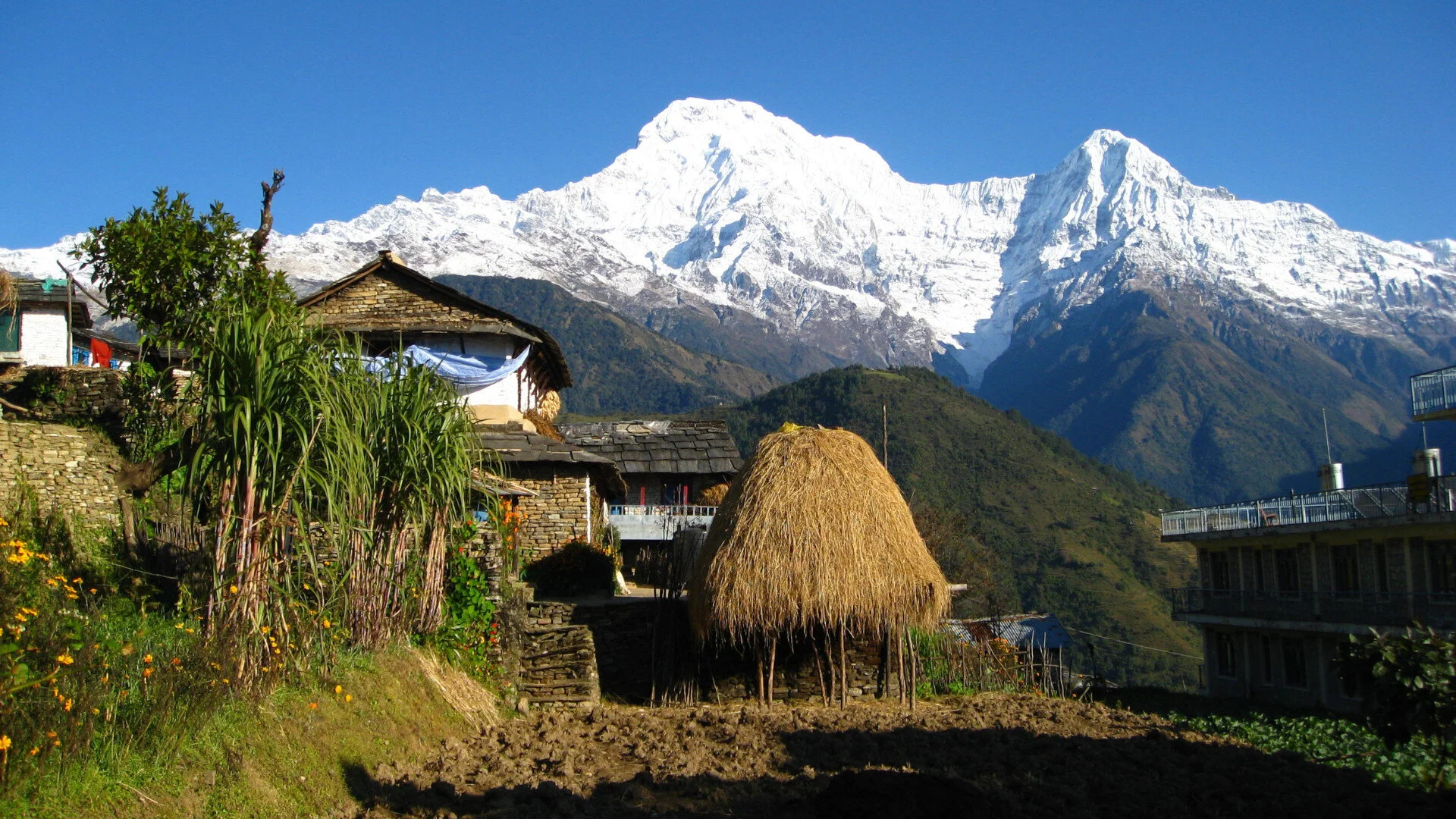
One such trek is the one to the beautiful Gurung village of Dhampus that’s around 26 km from Pokhara. A most charming place, it is a gateway to the Annapurna Conservation Area, and on the route of the famous Annapurna Base Camp (ABC) trek, the most popular trek in Nepal, second only to the renowned ‘must-do-in-a-lifetime’ Everest Base Camp trek.
The trek’s starting point is the village of Phedi, which is a 15-minute drive from Pokhara. The trek as a whole is a moderate one, and suitable for most folks. However, initially, as you start off from Phedi, the trail goes uphill quite steeply for about ten minutes, then it meanders out of the woods, and you find yourself hiking on a narrow path. Gradually, you come to a small village called Chandrakot that’s surrounded by millet fields and rhododendron groves. Since the trek is of short duration, no need to hurry. Walk on at a leisurely place, and take a breather whenever you feel like it beneath the welcoming shade of one tree or the other.
You’ll come across teashops on the way, where you can get light refreshments. The cool and soothing buttermilk is a good recommendation, as are the succulent guavas. If you are trekking in November-December, you will certainly meet many groups out on a picnic in the area. Adds to the cheerful ambience of your experience trekking on such a naturally beautiful locale.
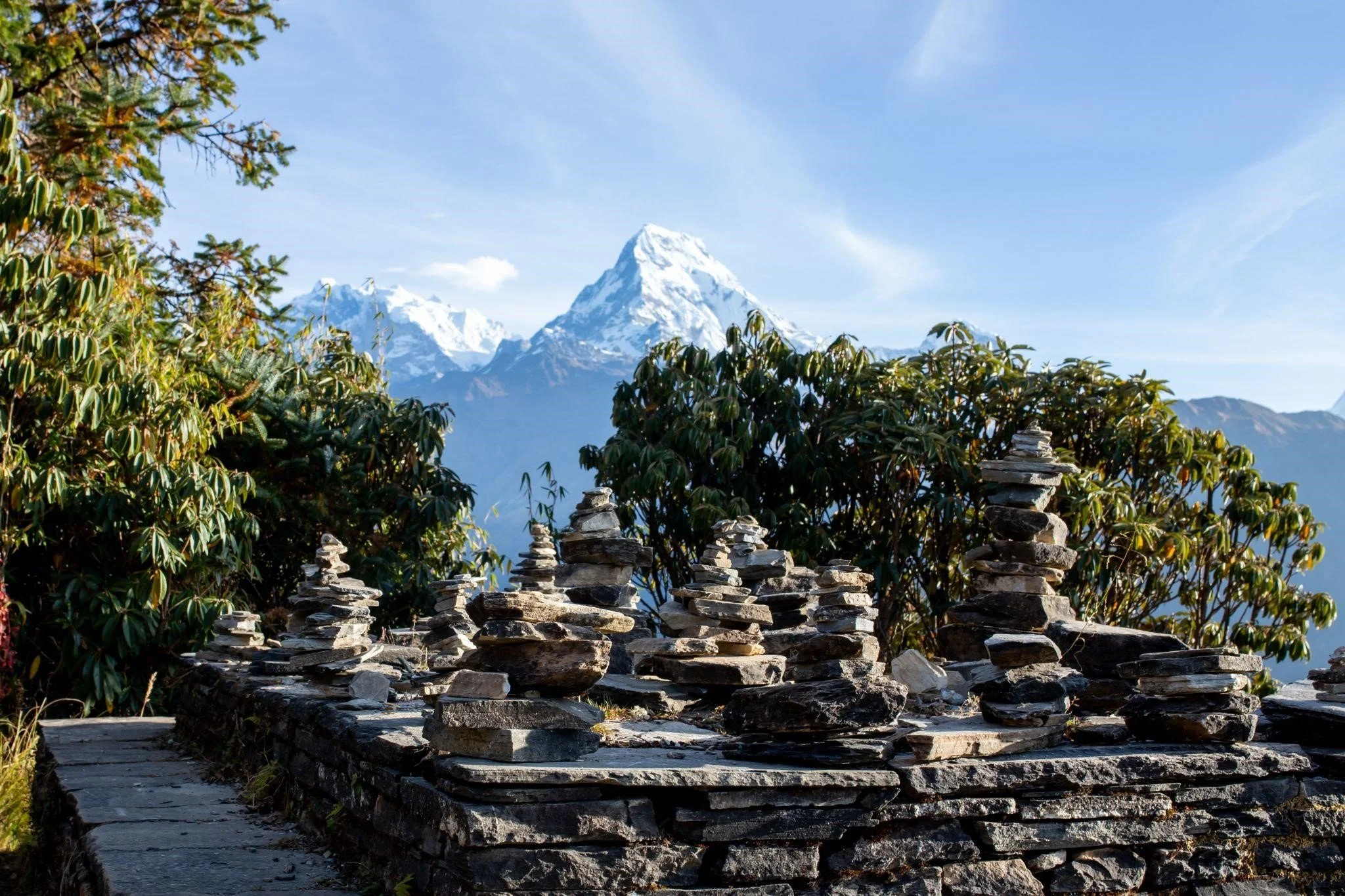
By and by, in about three hours or so, you’ll arrive at Dhampus. It’s considered to be a vantage point from where to view the interesting range of Himalayan peaks on the horizon. These include Tukuche (6,920 m) and Dhaulagiri (8,167 m), the two closest peaks from here. The sight of the magnificent Annapurna range and the massive Macchapucchre (6,900 m) is sure to dazzle your eyes, as well. It’s not just these regal peaks that captivate your eyes, the spectacular view of the Pokhara valley below is just as wonderful.
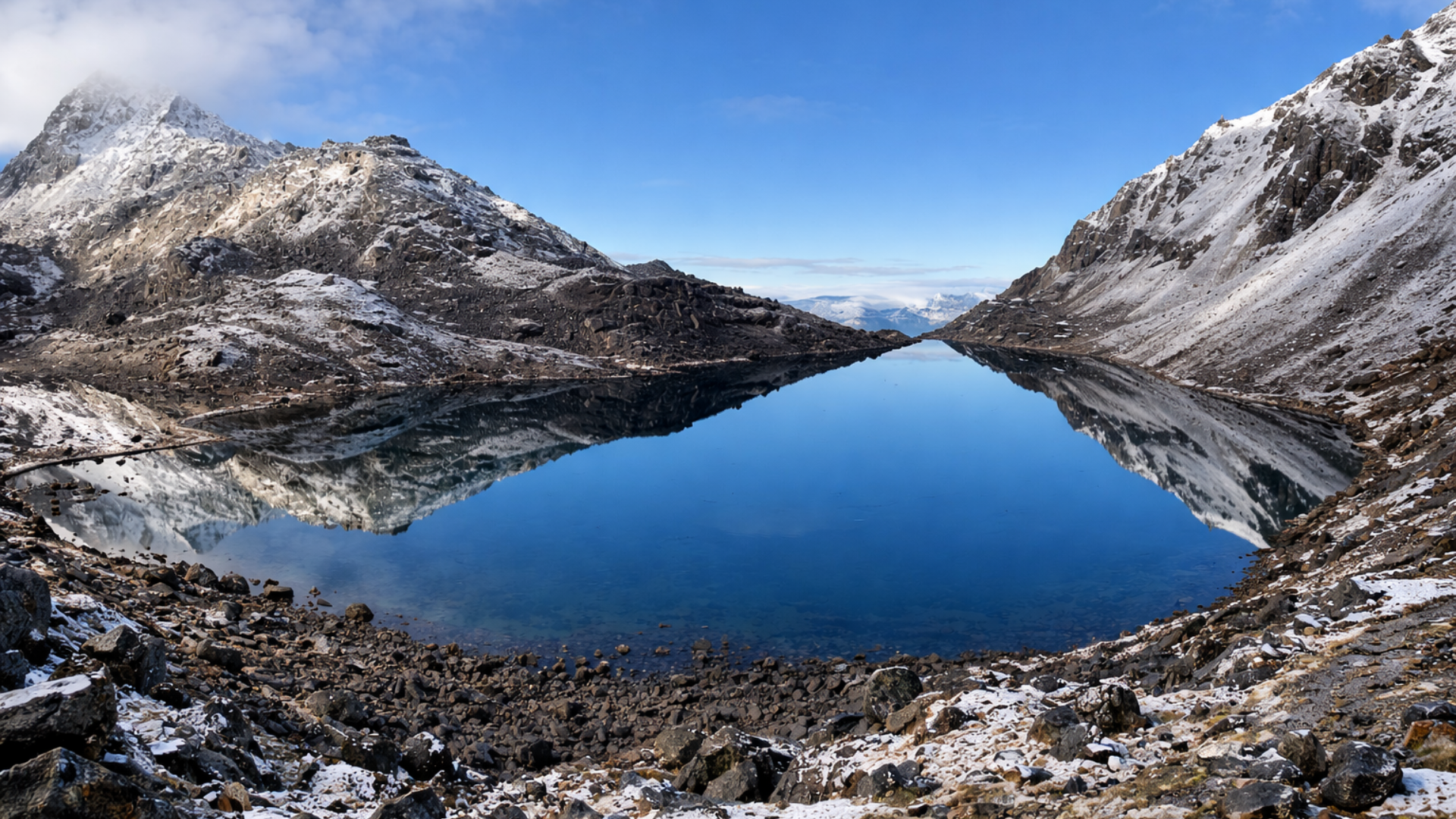
Dhampus is inhabited mostly by people of the Gurung community. One of the village’s highlights is a lake that offers an excellent reflection of a picture perfect setting of Macchapucchre Himal, popularly known as Fishtail Mountain. Some distance from the village center is a lovely lodge called Tsukinoie, designed in such a way as to provide guests with panoramic views of peaks like Annapurna, Macchapucchre, and Hiunculi from every window, as well as from the terrace.
The lodge is small, with only five rooms, but very well facilitated, offering great food and service, besides comfortable accommodation. It’s a Japanese-style lodge, and you get to soak in an interesting Japanese soaking tub that’s quite heavy, called a ‘goemonburo’. Nothing better to relax in, that’s for sure!
About ten minutes away from the lodge is a view tower that’s worth the steep climb to the top, for the view all around is pretty mesmerizing, with Annapurna South, Annapurna II and IV, Macchapucchre, and Hiunchuli all towering majestically in the distance. The sunrise is bewitching, as you can imagine, so get up before dawn breaks, and make it to the view tower while the stars are still twinkling in the sky. Sunrise is generally around 6-6:30 a.m., with the sun first casting its rays over Macchapucchre, followed by Hiunchuli and the rest. The horizon becomes fiery red for some moments. A most inspiring sight!
There’s another interesting place you could hike to that’s about one hour’s walk from the lodge. It’s called the Australian Camp, a name derived from the fact that sometime in the past (about forty years ago) a group of Aussies had camped there. Simple. Its original name is Thulo Kharka. This hike takes you on a flat trail for some time, before going uphill, going through a forest. From the Camp, the Annapurna range appears to be a bit closer, and you also get to see Manaslu and Peak 29.
All in all, the Pokhara Dhampus trek is ideal for those on a short visit, as also for the less-than-perfectly-fit folks, unlike the more strenuous ones that require loads of stamina and tons of endurance.
SIMILAR POSTS
The Guerilla Trek
One of the least developed regions in Nepal, you will discover unexpected sights and lifestyles here; a veritable adventure of exploration awaits you.
The only constant, it is said, is change. In the last few years, Nepal, too, has undergone great change. A 250-year-old monarchy is no more. An army of Maoist insurgents who were at war for ten long years has made peace and won elections, and their leader has become the prime minister twice, including in the present time. One cannot predict the future, more drastic changes may occur, but it is unlikely that the Maoists will ever again go back to the jungle.
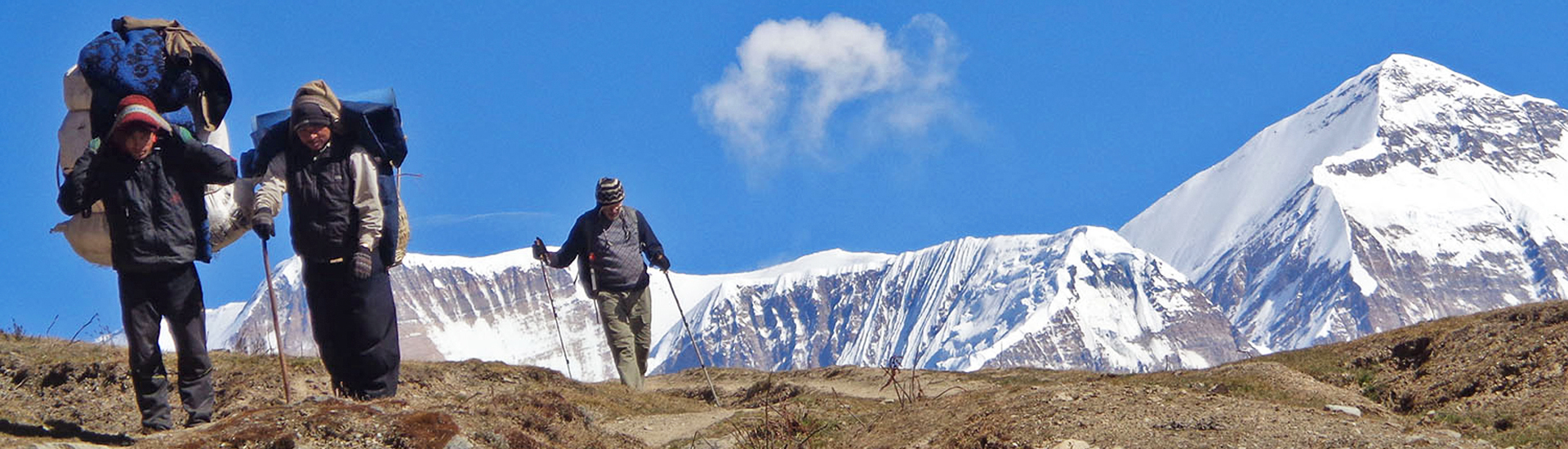
This fact makes the ‘Guerilla Trek’ all the more an adventure. You’ll be walking on trails used by the Maoist guerillas not long back when they were conducting an insurgent struggle against the government. This trek will also give an idea of why the communist ideology still works here, even if it the dawn of democracy had occurred a long time back. When on the ‘Guerilla Trek’, you’ll be walking through many villages and towns of far-western Nepal, an area that has been neglected for far too long in the development aspects. An area where infrastructure is woefully inadequate, and people are very poor for the most part. An area where the lure of communism still holds strong.
You will come across many indigenous tribes that have been downtrodden and poor for ages. The trail goes through the remote districts of Myagdi, Rukum, and Rolpa, centers of the Maoist ten-year insurgency (1996-2006), where their sway was firm during that decade. This history of not so long ago makes this region interesting, and a source of knowledge for the curious. It is not that the far-west is devoid of natural resources. It has plenty of lakes, rivers, waterfalls, forests, caves, etc. But, as said before, due to negligence, the region is steeped in poverty and backwardness.
The starting point of the ‘Guerilla Trek’ begins in a small town called Beni, and travels along the boundary of another mountain town, Baglung. It then passes the Dhorpatan Hunting Reserve, one of the country’s three hunting reserves, which was in the news recently for having a dismal hunting season this past year, with barely half a dozen game being killed, thus incurring significant loss of royalty for the reserve.
The trek then takes you to Rukum and Rolpa, the strongholds of the Maoists during the insurgency, with the latter being their headquarters. While trekking on these trails, spend some time at teashops, and try to engage the locals in conversation. You might hear some pretty interesting stories; now that the Maoists have come into the national fold, people will not be afraid to relate what they have seen and experienced in the recent past. Be aware that if you were here during those days, you would have been viewed with strong suspicion, and people would certainly have avoided all loose talk. Tight-lipped was the name of the game then, let me assure you!
Here’s what a two-week-long ‘Guerilla Trek’ entails, as planned for by trekking agencies:
On day one, you’ll travel by bus from the capital to Beni, a ride of about nine hours. Day two will see you trekking some six hours to the village of Takam (1,665 m). Day three takes you to Lamsung (2,250 m), about six hours again. The next day, you walk through scenic landscape for seven hours or so to reach Gurjaghat (3,020 m). Remember that, in some places, you’ll be staying at homestays, while in some places, you may have to pitch up your tent. The homestays are an excellent opportunity to get up close with the local lifestyle.
On the fifth day, you walk for about five hours, before arriving at the famous Dhorpatan Hunting Reserve (2,860 m). Keep an eye out for the mountain goats and the bharials (blue sheep), as well as a variety of deer. If you are a birdwatcher, you’ll not be disappointed, either. Plenty of exotic birds around. The following morning, rise and shine, before starting the five-hour trek to Nisi Dhor, and then the next day, the seven-hour trek to Tallo Sera. All the while, you’ll be encountering the fascinating ecology all around you, and meeting different indigenous communities. The Himalayas, too, will not be far from you, with peaks like Gurjal Himal and the Dahualagiri range always in the backdrop.
The trails you are walking on were used extensively by the Maoist guerillas during their ten-year war, and this knowledge is sure to add some more excitement to your adventure. The eighth day sees you walking for about six hours from Tall Sera to Rujhikhola, and the ninth day you’ll again walk for a similar amount of time to reach Thabang. Now, you are really into deep Maoist territory. Just imagine, if you had been here during the insurgency, you would be coming across numerous heavily armed military personnel at checkpoints, and they would probably have stopped you from going any further. Too dangerous. Anyway, this is just imagination, in the first place, no one would have been foolhardy enough to go on such a trek.
Day ten, and now you will be walking for another five hours to one of the best known names of the insurgency, that is, Jaljale. In fact, rumor had it that ‘Jaljale’ was a secret password used by the Maoists during those years. Just mentioning that name in public anywhere in the country would have got you into trouble with the authorities. The next day’s trek is to the village of Jelbang, while day twelve takes you to Suliochaur, from where you take a thirteen-hour bus ride back to Kathmandu. Well, congratulate yourself on having been the few lucky ones to have experienced the famous ‘Guerilla Trek’!
Kali’s Valley
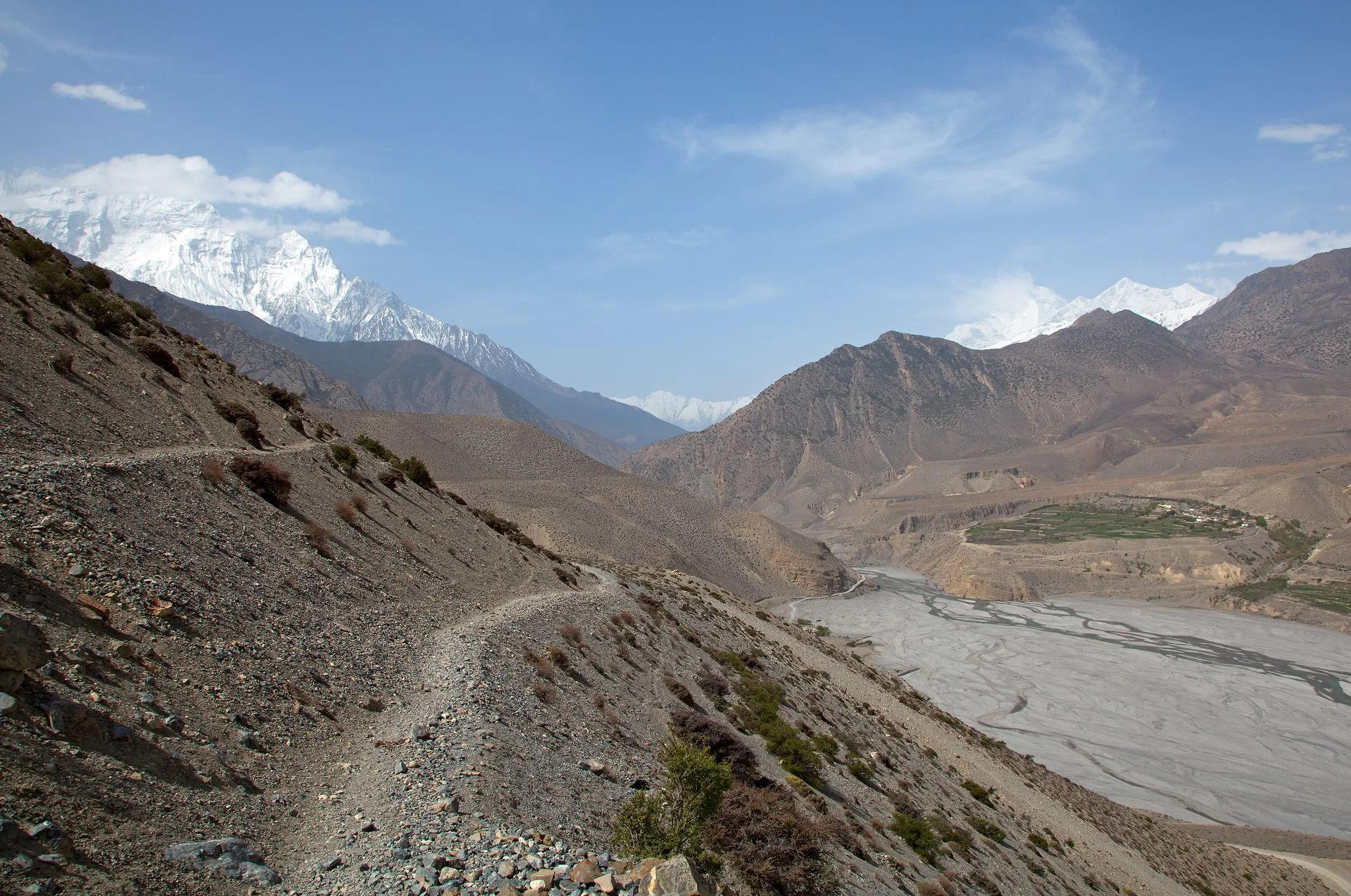
While Pokhara is undoubtedly a paradise for locals and tourists alike, traveling to Baglung from there is an experience that will draw sighs from your soul.
The black river under the brooding sky, gushing its way mightily from far off Muktinath, and cutting its way through Baglung district, seemed to be holding many a black secret. The heavy black clouds, the black silt and sand, and the blackness of the Kaligandaki River reminded one of black hearts, black promises, and black death.
However, the abundant green mountains encasing the immediate vicinity managed to salvage some of the foreboding picture. There were some gold diggers on the banks, as hopeful as the Californian gold diggers of the 1800s, and as dirty. Gold and copper and fossils were to be found in the deep confines of the Kaligandaki. But, if one looked into its black viscera, one got the eerie feeling that the murky depths must be hiding many black and mysterious secrets.
As the bus rolled along the sides of the Kaligandaki, the big green and brown rocky mountains appeared to be desperately seeking our attention as well. Nevertheless, for the duration of the journey that the smooth road paralleled the black river, one’s attention was completely absorbed by it. And why not? For this is the valley ruled by the mysterious Kaligandaki.
It was certainly not so before Kaligandaki had come into view. For a major part of the 72-km journey from Pokhara to Baglung, picturesque scenes of burbling brooks, scattered white frothy waterfalls, lush greenery, high hills, and compact and picture postcard villages constantly brought out sighs of wonder from the soul. Often, one had to forcefully remind oneself that this magnificence of nature’s bounty was in Nepal, and not in some exotic foreign locale.
The soul had already been stirred the night before in Pokhara, when a full two hours had been given to gazing at the gentle and serene Fewa Tal. I had not been able to pull myself away until the last boats had come ashore, their bellies disgorging sated nature lovers, and the lights had started to twinkle in far away hills.
The soul had been so stirred that I had taken the five-kilometer walk from Baidam in Lakeside to Mahendrapul in town. My decision to do so was proven to be devastatingly wise when I came across all sorts of lovely resting houses (calling them simply hotels would be doing them injustice), and equally lovely eating places (again, not restaurants, for the same reason), with their designer lights and manicured gardens, all of which I would probably have missed if I had taken a taxi. The lovelier ones were nestled in tiny gardens in the side streets.
Baidam and Pardi in Lakeside reminded me at once of a bride in all her bridal finery, glowing and expectant, awaiting the arrival of the groom’s procession. Pray she is not disappointed. The atmosphere was not exactly one of joy, however, the season still not having taken off.
Trek to Ghalegaun Village
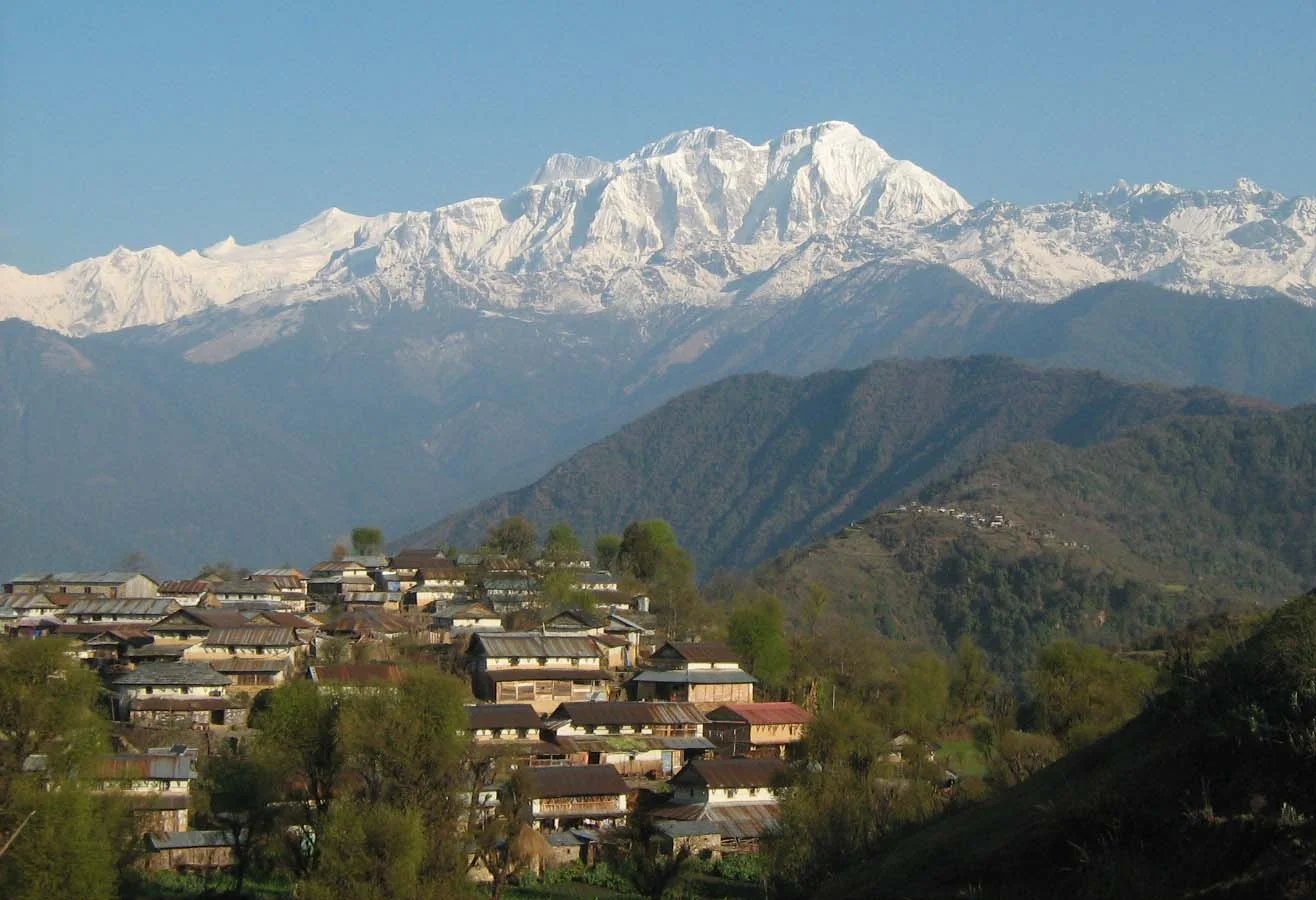
Among a number of short and pleasant treks in the Annapurna region, none is more fulfilling than the trek to Ghalegaun, a lovely village in the Nepal hills.
The Annapurna Base Camp (ABC) trek is a very popular trek; most trekkers put it right up there with the best in the world. However, this time around, let’s take the route northwest of the main ABC trek trail, and visit a lovely little village called Ghalegaun (2,016 m). This short trek is also very popular, especially for those pressed for time, since you can do it in a matter of just three to four days.
It all begins by driving down from Kathmandu to a bustling town called Besisahar; should take around six to seven hours. From there, the trail goes alongside the Marsyangdi River to Khudi (2,493 m), and then meanders along the Khudi River, before climbing steeply for four to five hours. Once you are at the top, you’ll get to see awesome sunsets and sunrises over the lofty Annapurna and Manaslu ranges. That aside, you’ll be coming across lovely waterfalls on the way, and walking across swinging suspension bridges, besides hiking through some very charming villages that are made all the more picturesque by the surrounding terraced paddy fields, bamboo groves, and rhododendron forests.
It will take you some seven hours to reach Ghalegaun from Khudi, but what a seven hours it’s going to be! Stunning views of ice-capped Himalayan peaks will certainly mesmerize you. And, these are really tall peaks, such as, Annapurna I (8,091m), Annapurna II (7,939 m), Annapurna IV (7,525 m), Bouddha Himal (6,974 m), Himalchuli (6,747 m), and Machhapuchchhre (6,693 m). Just so you know, Annapurna I is the 10th highest peak in the world.
Ghalegaun, snuggled in the midst of green hills and surrounded by majestic Himalayan peaks, is home to the Gurungs, who have earned name and fame for their martial prowess. They are one of the major ethnicities that go to make the fearsome Gurkhas. However, away from the battlefield, they are some of the most hospitable, polite, jocular, and friendly people you’ll find anywhere. This, you’ll see for yourself when you are in Ghalegaun, more so, because you’ll be most probably staying in a homestay, meaning that you’ll be living with a local family in their home, and sharing meals and experiences.
The homestay arrangements have been fine tuned in Ghalegaun, whereby, even if you are living with a family, you are assured of complete privacy and most modern amenities. A walk through the village in the evening takes you along cobblestoned paths between traditionally made houses huddled close together. You’ll get plenty of people to talk to you, and dodging lots of chickens on the way. A night’s stay is often rewarded with a cultural program, where you’ll be treated to traditional songs and dances performed with youthful vigor.
Back in your home, a nice dinner awaits you: customary dishes like dhindo (a porridge-like food made from a mixture of maize and wheat) and kukhura ko masu (chicken curry) with vegetable, spinach, pickle, and so on. You’ll also find the setting to be quite agreeable: sitting on the floor with the glow of the cooking fire providing light, and pleasant light-hearted conversation all around. You go to bed quite early. You don’t want to miss out on one of the primary highlights of your trek, that is, watching the fabulous sunrise over the lofty peaks, and to view these peaks in the early morning light when the view is the cleanest. So, at the crack of dawn, you’ll be up on the tower on the nearby hill with a hot mug of tea in your hand. Don’t blink now, because sunrise is an event that occurs without warning, and you’ll find the dark sky suffused with sunlight in an instant.
Savor the moment; savor the feeling of tranquility that falls upon your senses as you watch the breaking of a new dawn. Soon enough, everything—the mountains, the valley, the rivers, Ghalegaun village—present themselves to your sight, all at their pristine best. It’s a fantastic experience. You’ll also see far-off Besisahar, from where you started your trek, so clear is the air, and thus, the view. After you have captured memories for a lifetime in your camera, you walk back to your home, where there’s some serious breakfast waiting for you. Again, delight in traditional Gurung fare like kodo ko sel (round shaped bread made of barley) and rajma ko tarkari (bean curry), along with plenty of steaming hot tea.
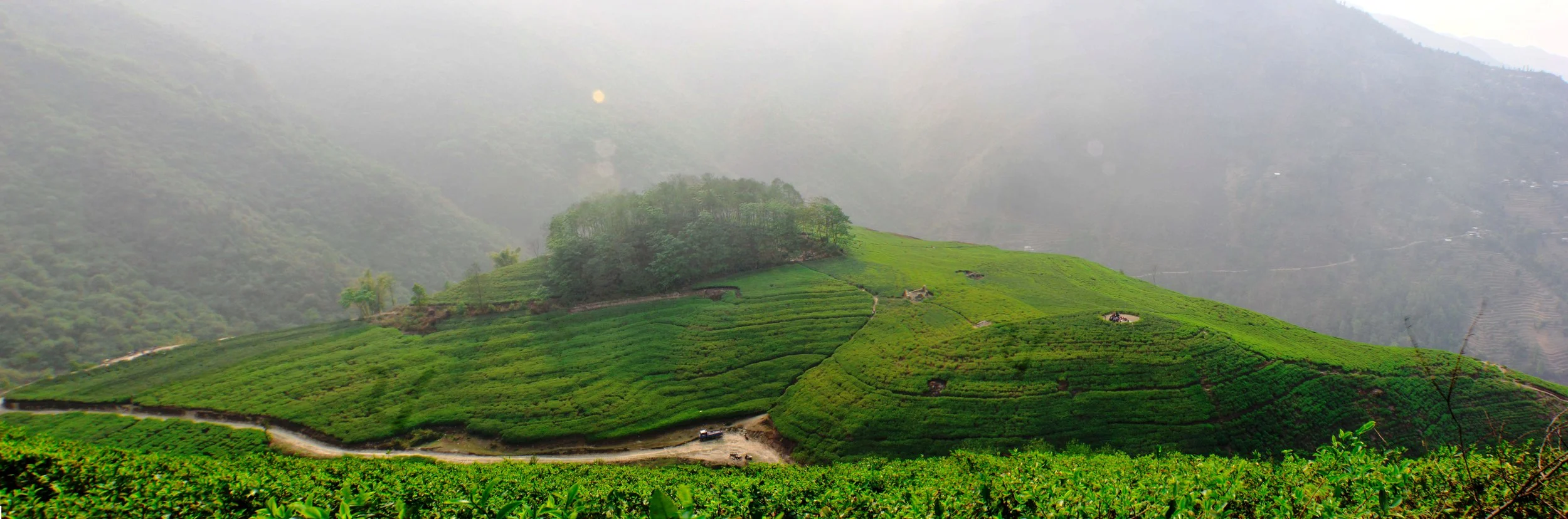
Having fortified yourself, you are ready to make a more thorough exploration of Ghalegaun, where you’ll discover ancient shrines and even a dhunge dhara (stone spout). On the hills around, you’ll come across grazing donkeys and horses. You’ll be delighted, no doubt, to know that the village also has a museum, where you can see traditional wear of the Gurungs, ancient and not so ancient tools used in agriculture, photographs of mud houses that once served as their homes, and so on. You will also be surprised to see a large sized tea garden that’s situated some distance away from the village.
After your pleasant sojourn in this lovely village, you might want to extend your trek, to Ghanapokhara, which is a one-hour walk, and Bhujung (two-and-a-half-hours). The trail then goes uphill for some three hours to Khumre Danda (2,000 m), before descending to the Mandi River, and then to Pakhrikot (6 hours). From there, you walk to Thusmsikot and take a ride to Pokhara.
The Everest Base Camp Trek: A Trek like No Other
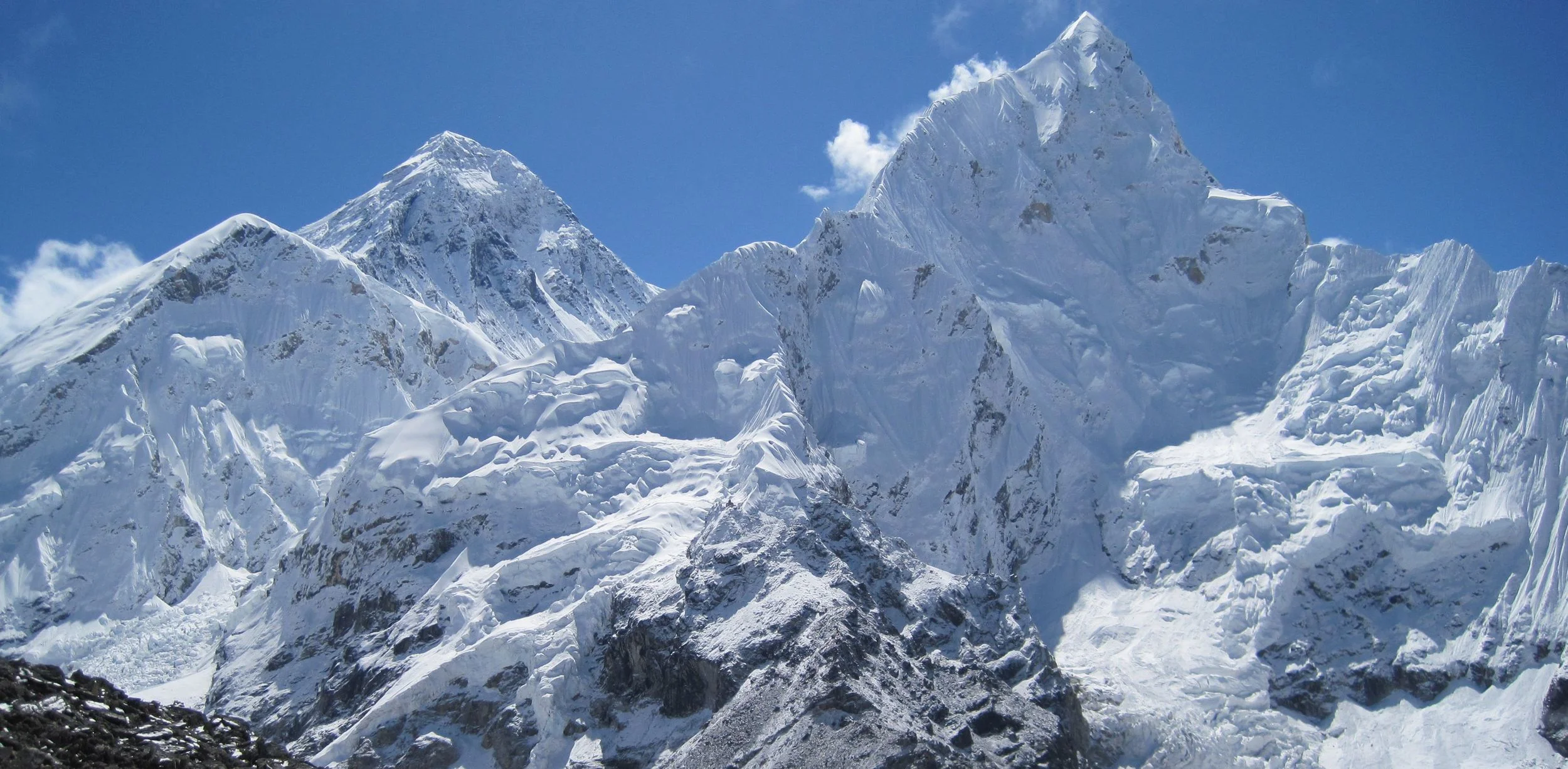
The Everest Base Camp trek is the most popular trek of Nepal, and justifiably so, since it gives you the opportunity of being up close and personal with the highest mountain on earth.
There are treks and treks, and then there is the Everest Base Camp trek. It has been recommended as one of the must-to-be-done things during a lifetime. It’s got that much of a reputation! Naturally, it is the most popular trek of Nepal, a country with many other treks that are also challenging, interesting, and fulfilling. What makes the Everest Base Camp trek really outstanding is that you get to have a spectacular view of Mount Everest, really close up and personal.
Most trekking agencies have a two-week itinerary for this trek, and it all starts with a flight up to Lukla (2,800 m) from Kathmandu. Yes, it will take you only 45 minutes to get there, but what a 45-minute it is! First of all, although there are daily flights, one needs to be aware that high winds, dense clouds, and low visibility could hamper the schedule anytime. In case everything’s fine with the weather, you fly, and on the way you’ll get great views of Himalayan peaks on the horizon. However, it’s when you near the Tenzing-Hilary Airport (Lukla Airport) that the action really begins. You’ll be coming through two massive mountains as you begin to land, and you can be expected to be buffeted somewhat. The runway is pretty small, only 1,500 ft, with the northern end terminating in high terrain, and the southern end falling steeply into the valley below. One end of the runway is actually 60 m higher than the other end! All in all, it calls for a high degree of skill on the pilot’s part to both land and take off. Some call it one of the most adventurous airports in the world; the less polite call it a dangerous airport. Anyway you call it, it’s a picturesque airport.
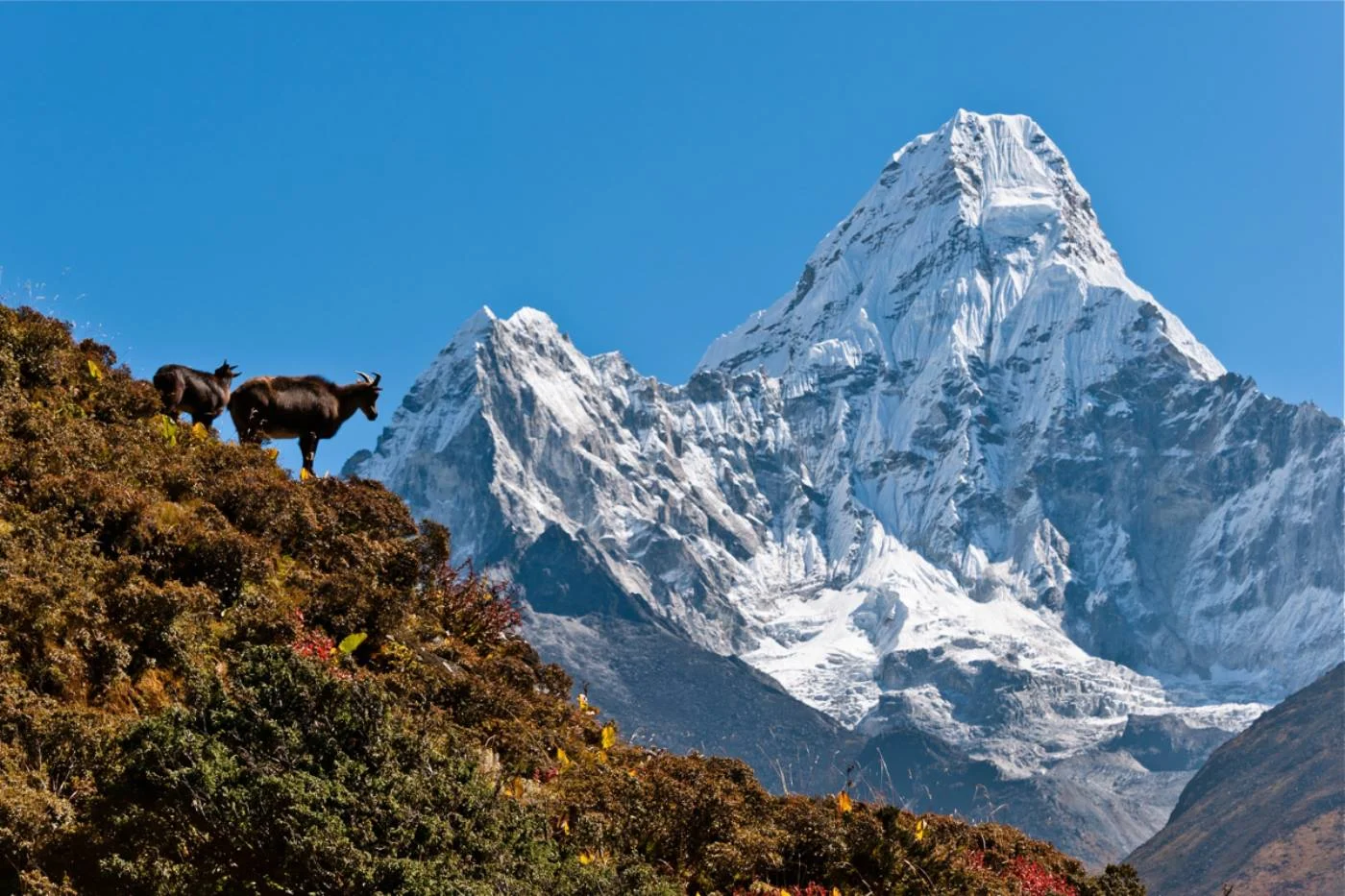
Anyway, after landing, you arrange your gear and head off along the Dudh Kosi River to Pakding (2,600 m). You’ll be walking through lovely pine and cedar forests and will be probably meeting yak caravans transporting climbing or trekking supplies and equipment. If you are downhill to one coming your way, give way, because the yaks aren’t going to be as polite, and will be coming in a heavy rush. Right from your landing, you have perhaps already been transported into a different world from the one you’re used to; these caravans will only help to take you away further, they paint such an exotic picture! As you walk along, keep an eye out for wildlife like the Himalayan tahr and musk deer. The former have thick wool coats and large backward-curving horns reaching up to 18 inches.
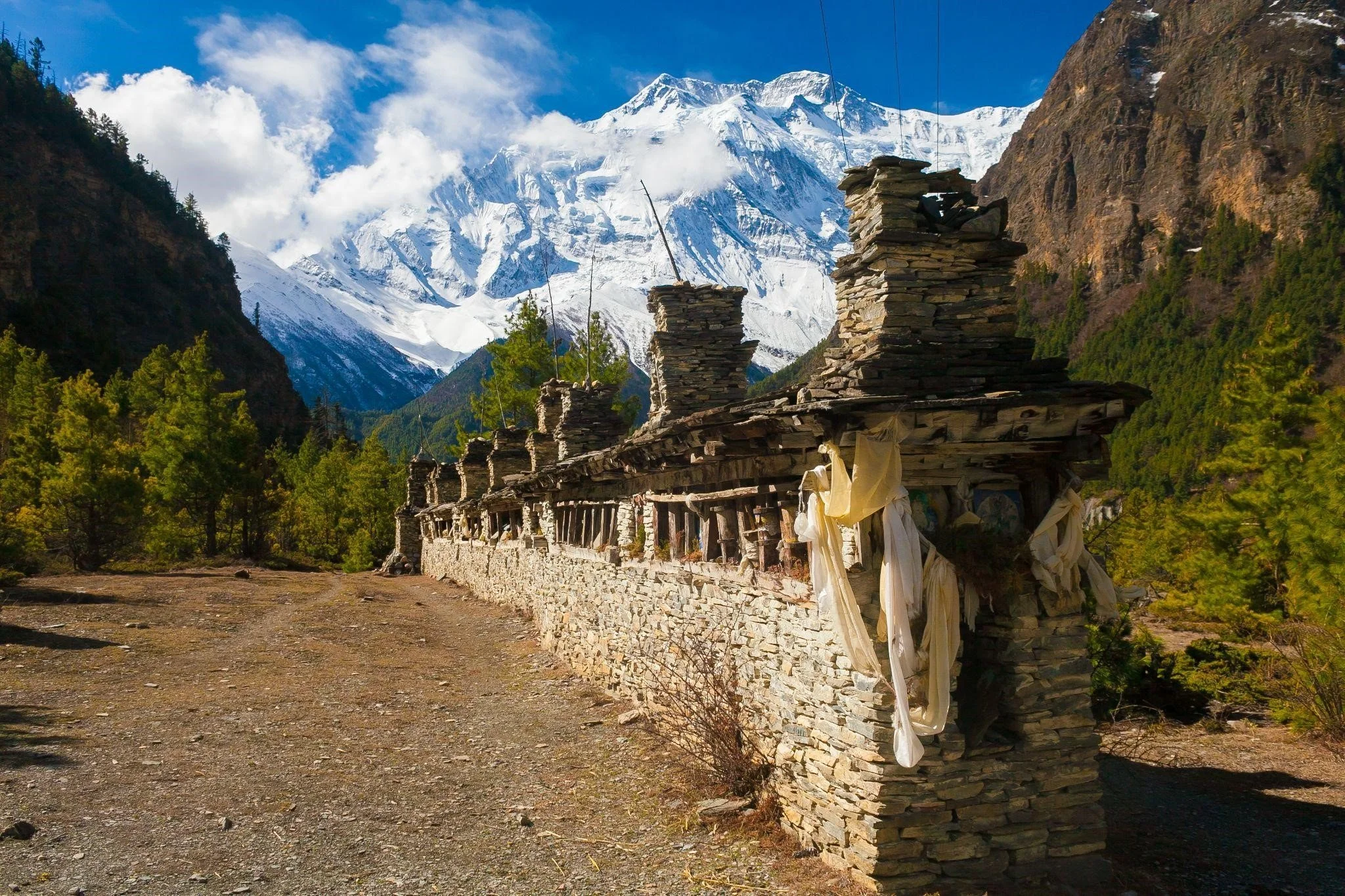
The next day, you trek to one of the biggest Sherpa settlements in the country, that is, Namche Bazaar (3,450 m). By now, your uphill trekking should have set your muscles working extra hard, now you got to rest for a day here so as to allow your body to acclimatize to the higher altitudes. You’ll find Namche to be a bustling place, and the rest day allows you to take a short outing to Thame Valley. You’ll come across elaborate carved mani stones along the way, and a lovely gompa, as well. All in all, a day well spent. Then, the day after, you leave Namche and carry on through rhododendron forests and across suspension bridges to reach Tengboche (3,860 m) from where the you get sensational views of Everest (8,848 m), Lhotse (8,516 m), Nuptse (7,864 m), and Ama Dablam (6,812 m). All along the route, you’ll surely be enthralled by the sight of the Dudh Kosi River flowing serenely through the valley far below, and you’ll see a lot of chortens and mani walls alongside the trail, as well. You’ll no doubt be paying a visit to the magnificent Tengboche Gompa (estd. 1912), which has immense religious and cultural importance for inhabitants of the Khumbu region.
The following day, you walk up stone steps through wood full of birch, conifer, and rhododendron trees, and here, too, keep a sharp eye out for some more Himalayan wildlife. This time, it’s pheasants, which make for a colorful sight. You’ll come across a small village called Deboche, where there’s a nunnery. Then as you go onwards, you’ll notice that the trail is leading to alpine meadows full of scrub juniper (in the warm months, there will be a riot of wild flowers here), and eventually you arrive at Dingboche (4,400 m). You’ll notice a lot of barley grown around here, and the views of the mountains all round are simply outstanding. Another day to acclimatize yourself is called for again, and so you take a rest day. You can use this day to explore the Chhukung Valley, hiking there via the Imja Khola. You’ll have fine views of Imjatse (Island) Peak (6,189 m), Lhotse, and Ama Dablam.
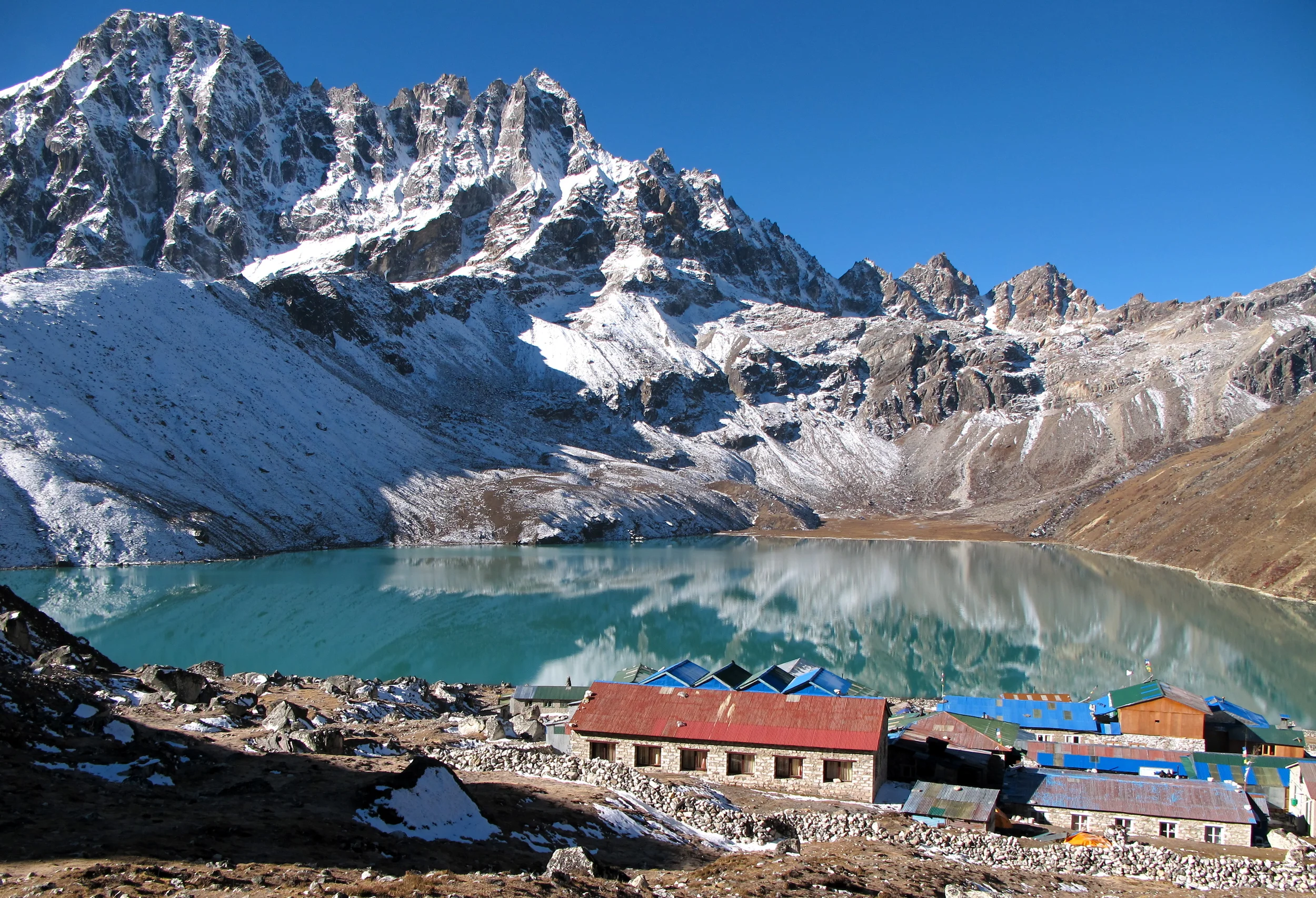
Day seven finds you on your way to Lobuche (4,900 m), as you trek through alpine meadows and pasture land towards the end of the Khumbu Glacier moraine. Then on, it’s a tough climb that is pretty challenging. As in some other places, where there are monuments to departed mountaineers, here too you’ll come across similar stone memorials. You keep on climbing, and you’ll surely find it tough going as you climb onto the Changri Glacier. The altitude is now truly Himalayan, and the next day, you climb further up to Gorakshep (5,150 m) where there’s a small lake that’s frozen most times. You’ll not want to miss the chance to go to Kala Patthar, which requires a small detour, since one of the best views of Everest is guaranteed from there. Now, as you plod on, you’ll find it easier going, since you don’t have to climb much, but you’ll have to be careful as you walk because there’s lots of ice around on the trail. By and by, you reach your goal, that is, Everest Base Camp (5,337 m), situated high up on the famous Khumbu Glacier. The trek back is through Lobuche, Pangboche, Namche Bazaar, and Phakding, before reaching Lukla, from where you take that adventurous flight back to Kathmandu.
SIMILAR POSTS
The Helambu Trek
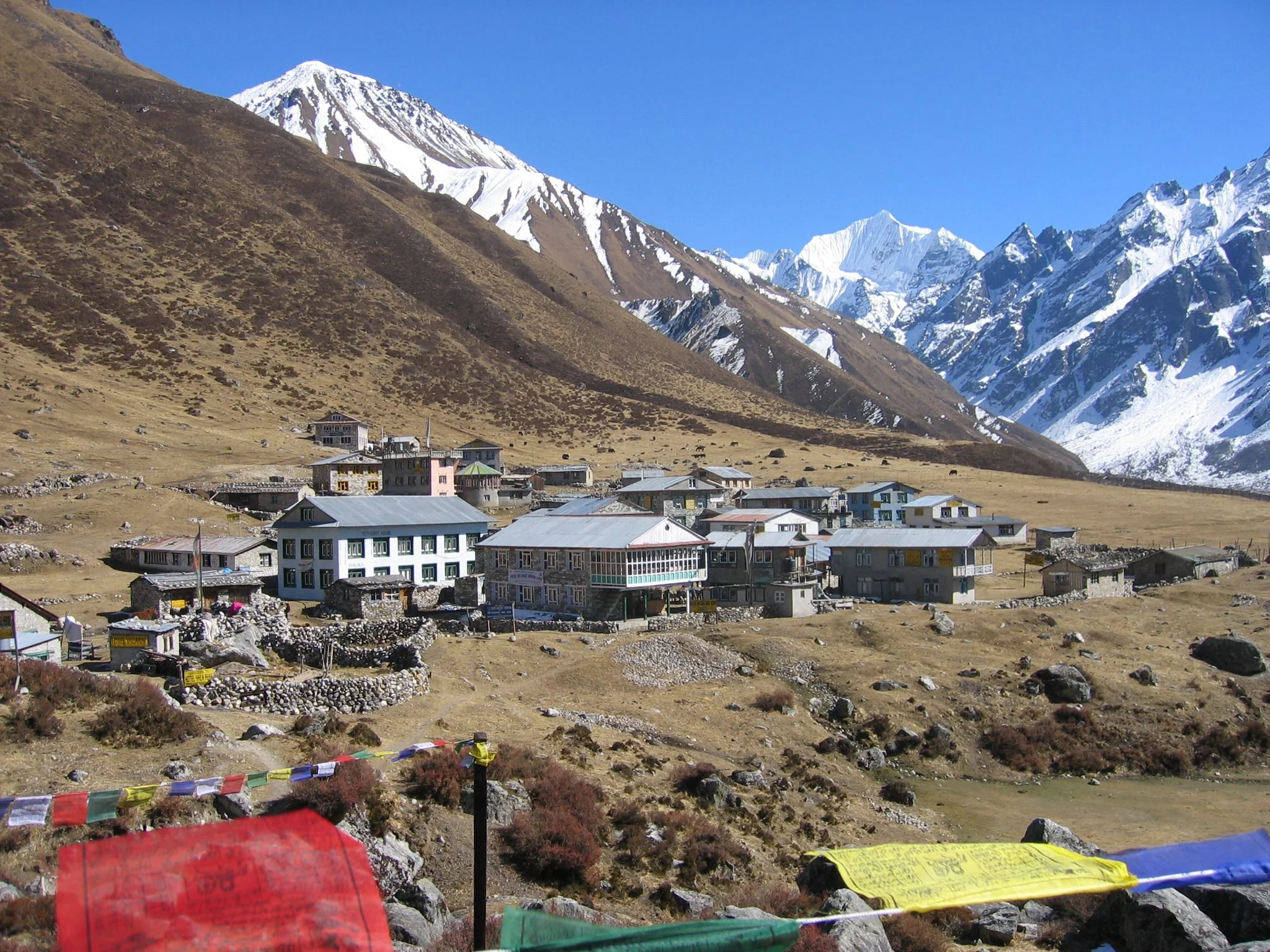
A trek through the Helambu region gives you the chance to be up close with the Sherpas, a community famous for its climbing skills.
Ever since Tenzing Norgay Sherpa became the first man, along with Sir Edmund Hillary, to conquer the world’s highest peak, the Sherpas have enjoyed a status as hardy mountaineers, and trusted guides for any expedition on its way to climb the lofty Himalayan peaks. Many Sherpas have etched their names in the record books for many daring feats of skill and courage in the field of climbing. Not only that, they have also garnered an enviable reputation for their hospitality, trustworthiness, and simplicity.
Trekking through the Sherpas’ heartland, that is, Helambu, allows you to experience the lifestyle and culture of these simple folk with sinews of steel. A Helambu trek can be usually completed in a matter of a week and involves staying over in home stays. Actually, it’s perfect for those looking for a less-than-strenuous trek, one that doesn’t go up to high altitudes, and one where the focus is more on days of leisurely hikes through a landscape that is beautiful and refreshing. Of all Nepal treks, the Helambu trek is the one that is most easily accessible from the capital, Kathmandu. It’s a most pleasant walk through a number of Tamang and Sherpa villages, the familiar terraced paddy fields, verdant valleys, and dense forests of oak and rhododendron. And, all the while, you’ll be mesmerized by the sight of the magnificent Himalayan peaks on the horizon.
The route goes from Sundarijal to Chisopani, Kutumsng, Tharepati, Tarkeghyang, Sermanthang, and Melamchi Pul. To begin with, you take a one-and-a-half hour drive to Sundarijal from Kathmandu, where there’s a big reservoir that supplies water to the valley. It’s the place from where your Helambu trek begins. You start hiking for some time before the trail begins to go uphill, passing a lovely waterfall on the way, and then through some rich forests full of oak and pine trees, as well as deep red rhododendrons flowers. You’ll also be walking through small villages of the Tamangs, one of the larger communities in Nepal. By and by, you’ll reach Borlang Bhanjyang, a pass at a height of 2,348 meters above sea level, and then arrive at Chisopani (2,194 m). The day’s trek is for about five hours.
The next day’s hike, which is for about six hours, doesn’t involve much of uphill trekking. As you reach Gul Bhanjyang, another Tamang village, you’ll revel at the sight of the lovely green terraced paddy fields set on the hillsides. Here onwards, you’ll come across a couple of villages inhabited mostly by people of the Brahmin and Chettri communities. You’ll be hiking along some ridges, from where the views are excellent, before reaching the day’s destination, Kutumsang (2,470 m).
The third day’s goal is to trek for some six hours to reach Tharepati (3,510 m), and it’s a more challenging hike than the previous two days’, as it involves hiking long some high pastures where the solitude is pretty striking, since not many villagers are to be found here. You may come across a few woodcutters or shepherds, but on the whole, you’ll enjoy the isolated wilderness. You’ll also be walking through forests on your way to the pastures. Before reaching Tharepati, you’ll come to a chorten located on a hilltop from where you get good views of Jugal Himal and Rowaling Himal.
Day four takes you to Tarkeghyang (2,740 m), and it begins with walking down a ravine, which is quite a steep descent, to arrive at a suspension bridge, and then hiking onwards to Malemchigaon, one of the bigger villages inhabited by Sherpas. It’s a neat village where orchards and fields surround houses with prayer flags fluttering up front. The Sherpa community here has some differences with the Sherpas of Solu Khumbu in the Himalayan region, mostly in the manner of how women dress (red cotton dresses in lieu of Tibetan type dresses). There are also dissimilarities in dialect spoken in the two places. Soon, you’ll reach Melamhi Khola, and from here, you start climbing again to reach Helambu’s biggest Sherpa village, that is, Tarkeghyang, where the houses are made of stone and look quite impressive. This village also has a beautiful gompa with a mammoth prayer wheel made of brass.
The next two days is quite easy walking, the trail being, more or less, a pretty level one. It’s also a pleasant outing, walking as you’ll be through lovely Sherpa villages, burbling clear mountain streams, and cascading waterfalls. You’ll come across many chortens on the trail, and walking along a ridge, as well, before arriving at Sermathang (2,590 m). After this, you begin descending slowly to reach Melamchi Pul (870 m) and then Melamchi Bazaar, from where you drive back to Kathmandu (1,300 m).
If you can afford the time, and you have the inclination to experience the real Nepal at close quarters, then you shouldn’t hesitate to go on this seven-day trek to Helambu. Most trekking agencies have it on their itineraries, and unlike the longer and more challenging Nepal treks, this one should be a cakewalk, one that’s suitable for one and all.
Top 5 Treks in Nepal
Abundant natural scenery, fantastic ecological diversity, and friendly people go to make Nepal an extremely popular trekking destination.
Statistics show that roughly 4 out of 10 foreign visitors to Nepal go on one trek or the other during their stay here. It’s a high percentage by any standards, and goes to show the global popularity of trekking in Nepal. What makes the country such a favorite for trekking? It’s a combination of many things—abundant natural scenery, fantastic ecological diversity, ancient culture, friendly people—all these and more go to make Nepal an extremely popular destination. What’s more, there are any number of trekking routes to choose from, depending on your age, the time at hand, your physical shape, and the challenges you are willing to undertake. As they say, there’s something for everyone. However, listed below are some of Nepal’s top five treks, in reverse order.
5. Ghalegaun Village Trek: If you want to see the villages of the honey hunters of Nepal made famous by the documentary by photo journalists Diane Summers and Eric Valli, you got to go on this trek. It’s a 10-day trek during which you’ll be hiking through some spectacular landscape that includes inspiring views of the Annapurna range. You get to interact with local Gurung families and experience their simple but hospitable lifestyle. First you drive down to a small town called Besisahar from where the trekking begins, the trail going along the lovely Marsyangdi River to Khudi, nd then its uphill for some 4-5 hours to Ghalegaun (2,016 m). Here, you get to stay with locals, and are treated to a beautiful sunset view of Annapurna and Manaslu. Sunrise, in the early morning, is as absorbing, but you got keep moving, and so, now you hike down to Ghanpokhara and Bhujung (1,500 m), where the waterfalls are simply wonderful, and the rhododendron forests, lovely. Then you got some climbing to do again (3 hours or so) before arriving at a hilltop called Khumre Danda (2,000 m). Then onwards, it’s all downhill to Pasgaun, then the Mandi River, and on to Pakhrikot and Thumsikot, and finally, Pokhara.
4. Imjatse (Island Peak) Trek: This is one trek where you can fulfill your desire to climb an authentic Himalayan peak. Not only that, it’s a trek that will provide you with a fantastic view of Everest. The adventure begins with a 45-minute flight to Lukla (2,800 m), the flight and the landing itself being an adventure by itself, what with the Lukla airport, as well as the descent path, being somewhat of an adrenaline rush. Once you have landed, and sent a thank you to the gods for having done so safely, you start your trek. A trek that will take you across high valleys and glaciers of the exciting Himalayan region; your trek takes you along the Dudh Kosi River, meeting long yak caravans on the way, which will generally be carrying equipments and supplies for some climbing expedition or the other, before reaching Phakding (2600 m).
The next destination is the famous Namche Bazaar (3,450 m), heartland of the Sherpas. You’ll be resting here for a day to allow for acclimatization, and then carry on to Tangboche (3,860 m), then to Dingboche (4,400 m), where you get another rest day to further acclimatize. You’re in the higher stratosphere now, so it’s better not to take any risks. Your next port of call is Lobuche (4,900 m), and then Kala Patthar (5,545 m), from where the view of Everest is legendary. Trekking back again to Lobuche and then Dingboche, you carry on to Chhuking (4,750 m), and finally to Imjatse Base Camp (4,970 m). From her, first you reach High Camp (5,600 m) and then Imjatse Summit (6, 189 m). There, you’ve done it; climbed a Himalayan Peak. Returning the same way you came, you catch a flight back to Kathmandu from Pokhara, and once again are treated to another adrenaline rush.
3. Mustang Trek: Mustang is an arid region in western Nepal that still appears to have retained some degree of mysticism. It was a kingdom in its own right for quite some time. Bordering the great Tibetan plateau, the region is heavily influenced by Tibetan culture and religion. First you drive down to Pokhara (915 m) from Kathmandu (1300 m), and then take a 20-minute flight to Jomsom (2,720 m) from where the trek begins. Your first destination is Kagbeni (2,900 m), known as the gateway to Mustang, which should take around three-and-a-half hours or so. Then it’s onwards to first Tangbe, then Chele (2,900 m), Ghiling (3,510 m), and Charang (3,650 m). Each of these villages is reached in 5-6 hours, and that’s the time you’ll be trekking each day.
You’ll have observed all those Tibetan-styled flat roofed houses on the way, many with sheep’s horns over their doorways, and numerous monasteries, as well as large Tibetan mastiffs tied near doorways. You’ll also see apple orchards, for which the area is famous. Apple pie and apple brandy are specialties you’ll get to taste on the way. Next, you’ll arrive at Charang (3,650 m) before reaching Lo Manthang (3,730 m), the seat of an ancient kingdom. It’s an interesting place to explore, what with its houses made of sun-baked pale colored mud bricks, its narrow alleys, and the palace of the kings of yore. Marang La (4,353 m) comes next on your rout, and from her, its downhill all the way to Ghimi, Samar (3,700 m), and Kagbeni, and then to Muktinath (3,750 m), where you’re likely to meet plenty of pilgrims visiting this holy site. Ay your prayers, pay your respects to the gods at Muktinath, and then continue downwards to Jomsom from where you fly back to Pokhara.
2. Annapurna Circuit Trek: This is regarded as one of the most popular treks by many trekkers to Nepal, and it begins with you taking a 7-hour drive down to Besisahar (via Dumre), the starting point of the trek. You hike along the Marsyangdi River and pass through many Gurung and Tamang villages on the route. Your trek takes you to Bahun Danda (1,310 m), Chamje (1,430 m), Dharapani (1,860 m); the hiking is not that difficult and very, very enjoyable. On day six or seven of your trek, you reach Chame (2,670 m), from the sight of Annapurna is spectacular. You start off for Pisang (3,200 m) the next day, walking through barley fields and apple orchards, and eventually come to a narrow gorge, through which you make your way into upper Mustang. Come morning, and you’re off to Manang (3,540 m). You’ll come across chortens and mani walls everywhere, and in Braga village, you’ll see an impressive looking gompa on the hillside above a number of Tibetan style houses below. Your spirits uplifted by the imposing view of Annapurna II (7,937 m), III (7,555 m), and IV (7,525 m). A day’s rest at Manang is called for now to allow for acclimatization. Having done so, you hike to Leder (4,260 m), then to Throng Phedi (4,450 m), and finally reach Throng La (5,416 m).
After Thorung La, the trek is much easier, taking you down to Muktinath (3,800 m), Jomsom, Tukche (2,590 m), Ghasa (1,970 m), and Tatopani (1.189 m). You’ll go through the Kali Gandaki gorge, and that’s something, since it’s said to be the world’s deepest ravine. The next day, you climb up to Ghorepani (2,750 m), nearby which is Poon Hill, from where the sunrise and sunset views are fantastic. From here, you stroll down to Pokhara.
1. Everest Base Camp Trek: This trek is the one most in demand for trekking in Nepal, more so since it has been touted as “one of the things you must do before dying” by some popular magazine. Lukla is your starting point, which you reach after a 45-minute flight from the capital. It’s trek that will take you through astounding mountain scenery that consists of pretty Sherpa villages, verdant fir and colorful rhododendron forests, and walk over high and swinging suspension bridges, while on the way you’ll come across picturesque caravans of yaks and zobkyos (yak-cow crossbreeds), their backs loaded with equipment and supplies of climbing expeditions.
Your first destination is Phakding (2,600 m), which is a 5-hour hike, and after that, Namche Bazaar (3,450 m), which also takes 5 hours to reach from Phakding. One day’s rest is mandatory here, so as to acclimatize to higher altitudes, and you can use this day to explore Thame Valley. Then it’s on to Tengboche (3,860 m) and then Dingboche (4,400 m), where again you get a rest day that you can use to visit the lovely Chhukung Valley. Near Tengboche, look out for a line of rock formations, some rocks having metal plaques on which are inscribed the names of mountaineers and trekkers (some as commemoration of their visits, and some in memory of those who had died here).. Then you trek to Lobuche (4,900 m) and Gorakshep (5,150 m), before reaching Everest Base Camp at 5,337 meters. On the way to Lobuche from Thukla, at Dughla, you’ll see similar memorials, which are also present around Gorakshep and at upper Pangboche on a ridge. They serve as poignant reminders of the risks involved as well as the joys of trekking and climbing the high Himalayas.
That, then, constitutes some of the most popular trekking routes in Nepal. All promise adventure and a once-in-a-lifetime experience that is unparalleled by any other sporting activity in the world. Trekking in Nepal demands the best from you physically and mentally, and it promises you excitement and discovery.
Hiking in and around Kathmandu Valley
While Nepal is famous as a trekking destination, there are also some shorter hikes, especially around Kathmandu Valley, that are refreshing to the extreme.
Legend has it that the Kathmandu valley was once a gigantic lake called Nagadaha inhabited by innumerable snakes (nagas). How did it come to be a valley fit to be lived in by humans? Well, according to the most popular myth, there was once a revered Buddhist sage called Bodhisatva Manjushree who came upon the giant lake during one of his travels. He decided to make it inhabitable for humans, and with a single massive stroke of his so-called ‘Sword of Wisdom’ sliced out an enormous gorge in a place called Chobar in Kirtipur, that’s some six kilometers southwest of Kathmandu. Water immediately began to gush out of the huge lake, and in due time, it was drained completely.
This gorge is one of the places that you will come across when visiting Kirtipur during your hike in and around Kathmandu Valley. Beside its fabled history, there is something else that should be of interest. There’s a suspension bridge spanning the gorge that was made in Scotland (Aberdeen) in 1903 and carried into the valley, a part at a time, since there was no road to speak of then connecting with the outside world. A herculean feat, no less! You’ll also find numerous caves in the cliffs around the gorge. Nearby is the Taudaha Lake, a natural lake that’s a wetland site for quite a few bird species.
Kirtipur, a short distance away, is an ancient Newari town with a fascinating history. During the time when King Prithvi Narayan Shah (1723-1775) was on his mission to unify the many states of the country into a unified Nepal, he attacked Kirtipur twice, and was soundly repelled both times. The third time around, he managed to do so, but that was due to a huge stroke of good luck. The story goes that during the battle, a Kirtipur soldier had the king at his mercy, and was on the verge of chopping off the royal head. However, a rock stood in the way between the king’s head and the soldier’s khukuri, and so the king escaped certain death. Apparently, even today, people spit on that very same rock as they pass it by, and so they should, considering what happened after Kirtipur’s fall. The enraged king ordered the noses and lips of all local males to be cut off, and these cut off parts weighed 80 pounds at the end of the bloody frenzy! So, keep an eye out for this infamous rock during your hike.
About 15 km away from this historic town is a very famous temple of the valley, that is, Dakshinkali Temple. Dedicated to Goddess Kali, the rituals here are tantric in nature, with animal sacrifices conducted on Saturdays, as also during festivals like Dashain. Your hike to these places begins from the ring road and takes you across the sprawling grounds of Nepal’s premier university, Tribhuvan University, on a well-maintained road that gradually goes up. All in all, it’s a most pleasant hiking experience. Another hike you will like is the one that takes you to the villages of Bungamati and Khokana.
Bungamati is a Newari village in the traditional mold that dates back to the 16th century and is located about 10 km south of Kathmandu. Full of brick houses and flagstone-paved lanes, it is famous for two things: first, as the winter residence of Rato Matsyendranath, in whose honor a major month-long festival is held every year in Patan (Lalitpur), and second, as the village with the best woodcarvers in the valley, perhaps in the country. Speaking about the first, the sandalwood idol of Rato Matsyendranath is kept here in a temple for six months, and some weeks prior to the beginning of the festival, it is taken to Lagankhel (in Patan), where it is given a holy bath followed by certain rituals, such as repainting of its face.
After taking the one-hour drive from Kathmandu to Bungamati, you begin your explorations on foot, and start exploring the quaint village at your leisure. When doing so, you’ll observe quite a few woodcarvers busily carving objects such as wooden windows, doors, and so forth; veritable objects de’ art, you’ll agree on looking at the end results. Indeed, such are their skills that Bungamati’s woodcarvers are much sought after in many handicraft industries around the valley. From this village of Rato Matsyendranath and skilled woodcarvers, you next walk to another classical one that’s quite close by, walking through lovely scenery and in pretty good weather, especially in the October-December season.
The village you’ll be hiking to is called Khokana, and it, too, is inhabited by Newars. However, this village is famous for a completely different thing, and that is, the production of mustard oil. Well, what’s so great about mustard oil? You may well be asking. Right, but Khokana’s mustard oil is the kind that you might not get anywhere else but here, made as it is using methods that are as ancient as is the valley’s history. You’ll understand this when you come across oil-pressing mills around the village with their ancient-looking implements, and when you see how the oil is pressed. Khokana’s mustard oil is in high demand throughout the valley, and while walking around Kathmandu’s bazaars, if you see men with weathered faces shouldering heavy tin cans hanging on both sides from a bamboo staff, chances are good that they have come to sell mustard oil from Khokana.
Well, now you know why these hikes are highly recommended when visiting Nepal. You’ll get a pretty good experience of life as it has been for centuries. A far cry from what you are used to, surely. You’ll probably be amazed at how laidback the lifestyle is in areas around Kathmandu city, despite being in such close proximity with the capital’s hustle and bustle. What’s more, you can even spend a night or two, if so inclined, at a homestay in Bungamati, where living with a local family allows you to absorb more of this blessed lifestyle.
Recommendations for my friend visiting Nepal
Nepal’s adventure activities are challenging and thrilling, what’s more, they are conducted with the utmost regard for your safety.
For a Singaporean friend, who spent three months in Kathmandu, one of Nepal’s adventure activities included moving around in darkness quite often, what with the constant load shedding. He claimed to have returned with improved night vision! Well, even though most hotels in Nepal have adequate backup electricity arrangements, it does give the eyes some exercise while walking on dark streets. It’s clear, anyway, that visitors are likely to find various aspects of their Nepal tour to be an adventure of sorts, one typical example being traveling by public transport. Now, that is also an adventure! Anyway leaving the mundane aside, let’s get down to the real nitty-gritty of Nepal’s adventure activities you get to experience on your Nepal tour.
Nepal Treks
Trekking high on the mountains, close to the world’s highest peaks is certainly the most popular of Nepal’s adventure activities, with almost 40% of all visitors on a Nepal tour going on one trek or the other. Some of the most popular Nepal treks are as follows: 1. Everest Base Camp trek, which takes you through fascinating landscapes and quite a few Sherpa villages, before eventually reaching the base camp on the Khumbu Glacier, with Mount Everest towering above you. 2. Annapurna Circuit trek, which starts from Besisahar, goes along the Marsyangdi River, passing through Tamang and Gurung villages, and takes you to Muktinath, Jomsom, and Pokhara. 3. Mustang trek, which takes you to the once forbidden kingdom of Lo Manthang in Mustang district, where you will find yourself immersed in Tibetan culture and lifestyle. 4. Imjatse (Island Peak) trek, which goes through the valleys and glaciers of Khumbu, and gives you the chance to climb an authentic Himalayan peak, that is, Imjatse Peak (6,189 m). 5. Ghalegaun village trek, which goes through the villages of the famous honey hunters of Nepal.
Nepal Whitewater Rafting
What else awaits you besides trekking, as far as Nepal’s adventure activities are concerned? Well, whitewater rafting, for one. Nepal whitewater rafting is said to be one of the best in the world, what with its great mountain rivers flowing majestically down from the snow-clad peaks of the Himalayas to the lowlands of the Terai. Imagine yourself on an inflatable rubber raft riding down the swirling rapids of these great mountain rivers rushing between huge mountains on either side. It’s sure to be an experience you’ll never forget. You don’t have to worry about the risks either, since you’ll have highly experienced people looking out for your safety all the time. Just so you know, river are graded from one to six depending on their being more tranquil or more hazardous, which means you get to choose your ride. Grade 1 to Grade 3 rivers are supposed to be easy ones; good for first timers, and the best time to go rafting is between September and early December, as well as between March and early June. Some popular rivers for Nepal whitewater rafting are stretches of the Trishuli, Kali Gandaki, Marshyangdi, Karnali, Bhote Kosi, Seti , and Tamur.
Nepal Mountain Biking
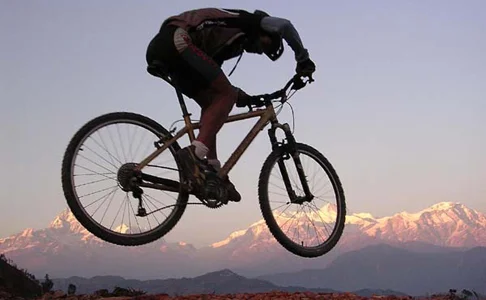
Challenging terrain is what’s important for mountain biking, and that’s what you get in plenty in Nepal. Many on a Nepal tour make it a point to go mountain biking, especially in and around the Kathmandu valley with its many interesting biking trails, and around Pokhara, as well. You’ll be pedaling on tracks that sometimes go uphill all the way and then downhill on the return, or sometime, you’ll be going up and then down at regular intervals, the lay of the land being what it is. The rides will take you through paddy fields, villages, riverbanks, temples, and so on and so forth. ‘Never a dull moment’ is what you’ll be thinking as you give your stamina a tryout. One route that many riders really like is the one to Nagarkot. Nepal travel agencies usually organize this mountain biking experience as a three-day affair, with you going first to Nagarkot, that beautiful hill station, where you spend a night. The next day, you ride downhill to Namo Buddha (famous pilgrimage site) and on to Dhulikhel (another popular hill station), where you again hunker down for the night. Both Nagarkot and Dhulikhel are known for their many beautiful resorts, aside from their fantastic views (including sunrise and sunsets), so you’ll appreciate your stay at both places. Next day, you pedal across to Panauti (an ancient Newari town), and then onwards to Sisneri, Patan, and Kathmandu. This is just one example of what you can expect when mountain biking around the valley; there are plenty more trails which you can chose to ride on at your pleasure. And, as mentioned before, biking around Pokhara is another experience that’s sure to make you happy…and healthy.
Nepal Bungee Jumping
No need to say that bungee jumping is one of the most thrilling adventures for any individual; it challenges courage like few other activities do. Here, in Nepal, there’s some fantastic bungee jumping to be done, from a platform 160 m high over the wild Bhote Kosi River. It will take you some three-and-a-half hours to drive from the capital to this famous bungee jumping site near the Nepal–Tibet border, that’s a part of The Last Resort, which also organizes other activities like mountain biking, rafting, canyoning, and so on. Bungee jumping is, however, their major forte. They take all the necessary precautions to ensure that your jump is safe. And, thrilling? Well, more like an ‘adrenaline rush’; that’s the usual response of jumpers. An instructor will brief you thoroughly, and tell you to ‘walk like a penguin and fly like a bird’. They’ll photograph and video record your leap of faith, and present you with a souvenir t-shirt as well. You’ll probably be spending just around Rs.2000 for all this. A fantastic adventure all around, undoubtedly.
Nepal Canyoning
First, know that canyoning consists of traveling down steep canyon walls, wading across rock strewn creeks and streams, and going through cascading waterfalls. How? Well, you hike, you scramble, you wade, you boulder-hop, you climb over rocks, and you do abseiling and rappelling, as well. An all-in-one-affair, that’s what canyoning is all about. You can take a one-day trip or a three-day trip, the choice is yours; the latter obviously being the preferred option as it allows you experience everything. Might sound like a lot of adventure, a lot of risks, but not to worry, trained instructors will be with you all the way. They know what techniques are to be used and they’ll be using the best equipment available, and, of course, are mindful of maintaining the highest safety standards. The nearest site for going canyoning is the Bhotekoshi River, some 100 km from Kathmandu.
Nepal Paragliding
Paragliding is another of Nepal’s adventure activities that’s sure to fulfill your spirit of adventure and set it soaring to a new high. November through February is the period for Nepal paragliding, with November and December considered the best months. Pokhara gets pride of place when talking paragliding; near to the city is a place called Sarangkot that’s at a height of 1,592 meters, and this place has become the mecca for those on a Nepal tour who want to go paragliding. There are other sites, as well, in different parts of the country, but Sarangkot is the favorite. Qualified pilots provide a short briefing before launching. It’s a fact that most enthusiasts get butterflies in their stomachs before taking off, and that’s natural. However, qualified pilots will do all they can to reassure you and tell you the dos and don’ts beforehand. What’s more, they’ll be flying with you, so it’s something like holding your hand all the while as you soar over the Pokhara valley. Tandem flights are the norm, meaning, a pilot will be in a special harness with you on the same glider. You’ll be more of a spectator, really, since the pilot does the flying, but you’ll find that it’s a good deal since that leaves you free to focus your attention on the splendid vista below you. During the 20-30 minutes of flight, there are good chances of having company in the form of soaring vultures and eagles flying beside you. This exhilarating experience should cost you around USD100 per flight.
Nepal Ultra Flights
Ultra flight is another of Nepal’s adventure activities that will give you a different type of thrill. Ultra flights involve special two-seater planes carrying one pilot and one passenger in every flight. Since their purpose is to give you a fantastic viewing experience, these planes have large openings on both sides. Again, Pokhara is where it all happens. Before taking off from the airport, the pilot will give you a thorough briefing, so you know what’s what, such as the path and the height you’ll be flying. You’ll be taken up to 5,000 ft and fly over Pokhara at 50 to 90 km/h for about 15 minutes. If you want to, you can also opt for a 30-mimute flight that’ll fly at 90 km/h and take you close to Machhapuchchhre Himal. Another option is an one-hour flight that will fly at 12,000 ft at 90 to 130 km/h over the length of the entire Annapurna Range. Another lifetime experience, that’s what an ultra flight is!
All said and done...
Nepal’s adventure activities are many in number, and all are highly enjoyable and healthy pastimes. Beside those mentioned above, there are other adventure activities, too (jungle safari, ballooning, climbing, etc.), so make sure you ask the people concerned, no matter which hotel in Nepal you’re staying in, for more information.
Proud to host Everest Marathon Participants
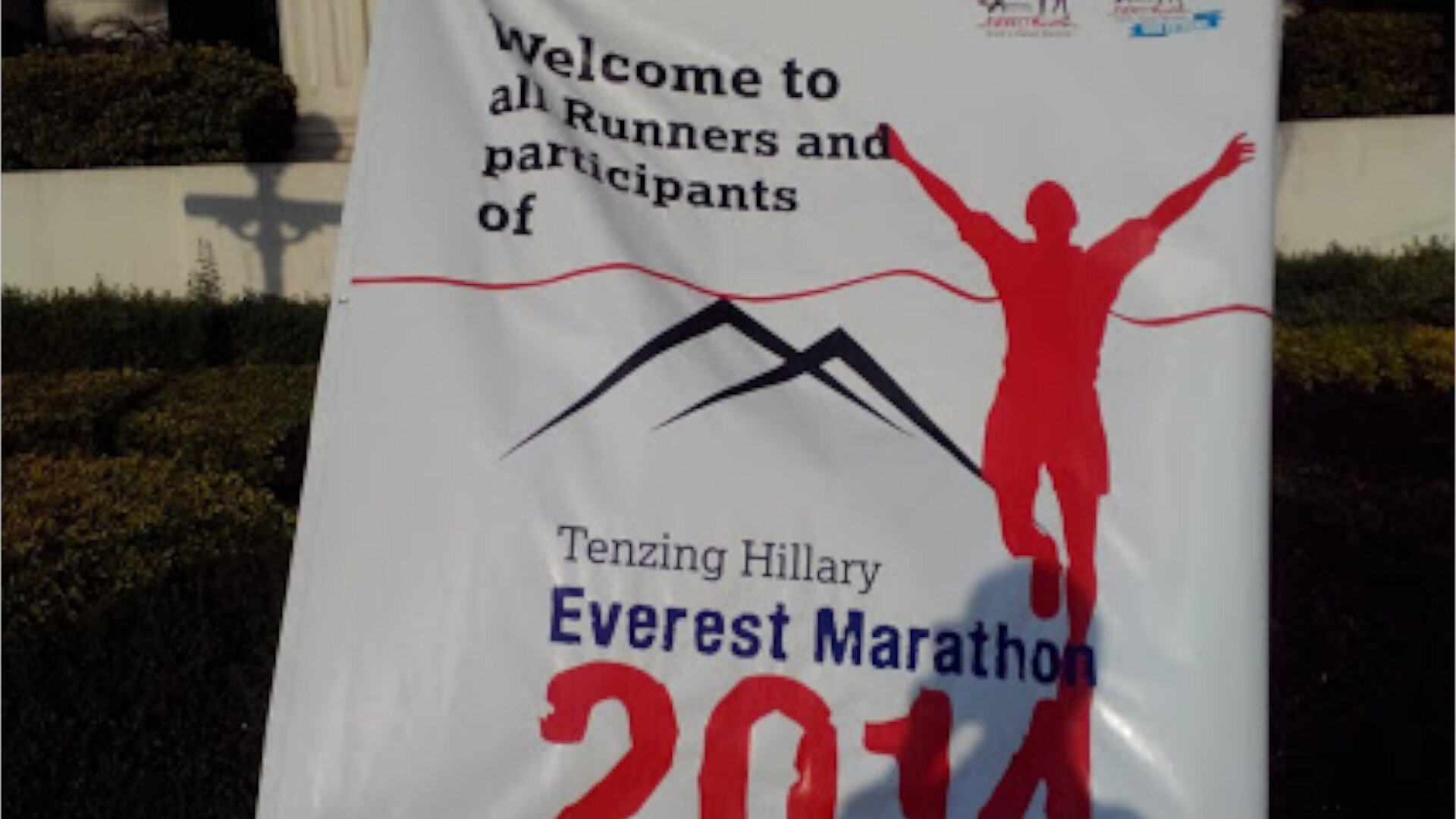
We're proud to host the participants of the Tenzing Hillary Everest Marathon. The first edition of this event was held in 1985, and Hotel Shanker is proud to have hosted its participants numerous times since its inception. We wish all the participants well.
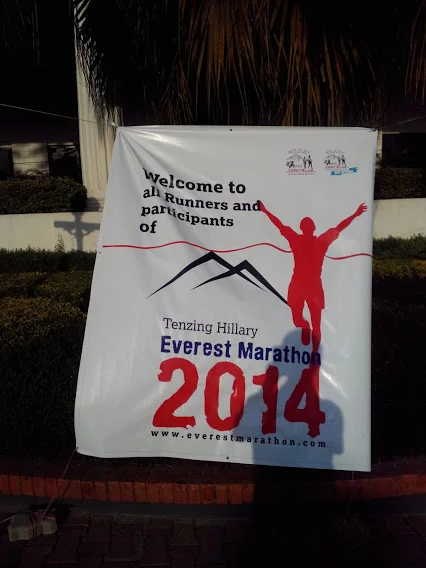
A warm welcome to all participants of the Everest Marathon 2014
We're proud to host the participants of the Tenzing Hillary Everest Marathon.
The first edition of this event was held in 1985, and Hotel Shanker is proud to have hosted its participants numerous times since its inception. We wish all the participants well.
Hashtags: #EventsInNepal #EverestTrekking #TrekkingInNepal #NepalTreks #HotelsInKathmandu #KathmanduHotels #HotelShanker
POPULAR ITINERARIES
SIMILAR POSTS