Symbolism of Dashain
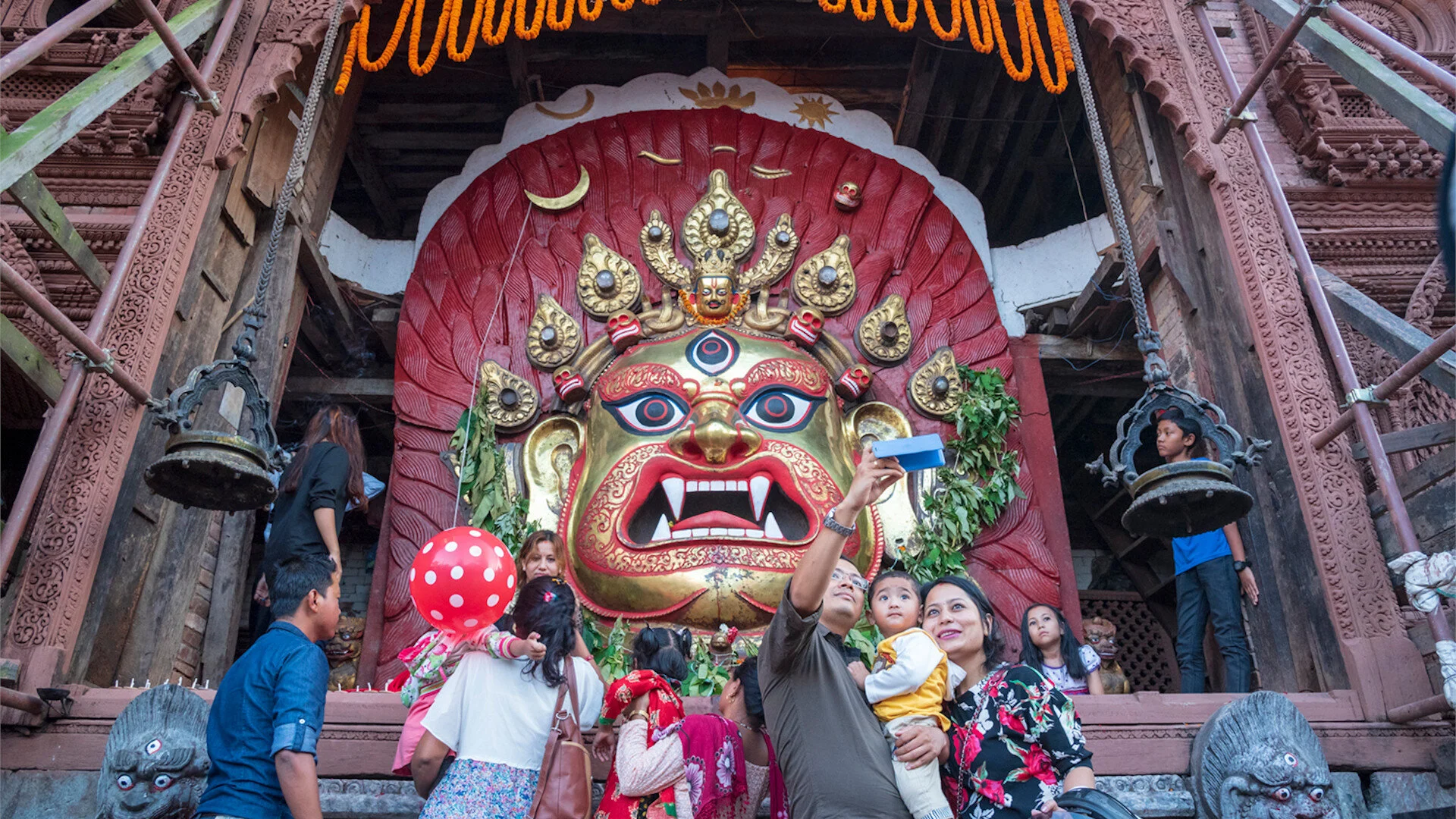
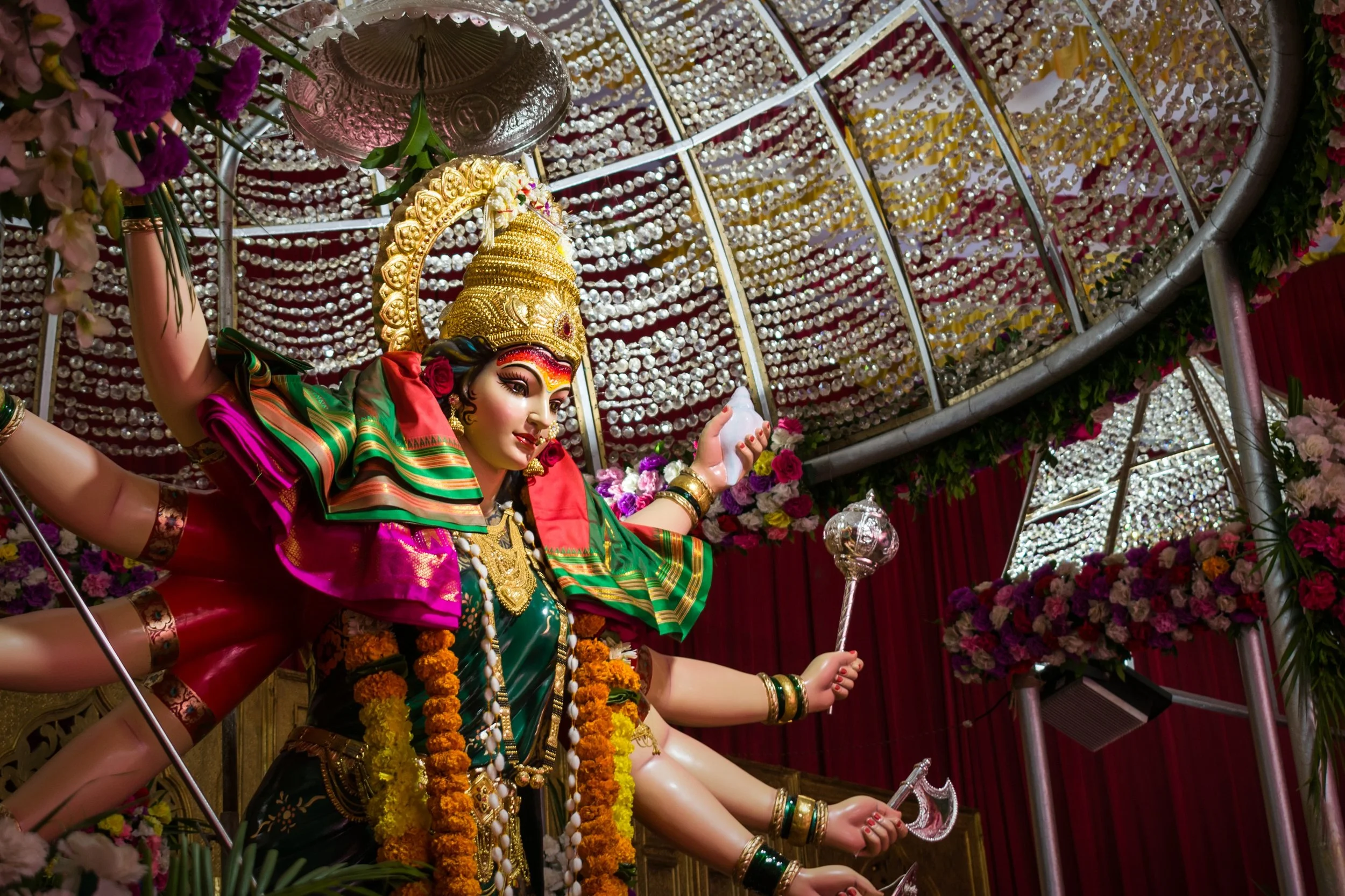
Dashain- a grand celebration of victory over evil. The festival at its core is similar to Dashera celebrated in India but over time numerous elements have been through cultural practise. It is a festival with deep symbolism and roots in all of our cultures
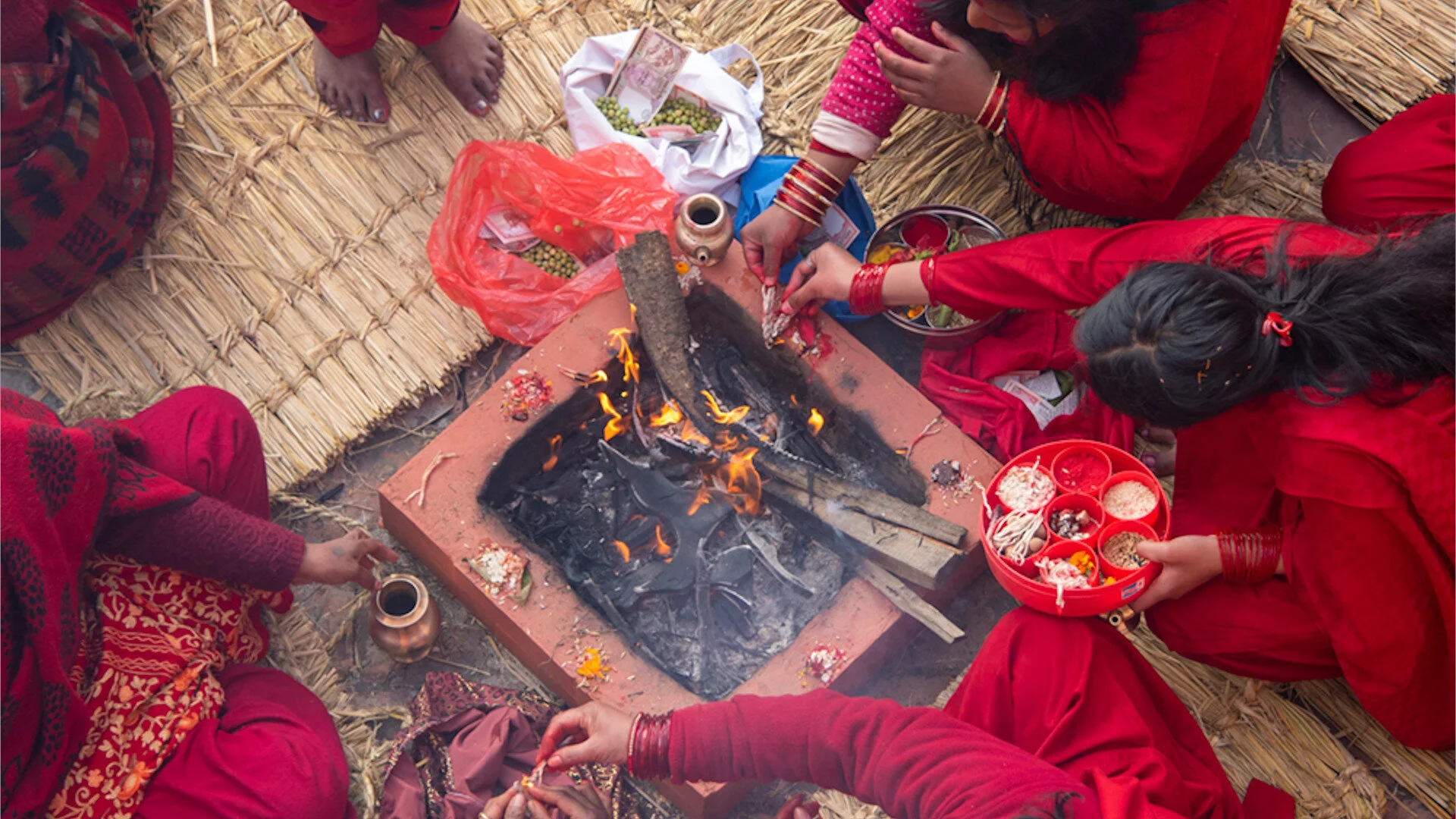
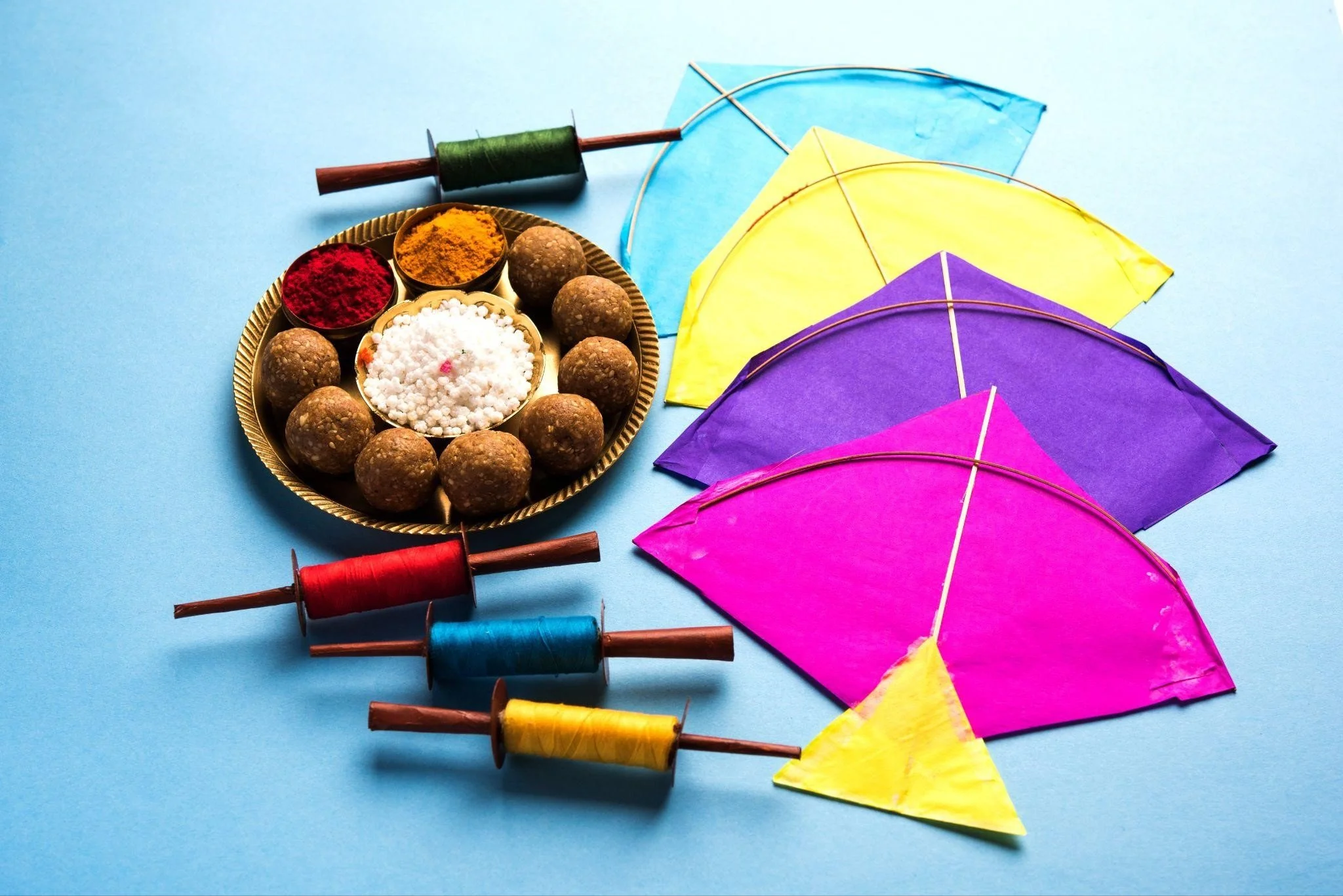
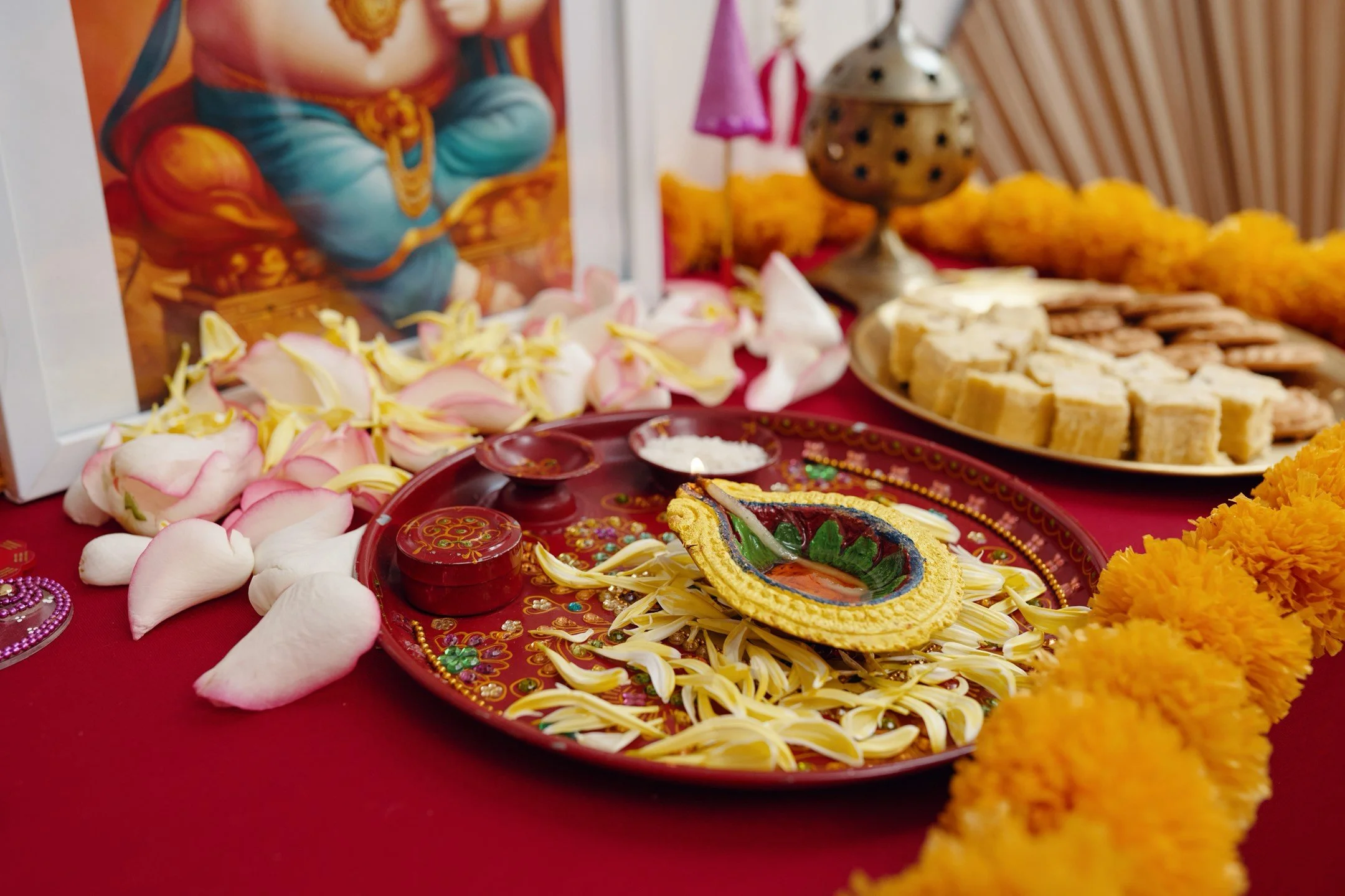
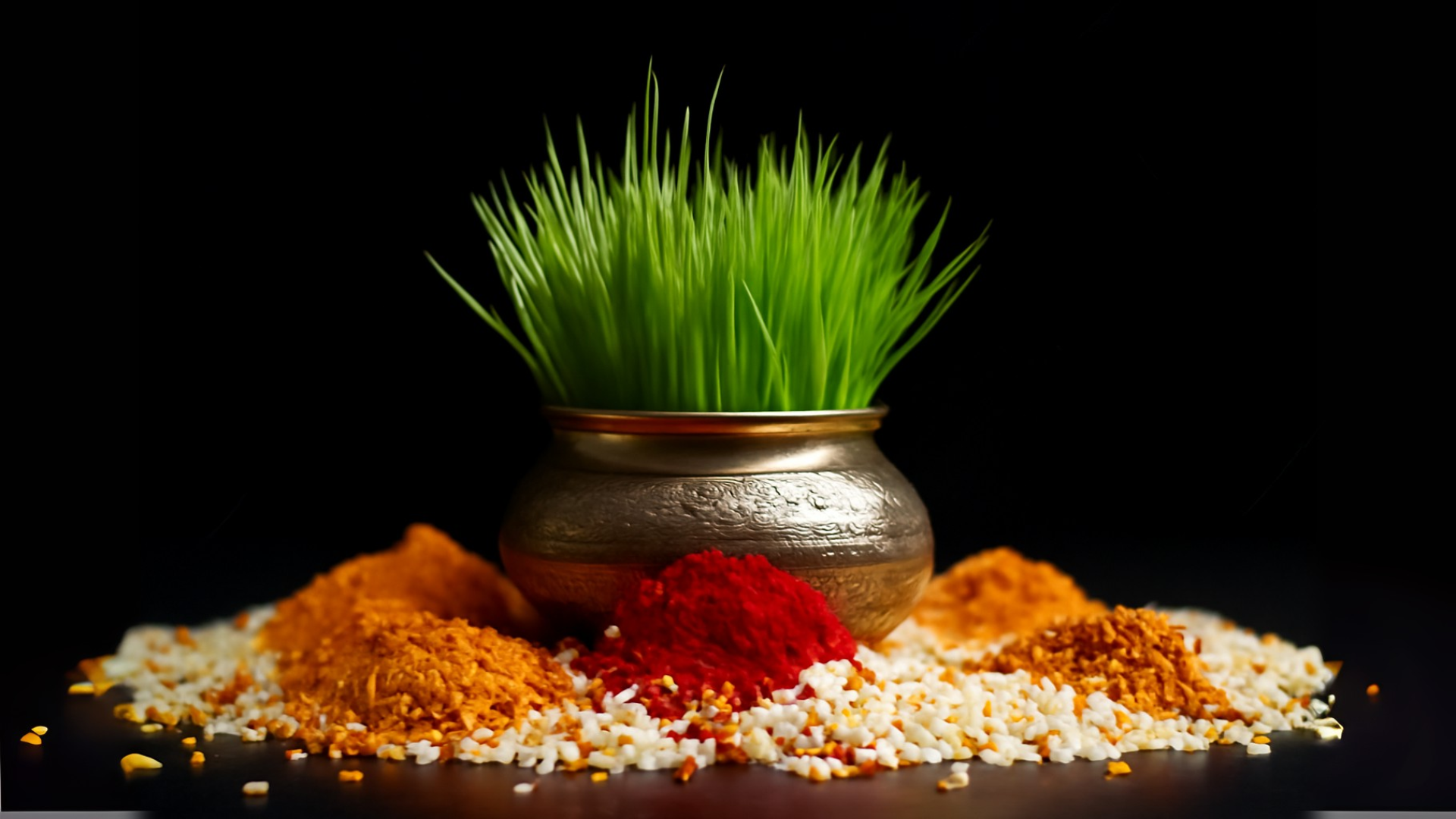
Upon hearing Dashain people envision a long holiday where people rejoice in flying kites, wearing new clothes, eating good food, and exchanging kind greetings with loved ones. The most powerful symbolic message is the celebration of the victory of truth and virtue against injustice. This auspicious festival starts with Ghatasthapana where people fill a vessel to the brim with sand. Then they sow barley seeds and maize while covering it in a pitch black room and worshipping it for 10 days.
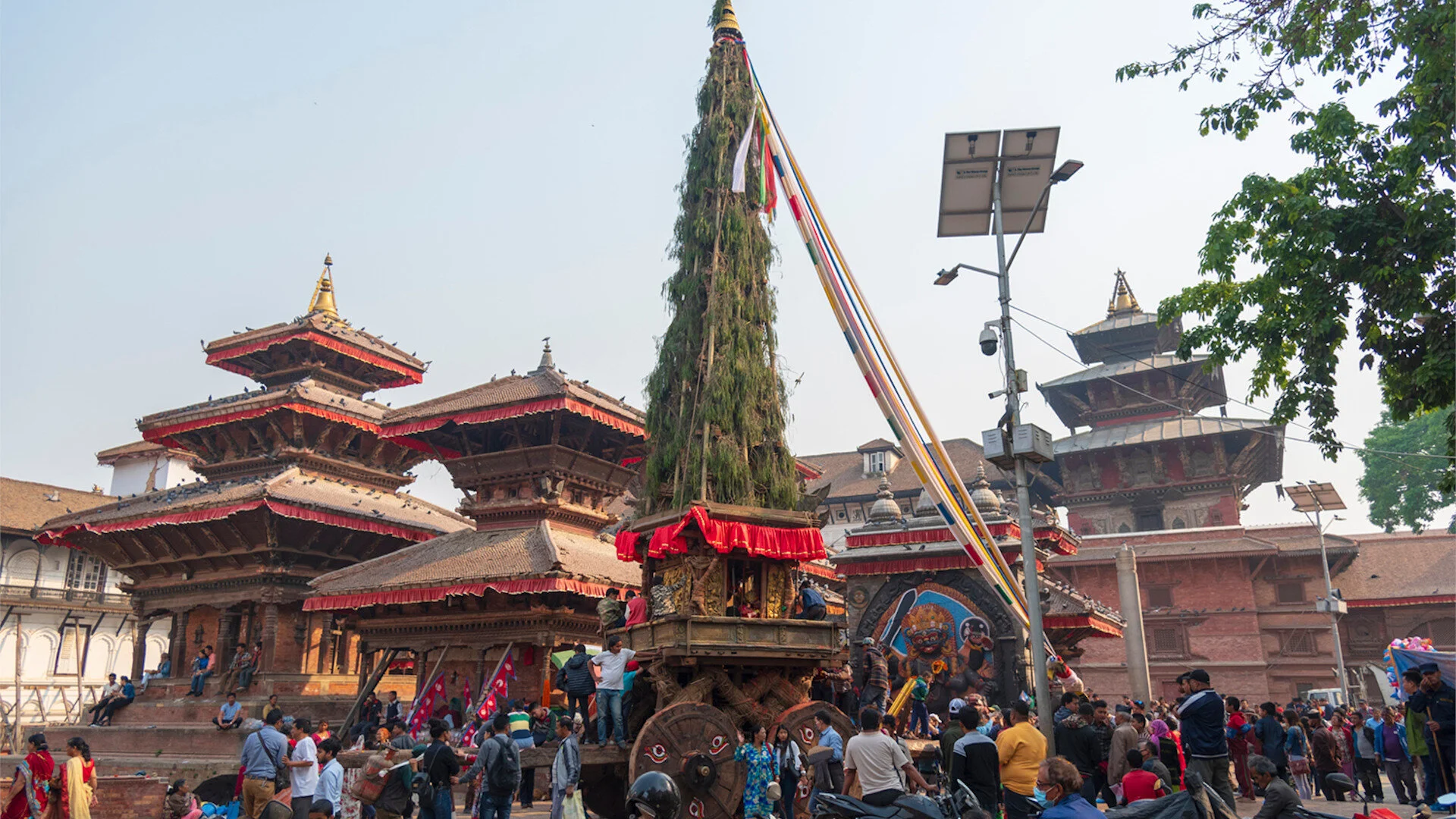
Similarly, on the seventh day, Phulpati is observed in the form of Saptami and is commemorated by an official ceremony held in Dhulikhel. After that, the Fulpati parade is taken to the residence of the president of Nepal as he’s a leader of the country. Followed by the eighth day, Maha Asthami is devoted to the name of Goddess Kali, who is a manifestation of Goddess Durga. To appease the fiery rage of Kali, people tend to sacrifice hens, goats, and buffaloes in temples. Now comes the ninth day of Dashain Mahanavami where we remember Lord Vishwakarma who is famously known as the divine creator of the world. People spent their day worshiping their tools, equipment, and vehicles. Another value of this important day is the opening of Taleju Temple. Its gates are open to the public only on Mahanavami.
Commonly, it’s considered to be a nine-day festival and is called Nauratha or Navaratri. During this time, we dedicate our time to worshipping many avatars of Goddess Durga like Brahmacharini, Shailputri, Kushmanda, Chandraghanta, Katyayani, Skandamata, Siddhidatri, and Mahagauri. On the tenth day, to mark the end of the ritual, people distribute Prasad as sweets and Jamara. Not to forget the most exciting part for children, elders bless them with Dakshina (money). It symbolizes blessings passed down from one generation to another. To give the exact timeline, the tradition of receiving Tika and Prasad starts from Ashwin Shukladashami and ends on Ashwin Shuklapoornim.
The fifteenth day is the last of this festival and falls on a full moon day. Preserving the historical ethos of the vibrant festival, it concludes after staying awake for the whole night and following various proceedings in the name of Mahalaxmi. This night is popularly called Kojagrat Purnima. The actual meaning of Kojagrata is someone ‘who is awake.’ There’s a common belief that Goddess Lakshmi visits earth and she keeps tabs on people who stayed awake to worship her. She brings prosperity and luck to people who prove their unyielding commitment.
However, there are some superstitious elements at play during this season as well. Animal sacrifices are done in the name of the weapon, Maulo, and Kotpuja. Although this practice has been notably reduced, they are still apparent in some typical Nepalese neighborhood. Our values should lie in the fact that saving the lives of harmless creatures should be done even if the tradition says otherwise.
Overall, the Dashain festival represents Nepal as being rich in cultural diversity. The Malshree dhun is integrated as a piece of mainstream Nepalese music and represents the tune of Dashain. Since the start of Nauratha, the pleasant melodies of Mohalibaja, Fluit, Dhime, and Jhyamtebaja denotes the arrival of our most awaited festival.
Also, the appealing weather with warm and lovely sunrays in the daytime and foggy mornings make the festival even more joyous. It falls under the perfect time, the ending of the rainy season, and the beginning of the winter season.
The elements of bonding and family reunion make Dashain a valuable and memorable time for all. Other key aspect includes bonding, elder’s blessings, family reunion, and entertainment making it a heartwarming time spent with loved ones.
POPULAR ITINERARIES
SIMILAR POSTS

Sikali: A Unique Take on Dashain
While most of us rejoice for nine days in the most auspicious festivity of Dashain, people of the Newa community partake in a unique cultural blend in a historic town. For ages, the post-harvest celebration has had its own significance and this Newar festival for the people of Khokana is parallel to the ideologies of Dashain, ‘Victory of good over evil.’
Historically speaking, the festival is dedicated to the name of the goddess Sikali, more commonly known as Rudrayani and Ajima. Famously known for carrying the reputation of a healer in society, Sikali are guardians committed to being the protector of children. During the seven days long festivals starting from Ghatasthapana, Goddess Rudrayani is carried in a wooden chariot for a stroll throughout the village. She then rests in front of the Sikali temple where she belongs surrounded by religious copper vessels.
On the day of Fulpati, they commemorate the occasion with a special cultural dance in the heart of Khokana. In the Malla era of the 15th century under the ruling of the King, Amar Malla made various temples under the name Matrika’s (Mother Goddesses). Amongst them, Rudrayani, commonly known as Maheshwari became a well-renowned deity. A special temple was made in her name and the town of Khokana dedicated its life to her service. For that matter, the King selected Dangols and Maharjans and relocated them to Pachali Bhairav for maintaining and catering service. While establishing the foundation of the Kingdom, the city was famously known as Jitapur.
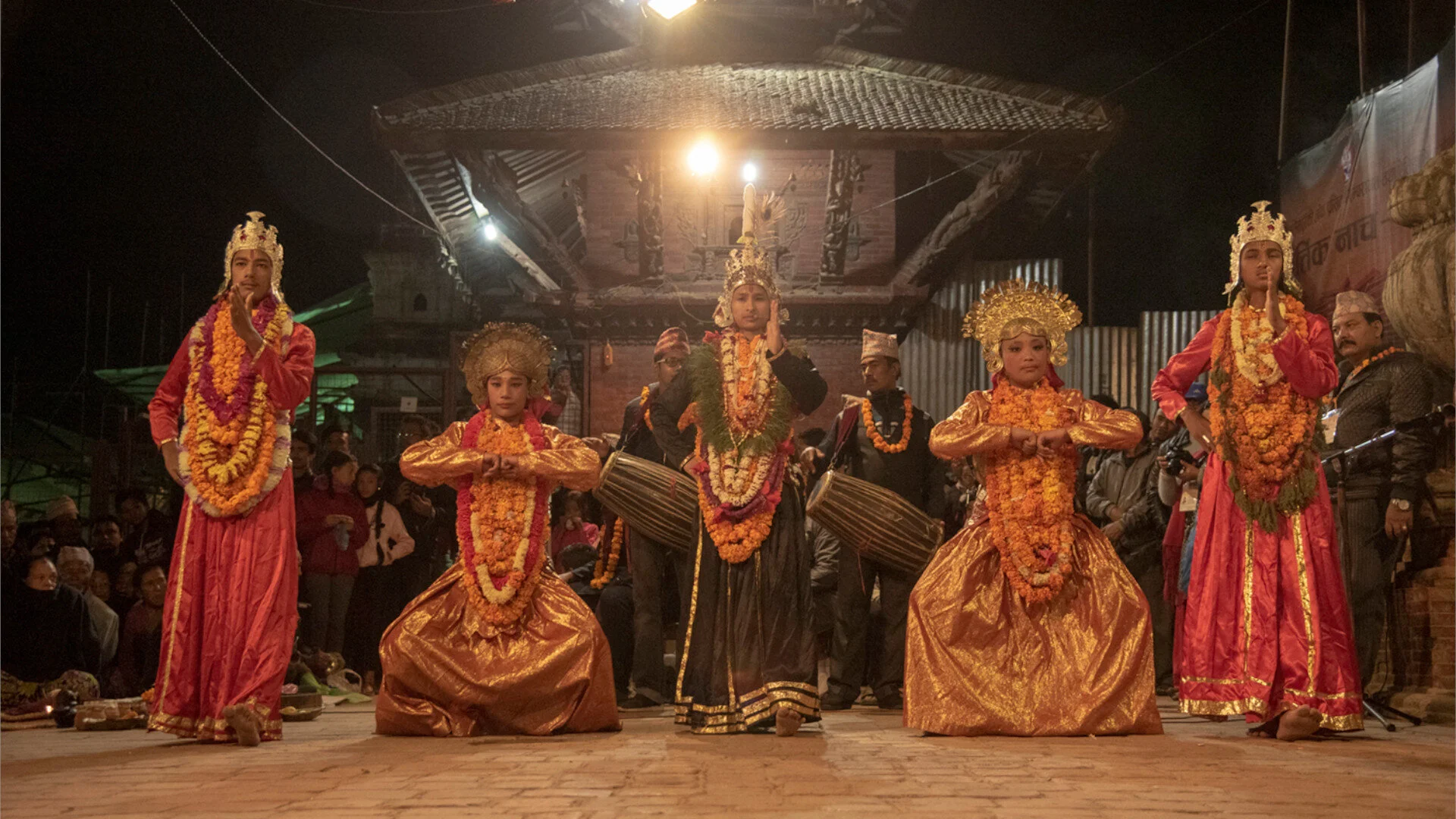
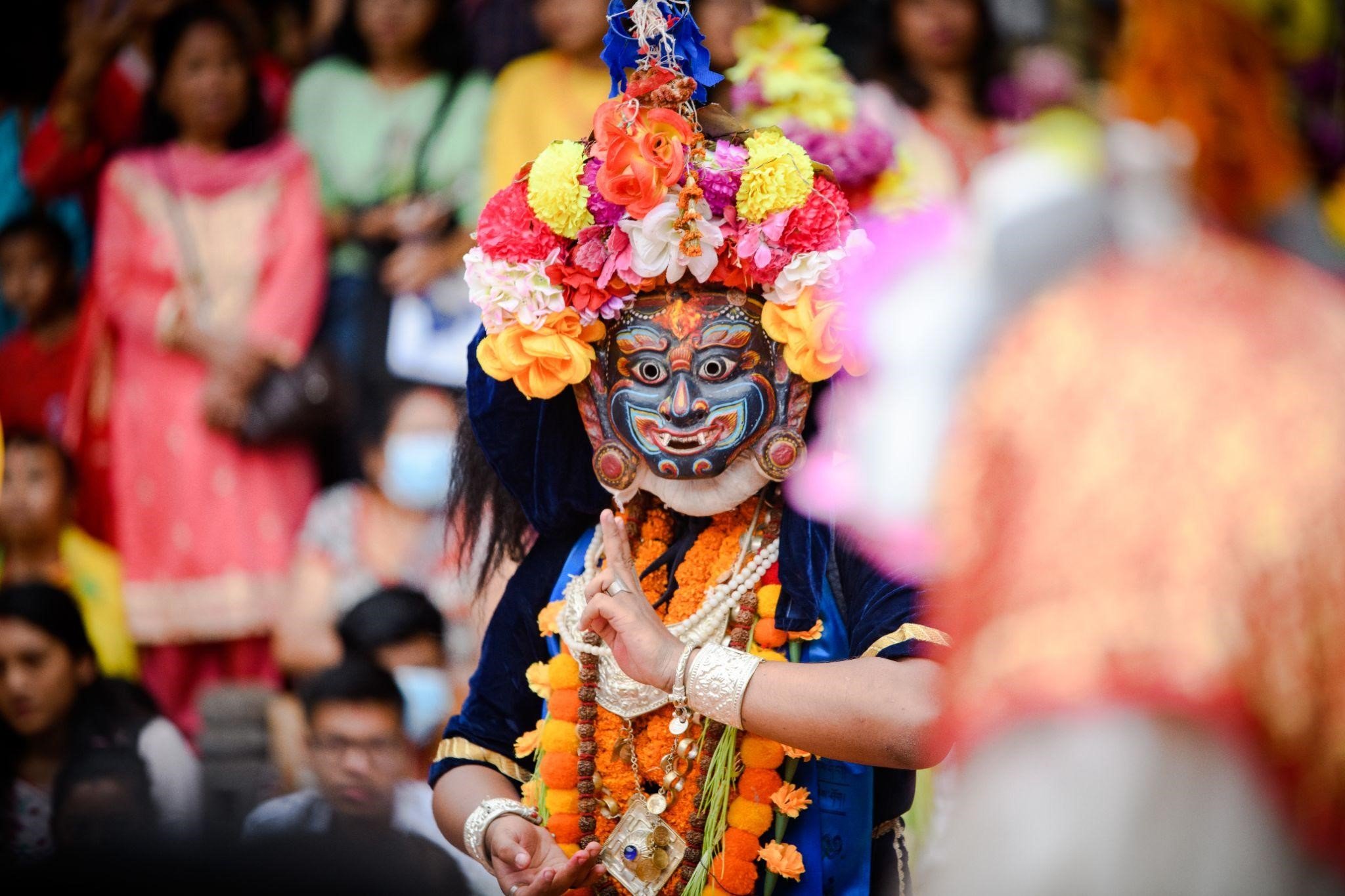
So, in today’s era, how is tradition conducted? Well, it is conducted by the prestigious priests with decorative ornaments and plain white robes. About 14 masked goddesses come together to perform a graceful dance with each other. Locals have strong faith that their devotion to protecting them and their town from grave calamities and misfortunes. Previously, the deeds performed in the festivity were also known to reduce the high child mortality rate in Nepal. It was a common myth before modern medicines and vaccines came into existence.
Talking about the origin of the word Khokana, it is a Newari word Khokana where “Kho” means to weep and “Kana” means to tell. Legend says that in this land a respected Maharjan priest of Pachali Bhairav residing in Kathmandu lost consciousness because of a high cold fever. The village Vaidya, in a state of shock and confusion, thought he was dead and was taken to the bankside of Bagmati for cremation. His wife joined beside him in the pyre following the historical Hindu practice of Sati Pratha.
A heavy downpour then resulted in everyone leaving the cremation and running towards the shelter. But surprisingly, as the pyre started burning, the priest gained consciousness. Thinking of this as a bad omen, the people of the locality didn’t allow both of them to enter the city again.
With nowhere else to go, they decided to make their living in Kudesh, ‘Ku’ meaning Bad and ‘Desh’ meaning country. There’s a hearsay that claims Goddess Sikali Devi blessed the couple and they started a new settlement on the northwest side of Khokana, the rest is history.
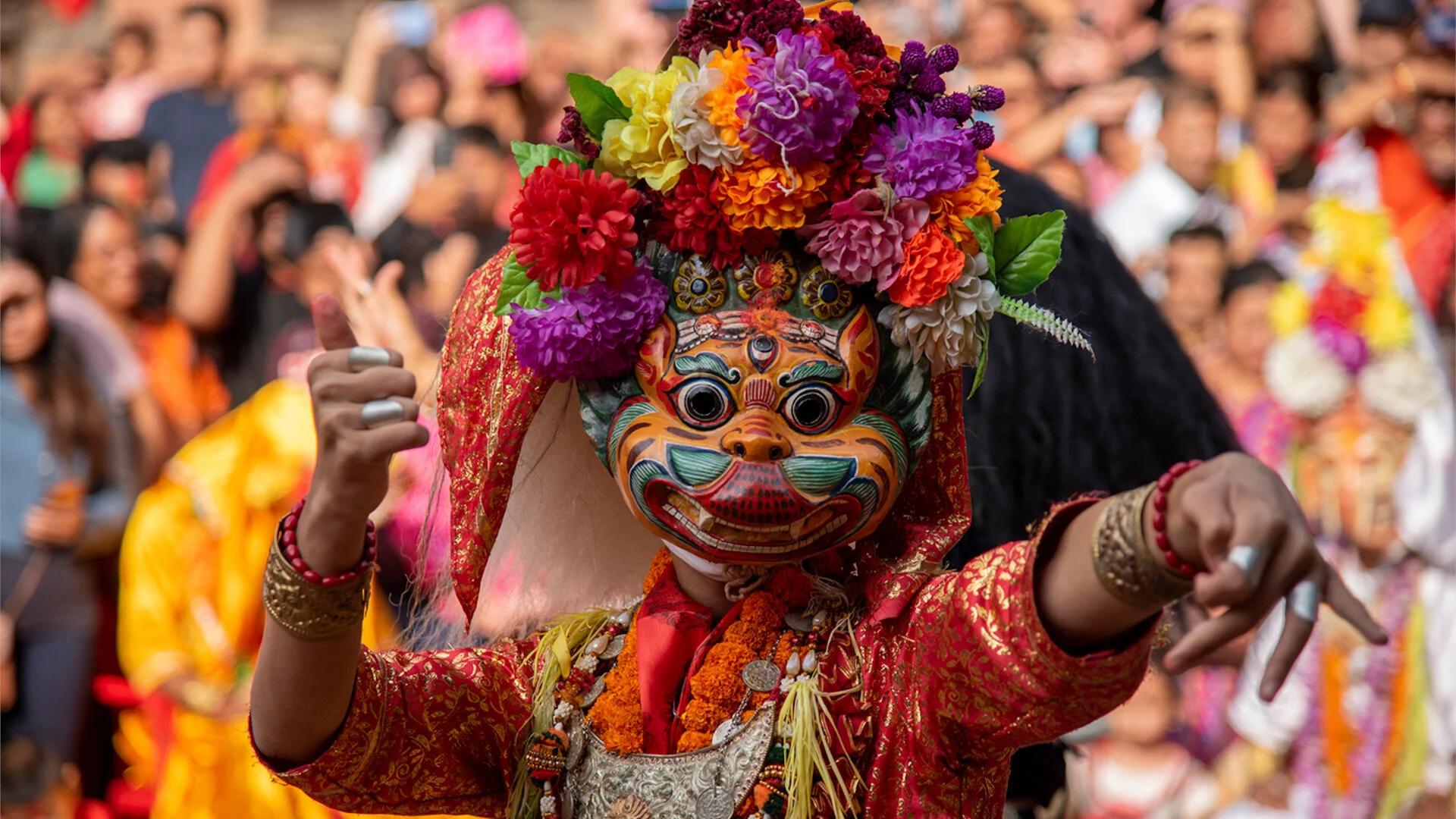
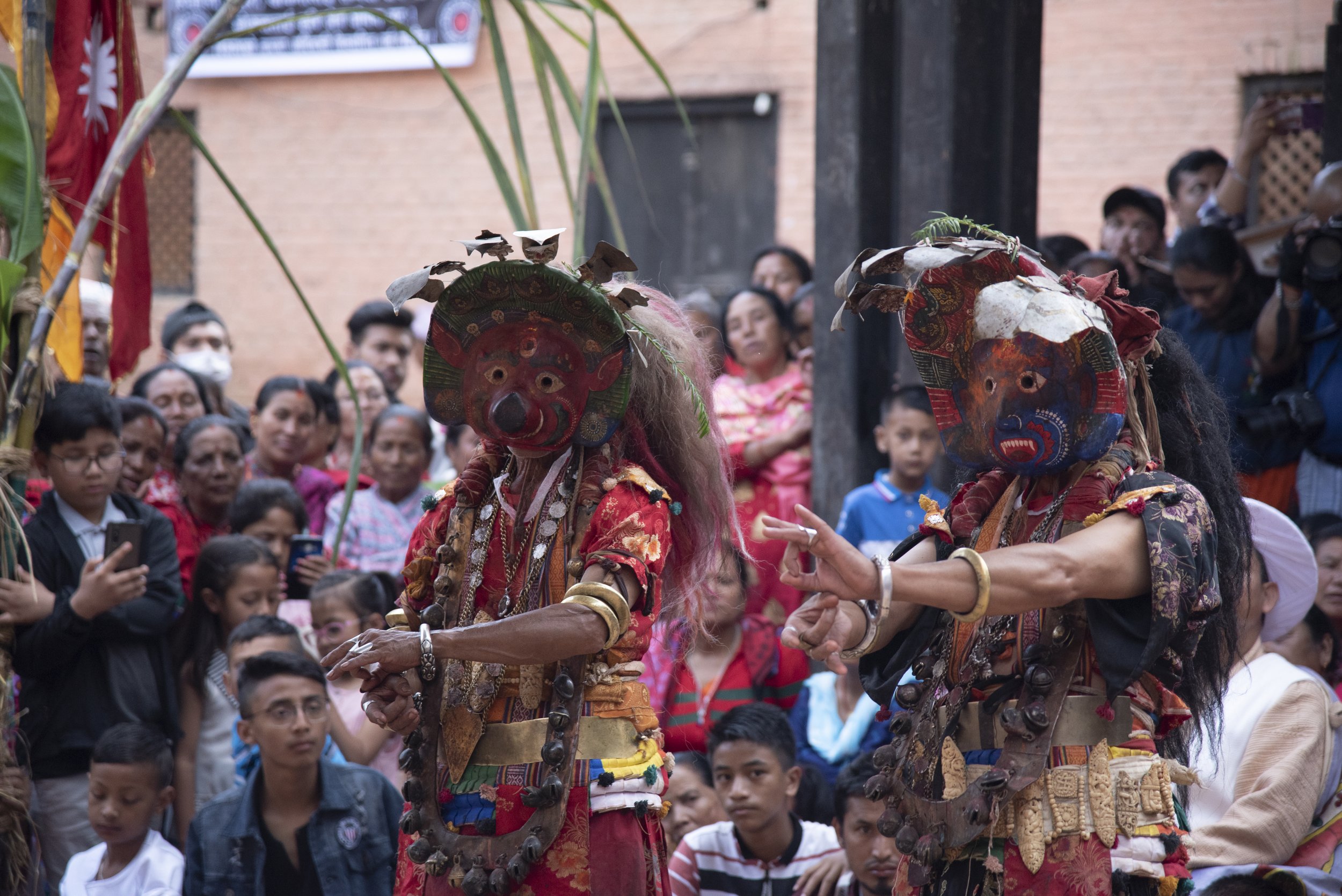
During the final day, a distinct performance is held by the elders of the community. Presented in an archaic form of storytelling, it involves traditional music with people in godly dress up and a mask of famous gods and notorious demons. This represents a great diversity of people coming together as one. A huge commotion is created by individuals to witness the auspicious occasion of Sikali being taken to the temple. The spectacles take blessing from her for health and prosperity. Even tourists from far and long come to get a glimpse of this holy entity.
POPULAR ITINERARIES
SIMILAR POSTS
Yenya Punhi: A Jubilation of Kathmandu - Part II
According to legends, it is believed that the mother of Lord Intra required a Parijat( a white flower) to perform a ritual. For which Lord Indra descended to earth in search of the flower. He disguised himself as a commoner and while trying to take the flower out of the lawn of a Jyapu. He caught Lord Indra and held him captive blaming him of trying to steal. Lord Indra was imprisoned and not allowed to go back to heaven.
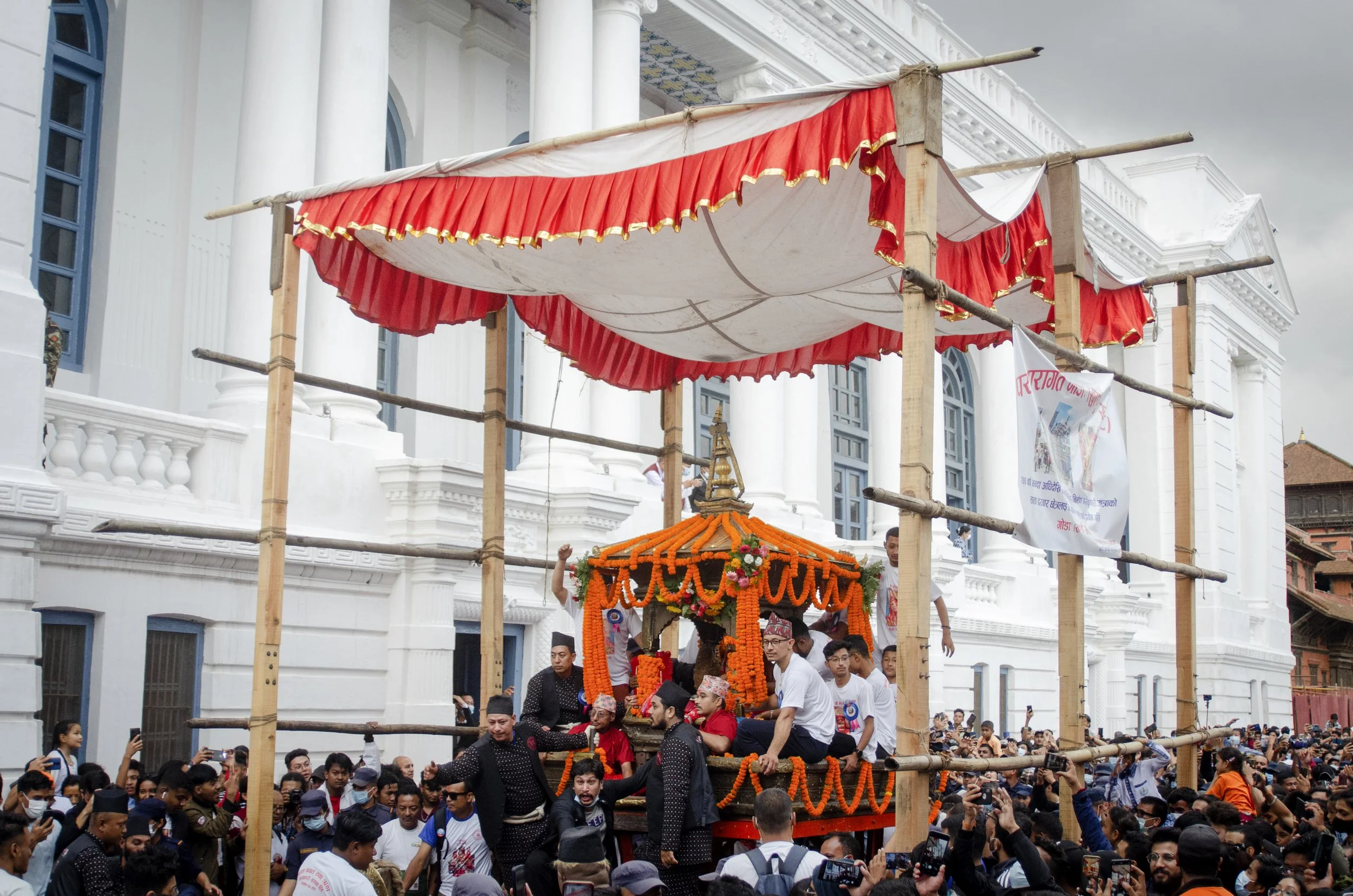
Regarded as the biggest festival of the then Kingdom of Nepal Valley, the true origin of the festivals are still debated. But this festival is believed to be founded during the Licchavi Era by King Gunakamadeva, the founder of the city of Kantipur (Kathamandu). The celebration of Indra Jatra is made of three different series of rituals: Kumari Jatra, Indra Jatra and Bhairava Jatra. Each have their own legends and ceremonial components but as a whole, turn the centre of Basantapur Durbar Square into a grand affair. The square is a sight to behold from the break of dawn till midnight, as the chariots of Kumari, Ganesh and Bhairava make there way through the inner city of Kathmandu. Every street comes to life with masked dances, merry music during the eight days of festivities.
According to legends, it is believed that the mother of Lord Intra required a Parijat( a white flower) to perform a ritual. For which Lord Indra descended to earth in search of the flower. He disguised himself as a commoner and while trying to take the flower out of the lawn of a Jyapu. He caught Lord Indra and held him captive blaming him of trying to steal. Lord Indra was imprisoned and not allowed to go back to heaven.
The mother of Indra grew worry some as her son hadn’t returned from Earth. Phul Khusi ( The Vahan of Indra) descended upon Earth to find his master and wondered around the streets of Kathmandu. During when a great festival was occuring in the Kathmandu and after hours of searching, Phul Khusi found Lord Indra. Phul Khusi took the news to heaven after which, his mother descended from heaven to free her son. She requested the villagers to release her son, but didn’t heed to her words. Only after Lord Indra reveled his true form. The mother of Indra made a promise to the villagers to give in return a final rainfall for their harvest to prosper and she would lead them to the gateway to heaven.
Accepting the conditions the villagers freed Lord Indra and let him go with his mother, a group of villagers followed them to the outskirts of Kathmandu to find the doorway to heaven. But Lord Indra’s mother tricked the villagers by putting forth a large mist which left the villagers confused and in dismay as Lord Indra and his mother went to heaven. To commemorate this event, during the celebration of Indra, a Dagi ( Procession) takes the same path every single year. “The circumbulation of the city is performed in order to reach heaven in the Dagi’s footsteps to meet the dead relatives. The families scatter grain by the wayside so that they would not forget the way home. One finished, they throw what remains of there offerings in a plce called Bhuta Satta, near Kasthamandap, and wash their faces at Maru Hiti fountain. Afterwards, they either return home or go to bathe in Indra’s Pond ( Yamki Da), which is located on a hill 12 kilometers west of Kathmandu.” Toffin,1992,86)
The festival of Indra Jatra is a feast to all senses, the air is scented with the smell of incense, and the sound of drums and traditional instruments tranquil once ears. For the eyes, one can behold the procession of Living Goddess Kumari along with Lord Ganesh and Lord Bhairav. The chariot is pulled for three consecutive days. The first day is known as Kwaneya during when the chariot makes its way from Basantapur, Maru, Chikanmugal, Jasidewal, Lagan, Bhimsensthan, Baru and ends at Basantapur. The second day is known as Yenya Punhi on which the chariot procession begins from Basantapur to Pyaphal, Nyata, Tengal, Nhyaokha, Nhaikan Tol, Asan, Kel Tol, Indra Chowk, Makhan and ends at Basantapur. The final day of the procession is known as Nanichaya, the chariot is pulled by revellers from Basantapur tp Pyaphal, Yatkha, Nyata, Kilagal, Bhedsing, Indra Chowk, Makhan and ends at Basantapur.
During the festival of Indra, various idols and masks of goddess are taken out of their normal abode to be exhibited to the people. The most prominent of which are the Sweta Bhairab mask and the idol of Akash Bahiran. Similarly an image of Indra is displayed at Maru and Indra Chowk. Various forms of dances such as of Lakhe Aju, Mahakali Naach, Halchowk Bairab, Phul Kushi, Devi Kyakhan are performed on specific days and nights of the festival.
POPULAR ITINERARIES
SIMILAR POSTS
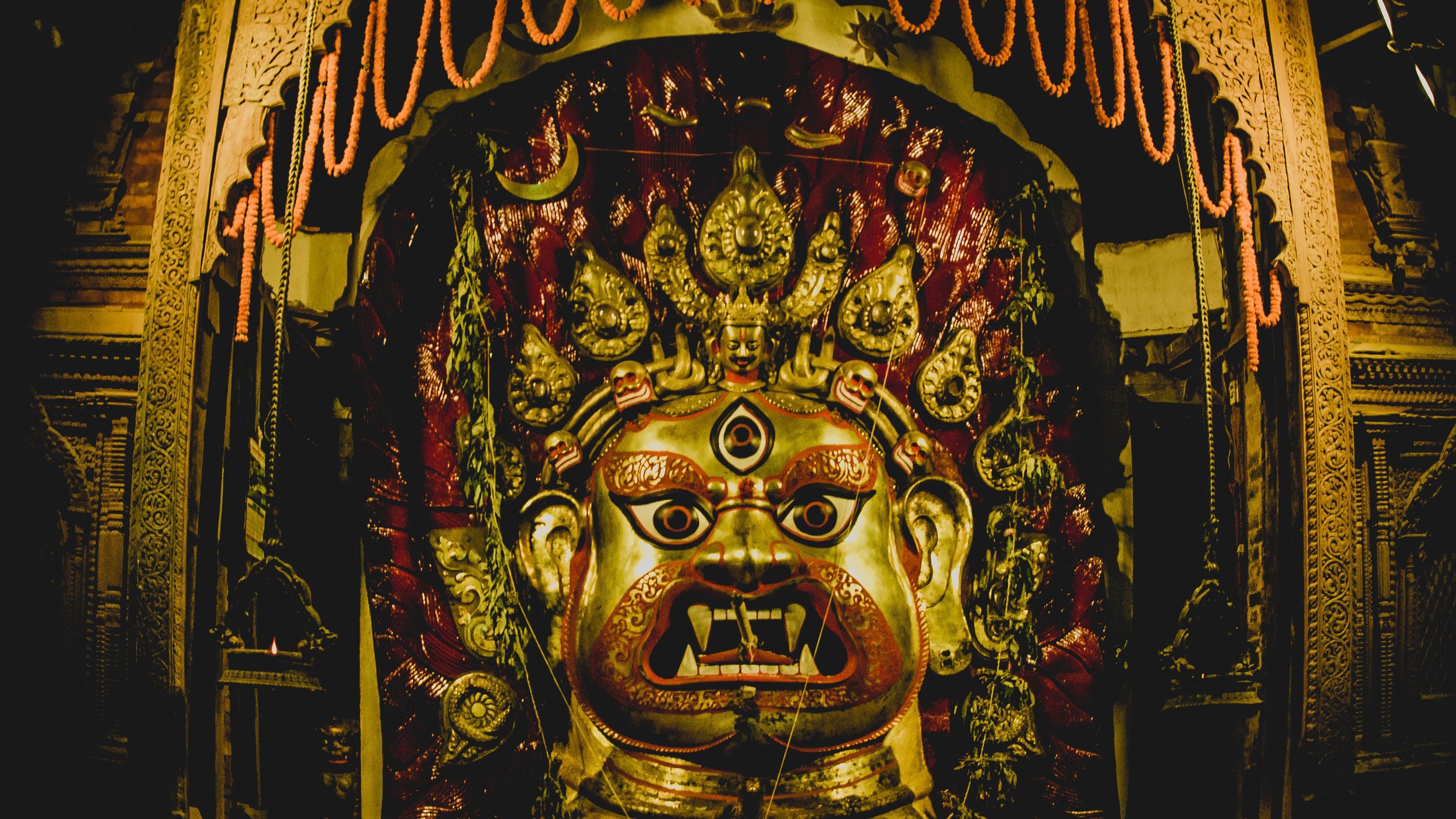
Yenya Punhi: A Jubilation of Kathmandu - Part I
Amongst the great celebrations of this valley, nothing beats the pomp and flair of Yenya Punhi. Commonly known as Indra Jatra- a name derived from the lore of Indra- the heaven king's visit to Nepal. This festival is larger than life, with symbolism and meaning going back thousands of years- neatly preserved by the Newars.
The jubilation of Kathmandu is a combination of festivals. It features the veneration of multiple deities. The Newar name Yenya denotes "Celebration (ya) of Kantipur/ Kathmandu (yen)". The township during the Lichhavi era was called Yen. Its sister cities were respectively called Yala (Lalitpur), Kwopa (Bhatgaon/Bhaktapur) and Kipu (Kirtipur).
The origins of the festivities are very vague. However, the careful analysis presents a similarity to ancient paganistic rituals of Europe. The day of Yenya Punhi aligns with the change of season in this valley. The season transfers from Barsha (Monsoon) to Sarad (Autumn). Reviewing the procedures of various festivals in the valley: evidence is drawn to how the Yasi/ Yosi (Ceremonial Pole) is hoisted to alert the citizens of change. The same was observed in medieval Europe. The ceremonial May Day pole symbolized the advent of spring. A stark similarity to Bhaktapur's Yoshi was erected during Bisakh Jatra to celebrate the end of winter and the beginning of spring.
After the Earth, the festival features associations with the guardian deity of Nepal Kingdom- Bhairava. The association was made during the Licchavi Era. A legend goes as follows:
As instructed, the King merged the existing villages of Koligram (Yambhu) and Dakshin Koligram (Yengal). He defeated rulers of various petty states and created his new city. He also established a beautiful stone spout gilded in gold, Lu Hiti (Gold- dhara/ Sundhara). It featured an intricate water-management system, and royal canals (Rajkulos) channelled river water to the spout. He named the city Suvarna Pranali Kantipur. Here, Suvarna means golden, Pranali means system. Kantipur is a mixture of two words - Kanti, meaning beautiful and pur, which means place.
To celebrate the momentous occasion, he initiated a festival known as Yenya. The word is a mixture of Yen- the Newari name of the city and Ya- celebration. It is also called the celebration inside the town.
It is possible King Gunakamadeva’s celebration overlapped the change of seasons, and the two elements became one.
The inception of Indra in the festival is a great mystery. Indra is a god from the Vedic era. He had deep roots in the classical Indian pantheon, but his worship slowly began to fade. Some believe that due to his nature his worship began to fade. Anthropologist G.S Nepali writes, "The festival of Indra Jatra suggests perhaps the memory of a conflict between the two tribes- the followers of Indra and their opponents. The festival is perhaps an Indo-Aryan feature which survives in Nepal, but is totally forgotten in India."
The goddess of Indraghat arrived in the Nepal Kingdom during the rule of King Dharmadatta. The goddess is referred to as Indrayani, locally known as Manamaiju. The hill where she settled in this valley is referred to as Manamaiju. It could be that after her arrival, the worship of her husband Indra also began.
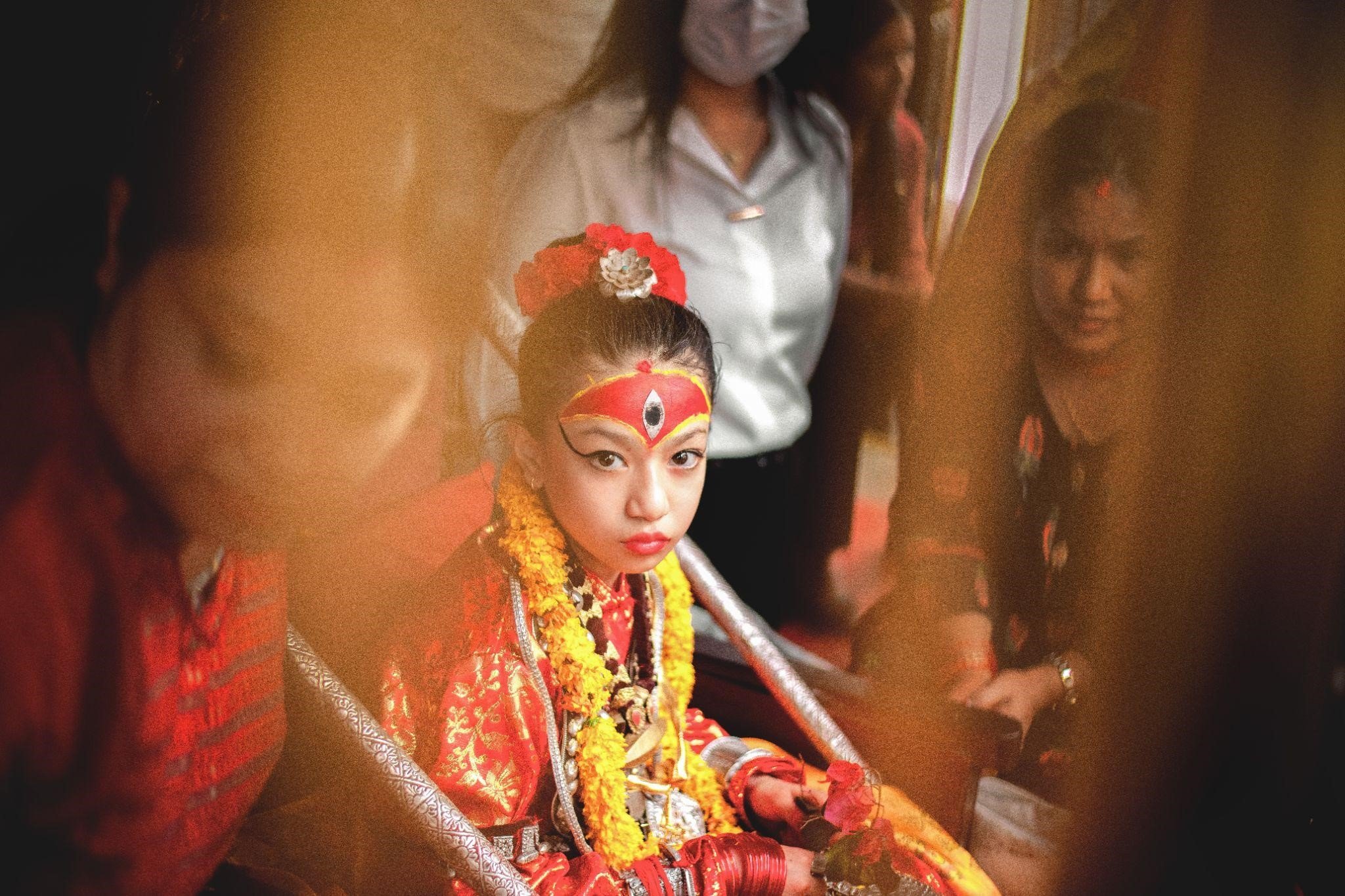
The third fold of this festival is the female guardian of the Nepal Kingdom- Kumari. A Kumari is a living goddess embodying the energy of the divine feminine. She is worshipped as Taleju Bhawani, Durga or Parvati. During the Malla Era, King Jaya Prakash Malla had an unfortunate encounter. He lost the trust of his tutelary deity Tulaju Devi (today known as Taleju). After multiple requests, she came to his dreams and directed him to begin worshipping a virgin girl of the Bandra (Buddhist Newar) community as her manifestation.
To read the full version of the incident click here
These elements combined have created an atmosphere of great jubilation. The core activities related to these deities are accompanied by various magical creatures and the presentation of beautiful dances and plays.
POPULAR ITINERARIES
SIMILAR POSTS
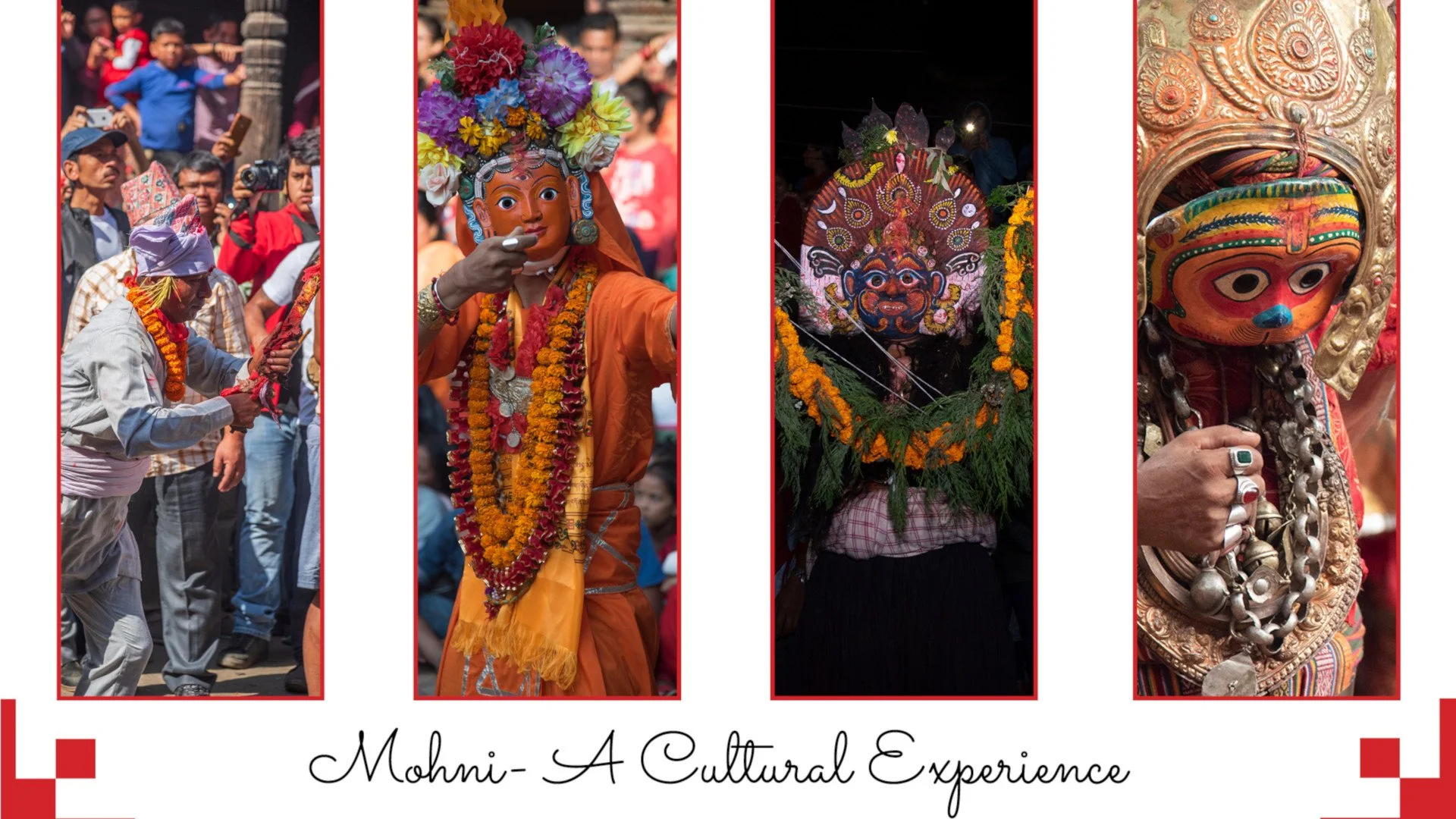
Mohni- A Cultural Experience
For an outsider to truly experience Mohni, s/he has to be invited by a Newar to their home. Over the years, due to its close celebratory proximity to Dashera, the grand festival of India, it was also considered Dashain- the Nepali rendition of Dashera. But, in reality, Mohni features a few similar elements brought by migrants from the south. Apart from this, the customs and traditions are completely different.
The core celebrations are private. But the Newars, over the years, found a way to liven the public atmosphere as well. Thus, various smaller events take place during the core two-week festival. As these cultural traditions take place in public spaces, one can absorb the cultural experiences easily.
To learn more about the celebration: Click Here
Mentioned below are a few of these events. They amplify the celebrations of Mohni via the presentation of numerous dances, skits and others.
Sikali Jatra
On the southern end of the city of Lalitpur lies the picturesque village of Khokana. Historic in nature, stepping foot inside the settlement is equal to walking back in time. The old mud-brick houses and ancient heritage mingle with the new concrete construction.
A unique aspect of this village is how the inhabitants do not celebrate the main festival of Dashain. They, however, rejoice in a celebration known as Sikali Jatra. It begins on the day of Ghatasthapana and ends on the day of Fulpati.
During this period, the inhabitants perform ancient rituals. Amongst these are the Sikali Naach and the skit of Khokhana. Elders adorn the masks of various deities and re-create a play depicting old tales. Whereas in the premises of the Sikali temple, an arcane ritual takes place.
Asta Matrika Dance
Traditionally known as Ga Pyakhan, this ensemble features 13 masked dancers who embody the principal mother deities of the city and chief gods. In Nepal Bhasa (Newari), Ga means group and Pyakhan- dance, whereas Asta Matrika Dance in Nepali.
This dance originated in the 17th century. As per chronicles, the king saw the deities dance towards his palace and enter the courtyard. The king rushed to take their blessings, but as he entered the court, they vanished. To commemorate this auspicious event, he initiated this dance.
This performance is annual and begins on Ghatasthapana- the first day of Mohni. The dancers follow strict discipline for eleven days. Primarily the presentation takes place in the evening, but on the seventh and tenth day, the show takes place during the day at Mul Chowk of Patan Durbar.
Pachali Bhairab Jatra
Towards the southern end of Kathmandu lies an open-air temple with a peculiar deity. The worship of Pachali Bhairab, as per numerous chronicles, began in the 10th century, during the rule of king Gunakamadev. The festival of Pachali Bhairab takes place on the fifth day of Mohni. Devotees flock to the temple to seek his blessing and to witness the chariot festival. The deity is carried on a palanquin by community members and take a designed route on the old city roads. At Hanuman Dhoka, the idol rests, and special puja is conducted. Post which, the procession heads towards Kumari Chhen (House), where the living goddess locks eyes with the bronze idol. Until she instructs that she is satisfied, the ritual doesn’t stop. After her instructions, the procession completes the circuit, and the statue rests inside the temple premises.
Khadga Jatra
On the morning of the tenth day, three scared swords are brought to Patan Durbar Square from the temple of Mahalaxmi in Lagankhel. Young boys tease the sword-bearer, and a deadly chase ensues. It is a spectacle that attracts a handsome crowd. Once they reach the palace cortex, the sword-bearers are welcomed with a special ceremony. The swords are then placed inside the temple and taken out in the evening.
Thecho Navadurga
The ensemble from Thecho, a semi-urban village south of Lalitpur, visits Patan Durbar Square on the evening of the tenth day. It features masked dancers who embody mother goddesses and other chief gods. They perform a sacred dance in the palace courtyard and indulge in a feast as well.
POPULAR ITINERARIES
SIMILAR POSTS
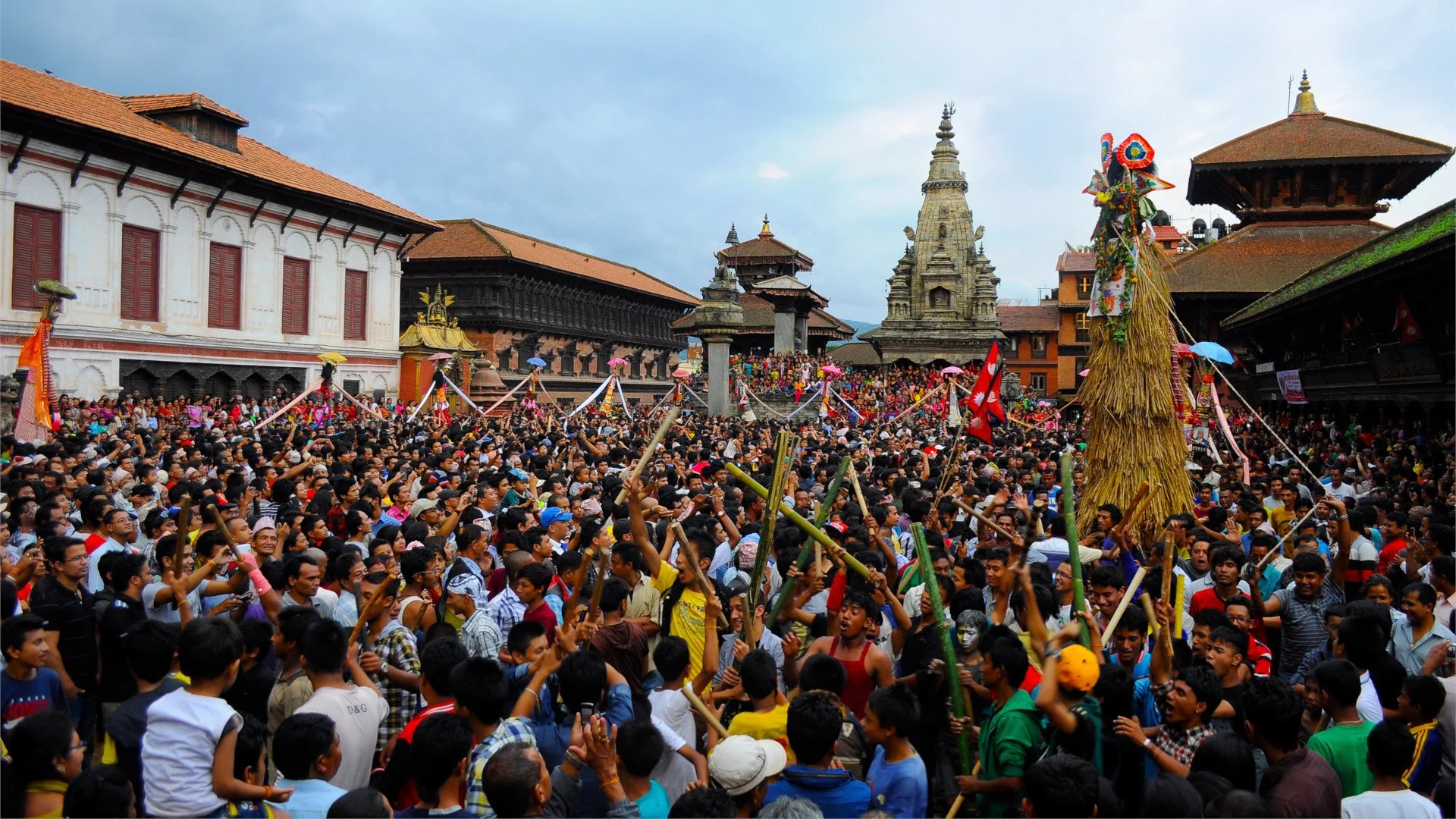
Gai Jatra A Day of Remembrance
Annually on the day of Bhadra Krishna Pratiprada, the valley of Kathmandu wakes to celebrate a festival like no other. Known as Sa Paru in Newari, and Gai Jatra in the Nepali, during the day individuals choose to commemorate the members of their family who have recently departed.
The thing that makes this festival so unique, is the way of commemoration, it isn’t done shedding tears but by spreading laughter and love. The festival is observed for a total of eight days, but the grand festivities occur on the first day. Celebrated only inside the Kathmandu Valley, by the natives of the Newar Community each city of the then Kingdom of Nepal celebrates the day in their unique manner.
According to legends, it is believed that King Pratap Malla of the Malla Dynasty instituted the Gai Jatra after the death of his son. His wife had been stricken with grief and all remedies of had thus failed. King Pratap Malla couldn’t bare the condition of his beloved wife and thus instituted a long procession, to bring forth to the Queen that it wasn’t only she who had lost a dear member of the family. Seeing the procession eased her sorrows, but it didn’t get the job done. Thus he announced a reward would be granted to anyone who would be able to put a smile on the queens face. It is also believed that, he granted full freedom of speech during the festival. The citizens accepted the challenge and came forth with various jokes and ridiculous apparel. Seeing which, the Queen finally broke a smile and laughed.
After which the celebration of Gai Jatra took a new leaf in the valley, where it became not just a way to commemorate the departed but also a way to spread joy and happiness to the once who did. Anil Chitrakar in his article for ECS Nepal states another legend related to the beginning of Gai Jatra, “As the Buddha was going around teaching the Dharma, a woman by the name of Krisha Gautami approached him crying and carrying a dead child. She demanded that if he was as great as people had told her he was, the Buddha should bring her child back to life. It is said that the Buddha calmly asked the woman to get some mustard seeds from a home where there had been no deaths so that he could sprinkle them on the child and bring him back to life. The woman agreed and began her quest to get the seeds from a home where no one had died. House after house she had to listen to sad tales of death in each family. As the day wore on, the woman realized the futility of her effort. The process of healing had begun.”
It is believed that Gai Jatra is a tribute to the departed soul. In Hinduism and Hindu mythology the cow is believed to a holy animal which would lead wondering spirits of the departed soul towards heaven. The departed are believed to hold the tail of the cow while they make their journey across the Vaitanrni River( The river between Earth and Naraka, the realm of Yama the god of death) without facing any hurdles.
The festival of Gai Jatra has multiple forms of observance in each city of the then Kingdom of Nepal Valley. In the city of Kantipur (Kathmandu), the procession makes its way thorough the old routes of the city and to the Durbar Square. Revellers of all forms can be seen, but the pack is normally lead by children dressed what we call, “ Gai Jatra” attire. In Patan, the day of Gai Jatra has very less participants as Patan( Lalitpur) celebrates Mataya. Mataya and Gai Jatra bare similarities, both long processions and mostly observed by individuals who have lost a member of their family in the recent year.
If one truly chooses to see the grand festival of Gai Jatra, then one must head to Bhaktapur. The entire Durbar Square area, lights up in a grand celebration with chariots known as Taha-Machas, which indicate the departed are taken around the city. The most unique paradeis known as Ghinta Ghisi which has two rows of individuals each with two small sticks hitting each others stick. It bares similarities with the Indian dance of Dandiya.
The festival of Gai Jatra holds a special communal importance in the Newar communities. The communities come together to organize, songs and music for the procession. The festival brings together members of the community where they can share condolences and also provide encouragements to the family members of the departed. It also helps make aware the younger generation, the cycle of life and how everyone has to die and it is a part of life. But that doesn’t mean that one has to always stay in mourning, and sorrow and the activities of the festival help bring love, laughter and joy into their lives.
POPULAR ITINERARIES
SIMILAR POSTS
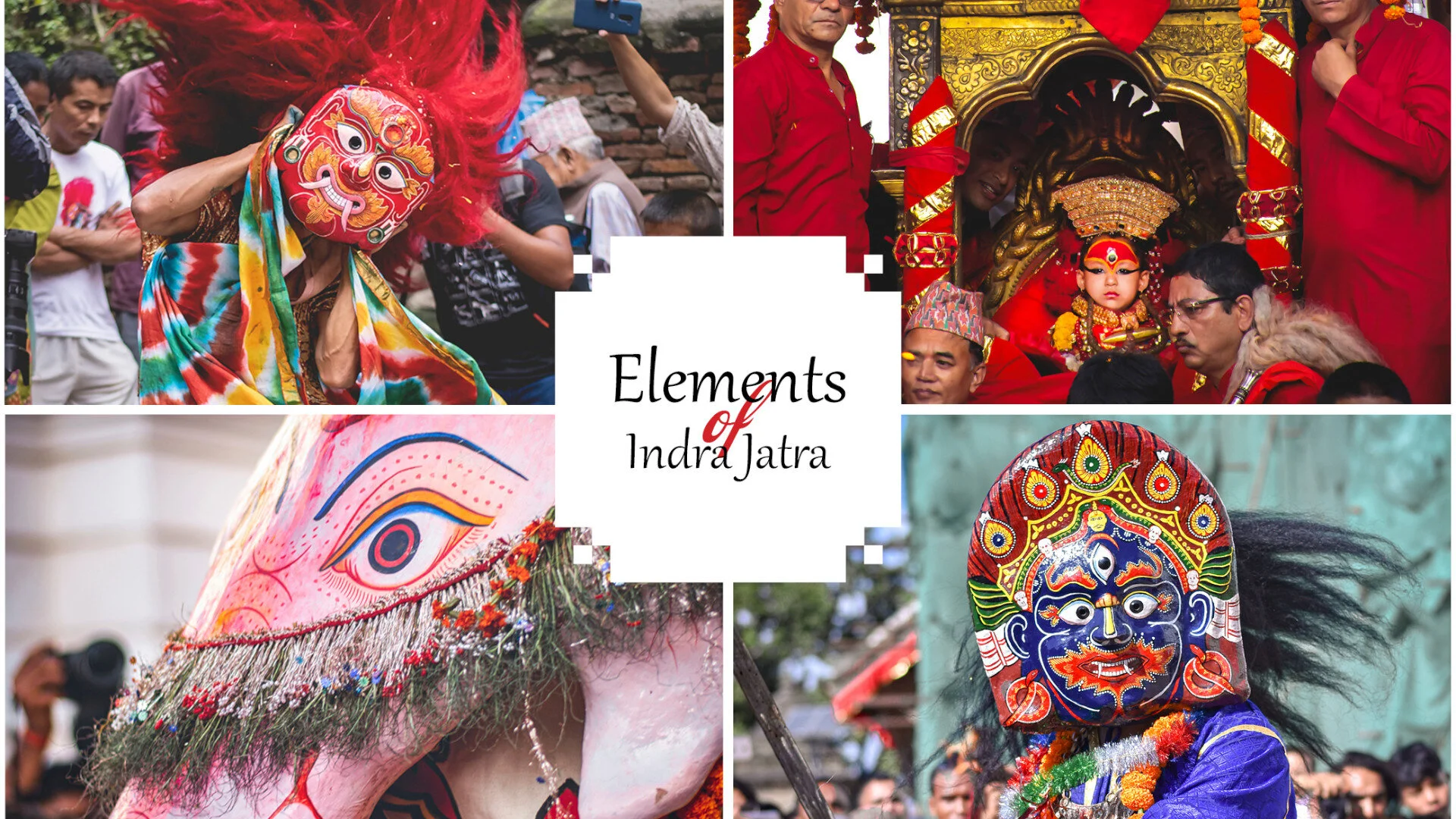
Elements of Indra Jatra - Part II
The spectacle of Indra Jatra is an experience of a lifetime. It isn't just a tradition but a heritage of the Newar culture and its people.An amalgam of various traditions, it is a period of great joy and devotion.
The assimilation of Indra into Yenya is still regarded as a great mystery. He is revered as the King of heaven, god of rain and worshipped by the clans of Kshatriya warriors. His banner is known as Indra Dhwoja, and historically it is hoisted in his honour.
The local legend goes as follows. A man was apprehended while trying to steal a flower in the yard of a farmer. He was tied to a pole by the people and hoisted high for all to see. During the festival, the locals witnessed a white elephant dancing out on the street. A few days later, a woman appealed to the people to let her son go. After seeing his mother, Lord Indra removed his human disguise, and the locals were in awe. She told them that he came to Earth on her request to collect a sacred flower, which she required for a ritual.
As a reward for releasing her son, she vowed to provide the last rainfall before autumn for the crops to prosper every year. She also promised to show them the way to heaven. The people followed them to find the entrance. After a certain distance, the duo conjured a thick fog and disappeared.
A god of the Vedic era, Indra Jatra may be one of the last grand celebrations which include him. A common assumption is of Hindus trying to make sense of an animistic (worship of nature and animals) tradition after their arrival into this valley.
During the festival, an effigy of Airavata - the white elephant of Indra dances in the streets and courtyards of Kathmandu. In Newari, it is called Pulu Kisi. Pulu means a torch, and Kisi means an elephant in Nepal Bhasa (Newari).
Another free dancing character is Majipa Lakhe, traditionally known as Santa Bhairab or Bhoot (Tibetian) Bhairab. The legend, in brief, is how he was the servant of a goddess brought from Tingri, a vast plain in Tibet. Once there was no rainfall in the valley for quite some time. The acaju's (priests) deduced an animal sacrifice is required. They also needed a goddess. They suggested visiting Tingri, the land of the giants and bring their goddess. The only problem is, the giants ate men, and no man ever dared to step foot on that plain.
The acaju's had no choice, they left for Tingri, and once they arrived, they chanted a spell that made them invisible. They found the goddess and told her of the dire situation. She agreed to visit the valley. One their way back, one night, the acaju's heard tigers roar in the jungle and the sound of bells. They were frightened and ran to the feet of the goddess. She asked them why they were scared?
What abomination rings the sound of bells in the middle of nowhere? To which the goddess replied, it's a Lakhe, my servant. He is a frightening creature. But as long as I am here, he will not hurt you. The acaju's expressed their concerns about how he might cause trouble in the valley. He will not harm anyone, told the goddess. She instructed the acaju's to keep him outside the city.
They arrived in the valley, and the King bowed to her. She gave him her sword and special instructions, after which it rained. Meanwhile, the Lakhe had become all friendly with the people- drinking, playing and making merry. Seeing the sight, the goddess told the King, the Lakhe will represent me in this valley. Since then, the locals began referring to him as Shanta Bahairav, Shanta meaning peaceful.
The final attribute is of the living goddess. The great King Jayaprakasha Malla of Kantipur introduced this tradition. He took the worship of a Kumari even further by sanctioning it by the state, building a palace home and commencing a chariot festival. Two living gods- Bhairab and Ganesh accompany the goddess.
Today, the chariots are the centrepiece of the festival, along with various traditional dances such as Dee Pyakhan, Swa Bhaku (Halchowk) and Mahakali Pyakhan. The citizens of Kathmandu also take part in pilgrimages in memory of their ancestors.
POPULAR ITINERARIES
SIMILAR POSTS
Elements of Indra Jatra
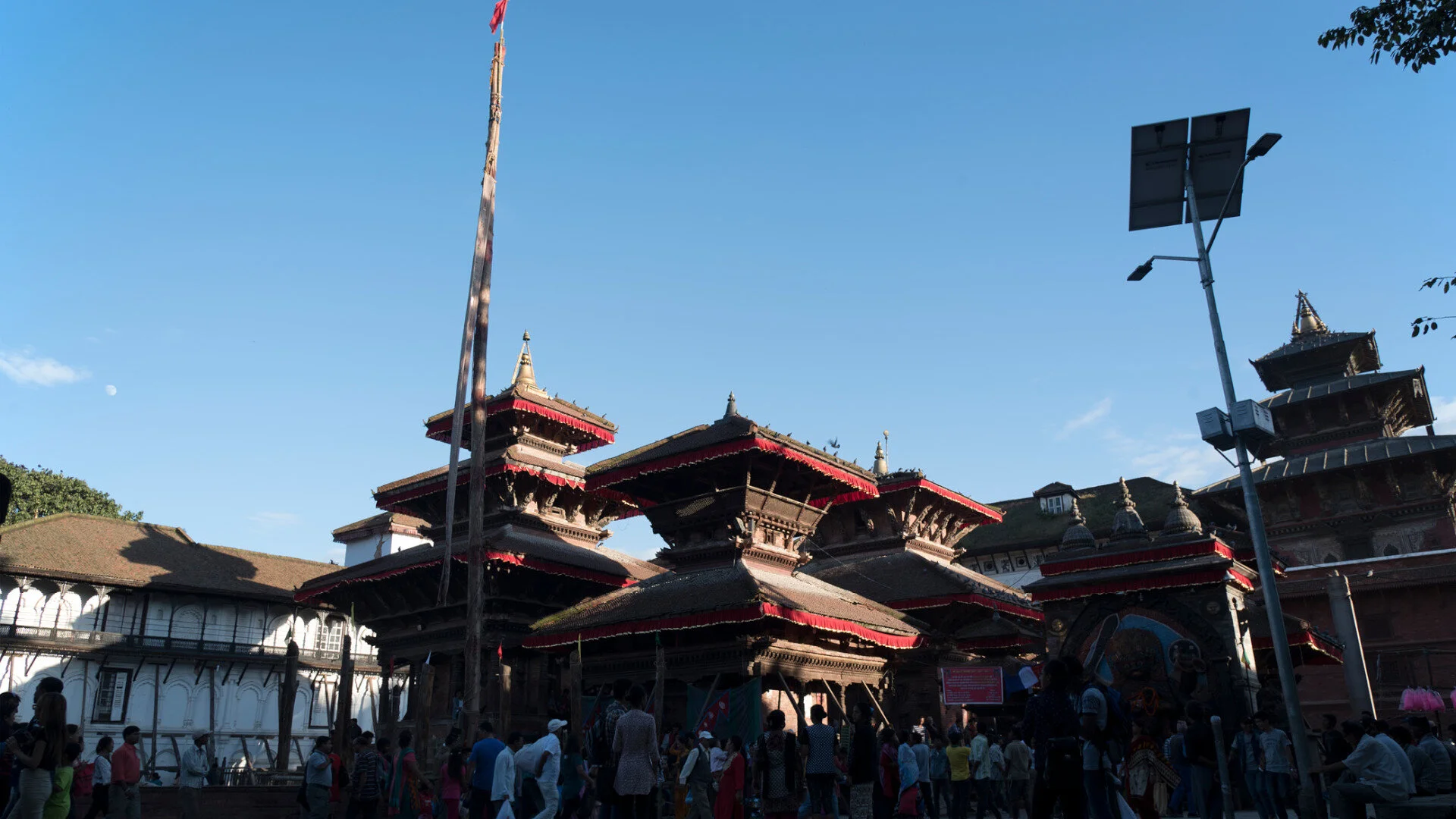
The festival of Indra Jatra is a grand amalgam of traditions. This day is the biggest festival for the Newar community of Kathmandu. Its sister cities also have their methods to mark the day. The elements of which all-together help create a vibrant atmosphere and pompous flare.
The festival of Indra Jatra is the biggest for the citizens of Kathmandu. In its neighbouring cities, it is marked differently. You must be wondering why? The answer is simple, Indra Jatra is an amalgam of centuries of traditions. It features remnants from as far back as pre Lichhavi era. Over time, multiple dynasties ruled this valley - each contributed an element to this festival.
In Nepal Bhasa, the language of the Newars, this day is called Yenya Punhi. It is the full moon day of the Newar month of Yanla, which in Nepali is called Bhadra Purnima.
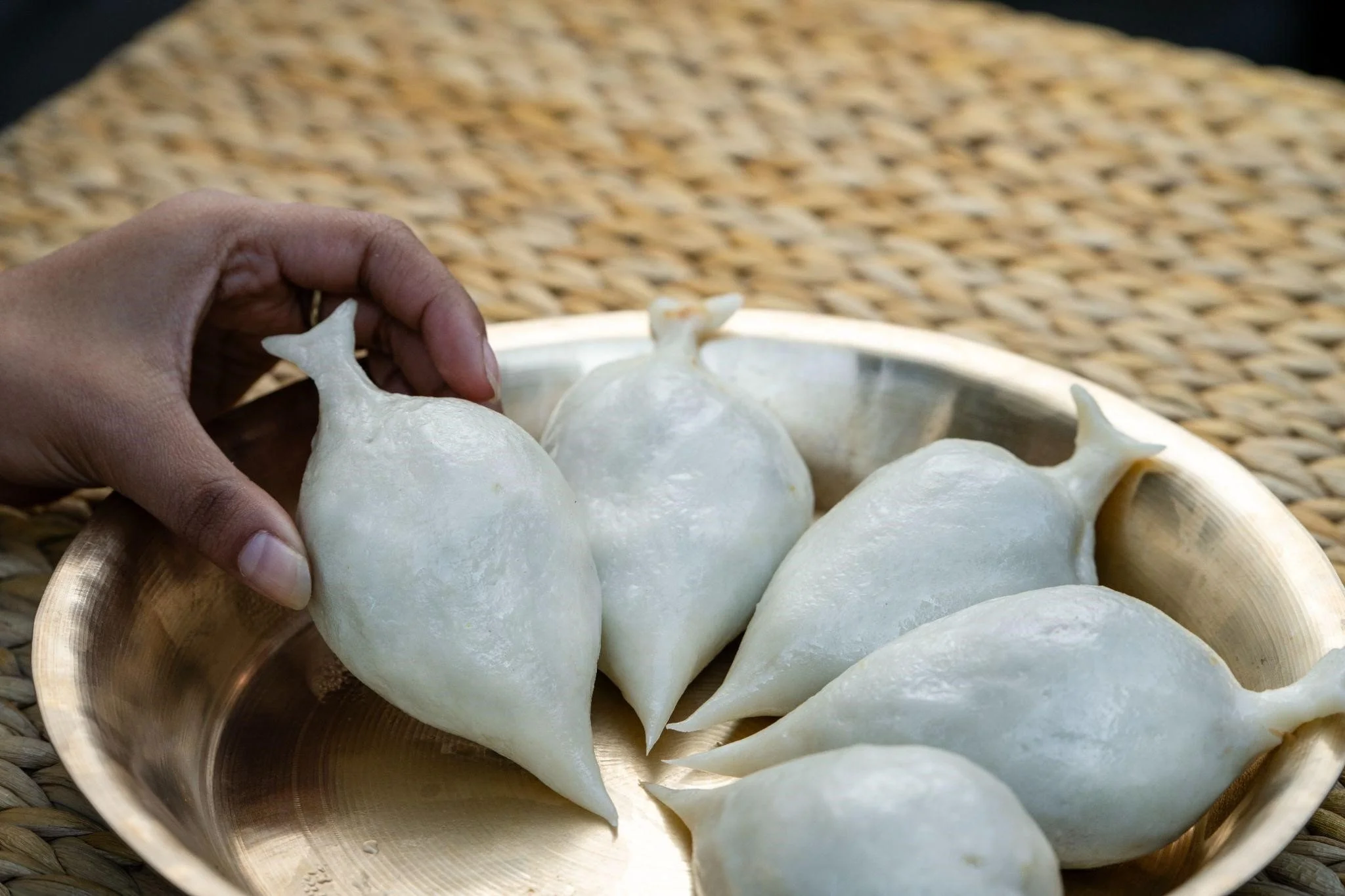
The Newar calendar is lunisolar, and every full moon has its symbolism and cultural rituals. For example, the full moon of the month Thila is Yamari Punhi. Its equal in the western world is the Harvest Moon. The Newars mark Yamari Punhi as the end of the harvest and offer the first grains to Annapurna Devi. They also present a traditional sweet with molasses filling known as Yamari.
To understand what Indra Jatra means, one must de-construct its various elements to see the meaning of the whole.
Let us start with the ceremonial pole known as Yoshi in Newari and Lingo in Nepali. Renowned Nepalese historian Babu Ram Acharya in his article, ‘Indra Jatra’ (Vide Himbat Sanskriti No.2), wrote of similarities between the ceremonial hoisting of the Maypole in Europe with the Yoshi.
The Maypole is a similar high pole raised in May in Europe. Its origin is Pagan (Ethnic religions of Europe before Christianity). The celebration of Mayday is to welcome spring. The colourful ribbons wrapped in the pole symbolise spring and warmth.
In Nepal, the Yoshi symbolises the turning of the season from Barsha (Rainy) to Autumn. It is the first layer of the festival.
For an agricultural and pastoral society, the seasons play a huge role. The ancients could have devised this mechanism to inform the people.
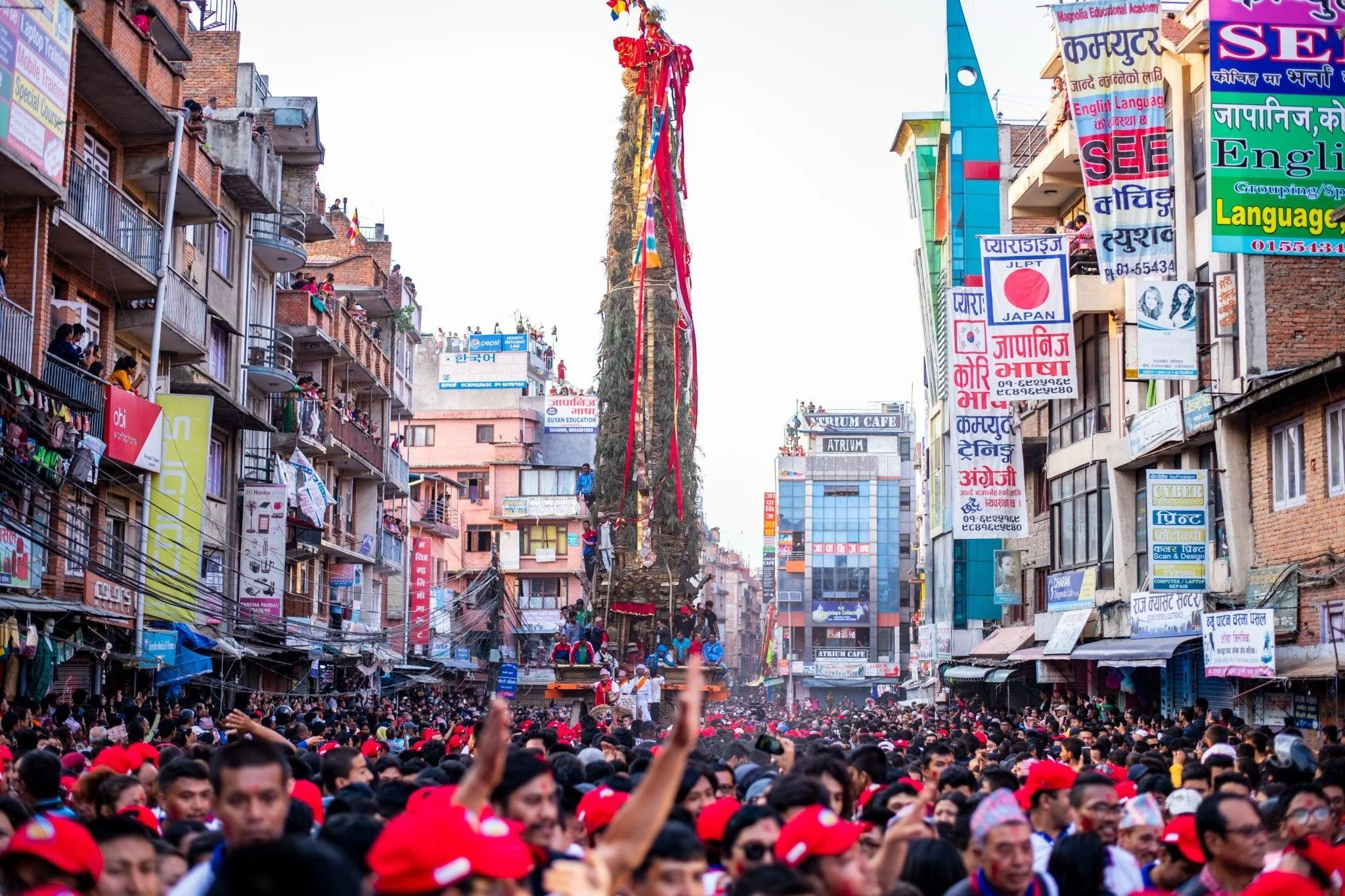
Just as in the Mayday festival, the pole is in the centre of the celebration. Its erection marks the beginning and its fall, the end of the festivity. Indra Jatra begins with the hoisting of the pole on the 12th day of the bright fortnight.
It is taken down on the 4th day of the dark fortnight of Yanla.
In the Lichhavi Era came the second attribute. In a dream, King Gunakamadeva was instructed to create a new city north of his present kingdom. He was requested to centre it around the ancient temple of Kanteswara, at the junction of Bagmati and Vishnumati rivers. The vicinity where the renowned sage Ne Muni performed various austerities. Kanteswara is one of the most revered Newar deities. He is called Aju Dya (Eldest God) in Newari and Aakash Bhairab in Nepali. The scared river junction in front of the temple is now a street.
As instructed, the King merged the existing villages of Koligram (Yambhu) and Dakshin Koligram (Yengal) and defeated rulers of various petty states and created his new city. He also established a beautiful stone spout gilded in gold, Lu Hiti (Gold- dhara/ Sundhara). It featured an intricate water-management system, royal canals (Rajkulos) channelled river water to the spout. He named the city Suvarna Pranali Kantipur. Here, Suvarna means golden; Pranali means system. Kantipur is a mixture of two words - Kanti, meaning beautiful and pur, means place.
To celebrate the momentous occasion, he initiated a festival known as Yenya. The word is a mixture of Yen- the Newari name of the city and Ya- celebration. It is also called the celebration inside the town.
It is possible King Gunakamadeva’s celebration overlapped the change of seasons, and the two elements became one.
In the next part of this article, we call look into the arrival of Indra.
POPULAR ITINERARIES
SIMILAR POSTS

The Moving Temples of Kathmandu Valley - Part V
In this edition, we look into the moving temple of Bhaktapur. Commonly referred to as Biska Jatra, it is a unique celebration exclusive to the principalities of Bhaktapur. Celebrated with utmost veneration and respect, it overtime has become an intangible landmark. The highlights are the tug-of-war, vermilion festival and the tongue piercing ceremony.
Born and raised in this beautiful valley, I’ve had the honour of witnessing most of its chariot festivals. The moving temples are the same every year, but the pomp and flair never fail to strike a bolt of awe in my heart. The creaking of wood, thunder of cheers and clang of metal combined create a euphoric atmosphere. It never seems to get old.
In this article, we dive into the final moving temple of this valley. It is the hallmark of a unique festival celebrated in Bhaktapur. Collectively, it is known as Biska Jatra. This festival is celebrated in various dwellings of this region.
Did you know Bhaktapur was the capital of Nepal Mandala (Ancient Nepal)? This city is by far the most organized amongst its sisters (Lalitpur and Kathmandu). King Ananda Malla commissioned this city in the 9th century.
“This younger brother (Ananda Malla, son of Abhaya Malla being very generous and wise gave up the sovereignty over the two cities (Kathmandu and Lalitpur) founded a city of 12,000 houses, which he named Bhaktapur (Bhatgaon) and included sixty small villages in his territory. After this, the Raja having obtained the favour and directions of Chandeswari founded seven towns; viz Banepur(Banepa) near Chandeswari Pitha; Panavati ( Panauti) near the Pragya Tirtha of Nepal. Celebrated in the Shastras, on the site of where Panchala-des formerly stood, Nala near Nala Bhagvati, Dhaukhel(Dhulikhel) near Narayana; Khadpu near Dhaneswar; Chaikot, near the residence of Chakora Rishi; and Sanga, near Nasika Pitha.” (Wright,1990)1
Another fun fact, the festivals original name is Bisyaku Jatra. It means a celebration (jatra) after the death of serpents (Bisyaku).
Click here to read our article on the tale of Biska Jatra
On the first day of this celebration, a great tug of war ensues between (Thane) uptown and (Kone) downtown. Teams tussle to bring the kha (chariot) of Bhaila Deo (Bhairab) to their part of town. His chariot features three roofs, a dhoma (horizontal log), a golden pinnacle and four wheels.
The design features exquisite Newar woodwork with no nails. A joint based locking system (chuka) holds the chariot together. At the heat of war, it sways beautifully.
Simultaneously, in another part of town, Nakinju Ajima (Bhadrakali) is placed on a similar but smaller chariot. These two deities meet on the 4th day at Yoshin Khel. This area gets its name from Yoshin, meaning a long wooden pole erected in the middle of an open field (Khel).
Biska jatra also has another meaning. It symbolizes conjugation, creation and continuity of life. The depiction of which is the mating of Bhailo Deo and Nakinju Ajima. Their symbolic copulation occurs at Gahiti during midnight of new years day.
A local legend states how Bhailo Deo’s chariot doesn’t even move an inch during copulation. It is rather Nakinju Ajima who passionately dashes Bhailo Deo.
On the final day of the festival, the chariots head to their designated locales. The shrines are removed and carried to their temples.
Celebrations of Biska occur at various other localities of Bhaktapur. In Thimi, it is called Sindoor Jatra. Similar, Chapacho and Bode also have their version of Biska.
Click here to read our article on Sindoor Jatra.
POPULAR ITINERARIES
SIMILAR POSTS

The Moving Temples of Kathmandu Valley - Part IV
The grand jubilation of Kumari Jatra celebrated during Yenya Punhi (Indra Jatra) is a sight to remember. A day when magic and mystery from all parts of Nepal Mandala (Ancient Nepal) meet at Yeh (Kathmandu) for an opulent festival.
Every Newar dwelling has its mammoth festivity. Matysendras chariot festival is the largest of Patan and Indra Jatra is of Kathmandu. The celebrations of the capital is unique due to the intersection of multiple facets.
Folk tales state how Lord Indra (King of heavens) descended to earth looking for Parijat (Night Jasmine). He took mortal form and found the plant in the yard of a Newar farmer. While picking the flower, he was caught and imprisoned.
As he did not return, his mother began to worry for his safety. She asked Phul Kusi, the white elephant of Lord Indra, to find him.
It searched for him day and night but failed to locate him. While roaming the streets of Kantipur (old city within Kathmandu), Phul Kusi was mesmerized by the music of the festivities. It danced its way through the streets with the locals.
Flabergasted was Phul Kusi when it reached the city centre. Chained atop a tall wooden pole was Lord Indra.
Phul Kusi took the news to swarga loka (heaven), and in a flash mother of Indra descended from heaven. She demanded her son be released. The locals told her that he was a thief. Indra watched the argument and began to grow restless. A great light imitated as he revealed his identity.
The locals were rendered speechless and feared his wrath. His mother offered them something that they could not refuse in exchange for her son.
She promised them a final rainfall before harvest season so that their crops can prosper. Also, she vowed to show them the gateway to heaven.
They freed him and followed them to the outskirts of the city. She tricked the villagers and generated a large mist. Amidst the confusion, the trio returned to heaven.
A fascinating tale, isn’t it?
The true origins of this festival, however, is still debated. The closest scientific rendition requires understanding various elements of Newar society. On a gist, the full moon of this period is Yenya Punhi. Primordially this day marked the last of Barsha (rainy season). Post which is Sarad (Autumn). Hoisting of a pole is a ceremonial act. The same can be seen during the end of winter and beginning of spring (Biskah Jatra of Bhaktapur). A similar act is placing scarecrows (Gatha Mwah) at the nearest crossroad after the saplings mature during the plantation season. This day is known as Gatha Mugah or Gathe Mangal.
Newar festivities begin in full swing after this day (Gathe Mangal) and end on Sithi Shasti/ Sithi Nakah, right before plantation season.
Now, onto the glorious chariots of Yenya Punhi.
As mentioned previously, over time this day as gained various facets. One of which is of Kumari Jatra, a grand festival of the guardian of this valley. She is viewed as the primordial protector along with Bhairab. Their worship dates back to the origin of this vale.
Click here: To read our article on the Kumari
According to chronicles, King Jaya Prakash Malla commissioned the festival. He incorporated Kumari Jatra into Indra Jatra. The living goddess and the living gods (Ganesha and Bhairab) are placed onto pagoda-style chariots and circulated on a designated route for three consecutive days.
On the first day, the chariots are pulled to Kwaneya (Downtown) area by revellers. The jubilation lasts till late as the route is quite ridiculous and narrow. At around 5 pm the next day, the trio are taken to Thaneya (Uptown). Revellers are encouraged by traditional tunes played by musicians. The final route is to Nanichaya (Midtown). It makes way from Basantapur to Pyaphal, Yatkha, Kilagal, Bedasing, Indra Chowk, Makhan and comes to an end at Basantapur.
A ritual (Kumari Puja) commences in front of the Kumari Chhen (home), after which Kumari Jatra is complete.
POPULAR ITINERARIES
SIMILAR POSTS
The Moving Temples of Kathmandu Valley - Part III
Every temple has a story. Within it lies a deity who has provided some boon to its devotees. His/her celebration is an act of acknowledging their righteous act and reliving history. The Newars added pomp and flare to this celebration with mammoth chariots, traditional tunes and communal merrymaking.
Continued….
The trio applied their findings. In a few years, they witnessed an end to the slumber. The fields began to resemble gold swaying with the gentle winds of the harvest season. Slowly but steadily, the lost lustre returned to Nepal Mandala (Ancient Nepal).
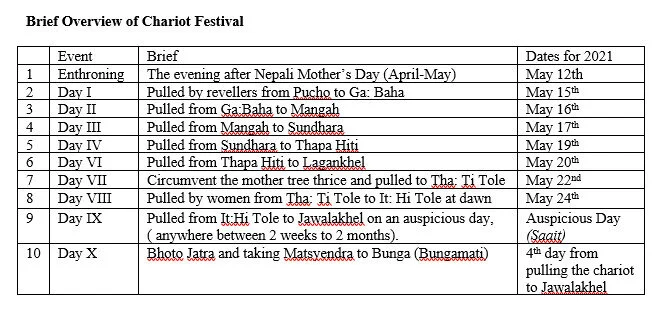
The people hailed Matsyendra as a messiah. A consensus emerged to honour his compassion and immortalise him. A temple was envisioned on the outskirts of the principal dwelling by the trio. It was designed in the Shikhara style and built at Bunga (A small village 5.2 kilometres away from Lalitpur).
The small village was renamed Amarpur by the monarch, meaning immortal or everlasting. It was an effort to memorialise Matsyendra and make him a god. Taking it a step further a chariot festival was conceptualised.
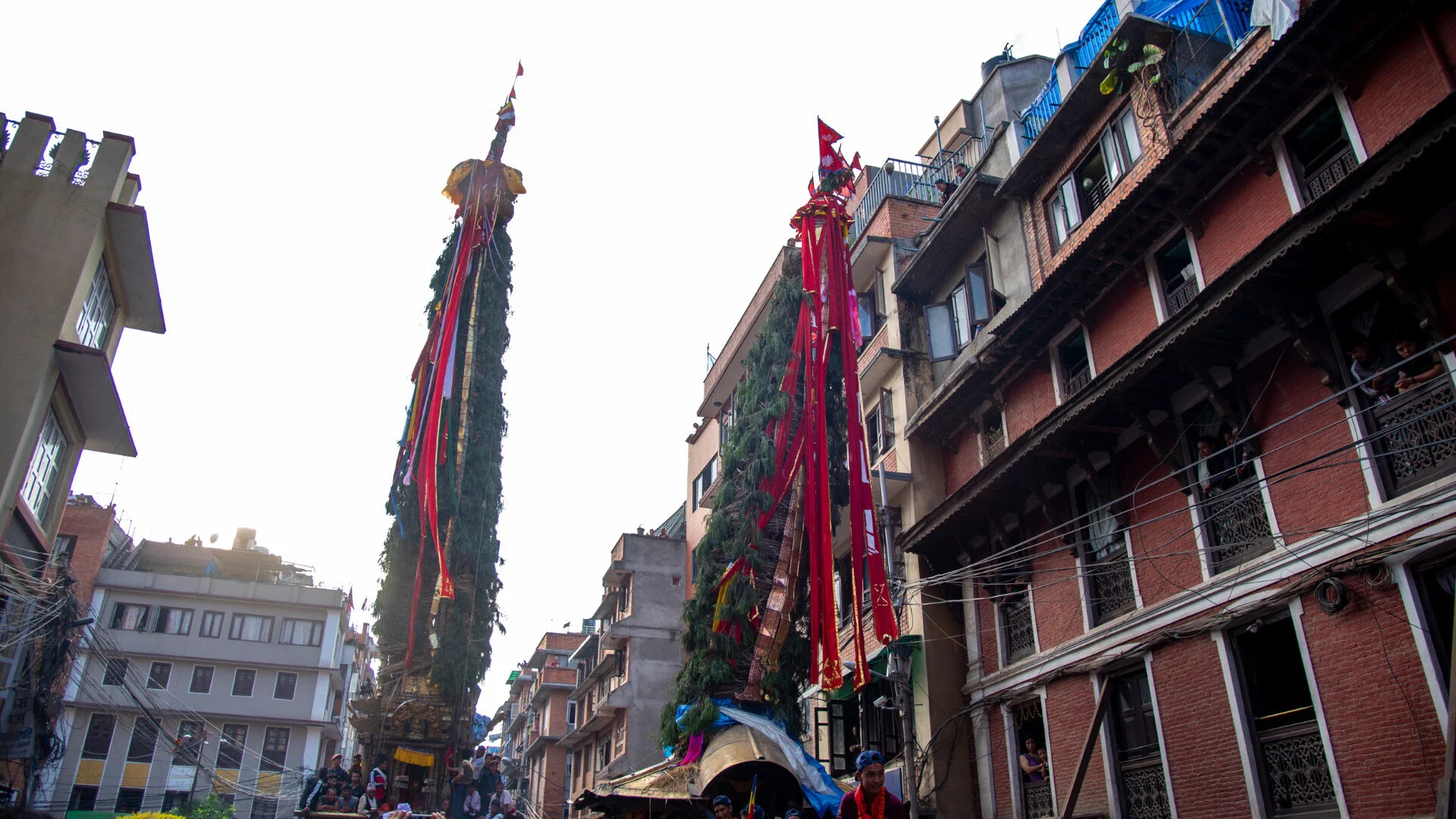
Lalitpur already had numerous chariot festivals. The monarch instructed to discontinue them. He wanted to make room for a mammoth celebration of Matsyendra. The legend of Chak Baha Dyo (Min Nath) states how he did not want his festival discontinued. Priest Bandudatta requested him numerous times, all of which failed. Min Nath opened his third eye and projected a great beam of light. It hit a stupa outside the cortex.
His chariot festival is the only one that continues.
Why is Matsyendras chariot so tall is a common question. It is because the core features seven kha’s (levels). The first is known as biman kha. At this level, the idol of Matsyendra sits accompanied by his caretakers. The top kha is known as yaka kha, as a single member of the Barahi (woodworkers) community installs it. The remaining five levels are dedicated to Dhalaksha’s Lokanath, Matilinagar’s Batuk Bhairav, Satha’s Naryana, Calalse’s Harisankar, Kolima’s [ Kulimha’s] Mahesvara.
In a bygone era the chariot used to be pulled every year from Bunga to Lalitpur. During the Malla era, either Siddhi Narasimha or Sri Nivas Malla envisioned a glorious plan.
" Historical sources are silent on the matter, but historians have deduced that possibly as early as 1621, at any rate by 1652 when Kunu Sharma wrote his Kritipataka eulogizing the city, one or other of the two kings had taken the decision to establish a second temple of Karunamaya (Matsyendra) in Lalitpur itself.
Henceforth Karunamaya was to spend six months in each temple, thus bringing him closer to the people of Lalitpur, who were his devotees and no doubt increasing the popularity of the King. Ta Bahah was chosen as the site for his new temple. It seems that the membership of this ancient monastery had died out and some Vajracharyas from a small monastery in Dau Bahah twah called Bhelakhu Bahah [29] were assigned to it (Locke 1980:334; 1985: 137). " (N. Gellner, 1996)
References
N. Gellner, D. (1996). A sketch of the history of Lalitpur (Patan) with special references to Buddhism. CNAS Journal, 23(1), 139–140.
POPULAR ITINERARIES
SIMILAR POSTS

The Moving Temples of Kathmandu Valley - Part I
Even though an imitation, over the years, the festival of Seto Matsyendranath has created its own identity. It has developed various symbols and is a timeless heritage of Kathmandu. Today it is known as Jana Baha Dyo (God of Jana Bahal of Ket twah). The idol is viewed as Aryavalokiteswara (God of compassion) by devotees.
The moving temple of Seto Matsyendranath
When King Gunakamadeva created a new city north of Lalitpur, it was a sight to behold. He named it 'Suvarna- pranali- Kantipur' (Wright, 1990, p.154). The monarch, however, was not satisfied. He greatly missed Matsyendra of Lalitpur, his glorious temple in Bunga and the chariot festival. He wished for his new city to have something similar.
"Then, in imitation of the Lokeswara jatra of Patan, he made an image of Khasarppa Lokeswara, and caused his jatra to be celebrated every year." (Wright, 1990, p.155)
A shikhara style temple within the Hambal monastery housed Khasarppa Lokeswara. During the last years of the Lichhavi era of Nepal Mandala (Ancient Nepal), Mukunda Sena, King of Palpa, attacked this valley. "The victorious soldiers broke and disfigured the images of the gods, sent the Bhairava placed in front of Machchindranatha to their own country, Palpa and Butawal." (Wright, 1990, p.171)
The Bhairab stolen from the Hambal monastery today is known as Tansen Bhairab. The shikhara temple and monastery were in ruins. In the aftermath, people found that the statue was lost. Hundreds of years later, during the reign of Yaksha Malla, it was discovered by potters looking for clay. King Yaksha recognised the ancient idol when it was brought to the palace by them.
From here on, it became Yamaleswara.
The site of its rediscovery was renamed Yamal (today is known as Jamal) by the monarch. "The king, having seen the image, performed the rituals of renovation; took the image inside the city and established it by building a large temple." (Bajracharya et al., 2016, p. 90)
He built a mammoth temple in the cortex of Jana Baha in Ket Twah. During the reign of his son Pratapa the grounds of Hambal monastery was converted into a pond. The temple was rebuilt but housed a different deity. "Pratapa Malla, then rebuilt the chariot of Lokesvara, the white Matsyendra, according to tradition. He had Lokesvara placed on the chariot and initiated an annual procession that moved the chariot around the city." (Bajracharya et al., 2016, p. 106)
From then on, the image was called white (seto) Matsyendra.
Members of various communities tasked with creating the chariot finish the building process by Chaitya Dashain. On this day, the idol is placed on a palanquin and brought to Durbarmarg. A traditional musical ensemble leads the march. A loud cheer erupts once the parade reaches the area.
The statue is placed within the chariot by the caretakers. A military regiment dressed in traditional Gurkha uniform offers salutations. Three muskets perform an aerial salute once the wheels make their first spin.
The revellers pull it to Asan Chowk. In the next two days, the chariot circumvents the traditional route and reaches Lagan. It circles the mother tree thrice. After which, the festival comes to an end.
The festival falls on the following days in 2021 AD.
Day 1 of chariot festival - Durbarmarg- Bhota Hiti- Asan - 20th April 2021
Day 2 of chariot festival - Asan - Indra Chowk- Basantapur - 21st April 2021
Day 3 of chariot festival - Basantapur- Maru- Jasi Dewal- Lagan - 22nd April 2021
References
Wright, D. (1990). History of the kingdom of Nepal. Asian Educational Services. (Original work published 1877)
Bajracharya, M., Gutschow, N., & Michaels, A. (2016). Nepālikabhūpavaṃśāvalī (History of Kings of Nepal): Vols. 1 (Introduction and Translation) (First edition). Himal Books.