Ghode Jatra, the Festival of the Horses
Ghode Jatra is a grand spectacle attended by both the masses and the classes, with horses being at the forefront of the festivities.
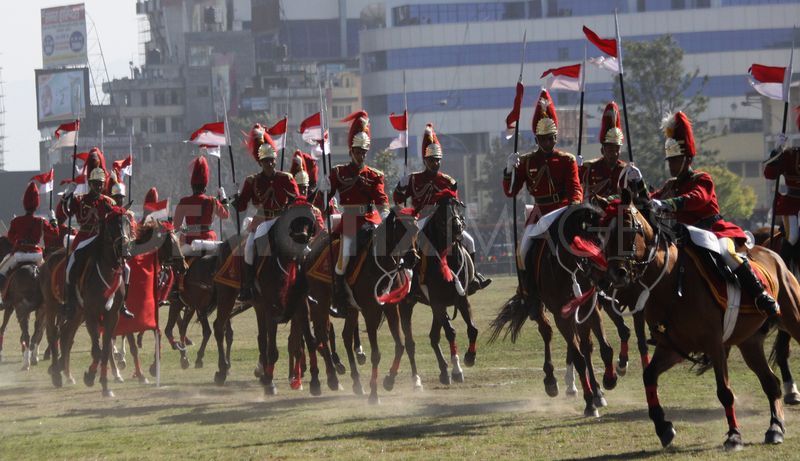
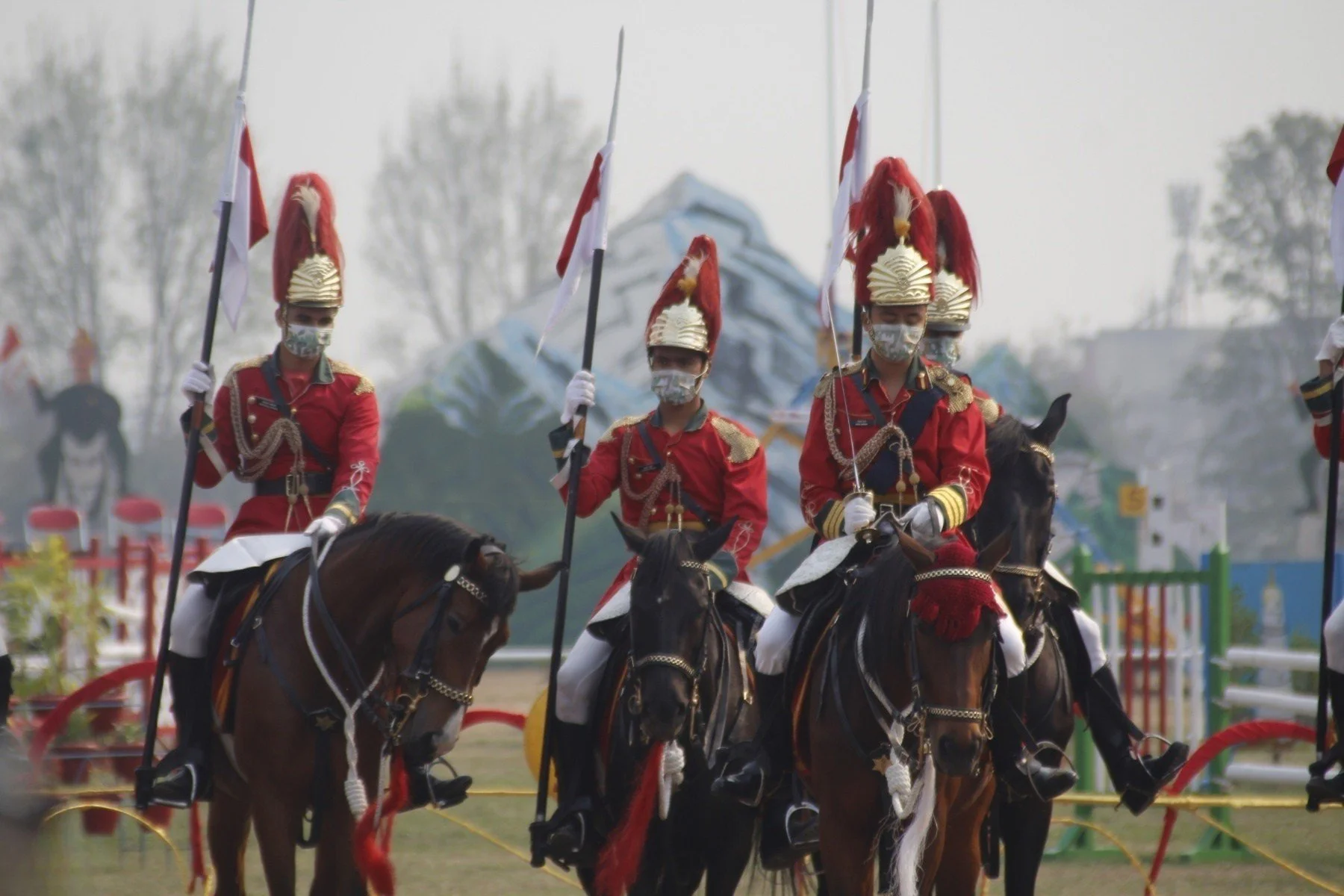
On March 20, 2015, you’ll see much pomp and ceremony being enacted on the Army ground near Tundikhel in the capital, Kathmandu. The seats on the gaily decorated pavilion will be filled with national and international dignitaries, including the head of state and the prime minister, ministers, ambassadors, et al. The iron fence around the grounds will be ringed with hundreds of eager spectators, most of them people from around the outskirts of the Valley, the urban folk being a bit more jaded. They are all there to witness the Army’s cavalry unit put up a display of fine horsemanship, along with demonstrations by the Army’s gymnasts and martial art exponents of judo, karate, and tae kwon do. The Army will also enact a scenario wherein a man is rescued from a building on fire, with the rescuers sliding down a rope from a hovering helicopter. The finale of this festival known as Ghode Jatra (Festival of Horses) will be paratroopers descending down from the sky on billowing parachutes, carrying the national flag.
Pomp and ceremony are assured by the rows of smartly uniformed and dressed dignitaries on the pavilion, the bright uniforms of the Army band and their gleaming instruments, the magnificent horses, and the rousing music. A terrific spectacle is guaranteed by the horses galloping around the field and jumping over numerous hurdles. The sound of their hooves clattering on the hard ground is sure to set heart beats racing. Indeed, the horses are what Ghode Jatra is all about. It’s the clamor that they make that is at the root of the origins of this festival.
The story goes that, once upon a time, there was a demon called Tundi who lived in a pasture that later became known as Tundikhel. Now this was one mean demon, and he was creating fear and havoc among the valley dwellers. Somehow or the other, they eventually succeeded in capturing Tundi, whom they tied up and buried into the ground in Tundikhel. To make doubly sure that he would remain buried, they brought in some horses and made them trample the grounds thoroughly. Every year in Feb/Mar, horses gallop around the nearby Army grounds, and it is believed that the clamor created by the galloping hooves will scare the living daylights out of Tundi so that he doesn’t dare come out of his underground lair.
The participating horses during Ghode Jatra come from a special cavalry unit. Incepted in 1849, and originally known as the Risalla, later, in 1952, it came to be known as the King’s Household Cavalry. This cavalry unit played an especially outstanding role during the 1911-1912 Nepal-Tibet war, earning many accolades, and it often holds centre stage during state ceremonies. An interesting aside to Ghode Jatra is that, a king of Patan, seeing how the Kathmandu inhabitants were so thrilled by the festival, decided to have one in his kingdom, too (those days, the Valley had three kingdoms: Kathmandu, Patan, and Bhaktapur). And so, on this day, there’s a Ghode Jatra in Patan as well. However, it comes with a twist. The Patan festival involves one horse that’s thoroughly inebriated, as is its rider, and the whole point of the event is for spectators to try their best to frighten the horse into riding around wildly around the locality of Balkumari and see how long the drunk rider can hold on to his saddle.
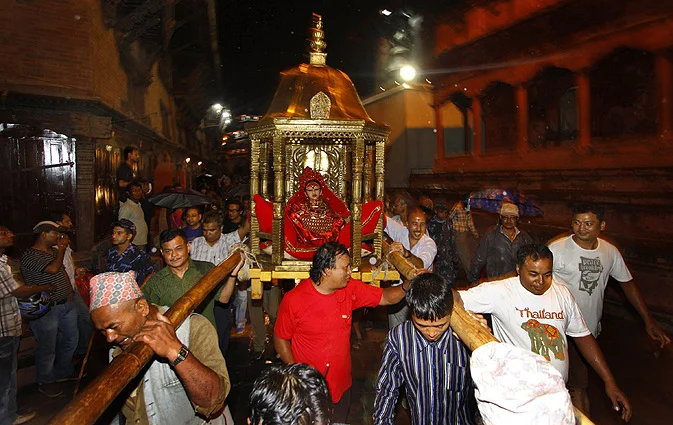
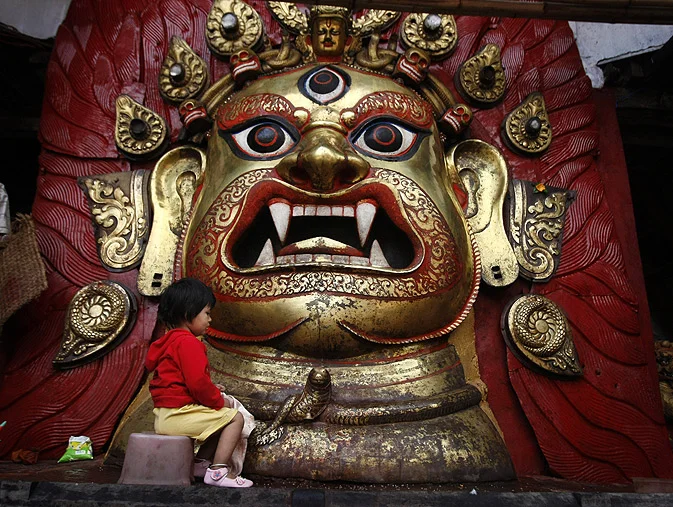
Another aside to the Ghode Jatra is that, on the day before, Newars of various tols (wards) do a bit of spring cleaning around their localities, and then take out colorful parades of deity idols on chariots; it’s part of a three-day festival called Pahachare. Idols of the deities Bhairav, Bhadrakali, Lumadi, and Kankeshwari are carried on palanquins to the ancient Ason Bazaar (a once-in-a-year gathering of these four gods), and this grand occasion is celebrated by the locals with great fervor and joy. Their palanquins are made to crash against each other in front of the Annapurna Temple; that’s to announce in no uncertain terms that they have now met each other. Come evening, the celebrations are shifted to Tundikhel so as to propitiate a demon called Gurumumpa. Ghode Jatra falls on the second day of the Pahachare festival.
Maghe Sankranti, a Celebration of Life
Maghe Sankranti is one festival that doesn’t have much of a religious significance, unlike most other festivals of Nepal; it’s more a celebration of life!
On January 15 this year, the sun will move northwards and enter the cusp of Capricorn (Makar). It will be the coldest day of winter, as it has been for ages, and will be forevermore. It will also be the first day of the 10th month (Magh) of the Nepali calendar, and people all over the country will be celebrating this day with a lot of joy; the bitter cold of winter will now be on a waning path, and the days henceforth will become warmer and longer. In addition, it is the end of Poush (Dec/Jan), the most inauspicious month of the year. A local saying goes like this: ‘Poush ma je gare pani huncha phooss’ (whatever you do in Poush is going to end in failure). Now, the ending of such a month does call for a celebration, doesn’t it? A festival is certainly in order!
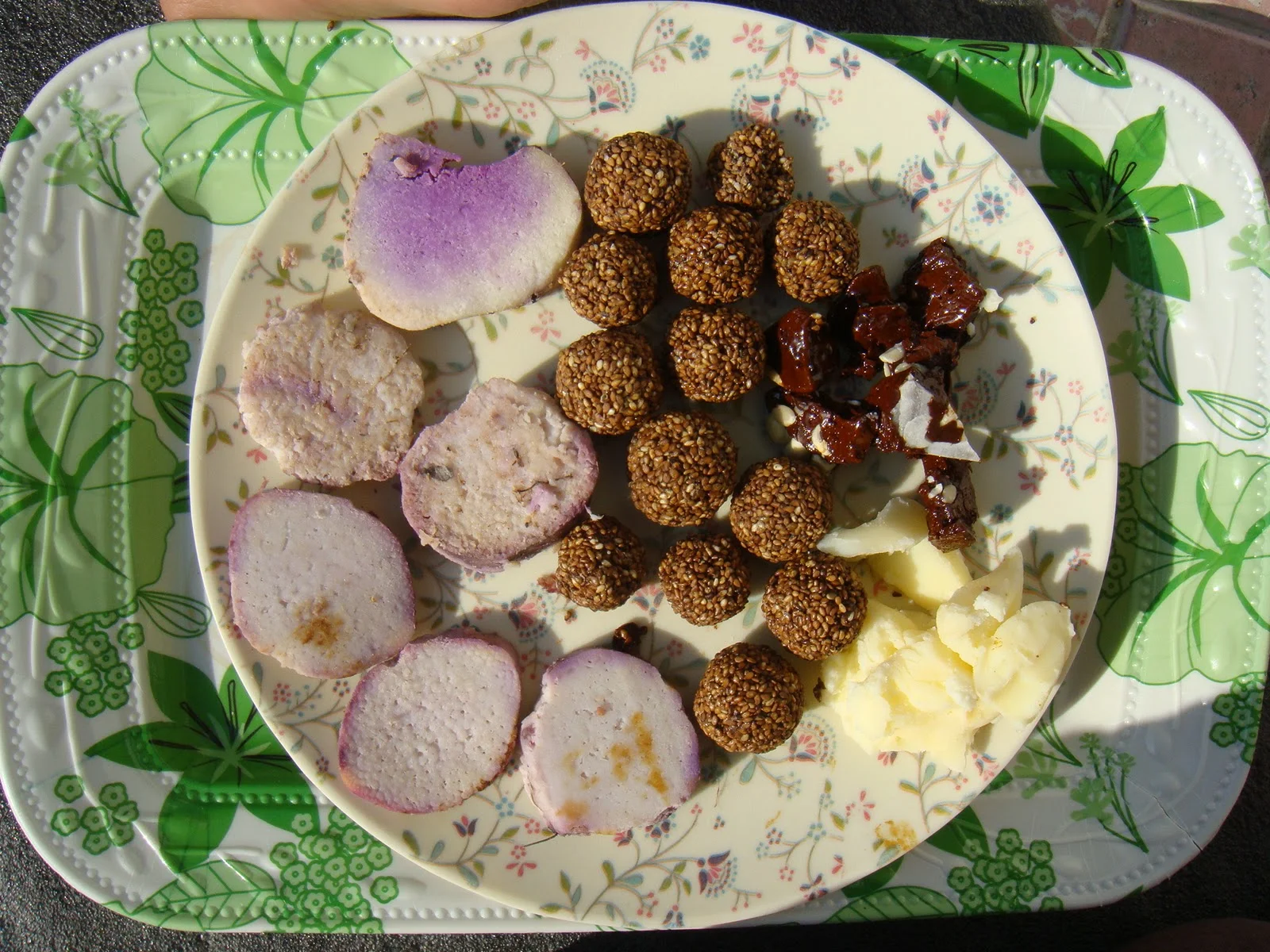
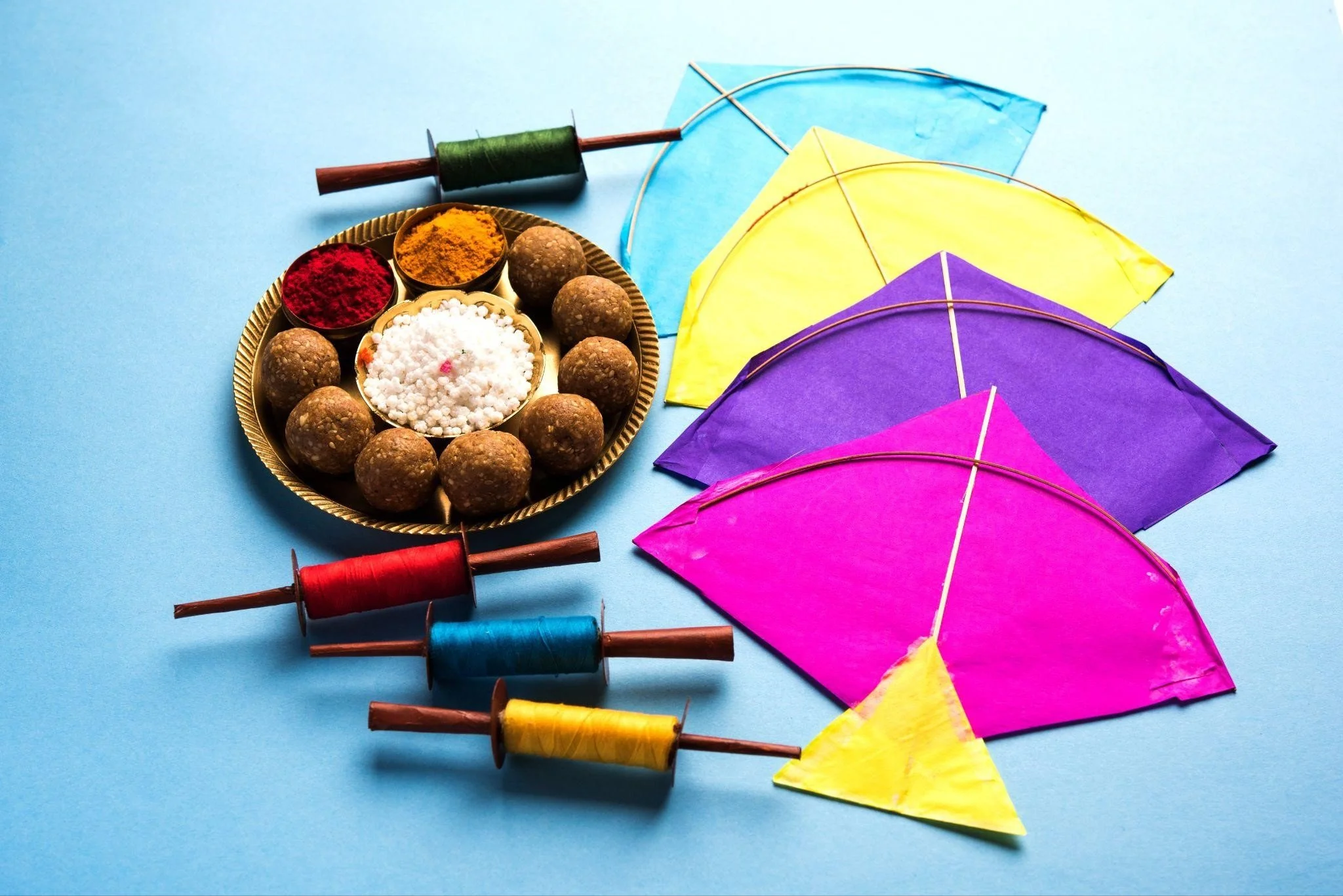
The festival to celebrate this joyous occasion is called Maghe Sankranti (or Makar Sankranti), and as with most other festivals, special food items are what makes it really special. The most important food of Maghe Sankranti is tarool (yam), which is a tuber that’s starchier and drier than sweet potatoes, with which it is often confused. The outer covering is pretty rough and difficult to peel, unlike the softer skin of sweet potatoes, so you got to boil it well to soften it. The edible part, the ‘meat’, of mature tarools can be white, yellow, purple, or pink in color. It is rich in vitamins B6 and C, antioxidants, proteins, complex carbohydrates with low glycemic index (raises blood sugar more slowly than regular sugar), and fiber. Tarool is also credited with having antispasmodic and anti-inflammatory properties, aside from other health benefits.
The most common way of preparing tarool is as follows: first, select chunks of blemish-free tarool, and after washing them well, boil for about 10 minutes in a pressure cooker. Let it cool down, and then start peeling. After that’s done, cut into small pieces, and that’s it. You can serve them cold. Another popular way is to make thin slices of the boiled and peeled tarool, which you marinate with oil, ginger/garlic paste, salt, and pepper. Then, you stir-fry these slices in a non-stick pan. This is pretty tasty stuff. Of course, as with most things culinary, there are other innovations too. And so you have tarool and green peas curry, tarool pakodas, and tarool kheer, to name a few.
Another essential food of Maghe Sankranti is til ko laddoo. These are made of sesame seeds and molasses, with the sesame seeds being white, brown, or black. Generally, black sesame seeds are the most commonly used during Maghe Sankranti. Here’s how you can make your own til ko laddoo: you’ll need 100 g each of sesame seeds and molasses (chaku), one-fourth cup of finely chopped coconut, and a teaspoon of cinnamon and cardamom powder. Now, dry-roast the sesame seeds in a pre-heated pan (stir constantly). In another pan, melt the molasses, adding some water to it, and then mix coconut, cinnamon, and cardamom to it. Then, make round shaped balls of sesame seeds mixed with the molasses mixture (grease your palms with some butter so molasses don’t stick to your hands), and voila, you have your til ko laddoos. Allow them to cool down and then store them in an air tight container.
What other food is essential during Maghe Sankranti? Chaku (hardened molasses) is the third food that is absolutely a part of Maghe Sankranti, as is ghyao (or ghee: clarified butter). Now, here’s something interesting about ghyao and chaku, particularly concerning Kathmandu. There are half a dozen tiny shops behind the Annapurna Temple in Asan Bazaar, that historical, cultural, and commercial center of Kathmandu, where six lanes/streets converge on a square with numerous shops selling a mind-boggling variety of goods. Now, the half dozen or so tiny shops mentioned above are a bit different from the pack, having a history spanning over a hundred years, and throughout, the only things they have been selling are ghyao, tel (oil), chaku, and candles. Most locals of Kathmandu Valley know them as the ghyao-tel pasals (ghee, oil shops). Candles were, in fact, later additions. Anyway, these shops are famed for the purity of their products, a necessary stipulation, since things like cow’s milk ghee and sesame seed oil are used to light wicks in temples during religious functions. Their buffalo milk ghee is for human consumption, as is the tori ko tel (mustard oil).
However, it is their chaku that is most in demand, not only during Maghe Sankranti, but at other times, too, since ghyao-chaku is a highly nutritious combination that is traditionally fed to newborns by the valley’s Newars. The shopkeepers claim the highest standards of hygiene and purity when preparing the chaku, which they make in their own homes. Come January, and business soars. Come Maghe Sankranti, and these half a dozen or so tiny shops become the center of attention of tens of thousands of valley folks. “They become crowded,” is too simple a statement. If you are in Kathmandu that day, do make it a point to go to Asan Bazaar and see for yourself what reputation can do, because all said and done, the reason for these tiny shops to have survived for so long and to be still in so high a demand is primarily because they have earned the valley-dwellers’ trust.
So, you now know what Maghe Sankranti is all about, and where to go to get pure ghyao-chaku on the day. There aren’t many religious functions as such, though many people do take a dip in the confluence of some holy rivers. It’s actually more about looking forward to better times ahead after the bitter cold of winter, and celebrated by eating body-warming foods like tarool, til ko ladoo, ghyao, and chaku. And, yes, khichdi, too, which is a wholesome and filling combination of black lentil, rice, ghyao, ginger, and salt. Health-giving, life sustaining foods, which points towards Maghe Sankranti being more a celebration of life than just another festival!
POPULAR ITINERARIES
SIMILAR POSTS
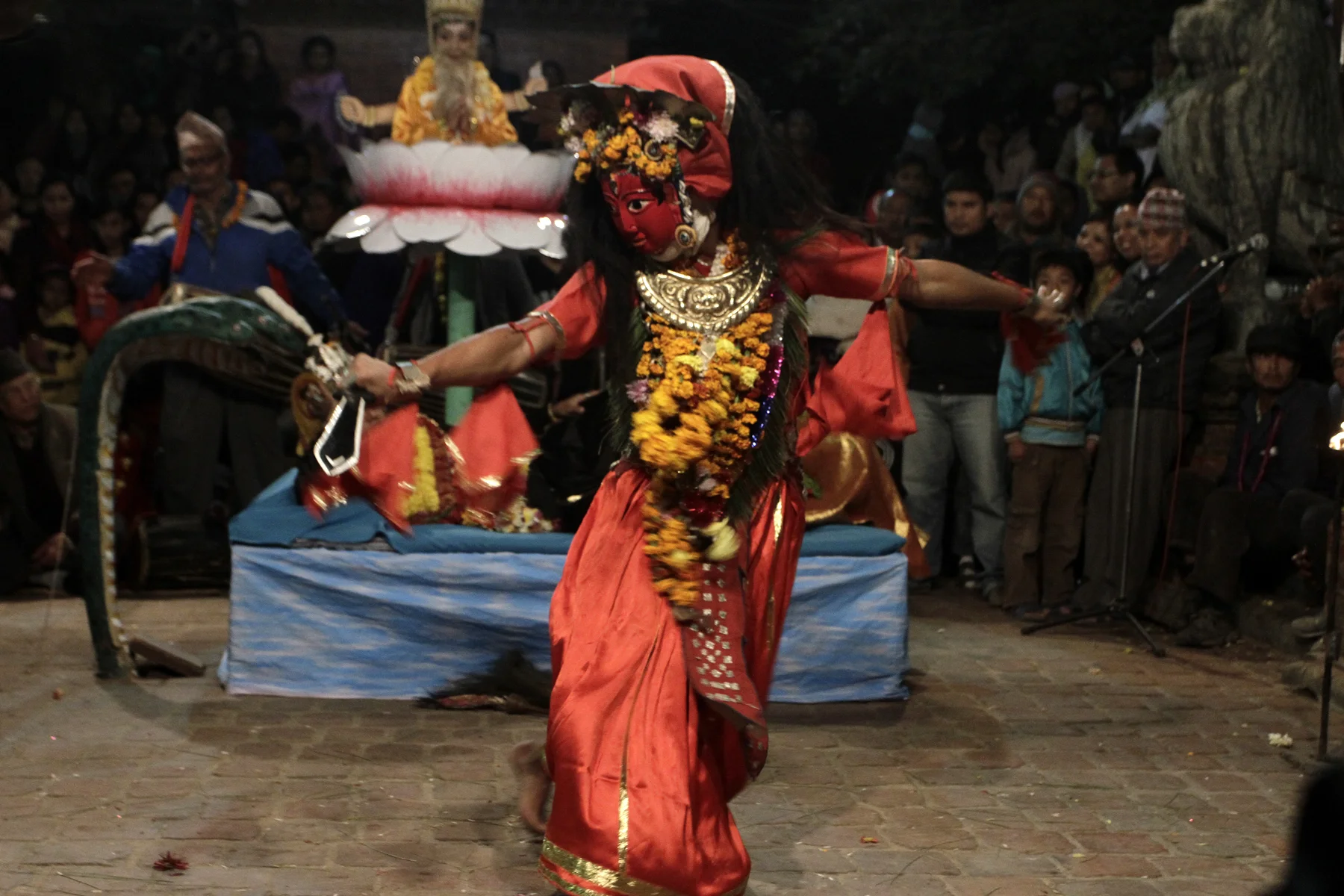
Kartik Naach, Many Nights of Rousing Performance
An ancient dance/drama with few equals, the many tales enacted during the Kartik Naach by vigorous dancers keep spectators entranced and spellbound for hours at a time.
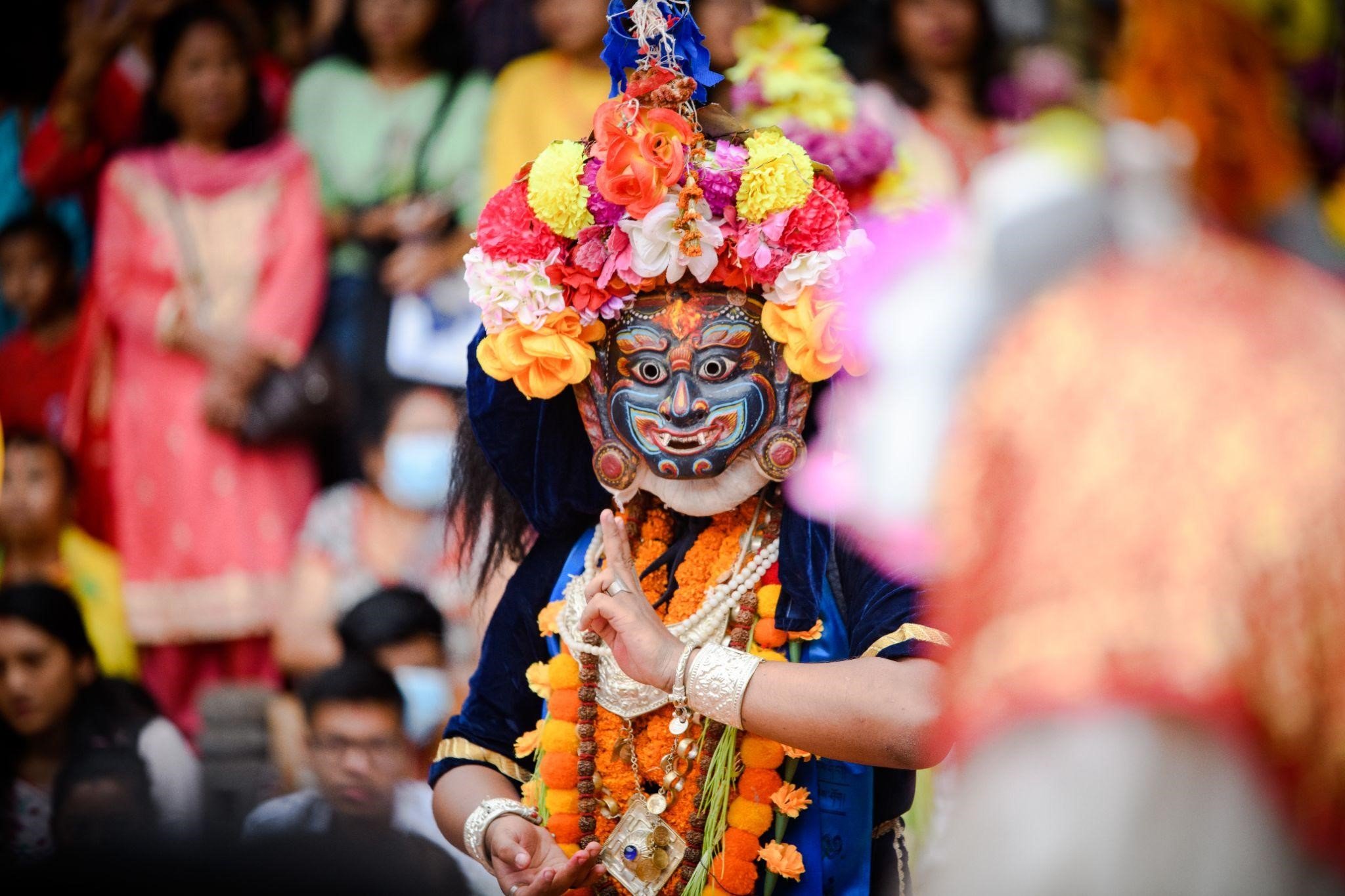
In Kathmandu Valley, the Malla Era (A.D. 1200-1769) was a period of great accomplishments in art, architecture, and culture. Besides the creation of many beautiful monuments, dance and drama, too, received a tremendous boost, and, dabalis (raised platforms for public performance of dance and drama) became the norm in many courtyards and squares around the valley. The contributions of King Pratap Malla (A.D. 1641-1674) were especially great, and his patronage of dance and drama was above the ordinary. In fact, legend has it that the king once had a dream about an epic battle between three goddesses and hordes of terrifying demons. It was such a wonderful dream that he wanted to share it with everybody. So, he ordered that his dream be enacted through a dance/drama performance which could be performed year after year for one and all. Thus was born the Mahakali dance, which enacts the tale of the goddesses Mahakali, Mahalaxmi, and Kumari and their valiant battle with demons. This famous dance is performed during the week-long Indrajatra festival in Kathmandu Durbar Square.
However, before Pratap Malla’s time, King Siddinarsingh Malla of Lalitpur (Patan) was an ardent patron of the arts as well, as were all the Malla rulers of the era. In A.D. 1641, he began the tradition of holding an annual dance/drama that would last eight days in the month of Kartik (Oct/Nov). Religious in nature, the Kartik Naach (Kartik Dance) would portray, through dance, the story of Narsimha (an incarnation of Lord Vishnu) as described in the Vishnu Puran. In 1723, his son King Sriniwas Malla added a week to the eight-day-dance by including comic portrayals titled ’Batha’ (‘Clever Man’) describing the antics of three cunning brothers, Gu daju, Sama daju, and Batha kija, with the last being the cleverest one of all. ‘Batha’ depicted the social realities of the times and had moral overtones.
Later still, Sriniwas’s son, King Yognarendra Malla, extended the days further so that now the Kartik Naach went on for the whole month of Kartik, except for three days of Tihar (one of the biggest festivals of Nepal, which also falls in Kartik). How was the extension made possible? Well, following his father’s lead, he, too, added a couple of new dramas, and these were pretty lengthy love classics. The month-long schedule was followed right till 1949, but from 1950, with drastic changes in the political system, it became just a two-day affair. However, in 1982, it again reverted to its original period, that is, eight days. Currently, efforts are being made to extend it to a month-long program, and this year, it is being held for 12 days (Oct 26-Nov 6). Certainly, this historic dance has a tremendous history, even if it’s a bit convoluted!
In the first chapter of the Kartik Naach, ‘Bhakti Surdas’, dancers enact the story of Surdas, the blind devotee of Lord Krishna, who gets blessed with sight, but fails the test of continued devotion by falling for an attractive maiden called Mohini. Finally, coming to his senses, he returns the gift of sight because he realizes that it is not needed to remain fervent in his commitment to the Lord.
The second chapter, ‘Sudama’, tells the story Lord Krishna’s childhood friend Sudama, who, after growing up, remains poor, while his friend moves into a palace. In desperation, one day, Sudama’s wife Sushila asks him to request his powerful friend’s help in getting out of their poverty. Reluctantly, at her insistent request, he goes to the palace and offers Krishna some chipped rice as a gift, which the latter eats with relish. When Sudama returns home, he finds that his hut has been transformed into a mansion, with many riches inside.
Following these chapters, the dancers enact various comic stories of the three cunning brothers (‘Bathas’): namely, ‘The Unfaithful Wife’, ‘Price of a Goat’, ‘Tricking the Brahmin’, ‘Selling the Earrings’, ‘Unfortunate Bathas’, ‘The Greatest Fool’, and ‘Crossing the River’ They are all folksy in nature and with a moral message at their end. And, of course, they are pretty funny. For instance, in the first story, the three brothers are forced to look for shelter one evening when on a journey. They enter the house of a man called Lanake, and pretending to be his relatives, manage to stay the night. The next day, when Lanake is in the fields, they espy a man called Matin kaji entering the house and dallying with their host’s wife, Punavati. Unfortunately for her, Lanake returns sooner than usual, and she rolls her lover in a carpet. And then follows a series of comic antics of the three brothers, who finally succeed in unraveling his wife’s unfaithfulness to Lanake.
One would think that these funny episodes are an interlude to the main story, which is that of utmost religious sentiment. But, hold on, there’s some love stories next (added by King Yognarendra): the first is ‘Madhavanal’, which relates the classic love story of Madhavanal and Kamukundala written by a renowned Indian poet, Gopal Kayestha. The second is titled ‘Usha Haran’, portraying the love story of Usha, granddaughter of King Bali, and Anirudra, grandson of Lord Krishna. Now, after the interlude of comic and love stories, its back to the original dance as devised during King Siddhinarsingh’s time: ‘Jala Sayan’ first, then ‘Varah Avatar’, and finally, ‘Narasimha Avatar’.
One thing to be noted is that the final three chapters of Kartik Naach must be performed on three specified days of the lunar calendar, that is, Ekadashi, Duadashi, and Triyadashi (three very auspicious days in Kartik). Incidentally, the first of these three days is the only time when the doors of the famous Char Narayan Temple in front of the royal palace are opened for devotees, of which you’ll see quite a large number queuing up to pay their respects. The dabali in front of it is known as the Kartik Dabali, and this is where the Kartik Naach is performed every night from 7:00 p.m. onwards for about three or four hours.
Anyway, coming back to the dances, all the three mentioned above are about Lord Vishnu’s wiliness in battles with demons who had been granted immortality by the gods themselves, namely, he himself and Lord Brahma. ‘Jala Sayan’ depicts the story of his victory, with the help of Maha Maya (a goddess with amazing powers), over two powerful antagonists, Madhu and Kaithba. ‘Varah Avatar’, similarly, is about how he vanquishes another powerful demon, Hiranyaksha, son of Hiranyakshyapa, by taking on the form of a wild boar (varah), since that animal had not been among those mentioned as not having any powers to harm the villain.
‘Narasimha Avatar’ is about how Hiranyakshapa, angered at Vishnu’s killing of his son, goes into such deep meditation seeking Lord Brahma’s favor, that the god is compelled to grant him his wish: that he cannot be killed by man or animal; in the day or at night; in heaven or on earth; and neither by any weapon or other instruments. Ironically, his other son, Prahlad, is an ardent devotee of Lord Vishnu, and he makes many attempts to have him killed. Finally, Lord Vishnu comes up with a solution to do away with the demonic king. He takes on the form of Narasimha (who is half man and half lion), and one day, at the exact time of sunset, accosts Hiranyakshapa under a doorway of his palace, puts him on his lap, and rips his entrails out with his claw-like nails. Well, you’ll surly agree that it’s as rousing an ending to an epic performance as one could imagine!
Actually, there are three more chapters left: the ‘Vastra Haran Lila’, the ‘Dadhi Lila’, and the ‘Bouddha Lila’. The first two are to do with the romantic flirtations of Lord Krishna, first with his admirers, the ‘Gopinis’, and the next with his lover, Radha, while ‘Bouddha Lila’ recounts Lord Buddha’s appeal to his followers to refrain from animal sacrifice. Finally, all that’s left to say is that it is up to the skills of the dancers to do justice to so fantastic a dance/drama as Kartik Naach, and in this, one can say that the 70 or so dancers who take part are well versed in the art, since they have been doing this for ages. While most branches of the Newar community can be performers, the Chitrakars are the one who usually perform the part of the deities, while Narasimha is generally the prerogative of Rajopadhyas.
And, yes, there’s one more interesting thing that must be disclosed here: on the night of the ‘Narasimha Avatar’ dance, the golden window of the palace facing the dabali has to be kept open. Why? Well, that’s because King Siddhinarsingh Malla himself, the founder of the Kartik Naach, will be watching from that window—should surely put more spirit into the dancers’ performances!
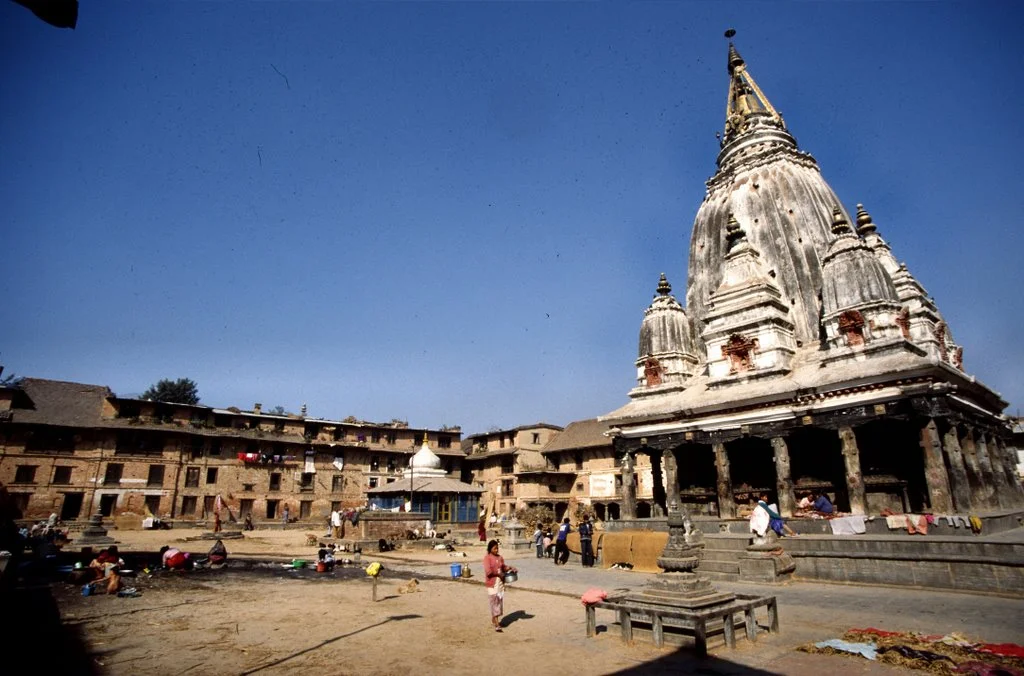
Bungamati Bahi-Vihar Jatra
Bungamati is synonymous with woodcarving, because this ancient Newar village is full of highly skilled woodcarvers. What’s more, they have some interesting festivals, too!
Another sunny Saturday afternoon in October-end in Kathmandu valley, most definitely not a time to be staying indoors. The warmth of the day was inviting me to go and explore the nooks and corners of the valley once more. So, off I went on my trusty Honda towards the big city from the small village of Thaiba, about four kilometers from Satdobato in Patan, where I was ensconced. I had half a mind to pay a long overdue visit to Kathmandu Durbar Square (a.k.a. Hanuman Dhoka); my mind savoring plonking down on the steps of one its ancient temples, watching the world go by.
However, trust Lalitpur to be the temptress that just won’t let you go, so fatal are its numerous charms. I had just crossed Satdobato and was entering Lagankhel when I had to stop in front of the big stupa (chaitya), one of the four massive stupas built by Emperor Ashoka at the four corners of Patan city during his sojourn here centuries ago. A long procession of men and women, mostly young or middle-aged, and with women predominating, was making its way through the gateway of the mahavihar (as big stupas and the premises surrounding them are called). Young volunteers were calling the shots, stopping traffic on both sides of the road. Trust curious me to promptly park my bike and start asking around about the what’s, where’s, how’s, when’s, and why’s of this unexpected (for me) but welcome spectacle.
One of the energetic volunteers was eager enough to do so, and said, “We are from Bungamati, and we are celebrating the Bahi-Vihar jatra (festival) which comes once every 12 years.” To elaborate on this a little, Bungamati is a Newari village that’s some six kilometers from the ring road out of Jawalakhel. It’s famous for its many skilled woodcarvers. Chances are, quite a few of the elaborate windows and doors you see around Patan were made by Bungamati woodcarvers. Anyway, the volunteer went on to say, “It’s a lot like the Dipankar Yatra that’s held in Patan once every 12 years; we have to visit all the important bahis/bahals (those small courtyards you see all around the valley, with a small stupa at the center) as well as the bigger vihars.” So, how many people were participating? “I think there must be five to six thousand; most are from Bungamati while some are from other villages like Thejo, Lele, and so on.”
I could see that, among the women, there were small groups who were similarly attired in dresses made of handloom fabrics. All the participants had name tags hanging round their necks; on closer scrutiny, I saw that some had names of sponsors; woodcarving companies, of course! So, my guess was that the similarly attired groups were probably representing the establishment where they worked. Soon enough, the procession, after circumambulating the stupa, was on its way towards Lagankhel. I approach another young volunteer with some more questions. She, too, was pretty happy to speak to me. She said, “We have to visit about 70 bahis and vihars. We started at five in the morning and have already visited most of them (the time was around 2:30 p.m. now). Next, we’ll be going to Ga:bahal, and then, Ta: bahal, both near Mangal Bazaar. After that we’ll be going back to Bungamati by bus.”
I carried on to Lagankhel— that really, really crowded place with scores of buses and minibuses in the bus park, most of them perennially on the move, whether coming or going, and the vegetable market surrounding it, besides the many other shops selling everything under the sun all over the place. On top of which, even though numerous little shops ply on the footpaths, and many on the sides of the street going to Mangal Bazaar, no one has dared to ban vehicles from running in the area, and so what you have is a constant cacophony of noise, crowds of shoppers thronging the narrow street, and general mayhem all together.
Now, imagine if you will, a procession some 5000-strong moving through this chaotic arena, and what you get is a bazaar like none you may have seen anywhere else. However, take it from me, it’s a pretty orderly bazaar, even then, since nobody’s bothered, and everybody seems to take it all with equanimity. As I was watching all this, I asked a shopkeeper about where all these shoppers were coming from, and was it always like this? “Well, this bazaar is always crowded, and you should be here during Dashain and Tihar! People come from all over Lalitpur district. Those buses ply to some hundred places.” His small shop (not exactly one, since his wares were displayed on the sidewalk) had woolen items, as had many other similar ‘shops’: gloves, shawls, pullovers, socks, trousers, and so on. And, right, you guessed it, all imported from China, that great big friendly giant on the other side.
I sidled up to a middle-aged man who was part of the procession and badgered him with a few questions. The long and short of our conversation was that this particular festival, the Bungamati Bahi-Vihar festival was a prelude to the great big Bungamati Mela being held in the coming year. “It is held once every 12 years in honor of Rato Matsyendranath, and will go on for four months. So, before it begins, all of us at Bungamati pay a visit to the bahis and vihars in Patan to pay our respects and ask blessings for a successful mela,” he informed me. Lest you are not so well informed, let me tell you that the Rato Matsyendranath festival is a month-long affair that’s held every year in Patan. It’s to honor Lord Matsyendranath for bringing rain to the valley (the why’s, what’s, and how’s, when’s of this very vigorous festival is another story).
For now, let’s look forward to the grand Bungamati Mela which will begin pretty soon in the village of Nepal’s finest woodcarvers. For your information, you can drive down there on a fairly good road and should take you not more than 25 minutes or so. In fact, you don’t even need to wait or the mela, anytime you go is a worthwhile outing, since you’ll be experiencing the ancient way of life even this close to the capital, and going through some really great scenery on the way. Take a substantial bag along, you might want to pick up a few fantastic woodcarvings when there!
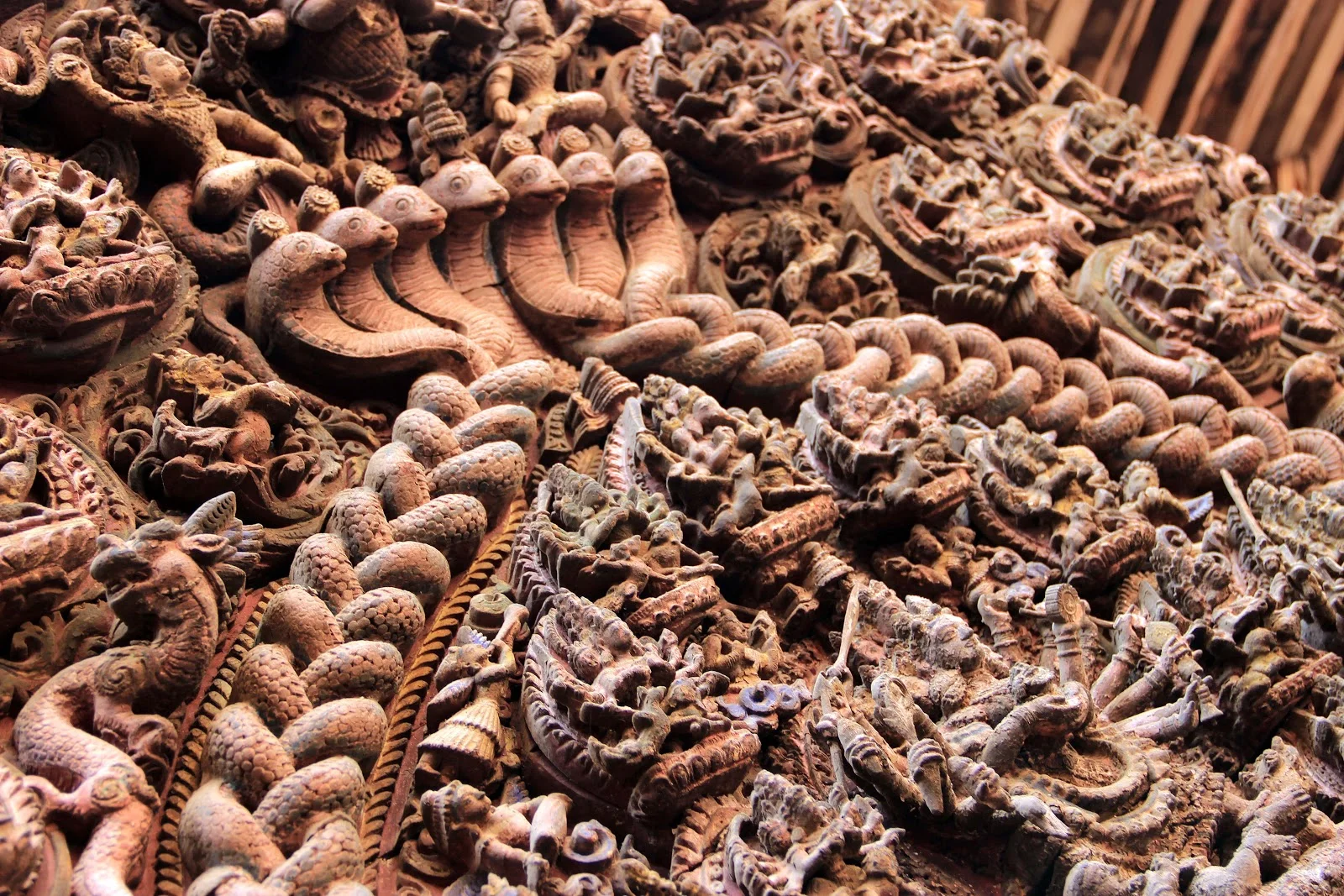
Kathmandu Valley’s Serpentine Culture
Kathmandu Valley was once a gigantic lake in which dwelled an innumerable number of serpents. They were uprooted by humans who set about draining the lake to make the valley inhabitable. The serpents became angry…
It is not only in temples that you will see wood carvings depicting serpent figures; you may well see them even in some hotels in Nepal with a heritage bent. The reason serpents are so visible everywhere is because they play a big part in Kathmandu Valley’s culture.
There’s this eternally mystifying myth about the valley’s origin. Once upon a time, a long time ago, the valley was said to be an enormous lake called Nagdaha (naag: snake deity, daha: lake). As the name signifies, it was inhabited by a large number of serpents. Now, the valley was well protected on all sides by huge mountains, and the weather was lovely. In other words, if only the lake could be drained out, it would be a fine place to live in; agriculture could thrive. So it was no surprise that some enterprising folk got together to do so. Their endeavor was not taken well by the nagas, who were roused from their slumber. As a matter of fact, they were really angry. Since they had power over the rains, they decided to punish the intruding humans by creating a state of severe drought—no rain whatsoever for years.
The frightened humans didn’t know what to do; how to pacify the furious nagas? They were at a total loss, until one fine day, a king came into the valley; a king with great tantric powers. He immediately called upon his powers and succeeded in compelling the nagas to allow the rains to come down again. But, tantric that he was, he also acknowledged the terrible powers of the nagas and understood only too well that they had to be kept appeased. They had to be given the respect they were due. So he proclaimed that, henceforth, the fifth day of Shrawan (July/August) would be celebrated as Naag Panchami in their honor, a day in which they would be worshipped by humans. The king also realized that suitable sites would have to be provided where the nagas could live safely. Thus, certain specific lakes in Kathmandu Valley were decreed to be safe refuge for the nagas. The lakes so chosen were Taudaha in Kathmandu and Nagadaha in Lalitpur.
Taudaha is a large lake in Chobar, some six kilometers from Kathmandu, to the southwest. Aside from its cultural significance, it is also a refuge for many wetland birds, it being the only remaining natural lake in Kathmandu Valley. People come here during Naag Panchami (August 1 this year) to pay homage to Karkotak Naag, the king of the nagas. There’s a lot of flora and fauna around the lake as well. Nagadaha is located in Dhapakhel of Lalitpur district. It is a large natural pond (about five hectares). Aside from these two, there is a man-made pond to the east of the former royal palace that is small in size. It has a totem pole in its center with a naga on top. Like the bigger sites, this too is where devotees flock to during Naag Panchami. On this day, you’ll see most houses in the valley with a colorful picture of a naag pasted with cow dung over, or beside, their main door. You’ll also see Lord Krishna featuring prominently in some of the pictures. That’s because there’s another prevalent myth about Naag Panchami in the Hindu religion. It is said to be a day to celebrate the victory of Lord Krishna’s victory over Kaliya, an evil and gigantic serpent.
Another festival with serpentine connotations in Kathmandu Valley is the Rato Matsyendranath Jatra, which is celebrated every year for month (May/June). It is a festival participated in by thousands of Patan-dwellers who haul a giant chariot containing an image of Lord Matsyendranath through the lane of the city, with various sites designated as resting spots for a certain period of time. The origins of this colorful (and vigorous) festival are as mystical as that of any other festival. Here’s how the myth goes: many centuries ago, there was a great sage called Goraknath who dwelled in a cave in Gorkha. Once, he happened to come to Patan, and as is the norm for ascetics, went door-to-door seeking alms. Now, the locals were not exactly that generous lot, and in fact, the sage was subjected to some disrespect as well. In his righteous anger, he decided to bring about a drought as never seen before by the valley denizens. With this objective in mind, he promptly sat down on the heads of the nine rain-bringing nagas. Then, he started meditating, and in doing so, slipped into a trance that lasted days on end. The rains stopped pouring down because the nagas were immobilized.
The people begged him to break his trance and get down from the nagas’ heads. Desperation prevailed, since the mighty sage remained unmoved. Now, luckily, there were a couple of cunning fellows around, and they devised a clever plan of action. They traveled all the way to Assam in India, where resided Goraknath’s teacher (guru), Matsyendranath. He was brought to Kathmandu posthaste. On realizing that his guru had come to see him, Gorakhnath promptly stood up in respect, and his trance was broken. The nagas were thus liberated and free once more to do what they did best, that is, to make the rains come pouring down on the valley. With so much depending on the nagas, it is, therefore, no wonder that the people of Kathmandu Valley hold so much respect for them. And, no wonder that you may see more than just a couple of serpent figures in the wood carvings around hotels in Nepal.
POPULAR ITINERARIES
SIMILAR POSTS

Biggest Nepali Festival, Dashain
The biggest Nepali festival, Dashain, is known as a 10-day festival, but it actually ends on the 15th day, the day of Kojagrata Purnima.
At all other times of the year, hotels in Kathmandu, Nepal, are planning some event or the other to attract guests; it could range from a special concert to a theme party to a culinary event. However, come Dashain, the biggest Nepali festival, and everything goes on hold. From the start of the 10 days of Dashain, the streets of Kathmandu begin to look desolate, with a large part of its denizens gone home to other parts of the country. Fact is, Kathmandu is where the action is, meaning Nepalis from all nooks and corners of Nepal live in Kathmandu for work and business, and while it’s their home for all practical purposes, their ancestral homes are somewhere else. And, fact is, the most important part of Dashain is the tradition of getting together with family in ancestral homes.
It’s a lovely custom, a beautiful part of Dashain culture, and hotels in Kathmandu expect this, and in fact, have accepted this. It would have been tough, anyway, to keep the staff working at full throttle during Dashain if business was as usual, since Dashain is a holiday that’s not going to be missed by anyone, including the staff of hotels in Kathmandu. Having said all this, let’s see what Dashain, Nepal’s biggest festival, is all about. Keep in mind that it’s a 10-day-long festival (pretty long by any standard, wouldn’t you agree?), and, keep in mind, also, that Nepal’s biggest festival involves a certain ritual that’s not so apt in this day and age; that is, animal sacrifice. There’s some hue and cry about cutting down on this aspect of Nepal’s biggest festival, but that’s easier said than done. A tradition that’s thousands of years old will certainly take some time to change, if at all.
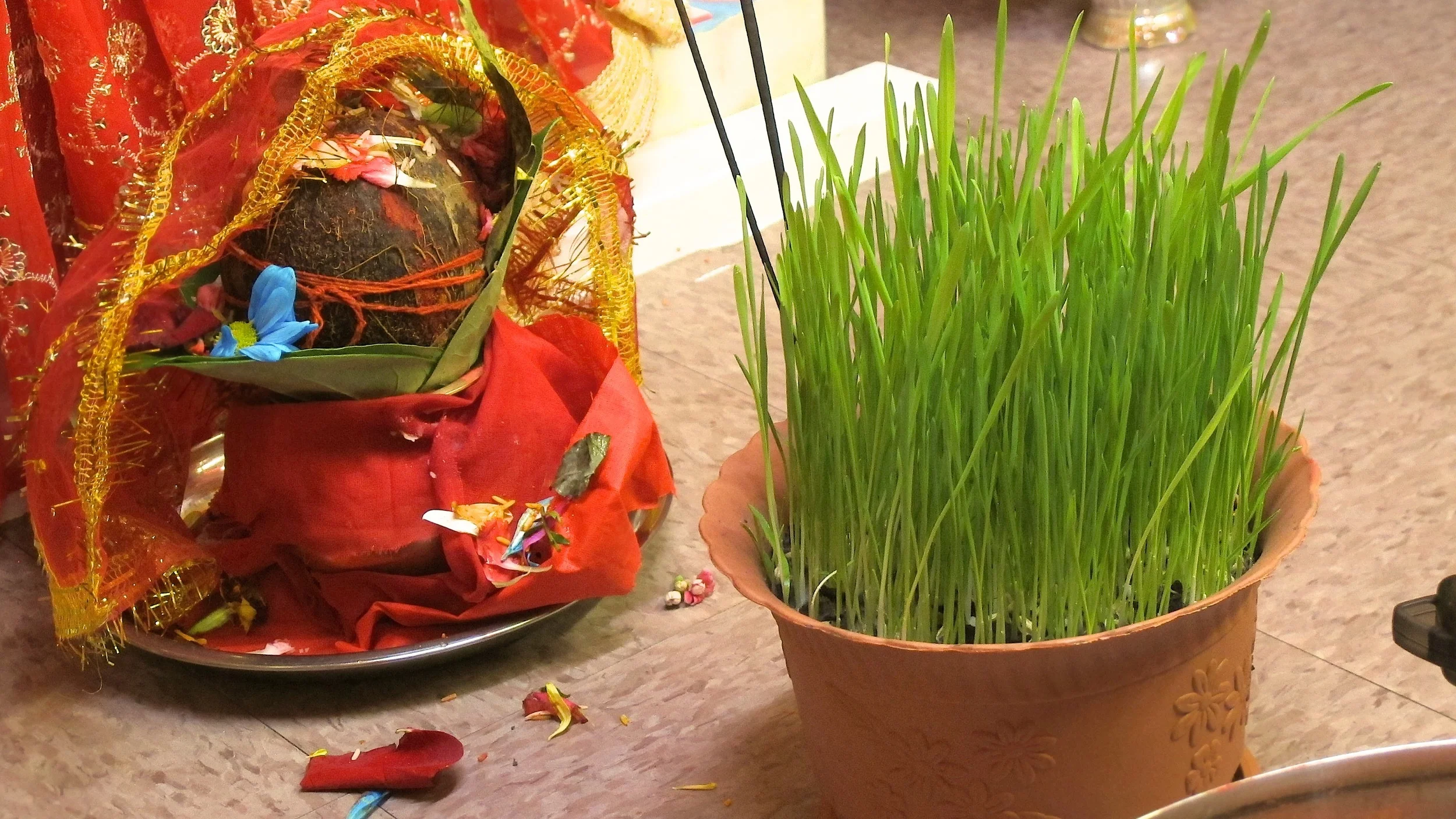
Anyway, leaving this less-savory fact behind, let’s talk about pleasanter things about Nepal’s biggest festival, Dashain. It starts with Ghatasthapana (September 25, this year), when a handful of barley seeds are scattered on a bed of sand in a clay container in the puja room of every Hindu household in the land. The sand has been brought from nearby rivers the day before, and people make sure the barley seeds are of good quality; the barley, when it sprouts some days later, has to be really nice and yellow-green, since it is an essential part of the offering on the day of Vijaya Dashami, along with the tika (a mix of vermillion powder, rice, and curd) on the forehead of younger family members by their elders.
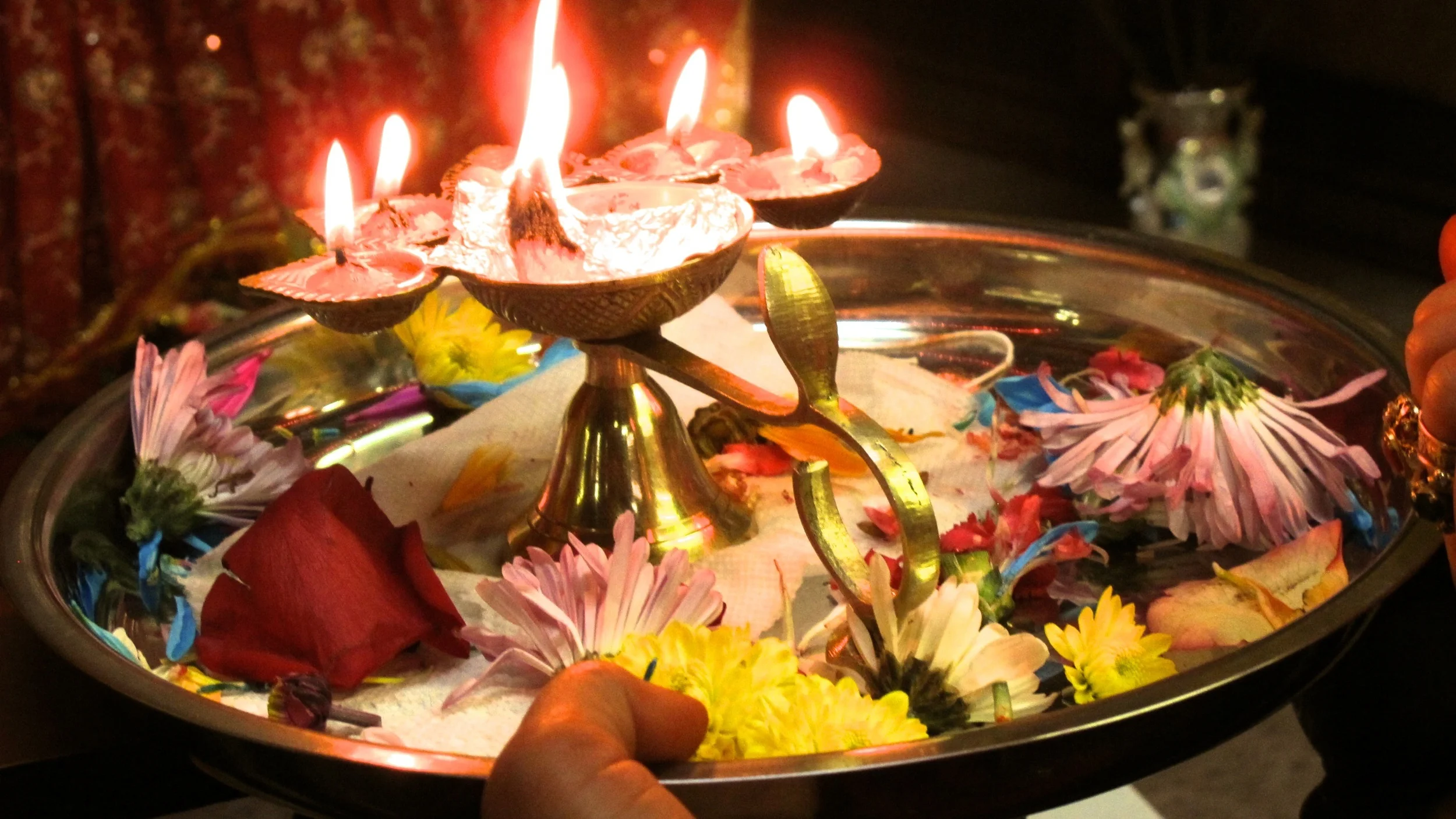
However, Vijaya Dashami is still far away, it’s after all the culmination of Dashain, falling on the tenth day. Let’s go one day at a time: On Ghatasthapana, along with the sowing of barley seeds, a lamp with a thick wick is also lighted, and is kept burning for the full 10 days of Dashain. The lighted lamp is kept covered by another clay vessel; the soot on this will be put on the forehead as a little dot below the red tika on Vijaya Dashami. One curious fact is that while all such preparations are done by womenfolk, it is a male family member who has to conduct the daily puja during the Dashain period. If you are in Nepal during Vijaya Dashami, also known as the day of Tika, you’ll see most people with tikas on their forehead, and jamara (the aforementioned barley sprouts) tucked behind their ears, including the staff of any hotel in Nepal you’re staying at.
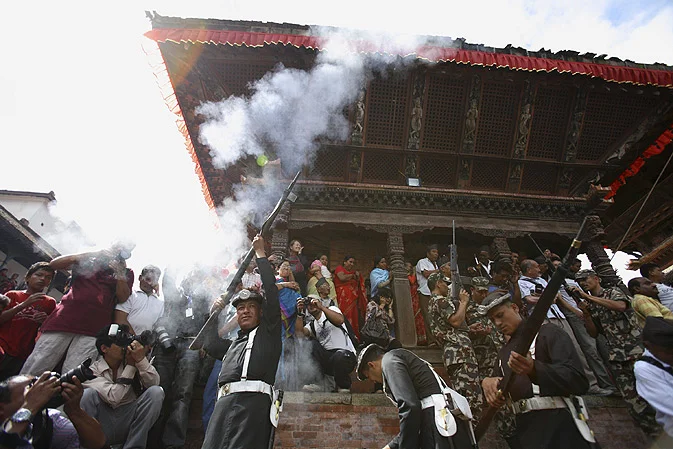
The first nine days of Dashain are collectively called Navaratri (nava: nine; ratri: night). Lots of people, many of them youngsters, will be out in droves in the wee hours of the morning every day visiting all the temples dedicated to Goddess Durga and her manifestations. The air is full of festivity. Mealtimes on all 10 days are sumptuous feasts, and a variety of mutton dishes are the order of the day. Chiura (beaten rice) is preferred over boiled rice, which is the staple at other times. The seventh day is Fulpati, which is marked by jamara from Gorkha (original home of the Shah dynasty) carried into Kathmandu’s Hanuman Dhoka (Kathmandu Durbar Square) palace, the ancient seat of Nepal’s kings, on a palanquin borne by loin-clothed Brahmins, and escorted by a platoon of soldiers dressed in uniforms of bygone days and carrying bayoneted muskets.

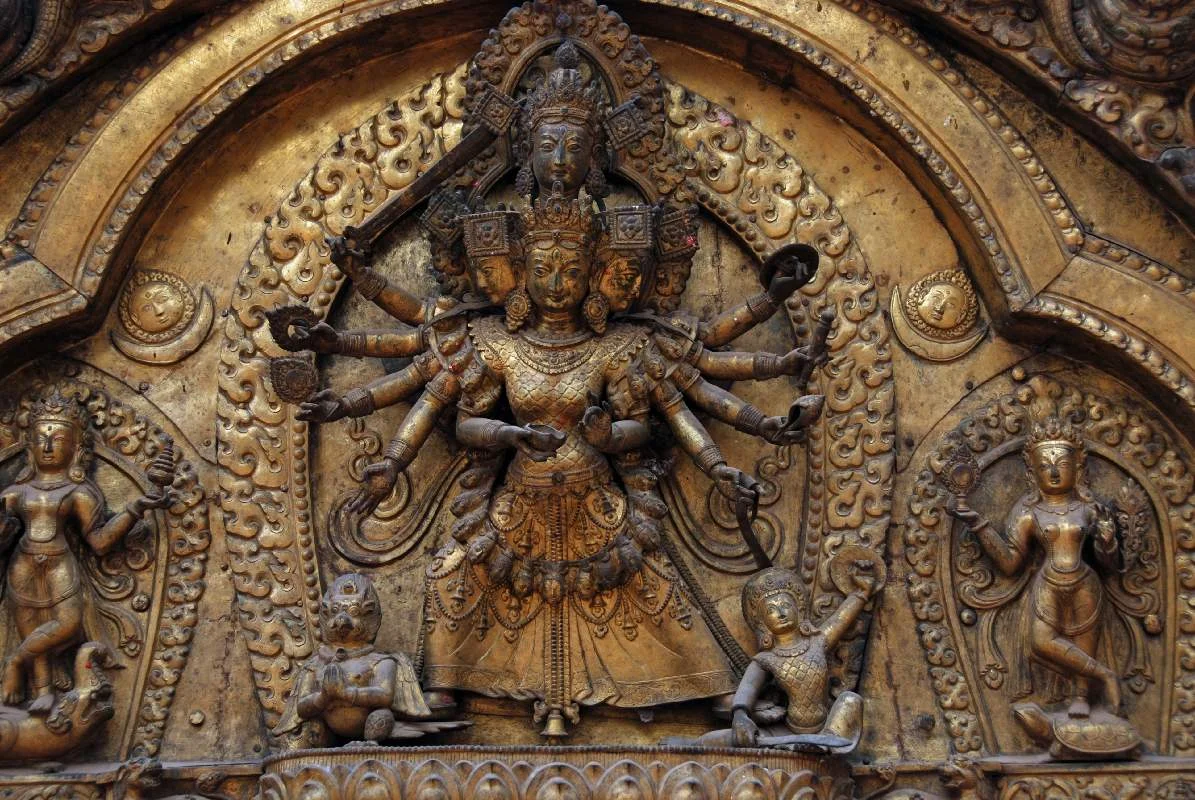
Maha Asthami falls on the eighth day, and it’s the day mentioned before, the one that’s not in tune with 21st century sensitivities. Throughout the country, temple courtyards of Goddess Durga become red with the blood of thousands of buffaloes, goats, ducks, and pigeons—their heads severed with single chops of khukuris. There’s probably as much meat in homes on this day as there might be in some of the smaller hotels in Kathmandu! The night of this bloody day is known as Kal Ratri (black night).
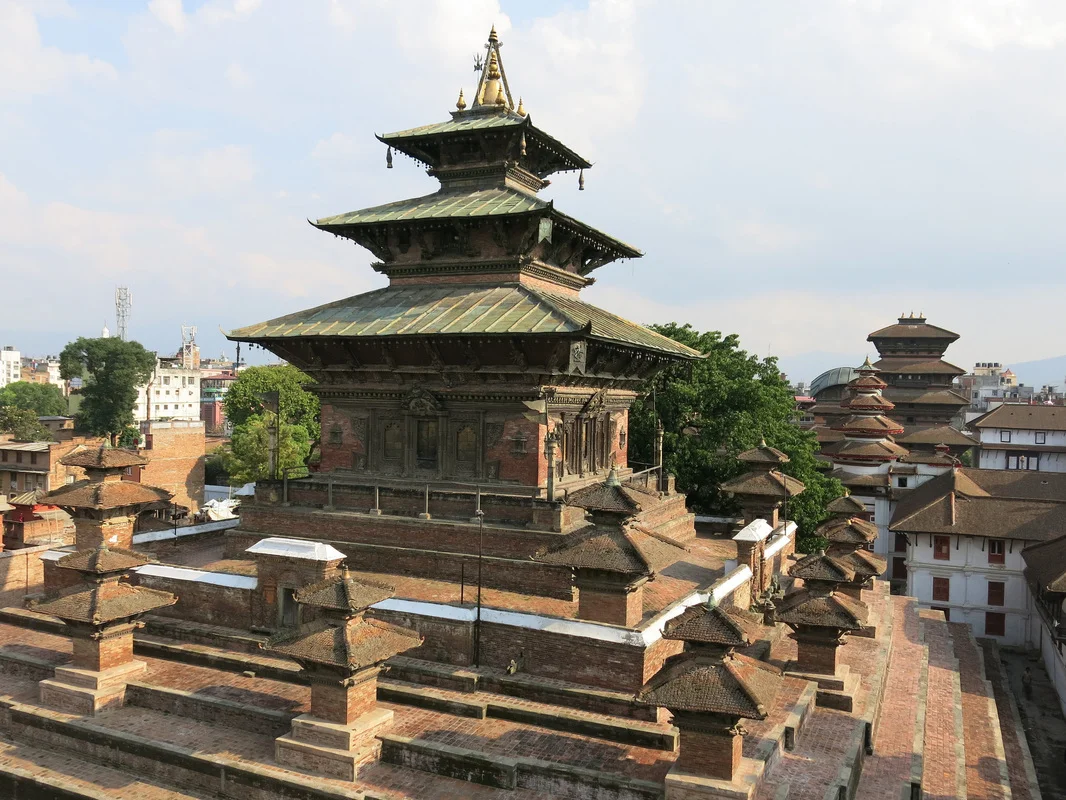
The next day is Maha Nawami. In Kathmandu, this is the only day when the doors of the ancient Taleju temple at Hanuman Dhoka are opened for the public. Official sacrifices are also conducted on this day by the Nepal Army in the courtyard (kot) of the Hanuman Dhoka palace. If you are lucky enough to witness it, it’s something that will remain with you forever—the sight of buffalo heads being neatly sliced with the single stroke of long bladed khukuris wielded by sturdy army men. If that’s not drama enough, officers in full regalia stand in attendance with a military band going great guns all the while, not to mention, the loud boom of rounds fired from dozen of big guns.
Finally, it’s Vijaya Dashami, the day of Tika, and this is when you’ll find the streets of Kathmandu coming alive once again, what with families going from place to place to receive tika from elder relatives. It’s a time of hectic activity, since most Nepalis have lots of relatives, generally. Actually, because it’s not possible to make it everywhere on a single day, Dashain carries on for the next four days to allow for this. So, although Dashain is known as a 10-day festival, it really ends on the 15th day, which is always a full moon day and is known as Kojagrata Purnima. It’s the day for rest and rejuvenation from all that frenetic activity of Nepal’s biggest festival, Dashain. And now, again, hotels in Kathmandu go on full alert because the tourist season, too, has begun!
POPULAR ITINERARIES
SIMILAR POSTS
This is how Indrajatra, Nepal's biggest street festival was celebrated in 1931 AD
Very rare video footage of Nepalis celebrating Indra Jatra festival, biggest street festival of Nepal, with much rejoice, singing, dancing and chariot procession in Kathmandu.
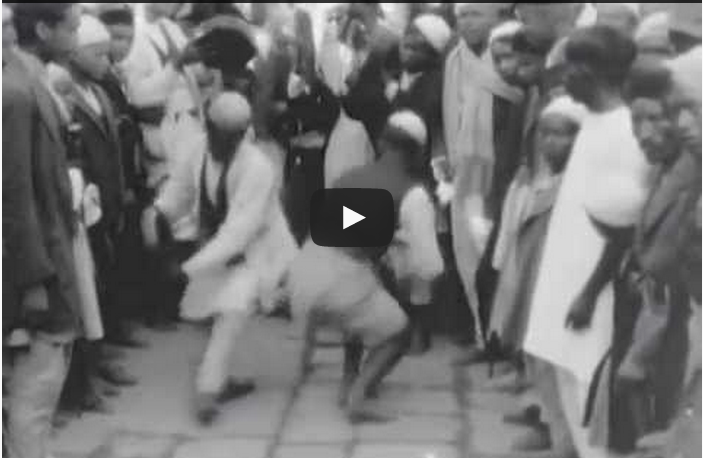
Very rare video footage of Nepalis celebrating Indra Jatra festival, biggest street festival of Nepal, with much rejoice, singing, dancing and chariot procession in Kathmandu.
Date: 1931 (Before the great earthquake of 1934. Hence the video has very important visuals that displays the spectacular Kathmandu Durbar Square before the disaster)
[Credit: British Library - Sound and Moving Image Collections | The British Library has made these recording available purely for the purposes of non-commercial research, study and private enjoyment.]
Indra Jatra
(Yenyā in Nepal Bhasa: येँयाः)
It is the biggest religious, cultural and historic street festival of Nepal, particularly within the Kathmandu valley and mainly observed by Newar community. Yenya means "Kathmandu festival" in Nepal Bhasa. It is the time when the advent of the monsoons is celebrated in the name of the rain god 'Indra'.
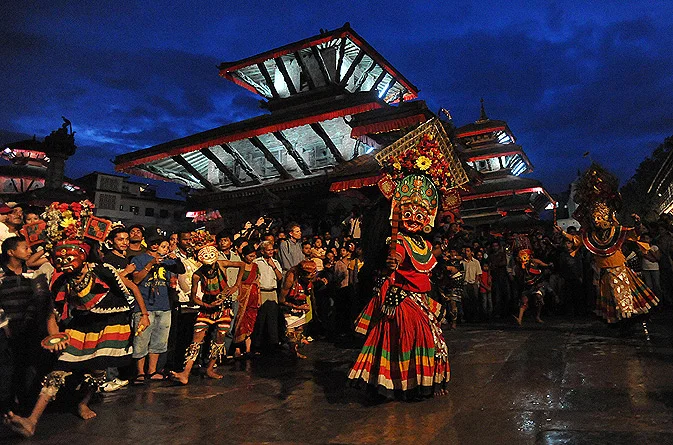
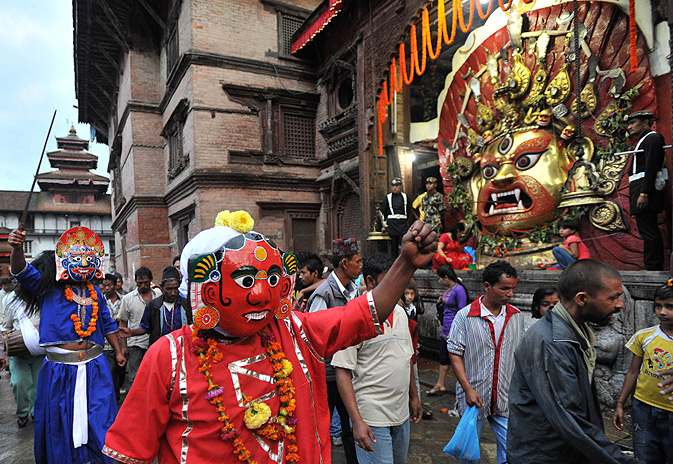
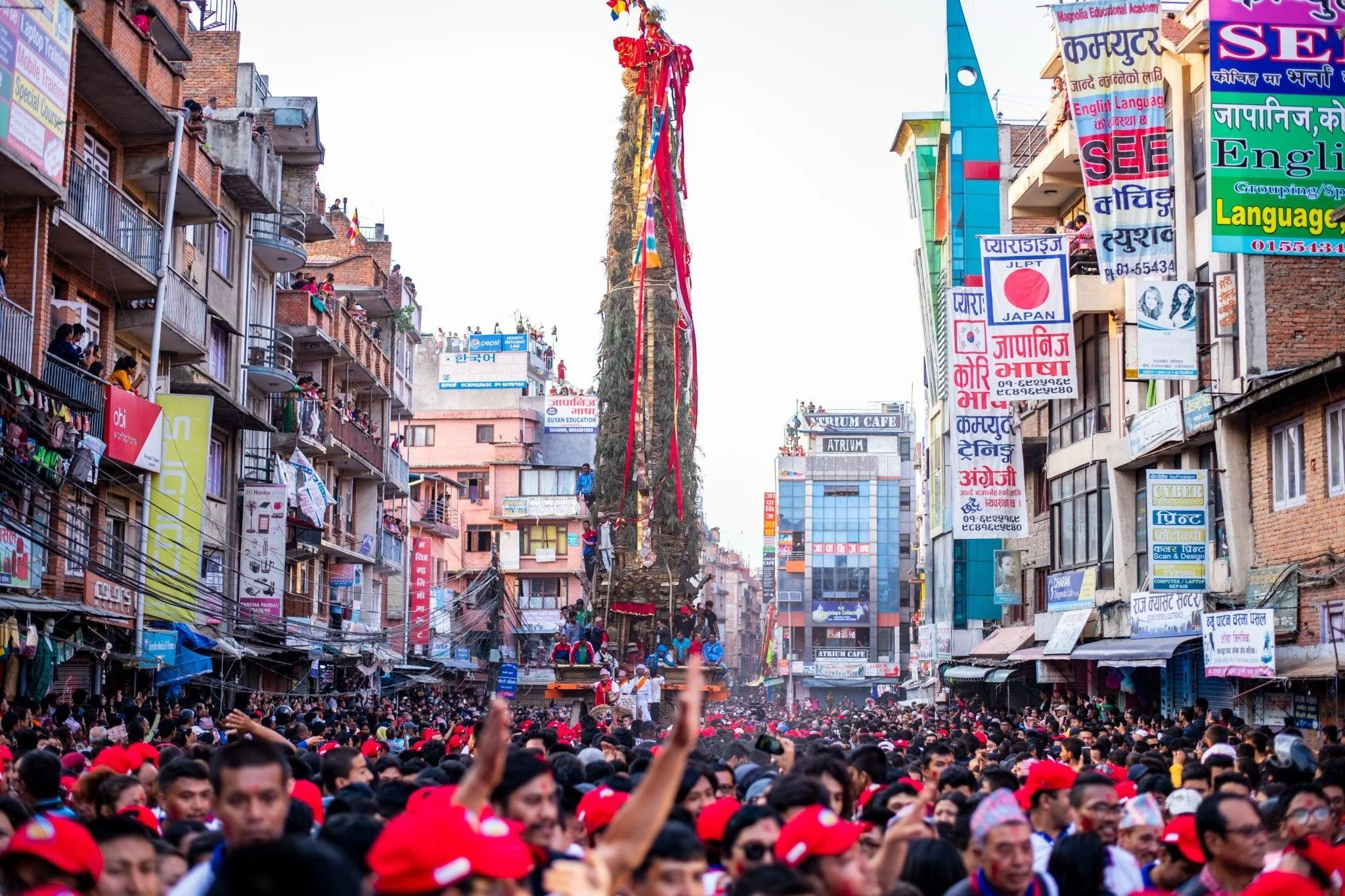
The eight days long celebrations consist of two events. Indra Jatra is marked by masked dances of deities and demons (commonly known as Lakhe Naach, Mahakali Naach, Lusiki Naach and Dash Avatar), displays of sacred images and tableaus in honor of the Hindu deity Indra, the king of heaven. The other event is Kumari Jatra, the chariot procession of the Living Goddess Kumari. Three chariots carrying human representations of Goddess Kumari, Lord Ganesh and Lord Bhairava are pulled along the festival route through Kathmandu Durbar Square. Classical dancers, mask dancers of deities wearing different kinds of traditional masks and costumes and musicians also accompany the chariot procession. The dancing continues throughout the route to celebrate the visit of the rain god, Indra. The procession starts at around 3 pm.
Indra Jatra was started by King Gunakamadeva to commemorate the establishment of the city of Kathmandu in the 10th century. Kumari Jatra, which means the chariot festival of Kumari, coincides with Indra Jatra. It was started in 1756 AD during the reign of Malla King Jaya Prakash Malla.
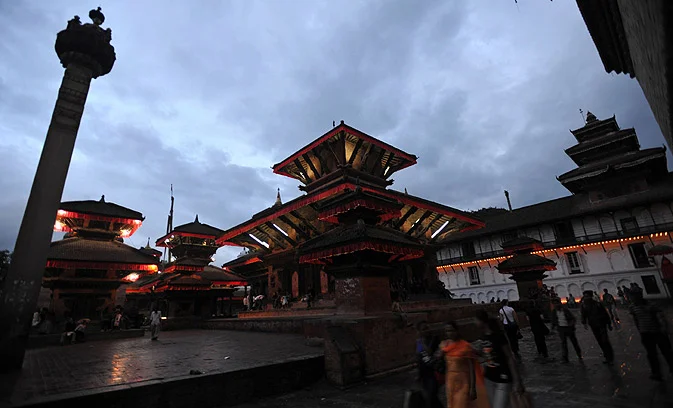
Family members deceased in the past year are also remembered during the festival. The main venue of the festivities is Kathmandu Durbar Square. The celebrations last for eight days. There is a public holiday in Kathmandu Valley to mark the festival. Indra Jatra also marks the beginning of the festive season, which is preceded by major festivals Dashain and Tihar.
Kumari Jātrā
On the first day known as Kwaneyā (क्वनेया:), the chariots are pulled through the southern part of town. On the second day known as Thaneyā (थनेया:), the chariots are drawn through the northern part till Asan. And on the third day Nānichāyā (नानिचाया:), the procession passes through the central section at Kilāgal. The chariot procession was started in the mid-18th century during the reign of Jaya Prakash Malla.
Route on Day 1: Basantapur, Maru, Chikanmugal, Jaisidewal, Lagan, Hyumat, Bhimsensthan, Maru, Basantapur.
Route on Day 2: Basantapur, Pyaphal, Yatkha, Nyata, Tengal, Nhyokha, Nhaikan Tol, Asan, Kel Tol, Indra Chok, Makhan, Basantapur.
Route on Day 3: Basantapur, Pyaphal, Yatkha, Nyata, Kilagal, Bhedasing, Indra Chok, Makhan, Basantapur.
Ancient Legend
According to an ancient legend, the young Indra, disguised as a farmer, descended to earth in search of Parijat, a white flower, his mother, Dakini, needed to perform a ritual. He found the Parijat, but was caught while trying to take the flower by the owner of the meadow where he found the flowers. He was bound and imprisoned in Kathmandu until his mother, worried about his extended absence, came looking for him. When the city folk realized who they had imprisoned, they agreed to release Indra but on the condition that he would return to the earth every year during that time and be displayed as a prisoner for 7 days and that he would provide enough rain (dew during winter) for the crops. So, during this festival, images of Lord Indra are displayed for 7 days, but in captivity. Dakini promises enough dew throughout the winter to ensure a rich crop and to take back with her to heaven all those who had died in the past year.
The Indra Jatra festival thus honours the recently deceased and pays homage to Indra and Dakini for the coming harvests.