
Riding the Rapids: Whitewater Rafting in Nepal
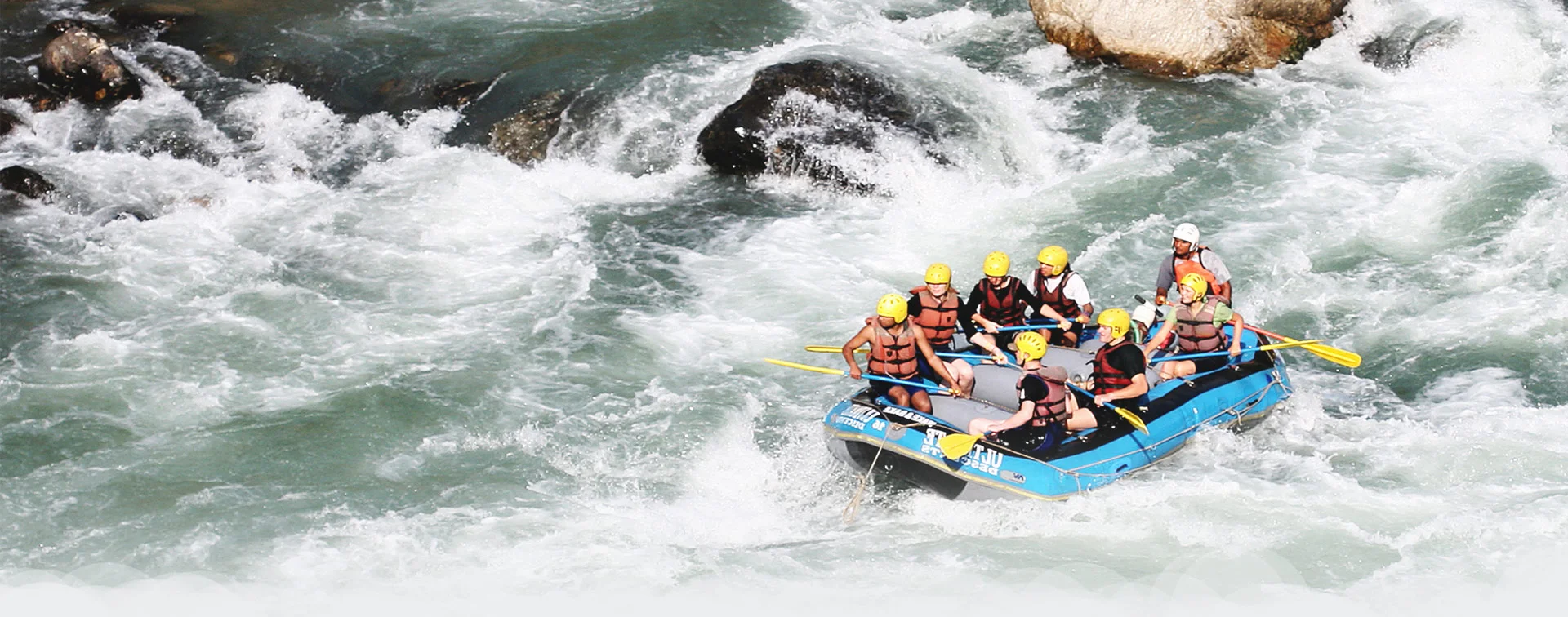
Whitewater rafting is one of the main attractions of Nepal’s many thrilling adventure activities; it’s enjoyable, exciting, and exhilarating.
In whichever hotel in Nepal you are staying at during your Nepal visit, don’t forget to ask about how to go whitewater rafting. This is to ensure that you don’t miss out on the experience of a lifetime in this country full of adventure and discovery. What’s more, the season has just begun! Yes, October to mid December is a great time to go whitewater rafting, as is the period from early March to May.
Nepal has a surplus of mighty rivers originating from the majestic Himalayas and flowing down to the lowlands (Terai). This makes for an ideal situation for going whitewater rafting. Stretches of placid waters combined with stretches of swirling rapids, and huge boulders strewn all along the way—all these point towards excitement aplenty. As you read this, the question could have popped up in your mind: “and what about spills?’ Well, that’s all part of the thrill of whitewater rafting. However, you can put your mind to rest about this, since the many whitewater rafting operators here have decades of experience behind them, and they will strictly adhere to all safety measures. There are 10 river systems in different parts of the country that are open for whitewater rafting. Rapids on these rivers are graded on a scale of 1 to 6, with the first being the most tranquil and the last being the most ferocious. Obviously, you would probably prefer somewhere in between. One thing to be realized is that it’s best not to go it alone; other rafts alongside will be useful in case help is needed.
Rafting down the Trishuli River is perhaps most popular with tourists. It has rapids of 3 and 4 grades. Most rafting operators take you on a three-hour drive down from Kathmandu to put-in points like Fishling and Charaudi. From these points, you can raft for up to 60 kilometers, or shorter distances if you are short of time, such as a three-hour trip to Kurintar. The Trishuli experience can either be a one-day, or two- to three-day affair. Some operators prefer another route, one in which you are driven down to a bustling town called Besi Sahar (8 h), and from there to Khudi, the start of your rafting adventure. You raft down for some 38 km until you reach a quaint Newari town called Bimal Nagar. It’s a trip that won’t worry you much, since the waters are quite tranquil most of the way. Another popular site for Nepal whitewater rafting is the Bhotekosi River (grade 4), which is located close to the Tibet-Nepal border; about a three-hour drive from the capital.
Also close to Kathmandu is the Sun Kosi River. You first take a three-hour drive down to Dolalghat, and then take off on your raft. You’ll come across rapids of grade 4 and 5 along the way, with some stretches perfectly calm, while other stretches are pretty wild. You’ll also be maneuvering your raft through quite a few rock strewn passages. The rafting is a lot of fun, and since it’s a long ride of about 120 km, you get to experience many highs and lows, not only of the rapid grades, but we daresay, the limits of your courage, too! Like in the case of other higher-graded rivers, the Sun Kosi, too, is recommended for fairly advanced rafters.
The Kali Gandaki River in far-western Nepal is another great site to go whitewater rafting in. It has rapids of grades 4 and 5, and flows through the famous Kali Gandaki gorge, said to be the deepest in the world. You’ll notice some cremation sites and burial mounds at the junctions, and this, too, should add more flavor to the journey! Another far-west river, the Karnali, is Nepal’s longest river, and it has rapids of grades 5 and 6, which makes whitewater rafting down its length a most exciting adventure. The Karnali River has its origins in the Mount Kailash region. Another river that offers exhilaration galore is the Marshyangdi River (grade 5), with its steeper rapids that continue for long periods, which mean it is also an excellent river for kayaking.
The Seti, which slopes down from the Macchhapuchre Himal in the Annapurna region, is a much gentler river with only grade 2 and three rapids. Rafting down its length is a moving experience, what with the fantastic scenery all around, including splendid views of the Manaslu and Annapurna ranges. What’s more, this river has quite warm waters, so you can do a bit of whitewater rafting in cooler months as well. On the other hand, rafting on the Tamur River, which originates in the Kangchenjunga range, is for more proficient rafters, since it has grade 5 and 6 rapids. The distance is also a long one, almost 120 kilometers, and you’ll get plenty of non-stop excitement since there are almost 100 rapids to be traversed through!
Many whitewater rafting expeditions are usually combined with a bit of safari in the jungles or with some short trekking in the mountains, depending on where the river is situated. Whatever the river you choose in Nepal to go whitewater rafting in, you can rest assured that you will have one heck of a roller coaster ride down the swirling waters of the mighty Himalayan rivers!
| Name of River | Duration | Grade | Start Point | End Point |
|---|---|---|---|---|
| Trishuli | 1 - 3 days | 3+ | Baireni Chauradi | Simaltar |
| Bhote Kosi | 2 days | 5+ | Bahrabise | Dam |
| Kaligandaki | 3 days | 4+ | Baglung | Mirmi |
| Seti | 2 days | 3+ | Damauli | Gaighat |
| Sunkosi | 10 days | 5 | Dolalghat | Chataira |
| Karnali | 10 days | 5 | Sauli | Bhen Bridge |
| Marshyangdi | 5 days | 5+ | Ngadi | Bimal Nagar |
Recommendations for my friend visiting Nepal
Nepal’s adventure activities are challenging and thrilling, what’s more, they are conducted with the utmost regard for your safety.
For a Singaporean friend, who spent three months in Kathmandu, one of Nepal’s adventure activities included moving around in darkness quite often, what with the constant load shedding. He claimed to have returned with improved night vision! Well, even though most hotels in Nepal have adequate backup electricity arrangements, it does give the eyes some exercise while walking on dark streets. It’s clear, anyway, that visitors are likely to find various aspects of their Nepal tour to be an adventure of sorts, one typical example being traveling by public transport. Now, that is also an adventure! Anyway leaving the mundane aside, let’s get down to the real nitty-gritty of Nepal’s adventure activities you get to experience on your Nepal tour.
Nepal Treks
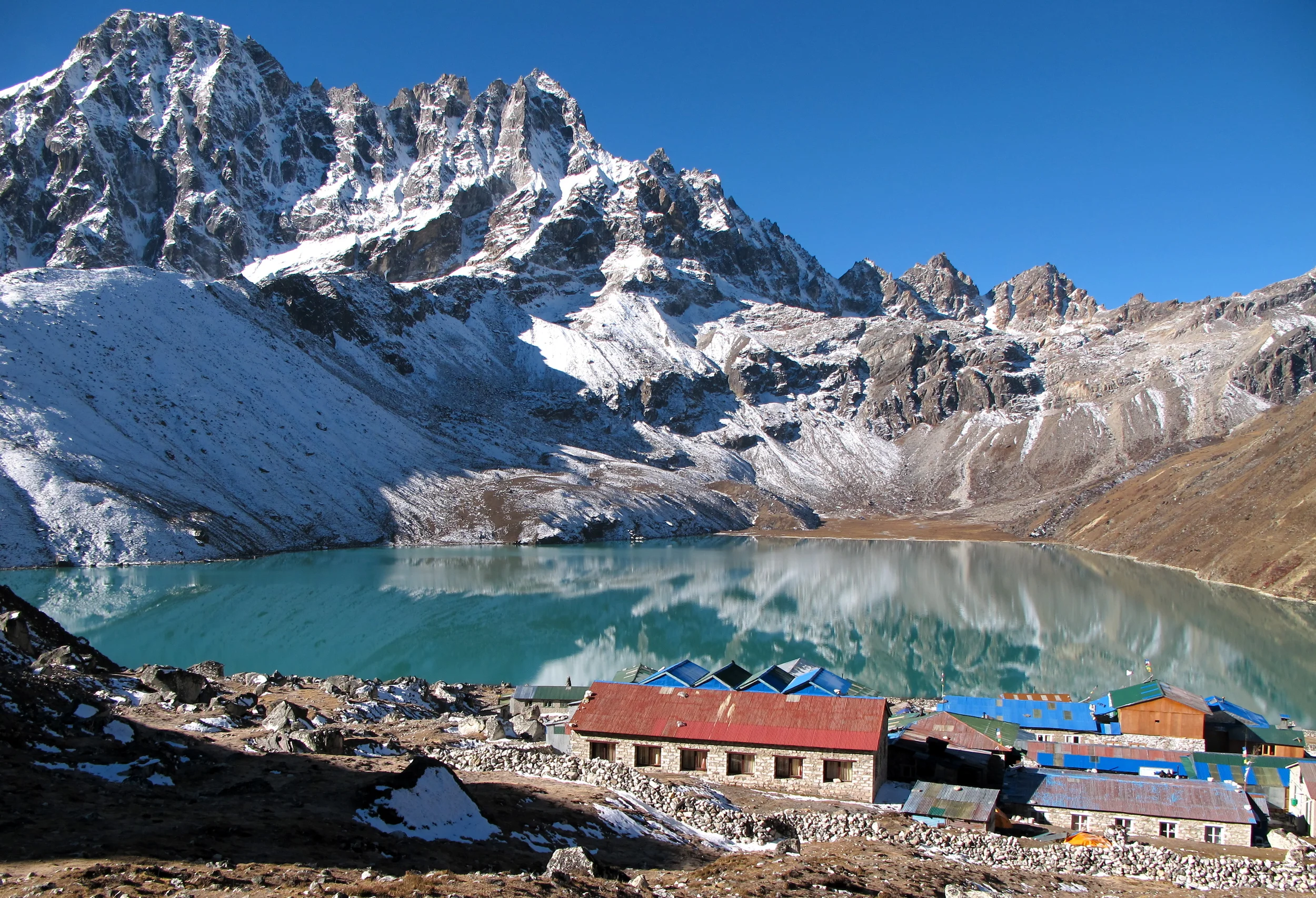
Trekking high on the mountains, close to the world’s highest peaks is certainly the most popular of Nepal’s adventure activities, with almost 40% of all visitors on a Nepal tour going on one trek or the other. Some of the most popular Nepal treks are as follows: 1. Everest Base Camp trek, which takes you through fascinating landscapes and quite a few Sherpa villages, before eventually reaching the base camp on the Khumbu Glacier, with Mount Everest towering above you. 2. Annapurna Circuit trek, which starts from Besisahar, goes along the Marsyangdi River, passing through Tamang and Gurung villages, and takes you to Muktinath, Jomsom, and Pokhara. 3. Mustang trek, which takes you to the once forbidden kingdom of Lo Manthang in Mustang district, where you will find yourself immersed in Tibetan culture and lifestyle. 4. Imjatse (Island Peak) trek, which goes through the valleys and glaciers of Khumbu, and gives you the chance to climb an authentic Himalayan peak, that is, Imjatse Peak (6,189 m). 5. Ghalegaun village trek, which goes through the villages of the famous honey hunters of Nepal.
Nepal Whitewater Rafting
What else awaits you besides trekking, as far as Nepal’s adventure activities are concerned? Well, whitewater rafting, for one. Nepal whitewater rafting is said to be one of the best in the world, what with its great mountain rivers flowing majestically down from the snow-clad peaks of the Himalayas to the lowlands of the Terai. Imagine yourself on an inflatable rubber raft riding down the swirling rapids of these great mountain rivers rushing between huge mountains on either side. It’s sure to be an experience you’ll never forget. You don’t have to worry about the risks either, since you’ll have highly experienced people looking out for your safety all the time. Just so you know, river are graded from one to six depending on their being more tranquil or more hazardous, which means you get to choose your ride. Grade 1 to Grade 3 rivers are supposed to be easy ones; good for first timers, and the best time to go rafting is between September and early December, as well as between March and early June. Some popular rivers for Nepal whitewater rafting are stretches of the Trishuli, Kali Gandaki, Marshyangdi, Karnali, Bhote Kosi, Seti , and Tamur.
Nepal Mountain Biking
Challenging terrain is what’s important for mountain biking, and that’s what you get in plenty in Nepal. Many on a Nepal tour make it a point to go mountain biking, especially in and around the Kathmandu valley with its many interesting biking trails, and around Pokhara, as well. You’ll be pedaling on tracks that sometimes go uphill all the way and then downhill on the return, or sometime, you’ll be going up and then down at regular intervals, the lay of the land being what it is. The rides will take you through paddy fields, villages, riverbanks, temples, and so on and so forth. ‘Never a dull moment’ is what you’ll be thinking as you give your stamina a tryout. One route that many riders really like is the one to Nagarkot. Nepal travel agencies usually organize this mountain biking experience as a three-day affair, with you going first to Nagarkot, that beautiful hill station, where you spend a night. The next day, you ride downhill to Namo Buddha (famous pilgrimage site) and on to Dhulikhel (another popular hill station), where you again hunker down for the night. Both Nagarkot and Dhulikhel are known for their many beautiful resorts, aside from their fantastic views (including sunrise and sunsets), so you’ll appreciate your stay at both places. Next day, you pedal across to Panauti (an ancient Newari town), and then onwards to Sisneri, Patan, and Kathmandu. This is just one example of what you can expect when mountain biking around the valley; there are plenty more trails which you can chose to ride on at your pleasure. And, as mentioned before, biking around Pokhara is another experience that’s sure to make you happy…and healthy.
Nepal Bungee Jumping
No need to say that bungee jumping is one of the most thrilling adventures for any individual; it challenges courage like few other activities do. Here, in Nepal, there’s some fantastic bungee jumping to be done, from a platform 160 m high over the wild Bhote Kosi River. It will take you some three-and-a-half hours to drive from the capital to this famous bungee jumping site near the Nepal–Tibet border, that’s a part of The Last Resort, which also organizes other activities like mountain biking, rafting, canyoning, and so on. Bungee jumping is, however, their major forte. They take all the necessary precautions to ensure that your jump is safe. And, thrilling? Well, more like an ‘adrenaline rush’; that’s the usual response of jumpers. An instructor will brief you thoroughly, and tell you to ‘walk like a penguin and fly like a bird’. They’ll photograph and video record your leap of faith, and present you with a souvenir t-shirt as well. You’ll probably be spending just around Rs.2000 for all this. A fantastic adventure all around, undoubtedly.
Nepal Canyoning
First, know that canyoning consists of traveling down steep canyon walls, wading across rock strewn creeks and streams, and going through cascading waterfalls. How? Well, you hike, you scramble, you wade, you boulder-hop, you climb over rocks, and you do abseiling and rappelling, as well. An all-in-one-affair, that’s what canyoning is all about. You can take a one-day trip or a three-day trip, the choice is yours; the latter obviously being the preferred option as it allows you experience everything. Might sound like a lot of adventure, a lot of risks, but not to worry, trained instructors will be with you all the way. They know what techniques are to be used and they’ll be using the best equipment available, and, of course, are mindful of maintaining the highest safety standards. The nearest site for going canyoning is the Bhotekoshi River, some 100 km from Kathmandu.
Nepal Paragliding
Paragliding is another of Nepal’s adventure activities that’s sure to fulfill your spirit of adventure and set it soaring to a new high. November through February is the period for Nepal paragliding, with November and December considered the best months. Pokhara gets pride of place when talking paragliding; near to the city is a place called Sarangkot that’s at a height of 1,592 meters, and this place has become the mecca for those on a Nepal tour who want to go paragliding. There are other sites, as well, in different parts of the country, but Sarangkot is the favorite. Qualified pilots provide a short briefing before launching. It’s a fact that most enthusiasts get butterflies in their stomachs before taking off, and that’s natural. However, qualified pilots will do all they can to reassure you and tell you the dos and don’ts beforehand. What’s more, they’ll be flying with you, so it’s something like holding your hand all the while as you soar over the Pokhara valley. Tandem flights are the norm, meaning, a pilot will be in a special harness with you on the same glider. You’ll be more of a spectator, really, since the pilot does the flying, but you’ll find that it’s a good deal since that leaves you free to focus your attention on the splendid vista below you. During the 20-30 minutes of flight, there are good chances of having company in the form of soaring vultures and eagles flying beside you. This exhilarating experience should cost you around USD100 per flight.
Nepal Ultra Flights
Ultra flight is another of Nepal’s adventure activities that will give you a different type of thrill. Ultra flights involve special two-seater planes carrying one pilot and one passenger in every flight. Since their purpose is to give you a fantastic viewing experience, these planes have large openings on both sides. Again, Pokhara is where it all happens. Before taking off from the airport, the pilot will give you a thorough briefing, so you know what’s what, such as the path and the height you’ll be flying. You’ll be taken up to 5,000 ft and fly over Pokhara at 50 to 90 km/h for about 15 minutes. If you want to, you can also opt for a 30-mimute flight that’ll fly at 90 km/h and take you close to Machhapuchchhre Himal. Another option is an one-hour flight that will fly at 12,000 ft at 90 to 130 km/h over the length of the entire Annapurna Range. Another lifetime experience, that’s what an ultra flight is!
All said and done...
Nepal’s adventure activities are many in number, and all are highly enjoyable and healthy pastimes. Beside those mentioned above, there are other adventure activities, too (jungle safari, ballooning, climbing, etc.), so make sure you ask the people concerned, no matter which hotel in Nepal you’re staying in, for more information.