
Light Trails to Get You Started - Part I
Novice trekkers and the ones who have difficulties scaling the avid landscapes of Nepal, there are various lightweight trails available that are great to enjoy outdoor pursuits while exploring the beauty of Nepal. Nepal has several trekking trails that are easy and suitable for novice trekkers.
Lower Mustang Trek
Royal Trek
Nepal is a greatest destination to escape the urban world and indulge in natural merry and joy. Treading the avid landscapes can be difficult for novice travelers and trekkers. In this series, we explore various light walking trails which are great to begin one's journey of exploring Nepal.
Required for Trek
Trekkers Information Management System (TIMS) Card
SAARC
USD 3 (Per Individual in group trekkers)
USD 6 ( Free Individual Trekkers)
Foreigners
USD 10 (Per Individual in group trekkers)
USD 20 ( Free Individual Trekkers)
Obtain TIMS card from:
Tourist Service Centre
Nepal Tourism Board Office
Bhrikutimandap, Kathmandu
Lower Mustang Trek
Basic Itinerary Days: 9 Days
Route: KTM- PKR- Jomsom ( Flight) - Kagbeni (Trek) - Jharkot (Trek) - Muktinath (Trek) - Lupra (Trek) - Jomsom - PKR (Flight)
Trek Style: Tea House
Max Elevation: 3795m
Attractions: Red Gompa, Apple Orchids, Muktinath Temple, Panoramic Peaks View, Thak Kola, Bonpo Monastery, Sayka Gompa
Best Season: May - November
The barren landscape of Lower Mustang at times can feel like an otherworldly experience. With its rustic atmosphere, barren hills and tantalizing view of the Himalayas, it also offers the travellers an opportunity to experience the traditional lifestyle of the Thakali people who have called this region home for thousands of years. A far and easy trail which departs from Jomsom, with moderate altitude climbs and features a fair trial for all to enjoy.
This region offers a glimpse of the well-preserved architecture, history and traditions of Tibetan culture. It is also home to one of the most ancient religions of Bon which still finds a place in the settlements of Lupra and its neighbouring villages. Muktinath which is one of the holiest pilgrimage sites for believers of both Hinduism and Buddhism falls on this trail.
Mustang was a semi-autonomous kingdom ruled by the Bista family up till 2008 AD and was also known as the forbidden kingdom. The most popular destination of this region is Upper Mustang also known as the Kingdom of Lo, which doesn’t fall in this trail as it is a rigorous trek. Falling in the Trans-Himalaya region the landscape is greatly arid, which creates a rustic, outback experience. Being in the Trans-Himalaya region this trail is accessible even during the Monsoon season (June to August) as this region receives little to no rainfall. Except for the peak winter seasons, this trail can be hit in during Spring (March-May) and fall (September to November).
Royal Trek
Basic Itinerary Days: 5 Days
Route: KTM- PKR (Flight/Bus)- Bijayapur (Drive)- Kalikasthan (Trek)- Syaklung(Trek) - Chisapani(Trek)- Sundare Danda ( Trek) - Pokhara (Drive)
Permit: Basic Permit (T.I.M.S)
Cost: USD $25
Trek Style: Tea House
Max Elevation: 1730M
Attractions: Lakes such as Rupa, Begnas and Fewa, Rhododendron Forests, Panoramic Peaks View with mountains such as Dhaulagiri, Manaslu, Machhapuchhre, Annapurna and it’s sisters.
Best Season: September - December and March to May
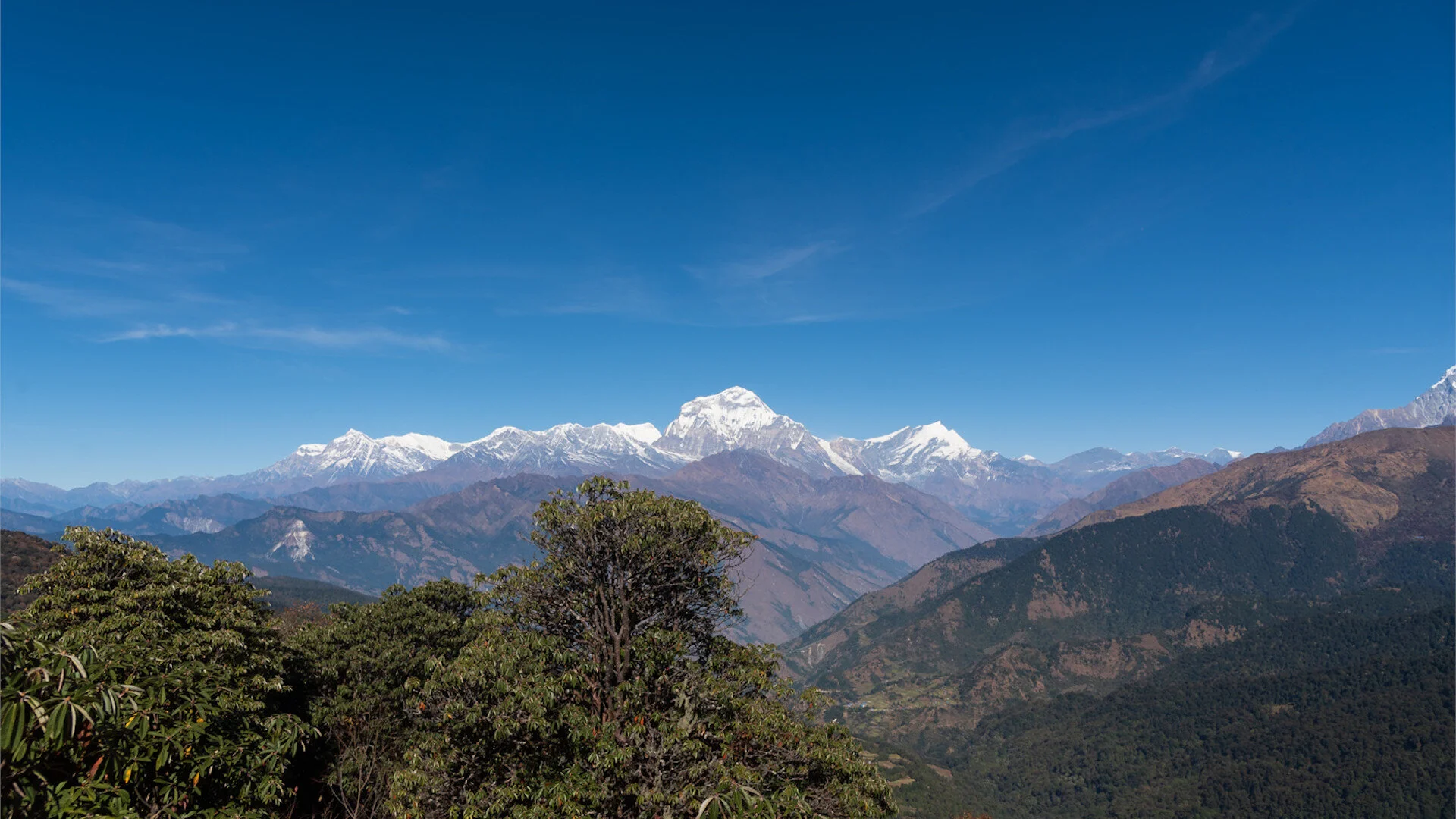
The trail gets its name after Prince Charles and his entourage explored Annapurna region through this path in the early eighties. One of the most popular short trails in Annapurna Conservation Area, the basic itinerary of 5 days is great for adventurers who don’t have much time but still wish to explore the region. Located in the North-Western side of Pokhara, the trails of Royal Trek allows you to experience the majestic mountains of Machapuchre, Manaslu, Annapurna, Lamjung Himal and Dhaulagiri and others. It also provides you with an opportunity to witness the life of the ethnic communities of Gurungs and Magars.
The trek passes through beautiful Gurung hamlets, where one can indulge in the traditional lifestyle, culture, and traditions of the Gurung people which they have preserved and maintained even till this day.
This specific trail is far less crowded than the trails of Ghorepani and Ghandruk but is a true hidden gem in terms of experiencing the culture, tradition and majesty of the Annapurna region in such a short duration of time.
This trail can be accomplished in the seasons of Autumn, Spring and even during the winter. The winters are colder of course but allow the trekkers to walk in a crowd-free environment and enjoy the winter side of the trail. The basic itinerary can also be shortened to 4 days if one requests his/her travel agency.
POPULAR ITINERARIES
SIMILAR POSTS
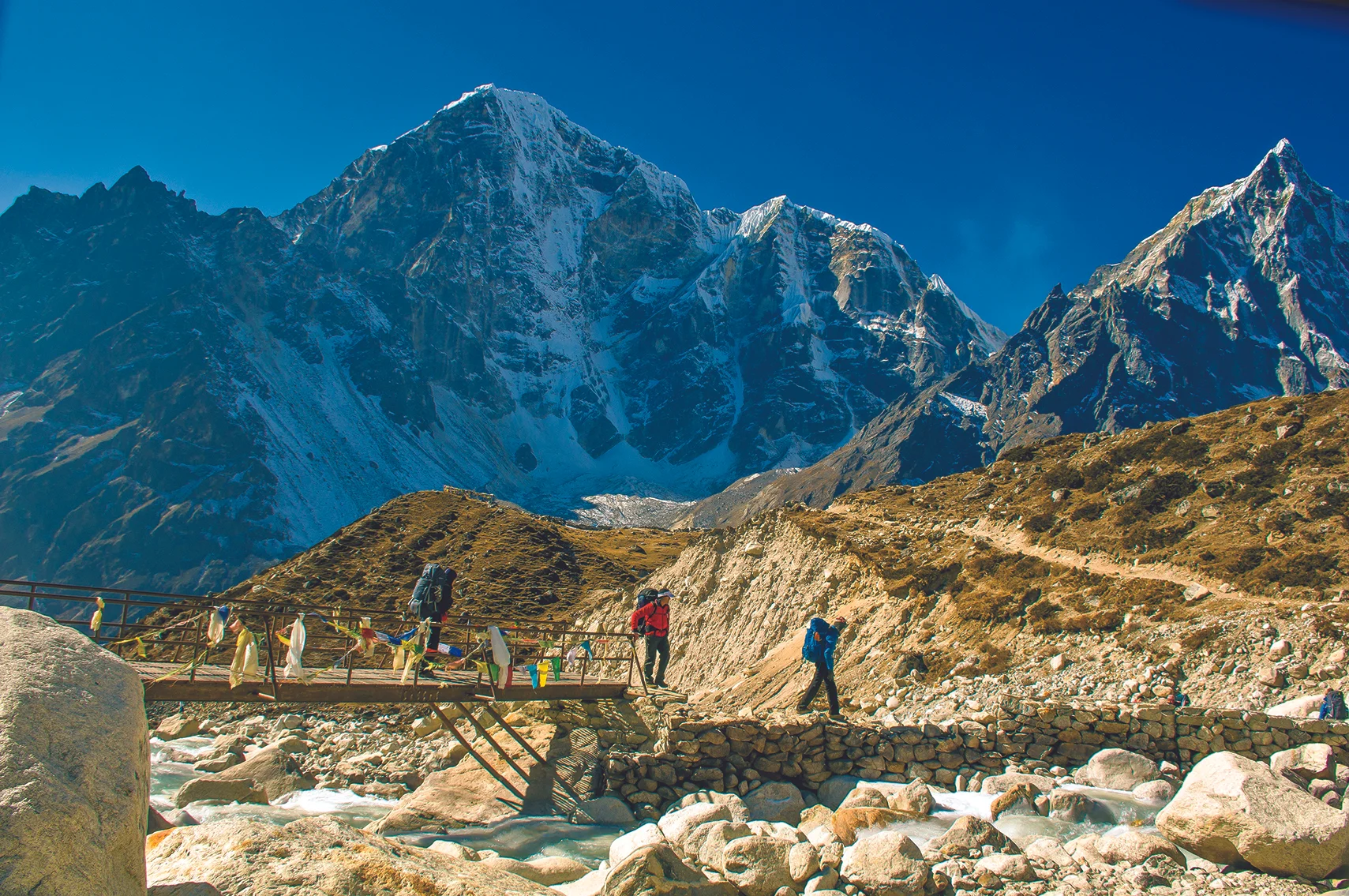
A Tranquil Escape: Trekking In Nepal
If you are planning to trek in Nepal but don't know where and when is the best to plan a trek in Nepal or wondering to visit Nepal to make an enjoyable and memorable trip with your loved ones. There are numerous popular trek destinations and various activities in Nepal for solo to a group of families and friends from all over the world.
There are numerous trekking routes to venture upon this high land and it is known as the 'Great Himalaya Trails.' It is an immense trail system that covers areas of Nepal from Humla and Darchula which lies in the west to Kanchenjunga in the east.
Trekking in Nepal is found to be completely different than that of mid 1960s. Only a few trekkers visited Nepal as a part of expedition group. But now, situation has completely changed and with the facility of accommodation with food and lodging facilities, trekkers from all around the world are encouraged to visit our country.
The three major trekking areas and the easily accessible ones are Langtang, Everest and the Annapurna regions. Amongst three, Annapurna and Langtang have an advantage as they can be reached through road connections. The Great Himalaya Trails has substantial amount of information on other hiking regions which can be easily accessible on domestic flights. Kanchenjunga, Dolpo, Makalu and Far West are some grounds covered by flights. However, this is just the starting of the journey and it takes several days of trekking to reach higher mountain areas from the local centers of population and administration.
Domestic flights usually occur early morning and two domestic flights are required to reach the starting destination of the trek. The popular trek areas in Everest, Manaslu, Annapurna and Kanchenjunga are able to provide lodge with better accommodation. Similarly, the west of Annapurna is the less visited trekking route and they may not have proper lodging facility; but they most definitely have camping style trek support.
Mustang trek has become of the most popular and common trekking destination among the visitors and travelers. It is famous for international as well as national tourists. Mustang Trekking is a superb trekking route in the Western Nepal as it takes tourists to the hinterlands of the western region of Nepal. Previously, Mustang Trekking was restricted for expedition and the land was alienated from the travelers. But now, it is be swarming with visitors and has become a major tourist hub.
Along with this, Manaslu Circuit Trek is another famous trekking route. It has successfully attracted the intended tourists and adventure seekers. Many come here for the purpose of hiking and trekking. They get full experience of the serene beauty of high lands. Nepal has captured the imagination of the entire world with its unsurpassed beauty.
The southern areas of Nepal are usually preferred to trek as they receive higher level of precipitation. We can find climate variations as some routes along the Great Himalaya Trails lie in the rain shadow. These dry lands on the north fall on the leeward side of mountains. The places that fall under it are Mustang to the north of Annapurna with Manaslu and Dolpo to the north of Dhaulagiri.
Post monsoon season can be a great time for trekking as the weather tends to be clearer. Winter can be good but the trekkers have a disadvantage as this season has shorter days. Spring season can also be affected by the seasonal rain and snow storms. Summer season does not last long and it is quickly followed by the monsoon season. Thus, no season is perfect for trekking purpose and the trekkers have to make though decision about which kind of season is most desirable for them.
- Here are few of the refreshment activities that you can try on the Himalayas:
- Yoga and meditation – As dramatic as it sounds to climb to the top for meditation; yoga is a stress reliever and you can relax peacefully in a calm environment.
- Indulge yourself with nature – Flora and fauna found in abundance in the mountains and you can carry your camera and explore this rich land. Who knows, you may even stumble upon a Yeti! You can immerse yourself in the lakes, rivers and lowest gorges.
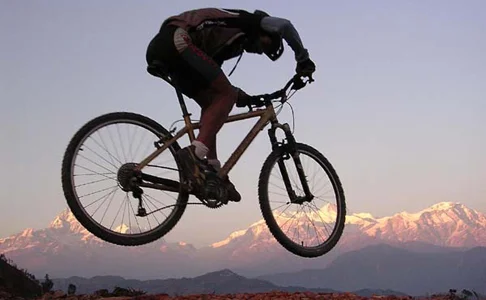
- Mountain biking - You may want to test your physical limit by taking a mountain bike up to the high lands. As the trail is diverse, you can bike on a clean bumpy road to bumpy rough trails. You will enjoy delightful greenery and elevated mountains in the backdrop.
- Everest Skydive?! – As crazy as it sounds, you can have the best spine chilling adventure with the combination of the highest peak of the world and mind blowing sport of skydiving. You can get view of the Everest region with stupendous mountain views and the Sherpa settlement below makes this experience a lifetime achievement.
- Take mountain flights – You can choose to fly close to the Himalayas to get an unbelievable scenic view of this tremendous chain of snow covered mountains.
- Shopping! – Who does not like doing good old shopping? Astounding handicrafts items of excellent craftsmanship are found in the Himalayas. You can get souvenirs for you and your loved ones. Items like thangkas, pashmina, carpets, jewelry, prayer wheels, stone carvings etc. has great cultural significance.
- Faith healing – You can explore the mysticism of the animalistic of Himalayan culture. The process involves honoring the earth and respecting the spirit which is believed to reside in all of us.
- Mingle with the locals – Nepalese are considered to be the friendliest of the lot and you can always socialize with them. You can feel their optimism, simple yet powerful spirit and get a taste of their genuine warmth. A simple gesture of 'Namaste' can lead to great friendships with unforgettable memories.
The trekkers can be enthusiastic about the idea of solo trek with their own schedule and convenience. But do you want to risk the unknown and get stranded in a situation with a major storm, temperature of at possibly 5,000 m and zero visibility? Thus if you want to avoid the risk, it is advisable to you travel with a group of trekkers for support and guidance.
Similar Posts
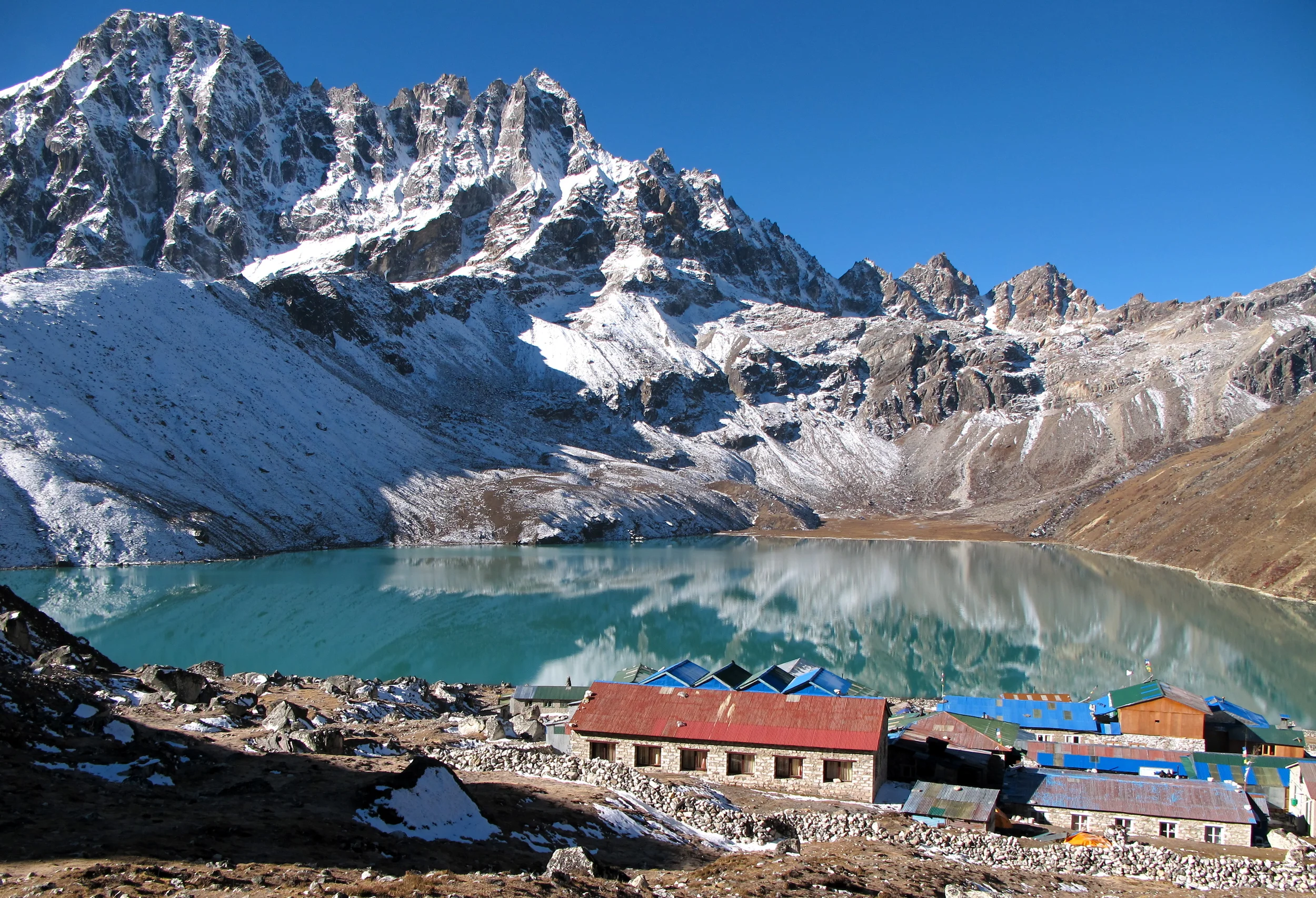
Recommendations for my friend visiting Nepal
Nepal’s adventure activities are challenging and thrilling, what’s more, they are conducted with the utmost regard for your safety.
For a Singaporean friend, who spent three months in Kathmandu, one of Nepal’s adventure activities included moving around in darkness quite often, what with the constant load shedding. He claimed to have returned with improved night vision! Well, even though most hotels in Nepal have adequate backup electricity arrangements, it does give the eyes some exercise while walking on dark streets. It’s clear, anyway, that visitors are likely to find various aspects of their Nepal tour to be an adventure of sorts, one typical example being traveling by public transport. Now, that is also an adventure! Anyway leaving the mundane aside, let’s get down to the real nitty-gritty of Nepal’s adventure activities you get to experience on your Nepal tour.
Nepal Treks
Trekking high on the mountains, close to the world’s highest peaks is certainly the most popular of Nepal’s adventure activities, with almost 40% of all visitors on a Nepal tour going on one trek or the other. Some of the most popular Nepal treks are as follows: 1. Everest Base Camp trek, which takes you through fascinating landscapes and quite a few Sherpa villages, before eventually reaching the base camp on the Khumbu Glacier, with Mount Everest towering above you. 2. Annapurna Circuit trek, which starts from Besisahar, goes along the Marsyangdi River, passing through Tamang and Gurung villages, and takes you to Muktinath, Jomsom, and Pokhara. 3. Mustang trek, which takes you to the once forbidden kingdom of Lo Manthang in Mustang district, where you will find yourself immersed in Tibetan culture and lifestyle. 4. Imjatse (Island Peak) trek, which goes through the valleys and glaciers of Khumbu, and gives you the chance to climb an authentic Himalayan peak, that is, Imjatse Peak (6,189 m). 5. Ghalegaun village trek, which goes through the villages of the famous honey hunters of Nepal.
Nepal Whitewater Rafting
What else awaits you besides trekking, as far as Nepal’s adventure activities are concerned? Well, whitewater rafting, for one. Nepal whitewater rafting is said to be one of the best in the world, what with its great mountain rivers flowing majestically down from the snow-clad peaks of the Himalayas to the lowlands of the Terai. Imagine yourself on an inflatable rubber raft riding down the swirling rapids of these great mountain rivers rushing between huge mountains on either side. It’s sure to be an experience you’ll never forget. You don’t have to worry about the risks either, since you’ll have highly experienced people looking out for your safety all the time. Just so you know, river are graded from one to six depending on their being more tranquil or more hazardous, which means you get to choose your ride. Grade 1 to Grade 3 rivers are supposed to be easy ones; good for first timers, and the best time to go rafting is between September and early December, as well as between March and early June. Some popular rivers for Nepal whitewater rafting are stretches of the Trishuli, Kali Gandaki, Marshyangdi, Karnali, Bhote Kosi, Seti , and Tamur.
Nepal Mountain Biking
Challenging terrain is what’s important for mountain biking, and that’s what you get in plenty in Nepal. Many on a Nepal tour make it a point to go mountain biking, especially in and around the Kathmandu valley with its many interesting biking trails, and around Pokhara, as well. You’ll be pedaling on tracks that sometimes go uphill all the way and then downhill on the return, or sometime, you’ll be going up and then down at regular intervals, the lay of the land being what it is. The rides will take you through paddy fields, villages, riverbanks, temples, and so on and so forth. ‘Never a dull moment’ is what you’ll be thinking as you give your stamina a tryout. One route that many riders really like is the one to Nagarkot. Nepal travel agencies usually organize this mountain biking experience as a three-day affair, with you going first to Nagarkot, that beautiful hill station, where you spend a night. The next day, you ride downhill to Namo Buddha (famous pilgrimage site) and on to Dhulikhel (another popular hill station), where you again hunker down for the night. Both Nagarkot and Dhulikhel are known for their many beautiful resorts, aside from their fantastic views (including sunrise and sunsets), so you’ll appreciate your stay at both places. Next day, you pedal across to Panauti (an ancient Newari town), and then onwards to Sisneri, Patan, and Kathmandu. This is just one example of what you can expect when mountain biking around the valley; there are plenty more trails which you can chose to ride on at your pleasure. And, as mentioned before, biking around Pokhara is another experience that’s sure to make you happy…and healthy.
Nepal Bungee Jumping
No need to say that bungee jumping is one of the most thrilling adventures for any individual; it challenges courage like few other activities do. Here, in Nepal, there’s some fantastic bungee jumping to be done, from a platform 160 m high over the wild Bhote Kosi River. It will take you some three-and-a-half hours to drive from the capital to this famous bungee jumping site near the Nepal–Tibet border, that’s a part of The Last Resort, which also organizes other activities like mountain biking, rafting, canyoning, and so on. Bungee jumping is, however, their major forte. They take all the necessary precautions to ensure that your jump is safe. And, thrilling? Well, more like an ‘adrenaline rush’; that’s the usual response of jumpers. An instructor will brief you thoroughly, and tell you to ‘walk like a penguin and fly like a bird’. They’ll photograph and video record your leap of faith, and present you with a souvenir t-shirt as well. You’ll probably be spending just around Rs.2000 for all this. A fantastic adventure all around, undoubtedly.
Nepal Canyoning
First, know that canyoning consists of traveling down steep canyon walls, wading across rock strewn creeks and streams, and going through cascading waterfalls. How? Well, you hike, you scramble, you wade, you boulder-hop, you climb over rocks, and you do abseiling and rappelling, as well. An all-in-one-affair, that’s what canyoning is all about. You can take a one-day trip or a three-day trip, the choice is yours; the latter obviously being the preferred option as it allows you experience everything. Might sound like a lot of adventure, a lot of risks, but not to worry, trained instructors will be with you all the way. They know what techniques are to be used and they’ll be using the best equipment available, and, of course, are mindful of maintaining the highest safety standards. The nearest site for going canyoning is the Bhotekoshi River, some 100 km from Kathmandu.
Nepal Paragliding
Paragliding is another of Nepal’s adventure activities that’s sure to fulfill your spirit of adventure and set it soaring to a new high. November through February is the period for Nepal paragliding, with November and December considered the best months. Pokhara gets pride of place when talking paragliding; near to the city is a place called Sarangkot that’s at a height of 1,592 meters, and this place has become the mecca for those on a Nepal tour who want to go paragliding. There are other sites, as well, in different parts of the country, but Sarangkot is the favorite. Qualified pilots provide a short briefing before launching. It’s a fact that most enthusiasts get butterflies in their stomachs before taking off, and that’s natural. However, qualified pilots will do all they can to reassure you and tell you the dos and don’ts beforehand. What’s more, they’ll be flying with you, so it’s something like holding your hand all the while as you soar over the Pokhara valley. Tandem flights are the norm, meaning, a pilot will be in a special harness with you on the same glider. You’ll be more of a spectator, really, since the pilot does the flying, but you’ll find that it’s a good deal since that leaves you free to focus your attention on the splendid vista below you. During the 20-30 minutes of flight, there are good chances of having company in the form of soaring vultures and eagles flying beside you. This exhilarating experience should cost you around USD100 per flight.
Nepal Ultra Flights
Ultra flight is another of Nepal’s adventure activities that will give you a different type of thrill. Ultra flights involve special two-seater planes carrying one pilot and one passenger in every flight. Since their purpose is to give you a fantastic viewing experience, these planes have large openings on both sides. Again, Pokhara is where it all happens. Before taking off from the airport, the pilot will give you a thorough briefing, so you know what’s what, such as the path and the height you’ll be flying. You’ll be taken up to 5,000 ft and fly over Pokhara at 50 to 90 km/h for about 15 minutes. If you want to, you can also opt for a 30-mimute flight that’ll fly at 90 km/h and take you close to Machhapuchchhre Himal. Another option is an one-hour flight that will fly at 12,000 ft at 90 to 130 km/h over the length of the entire Annapurna Range. Another lifetime experience, that’s what an ultra flight is!
All said and done...
Nepal’s adventure activities are many in number, and all are highly enjoyable and healthy pastimes. Beside those mentioned above, there are other adventure activities, too (jungle safari, ballooning, climbing, etc.), so make sure you ask the people concerned, no matter which hotel in Nepal you’re staying in, for more information.