A Guide To Newari Festivals - Part I
Newari communities in Nepal celebrate numerous festivals every year. And it seems Newars always have a reason to celebrate. Several reasons: rich culture and heritage, honoring deities, marking the agricultural calendar, celebrate events from ancient mythology, and to emphasis family and community.
“It seems to be that the Newar’s always a reason to celebrate,” said a dear friend of mine during his month-long stay in the Kathmandu Valley. To give him a true taste of our culture, history and diversity I had intentionally called him to visit a week before Dashain. My mission was as a glorious success. Seeing his face glow as he took blessings from the Kumari, and him swaying to the tantalizing tunes of Gaan Pyakhan, experience the delights of Koochi Bhoya (Family Feast) gave me the utmost satisfaction of being his host.
Bidding him farewell was a difficult task, for he didn’t want to leave. He had so much to experience, from the sweetest Yomari Punhi to witnessing the sheer energy of Sila Chahre ( Maha Shivaratri). At times it does feel true, we the Newar people seem to always have a reason to celebrate.
The festivals of the Newar people begin during Gathan Mugah and ends in Sithi Nakhah.
Gathan Mugah
Celebrated In: August*
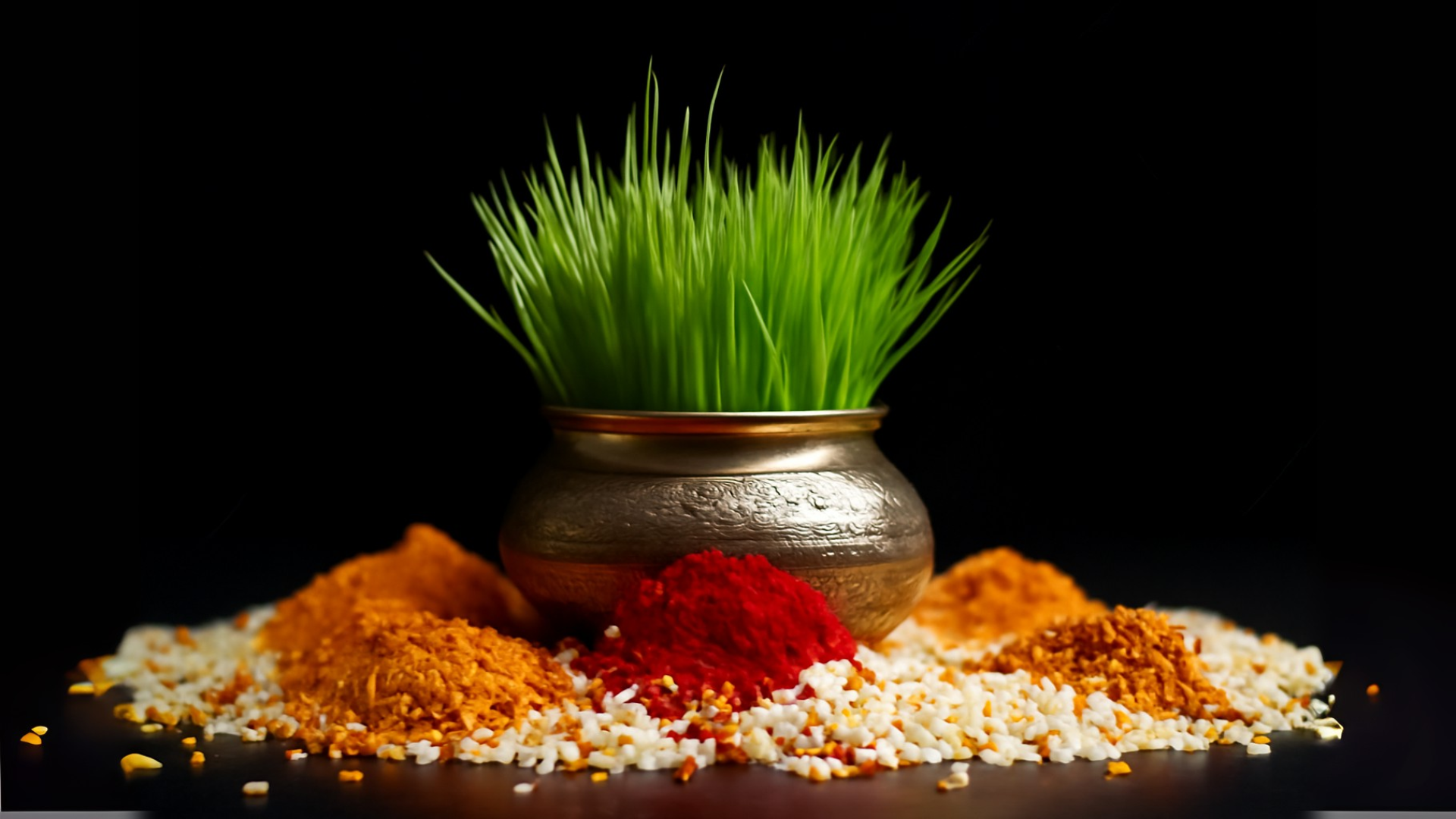
Gathan Mugah which falls in August is the awakening of the grand festivities of the Newar people. It is symbolized as a festival of cleaning. From riding one's fields from the spirits recruited to assist, to one's home and community of the evil omens. The ideology of cleaning is taken made literal with the Newar people taking a bath during the first light of this day. Clothes are washed, houses and communities cleaned. In the old days, girls used to even throw away their playing dolls, as they used to be made from straw wrapped in jute or soft cloth. Incense is burned to rid the homes of pests and bugs. The people wear a special ring locally known as, “Chahray Angu” which is a ring made of metal alloy. Bringing the festivities to a close, straw from the old harvest is set to light and the air is spread to fill the home symbolized as a process of cleaning. It is then thrown at the crossroads of one's home. A symbolic effigy of Gathan Mugah (Evil Demon) is made of green reeds, dragged by the local community, beaten and then burnt at near the riverside.
This altogether helps symbolize ridding oneself, his/her home from evil and the pests s/he has accumulated in the last year. From burning of the straws which helps eradicate mites, bugs and foul smell, to wearing a symbolic metal ring to protecting one's soul from the evil spirits. This prepares the Newar People for another year of hardship, celebration and worship.
Gunla Dharma
Celebrated In: August- September*
The month of Gunla is celebrated according to the Nepal Era calendar, according to which the period of worship falls in the mid months of the monsoon. It is considered to be a very holy period for the Buddhist community. Devotees make time to visit Buddhist monasteries, courtyards and shrines to offer prayer and worship.
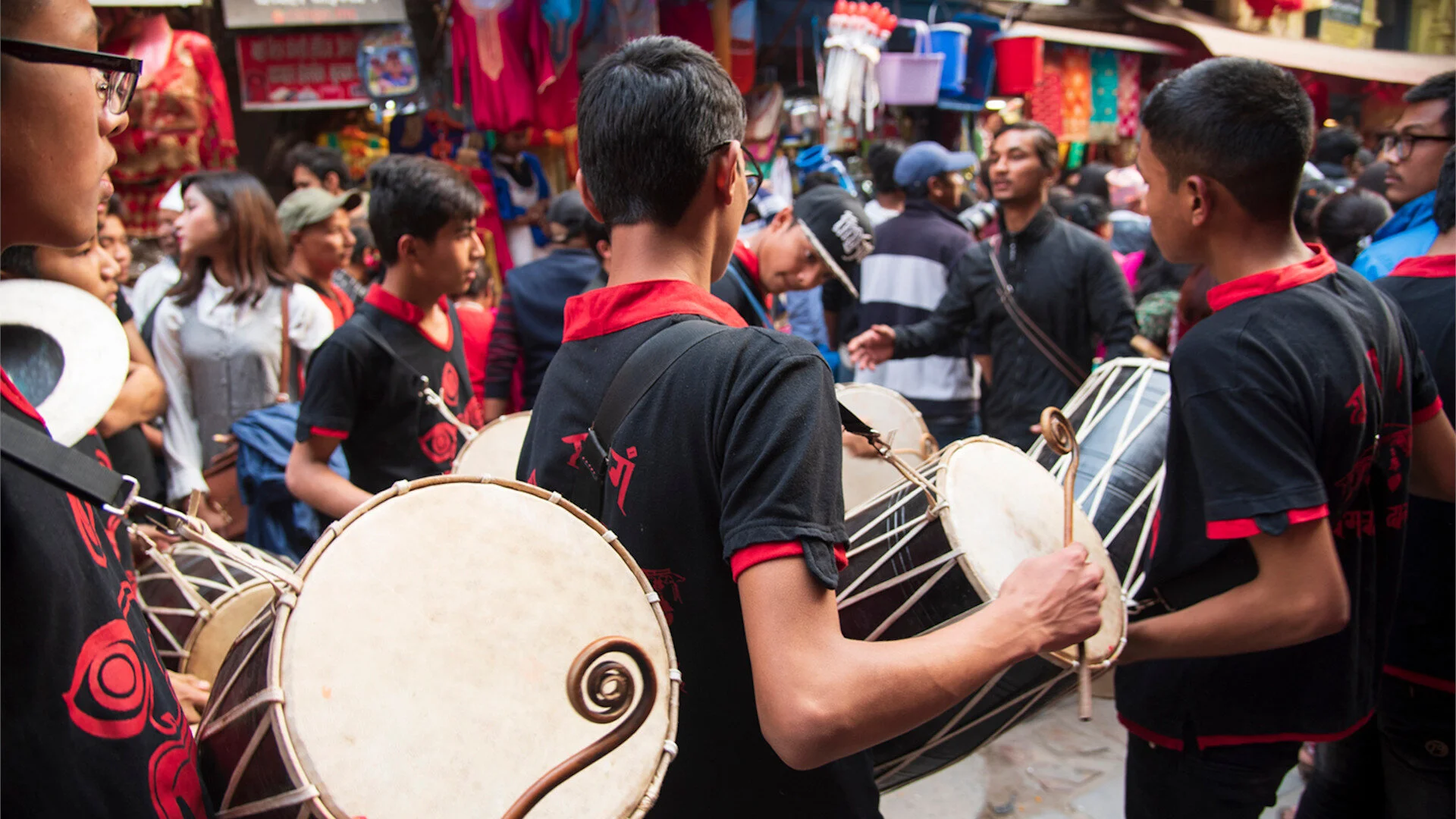
A special ensemble of Gunla Bajan ( Traditional Newar Instruments of the Buddhist Community of Newar’s) is conducted during the month which includes Dhah and Naykhin ( Types of Drums) accompanied by cymbals and shwam.
The period of Gunla sees the shrines, deities and monuments decorated, cleansed and worshipped throughout the period. Individuals of the sect take holy walks, along with pilgrimages to different holy sites of Buddhism during this period.
Gunhu Punhi
Celebrated In: August- September*
Gunhu Punhi which is not to be mistaken with Guru Punhi (Teachers Day) as this is one of the most significant set of festivals celebrated by the Newar community. Lasting for a total of for nine days the first day is known as Gunhu Punhi. During when a traditional broth (locally known as Kwati) consisting of spouted mixed cereal is consumed. It is believed to help boost immunity and give strength for the upcoming change in season. A traditional doro (string), which is a protective cord is tied onto one's wrist by the Brahman priest. Also known as a Janai this day is generally celebrated by the other communities as Janai Purnima.
In the Newar farming households, food offerings are placed for frogs in their farms and community which is known as Byanja Nakegu. Frogs play a vital role in the farmlands of the Newar household, as they consume bugs and pests that can cause illness to their crops. Thus to pay homage for the service by these friendly creatures a day is separated to honour their efforts.
*: As Newar festivals are celebrated according to the lunar Nepal Era calendar, the dates in the Gregorian calendar are interchangeable.
POPULAR ITINERARIES
SIMILAR POSTS
Mataya: A Journey of Light
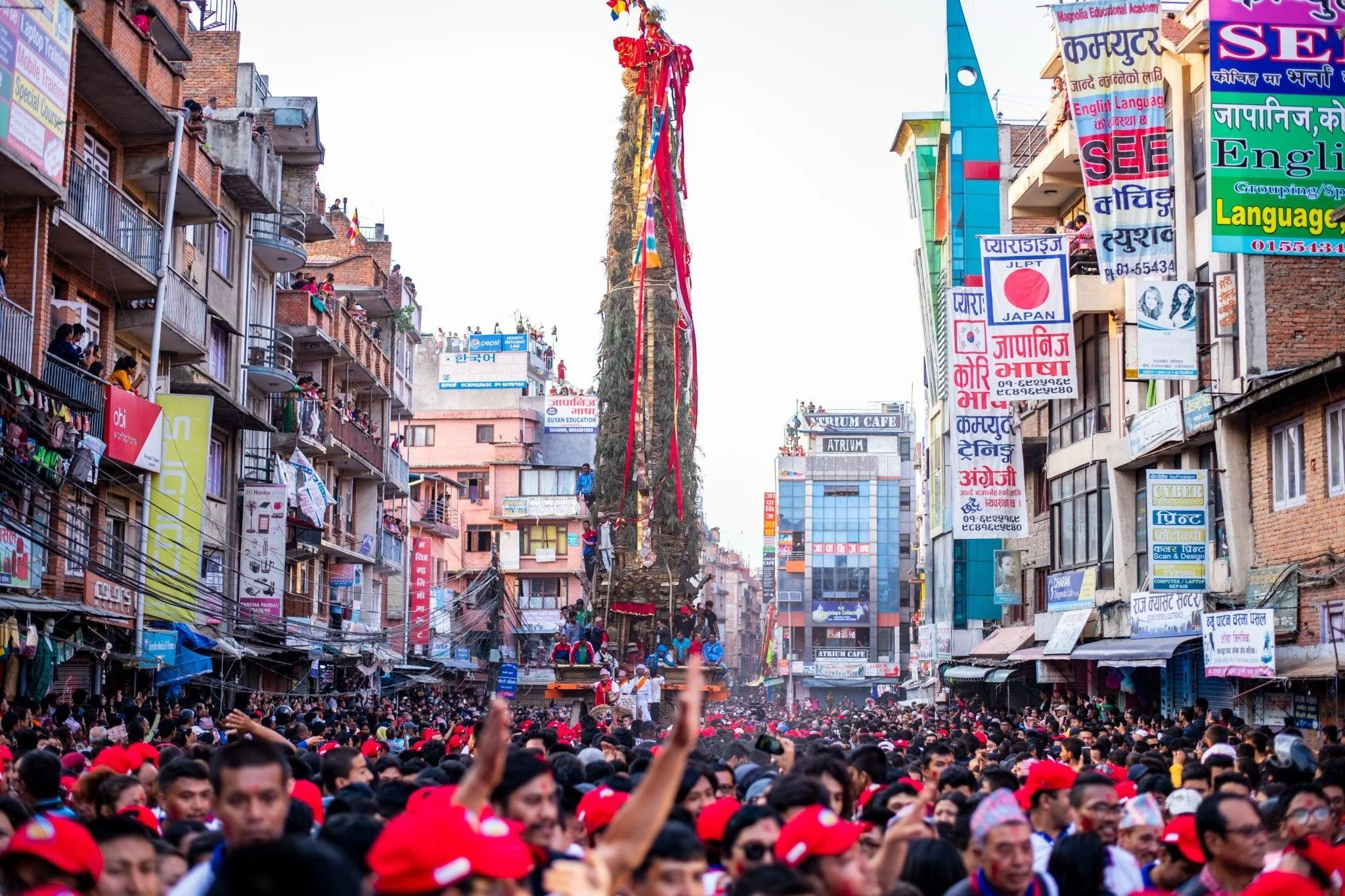
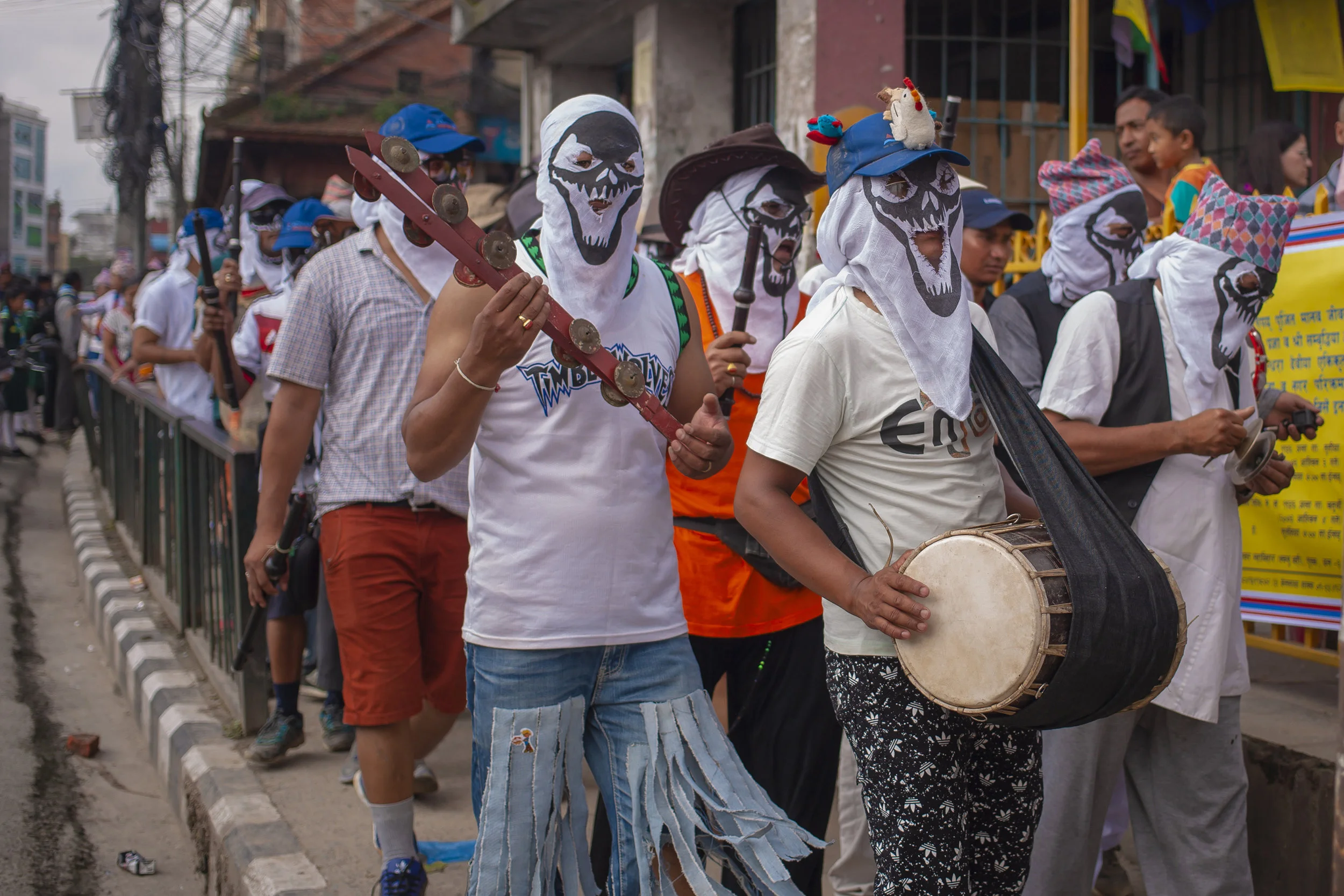
The festival of Mataya is one of the most important festivals in the Newar community in Patan. A unique Buddhist festival, during when men and women in a comical attire carrying candles and torches, traditional musicians playing merry rhythms walk to almost all the temples, stupas and monasteries in and around the old city of Lalitpur.
It was a very early morning, and my mother woke me up to show me something magnificent. I was still half asleep as she pulled me out of bed and took me to the lachi(Square) at Pulchowk. As we reached the square, I remember a huge crowd had amassed. For a child I couldn’t conjure up why they had gathered.
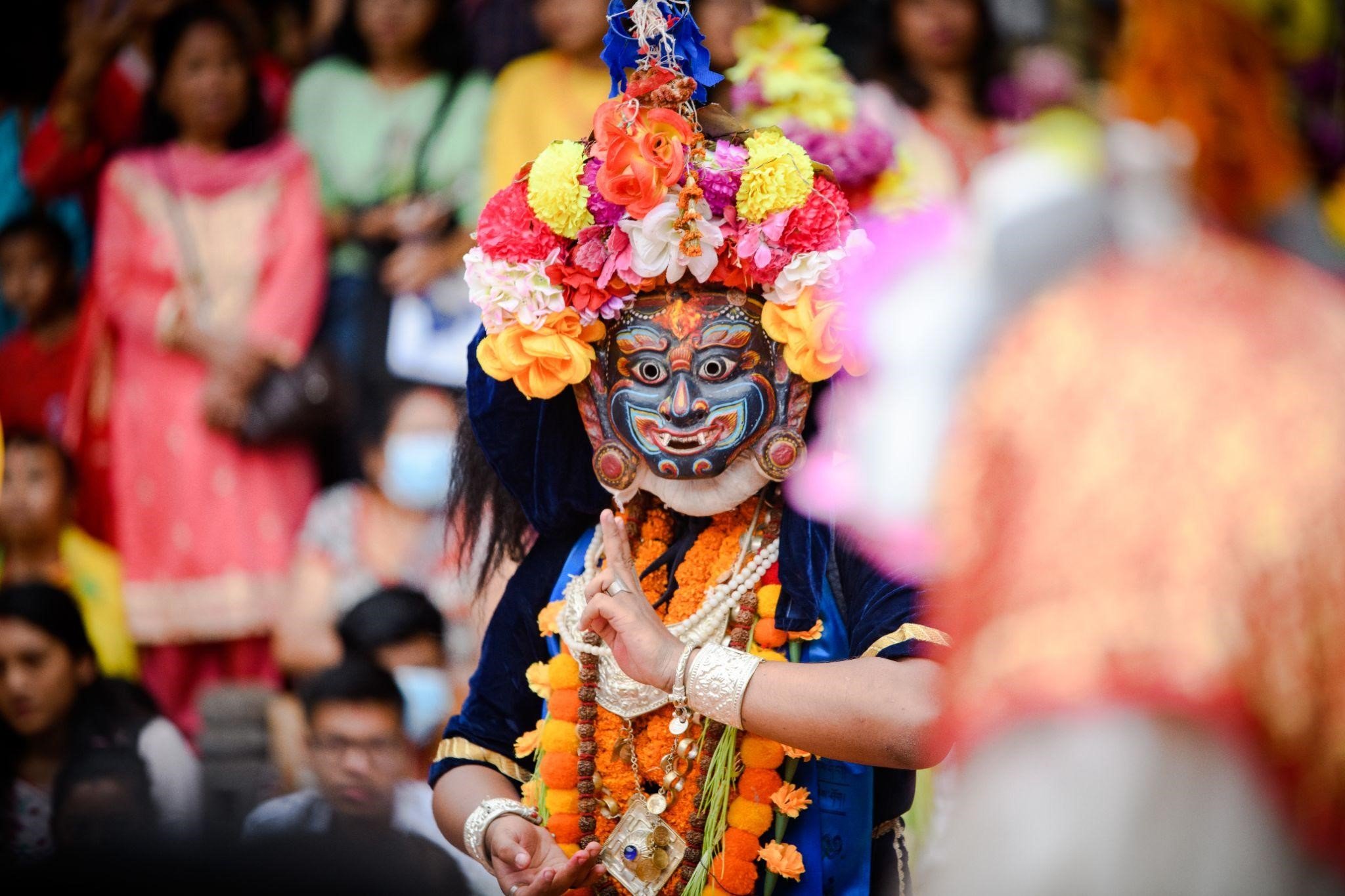
A few moments later, still sleepy I heard an unfamiliar sound approaching towards us. It was the sounds of paujus (anklets). As the beautiful steps got closer the traditional tunes of dheme drumed in the distance. In a split second, I saw this long procession heading towards us. I wasn’t asleep anymore I was wide wake with excitement. I saw these gentlemen clad in daura and women in the traditional Haku Patasi( Newari Dress) and what followed had me smiling and laughing. Men and women dressed up in my then, little vocabulary weird and funny. Men with masks, some dressed as women,some as gods and some in a crazy mix of all. I asked my mother, “ What is this?” and she looked at me and said, this is Mataya. The next thing I remember I saw this man running towards me who had this crazy mask on, and I being the child ran as fast as I could.
The festival of Mataya also known as Neyaku Jatra, is one of the most important festivals in the Newar community in Patan. Mata in Newari means light and ya means a scared journey. Celebrated normally in the month of August in the Gregorian calendar. It is celebrated the day after, the auspicious festival of Gai Jatra. This year Matya shall be celebrated on 17th of August 2019. It is believed that the festival of Mataya was established the Lichhavi King Gunakamadeva, who is also believed to have been the King who founded the city of Kantipur( Kathmandu).(Wright, 1877, 155)
The festival of Mataya is a unique Buddhist festival, during when individuals walk to almost all the temples, stupas and monasteries in and around the old city of Lalitpur. The festival every year amasses an attendance of thousands with individuals carrying candles and torches, traditional musicians playing merry rhythms and men and women who dress in comical attire.
According to Min Bahadur Shakya, Director- Nagarjuna Institute of Exact Methods,” The preparation for Mataya begins on the first day of Gunla. After mid-night on this day a group of hundred people with nava bajan( traditional Newari instrument) gather and follow the exact path that they are to follow on the day of Mataya. They don’t finish the whole route on a single go, but gather every night for the upcoming days and mark the shrines and courtyards with vermilion, husked rice and coins as they pass by. This event is called Bogiwonegu(To Give Offering). During the day of Matya individuals gather at the lead locality from where Matya is to begin and start their journey. They walk the entire route in one day, and some choose to make the journey bare foot. They offer their prayers at the shrines marked and present offerings.”
Members of family stay show their support by offering them refreshments and various communities place stalls to offer water and refreshments to the attendees. It is roughly estimated that the devotees visit 1400, 1500 local and private shrines during Matya.
According to a local legend, it is believed that once Sakya Muni Gautam was in deep penance to attain Nirvana when the jealous Maras came to distract him. They had disguised themselves in various forms and some were in the form of fierce looking demons while some were beautiful damsels. They tried to tempt the muni but he overcame the Maras and achieved Nirvana. It is also believed that the Maras later came to Lord Buddha and confessed their sins and worshiped the lord.
For this years edition of Mataya, it is being organized by Haku Bahal Tole which is west from the cross roads of Patan Durbar Square. The festival shall normally begins before the crack of dawn at around 4 AM and make their way to the shrines marked during Bogiwonegu. It is a beautiful sight to behold, with merry music, comical dancers, and the energy is exhilarating.
SIMILAR POSTS
The Festival of Rato Matsyendranath
The legend of a giant chariot festival began with the Kingdom that drought for years causing misfortune and chaos as a result of disrespect to Gorakhnath. And, how Matsyendranath through devout and prayer, guru of Gorakhnath protected the valley with rain for the harvest, pulling the chariot and celebrating the coming of Lord Karunamaya.
Rato Matsyendranath Festival in Nepal
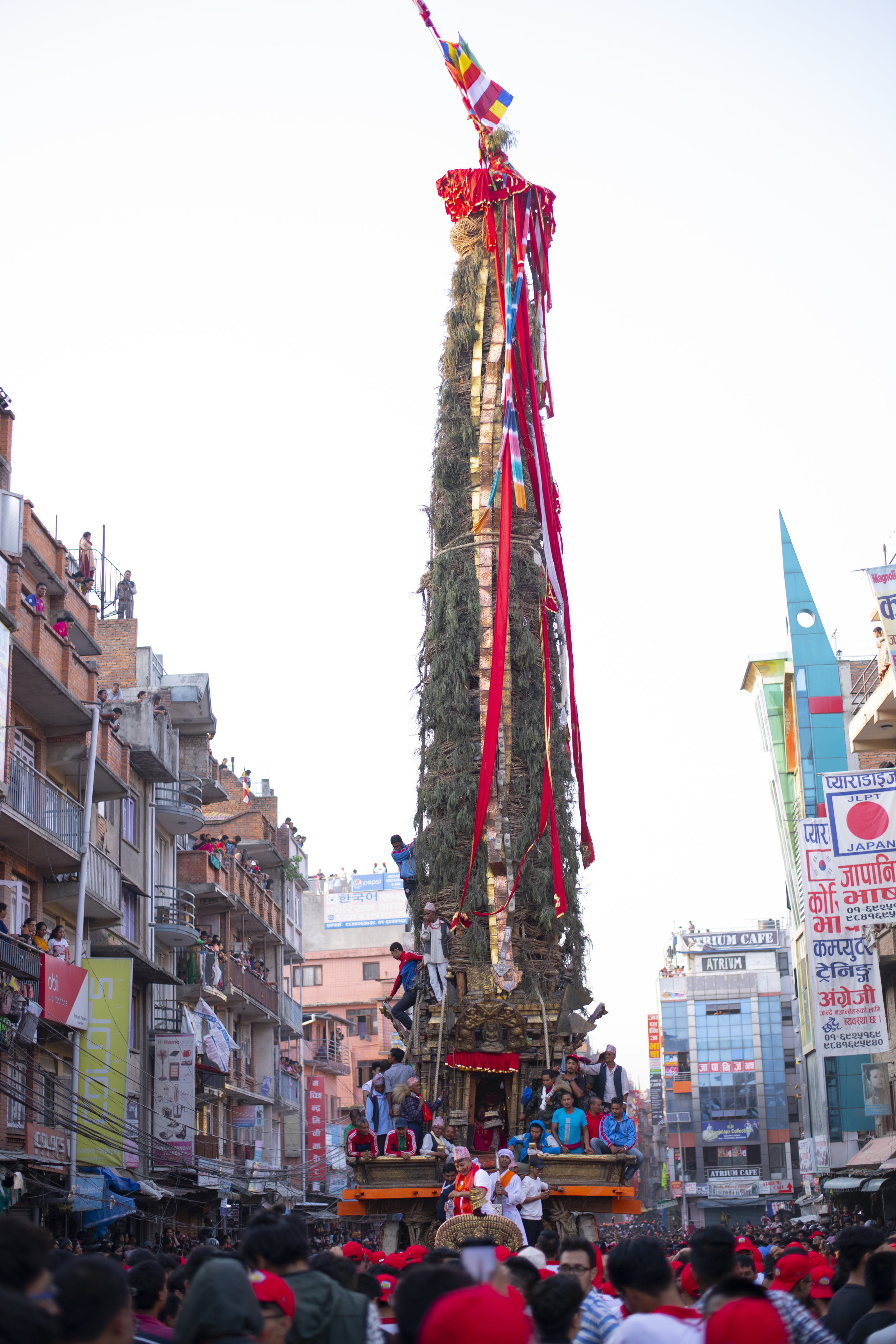
As you look up at the pinnacle you can't help but marvel at the feat of architecture that is achieved every single year. You can't help but fathom and hold a breath when the revellers put all their hearts and strength to pulling the chariot to the words of, "Haste Haiste."
The annual chariot festival of Rato Matsyendranath in Nepal, dubbed the longest chariot festival is the biggest chariot festival for the people of Lalitpur. The deity known by various names in various regions and religious doctrines, Bunga Dyo(God of Bungamati), Matsyendranath(In Hinduism), Aryavalokiteswara Padmapani(In Buddhism) and Karunamaya(In Newar Pantheon) is celebrated as the god of rain, protector of the city and lord of prosperity.
The origins of the chariot festival is entangled with a great tale of devotion, endevoured to relieve the kingdom of a drought that had stricken the city for twelve years. One of the best documented legends, the tale of bringing Karunamaya to the valley kingdom of Nepal dates back to the Lichhavi Era. During when, a drought which had caused great chaos and misfortune caused by the disciple of Karunamaya, Goraknath who had been meditating atop the naags(Snakes) to achieve great blessings from Karunamaya.
King Baradeva, son of Narendradeva struggled to relieve his kingdom. With every measure taken and none yielding the gift of rain. The King then left his court in secret, disguised as a commoner to listen to his people. He eavesdropped upon the elders to know his people’s pain and if the elders had a way out of this. One night, the King went to Triratna Bihar where an Acharya named Bandhudatta lived. The King eavesdropped upon the conversation he was having with his wife. The wife asked, "Acharya, what is causing this great drought? Is there no remedy?" to which the Acharya replied, "The only one who is able to put a stop to this is Aryavalokiteswara, who resides in the Kapotal mountain; and he can be brought only by the prayers of the ruler of the country. Now the Raja is young and foolish, and the old man his father, Narendra-Deva is living in a lonely Bihar because he and his son do not agree."
"There was still hope, not all was lost." The King went back to his palace, and the next morning he went to visit his father at Ak-Bahal in Bhatgaon. King Bar-Deva must have hesitated for some time, for he was to meet his father who left the riches of the Kingdom for a life of meditation and harmony. He sat with him and told everything he had heard at Triratna Bihar. "We must act now. I may be a King by the crown but you are my father. This is your Kingdom, if not for me then for the people you must."
The Acharya was summoned to the palace. He was asked to relieve the distress upon the Kingdom for which the Acharya promised he do everything in his power. But, he would not be successful without his Yajamana(King) for which Narendra-Deva left with the Acharya. The Acharya instructed King Bara-Deva to take a large supply of offerings and halt at a spot south of Patan where they will find a Dolana Tree. Here they were to perform great ceremonies and offerings, starting with one thousand and then up to ten million.
As the Acharya foresaw the journey ahead, only one element remained, for which he performed a purascharana (prayer) reciting the mantra one crore times. The winds must have howled and the sun beamed away from trees as Jogambara-Gyana-Dakini appeared. The goddess pleased promised to offer her assistance. The Acharya then ascended the hillock upon which Gorakh-Natha was in devout meditation and was performing Nag-sadhana (bringing the Nags under his control). He freed Karkotak Nag from his grasp. And thus they began the journey to bring home the Aryavalokiteswara- Matsyendranatha, in the native dialect called Karunamaya - the Lord of Compassion.
Encountering many frights placed along the way - bad terrain and high rivers - the Acharya took assistance from Karkotak Nag riding on its back to overcome the mighty rivers. When they reached Kapotal mountains the Acharya performed purascharana to invoke Aryavalokiteswara. They then came to know that Aryavalokiteswara resided in the home of a Yakshini (Demon Queen) who was known as Gyana-Dakini. The Acharya recited mantras to summon Aryavalokiteswara, but just as he was about to go to Bandhudatta, his mother prevented him. Aryavalokiteswara thus transformed himself into a large black bee and entered into the kalas. As the party was about to leave, Gyana-Dakini, with numerous gods, yakshas, and devils, attacked Bandhudatta who called upon the gods of Nepal for assistance. The Queen thus gave into the gods of Nepal and let the party leave for the valley of Nepal.
The kalas, in which Aryavalokiteswara resided, was carried by four Bhairava, Hayagriva, Harisiddhi, Lutabaha, and Tyanga. They entered the valley through Kotwal Dwar where the valley had been drained by Boddhistva Manjusri, whereupon the back of Karkotak Nag they crossed the grear river. Thereafter plentiful rain fell in Nepal, as they moved towards the valley center. At a certain spot Harisiddhi Bhairava in the shape of a dog barked and said, "Bu"" which the Acharya explained to the King to mean "Birth-Place." Thus in consultation with the King they built the city of Amarapur (Bungamati) where he placed the kalas in a temple. They assigned priests and plentiful land for the maintenance of the city and the temple.
They then made their journey to Lalitpattan (Lalitpur) when they decided to institute a rath-jatra with an image of the god. The image created from the earth from Hmayapido mound (across Balaju) is believed to be the chaitya of Swayambhu that was built from the same mound. After this they took the image to Amarapur (Bungamati) to worship it and then the spirit of the god was transferred to the image.
Bandhudatta Acharya then established all the rites of worship. He stated that the image of was to be brought from Amarapur (Bungamati) and to be placed facing the northern hemisphere and kept in Tirtha Bihar (Te Bahal) The image was to be bathed on the 1st of Chait Badi and be kept in the sun on the 8th. On the 12th and 13th the das-karma was to be performed. On 1st of Baisakh, Sudi was to be placed on a rath and taken around the city of Lalitpattan (Laitpur) and later be taken back to Amarapur (Bungamati).
Thus began the festival of Karunamaya. Today known as Rato Matsyendranath, the festival is still conducted still upon the very set of instructions issued by Bandhudatta Acharya. The rath (chariot) is a marvel of architecture symbolizing the elements of how Aryavalokiteswara was brought into the valley of Nepal. The four wheels represent the four Bhairavas that carried the kalas from Kotpal (the mountains near Kotwal Dwar) to the valley. The Gyo Si, or Dhoma (longinsh piece of wood protruding outward) represents Karkotak Nag, upon the back of which all obstacles are overcome. On the forehead of Karkotak Nag is a bronze face of Hawo Grawo Bhairava who is believed to ward away all obstacles during the chariot festival. The image of Karunamaya is placed at the center of the chariot atop which is a log of sal (pine) held by traditional rope with a wooden joint core. It is said to symbolize the Shikhara temple of Karunamaya at Bungamati. The pinnacle is topped by a Ba: Mwo (circular base created with traditional rope) atop of which the Swayambhu yantra is placed.
Worshipped as the Lord of compassion and rain, the chariot festival of Karunamaya begins from Baisakh Chaturthi and is dubbed the longest chariot festival in Nepal. Devotees flock in numbers to worship and take part in the chariot festival from all over Nepal. The festival ends with the ceremonial display of a Bhoto and the image of Karunamaya is placed in a palanquin and taken to Bungamati. This is where Karunamaya resides for the next six months after which the image is brought to Patan and placed in Te Bahal.
The love and compassion shown by Karunamaya through the protection of the valley and provision of plentiful rain for the harvests is returned by the people of the valley through devout worship and prayer. It is not just a festival for the gods but also a medium of communal gathering and celebration which has helped built strong communal bonds between communities of Patan. In turns they pull the chariot of Karunamaya through the passages of the city of Patan, celebrating the coming of the Lord and rejoicing in the grace of Aryavalokiteswara Karunamaya Padmapani.
Similar Posts
This is how Indrajatra, Nepal's biggest street festival was celebrated in 1931 AD
Very rare video footage of Nepalis celebrating Indra Jatra festival, biggest street festival of Nepal, with much rejoice, singing, dancing and chariot procession in Kathmandu.
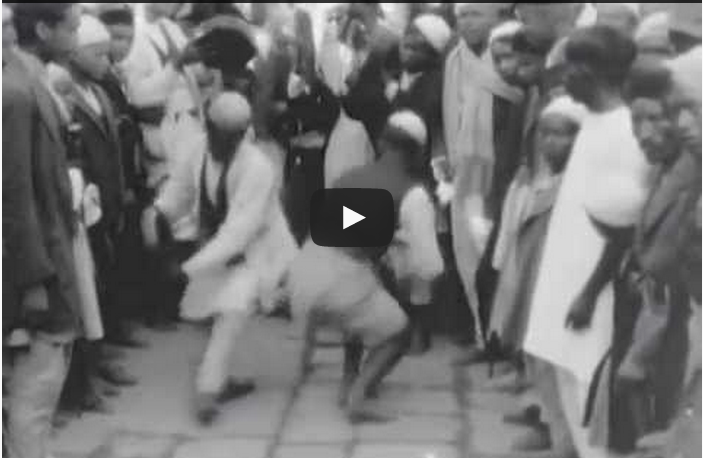
Very rare video footage of Nepalis celebrating Indra Jatra festival, biggest street festival of Nepal, with much rejoice, singing, dancing and chariot procession in Kathmandu.
Date: 1931 (Before the great earthquake of 1934. Hence the video has very important visuals that displays the spectacular Kathmandu Durbar Square before the disaster)
[Credit: British Library - Sound and Moving Image Collections | The British Library has made these recording available purely for the purposes of non-commercial research, study and private enjoyment.]
Indra Jatra
(Yenyā in Nepal Bhasa: येँयाः)
It is the biggest religious, cultural and historic street festival of Nepal, particularly within the Kathmandu valley and mainly observed by Newar community. Yenya means "Kathmandu festival" in Nepal Bhasa. It is the time when the advent of the monsoons is celebrated in the name of the rain god 'Indra'.
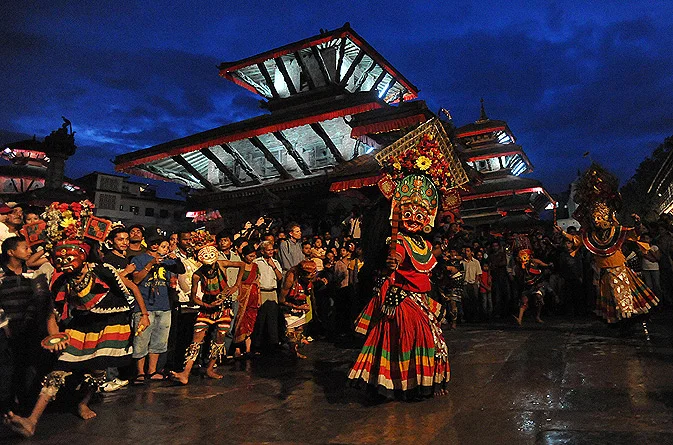
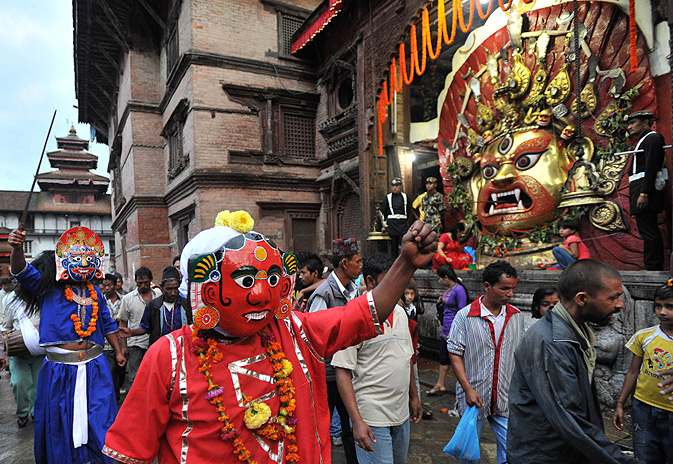
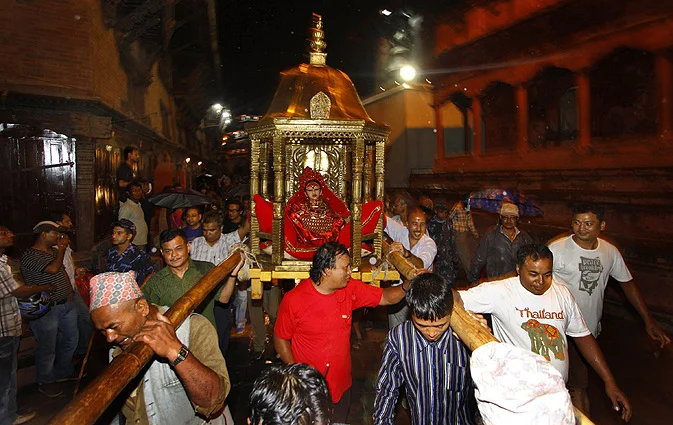
The eight days long celebrations consist of two events. Indra Jatra is marked by masked dances of deities and demons (commonly known as Lakhe Naach, Mahakali Naach, Lusiki Naach and Dash Avatar), displays of sacred images and tableaus in honor of the Hindu deity Indra, the king of heaven. The other event is Kumari Jatra, the chariot procession of the Living Goddess Kumari. Three chariots carrying human representations of Goddess Kumari, Lord Ganesh and Lord Bhairava are pulled along the festival route through Kathmandu Durbar Square. Classical dancers, mask dancers of deities wearing different kinds of traditional masks and costumes and musicians also accompany the chariot procession. The dancing continues throughout the route to celebrate the visit of the rain god, Indra. The procession starts at around 3 pm.
Indra Jatra was started by King Gunakamadeva to commemorate the establishment of the city of Kathmandu in the 10th century. Kumari Jatra, which means the chariot festival of Kumari, coincides with Indra Jatra. It was started in 1756 AD during the reign of Malla King Jaya Prakash Malla.
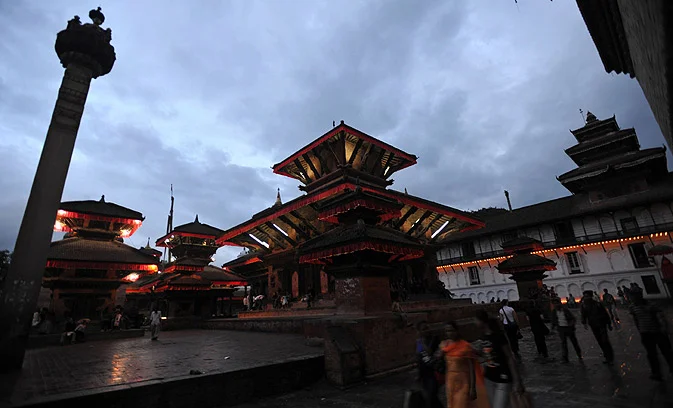
Family members deceased in the past year are also remembered during the festival. The main venue of the festivities is Kathmandu Durbar Square. The celebrations last for eight days. There is a public holiday in Kathmandu Valley to mark the festival. Indra Jatra also marks the beginning of the festive season, which is preceded by major festivals Dashain and Tihar.
Kumari Jātrā
On the first day known as Kwaneyā (क्वनेया:), the chariots are pulled through the southern part of town. On the second day known as Thaneyā (थनेया:), the chariots are drawn through the northern part till Asan. And on the third day Nānichāyā (नानिचाया:), the procession passes through the central section at Kilāgal. The chariot procession was started in the mid-18th century during the reign of Jaya Prakash Malla.
Route on Day 1: Basantapur, Maru, Chikanmugal, Jaisidewal, Lagan, Hyumat, Bhimsensthan, Maru, Basantapur.
Route on Day 2: Basantapur, Pyaphal, Yatkha, Nyata, Tengal, Nhyokha, Nhaikan Tol, Asan, Kel Tol, Indra Chok, Makhan, Basantapur.
Route on Day 3: Basantapur, Pyaphal, Yatkha, Nyata, Kilagal, Bhedasing, Indra Chok, Makhan, Basantapur.
Ancient Legend
According to an ancient legend, the young Indra, disguised as a farmer, descended to earth in search of Parijat, a white flower, his mother, Dakini, needed to perform a ritual. He found the Parijat, but was caught while trying to take the flower by the owner of the meadow where he found the flowers. He was bound and imprisoned in Kathmandu until his mother, worried about his extended absence, came looking for him. When the city folk realized who they had imprisoned, they agreed to release Indra but on the condition that he would return to the earth every year during that time and be displayed as a prisoner for 7 days and that he would provide enough rain (dew during winter) for the crops. So, during this festival, images of Lord Indra are displayed for 7 days, but in captivity. Dakini promises enough dew throughout the winter to ensure a rich crop and to take back with her to heaven all those who had died in the past year.
The Indra Jatra festival thus honours the recently deceased and pays homage to Indra and Dakini for the coming harvests.