
Yenya Punhi: A Jubilation of Kathmandu - Part II
According to legends, it is believed that the mother of Lord Intra required a Parijat( a white flower) to perform a ritual. For which Lord Indra descended to earth in search of the flower. He disguised himself as a commoner and while trying to take the flower out of the lawn of a Jyapu. He caught Lord Indra and held him captive blaming him of trying to steal. Lord Indra was imprisoned and not allowed to go back to heaven.
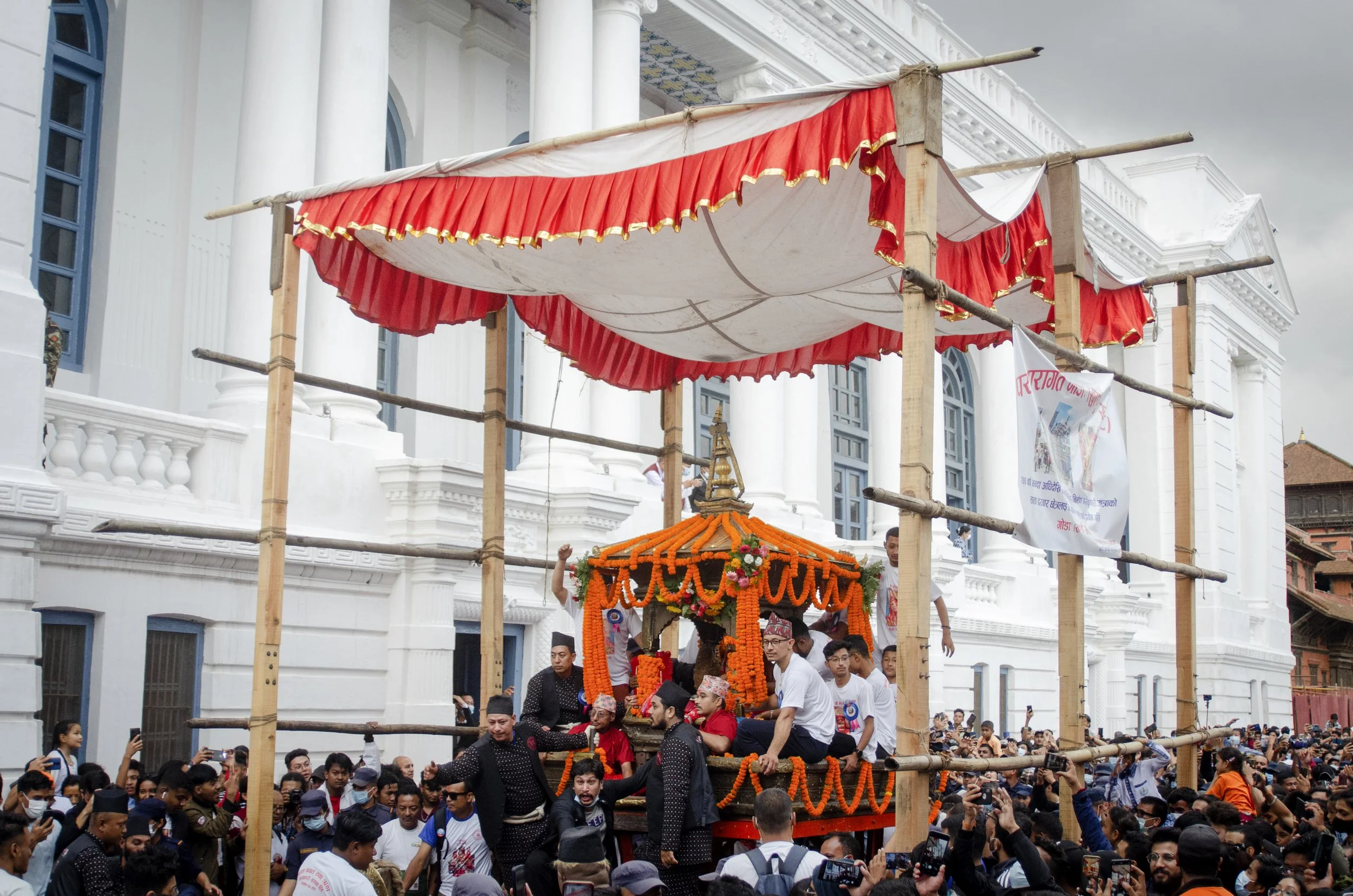
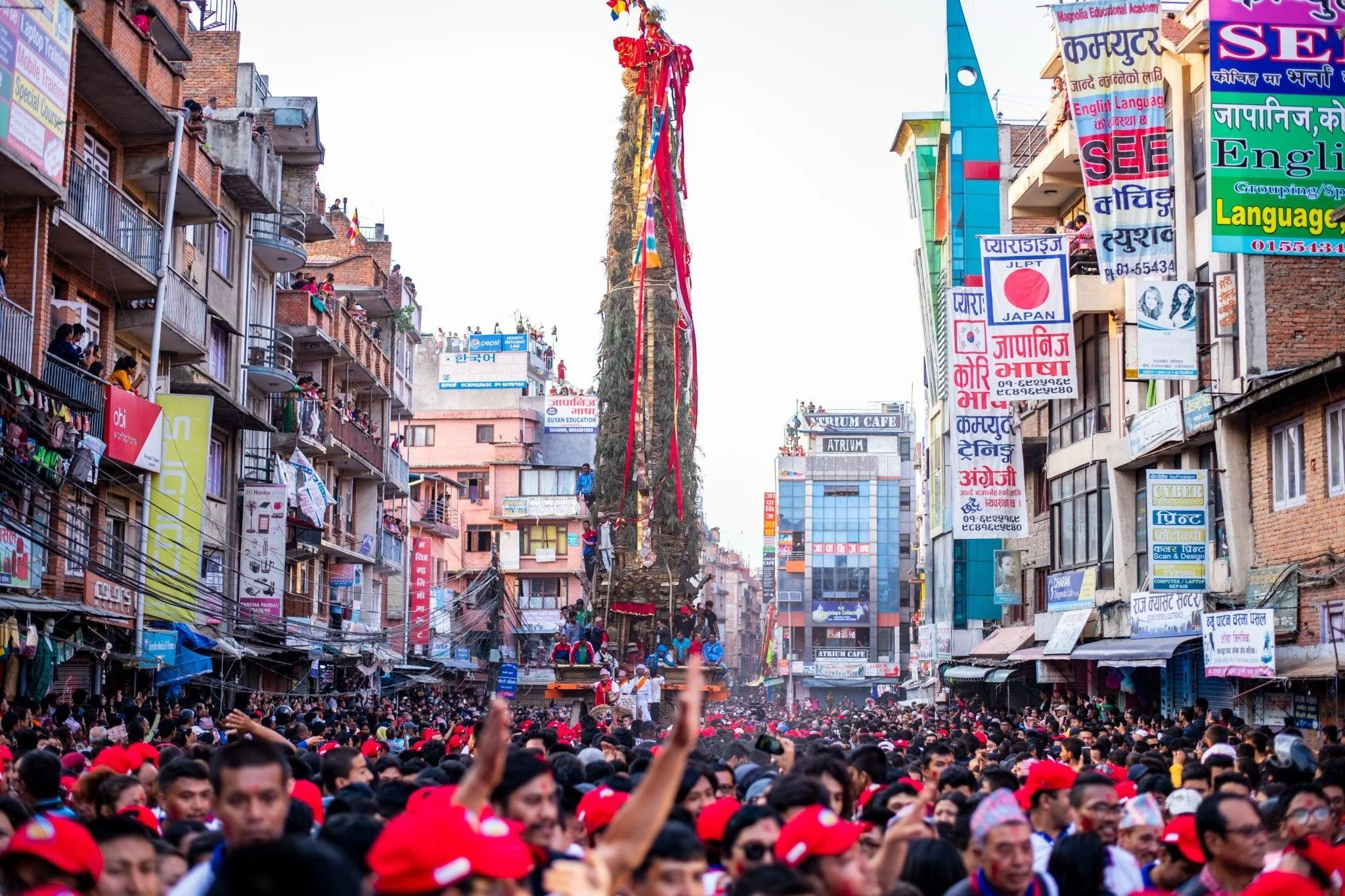
Regarded as the biggest festival of the then Kingdom of Nepal Valley, the true origin of the festivals are still debated. But this festival is believed to be founded during the Licchavi Era by King Gunakamadeva, the founder of the city of Kantipur (Kathamandu). The celebration of Indra Jatra is made of three different series of rituals: Kumari Jatra, Indra Jatra and Bhairava Jatra. Each have their own legends and ceremonial components but as a whole, turn the centre of Basantapur Durbar Square into a grand affair. The square is a sight to behold from the break of dawn till midnight, as the chariots of Kumari, Ganesh and Bhairava make there way through the inner city of Kathmandu. Every street comes to life with masked dances, merry music during the eight days of festivities.
According to legends, it is believed that the mother of Lord Intra required a Parijat( a white flower) to perform a ritual. For which Lord Indra descended to earth in search of the flower. He disguised himself as a commoner and while trying to take the flower out of the lawn of a Jyapu. He caught Lord Indra and held him captive blaming him of trying to steal. Lord Indra was imprisoned and not allowed to go back to heaven.
The mother of Indra grew worry some as her son hadn’t returned from Earth. Phul Khusi ( The Vahan of Indra) descended upon Earth to find his master and wondered around the streets of Kathmandu. During when a great festival was occuring in the Kathmandu and after hours of searching, Phul Khusi found Lord Indra. Phul Khusi took the news to heaven after which, his mother descended from heaven to free her son. She requested the villagers to release her son, but didn’t heed to her words. Only after Lord Indra reveled his true form. The mother of Indra made a promise to the villagers to give in return a final rainfall for their harvest to prosper and she would lead them to the gateway to heaven.
Accepting the conditions the villagers freed Lord Indra and let him go with his mother, a group of villagers followed them to the outskirts of Kathmandu to find the doorway to heaven. But Lord Indra’s mother tricked the villagers by putting forth a large mist which left the villagers confused and in dismay as Lord Indra and his mother went to heaven. To commemorate this event, during the celebration of Indra, a Dagi ( Procession) takes the same path every single year. “The circumbulation of the city is performed in order to reach heaven in the Dagi’s footsteps to meet the dead relatives. The families scatter grain by the wayside so that they would not forget the way home. One finished, they throw what remains of there offerings in a plce called Bhuta Satta, near Kasthamandap, and wash their faces at Maru Hiti fountain. Afterwards, they either return home or go to bathe in Indra’s Pond ( Yamki Da), which is located on a hill 12 kilometers west of Kathmandu.” Toffin,1992,86)
The festival of Indra Jatra is a feast to all senses, the air is scented with the smell of incense, and the sound of drums and traditional instruments tranquil once ears. For the eyes, one can behold the procession of Living Goddess Kumari along with Lord Ganesh and Lord Bhairav. The chariot is pulled for three consecutive days. The first day is known as Kwaneya during when the chariot makes its way from Basantapur, Maru, Chikanmugal, Jasidewal, Lagan, Bhimsensthan, Baru and ends at Basantapur. The second day is known as Yenya Punhi on which the chariot procession begins from Basantapur to Pyaphal, Nyata, Tengal, Nhyaokha, Nhaikan Tol, Asan, Kel Tol, Indra Chowk, Makhan and ends at Basantapur. The final day of the procession is known as Nanichaya, the chariot is pulled by revellers from Basantapur tp Pyaphal, Yatkha, Nyata, Kilagal, Bhedsing, Indra Chowk, Makhan and ends at Basantapur.
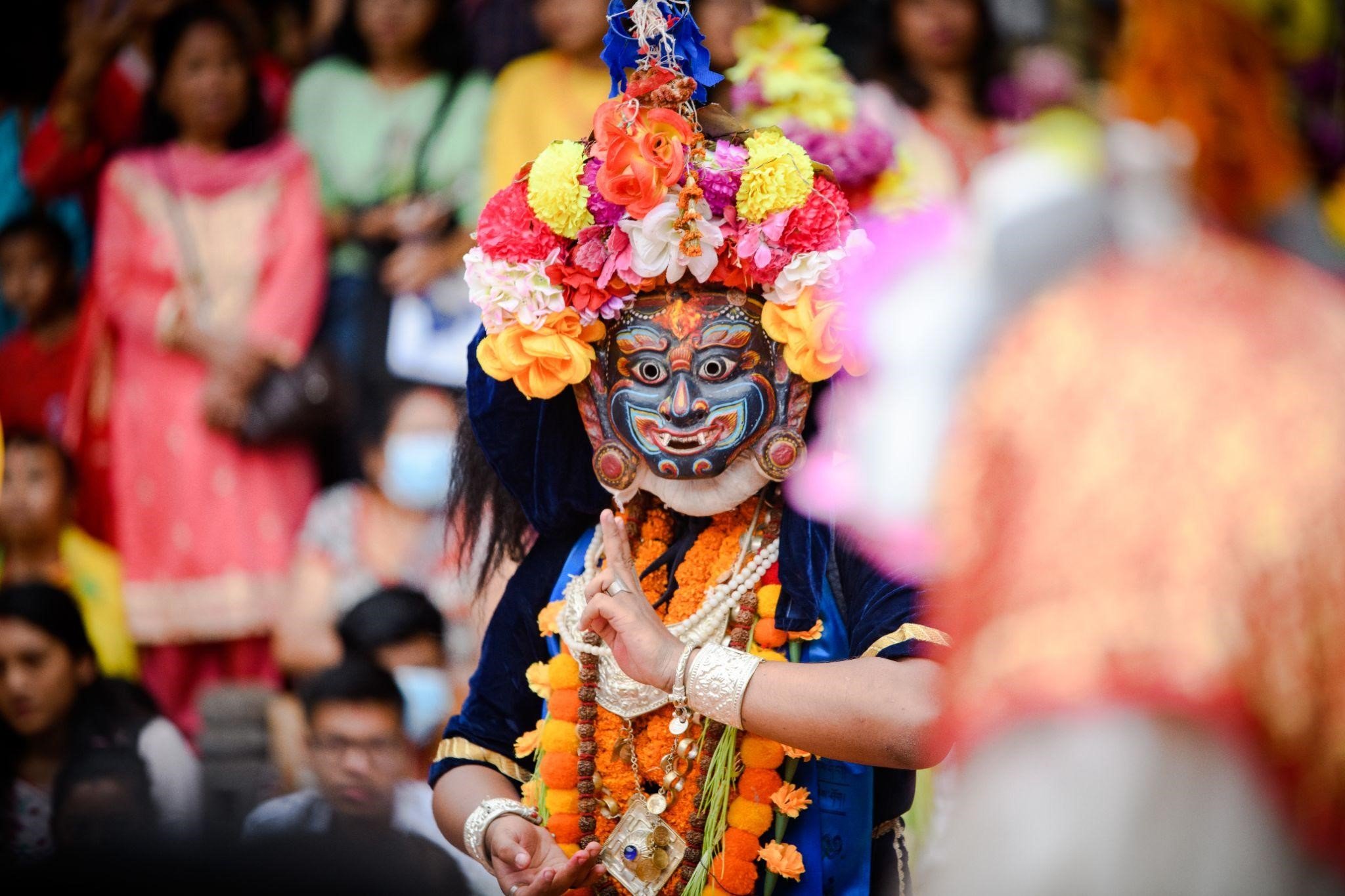
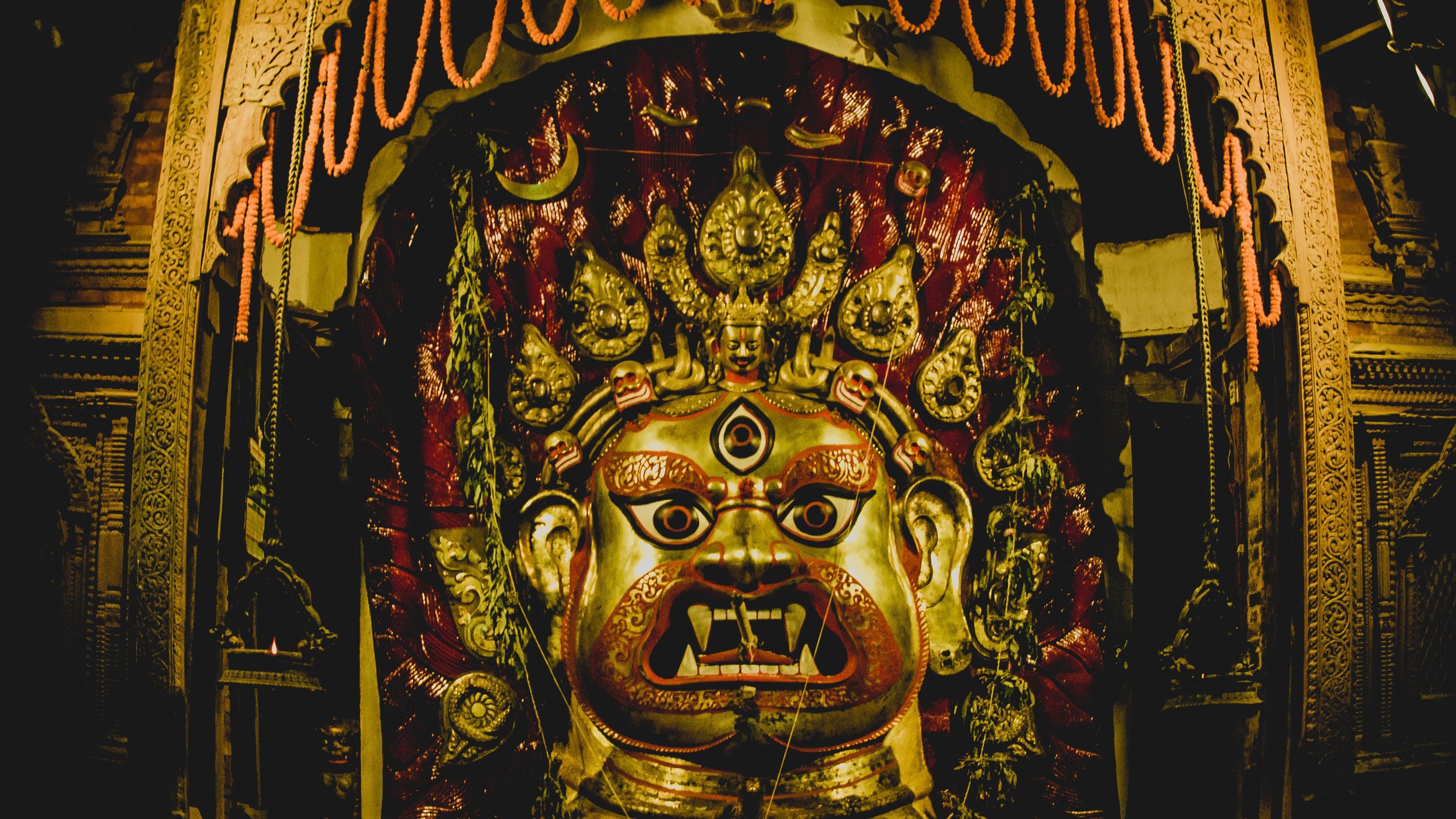
During the festival of Indra, various idols and masks of goddess are taken out of their normal abode to be exhibited to the people. The most prominent of which are the Sweta Bhairab mask and the idol of Akash Bahiran. Similarly an image of Indra is displayed at Maru and Indra Chowk. Various forms of dances such as of Lakhe Aju, Mahakali Naach, Halchowk Bairab, Phul Kushi, Devi Kyakhan are performed on specific days and nights of the festival.
POPULAR ITINERARIES

SIMILAR POSTS
Yenya Punhi: A Jubilation of Kathmandu - Part I
Amongst the great celebrations of this valley, nothing beats the pomp and flair of Yenya Punhi. Commonly known as Indra Jatra- a name derived from the lore of Indra- the heaven king's visit to Nepal. This festival is larger than life, with symbolism and meaning going back thousands of years- neatly preserved by the Newars.
The jubilation of Kathmandu is a combination of festivals. It features the veneration of multiple deities. The Newar name Yenya denotes "Celebration (ya) of Kantipur/ Kathmandu (yen)". The township during the Lichhavi era was called Yen. Its sister cities were respectively called Yala (Lalitpur), Kwopa (Bhatgaon/Bhaktapur) and Kipu (Kirtipur).
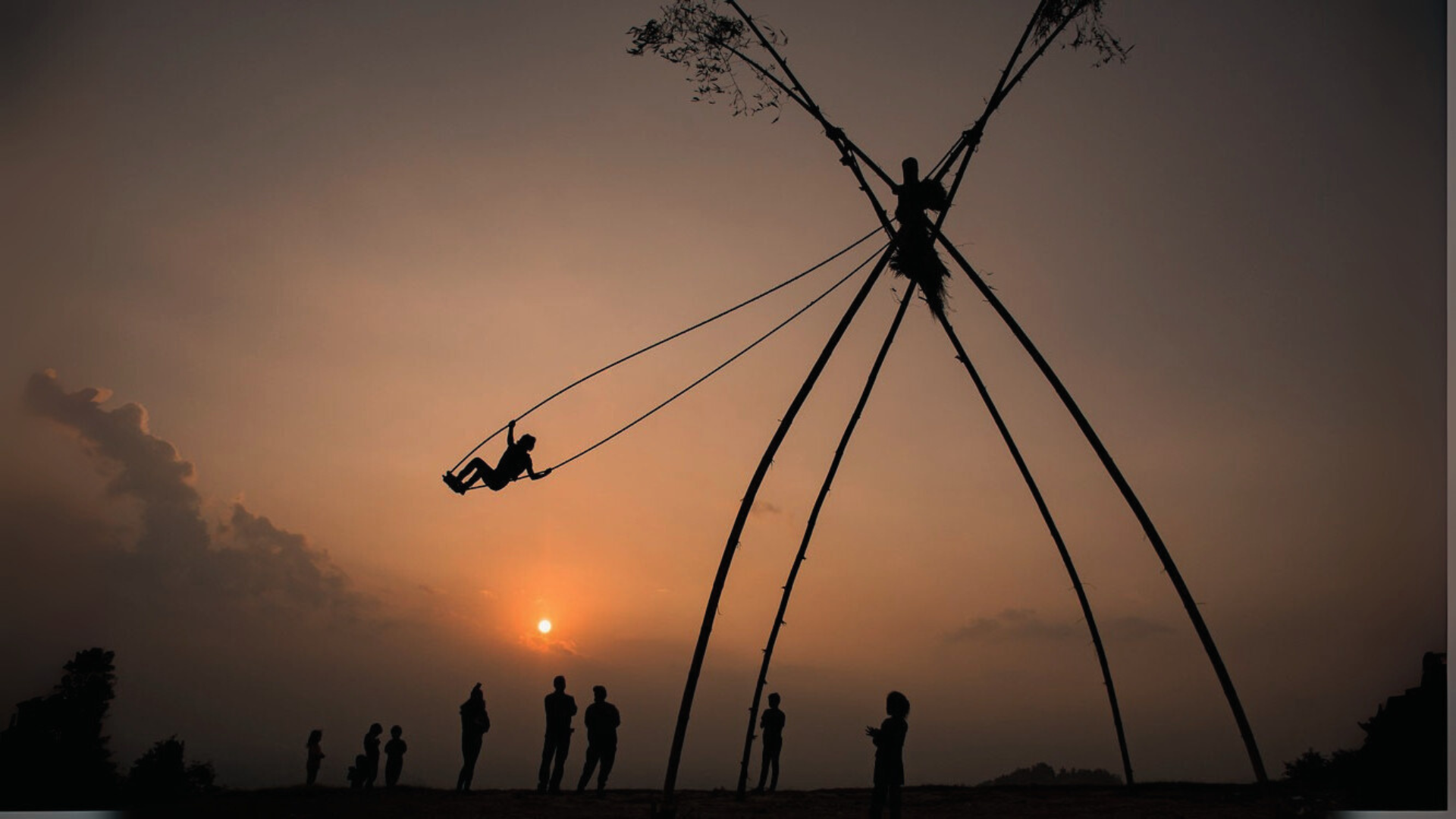
The origins of the festivities are very vague. However, the careful analysis presents a similarity to ancient paganistic rituals of Europe. The day of Yenya Punhi aligns with the change of season in this valley. The season transfers from Barsha (Monsoon) to Sarad (Autumn). Reviewing the procedures of various festivals in the valley: evidence is drawn to how the Yasi/ Yosi (Ceremonial Pole) is hoisted to alert the citizens of change. The same was observed in medieval Europe. The ceremonial May Day pole symbolized the advent of spring. A stark similarity to Bhaktapur's Yoshi was erected during Bisakh Jatra to celebrate the end of winter and the beginning of spring.
After the Earth, the festival features associations with the guardian deity of Nepal Kingdom- Bhairava. The association was made during the Licchavi Era. A legend goes as follows:
As instructed, the King merged the existing villages of Koligram (Yambhu) and Dakshin Koligram (Yengal). He defeated rulers of various petty states and created his new city. He also established a beautiful stone spout gilded in gold, Lu Hiti (Gold- dhara/ Sundhara). It featured an intricate water-management system, and royal canals (Rajkulos) channelled river water to the spout. He named the city Suvarna Pranali Kantipur. Here, Suvarna means golden, Pranali means system. Kantipur is a mixture of two words - Kanti, meaning beautiful and pur, which means place.
To celebrate the momentous occasion, he initiated a festival known as Yenya. The word is a mixture of Yen- the Newari name of the city and Ya- celebration. It is also called the celebration inside the town.
It is possible King Gunakamadeva’s celebration overlapped the change of seasons, and the two elements became one.
The inception of Indra in the festival is a great mystery. Indra is a god from the Vedic era. He had deep roots in the classical Indian pantheon, but his worship slowly began to fade. Some believe that due to his nature his worship began to fade. Anthropologist G.S Nepali writes, "The festival of Indra Jatra suggests perhaps the memory of a conflict between the two tribes- the followers of Indra and their opponents. The festival is perhaps an Indo-Aryan feature which survives in Nepal, but is totally forgotten in India."
The goddess of Indraghat arrived in the Nepal Kingdom during the rule of King Dharmadatta. The goddess is referred to as Indrayani, locally known as Manamaiju. The hill where she settled in this valley is referred to as Manamaiju. It could be that after her arrival, the worship of her husband Indra also began.
The third fold of this festival is the female guardian of the Nepal Kingdom- Kumari. A Kumari is a living goddess embodying the energy of the divine feminine. She is worshipped as Taleju Bhawani, Durga or Parvati. During the Malla Era, King Jaya Prakash Malla had an unfortunate encounter. He lost the trust of his tutelary deity Tulaju Devi (today known as Taleju). After multiple requests, she came to his dreams and directed him to begin worshipping a virgin girl of the Bandra (Buddhist Newar) community as her manifestation.
To read the full version of the incident click here
These elements combined have created an atmosphere of great jubilation. The core activities related to these deities are accompanied by various magical creatures and the presentation of beautiful dances and plays.