
Nepal, the Intrepid Traveler’s Delight Part II
Having had your first experience of what’s it like being in Nepal, your taxi ride having given you an up-close contact with a knowledgeable Nepali taxi driver, you reach Thamel after driving down half of Kathmandu.
Having had your first experience of what’s it like being in Nepal, your taxi ride having given you an up-close contact with a knowledgeable Nepali taxi driver, you reach Thamel after driving down half of Kathmandu. You would probably have noticed that the traffic seems to be not that good, and that there seems to be a lot of people walking on the sidewalks. This is a constant of less developed countries, cities may seem to be sprawling and quite large, but most of the commercial places are located within certain specific areas. So, you’ll see many more people around than in cities back home, where buying groceries means visiting a superstore, probably a 15-minute-drive from your home. And of course, roads are not that wide, so traffic, which is growing in leaps and bounds, tends to be somewhat bogged down most of the time. In short, speed limits are not necessary here!
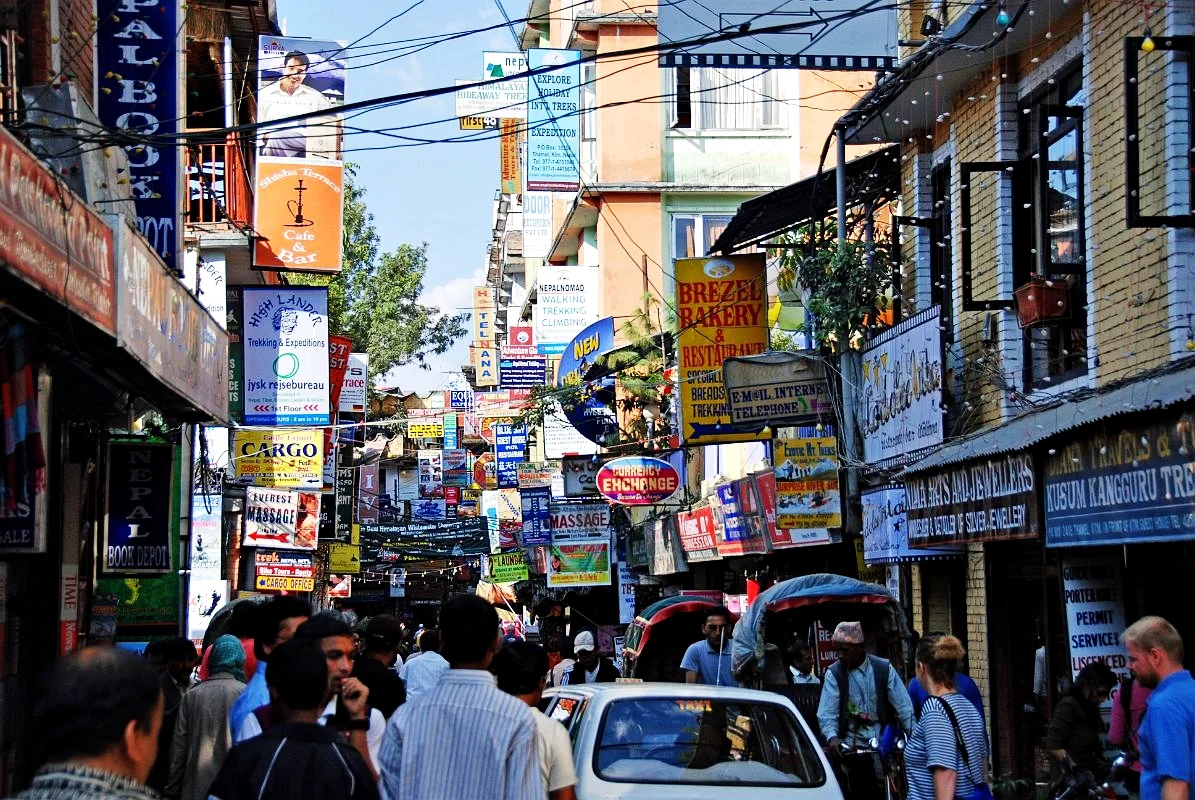
In due time, you reach Thamel, the tourist heart of Kathmandu, which is full of hotels lodges, restaurants and bars and cafes, shops selling all kinds of stuff, yoga, reiki, massage, and other health centers, and so on and so forth. And yes, plenty of tourists strolling around the narrow lanes and alleys. The interesting thing about Thamel is that it is located smack bang in the middle of the city, which means getting anywhere from here is a breeze. The restaurants serve all kinds of cuisine, local and international; the hotels are of all sorts, classy and economy. In other words, it’s a pretty convenient place.
Of course, you can expect the locality to be a bit of a strain, what with all that hustle and bustle all day, all night long, So, if you are looking for more peace and serenity, there are excellent hotels nearby that are safe, comfortable, and convenient, such as Hotel Shanker in Lazimpat, a stone’s throw away from Thamel. It’s actually a 120-year-old royal durbar that has been converted into a fantastic hotel with a sprawling landscaped garden with a great swimming pool and health club. Once, it used to be the favorite haunt of mountaineers bent on conquering Everest; their base in Kathmandu. Reinhold Messner lived here, as did Tenzing Sherpa. For the really intrepid traveler, this is the kind of hotel to look for, because it’s quite an experience living in an ancient palace, let me tell you! Once-in-a-lifetime, all right.
Actually, the whole locality of Thamel, Lazimpat, Durbar Marg, and so on are all situated around the central iconic structure that was once the royal palace, now known as the Narayanhiti Museum. While Thamel is the preferred watering hole of most tourists, Lazimpat is more upscale, with quite a few important embassies, and Durbar Marg (Kingsway) is an upper-end commercial center full of branded stores. Thamel, being most familiar with tourists, deserves a bigger description here.
On May 16, 2013, a fire raged through the famous Pilgrims Book House in the heart of Thamel. It claimed to have the largest collection of publications on the Himalayas in Asia, and was one of the capital’s important landmarks. A visitor’s words on a Lonely Planet site is pretty compelling: “Pilgrims was an incredible source of knowledge about Nepal as well as all things about the Himalaya…their own publishing outlet made available out-of-copyright books on the history of Nepal, Tibet, India, the British Raj, exploration, etc. What they had was irreplaceable.” Thankfully, although the main store is gone, there’s a Pilgrims nearby, also in Thamel. The locality is a magnet for tourists not only for such landmarks; there are many other places that are also quite well known. In addition to hotels, restaurants, travel and trekking agencies, and shops, Thamel also has quite a few stores selling and renting trekking and mountaineering supplies, as well as some places where you can rent high quality bikes. You’ll also be able to avail of some much needed healing done the traditional way at one of the natural healing centers here, and rejuvenate your flagging spirits with a couple of yoga lessons at a yoga school.
No doubt, Thamel offers much that the tourist seeks, and the fact that you are likely to make some good friends from around the world makes it indeed a tourist haven.
Nepal, the Intrepid Traveler’s Delight Part I
When coming to Nepal, travel light, travel with adventure in your heart, and travel with optimism. There’s mush to see, experience, and discover.
Remember your first experience in Nepal? If you were one of the lucky ones, without a prearranged itinerary, probably a backpacker, then your first experience of this quixotic country must have started at the international airport itself. Of course, you are lucky you’re traveling light; for those with lots of baggage, there will be probably quite a bit of longer waiting period than international travelers are generally used to. As for you, the what-will-I-do-with-so much-baggage tourist, you are just raring to get out of the airport to inhale the fresh Himalayan air you’ve heard so much about, and get your first look of this one-time Shangri-La that has sometimes been touted as one of the most beautiful tourist destinations in the whole wide world.
Well, hold your horses, dude. You’re falling into a common tourist-disappointment trap. Don’t have too high expectations in the beginning, but certainly, you can expect more as you go. The airport must have looked pretty quaint to you; you who have strolled through fantastic steel and chrome structures like Abu Dhabu or Dubai International, or even the gigantic, if less grandiose, JFK in New York. Sure, Kathmandu’s Tribhuvan International Airport isn’t big in any sense of the word, and sure, it isn’t as shiny, but it surely looks quite homely, don’t you think? Hope you didn’t have to wait too long in the immigration desk line, and even you did, surely you must have received a lot of welcoming smiles. So, that’s the first thing you may have noticed; people smile easily here.
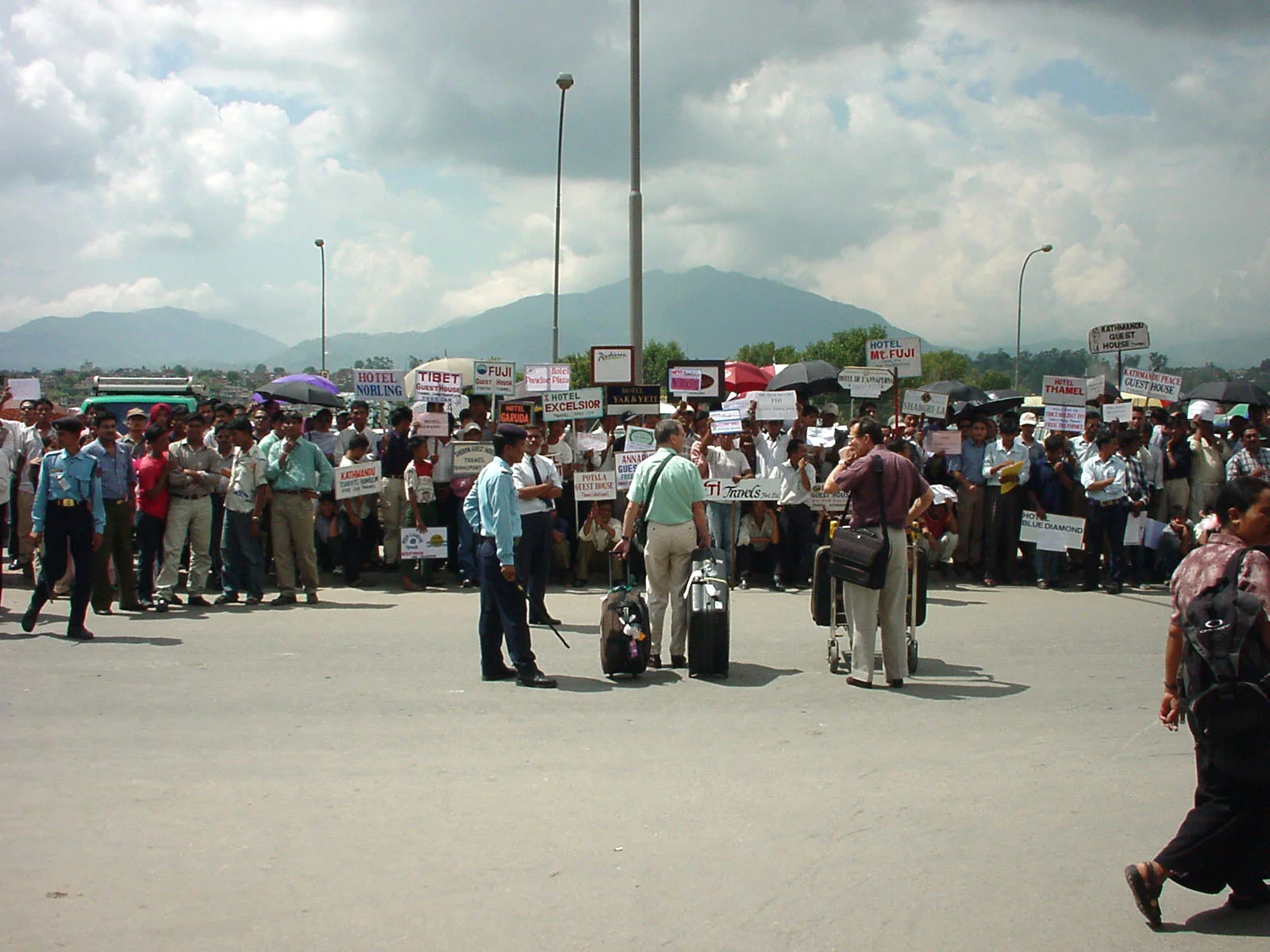
Now, hope you have been warned of what to expect next. As you exit the main entrance gates, you’ll be assailed by the small multitude waiting outside. You don’t have to look for your moniker among all the name cards bobbing among the crowd; you are the intrepid traveler, right? No advance bookings. So, you keep on walking to the taxi stand that’s a little way ahead. But you won’t have to walk long; you’ll soon have a couple of drivers by your side, asking if you want a ride. Here, you should know that you can always avail of a pre-paid taxi service, but that’s going to cut into your unique experience. So, you go with the flow, and soon find that one of the drivers is trying to grab your bag, with the other doing likewise. A minor scuffle ensues, not serious. You’ll eventually be ensconced inside a small taxi, and with a big grin, the driver gets going. That’s when you have an uneasy feeling. Hey, did we agree on a price? You ask yourself. No, you didn’t.
So, as the taxi rolls onwards, you glance at the meter. It’s not running; hasn’t been flagged. So, how much to Thamel, you want to know. Thamel’s where you want to go to; you already know that from friends back home, and from online blogs. That’s where the action is supposed to be. Cheap hotels, great restaurants, lots of tourists. How much, you repeat. You may well have a driver who may not come to that straight away, instead charming you with a bit of chit chat. He’ll regale you with stories of how he had to wait the whole day at the airport, not a single passenger; and that too after waiting in line the whole night to fill up at the gas station. You’ve heard about the political strikes, the gas shortages due to the India’s economic blockade, etc., haven’t you? And, of course, last year’s great earthquake that killed more than 8000 people.
He sounds rueful, and soon you’ll be expressing genuine sympathy for not only him, but the plight of all Nepalis. So, when he names a figure, finally, you agree wholeheartedly, deciding to give a tip, as well. You do a quick calculation on your smartphone; the fare looks ridiculously low in dollars. So, you’ll certainly give him a generous tip. Poor chap. But, surprising that even with so many problems, he seems to be pretty cheery!
How to Experience Nepal Adventure
You are coming on a long trip, and spending a fair amount; stay longer, so you experience real adventure.
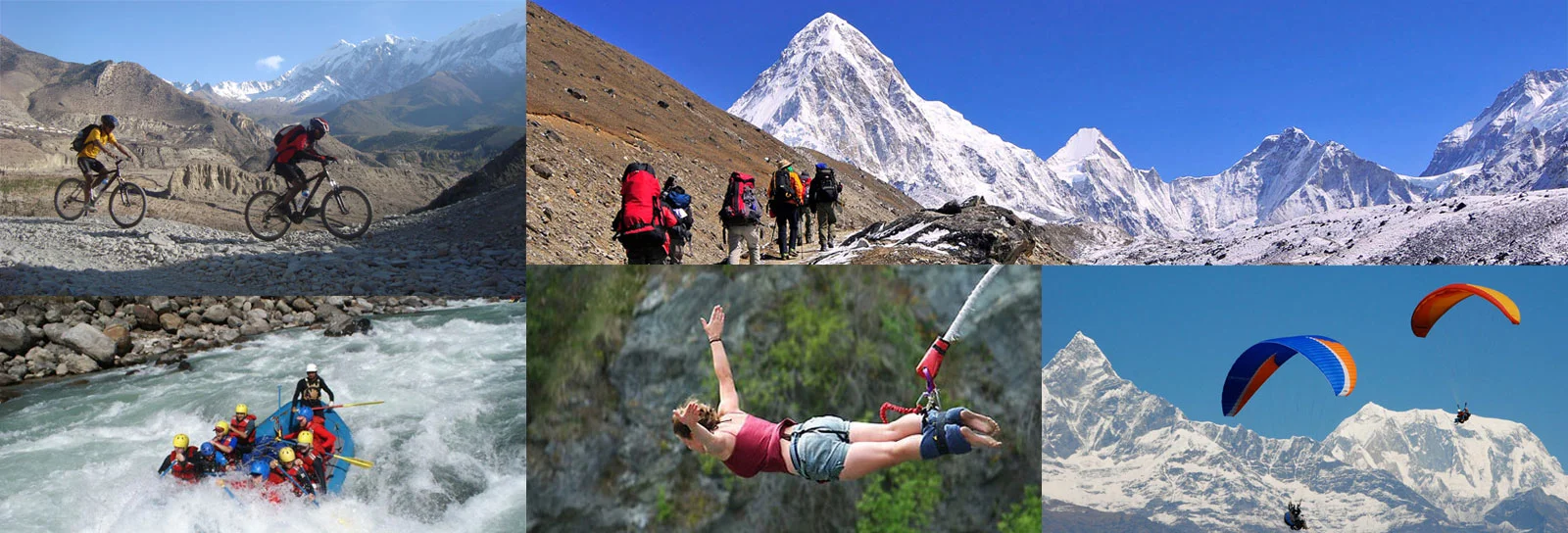
Surely you must have been excited to see the slogan, “Welcome to Nepal, Land of Adventure,” in some travel brochure or the other, and surely that must have nudged you towards visiting Nepal. Well, let me assure that you made a good decision. Plenty of high adventure stuff to do around here—trekking, hiking, rafting, paragliding, abseiling, canyoning, ultra flight, bungee jumping, high altitude marathons, et al.
As if that wasn’t enough, you also get adventure at every twist and turn of the bustling cities and sleepy villages all over the country. Adventures of exploration and discovery, of knowing that there’s a completely different kind of life that’s as good in its own way as is those of cities back home, with the added attraction of a lot more humanity here. You probably have forgotten how it was in the old days, when you could walk to a variety of grocery and general stores at a leisurely pace, get a doctor at your convenience, and pretty cheaply, be trusting of others, enjoy nature indoors with the windows wide open to receive natural air and sunlight, be cold in winter and sweat in summer even when indoors, pay a lot less tax, work under less undue stress, enjoy what you have and make do with what you don’t, etc. etc. You get the drift.
For all this, you’ll have to spend more than just a week or two, because imbibing such a lifestyle entails that you are here for at least a month or two. Me, I never go anywhere relatively far planning to return soon. That’s because I want to be a part of things, and not just a spectator. This is what makes travel such an adventure. And if you believe that you are an adventurer (actually, who doesn’t?), then plan for a long stay when in Nepal. It’s one of the most economical destinations in the world. Just the fact that a dollar gets you more than a hundred Nepali rupees should make this clear.
What’s more, you get all sorts of rebates and discounts at most hotels if you’re staying for a longer period of time. A dollar goes a long way, let me tell you. What to say about the pound? On the lower side, lunch at plenty of local places can be had for a dollar and a half, so too dinner. Breakfast, in many hotels, is complimentary, as is a trip to and from the airport, which isn’t far off anyway. Add to this the fact that local transportation is actually, in one way, pretty good. Stand on the curb anywhere on the streets of a place like Kathmandu, and a three wheeler, micro bus, minibus, or a bus, will within a few seconds, stop right beside you asking you where you want to go to. Fares are cheap; 15 rupees will get you almost anywhere in the city. Of course, you’ll have to make allowance for the fact that the vehicle may be a bit on the crowded side, but that’s okay, isn’t it, since distances anywhere are quite short, hardly a few kilometers, if that.
Local transportation is really a wonder of a city like Kathmandu. So many choices without having to wait long. If you are a bit more fastidious, you can get a taxi anytime, anywhere. You might have heard some unsavory stuff about taxi drivers ripping tourists off with exorbitant fares; well, take it from me, all Nepalis are a very honest lot, and if the driver is asking for something extra, most probably that’s because he thinks he’s entitled to, seeing as to how he had to stay the whole night at the petrol pump to fill up. Other times, too, give some leeway if he’s taking it as an opportunity to earn a little extra, you can regard the extra as the tip that you would have to give anyway, back in your own country.
Well, the long and short of all this is to try and convince you to stay longer when in Nepal, so that you really go back sated with adventure, exploration, and discovery; thus asking your long trip, your time, and your money, well worth it.
POPULAR ITINERARIES
SIMILAR POSTS

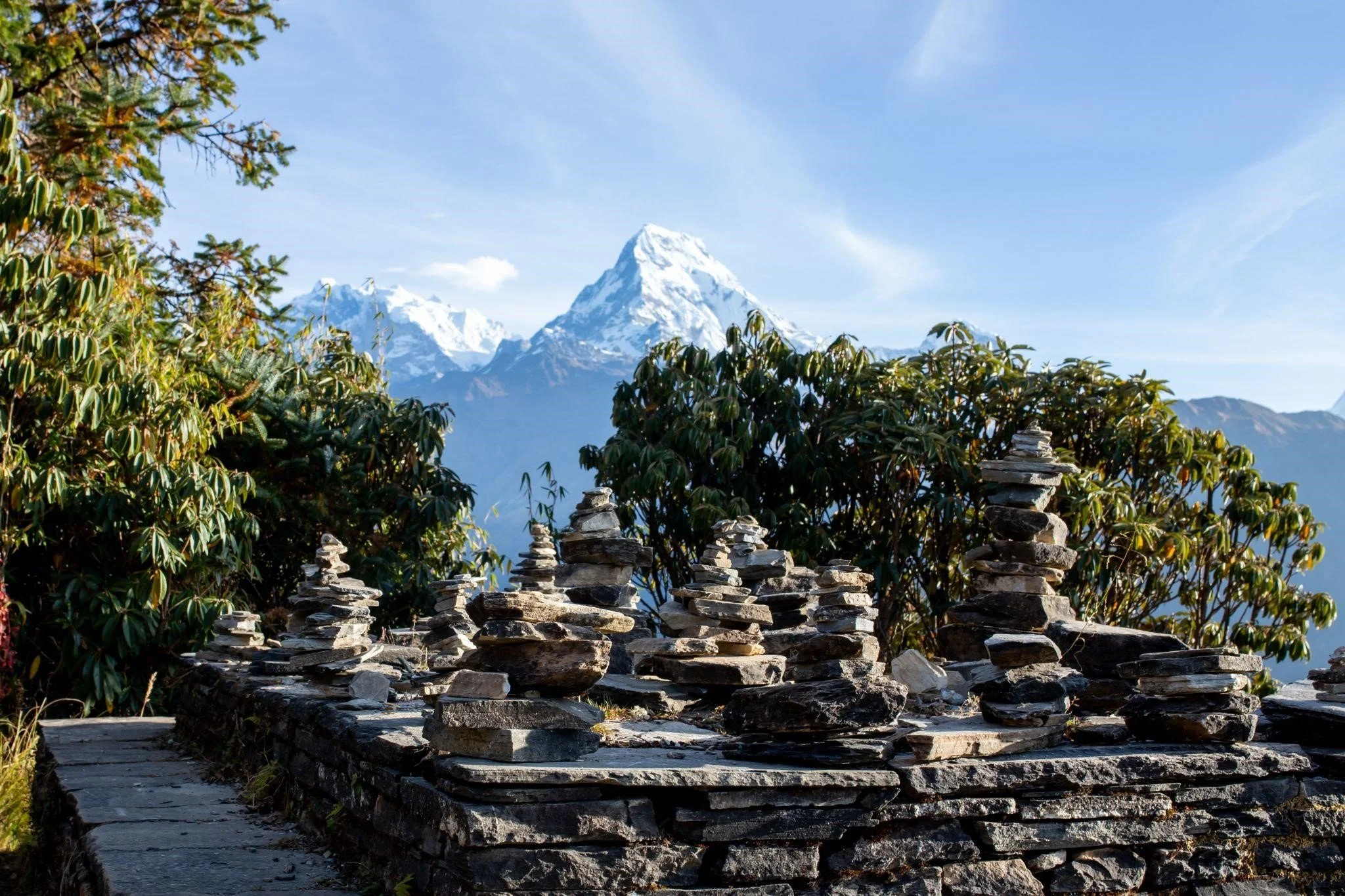
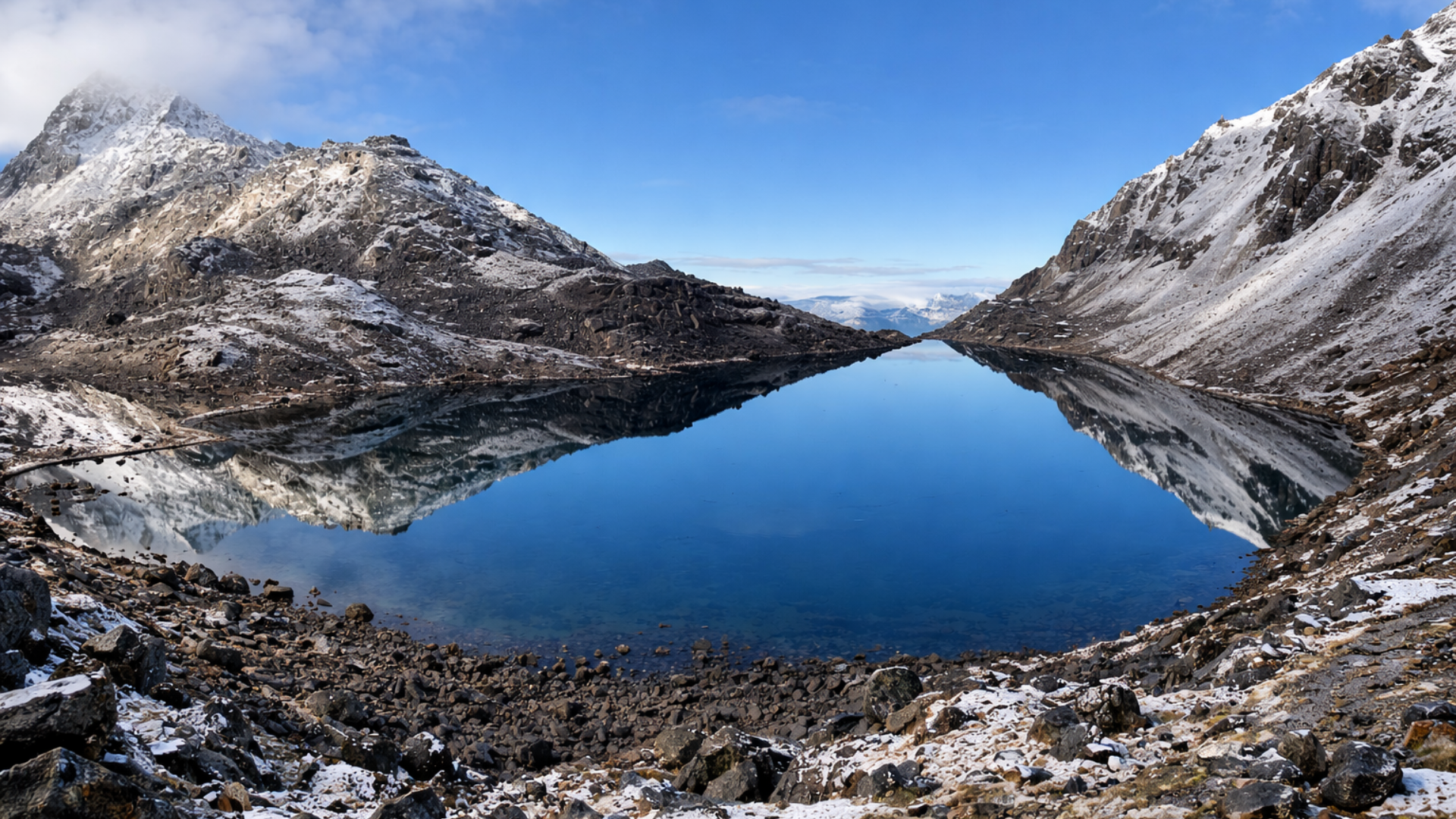
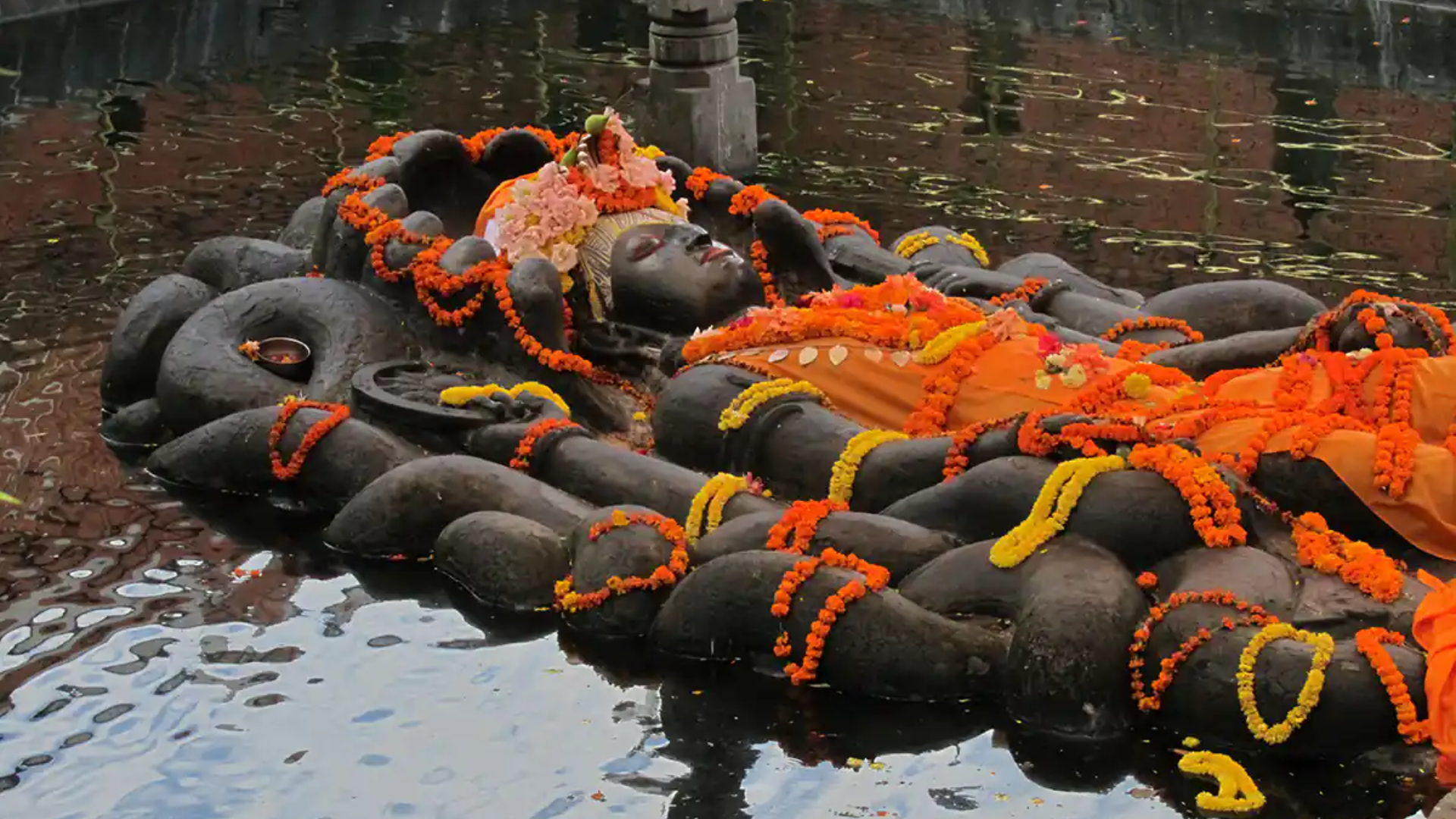
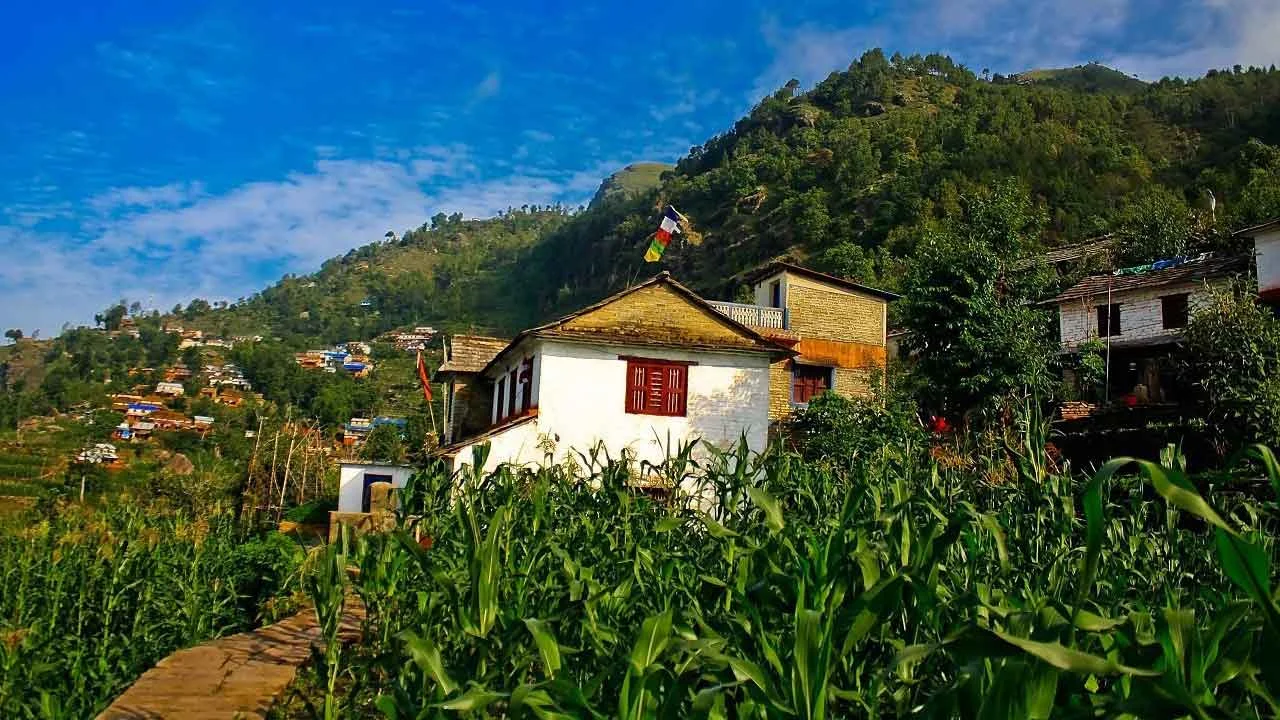
Nepal Homestays
Homestays are popular universally, because they give an up-close and personal experience of indigenous lifestyle and culture.
It was during Nepal Tourism Year 2011 that the idea of launching homestay programs was put forward by the Nepal Tourism Board, which was pretty confident of a dramatic increase in the number of tourist arrivals for whom more accommodation facilities had to be prepared. Alongside, homestay programs would involve people from all walks of life in all corners of the country, and make tourism a more all-encompassing, comprehensive industry. ‘Tourism for all’ was the new battle cry. In other words, the aim of homestay programs was to engage the participation of more of the populace in tourism-related activities, besides augmenting their income, as well.
About Rs.30 million was spent by the board on training those who were interested in participating in the homestay program. The board’s efforts resulted in the development of two types of homestays: private homestays and community homestays. In most cases, village development committees, district development committees, local co-operatives, and some NGOs (cultural exchange programs, volunteerism) manage the programs. A set of rules and regulations were devised.
All participating families have to register with their local homestay management committee, and they have to follow some very stringent guidelines, which emphasize cleanliness, hygiene, well furnished rooms, adequate services, and security. An added responsibility is that, participating families have to give their guests a taste of the local culture and cuisine. The families are serve whatever food they themselves eat daily to their guests. As far as rates and other charges are concerned, they are set by the respective management committees.
There are rules also for the guests, who are asked to dress appropriately, and requested to promote the culture and tradition that they have experienced. Guests are furthermore advised to enter and leave their ‘home’ within the given times. Drug use is, of course, totally prohibited.
The first two villages to adopt homestay programs were Sirubari and Ghalegaon; they were followed in rapid succession by many others.
The program has been a successful one, and now you can avail of homestays in many districts, including Bagmati, Chitwan, Makwanpur, Gorkha, Palpa, Kavrepalanchok, Ilam, Syangja, Kailali, Kalikot, etc., with some having more than a dozen or so homestays. Homestays are an excellent means of providing tourists a better local experience, giving them a chance to learn about local culture and lifestyle firsthand, and so is popular worldwide. Here, homestays are mostly based in rural areas, where life moves on at an uninterrupted and leisurely pace, and so provides tourists a refreshing change from the hustle and bustle of everyday city life.
.
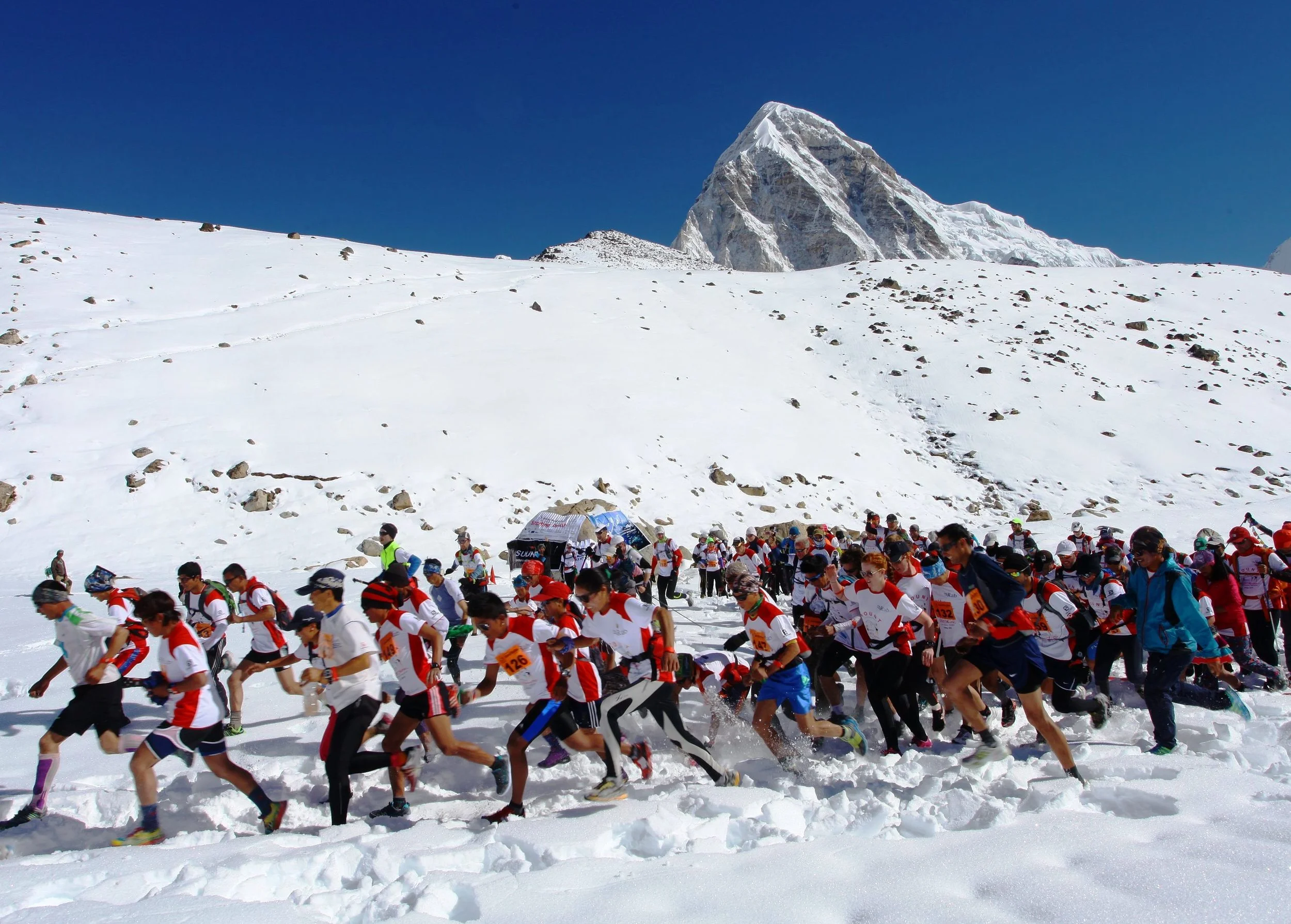
World’s Highest Marathon
Here’s what you need to know about the world’s highest marathon.
The 14th Edition of the Tenzing Hillary Everest Marathon was held on May 29 this year. The first such marathon was organized in May 19, 2003, to commemorate the 50th anniversary of the first successful ascent of Mt. Everest by Tenzing Norgay Sherpa and Edmund Hillary in 1953. The next edition is scheduled for May 29, 2017.
This year, the first three places of the full marathon were won by Bed Bahadur Sunuwar, Bhim Bhadur Gurung, and Suman Kulung. There were 146 runners participating. The half marathon was won by Tenzing Christopher Dolmans of Holland, while the 60 kilometer ultra marathon was won by Tirtha Bahadur Tamang.
The Tenzing Hillary Everest Marathon is a unique event, organized at the foot of the world’s highest peak, Mount Everest. It starts at Gorakshep (5,184 m) and ends at Namche Bazaar (3,446 m), thus it is the highest marathon in the world. The highest elevation of the race is at Kalapattha (5,545 m). The rough terrain of the high Himalayas adds to the rigors of running at such high altitudes.
Participants are advised to be in Nepal three weeks before the start of the race, so that they get enough time for acclimatization to the high altitudes. Even though the marathon is mostly downhill, there are two steep uphill sections that can challenge the fittest runner, and the chances of there being snow and ice on the upper part are high, so participants should have some knowledge and experience of trekking at high altitudes.
The full marathon is 42.195 km long. A half-marathon is 21 km long, and the ultra marathon is 60 kilometers. The marathon runs through some of the highest glaciers and moraines in the world for a stretch of about 10-15 km, and across the historical route to Everest taken by Hillary and Tenzing in 1953.
Marathoners will come across monasteries, chortens, suspension bridges, and of course, jaw dropping landscape that includes beautiful natural scenery, rhododendron forests, and orchid groves. The rhododendron is the national flower of Nepal. They bloom from early March till April and May, so you may be lucky to see entire hills of red. What’s more, the trail meanders along pristine Sherpa villages, such as Lobuje, Pheriche, Dingboche, Thyangboche, Khumjung, Khunde, and Namche Bazaar.
Organizers generally plan a three-week itinerary that includes sightseeing in Kathmandu Valley, and a trek at high altitude, which ensures that all participants are adequately acclimatized. They could also combine all this with a climb of Island Peak (6,189 m).
Hunting for Wild Bee Honey in Nepal
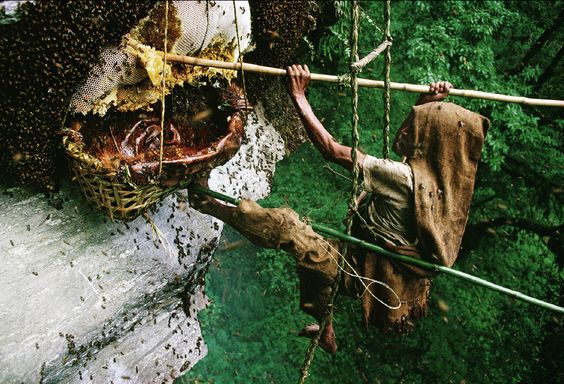
The honey hunters of Nepal have been made famous by Eric Vialli’s documentary, ‘The Honey Hunters of Nepal’, and deservedly so.
With at least five different species, Nepal is rich in honeybee diversity. Honey hunters of Nepal risk their life and limbs to collect honey of wild honey bees from their nests located high up on craggy cliffs. For the aboriginal tribes involved in honey hunting, it is a vocation that is ancient in origin. Communities of different regions of the country apply different techniques, and practice their own kind of cultural-religious rituals before honey hunting, in which, usually, a dozen or so men are involved. A sacrifice, along with prayers, is offered to the gods before embarking on their hunt.
They carry age-old equipment devised from local materials, mostly bamboo and fiber of bamboo. These include long bamboo ladders (prang); lengthy bamboo stick, one end of which has a sickle attached (tango); a notched bamboo stick (saaton); basket made of bamboo (tokari); basket lining (chhyakhal); wooden knife (dabilo); filter (chcora); wax pot of wood (donga); and various types of ropes for different functions made of bamboo fiber (koili cho, koho cho, uab, pechowhibe, and tuju).
The first step is to light a fire of wood and foliage at the cliff base having the nests of wild bees, which compels the bees out of their combs and they fly upwards. The brood and honey sections are now revealed. A long rope ladder is then thrown down from the cliff top, and it is tied securely to trees on the top and at the bottom. One of the hunters fastens himself to this ladder and descends inch by inch, his safety and coordination ensured by his colleagues, who keep a sharp eye out. One of them, the primary coordinator, perches himself on an overhanging tree, and sends signals, as needed, to the others.
Using another rope, a large basket is lowered to the site of the nest, which is balanced under the comb by the honey hunter using a long stick. The brood portion of the comb is separated next, and a hole is pierced in the brood comb area. Then, the bamboo stick with the sickle is used to cut the comb. He then guides the collecting basket to catch the cut-away honey chunks. In this task, those holding the rope at the lower end also help. Once it is full, the basket is lowered, and sent up empty again. Anything from two to three hours may be needed to harvest one site. All this has been documented in Eric Vialli’s documentary, The Honey Hunters of Nepal, which captures the drama of a honey hunt by west-central Nepal’s Gurung honey hunters.
Certain superstitions are attached to wild bee honey hunting in Nepal. According to one such belief, Tuesdays are good days to go honey hunting, while Wednesdays are not. Another belief is that one shouldn’t honey hunt on the 8th, 11th, 23rd, 26th, and 30th day of the moon cycle. Similarly, mornings and evenings are the best times for honey hunting. Some communities believe that the presence of women aggravates the behavior of wild bees, making them quite dangerous; so women are prohibited from even watching the activity of honey hunting. As far as the men are concerned, the group shouldn’t have someone with a wife who is over six months’ pregnant, or in her period. Another interesting aspect of honey hunting in Nepal is that, most of the honey is collected from the world’s largest honeybee, Apis laboriosa, of which as many as two million may be present in one giant honeycomb.
The Netherworld of Shamans
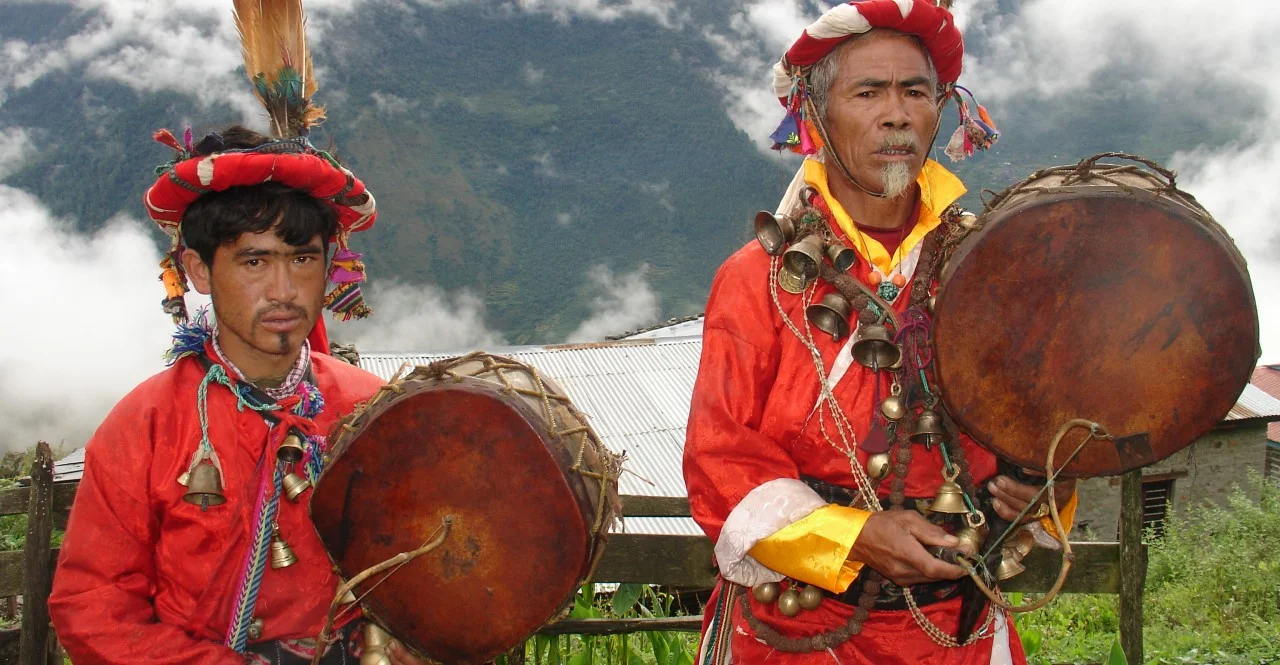
Shamans are known as jhañkris, or dhāmīs, in Nepal. They are believed to have mysterious powers to ward off evil spirits and exorcise their spells.
The shaman had been reciting his mantra for the past two hours, accompanied by the precise tempo of hard slim bones beating a hand-held drum. The bells across his gaunt naked torso rang in cadence, as he hopped up and down on his haunches. His gaze was focused on the middle-aged woman dressed in a cotton nightgown, who sat cross legged, her hands on her knees. Her face and neck were puffed up, and her eyes were clamped shut. She trembled continuously, and her body swayed from side to side.
The emaciated-looking shaman threw fistfuls of rice at her. She continued to shiver. He then held a broom over her head, and commanded, “Who hides within this woman’s body? Tell me! What do you want?” Opening her eyes at last, and staring at the shaman with protruding eyeballs, she hissed back garbled words. The shaman then touched the woman’s forehead with a thin bone and a human skull, and again commanded, “In Mahakali’s name, I command you to reveal yourself!” flinging some more rice at her. The woman trembled, and then, suddenly, with a simpering smile, hissed, “I am Bhagawati.”
“Where are you from?” the shaman asked. “From Dolpa,” came her reply. “What are you doing here?” asked the shaman. The woman glanced slyly at him, and said, “I was murdered and woke up in this body.” “In the name of all powerful Kali, I set you free. Leave her body,” ordered the shaman. The woman stopped trembling, her head hung down heavily. The shaman stood up, and beating his drum, circled the woman three times, throwing fistfuls of rice on her. Then, he carried on out of the room. Now, he held a live rooster in one hand and a naked khukuri in the other. On reaching the crossroads of an adjoining street outside, he sliced off the rooster’s head with one swipe of the khukuri, thus concluding another triumphant victory over the spirits of the netherworld.
Thirty years down the line, I can vouchsafe that the woman never again had another ethereal episode. How do I know all this? Well, that woman was a neighbor, and I was witness to the entire drama of that intriguing night, a night when an emaciated looking shaman held sway over things ungodly. Welcome to the baffling world of shamans.
So, what exactly is a shaman? While shamanism exists all over the world in different variations, the basic presumption is that spirits exist, they can be good or evil, and shamans can communicate with them. For some Nepali ethnic groups, especially in the eastern and western hills, it is a widely practiced religion. Known as jhañkris, or dhāmīs, a typical shaman wears a jama (long skirt-like white garment), a headdress of peacock feathers, a belt of bells around the waist, long malas (necklaces) of rudracche and ritho seeds, and he carries a dhyangro (double-sided hand held drum).
They are regarded as faith healers, soothsayers, and spiritual protectors. In their role as faith healers, they collect medicinal plants, examine entrails of animals for signs, chant mantras to invoke ghosts and deities, perform animal sacrifices, exorcize and counter the spells of evil spirits, etc. They determine the nature of the spirit, and then either pacify it, or drive it away. They recognize and treat many disorders, usually concerning the respiratory and alimentary systems, with medicinal herbs, of which they know a lot about. As soothsayers, they go into a trance and predict things, and as spiritual sentries, they ward off spirits through strength or trickery. Shamans also conduct funeral rites, and dispense protective amulets.
Surprisingly, even in a city like Kathmandu with its many hospitals, there are lots of people who believe in the power of shamans and jyotishis (astrologers) to alleviate their ailments. Although they are different, jyotishis also deal with common ailments. According to one jyotishi of Lalitpur, if the ailment is of minor nature, he takes care of it, but if it’s complicated, then he advises the patient to go to a shaman.
Miracle Mushroom Yarsagumba
Besides nourishing the body and the brain, Yarsagumba improves organ function and the immune system if taken over a longer period.
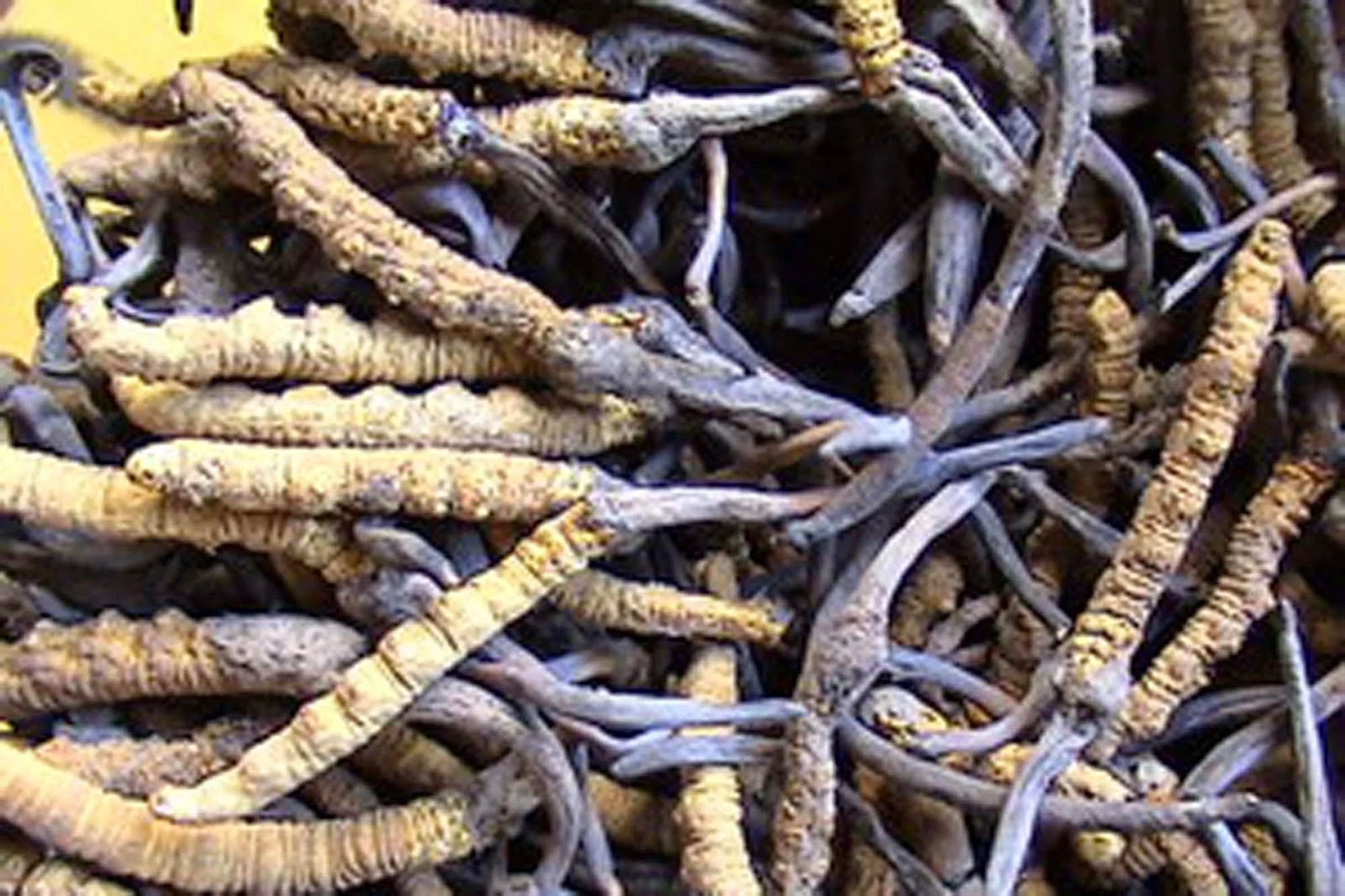
Thousands of villagers begin to swarm the alpine pastures of Nepal’s far western region near the Himalayan peaks as the snows start to melt. Despite the harsh environment, they come all set for a long eight weeks of foraging, and pitch up camps. The daylight hours are spent crawling all over shrub lands, as they search for an unusual kind of mushroom called yarsagumba, which they dig out with great care. The yarsagumba is then gently brushed with a toothbrush, and kept in a basket.
Their catch promises high returns, and the more experienced pickers may earn about US$2,500 dollars if the collection is good. Yarsagumba is an expensive herb with a global demand; in the international market, one kilogram can fetch about US$10,000 dollars. The pickers get about a dollar for one piece, which goes up to about 30 dollars in the cities. It is not only the present day market; even in older times, yarsagumba commanded premium prices. According to some researchers, even rotten specimens fetched pretty good prices way back in 1892. According to another researcher, in 1990, the price was US$700/kg in China.
Yarsagumba (Ophiocordyceps sinensis) is best described by its Chinese term dong chong xia cao (winter insect, summer grass). It is also known as Chinese caterpillar fungus. Before metamorphosing into a pupa, the caterpillar of a moth (Thitarodes hepialus) lives below the ground in shrub lands at altitudes of 2,000m to 5,000m on the Tibetan plateau and Himalayas for around five years. It is attacked by a fungus (Ophiocordycipitaceae) while still in its larva state, and the insect’s body is filled with mycelium, and ultimately dies. Mushrooms begin to grow out of its forehead, and these become visible on the ground surface when the weather gets warmer, and the snows begin to melt.
The health benefits of this peculiar herb were known since ancient times, when it was consumed as a potent tonic by royalty. It is believed to relieve stress by rejuvenating a system under stress. It is a cure-all in Chinese traditional medicine, potent against many ailments, besides enhancing energy and vitality, strengthening the lungs and kidneys, increasing longevity, stopping hemorrhaging, etc. But, of course, it is best known as a powerful aphrodisiac. Another additional benefit of yarsagumba is that it is a natural product, and so, side effects are almost non-existent.
Yarsagumba gained popularity in the West in the 1990s, when everybody started talking about ‘Ma Junren’s Army’ and their record breaking feats in athletics. Chinese coach Ma Junren’s women runners did fantastically well in middle and long distance running, breaking some long-standing world records. He confided that, to relive the stress of rigorous training at high altitudes, his athletes took yarsagumba thrice daily. And, thereafter, yarsagumba began to be known as the ‘miracle mushroom’.
Kali’s Valley
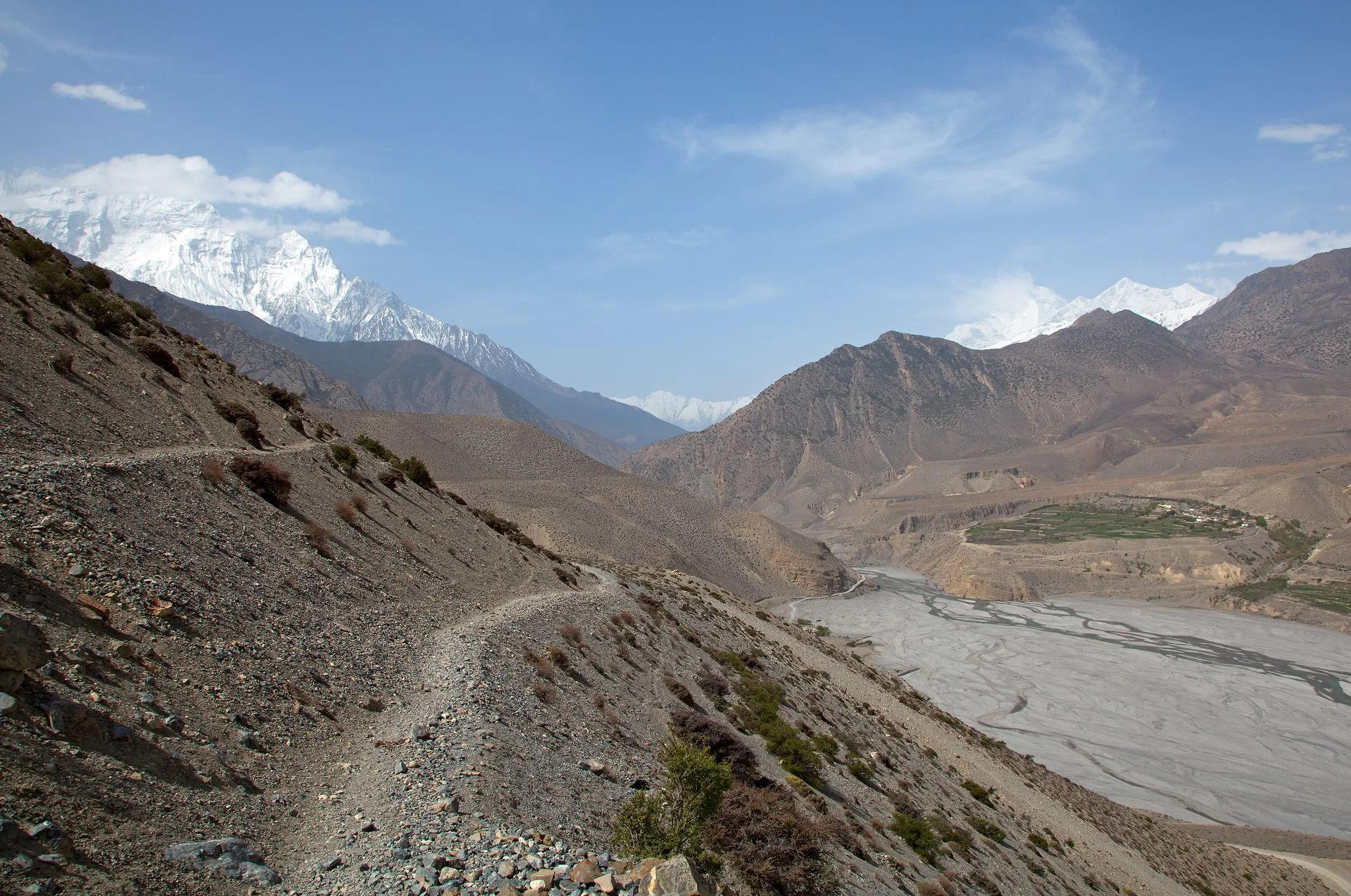
While Pokhara is undoubtedly a paradise for locals and tourists alike, traveling to Baglung from there is an experience that will draw sighs from your soul.
The black river under the brooding sky, gushing its way mightily from far off Muktinath, and cutting its way through Baglung district, seemed to be holding many a black secret. The heavy black clouds, the black silt and sand, and the blackness of the Kaligandaki River reminded one of black hearts, black promises, and black death.
However, the abundant green mountains encasing the immediate vicinity managed to salvage some of the foreboding picture. There were some gold diggers on the banks, as hopeful as the Californian gold diggers of the 1800s, and as dirty. Gold and copper and fossils were to be found in the deep confines of the Kaligandaki. But, if one looked into its black viscera, one got the eerie feeling that the murky depths must be hiding many black and mysterious secrets.
As the bus rolled along the sides of the Kaligandaki, the big green and brown rocky mountains appeared to be desperately seeking our attention as well. Nevertheless, for the duration of the journey that the smooth road paralleled the black river, one’s attention was completely absorbed by it. And why not? For this is the valley ruled by the mysterious Kaligandaki.
It was certainly not so before Kaligandaki had come into view. For a major part of the 72-km journey from Pokhara to Baglung, picturesque scenes of burbling brooks, scattered white frothy waterfalls, lush greenery, high hills, and compact and picture postcard villages constantly brought out sighs of wonder from the soul. Often, one had to forcefully remind oneself that this magnificence of nature’s bounty was in Nepal, and not in some exotic foreign locale.
The soul had already been stirred the night before in Pokhara, when a full two hours had been given to gazing at the gentle and serene Fewa Tal. I had not been able to pull myself away until the last boats had come ashore, their bellies disgorging sated nature lovers, and the lights had started to twinkle in far away hills.
The soul had been so stirred that I had taken the five-kilometer walk from Baidam in Lakeside to Mahendrapul in town. My decision to do so was proven to be devastatingly wise when I came across all sorts of lovely resting houses (calling them simply hotels would be doing them injustice), and equally lovely eating places (again, not restaurants, for the same reason), with their designer lights and manicured gardens, all of which I would probably have missed if I had taken a taxi. The lovelier ones were nestled in tiny gardens in the side streets.
Baidam and Pardi in Lakeside reminded me at once of a bride in all her bridal finery, glowing and expectant, awaiting the arrival of the groom’s procession. Pray she is not disappointed. The atmosphere was not exactly one of joy, however, the season still not having taken off.
The Blessed Valley of Kathmandu
The best thing about Kathmandu Valley is its weather. One tourism entrepreneur once quipped, “We say that when it is 42 degrees in Delhi, it’s 24 in Kathmandu!” Blessed with so much natural beauty and pristine environment by the good lord, and plundered of its bounties of nature in so many ways by man, Kathmandu Valley can still boast of having splendid climate all year round, even if it can no longer lay claim to fame as one of the better cities of the world that it most certainly was once upon a time.
The best thing about Kathmandu Valley is its weather. One tourism entrepreneur once quipped, “We say that when it is 42 degrees in Delhi, it’s 24 in Kathmandu!” Blessed with so much natural beauty and pristine environment by the good lord, and plundered of its bounties of nature in so many ways by man, Kathmandu Valley can still boast of having splendid climate all year round, even if it can no longer lay claim to fame as one of the better cities of the world that it most certainly was once upon a time.
Many locals, as well as tourists of that time, will recall fondly the valley of the seventies. Vehicles were few and far between; a taxi was a rare luxury. One walked and walked to reach from point A to point B, but because the air was so clean and refreshing, and because there were no crowds all over the place, walking was a pleasure in itself. The people of the valley was one healthy lot, let me tell you!
The seasons were (and still are fortunately) celebrated by festivals commemorating their particular blessings. Each season was heralded with pomp and ceremony through colorful and exuberant jatras, with the biggest celebrating the planting and harvesting seasons. It’s no surprise, since the country was primarily an agricultural nation, and still is, actually.
And, since agriculture was (still is) totally dependent on the vagaries of nature, festivals to appease, or to thank the gods of rain, were (still are) particularly important. This is most prevalent in Kathmandu Valley; Indra Jatra and Rato Machhindra Jatra being two such major festivals. Seeing as to how the rains have always been, more or less, abundant without being over-the-board in the valley, one can conclude that the gods are happy with its inhabitants.
One can also presume that the gods must be happy at the large number of temples and shrines built in their honor all over the valley, and at the devout nature of valley dwellers. They could have well decided, in all their benevolence, that all this devoutness must be reciprocated in equal measure. So the gods, in all their munificent benevolence, seem to have decided to bless the valley with weather that is the envy of all others. And, so, what you have is charming temperate weather throughout the year.
The gods have also taken into account the fact that during the hotter months of June, July, and August, disease is most likely to strike, partly due to the heat, and partly due to the carelessness of the denizens in keeping their surroundings clean. In their affectionate benevolence, they have decided to overlook the carelessness, and in their wisdom, know that it will take some time for the valley dwellers to be more aware about the need to clean up their act regarding the valley’s cleanliness and hygiene.
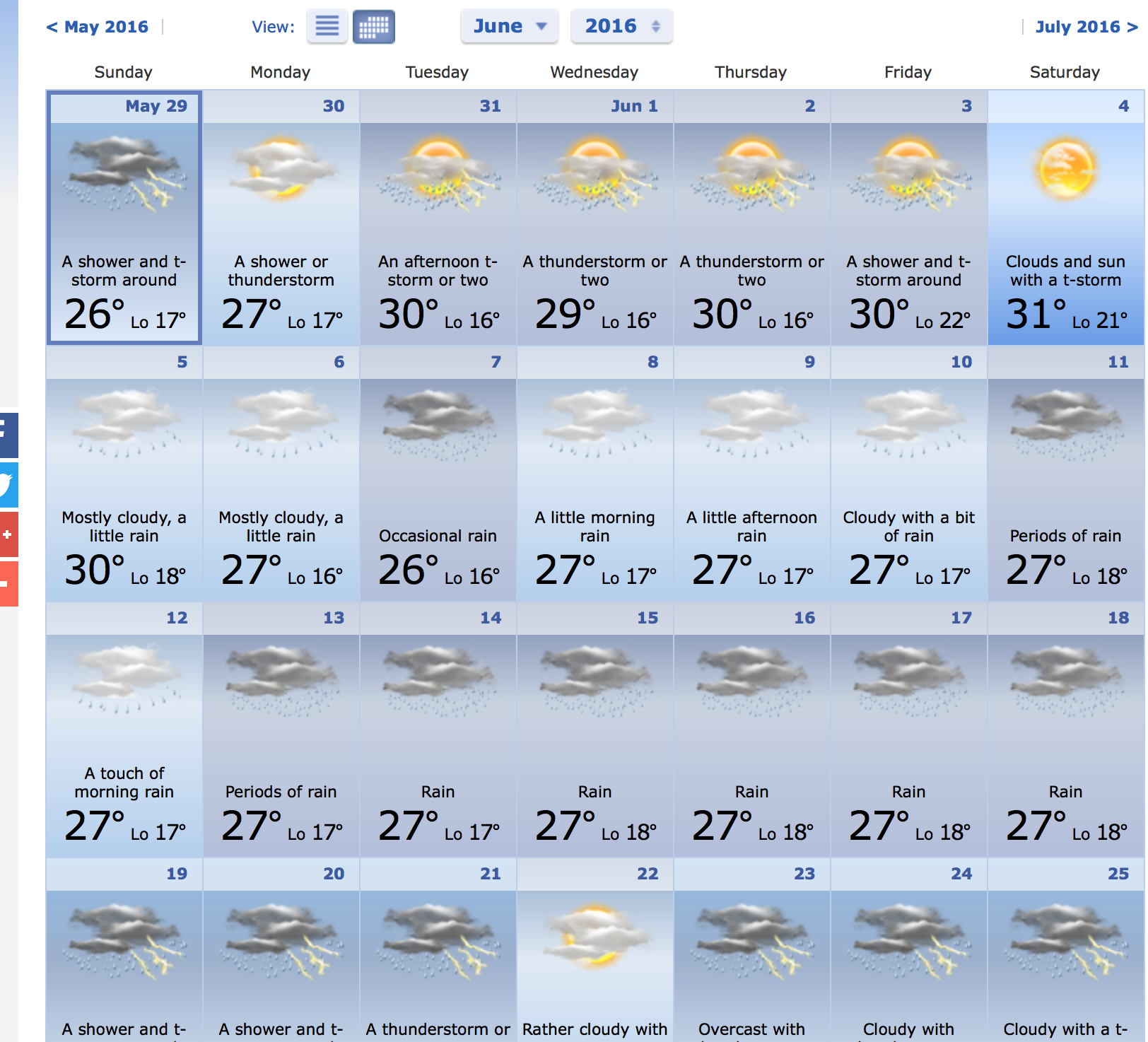
In the meantime, in their generous compassion, they decided to clean up the valley by commanding the heavens to pour down copious rain water on the valley to stream away the accumulated dirt and rubbish. At the same time, they have taken pains to ensure that the heavens didn’t become too eager and flood the valley, adding to the distress. Thus, between June and August, the rainy season, the blessed valley receives a nice average of 200-375 mm of rain. In this respect, the monsoon here is not typical of Asia, where, in quite a few places, when it rains, it pours.
Additionally, the rains here occur during the night, mostly. So, what you get is a clean blue sky in the morning, allowing great views of the magnificent ice-capped Himalayan peaks, the lush mountains all around, and scenic natural beauty everywhere. The abundant rains ensure a good paddy planting season, guaranteeing bumper harvest. Seeing as to how the valley dwellers have devotedly upheld the culture of the great jatras to seek the gods’ blessings, and to thank them, as well, one can conclude that this year, too, the valley will receive excellent monsoon rainfall. And, so, one can also conclude that by the middle of October, the harvest will be done, and the valley dwellers will again, as always, be in a highly festive mood to celebrate Dashain and Tihar, the two biggest festivals of the country.
Life in Kathmandu’s Golden Period
This is what Father Gillespie, one of the first foreigners to visit the secluded kingdom of Nepal in the 18th century, wrote in his ‘Account of the Kingdom of Nepal’: “Cat’hmandu contains about 18000 houses, Lelit Pattan contains about 25000 houses, B’hatgan contains about 12000 houses…the houses are constructed of brick and are three or four stories high…streets of all their towns are paved with brick or stone…there are also good wells made of stone…In every town there are large square verandas…called ‘pati’…on the outside of the great towns, small square reservoirs of water….” (Asiatic Researcher, 1801, Vol. II, London)
This is what Father Gillespie, one of the first foreigners to visit the secluded kingdom of Nepal in the 18th century, wrote in his ‘Account of the Kingdom of Nepal’: “Cat’hmandu contains about 18000 houses, Lelit Pattan contains about 25000 houses, B’hatgan contains about 12000 houses…the houses are constructed of brick and are three or four stories high…streets of all their towns are paved with brick or stone…there are also good wells made of stone…In every town there are large square verandas…called ‘pati’…on the outside of the great towns, small square reservoirs of water….” (Asiatic Researcher, 1801, Vol. II, London)
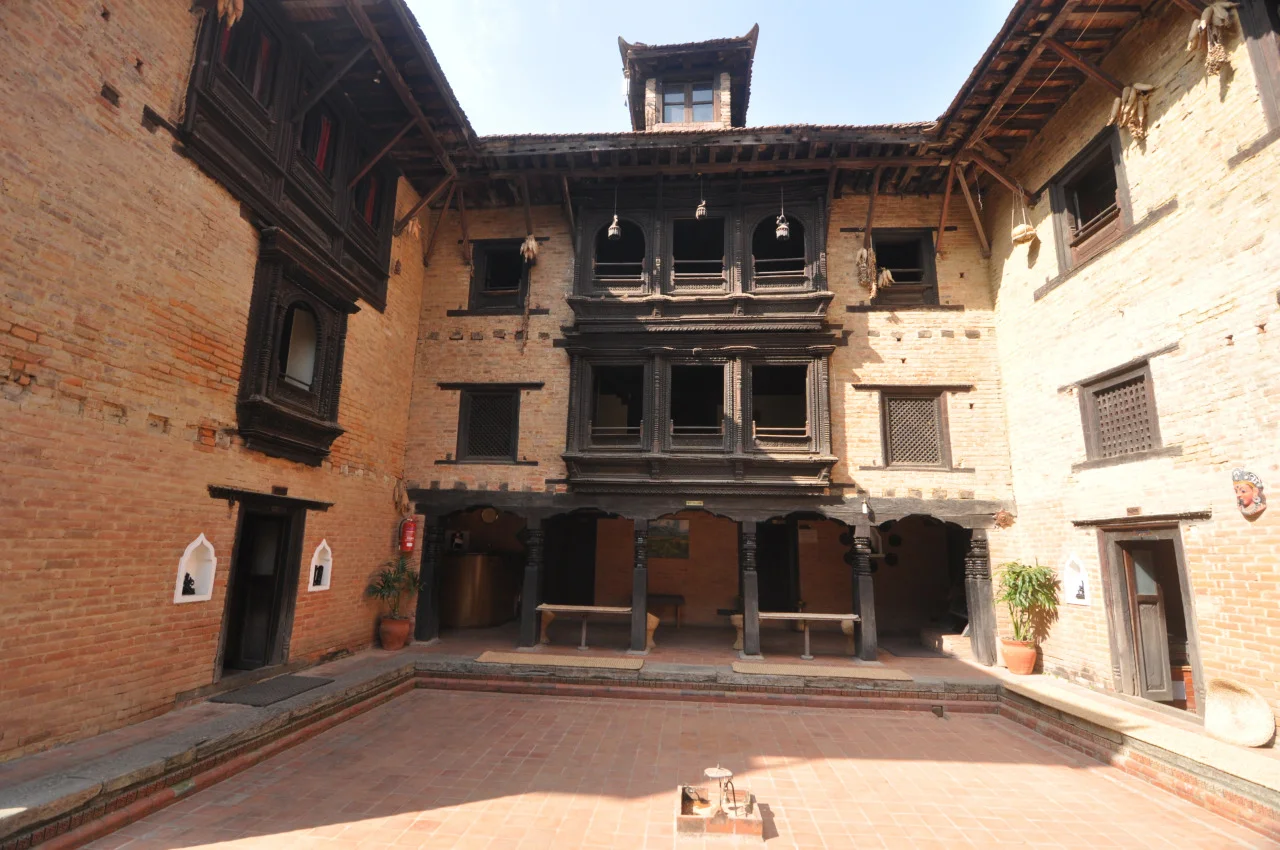
Father Gillespie’s description of Kathmandu Valley as it was then is a flattering portrayal of the Malla period (1200-1769). Similarly, in ‘The Traditional Architecture of the Kathmandu Valley’, Wolfgang Korn writes, “The terracing of similar building elements around a temple or monastery grouping formed street spaces, courtyards, groups of houses and finally, town districts or tols…” Much of all this holds true even today, and one will many examples in the valley. Of course, there are many changes, as well. While in days past, a particular tol would have inhabitants of a particular caste and family descent, with the passing of time, this no longer holds true, although there might be dominance of a specific group. Each such tol had a sequence of streets and squares, at the centre of which was a chowk with a temple or monastery
Both security and privacy were thus givens, and while the four sides of the chowk had separate units, access to the street was usually through only the gateway of one house, this always being of low height, some say, to discourage thieves. The chowk had an important role in communal life, as a washing and bathing area, as a playground, for sitting in the sun on colder days, and as an area for grinding grain. It was also most important for organizing feasts. Such an arrangement encouraged regular interaction among the community members. Similarly, public squares had shrines, sattals (open meeting halls / free lodging houses), patis (public loggias), dyochens (communal buildings with deity shrines), dablis (platform for public performances), hitis and dhunge dharas (fountain complexes), wells, etc. These amenities fulfilled the social, economic, and ritualistic activities of the locals. The ground floors of houses facing the street had shops providing basic daily necessities.
For the typical Newar, the tol was actually his living area. Not only because it was well facilitated, but also because houses of the period were not fully adequate to satisfy all needs. The Malla period homes did have constraints; for example, they were low-roofed, and lacked enough sunlight. Air circulation was also unsatisfactory, and the mud floors resulted in dampness that was quite prevalent. However, the innovativeness of the Malla period builders in has to be admired, especially regarding their concern for public welfare. The hitis, for instance, served as marvelous watering places for all the locals. Designed like enormous sunken baths, water flowed copiously from beautifully carved dhunge dharas (stone spouts). They were centers of social gathering. Pokharis (ponds) throughout the towns were the reservoirs. and large numbers tuns (small draw-wells) were usually found in backyards. Drainage consisted of partly open brickwork ducts.
In those times, houses were not allowed to be built to a greater height than the temples around them, thus resulting in a harmonious skyline. It could also be observed that the height of the houses usually delineated status of its inhabitants, with the richest having homes nearer the center that were four-storied, after that, three-storied, and then, two-storied. But, all the houses were equally rich in some aspects, such as the splendid woodwork, a major feature of traditional Newari architecture. According to Dr. Ranjitkar, Nepal Director of Kathmandu Preservation Trust, and author ofauthor of the ‘Heritage Homeowner’s Preservation Manual’, “The Malla Period is the most valuable period of traditional architecture of Kathmandu Valley, for which Nepal is known all over the world.”
Numero Uno Nepal
It may be a long time coming before the country features in the Top 10, or even Top 100, of an Olympic Games, but right now Nepal does feature in a Top 10 list, and what’s more, it’s Number One!
This is one list where Nepal comes out on top—the undisputed Number One. China (Hong Kong) is number 10, U.S.A. is number 8, India is number 4, and Japan is number 2. No, it’s not a ranking of the world’s richest, poorest, least healthy, most polluted, truly democratic, thoroughly corrupt, and so on. It’s a list of the world’s most photogenic countries. And, yes, you heard it right; Nepal is the hands-down Numero Uno. (http://goo.gl/wLP5u6)
This list was prepared in 2014 by Rough Guides photographer Tim Draper of England, who has shot images for 24 Rough Guides throughout his career as a professional travel photographer. Rough Guides Ltd. is a travel guidebook, owned by Penguin Random House, which covers more than 200 destinations around the world.
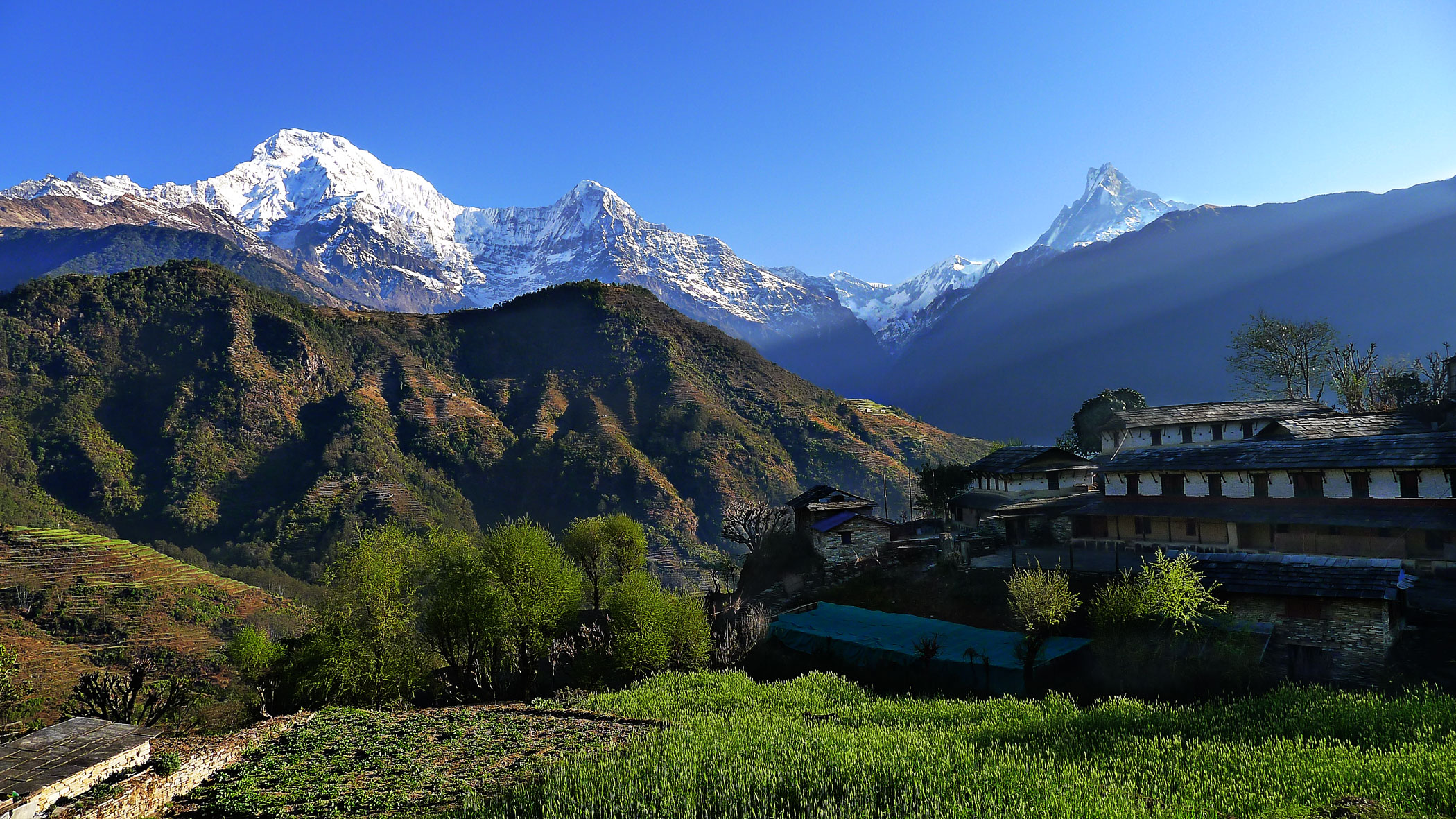
Here’s how he describes his Nepal experience: “My top pick is Nepal, because there’s no other place like Nepal. Kathmandu has just a unique vibrancy, an amazing feel to it. Really historical, you feel like you are lost in time. Soon as you get out of Kathmandu, you are in an ancient terraced landscape. You can go and explore smaller towns. Photography is fantastic everywhere you go, fantastic portraits of people, and a real feeling of time slowed down. Fantastic photo opportunities, of course, as you get further up in the Himalayas.
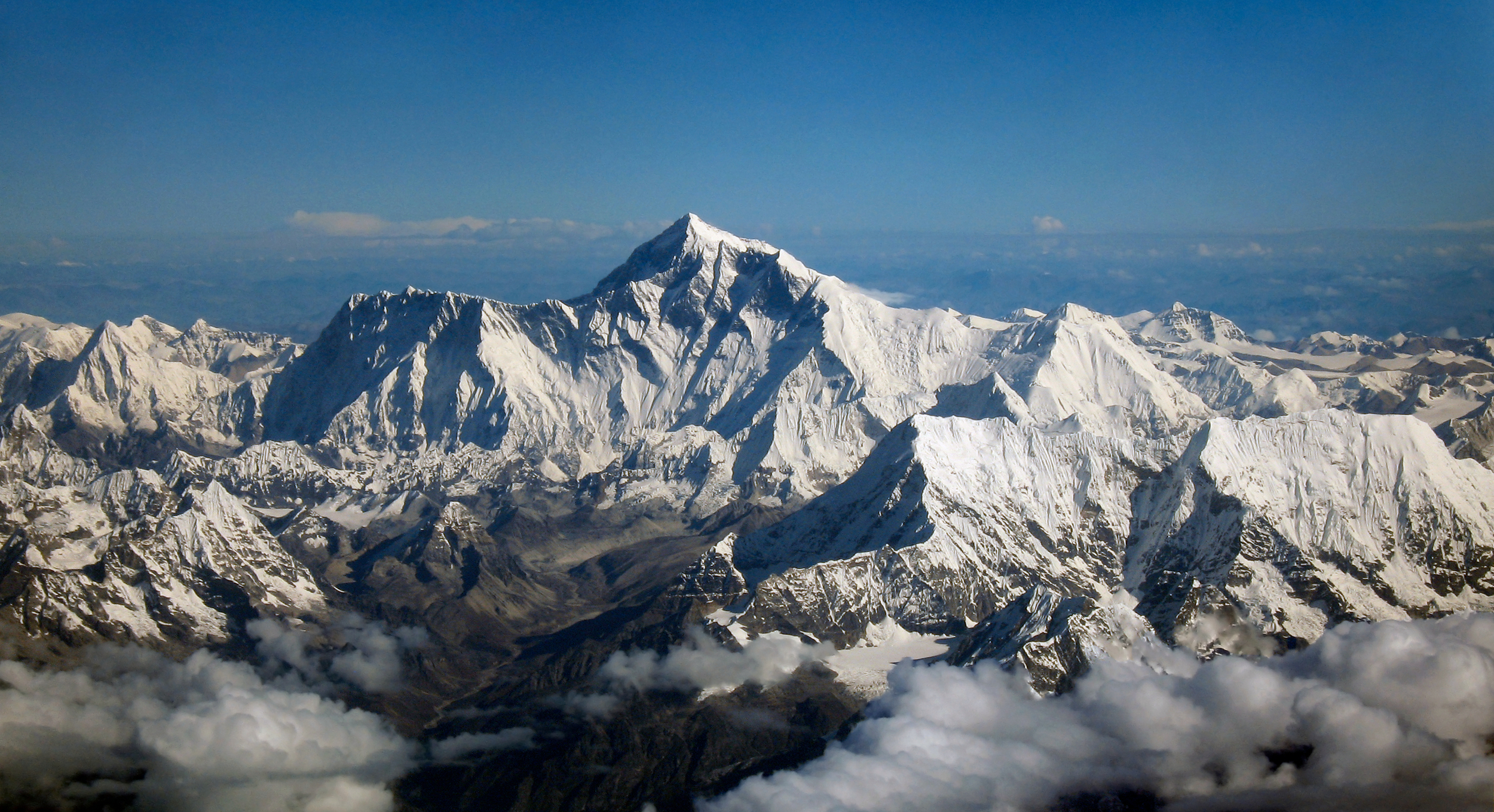
“You get wilder, more amazing, natural wonders, great terrain, great terraced fields of rice, small cobbled villages, fantastic ancient architecture, a really, really, great, people, and for me, still the most amazing thing I have ever seen, the greatest natural wonder, is Everest. I go up in the evening and I wait, and slowly watch all the tourists come off the viewpoint, and I wrap myself in my sleeping back up on the viewpoint, and wait for the sun to set. Because what you see is this golden yellow light on Everest and the orange to red to purple, blue, and finally, indigo, and it is really an awesome experience. It’s a really bright thing to see.” (https://goo.gl/YRmitv)
Indeed, this is great feather in our cap, considering that there are so many beautiful destinations around this fascinating world. It’s a high honor to be so chosen, and here’s hoping our local photographers take this as a pointer towards even more adventurous shoots around the country, in the high Himalayas, the teeming Terai, and the serene hills. They say a picture is worth a thousand or more words, but it goes without saying that the picture should be from the hands of one capable of doing justice to it, and Nepal’s beauty is certainly deserving of the best. Its munificent natural bounty is something that mesmerizes even the most jaded traveler, and its people are so simple and naturally friendly, that no one who comes across them can but reciprocate in kind.
Yes, it is Nepal’s natural beauty and its friendly people that make the country a favorite of many, and a destination that they would like to visit time and again. It is no exaggeration to say that the country garners a fair amount of repeat visitors, and it is not wrong to say that they are our greatest ambassadors. As a travel agency professional says, “It is only difficult to attract a tourist the first time. But once they come here, they end up as being our avid admirers, and our most effective ambassadors.”
This trek is specially designed to reach the Everest Base Camp including Kala Pattar which is the best view point to view the sunrise over the high Himalayas including the Mt. Everest. This trek requires 13 days.
USD 1515 PER PERSON -- TWIN ROOM SHARING BASIS