
Asian Safari Destination Nepal
Nepal’s rich wildlife does justice to its claim as being an Asian Safari Destination.
Nepal’s amazing biodiversity, on account of the fact that the elevation ranges from 70 meters above sea level in the Terai to 8,848 meters (Mt. Everest), and that this range is within less than 400 kilometers distance, assures a wealth of different fauna within areas that aren’t very far from each other.
Nepal is rich in bird species, with Shivpuri, Pokhara, Chitwan, Lumbini, and Koshi Tappu being the prime locations to view more than 870 species of birds. Koshi Tappu, the first Ramsar (wetland) site to be developed in the country, is a birdwatcher’s paradise, and on a two-week tour, you may see a many as 300 species. Along with the wetlands, the Sapta Koshi River provides refuge for many migratory birds and waterfowls, including the elegant white Ibis.
Nepal has around 20 globally endangered bird species, which include the lesser Adjutant Storshoi, but at the same time, specie like the barn owl, which is in the danger list in many countries due to rampant use of harmful chemicals, is pretty safe here. Also safe is the Eurasian large owl. However, the Terai’s white rumped vulture is not safe. Many have died because of indiscriminate use of the pain-killer Diclofenac Sodium (which has a toxic effect on the kidneys) on livestock, the carcasses of which vultures gorge on.
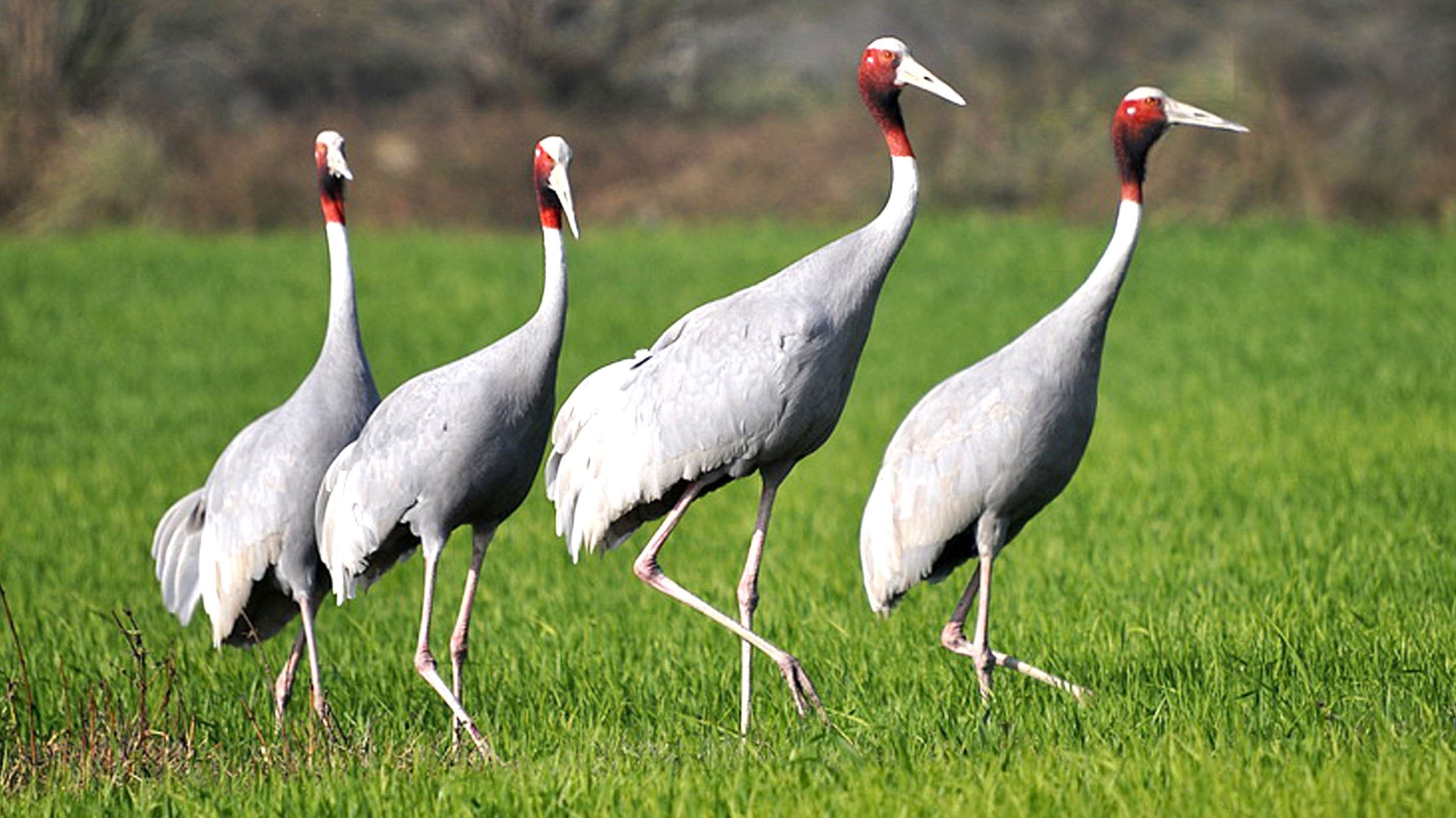
The Eurasian Griffon, black kite (of Mustang), and the Lammergeuer (an eagle with a three-meter wing span that soars over the Himalayan valley and is known as the protector of the Himalayas), are particularly interesting bird species found in Nepal. The Sarus crane of Lumbini, among the large variety of cranes, and tallest of flying birds, is believed to be the harbinger of bumper harvests and a happy conjugal life. During the second week of October, one may see the Demoiselle crane (karyang kurung), a migratory bird that travels from Dar E Salaam, over the Himalayas, and on to Gujarat and Rajasthan. As for the butterfly; experts state that Nepal has about 650 species. It’s an amazing number or such a small country.
Coming to four legged creatures, the Suklaphanta Reserve has the largest herd of swamp deer (Bara Singhe), while other deer like chital and hog deer are found aplenty throughout the country. The Blue Bull, largest antelope of the sub continent is also found in Nepal, as is found the fierce arna (ancestors of the domestic buffaloes) although they number only a few hundreds, if that. The Gaur bison, the world’s biggest wild cattle, is to be found in the Churiya hills, although many have succumbed to foot and mouth disease.
Regarding the endangered one-horned rhino, although the scenario was bleak during the 1950s and 1960s, conservation efforts have paid good dividends, and now there is quite a good growth in their number. In addition to this rare species of wildlife, the presence of royal Bengla tigers, sloth bear, Himalayan black bear, brown bear, wild boar, common leopard, clouded leopard, snow leopard, red pandas, jharal (himalayan mountain goat), bharal (blue sheep), etc. justify Nepal’s claim as an Asian safari destination.
Revisiting the History of Nepal Part 3
Someone once said that if we do not learn from history, then it will repeat itself. There’s much to learn from Nepal’s history.
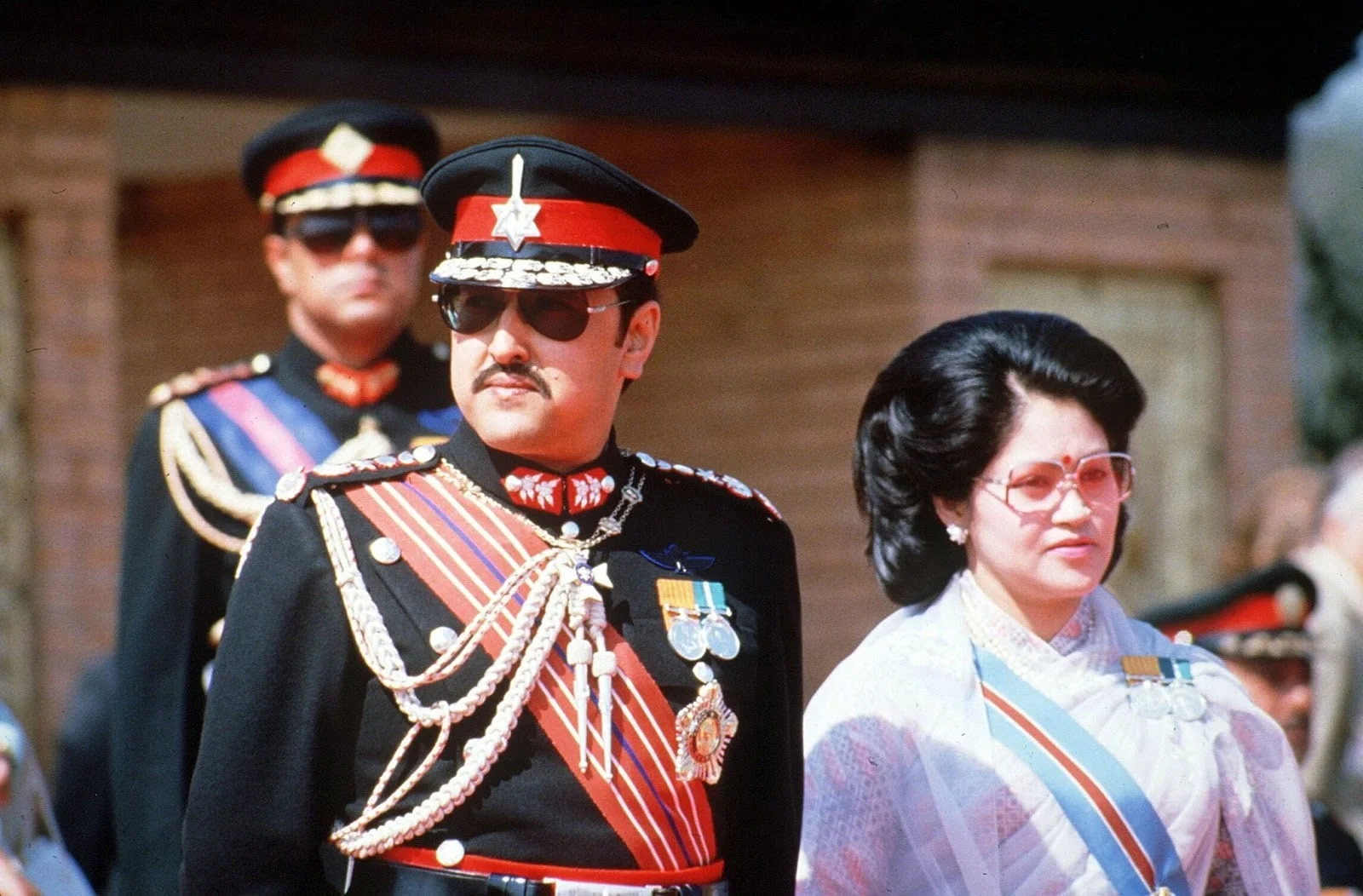
In 1972, the 27-year-old Eton-educated Birendra became king after his father’s untimely death, and in 1979, he held a referendum to choose between the Panchayat system and a multiparty one. The former garnered 55% of the votes, while the multiparty faction received 45 percent. Of course, the latter were unhappy with the result, and they continued pushing for change. In early 1990, over 200,000 people demonstrated on the streets of the capital. They were met by bullets and tear gas, and thousands were arrested. On April 9, the king conceded to lifting the ban on political parties, and on April 16, he agreed to become a constitutional monarch. An interim government was formed by the opposition.
Some years later, in 1996, the Maoists, who were thoroughly disenchanted by the corrupt practices of those in power, declared a 'people's war', which began in the poverty-stricken regions of far-west Nepal. It was an insurgency that steadily gathered momentum throughout the country. Then, on June 1, 2001, an event occurred that shocked not only all Nepalis, but the entire world. At one of the regular family gatherings in the Narayanhiti Palace in Kathmandu, Crown Prince Dipendra apparently gunned down most members of the royal family, sparing just a few. To add to this grief, the political situation in the country turned from bad to worse, with personal enrichment becoming the norm for politicians, and the Maoist war raging unabated in the countryside.
Thus it was that, in February 2005, King Gyanendra, one of the survivors of the palace massacre along with his family, and who had been crowned king, declared a state of emergency and dissolved parliament. He gave his word that there would be return to democracy within three years, but he wasn’t to have that time. In April 2006, following massive and sustained demonstrations, he was compelled to restore parliament, and the very next month, the first promulgation of the reinstated parliament was to reduce him to a figurehead without any powers. Later, that year, the government succeeded in forging a peace deal with the Maoists, who then went on to win in the ensuing election held on April 10, 2008. One month later, the new parliament voted to abolish monarchy (560 votes to four), and a new government was formed under Maoist leader Pushpa Kamal Dahal (a.k.a. Prachanda).
Well, as is obvious, new pages are being added to Nepal’s history with amazing rapidity. The country has a new name now: Federal Democratic Republic of Nepal. The Constitutional Assembly elections that were held for the first time some six years ago put over 600 members in the Assembly. However, in its four year’s mandated time, it couldn’t come up with a new constitution, and another election had to be called for. This time around, the major parties in the Assembly agreed to act as one in ensuring that a new constitution was made, which they did some months ago. But, instead of improving the situation, it has led to a complete shutdown of the country, with the Terai (Madhesh) parties crying foul that the agreements with them have not been honored, and resorting to a continuous bandh (shutdown) for the last two months, along with blockage of the major transit points with India, resulting in acute shortage of fuel, especially, in the country. There’s a general feeling that India is hand in glove in ensuring the success of the blockade.
As in 1950, when it was the capital of the revolutionary Nepali Congress provisional government, Birgunj, today, is also the focal point of the Madhesh movement, it being by far the most important transit point with India. And, interestingly, Kerung, from where Chinese troops once invaded Nepal in 1792, has become a focal point for opening trade routes to China, so as to reduce the dependency on India. History has a peculiar way of bringing up old scenarios to the forefront again.
Revisiting the History of Nepal Part 2
Nepal’s history shows long periods of progress and prosperity, and equally long periods of tyrannical rule; and some moments that were momentous in nature.
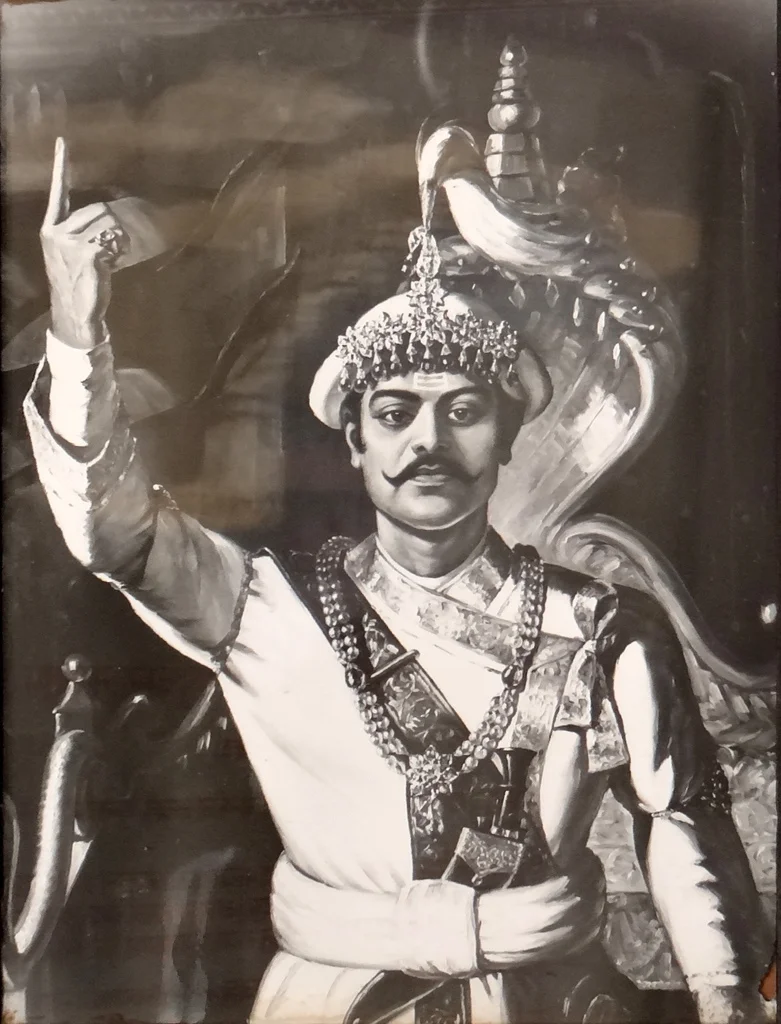
During that time, however, a ruler of the tiny hilltop kingdom of Gorkha, King Prithvi Narayan Shah, was setting out on his quest to unify the country, and in A.D. 1768, he took over Kathmandu, and then, Kirtipur, one year later. He set up his capital in Kathmandu, and thus began the dynasty of the Shah rulers, who reigned for almost 240 years over the country now known as Nepal. In the initial stages, within six years of taking over Kathmandu Valley, Prithvi Narayan Shah’s victorious Gorkha army conquered eastern Nepal, as well as the adjoining state of Sikkim. Next, it turned its attention westwards into Kumaon and Garhwal in India, where a one-eyed Punjabi king named Ranjit Singh just about managed to stop them at the Punjab border.
It was a heady time for the new kingdom, with its army winning one battle after the other, and with new territory being added with every victory. But, in 1792, an excursion into Tibet was not so successful, a bit too much adventure for the valiant Gorkha army to swallow, and they suffered defeat at the hands of a large Chinese army, which then advanced to within 35 km of Kathmandu, advancing down from the Kerung Valley. Leaving this unfortunate episode aside, Nepal had expanded considerably by now, its borders stretching from Kashmir to Sikkim.
Of course, as with everything else, all good things had to come to an end, and the Gorkha’s exploits eventually brought them face-to-face with the all-powerful British Raj in India, resulting in the first Anglo-Nepali war that carried on for two-years, with the British finally emerging victorious. However, the amazing fighting spirit of the Gorkha’s was admirable, and so, the British began to recruit Gorkhas into their own army. At the same time, they also came up with the Sugauli Treaty of 1816 that halted Nepal’s expansionist ambitions, and drew its modern boundaries. This meant giving up Sikkim, Kumaon, Garhwal, and a substantial part of the Terai. In 1858, to show their appreciation of Nepal’s support in putting down the Indian Mutiny, some of this land was restored.
In between all this, King Prithvi Narayan Shah died in 1775, and his death led to intrigue-riddled succession struggles, which culminated in the Kot Massacre of 1846 that was engineered by Jung Bahadur, a young nobleman of the Chhetri clan. He, with the queen's consent, arranged for the massacre by his soldiers of hundreds of noblemen, soldiers, and courtiers who were made to assemble, under some pretext, in the Kot courtyard near Kathmandu Durbar Square. Next, Jang Bahadur exiled thousands of the murdered victims’ families to ensure that there were no revenge attacks. The result was that the Shah dynasty was pushed into the sidelines, with Jung Bahadur’s dynasty becoming all powerful. Changing his family name to the more prestigious one of Rana, he claimed for himself the designation of Prime Minister, and later, entitled himself maharajah, a title that would henceforth be hereditary. Thus, the Ranas became another ‘royal family' within the kingdom, keeping a firm hold on the rein of power, and this they continued to do for another 100 years. The Shah kings became mere figureheads.
Finally, in late 1950, King Tribhuvan Bir Bikram Shah took refuge in the Indian embassy, and was flown to India. At the same time, a political party called Nepali Congress led by a man called B.P. Koirala succeeded in forcibly taking control of most parts of the Terai, where they established a provisional government with its capital in Birgunj. In 1951, the king returned to Nepal and established a new government made up of Nepali Congress party members and some demoted Ranas. In 1955, the king died, and was succeeded by his son, Mahendra. In 1959, the country held its first general election, as per the provisions of the new constitution that provided for a parliamentary system. The Nepali Congress, expectedly, won, and B.P. Koirala became the new prime minister. It was a short-lived reign, however, because in late 1960, the king took over complete control, and had the cabinet thrown into jail. He then established a party-less Panchayat (council) system in 1962, and banned political parties.
Revisiting the History of Nepal Part 1
In light of the current chaotic state of affairs, when new history is being created, it would be interesting to revisit this small nation’s journey through the ages.
Nepal has a proud history of never having been colonized by external forces, unlike many other nations of the world, including its two closest neighbors, China and India. This proximity between such large countries also meant that Nepal has enjoyed a geographical advantage by being a neutral route between the two, a route utilized through the ages by traders, travelers, and pilgrims. This gave Nepal a measure of prosperity and self sufficiency in the days of yore. However, with modernity came modern needs, and it is as clear as day that today Nepal is completely at the mercy of outsiders when it comes to fulfilling its energy needs, without which there is total collapse not only of progress and prosperity, but even of conducting everyday life.
In this background, it would be interesting to revisit this small nation’s history if only to indulge in a bit of nostalgia. Though Nepal’s modern history begins in the 18th century, its recorded history begins in the 7th or 8th century B.C., with the coming of the Kiratis, a Mongoloid people, from the east to Kathmandu Valley, which they ruled. The first of the 29 Kirati kings was King Yalambar, whose name is mentioned in the Mahabharata. In the 6th century, a momentous event occurred in the country. A prince was born in Kapilvastu, near Lumbini, in the southwest terai. He was Siddhartha Gautama, who in young manhood, renounced all he had, including his family and his title, to embark on a path of meditation that led him become the Buddha, ‘The Enlightened One’.
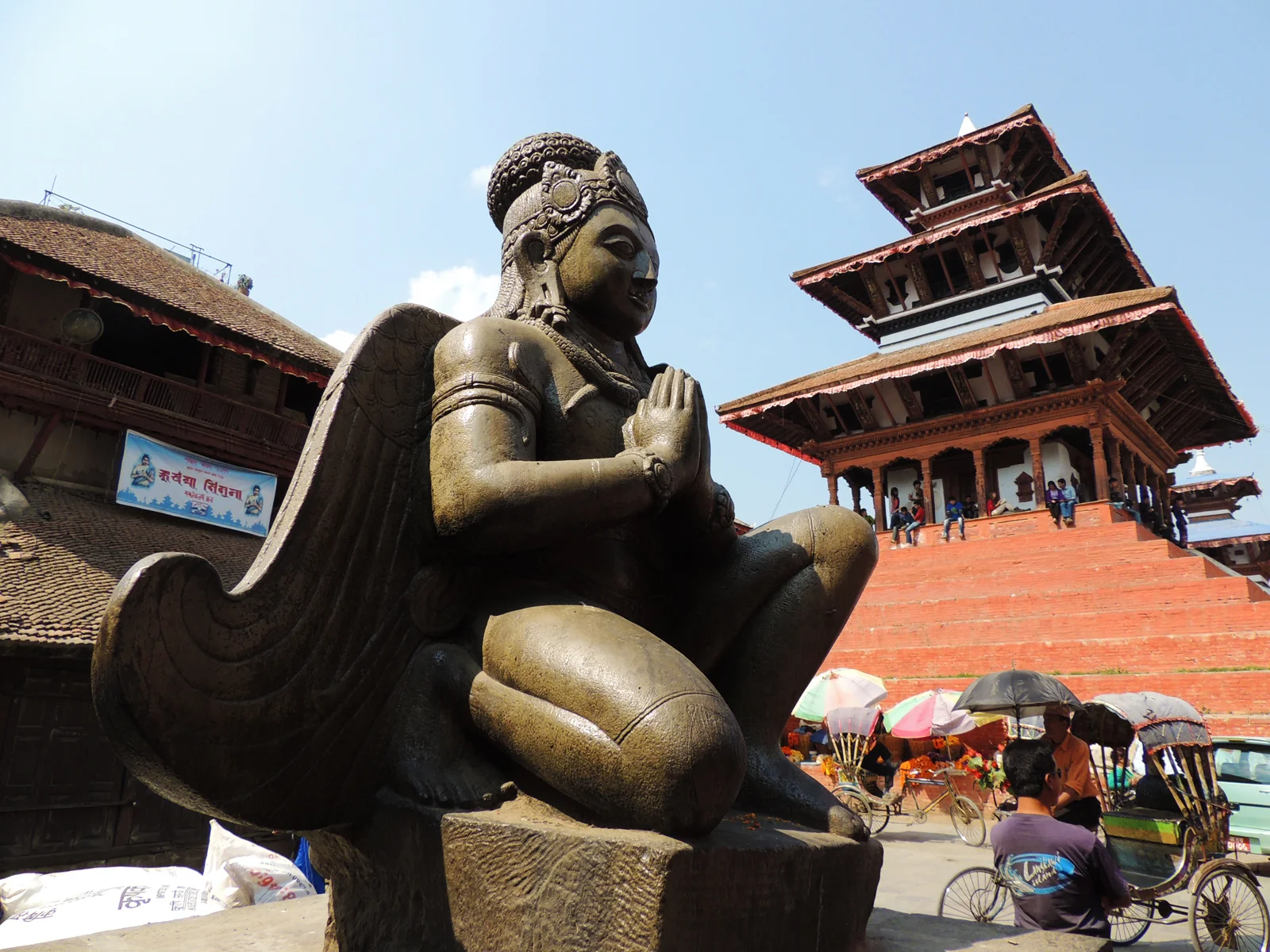
The religion he created, Buddhism, however, declined down the ages, with Hinduism reasserting itself along with the coming of the Licchavis from north India. These new arrivals, in A.D. 300, overthrew the Kiratis, who returned to the east. The Licchavis were culturally progressive, and between the 4th and 8th centuries, they introduced and established many cultural aspects to life in Kathmandu Valley. One of the oldest testimonies to their cultural brilliance is the Changu Narayan Temple, located north of Bhaktapur, where one will find many fine examples of wood, stone, and metal craft, aside from architecture. The Licchavis are also credited with making many of the original stupas of Swoyambhunath and Boudhanath.
In A.D. 602, the first Thakuri king, Ansuverma, came to power, and he was as astute a ruler as one would find anywhere. To ensure consolidation of his power in the north and south, he married his sister to a prince of India, and his daughter, Bhrikuti, to King Songsten Gompo of Tibet. In the 10th century, King Gunakamadeva found Kantipur (later, Kathmandu). Around A.D. 1200, the valley saw the emergence of the first of the Malla kings, whose dynasty carried on for the next 550 years, a period of progress and prosperity in all spheres. The valley was united by King Jayashithi Malla (A.D. 1382-1395), who then codified the laws.
However, in A.D. 1482, after the death of King Yaksha Malla, his sons divided the valley among themselves into three kingdoms: Kathmandu (Kantipur), Bhaktapur (Bhadgaon), and Patan (Lalitpur). The rest of the country, as it was then, consisted of about 50 independent states scattered from Palpa to Jumla, as well as two semi-independent states, that is, Pharping and Banepa. The three kingdoms of the valley competed with each other for excellence, and this was manifested most obviously in the building of temples and monuments. King Pratap Malla (1641-74) of Kantipur stands out, specially, in this regard, with Hanuman Dhoka Palace and Rani Pokhari being two of his most famous creations.
King Jaya Prakash Malla, in 1750, built the Kumari (Living Goddess) Temple, and not long after, another grand example of Newari architecture was built in Bhaktapur, that is, the famous Nayatpola Temple. Doubtless, the Malla era gave birth to most of the artistic and architectural wonders that define Kathmandu Valley today, with some of them being listed as world heritage site monument zones by UNESCO in the 1990s. Many of the valley’s festivals, too, originated during the Malla period, two well known examples being the vibrant chariot festivals of Indra Jatra and Machhendranath. Indeed, the Malla period was a golden period in Nepal’s history, or more precisely, in the history of Kathmandu Valley. However, all that was to change soon with the arrival of King Prithvi Narayan Shah of Gorkha.
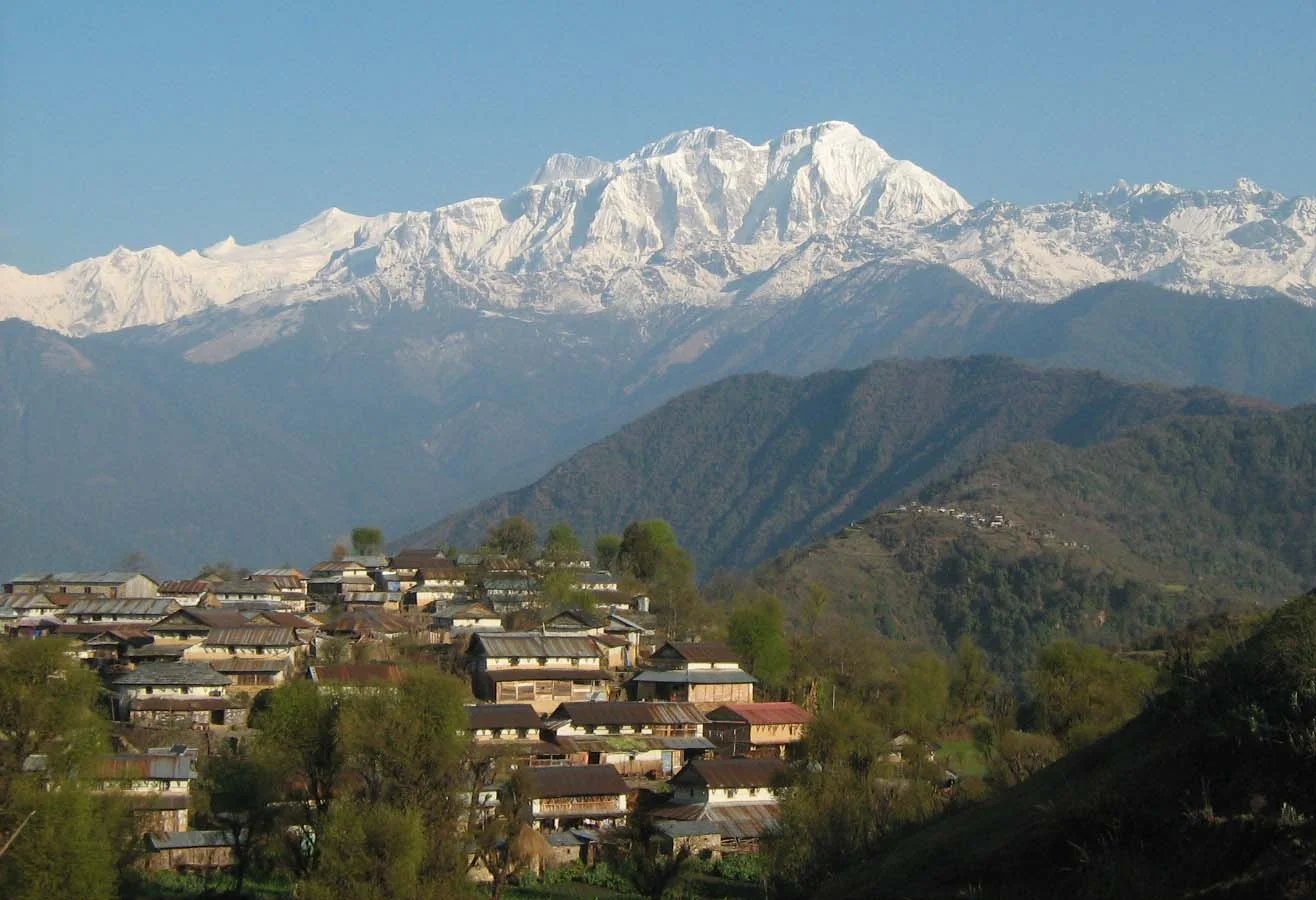
Trek to Ghalegaun Village
Among a number of short and pleasant treks in the Annapurna region, none is more fulfilling than the trek to Ghalegaun, a lovely village in the Nepal hills.
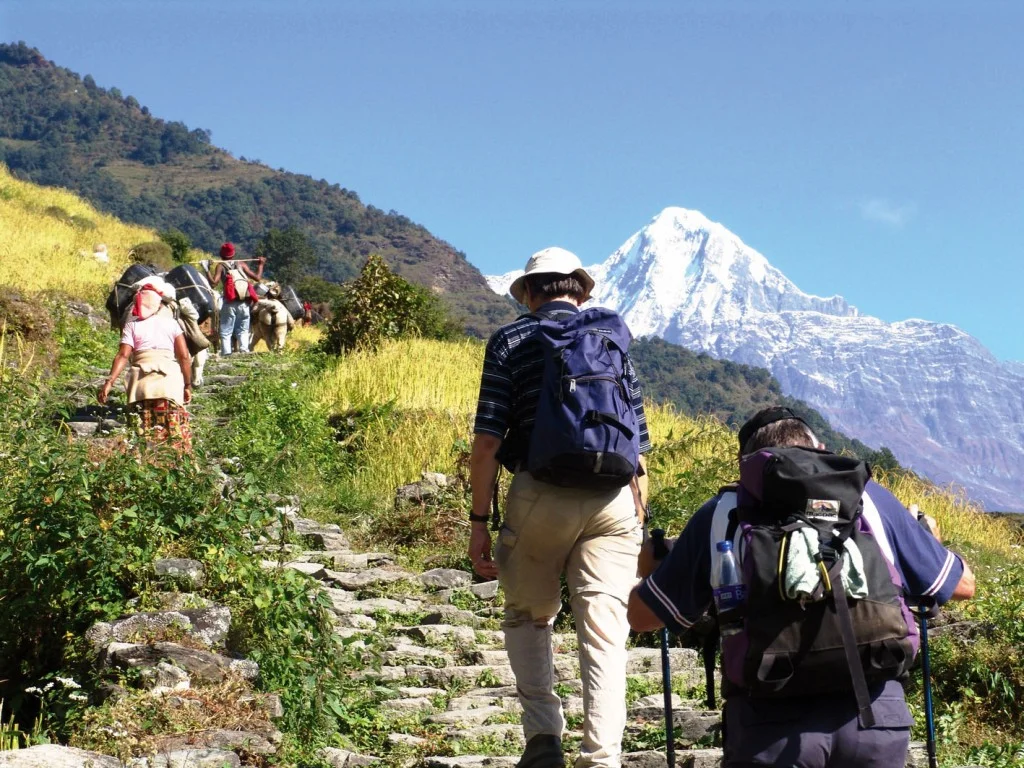
The Annapurna Base Camp (ABC) trek is a very popular trek; most trekkers put it right up there with the best in the world. However, this time around, let’s take the route northwest of the main ABC trek trail, and visit a lovely little village called Ghalegaun (2,016 m). This short trek is also very popular, especially for those pressed for time, since you can do it in a matter of just three to four days.
It all begins by driving down from Kathmandu to a bustling town called Besisahar; should take around six to seven hours. From there, the trail goes alongside the Marsyangdi River to Khudi (2,493 m), and then meanders along the Khudi River, before climbing steeply for four to five hours. Once you are at the top, you’ll get to see awesome sunsets and sunrises over the lofty Annapurna and Manaslu ranges. That aside, you’ll be coming across lovely waterfalls on the way, and walking across swinging suspension bridges, besides hiking through some very charming villages that are made all the more picturesque by the surrounding terraced paddy fields, bamboo groves, and rhododendron forests.
It will take you some seven hours to reach Ghalegaun from Khudi, but what a seven hours it’s going to be! Stunning views of ice-capped Himalayan peaks will certainly mesmerize you. And, these are really tall peaks, such as, Annapurna I (8,091m), Annapurna II (7,939 m), Annapurna IV (7,525 m), Bouddha Himal (6,974 m), Himalchuli (6,747 m), and Machhapuchchhre (6,693 m). Just so you know, Annapurna I is the 10th highest peak in the world.
Ghalegaun, snuggled in the midst of green hills and surrounded by majestic Himalayan peaks, is home to the Gurungs, who have earned name and fame for their martial prowess. They are one of the major ethnicities that go to make the fearsome Gurkhas. However, away from the battlefield, they are some of the most hospitable, polite, jocular, and friendly people you’ll find anywhere. This, you’ll see for yourself when you are in Ghalegaun, more so, because you’ll be most probably staying in a homestay, meaning that you’ll be living with a local family in their home, and sharing meals and experiences.
The homestay arrangements have been fine tuned in Ghalegaun, whereby, even if you are living with a family, you are assured of complete privacy and most modern amenities. A walk through the village in the evening takes you along cobblestoned paths between traditionally made houses huddled close together. You’ll get plenty of people to talk to you, and dodging lots of chickens on the way. A night’s stay is often rewarded with a cultural program, where you’ll be treated to traditional songs and dances performed with youthful vigor.
Back in your home, a nice dinner awaits you: customary dishes like dhindo (a porridge-like food made from a mixture of maize and wheat) and kukhura ko masu (chicken curry) with vegetable, spinach, pickle, and so on. You’ll also find the setting to be quite agreeable: sitting on the floor with the glow of the cooking fire providing light, and pleasant light-hearted conversation all around. You go to bed quite early. You don’t want to miss out on one of the primary highlights of your trek, that is, watching the fabulous sunrise over the lofty peaks, and to view these peaks in the early morning light when the view is the cleanest. So, at the crack of dawn, you’ll be up on the tower on the nearby hill with a hot mug of tea in your hand. Don’t blink now, because sunrise is an event that occurs without warning, and you’ll find the dark sky suffused with sunlight in an instant.
Savor the moment; savor the feeling of tranquility that falls upon your senses as you watch the breaking of a new dawn. Soon enough, everything—the mountains, the valley, the rivers, Ghalegaun village—present themselves to your sight, all at their pristine best. It’s a fantastic experience. You’ll also see far-off Besisahar, from where you started your trek, so clear is the air, and thus, the view. After you have captured memories for a lifetime in your camera, you walk back to your home, where there’s some serious breakfast waiting for you. Again, delight in traditional Gurung fare like kodo ko sel (round shaped bread made of barley) and rajma ko tarkari (bean curry), along with plenty of steaming hot tea.
Having fortified yourself, you are ready to make a more thorough exploration of Ghalegaun, where you’ll discover ancient shrines and even a dhunge dhara (stone spout). On the hills around, you’ll come across grazing donkeys and horses. You’ll be delighted, no doubt, to know that the village also has a museum, where you can see traditional wear of the Gurungs, ancient and not so ancient tools used in agriculture, photographs of mud houses that once served as their homes, and so on. You will also be surprised to see a large sized tea garden that’s situated some distance away from the village.
After your pleasant sojourn in this lovely village, you might want to extend your trek, to Ghanapokhara, which is a one-hour walk, and Bhujung (two-and-a-half-hours). The trail then goes uphill for some three hours to Khumre Danda (2,000 m), before descending to the Mandi River, and then to Pakhrikot (6 hours). From there, you walk to Thusmsikot and take a ride to Pokhara.
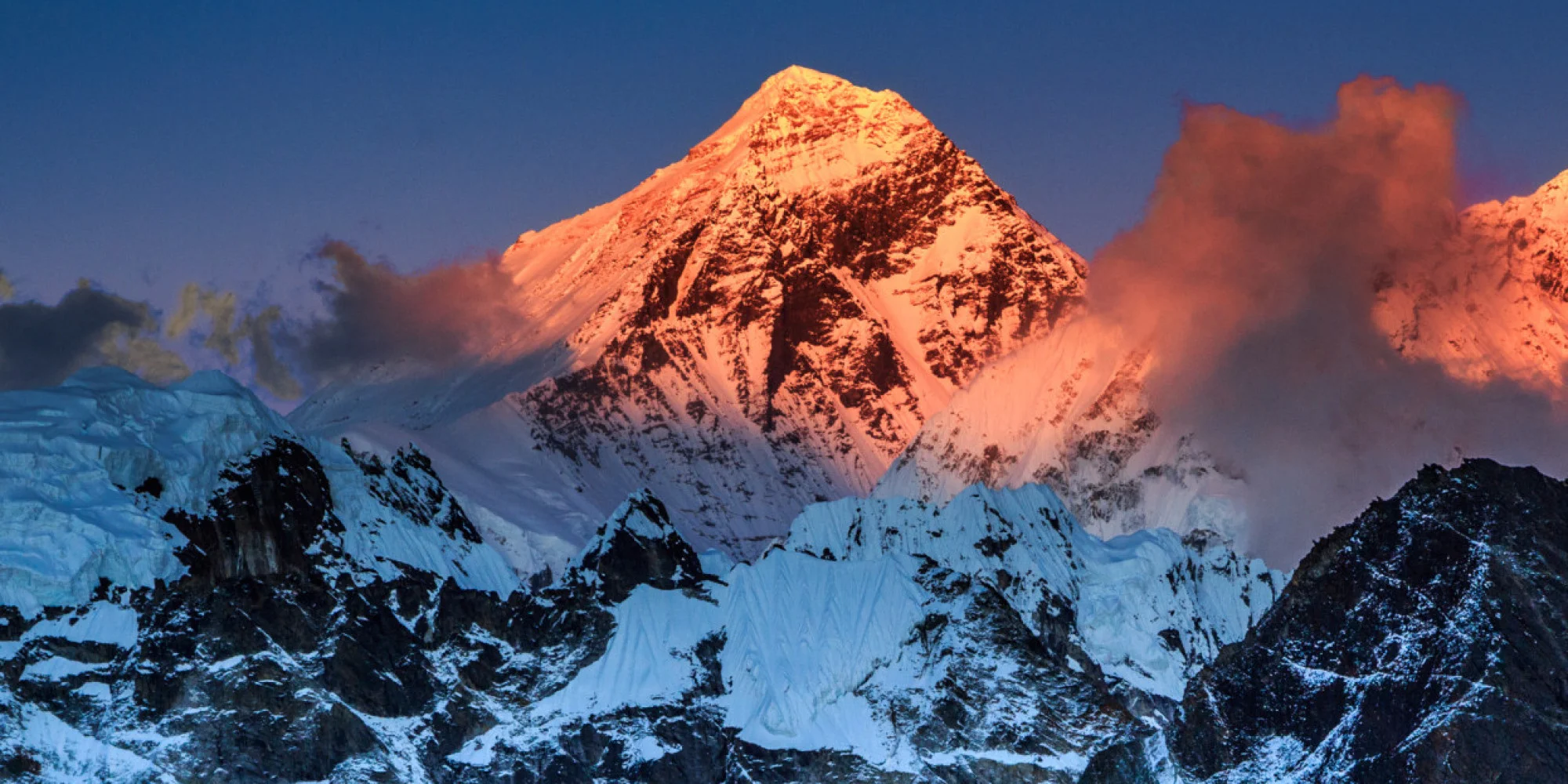
Conquering Everest
A considerable number of men and women have conquered the highest point on earth, Mt. Everest, but it still holds a formidable challenge that calls for grit and courage from climbers everywhere.
There are some dates in history that have become landmarks in the passage of time of our world. One such date is Friday, May 29, 1953. This was when man stepped for the first time atop the highest point on earth, Mount Everest (8,848 m), a.k.a. Sagarmatha, in Nepal. Actually, it was not one man, but two, Tenzing Sherpa, 39, and Edmund Hillary, 33, who have the credit, jointly, for being the first to conquer Everest. It was a long time in coming, since Everest had been identified as the highest peak on earth way back in 1852.
In the six decades since (1953-2013), a total of 5099 ascents have been recorded, with 3144 climbers from 83 countries succeeding in achieving this singular feat, while 227 climbers perished during the expeditions. Successful climbers have included a fair number of women, along with a few physically challenged climbers, octogenarians, and teenagers. With the passage of time, climbing equipment and techniques have improved considerably, routes have been well defined, and conditions better understood and analyzed, with the result that critics have been forced to say that climbing Everest is no more the great challenge it once used to be.
So it is understandable that the Nepal government has issued a directive that anyone wishing to climb Everest will have to prove their experience in climbing high altitude mountains before attempting a summit of the highest peak in the world. The last couple of years have not been good years for climbing Everest, with a record number of deaths, and the devastating earthquake this year on April 25. A Japanese climber, aiming to be the first to summit this year after the earthquake, failed to do so, and had to abandon the ascent.
Looking back again to history, there were some serious attempts made by the British to summit Everest since 1852. The eighth attempt, in 1953, was made by a Royal Geographical Society Alpine Club team led by John Hunt. The expedition included 13 climbers and 35 Sherpa guides, and 350 porters to carry 18 tons of food and climbing equipment. On May 26, 1953, Tom Bourdillon and Charles Evans almost reached the peak, but had to turn back just 300 feet short of the summit due to the failure of one of their oxygen masks. Three days later, Tenzing and Hillary achieved the feat, becoming the first two to conquer Everest.
On May 23, 1956, Swiss climbers Ernst Schmied and Juerge Marmet posted their names in history as the third and fourth summiteers to climb Everest, and on May 25, 1960, three Chinese mountaineers, Wang Fu Chou, Konbu, and Chu Ying Hua, reached the summit from its more difficult northern side for the first time. Nawang Gombu of India, the 10th summitteer to conquer Everest, was the first man to do it twice, in 1963 and 1965. In 1973, Sambhu Tamang, 18, became the youngest climber to summit Everest, and in 1978, Reinhold Messner and Peter Habeler became the first to do so without the use of bottled oxygen.
On May 16, 1975, Junko Tabei of Japan became the first woman to reach the summit, and in April 22, 1993, Pasang Lhamu Sherpa became the first Nepali woman to reach top of the world, but tragically, she died on the way down. In 2000, Pemba Doma Sherpa became the first Nepali woman to climb Everest via its north face, and she went on to climb it a record six times, the last one in 2007. Unfortunately, she lost her life when she fell from a height of 8,000 m while climbing Lhotse later. The first woman to climb Everest from both sides is Maya Sherpa, while Ming Kipa Sherpa became the world’s youngest woman to conquer Everest, on May 24, 2003, at the age of fifteen. Her 31-year-old sister, Lhakpa Chiri, who had already summitted in 2001, accompanied her. On May 30, 2005, Moni Mulepati, 24, became the first non-Sherpa Nepali woman to climb Everest. InMay 2008, the ‘First Inclusive Women Sagarmatha Expedition 2008 Spring’ (Sushmita Maskey, Maya Gurung, Usha Bisht, Chunu Shrestha, Shailee Basnet, Pemadiki Sherpa, Nawang Phutti Sherpa, Nimdoma Sherpa, and Asha Kumari Singh Chaudhary).succeeded in reaching the summit. And, Churrim Sherpa became the first woman to summit Everest twice within a single season (May 12 and 19, 2012).
Well, it’s been a long time since that day man first stepped on the highest point on earth, and the pioneers, Tenzing Norgay Sherpa and Edmund Hillary, have already passed away (on May 9, 1986, at 72, and in 2008 at 88, respectively), but Everest still holds a formidable challenge to men and women everywhere, notwithstanding modern developments in climbing.
Many Good Reasons for Visiting Tansen
There are excellent reasons why you should visit Tansen in western Nepal, one of them being to see the biggest karuwa in the world.
Visitors to Nepal become familiar with a water-bearing snout-nosed bronze vessel called a karuwa sooner rather than later. It is a ubiquitous presence in any restaurant claiming to be ethnic (plenty of these in the capital, Kathmandu); on display as decoratives in lobbies and rooms of hotels; on the shelves of tasteful drawing rooms; in showcases in souvenir shops; and in most Nepalis’ homes. The karuwa is not only a utilitarian utensil for pouring water, but a work of art in itself, with lovely curves and beautiful etchings. Yes, you’ll come across a karuwa somewhere or the other during your visit to Nepal. And, if you want to see the biggest karuwa in the country, and no doubt in the world, you’ll have to go to a lovely little town called Tansen in Palpa district of western Nepal.
This town is akin to a hill station, with pleasant weather all year around, and with the typical characteristics of any town located in the hills of Nepal. That is to say, you’ll find lots of winding stone-paved lanes and alleys and stone steps meandering through the town; a central market area where is held a ‘haat bazaar’ where people from adjoining hills villages converge to sell their produce once a week; hardy and smiling men and women living simple hardworking lives; and so on. You get the picture. And, yes, not to forget, beautiful scenery all around.
Well, while many things are similar among all towns and villages of the hills, there are also bound to be some unique characteristics, Tansen has quite a few, one of them being Taksar Tole. This is where the biggest karuwa in the world was born, specifically, in the ‘Palpali Karuwa Udyhog’, one of many such establishments in this site famous for manufacturing a plethora of bronze products used in the everyday life of various communities, and particularly more so of Newari households. While many such products are for common use (mostly in the kitchen), there are as many meant for religious purposes. You might like to know who made the biggest karuwa; well it was the work of Mr. Suresh Man Bajracharya, as skilled a metal-smith as any found in Taksar Tole.
When you go to Tansen, which is actually not far from Lumbini, the birthplace of the Buddha, you’ll of course be visiting this place. You’ll surely enjoy looking at the adept hands of the Newari metal-smiths at work, and of course you’ll buy a couple of bronze souvenirs, even if they may be a bit of a heavy purchase, in the literal sense. Other souvenirs you must also buy are clothing made out of Dhaka fabric, a fabric unique to Nepal that’s made in Tansen. It’s another thing that you have already become very familiar with, having seen it adorning numerous heads in the form of a Dhaka Nepali topi (cap) all over the country, more so in villages and more traditional parts of towns and cities. The immigration officer at the airport probably had one on. The Dhaka Nepali cap is one of the unique identifying features of Nepal and Nepalis; a national symbol, as evident from the fact that the President, the Prime Minister, ministers, etc. will never be seen without one.
So, you see, there are already some very good reasons for visiting Tansen. You should also know that it is pretty historical, and the presence of a royal durbar (est. 1927) in the center of the town validates this claim. It was the capital of the Magar kingdom Tanahun, a powerful regional principality once upon a time (before the country was unified), and at no time was it more powerful than in the 16th century under King Mukunda Sen, when it nearly conquered even Kathmandu. Although so far from the principal Newari settlement of Kathmandu Valley, you’ll find plenty of Newars in Tansen, their forefathers having migrated from the Valley sometime in the 18th century, seeking their fortune. .
In more recent times, Tansen was a prime target for the Maoists during their 10-year insurgency (1996-2006), at the fag end of which, they set fire to the historic royal palace. Conservationists were pretty upset, it must be said, but with funds arranged from here and there, they set about restoring this monument to history. So, when you are in Tansen, you’ll no doubt take a tour of the palace. It’s only a five-minute walk from Taksar Tole to the market square known as Sitalpati where the place is located. The square around the palace is a pretty interesting place to laze around on a sunny afternoon. You’ll come cross villagers selling dried river fish and pure ghee (clarified butter) that are must buys for most domestic tourists.
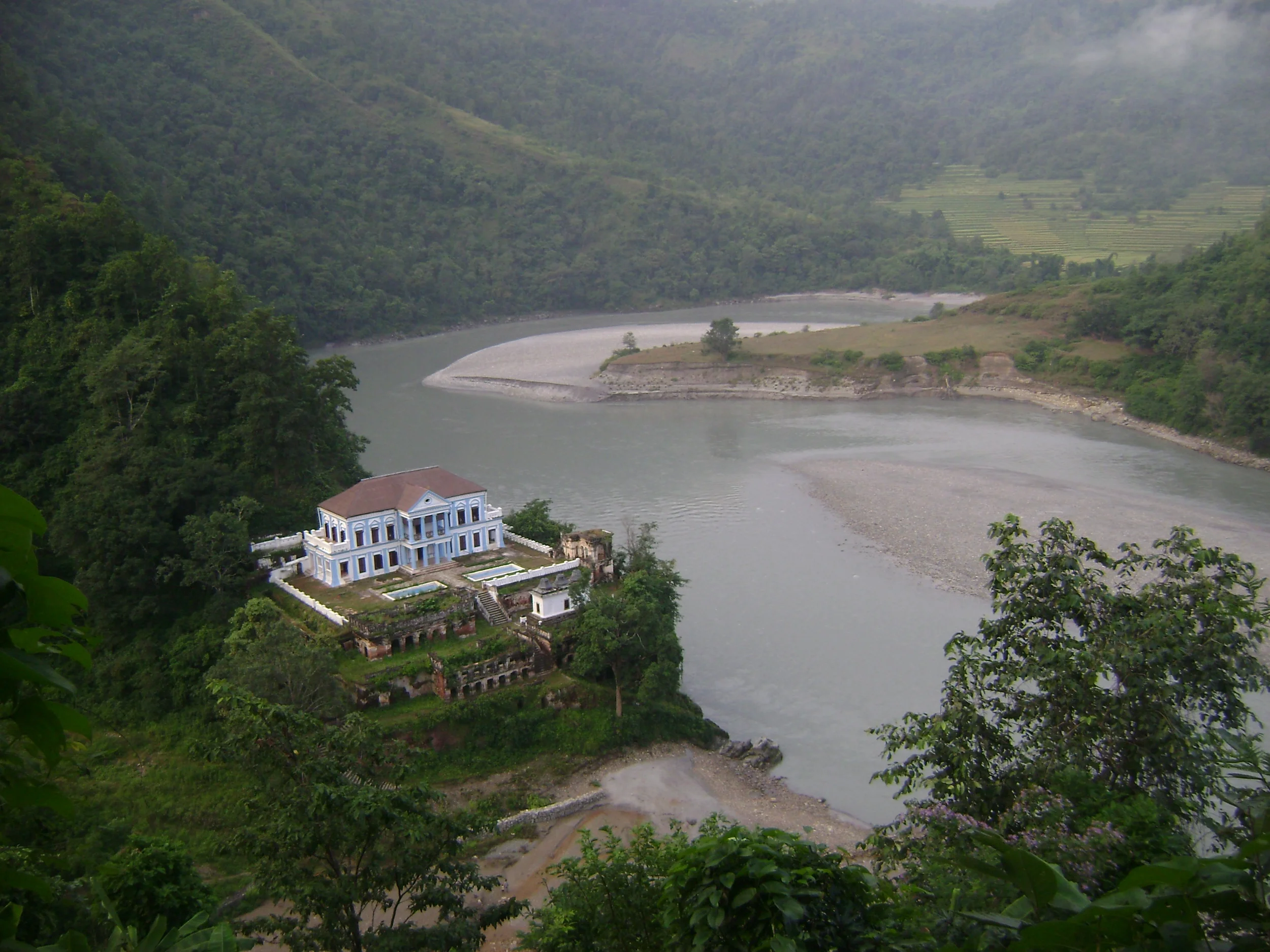
Some places of interest around Tansen are also worth visiting. There’s a hilltop site called Srinagar Danda nearby from where the best views are to be had, including panoramic ones of Himalaya peaks like Annapurna, Dhaulagiri, Kanjiroba, Mansiri, Macchapuchre, Ganesh Himal, and Langtang. Then there’s Ranighat, a Rana-period palace situated on the bank of the Kaligandaki River, and a sacred site called Rid Bazaar at the confluence of the Kalingandaki and Ridi Rivers that sees hordes of pilgrims around mid January every year when the Maghe Sankranti festival is held. As a matter of interest, about one mile east of the town center is the 160-bed United Mission Hospital that was established way back in 1954, the first project in the country of the United Mission to Nepal (UMN), a missionary organization of the Christian faith.
As said before, there are indeed many good reasons for visiting Tansen.
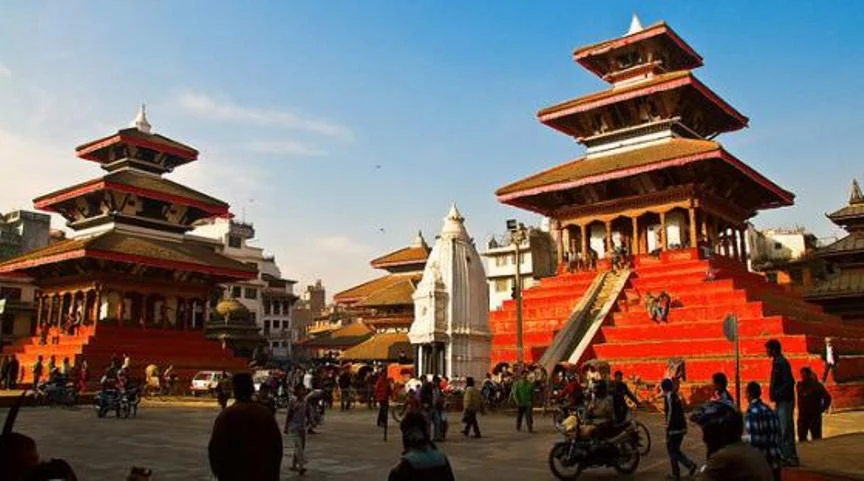
Restoring Original Glory
The restoration of heritage monuments destroyed or damaged by the April 25 quake is a priority today, and a great challenge.
Nothing can compare to the great loss in lives and property due to the April 25 earthquake and its aftershocks, but the destruction of many priceless heritage monuments has also been a terrible blow to the country. It has been all the more severe in Kathmandu Valley, which is a world heritage site because of its seven world heritage monuments, namely: the three Durbar Squares of Kathmandu, Lalitpur, and Bhaktapur; the two stupas of Swoyambhunath and Boudhanath; and the two temples of Pashupatinath and Changunarayan.
Sad to say, except for Pashupatinath, all the others suffered substantial damages due to the quake. Reportedly, Changunarayan, the oldest temple in the valley, suffered the greatest damage, while a number of ancient temples and other monuments in all the three durbar squares were either reduced to rubble, or were damaged to some extent. Similar was the case in the Swoyambhunath Stupa complex.
At the same time, it is fortunate that the three durbar squares, as well as the stupa and temple complexes, have many heritage monuments and shrines that have remained unscathed. In other words, there’s still much to see at the world heritage monument zones, and that is the reason that immediately after clearing the debris and ensuring safeguard of the salvaged artifacts, they have been declared open for the public, including tourists. It’s worth repeating: there are still a lot of wonderful things to see and be wondrous about at these sites.
At the same time, the destroyed and damaged monuments have to be restored to their original glory, for they are part of the country’ proud heritage besides, of course, being important to world heritage monument zones. Restoration is the watchword today, and thankfully, there are some experienced individuals who have been busy in this field for at least the last couple of decades, or to be more exact, from the early 1970s. That was the time when the concept of restoration was introduced to the country, with UNESCO’s help being sought to get Hanuman Dhoka ready for what would be the first truly international event in Nepal’s history—the coronation of Crown Prince Birendra.
Since then, there have been many restoration projects undertaken in the valley by both local and international experts, the pioneers and those in the limelight being prominent architects such as Eduard F. Sekler, John Sanday, Gotz Hagmuller, Eric G. Theophile, Prof. Sudarshan Tiwari, Dr. Rohit Ranjitkar, Rabindra Puri, etc. Sanday was the first of the consultants appointed by UNESCO to do restoration of some projects, including Hanuman Dhoka and Swoyambhunath Stupa. Hagmuller’s masterpieces are undoubtedly the Patan Museum and the Garden of Dreams, while Theophile and Ranjitkar work under the auspices of Kathmandu Valley Preservation Trust, a New York headquartered organization that is responsible for many restorations in Kathmandu Valley. Prof. Tiwari’s particular area of focus is the locality of Handigaon in Kathmandu that was once an independent kingdom, and his book “The Brick and the Bull” details architectural aspects of the area. Rabindra Puri came into prominence with his restoration of a cow shed into what is now famous as “Namuna Ghar” in Dattareya Square of Bhaktapur, a striking example of what is possible in the field of restoration.
These, and others similarly experienced architects, are the kind of individuals that the valley is looking forward to now to restore the original glory of many of its priceless monuments. It promises to be a long-drawn out effort, since restoration is an extremely time consuming affair. In fact, since most of the attention will be on the world heritage monument zones, one can also expect there to be some debate on the best way to go about the painstaking task. This is because there are differences in opinion even among experts about what is true restoration and what is not.
For purists, the restored site has to be an exact replica of what it was before, but also, the very same materials have to be used, and exactly the same methods. It is understandable for somebody to question whether this is wise since it will mean that the site might be vulnerable in the event of a future disaster. A case in point: the Dharahara tower fell for the second time on April 25; the first time was during the great earthquake of 1934. So, should it be restored in the very same way? Or should it be reinforced with modern material and methods?
Perhaps in the case of many destroyed/damaged monuments, some compromise is possible, but what about UNESCO designated sites? One hears that they have pretty strict rules governing such things. One gets the feeling that some monuments in world heritage monument zones may no longer be eligible to be called a part of world heritage if there is even a hint that material and methods other than prescribed have been used in their restoration.
The now universal agreement that Kathmandu Valley is prone to regular earthquakes complicates the matter, because if the purist way is taken, who can guarantee that the restored monuments will not fall again due to an earthquake of large magnitude? And, wouldn’t it be a great pity to see all that painstaking and time consuming work being reduced to rubble once again? Perhaps the experts will find out a means to an end where the priceless heritage monuments of Kathmandu Valley are restored to their original glory without the danger of them being destroyed again in the future due to another earthquake. Therein lies a great challenge.
Hashtags: #KathmanduValley #UNESCOWorldHeritage #CulturalPreservation #HeritageRestoration #NepalEarthquake2015 #Swayambhunath #RebuildNepal
POPULAR ITINERARIES
SIMILAR POSTS


Sindhupalchok Sojourn
It is the largest of Bagmati Zone’s eight districts, with plenty of tourism potential; but it’s reeling from heavy quake casualties today.
This year, Nepal has been in the world headlines for a pretty bad reason—the destructive 7.8 M earthquake of April 25, 2015, that left thousands dead and hundreds of thousands homeless, besides destroying precious heritage monuments, quite a few of which were situated in world heritage monument zones. More than three months later, the news is that all of the zones have been opened to the public, and that rebuilding is going on in a big way in all the earthquake affected districts.
Some 14 of the country’s 75 districts, all in the central region in the proximity of Kathmandu valley, were the ones to bear the most severe brunt of the catastrophic quake. Among these, too, it is the Sindhupalchok district that has witnessed the most devastation, both in terms of lives and property. The fact that it is a mere 85 km to the north-east of Kathmandu Valley makes the catastrophic situation there all the more real to the capital dwellers, which means, also, the government as well as numerous national and international NGOs based in Kathmandu.
Relief efforts were quick to reach the district, and now reconstruction is being undertaken with a view to at least provide some sort of temporary shelter to the homeless to protect them from the elements, particularly the monsoon rains. No doubt, it will take some time before some semblance of normalcy returns to the area, but let’s hope it does sooner rather than later, because this district has so many possibilities for tourists looking out for adventure and excitement when in Nepal. Sindhupalchok has some great treks on offer, and spectacular scenery and interesting culture.
The 2,542 sq km district is surrounded by Nuwakot, Kathmandu, Kavre, Rasuwa, and Dolakha districts, as well as by China (Tibet), which add to the diversity of the region. While Chautara, its district headquarters, is a bustling municipality, places like Helambu, Tatopani, Bhairav Kunda, Panch Pokhari, Palanchok Bhagwati, etc. are attractive tourist destinations, with most of them having religious significance.
Helambu is home to the Hyolmo (Yolmo) people, who are also sometimes referred to as the Helambu Sherpas, to differentiate them from the Sherpas of Solukhumbu, and is famous for its apples, as well as for its lovely monasteries. The Helambu Trek is quite popular with tourists without the luxury of too much time to spend in Nepal. The starting point is generally Sundarijal, which you can reach by bus from Boudhanath in Kathmandu. Nagarkot, Kakani, and Sankhu could be other starting points as well. The route goes from Sundarijal to Chisopani, Kutumsng, Tharepati, Tarkeghyang, Sermanthang, and Melamchi Pul, and you’ll be generally hiking for some five-six hours every day through beautiful scenery.
Ilam, Emerald of Eastern Nepal
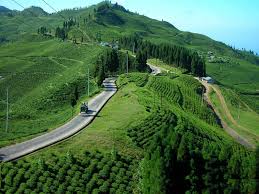
Tea is what defines Ilam in eastern Nepal, for this is the region producing the best and most tea in the country; it is also famous for its alainchi.
A very visible destruction of heritage due to the massive April 25 earthquake was that of the Gaddhi Baithak, the white-plastered neo-colonial structure with Greek columns that is part of the Hanuman Dhoka palace complex, a world heritage monument zone. It was made in 1908 by Maharaja Chandra Shumhser (1863-1929) following in the footsteps of his famous uncle, Prime Minister Jung Bahadur Rana (1816-1877), who started the fad of building such palaces after his trip to England and France. Jung Bahadur was famous for such things. Colonel Gajraj Singh Thapa, his eldest son-in-law, is not famous, hardly anybody has heard of him, but he played an important role in imparting a distinct identity to eastern Nepal, especially Ilam.
In the late 1870s, as Governor General of the eastern region, he went on a visit to Darjeeling, where he was introduced to a refreshing beverage that he had never tasted before. It was tea. So invigorated was he that he immediately set about establishing two 103-acre plantations in eastern Nepal, a region that has similar climatic conditions as its neighbor, Darjeeling. The first saplings planted were gifts to Jung Bahadur from the emperor of China. Ilam Tea Estate (est. 1878) is the first tea estate of Nepal, and it is what has given Ilam its unique identity.
The very mention of tea estate brings to mind acres and acres of short stunted green bushes all over hillsides; a most pleasant sight. And, none of the tea estates is as beautiful as Kanyam Tea Estate that sprawls over some 240 hectares at a height of 1,676 meters above sea level. It is the largest producer of orthodox tea, with some 125 kg produced every year. As a matter of interest, near to it is where a lot of Nepali film dances shot, so the locals call it, “Shooting Hill”! Anyway, this aside, while tea reigns supreme in the eastern hills, Ilam is also famous as the region of the six “A’s”, that is: alu (potato), alan (milk), alainchi (cardamom), aduwa (ginger), amriso (broom grass), and akbare khursani (extremely hot small round chili). Alainchi, especially, is a great success story, with its rich cultivation in the eastern region making Nepal one of the world’s top producers of this aromatic spice.
Ilam municipality also gained a place in the country’s history in 2010 as the first in Nepal to ban the use of plastic, something that was implemented only in 2015 in Kathmandu. Aside from this interesting snippet, there’s a place called Antu Danda (2,328 m) about 35 km southeast of Ilam Bazaar, from where the sunrise and sunset views over Kangchenjunga (8,586 m), the third highest peak in the world, are just breathtaking. You may be even able to see the Darjeeling hills on a clear day. A Lepcha Museum here displays the culture and lifestyle of the Lepcha community, an ethnic group that, along with Magars, Gurungs, Rais, Limbus, and Sherpas, is predominant in the region.
A significant place of interest is Mai Pokhari (2,121 m), about 13 km north of Ilam Bazaar, that’s famous as a pilgrimage site. This lovely nine-cornered lake, with a one-kilometer circumference, is surrounded by forests of pine, juniper, fir, birch, and medicinal plants. If you are lucky, you could come across animals like musk deer, leopard, porcupine, etc. You’ll certainly see quite a few migratory birds. Mai Pokhari is the place to be during Kartik Ekadasi, an annual festival in October-November, when a lot of devotees make their way to pay homage to Goddess Bhagwati. Another big draw is Sandakphu (3,636 m) on the Nepal-India border, because of its awesome panoramic views of Kangchenjunga and Everest, as well as of the entire district and its adjoining regions such as Siliguri and Darjeeling in India.
Similarly, other places of interest are: Sidhi Thumka (1,800 m), a three-hour trek from Ilam Bazaar, that gives you excellent sunrise and sunset views, and Chhintapu (3,353 m) around which you get to see 11 varieties of rhododendrons and rare herbs, besides some endangered animals like musk deer and red panda. Actually, mentioning all this, it must be noted that Ilam district is a favored region for research and study for botanists and anthropologists because of its rich ecology and interesting ethnicities. Some international universities even have an annual wildlife studies program whereby students visit Ilam for a fortnight in April-May to study the flora and fauna, as well as the culture and lifestyle of different ethnic groups.
Indeed, Ilam is the emerald of eastern Nepal in more ways than one.
Eastern Nepal for an Exhilarating Experience
It is one of the most beautiful regions in Nepal, and it has some really exciting treks
I read in a newspaper recently that a committee had been formed to celebrate 2016 as Visit Eastern Nepal Year. That’s a great idea, and one that has been a long time in the coming, for eastern Nepal is full of great natural beauty and extremely hospitable people. Unlike the far-west, there is no far-east in the country, but the further east you go, the better is everything, including the weather. You get good rains here, and so the forests are verdant, the paddy fields are lush green, and the rolling tea estates are very pleasant to look at.
While Ilam, where most of Nepal’s tea estates are, and Taplejung get a fair amount of tourists, there’s a district called Sankhuwasabha that is also pretty fetching, and where the best khukuris are made. Yes, the very same khukuris that the Gurkhas made so famous in the two Great Wars. The prima donna of eastern Nepal, however, is Kangchenjunga, which at 8,586 m, is the third highest peak in the world. It’s not only for its height that it is so well known, it is also one of the best looking mountains in the Himalayan range, equal to Machhapuchchhre of Pokhara in beauty. It borders India, and is the highlight of Darjeeling—a most iconic backdrop to the queen of hill stations. Another famous peak in this region is Jannu (or Kumbakarna), which is 7,710 meters tall, and which used to be once called “Mystery Peak”.
Then, there is also the Makalu-Barun National Park here, established as an extension of Sagarmatha National Park (world’s highest national park) in 1992. It sprawls for some 1,500 km2 across Solukhumbu and Sankhuwasabha districts, and has Makalau (at 8,463 m, world’s 5th highest peak), Chamalangu (7,319 m), Baruntse (7,129 m), and Mera (6,654 m) within its precinct. This park has amazing elevation, with the Arun River valley (344-377 m) in the southeast arising to 8,463 m at the apex of Makalu. The park has many diverse species of fauna, including exotic ones like snow leopard, clouded leopard, red panda, Himalayan tahr, etc., with the Asian golden cat being one of the rarest. Plenty of bird species, too, including the rare rose-ringed parakeet, Blyth’s kingfisher, deep-blue kingfisher, blue-naped pitta, sultan tit, white-naped vuhina, and so on.
Now, you can trek through this area on your way to Makalu base camp. Generally, you start off by taking a 40-minute flight from Kathmandu to Tumlingtar (457 m). From here, you take a one-hour drive to Khandbari (1,036 m), the district headquarter, from where your trekking adventure begins. Here is where you’ll find people making the best khukuris. After a halt for the night in a lodge or homestay, the next morning you begin walking to Chichilla (1,920 m), about a five-hour hike. There’s a place called Chhyankuti Chhyankuti on the way, 10 km to the north of Khandbari that has spectacular views all around, including that of the magnificent Himalayan peaks. At Chichilla, you get comfortable lodgings for the night. Come the dawn, and you are again on the trail, this time to Mude (2,060 m), which will require about 5-6 hours. Along the route, you’ll be treated to some really rugged mountain landscapes.
After a night of rejuvenating sleep, you should be ready next day to take the 3-4 hour walk to Saduwa, which is in fact the last village before entering the Makalu-Barun National Park. Your hike will first take you steeply downhill, before again going steeply uphill. The next day, you trek to Tashigaon, stay in a teahouse, and enjoy the local culture. Your guides will usually allow you a day of rest and recuperation at Tashigaon. And, you will appreciate this, because the next day you walk up, up, and up for 6-8 hours to reach Khongma (3,400 m). Early the following morning, you go to Dobate, or Mombuk, (3,540 m), walking for some 4-5 hours. You got to start early so as to avoid landslides risks further in the day.
The coming days, you’ll be first hiking to Yangle, or Nhe Kharka, (3, 750 m, 4-5 h), then to Langmale, or Shersong (4,600 m, 6 h), before finally reaching the Makalu base camp which is at a height of 4,800 meters. There’s a lovely glacial lake called Dudh Pokhari that will mesmerize you with its serene beauty. The return trip is along the same route, and you’ll be back in Khandbari in 5-6 days time from the base camp. There are some other routes on this trek as well, and it’s up to you which one you choose. However, no matter which route you opt for, it will be one of the most exhilarating times of your entire life, that much can be assured! So, what say, do we now plan a trek in beautiful eastern Nepal?
Nepal Today, Bargain of a Lifetime
Visit Nepal now to take advantage of some really fabulous bargains, and in some really exciting places.
“People have been traumatized, but you can’t cry all the time. People are united to work together to overcome the national crisis…Things are getting better...Schools have opened. People are quite positive, they have started laughing and partying…There is a strong sense of unity to rebuild Nepal.” So says the owner of a travel agency in a feature titled, “Nepal prays for return of tourists after earthquakes” by Natalie Paris (http://goo.gl/lvpzIl).
Indeed he is right. Kathmandu has gained backed much of its vibrancy. There is optimism in the air. The making of a “New Nepal” is the mantra that’s very much in vogue today. Even the official bodies, which have more or less been criticized in the past as being laggardly in their duties, appear to be galvanized. The World Heritage Sites are being opened to the public very soon. Most of the popular trekking routes are in operation, and tourist destinations are offering fantastic discounts on lodging, boarding, and many adventure activities.
For instance, Pokhara hotels are offering a hefty 50% discount on their rooms, and attractive rebates on transport fares and adventure activities. Pokhara Tourism Revival Committee Coordinator Ganesh Bahadur Bhattarai has been reported as saying, “We have offered 50 per cent discount on hotels, zip flight and bungee jump, 20 per cent discount on bus fare, 30 per cent in paragliding and 15 per cent on ultra light flights.” (http://goo.gl/ls8ctC).
Lying about 200 km west of Kathmandu, by air, it’s a short flight of just 30 minutes. Driving down from Kathmandu can also be a most pleasant trip, taking around 5-6 hours. Also known as the ‘Lake City’, Pokhara has a number of lovely lakes, with Phewa Tal, the second largest lake in Nepal, being the most famous. The richness of its natural beauty has to be seen to be believed, and the reflection of the magnificent Machhapuchchhre Himal (6,993 m), on Phewa’s serene surface is an unforgettable sight.
Pokhara is also one of the best places to go to for some adrenaline rushing activities. It is reportedly one of the top five destinations worldwide for paragliding. You take off from Sarangkot (1,592 m) that is a little over two kilometers from the tourist hub of Pokhara’s Lakeside. Another activity that has become a must-do is flying high on an ultra-light aircraft, which flies up to 5,000 ft for a 15 min-flight over scenic Pokhara. If you wish, 30-min and 60-min flights can also be availed of. The former takes you near to Machhapuchchhre, while the latter takes you up to 12,000 ft for a fantastic bird’s eye view of the entire Annapurna Range. There are other exciting activities, as well, such as white water rafting, ziplining, bungee jumping, and so on.
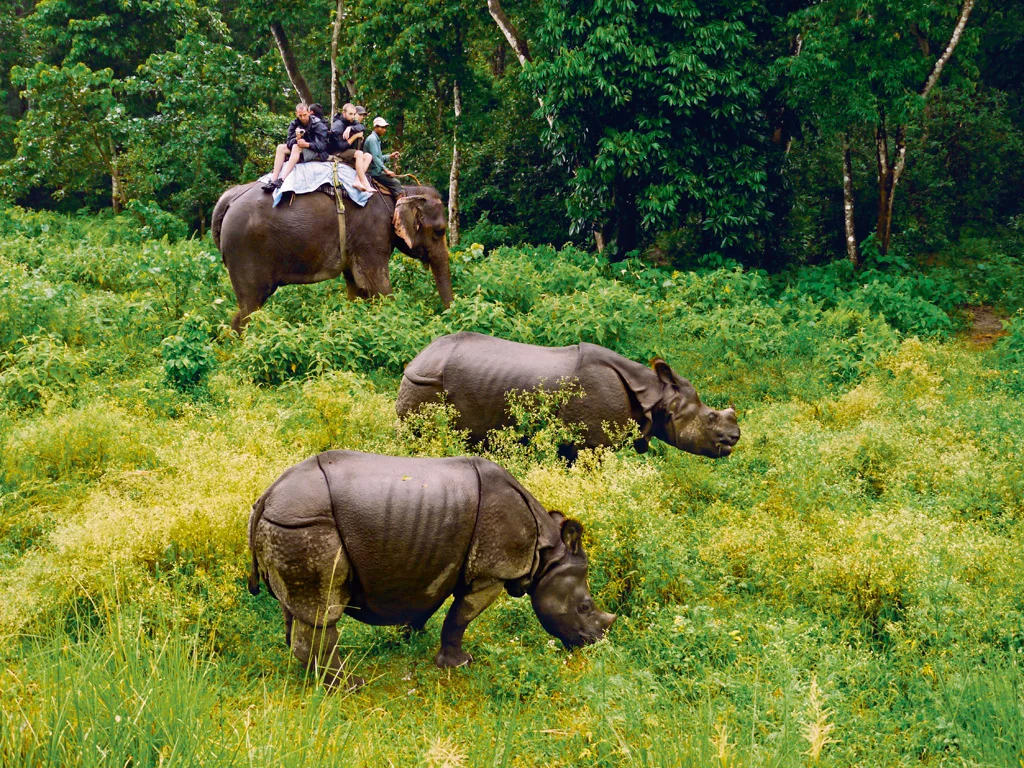
Similarly, Chitwan hospitality entrepreneurs are offering massive rebates to visitors coming to Sauraha, where the Chitwan National Park, another World Heritage Site, is situated. The Regional Hotel Association, Chitwan, has decided to offer 50 per cent discount to both domestic and international tourists on all accommodation, which include about 100 hotels and some of the finest resorts in the world. Elephant safaris, jungle walks, canoeing, wildlife watching, and bird watching, etc. are extremely popular activities in the world famous park. Of the around 2000 remaining one-horned rhinos in the wild today, Chitwan National Park has about 500 of them. It also has many royal Bengal tigers, another rare animal, as well as the endangered snout-nosed gharial, besides numerous other mammal, bird, reptile, and amphibian species.
Doubtless, visiting Nepal now could be one of the wisest decisions you make—easy on the pocket, and rich in exciting activities.
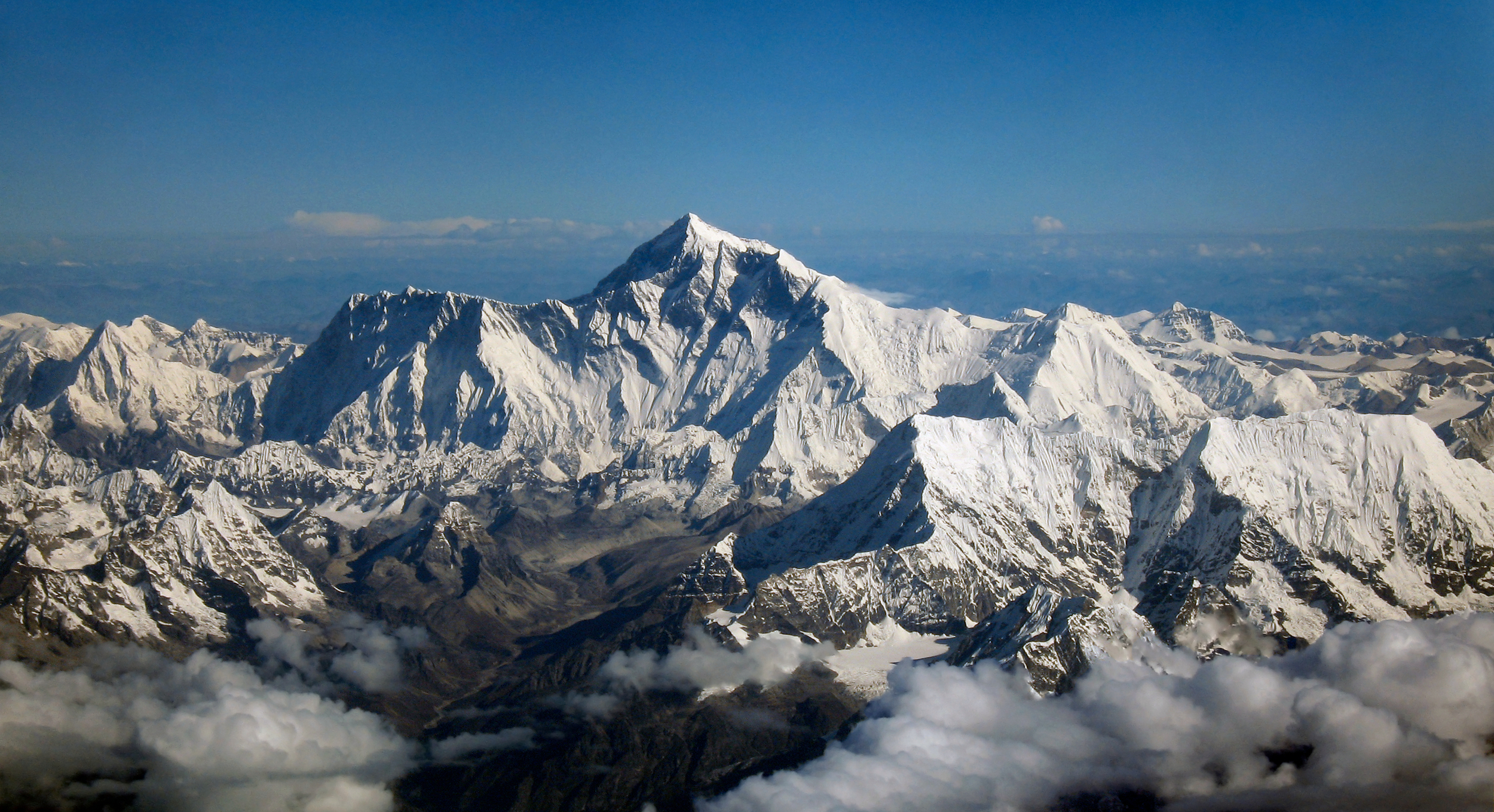
This trek is specially designed to reach the Everest Base Camp including Kala Pattar which is the best view point to view the sunrise over the high Himalayas including the Mt. Everest. This trek requires 13 days.
USD 1515 PER PERSON -- TWIN ROOM SHARING BASIS