
Seeking adrenaline in Nepal
Mountains have been a highlight for adventure seekers since the beginning of tourism in Nepal. Every year thousands of visitors come to Nepal to take a journey to the mountains. And, to conquer the fear or to do something crazy when the adrenaline kicks in, the high lands of our country excels in adventure tourism and some of the adrenaline arousing activities.
While going through our social media sites, we occasionally stumble upon that friend who takes the concept of adventure to the next level. Their profile is covered with images of skydiving missions, rough camping trips, rock climbing etc. Such daring adventures have a lot of risk but because we have a thirst to experience adrenaline rush, it drives us to seek more thrilling adventures, despite of being scared out of our wits.
The holy mountains have been a highlight for adventure seekers as long we can remember. A journey to Annapurna, Everest and other massifs can exceed anyone's expectation as the amount of beauty and serenity it holds is indescribable by words. As our country is gifted by the mountainous terrain and the river flowing system from the glaciers; many extreme adventure sports came into being.
If you are looking for ways to conquer your fear or just want to do something crazy for your adrenaline kicks in, the high lands of our country can help you achieve this goal. It is an adventure playground for thrill seekers and adrenaline junkies. For all you risk takers and brave hearts, our country excels in adventure tourism and here's some of the adrenaline arousing activities in our country:
You can fly like a bird through ZipLining
- If you are someone who wants to experience the feeling of euphoria, you can try the famous zipline of Nepal. As our country has the steepest, longest and the fastest zipline in the world, grab the opportunity of a thrill ride. The best part of the zip flyer is the take off. As soon as the door swings open you go flying down a hill which is so steep that you can't even see the ground you are headed to. Imagine jumping towards the unknown! If you are lucky, you can experience the breathtaking views of Annapurna on a clear day as the wind hits your face.
Go Bungee Jumping
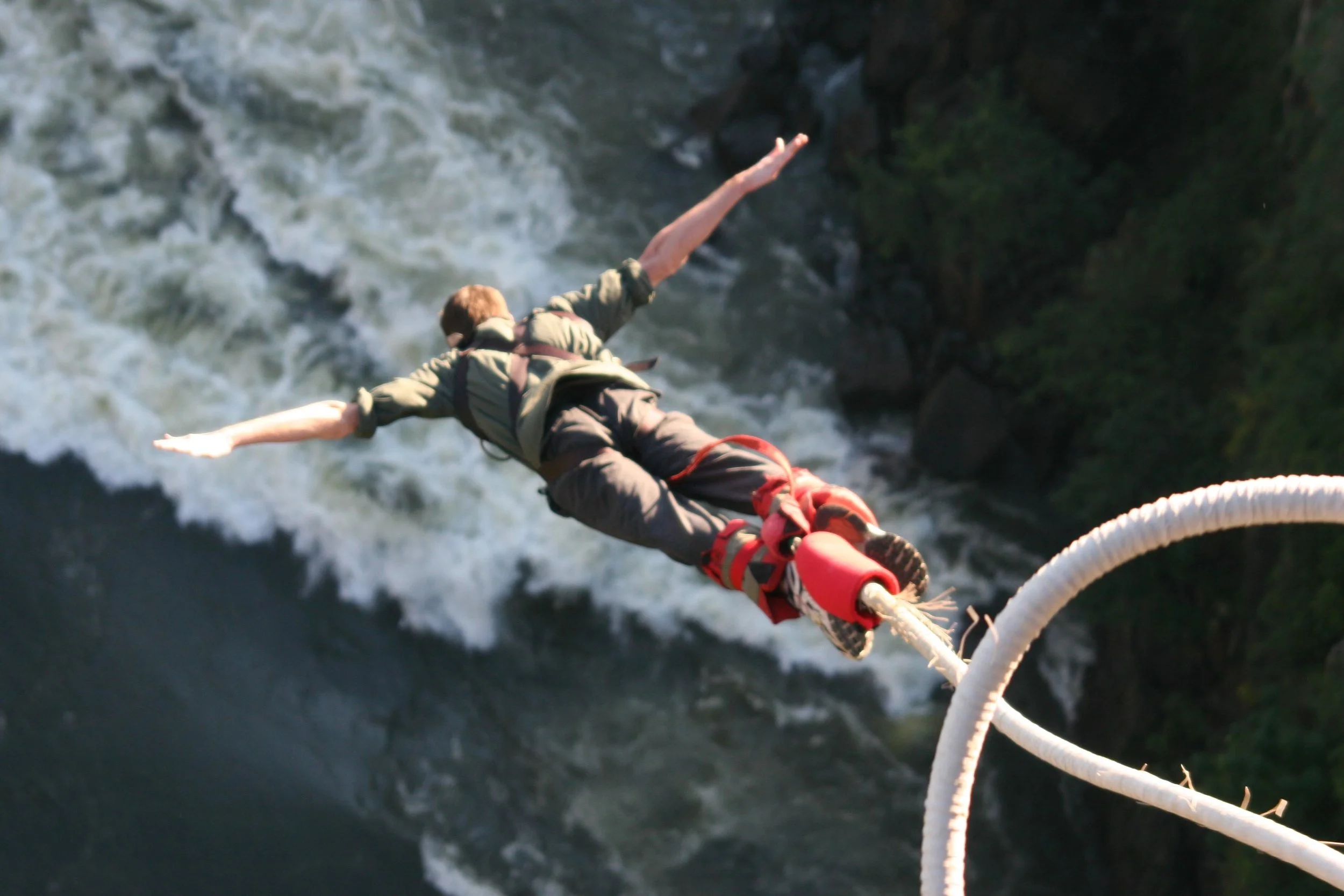
- The Last Resort proudly claims to be the 9th highest bungee jump in the world. Your fall is from 160 meters and you feel the rush of adrenaline as soon as you freefall. The air and the falling into nothingness can make you feel free. It's absurd to risk your life like that, but when you just 'let go,' it is an insanely amazing feeling.
Go Paragliding
- There's something exciting about running of a mountain with only a piece of fabric and strings attached to you. In Pokhara, you can experience an unforgettable paraglide flight. Once you fly high over the valley in the presence of the mighty Annapurna, you feel like you have reached paradise.
Mountain biking
- Nepal has a lot of uphill division and if you are a fairly experienced rider, mountain biking can be an excellent choice of adventure for you. Annapurna Circuit is considered to be the one of the most popular trekking destinations in the world where you can experience both hiking and biking. You can bike from Muktinath through the Mustang region for a satisfying combination of jaw dropping scenery, cultural delights and get indulged in one of the deepest gorges of the planet.
Kayaking
- Kayaking in The Lower Seti River can be the best place to dive into to get the best experience of river rafting and kayaking. Even for the newbies, kayaking can be done smoothly as it does have any major obstacle. The kayaking expedition begins at the captivating Phewa Lake and ends close to Chitwan National Park. The Lower Seti River trail has been known to be completely safe for any sort of water sports.
Rock Climbing
- Rock climbing is another adventure that can attract all kinds of adrenaline junkies from the world. Nepal can be one of the best destinations for rock climbing as has a perfect combination of rock climbing experience with exceptional natural beauty.
Trekking to Everest Base Camp
- There can only be a handful of voyages that can give you the thrill that you get while trekking to Everest base camp. This embodiment has attracted adventure enthusiasts ever since the 1920s. For those who can never think about stepping the giant Mt. Everest, this adventure can be a more practical solution. While venturing through this region, you can experience countless museums, days which are charged by beautiful colors, old world monasteries and swing bridges (scary!). Even during the nighttime, you can light up bon fire and have conservations with other fellow travelers.
Take a flight to Luka airport
- Lukla is considered to be the 'most dangerous airport of the world' and hearing this fact in itself can give us chills. The entire process of flying into Lukla can arouse intense heart throbbing experience. The flight takes place only when the weather is clear and it has the capacity to hold only 12 to 14 seats.
- This adventure is pretty challenging as you fly straight into the mountain as you land in Lukla and you fly off a cliff during takeoff. Normal runways are 1,829 meters long but the runway of Lukla is merely 527 meters. This makes the flight extremely dangerous as it has a short length to cover. The runway is on a steep gradient to ensure that planes slow down in time while landing and gain enough speed for takeoff.
Similar Posts
The Humla Trek
Why Nepal is a Trekker’s Paradise
The Everest Base Camp and Annapurna Base Camp treks are so well-known around the world that they are often referred to as simply, EBS and ABC. However, Nepal is called a trekkers’ paradise not only for these two famous treks; there are numerous other trails that are as exciting. Here’s a series of lesser-known trails that are becoming more popular by the season.
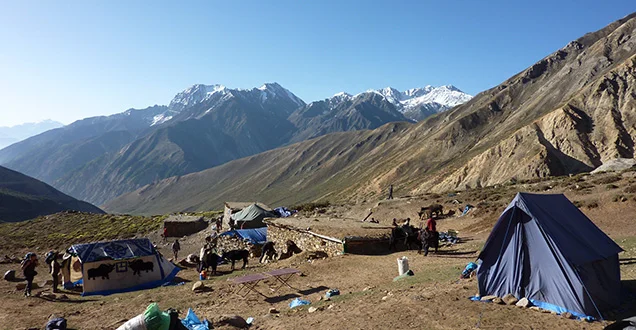
This trek introduces you to one of the remotest regions of the country, and you’ll be hiking on some salt trade routes that are pretty ancient in origin, and on which you’ll see mules, many of them in caravans, heavy loads on their sturdy backs, yet managing to scamper down sure-footedly on steeply descending rocky trails and scrambling uphill, equally sure of foot. These are sights rarely seen in today’s world, and thus makes the Humla trek a novel one.
Humla is the country’s northernmost district. It is also the gateway to Mount Kailash, a very sacred site, the abode of Lord Shiva and Goddess Parvati. Mount Saipal, at 7,031 meters, is the highest mountain in Humla. You’ll also find Limi Valley here, a virgin valley, as it were, with almost no signs of modernization around. Your trek starts at Simikot (2,190 m) which you reach by flight from Nepalgunj in about 50 minutes. Nepalgunj, on its part, is a one-hour flight from Kathmandu.
Once in Simikot, you hike on a salt trading trail to arrive at a town on the Nepal-China border known as Hilsa (3,720 m). You’ll be making many steep ascents and equally steep descents, which makes it a tough trek. The landscape is wild and rugged, and the awesome scenery is unbelievably beautiful—pine tree forests, terraced paddy fields, wonderful waterfalls, deep gorges, shimmering lakes, and many rock strewn trails all around. As you plod on, you’ll be in sight of the Karnali River most of the time, and on the horizon will be a number of snow-capped peaks. Add to all this, the sight of yaks grazing on the meadows and the sheep in caravans with 10-12 kg bags of salt on their backs, and yes, you will be transported back in time, no doubt about that!
On leaving Simikot, you’ll have to hike uphill most of the time on a salt route that goes along the valley wall. Waterfalls cascading down make for fantastic scenery. You’ll also encounter nomads on the trail, as well as some small villages around the hilltops above the gorge. Villages like Tumkot, Yalbang, Majhgaon, Kermi, etc. The descents are as trying as the ascents, and punish your legs equally. The foot of the Chongsa basin makes for a good campsite for the day, but the weather can be quite unpredictable here, so be prepared for rain.
Tamang Heritage Trail Trek
Why Nepal is a Trekker’s Paradise
The Everest Base Camp and Annapurna Base Camp treks are so well-known around the world that they are often referred to as simply, EBS and ABC. However, Nepal is called a trekkers’ paradise not only for these two famous treks; there are numerous other trails that are as exciting. Here’s a series of lesser-known trails that are becoming more popular by the season.
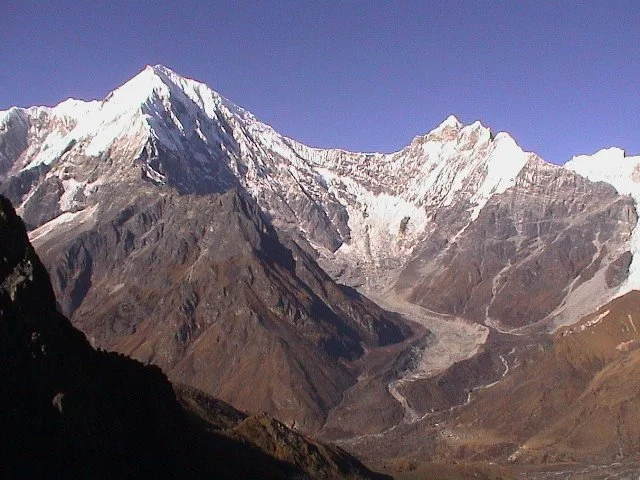
There is an interesting village called Gatlang in Rasuwa district,to the north of Kathmandu, which is inhabited by people of the Tamang community, and which suffered great devastation during the 2015 quake. To reach there, you have to first travel by bus for an entire day, a distance of about 130 km, from the capital to Syabrubesi. This is the starting point of your trek to Gatlang. The narrow trail goes quite steeply uphill, reaching 2,300 meters in height, and this is when you get good views of Langtang Himal, Ganesh Himal, and the Gosaikunda range, as also the Kerung range in far off Tibet. The landscape is enchanting. From Gatlang, you get to have panoramic views of Langtang Lirung (7,256 m) and Langtang II (6,561 m). The sunsets over distant mountain peaks are truly spellbinding. If simplicity is what you are looking for, then Gatlang is just the place for you. A warm welcome awaits every visitor, the Tamang people are as hospitable as they are simple, and you can also enjoy intermingling with them all the more by staying at a homestay. Other options include a community lodge also assured of comfortable lodgings at one facility or the other, be it a homestay, a community lodge and a private boarding house. The people here, despite the substantial number of tourists going their way, have managed to hold on to their traditional way of life, which includes a unique culture and distinctive identity. All the houses in this village are built of stacked stones and the roofs are of wood. The dresses worn by the local are of Tibetan style, and one of the most distinctive features of the women’s accoutrement are the large round gold plated earrings that adorn their ears. Similarly, a unique part of their culture is the custom of making mits and mitnis (best friends for life) by boys and girls, respectively, at a communal ceremony. Religion plays a big part of life here, the Tamangs being predominantly followers of Tibetan Buddhism. The Tamangs also have their own dances, some of which are popular all over the country. Shamans are also a part of life for them, and watching them exorcise evil spirits is pretty spellbinding, what with the jingling of many bells worn on a belt over the shoulders, the hypnotic beat of one-sided hand held drums, rhythmic chants, and so on. All this points towards a rich and ancient heritage, which is what you experience on a trek on the Tamang Heritage Trail. The trail goes through numerous villages like Langtang village, Thang Shyap, Ghore Tabela (about 3,000 m), and Kyangjin (3,900 m), besides Gatlang. As you hike uphill from Ghore Tabela to Langtang, the Langtang Himals to the north offer themselves as a splendid sight, and when on the way to Kyangjin, you’ll be crossing the outer margins of the Ledrup Lirung glacier. Some interesting and lesser known Himalayan peaks to be viewed from Kyangjin are Kyangjin Ri (4,770 m), Brana Chumso (4,350 m), and Menchmasu (4,650 m). In case you have enough stamina, and the interest, you can also hike up to Tsergo Ri (4,984 m), a four-five hour trek. Langtang, naturally the biggest village in the valley, has a significant role as a regional trading center. You’ll not fail to notice a rather large complex of mani-stones and mani-walls near the village, and the elaborately carved doors and numerous prayer flags on the houses. The sight of herds of grazing yaks will certainly grab your attention, as well. The other big village, Kyangjin, has a large number of lodges, twenty in number and counting. But, you’ll not find another lodge on the trail after Kyangjin
Barahabise to Charikot Trek
Why Nepal is a Trekker’s Paradise
The Everest Base Camp and Annapurna Base Camp treks are so well-known around the world that they are often referred to as simply, EBS and ABC. However, Nepal is called a trekkers’ paradise not only for these two famous treks; there are numerous other trails that are as exciting. Here’s a series of lesser-known trails that are becoming more popular by the season.
A relatively new trekking route, this trek begins west of the Rolwaling and Khumbu trekking regions, to the east of the capital, Barahabise being the take-off point. This five-six days’ trek ends at Charikot of Dolakha district, which is nestled on Gauri Shanker Himal’s southern slope. Gauri Shanker (7, 134 m) is a revered peak, as is obvious from its name itself. If you have a week of free time at hand, you should go on this trek, one that is easy to reach. You drive on the Arniko Highway, heading northeast from Kathmandu, to reach Barahabise in just about two-and-a-half hours.
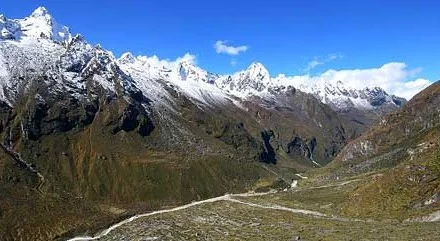
Then, you start trekking on the trail along the Sunkosi River watershed, going east up to the Tamakosi river valley. The first day is easy, and you’ll reach a village called Karthali soon enough, then, it becomes more of a regular hiking trail, one that’s dusty and rough. And, you won’t find any shade for quite a few miles, so, hat on, folks! Karthali village, lodged between two ridges, can provide comfortable dormitory-type accommodations in a lodge operated by an organization called Eco-Himal. From here, you can see the Sunhkosi River far below, its flow tranquil and serene. All around are huge mountain ranges. The following day, you hike to Dolangsa, a Sherpa village, at a height of some 2,500 meters, where houses are built all over the hillsides. Here, there’s a lodge propped up near the monastery located at quite a height. The trail carries on to Bigu, and getting there is pretty challenging. The trail is pretty narrow, and it’s cut into the rock face, and what’s more, it’s steeply uphill to the Tingsing La pass (3,300 m). However, your strenuous efforts will be rewarded with a spectacular view of Gauri Shanker peak. You’ll also see Chhoba Bhamare to the west and Pigpherago and Numbur Himal to the west if there are no clouds. The descent is easy enough on a winding trail down the hillside. On the way, you’ll see some chalets decorated with carved windows. Soon, however, you got to undertake a sharp climb up the hillside on a dusty path before arriving at Bigu.
Sleep well here, you’ve deserved it, and there’s comfy arrangements at the Bigu Lodge, which is near the Bigu Gompa, a 75-year-old Kargyapa-sect nunnery that has many marvelous images of Avalokiteshwara, a multi-armed, multi-headed deity, along with rows of elaborately embossed chortens. The next day, you hike to Loting, passing through Laduk, on a trail leading to the river. A night-halt is called for at Loting, and the following morning you trek on to Sinagti on a trail that descends steadily. You get to walk across a swaying suspension bridge before you come to Solung Khola. Then on, the trail goes along the left bank of the river, and finally reaches Singati, from where you can get a bus ride to Charikot, a rough one, it must be said! The final part of your adventure sees you on a bus back to the capital.
Trek of a Lifetime in Nepal
The Great Himalayan Trail is the longest and highest trekking route in the world—and most of it is in Nepal!
The Great Himalaya Trail (GHT) was launched in 2011, most fittingly, on the occasion of the 32nd World Tourism Day. This most challenging 2,800-km trail of many different interconnecting trails goes across Nepal, India, China (Tibet), Bhutan, and Myanmar—quite the international route! Completing the trail means you get to see all of the world’s ‘eight-thousanders’, that is, all fourteen of the highest peaks in the world. These are: Mount Everest (8,848 m), K2 (8,611 m), Kanchenjunga (8,586 m), Lhotse (8,516 m), Makalu (8,462 m), Cho Oyu (8,201 m), Dhaulagiri (8,167 m), Manaslu (8,163 m), Nanga Parbat (8,126 m), Annapurna (8,091 m), Gasherbrum I (8,080 m), Broad Peak (8,051 m), Gasherbrum II (8, 035 m), and Shishapangma (8,027 m). Eight of these peaks are in Nepal, including of course, Everest, five are in Pakistan, and one is in China. The Nepal section of the GHT is some 1,700 km long, begins near Kanchenjunga in eastern Nepal, and carries on west along the shadows of the country’s eight eight-thousanders (ranging from Makalu to Everest). It is indeed a long stretch by any means, and all the more grueling because of the high altitude, but you get to witness fantastic diversity, both ecologically and culturally, along the route. It takes you to places like Taplejung in far-east Nepal to Humla and Darchula in the far-west. Needless to say, you’ll be amazed at the many different kinds of culture and lifestyle you see on the way, since Nepal has a hundred and more ethnicities and a similar number of languages! No doubt, rare is the individual who can complete this trail at one go; thus, the Nepal GHT is divided into ten connecting treks, meaning, you can trek one or more at a time. Your fitness level, the time at your disposal, and of course, your desire, are the deciding factors. On average, one can complete a section in about two to three weeks, and you also have a choice between the high route (traversing 3,000 to 5,000 m) and the lower route. The latter brings you up-close with villages and their inhabitants, which means experiencing first-hand local lifestyles of various ethnic groups. An outstanding highlight of your trek will certainly be the great views on the way as you trek through areas like the Kanchenjunga Conservation Area, with its alpine meadows, pristine forests, and high-altitude wetlands, and towering over all, the majestic Kanchenjunga, the third highest peak in the world. Rich in flora that includes over 2,000 plant species, if you are there around April, you’ll see the hills turn red with the blossoming of the rhododendron, Nepal’s national flower. Starting from Tumlingtar, you’ll be passing through villages of the Rai and Limbu clans, who are renowned for their martial prowess, followed by Sherpa, Tamang, and Bhutia villages. Another outstanding area is the Makalu Barun National Park, where the climate ranges from tropical to alpine zones, thus promising great diversity in its ecology, including its forests. There are 25 rhododendron and 47 orchid species to be found here, along with 75 animal species and 440 kinds of birds. This is the habitat of the rare red panda, the clouded leopard, and the Asian golden cat, so keep a sharp eye out! The Sagarmatha National Park is, of course, one of the most exciting areas you will be trekking through; it is after all the highest national park in the world! And, a World Heritage Site, too! You’ll be meeting a lot of Sherpas, so famous for their fantastic climbing skills that no Himalayan expedition is complete without their guidance. This is where you will also see the tallest peak on Earth—Mount Everest, of course! In addition to all these riches, the park has tranquil turquoise lakes and exotic monasteries. And, now, on to the region of sacred valleys and holy lakes, meaning Helambu, one among the 108 beyuls (sacred valleys) of the Himalayas. You get to visit Langtang National Park, and you get awesome views of the vast Tibetan plateau from the Tilman Pass (5,308 m). On the way, you’ll get a chance to take holy dips in a number of sacred lakes, Gosainkunda being the most sacred. It is a really popular pilgrimage destination for Nepalis and foreigners alike, and you’ll find them in their thousands there during the full moon of August, a day when Brahmins change their janai (sacred thread). A holy bath beforehand is, of course, called for, and what could be holier than a dip in Gosainkunda? Paanch Pokhari (Five Lakes) is a group of lakes that are also in this area, and sacred, too. The GHT also entails a visit to the Tsum Valley, where a strict code of non-violence is followed by its inhabitants; no animals can be killed. Among the villages in this area is one that provides great succor to tired muscles, that is, Tatopani (‘Hot Water’), which is famous for its hot spring water gushing out from stone spouts. This is predominantly Tamang country. Another great region is where you will be walking on one of the world’s most popular treks, the Annapurna Circuit. The views are stupendous, and include large glaciers and deep valleys and the mysterious kingdom of Lo Manthang in Mustang. You’ll also see the Kali Gandaki Valley, which is said to be the deepest gorge in the world.
The Pokhara Dhampus Trek
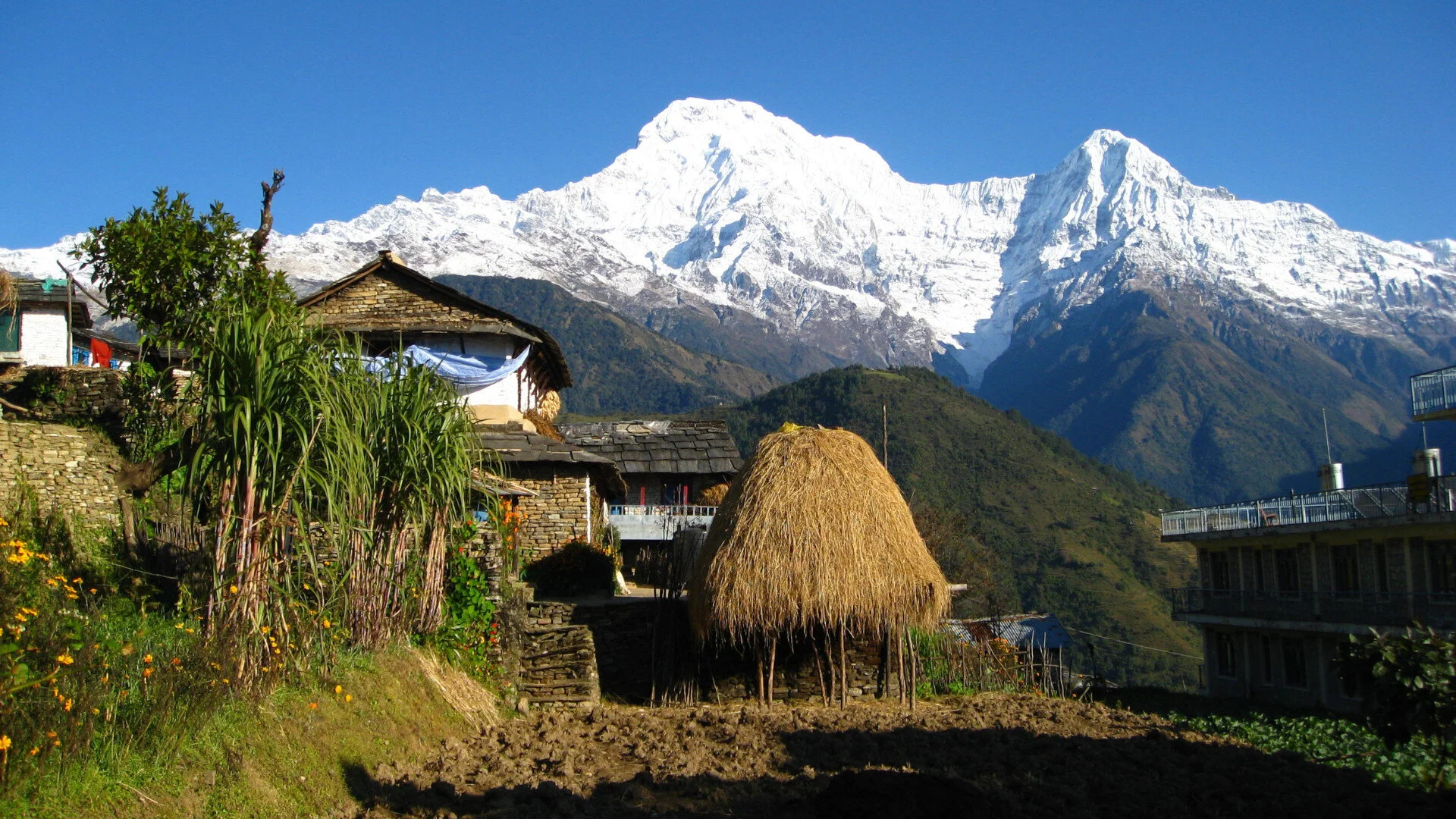
Plan your Pokhara trip to include a few days of trekking to picturesque little villages, hiking through fabulous scenery on great hilly trails.
Now that you are in Nepal, of course you’ll be visiting the lovely city of the lakes, Pokhara, to spend some idyllic days there. Having got a feel of the place, it’s a safe bet that you’ll end up wishing you could actually stay for a longer time, so serene are the surroundings, and so healthful is the environment. Know also that there are quite a few scenic treks from here that are, for the most part, of quite short duration.
One such trek is the one to the beautiful Gurung village of Dhampus that’s around 26 km from Pokhara. A most charming place, it is a gateway to the Annapurna Conservation Area, and on the route of the famous Annapurna Base Camp (ABC) trek, the most popular trek in Nepal, second only to the renowned ‘must-do-in-a-lifetime’ Everest Base Camp trek.
The trek’s starting point is the village of Phedi, which is a 15-minute drive from Pokhara. The trek as a whole is a moderate one, and suitable for most folks. However, initially, as you start off from Phedi, the trail goes uphill quite steeply for about ten minutes, then it meanders out of the woods, and you find yourself hiking on a narrow path. Gradually, you come to a small village called Chandrakot that’s surrounded by millet fields and rhododendron groves. Since the trek is of short duration, no need to hurry. Walk on at a leisurely place, and take a breather whenever you feel like it beneath the welcoming shade of one tree or the other.
You’ll come across teashops on the way, where you can get light refreshments. The cool and soothing buttermilk is a good recommendation, as are the succulent guavas. If you are trekking in November-December, you will certainly meet many groups out on a picnic in the area. Adds to the cheerful ambience of your experience trekking on such a naturally beautiful locale.
By and by, in about three hours or so, you’ll arrive at Dhampus. It’s considered to be a vantage point from where to view the interesting range of Himalayan peaks on the horizon. These include Tukuche (6,920 m) and Dhaulagiri (8,167 m), the two closest peaks from here. The sight of the magnificent Annapurna range and the massive Macchapucchre (6,900 m) is sure to dazzle your eyes, as well. It’s not just these regal peaks that captivate your eyes, the spectacular view of the Pokhara valley below is just as wonderful.
Dhampus is inhabited mostly by people of the Gurung community. One of the village’s highlights is a lake that offers an excellent reflection of a picture perfect setting of Macchapucchre Himal, popularly known as Fishtail Mountain. Some distance from the village center is a lovely lodge called Tsukinoie, designed in such a way as to provide guests with panoramic views of peaks like Annapurna, Macchapucchre, and Hiunculi from every window, as well as from the terrace.
The lodge is small, with only five rooms, but very well facilitated, offering great food and service, besides comfortable accommodation. It’s a Japanese-style lodge, and you get to soak in an interesting Japanese soaking tub that’s quite heavy, called a ‘goemonburo’. Nothing better to relax in, that’s for sure!
About ten minutes away from the lodge is a view tower that’s worth the steep climb to the top, for the view all around is pretty mesmerizing, with Annapurna South, Annapurna II and IV, Macchapucchre, and Hiunchuli all towering majestically in the distance. The sunrise is bewitching, as you can imagine, so get up before dawn breaks, and make it to the view tower while the stars are still twinkling in the sky. Sunrise is generally around 6-6:30 a.m., with the sun first casting its rays over Macchapucchre, followed by Hiunchuli and the rest. The horizon becomes fiery red for some moments. A most inspiring sight!
There’s another interesting place you could hike to that’s about one hour’s walk from the lodge. It’s called the Australian Camp, a name derived from the fact that sometime in the past (about forty years ago) a group of Aussies had camped there. Simple. Its original name is Thulo Kharka. This hike takes you on a flat trail for some time, before going uphill, going through a forest. From the Camp, the Annapurna range appears to be a bit closer, and you also get to see Manaslu and Peak 29.
All in all, the Pokhara Dhampus trek is ideal for those on a short visit, as also for the less-than-perfectly-fit folks, unlike the more strenuous ones that require loads of stamina and tons of endurance.
SIMILAR POSTS
Pedaling around Kathmandu Valley 2017
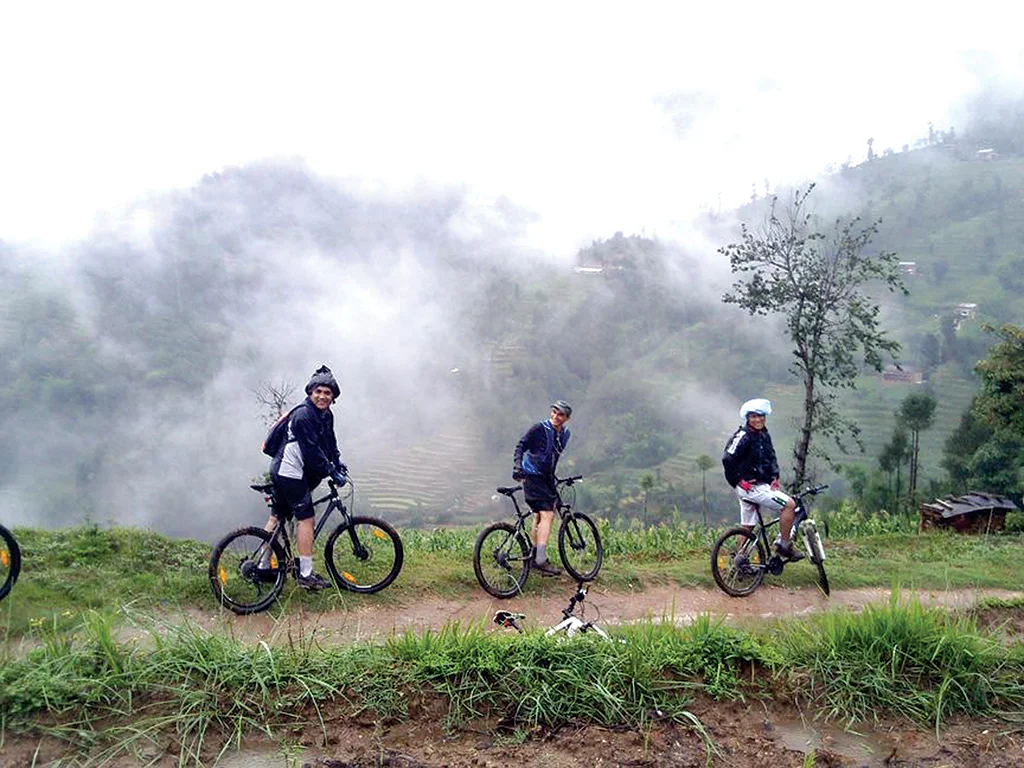
In today’s world, going green is the in thing to do, and using the humble cycle to tour around the valley makes you a ‘green’ person.
Kathmandu Valley has the kind of terrain that makes cycling around the outskirts a healthy pastime. Not many insurmountable climbs, not too many steep downhills either, but there’s a lot of ups and downs, which means heart-healthy exercise that builds a hearty appetite, and brings the color back to those cheeks made pallid by long sedentary hours in cubicles with a laptop in front. Yeah, that’s the general lifestyle of today’s city folks. But, now that you are in Kathmandu, make the most of your time building stamina and strength while seeing and experiencing a lot more than the usual tourist does.
Pedal your way around the valley on a sturdy cycle that you can easily hire for a couple of days from quite a few rentals around the city. Won’t cost you much, and by all accounts, those two-wheelers are pretty well maintained. Now, if you are convinced about what I am saying, then let’s see where you can pedal to around the valley. Here are some suggestions.
If you are the sort who wants to go full blast, and are fit enough, then the Kathmandu Valley round trip shout fit the bill perfectly. The route begins from Kakani, goes through Chisapani, then enters Nagarkot, and carries on to Dhulikhel, from where you cycle on to Namo Buddha, and finally reach Lakhure Bhanjyang. Wow! That’s quite a ride, but like said before, it’s perfect for those adventurous folks with confidence oozing out of their ears, and a body that’s in pretty good shape.
It’s a challenging ride, too, with some good climbs, and covering quite some distance. But, just imagine, you’ll be visiting places good enough to be on picture postcards. This trip should take around three to four days, with stops in, maybe, the lovely resorts of Nagarkot and Dhulikhel, if you time it right. Both have gorgeous sunrises and sunsets, and panoramic views of the majestic Himalayan peaks. Of course, you could also opt to camp wherever your heart desires, in which case you will have to have a tent and sleeping bag with you. But, it’s bound to be a great experience.
For those with less time on their hands, but still in good physical shape, overnight trips would be ideal. One route starts from Patan Durbar Square, goes through Dhobighat, then Chobar, Taudaha, Chalnakhel village, and Shree Narayan Pharping, before coming to an end in Dakshinkali Temple. This route is not that difficult, and it will take your through some lovely countryside around the valley.
Another route starts from Koteshwor in Kathmandu, carries on along the Arniko Highway to the road going towards Changunarayan Temple, then to Chailing and Telkot, and ending in Nagarkot. This ride is harder because of longer distance, with a good deal of uphill rides, especially to Nagarkot.
Similarly, another ‘hard’ route is the one ending in Kakani, a very scenic place, with beautiful views all around. You begin your ride from Kathmandu Durbar Square, pedal your way to Sorahakhutte, Balaju Chjowk, then Dharmasthali, and along the Trishuli Highway to first Kaulethan, then Kakani.
The ride to Shivpuri is also considered to be quite challenging. It starts from Kathmandu Durbar Square, goes through Thamel, then Samakhusi, on to Baniyatar, Tokha, the Nepal Army camp of Shivpuri, and finally to Shivpuri hill, from where you get a gorgeous eyeful of the valley below and mountains above. This route goes through a forest, so that makes it all the more exciting.
Another route that’s as exciting is the one ending in Lakhure Bhanjyang. It begins in Patan Durbar Square, goes through Gwarko, Lubhu, and Lamatar Phedi, before reaching Thakuri Gaon Road, and on to Lakhure Bhanjyang, where there’s a view tower from where you get spectacular scenery all around, including the Himalayas.
Now, we come to those with less time, and perhaps in less than tip-top physical shape. Let me hasten to say that there are quite a few options for them too, and good ones at that. Rides will be around two hours on average, but they will be hours well spent, that’s for sure! Just remember to start early so as to avoid traffic pollution.
You can take the route starting from Kathmandu Durbar Square, on to Nayabazar, then Balaju and Mudkhu, and end at Tokha. Or, starting again from Kathmadu Durbar Square, ride to Lazimpat, Golfutar, Chapali, then Budanilkantha and Nangki Gumba, and finally, a place known as Helipad. You’ll be riding through the Shivpuri National Park, so plenty of greenery around. This ride is very popular with local cyclist enthusiasts.
Another two-hour ride is the one starting from Kathmandu Durbar Square, going through Sitapaila and Ramkot, before reaching Bhim Dhunga. The scenery is awesome on this ride. Similar is the case with the route starting from Patan Durbar Square and ending at Chobar, passing through Ekantakuna, Nakhu, and Jal Binayak on the way.
One route takes you to a place called Khokana that’s famous for its mustard oil which is made using ancient traditional ways. It starts from Patan Durbar Square, goes to Ekanatakuna, Nakhu, and Bhainespati, before ending at Khokana. Similarly, the ride to the ancient Newar town of Kirtipur starts at Patan Durbar Square, goes over the Dhobighat suspension bridge, before reaching first, Chobar gate, and then, Kirtipur.
It goes without saying that all the above-mentioned rides allow you to explore the valley in a very leisurely fashion, interacting with locals on the way, and stopping wherever you fancy. All of which goes towards a better understanding of the local communities and their culture and lifestyle.
The Guerilla Trek
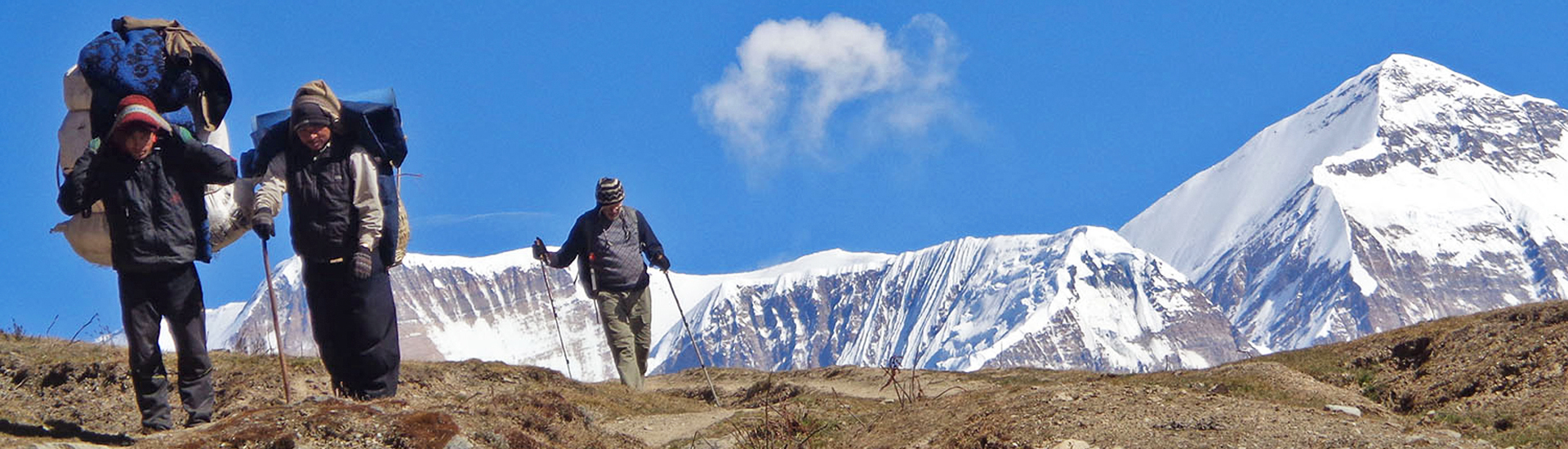
One of the least developed regions in Nepal, you will discover unexpected sights and lifestyles here; a veritable adventure of exploration awaits you.
The only constant, it is said, is change. In the last few years, Nepal, too, has undergone great change. A 250-year-old monarchy is no more. An army of Maoist insurgents who were at war for ten long years has made peace and won elections, and their leader has become the prime minister twice, including in the present time. One cannot predict the future, more drastic changes may occur, but it is unlikely that the Maoists will ever again go back to the jungle.
This fact makes the ‘Guerilla Trek’ all the more an adventure. You’ll be walking on trails used by the Maoist guerillas not long back when they were conducting an insurgent struggle against the government. This trek will also give an idea of why the communist ideology still works here, even if it the dawn of democracy had occurred a long time back. When on the ‘Guerilla Trek’, you’ll be walking through many villages and towns of far-western Nepal, an area that has been neglected for far too long in the development aspects. An area where infrastructure is woefully inadequate, and people are very poor for the most part. An area where the lure of communism still holds strong.
You will come across many indigenous tribes that have been downtrodden and poor for ages. The trail goes through the remote districts of Myagdi, Rukum, and Rolpa, centers of the Maoist ten-year insurgency (1996-2006), where their sway was firm during that decade. This history of not so long ago makes this region interesting, and a source of knowledge for the curious. It is not that the far-west is devoid of natural resources. It has plenty of lakes, rivers, waterfalls, forests, caves, etc. But, as said before, due to negligence, the region is steeped in poverty and backwardness.
The starting point of the ‘Guerilla Trek’ begins in a small town called Beni, and travels along the boundary of another mountain town, Baglung. It then passes the Dhorpatan Hunting Reserve, one of the country’s three hunting reserves, which was in the news recently for having a dismal hunting season this past year, with barely half a dozen game being killed, thus incurring significant loss of royalty for the reserve.
The trek then takes you to Rukum and Rolpa, the strongholds of the Maoists during the insurgency, with the latter being their headquarters. While trekking on these trails, spend some time at teashops, and try to engage the locals in conversation. You might hear some pretty interesting stories; now that the Maoists have come into the national fold, people will not be afraid to relate what they have seen and experienced in the recent past. Be aware that if you were here during those days, you would have been viewed with strong suspicion, and people would certainly have avoided all loose talk. Tight-lipped was the name of the game then, let me assure you!
Here’s what a two-week-long ‘Guerilla Trek’ entails, as planned for by trekking agencies:
On day one, you’ll travel by bus from the capital to Beni, a ride of about nine hours. Day two will see you trekking some six hours to the village of Takam (1,665 m). Day three takes you to Lamsung (2,250 m), about six hours again. The next day, you walk through scenic landscape for seven hours or so to reach Gurjaghat (3,020 m). Remember that, in some places, you’ll be staying at homestays, while in some places, you may have to pitch up your tent. The homestays are an excellent opportunity to get up close with the local lifestyle.
On the fifth day, you walk for about five hours, before arriving at the famous Dhorpatan Hunting Reserve (2,860 m). Keep an eye out for the mountain goats and the bharials (blue sheep), as well as a variety of deer. If you are a birdwatcher, you’ll not be disappointed, either. Plenty of exotic birds around. The following morning, rise and shine, before starting the five-hour trek to Nisi Dhor, and then the next day, the seven-hour trek to Tallo Sera. All the while, you’ll be encountering the fascinating ecology all around you, and meeting different indigenous communities. The Himalayas, too, will not be far from you, with peaks like Gurjal Himal and the Dahualagiri range always in the backdrop.
The trails you are walking on were used extensively by the Maoist guerillas during their ten-year war, and this knowledge is sure to add some more excitement to your adventure. The eighth day sees you walking for about six hours from Tall Sera to Rujhikhola, and the ninth day you’ll again walk for a similar amount of time to reach Thabang. Now, you are really into deep Maoist territory. Just imagine, if you had been here during the insurgency, you would be coming across numerous heavily armed military personnel at checkpoints, and they would probably have stopped you from going any further. Too dangerous. Anyway, this is just imagination, in the first place, no one would have been foolhardy enough to go on such a trek.
Day ten, and now you will be walking for another five hours to one of the best known names of the insurgency, that is, Jaljale. In fact, rumor had it that ‘Jaljale’ was a secret password used by the Maoists during those years. Just mentioning that name in public anywhere in the country would have got you into trouble with the authorities. The next day’s trek is to the village of Jelbang, while day twelve takes you to Suliochaur, from where you take a thirteen-hour bus ride back to Kathmandu. Well, congratulate yourself on having been the few lucky ones to have experienced the famous ‘Guerilla Trek’!
Exploring the Manaslu Conservation Area
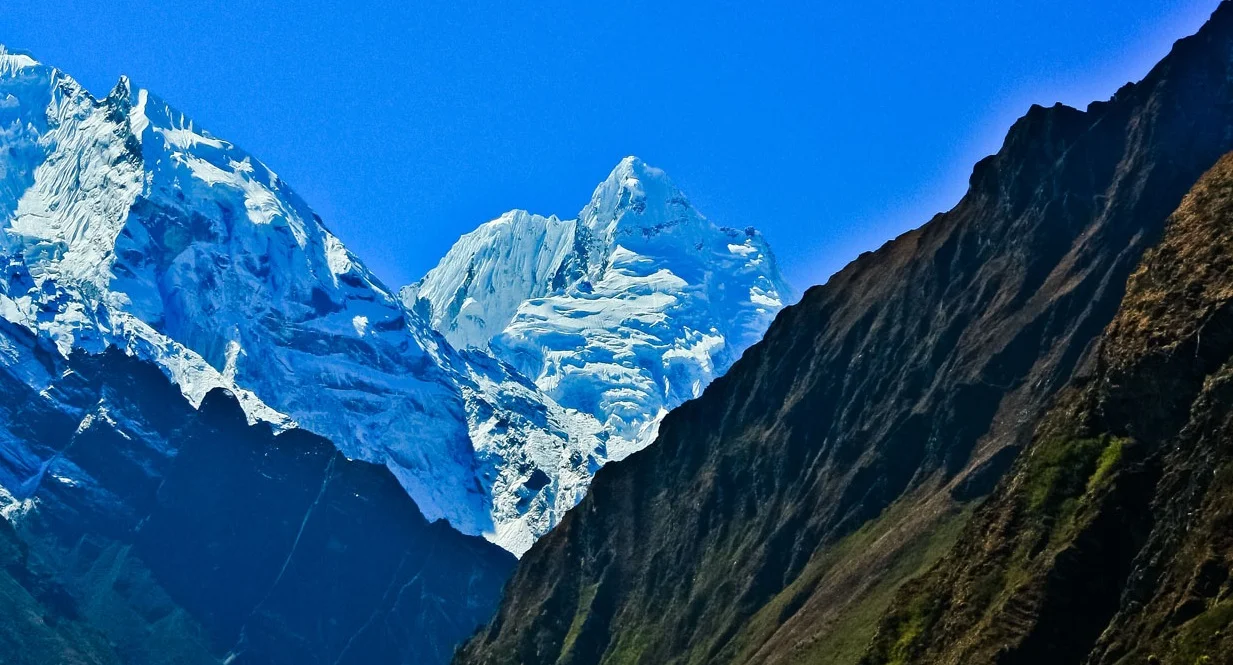
Manaslu (Mountain of the Spirit), the eighth highest mountain in the world, rules over the fascinating region known as Manaslu Conservation Area. It’s a place for discovery.
Manaslu, a mountainous region to the north of Gorkha district, was declared as the Manaslu Conservation Area (MCA) in 1998. It encompasses an area of about 1,663 sq km, and has seven villages. The ecology of the region is diverse and interesting, while its culture is rich.
The area has around 2,000 plant species, including some pretty exotic ones, and 11 types of forest.
As far as wildlife is concerned, there are some 33 kinds of mammals, 3 types of reptiles, 110 bird species (including some high altitude ones), and 11 butterfly species. Since hunting is prohibited, the conservation area is a safe haven for some rare animals like Himalayan tahr, snow leopard, grey wolf, and musk deer.
With high altitude glacier lakes and majestic Himalayan peaks, the scenery, ranging from terraced green fields to lush forests to rugged high altitude landscapes, is spectacular and quite breathtaking. The region has a rich Buddhist heritage, as indicated by the presence many stupas, chaityas, and mani walls, and some important gompas (monasteries) like Mu and Rachen Gompas in Chhekampar and Shringi Gompa in Bihi.
Trekking is a pleasure here, with the three-week-long Manaslu Circuit, from Arughat to Besisahar, being very popular. The trail goes along an ancient salt-trading route besides the Budhi Gandaki River, and on the way you’ll have the opportunity of viewing ten 6,500-meter peaks, as well as quite a few over 7,000 meters.
The view from the Tiru Danda ridge is really fantastic, with Manaslu (eighth highest peak at 8,156 m), Annapurna (tenth highest at 8,091 m), Himalchuli (7,893 m), and Ganesh Himal (7,406 m) standing tall on the horizon. The highest point of the Manaslu Circuit is Larkya La (5,106 m). Manaslu (‘Mountain of the Spirit’) was first climbed by a Japanese (Toshio Imanishi and Gyalzen Norbu) on May 9, 1956.
Provided you don’t veer off from the main trail, you will be mostly staying in comfortable hotels, homestays, and lodges on the way. Besides convenience, one of the main attractions of the Manaslu Circuit is the relatively fewer number of trekkers you’ll come across. On around the eight day, you’ll reach Samagaon, where you might have a rest day for acclimatization, and you can use the time to visit Manslu base camp.
Around the ninth day of your trek, you’ll be able to have a look at the Tibetan plateau from the border point near Samdo. On the way, a side trip takes you to Tsum Valley, a peaceful region where killing of animals is prohibited. It is a place of discovery and exploration, a hidden valley full of pristine forests. Many of the villages on the route are inhabited by people of the Tamang community, who are known for their hospitality. Tatopani (‘Hot Water’) village is renowned for its hot spring water gushing from stone spouts, a bath under which will surely rejuvenate tired spirits and body.
Chitwan National Park, the Real thing
A jungle safari around Chitwan National Park in Chitwan, Nepal, is an experience that one will not easily forget.
I had the opportunity to visit Disney World’s Animal Kingdom recently in Orlando, Florida, United States of America. The park has a lot of attractions spread out in various sections, viz Africa, Asia, Discovery Island, and Dinoland U.S.A. I began by going on the Kilimanjaro Safari Ride in the Africa section. I had to wait a pretty long time (about an hour or so) to board the ride, a train of wooden seats pulled by an ancient looking but sturdy truck. Almost immediately after we started off, we began to see wild animals, such as different types of deer, hippopotamuses, rhinoceroses, giraffes, zebras, elephants, crocodiles, etc., as well as a couple of lions resting majestically on a rocky outcrop. But, more than the animals, it was the track we were riding on that was really interesting.
The track has presumably been made to look and feel like a genuine jungle track in Africa, with parts of it being water logged, and more than a few bumps along the way. The lady driver also served as the guide, giving a running commentary that was pretty informative and fascinating. The site is designed as a lush African savannah, with plenty of long grass and scattered trees. One tree, in particular, stood out from the rest: the Baobab, which is also called the upside-down tree because the branches, when bare of leaves, look like roots sticking up into the air. The ride took around half-an-hour, and was a good way to start the Animal Kingdom adventure.
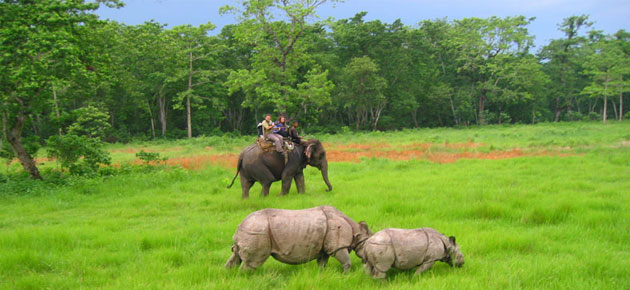
Now, here, I would like to compare this with our own jungle safari in Chitwan National Park in Chitwan, Narayani, Nepal. I have also taken that trip, and let me tell you, it was one of the best experiences of my life. Doubtless, unlike in in Animal Kingdom, where you get to see more animals, you get to see less wildlife in Chitwan. That’s because Chitwan’s wildlife is really in the wild, while Animal Kingdom is a well-designed and conceptualized park with wildlife in enclosures, cleverly concealed, to give the impression that they are in the wild. One cannot but be appreciative of the designers’ ingenuity. However, nothing can make up for going around real jungle tracks on top of a big elephant, as I did in Chitwan. Let me say this: the Chitwan safari is the real thing, while the Animal Kingdom thing is an enjoyable sojourn around a creatively designed wildlife park.
Definitely, the real thing has to be more thrilling. Riding a truck pales in comparison to riding an elephant that trudges onwards heavily on the narrow paths, and up and down muddy river banks, demonstrating fantastic balance; another thing is, you never know when you’ll be seeing some of the 700 species of exotic wildlife (68 of which are mammals), especially the magnificent royal Bengal tiger, the endangered one-horned rhino, and the rare snout-nosed gharials, a smaller, and much rarer, cousin of the crocodile. (By the way, some of the crocs in Animal Kingdom were pretty huge, fearsome creatures.) You’ll have to be indeed very lucky in Chitwan National Park to spot animals like leopard, sloth bear, wild boar, flying squirrel, smooth coated otter, honey badger, Bengal fox, striped hyena, golden jackal, jungle cat, civet, porcupine, and other such animals that are quite shy of public attention.
As you travel deeper into the lush jungle, keeping a sharp lookout from your perch on top of the massive elephant, you begin to spot quite a few deer, and many varieties of birds (there are supposed to be almost 600 species inside the park). The flora also is pretty impressive; the jungle is thick with densely-leaved trees, and many a time your elephant will be making its way forcefully through thick shrubs and tall grass on paths unseen to you. It’s all a very exciting affair, the tall grass, known as elephant grass, may be hiding a fierce tiger or two; this is never far from your mind. At some points, your mahout (the elephant driver) will probably ask you to keep dead quiet, since he’s spotted some tiger tracks on the path, or fresh elephant dung that shows that there are wild elephants nearby. Your heart will start thumping, and you’ll keep quiet, I promise you!
A trip around the jungle also includes a ride on a dugout canoe on the Narayani River that meanders through the large 360 sq km park that was established in 1973 and subsequently designated a UNESCO world heritage site in 1984. The canoes are small things, riding along very close to the river surface, and as you ride onwards, you may be lucky to see some snout-nosed gharials sunning on the banks. The average adult gharial is only 11 to 15 ft in size and has extremely long, thin jaws. The male has a distinctive boss at the end of the snout. You’ll also get to see the gharial breeding center inside the park, where you’ll learn about efforts to save this critically endangered animal from extinction.
Oh yes, the Chitwan National Park in Chitwan, Nepal, is the real thing as far as a thrilling adventure in the wild is concerned. An experience that is sure to bring excitement into your life. And, yes, it must be noted that there is really nothing to rival a tall glass of ice cold beer after an exciting ride around the hot and humid jungle. Heavenly pleasure, indeed!
P.S. I’ll be describing the Everest Expedition in Disney World in the coming blog. It’s famous as the Everest Ride, and it’s thrilling to the extreme.
World’s Highest Marathon
Here’s what you need to know about the world’s highest marathon.
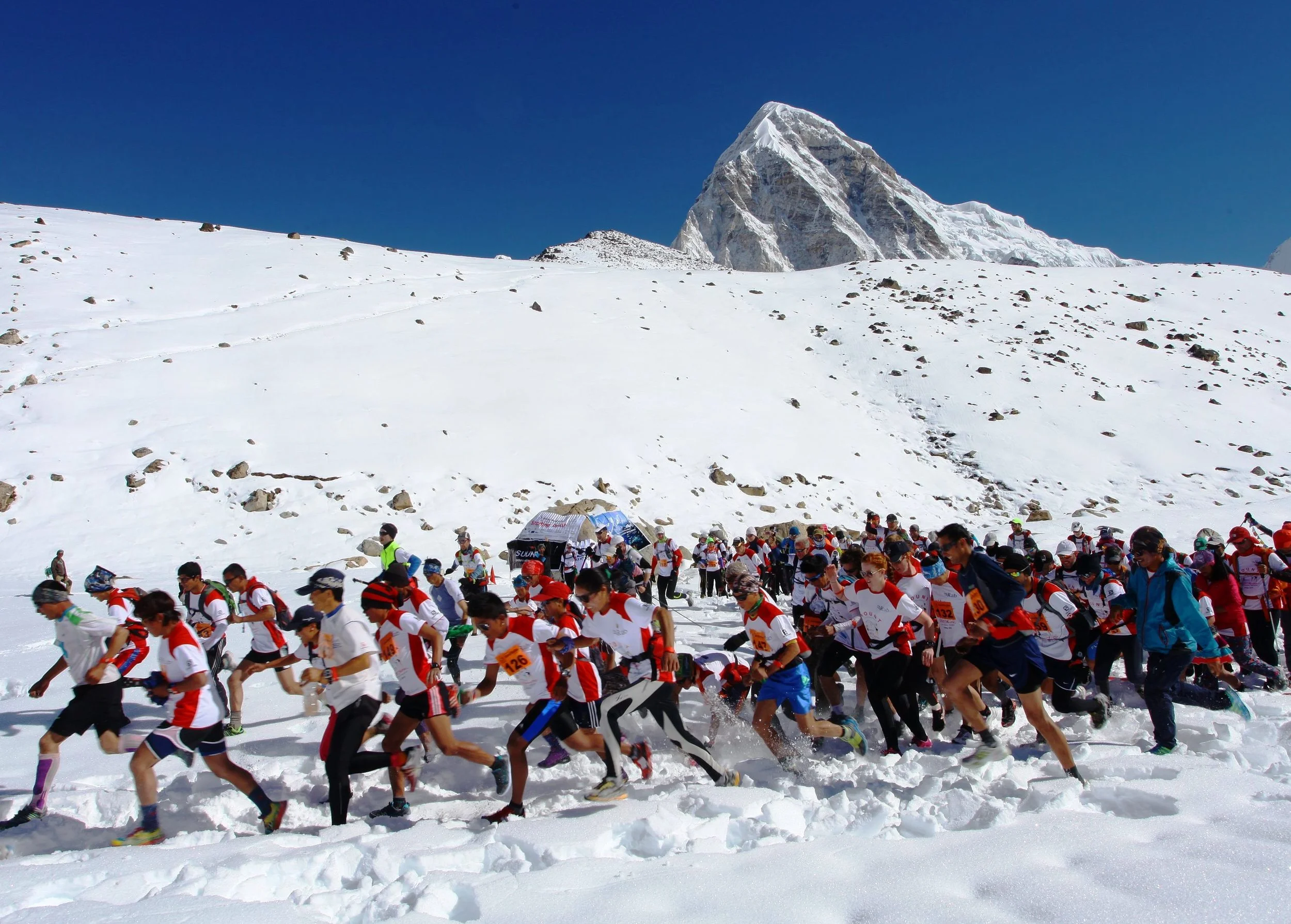
The 14th Edition of the Tenzing Hillary Everest Marathon was held on May 29 this year. The first such marathon was organized in May 19, 2003, to commemorate the 50th anniversary of the first successful ascent of Mt. Everest by Tenzing Norgay Sherpa and Edmund Hillary in 1953. The next edition is scheduled for May 29, 2017.
This year, the first three places of the full marathon were won by Bed Bahadur Sunuwar, Bhim Bhadur Gurung, and Suman Kulung. There were 146 runners participating. The half marathon was won by Tenzing Christopher Dolmans of Holland, while the 60 kilometer ultra marathon was won by Tirtha Bahadur Tamang.
The Tenzing Hillary Everest Marathon is a unique event, organized at the foot of the world’s highest peak, Mount Everest. It starts at Gorakshep (5,184 m) and ends at Namche Bazaar (3,446 m), thus it is the highest marathon in the world. The highest elevation of the race is at Kalapattha (5,545 m). The rough terrain of the high Himalayas adds to the rigors of running at such high altitudes.
Participants are advised to be in Nepal three weeks before the start of the race, so that they get enough time for acclimatization to the high altitudes. Even though the marathon is mostly downhill, there are two steep uphill sections that can challenge the fittest runner, and the chances of there being snow and ice on the upper part are high, so participants should have some knowledge and experience of trekking at high altitudes.
The full marathon is 42.195 km long. A half-marathon is 21 km long, and the ultra marathon is 60 kilometers. The marathon runs through some of the highest glaciers and moraines in the world for a stretch of about 10-15 km, and across the historical route to Everest taken by Hillary and Tenzing in 1953.
Marathoners will come across monasteries, chortens, suspension bridges, and of course, jaw dropping landscape that includes beautiful natural scenery, rhododendron forests, and orchid groves. The rhododendron is the national flower of Nepal. They bloom from early March till April and May, so you may be lucky to see entire hills of red. What’s more, the trail meanders along pristine Sherpa villages, such as Lobuje, Pheriche, Dingboche, Thyangboche, Khumjung, Khunde, and Namche Bazaar.
Organizers generally plan a three-week itinerary that includes sightseeing in Kathmandu Valley, and a trek at high altitude, which ensures that all participants are adequately acclimatized. They could also combine all this with a climb of Island Peak (6,189 m).
Kali’s Valley
While Pokhara is undoubtedly a paradise for locals and tourists alike, traveling to Baglung from there is an experience that will draw sighs from your soul.
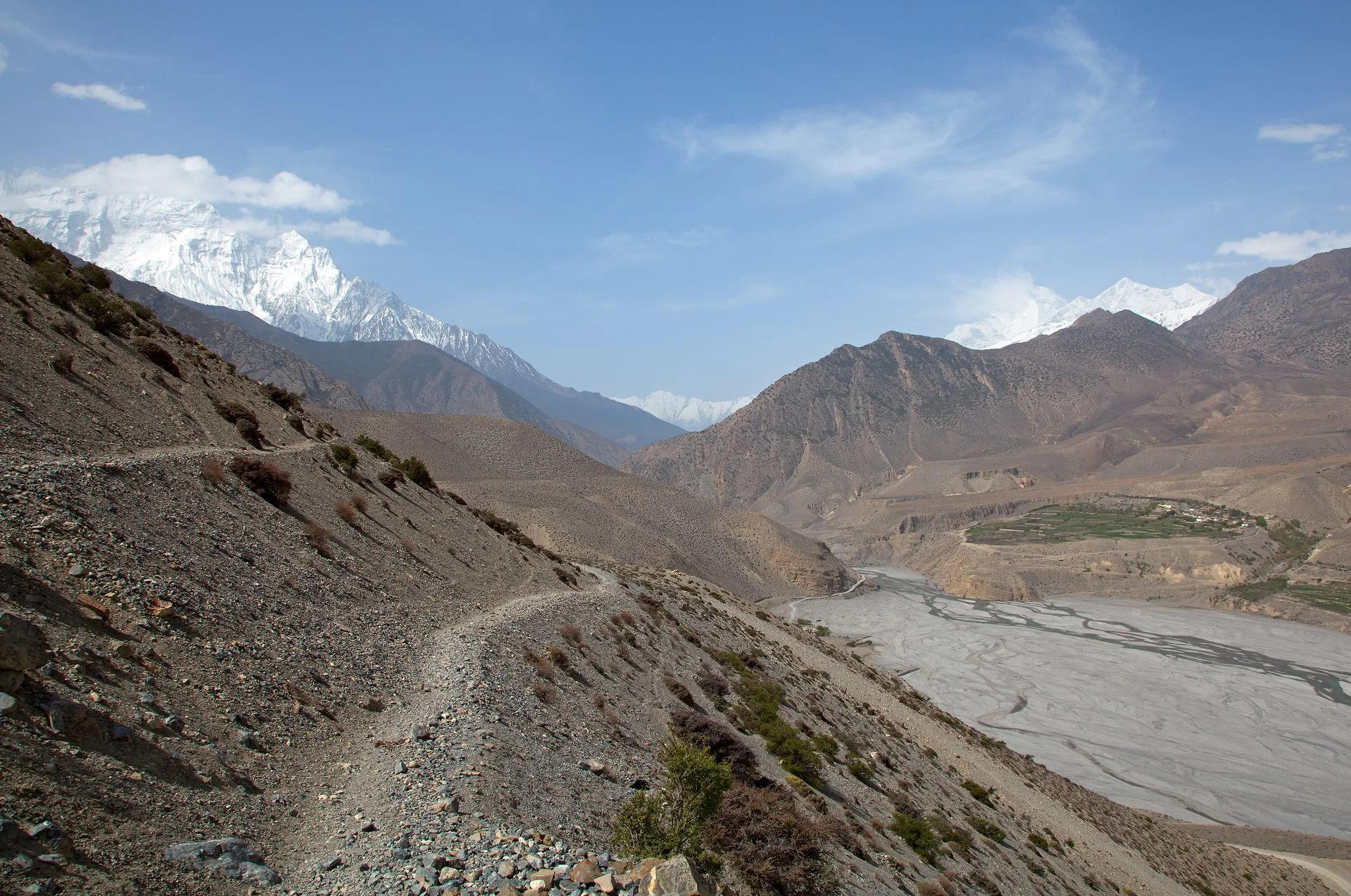
The black river under the brooding sky, gushing its way mightily from far off Muktinath, and cutting its way through Baglung district, seemed to be holding many a black secret. The heavy black clouds, the black silt and sand, and the blackness of the Kaligandaki River reminded one of black hearts, black promises, and black death.
However, the abundant green mountains encasing the immediate vicinity managed to salvage some of the foreboding picture. There were some gold diggers on the banks, as hopeful as the Californian gold diggers of the 1800s, and as dirty. Gold and copper and fossils were to be found in the deep confines of the Kaligandaki. But, if one looked into its black viscera, one got the eerie feeling that the murky depths must be hiding many black and mysterious secrets.
As the bus rolled along the sides of the Kaligandaki, the big green and brown rocky mountains appeared to be desperately seeking our attention as well. Nevertheless, for the duration of the journey that the smooth road paralleled the black river, one’s attention was completely absorbed by it. And why not? For this is the valley ruled by the mysterious Kaligandaki.
It was certainly not so before Kaligandaki had come into view. For a major part of the 72-km journey from Pokhara to Baglung, picturesque scenes of burbling brooks, scattered white frothy waterfalls, lush greenery, high hills, and compact and picture postcard villages constantly brought out sighs of wonder from the soul. Often, one had to forcefully remind oneself that this magnificence of nature’s bounty was in Nepal, and not in some exotic foreign locale.
The soul had already been stirred the night before in Pokhara, when a full two hours had been given to gazing at the gentle and serene Fewa Tal. I had not been able to pull myself away until the last boats had come ashore, their bellies disgorging sated nature lovers, and the lights had started to twinkle in far away hills.
The soul had been so stirred that I had taken the five-kilometer walk from Baidam in Lakeside to Mahendrapul in town. My decision to do so was proven to be devastatingly wise when I came across all sorts of lovely resting houses (calling them simply hotels would be doing them injustice), and equally lovely eating places (again, not restaurants, for the same reason), with their designer lights and manicured gardens, all of which I would probably have missed if I had taken a taxi. The lovelier ones were nestled in tiny gardens in the side streets.
Baidam and Pardi in Lakeside reminded me at once of a bride in all her bridal finery, glowing and expectant, awaiting the arrival of the groom’s procession. Pray she is not disappointed. The atmosphere was not exactly one of joy, however, the season still not having taken off.