

An Adventure in Ghale Gaun and Bhujung Gaun - Part III
The villages of Ghale Gaun & Bhujung Gaun are two great examples of life in the Annapurna region. The beauty of the panoramic vista along with the smiles of the humble people are enough to create memories that last a lifetime.
Day 4: Sightseeing day at Ghale Gaun
The fourth day is dedicated to exploring all the elements of the village. We recommend waking up early to witness the sunrise from the viewpoint. It is 10 minutes from the main town. You can take great photographs of the Himalayas and the village from this site.
After breakfast, you shall head towards Ghale Gaun Museum. It displays various tools, artefacts and clothes of the local community. You can borrow the traditional attire to take a few pictures for yourself. After the museum tour, you can visit the local religious sites such as the Uttarkanya temple and the local monastery. Further, you can take a small break at the tea garden.
There is a beautiful lake in the area named Talangyo lake. It is a popular site for bird watching. In the afternoon, make sure to witness the sunset.
The village community shall organise a cultural dance and music program before dinner.
Day 5: Ghale Gaun- Khudi - Besisahar - Kathmandu
After a good breakfast in the early morning, we embark on Khudi. The hike averages 4 hours. Once at Khudi, you shall get on board a vehicle that shall take you to Besisahar. A bus shall be waiting for you that shall take you to Kathmandu.
Once you reach Kathmandu, you can further explore this beautiful city. Out hotel features multiple tour packages. It includes an experienced travel guide along with a private shuttle. You can enquire about our offerings at the travel desk located in our hotel lobby. If you choose to explore the valley on your own, you should remember a few things.
Things to remember while exploring Kathmandu
1. Make sure to stay away from street hawkers: As Kathmandu Valley is a tourist destination, the streets of the major sites and monuments are filled with street hawkers. They shall approach you to sell a variety of local and imported goods. We advise you to polity decline any offerings provided by them. If you feel like you are being harassed by them, you can call the hotel or dial 1144 to contact the tourist police.
2. If you travel via public transportation, please be cautious of your surroundings and belongings. A safer option would be to hail a cab or use ride-sharing applications such as Pathao and Tootle. The fare charged is nominal and less than a cab. These rides are safer than public transportation.
3. Always check restaurant reviews for a better dining experience.
4. Make sure to wear a mask and proper covering to avoid air pollution.
5. Try and learn a few phrases in the local language. This makes travelling more convenient.
POPULAR ITINERARIES
SIMILAR POSTS

An Adventure in Ghale Gaun and Bhujung Gaun - Part II
The two villages of Ghale Gaun and Bhujung are one of the oldest settlements in this region. The native people, and the ethnic community of Gurung, feature a rich cultural history. They are the masters of this terrain and have lived sustainably in these mountains for centuries. This trek offers you the chance to not just indulge in the natural serenity but also witness the lifestyle of the people. Their smiles will strike your heart, and their humble hospitality shall make this trip a once-in-a-lifetime experience.
About the trip
Difficulty: Moderate
Average Duration: 4 Nights and 5 Days
Maximum Altitude: 2157 metres
Accommodation Type: Tea House
Route: Kathmandu- Besisahar- Khudi- Ghale Gaun- Ghanpokhara - Bhujung- Ghale Gaun- Khudi- Besisahar- Kathmandu
Day 1: Arrival at Kathmandu
Once you arrive at TIA (Tribhuvan International Airport), our staff shall receive you at the airport (if you've requested airport pick up). If you're staying at Hotel Shanker but didn't opt for pick up, you can take a taxi. You can use Google Maps if the driver doesn't know the exact location.
You can take the day to travel to the capital- Kathmandu. The city is a unique gem that boasts its unique cultural heritage and monuments. The valley of Kathmandu, with its three cities- Kathmandu, Lalitpur, and Bhaktapur combined features 7 of the 10 UNESCO world heritage sites of Nepal.
Read more on the heritage sites through the links mentioned below:
7. Changu Narayan Temple
Day 2: Depart to Khudi via Besisahar and trek to Ghale Gaun
After breakfast, we shall arrange your departure to Besishar- the district headquarters of Lamjung District. It is 173 kilometres from the capital. The bus ride averages 6-7 hours. You can read the first part of the article for further details.
Click on this link to read the first part of this blog
Once you arrive at Besisahar, you shall be switched to a private vehicle that shall take you to Khudi. The drive averages 30 - 40 minutes. Once you reach Khudi, you can relax before the trek begins. You shall then walk 4 to 5 hours to Ghale Gaun. The hike difficulty is moderate, with gradual inclines and declines. You shall witness numerous small villages which display the traditional lifestyle of the people of this region. In terms of mountain views, you shall be greeted by the panoramic vista of the Annapurna range and Manaslu.
Once you arrive at Ghale Gaun, you shall be received with great respect. The village elders shall offer you a flower garland, place a tika on your forehead and offer you a traditional beverage. The village has good cellular reception from the national carrier (NTC) and private carrier Ncell, with random latency caused by the weather. Wifi service is also good.
The toilet and bath are not attached to the main home in this region but are just a few steps away from the main compound of the house.
Day 3: Ghale Gaun - Ghan Pokhara - Bhujung Gaun - Ghale Gaun
We recommend waking up before sunrise and heading to the local viewpoint to witness the beautiful sunrise. After a good breakfast featuring both traditional offerings, you shall travel to Ghan Pokhara. The hike averages about 40-45 minutes. The hike features a good number of uphill climbs. You shall see numerous Rhododendron forests and honey hunting sites.
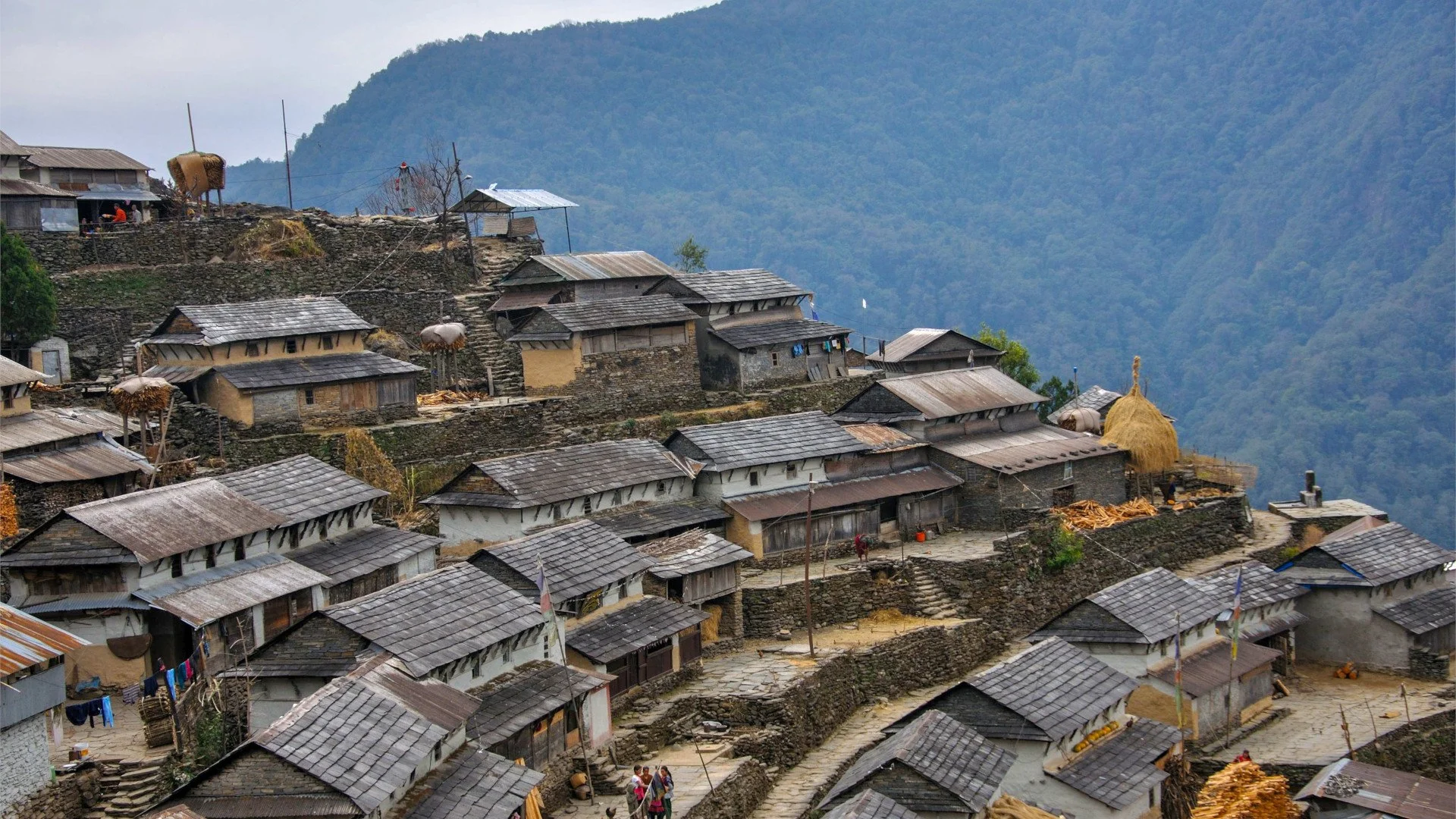
Once you reach Ghan Pokhara, refreshments will be provided. After a short break, you shall head towards Bhujung Gaun - the largest Gurung settlement in the Annapurna region. One of the most unique facets of this village is the arch terrace layout of houses.
The primary occupation of the people in this region is agriculture and animal husbandry. They practice a sustainable style of living. Your lunch for the day shall be at this village.
Things to do in Bhujung Gaun
Take par in the village tour
Visit the Bhujung Museum
Visit the tea garden
Visit the Kaiyo waterfall
Visit the local monastery
Visit the local hydro power site
Buy the handicraft as a souvenir
After exploration, you shall return to Ghale Gaun. The hike back to Ghale Gaun averages 2 hours. Once you reach Ghale Gaun, you can relax and take a shower before dinner.
POPULAR ITINERARIES
SIMILAR POSTS
An Adventure In Ghale Gaun and Bhujung Gaun - Part I
The Annapurna region for years has fascinated travellers and wanderers. One of the most popular destination is the scenic village of Ghale Gaun. It is located in Lamjung District at an elevation of 2100 meters above sea level. It boasts views of popular mountains such as Mount Machhapuchre, Annapurna Mastiffs, Lamjung Himal and more
For years, travellers and trekkers have flocked to the the beautiful villages of Ghale Gaun and its neighbouring village of Bhujung. The hill station village of Asia’s model tourism village. The village is situated approximately 108 km north west of Nepal’s capital- Kathmandu. Whereas, it is 12.5 km north-east of Pokhara- the popular lake city of Nepal.
Highlights of Ghale Gaun Trek
Stunning panoramic views of mountains such as
Mount Machhapuchre (6693m)
Mount Annapurna (8091m)
Mount Annapurna II (7939m)
Mount Annapurna IV (7525m)
Mount Lamjung (6932m)
Mount Bouddha (6974m)
Himal Chuli (6747m)
Witness the traditional lifestyle of the Gurung community
Savour traditional delicacies and drinks of the Gurung Community
Rejoice in the traditional dance and music of the Gurung Community
Rekindle with yourself in the peaceful mountainous setting and rejuvenate in nature.
Where do I get the permit and card? How much does it cost?
A trekker needs to pay the ACAP Permit, $20 per person. You need to acquire the TIMS (Trekkers Information Management System) card from Nepal Tourism Board. It’s offices are located in Kathmandu and Pokhara.
Can I trek to Ghale Gaun alone?
Yes! You can perform a solo trek to Ghale Gaun. There are no restrictions placed on solo trekking in this region by the government of Nepal. As the route is well mapped and features plenty of local and international travellers especially during the main season, you shall not have much difficulty in maintaining our route.
How do I start?
Once you have landed at TIA (Tribhuvan International Airport), you can either experience a bit of the capital (Kathmandu) for a few days or get a connecting flight to Pokhara. The distance between Pokhara and Kathmandu is 200 KM. You can opt to take a bus instead of a flight as well. Your available options are either local or deluxe buses.
Deluxe buses leave at 7 AM from Sorakhute Bus Station in Kathmandu. You may either book a ticket beforehand or arrive an hour early, pay and embark directly at the terminal. We recommend these buses as they have air conditioning. The travel time ranges between 7-8 hours, with stops for lunch and snacks at good quality rest stops.
Once you explore Pokhara, you can catch a bus to Besisahar from Pokhara Bus Stop. The drive time is a total of 3-4 hours.
You can skip all of the hassles by contacting the front desk officer at the hotel. S/he shall do their best to arrange these services for you. They can also develop a proper itinerary to experience Lower Mustang at a reasonable rate.
If you do not want to visit Pokhara then you can take a bus to Besisahar from Kathmandu. The bus is available at Gongobu Bus Park. We recommend reporting half an hour earlier. The drive time is 6 to 7 hours with a total distance of 173 km.
Normally the buses leave at 8:30 in the morning.
When is the right time to trek?
In Nepal, Spring and Autumn is prime trekking season. The skies are clear with light to minimal rainfall. Autumn (Mid-September to Mid-November) is best for Lower Mustang Trek.
During other months such as December - February, the climate is colder and potential high snowfall may not allow you to trek above High Camp. Whereas during pre-monsoon ( Mid-May to Mid-July) and monsoon (Mid-July to Mid-September), chances of rain and clouding are high. The forest area shall be full of leeches and mosquito's.
Spring (Mid-March to Mid-May) is also a great time to trek this region. Temperature is nominal, and winds are light, allowing you to have a beautiful walk. The plant life will be blossoming: amplifying the atmosphere.
What should I wear and carry?
Proper clothing is vital while trekking to remote areas. In Spring and Autumn, you need summer/light clothing for the day hours and warmers for the night. If you’re travelling during the pre-winter and winter months, you need to wear your heavy jacket. During pre-winter and winter, warm clothes are essential. A heavily padded jacket, full sleeve t-shirt and fleece-lined pants are essential. During spring and autumn, a parka is mandatory. An umbrella and a raincoat should be carried as well.
Does the trek cost the same around the year?
No, the cost presented to you by your tour agent varies as per the season. The cost of accommodation is higher during peak season. Food costs rise during winter as transportation of goods becomes difficult. During peak season, you are bound to be over-charged. Off-season treks are usually less expensive due to slow business. You’ll get a sweet deal if you time your adventure off-season.
In the next part of this article we shall discuss the itinerary of Ghale Gaun.