
Best Sunrise Views In Nepal - Part I
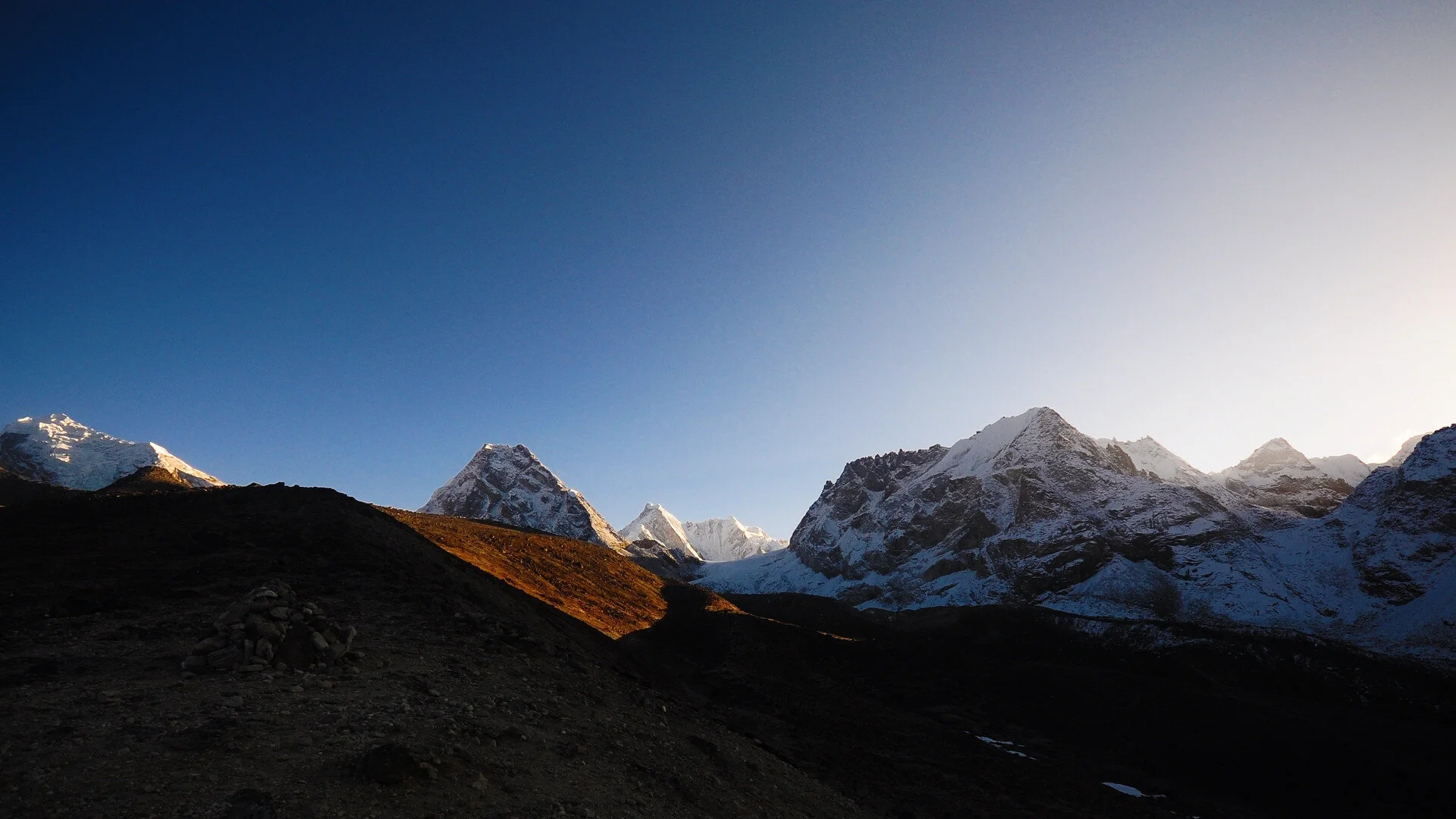
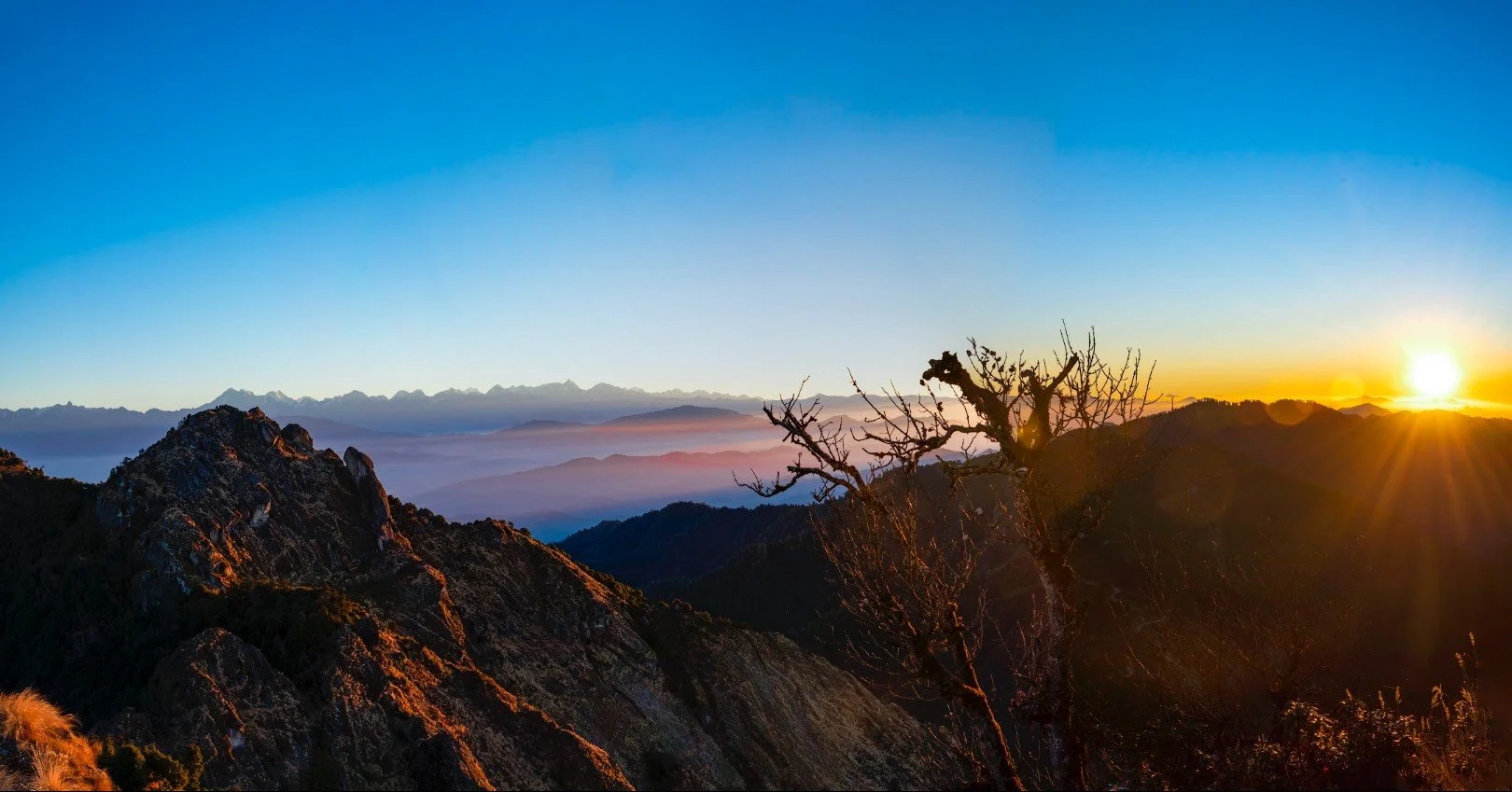
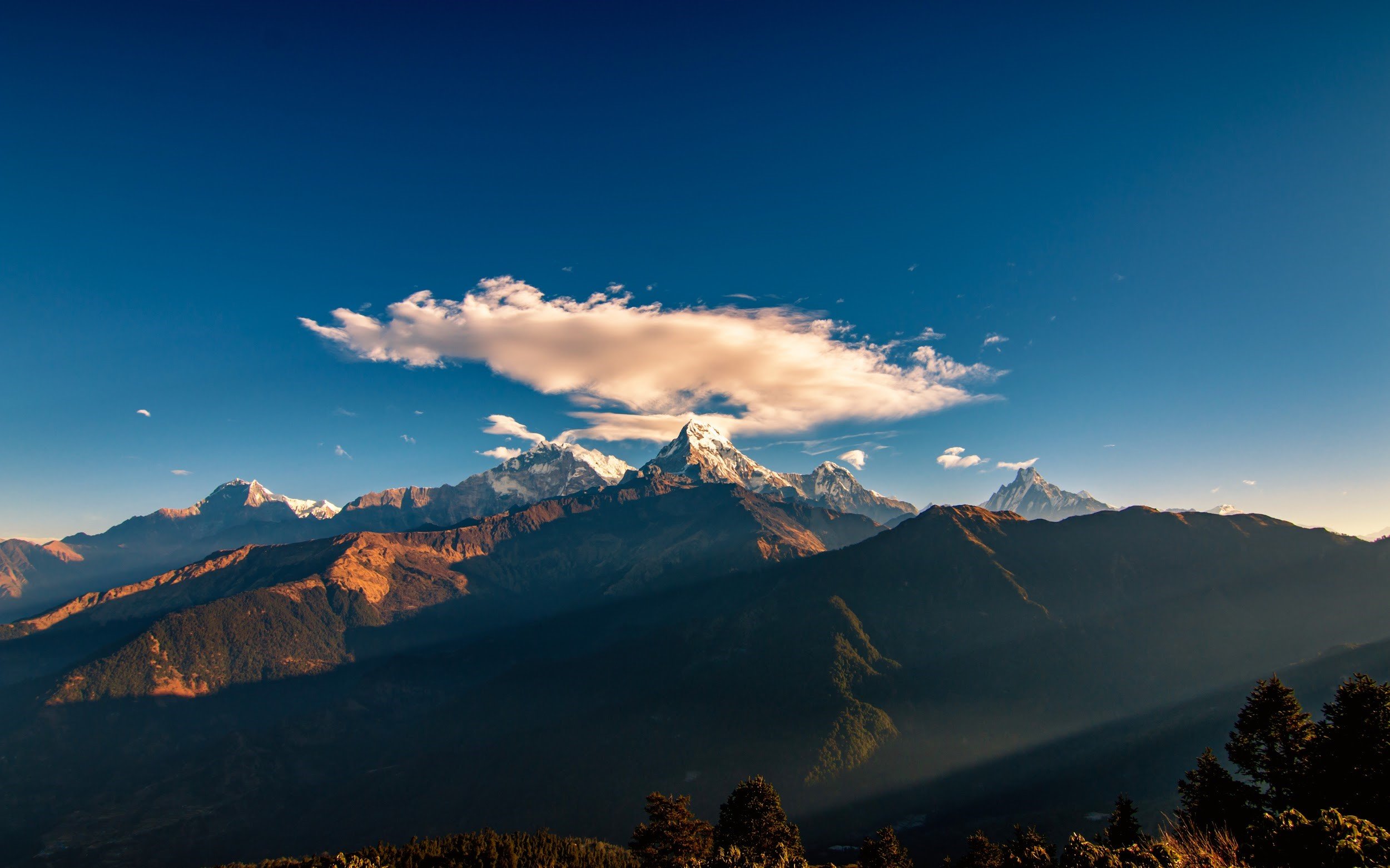
Sunrise view in Nepal is one of the popular and most rewarding tour activities in Nepal on several popular mountain view points in Nepal. Not only popular for the breathtaking views of the sunrise and sunset over the giant mountain peaks, it is also one of the best way to view the heavenly panoramic Himalayas of Nepal.
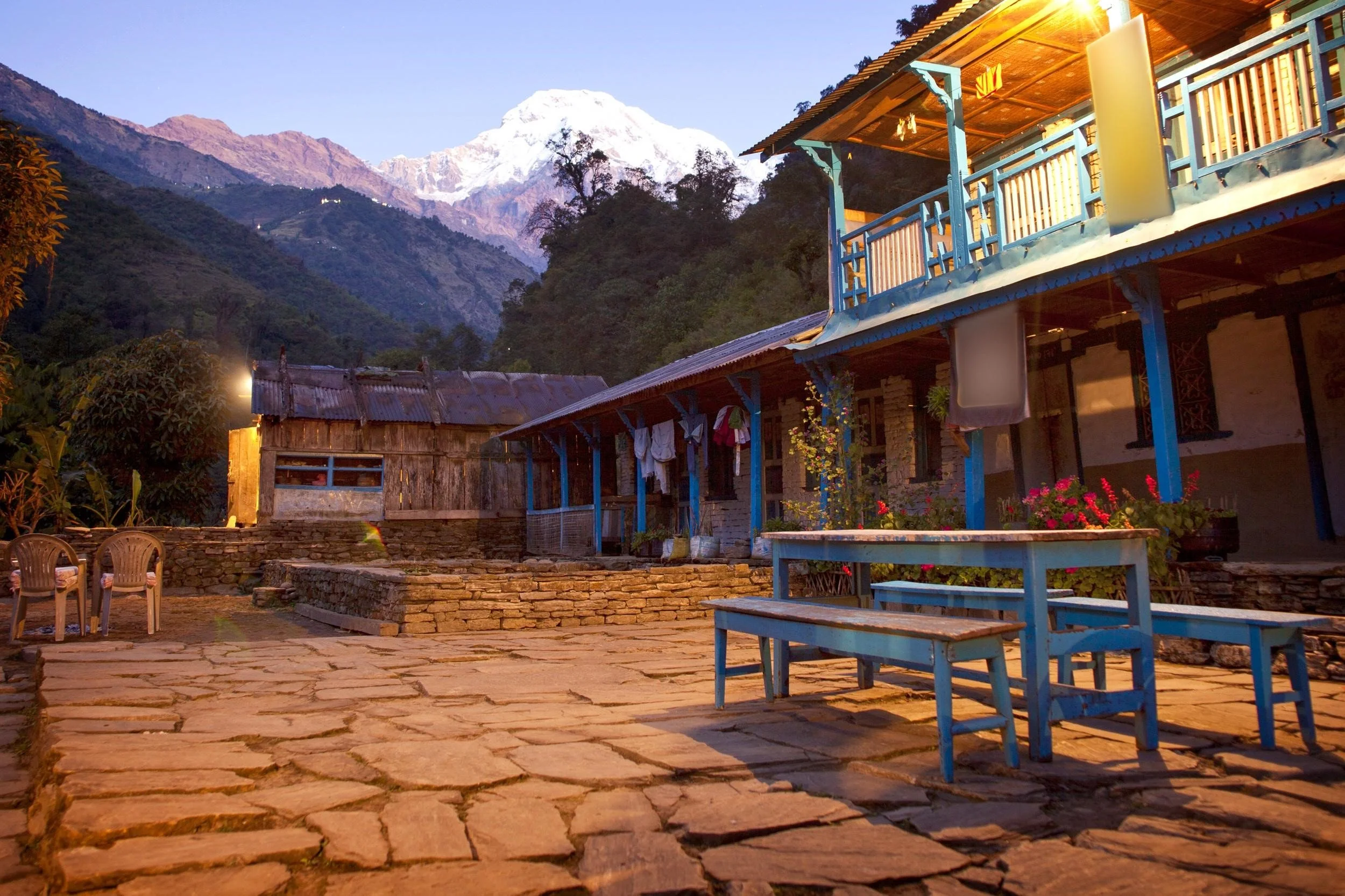
Nothing beats a warm cup of tea as you wait for the sun to bring light to the world. A country blessed with serene mountains and topography, Nepal truly at times resonates with the thoughts of Shangri-La. Amidst the numerous destinations to visit and experience in Nepal, the sites mentioned below share in common a vantage to experience the beauty of a sunrise and sunset.
Thus if you plan on visiting these destinations shortly, make sure to have your itinerary include this magical experience.
Nagarkot
Sarangkot
Shree Antu
Nagarkot
Attraction: Cultural Experience, Sunrise and Sunset Views, Buddha Peace Park, Quad Biking, Panoramic Hiking Trail
Altitude: 2195 M
Accessibility:
Closest Airport: Tribhuwan International Airport (TIA)
Distance From Kathmandu: 27.5 KM
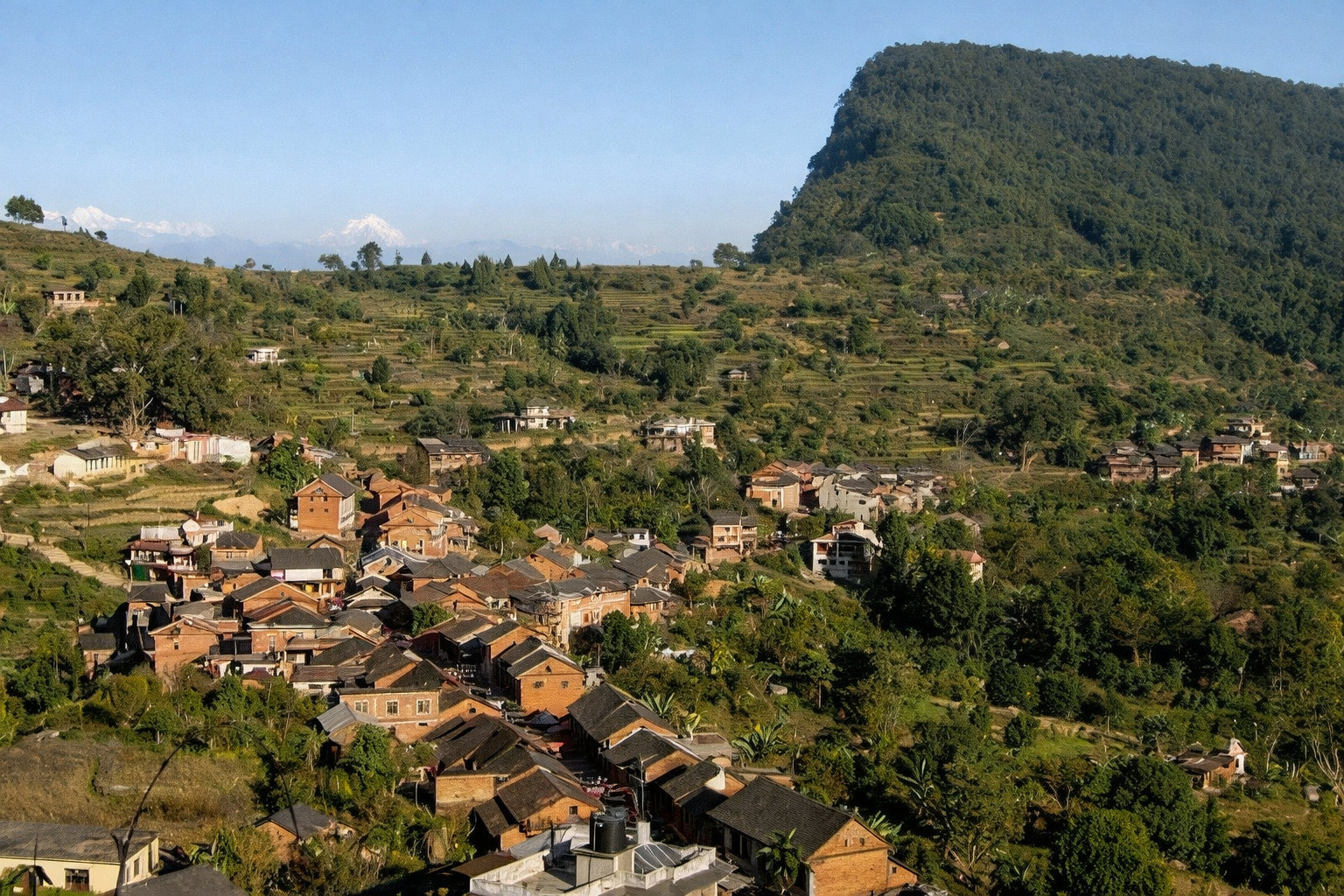
If your looking for a quick getaway within the outskirts of the Kathmandu Valley, the destination of Nagarkot fits the bill. Located just 27.5 kilometres from the main city of Kathmandu, the city of Nagarkot in the Changun Nagrayan municipality of Bhaktapur is a great view station for you to enjoy scenic views of the greenery of the Valley. Famous for its great hills and view station it is also a great destination to view the sunrise and sunset.
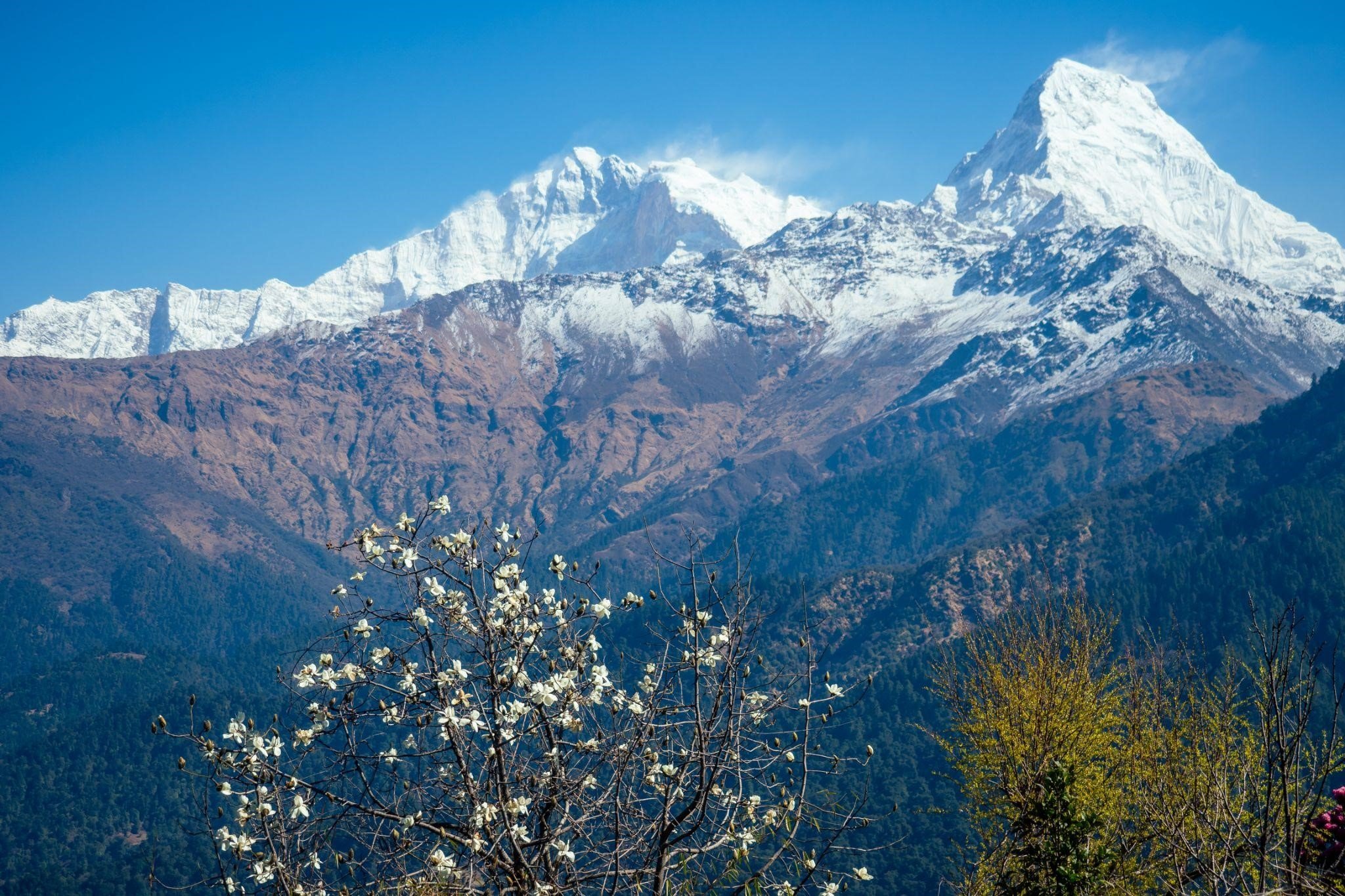
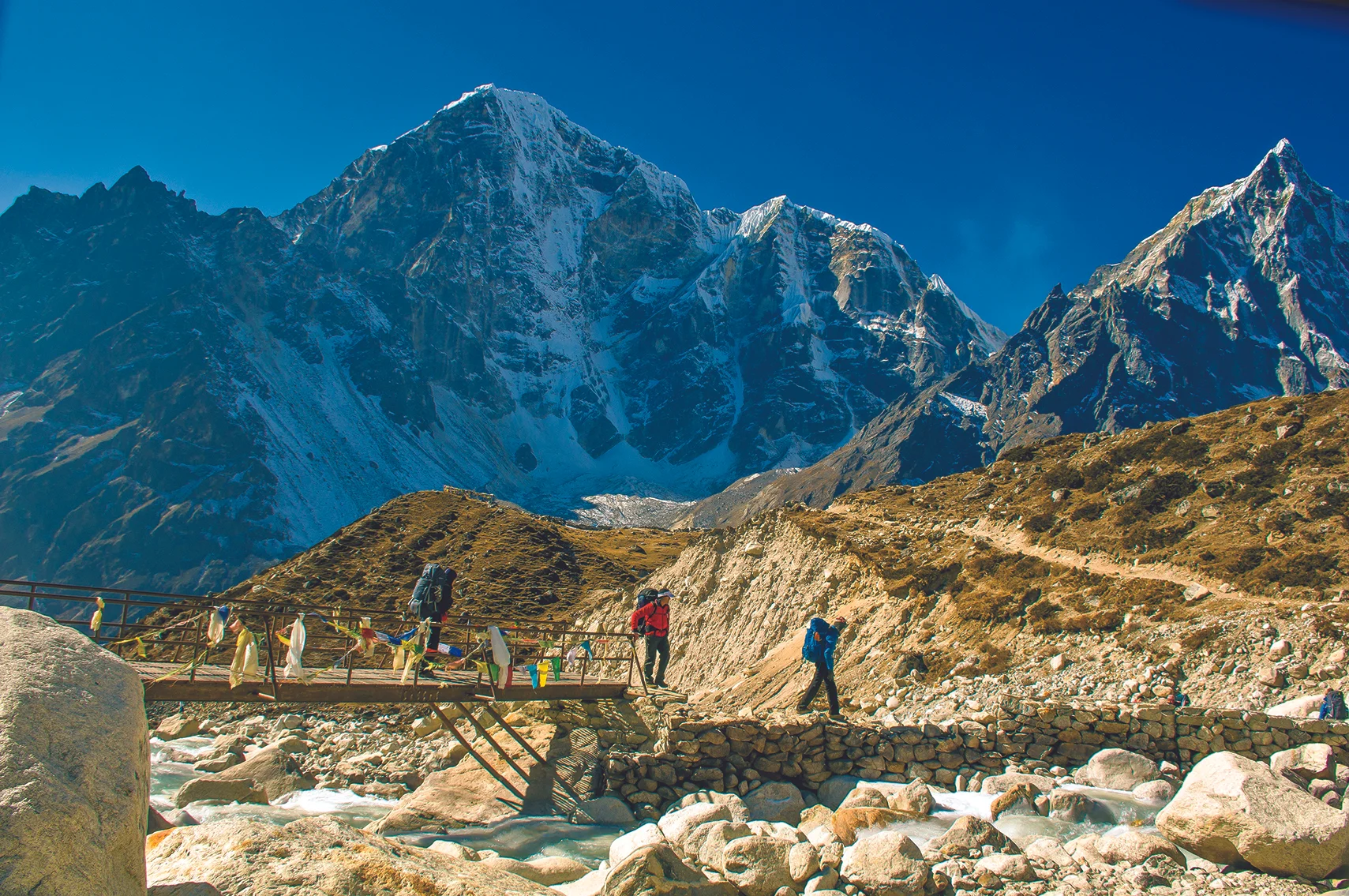
The city of Nagarkot during the months from October to December and March to April features clear skies for you to enjoy a panoramic view of the Himalayan range. The mountains of Annapurna, Manaslu, Ganesh Himal, Lantang, Jugal Himal, Rolwaling, and Number are visible during clear skies. One can also enjoy a quick cultural hike from Changu Narayan to Nagarkot and experience the Panoramic Hiking trail and indulge in activities such as Quad Biking.
Sarangkot
Attraction: Annapurna View Point, Sunrise and Sunset View from Sarangkot View Tower, Fewa Lake, Begnas Lake, Davi’s Fall, Mahendra Cave, Tal Barahi Temple, International Mountain Museum, World Peace Pagoda, Matepani Gumba
Altitude: 1600 M
Accessibility:
Closest Airport: Pokhara Airport (PKR)
Distance from Kathmandu: 211.5 KM
Distance from Pokhara: 10.6 KM
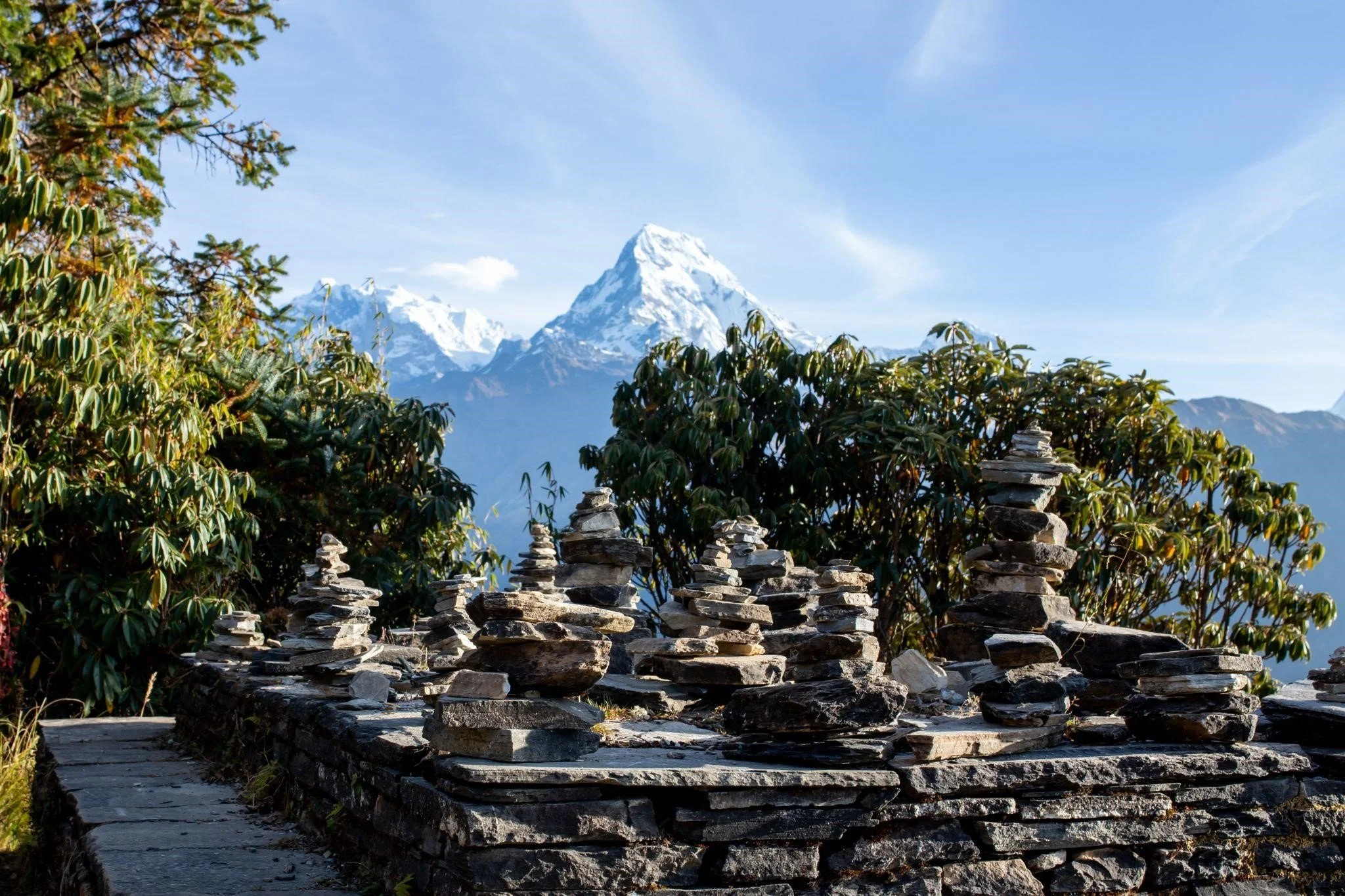
A visit to Pokhara is never complete without experiencing the first and last light of the sun from the view station of Sarangkot. Located 10.6 Kilometres from the main city of Pokhara, the station of Sarangkot is the prime spot to view the Annapurna Himalayan Range. The station requires a permit ticket which costs Rs.50/Rs.20 for foreigners and Nepalese respectively. Sweeping views of the Dhaulagiri in the west is followed by the range of Machhapuchhare, Annapurna II and Lamjung to the east.
A brief hike is required to reach the view station and early birds can set up their camera’s to photograph the first rays of the sun during the golden hours. One can reach the view station of Sarangkot by road and a great travellers secret is to experience the ruins of the Kaskikot for which is an hour walk from to the west of Sarangkot.
Shree Antu
Attraction: Sunrise and Sunset View from Shree Antu View Tower, Shree Antu Pokhari, Tea Garden Hike, Antu Data Camping
Altitude: 1628 M
Accessibility:
Closest Airport: Bhadrapur Airport (BDP)
Distance From Kathmandu: 498.4 KM
Distance from Phikal Bazar: 13.2 KM
Shree Antu is one of the most popular destinations to view the sunrise and sunset in Nepal. It is also the region which gets the first rays of the sun, as it is towards the easterly side of the country. The village of Shree Antu which lies in the Illam district, an approximately 13.2 Kilometres from Phikal Bazar is a spot you cannot miss. Notorious for its dramatic weather, decoding the weather pattern is a must if you are to experience the tantalizing views of the sunrise in this region. Located to the south of the third highest mountain, Kanchenjunga, this region also features great tea gardens and the iconic Shree Antu Lake. Apart from the sunrise and sunset views, one can indulge in a cultural experience learning about the modes of life of the ethnic communities of Limbu, Tamang, Rai, Lepcha and Magar people.
Another travellers secret is to camp at the Shree Antu Hill, where if the weather permits one can experience an amazing panoramic of Siliguri during the blue hours of the evening and wake up to an amazing sunrise. Reaching Shree Antu is a gentle 3-day trek with a maximum elevation of 3760 m. One can also fly directly to Bhadrapur Airport and rent a private vehicle to the foot of the Shree Antu Hill. An approximate 3 hour drive through the Mechi Highway is filled with great views of the tea gardens of Illam, one can stop at Fikkal Bazar to experience the serenity of the destination of Illam.
POPULAR ITINERARIES
SIMILAR POSTS

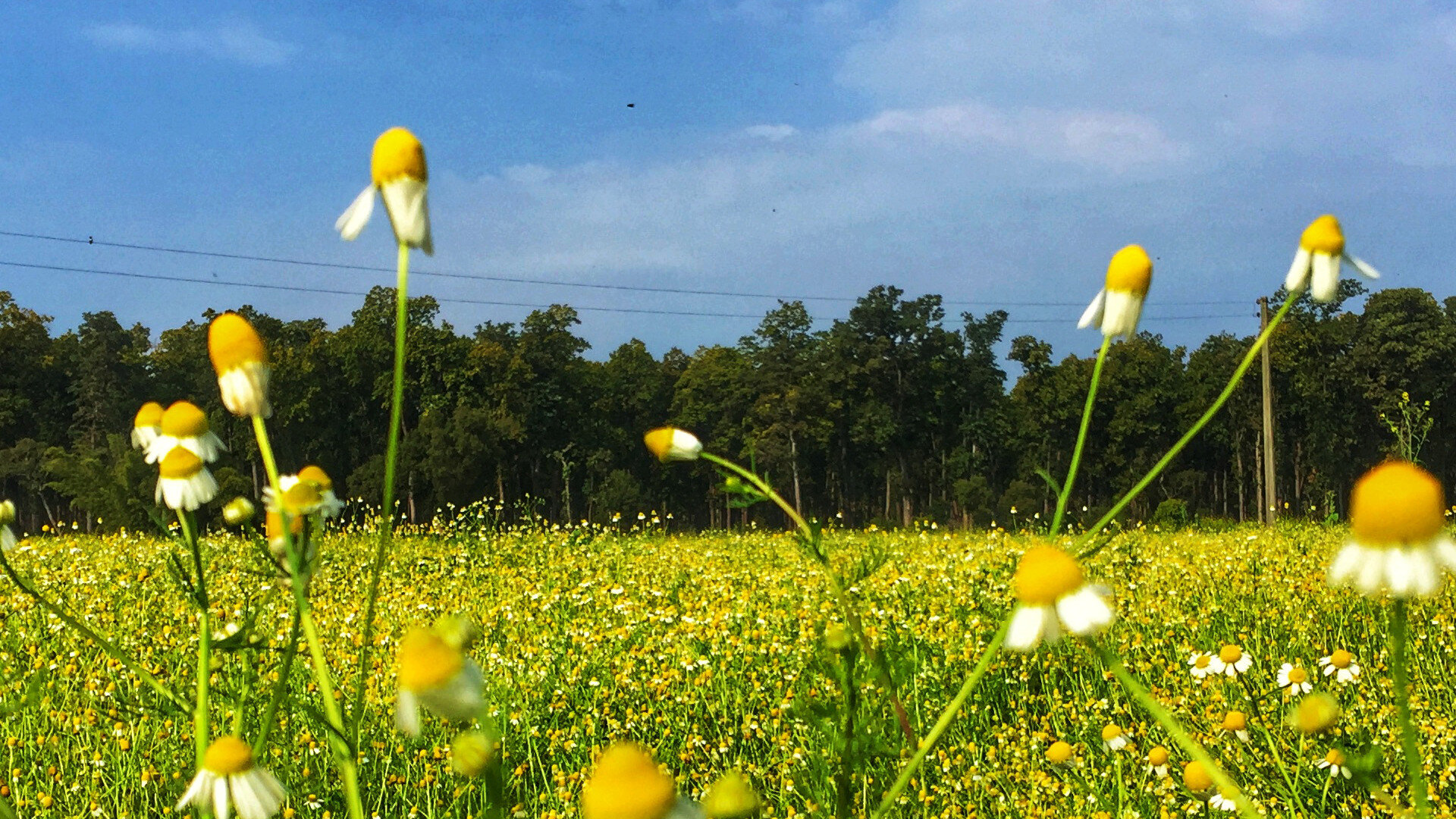
Exploring a part of Far West - Nepal
Far-West Region, less known part of Nepal holds the beauty that one should visit while traveling to Nepal. Jungle Safari at Shuklaphanta National Park, visiting Dohara Chandani bridge Nepal’s longest bridge touring around Mahendranagar, are undoubtedly becoming newest tourist destinations in Nepal.
Travelling to a city that is underrated for its beauty has a different feel. Far-West is the region, where most people are aware of its existence but rarely consider it as a travel destination. I and my amigos take on a road trip to this unknown destination to explore the place, culture and food.
You always have an option to fly, but for me, 18 hours of night bus journey with my amigos sounds more fun. We left the valley at around 6 in the evening and reached Dhangadi by noon the very next day. Fortunately, enough one of my friends is from Dhangadi and her family welcomed us wholeheartedly. Our plan for this trip was to explore Dhangadi, Mahendranagar and visit the nearest Indian border, Paliya.
As soon as we reached Dhangadi the first thing to try is the local “Tato Panipuri”. One can find these stalls almost everywhere. Crunchy puri filled with warm and spicy mashed potato and beans dipped in mouthwatering spiced water is all you would have wanted. Typically panipuri found in the valley offers cold mashed potato with onions, spices and only one type of pani (water) however the warm fillings with khatha (sour) and mitha (sweet) pani is just lips smacking good.
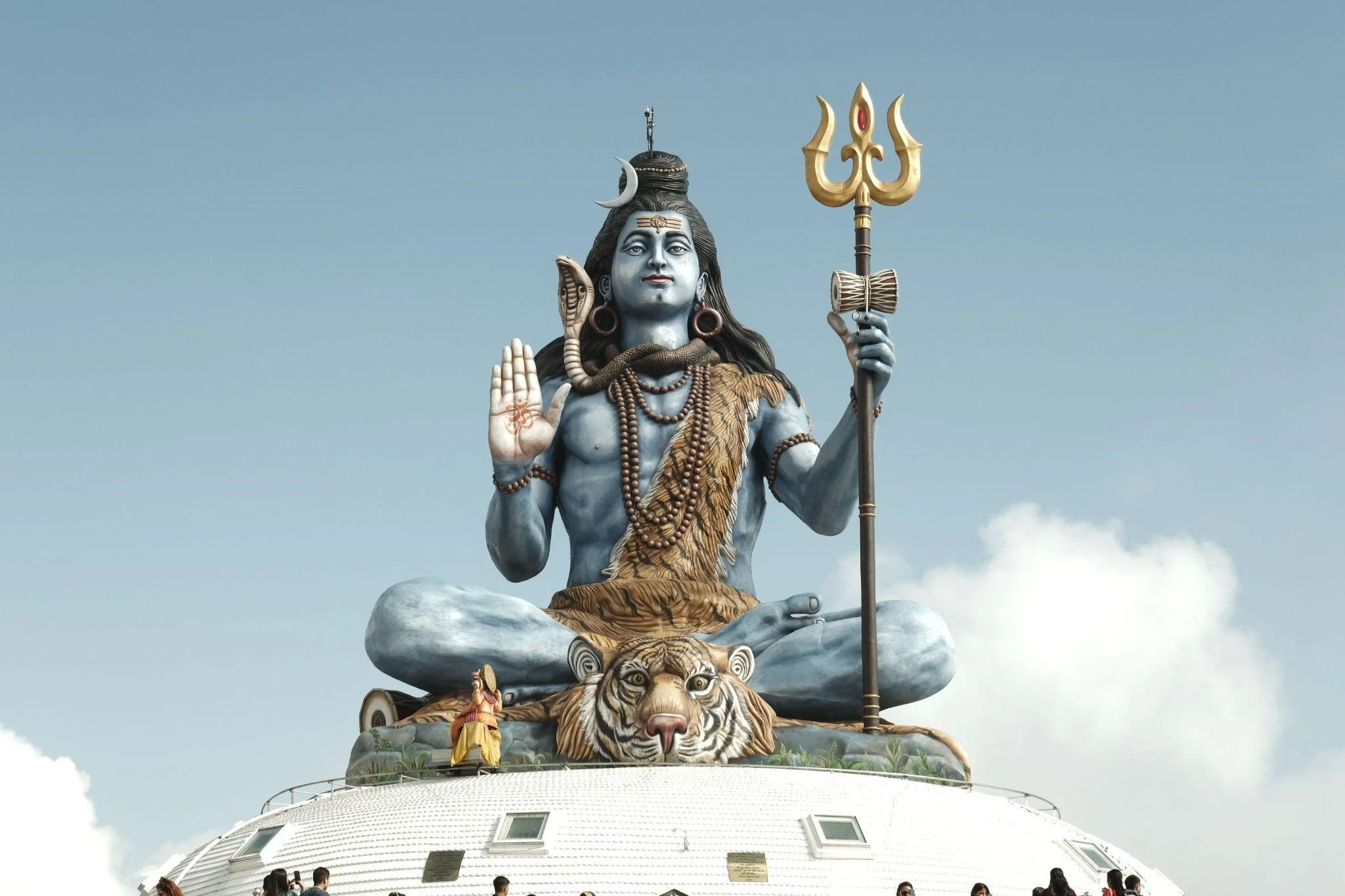
Just a few kilometres away from the main city is Shivapuri Dham which houses the world’s tallest Shiva linga. Taking a tuk-tuk from there, we visited Jhokhar Taal, a place where one can enjoy peace of mind and appreciate the beauty of nature.
Almost an hour drive from Dhangadi is Mahendranagar. Places you shouldn’t be missing out here are Shuklaphanta National Park, Dodhara Chandani Bridge and Linga. We booked a Jeep for our jungle safari at Shuklaphanta, which is a must-try activity. Our tour guide was kind enough to share a cup of tea and some cookies for each one of us during our safari and explain the history of Shuklaphanta and how the place Mahendranagar was born. Almost after 4 hours of jungle safari which was breathe taking we visited Dodhara Chandani Bridge, which is Nepal’s longest bridge measuring 1 kilometre. An hour of a bumpy ride on a tuk-tuk from Mahendranagar bus park, Linga is a religious place with naturally formed stones which resembles tall sandcastles. A photograph of this place cannot justify the beauty which was seen at the moment. According to locals, the stones grow tall gradually as time passes.
Our next destination was Paliya, the nearest border of India from Dhangadi. An hour of the bus ride (which has a terrifying story in itself) from Nepal-India Border, we reached Paliya, India. With some shopping done, we went to a dhaba (local Indian restaurant) which serves one of “The best Indian food”.
A week journey to the far-west was joyous and fun. My favourite part of travelling with my amigos was making memories that will remain forever and the jungle safari at Shuklaphanta National Park. The less known part of our country holds the beauty that should be visited at least once.
Unnati Nyachhyon
POPULAR ITINERARIES
SIMILAR POSTS

7 Things to do in Bhaktapur Durbar Square
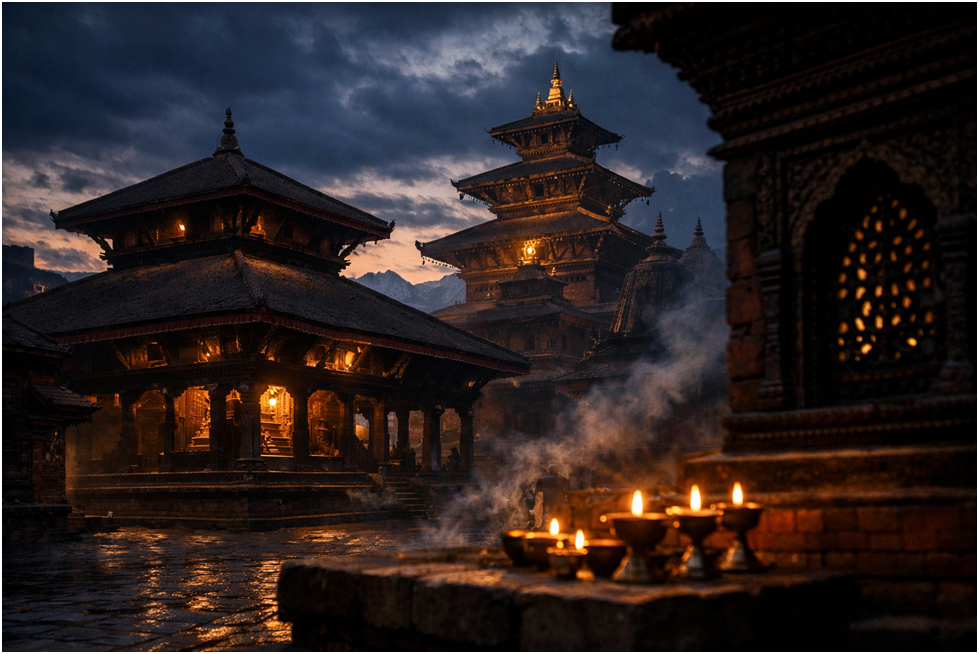
7 Things to do while visiting the Bhaktapur Durbar Square in Bhaktapur, Nepal. Bhaktapur Durbar Square, a UNESCO World Heritage site is the heart of the ancient city of Bhaktapur built with centuries old rich architecture among its bricked temples, palaces and an antique culture in its lively streets.
Situated along the eastern edges of the valley, Bhaktapur Durbar square is like a get-out from the noisy and dusty roads of the city. The heart of the ancient city of Bhaktapur is built with centuries old rich architecture among its bricked temples, palaces and is a blessing when it comes to reflection of antique culture between its lively streets.
Admire the Artistic Streets
55 Window Palace
National Art Gallery
Siddha Pokhari
Look for Street Foods!
Dattatreya Mandir
The Peacock Shop
Not only being one of the world heritage sites of Kathmandu, it stands as a representation of Nepalese tradition and is inhabited by indigenous Newari people across the historical monuments that signify medieval age culture.
Entering inside this ancient land of wonders, here is a list of 7 things you can do here in Bhaktapur Durbar Square.
Admire the Artistic Streets
Just as you take a step in the graceful land of Bhaktapur Durbar Square, the rich, artistic streets will excite your curious spirit right away. Under the narrow roofs and through the busy gullies, as you walk down, the brightening feeling held among each of the shops and stores with the complimenting pop of colors and artistic pieces spread out to be sold will pass by you. It's hard not to stop by and look at these wonderful handmade artifacts that's hung all over the city, waiting to be sold as a piece of the skilled Nepalese artists and craftsmen. So, as you decide to visit Bhaktapur, make sure you take yourself to a nice little souvenir shopping across its streets.
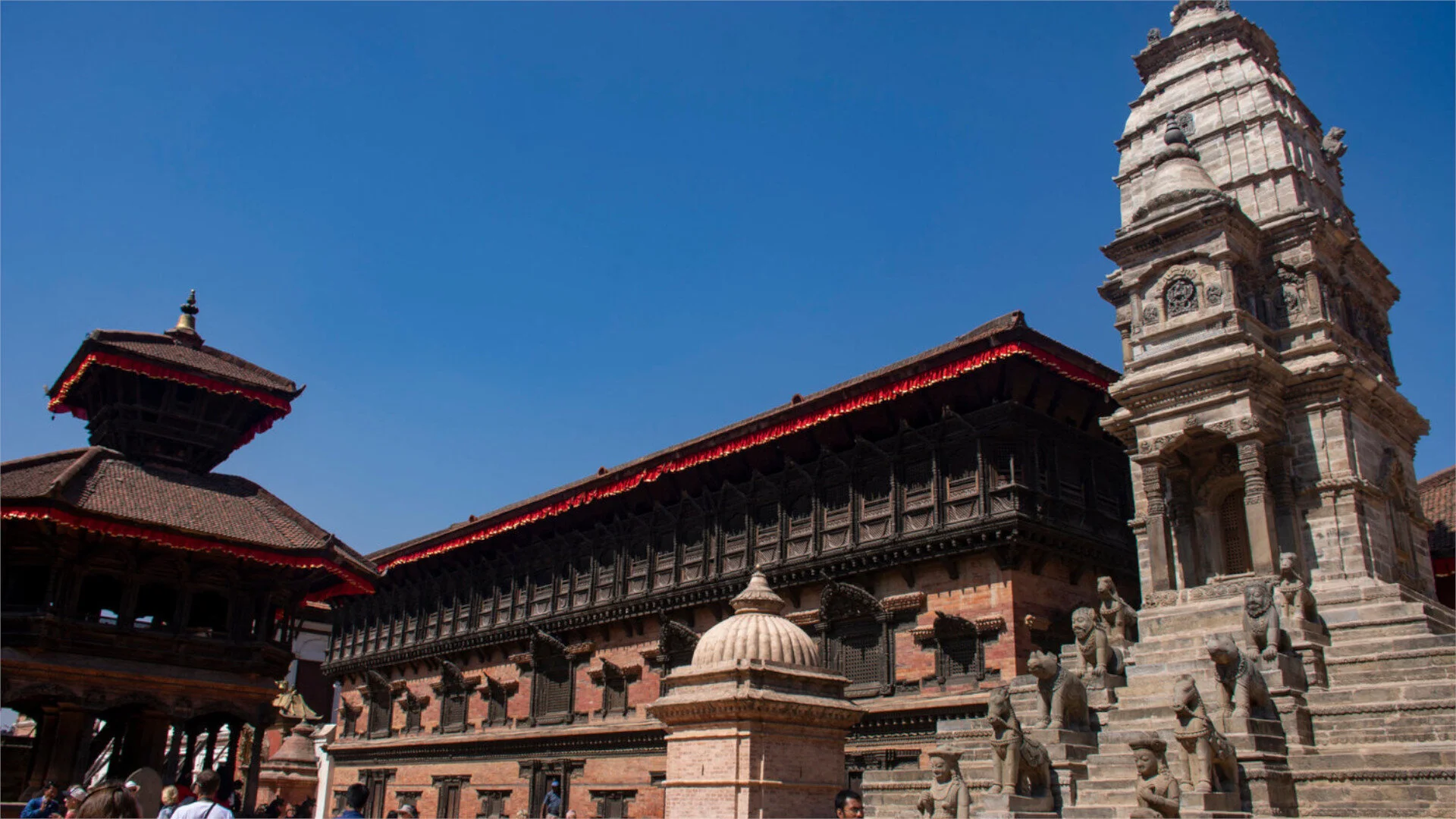
55 Window Palace
Built in around the corner of the 15th century, the 55 Window Palace is a majorly highlighted architectural artifact of Bhaktapur Durbar Square. It was constructed by King Bhupatindra Malla for his Royal Family. The beautifully constructed palace overlooks the red and brown city of Bhaktapur through the large area it covers. As per the name, the 55 windows circle the top floor of the palace, creating a new form of treasure when it came to 15th century architecture. It has now been regarded as a national gallery when it comes to fine, rich ancient craftsmanship.
National Art Gallery
As you look around the Durbar square, you’ll notice about 3 museums right around the corner. Exploring these museums, you’ll get the opportunity to surf through the ancient art pieces, Buddhist Thangkas, palm-leaf manuscripts, wooden, metal and stone craftsmanship artifacts and a series of historical wonders from all over the hundreds of years. Starting from portraits of the Kings of Nepal to the rich manuscripts and paintings of time, the long list of artistic features of the city will absolutely astound you, and make you leave with a greater desire to know more about it.
Siddha Pokhari
This beautiful pond is situated in the outskirts of the durbar square as a perfect spot if you’re looking for an escape from the crowded, dusty city area. It is the kind of place where you’d love a nice stroll around the pond during the mornings or the evenings. You could also take in the calming chance to feed the school of fishes that run all over the pond. The beautiful moss-green color of the water as the afternoon sun hits its waves will definitely be the highlighting point of your visit in between the white and golden walls of the surrounding the it on the four sides.
Look for Street Foods!
Street foods being a part of every Nepali’s heart, Bhaktapur offers a series of delicious eateries around the edges and corners of its cheerful streets. Starting from the one and only special Juju Dhau, the sweet, satisfying taste of it gives in just enough flavor of what this intriguing city has in store for you. Similarly, the country’s favorite, Pani puri and Chatpates; Bhaktapur is also one of the most famous places that serves the best of those in the stalls placed all over. It also serves other absolutely compelling snacks such as Aloo-cha, mix bara, Newari snacks, kulfi and many more.
Dattatreya Mandir
As you dig deeper within the bustling streets of Bhaktapur Durbar Square, you’ll discover this large, old and sacred temple standing still. Dattatreya temple is another of the list of temples of Bhaktapur that holds a significant historic and religious value, is an artistic sanctuary with traditionally pleasing exteriors and interiors. It is believed that the entire three-storied temple is supposed to be constructed from the timber of a single tree. And because of that, it has been able to resist different natural calamities for centuries.
The Peacock Shop
Also known as a handmade Lokta Paper Factory and gift shop, hidden among the quiet corner of the Durbar Square lies this house of artistry. Bhaktapur is a home for a huge number of art and craft people whose entire lives depend on reflecting the artful quality of the city. Through the long history of generation, this Lokta paper has been making Nepali papers, turning them in different forms and selling them as gifts to the local people as well as the tourists. The entire artistic features of the durbar square are understood by the look of the hardworking, creative hands put in these kinds of factories. The kind of creativity that not only makes paper, but builds cities. Your perspective towards the truth of traditional art will totally change as you admire the worn out, yet beautiful behind the scene picture of the visionary contributions made by the local people in this particular Lokta paper factory.
POPULAR ITINERARIES
SIMILAR POSTS
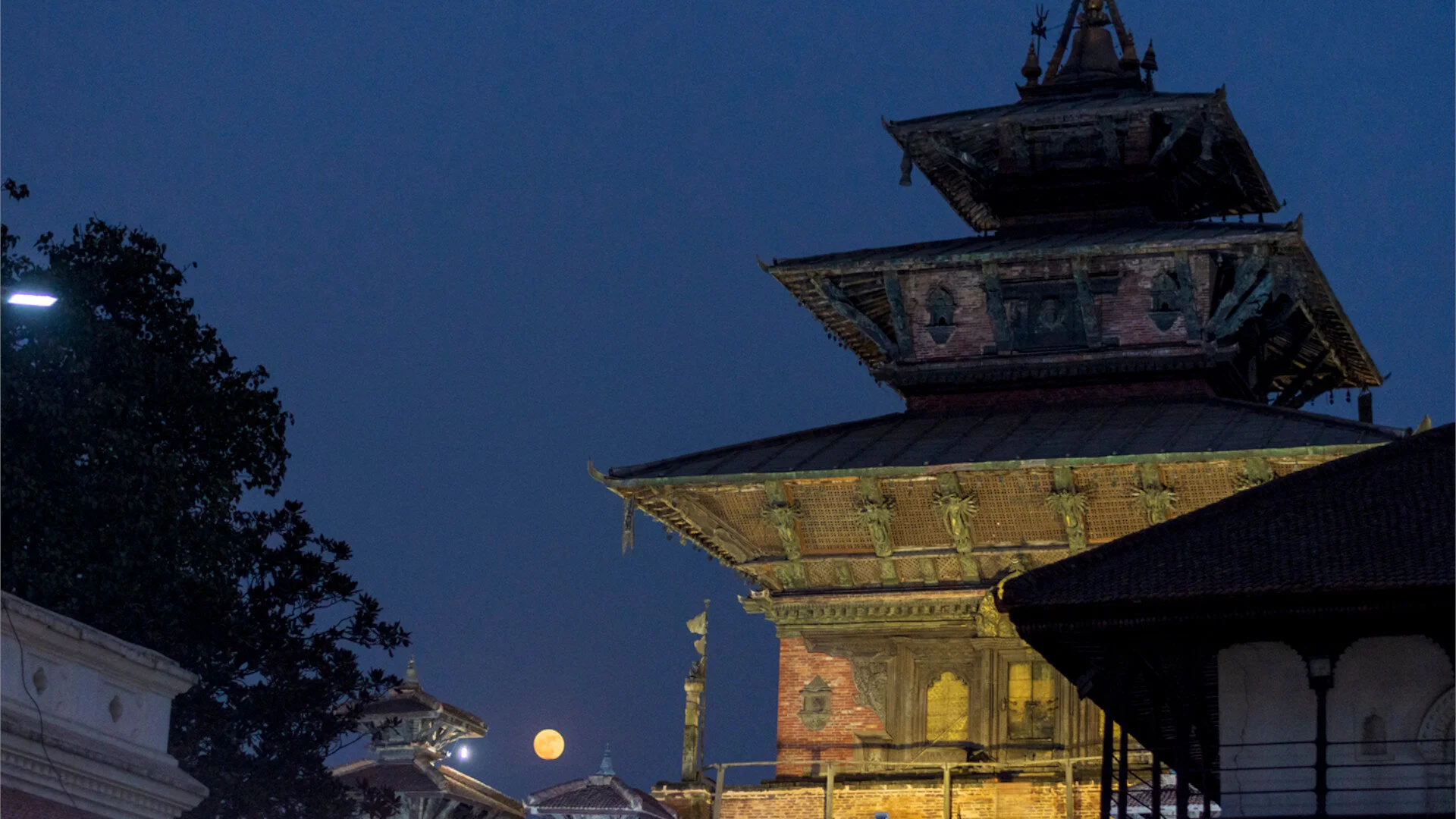
7 Things to do in Kathmandu Durbar Square
Things to do while visiting the Kathmandu Durbar Square in Kathmandu, Nepal. Kathmandu Durbar Square, also locally known as Basantapur is a UNESCO World Heritage site and an amalgam of the history of the Kathmandu.
One of the most iconic destinations one must visit during their trip to Nepal has to be Kathmandu Durbar Square. Locally known as Basantapur, the area today is a UNESCO World Heritage site and an amalgam of the history of Kathmandu. Featuring temples, monuments and architecture from the Ancient, Medival and Modern Era of Nepali History. At times, the site seems unreal due to the variety of facades in one place.
The best portrayal of this is at the crossroads of the Kumari house. With the iconic, European Baroque Architecture of Gaadi Baithak on the right and the beautiful Newar architecture of the Kumari house sit side to side.
Visit The Kumari House
Have Tea At Mama’s Tea Shop
A Selfie At Kaal Bhiarav
A Meal at Freak Street
Take Blessings at Jana Bahal
A Brisk Walk
Bypass The Street Hawkers
In this article, we collect the 7 things one must do, while visiting the Durbar Square area. The activities are a collective of activities which encompass, exploring history and activities which is profoundly loved by the people of Nepal.
Visit The Kumari House
The Kumari house which lies opposite to the iconic white palace of Gaddi Baithak has stood tall since the Malla Era of Nepali History. It is home to the Living Goddess of Kathmandu, also known as the Royal Kumari. Apart from housing one of the most important deities of the Newar Pantheon, it also boasts one of the most amazing woodcrafts of the Newar people. The entrance of the Kumari House features a Thorana which features the depiction of Durga and Bhawani. The small narrow entrance opens to a beautiful square which at times feels like a gateway to the past.
If luck is on your side, as you upwards you shall get to witness the Living Goddess herself, looking down at her devotees.
Have Tea At Mama’s Tea Shop
We Nepalese can’t live or breadth without a cup of tea! Amidst all the cafe’s one can enjoy a good cup, the best way to experience the true Tea culture would be to have it at a small tea house, sitting in a stool by the curve, surrounded by the people and their activities. Mama’s Tea Shop is one of the most popular tea shops in Basantapur and it lies near Himalayan Java ( The Irony). One can look it up in Google Maps or ask anyone in the area, they shall greet you with a familiar smile and show you where it is.
One can enjoy a selection of 3 tea’s; Masala Milk, Black and Lemon. It’s a pay first establishment and you shall be seated well, in the Durbar Square itself and the tea shall be brought to you. The best time is during the evening, facing west one can enjoy a magnificent view while sipping a warm cup of tea.
A Selfie At Kaal Bhiarav
One of the most iconic stone carving in the Basantapur Durbar Square premises is of Kaal Bhairav. In short Kaal Bhairav stands for the Bhairav of time, and is revered by both Hindu’s and Buddhists. The exact history of the creation of the iconic stone culture is still debated but all agree that it is one of the most important depictions of Bhairav in the valley. Before you take a great picture, which shall serve as a memento make sure to take blessings.
A Meal at Freak Street
Popularized during the hippie era of the ’60s and ’70s in Nepal, Freak Street was and still is a popular hangout for the youth and eccentric. It is also home to a wide selection of traditional and fusion eateries and cafes. Make sure to enjoy a great meal at Freak Street, which is recommended during the weekend as it shall feature live music.
Take Blessings at Jana Bahal
Jana Bahal which lies in the outskirts of the Durbar Square is home to another important deity in the Newar Pantheon, which is locally known as Seto Macchindranath. The Bahal Square is centred by a two-story pagoda temple, housing the deity and is surrounded by chaitya’s and mandala’s dedicated by various families to the God’s.
A Brisk Walk
Well if you are living in Thamel, then your quite close to the core region of the Durbar Square. Fancy a morning stroll? The Durbar Square region in the mornings is completely different, less crowded, and in the morning golden hour, the temples have this magnificent glow to them. One can get to enjoy the local assortment of breakfast foods, the farmer’s market and beautiful experience.
Bypass The Street Hawkers
The one thing that every traveller in Basantapur has to do is well, bypass the Street Hawkers. The best-recommended way is with a beautiful smile and thanks you. At times it works but some are more persistent, during those times the best recommendation is to keep at your business and they get tired and just move away. It is not recommended to purchase from the street hawkers as the items they sell can be commonly found in the markets of Thamel or Basantapur at a much lower price.
POPULAR ITINERARIES
SIMILAR POSTS
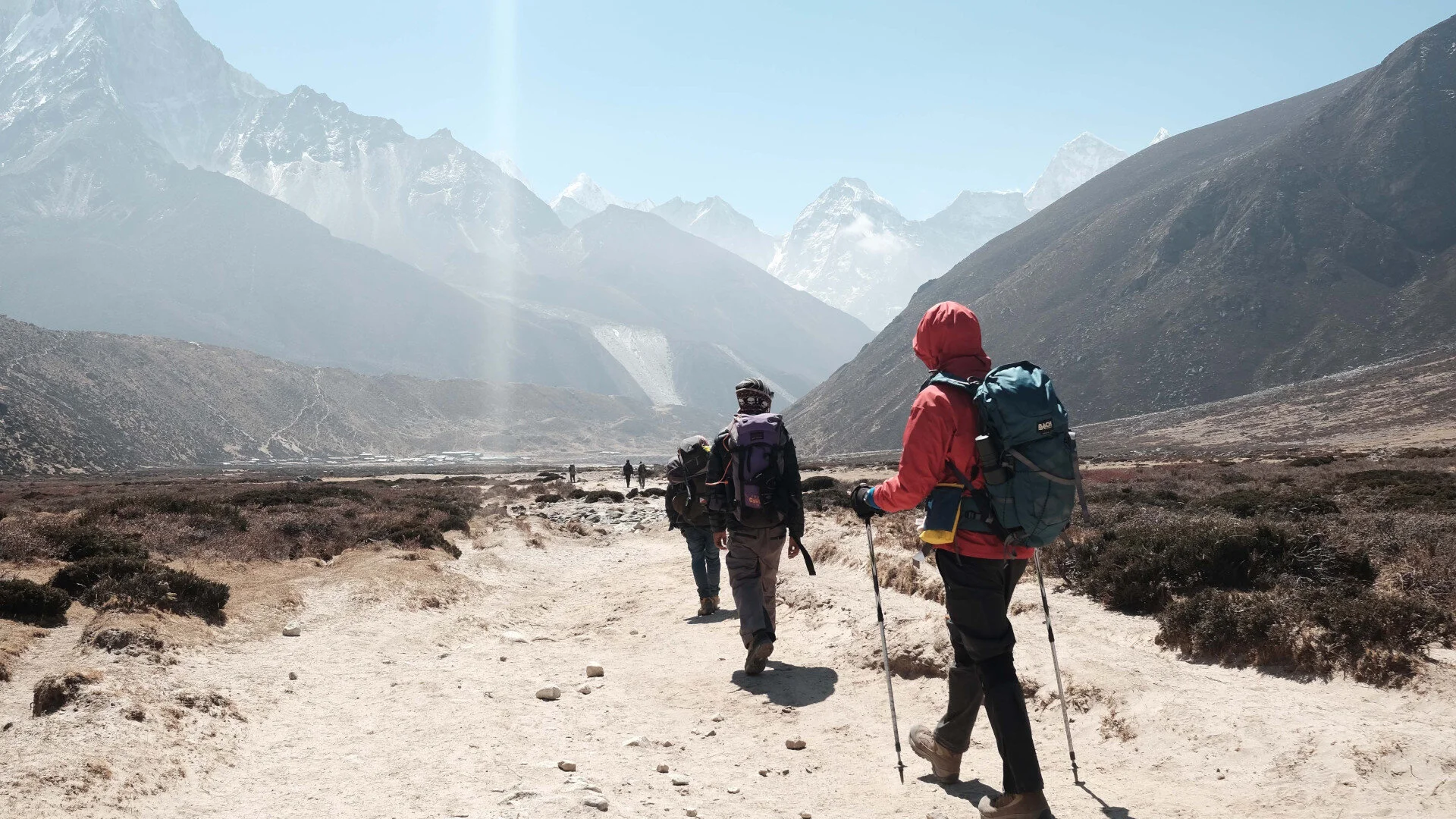
National Parks In Nepal - Part III
With an avid diversity of flora and fauna - which range from the lowlands of Terai to the Himalayan mountains, Nepal has several protected areas worth visiting. Nepal's National Parks are popular among the tourist for activities like tour and trek.
Home to an avid diversity of flora and fauna, which range from the lowlands of Terai to the Himalayan mountains. Each bio-zone host's multiple ecosystems, which are called home by thousands of species of birds, mammals, reptiles and amphibians. Nepal’s natural beauty has always been its pride and conserving it has always been a top priority. Thus under the National Parks and Wildlife Conservation Act, 2020 (1973AD), the government of Nepal created the guidelines to declare and maintain National Parks, Conservation Areas, and Hunting Reserves
Shivapuri Nagarjun National Park
Banke National Park
Shuklaphanta National Park
Parsa National Park
Today the protected areas of Nepal cover mainly forests and are located at various altitudes in the Terai, as well as in the foothills of the Himalayas and the mountains themselves. Nepal even though is small in terms of area size covering only 147,181 sq km. The altitudes range from 67 m to 8,848m. This extreme altitudinal gradient has resulted in 11 bio-climatic zones ranging from lower tropical below 500m to nival above 5,000m in the High Himalayas encompassing nine terrestrial ecoregions with 36 vegetation types. The government of Nepal under the National Park and Wildlife Conservation Act, 2020(1973AD) established a total of 12 National Parks, 1 Wildlife Reserves, 6 conservation Areas and 1 Hunting Reserve. In 2017, the Shuklpahanta and Parsa Wildlife Reserves were upgraded into National Parks.
In this series of articles, we explore the various National Parks, their level of accessibility and attractions.
Shivapuri Nagarjun National Park
Province: 03
Distance From Kathmandu: 32.5KM
Accessibility: One may choose to drive, ride or walk to the park due to its proximity to Kathmandu
Attraction: Wildlife Encounters, Cycling, Hiking, Sightseeing, Wildlife Encounters, Landscape Photography
Shivapuri Nagarjun National Park is the ninth national park in Nepal and was established in 2002. It is located in the country's mid-hills on the northern fringe of the Kathmandu Valley and named after Shivapuri Peak of 2,732 m (8,963 ft) altitude.
It covers an area of 159 km2 (61 sq mi) in the districts of Kathmandu, Nuwakot and Sindhupalchowk, adjoining 23 Village Development Committees. In the west, the protected area extends to the Dhading District. The area has always been an important water catchment area, supplying the Kathmandu Valley with several hundred thousands cubic litres of water daily. In 1976, the area was established as a protected watershed and wildlife reserve. In 2002, it was gazetted as Shivapuri National Park, initially covering 144 km2 (56 sq mi).It was extended by the Nagarjun Forest Reserve covering 15 km2 (5.8 sq mi) in 2009.
Banke National Park
Province: 05
Distance From Kathmandu: 472.6 KM
Accessibility: By Air, One can take direct flights to Nepalgunj and the park is an hour drive away. By Road, the park is 8 hours from the city of Mahendranagar and 7 Hours from Dhangadi, reaching the cities of Mahendranagar or Dhangadi is an additional 9-10 hours from Kathmandu.
Season: October- April
Attractions: Jungle Safari, Wildlife Encounters, Tiger Tracking, Landscape Photography, Cultural Experience, Fishing, Bird Watching, Cycling.
Banke National Park is located in the Mid-Western Region, Nepal and was established in 2010 as Nepal’s tenth national park after its recognition as a "Gift to the Earth". The protected area covers an area of 550 km2 (210 sq mi) with most parts falling on the Churia range. The park is surrounded by a buffer zone of 344 km2 (133 sq mi) in the districts of Banke, Salyan and Dang.
Together with the neighbouring Bardia National Park, the coherent protected area of 1,518 km2 (586 sq mi) represents the Tiger Conservation Unit (TCU) Bardia-Banke. The protected area holds tiger and four-horned antelope. In 2014, a ruddy mongoose was recorded for the first time in the protected area.
Shuklaphanta National Park
Province: 7
Distance From Kathmandu: 700 KM
Accessibility: By Air, one can take direct flights to Dhangadi Airport and the park centre is a 2-hour drive at a distance of 66 Km.
Season: Mid September- Mid December or February- May
Shuklaphanta National Park is a protected area in the Terai of the Far-Western Region, Nepal, covering 305 km2 (118 sq mi) of open grassland, forests, riverbeds and tropical wetlands at an altitude of 174 to 1,386 m (571 to 4,547 ft). It was gazetted in 1976 as Royal Shuklaphanta Wildlife Reserve. A small part of the reserve extends north of the East-West Highway to create a corridor for seasonal migration of wildlife into the Sivalik Hills. The Syali River forms the eastern boundary southward to the international border with India, which demarcates the reserve’s southern and western boundary.
The Indian Tiger Reserve Kishanpur Wildlife Sanctuary is contiguous in the south; this coherent protected area of 439 km2 (169 sq mi) represents the Tiger Conservation Unit (TCU) Sukla Phanta-Kishanpur, which covers a 1.897 km2 (0.732 sq mi) block of alluvial grasslands and subtropical moist deciduous forests.
The protected area is part of the Terai-Duar savanna and grasslands ecoregion and is one of the best-conserved examples of floodplain grassland. It is included in the Terai Arc Landscape.
Parsa National Park
Province: 2
Distance From Kathmandu: 106 KM
Accessibility: By Air and road, one can drive or take a flight to Simra in Bara District from where the reserve headquarters is seven kilometres away.
Attractions: Jungle Safari, Wildlife Encounters, Jungle Hikes, Wildlife Photography, Cultural Experience
Parsa National Park is a protected area in the Inner Terai lowlands of south-central Nepal. It covers an area of 627.39 km2 (242.24 sq mi) in the Parsa, Makwanpur and Bara districts and ranges in altitude from 435 m (1,427 ft) to 950 m (3,120 ft) in the Siwalik Hills. It was established as a wildlife reserve in 1984. A buffer zone declared in 2005 comprises 285.3 km2 (110.2 sq mi). In 2015, the protected area has been extended by 128 km2 (49 sq mi). Since 2017, it has the status of a National Park.
In the north of the protected area, the Rapti River and Siwalik Hills form a natural boundary to human settlements. In the east, it extends up to the Hetauda – Birgunj highway. In the south, a forest road demarcates the boundary. Adjacent to the west is Chitawan National Park. Together with the Indian Tiger Reserve Valmiki National Park, the coherent protected area of 2,075 km2 (801 sq mi) represents the Tiger Conservation Unit (TCU) Chitwan-Parsa-Valmiki, which covers a 3,549 km2 (1,370 sq mi) block of alluvial grasslands and subtropical moist deciduous forests.
POPULAR ITINERARIES
SIMILAR POSTS
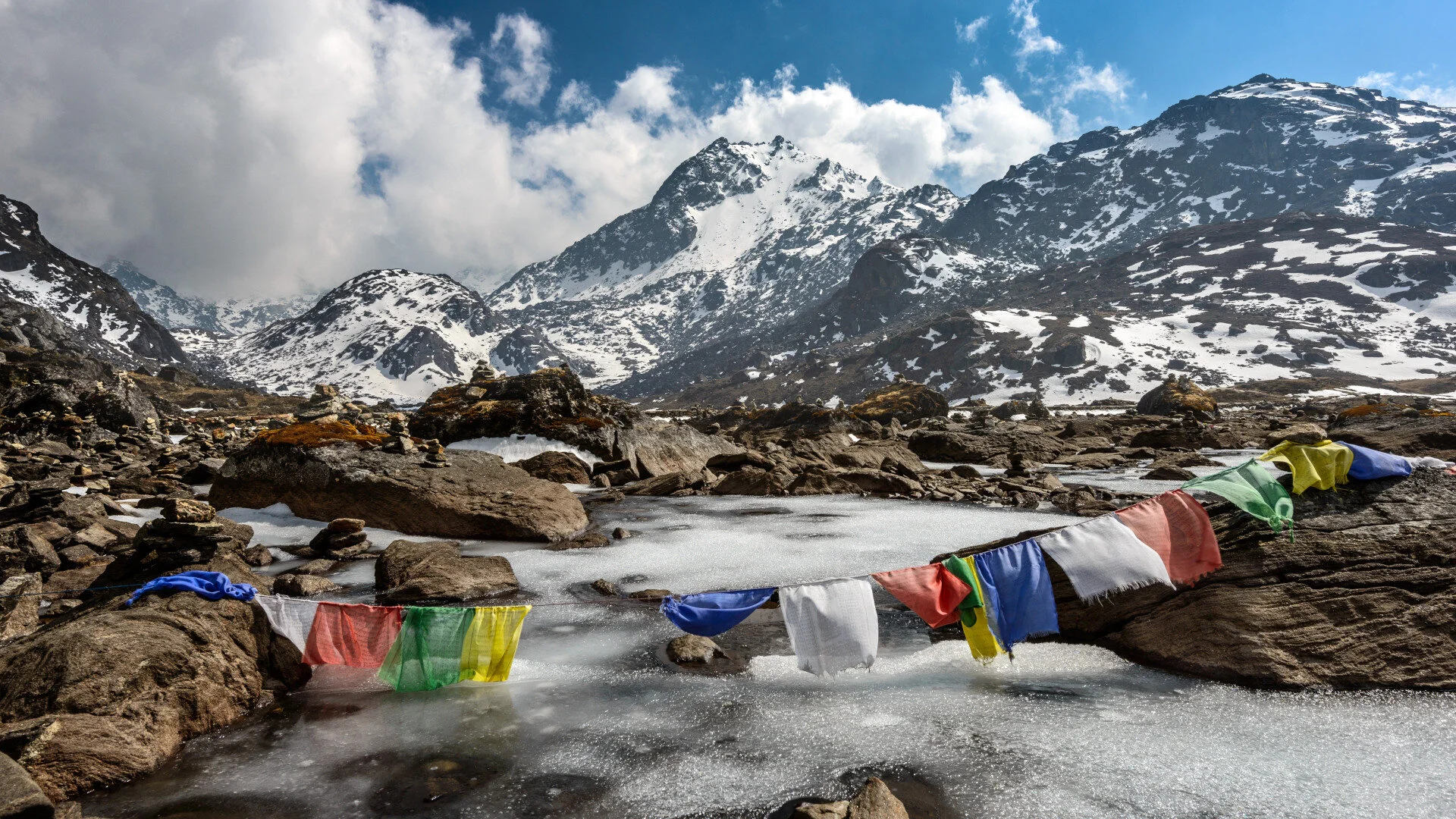
National Parks In Nepal - Part II
Nepal is home to an avid diversity of flora and fauna, which range from the lowlands of Terai to the Himalayan mountains. Each bio-zone host's multiple ecosystems, which are called home by thousands of species of birds, mammals, reptiles and amphibians.
Nepal is home to an avid diversity of flora and fauna, which range from the lowlands of Terai to the Himalayan mountains. Each bio-zone host's multiple ecosystems, which are called home by thousands of species of birds, mammals, reptiles and amphibians. Nepal’s natural beauty has always been its pride and conserving it has always been a top priority. Thus under the National Parks and Wildlife Conservation Act, 2020 (1973AD), the government of Nepal created the guidelines to declare and maintain National Parks, Conservation Areas, and Hunting Reserves
Khaptad National Park
Shey Phoksundo National Park
Bardiya National Park
Makalu National Park
Today the protected areas of Nepal cover mainly forests and are located at various altitudes in the Terai, as well as in the foothills of the Himalayas and the mountains themselves. Nepal even though is small in terms of area size covering only 147,181 sq km. The altitudes range from 67 m to 8,848m. This extreme altitudinal gradient has resulted in 11 bio-climatic zones ranging from lower tropical below 500m to nival above 5,000m in the High Himalayas encompassing nine terrestrial ecoregions with 36 vegetation types. The government of Nepal under the National Park and Wildlife Conservation Act, 2020(1973AD) established a total of 12 National Parks, 1 Wildlife Reserves, 6 conservation Areas and 1 Hunting Reserve. In 2017, the Shuklpahanta and Parsa Wildlife Reserves were upgraded into National Parks.
In this series of articles, we explore the various National Parks, their level of accessibility and attractions.
Khaptad National Park
Province: 7
Distance From Kathmandu: 448 km
Accessibility: 2-day trek from Silgarhi Bazar. One can reach Silgarhi Bazar either by taking a flight to Dhangadi and driving to Silgarhi Bazar (6hrs) or get a bus to Attariya Chowk, Kailali from Central Bus Station in Kathmandu and then it's another 9 hours to reach Silgarhi Bazar via a local bus.
Attraction: Ashram of Khaptad Baba, Saileswori, Ramroshan, Bird Watching, Trekking, Wildlife Photography.
Khaptad National Park was established in 1984 on the advice of the region's holy man Khaptad Baba. The renowned Khaptad Baba Ashram, a religious site where Hindu pilgrims come to worship Shiva on the full moon of July–August each year, is located near the park headquarters. A buffer zone of 216 km2 (83 sq mi) was declared in 2006. Khaptad Baba moved to the area in the 1940s to meditate and worship. He spent about 50 years as a hermit and became a renowned spiritual saint. Khaptad National Park is a protected area in the Far-Western Region, Nepal that was established in 1984. Stretching over the four districts of Bajhang, Bajura, Achham and Doti it covers an area of 225 km2 (87 sq mi) and ranges in elevation from 1,400 m (4,600 ft) to 3,300 m (10,800 ft).
Shey Phoksundo National Park
Province: 6
Distance From Kathmandu: 315 km
Accessibility: By air, Shey Phoksundo can be only accessed through Nepalgunj or which has to take a flight to Nepalgunj and from there to Juphal in Dolpa. By road, it makes 3 hrs 40 minutes to reach Shey Phoksundo National park via a private vehicle.
Attraction: Shey Phoksundo Lake, Trekking, Shey Gompa Monastery, Crystal Mountain, Landscape Photography
Season: Spring and Autumn
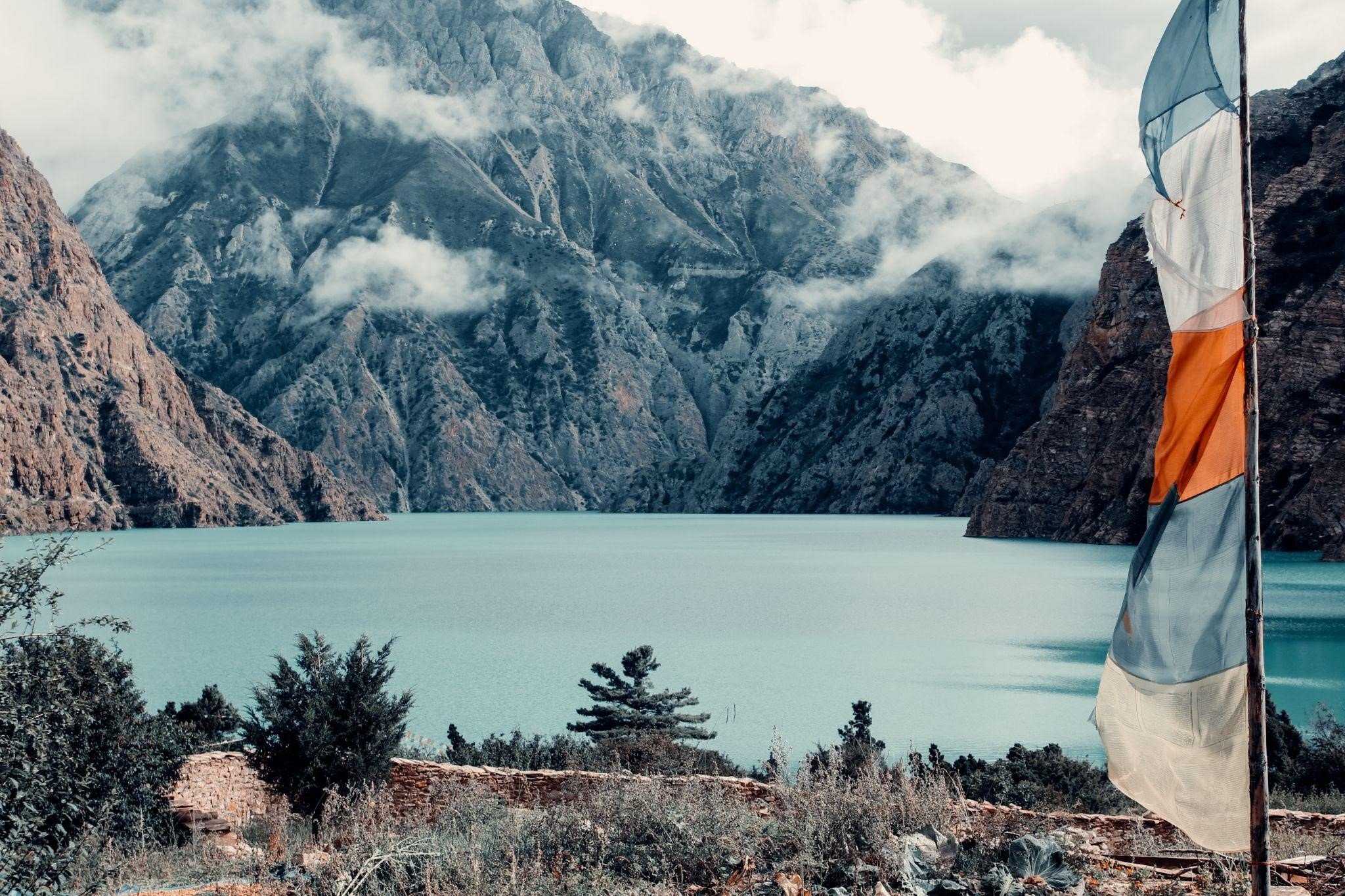
Shey Phoksundo National Park is the largest and only trans-Himalayan national park in Nepal. It was established in 1984 and covers an area of 3,555 km2 (1,373 sq mi) in the districts of Dolpa and Mugu in the Mid-Western Region, Nepal. The protected area ranges in elevation from 2,130 to 6,885 m (6,988 to 22,589 ft).Phoksundo Lake is the park's prominent feature, located at an elevation of 3,612 m (11,850 ft). Shey Phoksundo National Park provides a diversity of spectacular landscapes and ranks among the most scenic mountain parks in the world. Much of the park lies north of the Himalayan crest. Elevations range from 2,130 m (6,990 ft) in the southeast near Ankhe to 6,883 m (22,582 ft) at the summit of Kanjiroba Himal, which lies at the southern edge of the Tibetan plateau. Phoksundo Lake lies at an elevation of 3,660 m (12,010 ft) in the upper reaches of the Suligad river. It is surrounded by glaciers and famous for its magnificent turquoise colour. Near the lake’s outlet is the country’s highest waterfall.
Phoksundo Lake has a water surface of 494 ha (1,220 acres) and was declared a Ramsar site in September 2007. The lake is up to 145 m (476 ft) deep, measured using echo-sounding technology.
The Langu river drains the high Dolpo plateau located in the north-east of the park. The Suligad and Jugdual rivers form the southern catchment flowing south into the Thuli Bheri River.
Bardiya National Park
Province: 5
Distance From Kathmandu: 376 km
Accessibility: By Air Kathmandu- Nepalgunj from where the park is 87 km. One can then catch a bus to Mahendranagar or Dhangadi via Ambassa then change the bus to Thakurdwara for Baridya National park. The drive takes around 3 hours by public bus.
By Road, one can catch a bus to Mahendranagar or Dhangadi via Ambassa Bardia. The drive averages out to 13 hours.
Attraction: Adventure Hikes, Bird Watching, Tiger Sighting, Butterfly Watching, Wildlife Encounters, Landscape and Wildlife Photography
Bardiya National Park is a protected area in Nepal that was established in 1988 as Royal Bardia National Park. Covering an area of 968 km2 (374 sq mi) it is the largest and most undisturbed national park in Nepal's Terai, adjoining the eastern bank of the Karnali River and bisected by the Babai River in the Bardiya District. Its northern limits are demarcated by the crest of the Siwalik Hills. The Nepalgunj-Surkhet highway partly forms the southern boundary, but seriously disrupts the protected area. Natural boundaries to human settlements are formed in the west by the Geruwa, a branch of the Karnali River, and in the southeast by the Babai River.
Together with the neighbouring Banke National Park, the coherent protected area of 1,437 km2 (555 sq mi) represents the Tiger Conservation Unit (TCU) Bardia-Banke that extends over 2,231 km2 (861 sq mi) of alluvial grasslands and subtropical moist deciduous forests.
Makalu National Park
Province: 1
Distance From Kathmandu: 175 km
Accessibility: By air to Lukla, Phaplu, Lamidanda, Bhojpur or Tumlingtar. After which one can take a means of public transport to reach the national park
Season: Spring and Autumn
Attraction: Bird Watching, Trekking to Yangle Kharka, Snow Leopard Sighting, Wildlife Encounters, Landscape Photography
Makalu Barun National Park is a national park in the Himalayas of Nepal that was established in 1992 as an eastern extension of Sagarmatha National Park. It is the world's only protected area with an elevation gain of more than 8,000 m (26,000 ft) enclosing tropical forest as well as snow-capped peaks. It covers an area of 1,500 km2 (580 sq mi) in the Solukhumbu and Sankhuwasabha Districts and is surrounded by a buffer zone to the south and southeast with an area of 830 km2 (320 sq mi).
The rugged summits of Makalu, with 8,463 m (27,766 ft) the fifth highest mountain of the world, Chamalang (7,319 m (24,012 ft), Baruntse (7,129 m (23,389 ft)) and Mera (6,654 m (21,831 ft)) are included in the national park. The protected area extends to about 66 km (41 mi) from west to east and about 44 km (27 mi) from north to south. From the Arun river valley in the southeast, located at altitudes of 344–377 m (1,129–1,237 ft), elevation gains about 8,025 m (26,329 ft) to the peak of Makalu. The national park shares the international border with the Qomolangma National Nature Preserve of the Tibet Autonomous Region in the north.
POPULAR ITINERARIES
SIMILAR POSTS
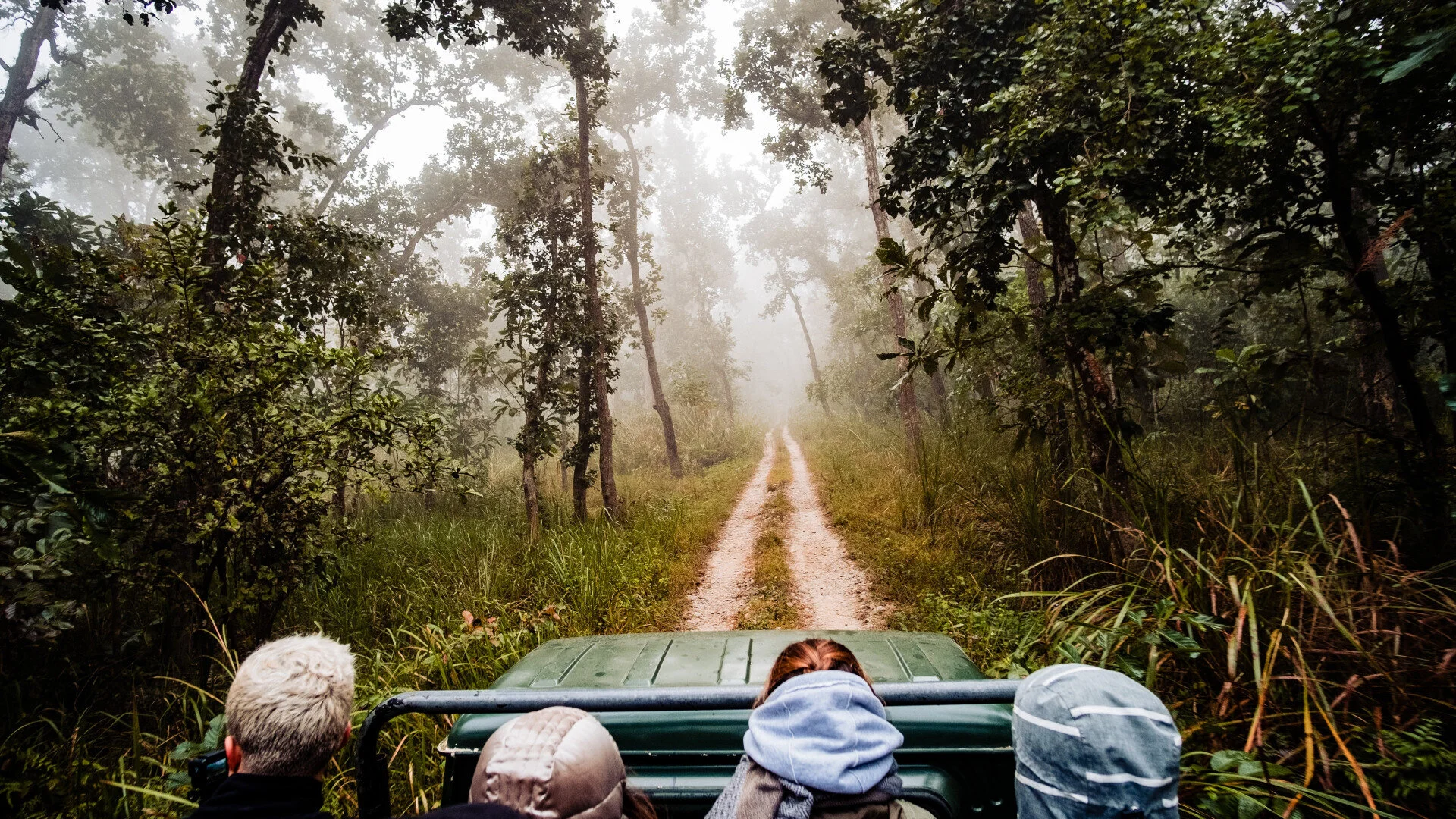
National Parks In Nepal - Part I
With an avid diversity of flora and fauna - which range from the lowlands of Terai to the Himalayan mountains, Nepal has several protected areas worth visiting. Nepal's National Parks are popular among the tourist for activities like tour and trek.
Nepal is home to an avid diversity of flora and fauna, which range from the lowlands of Terai to the Himalayan mountains. Each bio-zone host's multiple ecosystems, which are called home by thousands of species of birds, mammals, reptiles and amphibians. Nepal’s natural beauty has always been its pride and conserving it has always been a top priority. Thus under the National Parks and Wildlife Conservation Act, 2020 (1973AD), the government of Nepal created the guidelines to declare and maintain National Parks, Conservation Areas, and Hunting Reserves.
Chitwan National Park
Sagarmatha National Park
Langtang National Park
Rara National Park
Today the protected areas of Nepal cover mainly forests and are located at various altitudes in the Terai, as well as in the foothills of the Himalayas and the mountains themselves. Nepal even though is small in terms of area size covering only 147,181 sq km. The altitudes range from 67 m to 8,848m. This extreme altitudinal gradient has resulted in 11 bio-climatic zones ranging from lower tropical below 500m to nival above 5,000m in the High Himalayas encompassing nine terrestrial ecoregions with 36 vegetation types. The government of Nepal under the National Park and Wildlife Conservation Act, 2020(1973AD) established a total of 12 National Parks, 1 Wildlife Reserves, 6 conservation Areas and 1 Hunting Reserve. In 2017, the Shuklpahanta and Parsa Wildlife Reserves were upgraded into National Parks.
In this series of articles, we explore the various National Parks, their level of accessibility and attractions.
Chitwan National Park
Province: 03
Distance From Kathmandu: 170 Km
Accessibility: Deluxe Buses Available from multiple Bus Hubs in Kathmandu, Domestic Airlines offer direct flights from Pokhara and Kathmandu to Bharatpur
Attractions: Bird Watch, Natural Escape, Experiencing Tharu and Maithali Culture, Bishazari Tal ( Ramsar Site), CG Ashram, Jungle Safari, Wildlife Encounters, Wildlife Photography
Season: October to March ( Best siting of the wildlife is from January to March)
Chitwan National Park is the first national park in Nepal. It was established in 1973 and granted the status of a World Heritage Site in 1984 AD. It covers an area of 952.63 km2 (367.81 sq mi) and is located in the subtropical Inner Terai lowlands of south-central Nepal in the districts of Nawalpur, Parsa, Chitwan and Makwanpur. In altitude, it ranges from about 100 m (330 ft) in the river valleys to 815 m (2,674 ft) in the Churia Hills.
In the north and west of the protected area, the Narayani-Rapti river system forms a natural boundary to human settlements. Adjacent to the east of Chitwan National Park is Parsa National Park, contiguous in the south is the Indian Tiger Reserve Valmiki National Park. The coherent protected area of 2,075 km2 (801 sq mi) represents the Tiger Conservation Unit (TCU) Chitwan-Parsa-Valmiki, which covers a 3,549 km2 (1,370 sq mi) huge block of alluvial grasslands and subtropical moist deciduous forests.
Sagarmatha National Park
Province: 01
Distance From Kathmandu: 137 km
Accessibility: By Air, one can get flights to Tenzing - Hilary Airport at Lukla from Kathmandu, By road one can catch a bus to Jiri and trek to Sagarmatha National Park which is approximately a 10-day trek. One can also take the bus to Salleri and trek to Sagarmatha National Park which is a 5 days trek. Charter helicopters to Lukla are catered by multiple air groups as well.
Attractions: Mt Everest, Ama Dablam, The Gokyo Complex, Tengboche Monastery, Kala Pathar, Landscape Photography, Experiencing Sherpa Culture, Wildlife Photography.
Sagarmāthā National Park is a national park in the Himalayas of eastern Nepal that is dominated by Mount Everest. It encompasses an area of 1,148 km2 (443 sq mi) in the Solukhumbu District and ranges in elevation from 2,845 to 8,848 m (9,334 to 29,029 ft) at the summit of Mount Everest. In the north, it shares the international border with the Qomolangma National Nature Preserve of Tibet. In the east, it is adjacent to Makalu Barun National Park, and in the south, it extends to Dudh Kosi river.] It is part of the Sacred Himalayan Landscape.
Langtang National Park
Province: 03
Distance From Kathmandu: 30 km
Accessibility: The Langtang Valley Trek begins from Syabrubesi which one can reach via a local or privately hired bus or jeep in 9 - 10 hours from Kathmandu.
Season to Avoid: Monsoon ( June- August)
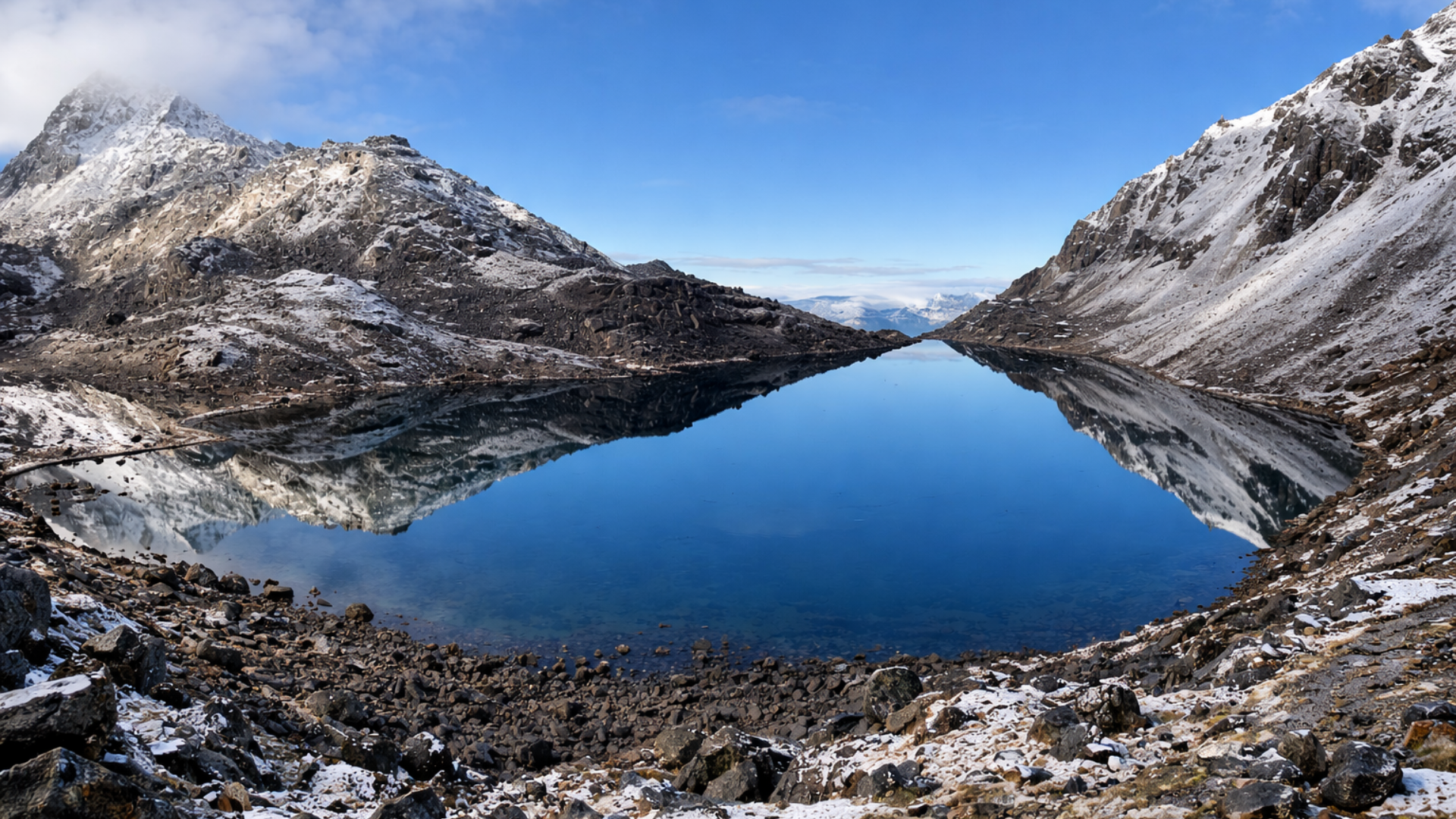
Attractions: Gosaikunda Lake, Experience Tamang and Gurung Culture, Landscape Photography, Lantang Lirung Range, Sacred Ganesh Himal, Ganja La Pass, Kyanjin Gompa
Langtang National Park was established in 1976 as Nepal's first Himalayan national park and the country's fourth protected area. It exceeds an altitudinal range of 6,450 m (21,160 ft) and covers an area of 1,710 km2 (660 sq mi) in the Nuwakot, Rasuwa and Sindhulpalchok Districts of the central Himalayan region encompassing 26 village communities. In the north and east, it is linked with Qomolangma National Nature Preserve in Tibet. The western boundary follows the Bhote Kosi and Trishuli Rivers. The southern border lies 32 km (20 mi) north of the Kathmandu Valley.
The high altitude sacred Gosainkunda lake is located at an altitude of 4,300 m (14,100 ft) inside the park. The Dorje Lakpa range at 6,988 m (22,927 ft) bisects the park from the west-east to south-east. The summit of Langtang Lirung (7,245 m (23,770 ft)) is the highest point in the park.
Rara National Park
Province: 06
Distance From Kathmandu: 375 km
Accessibility: To reach Rara region by air one must take a flight to Nepalgunj, and then from Nepalgunj to Jumla or Talcha (Rara) Airport. From the town of Jumla, it’s a 2-day trek to the National Park whereas from Talca Airport it’s a mere few hours walk to Rara National Park.
Attractions: Rala Lake, Juniper Forest, Landscape Photography, Wildlife Encounters, Bird Watching
Season: Spring, Summer and Autumn. Rara region can also be traversed in the winters but he uncertainty of the weather, low temperatures make the trip a little more difficult than normal.
Rara National Park is a protected area in the Himalayas of Nepal and was established in 1976. Covering an area of 106 km2 (41 sq mi) in the Mugu and Jumla districts, it is the country's smallest national park. Its main feature is Rara Lake at an altitude of 2,990 m (9,810 ft).[1] The park was established to protect the unique flora and fauna of the Humla–Jumla Region of Nepal.
The park ranges in elevation from 2,800 m (9,200 ft) to 4,039 m (13,251 ft) at Chuchemara Peak on the southern side of Rara Lake. On the northern side, the peaks of Ruma Kand and Malika Kand frame the alpine freshwater lake, which is the largest lake in Nepal with a surface of 10.8 km2 (4.2 sq mi) and a maximum depth of 167 m (548 ft). It is oval-shaped with an east-west axis, a length of 5 kilometres (3.1 mi) and a width of 3 km (1.9 mi) draining into the Mugu-Karnali River via Nijar Khola.
SIMILAR POSTS
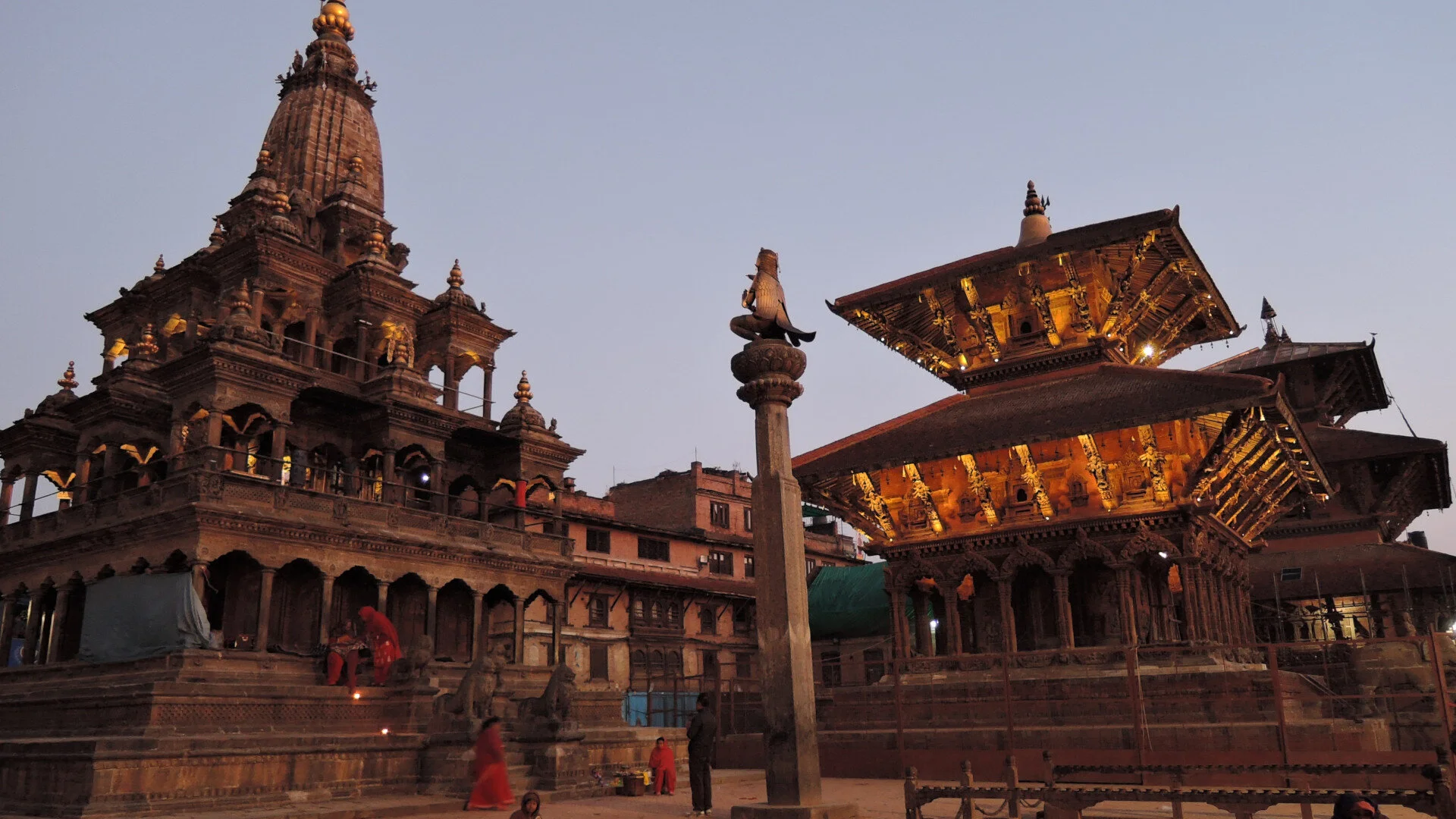
7 Things to do in Patan
Patan, the ancient city located to the Southeast of Kathmandu is popular for its fine arts, ancient Hindu Temples and Buddhist monuments. Patan Durbar Square, a must-visit UNESCO world heritage site in the heart of the city, is popular for its exquisitely carved ancient palaces, temples, and shrines.
There are places away from home that will definitely resonate a sense of warmth that make you feel like you belong. Speaking from experiencing a similar sense of being, Patan is one of those places. If you ever find yourself around Patan, there is a high chance you're going to be in a spin, quite literally because Patan is an artistic labyrinth. It is a vibrant place that artistically binds ancient and modern together. It is unique in existence from the other durbar squares with the numerous gullies that gives it its labyrinthine build. Now if you're going to be around, here are ten things you can do in Patan.
1. Durbar Square
Stating the obvious! Patan is famous for the Newari architecture that features intrinsic wood carvings and brick work. There are several important temples in the area and you can never get tired of the early morning bhajans and the warm lights in the evenings.
2. Patan Museum
Located within the Durbar Square, it is a peaceful and relaxing place with a little garden in the back. While ticketing prices differ, it also has a café inside that will offer you a nice escape from the city.
3. Gully Tour
There are a lot of gullies in Patan that you can end up getting lost. Don't worry though, it wouldn't be the most stressful situation. There are areas built for worship and come out into big beautiful squares after moving around quite a lot of these gullies. I could call them alleyways but that's not that fun now, is it? Truth be told, personally its quite fun getting lost for hours.
4. Morning Treats
Early mornings in Patan are quite satisfying. There are traditional sweet shops offer treats like jeri-swari, gwaramari, malpa that pair well with a nice warm cup of tea. All the shops are always welcoming and early morning walks around the square are a big plus.
5. Rudravarna Mahabihar
Visit the Rudravarna Mahabihar in Okubahal. You'll be treated to beautifully-carved metal statues and the carvings on the walls are a true workmanship. This 1500 year-old monastery is renowned for its art, craft and architecture.
6. Pimbahal Pond
If you've been moving around all day this pond is worth checking out. You can visit the temples during day and come down to this pond to relax and feed some ducks. It’s the perfect place to watch as locals pass by and also get a breath of air before getting on with your schedules.
7. Visit the Zoo
Visiting the zoo is ideal if you have kids with you. The cages and animal care is better than before but you'll love the bird exhibit. It's a good place to spend time with your kids but not really if you're not with kids, but it makes for one of the things to do when in Patan.
POPULAR ITINERARIES
Text By Siris Maharjan; Picture Courtesy: Tobias Federle
SIMILAR POSTS
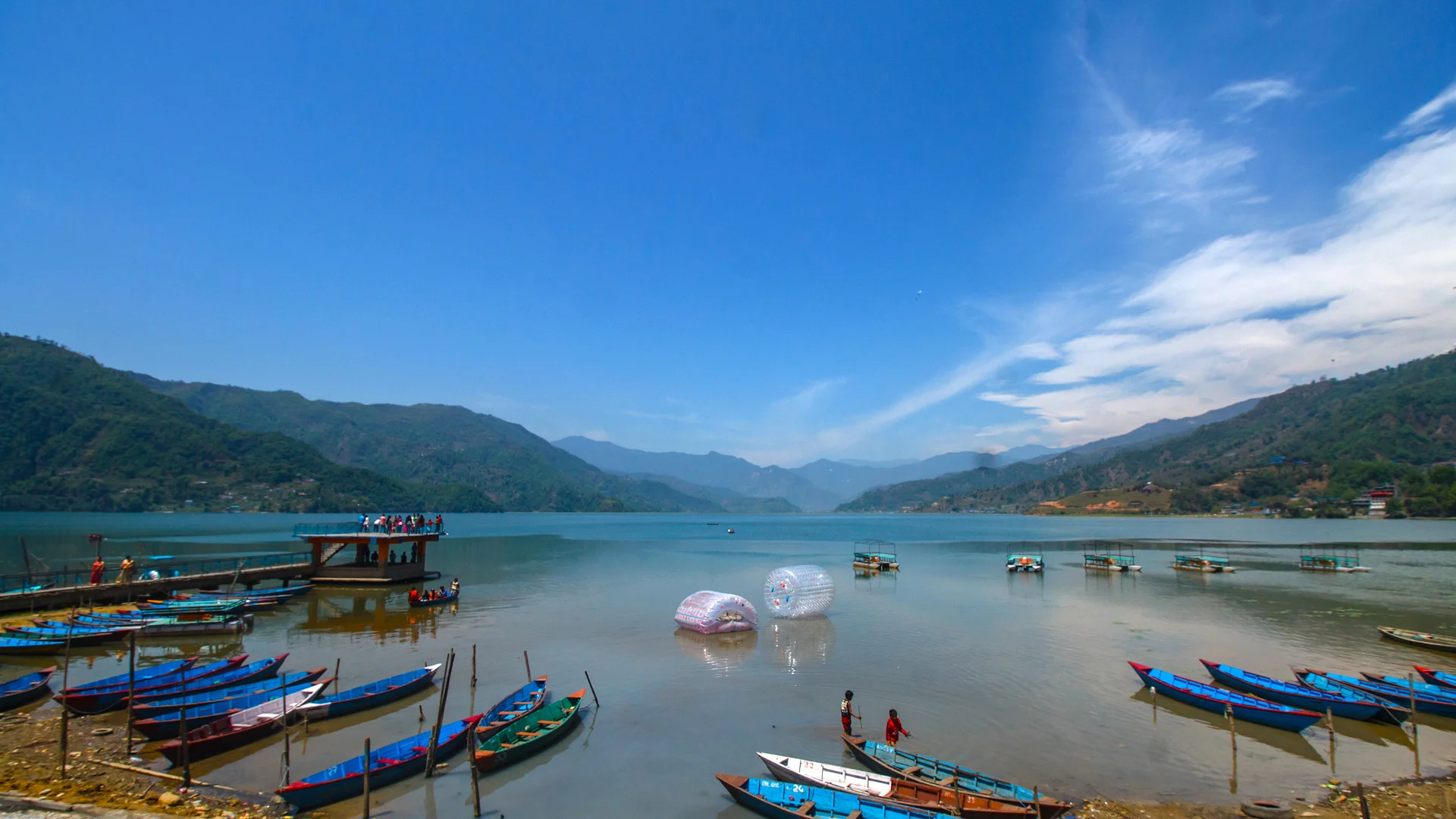
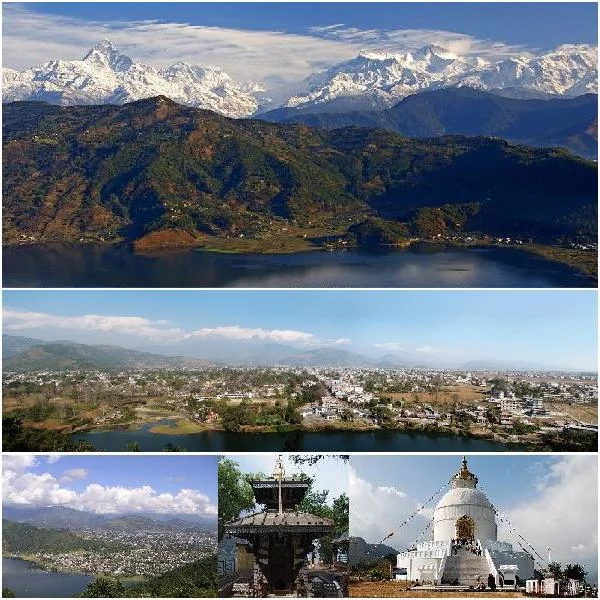
Destination Pokhara
Pokhara city, the getaway to the Annapurna circuit allows you to experience magnificent scenery, culture, and traditions. The city has established itself as a tourist hub and as one of the must-visit destinations in Nepal. An ideal place to partake in fun activities such as sightseeing, paragliding, ultra-light, para hawking, canoeing, hiking and sky diving.
Popular Activities in Pokhara
Sight Seeing
Paragliding
Ultra Light
Para Hawking
Canoeing
Hikinh
Sky Diving
Popular Places in Pokhara
Fewa Lake
Barahi Madir(Temple)
Sarangkot
Kali Mandir
Kanchi Baraha Madir(Temple)
Bindyabasini Mandir(Temple)
Mountaineering Museum
Gupteshwor Mahadev cave
Pokhara is a land of mysticism, spectacular sceneries, adventure filled activities, and a foodie’s wonderland. The city is an ideal place to partake in fun activities such as: sight seeing, paragliding, ultra light, para hawking, canoeing, hiking and sky diving.
The city has established itself as a tourist hub and as a must visit destination in Nepal. With a whole host of fun activities, you can indulge in, beautiful landscape and amenities, it is bound to fill your mobile phone with pictures of beautiful memories with your friends and family.
Arranging a holiday trip in Pokhara during Dashain can be a bit tricky. If you choose to travel by bus then it is recommended to book your trip in advance. Pokhara, being a tourist hub, is not as affected by the festivities as other cities, but brace yourself for closed shutters, and empty streets on the main days. While you are there especially if you are travelling in your personal vehicle, you may also want to put together a picnic by the lakeside.
The getaway to the Annapurna circuit gives you an opportunity to experience magnificent scenery, culture and traditions. Here you can experience best of both worlds.
If you are searching for solace, then hire a bicycle and make your way to Pame. Lying on the outskirts of Pokhara, this part of town gives you a sense of resonance with nature. The ride gets thrilling with the highs and lows of the road, and if you’re with your friends, there is bound to be laughter and joy during the trip. Begnas Lake is another beautiful sight to behold. The scenic view of the immaculately calm lake surrounded by lush greenery and gazed down by the Himalayan peaks is a perfect description of paradise. Another place you can easily get the striking views of the Annapurna range from here. The way to the top can be considered a small hiking experience.
A delightful evening during the golden hour, with the majestic Himalayas reflected upon the Fewa lake in the background of the setting sun, is truly a sight to behold. A trip to Pokhara is also never complete without witnessing the Sun rise atop the hills of Sarangkot.
Pokhara which is also known as the "city of lakes," is full of cultural and natural heritages as well. The old bazaar of Pokhara has many peculiar alleys and courtyards. The hanging beads, local handicrafts and cultural attires will draw anyone’s attention. They are worth a visit if you want souvenirs! At the least hire your own boat and visit the beautifully nestled temple of Barahi temple in the middle of the Phewa Lake.
The village of Lumle has been declared a Poetry village and indeed the journey there has poetic elements to it. It is also a religious hotspot with many historical temples like Kali Mandir and Kanchi Baraha Temple.
You can indulge yourself in the absolute calmness of the place and pray for the prosperity of your loved ones. Bindyabasini temple is another monumental temple in Pokhara located within the serenity of a lake.
The International Mountaineering Museum of Pokhara explores the past and present situation of mountaineering in Slovakia, Japan and Nepal. The museum features an excellent collection of flora and fauna. It’s a place for learning and having fun if you are academically inclined, or interested in historical details.
The mysterious Gupteshwor Mahadev cave has an eerie but peaceful atmosphere. Similarly, Mahendra cave has several stalactites and stalagmites and a statue of Lord Shiva. After experiencing all the fun things mentioned above during daytime, you can rest for a while in anticipation of a equally exciting Pokhara night life awaits you.
Aasma Aryal
popular Itineraries
Similar Posts

An Experience of a Lifetime
Welcome to the land dubbed the abode of the Gods, where once in mystic lures the Gods once roamed with the people. Welcome to the land of cultural diversity, majestic Himalayas, where the magic of the ancient world still resonates in every corner. And, welcome to the homes of a kind and warm people who are always keen to share their world.
If you are a wanderer who has stumbled upon this small but majestic nation that I call home, I write this to you. I have a smile on my face and my hands are put together as I greet you “Namaste”. I thank you for choosing to travel to this very glorious nation, which has much to offer.
With Visit Nepal Year around the corner, this initiative is a momentous campaign to draw you travelers to this beautiful nation. Being born and having lived in Nepal for most of my life, exploring, encountering and experiencing the culture, cuisine, tradition and thrills of this nation, I can say this, “ Your hunger for something new shall be fulfilled, your search for adrenaline shall be quenched with a side of great hospitality, diverse cuisine, majestic landscape, and beautiful people.” The campaign of Visit Nepal Year has been anxiously awaited by the people of Nepal. As we await, to share with you all our love, culture, tradition and festivals. We await to welcome you to our homes, share our delightful cuisine, and make merry with you in our festivities.
Being a student of sociology, a fanatic of history, photography and having travelled to various parts of Nepal for my studies. I feel as if I can’t sum up the beauty of this nation in one article, as our diversity and ethnicity is home to treasures that one can explore for their entire life. During my studies, I have stumbled upon may great writers and artists, who choose to do their study in Nepal and the magic of the Himalayas, the love of the people make them choose Nepal as their new abode. It always bewildered me, meeting such individuals and I always asked, “Why?”
To which I was once told, “Nepal is a heaven, not just because of the lush landscape but because of the people. In the greatest of adversities, the people of Nepal choose to smile. They share with you their home, their food and all, and before you know it you are a part of the family.”
There is so much to explore in Nepal, some things that aren’t listed in that travel book you are holding. Everyone sees the temples, the monuments, the lakes but true intangible experiences are going to be an amalgam of sharing moments with the people. Thus, I strongly suggest learning a few words and phrases, as you are going to be replied with a beautiful smile.
To you my dear wanderers I welcome you to the land dubbed the abode of the Gods, where once in mystic lures the Gods once roamed with the people. I welcome you to the land of great cultural diversity, majestic Himalayas, where the magic of the ancient world still resonates in every corner.
I welcome you to Nepal. May your travelers be blessed, your search full filled, your diary and mind filled with memories of great adventures and experiences and your camera’s filled with moments that you shall fathom for the rest of your lives.
An op-ed of living in Nepal by Shreyashka Vikram Raj Maharjan
Popular Itineraries
Similar Posts
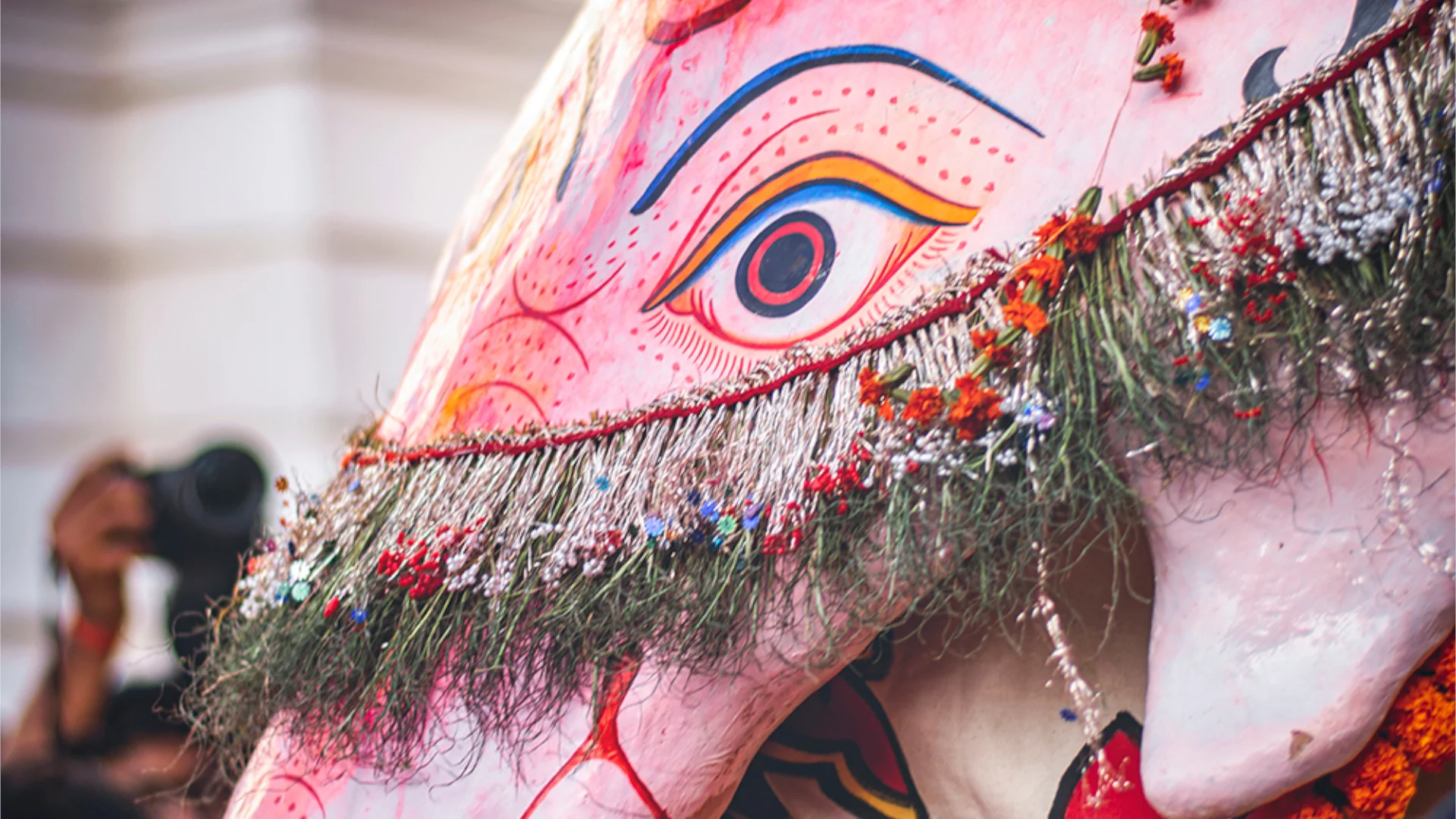
The Festival of Indra
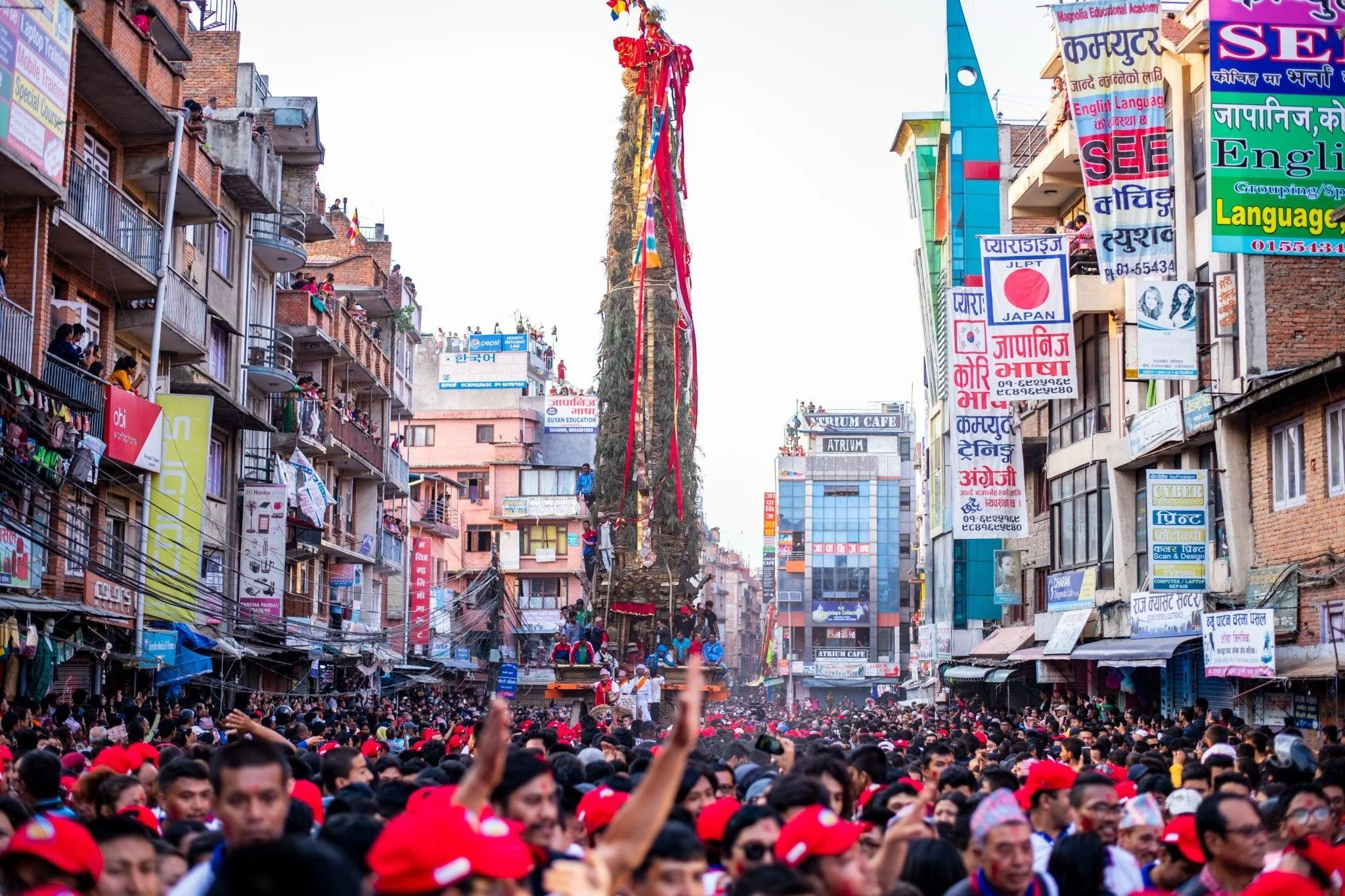
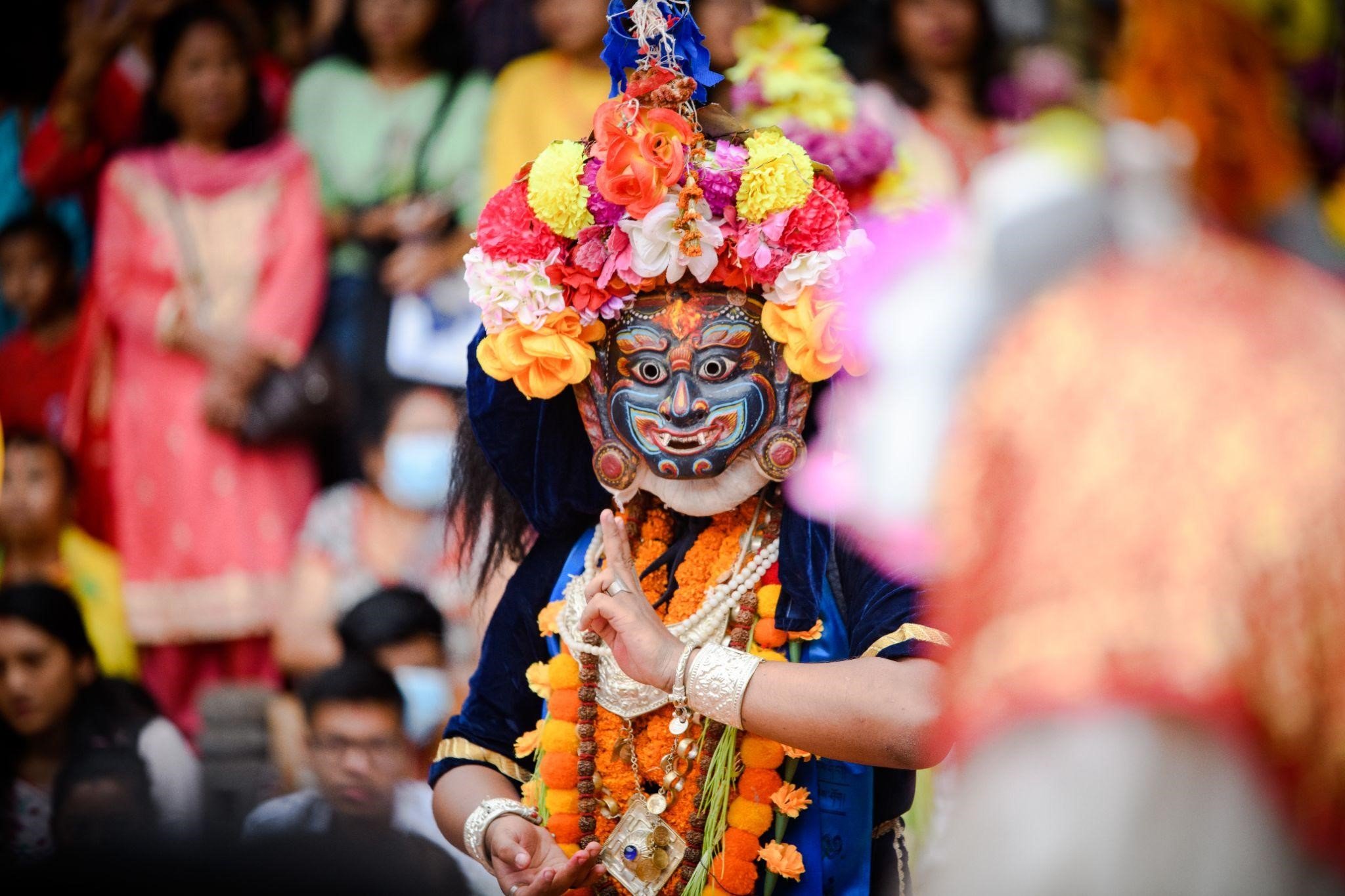
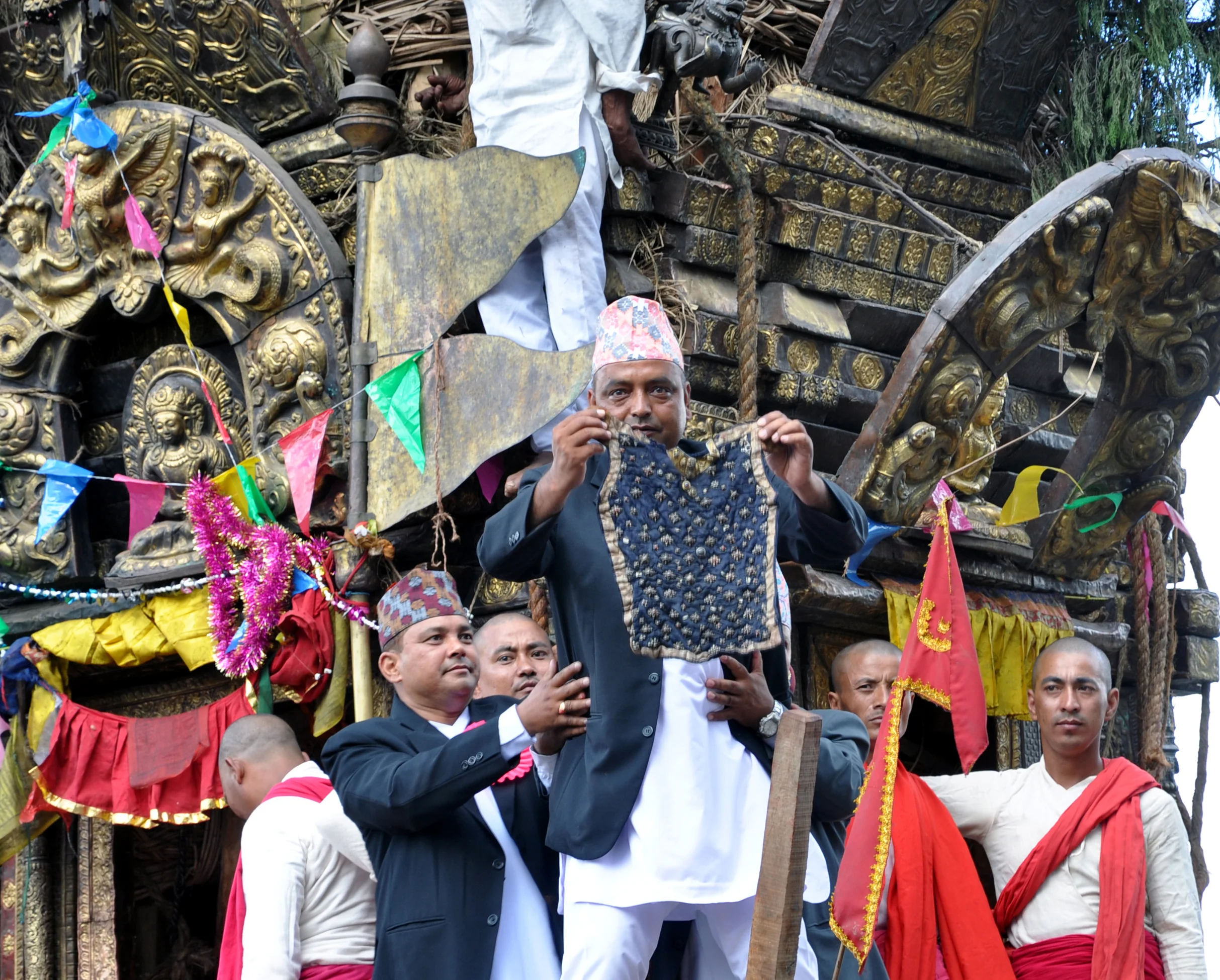
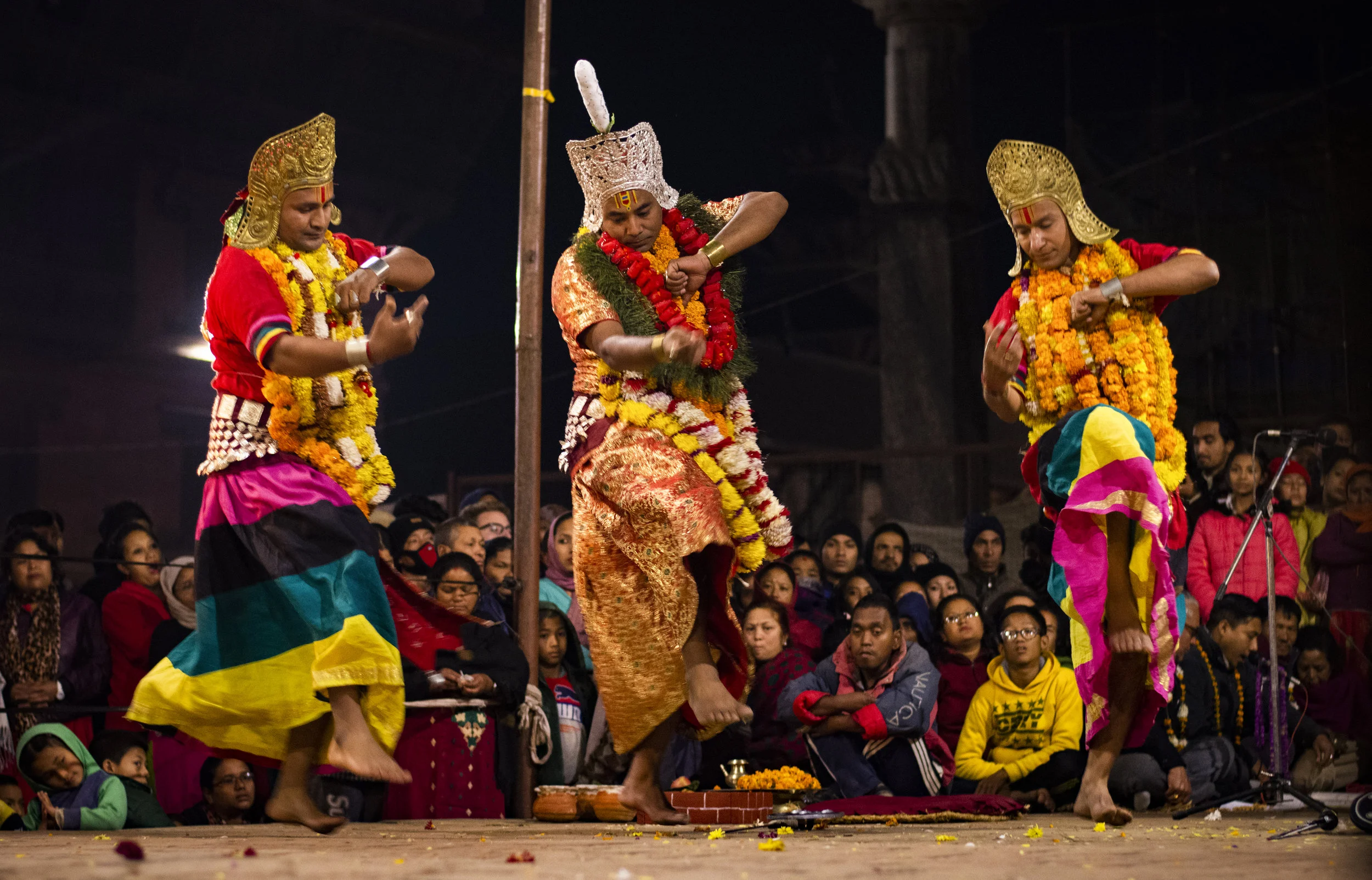
Indra Jatra, one of the highly celebrated street festival in Nepal marks beginning of the festival season and the beginning of a tourist season in Nepal. The festival is celebrated in the oldest town Basantapur Durbar Square or Hanuman Dhoka in Kathmandu by the local community with huge arrangements. The chariot of Kumari, the Living Goddess, is taken out in procession through the streets. People wear masks of various goddess and exhibit by dancing in the streets on music played with traditional musical instruments.
Indra Jatra
With the sound of the marching band, amid the busy hustle of the morning crowd at Basantapur Durbar Square. A group of revellers slowly gathers. As the band plays its final salute, the rope tied to the yahsi(Pole), the revellers muster their strength and in a great cheer, and as the yahsi makes its ascend three muskets are raised high, the Gurkha Paltan fires the aerial salute commencing the festival of Indra.
Regarded as the biggest festival of the then Kingdom of Nepal Valley, the true origin of the festivals are still debated. But this festival is believed to be founded during the Lichhavi Era by King Gunakamadeva, the founder of the city of Kantipur (Kathamandu). The celebration of Indra Jatra is made of three different series of rituals: Kumari Jatra, Indra Jatra and Bhairava Jatra. Each have their own legends and ceremonial components but as a whole, turn the centre of Basantapur Durbar Square into a grand affair. The square is a sight to behold from the break of dawn till midnight, as the chariots of Kumari, Ganesh and Bhairava make there way through the inner city of Kathmandu. Every street comes to life with masked dances, merry music during the eight days of festivities.
According to legends, it is believed that the mother of Lord Indra required a Parijat( a white flower) to perform a ritual. For which Lord Indra descended to earth in search of the flower. He disguised himself as a commoner and while trying to take the flower out of the lawn of a Jyapu(Farmer). He caught Lord Indra and held him captive blaming him of trying to steal. Lord Indra was imprisoned and not allowed to go back to heaven.
The mother of Indra grew worry some as her son hadn’t returned from Earth. Phul Khusi(The Vahan of Indra) descended upon Earth to find his master and wondered around the streets of Kathmandu. During when a great festival was occurring in the Kathmandu and after hours of searching, Phul Khusi found Lord Indra. Phul Khusi took the news to heaven after which, his mother descended from heaven to free her son. She requested the villagers to release her son, but didn’t heed to her words. Only after Lord Indra reveled his true form. The mother of Indra made a promise to the villagers to give in return a final rainfall for their harvest to prosper and she would lead them to the gateway to heaven.
Accepting the conditions the villagers freed Lord Indra and let him go with his mother, a group of villagers followed them to the outskirts of Kathmandu to find the doorway to heaven. But Lord Indra’s mother tricked the villagers by putting forth a large mist which left the villagers confused and in dismay as Lord Indra and his mother went to heaven. To commemorate this event, during the celebration of Indra, a Dagi (Procession) takes the same path every single year. “The circumambulation of the city is performed in order to reach heaven in the Dagi’s footsteps to meet the dead relatives. The families scatter grain by the wayside so that they would not forget the way home. One finished, they throw what remains of there offerings in a place called Bhuta Satta, near Kasthamandap, and wash their faces at Maru Hiti fountain. Afterwards, they either return home or go to bathe in Indra’s Pond ( Yamki Da), which is located on a hill 12 kilometers west of Kathmandu.
The festival of Indra Jatra is a feast to all senses, the air is scented with the smell of incense, and the sound of drums and traditional instruments tranquil once ears. For the eyes, one can behold the procession of Living Goddess Kumari along with Lord Ganesh and Lord Bhairav. The chariot is pulled for three consecutive days. The first day is known as Kwaneya during when the chariot makes its way from Basantapur, Maru, Chikanmugal, Jasidewal, Lagan, Bhimsensthan, Baru and ends at Basantapur. The second day is known as Yenya Punhi on which the chariot procession begins from Basantapur to Pyaphal, Nyata, Tengal, Nhyaokha, Nhaikan Tol, Asan, Kel Tol, Indra Chowk, Makhan and ends at Basantapur. The final day of the procession is known as Nanichaya, the chariot is pulled by revellers from Basantapur to Pyaphal, Yatkha, Nyata, Kilagal, Bhedsing, Indra Chowk, Makhan and ends at Basantapur.
During the festival of Indra, various idols and masks of goddess are taken out of their normal abode to be exhibited to the people. The most prominent of which are the Sweta Bhairab mask and the idol of Akash Bhairab. Similarly an image of Indra is displayed at Maru and Indra Chowk. Various forms of dances such as of Lakhe Aju, Mahakali Naach, Halchowk Bhairab, Phul Khushi, Devi Kyakhan are performed on specific days and nights of the festival.
SIMILAR POSTS
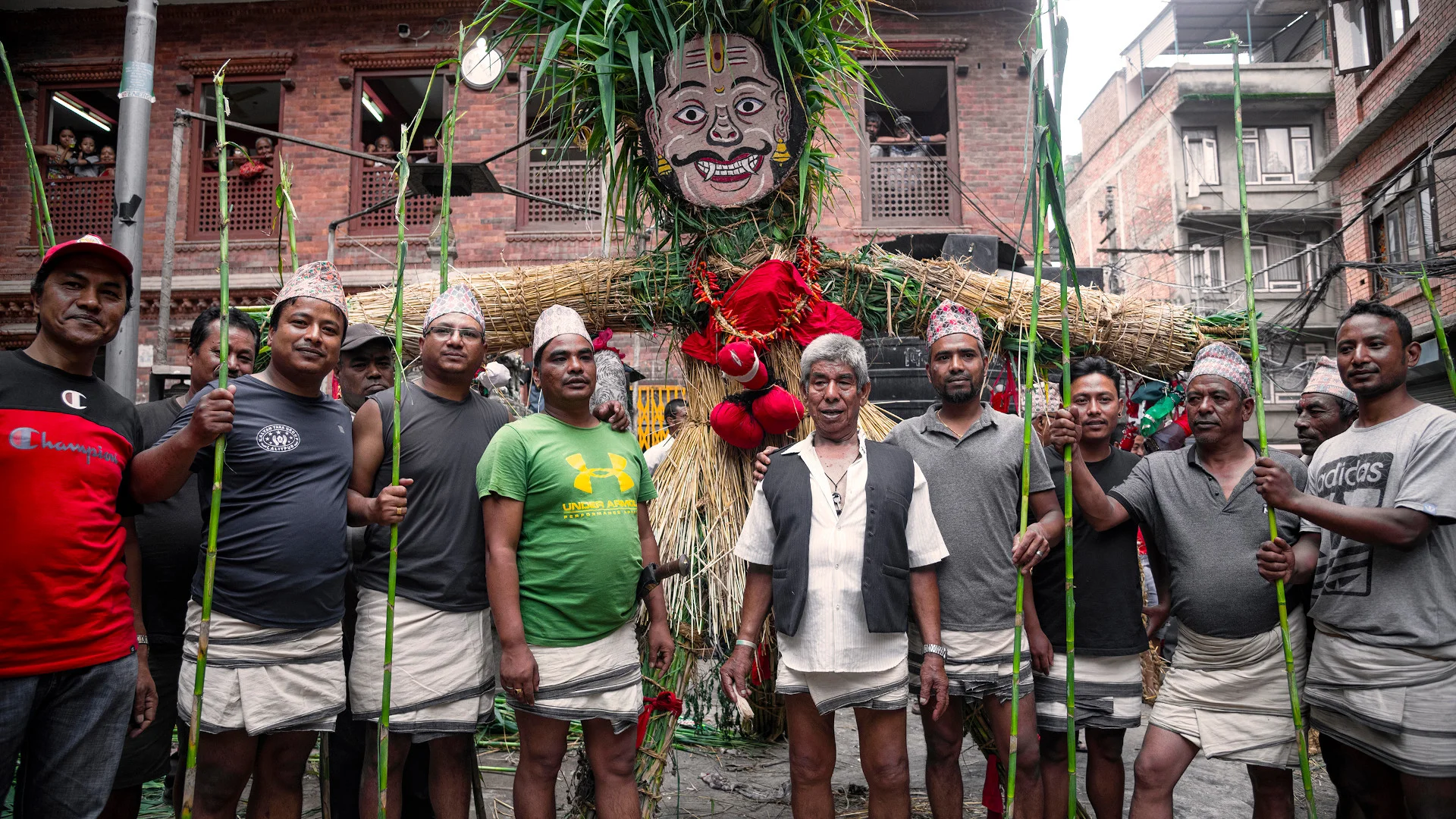
The Tales of Gatha Muga
A unique festival celebrated by the Newar communities in Nepal, Gatha-Muga or Gathe-Mangal is an ancient festival celebrated to chase away the evil spirit and usher the good fortune every year on Shrawan Shukla Chaturdashi of the lunar calendar.
On Shrawan Shukla Chaturdashi of the lunar calendar, a unique festival is celebrated by the Newar community. The festival has many names, but in the common tongue is known as Ghantakarna, but various Newar settlements call it with a different name. In the city of Bhaktapur, it is called Gatha Muga, whereas in Kathmandu and Lalitpur it's called Gathe-Mangal.
Each name aspired from a different legend which shared closer bonds with certain religions. The commonly used name of Ghantakarna refers to an ancient South Asian Raksasa (demon) who according to Mary Anderson, “Was so corrupt that he vilified the gods themselves, defiled and destroyed homes and fields, roaming the land, stealing children, maiming the weak, killing and devouring his captives. His depraved sexual orgies and unspeakable excesses with his countless wives horrified the pious people”(1971,72). Locally Ghanta refers to bells whereas Karna is ears thus during the festival effigies of the demon Ghantakarna are made out of bundles of straws from the old harvest and large ears are named from either leaves or local sieves( nanglo’s).
In Bhaktapur however, the festival is known from a completely different name and has a different legend associated with it. “Gatha Muga: was a man who believed in karma, and not in the power of gods. He loved the poor people and sat at the crossroads where he took money from the rich to give to the poor. If the rich people refused to give money to him for this purpose, he would kill them. He also lived without concern about pollution. As he lay dying he hung bells on his ears, so as not to hear the gods’ names called out. After his death, as he was not associated with any religion, no one was willing to cremate him, and his body was left at a crossroad. But then people joined together to donate money for his cremation, and they called a low caste man to perform it. Many people followed this procession because he had always protected the ordinary people.” Levy,1990, p.520
Personally photographing this festival, I have to say the most elaborate festivities are done in Bhaktapur. Where the effigies of Gatha Muga at times tower higher than eight feet, with great attention to detail. Each neighborhood constructs own representation and at times, it’s like a competition for the size, complexity, and elegance. Primarily made of bundles of straws it is masked and painted with fangs. Some go even further to dress the effigies, but none miss placing bells on the ears and placing a phallus, and two circular fruits representing testicles. Many historians and scholars have stated how the festivities and its representations were used to make the people aware of sex education. Such can be seen in the tudals (struts) as well, as during that era there was no form of formal education and due to the conservative nature, parents normally didn’t pass the knowledge to their children. Thus festivals were used as a medium to make the younger generation aware of the elements of reproduction.
In the cities of Kathmandu and Lalitpur, the common legend which even I grew up associating with the festival is of how the farmers during the season of the plantation, took help from the evil spirits and demons to plant their fields. A task which took farmer days was completed by the demons in a matter of hours. The demons needed a lot of food and the farmers realized that they would not be able them throughout the year. Demons began becoming hungry and wreaked havoc, destroying houses, stealing children and destroying farms. Thus, the farmers had enough and collectively chased the ghosts down to the river and they were never seen again. During this day, I remember huge iron nails being hammered down in the main door of our old house. The years and years of nails accumulated had now become a huge hump. Thus, to symbolize the day it is believed that Gathe Mangal is celebrated.
The legends surrounding the festival of Ghatakarna might differ in various settlements but the end of these brightly painted is the same in all. It is known as Bha Kayegu which refers to processions accompanied by shouting victorious phrases. As the sun sets, these effigies are dragged, beaten and taken to the nearest river to have them burnt. Procession goers wash their faces and eyes in the river for purification and bundles of straws are burnt in the crossroads to purify it of evil spirits and demons. In some neighborhoods, a communal feast is prepared to celebrate the day.