Life in Kathmandu’s Golden Period
This is what Father Gillespie, one of the first foreigners to visit the secluded kingdom of Nepal in the 18th century, wrote in his ‘Account of the Kingdom of Nepal’: “Cat’hmandu contains about 18000 houses, Lelit Pattan contains about 25000 houses, B’hatgan contains about 12000 houses…the houses are constructed of brick and are three or four stories high…streets of all their towns are paved with brick or stone…there are also good wells made of stone…In every town there are large square verandas…called ‘pati’…on the outside of the great towns, small square reservoirs of water….” (Asiatic Researcher, 1801, Vol. II, London)
This is what Father Gillespie, one of the first foreigners to visit the secluded kingdom of Nepal in the 18th century, wrote in his ‘Account of the Kingdom of Nepal’: “Cat’hmandu contains about 18000 houses, Lelit Pattan contains about 25000 houses, B’hatgan contains about 12000 houses…the houses are constructed of brick and are three or four stories high…streets of all their towns are paved with brick or stone…there are also good wells made of stone…In every town there are large square verandas…called ‘pati’…on the outside of the great towns, small square reservoirs of water….” (Asiatic Researcher, 1801, Vol. II, London)
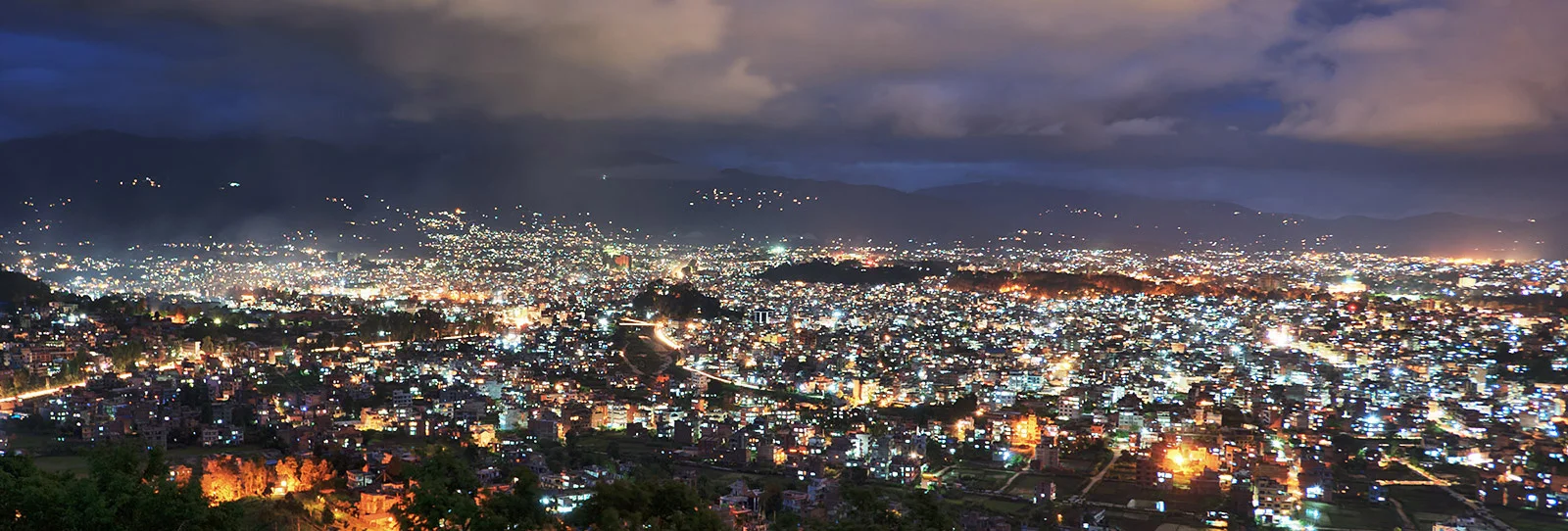
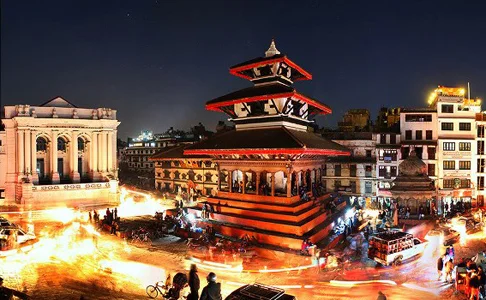
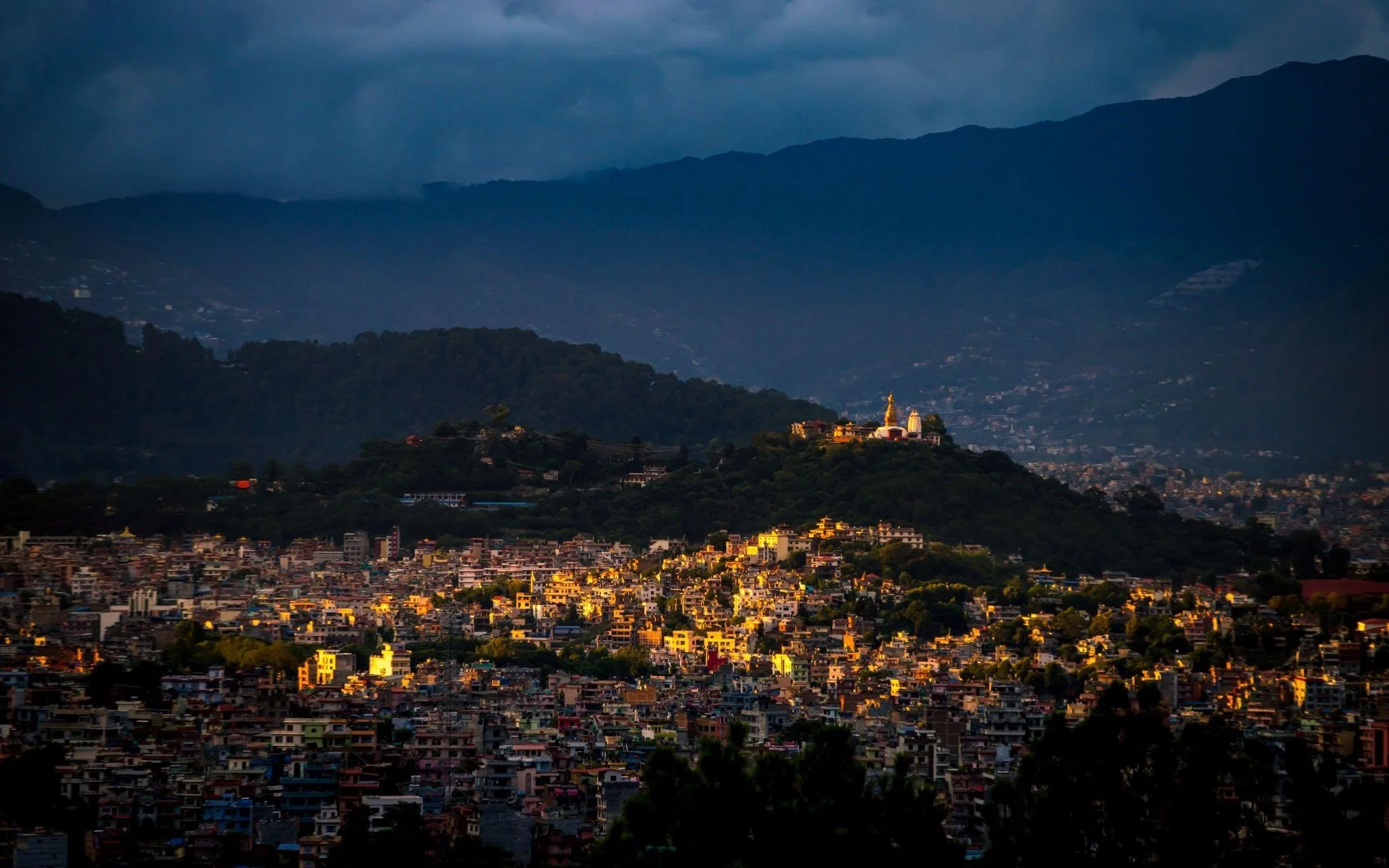
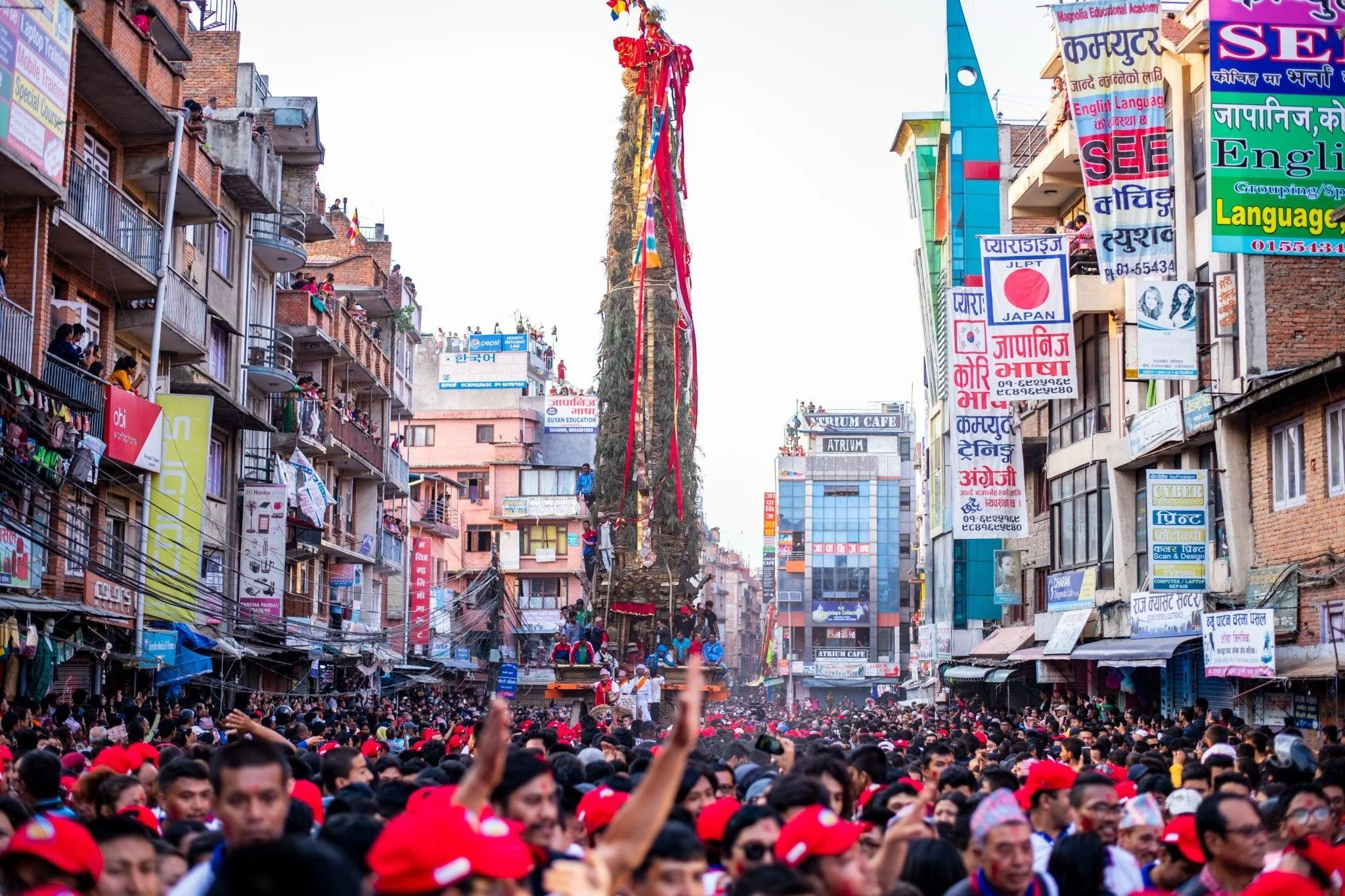
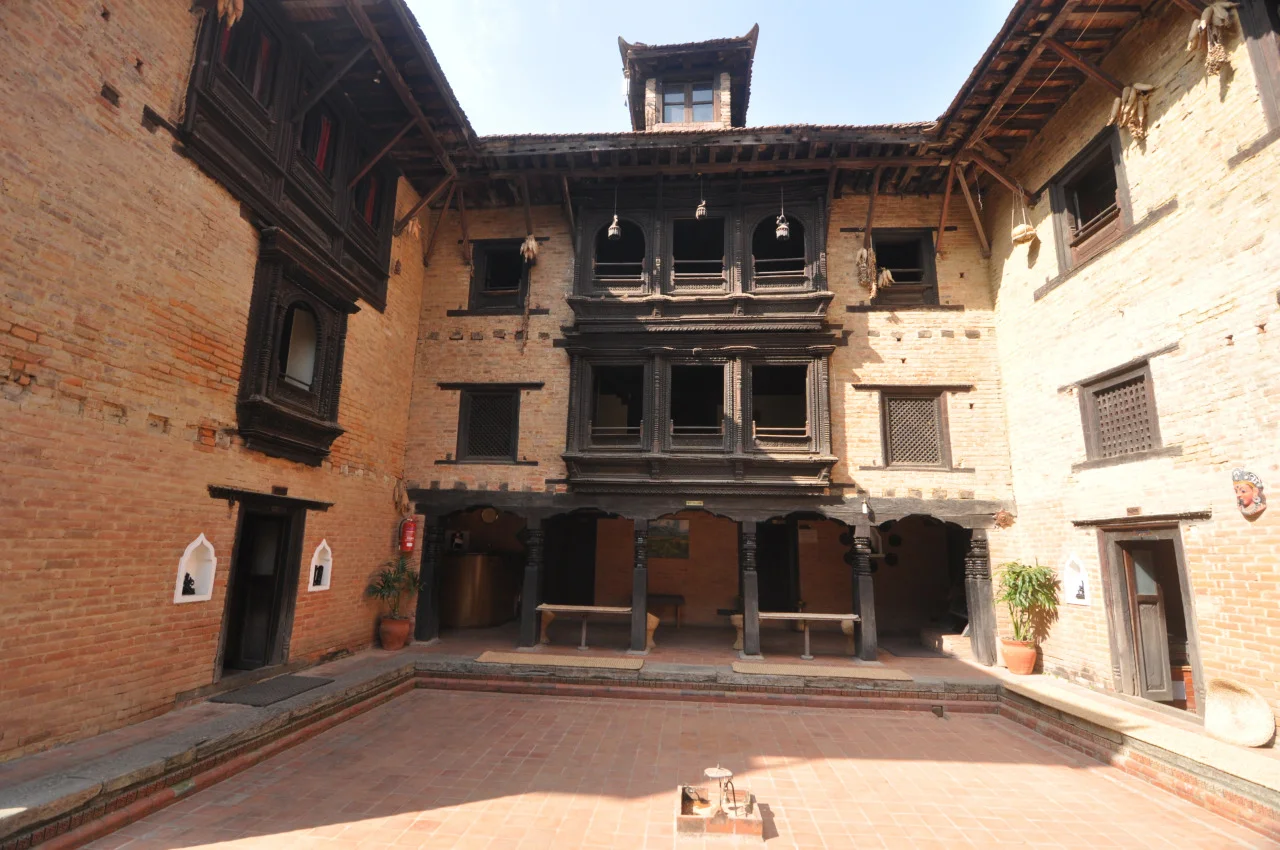
Father Gillespie’s description of Kathmandu Valley as it was then is a flattering portrayal of the Malla period (1200-1769). Similarly, in ‘The Traditional Architecture of the Kathmandu Valley’, Wolfgang Korn writes, “The terracing of similar building elements around a temple or monastery grouping formed street spaces, courtyards, groups of houses and finally, town districts or tols…” Much of all this holds true even today, and one will many examples in the valley. Of course, there are many changes, as well. While in days past, a particular tol would have inhabitants of a particular caste and family descent, with the passing of time, this no longer holds true, although there might be dominance of a specific group. Each such tol had a sequence of streets and squares, at the centre of which was a chowk with a temple or monastery
Both security and privacy were thus givens, and while the four sides of the chowk had separate units, access to the street was usually through only the gateway of one house, this always being of low height, some say, to discourage thieves. The chowk had an important role in communal life, as a washing and bathing area, as a playground, for sitting in the sun on colder days, and as an area for grinding grain. It was also most important for organizing feasts. Such an arrangement encouraged regular interaction among the community members. Similarly, public squares had shrines, sattals (open meeting halls / free lodging houses), patis (public loggias), dyochens (communal buildings with deity shrines), dablis (platform for public performances), hitis and dhunge dharas (fountain complexes), wells, etc. These amenities fulfilled the social, economic, and ritualistic activities of the locals. The ground floors of houses facing the street had shops providing basic daily necessities.
For the typical Newar, the tol was actually his living area. Not only because it was well facilitated, but also because houses of the period were not fully adequate to satisfy all needs. The Malla period homes did have constraints; for example, they were low-roofed, and lacked enough sunlight. Air circulation was also unsatisfactory, and the mud floors resulted in dampness that was quite prevalent. However, the innovativeness of the Malla period builders in has to be admired, especially regarding their concern for public welfare. The hitis, for instance, served as marvelous watering places for all the locals. Designed like enormous sunken baths, water flowed copiously from beautifully carved dhunge dharas (stone spouts). They were centers of social gathering. Pokharis (ponds) throughout the towns were the reservoirs. and large numbers tuns (small draw-wells) were usually found in backyards. Drainage consisted of partly open brickwork ducts.
In those times, houses were not allowed to be built to a greater height than the temples around them, thus resulting in a harmonious skyline. It could also be observed that the height of the houses usually delineated status of its inhabitants, with the richest having homes nearer the center that were four-storied, after that, three-storied, and then, two-storied. But, all the houses were equally rich in some aspects, such as the splendid woodwork, a major feature of traditional Newari architecture. According to Dr. Ranjitkar, Nepal Director of Kathmandu Preservation Trust, and author ofauthor of the ‘Heritage Homeowner’s Preservation Manual’, “The Malla Period is the most valuable period of traditional architecture of Kathmandu Valley, for which Nepal is known all over the world.”
Two Chinese Girls in Kathmandu
Going around Kathmandu and Patan with first-time visitors gives you a fresh perspective, as one gets to look at everything, however familiar, through their enthralled eyes.
The past one month has been an interesting one, a time when I’ve had the chance to show off the various aspects of Kathmandu and Patan to two young Chinese girls, Jin Jin Cheung and Sun Yang (a.k.a. Emily) who are journalism students at Shantung University in Guangzhou province, and here on internship at ECS Media where I work. Both of them speak and write English quite well, and so it was no problem communicating with them.
The first place I took one of them, Jin Jin, was to a center in Gongabu called Entire Power in Social Work (EPSA) that provides skill training, employment, and shelter to some 25 women with various physical disabilities. The next evening, we visited another center in Chabel, Voice of Creative Disabled (Srijanshil Apang Awaaz) that provides refuge and education to about 15 young girls with physical disabilities. Jin Jin and I spent almost four hours, from around 4:00 p.m. to 9:00 p.m. at the second center, so engrossed was she in conversations with the girls and their founder Ms. Tulasa KC. Jin Jin took a lot of photos and plenty of notes. Some days later, she visited EPSA again on her own to have a more detailed talk with the center’s founder, Ms. Sangita Pant. There are many such centers in the valley, a side of Kathmandu that most tourists usually don’t see. I’m sure something good will result out of our visits, at the least, some useful features in some magazine or the other, here and in China.
The next week, I took Sun Yang (Emily) for a stroll around Okubahal in Lalitpur, home to many talented metal sculptors. We went through a narrow alley that opened out onto a spacious courtyard at the center of which is a large white stupa. Rows of houses surround the courtyard, which is known as Ta:Go Chiva, meaning ‘Big Stupa’. At the front is the famous Rudra Varna Mahavihar, one of the best maintained mahavihars in the valley. I expected Sun Yang to be amazed at the location, and I wasn’t disappointed. Her first action was to start snapping away with her camera. Before entering the mahavihar, we visited one of the country’s masters in the art of statue making, Mr. Sanat Kumar Shakya, whose house is the first one at the alley’s entrance to the courtyard.
He and his son, Sabin, took us around the various rooms in his house where different aspects of statue making were in progress. Mr. Shakya is especially famous for his Sahasra-bhuja Sahasra-netra ((Thousand-armed, Thousand-eyed Avalokitesvara) figures, many of which can be seen in various monasteries around the valley. Sun Yang (Emily) was rightly delighted to get the chance to see a number of men and women, including Sabin’s sister Sabina, at work, and the beautiful finished statues on display simply enthralled her.
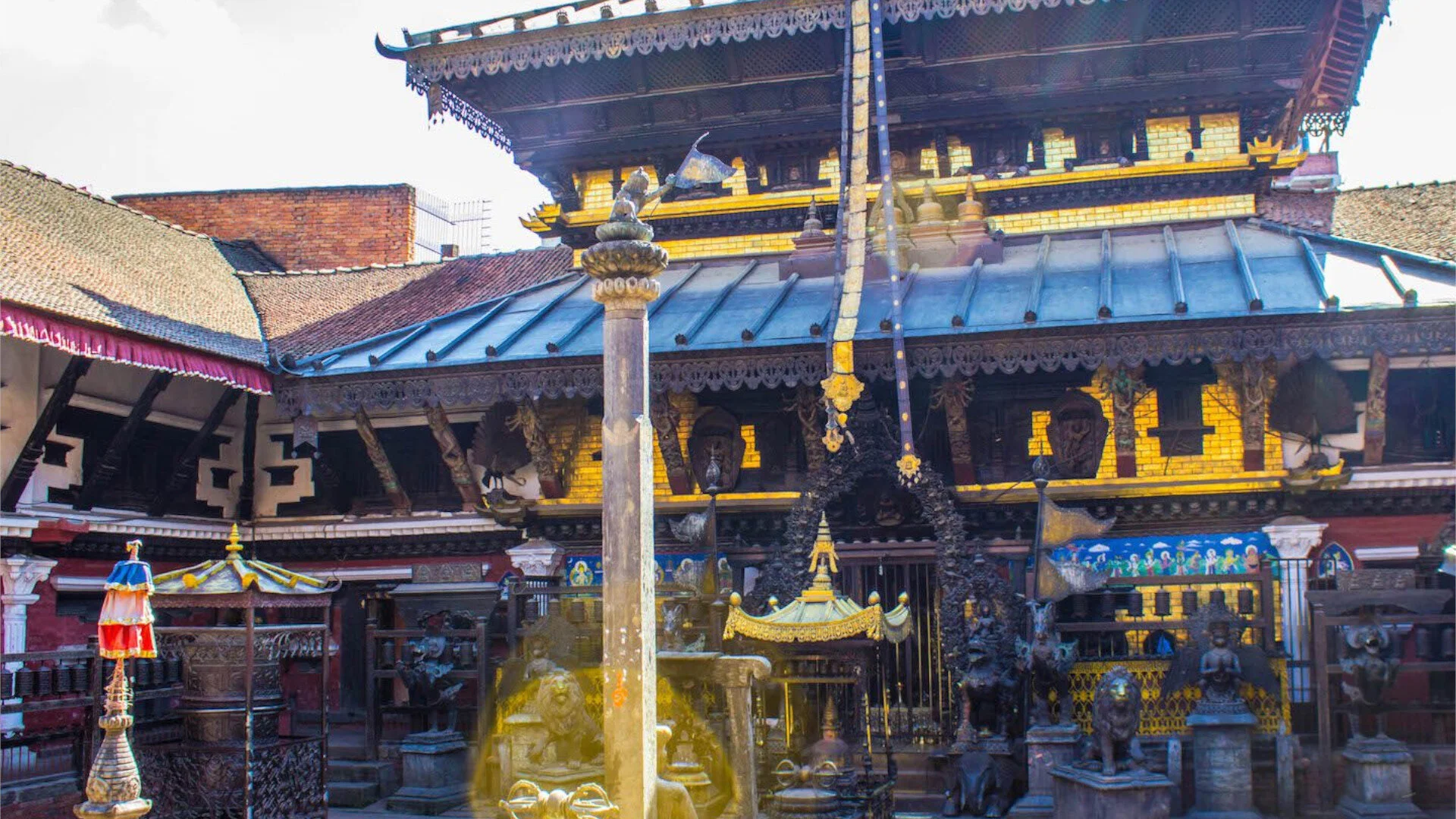
After this informative tour, Sabin was good enough to accompany us inside Rudra Varna Mahavihar. It is such a clean and beautiful shrine, with so many lovely works of art, many of which are ancient, that we spent quite some time there taking photos from every conceivable angle, and of everything on view. Then, since there was still half-an-hour or so for the evening prayers to begin, we went to the equally renowned Mahaboudha Temple nearby. This shrine has a thousand Buddhas made of terracotta, and at the moment had steel scaffolding around it due to some damage due to the recent devastating earthquake.
We got permission to watch the evening worship and prayer recitals, after which Sabin took us inside the adjacent house, which has been converted into a guest house without changing its traditional features. There were a couple of small single rooms and some double beds. The interesting thing was the ambience—low ceilings, ethnic furnishing, lots of wood and metal craft décor, and of course, the grand Mahaboudha right next to the windows. There’s also a café on the ground floor that looks quite cozy.
Then, we went back to Rudra Varna Mahavihar to witness the daily evening worship, which is conducted by a priest and a group of elders of the Shakya clan. According to Sabin, every Bajracharya male of his particular clan has to do a two-week duty as the mahavihar priest once in his lifetime. The current priest was young, and dressed in the customary black priest’s robes. He went around the mahavihar with a smoking incense holder in his hand, and while he was going to all corners, everyone inside the mahavihar, including us, had to stay completely still. Then the priest, along with four or five elders, sat down in front of the main shrine and started reciting prayers. After watching all this for some time, Sun Yang (Emily) and I took our leave.
Our next stop was Honacha, the very popular eatery in the durbar square. It was pretty crowded, as always, with people sitting down on low stools all over the place, in front of the open kitchen where a matronly lady was busy cooking the eatery’s famous badas (pancake-like lentil dish with either egg on top or minced meat, or both, according to preference) on a large black iron wok. Large containers around her held more of other delicious Newar cuisine. We ordered egg and minced meat badas, choila (a very spicy meat dish), bhuttan (fried intestinal parts of buffalo), and glasses of thwon (sweetish rice wine) that went very well with the meat dishes, especially with the hot choila. Again, needless to say, Sun Yang (Emily) was thrilled, and in fact said that she was sure that this was the best restaurant she had visited yet. We asked for some of the dishes to be packed for her to take home to Jin Jin.
The evening was probably one of the highlights of Sun Yang’s stay in Kathmandu, during which time other friends took her to many of the interesting sites around the valley, as well. Nevertheless, despite being delighted to see so many exotic places, Patan became her favorite place, and till the day she went back some 10 days ago, she made it a point to visit the ‘City of the Arts’ again and again. She went back to China, no doubt, with very happy memories. However, one wish of hers remained unfulfilled. She wanted to spend a night in some house near the durbar square so that she could roam around it late into the night and see what it was like in the morning, Maybe next time, Sun Yang?
What about Jin Jin? Well, she didn’t want to go back as yet, she wanted to see much more and do more stories, so she extended her stay for 10 more days. What has she been doing, then? I’ll tell you, because I have been with her most of the time, meeting master artists and craftspeople, reviewing Chinese cuisine at different hotels and restaurants, and generally hanging around in interesting places. The story will continue in part two of this blog—‘Around Kathmandu with Jin Jin Cheung’.